

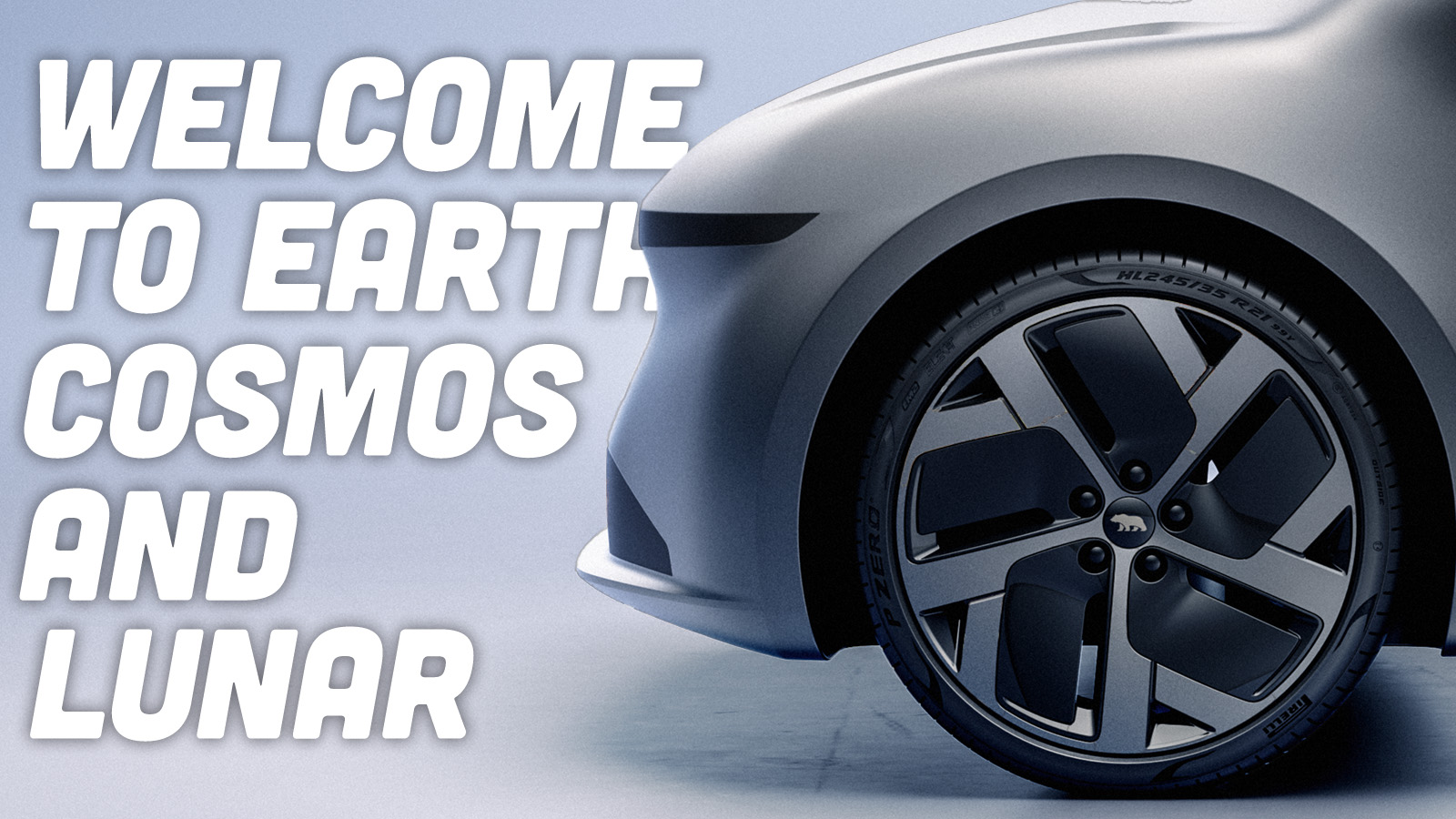
I was expecting Lucid to announce two new vehicles here at the Lucid Investor Day. Now there’s three. While these are all based on the same platform, it’s not yet obvious how similar the vehicles are to one another. The biggest news, I think, is that the company is giving them mechanical doors.
There were literally cheers in the room when it was announced that the annoying electrical doors are on the way out, which is probably given smart that they’re already being banned in China, with the United States and Europe probably not far behind.


The first two vehicles will be named Cosmos and Earth, as I mentioned in the liveblog this morning. These will almost certainly be some sort of crossover/SUV vehicle that’ll slot up against the Rivian R2 and Tesla Model Y.
As a way of telling us about the vehicles without actually showing us the vehicles, was for SVP of Design Derek Jenkins showing us a chart with who these drivers might be:
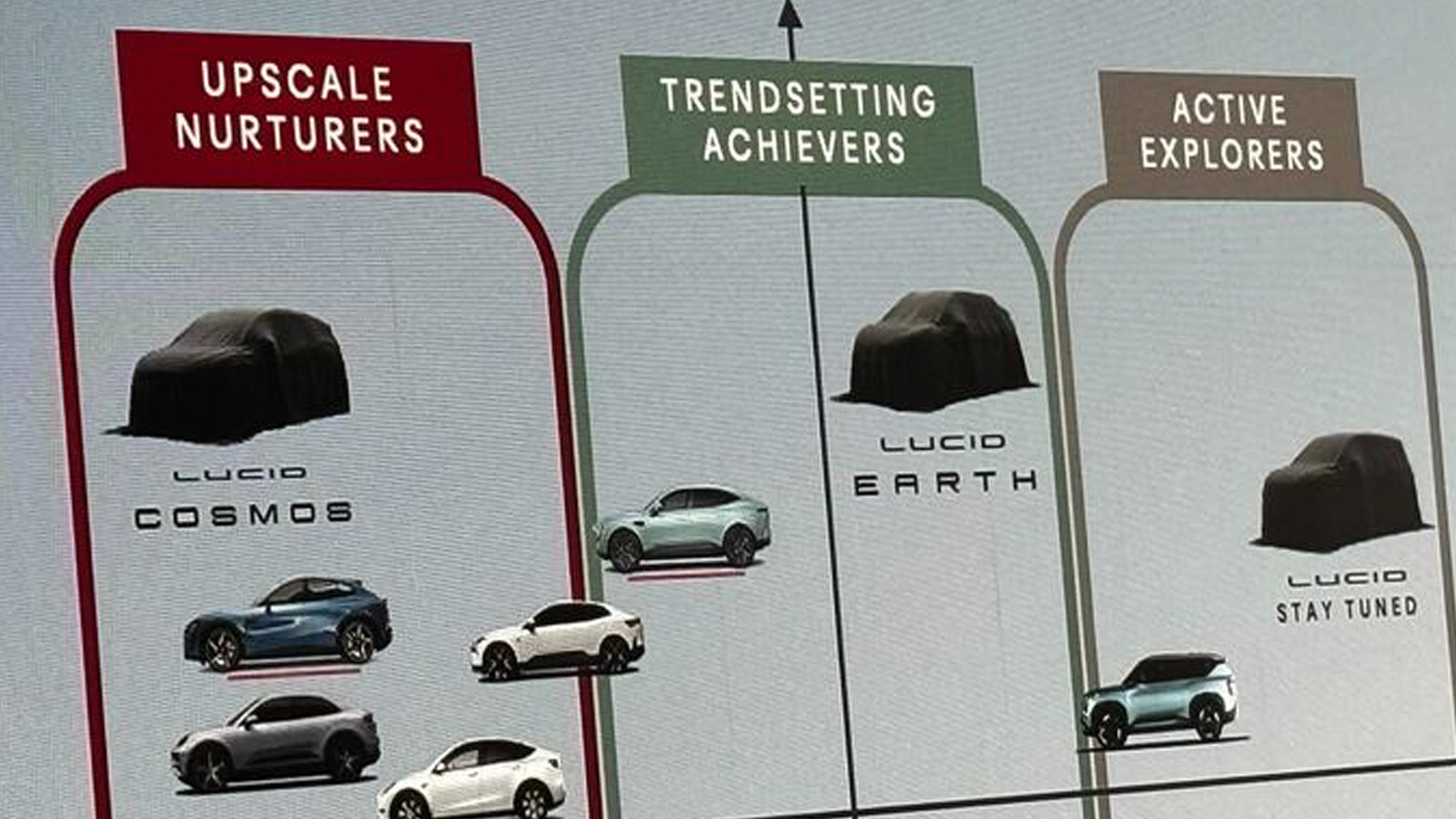 This probably means that whatever the third thing is, probably is some sort of off-road-oriented vehicle.
Here’s another hint at it based on some images provided in today’s presentation:
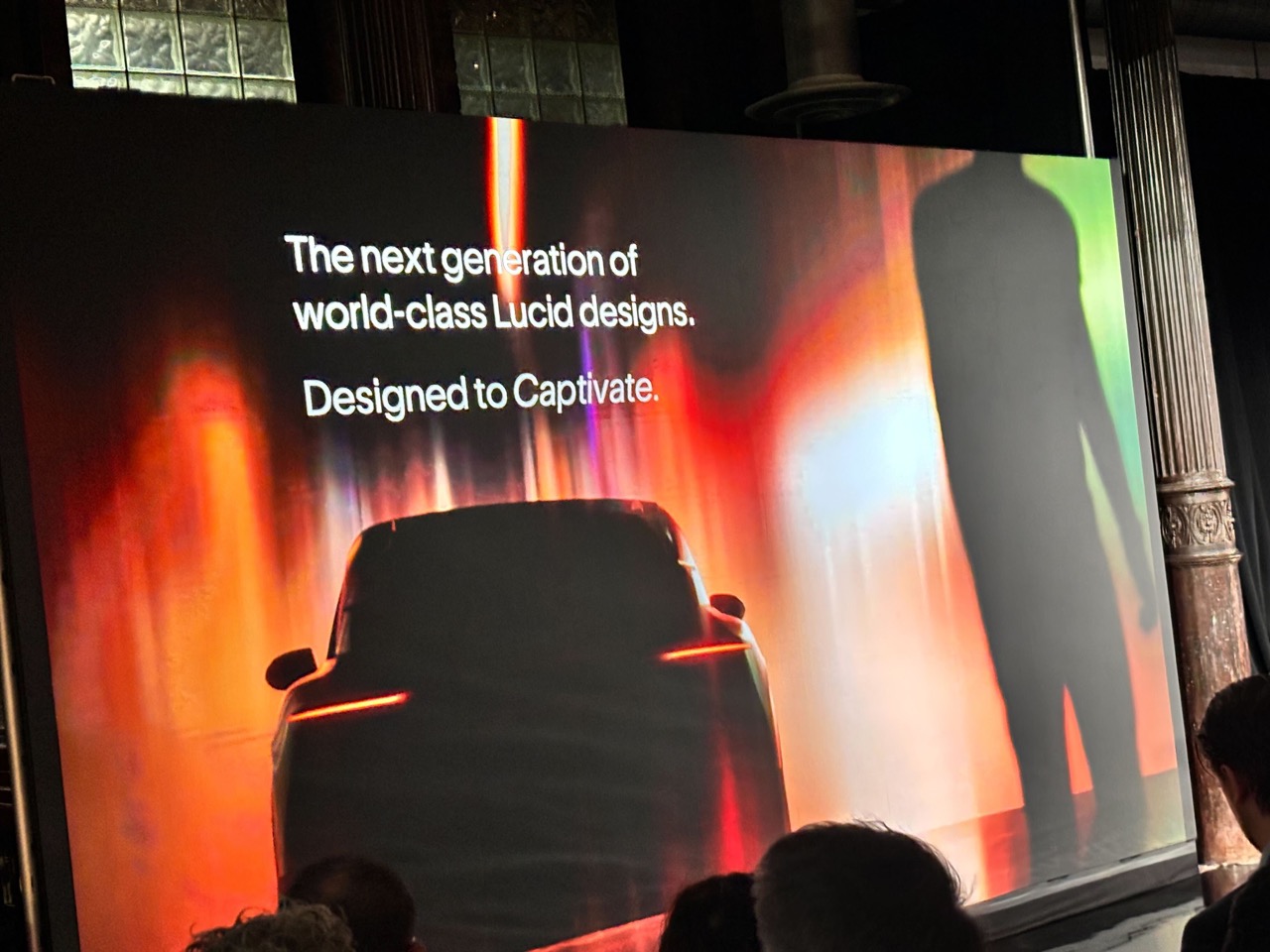
It’s like a Gravity, but smaller, maybe? While this might be a prototype, the implication here is that this is basically what it’s supposed to look like. I’m just assuming this is Cosmos based on the order.
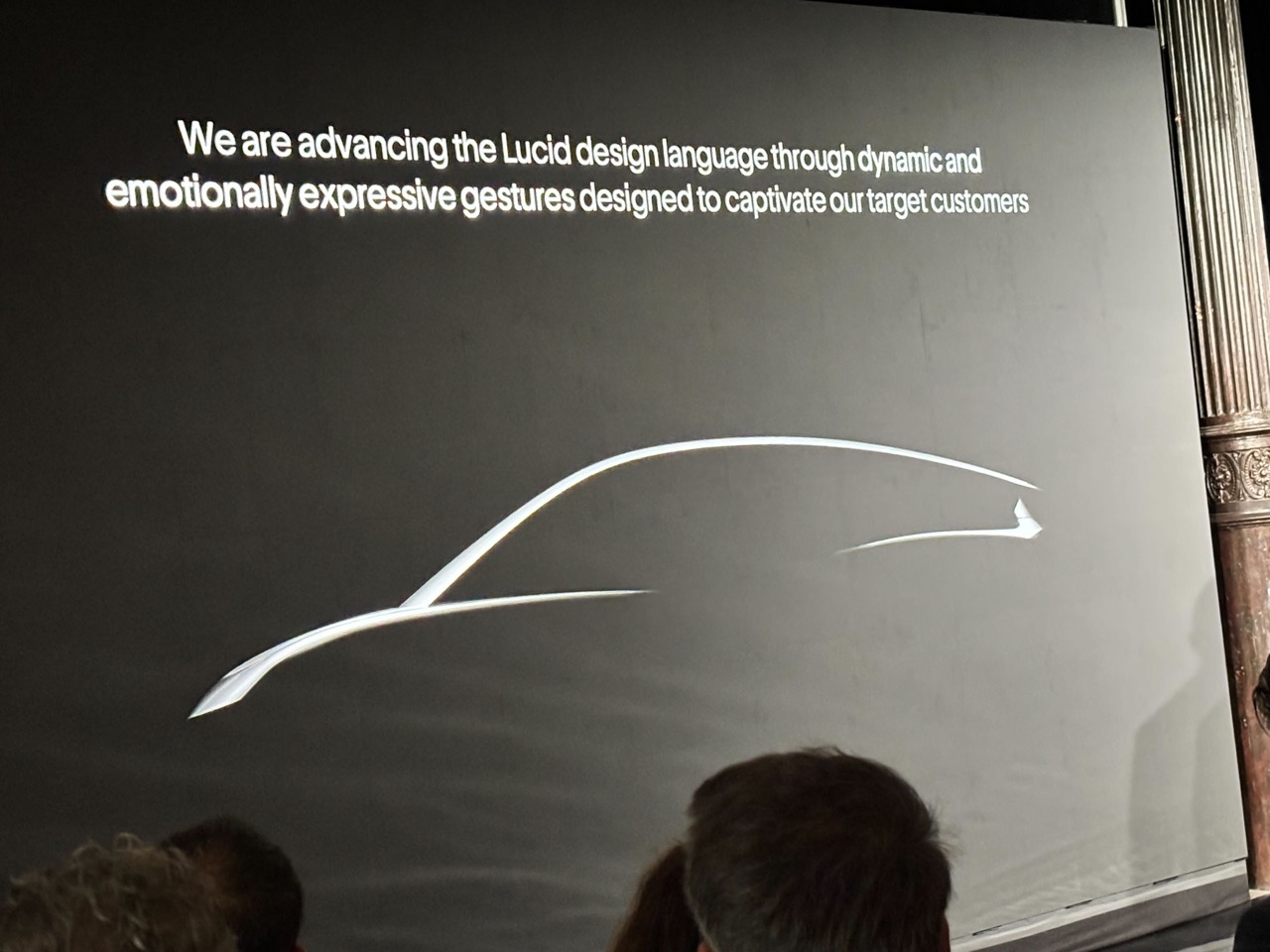
Here’s a view of the vehicle in profile, which is an interesting silhouette and feels fairly Lucid. A bigger change, though, is that the vehicles have moved from two screens in the Gravity and Air into one screen. Theoretically, I like this better, although given the distance from the wheel to the screen I wonder how much the company will skew the experience to be focused on voice control.
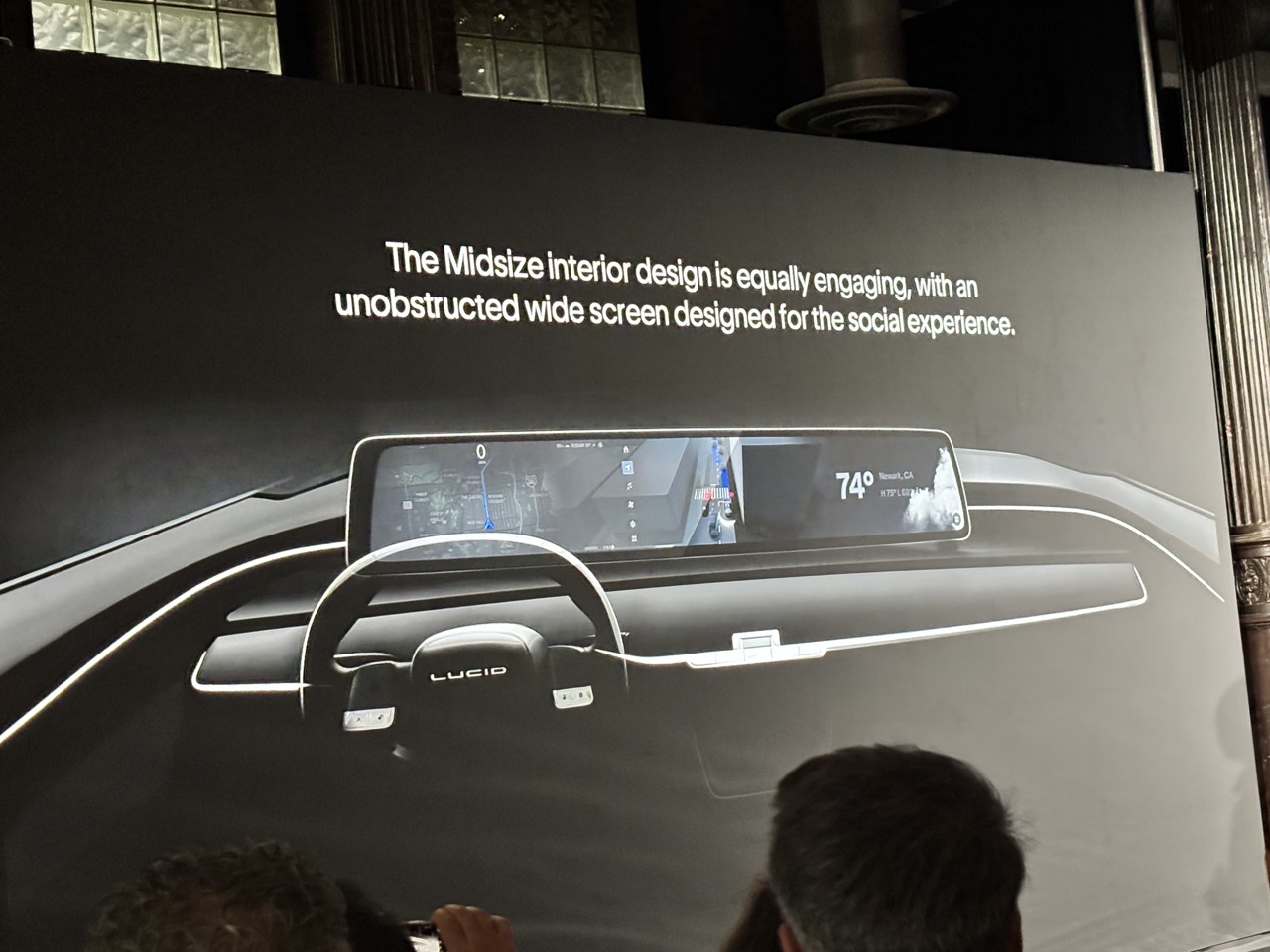
Also, because Lucid is learning from the rest of the market, they announced redundant physical controls below the dash. So, yes, there’s a big screen, but there are also some buttons as well.
The part of the presentation that I was a little less interested in is Lucid’s AI assistant, which is something that plays well in China but hasn’t been fully adopted here yet. It’s possible that this will change at some point in the future. Because of poor connectivity, the live presentation in the building didn’t work, but they had a pre-recorded video just in case and it seems similar to other existing systems.
There are going to be more updates coming this morning from various engineers about the ways the vehicle has been made light, efficient, and affordable. Given that the Lucid Air is extraordinarily efficient, this is probably the team that can pull this off. As I learn more I’ll update this post.
It’s All About ‘Radical Efficiency’
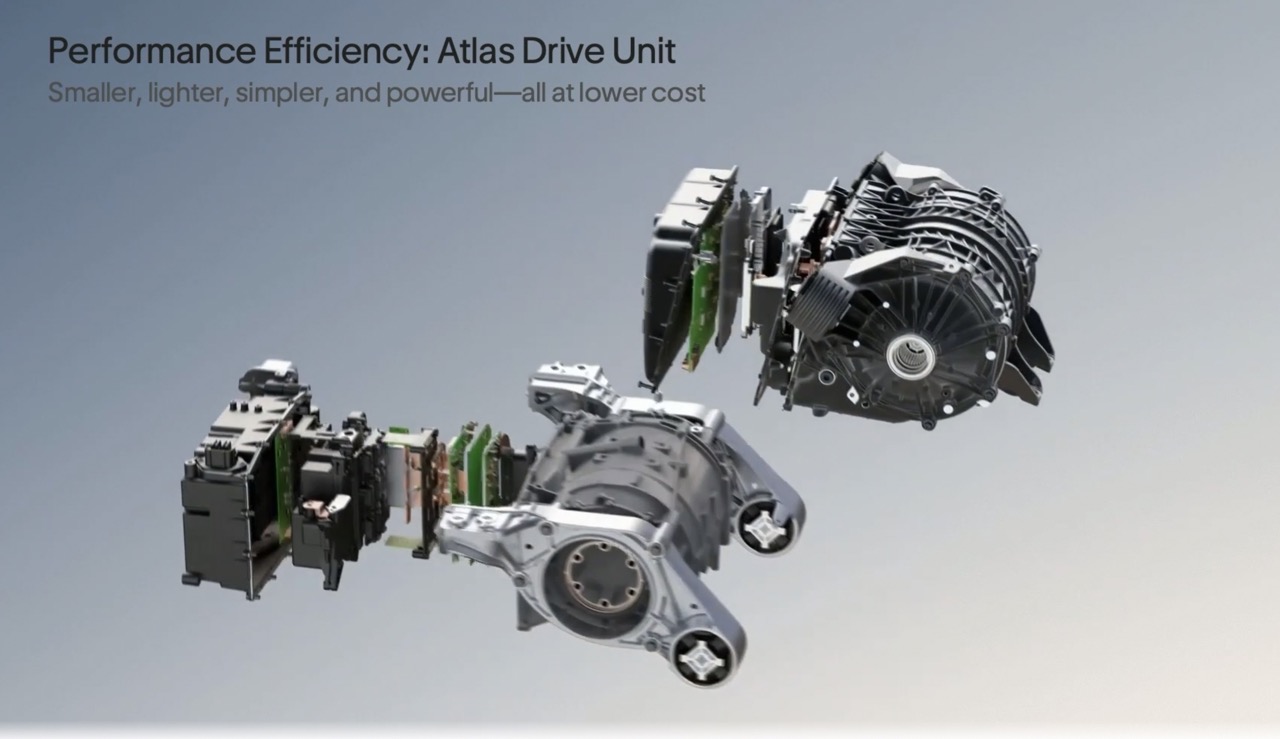
One of the biggest points that Lucid has made this morning is that “radical efficiency” is key. This means pulling ECUs out of the system to just three, and lowering the number of wires, for instance, to just 1,100 wires.
The new Atlas drive unit is much smaller to compared to what is in the current Air and Gravity. Even better, if I understood, those drive units are identical up front and to power the rear.
While efficiency is key, what’s interesting is that chief engineer Zach Walker says “we are not Gigacasting” as there are places that are better for steel stampings, aluminum extrusion, and aluminum casting. This makes building the vehicles cheaper and, according to Walker, it’ll lower the cost of insurance by about $1,000 per year for consumers. This is obviously an issue as at least one Rivian R1 cost $40,000 to repair due to a large casting.
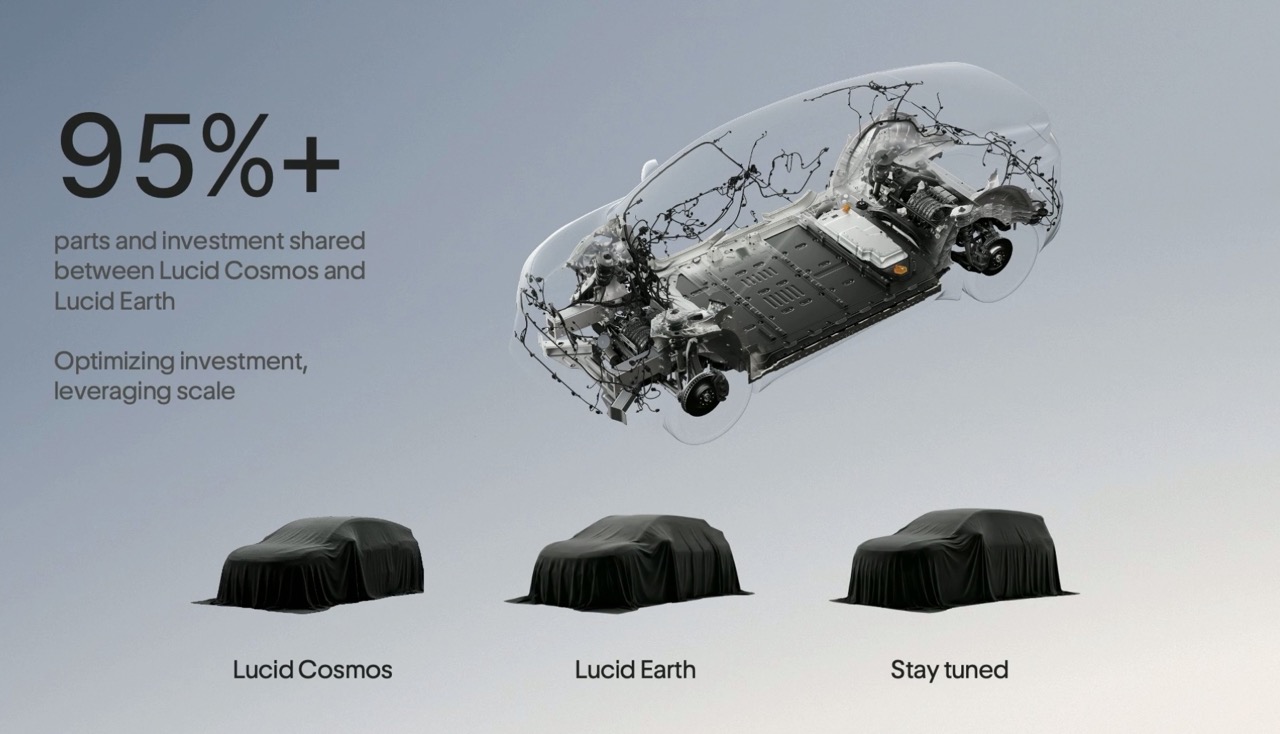
When it comes to the differentiation, the vehicles will share parts (95% it says above), but CEO Marc Winthehoff says “They’ll look very different.”
While pricing remains to be seen, and will probably vary by model, at least one of the vehicles will start at “Under $50,000,” which is to say maybe lower than the average transaction price for a new car in the United States.



I’m interested in these. Lucid seems to have the best pure ev engineering these days, certainly outside of china for sure.
There is no way vehicles named Earth and Cosmos will sell among north American drivers. I mean who wants a car named after a 70s sitcom character who got outed as a racist after his series stopped.