

Welcome to Members’ Rides this week! Last time, we had the chance to check out a pair of Murtayas and how they have been completely customized and designed by Mike. That was a great time, and I am very jealous!
Members’ Rides is where we share the cars and stories of Autopian Members. The potential to be featured here is a perk for Autopian Members of every level, from the ultra-affordable “Cloth” tier all the way up to “Rich Corinthian Leather.” Click that link and join today!


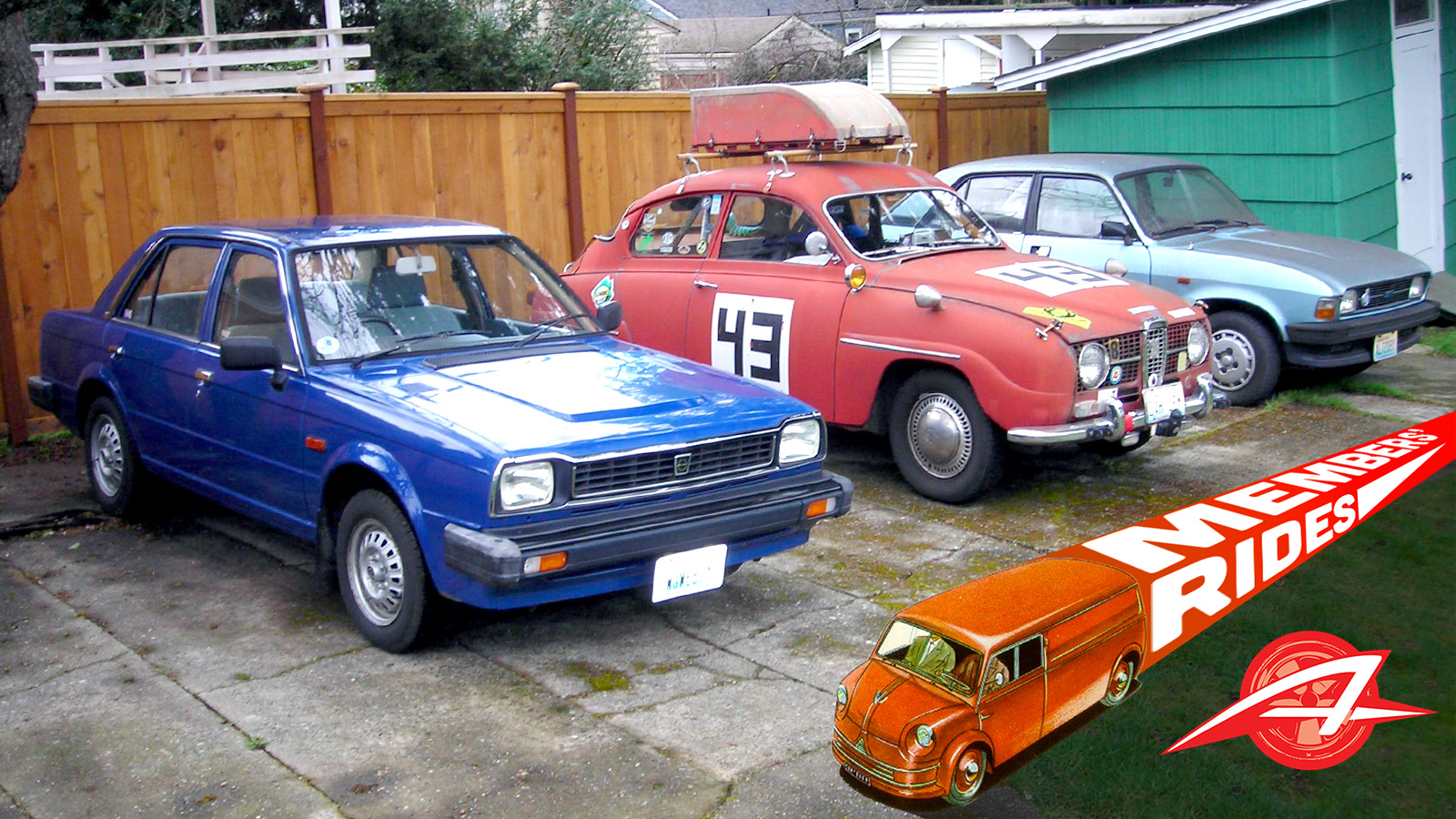
This week, we’re switching gears a bit and exploring what a garage would look like if you were deathly allergic to anything with more than 50 HP, or close to it anyway. Most of them also weigh in at less than some motorcycles! We’ve got a two-stroke race car, and a bunch of vehicles that might not quite meet your definition of “car.” Time to meet Mike and his fleet!
What’s currently in the garage?
- 1967 SAAB 96
- 1970 International 1200D
- 1976 Volvo 66 GL sedan (plus parts car)
- 1980 KV Mini 1 (plus parts car)
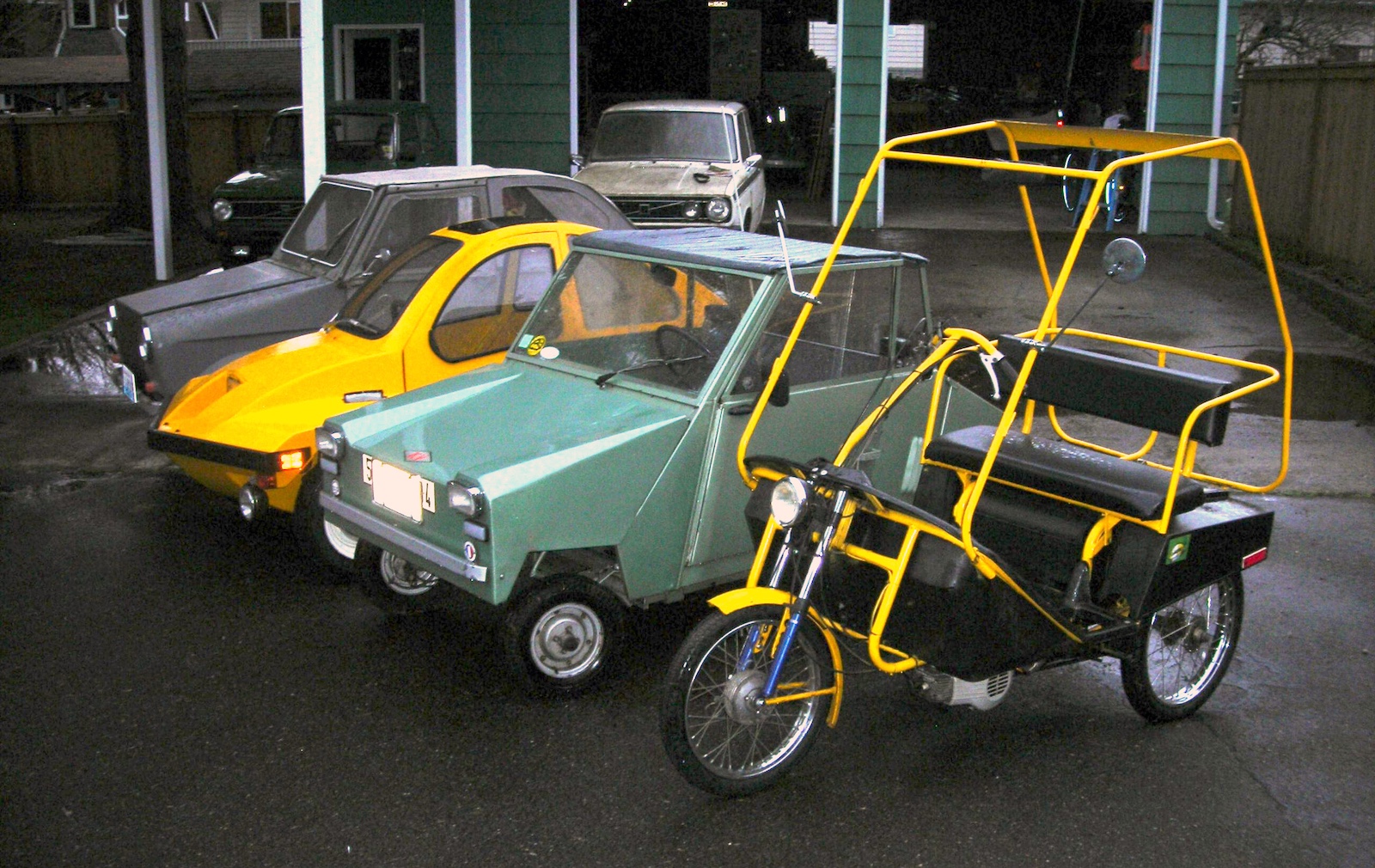
- 1981 American Microcar Tri-Ped
- 1981 HMV Freeway
- 1982 Austin Allegro 3
- 1972 Velorex 435
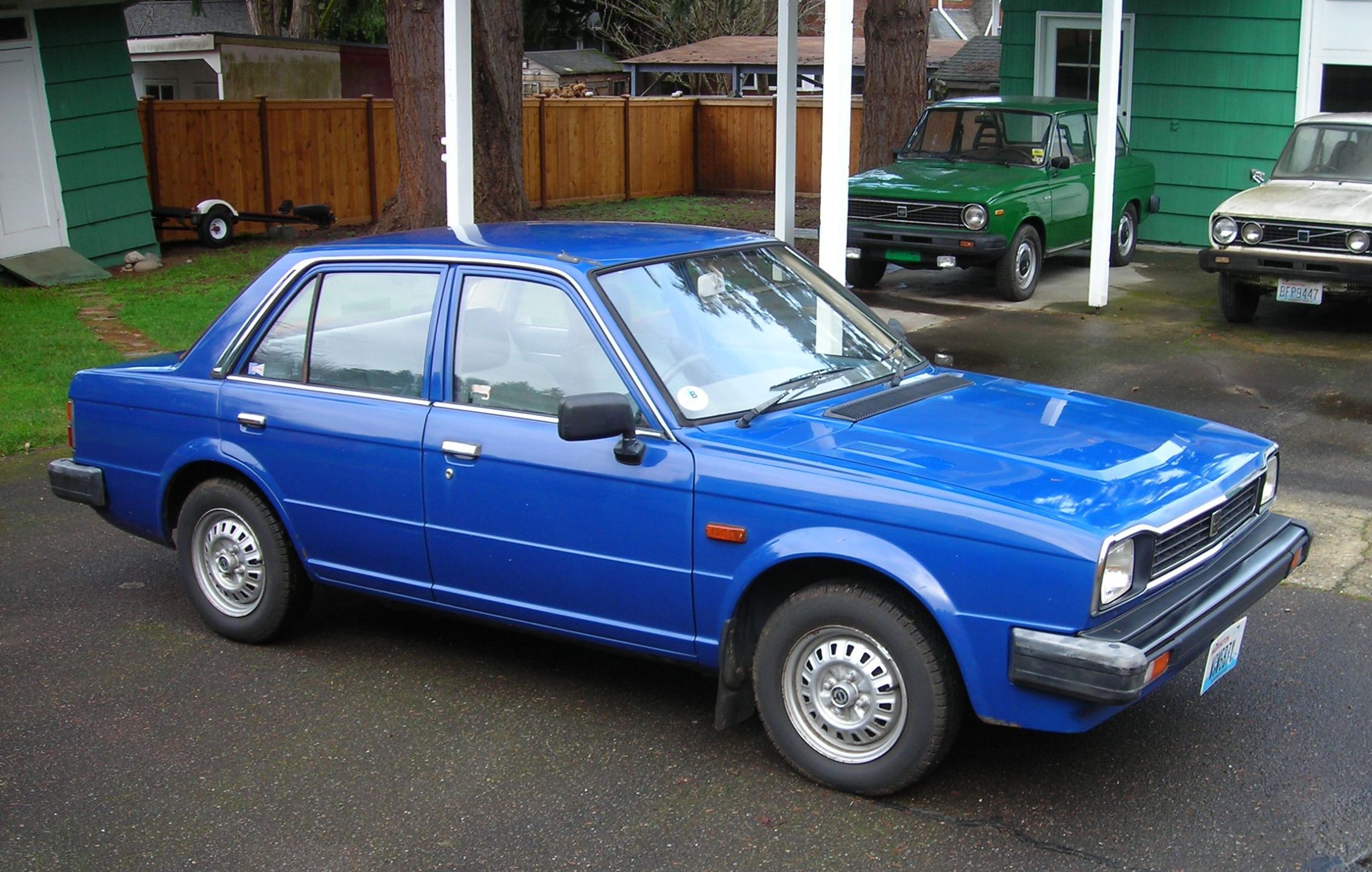
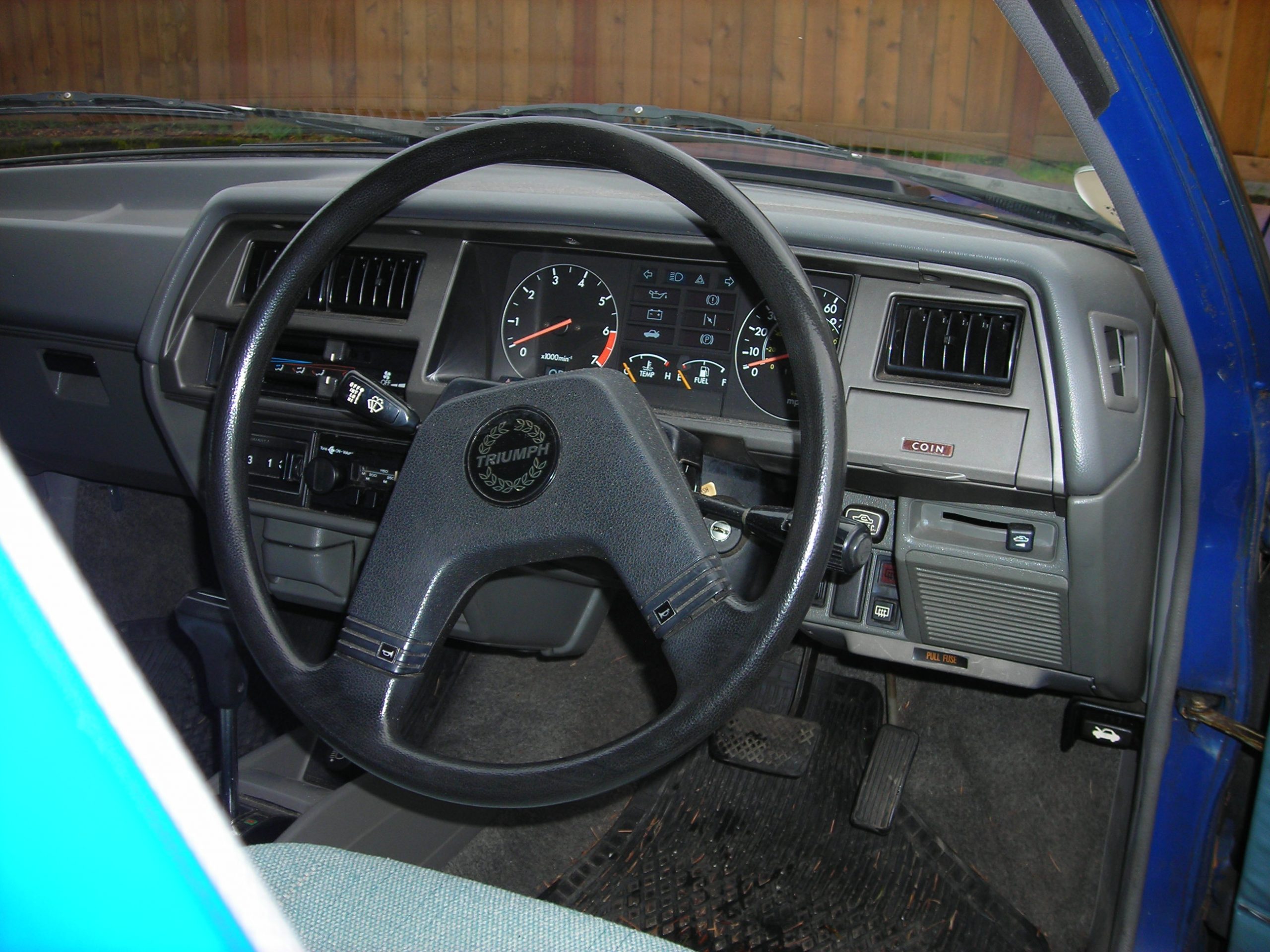
- 1982 Triumph Acclaim HL
How did you get into cars?
Automotive enthusiasm runs in the family, which is more than can be said for many of our vehicles.
How did you get into all these unusual old cars? That’s not a niche many people play around in.
I grew up around older cars and noticed over the years that I most enjoyed seeing vehicles that were unexpected survivors. From there, it didn’t take much to realize that the best way to see them regularly and to make sure that someone would keep them going was to have a few myself.
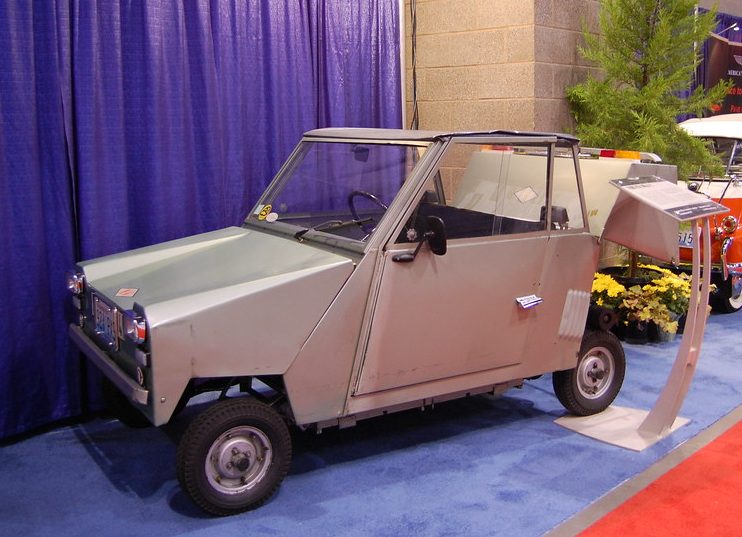
How do you even start when you need a part? The truck is the most normal in the fleet, and even that’s pretty unusual.
I mostly rely upon single-marque or single-model clubs, online resources, and international (or, for the truck, International) personal contacts. It helps to have patience, which is straightforward as long as not too many of the vehicles are out of service at the same time.
Have you had a car sidelined due to something irreplaceable breaking?
Nothing so far has been strictly irreplaceable, but it can easily take weeks to months to find and receive things. At various points, most of them have sat waiting for something. I’ve got a parts car for the KV and for the Volvo, and a shed full of parts for the SAAB.
Have you ever had to fabricate anything or have parts custom-made?
For the current fleet, no, not yet, other than when I converted the SAAB into a race car and had a cage made for it. I did once need to get a set of custom adaptors made for mounting a slightly newer set of rear Hydragas displacers into my former MG Metro 1300. The machinist thought the project was an interesting challenge.
Which of these is the daily? Do you even have a go-to daily car?
I don’t have a single daily driver except when I’m down to one running vehicle. I rotate through whatever is running and is at least minimally adequate for my in-town commute. Currently, that’s the International, the SAAB, the Triumph, the Velorex, and the Volvo. The Austin is experiencing some issues just now.
With this many cars, what’s the parking situation look like? Do you have a warehouse somewhere?
We spent about a year looking at dozens of houses before finding one in the area with a fair-sized separate garage, a carport, and an abundance of paved parking behind the house. The tradeoff was that overall it was in terrible shape, so it took considerable work to make it habitable; the only other people interested in the place were thinking of it as a tear-down. Still, one advantage to having small cars is that it’s possible to fit quite a few of them into just a couple of garage bays.
Alright, tell me about the Saab 96
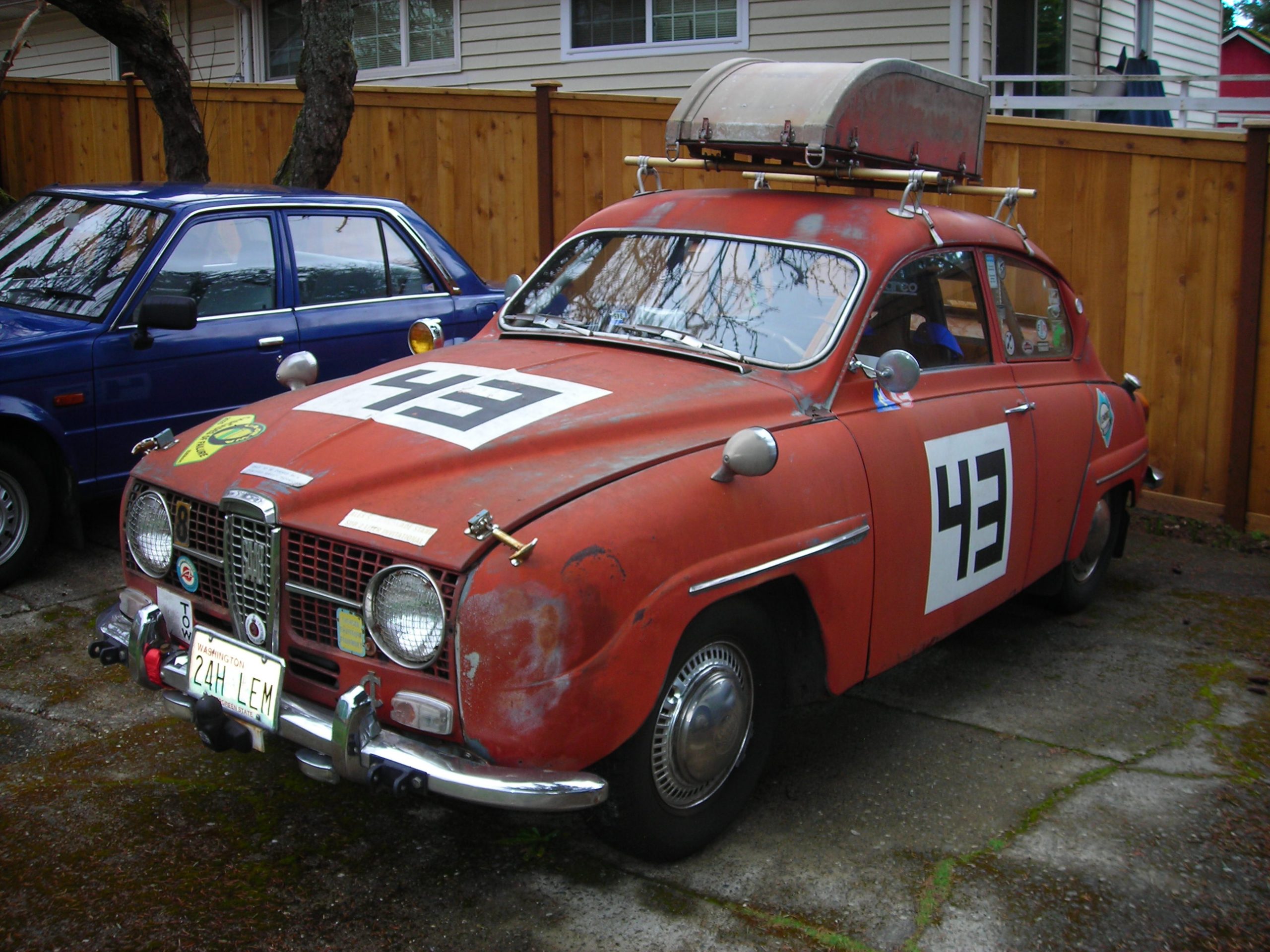
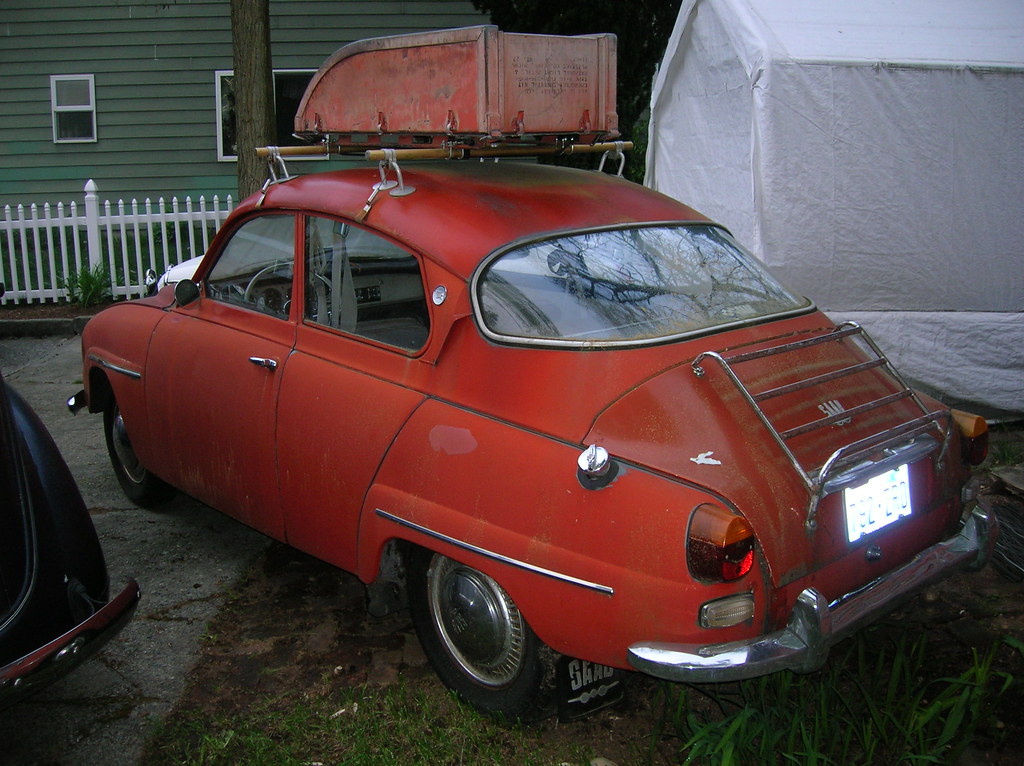
This is a three-cylinder, two-stroke sedan that I converted into a race car about fifteen years ago for running in the 24 Hours of Lemons. I’ve done a couple of Lemons Rallies with it, too, so I suppose I can also claim it’s a rally car. You know, SAAB heritage and provenance and all that.
How did you come to own it?
About 23 years ago, I had a 1969 SAAB Sonett V4 and mentioned to the president of the Northwest SAAB Owners Club that I was interested in finding a two-stroke car. He just happened to have recently rescued this 96 out of the woods, along with a couple of other SAABs, at the request of the landowner, but he had decided that he didn’t really want to take this one on as a project. I was willing to have a go at it, so I got it running and drove it regularly for about a decade before deciding to cage and race it.
What kind of condition is your 96 in?
It’s still recognizably in the shape of a SAAB 96, but it’s a bit rusty, and its interior was significantly deteriorated after having sat in the woods for several years. This made for an easier decision to take it racing. Mechanically, it’s mostly stock and is fairly sound. I did convert the front brakes from drums to discs shortly after getting it because it was difficult to find parts for its unusual duplex front drums. Fortunately, the disc-brake front hub and axle assemblies from the later years of the 96 will bolt right in place.
How often does it get driven?
I drive it to work about once a week and take it on longer trips every few months. The longest trip so far was in 2022, about 3,000 miles in a little over a week in order to run the California Lemons Rally, including driving there and back. It ran flawlessly, which was a welcome bonus.
What is your ideal day of driving a Saab 96?
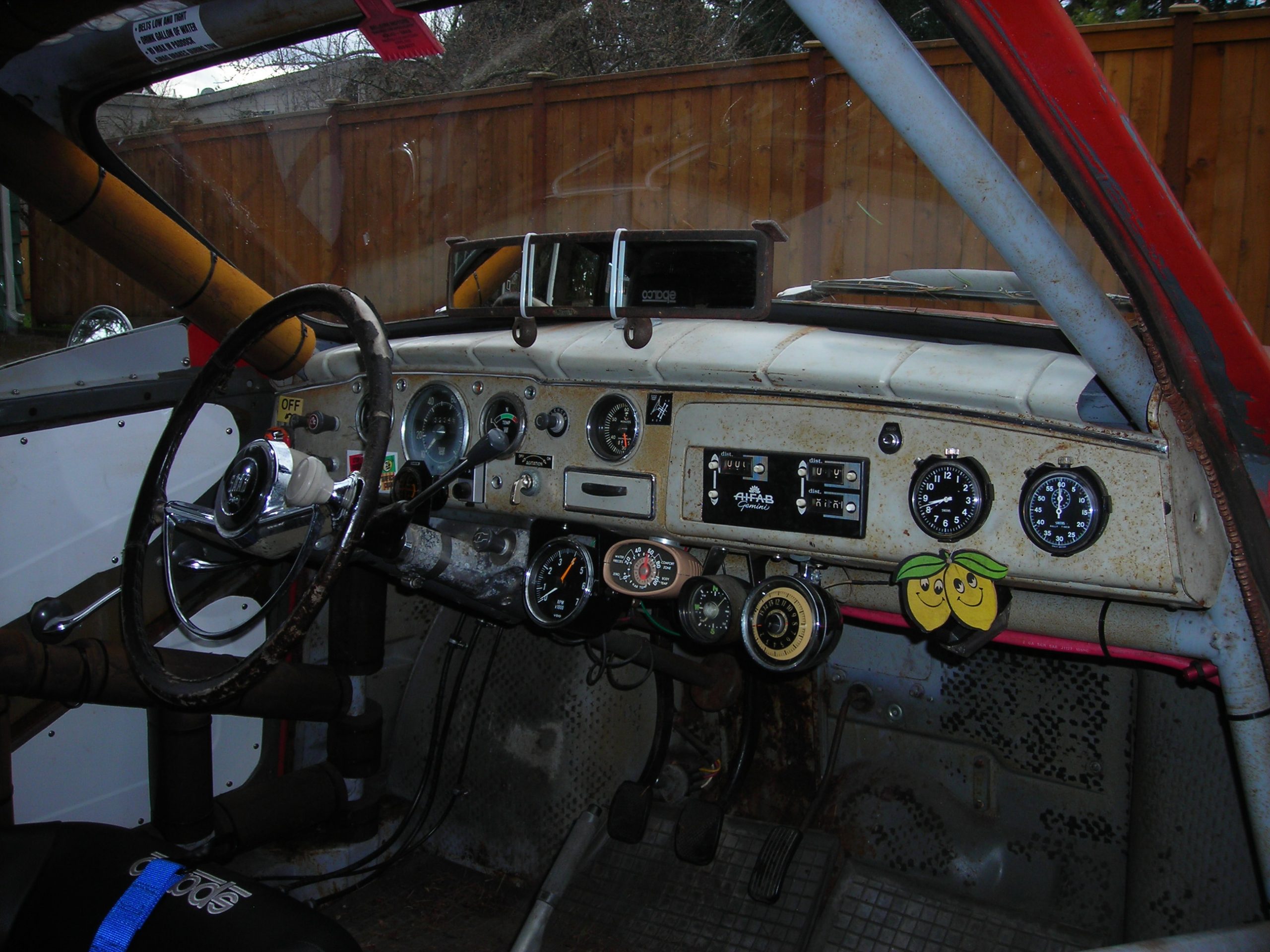
Ideally, all the way from mid-morning until late evening with no mechanical problems. Warmer weather is nice, in that I removed the heater/defroster assembly when I converted the car for racing. This is generally not a good idea for Lemons cars, but in the 96, this assembly takes up a lot of room under the hood and tends to get in the way when working on the engine and transmission so I regret nothing. Almost nothing. A defroster would be nice at times.
What do you love most about it?
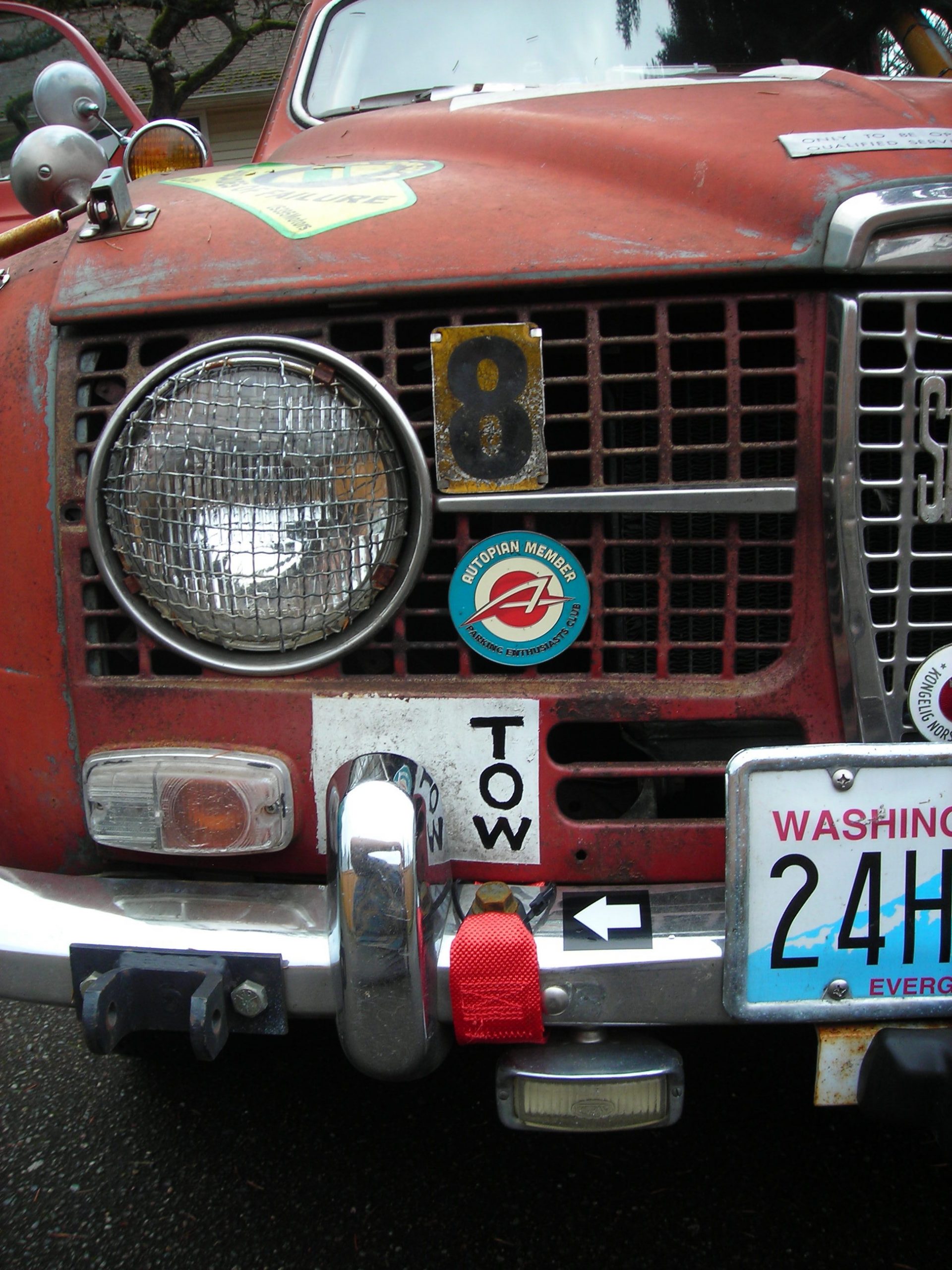
Well, really, just look at it!
What’s the story behind the International 1200D?
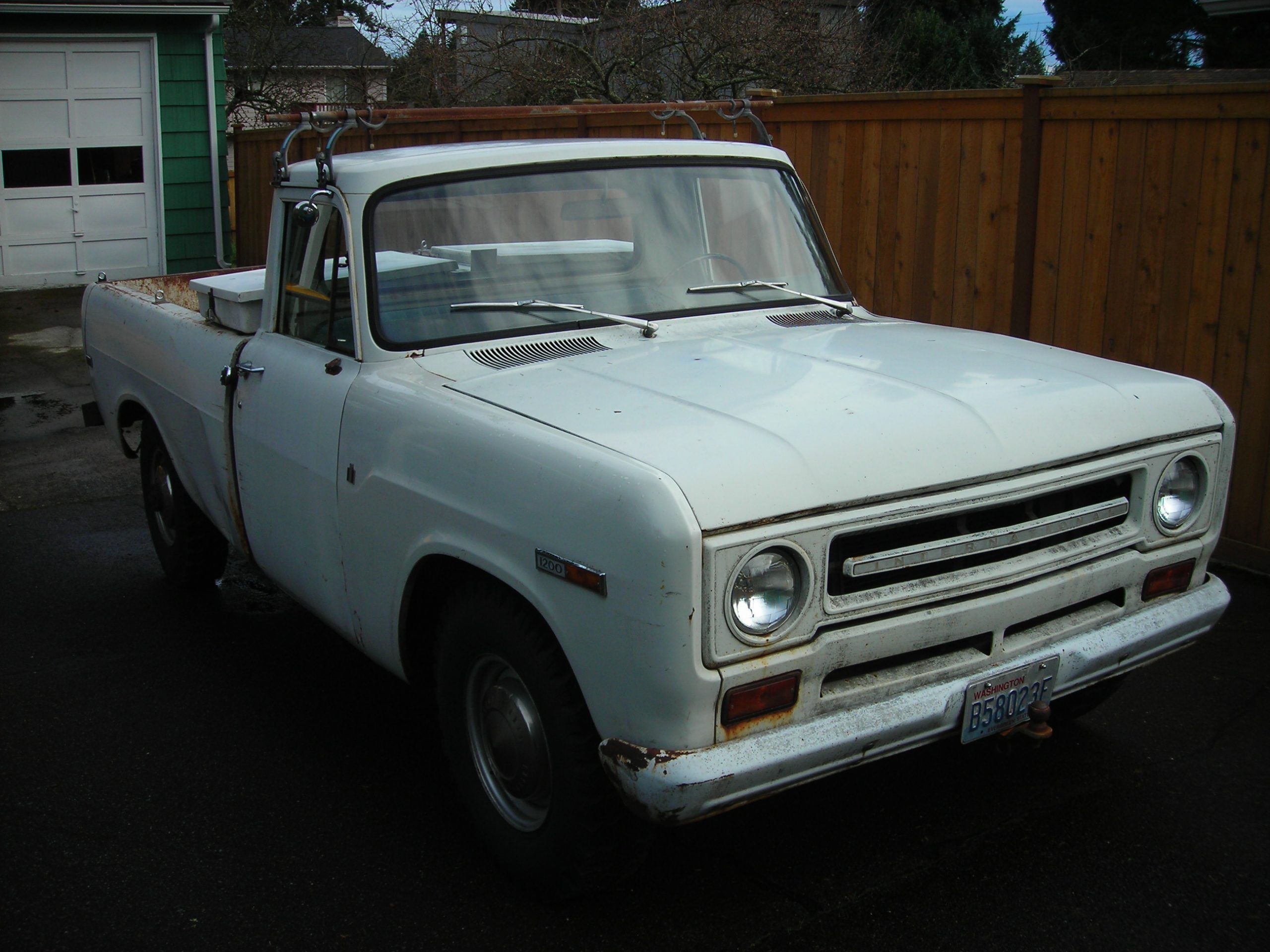
When we bought our fixer-upper house, I realized I really could use a truck for the fixing-upping so I looked to see what was on Craigslist. I bought it from the original owner who had used it as his work truck as an electrician until he retired. He gave me a bundle of paperwork going all the way back to the order form he had filled out for it at the dealership.
Does it get used as a hard-working truck?
I hesitate to call it “hard working” by professional standards, but I use it regularly for truck things.
What work does it need?
Keeping some of the gauges working properly is a constant struggle and is a known issue with these trucks. I need to dig into them yet again. Really, though, how badly does one actually need a temperature gauge? Or oil pressure gauge? Or fuel gauge?
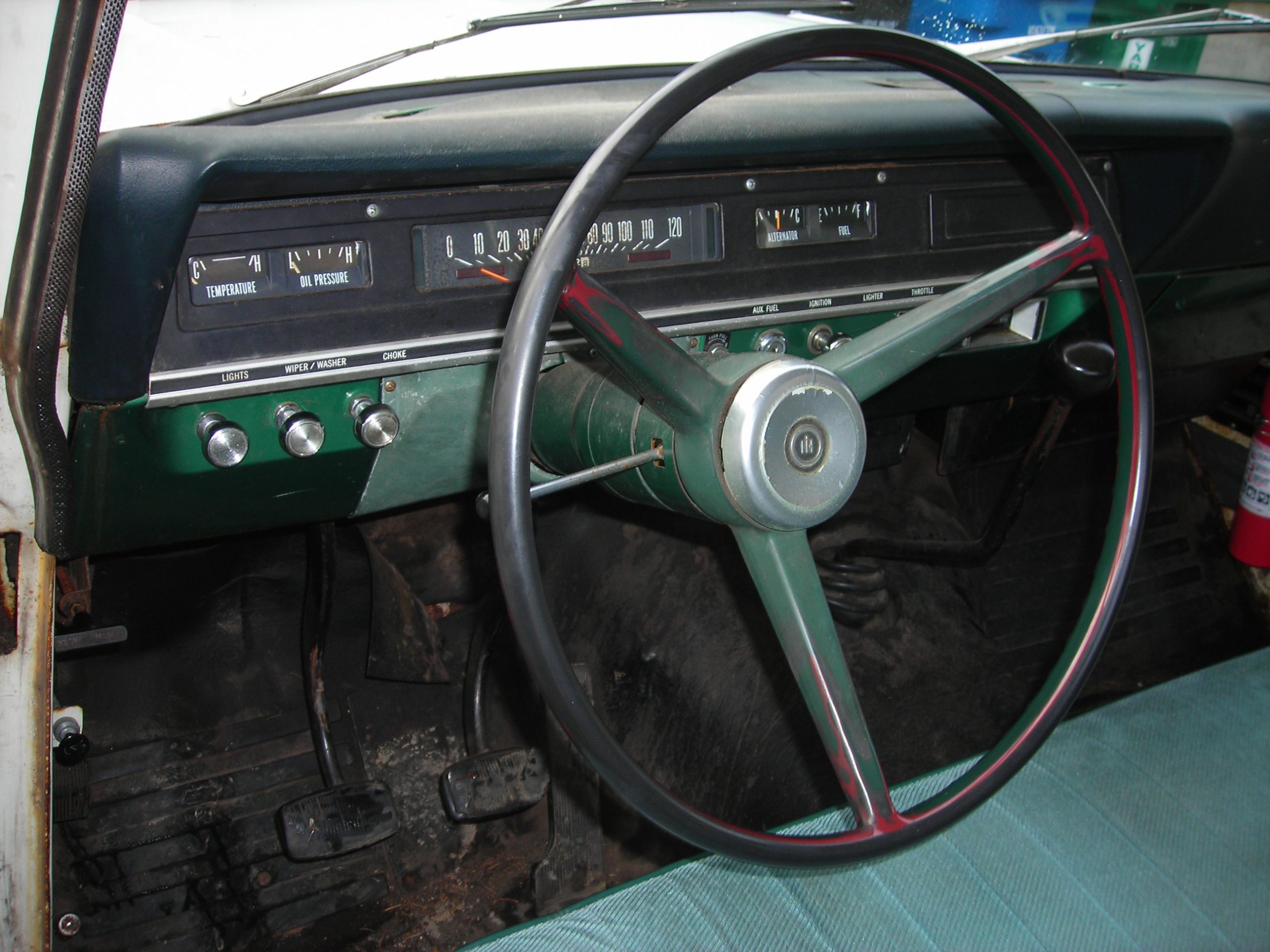
Has the 1200D been hard to keep on the road or is it pretty reliable?
So far, so good. It’s easily as reliable as any of my other vehicles, for what that’s worth.
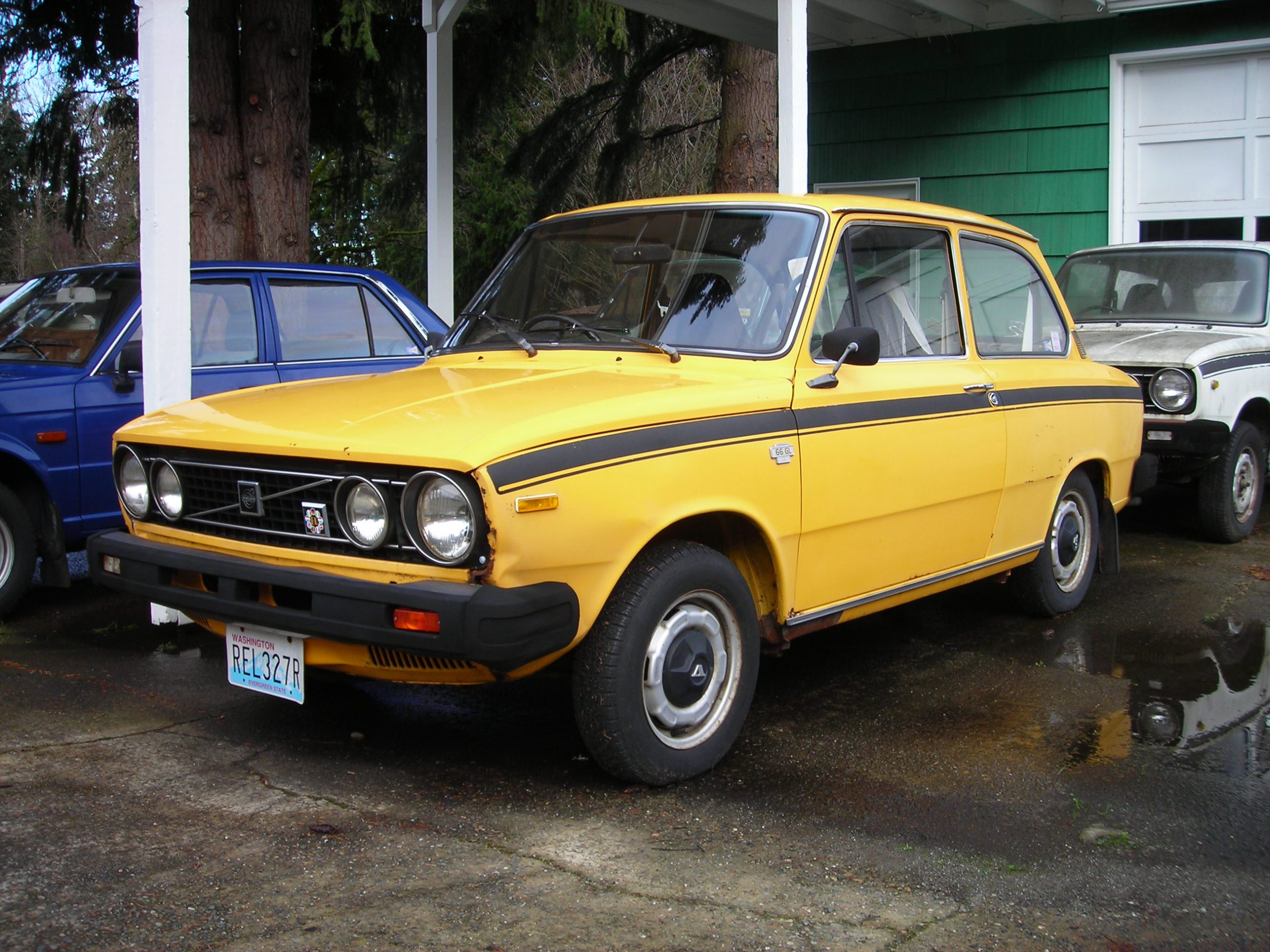
Now tell me about the Volvo 66.
It’s a badge-engineered DAF 66. The short version is that Volvo bought the Dutch company DAF, turned the car-making part of the operation into a wholly-owned subsidiary called Volvo Car BV, then kept making the 66 for a few years with very few changes other than the name.
Wait, does this thing have a CVT?
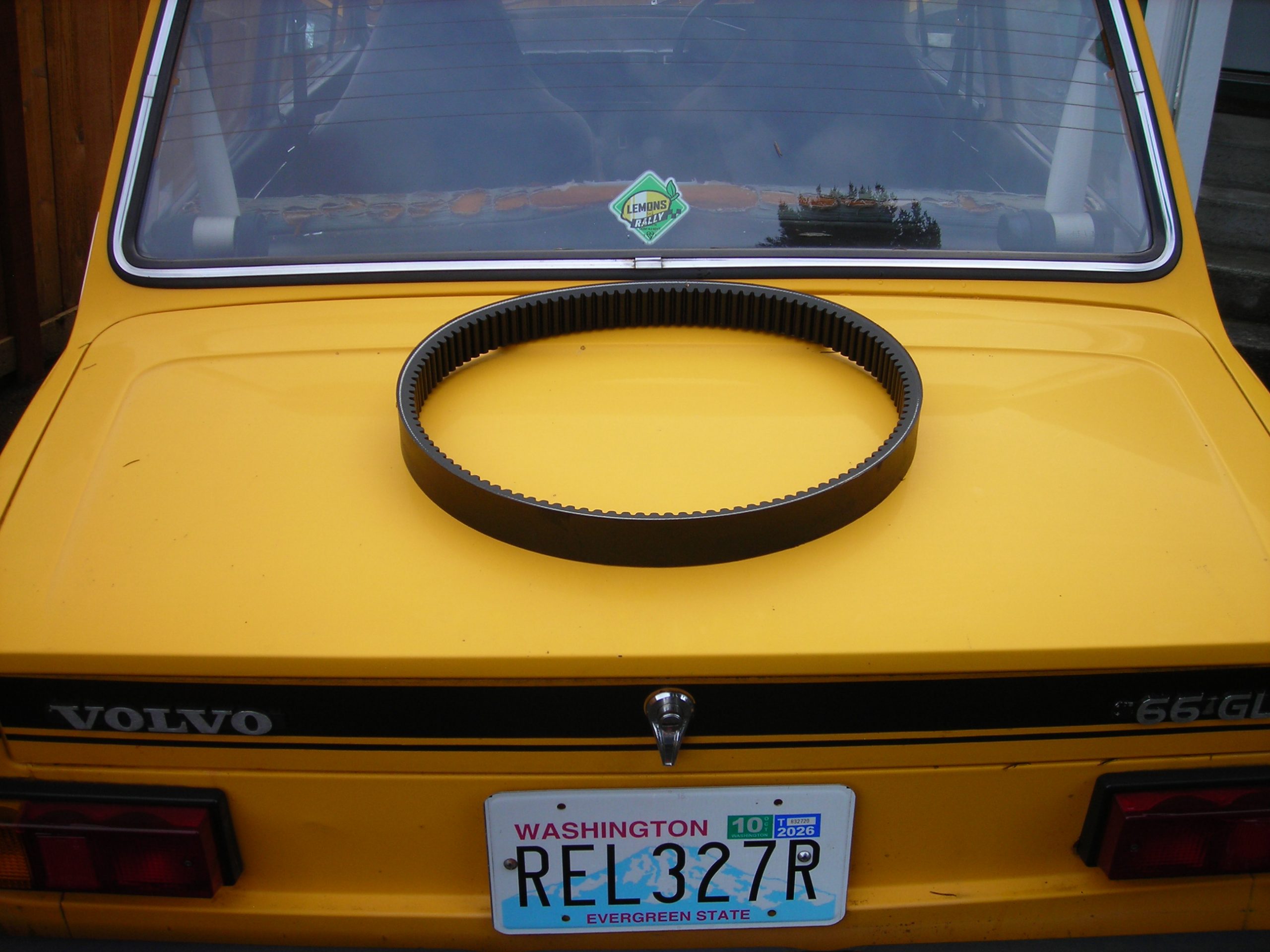
Hubert van Doorne (the “D” in DAF) and his brother improved and refined many of the features of the belt-and-pulley style of CVT. Van Doorne called his version the Variomatic and used it as a distinctive feature of DAF cars, which then carried over into their Volvo counterparts.
It works pretty well, but it is awkward dealing with the occasional belt failure, which can occur with little to no warning. I understand that roadside belt changes are much easier on the earlier DAFs than on the 66, but for this mode,l it’s a long, involved process performed entirely underneath the vehicle.
Were you looking for a Volvo 66?
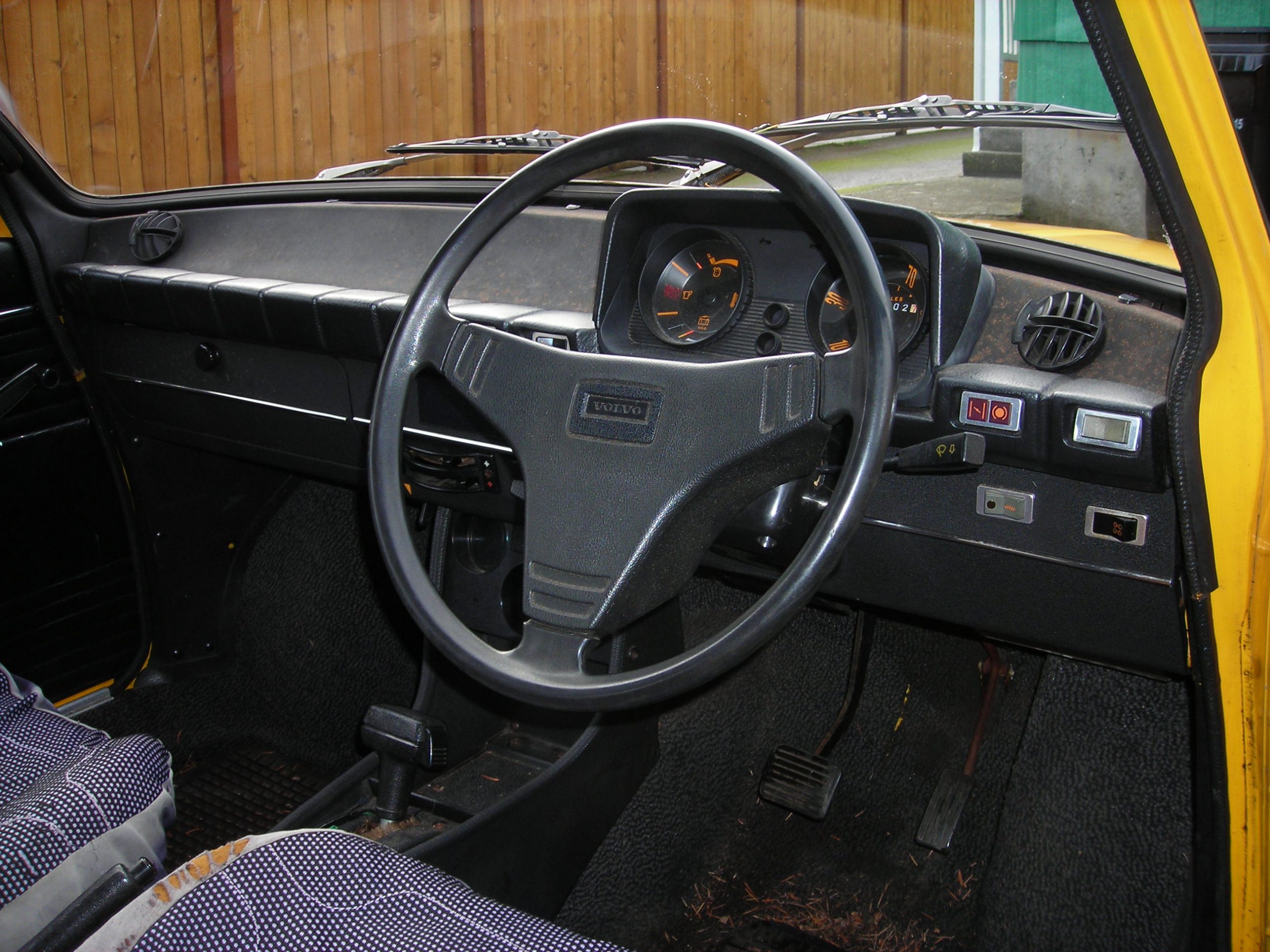
I knew what they were, but wasn’t looking for one in particular. The ’76 sedan turned up on Craigslist here in town, much to my surprise, so of course I had to go have a look at it. The guy selling it didn’t really know what it was and just wanted to be rid of it. I found out a few days later that it had been brought to the US by the friend of a friend of mine who had sold it several years previously.
Judging from the trail of paperwork it then passed through a few hands before ending up with the guy who just wanted it to go away. I saw the second one (the parts wagon) on barnfinds.com, realized it was somewhat local, and ended up trailering it home.
It apparently had been brought to the US when new by someone from the Netherlands who had a temporary faculty appointment at Oregon State University, who then left it behind when he returned home. Perhaps not surprisingly, it ended up languishing in a field not long after that, inasmuch as finding obscure parts for cars that were never sold here was not as easy at that time.
I see the KV was written about a few years ago, what led to that?
Yes. That car received a surprising amount of print and online coverage after winning Worst of Show at the inaugural Concours d’Lemons in 2009.
I see from that one that a couple thousand KVs made, any idea how many still exist?
They turn up for sale with some regularity on leboncoin.fr, usually in poor condition, but I have no idea what the total number of survivors might be. There’s one for sale on there right now for 150 euros.
How did you end up with 1, let alone 2 of them?
I had seen photos of the first one twenty or so years ago on the website of the now-former Bruce Weiner Microcar Museum and was charmed by its grindstone drive mechanism. A couple of years later, that exact car came up for sale on eBay Motors, so I placed a bid and won. The museum had sold it to a local individual who had then taught his son to drive in it (!) before listing it on eBay.
This was all several years before the museum closed and auctioned off the entire collection. The second one I bought sight-unseen as a non-running parts car from the Bubblecar Museum in the UK when they were thinning their collection. They crated it and shipped it to me by air freight, which was the cheapest option for a relatively small object weighing all of 400 pounds.
What do you love about your KV?
Every aspect of it, from the idea behind VSPs in general to the decades-long story of the company (New Map to KV to KVS) to the design and construction details of this one in particular. Grindstone friction drive! Rack-and-chain steering! Delightful.
Has it been hard to keep it roadworthy?
Having a parts car helps. I’ve also been fortunate to have experienced no major mechanical problems with it so far.
Do you drive this often?
I do not. It is just barely workable in Seattle city traffic, so it’s mostly for special occasions.
Let’s talk about the American Microcar Tri-Ped.
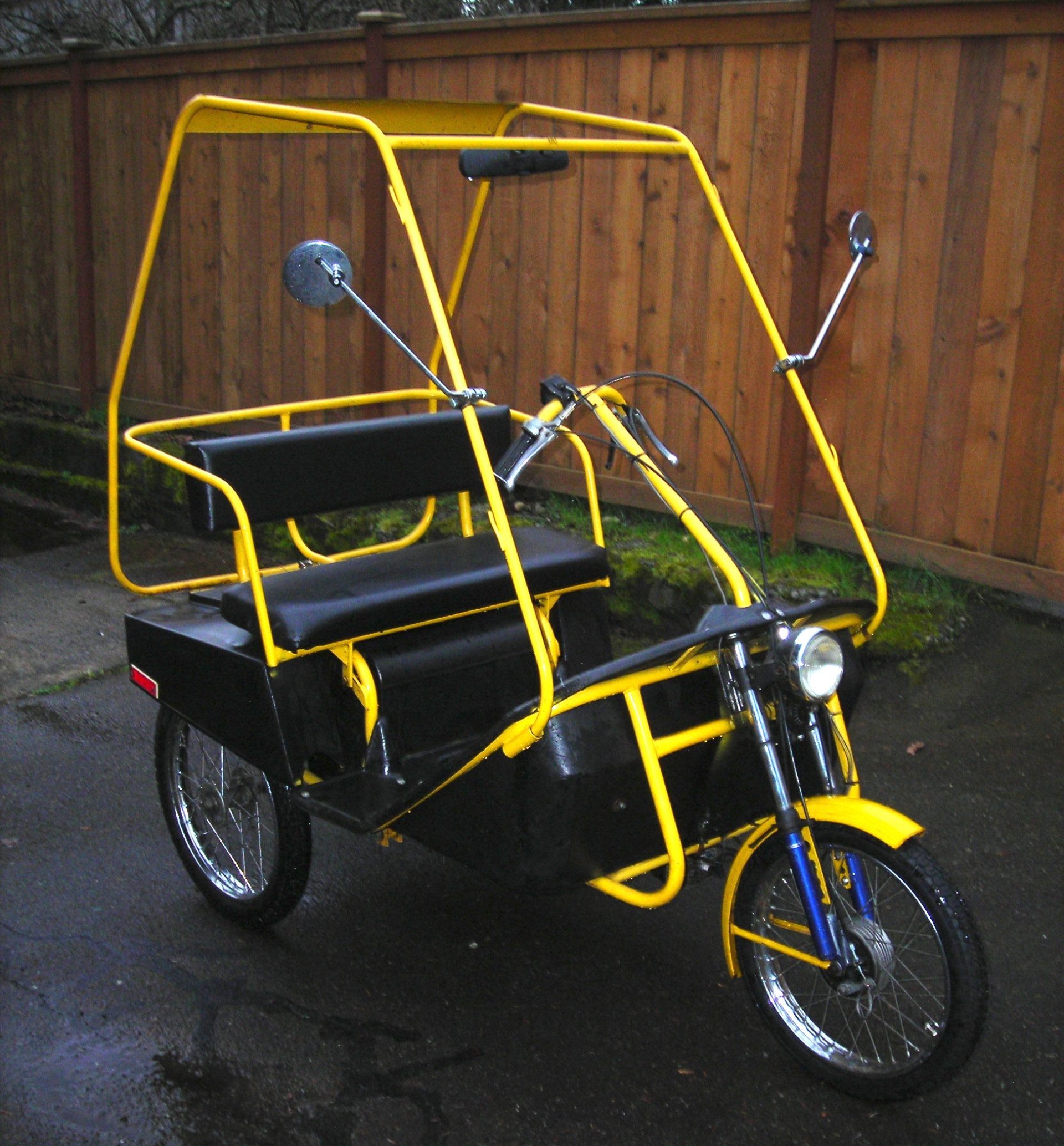
It was designed and built as a response to the repeated oil crises of the 1970s. I find it interesting to see how individuals and small companies tried to come to terms with these events, which is how I ended up with this, along with my HMV Freeway. It also ties into my overall interest in microcars, what with the word “Microcar” being right there in the name and all, even though it’s legally a moped.
How did you find yours?
It turned up on eBay on the other side of the country. These were manufactured in New York, and I have the impression that very few made it out west when new or, for that matter, since then.
Any progress on finding a windshield, doors, and top?
Nope. Even if nobody is selling any, I’d be happy just to get a set of dimensions and material specifications or to borrow a set as patterns.
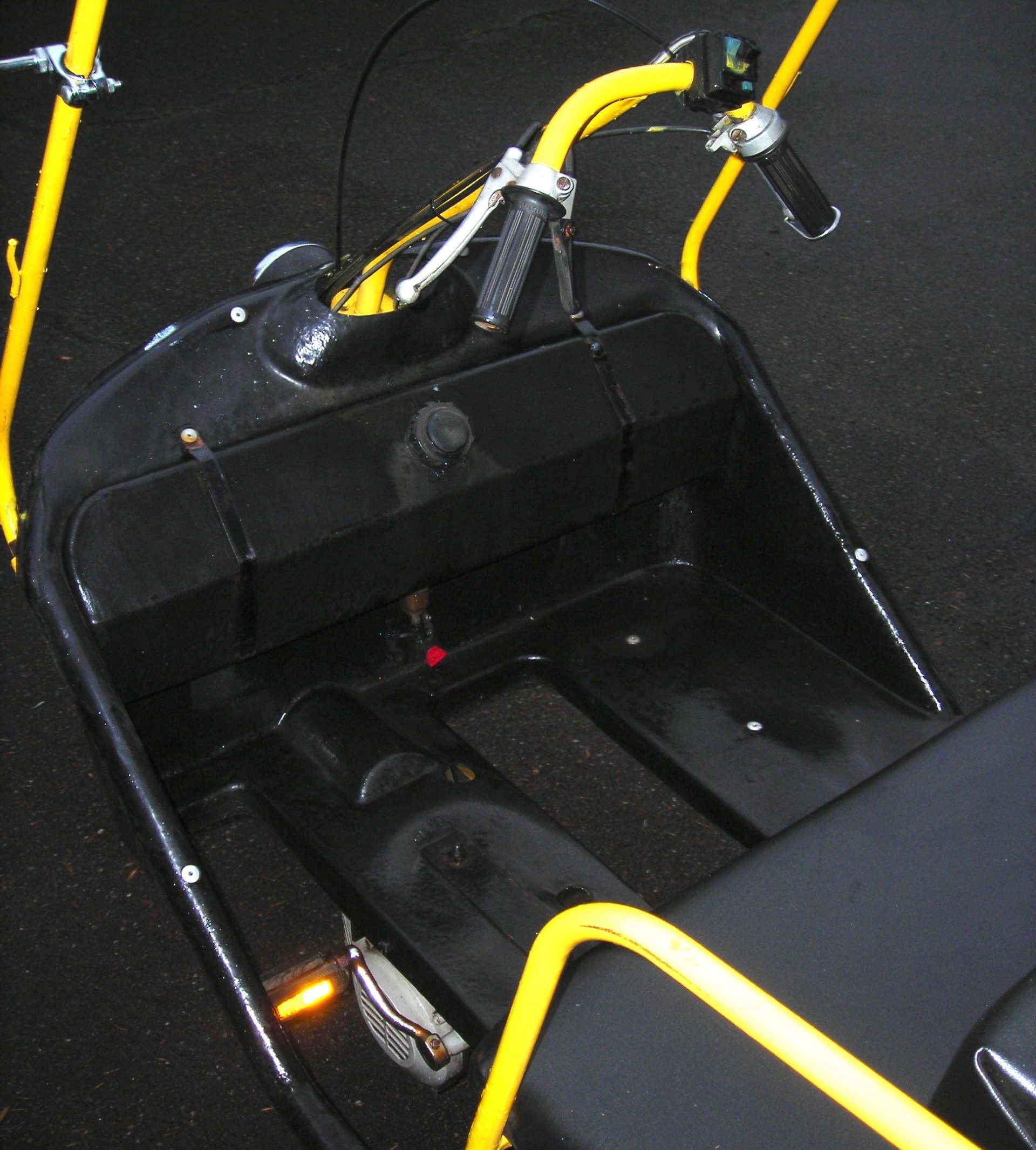
Does it feel super unstable with the weird wheel layout, or not too bad?
It feels terrifyingly tippy even at walking speeds. I don’t drive (ride?) it much.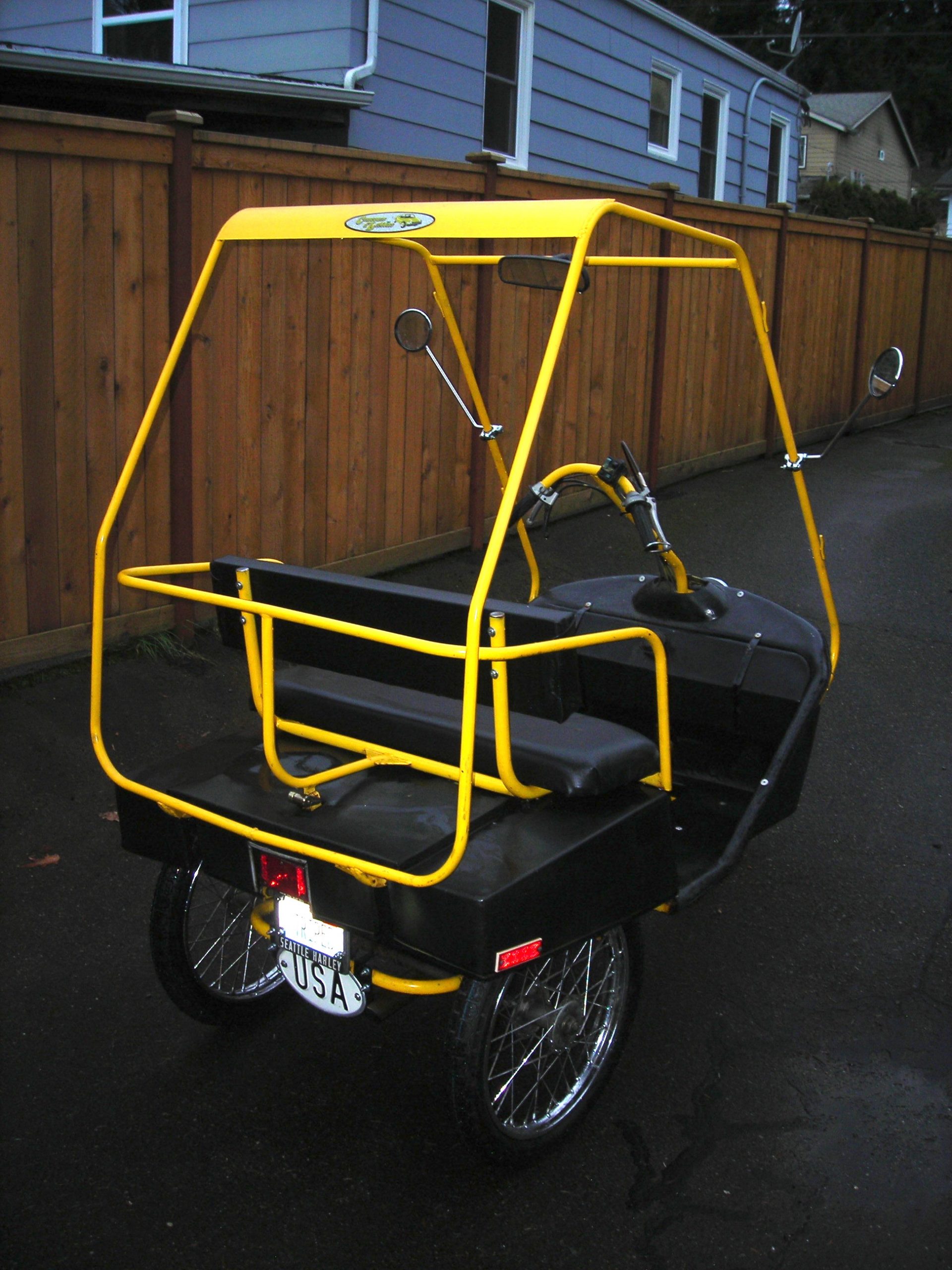
Does the Micro-Ped feel similar to the KV mini at all? To my mind, they seem somewhat similar, even being down a wheel.
Not really. The KV is small, slow, and fragile, but at least it feels stable going down the road.
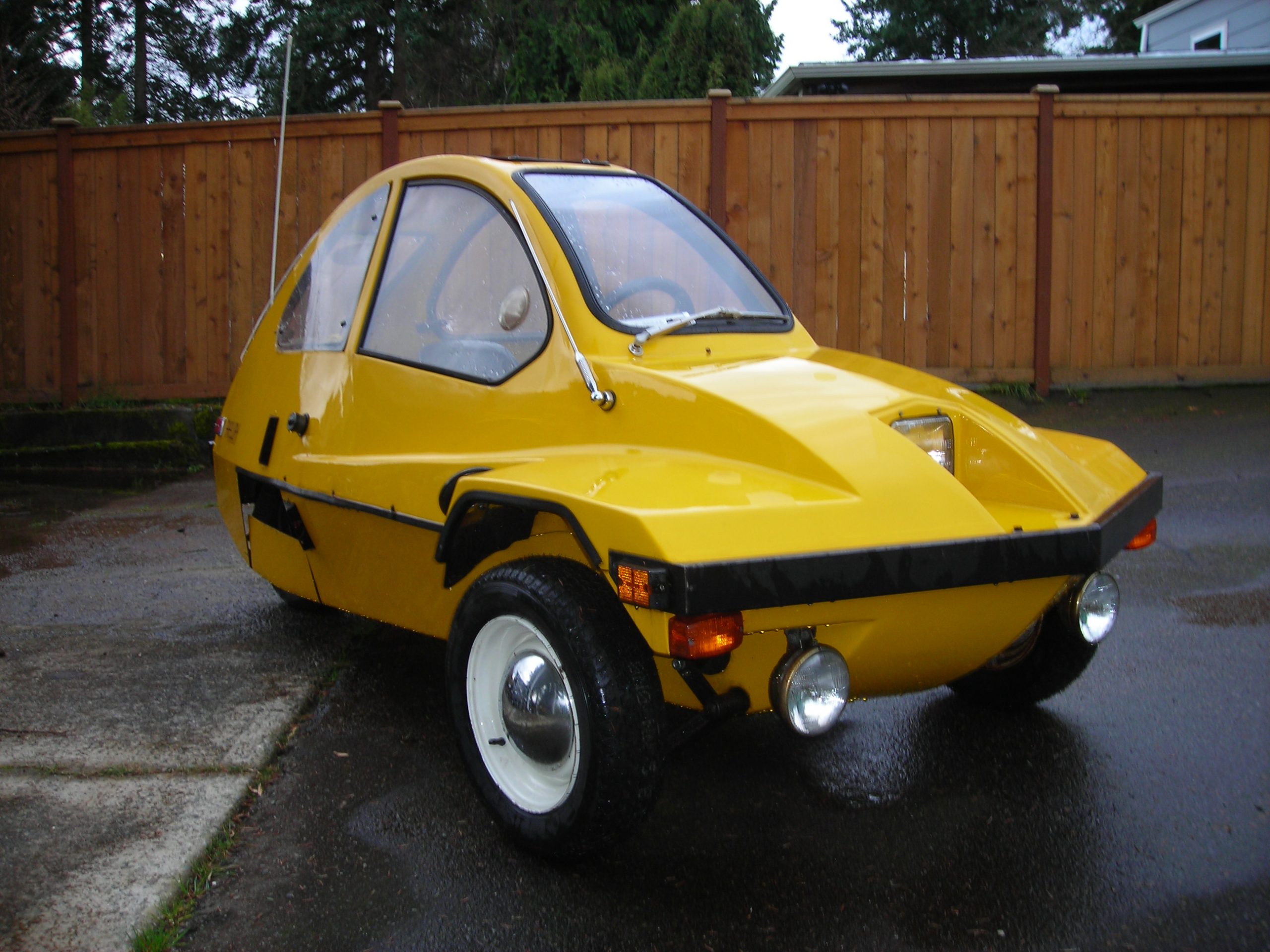
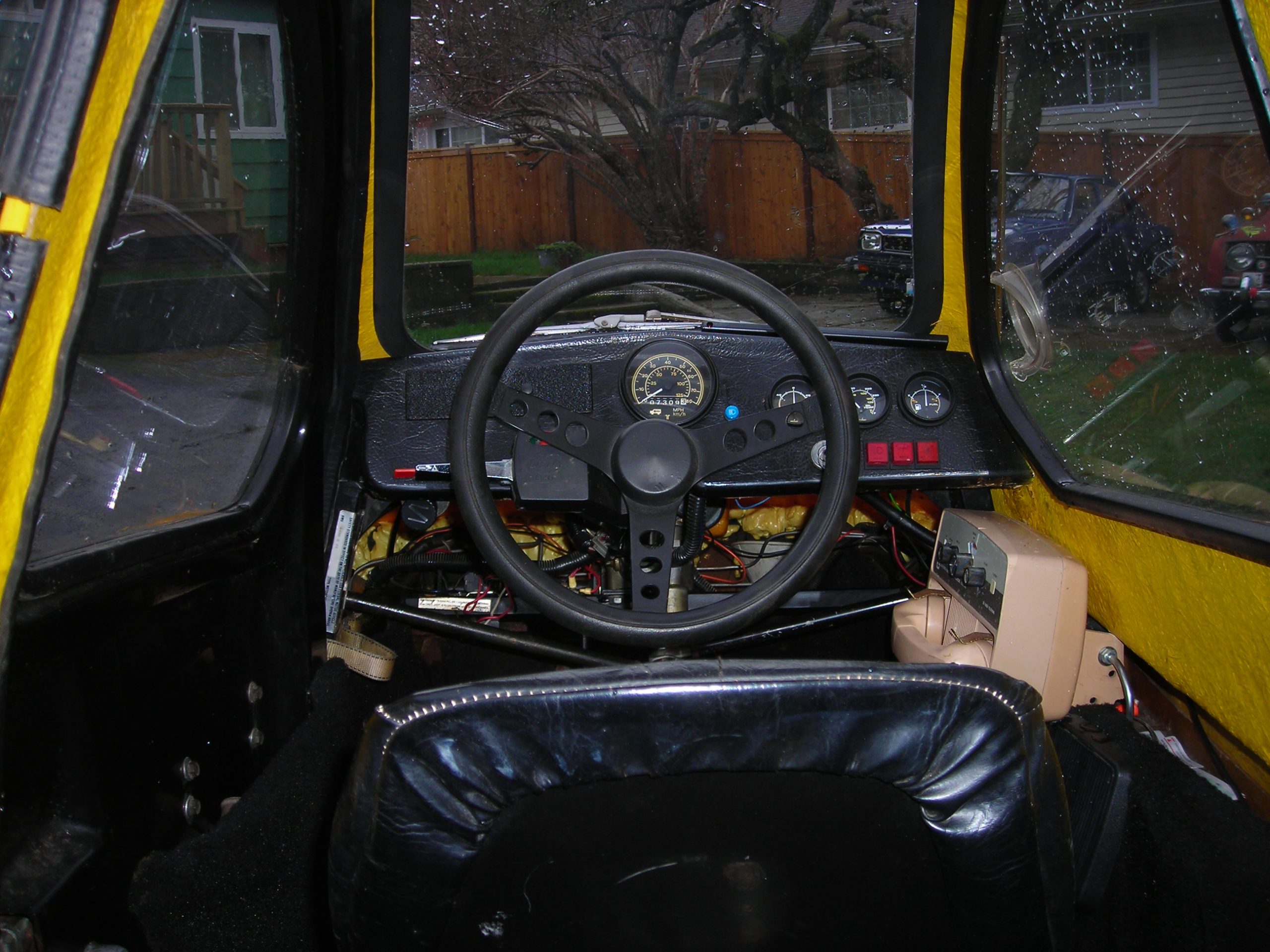
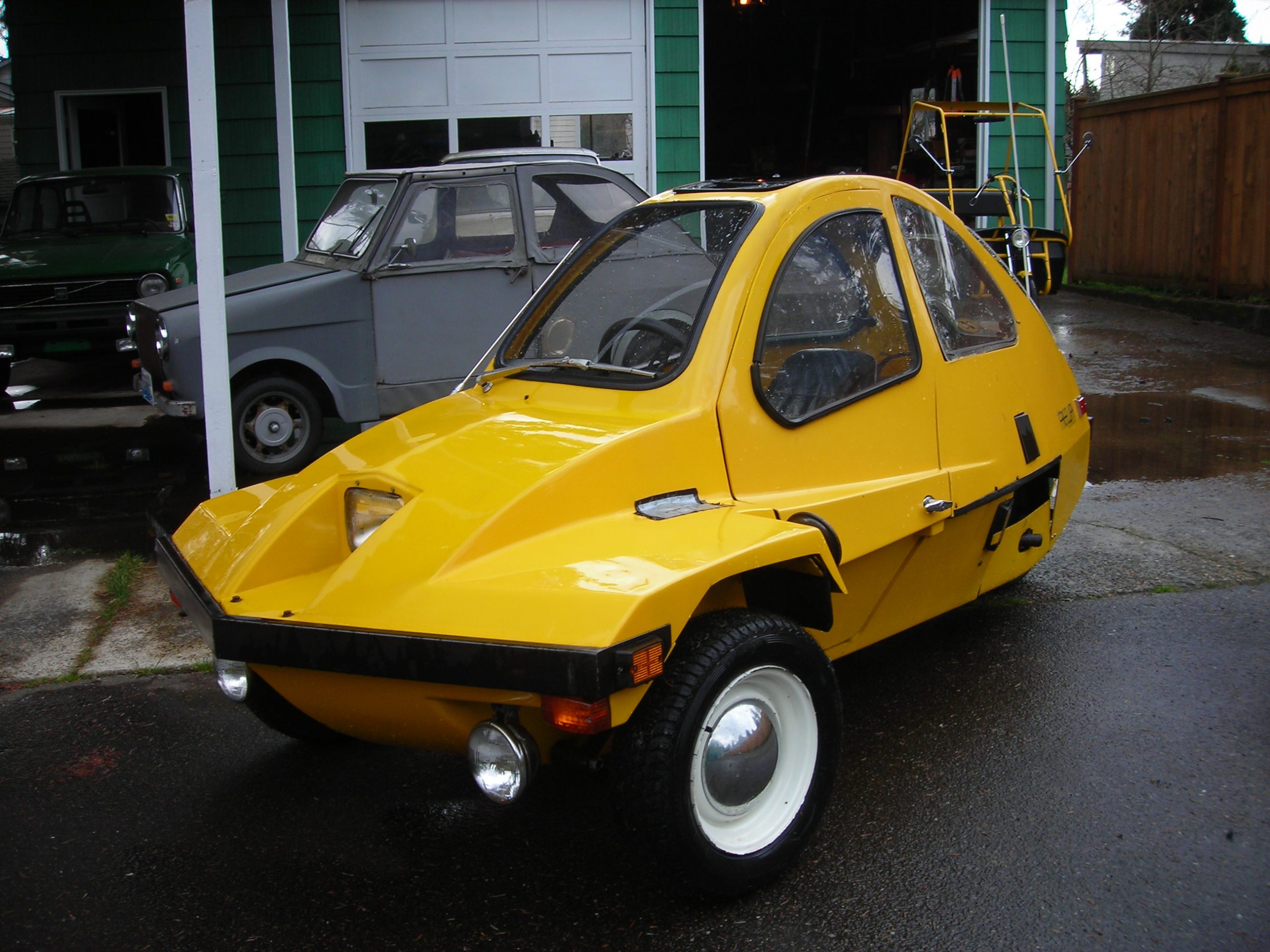
Now the HMV Freeway seems like the weirdest yet. From what I can see, there’s no reverse gear in them?
The designer, Dave Edmonson, had intended to incorporate a reverse drive (via a small electric motor) into the design, but never did. It’s incorrectly listed as an option in some of the factory literature. I met him in 2010 at the Microcar/Minicar World Meet in Crystal Lake, IL, and had a chance to ask him about it; he simply had had too many other tasks at that time, so the reverse project never went anywhere.
Have you ever actually taken it on the freeway?
Certainly! Locally, quite a few times. My longest trip was from Seattle to Eugene on I-5. Not back, though, as it broke down on the way.
What’s your favorite story of driving the Freeway?
The trip to Eugene was supposed to be the first leg of a drive to California for the 2015 Concours d’Lemons. After it broke down and I got it home via U-Haul, I ended up trailering it to the show behind my former 1968 SAAB 96 V4. Alan Galbraith awarded this combination the Long Distance Award, but only after I had promised never again to try driving my Freeway from Seattle to the show.
What’s the most unique thing about it?
Freeways are generally pretty similar to each other, so there’s not a lot unique to this one. Most have the 16 HP Tecumseh engine but this one has the 12 HP Tecumseh, the engine which HMV guaranteed would deliver 100 mpg under test conditions. It doesn’t even come close. Consequently, the guy who sold it to me thought it had the larger engine. It does not.
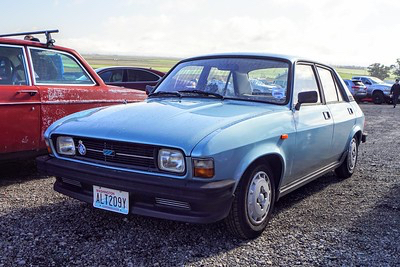
I love how the Austin and all of these are so unusual that I can, without any difficulty, find the exact one you have.
You can also find my former Austin Maestro Vanden Plas and my former MG Metro 1300 on BaT, all three from before it became an auction site.
How has it been over your decade of ownership?
It’s fun, nimble, and not what its reputation would suggest. Admittedly, I have a later Allegro 3, made after some (but not all) of the earlier issues had been redressed. The manual still contains a warning not to use the rear jacking points; I’ve heard there’s a danger of flexing the body and dislodging the rear window, but the manual doesn’t specify a reason.
Looks like it’s got the Mini Cooper engine. Is this thing a blast or not quite as quick in the bigger car?
It has the BMC A+ engine, which is a comparatively desirable variant of the A-Series and is among the reasons that more than a few Allegros and Metros got scrapped as powerplant donors for Minis. I’ve only ever driven a Mini at paddock speeds, so I don’t know how it compares. It’s slower and less agile than the Mini Moke I once raced, though.
How many miles have you added to this over the years?
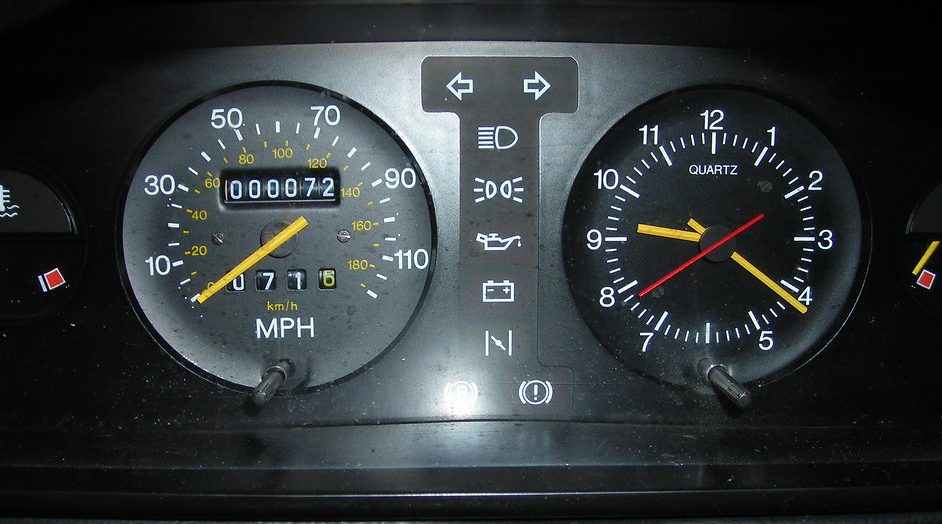
That is probably something I should know, isn’t it? I don’t really keep track of odometer readings, so I’ll say maybe around 20,000 miles?
Is it still operating on the Hydragas suspension?
Yes. There aren’t any alternatives. Replacements based on coil springs have been produced for MGF Hydragas displacers, but these are, of course, not interchangeable. I’ve replaced all four displacers with refurbished units from the UK, but the diaphragms themselves can’t be serviced, so they’re still decades old and are on borrowed time. I suspect eventually this will become a genuinely irreplaceable part unless someone is willing to put considerable time and money into R&D.
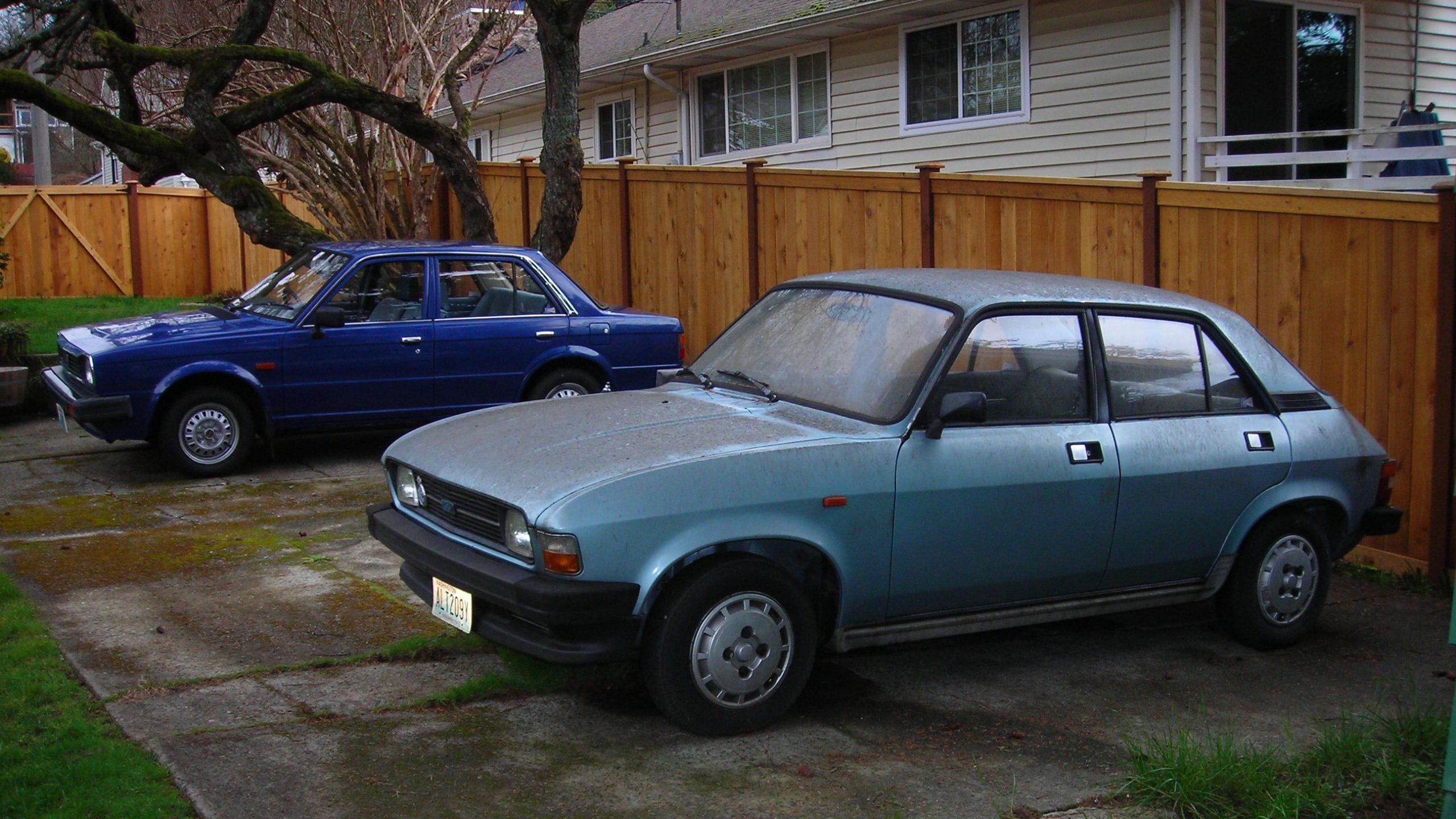
Did you pick this up just because it was cool and local? What made you want it?
The local guy who sold me my former Metro and Maestro offered to sell it to me. We haggled a bit over the price, but he finally talked me down to the maximum amount he was willing to accept. At the time, his hobby was bringing over unloved British cars, driving them for a couple of years, then selling them to make room for the next one. I got it for more or less the shipping cost.
The Velorex 435 sounds like a similar car to the KV. Is that accurate at all?
It’s very much like a larger, faster KV with everything good and bad that this implies.
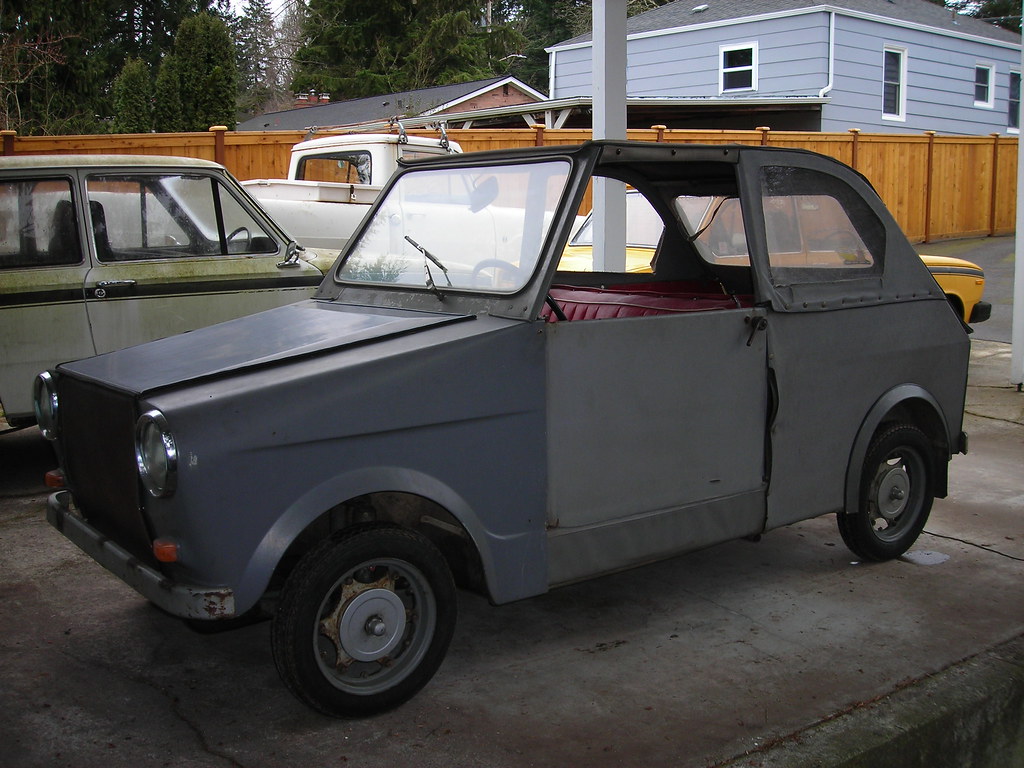
What’s your favorite thing about this car?
It’s a tube-framed, mid-engined, European two-seater targa convertible with a four-speed sequential shifter. What’s not to like? It can also reach and maintain highway speeds, mostly.
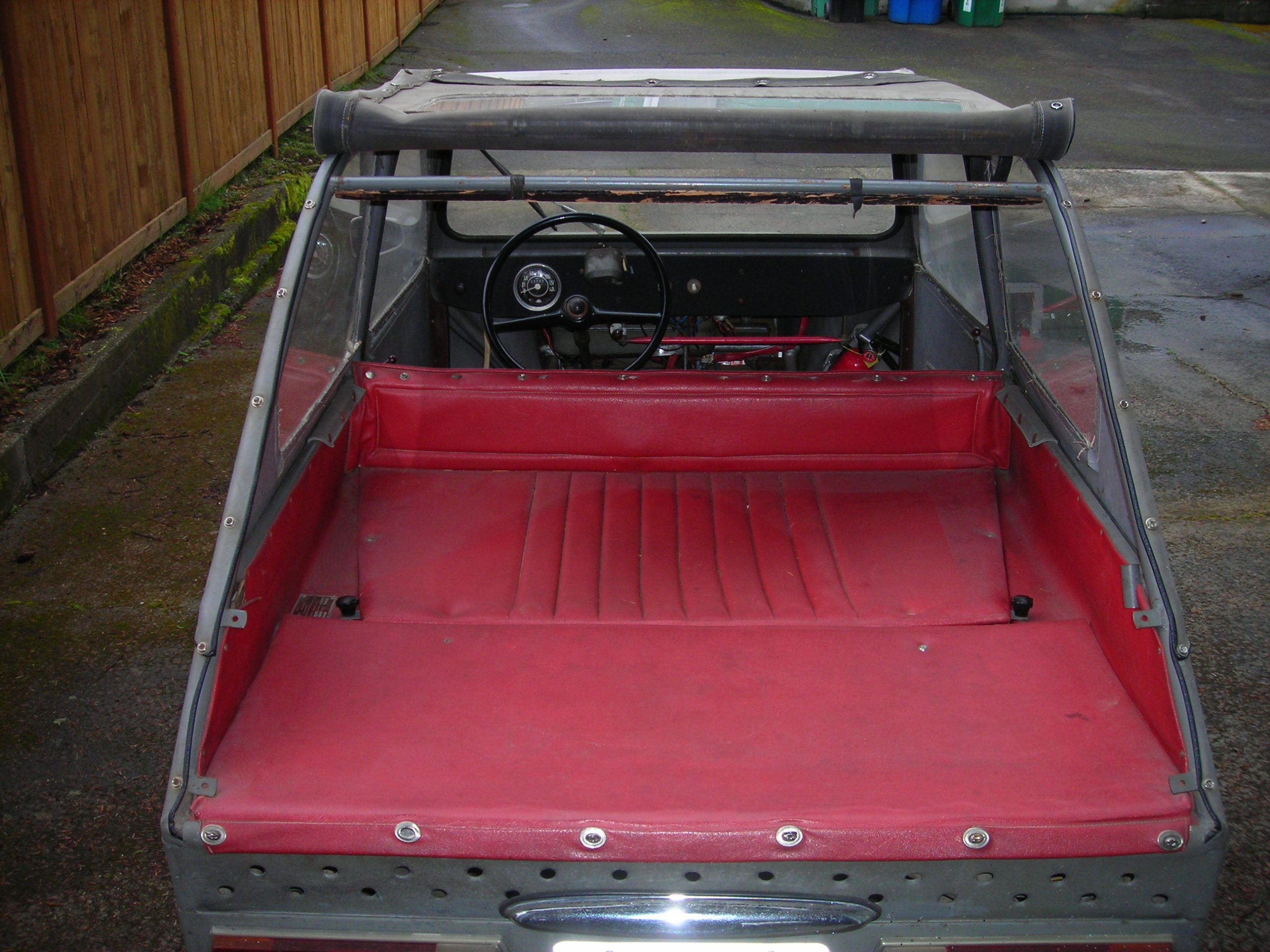
How did you find it?
I met Jeff Lane of the Lane Motor Museum at a microcar show in Tacoma in 2014, and ever since I’ve intermittently kept an eye on what his museum has for sale from the collection on their website. I saw they wanted to get rid of this one and so I contacted him about it.
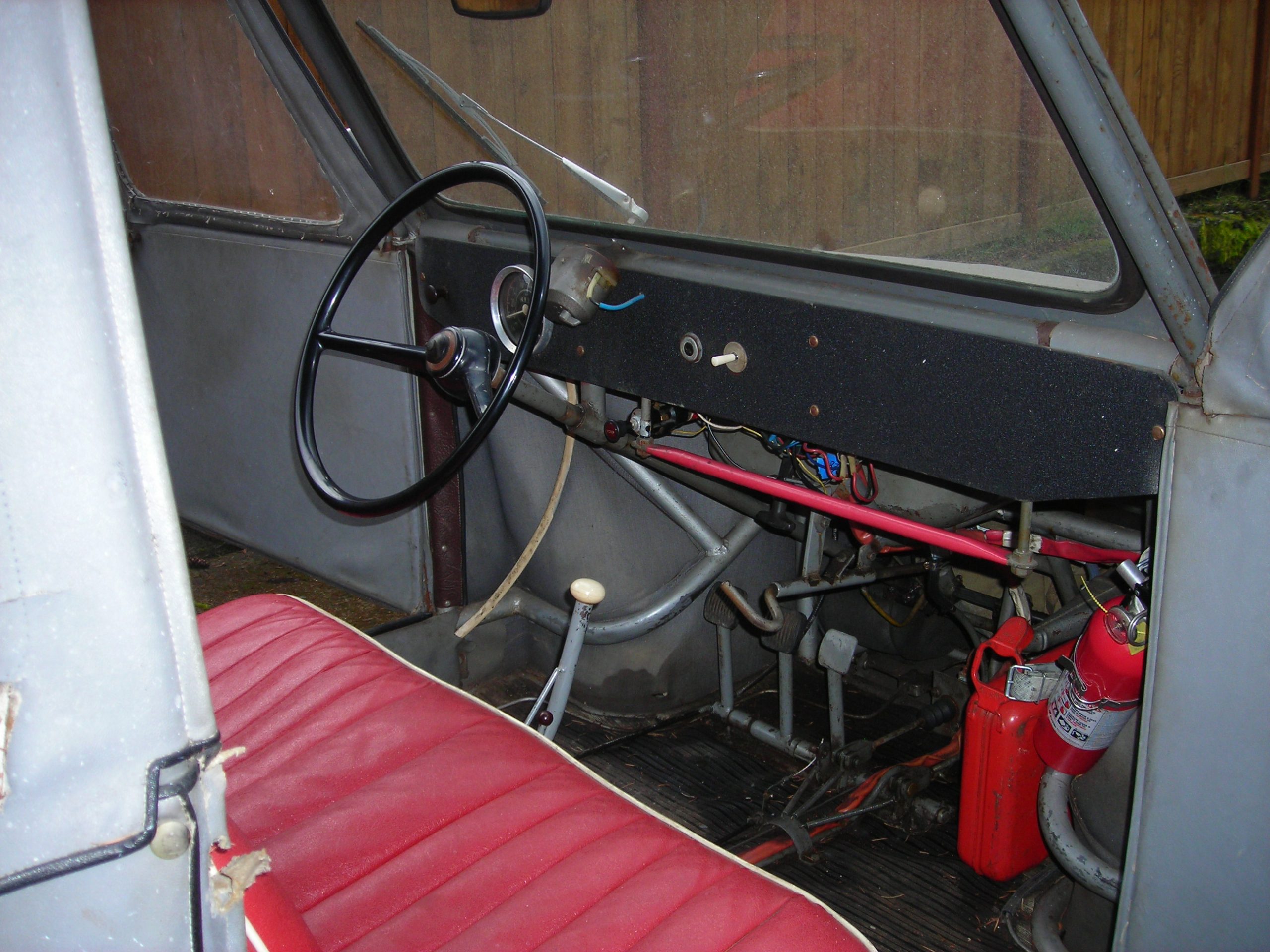
Is it still pretty similar to how it rolled out of the factory half a century ago or have you modernized it at all?
I added a period-correct aftermarket four-way emergency flasher unit. This seemed prudent.
Let’s talk about your British Honda. I’ve actually heard of the Triumph Acclaim!
What? No! It’s entirely different from the Honda Ballade! It’s got dual carburetors and, um, let’s see… Oh, right, different front seats.
What led you to add the Triumph to the fleet?
It is such a different manifestation of BL’s efforts from the early ’80s than my Allegro, Maestro, or Metro that I had to find one. It also has the distinction of being the final model of Triumph.
I don’t usually go looking for specific cars so much as I just keep a watch out for whatever may come along, but I really wanted one of these, even to the point of going to the trouble of buying it from someone in the UK sight-unseen and arranging to have it shipped here. The tricky part was finding one for sale with the Triomatic semi-automatic transmission; most surviving examples have the five-speed manual or some reason. The reason, by the way, is that the five-speed is a much better transmission.
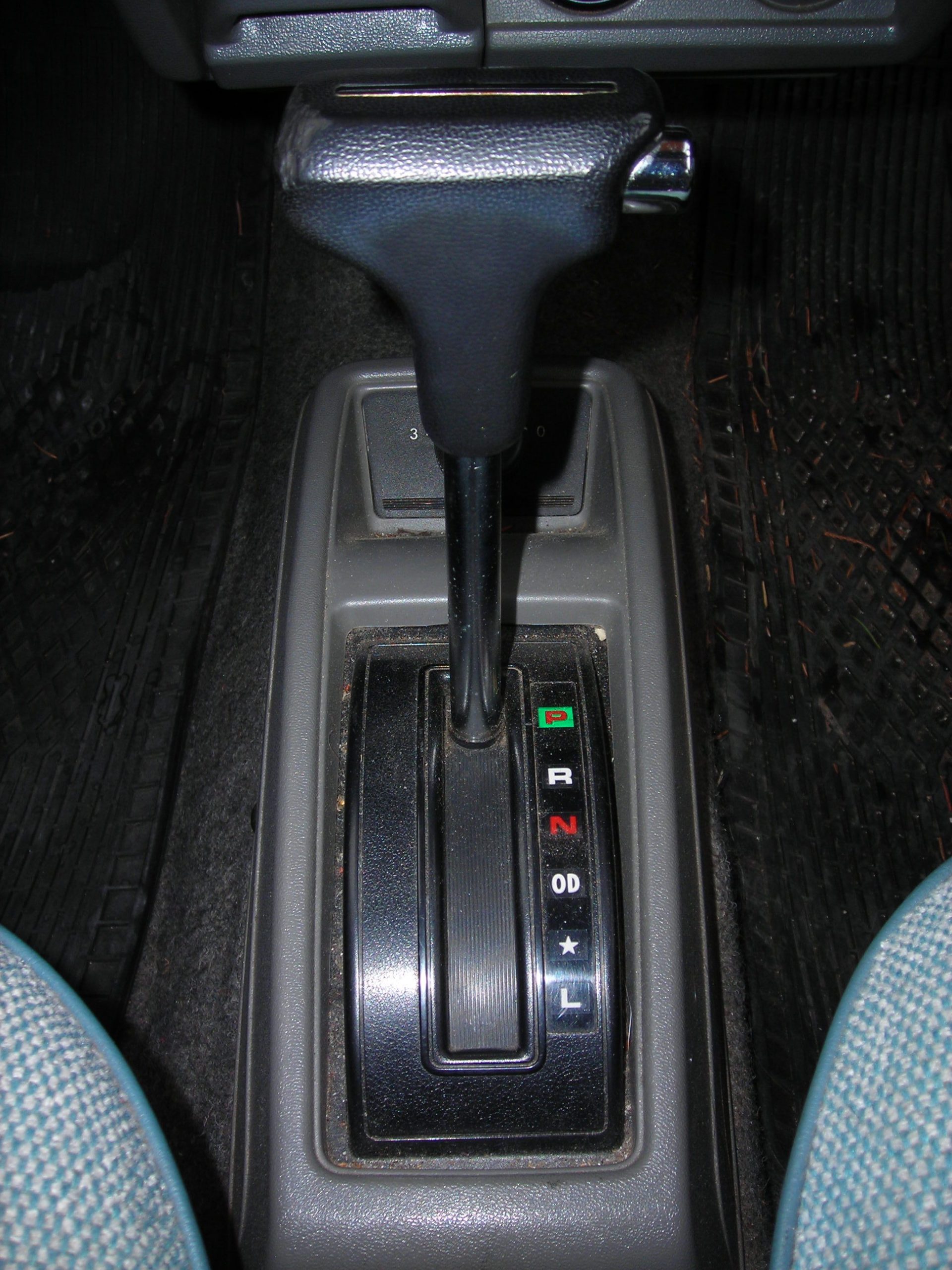
What is a Triomatic?
The Triomatic transmission is semiautomatic in that it uses a torque converter but cannot shift gear ratios by itself; everything must be manually selected. The “L” position is first gear, the “star” position is only second gear, and the “OD” position is third gear. Which, confusingly, is not actually an overdrive ratio. For most around-town driving, it’s possible (and was encouraged) to go from park directly to “star” and leave it there, making it a one-speed automatic.
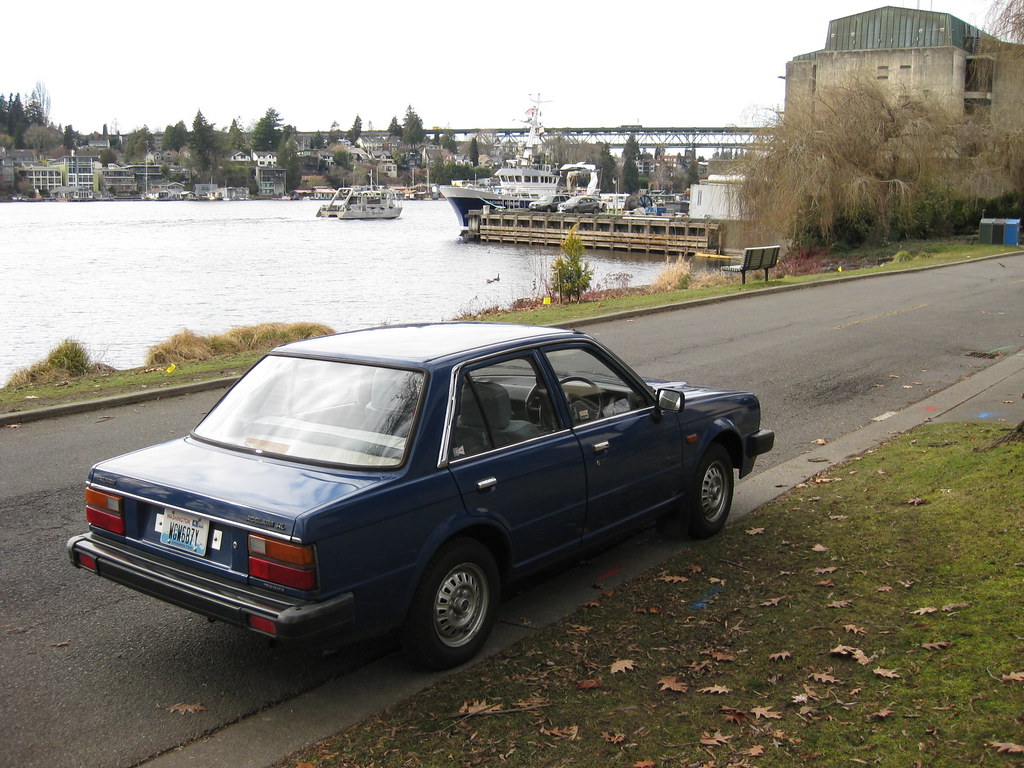
Is this one of those cases where the British tweaks to the reliable Japanese car made it terribly unreliable?
I’m probably not the best person to advance an opinion on the assessment of, or indeed on the merits of, automotive reliability.
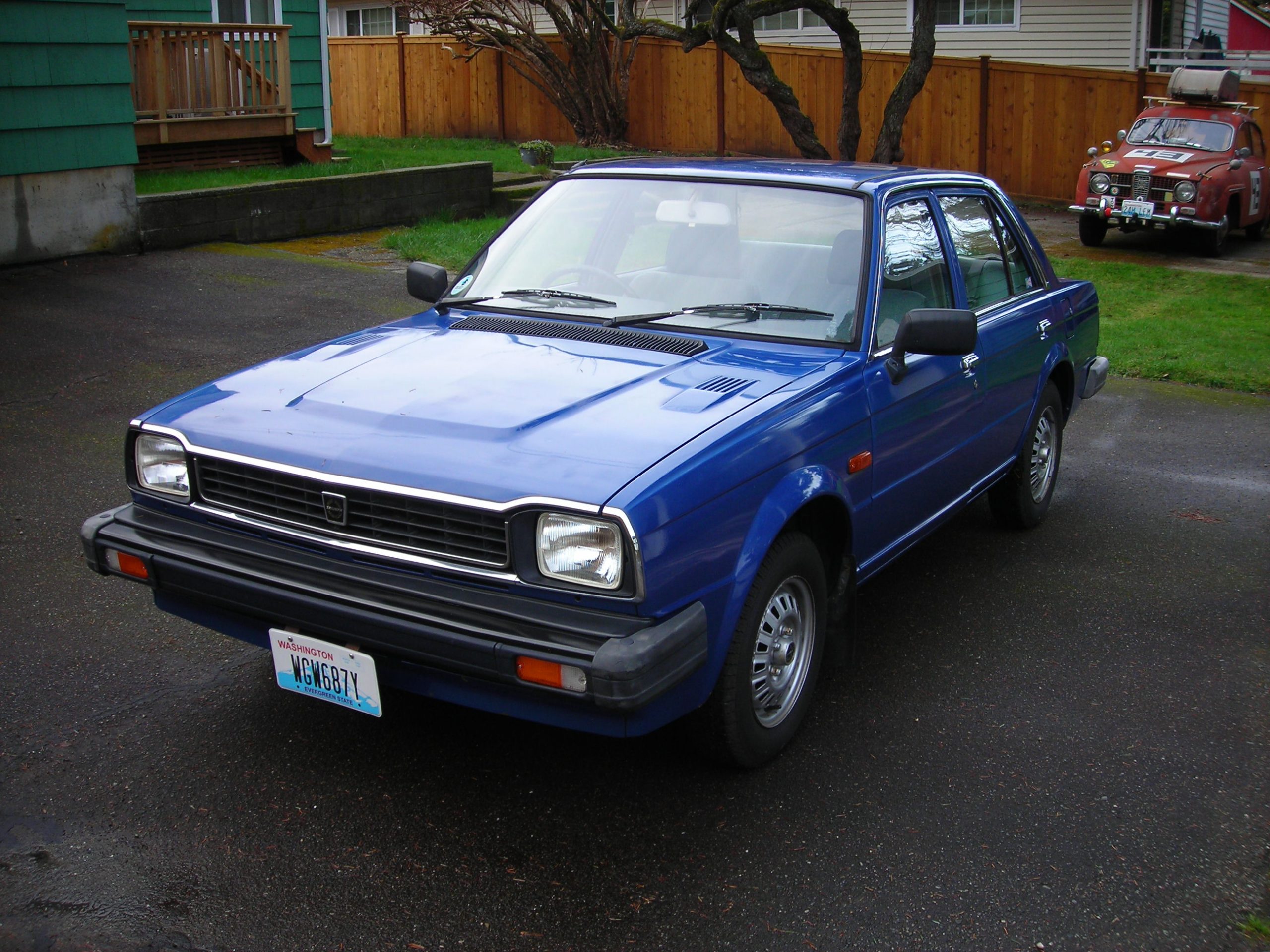
What kind of condition is it in?
It’s pretty nice, even nicer than I had expected from the seller’s description and photos. There’s a bit of rust, but that’s to be expected. It’s probably the most presentable of my vehicles by conventional standards.
Is this the daily? How often does it get used?
I drive it about once a week to work, along with the occasional longer trip, more or less the same as the other vehicles in the rotation. I don’t have another car in addition to these for regular use; these are my regular cars.
Such an awesome collection. Thanks Mike!
Are you an Autopian Member? Don’t miss out, we have a lot of fun, and you could be world famous and see your cars plastered all over the best car site on Earth! Click Here to learn more and become a Member today!


Great article! These are all so interesting
Thanks! I’m rather fond of them myself.
I was skimming over this and realized I recognized those cars from the early days of Hooniverse. Glad to see them and you here. As I recall, you also had a 1960s Thunderbird, is that correct? Did you sell it?
Hi! I did indeed have a ’65 Thunderbird for a while (well, two; one of them only very briefly for parts) but I ended up selling it to a guy who lives a few blocks away. He had spotted it in the driveway and approached me with considerable enthusiasm about wanting to own one. That was a few years ago and he still seems to be pleased with it.
Everything I currently own that has a license plate is featured above, except for my three trailers. As far as that goes, the homemade flatbed is in the background of one photo and the Cycle Burro is just barely visible in another. The Besco (Germain & Lejour) didn’t make the cut, though.
I’ve been waiting for Mike to be featured…
Haha I’ve heard that a lot on this one. Glad y’all enjoyed it!
Wow, talk about eclectic! Such a unique stable of wheeled-vehicles, though I have to ask: What’s the missus’ daily driver situation? She can’t possibly drive one of these on a daily basis, can she???
She has her own car. It was built within the last twenty years for the US market. By mutual understanding it’s very much hers, not mine.
She did, however, let me put a trailer hitch on it, just in case.
I thought so….and this goes without saying, but I will: Hold on to her. If she’s this understanding she’s a keeper, LOL!
Great read.
Excellent.
And maybe posting this link is mandatory whenever Variomatics are mentioned?
https://youtu.be/lLgPTJWAysY?si=5y0LpB-cA2qmIsa7
When Mike sent me that it took me a minute to process what that even meant, then I smiled. I’ve been there. I remember offering a guy $2600 for a car he was selling for $3k, he countered at $2200. I was very confused.
In my case the seller countered my first few offers with “no, that’s too much” before he eventually named a significantly lower figure. I tried to go higher for a bit longer after that but he wouldn’t budge.
Yeah mine was much more abbreviated than that.
Me: I know it’s probably worth the $3k, but would you consider taking $2600 for it? That’s as high as I can comfortably go right now.
Him: No, I don’t think I can do that. I think $2200 sounds more than fair.
Me: Wait, what?
Then when I went to buy it, he was out of town and I bought it from his wife, and she didn’t have a clue how much was even supposed to be in the envelope, but he insisted that she offer me $100 back from it. I was successful in declining that. Drove the car (a 96 Celica Convertible) for 3 years, and about 30k miles with minimal maintenance on it, then sold it for $1400 when the top started falling apart.
It’s a good thing you two are not of a mind to leverage your winning personalities into a business that preys on people with the antimatter version of “I know what I’ve got” syndrome.
What a great garage, and I’m glad to see they all get some use! A Crosley would fit right in here. :^D
Brandon joked about the cumulative weight of the collection, but that big ol’ lump of a truck pretty much balances it out – unless it’s gone through the traditional IH weight reduction via oxidation.
Well yeah there are several cars of a reasonable size here too, but the 4 microcars were more fun to pretend they were the only ones for that part.
Oh, I get it. Nice job as always, Brandon!
It’s only got a few small spots where the rust has worked its way entirely through the sheet metal which means by International standards it’s practically rust-free.
Congrats on the nearly mint binder! Loved my ‘64 Travelall.
Wow, I thought I had an eclectic mix of stuff, but you have me soundly beat, hands down! My wife would be jealous of your “mini” cars as well. Nice collection!
I seriously can’t think of a more eccentric car to own than a right hand drive British-market, badge engineered version of a Japanese car once commonly seen in high numbers in America under it’s original name, with an autotragic that’s not shifting, by design, and built one generation before the lineage’s star turn (“Mind the cyclist, Richard!”), in a part of the country where you could’ve probably found a decent gen 2 Civic sedan with left hand drive and a 5 speed without too much trouble.
Bravo.
Dang. Yeah that’s a very Autopian list of details for it.
I always found it odd that those cars had a completely different dash design than the 82/83 Civic it was obviously derived from. I had a 83 Civic and I miss it to this day.
Did the Japanese market Ballade have a different dash? The fine Japanese art of in-house competition often led to redundant designs like that. Or the RHD models got a new dash but the LHD ones had to stick with the earlier ones, that was pretty common, too.
The Acclaim’s dash is very much like the Ballade’s of the same year. From what I can tell, not having personally seen a Ballade, it’s the same dash structure with slightly different instruments and controls inserted into it.
Perhaps, but I’d never owned a Triumph before so I wanted to see what they’re like.
Is the “Triomatic” identical to the Hondamatic of the same period?
At least anecdotally, the Triumph Acclaim is one of the last of that era of British Leyland that I saw regularly on the road in the UK, presumably because it was more Honda than not.
Triumph manufactured quite a bit of the Acclaim to Honda specifications instead of just bolting together a bunch of Honda-supplied parts but they did buy the engines and transmissions directly from Honda. A Triomatic is therefore quite literally a Hondamatic. Well, literally it’s a Triomatic, I suppose.
I think that Saab needs one more gauge…
…but now I want an old Civic sedan.
I think the 96 needs at least one more gauge which is why I recently picked up a vintage VDO Speed-O-Minder. I’m in the middle of figuring out how to get its speedometer cable tee fitting to play nicely with the splitter for the AIFAB Gemini. Who knew there were so many different standard fitting sizes for these things?
You might need a couple more stickers or grille badges too.
I hear they’re easier to install.
That is the least rusty Triumph Acclaim I have seen in well over 30 years. The Velorex is amazing. If anything was ever worthy of the sobriquet ‘contraption’, it’s that. Will people actually get in it with you?
So far the only person to turn down a ride in the Velorex was a fellow Lemons racer. As a part-time Lemons safety staffer I have to applaud that decision.
I know I would! I would happily go for a ride in any of these!
Oh, for sure. I meant, like, normal people, not us.
Wow, what a great fleet! I love all the ‘expats’ – as a Brit it was quite a shock to see an Allegro and an Acclaim across the pond, but still a very pleasant surprise! Over here, Allegros are still quite a common sight at shows and events, Acclaims much less so, and Dafs hardly seen at all. It’s great to see them all being celebrated so far away!
I hope the deal was an even swap for a NUMMI Nova.
So last week’s Readers Rides was from a guy named Mike.
This week’s Readers Rides is named…. also Mike.
Next week?
Mike drop
It’s Mikes all the way down.
I unfortunately do not have a third Mike lined up for next week. Let me see if I can find one!
The important thing is that you discreetly avoided identifying me by last name as this week’s Mike.
Well of course, I would never want to use your last name and out you, gotta respect your anonymity and all!
Mike from the city of S____ as per the practice of all of the old Russian writers.
No, I moved out of Shoreline several years ago.
Wait, what I mean is, ah, I have no idea who this “Mike” person is.
One of my favorite toys as a kid was a Corgi ‘Driving School’ Honda Ballade, and the shape of them is still wired deeply into my mind like the face of a family member.
“these are my regular cars” is the perfect way to end it. Amazing collection, I love it!
The HMV Freeway looks like the bastard child of a Messerschmitt KR200 and The Dale.
I actually wouldn’t be surprised if there’s an Autopian member with a Dale.
That is the most Autopian fleet (complimentary) yet. No notes.
About time! Pretty sure Mike has the weirdest car collection of any member here. In fact, last week someone in some FB car group I’m part of spotted him driving the Saab 96 and posted a photo of it, and now I’m going to link to this post.
I’ve raced the Austin Metro he mentioned in the 24 Hours of Lemons after it had been passed through several owners. Nothing like your first experience in a left hand drive car, especially with a manual transmission, being on a race track with 100+ cars flying around you!
Clearly I meant RHD.
Indeed so. That little Metro was a fun little race car.
I saw that FB post and commented! It was in a group called PoSC (Photos of Sh*tty Cars, but TBF, the first rule is “all cars are sh*tty”) lol
I’m in a bunch of groups, some blend together in my brain.
Same, but I remembered the post because I was like “his car’s not sh*tty! Oh wait, first rule.”
Fantastic collection! I love the Allegro’s dash pod…”we’re not going to give you a tach so you can shift more precisely, but the clock does have a second hand and all.”
I love the dash, switches and interior on that International.
AWESOME. As someone who recently acquired a ’73 Saab 96 V4 in similar condition to the one featured here, I approve of these garage choices. Great feature!
Hey, those look just like my… Oh, right.
They are a very interesting garage. Similar to what Torch has, only in more of a working state and larger number.
What a herd! Glad you finally got around to typing it up. I’ll have to start taking sidestreets so I’ll have a better chance of seeing any of these in the wild!
Credit for this really should go to Brandon’s persistence.
Without question this has been one of my most eagerly anticipated Member’s Rides features. You, sir, are a legend.
Such a cool collection. I’ve seen a KV/KV1 in person and they are just so charmingly weird.