

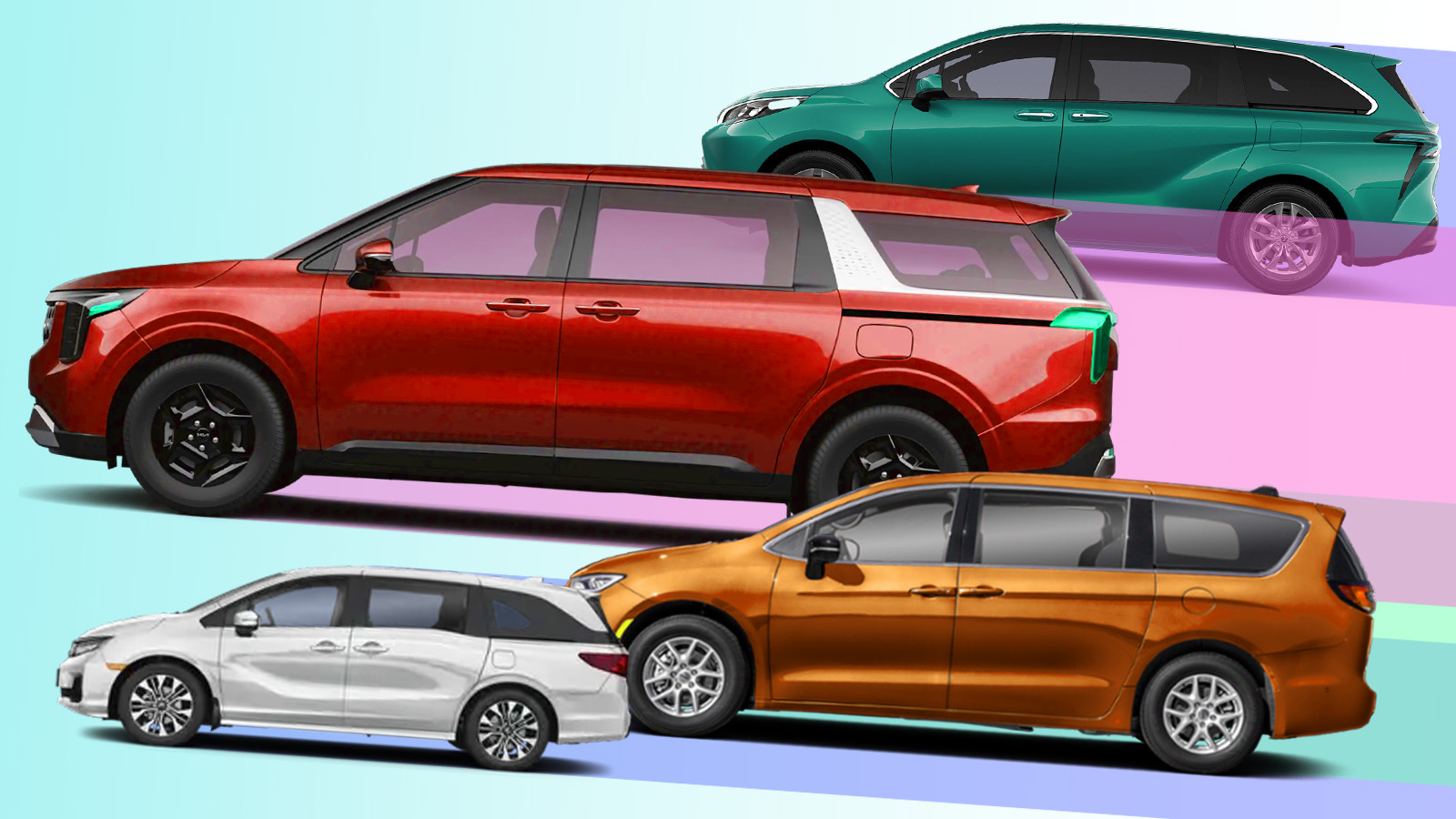
If you spent as much time looking at sales data from last year as I did, you’d probably recognize something peculiar: Minivans are surging in popularity right now. Once a mainstay in suburban driveways across America, the minivan segment has, in recent decades, shrunk to a fraction of its peak, its sales siphoned off by the ever-versatile SUV and crossover segments. Now, though, minivans are making a bit of a comeback.
Minivan sales in North America are up 20% year-over-year, with the majority of the brands that sell minivans seeing double-digit percentage increases in deliveries. Suddenly, minivans are hot again. What gives?


Curious to know more about the segment-wide spike in demand, I asked every automaker that makes a minivan why they thought their minivan was succeeding. The answers I got highlight two demographics, younger families and empty-nesters, choosing vans instead of crossovers more than they did in the past. In addition to that, one automaker told me that minivans are being used more and more by “gig economy” workers who need a multipurpose vehicle to work multiple jobs.
Normal People Are Starting To Realize How Great Minivans Are
Not counting Volkswagen, which saw sales of its ID.Buzz increase from 1,162 units to 6,140 units in 2025, Kia was the biggest winner in terms of sales percentage gain in 2025. It sold 71,917 Carnivals last year, versus just 49,726 units in 2024. That’s an increase of 44.6%. The company told me the van’s SUV-like appearance and available hybrid powertrain were big reasons for the jump. The people buying Carnivals have trended younger, dropping by two years in age versus 2024. It’s also seen an increase in male buyers by 66%.

Mainly, it seems like new families are finally figuring out just how much more useful a minivan can be over a traditional crossover, at least according to Chrysler, whose Pacifica and Voyager saw a combined 5.4% increase in sales, and accounted for over a fourth of the entire segment’s sales in 2025:
We’re seeing more and more “millennials” entering the parenting phase of their lives, and they are considering minivans at a higher level than ever before.
Honda echoed that observation. The Japanese automaker, which saw a 10.5% increase in Odyssey sales last year, is seeing that millennials are more often turning to vans not only because of their versatility, but also because of their pricing:
Odyssey is also America’s #1 minivan with millennials because it offers younger families an unmatched combination of top-class interior space, family‑friendly features and value. The Odyssey’s powerful V6 engine, smooth ride quality, fun-to-drive personality and reputation for long‑term dependability also continue to make it a go‑to choice for families.

Affordability is another key factor in Odyssey’s popularity. The average transaction price for Odyssey last year was $43.3K, which is below the average new‑vehicle transaction price in the U.S. ($45,778). For families balancing budgets, that value proposition — more space, more features and lower cost than the average new vehicle — is a meaningful driver of demand.
Toyota, another goliath in the minivan space, saw a massive 35.2% incrase in sales of its Sienna, from 75,037 units in 2024 to 101,486 units last year. Like Kia, Toyota attributes the van’s success to its hybrid powertrain, but also points to its available all-wheel drive as a big selling point.
Like the automakers above, Toyota told me in its statement that Sienna buyers are mainly younger families. But, interestingly, another demographic makes up a good chunk of sales: Empty nesters. These are older parents whose kids have since moved out of the house and who, theoretically, wouldn’t need such a big vehicle to go about their daily lives.

The reasons for this, as Toyota points out, are all the same reasons that I’d own a minivan, even as a person with no kids at all. They’re just so damn useful for so many different things, without being nearly as compromised as a pickup truck or even a full-size SUV. From Toyota:
Sienna buyers are mainly younger families and empty nesters who value comfort, reliability, and flexibility. The vehicle’s spacious cabin and innovative features meet the needs of modern, diverse families, which may also include extended relatives and pets.
Toyota isn’t the only company that has acknowledged this demographic shift. Chrysler is seeing it as well, telling me that it’s seeing more Gen X- and Boomer-aged shoppers now go for minivans and use them to roadtrip and shuttle around grandkids.
Minivans > Pickup Trucks

It’s not just families and road-trippers who are increasingly turning to minivans. Drivers who use their vehicles for work are, more than before, realizing that a minivan makes for an excellent utility vehicle, at least according to Chrysler:
There is also higher consideration from “gig economy” workers, such as Amazon delivery workers, GrubHub delivery workers and even construction workers, who like that you can fit a sheet of plywood in the rear of the Pacifica with the Stow ‘N Go seats folded flat.
While it’s pretty depressing to hear that people increasingly need to work multiple “gig” jobs while using their own personal vehicles for transport purposes, the use case highlights just how flexible a minivan can be. For one vehicle to be able to haul a mountain of packages during the day, switch to food delivery at night, then shuttle seven kids to school the next morning, all while driving like a normal car and getting reasonable fuel economy, is a tall ask. But for a minivan, it’s all in a day’s work.
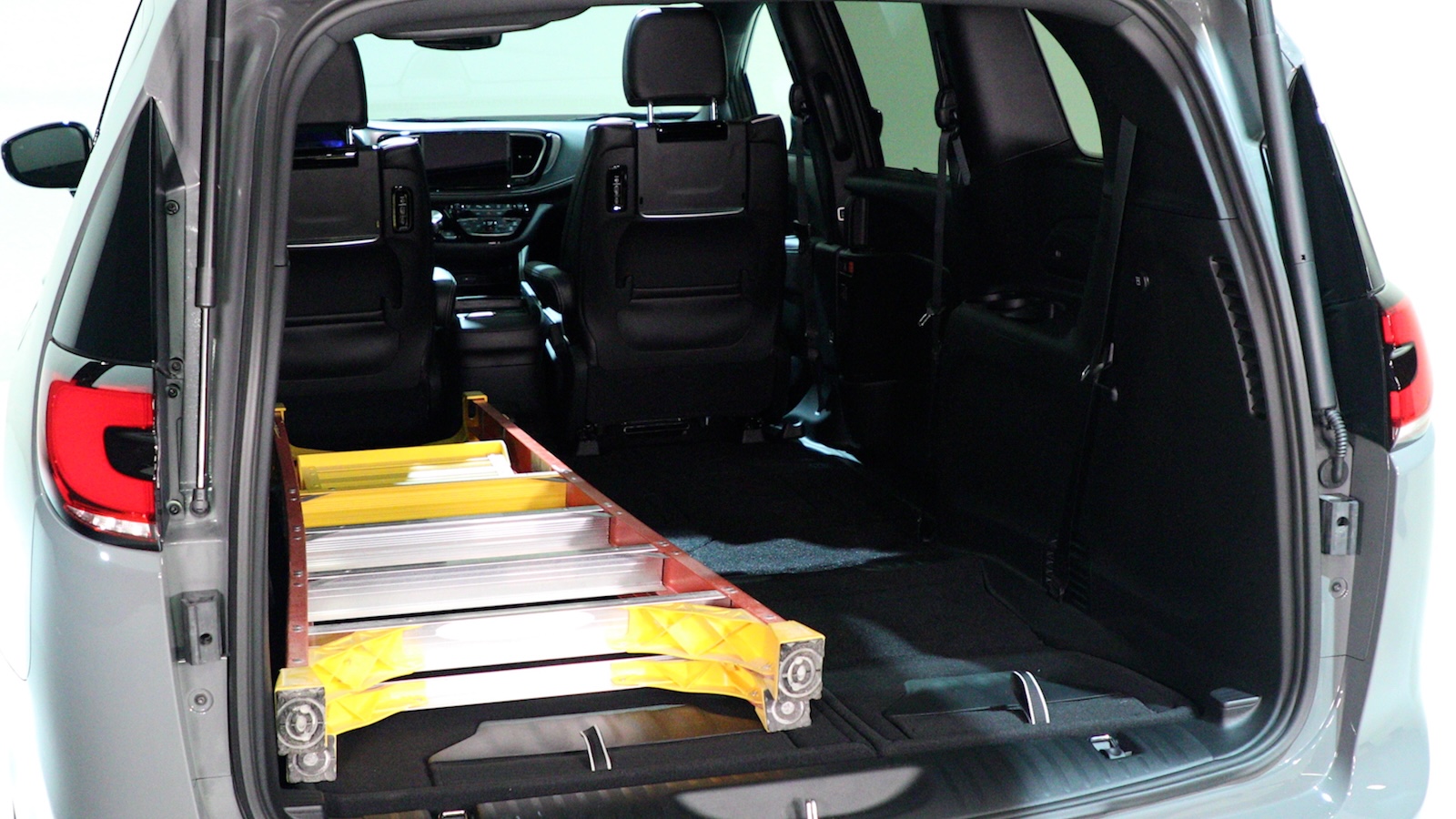
As for construction use, a minivan makes a lot of sense, too. The Ford Transit and Ram Promaster are angled for commercial use, but they’re more expensive and less efficient. The ancient Chevy Express is only about $1,000 more expensive than a base Voyager, but it sure as hell doesn’t have Stow ‘N Go fold-flat seats. For a truly do-it-all vehicle, you’d be hard-pressed to find something as all-encompassing as a minivan, provided you don’t do any off-roading. And the demographics from these automakers prove it.
If I can put my speculation cap on for a second, it’s also possible that the minivan is becoming popular simply because people don’t want to drive what their parents drove. It’s the same sort of theory posited by the fall of the minivan and station wagon in the first place—who wants to be seen driving around in a type of car their parents drive? The difference now is that the average parent car is currently a crossover, not a minivan. The new families buying cars now all grew up in SUVs and crossovers, which means they want something different. The fact that minivans are also more useful is certainly the main reason for this drive in sales, but the simple fact that minivans aren’t crossovers could be a bonus for some buyers.
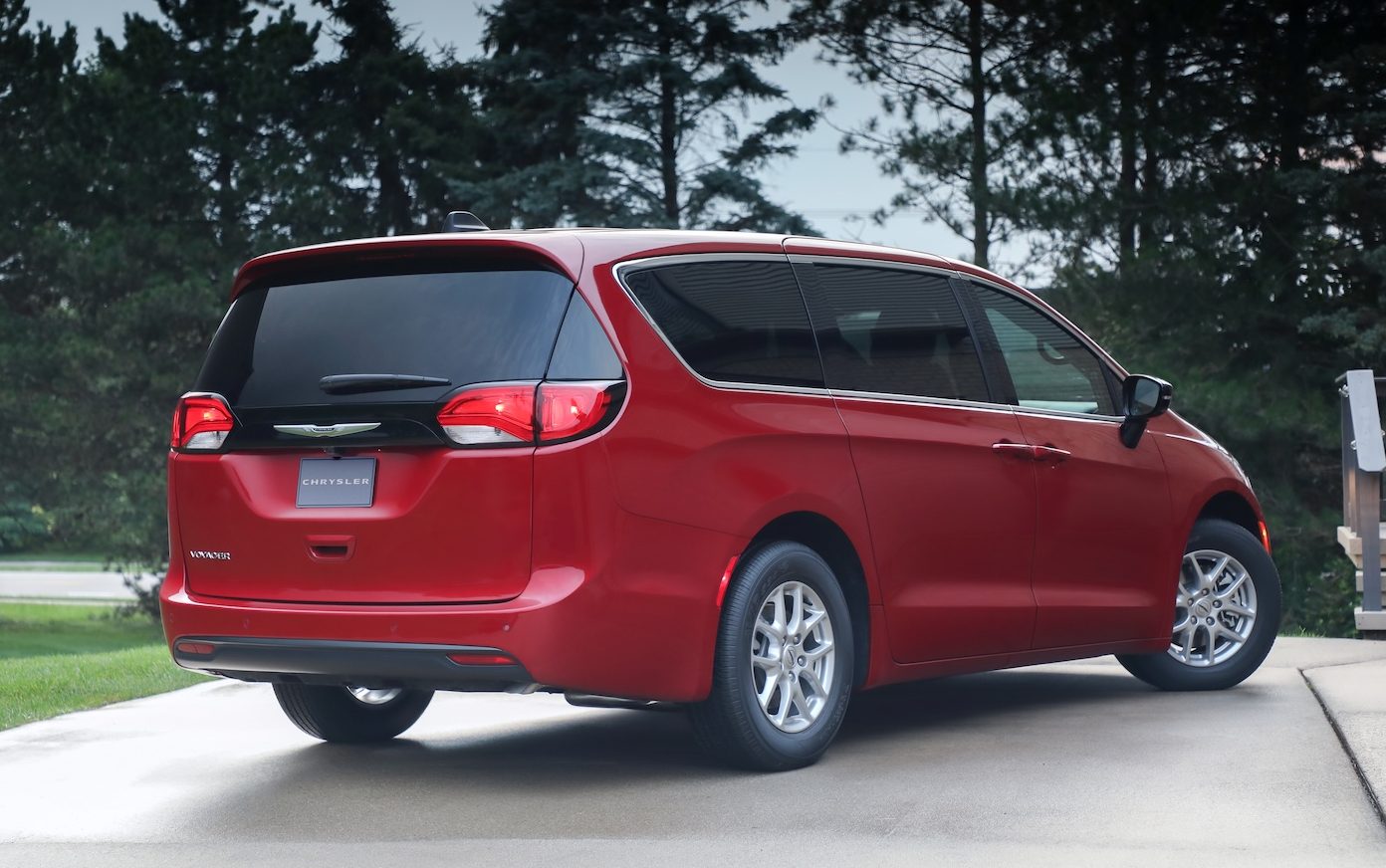
No matter the reason, I’m glad the minivan is making a comeback. It’s the best body style for a large swath of the population, and for a while, it seems like most people forgot just how useful they could be. Now, though, it feels like a new minivan renaissance is upon us. This time, I hope it lasts forever.
Top graphic images: Toyota; Kia; Chrysler; Honda





Can we get a small van in the US again? I know the Mazda5 doesn’t exist anymore, but a Sienta or Freed would be the only sort of vehicle to keep me from getting an EV for my next car.
Better yet, Ford should bring back the B-Max on its new EV platform and sell it here.
Ford should built the Transit Connect here. Alas…
As a person who owns a Sienna as well as a full-size 2500 Chevy pickup, the van is way more useful on a day to day basis. The truck is for towing, heavy loads, plowing snow, etc. that the van can’t do. I don’t drive a lot of long trips, so fuel efficiency isn’t a major deciding factor.
However, the van is more comfortable, more maneuverable, and the interior space is much more useful. Even when I’m loading tools to do a project somewhere other than home, if there aren’t large materials or off-roading involved, I will be throwing those tools into the van.
Wife and I have driven from CO to FL in a Pacifica, and from FL to CO in an Odyssey. Possibly the best road trip vehicle class, would buy one in a heartbeat if we had kids or even multiple large dogs. I’ll sing their praises to anyone forced to listen for sure.
Also what even is a millennial anymore. Most of us are in the late 30s to mid 40s, but I guess people are having kids later. I was just surprised they used millennial and new-families together.
Now someone needs to make a very basic minivan, like the first-gen Caravans. Basic, comfortable, versatile, relatively solid. I took the rear seats out and used mine like a truck…never let me down. I wish I’d traded in our Neon instead of the Caravan for my Tundra, but I was 300 miles from home, and the Caravan was what I had with me.
When I read “depressing”, I thought it’d be people contingency planning like how I put thought into how a hybrid van would be much more pleasant to live in if we ever had to.
Anyways, while they’ve been a bit big for my taste for a long time, I somewhat miss my old Sorento-sized Sienna.
Didn’t get one ultimately since I like to go places my Sorento barely could but someday I’d be open as long as I can get non-powered doors.
Sounds like you’re the target market for a new Delica or WKNDR. (Or my personal hope for a rebooted Subaru Domingo.)
I replaced my beloved 2005 Subaru Outback 5 spd with a 2007 Honda Odyssey. While I miss that Outback dearly it was the right move for my family. Being able to buckle two small children into their seats, while being in the van with them and staying dry is a game changer. Being able to turn around and get in my own seat without having to exit the van, next level win.
Back in late 2020, the missus and I were looking for a new vehicle. We’re in our early 40s. No kids. We wanted something that was practical and relatively good looking. Looked at various SUVs and they all seemed more cramped inside than the little Kia Soul it was intended to replace. We’d moved that summer and remembered the minivan we rented as part of it easily fit our Purple mattress inside it.
Ended up going with a 2021 Pacifica in Ocean Blue with the blacked out “S” trim package (black chrome trim around the windows, black logo up front, etc.). It actually looks somewhat bada$$. There’s been times family has come to visit and they all fit in the van. After they leave, we just stow the seats and can haul 4×8 sheets of plywood or drywall, completely out of the elements.
Chrysler never should have killed the Caravan and Town and Country. They could have given them updates to their drivetrains and infotainment systems to keep them modern enough but still be $15,000 less than the Pacifica. Pre-Stellantis/FIAT Chrysler wouldn’t have made that mistake.
I wish they would’ve built the Portal too. Pretty close to my ideal vehicle.
True story: my oldest kid moved out in January, and needed some basic furniture. My wife went down to IKEA with him. As they were loading the stuff including easily long shelves into our Sienna, they watched a bro struggle to get the same stuff in his Cybertruck. A real win for the van. Particularly over the unserious “man extender” pseudotruck that sucks at actual truck things.
I take exception to your offroading comment. I took my stock Mazda5 off-road into the mountains plenty of times!
I took my 84 Camaro on some pretty hairy dirt roads in my 20s. And I drove it in snow while Explorers were getting stuck or flipping over. It’s more about the driver than the marginal advantage a crossover theoretically has over a minivan on a dirt road.
Growing up, my family took our Grand Caravan camping and used some pretty gnarly, rutted roads on the way. We just had to be careful on the lines we picked.
I got stuck in a Utah bike hole in my new 96 Rav4. Had to completely unload the car to get it up the slope, then walk all my gear back up. But the damn thing never let me down.