


It’s an odd time here at the Autopian. Our Mercedes Streeter and other writers have spent much energy since the launch of the site trying to find ways to import and legally drive ultra-mini Japanese “kei” cars, and it’s often felt like a losing battle. The question that’s come up recently, however, is what will happen if these kinds of tiny automobiles are not only welcomed in America but actually produced here as an affordable alternative to “normal” cars.
Is this even possible? Currently, the only non-golf-cart four wheeled vehicles built in American capable of near-kei speeds starting in the $10,000 to $15,000 are side-by-side ATVs. It’s not like you’re going to drive those on the street, right? Well, what if we made some tweaks or revisit an alternative I did a while back where you actually could?


Cuter Than A Kei Pop Band
The Kei-in-America thing is a complex subject that many have obviously been debating recently. It’s especially difficult to consider all the ramifications when we are now possibly considering domestic-made “kei” type cars that aren’t 25-year-old playthings. Would brand new little kei cars in America need to adhere to the same safety and emissions regulations as “normal” cars?

Here’s the bigger query: do Americans other than crazy people like us Autopians even want to buy such cars? Based on recent sales data, the answer is a resounding “no”. New cars like the Honda Fit and Chevy Spark are mere memories in America, and most of the surviving Smarts exist either as engineless props in rehab centers or in the possession of an author at an ill-publicized website. It’s not like these very small, inexpensive cars are bad; I’ve rented a few on business trips and they’re far better than some larger compacts from a few decades back (and a hundred times better than your mom’s old Malaise rides). So what’s the issue?
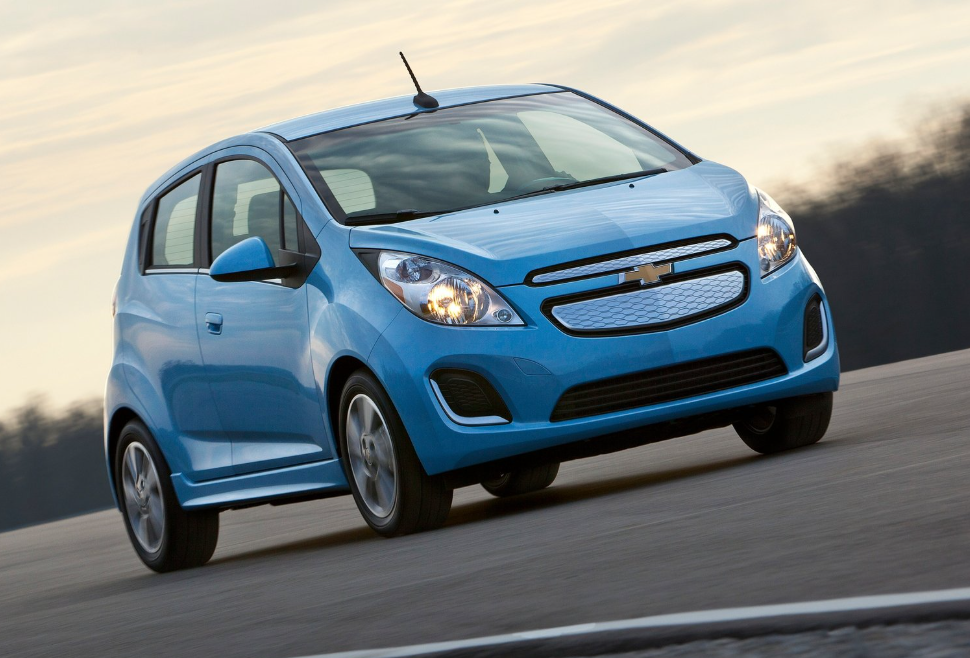
More than likely it’s a few things. First, driving such a car can be like wearing Sears Toughskin jeans as a kid back in the early eighties; they fit, they worked, but in a world of Jordache and Sassoon it was painfully obvious that you were a second-class citizen. It’s a badge of shame, since people are generally very shallow. If you’ve risen above being concerned about what people think, I congratulate you, but most car buyers have not.
Also, you can put as many airbags and headrests that will fit in one of these Kei-sized things, but you simply aren’t going to win in a collision battle with the average American SUV, much less a F-800 Mega Ranch Dually or whatever.

Car companies are more than happy that you feel this way. They don’t make any profit on these super small cars, and an even cheaper car would have less incentive for them to sell. Worse than that, chopping a foot or two of length and a few amenities out of a Chevy Trax won’t give you a $15,000 vehicle anyway. I can virtually guarantee that American car companies are not going to eagerly make kei-type offerings; actually, they probably just won’t.
Realistically, would a sellable American “kei” even be “car” in the normal sense? I say that maybe it can’t, but it doesn’t have to be.
Baby Hummers Are Coming?
Side-by-sides are a bit of an odd duck in the world of motor vehicles; they’re specialized use vehicles that can tackle off road challenges many larger vehicles cannot.

Many are perfectly capable of keeping up with local urban traffic, but in many states they can’t be legally driven on public streets. Admittedly they don’t have the safety equipment of a “normal car”, but neither do motorcycles or things like Slingshots or Can Ams that can lawfully share roads with cars.
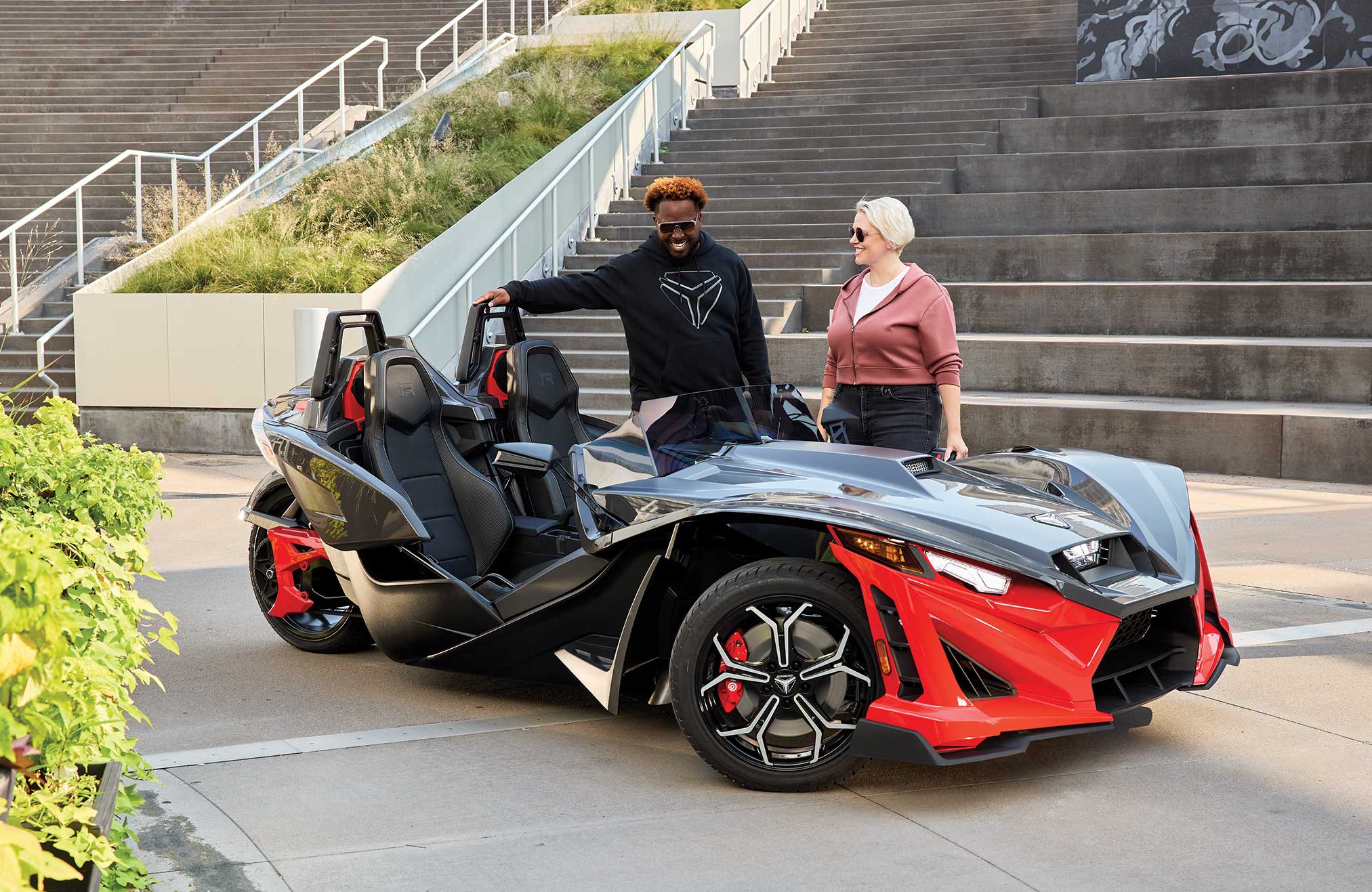
Our Jason Torchinsky used to daily drive a glorified golf cart called the Changli all over a small college town, but he ran into issues when given a Polaris Ranger side-by-side to test last year. Despite being far faster and more capable on the road than a number of his own cars, he basically couldn’t do anything with it, or at least not legally and with the blessing of Polaris on city streets. You might already know this, but Jason does not live on a 500-acre homestead, nor does he possess a twin-axle trailer and the aforementioned F-800 Dually to tow a Polaris Ranger with. This specialized nature of the side-by-side means that the market is limited and could explain why this industry had been suffering a little while back. That’s understandable, since any “recreation” vehicle is likely to be a sales dud when the economy makes even a slight “correction”.

The version of the Ranger that Jason sampled was a higher-level model that cost well over $40,000, but it had far more capability than most people would ever need. A much lesser specification and priced Ranger would seemingly be fine to just drive on city streets and, at worst, get through deep snow or flooded gullies; things that a Japanese-style kei car likely couldn’t do.
It’s even more than actual capabilities, though. The appearance of a “tough” vehicle has emotional value to many buyers. I lose count of the number of $50,000 plus big-loud-tired Jeep Wrangers that I see on my suburban drive to work. There are few worse vehicles I can think of to use as a daily commuter, but buyers must see a value attached to a look that equates with big, tough, and heavy SUVs.

A side by side likely won’t be any safer than a kei car, but somehow sitting higher and having a “roll cage” gives the impression of these qualities. I’m not saying that’s good; it just means that people are psychologically more inclined to purchase a vehicle that seems to be more of a match for roads full of SUVs (as incorrect as that assumption might be).
None of this matters as much as the biggest elephant in the room; something bigger than safety and speed.
“Oh, Should I Write Them A Note?”
Cars are more than just consumer products: they’re part of the culture. That, more than anything, might be where Kei cars won’t work in America, but side-by-side type vehicles could.
You wouldn’t think that a tiny British subcompact would be embraced by members of the world’s biggest band, but despite their wealth, members of the Beatles owned and were regularly spotted in Minis. These cars simply transcended the typical “class” designations that would prevent an A-lister in America from rocking a Mitsubishi Mirage today (though the Toyota Prius was once a darling of eco-conscious celebs).

Sport utilities are sort of the same thing today. The biggest stars in the world can regularly be seen rocking Jeeps. Also, it never would have occurred to people of 1965 that teenage girls thirty years later would beg their parents to grace them with a modern version of a World War II military vehicle. It’s a pointless car for a bedroom-community kid, but how many duck-covered Wranglers do I see in the high school lot? It’s all about image.

Of course, high schoolers would never tool around in an actual 1941 Willys; today’s Jeeps are not exactly Lexus, but they’re far more domesticated than surplus army vehicles. A side-by-side is also a rather rudimentary machine, but could we make one that wasn’t quite as hardcore?
Special Kei
Making it legal to drive current side-by-sides on the street wouldn’t necessarily be the answer to American-built keis. The ones that are the most car-like are way too expensive, the inexpensive ones aren’t car-like enough, and all of them are engineered for far more heavy-duty off-road use than street operation. I can see two ways to approach the street side-by-side solution.
Entry Level: MUV (Micro Utility Vehicle) Polaris Sunova
An entry-level I-just-need-transportation street SBS might be what I’ll call the Micro Utility Vehicle; a modified existing product to be more usable on the road and decontented of all the heavy-duty off-road business.
The least expensive four-seat Ranger I “built” for $13,799 here can supposedly tow 1500 pounds (a two-seat version lists for around $2000 less). It also has an AWD system that features on all Rangers, which you really wouldn’t need if you’re doing mainly street driving (but I like the extra ground clearance) any more than you need towing capacity.

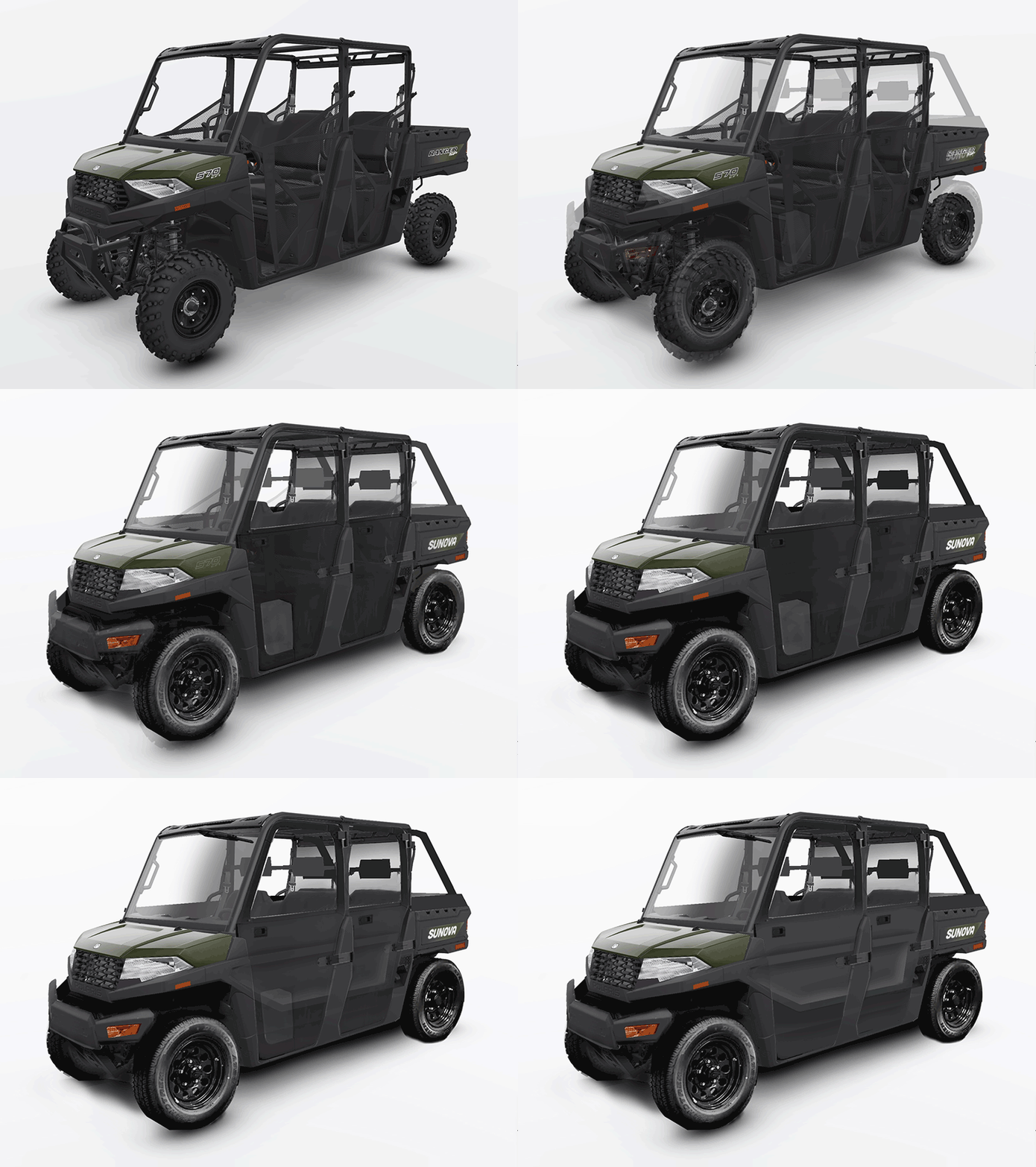
Here’s the modified version that I’d call the “Sunova” since that’s something our David Tracy says a lot around here. I believe that a version of the 570 with rear drive only (ditch all of the AWD equipment) and made in higher volume would be less expensive, and the money saved could be put into features that would make it more usable on the street.

These modifications would include car-type wheels and tires instead of the super-wide-tiny-diameter SBS wheels. The big push bar in front can give way to more of a bumper/fascia panel to cover the exposed fronts of the wheels. Naturally, side doors would have to be included but I’d make stretched fabric ones standard instead of far more costly rigid versions. Headrests attach to the “roll bar” and I’m showing a cargo cover in back, as well as roll bar extensions that might be optional. I would think that a large number of buyers would go to aftermarket sources to get the many, many accessories for the Sunova at a far lower cost than what the dealer could provide. Honestly, the aftermarket business for this vehicle could create its own pretty lucrative industry.
The Sunova shown above has the vacuum-formed rigid doors, but here’s the Sunova with the standard soft doors:

Here’s an animation showing the stock Ranger and the Sunova with the standard fabric doors and the optional vacuum-formed doors:
The doors obviously could be easily removable, and in warmer locales might never be used. I don’t think I’d want to run this thing in Minnesota winters, but with an optional heater and maybe even rigid doors, it could be a pretty good snow vehicle like an old VW Beetle was on those tall, skinny tires, even with just the driven rear wheels (and the engine weight over them). I do think that rigid doors could be made for far, far less than the nearly $1000 per unit some makers charge for these things now; once again volume is the driver here.
What if you’re willing to spend more money on something fancier, maybe faster and more trick than what you might typically get for $20,000 or $25,000 today? Also, what if this were a little EV for the ultimate in efficient around-town use? You might want a Sherpa.
Upper Level: MSUEV (Micro Sport Utility Electric Vehicle) Polaris Sherpa (also available as gas powered)
Some time back, I envisioned a more street-friendly street Ranger that would have been electric powered, but I’m thinking now that it might be offered in a gasoline-engined version as well. Still, as an EV, you’d be eligible for credits, and who knows if even more such incentives might be provided by governments to encourage smaller, greener US-built products. This is the Polaris Sherpa I presented a while back:

Here’s how I described this thing a while back:
Styling of what we’ll call the Polaris Sherpa series will follow the same pattern as automobile crossovers: a combination of rugged off-road machines with the cleaner forms of street cars. The body will sit high without being as far off the ground as a Ranger; grey plastic rocker trims and sharp breakover angles front and rear create the look of something off-road capable. A grey hood and “roll bar” contrast the color-painted sheet metal.

Four side doors could feature windows with crank roll down sections, and the Sherpa can offer another trick not seen before: you could remove roof panels over each seat, the rear window glass and all of the side glass to give a convertible feel.
The cargo area is shorter than the Ranger; optionally you could fold or remove the rear seats and even remove the rear window to carry larger objects in a way neither any current UTV or LSEVs can do.

An optional, integrated trunk lid could offer weather protection and security for your cargo.
In the Sherpa, the dashboard is simple, with the optional entertainment system or screen being just a standard double DIN opening that you can use as a storage bin or install any damn thing you’d like (and be able to upgrade five years from now per Jason’s new rules). Air conditioning and power windows? Who knows; even if the price starts to get up there you still don’t have a lot of open-topped off-roadable EVs out there for the price of a loaded subcompact.

I’d like to esentially move all the controls to the steering wheel area.

Like the Sunova, you could possibly get car-type tires, wheels, and bumpers as an alternative to the more off-road style pieces, and maybe even an add-on rear cargo cap to make a sort of Jimny-style micro SUV.

For power, I could see that EV having a front motor or the option of front and rear motors to allow all-wheel-drive. We’d engineer it to allow for a gas-powered model as well, with an engine in front to replace the “frunk” and a gas tank to replace the batteries. How much power? I’m still seeing less than 60 horsepower with both motors, the rear one getting the bulk of the power. If you want to duke it out with big SUVs on the highway at 85 miles an hour, this isn’t your ride. I am sure there will be aftermarket places selling modifications to make these go at frightening speeds. I wouldn’t do that, but I get passed by bikers with their front wheel in the air doing 80, so I promise skunkworks hyper-powered MSUEVs would be a thing as well.
Honestly, I think a firm like Polaris might need some help with this thing from an OEM car maker. At the same time, those large domestic big three wouldn’t want to make these kinds of things anyway, but wouldn’t mind one on their lot to sell, especially if subsidies and tax credits might be in the works. A partnership perhaps, where both Polaris and a “real” passenger car company might sell the same thing they’d collaborated on with different grilles and branding?
We Can’t Find A Way To Make It Safe, But Maybe At Least Cheap?
Don’t kid yourself about kei car abilities; they’re great for certain uses, but they’re limited. Reviews of the vaunted Honda N-One emphasize that even this benchmark isn’t meant for highway travel, so you’re stuck driving around town only in a cramped box that you can’t open up to enjoy the sun in summer or with the ground clearance and ability to grind through the snow in winter.
You can’t argue with the facts; it’s probably quite unlikely that Kei cars are coming to America, and even more unlikely that they’ll be built here. Car manufacturers have no interest in building something that recent history has proven few people want, and they absolutely have no interest if it’s a product that they can’t make profitably.
However, you know who could? Do you know who is basically making them already? Side-by-side manufacturers. Plus, if they could double or triple their current production numbers on something engineered to be more suited for lighter-duty use, they could likely sell them for less money than their current products. Better than that, their American-based manufacturing plants could thrive; that’s something we’d all be happy to see.
Running a modified side-by-side on the street still seems sort of crazy, but is it any worse than running some tiny Japanese microcar? I say that this insane idea just might be ohKei.
Top graphic base images: Honda and GEM Vehicles


I have a Kawasaki SxS and would love to use in town. However, one of the issues with driving any SxS any distance on road is that the CVT transmission wears the belts/clutches due heat build up. The CVT’s on most units (save the Honda Ranger which has a real transmission) are built to be used in a variable throttle environment- like off-road. If you full throttle at top speed for just a couple of miles your can wear a groove in the clutch where the belt rides, and the belt gets overheated and damaged.
These CVT’s on SxS are robust units if used as they were designed, plus cheap to fix compared to a car CVT -but for on road distance you wouldn’t want to use a SxS, unless they change to another type of transmission.
I see Renault Encore atop AMC Eagle, shrunk 50%.
I live just outside of a small/medium size town—I’m not rural, but not suburban either. A number of neighbors have take to cruising their SBSs on warm summer evenings.
Part of me dislikes their flagrant flaunting of the laws, but the other part of me says “So what.” The speed limit on our road is 45mph, they’re not hurting anyone, and are quieter than my neighbor’s Focus ST with non-stock mufflers at 7:00 in the morning.
One of the characteristics of Kei cars is that they are well-engineered to be satisfactory, functional, roomy, complete vehicles with creative styling and a dash or two of personality. Side-by-sides, even when creatively modified, are modified off-road non-automobiles.
Maybe if Kei cars get legalized, Stellantis could quickly recreate the Geo concept for the 2020’s, with a full line of dependable, useful Japanese cars, vans and trucks rebadged as Chryslers, Dodges, and Rams. Fiat and Alfa Romeo… maybe. There are a lot of excellent Keis to choose from, and they could easily be sold for about $15,000 each, making a tidy profit.
Amen. I was very excited to get into a side by side for the first time. I had imagined it as a tiny, versatile car. The reality was it was a miserable thing, loud, smelly exhaust, and rough. Japanese kei cars are nice cars, just small. That’s the ticket.
They’d be popular in retirement communities as a substitute for the 1 or 2 row golfcarts often seen cruising around.
This will never work. It’s not the product; it’s the buying process dynamics and workflow like financing. People who want a low-priced car also are correlated with people who buy used cars not new. It’s unlikely they’re going to cross shop this with an 10 year old Honda Accord. You’d have to change the mindset. The closest this ever happened with was with Yugo and they proved the model didn’t work. And the world has changed significantly since then making it less likely to work. In the Yugo case, we now know it was also the product, too.
Ladas sold well in Canada.
I was a child who wore Montgomery Ward jeans while my friends from families better off than ours wore Levis until I was old enough to get a paper route and buy my own Levis.
And now at least some Levis are made in China and not as tough.
I saw the occasional side-by-side on the streets in Texas, but I never saw one pulled over. Even while being driven by someone obviously under 16. I’m doing a mental exercise of what would I do if I was cop in that situation. Probably, I’d light them up and warn them that it’s not particularly legal or safe to be what they’re doing and let them get home. And tell them if I saw them doing the same thing again, there would be consequences. But I’m not a cop.
You put a PhD or at least a master’s level of work into this article. iBravo!
I only have a master’s degree, and it’s in design so it was a total waste of my time, but glad that you like it! The whole post was just a prompt to get people talking, and it worked!
Man, if I can get a license and ride a motorcycle with zero safety items, why can’t I get a special license and drive a side by side on the roads? Or a vehicle with zero safety items?
I suspect you’re proposing a free market!
… please let us know what nationwide network for free-market roads we can use them on…
You can: Registered Organ Donor
As an aside, Sherpa is the perfect name for an off road SxS:
The new Sherpa: Capable of getting Americans to places they really shouldn’t be!
So? having options is not bad, let the people decide what they want, the US is a large country and i’m sure Kei car will work just fine for some people, allowing them will bring some completion to the market and may force some car maker to bring back small cars capable of highway speed.
There are several dozen Kei trucks putting around Tacoma, WA. And someone posted a comment a few weeks ago that the Kei culture in Portland, OR is quite vibrant. I haven’t seen a single Kei car here in T-town. Just trucks and, oh, a few RHD JDM vans with fun names that are fun to look at.
I’ve driven a couple of RHD vehicles, but only in RHD countries. I’m careful enough that I could probably pull it off. But I would really rather visit another RHD country and try it there, Hmmm. Do I really even want to drive in Japan?
Maybe Scotland or New Zealand. I can’t think of any other RHD countries I would be interested in visiting.
I’ve driven in Japan. Not that bad, especially if you have a sign reader in the passenger seat. I also drove a kei truck there, but only down the road to let someone else out.
Sign reader… that is a great assistant to have. Heck, I have had two wives who couldn’t figure out what Waze or Google Maps were displaying. One wife, the most recent one, (I’m not a polygamist) had even had both going at the same time and advising different routes.
Just a few miles up the road from the Bishop (in Wisconsin) SxS are apparently street legal if you add turn signals and a license plate. A friend has a company in small-town WI – Kinnettic Kreations – that makes wiring harnesses and some very complete turn signal kits for popular SxS vehicles.
Technically this is true only on roads designated at ATV/UTV routes by the local municipality, but in some small towns I swear you see more of these than cars shuffling about.
Hey wait a second I know that guy, and I know who you are!
I had to put a plug in for our favorite maker of electrical stuffs, ‘cuz it’s relevant!
In Idaho they are legal on any road that is not a designated State or US Hwy. Which, where I live, means I can drive my (turnsignal-equipped) Polaris Kinetic anywhere I need to.
Remember the Chevy Spark? Pepperidge Farm remembers.
Came in an EV with 400 ft-lbs of torque. Pretty memorable, I reckon!
sxs get terrible fuel economy I don’t see kei cars being practical for an average or lower income family. they will just be toys for wealthy people. with the exception of very large cities like NYC.
Different rear ratio for the street would help, and I wouldn’t want to drive it at much over 50 mph.
That’s why this would sell. Wealthy people love to buy toys, and a car/Jeep thingamabob like this pushes all their buttons. Hell, it pushes my buttons, and I’ve never watned a Jeep or a side-by-side or a Kei car!
My neighbor has a diesel Kubota.
Mechanic friend suggests it cost insane money.
Depends on what you buy. A Polaris Kinetic (110HP) gets 80-120 miles of range on sunshine. I haven’t bought a gallon of gas in over two years, and I can out-accelerate most other vehicles…up to 55mph, anyway.
Certain parts of NYC (like here in Chicago) are essentially off-road environments after snow removal season.
I hadn’t considered EVs. I guess with a smaller vehicle you could have less range anxiety even with a smaller battery and charging would be faster. But it would probably be prohibitively expensive and about the same price as a nissan leaf anyway.
Here in N Wisconsin in the summers the 4 wheelers /UTV’s are everywhere on the backroads and small towns .
They are used a lot to get from bar to bar so watch out on a late Saturday afternoon it gets kinda crazy…..
im surprised the insurance companies are allowing these to be on the highways as the accidents are becoming more frequent with them being more popular now.
Other than potentially more than two people, how are they deadlier than motorcycles?
They aren’t , just seeing more accidents with them versus cars etc than bikes that’s all. Maybe it’s because there’s still a lot controversy over them being allowed on some roads here so there’s more publicity over them.
If it bleeds, it leads, but donorcycle deaths are old news, like regular old non-mass-shootings.
No, anybody can drive a SxS with a regular DL. Motorcycles require a little bit of skill and a special license to prove you can ride without endangering yourself and everyone around you.
In Utah these are street legal.
My folks have one of the hondas, don’t remember the model name, but it’s got a 1l parallel twin and a dsg. They use it all the time to get around in their ‘hood and It seems like most of their neighbors do the same, I see the things tooling around all the time when I go vistit. I’ve got a few hours of wheel time on and off road with it and it’s a hoot. The cvt in the polaris makes them all sound kinda awful, but the DSG in the honda adds a little bit of engagement via paddle shifters and sounds kinda alright going up and down thru the box. I have not use for one, but I get the appeal