


It’s an odd time here at the Autopian. Our Mercedes Streeter and other writers have spent much energy since the launch of the site trying to find ways to import and legally drive ultra-mini Japanese “kei” cars, and it’s often felt like a losing battle. The question that’s come up recently, however, is what will happen if these kinds of tiny automobiles are not only welcomed in America but actually produced here as an affordable alternative to “normal” cars.
Is this even possible? Currently, the only non-golf-cart four wheeled vehicles built in American capable of near-kei speeds starting in the $10,000 to $15,000 are side-by-side ATVs. It’s not like you’re going to drive those on the street, right? Well, what if we made some tweaks or revisit an alternative I did a while back where you actually could?


Cuter Than A Kei Pop Band
The Kei-in-America thing is a complex subject that many have obviously been debating recently. It’s especially difficult to consider all the ramifications when we are now possibly considering domestic-made “kei” type cars that aren’t 25-year-old playthings. Would brand new little kei cars in America need to adhere to the same safety and emissions regulations as “normal” cars?

Here’s the bigger query: do Americans other than crazy people like us Autopians even want to buy such cars? Based on recent sales data, the answer is a resounding “no”. New cars like the Honda Fit and Chevy Spark are mere memories in America, and most of the surviving Smarts exist either as engineless props in rehab centers or in the possession of an author at an ill-publicized website. It’s not like these very small, inexpensive cars are bad; I’ve rented a few on business trips and they’re far better than some larger compacts from a few decades back (and a hundred times better than your mom’s old Malaise rides). So what’s the issue?
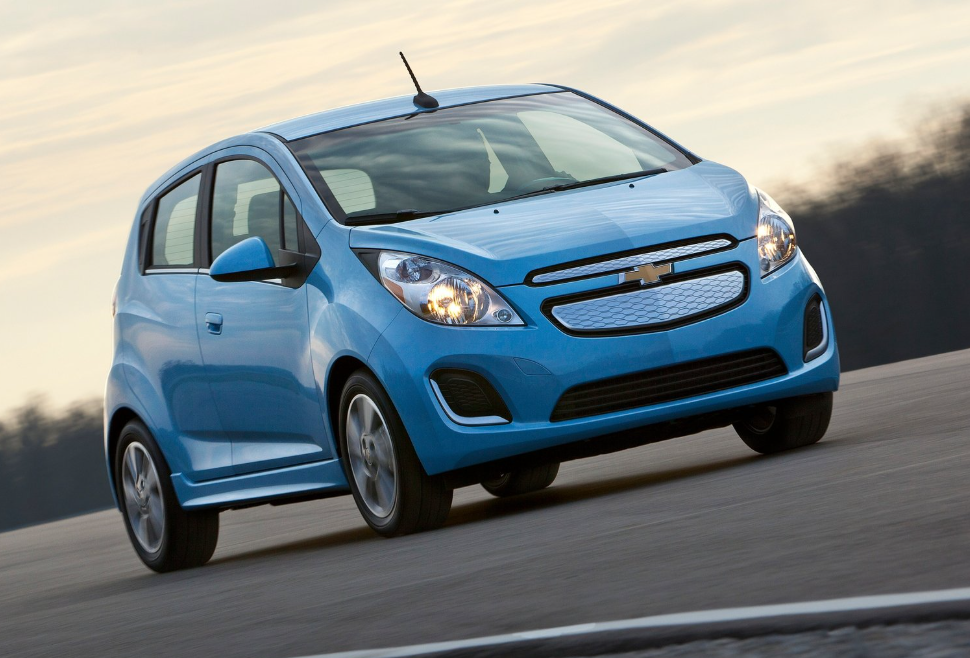
More than likely it’s a few things. First, driving such a car can be like wearing Sears Toughskin jeans as a kid back in the early eighties; they fit, they worked, but in a world of Jordache and Sassoon it was painfully obvious that you were a second-class citizen. It’s a badge of shame, since people are generally very shallow. If you’ve risen above being concerned about what people think, I congratulate you, but most car buyers have not.
Also, you can put as many airbags and headrests that will fit in one of these Kei-sized things, but you simply aren’t going to win in a collision battle with the average American SUV, much less a F-800 Mega Ranch Dually or whatever.

Car companies are more than happy that you feel this way. They don’t make any profit on these super small cars, and an even cheaper car would have less incentive for them to sell. Worse than that, chopping a foot or two of length and a few amenities out of a Chevy Trax won’t give you a $15,000 vehicle anyway. I can virtually guarantee that American car companies are not going to eagerly make kei-type offerings; actually, they probably just won’t.
Realistically, would a sellable American “kei” even be “car” in the normal sense? I say that maybe it can’t, but it doesn’t have to be.
Baby Hummers Are Coming?
Side-by-sides are a bit of an odd duck in the world of motor vehicles; they’re specialized use vehicles that can tackle off road challenges many larger vehicles cannot.

Many are perfectly capable of keeping up with local urban traffic, but in many states they can’t be legally driven on public streets. Admittedly they don’t have the safety equipment of a “normal car”, but neither do motorcycles or things like Slingshots or Can Ams that can lawfully share roads with cars.
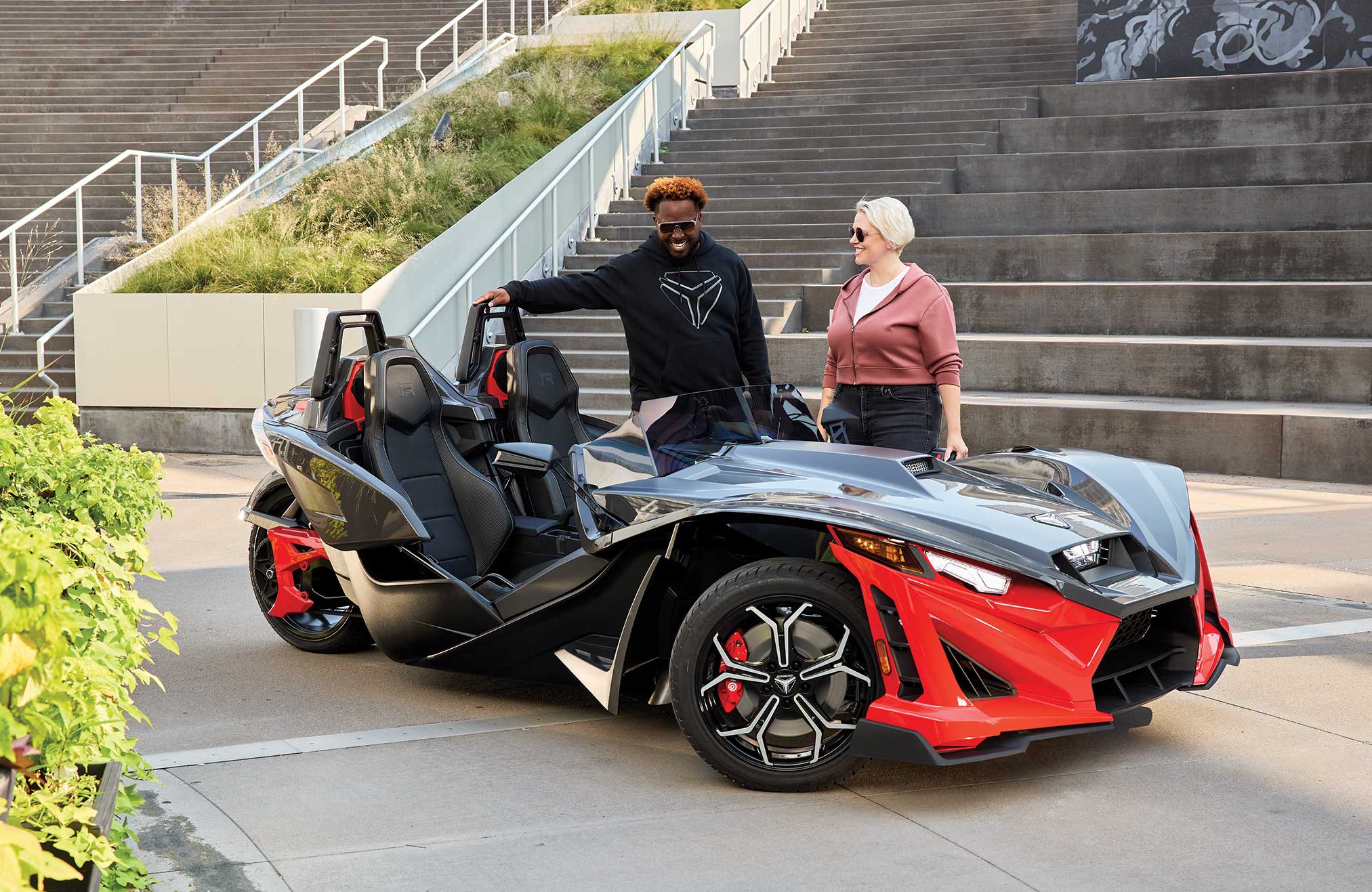
Our Jason Torchinsky used to daily drive a glorified golf cart called the Changli all over a small college town, but he ran into issues when given a Polaris Ranger side-by-side to test last year. Despite being far faster and more capable on the road than a number of his own cars, he basically couldn’t do anything with it, or at least not legally and with the blessing of Polaris on city streets. You might already know this, but Jason does not live on a 500-acre homestead, nor does he possess a twin-axle trailer and the aforementioned F-800 Dually to tow a Polaris Ranger with. This specialized nature of the side-by-side means that the market is limited and could explain why this industry had been suffering a little while back. That’s understandable, since any “recreation” vehicle is likely to be a sales dud when the economy makes even a slight “correction”.

The version of the Ranger that Jason sampled was a higher-level model that cost well over $40,000, but it had far more capability than most people would ever need. A much lesser specification and priced Ranger would seemingly be fine to just drive on city streets and, at worst, get through deep snow or flooded gullies; things that a Japanese-style kei car likely couldn’t do.
It’s even more than actual capabilities, though. The appearance of a “tough” vehicle has emotional value to many buyers. I lose count of the number of $50,000 plus big-loud-tired Jeep Wrangers that I see on my suburban drive to work. There are few worse vehicles I can think of to use as a daily commuter, but buyers must see a value attached to a look that equates with big, tough, and heavy SUVs.

A side by side likely won’t be any safer than a kei car, but somehow sitting higher and having a “roll cage” gives the impression of these qualities. I’m not saying that’s good; it just means that people are psychologically more inclined to purchase a vehicle that seems to be more of a match for roads full of SUVs (as incorrect as that assumption might be).
None of this matters as much as the biggest elephant in the room; something bigger than safety and speed.
“Oh, Should I Write Them A Note?”
Cars are more than just consumer products: they’re part of the culture. That, more than anything, might be where Kei cars won’t work in America, but side-by-side type vehicles could.
You wouldn’t think that a tiny British subcompact would be embraced by members of the world’s biggest band, but despite their wealth, members of the Beatles owned and were regularly spotted in Minis. These cars simply transcended the typical “class” designations that would prevent an A-lister in America from rocking a Mitsubishi Mirage today (though the Toyota Prius was once a darling of eco-conscious celebs).

Sport utilities are sort of the same thing today. The biggest stars in the world can regularly be seen rocking Jeeps. Also, it never would have occurred to people of 1965 that teenage girls thirty years later would beg their parents to grace them with a modern version of a World War II military vehicle. It’s a pointless car for a bedroom-community kid, but how many duck-covered Wranglers do I see in the high school lot? It’s all about image.

Of course, high schoolers would never tool around in an actual 1941 Willys; today’s Jeeps are not exactly Lexus, but they’re far more domesticated than surplus army vehicles. A side-by-side is also a rather rudimentary machine, but could we make one that wasn’t quite as hardcore?
Special Kei
Making it legal to drive current side-by-sides on the street wouldn’t necessarily be the answer to American-built keis. The ones that are the most car-like are way too expensive, the inexpensive ones aren’t car-like enough, and all of them are engineered for far more heavy-duty off-road use than street operation. I can see two ways to approach the street side-by-side solution.
Entry Level: MUV (Micro Utility Vehicle) Polaris Sunova
An entry-level I-just-need-transportation street SBS might be what I’ll call the Micro Utility Vehicle; a modified existing product to be more usable on the road and decontented of all the heavy-duty off-road business.
The least expensive four-seat Ranger I “built” for $13,799 here can supposedly tow 1500 pounds (a two-seat version lists for around $2000 less). It also has an AWD system that features on all Rangers, which you really wouldn’t need if you’re doing mainly street driving (but I like the extra ground clearance) any more than you need towing capacity.

Here’s the modified version that I’d call the “Sunova” since that’s something our David Tracy says a lot around here. I believe that a version of the 570 with rear drive only (ditch all of the AWD equipment) and made in higher volume would be less expensive, and the money saved could be put into features that would make it more usable on the street.

These modifications would include car-type wheels and tires instead of the super-wide-tiny-diameter SBS wheels. The big push bar in front can give way to more of a bumper/fascia panel to cover the exposed fronts of the wheels. Naturally, side doors would have to be included but I’d make stretched fabric ones standard instead of far more costly rigid versions. Headrests attach to the “roll bar” and I’m showing a cargo cover in back, as well as roll bar extensions that might be optional. I would think that a large number of buyers would go to aftermarket sources to get the many, many accessories for the Sunova at a far lower cost than what the dealer could provide. Honestly, the aftermarket business for this vehicle could create its own pretty lucrative industry.
The Sunova shown above has the vacuum-formed rigid doors, but here’s the Sunova with the standard soft doors:

Here’s an animation showing the stock Ranger and the Sunova with the standard fabric doors and the optional vacuum-formed doors:
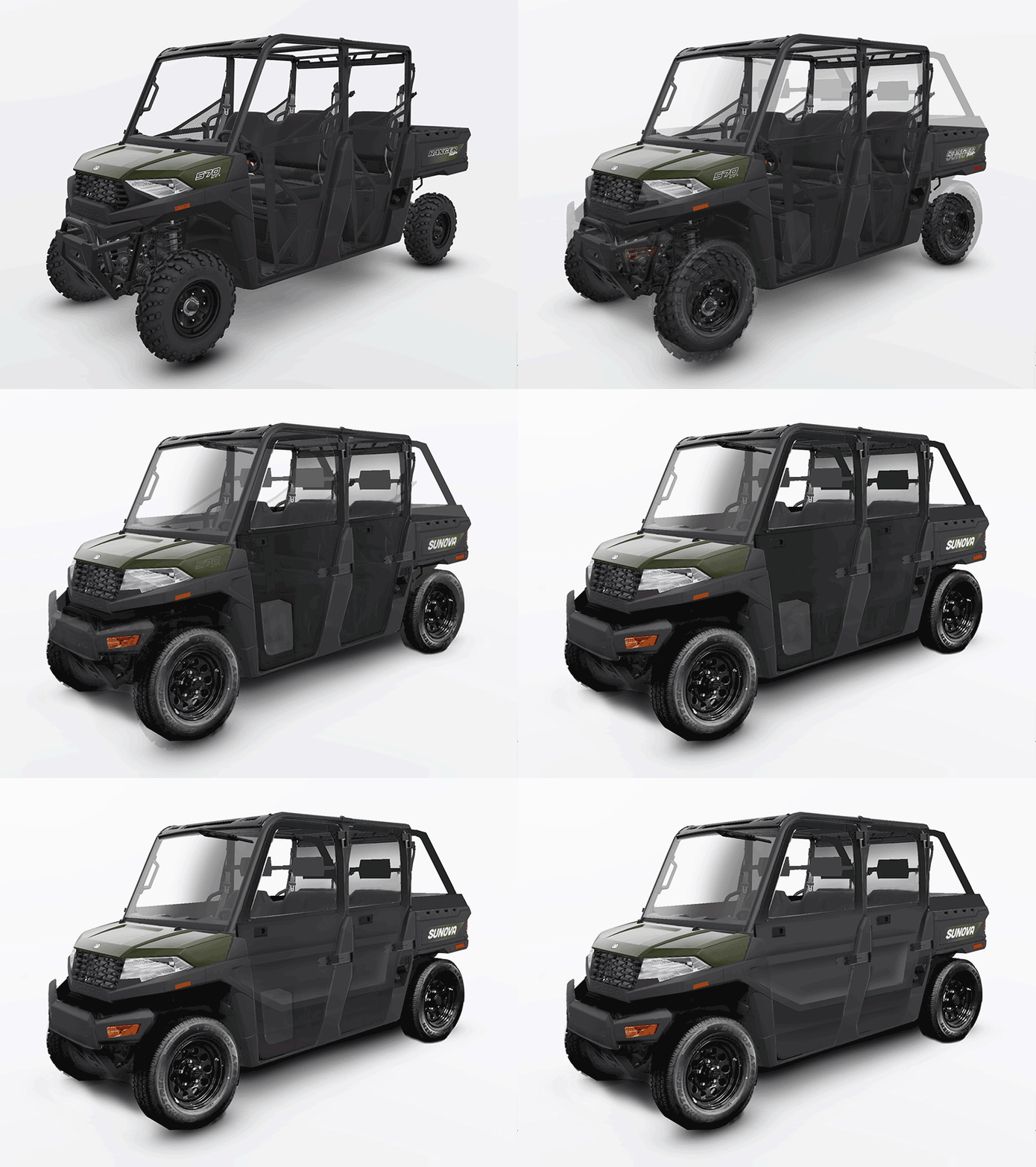
The doors obviously could be easily removable, and in warmer locales might never be used. I don’t think I’d want to run this thing in Minnesota winters, but with an optional heater and maybe even rigid doors, it could be a pretty good snow vehicle like an old VW Beetle was on those tall, skinny tires, even with just the driven rear wheels (and the engine weight over them). I do think that rigid doors could be made for far, far less than the nearly $1000 per unit some makers charge for these things now; once again volume is the driver here.
What if you’re willing to spend more money on something fancier, maybe faster and more trick than what you might typically get for $20,000 or $25,000 today? Also, what if this were a little EV for the ultimate in efficient around-town use? You might want a Sherpa.
Upper Level: MSUEV (Micro Sport Utility Electric Vehicle) Polaris Sherpa (also available as gas powered)
Some time back, I envisioned a more street-friendly street Ranger that would have been electric powered, but I’m thinking now that it might be offered in a gasoline-engined version as well. Still, as an EV, you’d be eligible for credits, and who knows if even more such incentives might be provided by governments to encourage smaller, greener US-built products. This is the Polaris Sherpa I presented a while back:

Here’s how I described this thing a while back:
Styling of what we’ll call the Polaris Sherpa series will follow the same pattern as automobile crossovers: a combination of rugged off-road machines with the cleaner forms of street cars. The body will sit high without being as far off the ground as a Ranger; grey plastic rocker trims and sharp breakover angles front and rear create the look of something off-road capable. A grey hood and “roll bar” contrast the color-painted sheet metal.

Four side doors could feature windows with crank roll down sections, and the Sherpa can offer another trick not seen before: you could remove roof panels over each seat, the rear window glass and all of the side glass to give a convertible feel.
The cargo area is shorter than the Ranger; optionally you could fold or remove the rear seats and even remove the rear window to carry larger objects in a way neither any current UTV or LSEVs can do.

An optional, integrated trunk lid could offer weather protection and security for your cargo.
In the Sherpa, the dashboard is simple, with the optional entertainment system or screen being just a standard double DIN opening that you can use as a storage bin or install any damn thing you’d like (and be able to upgrade five years from now per Jason’s new rules). Air conditioning and power windows? Who knows; even if the price starts to get up there you still don’t have a lot of open-topped off-roadable EVs out there for the price of a loaded subcompact.

I’d like to esentially move all the controls to the steering wheel area.

Like the Sunova, you could possibly get car-type tires, wheels, and bumpers as an alternative to the more off-road style pieces, and maybe even an add-on rear cargo cap to make a sort of Jimny-style micro SUV.

For power, I could see that EV having a front motor or the option of front and rear motors to allow all-wheel-drive. We’d engineer it to allow for a gas-powered model as well, with an engine in front to replace the “frunk” and a gas tank to replace the batteries. How much power? I’m still seeing less than 60 horsepower with both motors, the rear one getting the bulk of the power. If you want to duke it out with big SUVs on the highway at 85 miles an hour, this isn’t your ride. I am sure there will be aftermarket places selling modifications to make these go at frightening speeds. I wouldn’t do that, but I get passed by bikers with their front wheel in the air doing 80, so I promise skunkworks hyper-powered MSUEVs would be a thing as well.
Honestly, I think a firm like Polaris might need some help with this thing from an OEM car maker. At the same time, those large domestic big three wouldn’t want to make these kinds of things anyway, but wouldn’t mind one on their lot to sell, especially if subsidies and tax credits might be in the works. A partnership perhaps, where both Polaris and a “real” passenger car company might sell the same thing they’d collaborated on with different grilles and branding?
We Can’t Find A Way To Make It Safe, But Maybe At Least Cheap?
Don’t kid yourself about kei car abilities; they’re great for certain uses, but they’re limited. Reviews of the vaunted Honda N-One emphasize that even this benchmark isn’t meant for highway travel, so you’re stuck driving around town only in a cramped box that you can’t open up to enjoy the sun in summer or with the ground clearance and ability to grind through the snow in winter.
You can’t argue with the facts; it’s probably quite unlikely that Kei cars are coming to America, and even more unlikely that they’ll be built here. Car manufacturers have no interest in building something that recent history has proven few people want, and they absolutely have no interest if it’s a product that they can’t make profitably.
However, you know who could? Do you know who is basically making them already? Side-by-side manufacturers. Plus, if they could double or triple their current production numbers on something engineered to be more suited for lighter-duty use, they could likely sell them for less money than their current products. Better than that, their American-based manufacturing plants could thrive; that’s something we’d all be happy to see.
Running a modified side-by-side on the street still seems sort of crazy, but is it any worse than running some tiny Japanese microcar? I say that this insane idea just might be ohKei.
Top graphic base images: Honda and GEM Vehicles


On the one hand I like the idea of America legalizing and even building Kei cars, but on the other it feels an awful lot like the folks with the money trying to get us into tiny homes instead of supporting steps that would make more traditional home ownership more affordable. (As in, “Can’t afford a $40,000 SUV? How about rocking this glorified Ranger with actual doors?”)
The homes the middle class moved into in the 50s weren’t much bigger than two of those tiny homes, and those were expected to hold two adults and two+ children.
Yeah, two of them. But I’m talking about these glorified sheds with the loft for a “bedroom” with a four-foot ceiling and barely the space for a mattress on the floor, a tiny kitchen not even big enough for a stove, a wet bathroom which is basically just a shower stall with a toilet in it, and the tiniest of living rooms or dens. Within the last decade those went from minimalist living spaces to a normalized place to live, but at a surprisingly steep price in most cases.
Meanwhile, in my neck of the woods, a two-bedroom apartment that not even five years ago would have run you about $800 a month is now going for north of $1,300 (with no upgrades or improvements in that time span).
I’d be interested to know where tiny homes are *normalized*. I live in one of the most expensive real estate markets in the country.
The rent market in a lot of the cheap parts of the country did go nuts – remote work exported the housing shortage to everywhere. Maybe the fact that basically no new housing units were built for half a decade after the Great Recession has finally caught up to us.
Northwest Alabama. In this area there’s an abundance of companies that were making sheds and backyard workshops and detached garages that now have lots full of tiny homes instead. On top of that many people local to me have griped about a sudden influx of posts (not advertisements) about tiny home lifestyles popping up in their social media feeds despite them not doing anything that would make the algorithms think that’s what they want. I mean, a lot of these homes are cool, but I’m not seeing hardly any actually being bought and lived in. I think it’s because most of us around here are not single and/or childless and want to stretch our legs a little. But SOMEBODY (corporations, I guess?) has decided the answer to rent quickly going up so much is to offer these tiny homes instead (which in most cases still cost more than many people here can or want to pay).
I think you’re spot on about the lack of new housing units. I would like to add also that a lot of the housing that has been built since then is aimed at higher income brackets. I’m talking about apartment communities that have so many amenities that rent is significantly inflated. Many people don’t want to pay hundreds of dollars more for a pretty standard apartment just because the building also has restaurants, gyms, common areas with kitchens, rooftop bars, etc. Nashville, for example; as recently as August of this year there were over 4,300 available units out of about 9,000 built since 2020 because they are these really nice buildings full of extras but then the apartments themselves are just run-of-the-mill one- and two-bedroom units that are way overpriced.
Ah, so you’re seeing a bunch manufactured – not actually being lived in. They could be going anywhere. I could see them selling to people for use as cabins or guest houses.
That would be a great idea for a hotel too, I think! Instead of one big building, a number of tiny homes arranged around a central building with the front desk, breakfast area, and so on.
PS – New housing being aimed at higher incomes still helps with housing scarcity. The folks moving into those units vacated older units, making them available for others. Now, if there’s people relocating to the area, they might take the vacated units, but if you built enough, the vacated units become attainable to people with lower income.
This makes sense; people with money want to live in new or completely renovated units. People only take older housing stock if they can’t afford new. All the costs involved with developing net new housing make it difficult for developers to make a profit, so they always build for more margin.
I guess it just depends on how long it takes the property owners to be willing to drop the prices to a level more people can afford. Which goes right back to what you said about the difficulty of making a profit.
Yeah, none of the solutions are an immediate panacea. Markets take some time to work.
If you compare them to jeeps evolution I can see it but the sxs Mafia especially Polaris was probably behind funding certain groups trying to keep keis out of the US. They don’t seem to want to be part of the solutio. A $30k thing that’s I struggle to call a vehicle is probably doomed when we the repeat luxury crisis like what happened in the early 90s happens again and it may have already started. Honda has plant in South Carolina producing sxs. Maybe they could have some production for a kei but a kei is an actual car so already existing car plants would probably make a lot more sense. Polaris does own aixiam maybe there is something there it would still be probably be $15k for a small little city car maybe it’s a start.
Man, this conspiracy theory needs to die in a fire. It’s been hashed and rehashed here over and over again.
They weren’t and they aren’t. I did a deeper dive on this in a previous comment (which you can and should read, here: https://www.theautopian.com/colorado-appears-to-have-reversed-attempted-ban-on-kei-trucks-and-military-jeeps-after-enthusiast-uproar/#comment-543460).
Polaris and Bombardier and the rest of the gang have not contributed any money to legislators who have sought to make importing kei-cars harder, as there’s almost no use-case overlap. And using SxS’s on-road is already legal in vast swaths of the US (IE, where I live: https://dld.utah.gov/street-legal-atv/).
Thanks for doing the research!
What about the powersports dealer groups?
No evidence of any money flowing from them. Nobody’s really cross-shopping a Can-Am with a kei-car (this article to the contrary); the typical Can-Am purchaser is going to be a dude with a large truck, and who if interested in an econo-box is just going to buy a Dodge Neon or Chevy Bolt or other 4-door hoopty. IOW, there’s almost zero market today for either kei cars or ATV’s in urban settings, and it’s not like people in, say, Boston are going to rush to buy SxS’s if they’re legalized (it’s not like similar vehicles, like Vanderhall’s lineup of compact cars, have made any inroads in such places), nor are F-150 owners in Amidon, North Dakota, going to go try to buy kei cars for their outdoor recreation (ostensible or actual).
The bigger anti-import-organizations operate under the guise of safety and bureaucratic convenience (like my previously-linked comment), not any desire to undermine the powersports lobby.
Yeah, this is a backwards approach. Better to visually ruggedize an N-Box with flares and cladding disguising a wider track along with a 1-liter engine and taller final drive to at least make it highway capable if not comfortable.
I would support legislation that allows SxSs with adequate power and lighting on the streets, though I think they should be limited to roads with limits at or below 60 km/h given their lack of safety equipment and inherent limitations in braking and handling.
Those side-by-side ATVs are too expensive: since I don’t have a working ranch to patrol, I can’t write one off of my taxes. Even with import costs, it seems like you can get a plain white kei truck (in those states that allow them) for $6-8K or so. Not sure which one I’d rather be in if I were rear-ended by an Escalade being driven by a nincompoop busy posting to their vlog. The kei I guess… at least my limbs and personal effects would be more likely to stay inside the vehicle.
I’m going to be very surprised if there’s some federal-level legislation that sticks (not merely an executive order signed with a Sharpie) that says Americans can buy/import, register, and insure kei-class cars from overseas and then drive them on public roads (even if they excluded roads with 65MPH and above speed limits). I just don’t think it’s going to happen.
https://www.washingtonpost.com/graphics/politics/trump-claims-database
…I think they stopped keeping track five years ago. 🙁
The absolute last thing I’d want to do is buy an actual car from a side by side manufacturer. *Maybe* if the are doing knock down kits of cars that Honda or Suzuki already built.
I guess it depends on your state, I tagged my Teryx side by side here in NC a few years ago and drove it around in the local city/town roads. I have seriously considered buying at Mahindra Roxor (your basically WWII Jeep) and putting a tag on it and daily driving it. I love that it is VERY basic, an actual transmission instead of CVT on the SxS and slightly larger / looks like a real car.
Title them as cyclecars. Problem and safety issues solved.
Screw the safety. Just run them as is. They know what they are literally getting into.
Oh, these things are already on the streets of rural communities across the Midwest who have adopted golf cart laws, despite utvs being way faster and more capable. What we need is actually to metropolitanize the concept beyond NEVs to make it work.
It looks like something you would see driving around Mumbai – No thanks.
I’d much rather have a Vanderhall Venice.
Or an old 2nd Gen Autozam/Mazda Carol.
Side-by-sides are horrendously priced, as they are now. Not to mention that safety is much more “image” than “reality”.
SxS are just a worse car in every sense, even with a box on top for keeping out the elements.
That last concept of the electric AWD convertible SxSish thing would be getting a hard look from my significant other. They are getting the next vehicle and are insisting it’s a convertible. This would tick so many boxes. I could tow a light trailer locally, have room to store stuff out of sight and probably be able to remotely precondition it with an aftermarket accessory. We have a second “real” car to do car stuff so a smaller vehicle for their commute would go over fine. As long as it can do 70 mph on flat ground.
Yeah, it’s the next rational step. There was public outcry about horrific crashes, we engineered safer cars, people ran from them and bought SUVs. There was public outcry, we engineered safer SUVs, people ran from them and bought SXS for the neighborhood. The public, when asked about safety, demands it. But they don’t buy it.
Subaru and Polaris should collaborate, they are clearly star-crossed lovers.
Suzuki Alto is less than $7K new in Japan and India. It a real car, albeit a small one.
Example of why importing is the answer, not manufacturing in USA.
If I had the money, I’d mass produce an inexpensive, 3-wheeled, one-seater, tadpole layout, with the aerodynamics of a velomobile, maybe 160mm ground clearance, 750mm height to roof, 3,000mm length, and maybe 1,000mm width. It would be a fiberglass monocoque with an integrated steel roll cage added to reinforce the safety cell, have AWD using e-bike hub motors in each wheel and a power-dense battery(perhaps a 36S6P pack of MOLICEL P60C).Wheels would be 16″ DOT with 16×2.5″ tires. Hydraulic brakes front and rear with an additional cable-pull e-brake for the rear wheel that also serves as a parking brake.
Basically, a street legal single-person Shell Eco Marathon race car or Electrathon car, designed for maximum efficiency, with as much horsepower as allowed by the Kei car classification.
All of the EV drive system parts including motors/controllers/charger/battery/low-voltage electronics needed to make this possible are available off-the-shelf for under $5,000 at retail prices, with significant per-unit cost reductions ie everything can be purchased/manufactured in bulk. Then there’s the rest of the vehicle, production cost being highly variable depending upon how it is produced(hand made being primarily labor cost with no limit, but mass produced in a factory allowing manufacturing cost to approach raw materials which would be about $3k).
I’d end up with a vehicle weighing under 200 lbs, making 63 horsepower peak and 500+ lb-ft of torque between all three wheels, is safer than a motorcycle, is enclosed for all-weather operation, can be driven in the snow as long as the snow depth isn’t more than the ground clearance, and the vehicle will even able to have integrated into it features such as climate control, a radio, trunk space, maybe even airbags. The battery pack of 4.6 kWh should be enough for at least 150 miles of range at 70 mph if it needs 2 kW from the battery to hold that speed, which is doable if you get the drag nice and low and don’t compromise the aerodynamics for looks. Designed right, it would cruise 100 mph with about 5 kW draw from the battery.
And all of the electric components in it would be using open-source software, and be very DIY-repair friendly, since it would use hobbyist-grade e-bike parts.
You know what this product would give the buyer? VALUE FOR THE MONEY. You see, a poverty spec vehicle of this sort could easily be made to accelerate with $250,000+ supercars/hypercars in a straight line, and perhaps keep up with them in the corners on a race track. It probably won’t have stability beyond 130-ish mph, but that’s still plenty enough for a vehicle intended for street use. And on the street, bar none, it would be the cheapest possible thing you could operate outside of a bicycle. A full charge would cost $0.50-$1.00 in the USA depending upon where you are at, replacement parts would be readily available for anything electronic and basically plug-and-play, and it would be a no-nonsense, low-maintenance vehicle so small you could possibly carry it into an apartment.
THAT is the Kei car I want to build in the USA. A 3-wheeled, full-suspension electric racing kart on crack that is barely street legal, and if mass-produced, CHEAP. All the gen-Z kids priced out of used car ownership today would flock to something like this like flies on shit, and they’d not only have transportation that’s cheaper per mile than taking the bus, but they’d also be able to piss off all the people who blew six-figures on overweight/overcomplicated “sports cars” by being able to blow their doors off at the stop lights. And it would be about as eco-friendly as a car could get. Something like this mass produced could come in at under $10k.
I know that I’ve pushed back on this concept when you’ve brought it up before as something commercially viable, but this would be so cool to see. Even cooler to drive.
It’s younger, cash-strapped buyers that will especially be open to trying things like this that are different, especially if it will save them money during its use over the alternatives available and be a relatively low-cost purchase, while offering a sort of novelty that they will never see outside of spending 6-figures.
Old pics of a prototype in progress that a friend of mine put together and I helped design:
https://i.imgur.com/Rx92V7Y.jpg
https://i.imgur.com/vVuZKWt.jpg
I want to make Cycle Cars great again, dammit!
Currently waiting on some aluminum parts from Canada to arrive so I can install front hub motors on my trike before adding the differential and converting it to a quad. THAT vehicle has a pedal bicycle drivetrain in order to legally pass as a “bicycle”(and a switch to limit it to 28 mph while pedaling and 750W where places have e-bike classifications), saving even more money(no insurance, no taxes, ect). At 10 kW with one rear motor, it did 0-60 mph in 7 seconds, and without a body could reach over 70 mph.
Trike in question:
https://i.imgur.com/ZiR8Rxc.jpg
Look at that glorious layer of rubber left behind while doing donuts:
https://i.imgur.com/d2yizhE.jpg
That thing is going to have 20 kW or more, 500 Nm torque, and AWD when I get done with it, and including the new body and roll cage, still weigh under 120 lbs.
Okay, but speaking as a broke Gen Z car nerd, why three-wheeled? I think of three-wheelers as regulation-cheats more than anything else. If some proposed cheap/electric vehicle is a three-wheeler, I consider it a red flag.
I think one of the main arguments that killed them for me on a practical level is that they maximize road imperfections that could be straddled by a four-wheeler or avoided by a two-wheeler.
Why lose out on stability and traction? I think that a wheel in the middle-rear of the frame would also limit the packaging in a way that would reduce utility (“trunk space”) and the ability to fit those subsystems like climate control.
The purpose of three wheels is precisely to get around being subject to modern crash standards. Outside of $1 billion, there is no way I’ll ever have the money to pass them with a mass-produced vehicle and be allowed to sell them for road use.
4 wheels is definitely preferred to 3. I’m turning my trike into a quad for that reason. But 3 wheels can still handle bad roads/obstacles surprisingly well if you pay attention to the vehicle’s center of gravity during the design.
3 wheels does have an advantage in allowing an ideal teardrop shape for drag reduction, but that is also achievable with 4 wheels by having a rear track more narrow than the front.
So, 3 wheels to start with, 4 wheels if the funding to make that feasible happens.
My mention of packaging limits was partly thinking about the “ideal teardrop” shape as a negative.
Having the extra room for “stuff” (or functional subsystems) between/over two wheels would be more appealing than extra highway miles (especially since it should charge relatively fast) or especially high-speed performance past a certain point (80mph)
Other than that, fair enough.
One of my motivations for changing my trike to a quad with a limited slip differential is the increase in storage space. The total volume will be less because I have to house two rear wheels and a differential instead of just one real wheel, BUT it will be contiguous storage space, allowing me to fit larger things in my trunk space.
My next body shell for my “bicycle” is going to resemble a cross between an Auto Union Type C streamliner and a Stanguellini Colibri. I am aiming for the ability to hit 40 mph on flat ground using nothing but my legs, at least in a full-effort sprint, and maybe do rolling averages of 25 mph over long distances in rural areas where stops are minimized. When I use the electric motors, it’s basically a sports car.
Where I live, side-by-sides have been legal on the roadways for the past 5 or 6 years now. They don’t even have to be road-legal. There are signs as you come into town that state: All City Streets are ATV Routes Unless Posted. It used to be the major 2-lane state highway that went through our town was the exception, but they changed it a couple of years ago so now ATVs are allowed on every road in town.
It would be nice if Kei cars could be allowed the same consideration on local roads as well.
Ugh, I feel like this concept may be inevitable, but still I hate it. Kei cars are civilized, styled to be somewhere between pleasantly unassuming or all the way towards cute, and they’re meant to be driven on the street responsibly.
Side-by-sides are none of that. They’re styled to look more aggressive than a Hummer like they’re compensating for something, and built to indulge their buyers’ urges to rip the hell out of the landscape on a whim. Basically, they appeal to obnoxiousness.
I live where side-by-sides are at least quasi-legal on secondary roads. There’s one somebody rips around the neighborhood in like an extra-noisy go-kart on steroids.
If they’re going to be turned into cars, they need decent mufflers on them to quiet the noisy, clattery little engines in them. I’d rather the styling (and marketing) was a bit more restrained because we really don’t need to encourage more bad behavior on the roads than we already have with many big SUV drivers.
While discussing our needs and wants for the home my wife and I would like for our retirement, we were discussing dealing with a long driveway since we both agree we’d prefer to have a few acres of land and some setback from the road, since we both prefer quiet, privacy, and having more nature and less manicured lawn around us. I said we’d want to find an old golf cart to deal with grabbing the mail from the box out by the road and hauling the garbage bins out on a small trailer. They have roofs, windshields and side curtains for rainy and cold weather, so it would be fine for quick runs. She said she’d prefer a side-by-side because it could be fully-enclosed, with heat. I countered that they’re stupidly expensive, horribly noisy (she herself complains about the ones that the kids drive in the neigborhood…) and as a utility vehicle for tending to a small, wooded property, less maneuverable than a quad ATV. She’s still in favor of one. I feel like she’s going to have one anyway, someday. I’d rather pick up both a quad for dealing with land management and an old golf cart for driveway duty, probably for less money. I just can’t justify the price of side-by-sides except perhaps as luxury hunting vehicles where there are trails wide enough for them to go. But a fully kitted-out quad still seems more useful to me.
For your use case a 4×4 Kei truck would work well. If you don’t care about driving on streets you can fit ATV tires, they make snow plows for them and the cab has AC
Unfortunately, doors, windows, heaters, etc. are all optional accessories for Polaris vehicles that increase the cost, but it’s perfectly possible to build up your SxS to a completely enclosed cabin with heat and even power windows. The problem is that it then costs as much as a normal car.
Absent it turning into a foam ball like in Demolition Man after a collision, you’re going to lose to your average Canyonero because physics.
I’ll buy a JDM Acty or Sambar and use it instead of a side by side for a farm vehicle every day of the week, though. Just waiting for the airbag equipped models to be more readily available.
To be honest, if I lived in a state where UTVs were allowed to be registered for the road, I’d probably be driving one already
Allow imports. This is the answer. Build larger size, larger profit vehicles in USA. Imports are welcome to serve the low end of the market. OKei
The Nissan Sakura would be a great vehicle to start with. It’s already outselling Tesla in Japan. Practical and affordable, it’s much safer than a glorified quad bike, and could sell for less than the least expensive new car on the market today. It would be a success, without a doubt (unless Nissan dealers screw things up).
Japan will be producing electric cars with solid state batteries soon, which charge faster and go farther than the current technology.
SO many of the side by sides on the trails and off road parks are bigger than my buddies cj-2 but his jeep is not allowed on the atv trails like the SXS’s are. Many of them cost as much as a new jeep.
I think people want something they can break and tow home on a flat bed trailer behind their tax breaks “work” trucks.
As an R&D test engineer for a UTV manufacturing company, I have mixed feelings. Excited about the possibilities, terrified of the expanded requirements.
Excited/terrified is a good place to be. Not sure if any of this would work, but I really want to see you guys build and sell more products, whatever that might be.
Just let me register a Mahindra Roxor for the street, problem solved! Although I liked them better when they were around 15k – not the 20k starting these days.
$20k doesn’t sound too bad when you compare it to $40k or more for a UTV that has similar driving capabilities on pavement. I wonder how much a federalized Jimny would cost? Probably too much, I know.
True, 20k is base though,just looked it up- to get a roof, heater, etc. it easily gets into the 30k range. The Mahindra is a ” real car” just with a speed limiter though so I would put it above a UTV for on road ability.
The Jimny would be great as well. The Australian model starts at $34,990 AUS so about 23,300$ USD. I can’t imagine that the US standards are much tougher than Australia if emissions stuff/ CAFE and import tax are reduced.