


Back in the summer, I bought a cheap 2008 Land Rover Range Rover with over 200,000 miles on the clock to use as a beater in New York City. I went into it thinking I’d be dealing with problem after problem, seeing as how the internet loves to hate on these cars when it comes to reliability. But my reality has been far different.
Aside from an oil change, I haven’t done any maintenance on this Range Rover at all. In addition to sitting for long periods of time at my parents’ house and existing on the streets of New York City, I also drove it to Chicago and back, where it performed flawlessly (for the most part).


In yet another test of durability, I tasked my Range Rover with being a support vehicle for my recent ice racing adventure that I wrote about yesterday, a job that required starting in hellishly cold temperatures, lots of idling time, and hundreds of miles of travel. And yet again, it didn’t let me down. But it wasn’t faultless, either.
Let Me Catch You Up
I’d like to make it clear this Range Rover isn’t perfect. Far from it, actually. Most of the truck works well, but there are enough dents, dings, and rust spots to total it out if I were to bring it to a proper body repair shop. The passenger-side front window has a huge crack running through it, and the driver’s seat heater doesn’t work.
There are also two lights illuminated on the dashboard. The first issue is a tire pressure monitoring system light that hasn’t worked since I bought the truck, and I don’t want to waste time or money fixing it. I’m pretty good at sensing whether my tires are going flat, so that light will likely stay on until I sell the thing.
The second light is a check engine light for the emissions system. I haven’t looked into this issue much, though I suspect at least one of the catalytic converters has gone bad, seeing as how the exhaust smells pretty gross. This is something I’ll have to address within the next month if I want to pass New York’s state inspection.
Other than those things, though, the truck is pretty solid. The engine barely burns or leaks any oil, and it still pulls strongly, while the transmission shifts as it should. The widely criticized air suspension system works well, as does the two-speed transfer case. For the price I paid, it’s a lot of truck!
The Range Rover’s Toughest Challenge Yet
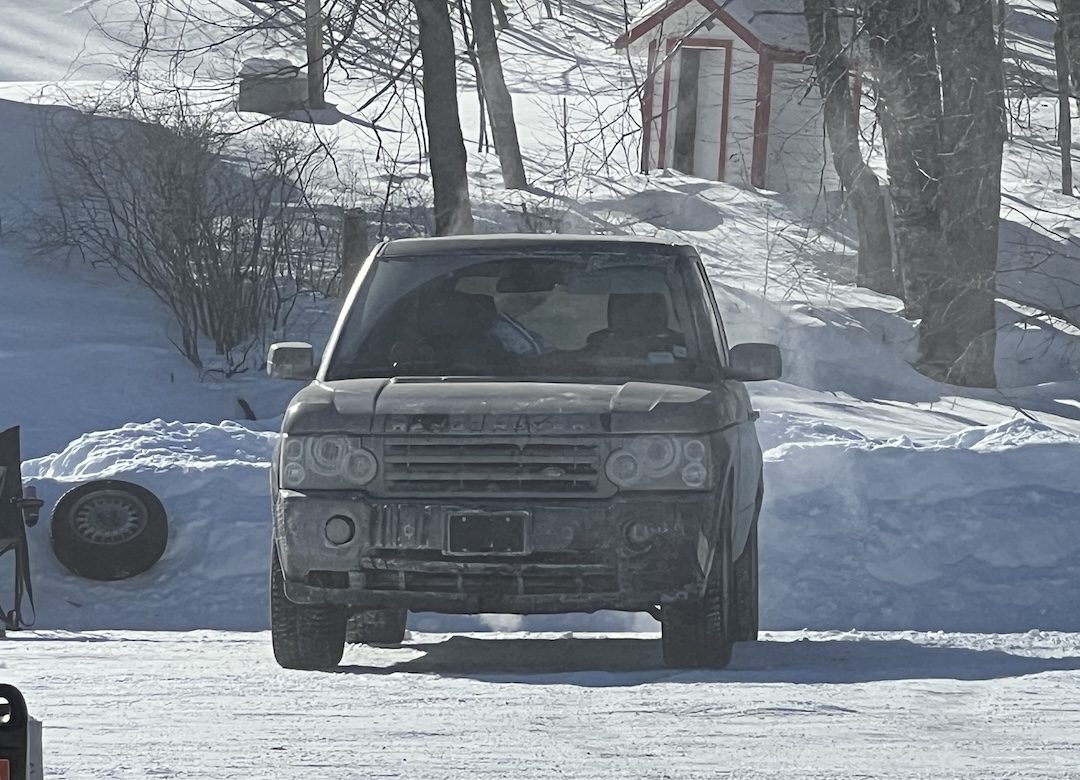
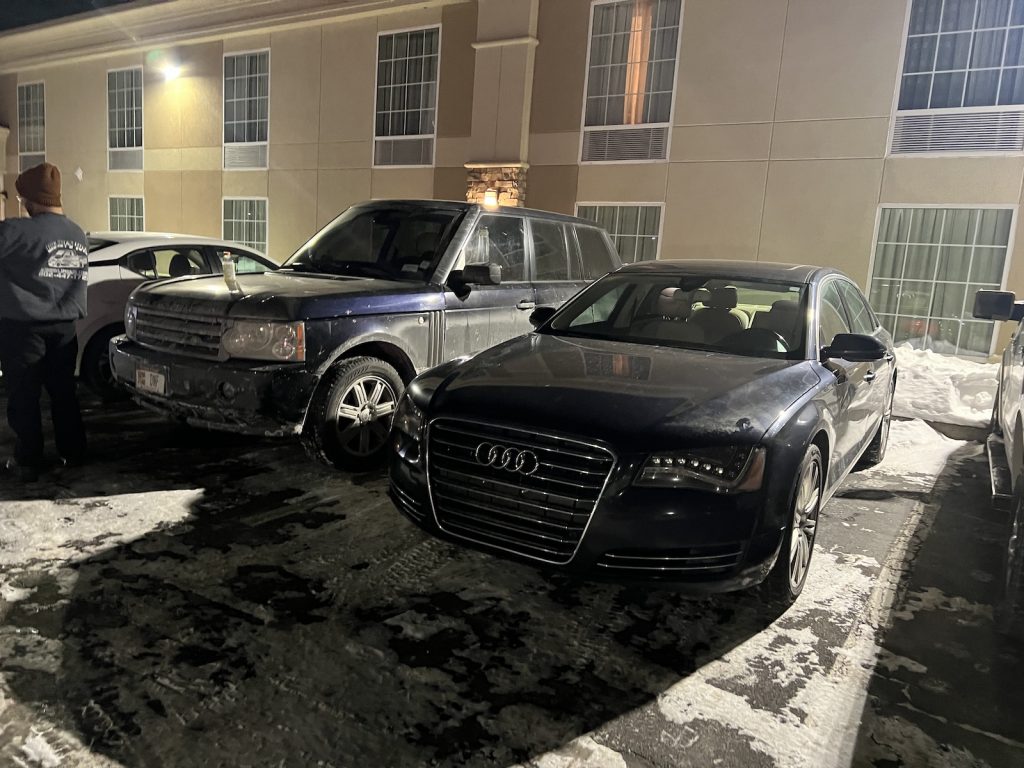
In case you haven’t read my Audi ice racing piece, here’s the short version: This past weekend, I went and bought a 2014 Audi A8 L to go ice racing in upstate New York, which turned out to be a great success and a lot of fun. But none of it would’ve been possible without the Range Rover working tirelessly in the background to act as a support truck.
It was the Range Rover that got me 200 miles from New York City to the Audi in Vermont, and the Range Rover that carried all of my tools, racing gear, unhealthy snacks, and other supplies to the event in upstate New York. The Rover acted as a mobile living room for my friends and me throughout the day, and served as our “errand runner” car for when we needed lunch or tools that we didn’t have. And it did all of this in -12 degree Fahrenheit weather.
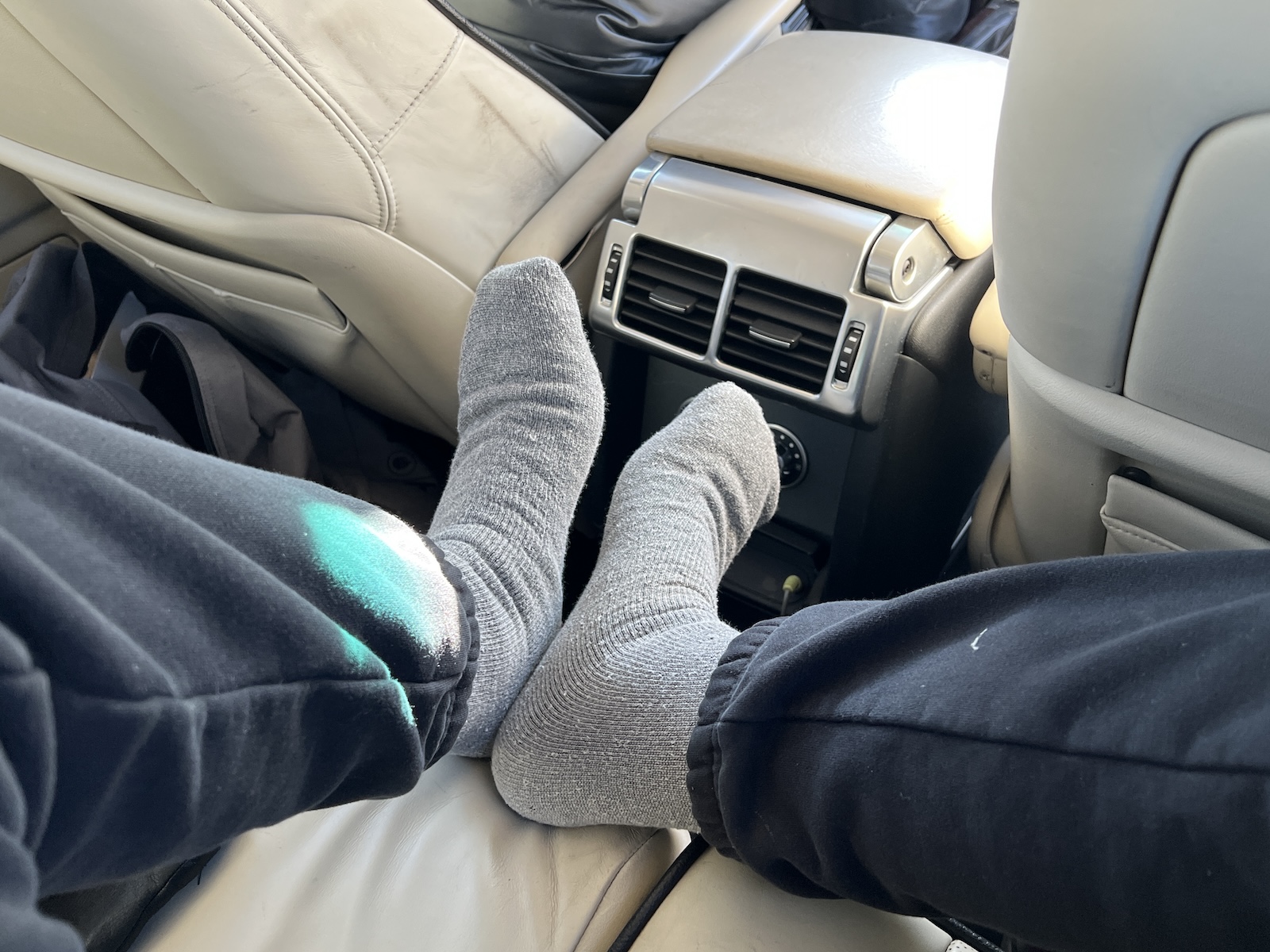
In all, the truck was driven about 550 miles over the weekend. It never stuttered or hesitated to go wherever I needed it to go, and it didn’t even burn any oil. Sure, fuel economy was pretty terrible, but that’s to be expected for something that is legitimately shaped like a brick on wheels.
Of course, a project car road trip wouldn’t be a project car road trip if even something small didn’t go wrong.
If It Has To Break, I Prefer It To Break Like This
The sub-zero temperatures lingered throughout the day on Sunday, meaning the Range Rover was idling for hours at a time on the ice. I had the climate control set to full blast to keep my friends and me warm, making the cabin a nice, cozy place to spend time while watching the other race heats. As it turns out, all of that hot air traveling through the dashboard was harming the infotainment system.
Halfway through the day, we began to realize the infotainment screen was going black and refusing to turn on when the power button was pressed. Thinking it was just a minor electrical gremlin, I turned the Range Rover off and then on again. This fixed the problem, but only temporarily. Before the screen went black a second time, it showed a message on the screen:
Temperature Error
Shutting Down …
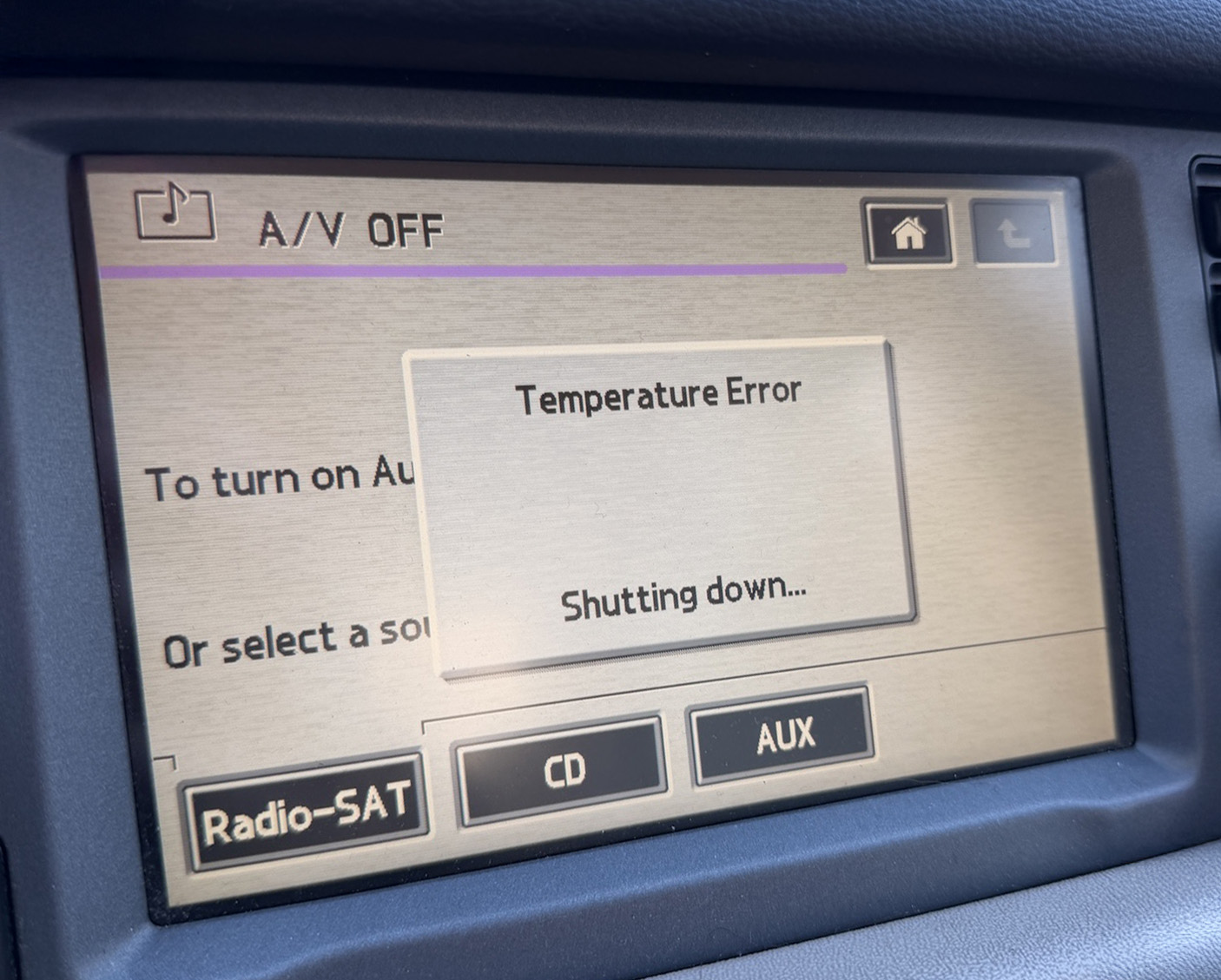
After that, the screen went black again and wouldn’t turn back on. Upon closer inspection, the screen was, in fact, pretty hot to the touch. I determined that the HVAC system, which had been pumping full-blast heat for hours, probably just overheated the infotainment system, since they’re located so closely within the dashboard together. The solution was simply turning off the truck and giving it an hour to cool down, then running the heat at a lower temperature and fan speed for the rest of the day. The problem has yet to return, so I’d consider that fixed.
The silver lining is that at least the infotainment system was smart enough to realize that it was overheating and shut off. I’d rather it take a little break than fry itself forever. That would’ve required me to replace the unit, which would’ve been costly and time-consuming.

Other than that little hiccup, the Range Rover performed flawlessly. It continues to impress me, both with its reliability and its abilities as a rugged all-rounder. As I near its next scheduled oil change, I’ll have to address that CEL sooner rather than later, though. Which means the money pit will soon open for real. Wish me luck.
Top graphic image: Brian Silvestro





Some of these high-mileage vehicles of ill reputation may just be at the top end of the build quality bell curve and if the price works out to throw away money, might be worth trying.
My wife and I bought a ’94 Jeep GC new and the infant mortality rate of various components was terrifying, but it settled down and wasn’t too bad even after the warranty expired.
I so want to move back to New England after 40+ years in the South, and then I see your salt & dirt encrusted vehicle and say to myself “really?”….
Doesn’t leak or burn oil? you’ve check to make sure it has some in it? 🙂
Having owned several Land Rover/Range Rovers, IMHO they are an absolute disaster for the first owner under warranty, even if the warranty fixes it all for free (if your time has no value). Once the dealer sorts when the factory didn’t put together properly, they are mostly OK. Air suspensions are wear item. They allow an amazing blend of abilities, but TANSTAAFL. You PAY for those abilities eventually. I used to say my Range Rover could do 90% of what an S-class can do, and 90% of what a Jeep Wrangle can do, while making you feel like royalty every time you drove it. That comes at a price.
You just need to realize that an older Range Rover is in many ways like an Italian sportscar. A mix of brilliant and stupid, and basically built in a shed by nupties who didn’t have anything like the budget for durability testing that the big automakers have.
Good luck for that car parked in front to get out. Hopefully it has some space up front but given the snow/ice there will likely be some contact as the person rocks it to get it out of the spot. Not that it matters to this car with its previous body issues.
I totally misread the lede image as “SOLD” and thought, well, huh, guess he really is an Audi man now.
Yeah, it really looks like, “Sold.” That was likely intentional, if only to lather up the people who expect these to grenade themselves and cause one to sell and say, “I knew it!” LOL
I’m expecting an article where the Range Rover falls apart like the Bluesmobile towards the end of the Blues Brother movie. Until then, every trip is a success.
There may be an argument that with generally less reliable models like this you are better off with a high mileage example that has been cared for well enough to still have its critical systems all working properly. But still early days/miles.
L322’s are workhorses, and hot take: unless you’ve owned one, you can’t comment on its reliability. Also, I don’t want to hear about Doug D’s experience.. he’s a clown and got the clickbait he needed. These are widely regarded as the best of the best, I’m not surprised at all that you’ve had good luck even with this high mileage one.
It doesn’t help that early BMW L322s and 5.0L AJ ones tend to crap themselves, and cast negative aspersions on the whole run. Well it helps if you want to buy the ones in the middle that are good for cheap (4.4 L319 owner here)
Good news! A pair of catalytic converters is under a grand on Rock Auto!
NYS special ones? Those are 3x the price of the non-CARB ones. Unless Brian does something dodgy in the eyes of NY state, no federal cats can go on a CARB car. Not like I would ever say to do something like that…….
Oh dear. I’d forgotten about that. RA doesn’t list CARB cats. That can’t be good. Time for Montana plates?
If you think I’m giving up DNF, you are sorely mistaken
I hope this results in a comprehensive test of over the counter “cat cleaners” and if any of them actually work. (My L319 is also throwing cat efficiency codes).
My thought too with Brian reporting the exhaust smelling bad. First step would be to check and replace the MAF and O2 sensors, and maybe injectors, plus cat cleaner to see if the cat is just fouled up from running rich.
Excellent idea!
Just because it’s in NY state now, doesn’t necessarily mean it originally a CARB car.
IIRC they won’t even ship a non-CARB cat here. It’s here now so it gets CARB parts unless the part won’t physically fit.
Interesting! Time to ship to your best buddy over state lines.
I’m not surprised. Much easier to just not ship non-compliant parts than verify the part is going to a non-compliant vehicle.
CARB cats have longer warranties. The rumor is that they have more precious metals than non-CARB cats.
It’s not a rumor, it’s true. They’re basically the same as OE cats for all states, whilst Federal replacement ones are allowed to meet lower standards for some reason. That’s why factory cats cost so much, they’ve got a lot more catalyst in them. Some states (NY, CO and CA at least) only allow CARB cats to be installed as replacements – basically, the same as stock.
Of course, the easy thing to do is to simply plug in a code scanner and ask the truck why there’s a CEL. Smells rich and has a code? Could be as simple as an O2 sensor gone bad.
Yeah, he really needs to scan the car before making any assumptions here.
I saw a study on cheap aftermarket cats years ago and it showed them failing at 20k miles where the check engine light came back on with a cat efficiency code. Not worth if if you plan to keep the car awhile…
Does NYS care? Maine is also a CARB state, but could not care less what is on the car as long as the CEL is not lit.
Yes, NY state has specific laws about cats. You can’t even ship a federal cat there legally*. It’s not really a CARB thing, it’s just that a CARB EO is the only current way to prove that the cat meets OE-level specs. Basically, they want any replacement cat to be of the same quality as the original, and a federal cat ain’t that in any state.
*I think there’s a year cutoff in there, I forget the details. 2002?
Good reason to not live in NYS. This varies widely among “CARB States”. I am sure *technically* the law is the same in Maine, but the state has zero mechanisms for enforcing it, nor AFAIK is there any ban on shipping anything there. The only “emissions inspection” is that the CEL can’t be lit at annual inspection time, and they don’t even plug into the car to see if the readiness monitors are set.
We are a vendor that sells both CARB and federal cats.Maine is one of the four states that has cat requirements, and it is actually illegal to sell a non-CARB cat for a 2001 or later car in Maine. I believe that also means we can’t ship them there. You might say there’s no enforcement, but it’s not worth the risk for a business.
https://www.maine.gov/dep/air/mobile/catconverter.html
Note that this has nothing to do with a state being a “CARB state'”or not. It’s all about whether the cats have to meet original equipment standards. Colorado does not allow the shipment or install of non-CARB cats, but it is not a “CARB state” for new car emissions. You’re just not allowed to sell/install a cat that is substandard compared to federal new car standards.
Like I said – there is no enforcement, so what difference can it make? Everybody in Maine knows somebody who lives in New Hampshire even if you can’t ship to Maine. And yes, I fully understand what the difference in the parts are – but it’s a big difference when you have to PROVE to the state that the cat on the car is a qualified replacement with the correct paperwork ala California vs. some nominal “you can’t ship that here” nonsense that is probably unenforced and largely unenforceable in a state with zero emissions testing other than the CEL not being lit.
Hell, back in the day when VW TDIs couldn’t be sold in CARB states (including Maine) there was literally nothing to keep you from buying one in New Hampshire and registering it in Maine. The law said dealers couldn’t sell them, but there was no law saying you couldn’t register one bought out of state. Pissed off the local dealers to no end, of course.
Maine has long been funny about emissions – way back in the day, the EPA told the state that since summertime smog levels exceeded Federal standards, Maine needed to implement emissions testing. The state contracted with an out of state company to build and run the testing centers. They built them, staffed them, and had a several month “free testing” period per the same enacting law. And of course, cars were failing left and right. But Maine also has a very good “people’s referendum” process that can overturn pretty much any state law. And this one got overturned in a land slide. Bye-bye emissions testing. The company sued and lost – state courts said they should have known this was a possibility in the state, too bad, so sad. The Feds backed off and allowed the “no CEL” rule instead of actual testing, Maine having argued that there were so few pre-OBD-II cars that testing was a waste of time. Cars just don’t last like the do in California when there is an all winter salt bath, and in the summer half the cars in the state are from elsewhere anyway.
They’re free if you have a sawzall and a meth problem!
That’s nice. Is it a bad time to mention that my neighbor’s LR4 with far fewer miles has been sitting immobile on the street for weeks with its front wheels tucked way up into the wheel wells from a failed front air suspension? I wouldn’t even trust a Lexus SUV with that tech.
The issue with unreliable car models is that they don’t all break. Just more of them do. One of them working well doesn’t disprove the probability differential with more reliable models. If you roll lucky, you’re happy. If you don’t, you’re not.
The converse of this is when a Toyota suffers a failure it shouldn’t, it really pisses the owner off.
LR4s are generally more problematic than the contemporary to 322 LR3. My LR3 sags after a couple days, but comes back to ride height at start. Doesn’t help its been below freezing for like 3 weeks in a row in NY.
TANSTAAFL. If you want the magic abilities that air suspension brings to the table, then you are going to pay to maintain it.
I personally think it’s worth it, and I would never remove that system from a car that has it. If you don’t, then don’t buy a car with air suspension in the first place. That said, I would not buy a car with the stupidly expensive “electronic air struts” type suspension that costs $1500+/corner ala high-end Mercedes, Jags, more modern Rovers, etc. A bridge too far. My P38a Range Rovers and now Mercedes wagon have simple air bags with separate conventional shocks. The Mercedes is about $600 to replace the rear bags when the time comes, the Range Rover was about the same for all four. Otherwise, replace the O-rings at the mid-life point, and do NOT continue driving the thing without fixing it once it doesn’t stay up overnight, because THAT is what causes the $$$ air compressor to fail from running all the time.
Had to look up TANSTAAFL. Pretty sure my neighbors are learning that acronym the hard way. I had a feeling that the heavy depreciation of that LR4 made it seem like a screaming deal to them and that they wouldn’t be prepared to pay the piper. Classic unfortunate fate of expensive european luxury marques on their 3rd owners.
Just because an expensive car is cheap today doesn’t mean it doesn’t still have expensive car maintenance costs – that cheap price of entry is merely the down payment, and as I have said here many times “buy the best or don’t bother”.
I am a simple man with simple needs. The shocks on my ’88 Saab 9000 and current ’17 Accord had/have a really superb balance between compliance and performance. Good enough for me. No air bags. No problems.
Try something better sometime – you might find you like it. Ultimately, smaller simpler cars don’t need anything fancier. But when you want to have a 2.5T truck that rides like a luxury car yet can climb a mountain like a Jeep, you need something more sophisticated. Or a luxury car that handles like a car half it’s size while keeping a cossetting ride. Or in the case of my Mercedes wagon, the ability to put 1000lbs of tile in the back and have it ride the same while staying perfectly level. Those abilities do not come for free.
We had a ’15 X5 with self-levelling rear suspension that started sagging while parked a couple of months after the warranty expired. When she bought the X5, her husband at the time foolishly talked her into getting the M package, which totally trashed its ride. (And also meant no spare tire.) We traded it in for an ’18 MDX and never looked back.
“Sporting” SUVs are idiotic.
Amen.
The number of people who even approach the limits of adhesion on the standard suspension and tires has to be near zero. Especially with passengers.
My Mercedes-Benz has had the same issue for ages.
Apparently the HVAC system has ducts that run right behind the COMAND unit, so it overheats the nav DVD player – probably the in-dash CD player too, not that I’ve ever used it in 13 years.
And not that the ancient COMAND nav system is of any use anyway.
But at least I can still stream music.
We had the “smokers test” when I worked on car radios. They would have the windows open in the winter with the heat on full blast, which would cook the radios pretty good, even worse than the “desert test”. Interestingly the worst ones were the cheap radios that had the integrated amplifier which created more heat inside the infotainment, whereas the expensive trims had the external amplifier which were fine.
Loving those Windows 3.1 graphics on the infotainment screen! Please tell me it has a waving W screen saver.
I wonder if it’s a Windows CE screen. Tons of industrial HMIs used to use that platform…
Remember. If each of these car has a 99% failure rate, if you get 69 of them (nice) odds are one of them will work when you need them.
Red Pill: Entertainment
Blue Pill: Heat
Choose one.
I can always wear more layers while behind the wheel…
Heated vest. Game changer for sitting still in cold weather.
Also heated socks. In conditions where no number of layers (that would fit in my boots, anyway) will keep my toes warm, heated socks are the bizness.
I was ice lake drifting last Saturday and with the heat and the workout from whipping the wheel around, I was down to a t-shirt like it was summertime. Even though it was about 3 degrees here in Maine.