


Car history reports have become a mainstay in the modern car-buying process. These reports provide invaluable information about a car’s ownership, maintenance, registration, and damage history, giving buyers helpful information to assist them in getting the right car for the right price.
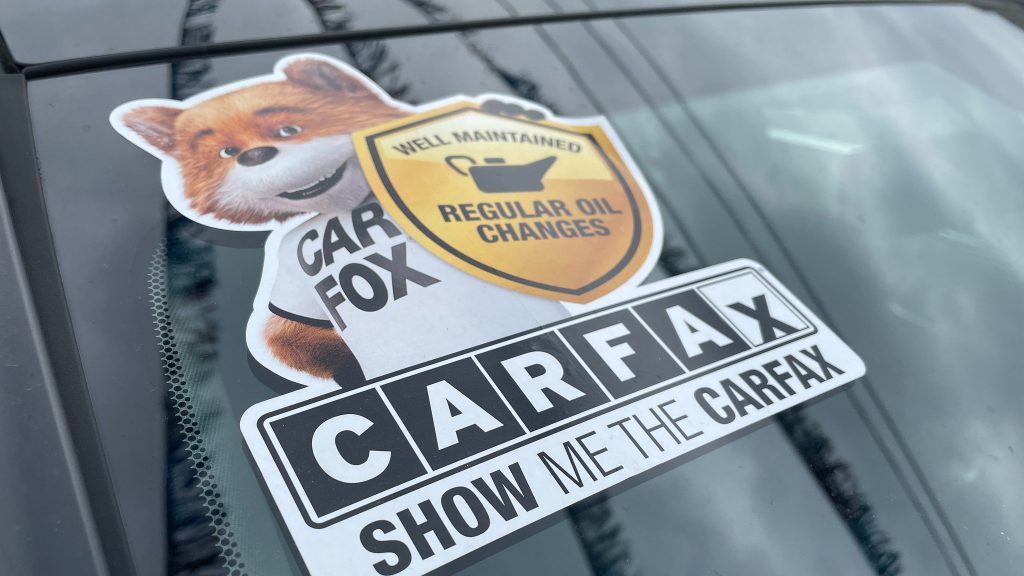
There are lots of car history report organizations out there: TitleCheck.us, CheckThatVin.com, Bumper, CarVertical, VinAudit.com, AutoCheck, just to name a few. The most popular of these entities is, undoubtedly, CarFax. You probably know CarFax from its commercials in the mid-2010s featuring the company’s mascot, the Car Fox.


If you’re shopping for a used car, virtually any dealer will provide you with a CarFax for free. But if you’re buying from a private party, CarFax will charge you for a report. Still, I’d argue it’s very much worth it to drop the $44.99 for that information—doing so has, on multiple occasions, saved me from buying a lemon in disguise.
Because of how CarFax works concerning corporate accounts, people with unlimited access to the database have figured out they can simply sell reports online, either through standalone sites or through third-party marketplaces, like Etsy, for pennies on the dollar and make a healthy profit. In researching how they’ve been able to get away with this, I seem to have ruined it for a bunch of people.
Here’s How CarFax Normally Works
CarFax, at its core, is a data-gathering organization that sells that data to people or firms that can use it to make more informed decisions. According to its website, CarFax receives its data from more than 151,000 different sources, “including every U.S. and Canadian provincial motor vehicle agency, plus many auto auctions, fire and police departments, fleet management and rental agencies, and more.”
The database, which contains 35 billion individual records, is so vast that CarFax can instantly generate a report for any vehicle sold new in the United States from the 1981 model year onwards. That’s around 8.2 billion CarFax reports, ready and waiting for anyone who needs one.
These records can include virtually anything relating to a car’s history, including whether it was flooded, how many owners it’s had, what sort of maintenance was performed, whether it was used as a taxi or rental, its exterior color, whether it passed its last emissions test, whether it’s ever been issued a salvage or junk title, how many accidents it’s had, and which part of the car those accidents affected.

A CarFax might not catch every part of a vehicle’s history—people routinely pay repair shops in cash under the table to fix stuff without reporting the data to CarFax—but it remains a useful tool for buyers. That’s why CarFax can charge $44.99 per report.
If You Make It Cheaper, People Will Come
Individual buyers are only a fraction of CarFax’s business. The firm also sells access to its database to insurance agencies, dealerships, financial institutions, and even police departments. Because these entities usually require access to hundreds, if not thousands, of CarFax reports per month, they’re charged a periodic subscription fee for a set number of reports or unlimited access. CarFax doesn’t publicly disclose how expensive these fees are, but some reports suggest they can be as little as $400 per month for smaller dealers, with prices climbing for bigger businesses.
Here’s where the scheme comes in. When it comes to these corporate accounts, usually, several people are provided access, since it’d be impractical for an entire organization to have to go through one specific person to generate every CarFax. For example, at a big dealership, each salesperson likely has their own login to the dealership’s corporate CarFax account, so they can generate a CarFax report for a customer without having to go through a middleman. It’s also possible they could all use the same login, and share it across the organization.
Because these employees have free unlimited access to CarFax reports, some have presumably figured out they can charge people a fraction of that $44.99 in exchange for a report, which they can generate for free at their work computer. It’s a win for the person paying, because they’re usually only paying $5-$6 instead of nearly $50. And it’s a win for the employee selling the CarFax under the table, because they’re likely pocketing that charge. The only real loser in this situation is CarFax itself, which misses out on the lost income that would’ve been produced if the person purchased the report straight from CarFax.
This practice is, of course, against CarFax’s terms of service. While it’s not explicitly illegal to do this, CarFax can definitely sue you over it. Here’s the exact wording (which is a bit out of date, going by the pricing):
You understand that commercial use, resale and redistribution of the CARFAX Report is strictly prohibited. “Commercial use” is defined as use by persons engaged in the business of researching, buying and/or selling of automobiles, the resale or redistribution of CARFAX Reports or any other business purpose as determined by CARFAX. Any commercial use of CARFAX reports is strictly prohibited and any suspected commercial use will lead to the suspension of your guest account, until you provide sufficient proof that your use is purely personal. Failure to do so prior to the expiration of your guest account will result in the deactivation of your account, without refund, and may result in legal action. Proof of personal use may include: detailing how you are using the guest account and specific examples of the sites or locations where you are finding the vehicles that are being offered for sale. The determination of personal use is at the sole discretion of CARFAX. We reserve the right to impose, and you agree to pay to CARFAX, Inc., an additional charge of the then current price of the 1 CARFAX report package (currently, $39.99) for each CARFAX report that CARFAX deems was accessed for commercial purposes.
So How Does This Transaction Work, Specifically?
By now, you’re probably wondering how you can snag a CarFax on the cheap for your next project car purchase. This sort of scheme has been going on for years on the internet, with numerous websites—each sketchier than the last—offering CarFax reports at discounted prices. Most of them are popularized through word of mouth, through forums, Discord chats, and friend groups—it’s a “if you know, you know” type of deal.
Personally, I can name three or four of these sites that, according to friends who have used them, are totally legit and will sell you a real, up-to-date CarFax for any car for pennies on the dollar. But I won’t be naming any of those sites here, as that would probably open me up to some sort of legal action from CarFax. That being said, they aren’t particularly hard to find.

Those who are, understandably, too nervous about putting their PayPal or credit card info into a site they’ve never heard of haven’t been totally out of luck. Since at least 2022, people have been pulling this backdoor CarFax scheme through Etsy, an internet marketplace where individual sellers can list stuff like arts, crafts, handmade trinkets, and, importantly, digital downloads.
There are two main benefits to doing this through Etsy. The first is for the seller, who gets a far wider reach because their illicit reports are being shown for sale on a well-known marketplace, rather than an obscure, shady-looking website they might’ve made themselves. The second benefit is for the buyer, who can see product reviews to determine whether the seller is legit, and has a more secure way to pay, since Etsy handles the actual transaction.
Please Don’t Be Mad At Me
Let me make this clear: I’m no snitch. But having been recently enlightened by this easy, cheap, relatively risk-free CarFax-Etsy hack last week, I became curious why Etsy would allow this to continue for years, despite the practice likely being against its own rules and opening itself up to litigation from CarFax. So I reached out to the company for comment. A representative for the site replied a day later:
Hi Brian,
Thanks for reaching out and flagging these. I can confirm that we have removed the listings for violating our policies.
I guess Etsy just wasn’t aware. Oops.
With one email, I had eliminated what was likely a fantastic source for cheap CarFax reports for buyers across the country. That’s my bad and not my intention.

Reselling CarFax’s data on Etsy is, of course, totally against the marketplace’s policy, which outlines that all items sold on the site must be made, designed, handpicked, or sourced by the seller. The data on those CarFax reports was very much not collected by the sellers, so it makes sense why they were deleted.
If I had to guess, this isn’t the first time a purge like this has happened. It’s been just over 24 hours since that email landed in my inbox, and at least two sellers have already begun listing CarFaxes for sale again through Etsy, with one using a totally new account. So you can’t be too mad at me. People who had their listings and accounts deleted are probably just making new accounts and starting over. Every time Etsy notices, the cycle continues.
Where’s CarFax In All Of This?
Presumably, CarFax would be all over this, since it’s losing business to the people who subscribe to its subscription plans.

I emailed CarFax at the same time I emailed Etsy, and even followed up with the company a second time. I didn’t get any sort of response to either email. While it’s probably pretty tough to squash all the random sites selling cheap CarFax reports online, it’s unclear why the company has overlooked Etsy.
It’s also possible that CarFax doesn’t care. As I said before, this scheme has been going on for years, and CarFax, to my knowledge, hasn’t changed the way it actually releases reports to customers to prevent this sort of thing from happening. Perhaps they’re making so much money from these corporate deals that these occasional bad actors aren’t relevant enough to put a dent in earnings. It’s tough to know for sure, since CarFax is a privately owned company that doesn’t release financial data.
No matter the case, I’ll be sticking to buying legit CarFax reports for my future car-buying endeavors.
Top graphic images: CarFax; DepositPhotos.com


I’m old enough to remember when the car-fox was a hand puppet!
> any vehicle sold new in the United States from the 1981 model year onwards. That’s around 8.2 billion CarFax reports
Where is that 8.2Bn number coming from? At 15M annual sales times 44 years, which is a high estimate, I get 660M reports.
That’s a heck of a hustle.
Well, I mostly use online sites like cheapvhr.com or carfax.com itself for carfax reports for most of my dealerships. But it is ridiculous to pay $44 each report, I choose cheap carfax options.
Damn Brian Snitchvestro in the house
It’s clear why Etsy looks the other way: they get a cut of fraudulent sales!
I suspect CarFax also doesn’t care because they understand basic economics. Someone scouring the internet for an $8 vehicle history report isn’t going to cough up 5x more if that source goes away. They’ll find a cheaper option, or do without.
The $45 reports are probably offered with the attitude of “if people are stupid enough to pay this much, we’ll take their money!”
I guess that when doing the math, CarFax needs to determine whether this is cannibalizing their business model, or reinforcing their brand/value. Either way, people are searching for CarFax, and not one of the other dozen; people still trust CarFax.
This. Plus the effort to have the ads taken down, so overall it’s cheaper to keep it as it is
That’s the downside of everyone putting ‘hacks’ on the interwebs (vs keeping on downlow)….the loopholes get closed up.
Moral: Make friends with a car dealer.
“With one email, I had eliminated what was likely a fantastic source for cheap CarFax reports for buyers across the country. “
https://media.tenor.com/30peSVlTzSUAAAAM/you-idiot-ren.gif
Regardless of what you think of Carfax or these resellers, this article absolutely involves snitching, and the result is predictable. If you tell a company about something that might hurt their bottom line, of course they’re likely to react to your inquiry (even if they didn’t reply to you directly).
I’d respect Brian more if he were honest about this rather than pretending that he’s not (indirectly?) shilling for Carfax/Etsy.
Hanlon’s razor, my good person. We all make mistakes and actions have unintended consequences (even if, in this case, it was foreseeable).
Also don’t forget Brian didn’t have to post about this situation – at all – and no one would have known.
Fair points.
Brian, I’m sorry for my harshness.
To clarify, I’m not suggesting malice here. I’m not even angry. I’m just pointing out that not intending to be a snitch doesn’t magically make this not snitching. Saying “It wasn’t my intention, so it’s not my fault” seems like a cop-out, and that’s the vibe I got from this piece.
I do give props for owning up to the actions, though. I should have mentioned that in the first post.
I don’t even really trust CarFax, every time I read one, I find all kinds of holes in it that raise more questions than I already had.
It’s a decent tool, but don’t let common sense — and a Pre-Purchase Inspection — get passed over in favor of a report that only shows results from entities who reported it.
And as an occasional used car seller, I also hate Carfax because it tends to misinform less knowledgeable people into thinking maintenance was missed. Once I even had a guy try to lowball me on a car because he found out from Carfax and Dr. Google that the most common unscheduled repair (which was very rare) was $1,000 and so therefore I should take $1,000 off the price for something that would probably never happen.
Too much information has been the bane of society for the past 20 years or so. We don’t even know what to do with it.
Agree, I bought a first car for my niece a while back. Most of the reputable independent dealers where I live post the Carfax on their website. I used it as a filter to find possible options, then went and checked them out in person. Nothing beats visual inspection and the feel of driving. You can tell a lot of a cars story if you just stare and listen.
In fairness, they’re only as good as the data they’re able to get. Not all shops report their services, not all customers take their cars to shops that report, lots of folks DIY car work, and as Brian mentioned sometimes owners will pay shops directly for work without involving insurance.
I personally prefer AutoCheck, though that may be due to CarMax offering free reports on all their vehicles, so it may be more from familiarity from all the browsing and buying I do there, haha.