


Even as I start to type this, I realize that I’m about to dive into the deep end of a filthy, unchlorinated public pool of hypocrisy. And then I’m going to swim around a bit. I feel like I’m being hypocritical because one of the Founding Ideals of this site is that anyone and everyone is welcome, no matter how miserable or boring or obscure or perverse their car obsessions are. And I believe this, with every rusty nut in my soul. At the same time, I think it’s okay to express opinions about cars, even negative ones, because, well, that makes life interesting. Hell, I even let our crankiest, most acerbic writer lambast one of my favorite cars ever, and sure, I also wrote a rebuttal, but the point is sometimes it’s just cathartic to lambast a car, especially one with such a huge following. And that’s what I’m going to do right now, as I tell you that if I learned a drunk, hungry wizard appeared and turned every ’57 Chevy into a nice corned beef sandwich, I’d be just fine with that.
The 1957 Chevy – part of the “Tri-Five” series of cars from 1955 to 1957 – is arguably the most iconic “American” car. I have American in quotes there because it’s not really America – it’s the icon of this idealized 1950s America, the source for what people call Americana, and all of the hokey, overplayed, tired miasma that surrounds it. For a classic car pushing 70 years old, there’s still a shocking amount of them around. About 1.5 million of these were made, and to their credit, it feels like most of those are still kicking, taking up way too many spots at classic car shows, surrounded by those creepy upset kid dolls and with open trunks showing old window stickers and newspaper clippings.


It’s not like the ’57 Chevy was such a bad car – it wasn’t – but it wasn’t that great a car, either. Sure, they had the legendary 265 cubic inch V8 that was introduced in 1955, but the overall engineering was about as unimaginative as you can, ironically, imagine. They handled about as well as most 1950s big American cars, which is to say lousy, like moving a couch on a furniture dolly. You could get them in like 19 different body styles and literally hundreds of two-tone and solid color combinations, and while that’s great and all, I can’t fathom why these became the default 1950s car over any number of their contemporaries.
I mean, when you want a Hawaiian shirt with cars on it, for reasons maybe you don’t feel comfortable admitting, chances are you’ll get something like these:
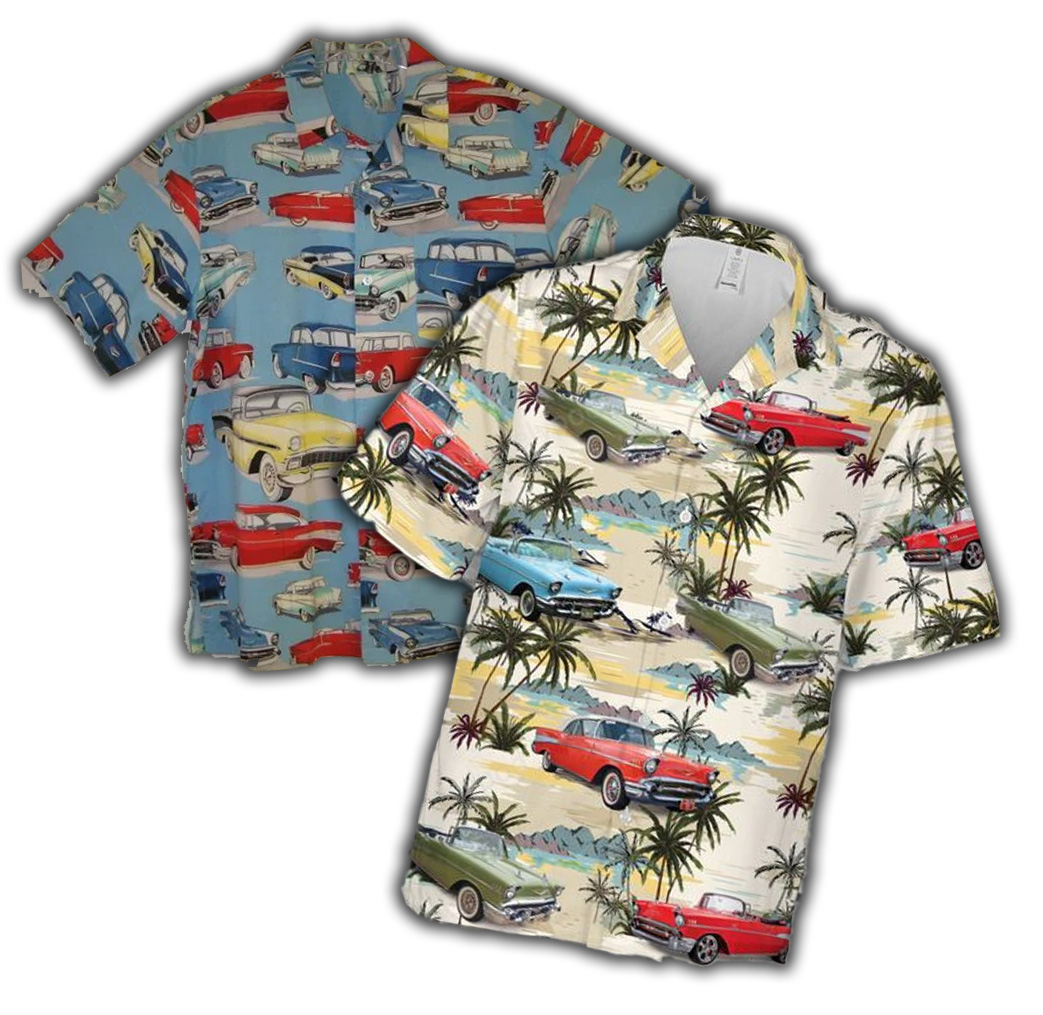
They’re covered in ’57 Chevys (and maybe some ’56s?), Bel Airs, convertibles, the occasional (and more interesting) Nomad, but all still these same cars. Sure, you can find shirts with other cars, but the dominance of the ’57 Chevy can’t be denied. Or justified, as far as I’m concerned.
I just don’t get why this happened? How did this one particular car get to be so dominant, develop such a colossal fanbase, establish such a massive aftermarket industry, and just come to dominate the mainstream classic car community for so damn long? How did this car end up with its iconic status to the point that it’s become essentially synonymous with ’50s America, and almost the expected follow-up any time anyone even says the year 1957?
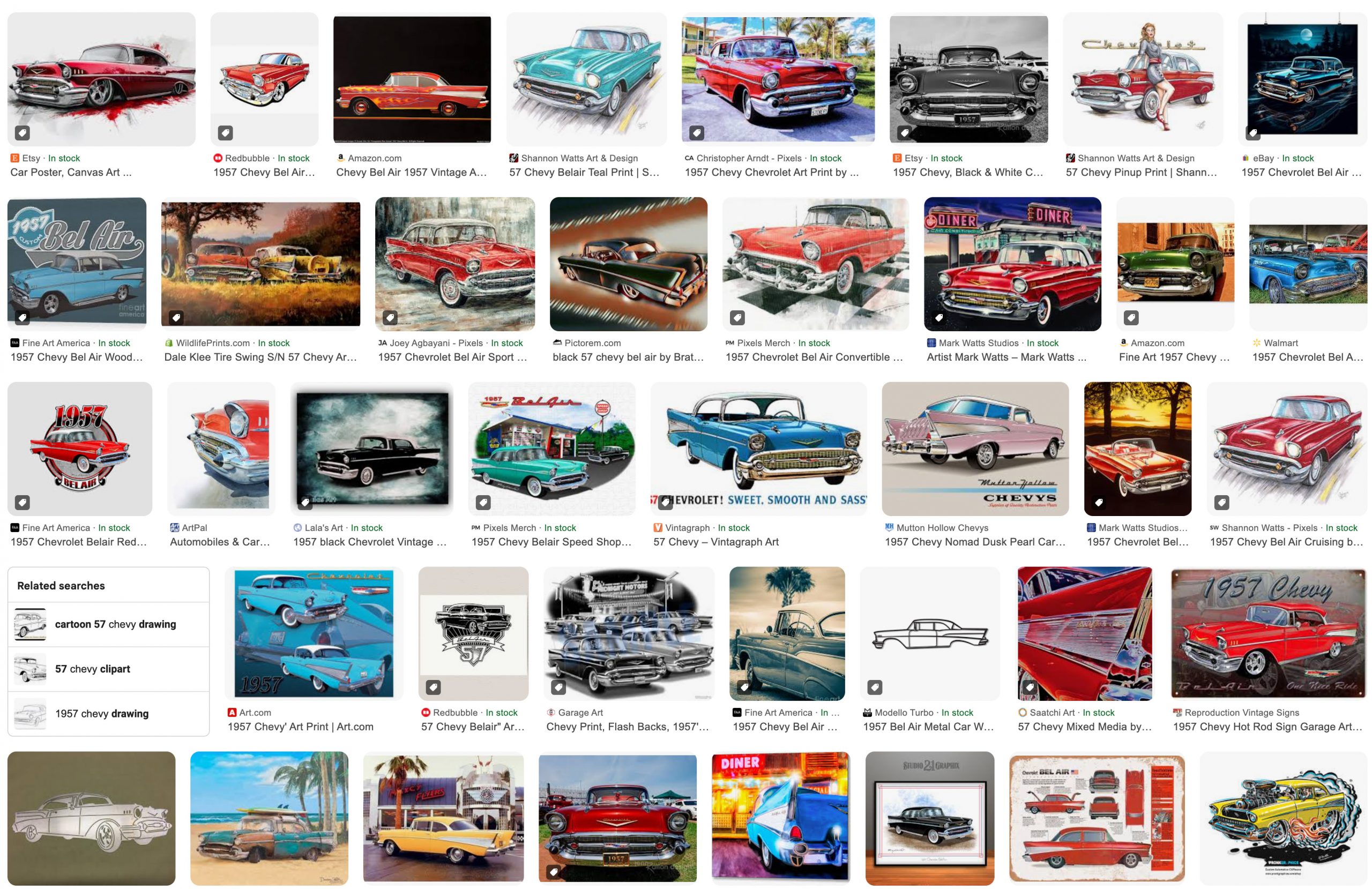
There’s certainly other cars with rabid followings and strong associations with a particular time and place and culture and representations in art and Hawaiian shirts and all that, of course. The Beetle comes to mind. But the difference there is that when the Beetle grew in popularity and became an automotive icon in the 1960s and 1970s, at that time, it was somewhat unique in the mainstream culture, at least in America. It was foreign, small, weird, technically strange, and an outlier amongst the mainstream cars around at the time. It stood out. It became popular as a reaction against mainstream culture, which sort of makes its eventual climb to fame more understandable.
But the ’57 Chevy? I mean, it was fine, but was it really all that different than its big competitors of the era? Why did this car:
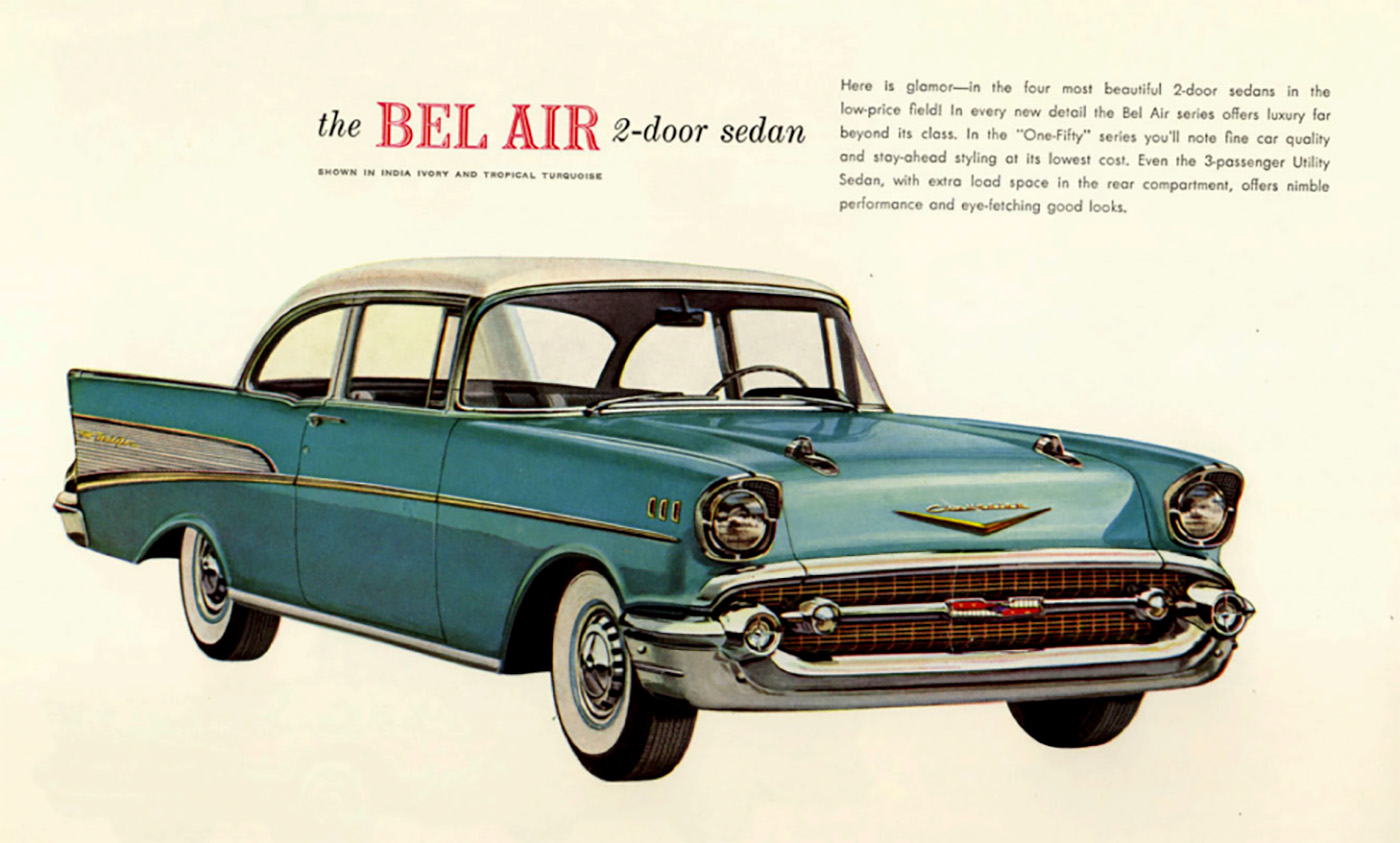
…get so much more fame and notoriety and lasting legendary status over, say, this car:
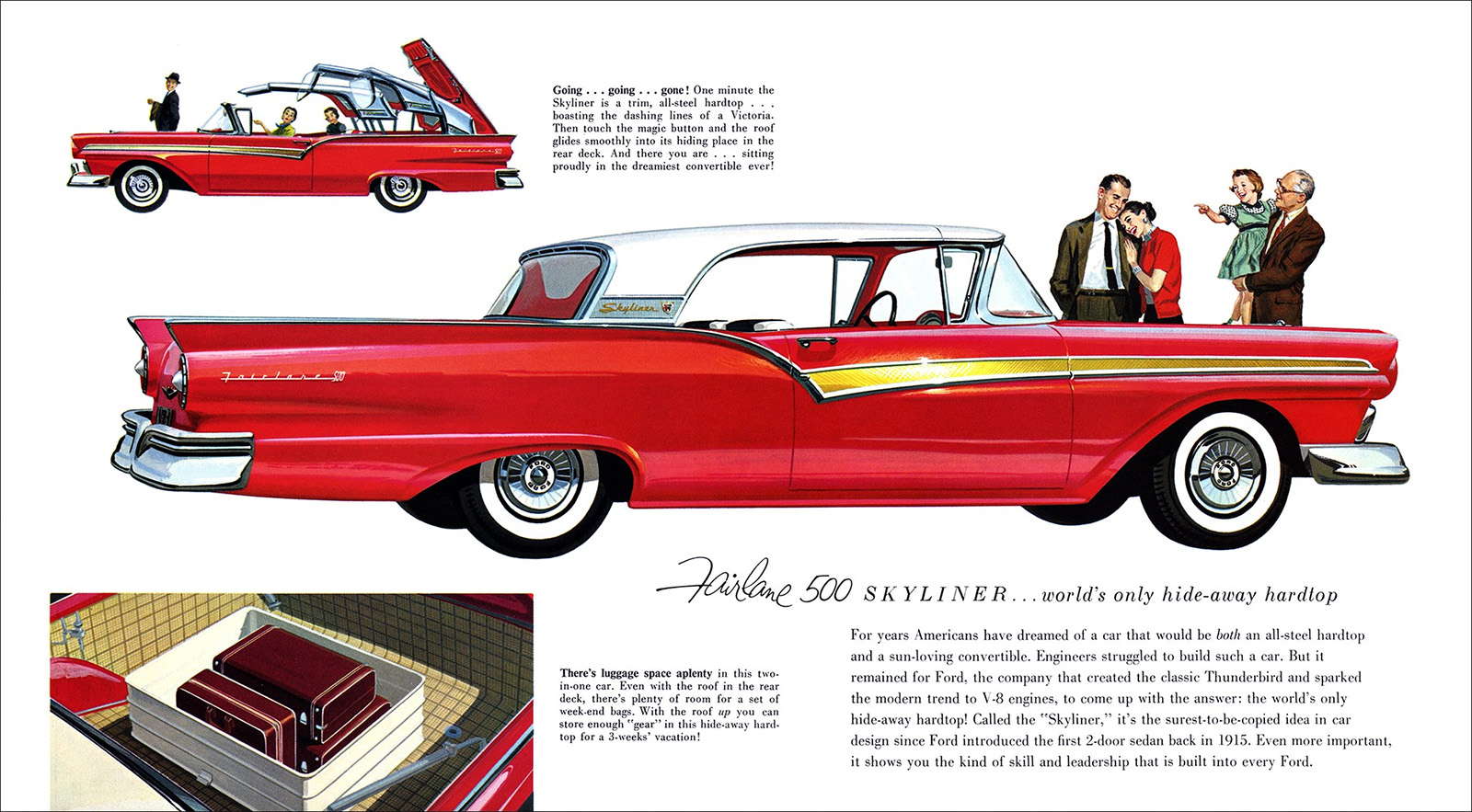
Ford actually outsold Chevy in 1957, even. And sure, there’s plenty of love for these cars, but it doesn’t quite reach the ethereal status of the Chevrolet. Or what about one of these:
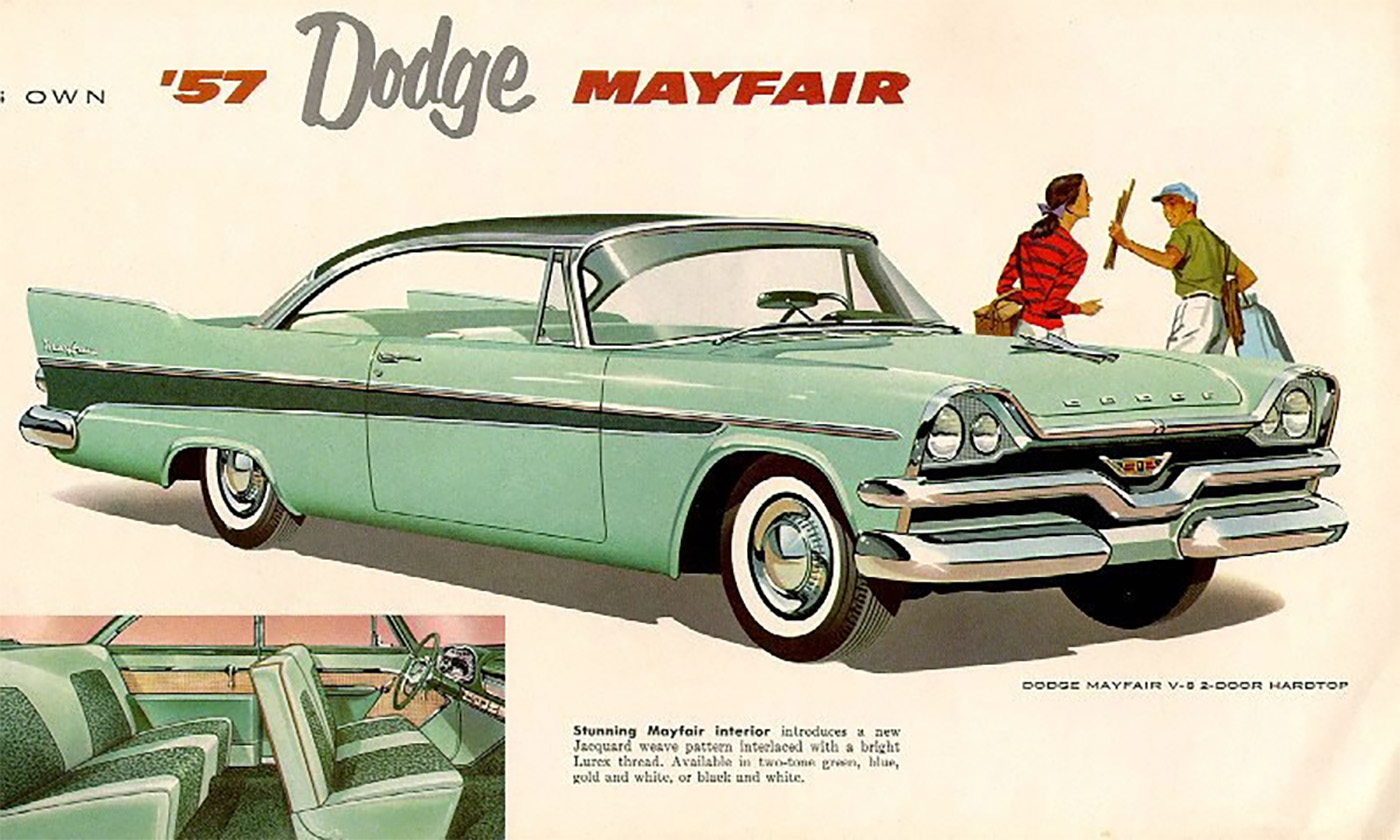
Dodge certainly had the same sort of over-exuberant jet-age styling as the Chevy, and was maybe even more exaggerated. Hell, even the Nash had a similar sort of dual-fuselage jet-type hood ornament as some of the Chevys:
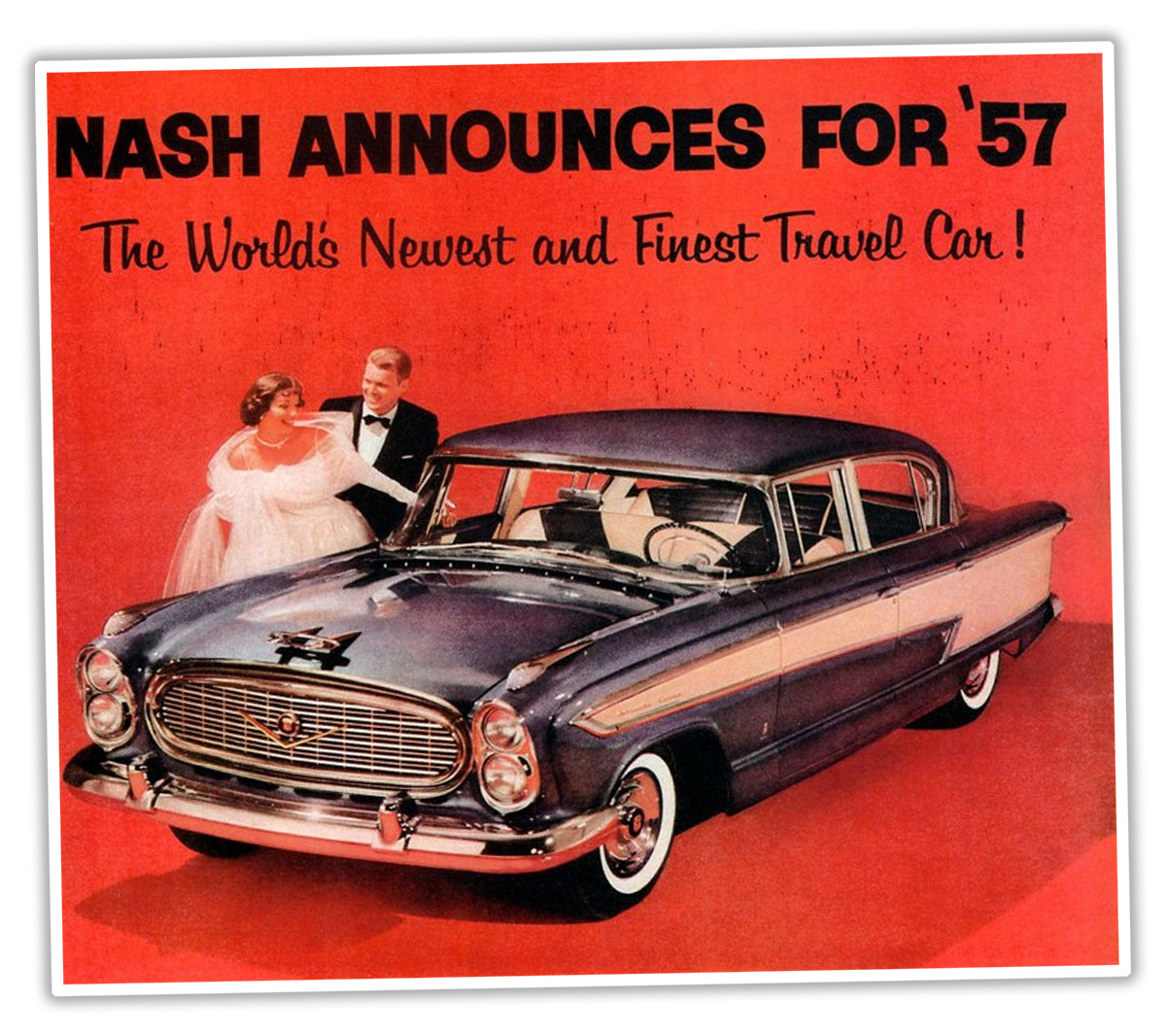
But, of course, none of these cars reached the level of the Chevy. And they’re just not that different. I mean, sure, there’s plenty of differences, but we’re not talking differences like what the Volkswagen was to American cars of the time. There are differences in details and trim and specs, but if you had to describe all of the cars I showed here just now in general terms – big V8 heavily chromed two-tone sedans with Paleolithic chassis designs – it would apply equally well to any of them.

What’s also surprising is how much the designers of the ’57 Chevy seemed to, well, not like the car. The 1957 model was supposed to be all new, but the new design wasn’t ready, so Chevy’s design team had to tart up the ’56 as best they could to make it feel new and different. The roof and doors and rear deck are carryovers from ’56, but there was a lot of pressure to make the ’57 look different. This Hemmings article notes how the designers felt about the car:
One man who worked on designing the ’57 Chevy is Robert Cumberford, who today lives in France. He distinctly remembers that not a single person who worked on the 1957 car liked the design. He recalls working 84-hour weeks with others in a crash program to design the ’57 model and that Harley Earl wanted the car to look as big as possible. To accomplish that, stylists stretched the fender profile to an extreme length, pushed the headlamps as far apart as possible and took the grille across the entire front end.
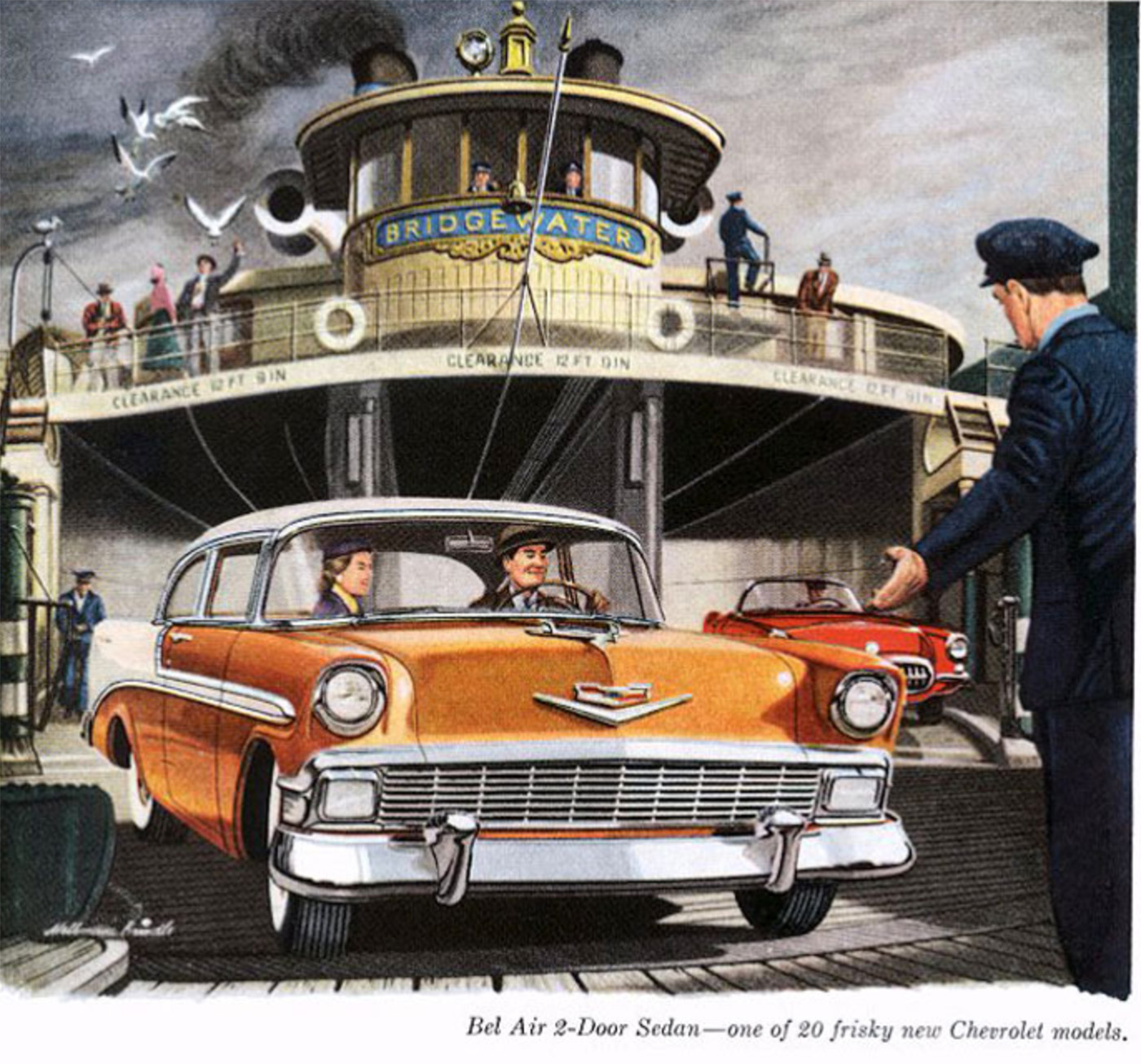
You can see how widened everything is, the grille, the lights shoved as far to the edges as possible, all to make the car look as massive as possible. These changes seem sort of bonkers when you look at the ’56, which was already an incredibly wide-looking car:
The designer mentioned above, Robert Cumberford, actually once commented on a Dean’s Garage story, where he found an old sketch he did for the 1957 redesign – which he described as an “emergency re-style”: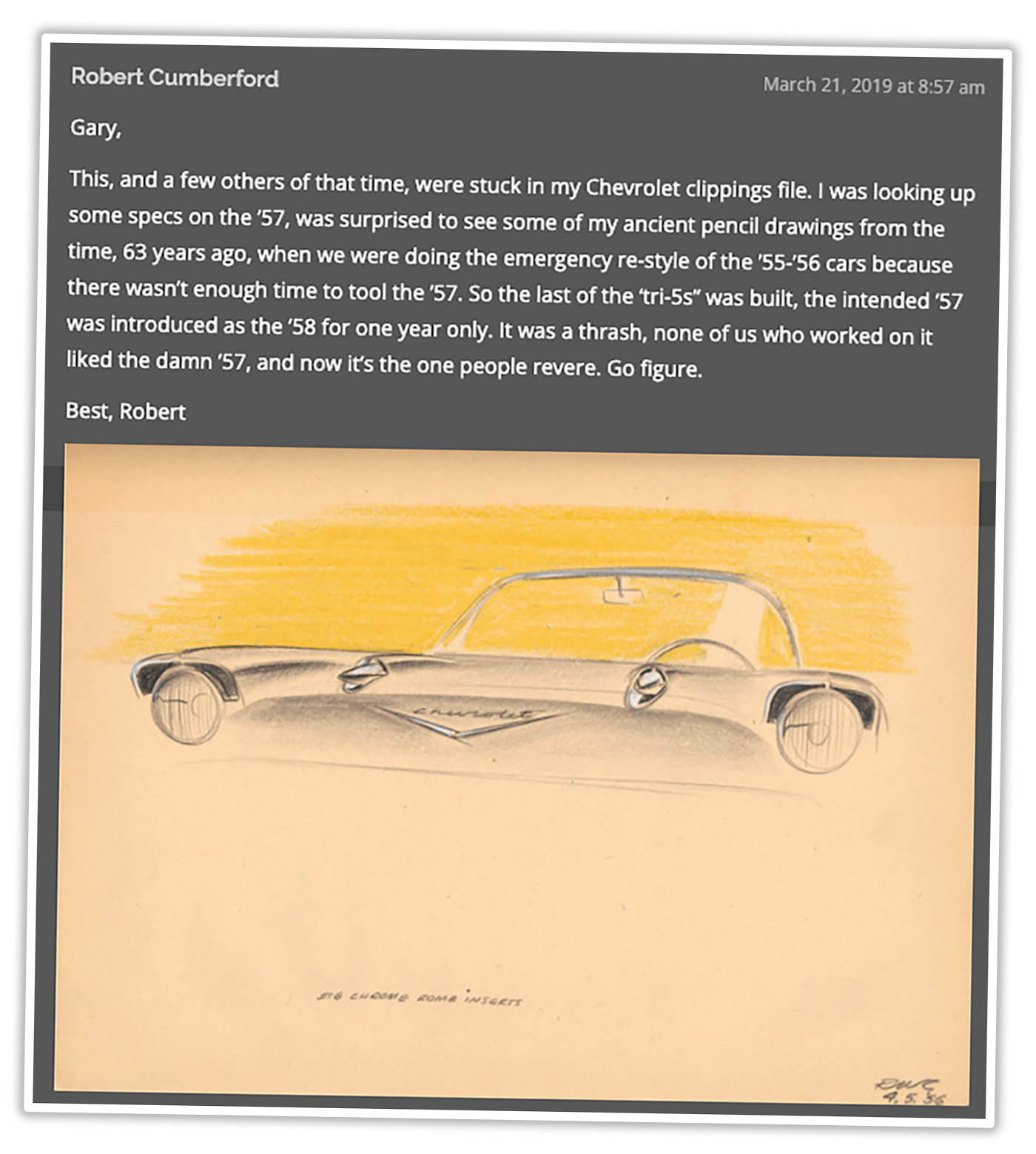
He says directly that
“It was a thrash, none of us who worked on it liked the damn ’57, and now it’s the one people revere. Go figure.”
Again, this was one of the people who designed the damn car.
But I have to be honest – I don’t think the car is all that bad, really. And I like the two-door wagon Nomad version, especially.
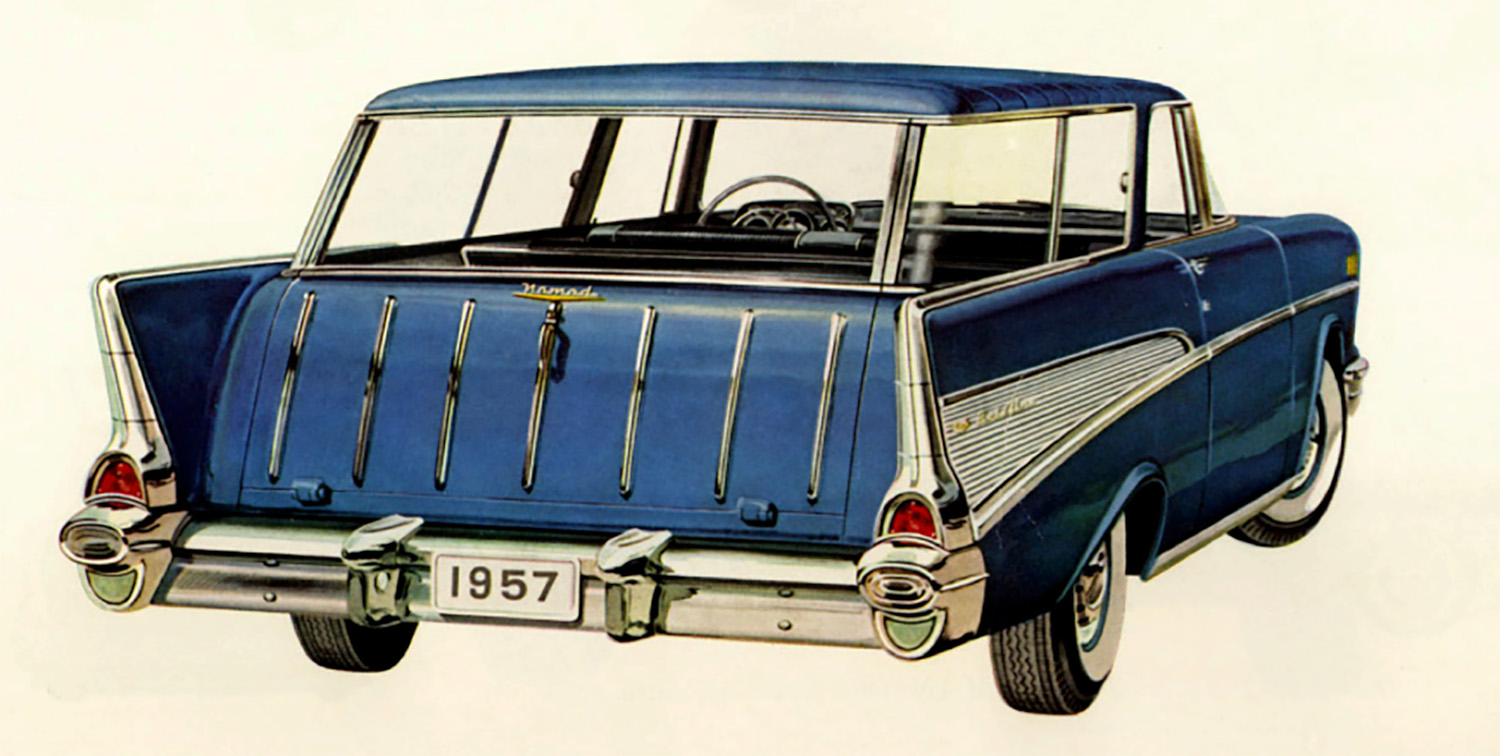
But that said, I cannot fathom why this particular year and model ended up becoming so wildly dominant in the classic car scene. I remember so many local car shows that seemed to have rows and rows of these things, and I’ve seen them on so much bad art that romanticizes Route 66 and paints in James Dean and Marilyn Monroe in front of ’57 Bel Airs, and I’m just sick of them. I don’t get it! I never have, and I likely never will.
I feel like in recent years the saturation of ’57 Chevys is abating a bit, as the population that really latched onto them is getting older and less likely to take them out. I’m not exactly sure how the market is for these things still – it seems pretty steady, maybe with a slight decline – but I can’t help but think we’re only a few decades out from a time when the last of the people who genuinely give a crap about these cars has died off, and there will be a massive glut in the market of unwanted ’57 Chevys, complete with stacks of Hawaiian shirts and trunks full of award plaques.
Maybe then I’ll get interested, when they’re so cheap and undesired that you can buy one for pimples and cram in the drivetrain from a Nissan Leaf and use it as your electric around-town car, or something. Who knows.
What I do know is that if I never see another ’57 Chevy again, I think I’ll be just fine. I’m happy to hear all the arguments why I’m not just wrong, but wrong and ugly, and deep down I know I have the abuse coming. But I just couldn’t keep quiet any longer.
Top photo and all images: Chevrolet unless otherwise noted


I think Harrison Ford’s Chevy 150 in “American Graffiti” fed into much of the nostalgia of the “Tri-Five” Chevys as did the “Baseball, Hot Dogs, Apple Pie, and Chevrolet” jingle of the mid-70s. The ’57s were more “Cadillac” like in their appearance so those wanting that “luxury look” flocked to them over a comparable Ford Fairlane or Dodge Coronet.
I don’t mind the ’57, but I definitely hit my fill when I went to a main street car show in a small town of about 1000 people and of the 25 or so cars, 4 of them were ’57s, 3 of them had flame paintjobs, and none of the owners were related.
I prefer the ’56 if we have to pick a Chevy, but I like Crown Vics and Belvederes better.
The car is fine for what it is, but a ’57 Chevy is the classic car you buy when you have absolutely no imagination.
I feel the same way about Cobra replicas.
A lot of us boomers were driven around by dad and mom in cars of that vintage. When we’re gone, maybe the fad will die. BTW, this is just excellent:
I don’t watch Happy Days and I don’t long for a ’57 Chevy. Or a ’65 Mustang.
But a corned beef sandwich sounds really good about now.
Gen X here remembering car shows in the mid 80’s to mid 90’s where there was a whole fleet of “classics and muscle cars”. I was more interested in a Porsche 911, a Lotus Esprit or Minitrucks.
When I turned 40, I decided to scratch the classic car itch and bought a 1969 Scout 800 because it was cool like a vintage Bronco but also different. It was too much of a project, so it left and I decided to only buy an older car if it already ran and drove. That’s how I ended up with a 1956 Lincoln. Interestingly enough, I learned that it won awards that year for design and was in the top 3 with a Caddy and a Packard for fine luxury vehicles. It was a dream to drive, had power everything and a knight’s visor that lifted up to access the keyhole on the trunklid. That it had a knight in the trim emblems really helped with my interest since I love Monty Python’s Holy Grail. It was fun for a few years, but impractical and I moved on to other vehicles.
I do feel that the 57 Chevy is overly hyped, but that was also how it went in the middle to end of the 20th century in our Capitalism based society. I think some of the bitterness we feel now is because the reality is that any attainability of “The American Dream” is gone. I would argue that for many, it was just a brazen lie to begin with.
I owned a ’55, ’56, ’57 and a ’57 Nomad. I liked the 1956 best. I bought them because it was the Seventies, I wanted a hot rod, and used muscle cars were still too expensive. These days, as Fifties cars go, I’d prefer a 1956 DeSoto/New Yorker but I’m really into four-cylinder sports cars.
I’ll also go on record and say that the C2 Corvette does not thrill me. The front end looks horrible.
“What I do know is that if I never see another ’57 Chevy again, I think I’ll be just fine”
I feel this way about ford mustangs and chevy camaros. Don’t care.
There *are*… cars.
As a non-fan of 1950’s automobiles, here’s my take:
The 1955-57 Chevy has the best ‘face’ of the cars of the era, contested by the similar, less attainable Thunderbird.
Everything else has a front end too cluttered to look like a face.
70 year old Boomer here, and I wholeheartedly agree. They’re terribly overexposed.
I feel the same – I never liked the slightly droopy mouth. But it checked all the boxes in terms of desirable elements and it really was an affordable car that seemed more expensive than it was. Then it became just an over saturated trope which where the real problem is, not the car itself maybe.
Hear, hear! AND Huzzah, too. Before my [GenX] time so I’ve never really gotten it either, and frankly of the 3 model years, the ’55 OG (like most things) is the best/purest (I was surprised to learn that design intentionally emulated Ferraris as I never woulda made the connection, and altho slight [the grille, mostly] I do see it now). But their abundance and near-ubiquity have rendered them monotonous (not unlike 1st-gen Mustangs) and I barely pay any attention to them. The market will be flooded in the near future, without a doubt.
I remember 6 year old me going with my Dad to pick up a brand new ’57 Chevy 210 4 door sedan. We had many adventures in that car until he traded it for a new ’63 Checker Marathon!
In the 80s I restored Grandpa’s ’30 Model A which I still show occasionally and I have noticed that the average age of the car owners at these shows is probably 75! I wonder what this means for the future. In just a few short years we’re going to age out. My car is a family heirloom that is in a trust for future generations but what happens to the rest of these cars?
The big thing to remember in so much of what is considered iconic in culture is the impact of movies and TV shows.
The 57 Chevy is very late 50s in style. Fins, chrome, more fins, more Chrome, etc. You can find cars that are just as over-the-top 50s style than it, but you will struggle to find one more covered up in 50s style than the Chevy.
But this isn’t why it is so popular in TV and movies. It because it sold like hotcakes. Chevy set all sorts of records in 57 with sales. Which means that when the movies and TV shows from the 70s went to get a used cars for scenes based in the 50s/ early 60s, 57 Chevies were all over the used lots and cheap. Background cars could be picked up, restored a bit to it look ok for the movie. Cars that got wrecked in stunts could be replaced on the cheap. The need for 4+ identical cars for the car the main character drove was easy and cheap to obtain.
By the late 70s/early 80s, cheap 57s were no longer common, but the car had a become short hand for late 50s/early 60s style. It’s hard to imagine anything set in that era that isn’t full of them.
The same thing happens for music. Imagine a movie set in Vietnam. What song is playing? “Fortunate Son” by CCR right? This song being a protest song against the war had perfect lyrics for what almost every movie/TV show about Vietnam talks about (just like the 57s over the top style fits into the late 50s era).
However, in this case, the lack of popularity of “Fortunate Son” is what makes it popular to use in entertainment. Fortunate Son didn’t chart well at all (Proud Mary was the hit for CCR from that album). As a result, Fogerty sold the rights to the song to the record label cheap. This means that a Movie can blare this all the time and still pay for food service. While a song that was on the radio all the time in the late 60s such as “Hey Jude” would cost so much that your helicopter would be plastic and attached to a fishing line.
As Jason points out, while these certainly sold in huge numbers, Ford outsold them with IMO a much prettier car.
However, the 57 Ford is more of a early 60s look. It’s lower, wider and longer and much more modern in proportions than the 57 was in 1957 Notice Chevy’s 58 was similar shaped as Ford’s 57. The proportions of the 58 Ford were more early 60s than 50s as a result. This did two things.
The 1957 Ford outsold it.
See answer to this above. The 58 Ford was ahead of its time and looked like an early 60s vehicle. The 57 Chevy was behind the time and looked like a mid-50s vehicle. This fit the goal of TV and Movie producers that wanted a 50s car, even if it was supposed to be 55 and not 57. More importantly, because the 57 Chevy looked like a more outdated design on the used car lots, it was cheaper to get.. until it became an icon.
Oh, and if you needed a wreck a 57 chevy, you could destroy a 55 or 56 and 9 viewers out of 10 wouldn’t know the difference.
I had lunch in one of those Americana nostalgia diners the other day and I have to say it’s really interesting to contemplate how over time certain things have become part of the palette for 50’s diner decor, while others have dropped off into obscurity. It would be fun to decorate an alternative diner with all the off-brand versions of the usual items.
Same for every era. My sister is 10 years older than me and baby sat me a ton when she was a teenager in the 70s. So, I grew up listening to the crap a teenage girl listened to from the 1970s.
If you ask someone today about the best decade for music, the 70s gets it’s proponents. Because nobody remembers that for every Queen, there was a Captain and Tennille, for every Aerosmith there was The Carpenters, for every Fleetwood Mac, there was a John Denver.
Sappy love songs always get a ton of airplay, especially with teenager girls. I’m convinced we in the 2020s won’t know how great the music is today until 20-30 years from now when people discover the stuff that isn’t popular now with teenagers.
As for fashion and style? The only 70s thing I remember was that Dad work a brown suit to work. Nobody wore velvet bell bottoms or frilly shirts. Just like today, most people work some combination of jeans and a tee-shirt. I figure that in 20 years, nobody will know that 90% of people ended up shopping in mis-matched PJs on a Saturday morning.
Years ago, I judged car shows pretty regularly throughout the Texas summers. Like you, even though some Tri’s were attractive, I just didn’t get it either!
I dreaded judging Camaros, Chevelles, and Mustangs. Once again, absolutely nothing wrong with them, just overload I guess.
This post isn’t to offend or alienate anyone. We’re all on one side.
Listen, I’ve got a Mustang I absolutely adore, but when I go to C&C I just park in the back. No one’s there to see another S197 Mustang, even if it is race prepped. I’ve been told more than once I should take my Kona N to C&C instead, because it’s rare. 😀
Hey! I take my regular 147 hp Kona and nobody cares! Wonder why???
They are like car show NPC’s
I feel the same way about pretty much all Boomer car show culture. I don’t go to local C&C as much anymore because more than half the people there are the exact folks we’re talking about.
used to go to car shows as a kid growing up. my dad had a 69 chevy c-10 custom seafoam green with a white cab top and wood grain down the side. 327 4bbl under the hood. it was nice. eat off of it nice. i remember the seas of tri-5’s at those shows and cruise ins. if monotonous was a scene. later on we ended up with my great aunt and uncles ’55 to take to car shows. we stood out however because we were in a 55 packard clipper constellation. factory power windows and the super cool torsion ride suspension that would auto level out the vehicle. that was a fun party trick. it looked the part too being 2 tone emerald over moonstone.
https://autocatalogarchive.com/wp-content/uploads/2025/04/Packard-Clipper-1955-USA.pdf
ask the man who owns one.
I owned a ’57 chevy with a 4-speed for a few years, but it was this version:
https://i.ebayimg.com/images/g/MZQAAOSwnhpmP7QA/s-l400.jpg
That grille was the ugliest of the tri-five trucks, in my opinion.
The ’55 was a vastly superior design.
Agree!
It’s an easily recognizable car that serves as a gateway into car culture. I know many of you, myself included, had the 50’s some odd Ford pick up model as your first kit, painted baby blue. You know the one. Recognition. And as we age and our eyesight deteriorates, the fins will be easier to distinguish whats in the parking lot
This era was when the small block rose to power.
But I will admit generall all these cars (regardless of manufacturer) would require frequent rebuilds by 35k, 50k miles or so.
These cars also remind me of Christine (Plymouth Fury, not the same car but the elements look similar) (and some Black Cadillacs) used in horror movies.
The design is significantly cleaner from every angle than the Ford and a far cry from the messy and hamfisted Mopar. I would love to hear Adam’s take on the design!
Also one must not forget how big the whole Chevy promo campaingn was with Dinah Shore singing “See the USA in your Chevrolet”, complete with TV shows and whatnot. It was literally hammered into the consumer’s minds: Chevrolet + apple pie = USA!
Then there was the whole 50’s nostalgia wave in the 80’s which created new fans, cemented the car’s cultural status. and got the whole restoration parts industry rolling.
Also there was no Mustang yet, which was explicitly placed on the market as the good looking alternative to boring smaller cars. Also a contender for most hated car show car because of the sheer abundance.
We’ll need to disagree about the Ford. I believe the 1957 is much better looking. 1958 is another story.
Volvo PV444 and Amazon FTW!