

If you grew up in the ’90s and the 2000s like me, you probably remember having to ride in a booster seat as a kid. I distinctly remember the day my parents switched out my proper child seat for a simpler booster seat, which, as I remember it, was just a cushioned piece of plastic that made me sit a few inches higher than if I were simply sitting on the seat bottom. Gone was the four-point harness; in its place was the car’s normal seatbelt. I felt more like a grown-up than ever, even if I probably wasn’t more than eight years old at the time.
Child seats and booster seats are invaluable pieces of tech for keeping children safe in a crash, but most of the time, parents have to turn to the aftermarket for these devices. But over the past 40 years or so, there have been a handful of manufacturers clever enough to design modular seating systems specifically for seating children safely, in the form of integrated booster seats.


These integrated seats, which either fold out or up from the second row, effectively eliminate the middle man in the booster seat equation, giving parents a simple, built-in solution to keeping their children safe in the event of a crash.
What’s The Point Of A Booster Seat, Anyway?
Think of a booster seat as sort of a middle ground between a proper child seat and a normal, grown-up car seat. It’s less of a proper “seat” and more of a riser to position a smaller person’s body so the seatbelt is placed around their shoulder and lower abdomen properly (hence the term “booster”). Depending on height, kids should have booster seats from eight to 12 years old.
Without a booster seat, shorter, smaller individuals could end up with seatbelts placed around their neck and stomach. In the event of a crash, the person could “submarine” under the lap belt and get caught on the belt by the neck, causing serious injuries. Here’s a simulation of how an average six-year-old would do in a crash with and without a booster seat:
Volvo, known for its seat design and safety record, invented the booster seat in 1978, unlocking an easy way for children to be safely positioned to accept a normal seatbelt without the need for a full-on car seat with harnesses.

It wasn’t until nearly a quarter-century later, in 2002, that the United States, specifically California, got its first law requiring some sort of booster seat for children under 40 pounds, according to SafeInTheSeat.com, a site that recommends child seats to parents. Now, all states have some form of safety law for child passenger restraint systems on the books, though they vary by state, according to the Governors Highway Safety Association.
California signed into law the strictest booster seat rule on the books back in December, requiring anyone under 16 years old to use a booster seat if they don’t meet certain height requirements. While I feel bad for the 15-year-olds who haven’t hit puberty yet, it’s better to be embarrassed and alive than choked to death by your own seatbelt in a crash.
The Booster Seat Makes Its Way Directly Into The Car

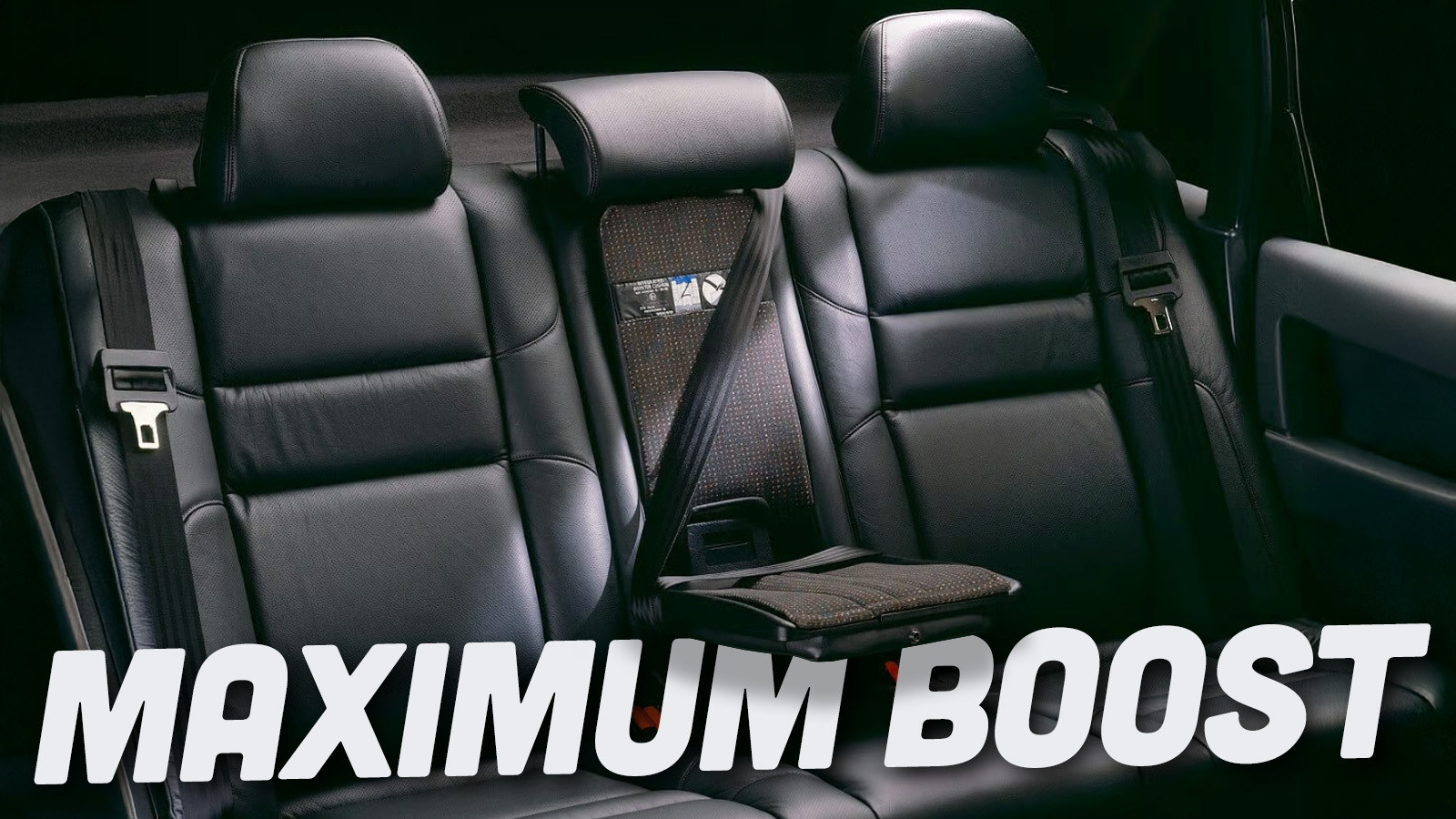
Seeing as how Volvo invented the car seat, it makes sense that it’d be the first manufacturer to integrate the tech directly into its cars. That’s exactly what happened in 1990, when it introduced the first integrated booster seat in the 850 and 900 Series.

Instead of being a separate piece that you take in and out of place, this seat folded out from the backrest of the center of the second row, like an armrest or a set of cupholders. The seat got its own special cushion and cloth pattern on the seat bottom and seat back.
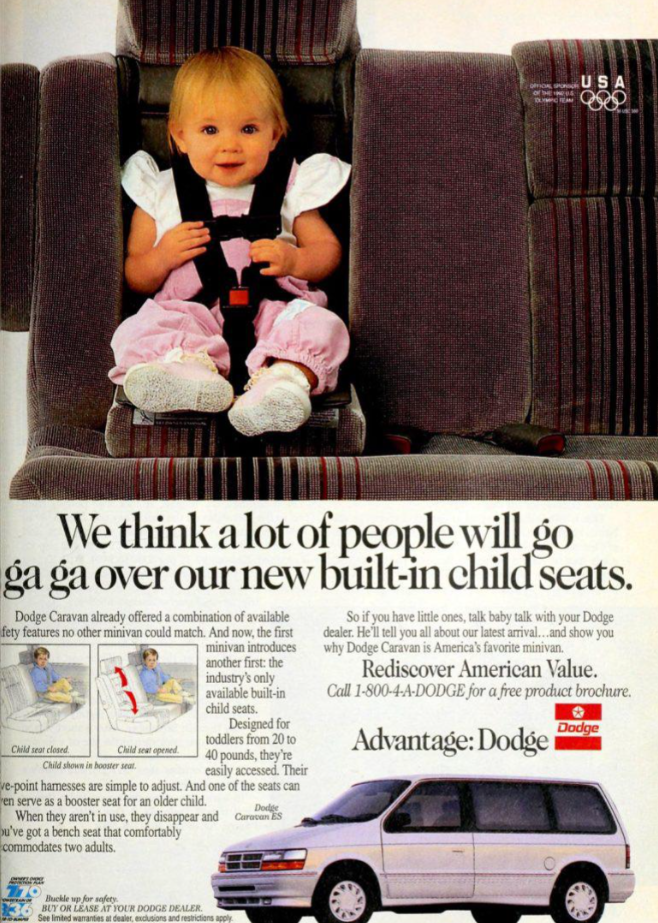
Other automakers quickly caught on—specifically, American automakers. It wasn’t long until integrated booster seats found their way into people-moving vans like the Oldsmobile Silhouette, the Chrysler Town & Country, and the Dodge Grand Caravan.

Later on, they even made it to the Dodge Journey, which had the system all the way up until it died in 2019. Here’s a video on how it worked from Mopar itself:
Volvo, though, remained the biggest innovator in the space. The Swedish automaker was the first to offer integrated booster seats for the two outer rear seating positions in the second row, in 1995, on the S40.

Volvo was also the first to offer two-stage integrated booster seats, allowing parents to adjust the seat’s height depending on the child’s size.
Why Doesn’t Every Car Have Integrated Booster Seats?
Right now, there are only four new vehicles on the market you can buy with integrated booster seats: The Volvo XC60 and the Volvo XC90, and their electric equivalents, the EX60 and EX90. Aside from the obvious cost of engineering, testing, and installing integrated booster seats into a second-row bench, there are a few other reasons why Volvo is the only manufacturer left actually offering this feature.

The first is that the National Highway Traffic Safety Administration recommends discarding and replacing child car seats after a “moderate or severe” crash. With an aftermarket booster seat, all you’d have to do is take the seat out and toss it in the trash. But it becomes a bit more involved if the seat is incorporated into the car’s whole bench. If you get rear-ended, does that mean you have to throw out all of the second-row seat components? If you’re being on the safe side, you probably should. But also, I wouldn’t recommend driving a car that’s been in a “moderate or severe” crash anyway.
There’s also just a lack of demand. While integrated booster seats are a great idea, they’re really only useful for a few years until the kids age out of them. Ultimately, people just chose other features instead. Here’s what Chrysler told Cars.com about dropping the feature on the Town & Country and Dodge Grand Caravan:
“While the built-in booster feature had been available in Chrysler Group minivans, they were tied to the captain’s chairs that did not stow,” said Wendy Orthman, Chrysler PR manager. “More often than not, consumers chose the stowing feature instead. Ultimately, the boosters were eliminated in the vans when the new Super Stow ‘n Go seats were introduced in our current-model Dodge Grand Caravan and Chrysler Town & Country.”

In a world where 99% of cars are boring, grey crossovers that look and drive mostly alike, I think the integrated booster seat has an opportunity to make a comeback. Gimmicks like this might seem small, but for a salesperson in a dealership trying to convince a family, showing off a built-in booster seat might be the thing that sways buyers. Personally, if I have kids, I’m definitely going to be picking up an old used Volvo wagon just to see how well those seats work.
Top graphic image: Volvo



Ford sold an OEM booster seat from the 70s all the way through the late 80s called the Tot-Guard and I’d love to get my hands on one for car shows. It has a massive padded front so the kid would smack right into it.
The original brochure marketed it as all being a great little chair they could watch TV in at home.
We had the Caravan with them and it was brilliant. Extra kid needs a ride, no problem. However, as they didn’t come out, and neither did the upholstery (not easily anyway), clean up, was an issue..
I’ve always wondered how safe the rear facing cargo seats are in the 80s Mercedes and GM wagons that many of us grew up in.
The built-in boosters in my 2002 V70 were brilliant.
“..booster seats found their way into people-moving vans like the Oldsmobile Silhouette, the Chrysler Town & Country, and the Dodge Grand Caravan…”
On the Mopar side, not just the vans. I recall sedan availability in the “Cloud” cars, and maybe the Neon. Not sure about the larger LH sedans. I don’t think they were popular, as some of those cars were dealer-ordered in bulk and had price-sensitive buyers.
Another good idea regulated and lawyered out of being because of liability. Way too handy for us poor unwashed masses LOL!
So on point, as we have a Kindergartner and I am always shopping Volvos for this specific feature and it is rather difficult on most sites as it goes unlisted as a feature. There is definitely an odd factor of flipping through the photos to get to the ones of the back seat (instead of flipping to the console to see if that manual transmission is actually a manual) and looking for booster seats instead of overall space.
Integrated boosters are such a cleaver idea for the family sized cars and eliminate the concern of permanent creases and gouges into the rear seat material.
I had a similar issue when shopping for an XC90 except I was looking for the “hidden trailer hitch.” An unlisted or incorrectly listed feature on all the sites. I looked at sooo many pictures of open rear hatches looking for the hitch button.
Modern infant bouncy seats are more padded and substantial than the baby seat I rode in in the ’70s. In a Corvair. Hooked over the seat back so I was high enough to see out the window.
It’s a wonder I survived.
I took naps in the back window of my parents 66 Grand Prix and lived….
Ah Yes – The chrome frame affair with a thinly-padded flat vinyl seat.
Of course I came with my own padded seat in the mid-60’s…
…it wasn’t long til I graduated to standing on the hump behind front bench seat – Looking out, getting some AC, and pointing at every McDonalds and Stuckey’s.
Stuckey’s! I was on a road trip with my daughter last spring and we came across a billboard for Stuckey’s. I got so excited and we made a point of stopping, but it was just some generic convenience store that had taken the name.
We Gen-X’ers were just tossed in the “way back” of the family truckster. Most of us survived. Or were perched on the hump between the front seats, with the “Mom arm” restraint deployed as necessary.
My first thought was “You guys had booster seats?” A little past Gen-X, but I have no memory of it being a thing.
Not to mention all of the rides we took in the open bed of a pick up with 4 wheel drum brakes trucks going down the highway at 75mph.Somehow, we survived!
Well, most of us did. It has somehow become the norm to spend vast sums of money and energy to protect little beings that are easily replaceable by unskilled labor. Especially the dumb ones, which is how we have ended up living in Idiocracy, IMHO. Though maybe the anti-vaxxers are putting some chlorine in the gene pool.
Pages 32 and 33 of the 1976 Maverick owner’s manual show that at least one manufacturer was offering their own child restraint devices, so people did not need to go aftermarket.
Ford offered that Tot-Guard booster seat for a real long time, it’s in my ’89 Squire’s accessory guide too!
This is an option you don’t want to make use of unless you’re buying a minivan and planning on having a bunch of kids and will have a car that, barring a collision, will be used until the wheels fall off. Because children are disgusting. The aftermarket seat (along with aftermarket tray and backing that said seat sits on/against) is something that shouldn’t be used after a crash, sure, but the one I had for my child should not have been used because it was a biohazard. Once I was done with it, it was discarded and the underlying seat upholstery was perfectly fine. A built in booster will have messes that no amount of cleaning will get out.
Children are only as disgusting as they are allowed to be. My brother and I were NOT allowed to eat or drink in the family cars. Shockingly, they stayed clean, and we neither dehydrated nor starved to death.
This… while toddler phase had its share of crumbs and errant Cheerios, booster seats are for the 4 and up child that gets snacks depending on how good they are with them. If the fear is this deep (and unmanageable) then just invest in a full seat cover.
I think every child will see how cool their Volvo is as they have their own special seat. Our kiddo would be over the moon with this feature.
Now off to Google ‘does a Volvo rear seat fit in a TSX or Jetta Sportwagen’
I’ve owned a few Volvos with the kiddo seats. My nephew loved sitting on that thing when he was little.
But he loved even more riding in my car that didn’t have a front airbag so he could sit in the front seat – something an awful lot of kids don’t get to experience until nearly high school these days.
My kid only ever has dry snacks or water in the back seat. Nearly 7 years in, my seats are no worse for wear.
I also installed a very thin decorative towel under the seat to protect it. Nothing my shop vac and a quick spritz of leather cleaner couldn’t handle.
Ease of cleaning is my #1 reason I prefer leather (or whatever plastic derivative we make it from these days).
The only booster seat my brother and I had was sitting on the spare tire lying flat in the back of dad’s pickup truck.
I remember my sister’s first car, a 97 corolla, had an integrated booster seat on the rear driver’s side of the car, but only that side. I remember trying to look up info on it once, but I couldn’t find anything on it.
A friend had an 850R and we were both very impressed with the integrated booster seat.
It was of no use at all to us for doing laps of the Nurburgring, which is what we were using the car for.
I’ve got more kids out of boosters than in one, and while I love the idea of an integrated booster, I can’t help but appreciate the ability to pull the cover off of our Graco and Diono boosters to wash them. I remember thinking kids would become less messy the older they got, but my kids became more so as they transitioned from full carseats to boosters.
This. Having had my own kids progressing from infant seats and now growing out of boosters, while it would have been handy for a few years, it’s not useful any more, and if ditching integrated boosters meant gaining stow-and-go seats, I likely would have picked stow-and-go too.
That just seems like poor design choices by Dodge. If you know families prefer the stow n’ go, then put the boosters in those seats.
Might not have been possible to have both due to the seat construction.
That’s a problem for the engineers to sort.
You missed the point:
Chrysler just saw more people cared about stow-and-go than having booster seats. There wasn’t enough market demand for them to both putting them into the stow-and-go seats, if that was even possible withe seat constraints. For all FCA’s faults, it seems like they were just following customer preferences.
As a dad, I can attest to the fast that needing booster seats is a very temporary thing only when you have young kids, whereas having stow-and-go seating is super handy for all kinds of applications.
“We saw more people chose heated seats over having a bench seat, so we eliminated the bench instead of putting heat in it” kind of logic.
One feature being more desirable over the other doesn’t negate offering the other.
More people would likely choose A/C over cruise control, but would rather have both.
Lol, you’ve never developed a product before.
Car companies have very low margins relative to most consumer goods, like 9% or less. They’ll fight for pennies and gladly cut features people don’t buy.
When developing products with narrow margins, it 100% does. Just the nature of the beast.
Sir, this is the Autopian. This is when the cars get really cheap!
A moderate crash might actually improve some of the Autopian fleet.
COTD
I mean, if I get into a crash that crumples my rusty tailgate, that means I get a not-rusty tailgate in the repair, right?
A shocking number of them would be greatly improved via use of a crusher.
I would love to have this feature, though I’m not in the market for an XC90 any time soon. Being able to switch between a child and adult without any fuss would be a huge benefit.
I suppose it’s not as big an improvement as I want it to be, though. These don’t replace real baby seats, which are the big, expensive, frustrating ones. Regular booster seats cost about $30 and just plop down, so they’re trivial to move around. Heck, depending on the mechanism these built-in ones might be more trouble than the standard boosters.
Now, if someone could integrate a collapsible harness booster or even a rear-facing seat, THAT would be magic. Or, heck, even make part of the seat cushion removable so the separate car seats can sit deeper and free up some legroom. Bonus points if there could be a standard clip-in mounting frame instead of fighting with LATCH and belts to adapt to any car. Imagine if instead of standardizing the LATCH anchors, the industry had managed to standardize “remove the bottom cushion and clip into the 4-point VESA grid below” as the way to install child seats.
While I didn’t have any use for booster seats myself I had to admire the clever feature of integrated booster seats in my -98 Mercedes S210. Don’t know if they were standard, mine was Avantgarde. There might be ones even in Autopian’s Ski-Klasse.
Talking about project Ski-Klasse, I wonder what have happened to that project? Are there any plans about it?
Even before having kids I always thought this was a brilliant feature. Same for the E-Class wagon with the rear-facing third-row “jump seats” that were designed as boosters for young kids.
Now, as a dad with one in a booster and two in harness child seats, and four cars (I have a storage problem, not a car problem!), I spend way too much time installing, removing, and reshuffling car seats. I really wish more cars had this feature.
I remember being 3 or 4 years old, riding on the front seat center arm rest on the bench seat in my Grandpa’s 1980-ish Buick Century like it was an integrated booster seat. I’m very thankful I didn’t turn into a projectile!
As a dad who’s kid is headed towards a booster seat, I would LOVE this feature. Sometimes, I seriously consider a Volvo for this reason.
As a guy who sold used Volvo’s in the 00’s, the integrated booster seat was absolutely the reason those cars sold.
Even more of a bonus than if the wagon had the third row seats.
Heck, in 1970 my family would join Grandma and Grandpa in their Oldsmobile 98 for a drive. The “men” would be in the front seat and all four ladies in the backseat. I sat on the arm rest at the age of 4 between my dad and Grandpa. That was my booster. Fond memories!
This would be a great thing to have when you are the DD and have friends under a specific height. Pull up and your 5’2 friend gets in, they’ve grown 4”. It’d be a funny joke and fully reversible.