

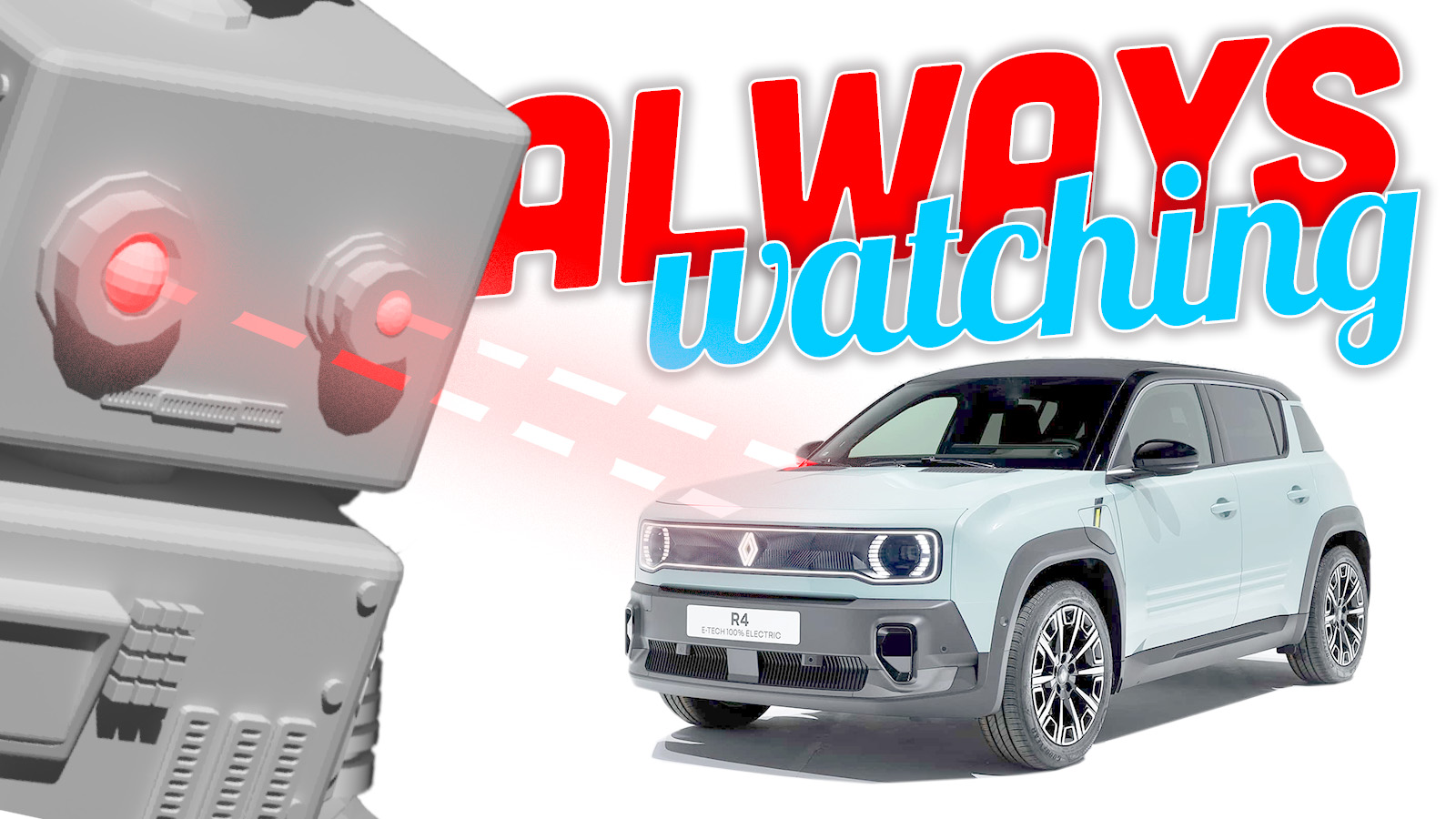
You may have noticed a lot of talk lately about this idea that, starting in late 2026 or early 2027, all new cars sold in America will come with a “kill switch.” That’s sort of an alarmist way to describe what’s actually going on, but only sort of. There is truth to the statement, and while the initial goals of the legislation that led to this have ostensibly reasonable goals, technological and logistical and ethical issues make all of this a colossal cauldron of burbling ethical and political issues. Let’s dig into what is going on so you can decide on the most precise and appropriate level of freaking out you’d like to employ.
This all comes from the Infrastructure Investment and Jobs Act, which was signed into law on November 15, 2021. Section 24220 of that law instructs the National Highway Traffic Safety Administration (NHTSA) to establish regulations for “Advanced Impaired Driving Prevention Technology” which is, as the name suggests, technology designed to prevent people from driving while impaired. A 2023 report to Congress describes this mandate as follows:


“Section 24220, “ADVANCED IMPAIRED DRIVING TECHNOLOGY,” of the Bipartisan Infrastructure Law (BIL), enacted as the Infrastructure Investment and Jobs Act (IIJA), directed that “not later than 3 years after the date of enactment of this Act, the Secretary shall issue a final rule prescribing a Federal motor vehicle safety standard (FMVSS) under section 30111 of title 49, United States Code, that requires passenger motor vehicles manufactured after the effective date of that standard to be equipped with advanced drunk and impaired driving prevention technology.” Further, the issuance of the final rule is subject to subsection (e) “Timing,” which provides for an extension of the deadline if the FMVSS cannot meet the requirements of 49 USC 30111.”
So, the act was enacted in 2021, and even accommodating for the deadline extensions, we’re about at that deadline, which is why everyone is talking about this now, since, according to the law, these standards will have to be enforced starting late this year or early next year.
What are we talking about here, specifically? According to the Federal Register’s report, these are what the driver impairment prevention systems are supposed to do:
Section 24220 defines “Advanced Drunk and Impaired Driving Technology” as a system that
(A) can—
(i) passively monitor the performance of a driver of a motor vehicle to accurately identify whether that driver may be impaired; and
(ii) prevent or limit motor vehicle operation if an impairment is detected; or
(B) can—
(i) passively and accurately detect whether the blood alcohol concentration of a driver of a motor vehicle is equal to or greater than the blood alcohol concentration described in section 163(a) of title 23, United States Code; and
(ii) prevent or limit motor vehicle operation if a blood alcohol concentration above the legal limit is detected; or
(C) is a combination of systems described in subparagraphs (A) and (B).[97]
So, basically, they are systems that will be watching you, how you drive, how you behave, attempt to determine your blood alcohol content, if any, and based on these results, the system can “prevent or limit motor vehicle operation.” There’s your kill switch.
So, how will your car determine all of this? Some of this technology is already in cars for sale today, like driver monitoring cameras and software that attempts to detect when you’re drowsy or driving erratically, according to the computers in the car. For detecting blood alcohol content (BAC), Section 24220 requires that detection methods be “passive,” so no blowing into tubes. The system would use the commonly accepted BAC limit of ≥0.08% to determine if you should be driving or not.
Is the technology there to passively detect BAC? There are commercially-available devices that can detect alcohol in the ambient air around the driver, though it’s not clear just how accurate these would be if, say, you were sober but had a drunk friend in the passenger seat. There are also infrared spectroscopy touch-type sensors that are being developed, as described here by a man named Skip Church, which sounds a bit like a new youth-targeted atheist outreach initiative:
How well do these actually work in practice? I’m not sure yet. A 2023 report to Congress predicted these devices would be viable, but so far, I’ve not found any confirmation of that. Would I want my ability to drive my own car to be at the mercy of these devices? Hell no.
These systems aren’t free, of course, and some estimates suggest their implementation into cars would increase prices by $200-250 for passive breath-based systems or $100-$500 or so for more advanced infrared systems. And then there’s the huge question of how well they’ll actually work in practice. I’ve been in plenty of vehicles that felt far too quick to give me the little coffee cup icon and suggest I take a rest whenever I decide to steer a little bit more than it likes; what if the car could choose to just turn off if it doesn’t like my driving?
And that’s another huge issue – what is the behavior plan for a car that decides the driver is too distracted or impaired when driving? Will it shut off immediately? Navigate to the side of the road and park? Because that is a significant technical hurdle that, so far, no production car with any level of autonomy has solved. Not starting for a drunk driver is one thing, but dealing with an impaired driver while already driving is a massive separate issue.
Personally, I hate this idea. I absolutely understand not wanting people to drive drunk – nobody should be doing that, ever – but I don’t want to cede control of whether or not I can drive the personal car I own to some sensors and software or AI. There are far too many opportunities for misinterpretations and false positives, and where does that leave you? Stranded somewhere? Unable to leave a bad situation, or get to somewhere important, like a hospital?
There have been attempts to introduce a bill to repeal this aspect of the law, but it didn’t seem to get any traction. And it’s not clear at all that automakers are ready or willing to implement these systems by the end of this year or early next year. Also, for those of us uncomfortable with relinquishing so much control of our cars, there is this ray of hope:
The Safety Act also contains a “make inoperative” provision, which prohibits certain entities from knowingly modifying or deactivating any part of a device or element of design installed in or on a motor vehicle in compliance with an applicable FMVSS.[91]
Those entities include vehicle manufacturers, distributors, dealers, rental companies, and repair businesses. Notably, the make inoperative prohibition does not apply to individual vehicle owners.[92]
While NHTSA encourages individual vehicle owners not to degrade the safety of their vehicles or equipment by removing, modifying, or deactivating a safety system, the Safety Act does not prohibit them from doing so. This creates a potential source of issues for solutions that lack consumer acceptance, since individual owners would not be prohibited by Federal law from removing or modifying those systems (i.e., using defeat mechanisms).
Based on this, it doesn’t look like the owner disabling these features will be illegal? That seems like a nice big hole; perhaps this is a sort of hedge, in case these systems do, in fact, turn out to be doing more harm than good? Is this even going to happen at all? I’m really not sure.
There’s very little about any sort of kill switch for a person’s car that I’m comfortable with, really. I get that stopping drunk driving is incredibly important, no question, but I’m not sure this is the way to do it. Personally, I accomplish this goal by driving a car that I simply couldn’t drive while drunk. I mean, that manual choke is finicky enough when I’m sober; there’s no way I’m getting that thing going while drunk.


And people wonder why I cheerfully pay repair bills for vehicles that are over 18 years old.
I get the idea behind this, but the execution will be horrible, at least with modern technology. As an example, I rent enough cars to know how wildly lane keep assist varies from one manufacturer to another…one car will gently beep and vibrate the wheel in a situation where another will all but yank the wheel out of your hands. I could easily imagine the proposed technology locking a car down because its driver is having a bad allergy day and ran out of eyedrops.
Great. Just great. Yet another way for my car to not start when I’m being chased by a slasher-flick monster.
According to the 2024 AAA American Driving Survey, there are approximately 229 billion car trips annually in the US. If we assume different levels of reliability, this would be the number of false positives that lock drivers out of their cars every day:
99.9% 627,397
99.99% 62,740
99.999% 6,274
99.9999% 627
99.99999% 63
Based on the reliability of new tech in cars, I don’t think there’s any way we are getting five 9’s of accuracy from these systems. I would be surprised if we could get one 9 (99.9%). The nightly news would be full of stories of people complaining about their cars stranding them unnecessarily. There would be tons of recalls to fix them, added expense to cars, and lots of wasted money and time.
This. I firmly believe there is no way this system can work to an acceptable level of accuracy without being functionally useless.
I love that you brought the math.
However, if all this goes through, it’d probably take 10-15 years until something close to “most” cars on the road were new enough to have the feature. So there’s a slow sliding scale of what percent of those trips could actually be affected.
I think there is a bigger problem than drunk driving that is coming.
How many of us have had an elderly relative that refused to stop driving?
Take a current 90 year old. They were born in 1936 and were 16 in 1952. Growing up, gas was rationed and when they started to drive, just finding a car to buy was an adventure, nevertheless learning to drive.
Yet, even for them, getting them to give up driving is a major challenge.
10 years from now, an 90 year will have been born in 1946 and grew up with malt shops, mom and her station wagon, car ads on TV every commerical break and the goal of taking the first step towards being an adult in 1962 by getting a driver’s license and finding a cheap and plentiful used car to drive perhaps to lover’s lane.
Getting such a person to give up a car is going to be pretty much fricking impossible.
But wait.. there’s more. There were a LOT more kids born in 1946 than 1936. With vaccines and the like available (aka Polio), a higher percentage of these Boomers are going to make it to 90+ too.
So, although drunk driving has been a problem for as long as cars existed, demented driving is going to explode as a problem soon.
IF we had AV5, where Grandpa can go to a car and say “Alexa, drive me to Walmart!” and nap in the back while it took him to Walmart, or the doctor or whatever, the world would be a much safer place. Because we could have these same cars assigned to drunks that would drive them to and from parties or liquor stores or whatever.
However, I don’t see AV5 as being viable in 10 years, but I hope I’m proved wrong.
I can imagine that if a system is looking for excessive steering input to make a determination of ‘impaired’, this might backfire because the elderly (or drunk) person isn’t steering enough. And on the other hand, do we want people to be afraid to dodge a pothole or a dog or pedestrian or an opening car door because it may shut their car down?
Nope.
I’m driving my 2001 for the rest of my life!!!!!!
I hardly ever drink (alcohol is far more poisonous to us extraterrestrials than humans), but I would likely disable/jailbreak any such sort of setup in any vehicle that I procure, warranty be damned. Would imagine that a huge black market will spring up to provide solutions to irritated drivers who are adults and don’t require electronic nannies.
Drinking alcohol is terrible for all of us.
https://m.youtube.com/watch?v=aOwmt39L2IQ&pp=ygUSQWxjb2hvbCBpcyBhbWF6aW5n0gcJCRsBo7VqN5tD&ra=m
This sounds like classic performative politics. Passed a bill or rule that sounds amazing on paper and anyone who dissents, questioning feasibility and realistic timelines etc gets absolutely reamed in the next election cycle because they “protect drunk drivers” or something like that.
Further, the issuance of the final rule is subject to subsection (e) “Timing,” which provides for an extension of the deadline if the FMVSS cannot meet the requirements of 49 USC 30111.”
You skipped over this part – which is the most important part of this story. There is no final rule. No rule / no implementation in vehicles. NHTSA hasn’t even published a first draft for comment. Nothing is happening on this in 2027 or even 2028 as it isn’t even possible to go from first draft to final regation in time.
This law can be ignored indefinitely as long as NHTSA continues to delay rulemaking.
I can see how the breath detecting hardware could be a major pain in the ass if you’re the DD for a bunch of seriously inebriated friends, all exhaling in sufficient boozy volume to shut down the car leaving the DD stranded with a carful of drunks.
There’s enough automated interference as it is. Stop making it harder to drive the damned car. If you want this much exterior control, I’d say take the train or bus EXCEPT OH NO, IN THE US THERE AREN’T ENOUGH TRAINS AND BUSES. Thanks for that, capitalism.
I play DD for my sister & her husband a fair bit. And they tend to buy or lease new cars these days. I suppose I can always haul them around in my old Subaru if it comes to it
Additional complications:
Mississippi permits open containers.
Utah has a BAC of 0.05
There are literally no tests done at which the biometric / passive elements correlate meaningfully to driver BAC. Like, what happens if you get into a car with hand sanitizer? How can you detect a BAC of 0.08 for a 300-pound dude with a VO2 max of 35 who’s breathing a lot vs. the BAC of a girl who weighs 120? The former guy is probably putting a ton of alcohol into the cabin, but is under 0.08; the latter could be putting significantly less into the cabin but still be over 0.08.
Not to mention, if you’re ever in court, anybody with DUI is usually on their second or third, and usually also running up against things like “Driving without ignition interlock.” People who actually drive drunk regularly defeat stuff like this, and almost certainly will continue to do so. Which isn’t me saying do nothing: it’s me saying punish people who drive drunk harder.
I took the bus back from the bar last week, when do they come and get it from in front of my house ?
There’s enough trains, the tracks are the hard part.
Hard pass. Making the penalties much more onerous and the cops more liable for arresting sober people using junk “science” like totally subjective field sobriety tests. That would be expected to stop the quotas/”performance incentives” that seem to be in place in TN and Phoenix. If people knew the risk was automatically forfeiting 25% of their pay for a year plus losing the ability to drive for recreation, that may change some behavior.
Please stop with this bullshit. I wonder if I can ride out the rest of my life never driving anything newer than 2025.
So I can have the ability to shut it down. Now I’m forced to pay for a function I don’t want and have to opt out of. The the cost of cars keeps going higher, and higher, and higher….
Hard no on this for me. I hate the tech and tracking.
I am a boomer past retirement age and will likely not need another new truck for work / winter driving. I don’t want a new Miata with a touch screen. So far, no problem finding a used Miata for my daily driving.
My 2020 F350 XL has more tech than I want. No touch screen but I hate the traction control. I turn it off most of the time when driving in the snow but it does not tun all the way off. After delivering a 500 / 3000lb mold at a customer, we need to make a left hand turn across a five lane road. The rear tires at 80 psi will spin on a patch of wet or snow, you start to pull out and power cuts even with traction control turned off.
Highly dangerous on a busy street.
I see impaired driving every morning on my way into work. Plenty of people over the center line (including school buses and motorcycles), off the right side on the shoulder, speed varying by 15-20 MPH. I live in a rural area in SW Michigan.
Try holding the traction control button down for a few seconds. I know this works on GM products. Not sure about Fords..
And the value of old vehicles keep rising.
I can see all kinds of bad things happening with this system. Even if the system makes the right call on impairment the system has to decide a place to park the vehicle. Given the track record of self driving I can see this going wrong and the car gets hammered by a semi. Now the person was driving drunk but doesn’t deserve to die. This does not even get into the situation of false positives which there will be.
Also imagine, on heavy bar nights like Thanksgiving week, Pattys, Cinco, etc, that you have dozens of cars pulling themselves over between in the same time frame on the same streets or highways. This could cause a literal parking lot of a traffic jam in the early hours of the morning in some cities that are small enough to drive into but big enough to have huge crowds.
On one had yep, that’s great that dozens of people will not be driving drunk, but on the other hand that’s going to lead to accidents unless self-driving tech improves dramatically and quickly.
Impaired driving is a problem that is getting worse. With the rise of legal cannabis and consideration of other drugs, it’s not just alcohol anymore. I for one know of several persons who should not be driving when high.
Although this seems draconian and unworkable, what do we do? Just increasing penalties is not enough given the lack of staffing for most law enforcement departments and overburdened courts/jails. They cannot be every where. What are to answers? I don’t think just complaining about an attempt at a solution is adequate. This is a societal issue that we need to address.
Agreed. But increasing the nanny state is not the solution. I have zero confidence that I’m not going to get locked out at some point despite being completely sober.
That isn’t even the issue. What happens when the government starts using it for other things, not to mention the data the car manufacturers will be sucking up.
I could see future updates to this system using GPS to determine if you are spending time in places that serve/sell alcohol, and making it more likely to assume you’re impaired.
I could also see them using GPS to track other places you’ve gone to and have it disable your car if you’re at a place the government doesn’t approve of.
One step closer to minority report. Scifi authors warned us of this crap. Freedom has a cost, it is sad but true.
Freedom is dangerous, be brave.
Tell that to the spouses/parents/siblings/friends of the thousands of people who are killed every year by drunk drivers.
Okay…
Dear spouses/parents/siblings/friends of the thousands of people who are killed every year by drunk drivers,
Do not fall for the empty promises of technology to solve the serious problem of impaired driving. Such systems will only serve to increase costs of vehicles with little to no significant impact to reducing the tragedy of DUI deaths on our roads.
Instead, contact your local lawmakers and insist that the ridiculously light sentences given to repeat offenders be overhauled to establish significant penalties combined with legitimate substance abuse programs. Insist that commercial vehicle drivers with ANY history of substance abuse be required to have long-established breathalyzer lock-out devices installed.
Fight for real solutions, not the unfulfilled promises of some tech start-up looking to make bank.
Measured data says that since 1982 to 2011, drunk driving has gone down by more than 50%. There was an uptick from 2011-2022; 2011 was 9878 fatalities, it rose to 13524 in 2022. It is on the way back down again, 2024 was 11,904 fatalities.
Two groups stand out a bit. The first is the under 21 group, they ticked off about 2,148 deaths in 2023. The other group are the fucking really drunk assholes who blow .15 or higher. Their numbers represent 67% of all drunk driving fatalities and their numbers haven’t budged in a decade or more.
So it seems that the groups that cause the most death are pretty well known and understood. Maybe pilot this creepy shit on them first, see where that gets you. Teenagers are always a wildcard, that’s hardly new. The drunk losers who are chronic offenders? Fucking DO SOMETHING about them. They’re the biggest part of this problem. Taking their license doesn’t work, clearly they don’t give a crap about breaking the law nor the weak punishment for getting caught. Do something properly painful like make them use an ID with a big red background–no alcohol sales. Yeah, it won’t stop them, but it will certainly put a dent in things. Fines and jail for people that sell to them or buy for them. Stay home and be a drunk loser if that’s what you need so bad.
I am sorry but the idea of a system watching us all the time just so people are safe is wrong. This is ripe for abuse and people need to wake the fuck up with the surveillance state being built around us. Next they will put a camera in your house.
I prefer dangerous freedom over peaceful slavery.- Thomas Jefferson
Quoting Thomas Jefferson 200 years after his death is not wise. Regardless of ones politics, a quote can be found to fit.
Say nothing of the guy who owned slaves and never even considered freeing them endlessly crying about being subject to ‘slavery’.
I am not promoting a surveillance state. I am saying that impaired driving is an increasing problem to which we, as a society, need to find a solution.
If increasing penalties is not enough due to funding for police and prisons then we should properly fund our justice system including courts and programs that fight recidivism.
At $500 bucks a car we can pay for alot of programs.
That sounds good but, the majority of the populace doesn’t want to pay for anything but they want everything.
How often do was hear:
Don’t raise taxes!
Don’t cut services!
Often spoken by the same people.
There is a giant disconnect on how government works and is funded in this country.
The $500 a car is a cost to install a system. It is not a tax. You are not forced to by a car with this system. You are forced to pay a tax. Do you see the difference?
Every single person who signed this absurd over-reach and illegal law, should be strung up. That’s where I am at.
..
I see why you edited that. Briefly, Judges need to be held accountable for releasing repeat offenders and letting people go. Until Judges can be held accountable we will continue to see people released who shouldn’t be. For all crime types.
Do you even know how your government works?
sure as shit do. Judges need to start being held responsible, they are out of control and destroying our country. Do you read, pay attention to current events or think critically?
The problem is that DUI-DWI laws are so lenient and no one takes it seriously.Innocent people are killed every day and it’s still a slap on the wrist for most offenders.
My GF reconnected with her bio dad a few weeks ago. He is 19yrs sober, after the defense attorney from his 11TH DUI told him to enter rehab to try to stay out of jail.
11!? Good Lord, how is there still a license??
A lot of people with multiple DWIs just drive without a license. My dad had two DWIs, one in the 80s and one a few years ago. He lost his license for a year, but still drove himself to the liquor store anyway.
Ah, really just sounds like if you follow the law, you’re the schmuck. Laws need to either be enforced, and hard, or repealed. You really cannot have both
That’s exactly it. If you have enough money for a lawyer, you can just buy your way out of trouble. You don’t even need a really good one it seems. Just get them to haggle with the prosecutor a little and they can make most of the hard stuff go away. The state/county is usually happy to just collect some money.
I suppose that’s true for just about any crime. If you have money, you can just buy your way out of most things. Easier to just jail the poors and then say they’re the problem in society because they’re prosecuted for the most crimes. This is how your get rich assholes as “leaders”.
My late brother drove for 20+ years without a license. They only matter if and when you get pulled over.
They are lenient if you have MONEY. If you are poor, have fun with that. The law doesn’t apply to rich people
Say these systems are 99.99% accurate, and let’s assume that public transport will be good enough that the number of drivers in the US by the time that nearly every car on the road is new enough to have this system will be equal to the current amount of drivers.
That’s still 24,200 false positives per day.
I doubt it’ll be anywhere near 99.99% accurate.
Hmmm, I envision a new career opportunity:
Advanced Impaired Driving Prevention Technology – Platform Test Professional
perhaps with a specialization in MDMA
I personally don’t support this, I would rather see penalties for DUI become far more severe than they currently are. But that said . . .
Why are we going straight to disabling the vehicle? Seems like it would make sense to have a few vehicle model years where this alerts or annoys the driver and the vehicle data supports law enforcement after DUI arrest, but the systems don’t disable the vehicle.
If after a few years if the technology is proven out and is accepted socially, then proceed to implementing the kill switch.
First it’s a hole, then it’s a hedge. Are you trying to say it’s really some kind of topiary?
If I’m able to disable such a system I might be able to live with it.
Aren’t these already required by most courts upon a DUI conviction?
No, you’re thinking of a “blow ‘n’ go” ignition interlock system. Those are not passive. The person has to take an action to enable the car to start. This article is about a passive system where the car’s computer decides whther you’re sober without any action on your part.