

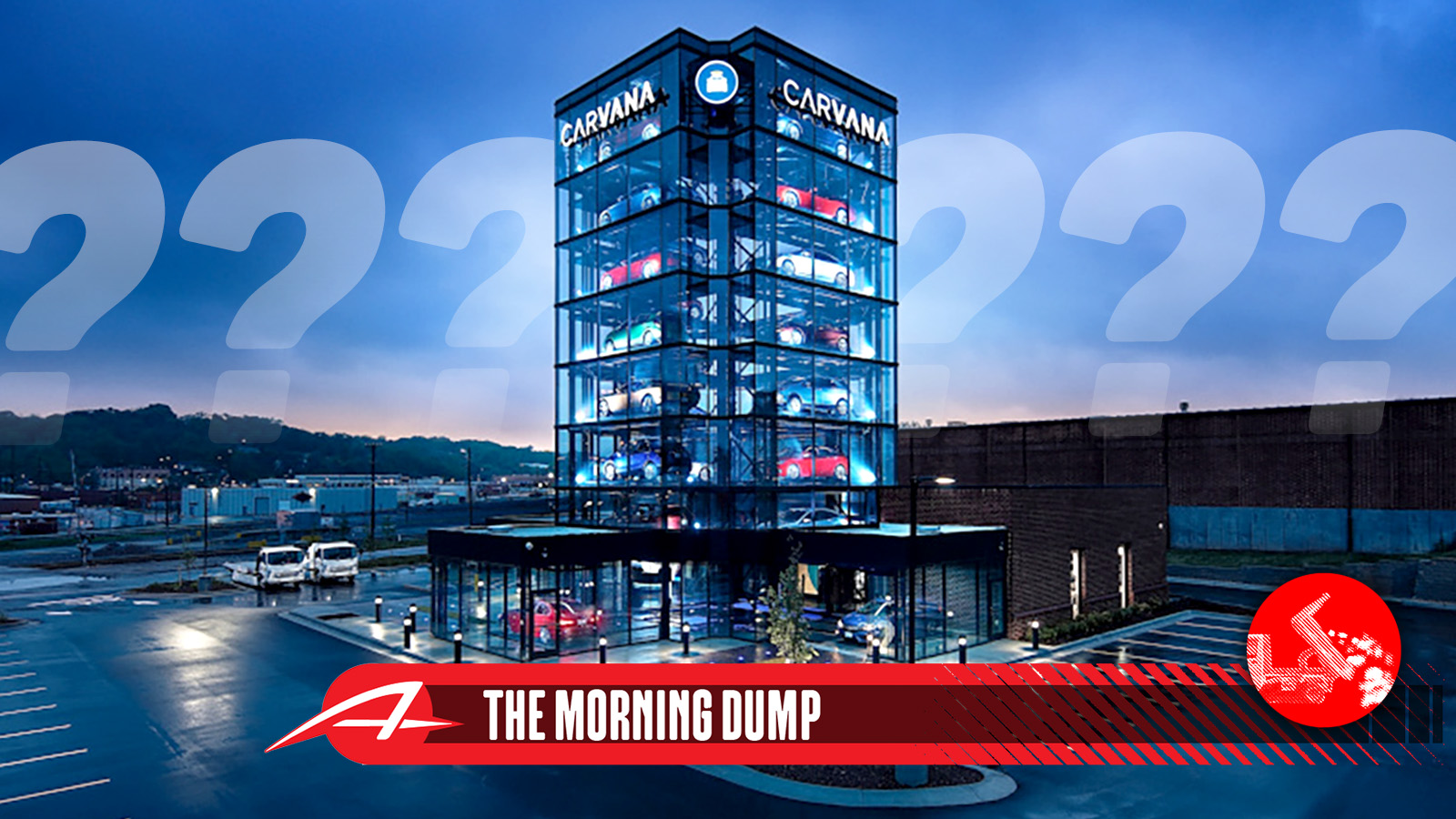
“I think the opportunities around us feel really, really, really big.” That’s what Eddie Garcia, CEO of Carvana, told a crowd at a conference a couple of days ago. The question was about why Carvana keeps buying Stellantis dealers, but he gave no answer. Carvana doesn’t seem to want to answer the question.
That’s weird. The Morning Dump loves a mystery, and the Carvana thing has gone from something that seemed obvious to something that feels, at least from the perspective of a dealer, almost ominous. GM has an answer. CarBravo! And if you’re a GMC, Chevy, or Buick dealer, you’d better get on board.


The early sales data is in, and while it’s much of the same, the curious note here is that cars seem to be on the way back. Like, non-crossover/SUV/truck vehicles. Cars!
EVs are down, mostly, but in Sweden, there’s some hope for Volvo.
What Is Carvana Doing In There?

The absence of an answer always makes me curious. Back when I was in college, my school, The University of Texas at Austin, acquired the Watergate papers from reporters Bob Woodward and Carl Bernstein (as Woodward deadpanned at a dinner later: Carl needed the money).
The school quickly convened a class around the archives, and I begged my way into it. During the class, I got to meet many of the people involved at the time, including Washington Post editors, John Dean, Hugh Sloan, and other individuals who were in the White House. It was amazing. Obviously, Deep Throat was the character lurking in the background, and no one knew for sure who it was.
At one point, the professors asked who we thought Deep Throat might be. My answer was Deputy Director of the FBI Mark Felt. Why? I had no special intuition other than something I’d noticed when doing research for a project. If you looked at all the boxes of notes that had been carefully indexed and set aside, there were all of the names you’d expect (G. Gordon Liddy, Howard Hunt, et cetera) roughly in proportion to their importance. Curiously, Mark Felt was the one name of the possible leakers that barely appeared anywhere in the boxes we had access to. I surmised that this meant that it was probably Felt, because Felt was in the boxes we weren’t allowed to look at. A couple of years later Felt revealed that he was, in fact, Deep Throat.
I get the same sort of tingle from Carvana.
Carvana has been on quite a ride the last few years. Back in 2023, the conversation was about whether or not the company could survive, especially as it dealt with bans on selling cars from physical infrastructure in certain places. The last few months, the question has been: Can anyone stop the company?
The stock price has surged, and the company, known as a used car retailer, has suddenly started buying new car dealerships. This process started a year ago, and I actually wrote a post with the headline: Why Carvana Bought A Chrysler Dodge Jeep Ram Dealership.
At the time, I thought I had a decent handle on it:
Certified Pre-Owned cars historically command a higher price and, if costs are controlled, a higher margin. Being able to advertise CPO cars on the Carvana website would be a huge deal as, currently, Carvana only has “Carvana Certified” and not manufacturer-backed certified vehicles. Additionally, as CDG points out, Carvana could also get dealer wholesale pricing on parts and more help with service.
And that’s true, and maybe that’s all there is, but Carvana has just added its fifth CDJR dealer, and it’s starting to get more interesting. The distribution of the dealers is rather large (Georgia, Texas, Arizona, California), and it’s now adding its first CDJR operation in the Northeast with its purchase of a dealership in the Boston area.
If this were just a CPO/cheaper parts play, I don’t think it would look like this. Plus, you’d imagine that Carvana would own up to it. What’s stranger than anything is that Carvana won’t tell anyone why it is buying these stores, and journalists keep finding ways to ask.
It’s become such a thing that Stellantis created a policy to limit how many CDJR dealerships a single entity can buy in a 12 month period, as Automotive News reports:
Stellantis said the policy change was not because Carvana bought five CDJR dealerships within the last year.
“The rule was put in place so we can continue to focus on building a healthy, competitive dealer network that provides exceptional service for our customers with the brands they love,” the Stellantis spokesperson said.
But some analysts think Carvana’s quick purchase of several CDJR stores could have been a factor in the Stellantis policy.
“I don’t think it’s coincidence that Stellantis is putting the brakes on consolidation amongst a single entity amongst its dealerships,” John Healy, an analyst for Northcoast Research, said. “I would think that given Carvana’s nature of being a disruptive company, and pushing the envelope of service and how the customer meets them would probably have maybe have pushed the boundaries of what some dealers like and don’t like in terms of maybe territories.”
The appeal of Stellantis to Carvana is probably two-fold. Given how crappy sales have been lately, it’s likely an easier dealership to buy than, say, a Porsche dealer. Plus, with most Stellantis rooftops, you get four different brands (CDJR).
Again, it’s totally possible that all of this is just about gaining access to parts, service, used cars, et cetera. But I’ve got that itch. What Carvana isn’t saying is louder than what it is saying.
In my most paranoid delusions about the car market, I see a future where someone like Caravana actually buys a car company. A future where Stellantis wants out of the car business isn’t exactly crazy, and Carvana buying out dealers or incorporating them into a larger Carvana national unit isn’t that out there either, right?
GM Forces Dealers To Adopt Its Carvana Competitor
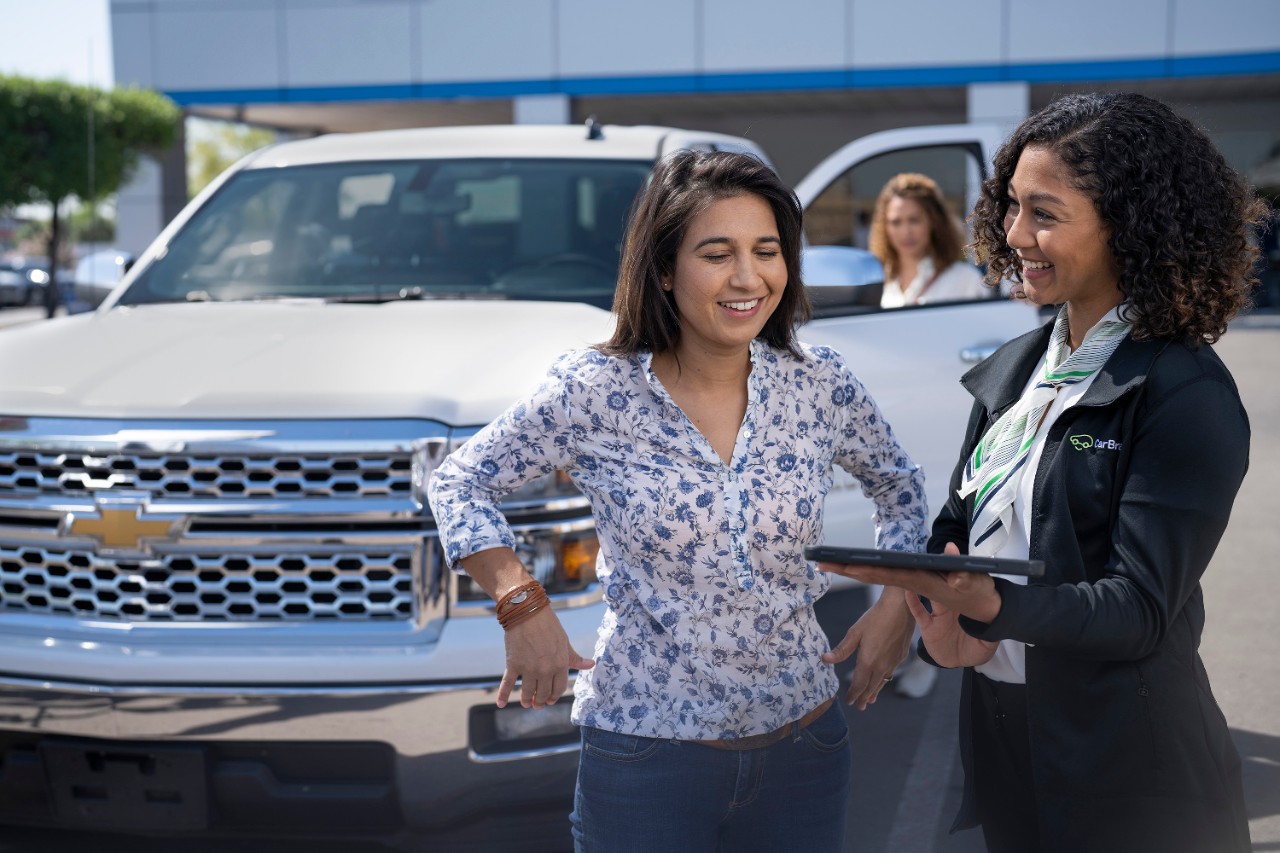
First, I gotta talk about the metadata for this photo from GM, which is hilarious:
“Nofrills Barbara Pickup Delivery.” I guess this character is called “No frills Barbara.” There’s another photo; I wonder what the metadata says.

“Nervous Norm.” Oh man, poor guy!
Sorry, I got distracted. For the last couple of years, GM has been pushing its own Carvana alternative to help buyers get access to used cars from dealers. Called CarBravo, this alternative carries some of the ease of Carvana and, up to this point, it’s been optional.
What is CarBravo? Here’s GM’s explanation:
Shoppers now expect the used vehicle experience to match the rest of their digital lives: always-on, transparent and convenient. They want more choices across more price points, plus the confidence that comes from buying a vehicle that’s been thoroughly vetted and backed by a brand they trust.
CarBravo is GM’s answer. It gives dealers the confidence to stand behind a greater catalog of vehicles on their used lot and provides customers the freedom to choose how they want to shop — online, in-store or a mix of both – all with access to some of the best warranty coverage in the used car industry.
Customers can complete most steps online, then tap into in-person expertise at a nearby participating dealer for test drives, trade-ins or delivery. It’s a true omnichannel experience.
Previously, this was optional for dealers, but it’s not really optional anymore. Why?
CarBravo will become GM’s sole used vehicle certification program for U.S. Chevrolet, Buick and GMC dealers and allow them to certify and sell GM and non-GM makes and models. Cadillac will continue operating its own independent Certified Pre-Owned (CPO) program, and GM Canada will maintain a traditional CPO structure tailored to that market.
That’s right! If you’re a dealer and you want to sell CPO cars, you gotta be a CarBravo dealer.
Cars Are Back!

Not every carmaker reports sales every month, so the big news comes at the end of the quarter. A few brands do still report monthly, and what we usually learn is that hybrids continue to be popular, EVs are falling, et cetera.
This month, another trend became a little more pronounced: Cars! Cars are on the rise. Ford had a bad February, which usually means a decline in F-Series sales, although this year also includes the downturn in EV sales. There were plenty of bright spots, but the only type of vehicle that saw an increase? Cars!
For Ford, that means the Mustang, which is up 52.6% this year through the first two months of the year. That might be a fluke, but it’s happening at Honda, too, where car sales (led by the Accord) are up 11.5% YTD compared to a 3.8% decrease for what they call “trucks.” At Hyundai, the Sonata is down, but the Elantra is up. At Kia, the K4 and the K5 are also up.
A lot of this is probably just competition. Everyone has SUVs, not everyone has cars, and cars have been the more affordable option. The combination of less competition and more desire for lower-cost cars puts automakers with sedans and other cars in a better position.
It’s early yet, but I am going to keep an eye on sedan and car sales this year.
The Volvo EX60 Has Fans In Sweden
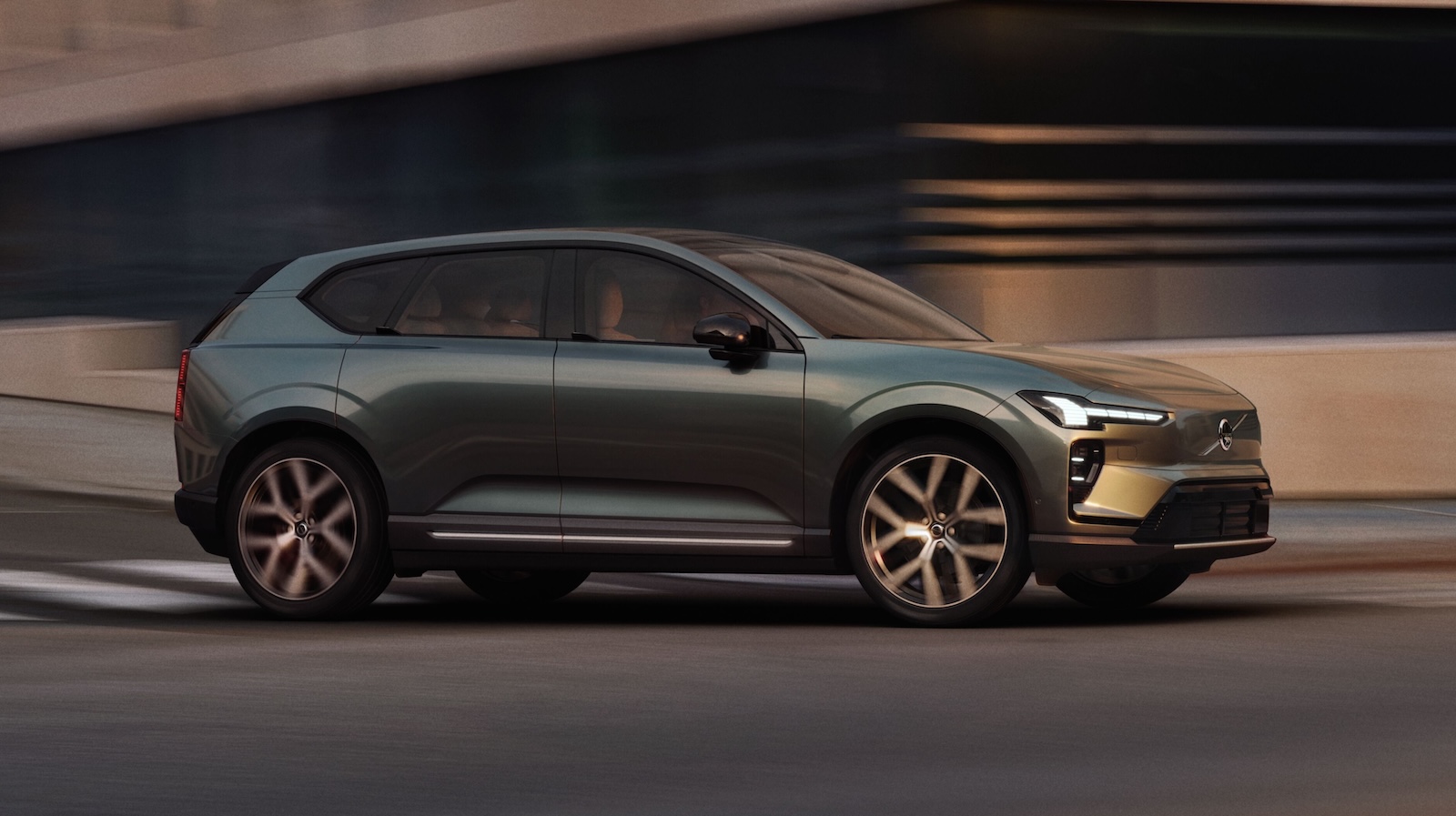
Volvo has hyped up the EX60 a lot and, to be honest, I didn’t see it at first. It just seems like a decent crossover with good range for, relatively speaking, a reasonable price.
I’m still not sure I see it, but the Swedes apparently do, according to Bloomberg:
Volvo Car AB will increase planned production of its fully-electric EX60 SUV after European orders exceeded expectations with more than 3,000 cars booked in Sweden alone within weeks of its reveal.
The Geely-owned carmaker plans to raise output at its Torslanda plant in Sweden, according to a statement Wednesday. The company is also in talks with labor unions about keeping the factory open an extra week this summer ahead of customer deliveries.
So far the EX60, with a driving range of more than 800 kilometers (497 miles) on a single charge, is only available in European markets. US order books are due to open later this spring.
I mean, maybe?
What I’m Listening To While Writing TMD
Luscious Jackson was a big favorite of mine in the early ’90s, partially having to do with my thinking the guitar player was very cute. “Why Do I Lie” could have been a classic in an alternative universe. Instead, we got “Naked Eye,” and that ain’t half bad.
The Big Question
What is Carvana doing?
Photo: Carvana




almost certainly related to some sort of as yet to be revealed stock scam. This company has been a stock manipulation machine for years now
Stock manipulation bullshit. Overleverage, goose the price, cash out and fuck off.
Having bought a car from Carvana last week, I can say one thing. They made that $#!+ too easy. That said, they took my trade (a ’24 Accord Hybrid Touring with 29K on it), washed it, slapped a 3 grand markup on it and sent it. Took them less than 24 hours to get it sold once it hit the website. It was paid off, they gave me 95% of the asking price of the car I bought in trade, and I got the car I should have bought in the first place when I bought the Accord.
And what car is that? Curious minds want to know. Also, what didn’t you like about the Accord? I’d be willing to put up with a lot for a car that looks as good as the 10th gen Accords do. Honda has some absolutely timeless designs.
Matt, I’m not an economist, but it smells like a late stage capitalism corporate move to me: Rapidly grow and consume, drive up stock valuations, have CEO with compensation packages. Then cash out some options up top, have the company collapse and bail out the executives, fire the lowly staff and perhaps declare bankruptcy for a clean slate. Rinse and repeat.
Obviously the lady in the background of the first Metadata photo is the pissed off salesperson who was bypassed by the click and swipe sales method. Also, is the transaction a pickup delivery? That’s very poorly worded since it should probably say vehicle delivery. They had NoFrills in the grammar department at GM.
That photo should become a meme like the guy looking back from his girlfriend. Same vibes.
TBQ: “What is Carvana Doing?”
Oh well, whatever… never mind…
“Water Your Garden” is the standout sleeper track on Fever In Fever Out.
Service is the future as people hold on to cars longer. People love to hate on Carvana, and I’ll admit I don’t get how its stayed alive this long, but they seem to be thinking long term.
Carvana is building Autonation in reverse. Huge network, deep market recognition, and the then branch out into more brick and mortar dealers. Get a seat at the table, and drive the profits through increased integration. Parts, service, warranty work.
Did a rental company place a big order for cars? I aske because all the models mentioned are pretty common rental cars.
I wouldn’t be surprised if carvana along with some pe did try to buy either a part of stalantis NA operations or the whole thing. These type of people smell blood in the water and start picking up pieces. The stalantis dealers want off the sinking ship carvana must think it’s a good price. They probably need the space in a lot of markets for their operations anyway. They can hold alot more debt then a dealer network because they are still considered tech by the finance bros. They have access to cheaper money because of that as well. Plus you have a lot to people that either made a ton of money on e-commerce or missed it either way they see carvana as the car Amazon.
The vending machines were more or and a fun way to get people interested with maybe a social media aspect. But still I bought a used car sight unseen from the Internet maybe not the brightest photo op but the general public is dumb so maybe it works. But most of there deliveries are just dropped off by truck as with e-commerce. They still need local places to do state stuff process and hold the cars. Dealerships make perfect sense for that it’s already set up.
Carvana apparently has their own dealer auctions for the stuff they don’t want too. They are apparently big enough they don’t want to deal with the fees of other auctions . I would imagine they want to try to get away from buying at auction. Not so sure how a stalantis dealer will attract good trade ins but I guess there will be some rams and jeeps people will want. They seem think buying cars from people directly can cut out the auction the dealers give them a place to bring all the cars and process. I would imagine if they can beat black book many people would deal with them. Because they appear to make it easy. So they are making money on both ends.
I think GM had new car delivery at one point where they would bring you the car for an extended test drive and leave you with the paper work. But don’t think they had the complete online portal like carvana. Corvettes still have some kind of factory drop off I think.
Are they buying franchises or do they get the actual real estate of the site? Because it’s probably cheap as people are maybe trying to get out of their Stellantis dealerships, so sell to Carvana, and then when Stellantis collapses they are ready to go with either a new brand or just a huge chunk of land to develop or land bank. People who actually manage dealerships are gonna scream at me for probably not understanding at all how things work…
Typically they are getting land or assuming the a land lease from another party. It’s probably not impossible the selling dealers is leasing them the land either. I think I know where you are coming from but It’s not like some fast food franchises where there the cooperation owns or holds the lease on the land and or building. Either way they have a fairly well suited location already built out to what they need.
Carvana recently abandoned their Tempe, AZ vending machine dealership. I drive past it every work day and I think it was Monday this week, the signs were gone and the tower was empty. Google says it’s still open and currently busy… IDK
What is Carvana doing?
It’s a Jeep (and CDR) thing.
Carvana is an extremely expansion minded company, so they are just looking into other potential areas to expand in, and new car sales, becoming an Autonation competitor basically, is one option.