


As an engineer, I hate few things more than wasted time. If I can do something as well or better in half or a quarter of the time — especially if that something is a mindless task that I don’t enjoy — then I’ll pay quite a bit to make that happen. Here’s the thing, though: If you’re a mechanic used to using hand tools, you can save a shit ton of time without even spending $50. That’s the beauty of the impact driver, a tool you simply cannot afford not to have as a mechanic.
When I first learned to work on cars, I was 18 years old, and I’d just purchased a $1400 1992 Jeep Cherokee XJ with 225,000 miles on its odometer. The thing leaked oil, it had a seized brake caliper, there was lots of rust, and pretty much everything needed to be repaired in some fashion. I drove to a neighboring college, where Jake (the brilliant mind behind Out Motorsports) taught me some of the ropes, and after a quick Walmart run, I had myself a basic Stanley tool set.


Something like this:

You can see there’s a screwdriver in that set that comes with a little quarter-inch drive that fits an adapter, which itself fits various bits — torx, flathead, philips head, etc. This is what I used when working on my cars, though eventually I bought a dedicated screwdriver since the adapter in the set above is a bit thick for tight holes.
For years, I undid every screw and small bolt in my car using my right wrist. Interior door panels? Twist of the wrist. 11mm valve cover bolts? Twist of the wrist. That tiny sheetmetal screw holding my fuel filter to the unibody rail? Wristicuffs.
Even years later, after I moved to Detroit, bought a bunch of car projects, and yanked all sorts of parts from my local junkyard pretty much daily: I used a handheld screwdriver. Then a reader and friend named Jamie — owner of a 300,000 mile Mazda MPV — gave me a gift that truly changed my life.
Walmart was having some kind of special on its impact drivers, so he picked up a pair for cheap and gave me one:
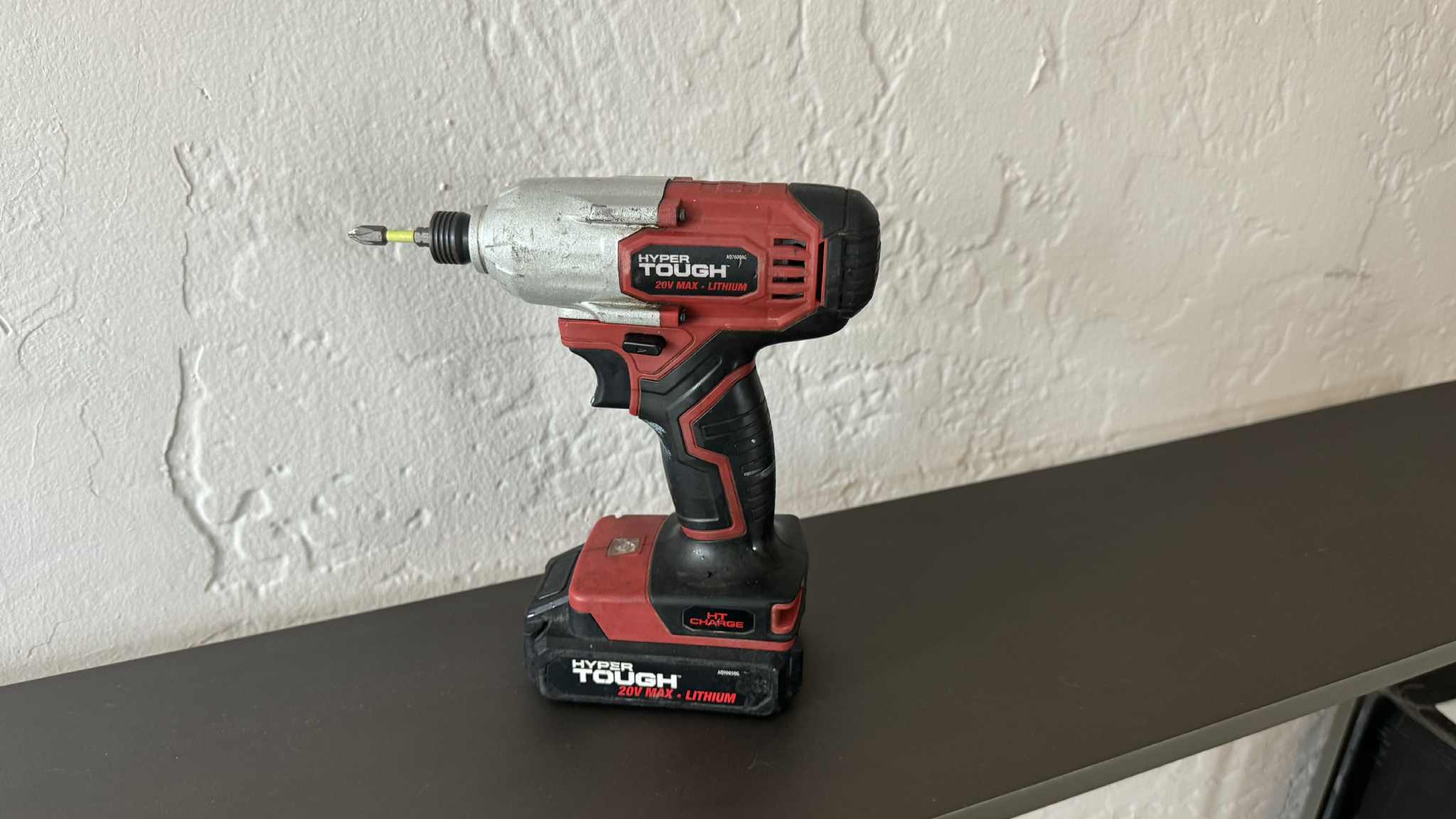
Upon using my new gift, I couldn’t help but place my forehead into my palm and sigh: My God, I wasted so, so, so much of my life using a handheld screwdriver. Spinning each thread out of whatever I was unscrewing — first the initial ones that release the tension holding the parts together, then the next thread, then the next, then the next — and doing it for probably thousands of screws over the years had been completely pointless. I probably lost days of my life just undoing screws, and all because — for whatever reason — I didn’t think to buy an impact driver.
Don’t be like young-me. Go to the store and just buy one. This shed I just put together has tons of awful reviews which said they spent days trying to erect it, almost certainly with a handheld screwdriver:
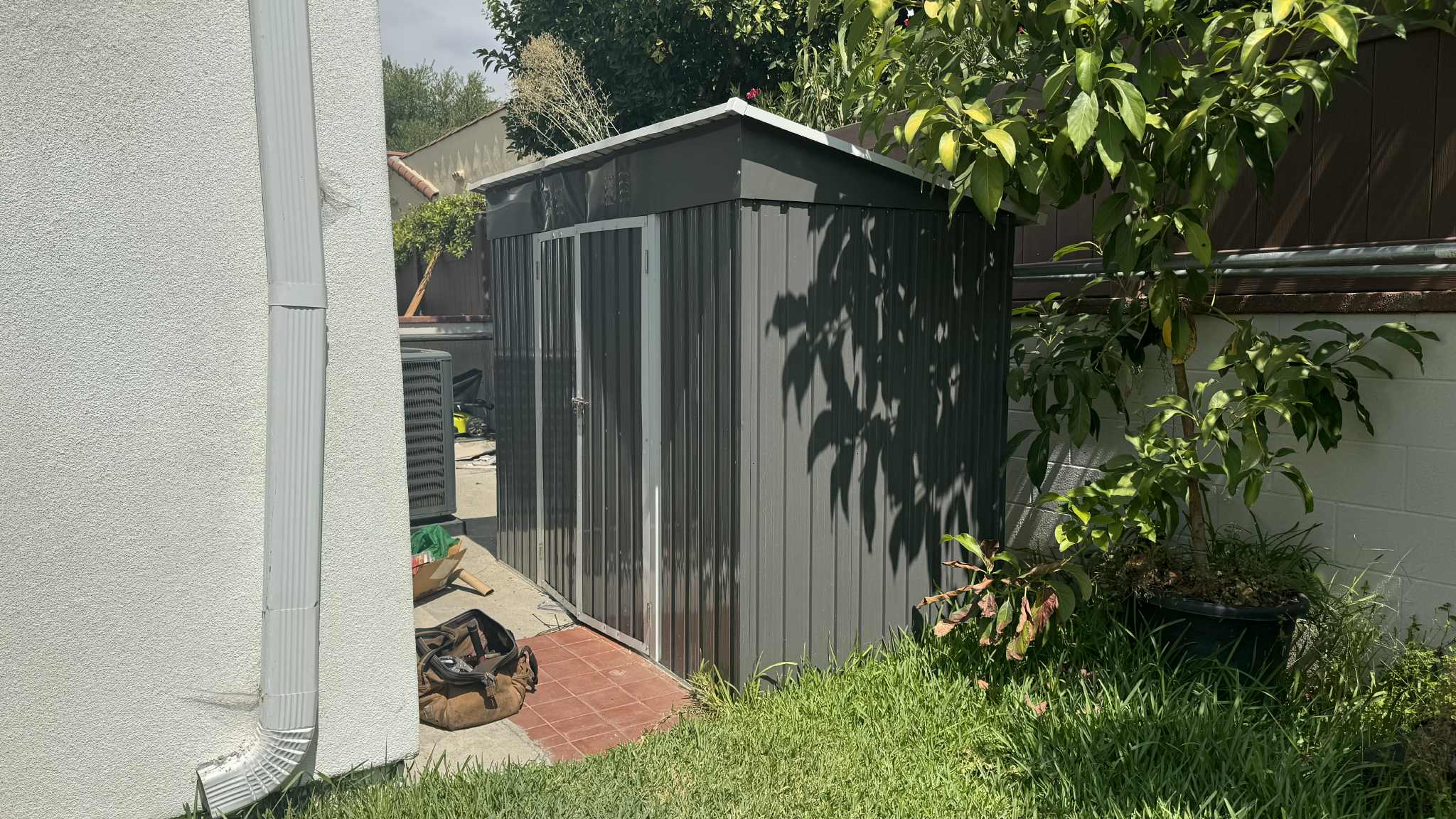
By the way, this shed is freaking incredible, and the candy-asses who paid far-too-little for such a big shed, and are complaining about how thin-gauge the metal is, need to wake up. The fact that this giant shed was flat-packed into a single box, and offers so much stiffness despite the thin gauge of steel — honestly, it’s a marvel of engineering. Somewhere in China, an engineer is reading those reviews, with a tear dribbling down their cheek, wondering what else these ungrateful customers could possibly have wanted.
I, meanwhile, with impact driver in hand, was not at all deterred by the brilliant design’s main compromise of requiring quite a bit of assembly, writing in my review:
I totally get why people gave this shed one star; it’s frustrating to build! But here’s the thing: You bought a dirt-cheap shed, not a high-quality blow-molded plastic one. In order for the manufacturer to keep the price down, they necessarily had to build a structure out of incredibly thin steel that 1. Could be flat-packed into a single box and 2. Could be configured into a shape that allows the thin material to have significant stiffness.
That’s the thing here: If you want something cheap, you have to reduce material cost, and the best way to do that is to rely on clever geometry to give thin-gage material stiffness. And so that’s what you get: Lots of really thin pieces of metal in a single box. As such, you’ve got to screw all that thin metal together into a big shed. It’s a lot of work.
But in the end, you have a shed. A decent shed for the price, actually.
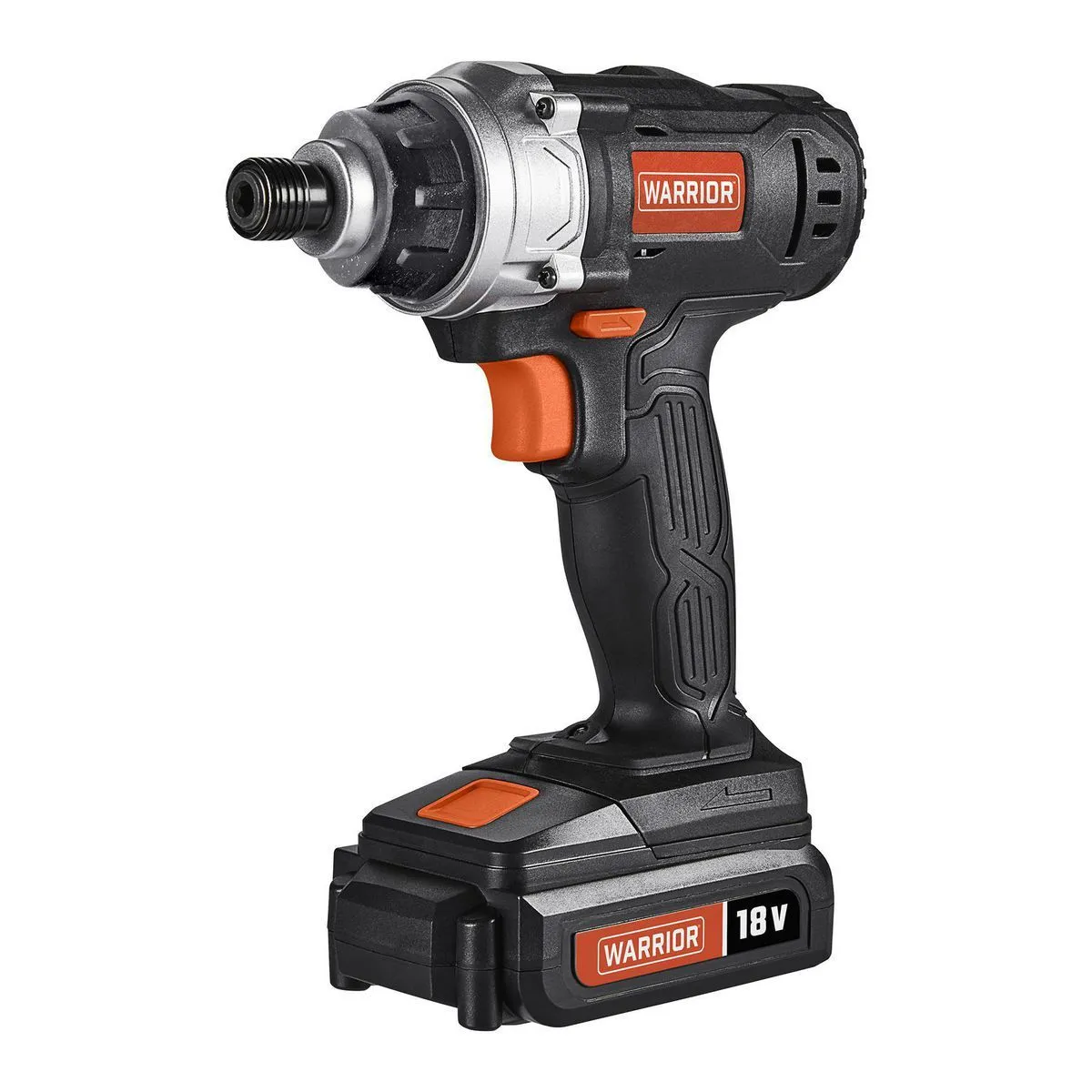
Shed reviews. The Autopian has it all! Anyway, here’s a cheap Harbor Freight impact driver for $40:
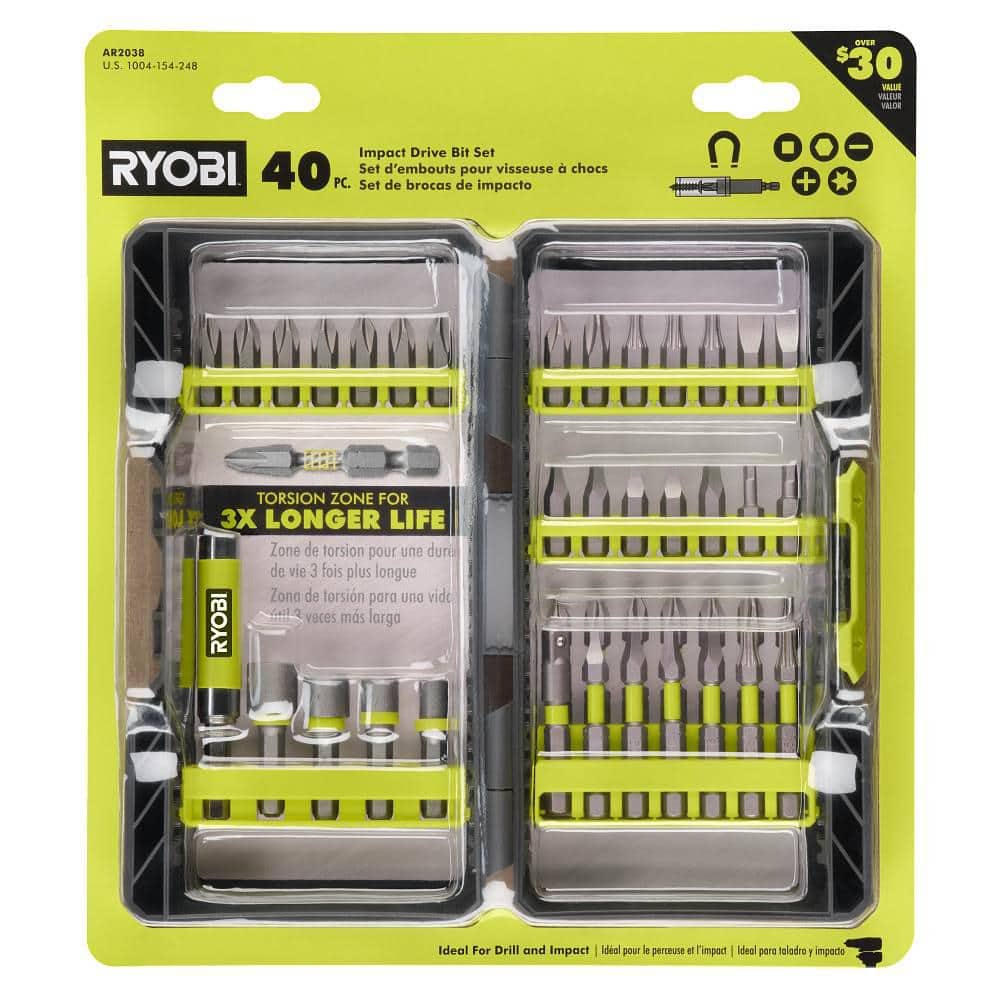
You have to get the socket bits, like this set I own from Ryobi:
And the socket adapters are clutch for low-torque 10mms bolts and such:
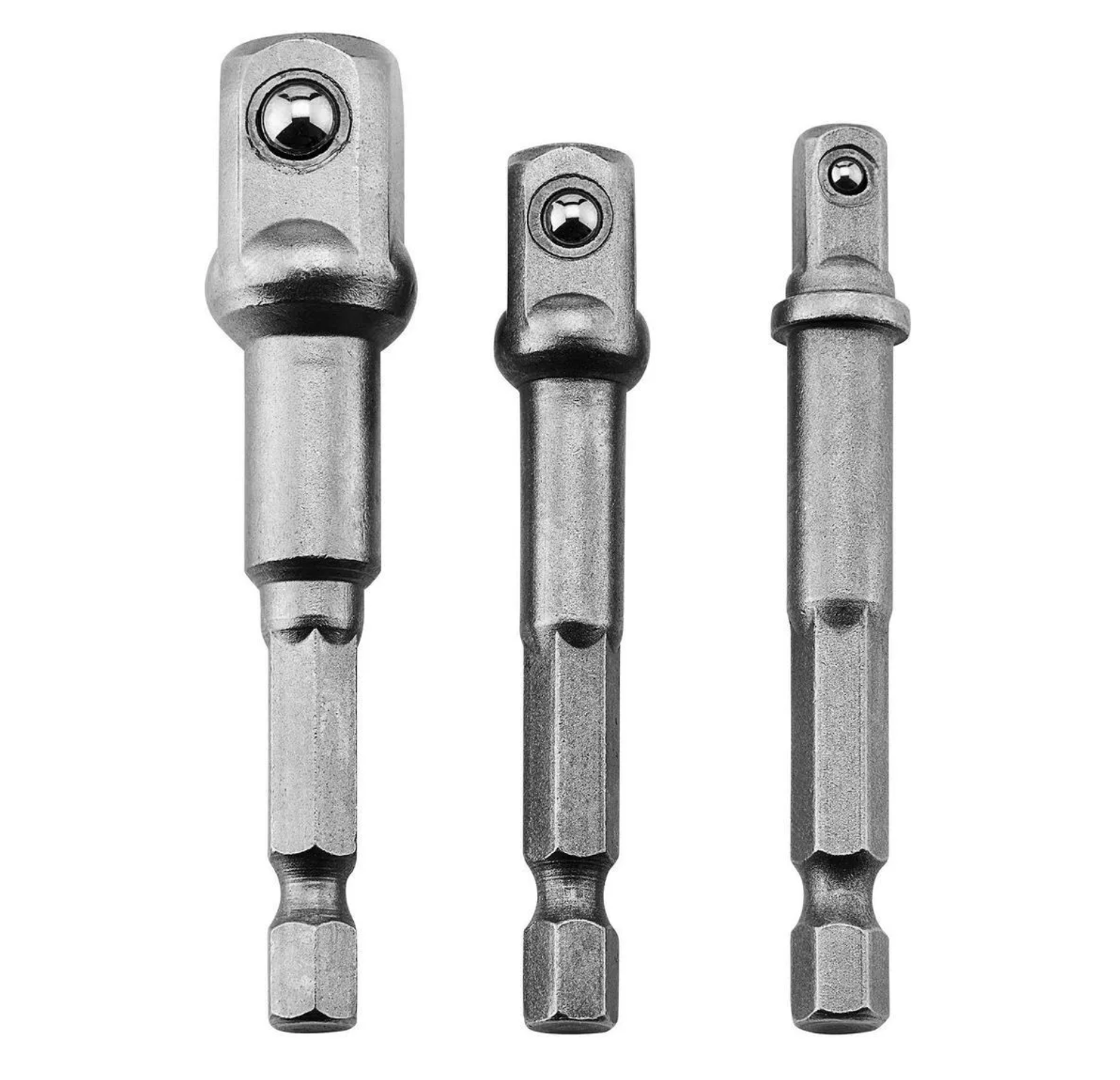
Just trust me on this one. You have other things to do other than twist a handle in a freezing cold junkyard.
Top photo: The Autopian


David encouraging people to spend money on something means that thing is a real life-changer.
Pro tip, though: buy battery-powered tools from the same brand, otherwise you’ll need a butt ton of chargers and spares, and it should be a major brand like Ryobi, dewalt, Milwaukee, Makita, Bosch, Hilti, or Festool (j/k). Even Black and Decker.
Unless you’re a professional, pathologically particular, or have specialised needs from your battery-powered tools, all the major brands are good enough. Even Ryobi.
I’m not entirely convinced that religiously sticking to one brand is the best choice. My current plan is to go for a two-tool strategy: Milwaukee for batteries and tools I care about, and then get a Ryobi/Milwaukee battery adapter and buy the cheapest Ryobi tools I can find for stuff I expect to use once a year or so. I don’t know that you’d want to get any more complicated than that, though!
Agreed. We are makita 18v for nice tools that get used frequently, ryobi for the odd stuff.
Yeah I was being a little dramatic. But I do think no more than two brands is the right move. I ended up being a dewalt person, with several lighter-duty Ryobi tools. This way I have 3-4-Ryobi batteries and chargers, 3-4 Dewalt batteries and two chargers, and all my tools are always ready to go. I have more Dewalts but they’re corded.
Crusty old fools like to rag on Ryobi even though they’ve been good to very good since they went from dark blue to green. The battery operated brad nailer is genius. I hate compressors, and I don’t need one for trim nails! The tire inflator is also excellent.
The tire inflator is top on my list to get next time it comes on a good sale, so I’m glad to hear that! A few of my winter tires have slow leaks, and it’s no fun standing out in the snow running a bike pump…
I had an air compressor and never thought it was “worth it” to spend money on a battery inflator. Then I was gifted one by DeWalt when I worked there for a bit, and honestly it gets more use than any of my other battery tools (maybe barring the impact). I use it for car tires, bike tires, all manner of sports balls, etc, and it even has a high volume mode that’s great for air mattresses, SUPs, pool toys, etc.
Plus it has a digital pressure readout so I haven’t spun out any of my cars at a Cars and Coffee.
I got mine for $25 shipped. Epic deal.
Yeah, I was looking at price history, and I think I saw it as low as $30 CAD last black Friday, so if that’s repeated, I’ll be getting one!
Yup, Milwaukee and Black and Decker for me.
Once I got initiated to Milwaukee by my co-workers. I’m never going back.
I don’t understand how you would use an impact wrench to assemble a shed. Impact wrenches are for unscrewing and taking things apart, no? Also- for screwing things together, don’t you need something with a torque limiter? At one point, when I was remodeling the kitchen, I used a corded drill with torque limiter to turn the screws. It worked. But even with the torque limiter I was wearing out phillips bits quickly- at least one a day. So yes it did save time and labor. But it just didn’t sit well with me to be wasting so many phillips bits. In the end I had to stop using it.
Impact driver, not an impact wrench, big difference. They are a game changer.
As CTSV mentioned it is an impact driver and it is specifically for driving screws, but also does the job on small bolts with the right adapter. Your bits will last longer, at least if you use impact rated bits, since they are not as likely to slip and strip with the intermittent small turns as compared to the constant torque of a drill. It is also less likely to strip out the screw. Now if you do strip out the screw it is much more likely to be able to remove it than a drill or hand tool.
Yes it does require some skill to not over drive the fastener but you have much more control with the impact driver.
As far as the bits go that is why brands for pros, like Milwaukee, sell them in 25 qty “tic-tac” containers, they are a consumable and need to be replaced periodically.
The way these work they have a spring loaded radial hammer that will only slip and start “impacting” at a certain torque. So when building flat-pack furniture you can just tighten until you feel it start to load up to “impact” and let go. If it’s a pretty sturdy connection maybe you give it a couple whacks.
I’ve always had an impact and a drill, so I’ve never really used the drill with the clutch to drive fasteners, but in my limited comparison the impact is faster and a bit easier to modulate. Plus my impact is much more compact and the quick change 1/4″ bits make it much more convenient.
Meanwhile, the only impact tool I own, has a cord and says “Montgomery Ward” on the side.
Damn thing still works like new.
Impacts are also great for assembling flat pack furniture. I bought my first impact for this purpose.
Very easy to strip out the holes in flat pack stuff. A drill/driver with a clutch is better of someone is buying for that task.
A lot of impacts have torque limiters as well. Even cheaper ones.
I use a fairly weak Bosch 12V unit and go slow and only allow one or two hits. Hasn’t been a problem.
To any tool obsessed people out there I highly recommend you get familiar with this youtube channel. https://www.youtube.com/@TorqueTestChannel
omg. Like I didn’t enough to watch on youtube.. Thanks.. lol
I tried to use an electric screwdriver when I was young. Batteries were not so good back then, and the things ended up being more frustrating than helpful. I ended up doing thousands of screws by hand instead.
Now I use my drill for wood and drywall screws, a small HF impact driver sometimes to spin out screws on the car.
The best mechanic’s tool is a decent cordless 1/2″ impact gun. I feel like the only reason I do certain jobs now is because I get to use my impact gun. I’m going to visit it in the garage right now. It’s been too long.
I feel this. The tool I’d sleep with if it weren’t so filthy is a 10lb 3/4dr. ratchet. A hammer, problem bolt remover, and good self-defense all in one! Keep that above your headboard haha.
My favorite tools though are a bolt extractor, stud extractor, and titanium speed-outs. It simply solves the question “now what?”. Hoping to add a MAP gas torch to that collection soon!
I know my limitations. If I get to that point, I’m sending it to a shop.
I still have a 90degree adapter permanently stuck to a plug-in Black and Decker drill from extracting a snapped head bolt from my 240sx. I did get it out, but I did not enjoy it.
I’m going into the trade as a mechanic, so unfortunately I’d be the last guy in the line and saying “I can’t” would be fairly career-limiting.
Congrats on removing the head bolt though, that must’ve been a nightmare.
The torch comes in clutch!
Having used both, MAP is the way to go. It’s not the extra heat, it’s the ambient temperature range that makes it better.
Even cool weather impedes a propane torch. MAP does so much better in the cold.
Thanks for the tip! I did use propane at one point but it just wasn’t enough, which is why I was consider MAP for my problem solvers collection. Theoretically the use case is lower since I don’t have to contend with rust thankfully, but us weak, soft-handed Californian femboys need all the help we can get.
edit: grammar?
I’m always glad to help a femboy ❤️
Did you read my mind? Again? (I still have no idea how you knew I wanted a slushie).
I was literally just discussing this with a friend of mine who was trying to talk me into buying an impact driver after I ranted about having to jack my Subaru to get enough clearance to loosen the oil pan drain plug with my breaker bar since whoever last changed the oil tightened it way too much.
I have no excuse here. I have an air compressor so I don’t even need to get a battery powered one. This would have put me in much less danger than yanking on my breaker bar from under my jacked-up Subaru.
Be careful what you purchase, though they look the same an impact driver is not an impact wrench. The former is meant to screw and unscrew things into a high resistance material where you don’t want to break your wrist by fighting a drill, and the latter is to meant to send very sharp but quick impacts to free fasteners otherwise stuck and to remove bolts such as on alternator pulleys where there is no way to keep the pulley from spinning without causing damage. Two otherwise identical tools can be the difference between 60 and 300ft/lb of torque, and 10 seconds vs 60 for driving in a 5″ deck screw.
Thank you for that explanation. I have a couple nice air and cordless impact wrenches, but I never bothered to get an impact driver. I think I will, now.
I can’t remember the last time I’ve used my big stand air compressor for air tools ever since I got cordless power ones.
I was planning out the garage with a compressor, plumbing and drops when I got my impact gun. Then it seemed pointless.
Unless I want to do powered wet sanding I probably won’t need air tools.
It’s well worth it to skip the air impacts. That’s what I grew up using with my dad, and the new crop of electrics are more powerful, much quieter, and so much more convenient.
Man, I feel seen here David. I just finally got an impact wrench about a year or so ago. It’s embarrassing to admit that, but here I am.
I have used them before but couldn’t bring myself to buy one until I got so deep into renovating a house that I couldn’t avoid buying one. Same with a nail gun, table saw, and a bunch of other tools. Then I used them on vehicles and collected many, many more. It is a beautiful thing, except when you run into a bolt or screw too confined to use the power tool on and then it is back to the old ways with lots of grumbling.
Always have to try the impact and some ungodly swivel socket combo first though, before you resort to a ratchet, or god help you, a flare nut wrench.
Just saw an ad for a power flare nut wrench this week.
That the nice thing I’ve found about my ridiculous cordless impact.
I never need 1400 lb*ft of removal torque. But when I make some stupid combination of extensions and u-joints, it still has enough guts to break the fastener loose.
An impact driver is a game changer. You will love pairing it with a mid torque 1/2″ impact wrench and a 3/8″ cordless ratchet, though. Those two can cover pretty much every suspension, brake and powertrain component, as well as body parts.
I don’t like using impact tools on delicate fasteners for obvious reasons.
I agree on NOT using an Impact Driver on delicate fasteners. For that I use a driver-drill with a 1/4″ Hex Chuck on it, some brands sell these as an alternative to a normal chuck drill (and some may not even call it a drill, but a screwdriver). I find these are mostly available in smaller, 12V tools, but different brands have different options.
They will fit all the same bits as an Impact Driver, but they usually have an adjustable clutch on them to adjust how ‘tight’ they will fasten and they have no hammering-action when they encounter resistance like an Impact Driver.
Check out the Makita FD10 as an example, that’s what I have and love it for delicate work (assembling IKEA furniture is an example) where my Impact Driver will strip everything.
oh yeah, I almost bought one from Bosch (I also have Milwaukee batteries but didn’t like the tool’s shape nor it’s FWD/REV switch). It had multiple chucks including a 90 degree and an offset one. I believe they’re called installation drivers but I ended up having a regular drill with hammer function because I need that feature sometimes
Yep, I bought a cheapo Amazon screwdriver as you described to supplement my other Milwaukee tools which have too much torque.
I agree that drill drivers or impact drivers are indispensable, but the key is to be careful of the torque when tightening. It can be too easy to tear the head off a screw and then you’re… screwed.
Somehow, I am both shocked and completely unsurprised that DT had never before used a power tool to combat Michigan Rust.
Aside from an impact driver, a rubber or leather mallet is your second-best friend when it comes to fasteners of a questionable oxidation state.
I got the biggest 1/2″ M18 impact wrench Milwaukee offered 8 years ago, and with the largest battery capacity at the time. Big money back then (and still!), i think b/w $400-500 iirc.
But it has saved me so much time with lug bolts in the driveway or the side of the road when time is of the essence, trailer repairs, big ledger and lag screws into timber, head bolts, suspension hardware, and once in the mountains above Eagle CO., my team and i assembled a plate arch bridge that had 1,200 bolts to to tighten and hold it all together, so the torque limiting settings were great. Tighten bolt to just past hand tight, then torque to spec by hand. Saved us weeks of wrist pain pulling those huge steel sheets together! Fun fact- to speed the process up a bit (or so we thought), we bought 2 or 3 Horror Frought 120V impacts to run off the generators, and all of them burned up. Smoke, one had flames, all melted and failed after about 100 bolts of nearly constant duty cycle, something they were clearly not made to endure!. But the red plastic big boi battery impact lives on!
I bought the Milwaukee M18 1/2″ impact last year and it’s stronger than the 3/4″ air impact I bought off a tool truck. It will rip the heads off cap screws if you get into it too much.
Try getting a second drill. Have one for Philips bits and one for sockets. Makes the job a lot easier
On some jobs I use 3. Screwdrivers and drill bits.
I had a similar experience when I was looking to upgrade my bed situation after college years ago. The flat pack headboard I really wanted had terrible reviews – all bemoaning how long it took to assemble and how many screws there were.
I bought an impact driver and ripped through the assembly in 30 minutes. I’m certain it would have been a 3 hour ordeal and a bunch of Advil if I were stuck with a screwdriver.
I too recently assembled an entire cheap, flat packed carport from the Zon. The impact driver was absolutely key to saving myself time and wrist pain. That thing took a metric Sh!t-ton of self-tapping screws to assemble it. The 18V cordless drill struggled mightily to sink any of those screws, but once I pulled out the driver I was zipping those things in with ease.
I still prefer to break and tighten my wheel lugs by hand. An impact gun is great (dad had a compressor in the garage) but also an opportunity to make a bad situation even worse. I was going to change my own timing belt on my ’05 MDX, when my big impact gun didn’t budge the crank pulley bolt I called no joy and sent it to the shop.
I love my small battery impacts for everday use.
I’m the same – I use the impact gun only for the middle part, either zipping them off after I break them, or zipping them mostly on before the torque wench.
Same here. Good call
Just curious, why break them by hand instead of the impact?
Well, I lube and hand torque mine on assembly so no real issue, but if a chrome capped nut starts to strip or fail I can catch it by feel before disaster strikes. Same way I can tell how bad the gorilla at the tire shop overtightened it.
Please tell me you also have an impact wrench in addition to an impact driver, even though I don’t know how that would have been possible in the rust belt?
All you need is a longer cheater. I still have a 2 foot chunk of 3/4″ conduit in my tool box for extra leverage on a breaker bar or ratchet wrench.
Thanks for the tip – I’ve been meaning to get something to up the torque on my breaker bar, but wasn’t sure what a good choice might be!
Check the local hardware store, they often have 2 to 3 foot chunks of conduit or pipe in the bin for pennies. I like the conduit as it is light and it will bend before the breaker bar fails.
4′ section of exhaust pipe. It’s big enough to slip over any tool, it’s actually pretty light and even though it may deform a bit on the end over time, the 1 pipe I use has lasted 20 years. It’s main use is loosening and tightening axle nuts on FWD cars. Conduit is typically too small to slip over most tools.
I’ve got a 32″ chunk of 1″ galvanized pipe, hammered down a little on one end for the same purpose.
Been there, and bounced up and down on a cheater, holding on to the fender for support, to break a rusted brake caliper bolt free. I then bought an impact wrench lol.
I came across a chunk of “pipe” that was used to separate sheet metal parts on a dolly to use as my cheater pipe. Four feet long, 1/4″ wall thickness, and most of it dipped in that soft plastic stuff. Just laying it on the extension handle is usually enough.
One time I used that pipe, and with an assist of the carport rafters to hang onto, even jumping on that pipe failed to loosen one lug nut. I sold the car with never having removed that wheel.
For the love of god, don’t buy anything with moving parts from Harbor Freight. Just buy the Milwaukee and enjoy it forever. I just about lost a finger to a shitty Harbor Freight grinder. Like flying on Spirit Air, never again.
Huh, most of my Harbor Frieght stuff has held up (sanders, mitre saws). I’ll admit, my grinder is a Porter Cable after I killed a few cheap ones. Depends on use – I’m not making my living off my tools, good enough is good enough.
I agree. Except with Dewalt. Milwaukee is good, but not what I chose. Better tools make a difference. A huge difference. It’s worth it. The batteries will last longer, it will be more durable, and it’s well worth it. Things like the action on the switch are way more controllable.
Life is too short for one ply toilet paper and cheap tools
I respect, I buy the best where it matters. As I said, my tools are not my living.
Weird, because Milwaukee is practically the *only* brand I see used on job sites
Dewalt used to be the default in wood related construction, and IR / Milwaukee in Metal construction. Mechanics used to only use SnapOn, but Milwaukee made up a significant chunk of the market share there 10+ years ago. Nowadays, both Milwaukee and Dewalt make great tools in both fields, and mechanics are starting to get less loyal to any brand as there’s some great stuff out there if you’re willing to research it that costs significantly less with similar performance. What I think really set Dewalt and Milwaukee apart and put them on the path to success though was selling tools to a normal consumer that could out-perform any corded version and often match or beat the pneumatic one (at least in the US with our 110V outlets). All of a sudden people noticed they don’t have to be tethered and these were the only two brands that reliably offered that performance to the masses, and it made the high in comparison but reasonable for what you’re getting prices palatable. After that inertia just took over. Once you own a nice one of something you hate using the mediocre version of something that you once loved.
Edit – BTW, I have two Milwaukee grinders, but for my welding bench I’d much rather buy 6 harbor freight ones for less cost than 1 milwaukee, have 5 of them hanging off the side with a different wheel on each, and one as a spare.
Yeah Snap On took a hit when they decided to build it to the warranty and screw their Independent Contractors. You get in so deep you can’t get out or sell.
Don’t think he was lumping Milwaukee in with the cheap tools. Just saying that he chose Dewalt.
I’ve spent the last ~5 summers working construction, and my experience has still been that framers tend to pack DeWalt, while electricians and plumbers go more Milwaukee. This summer my carpenter boss was somewhat in the process of switching from DeWalt to Milwaukee, so we’d usually have both their batteries around job sites. Then a co-worker would bring in his personal 40V Makita and maybe some 18V Makita, and I’d sometimes bring Milwaukee M12, and all of a sudden you’ve got 4 different battery platforms on the go!
Having worked as a project manager I have seen this as well, though the true ironworkers only use Metabo grinders.
I went with Milwaukee because they had some yard tools that I needed. Buying them as current ones die. So far I have a drill, 1/2″ impact and a chainsaw.
I’m surprised I haven’t bought the trimmer yet, but my gas Ryobi that I bought 11 years ago is still working. I have never serviced it. At this point it will just let the blue smoke out.
half of my batteries that have gone bad are Milwaukee. They are good tools but they get boiling hot in no time and are overrated
Moreover no matter the brand any angle grinder can do serious harm to you. It makes me cringe every time I see a construction worker, metal worker or body shop using an angle grinder without the guard it came with.
An impact driver is one of the safest power tools you can use, it can’t even harm your wrist
And if you’re worried about cost, Milwaukees are always available at your local pawn shop.
Or FB
Where you’ve got to wonder how much of it is stolen! I really like my Milwaukee so far, but it’s a little scary realizing that they’re recognized as a high-value, easily resold theft target
I would have agreed with you 2 years ago, but recently their better brands have gotten very good. I have a HF Hercules 20V Brushless 1/2 in. Ultra Torque impact gun, and it is as good as any impact gun I’ve ever used. While time will tell on reliability, it certainly feels solid and well made.
Agree, their quality is vastly improved on the Hercules/Bauer/Icon lines.
1/4″ impact for most things, 1/2″ for suspension and lug nuts and shit. Maybe one day I’ll get a 3/8″ but have never felt the need.
I have a big 1/2” impact wrench for big things and a compact 1/2” for smaller things. My 1/2” impact sockets go down to 10mm and I probably don’t need to be using an impact on anything smaller.
I have LOVED using my Milwaukee M12 Fuel 1/4″ hex impact driver on my car! The M12 line means it’s super compact, ergonomic, and well-balanced, and the power level has been seriously impressive! I took the tiny thing down with me when I was putting my summer tires back on, just for laughs, and was shocked to see the tiny thing just pulling lug nuts right off! Only about 60 lb-ft on them, so it’s not crazy, but still! Beyond that it’s just worked great for work under the hood; tearing down the engine for a head gasket, etc.
I’ve also picked up the M12 2-speed driver now, which is pretty much the same thing, but with a clutch and no impact, so it ought to be ideal for tightening screws without stripping them.
The 1/4″ impact drill is a game changer, no more stripped heads.
Yeah, I’m hoping so! I’m in college to go into aircraft maintenance, and I’m expecting to need to unscrew a lot of access panels without stripping screws, so I decided to pick that up
Congrats! It can be a rewarding career. Two of my uncles worked aircraft mtc, one in the private sector and one as USAF lifer.
Getting an impact with enough torque can also make a world of difference. Getting my 2 foot ratchet into some tight spaces is a no go, but my 1/2 impact can usually zip that bolt loose.
The issue is rust country… If my big air impact won’t loosen it, straight to the shop. They have flame wrenches and lifts that I do not.
True. I haven’t ever had to deal with that. Some penetrating lubricant and time usually are enough for me where I live.
I sold Milwaukee Tools for a living for a few years, this is one of the tools I use the most, both car wrenching and around the house. Extremely versatile.
I had the same revelation when I got my first impact driver, but over the years I’ve procured several more cordless power tools including a power screwdriver and a 3/8″ ratchet and since then I’ve found I don’t use my impact driver much, at least in the garage. The impact driver has too much torque for some small hardware (and the lack of a clutch makes it harder to control), but not enough torque to break free most automotive fasteners.
That said, I spent a whole weekend assembling kitchen cabinets for my mom’s house a while back and having an impact driver for that was a godsend.
Get yourself a cordless 1/2″ impact too. Another game changer.
Yeah. I would say a hammer drill with torque and clutch settings and an impact wrench is a better combo. The impact drivers have all those cons you mentioned. I don’t like them because they’re one trick ponies and usually a good drill will have the speed and torque I need.
I bought a full 4 piece Greenworks battery set 2 years ago, complete game changer. The 1/2″ impact does not have the torque of my big air impact, but that’s honestly OK. The smaller guns are ideal for many things I used to do by hand.
1/2″ impact. 3/8″ impact, 1/4″ impact, cordless drill.
I still do most with hand tools, better control and feel.
The big “how have I gotten this far in life without one of these” tool for me was the impact wrench my now son in law and daughter gave me for my birthday this year. It turned replacing the back shocks on the trunk into a fifteen minute operation, and swapping out all 24 lug nuts into little more than a slow walk around the truck.
Do be careful with wheel lugs, I prefer to loosen with a breaker bar and retorque with a torque wrench. I also lube the studs with a light coat of anti-seize and oil the washers on Toyota mag wheel type lugs. I also have no issues with stripping out lug nuts or changing a tire in an emergency.
As soon as I get a car out of the shop and home I loosen and retorque all wheel lugs, most of the time they were overtightened.
They’ve got anti-seize, and I do have a torque wrench to fix what the impact didn’t get right.
Great advice on checking the shop’s work. They tend to have to speed through things, so the lugs get tightened with an impact wrench and never get to see a torque wrench. It not uncommon to see a lug nut with a snapped wheel stud still in it, because of this.
If my daughter can’t loosen the lugs with a quality lug wrench, they are too light. Too many times I’m putting a cheater on a breaker bar to loosen straight out of the tire shop.
They are on too tight if they are torqued over the manufacturers torque spec, regardless of your daughter’s strength.