


As an engineer, I hate few things more than wasted time. If I can do something as well or better in half or a quarter of the time — especially if that something is a mindless task that I don’t enjoy — then I’ll pay quite a bit to make that happen. Here’s the thing, though: If you’re a mechanic used to using hand tools, you can save a shit ton of time without even spending $50. That’s the beauty of the impact driver, a tool you simply cannot afford not to have as a mechanic.
When I first learned to work on cars, I was 18 years old, and I’d just purchased a $1400 1992 Jeep Cherokee XJ with 225,000 miles on its odometer. The thing leaked oil, it had a seized brake caliper, there was lots of rust, and pretty much everything needed to be repaired in some fashion. I drove to a neighboring college, where Jake (the brilliant mind behind Out Motorsports) taught me some of the ropes, and after a quick Walmart run, I had myself a basic Stanley tool set.


Something like this:

You can see there’s a screwdriver in that set that comes with a little quarter-inch drive that fits an adapter, which itself fits various bits — torx, flathead, philips head, etc. This is what I used when working on my cars, though eventually I bought a dedicated screwdriver since the adapter in the set above is a bit thick for tight holes.
For years, I undid every screw and small bolt in my car using my right wrist. Interior door panels? Twist of the wrist. 11mm valve cover bolts? Twist of the wrist. That tiny sheetmetal screw holding my fuel filter to the unibody rail? Wristicuffs.
Even years later, after I moved to Detroit, bought a bunch of car projects, and yanked all sorts of parts from my local junkyard pretty much daily: I used a handheld screwdriver. Then a reader and friend named Jamie — owner of a 300,000 mile Mazda MPV — gave me a gift that truly changed my life.
Walmart was having some kind of special on its impact drivers, so he picked up a pair for cheap and gave me one:
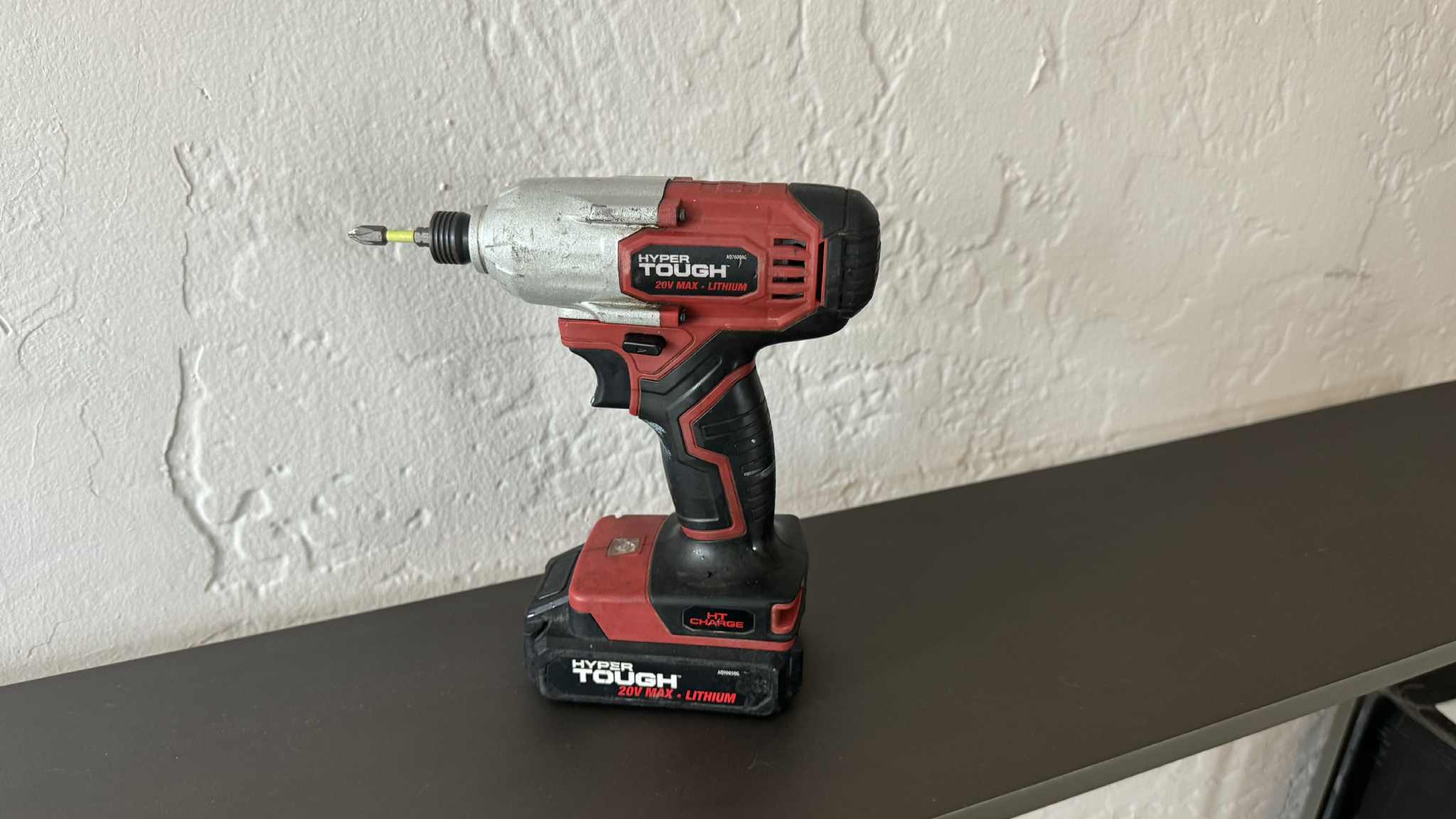
Upon using my new gift, I couldn’t help but place my forehead into my palm and sigh: My God, I wasted so, so, so much of my life using a handheld screwdriver. Spinning each thread out of whatever I was unscrewing — first the initial ones that release the tension holding the parts together, then the next thread, then the next, then the next — and doing it for probably thousands of screws over the years had been completely pointless. I probably lost days of my life just undoing screws, and all because — for whatever reason — I didn’t think to buy an impact driver.
Don’t be like young-me. Go to the store and just buy one. This shed I just put together has tons of awful reviews which said they spent days trying to erect it, almost certainly with a handheld screwdriver:
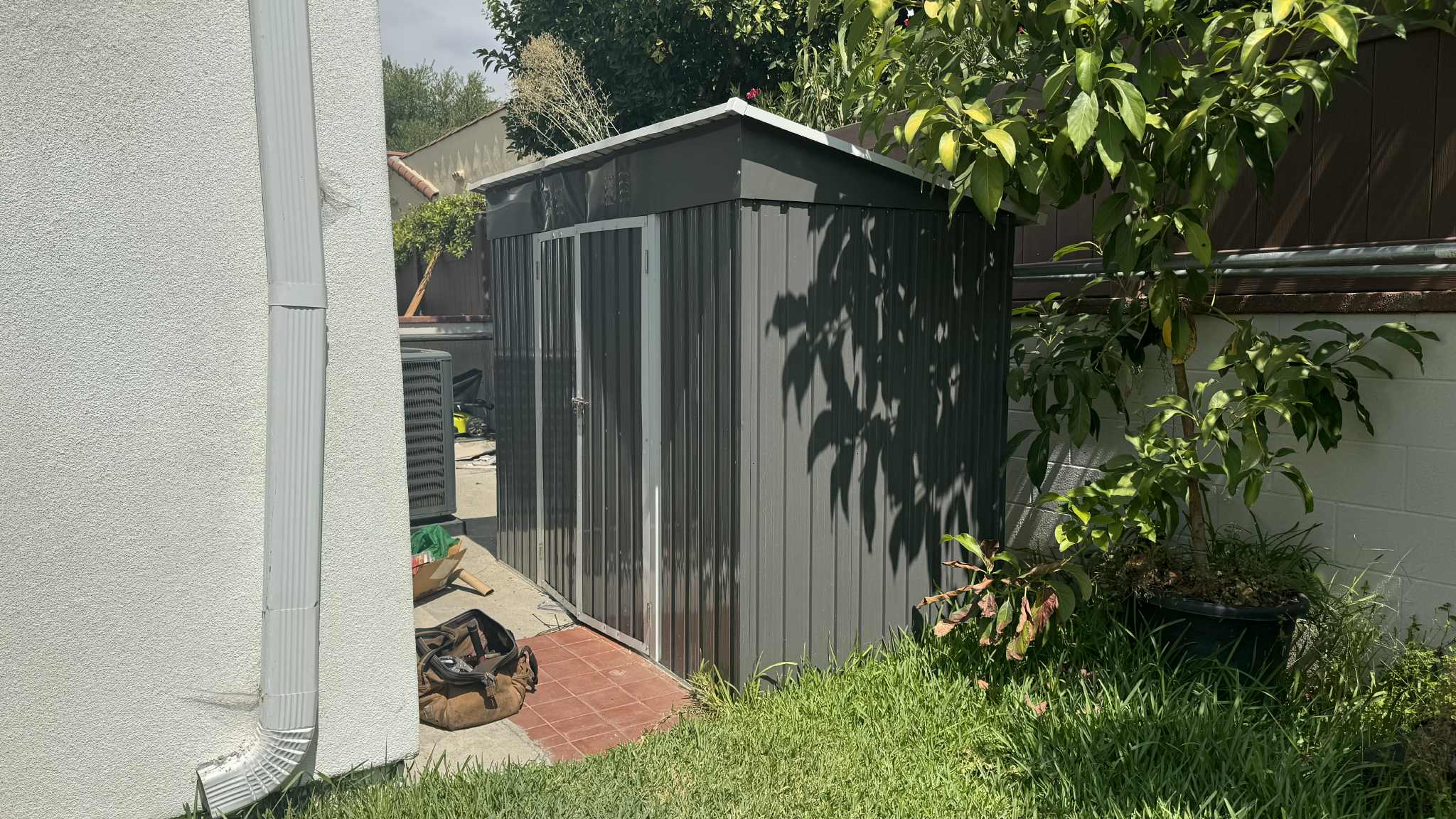
By the way, this shed is freaking incredible, and the candy-asses who paid far-too-little for such a big shed, and are complaining about how thin-gauge the metal is, need to wake up. The fact that this giant shed was flat-packed into a single box, and offers so much stiffness despite the thin gauge of steel — honestly, it’s a marvel of engineering. Somewhere in China, an engineer is reading those reviews, with a tear dribbling down their cheek, wondering what else these ungrateful customers could possibly have wanted.
I, meanwhile, with impact driver in hand, was not at all deterred by the brilliant design’s main compromise of requiring quite a bit of assembly, writing in my review:
I totally get why people gave this shed one star; it’s frustrating to build! But here’s the thing: You bought a dirt-cheap shed, not a high-quality blow-molded plastic one. In order for the manufacturer to keep the price down, they necessarily had to build a structure out of incredibly thin steel that 1. Could be flat-packed into a single box and 2. Could be configured into a shape that allows the thin material to have significant stiffness.
That’s the thing here: If you want something cheap, you have to reduce material cost, and the best way to do that is to rely on clever geometry to give thin-gage material stiffness. And so that’s what you get: Lots of really thin pieces of metal in a single box. As such, you’ve got to screw all that thin metal together into a big shed. It’s a lot of work.
But in the end, you have a shed. A decent shed for the price, actually.
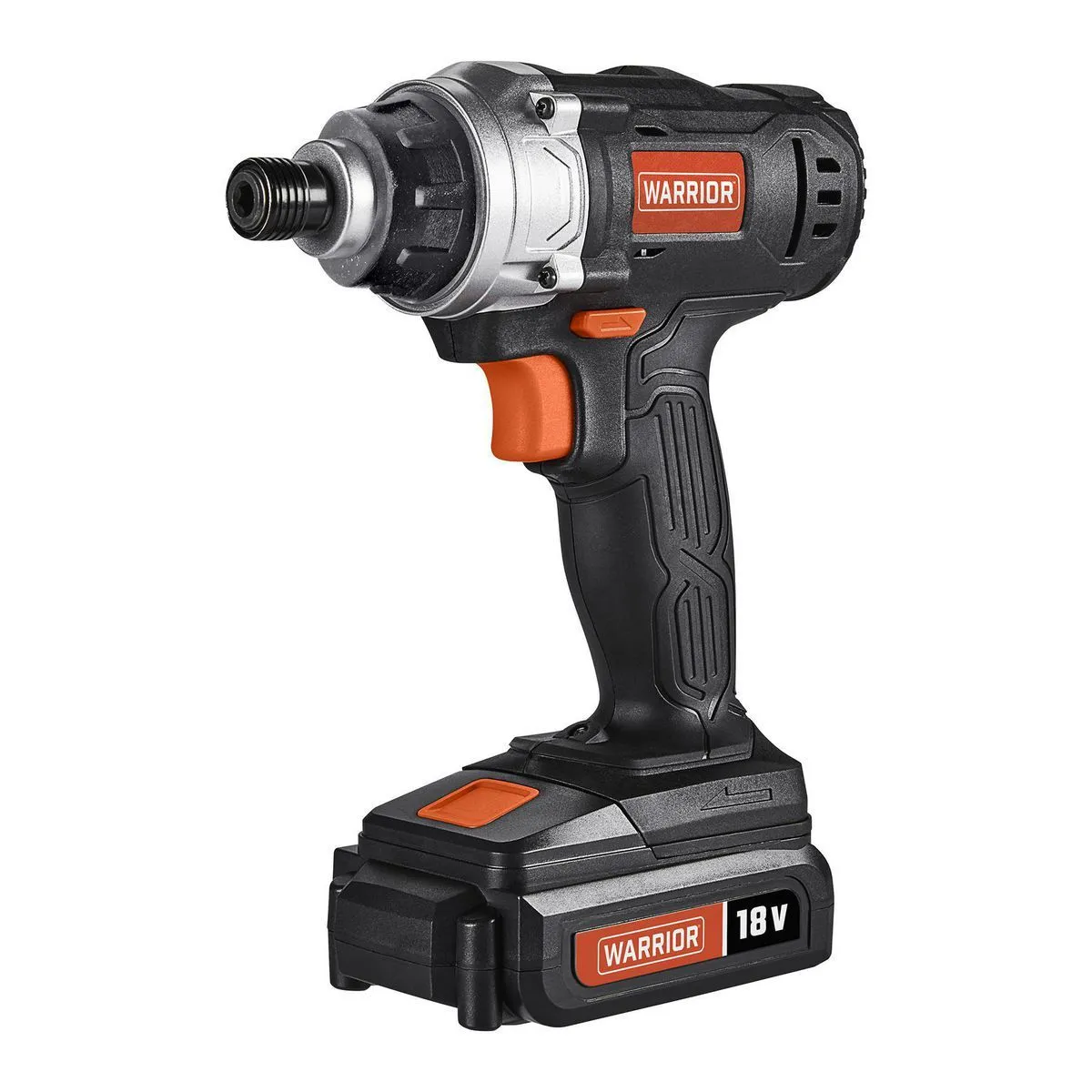
Shed reviews. The Autopian has it all! Anyway, here’s a cheap Harbor Freight impact driver for $40:
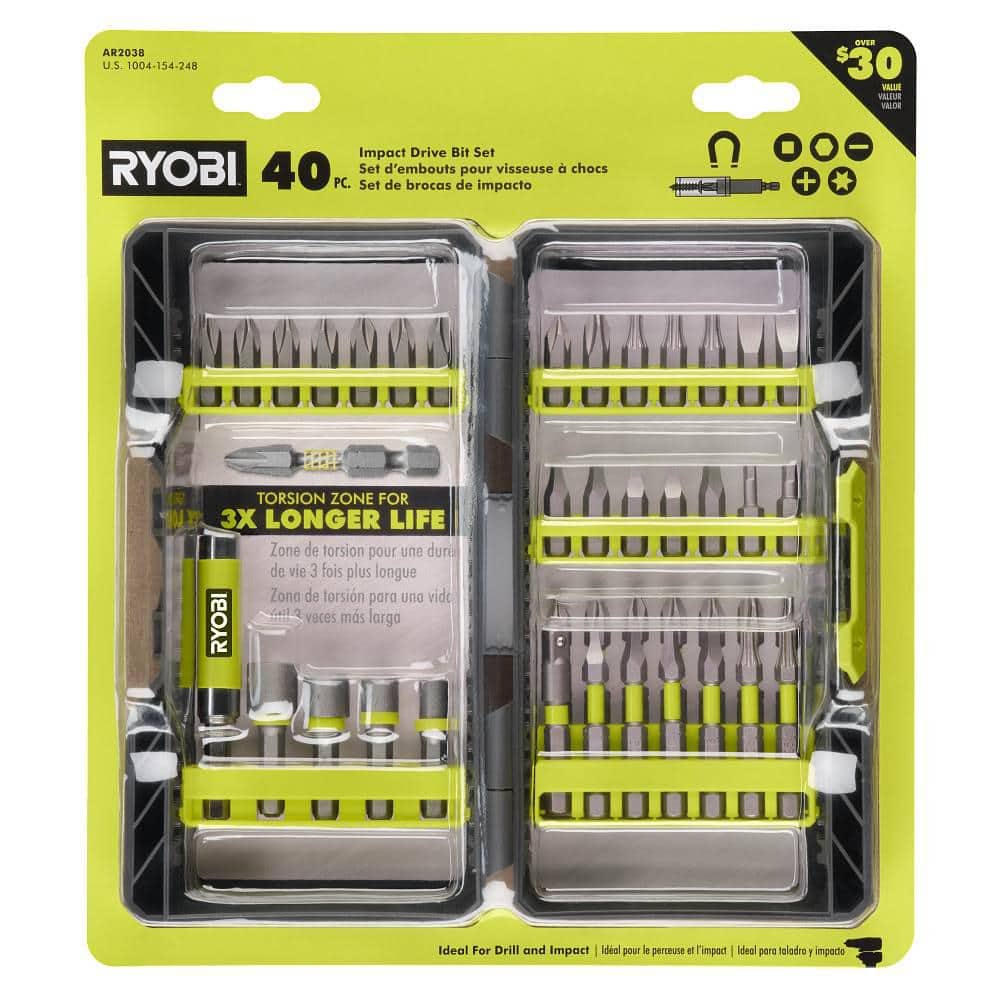
You have to get the socket bits, like this set I own from Ryobi:
And the socket adapters are clutch for low-torque 10mms bolts and such:
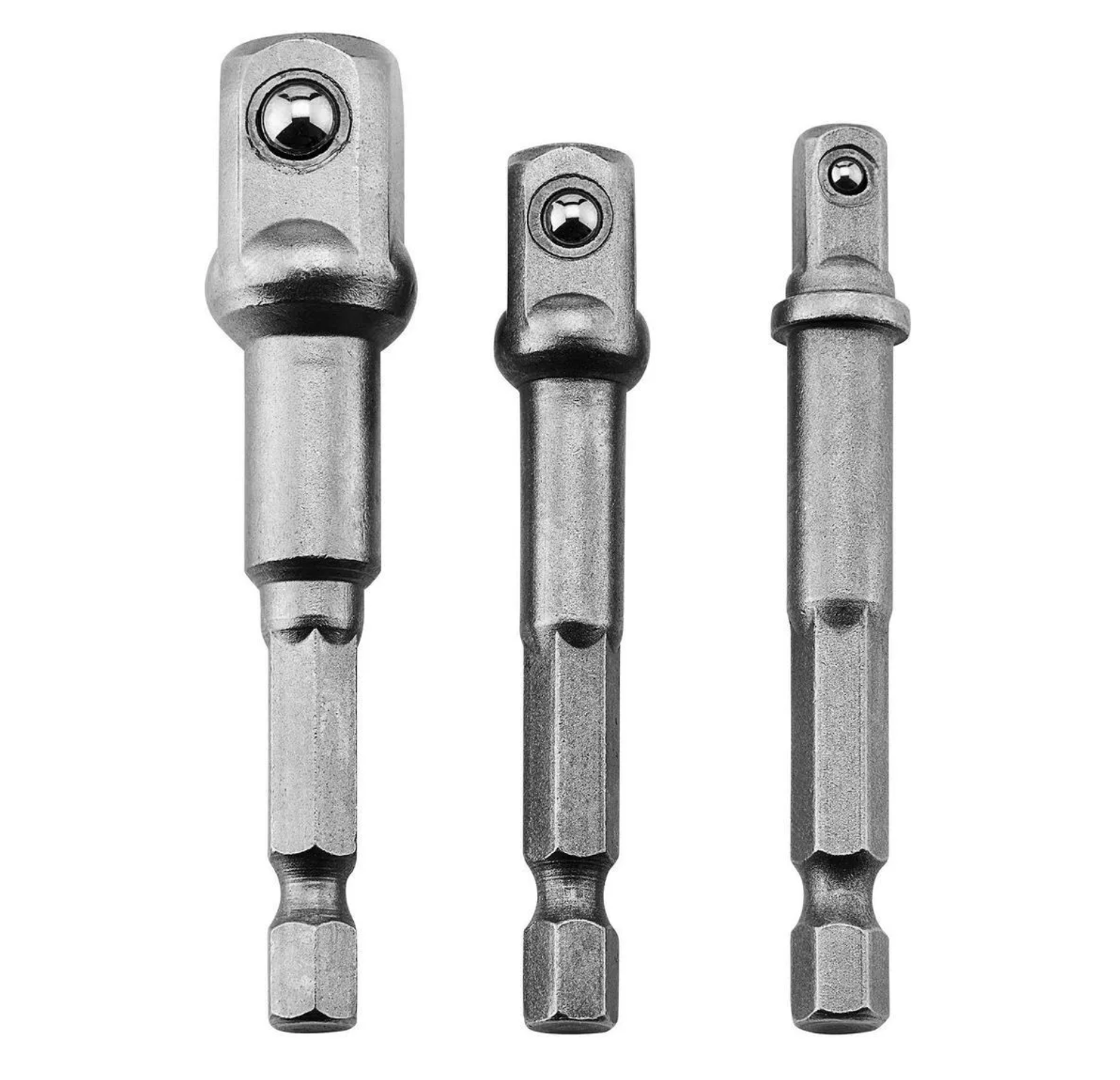
Just trust me on this one. You have other things to do other than twist a handle in a freezing cold junkyard.
Top photo: The Autopian


For a lot of stuff you just need an electric drill with a screwdriver mode. Sure, it won’t loosen the most stuck screws, but you can do that by hand. But it makes removing/inserting long screws incredibly easy…
I did exactly this for years. And would agree, if it was a matter of buying an impact or a drill, buy the drill. But if your budget allows both, the impact is great for not stripping screws. I used to go through so many philips bits stripping them due to the constant torque of the drill, once I switched to the impact I never strip them anymore. Now they both sit on my shelf, used for their appropriate applications, and with my use the impact gets used WAY more.
Hmmm. Maybe I spent more in replacement bits than the impact function would have cost. But until reading your post, I didn’t know that was a benefit.
I’m thinking, well… “I’m not changing wheels on NASCAR or F1 racing cars. What do I need that for.”
Too late for that lesson, I guess.
Never to early to learn and adjust!
…seriously though, while you likely won’t recoup the cost of bits if you buy a decent impact (unless you are a contractor at least), the frustration savings alone is worth a pretty penny as well.
Thanks for your kind words.
I can now see the frustration savings in the rear-view mirror.
It’s all ok. Life has worked out. It could have been worse. I could have used a manual screwdriver a lot longer than I did.
There’s a pleasure in using a powered screwdriver and hitting the limit of how much torque you wanted to apply.
Almost like shooting a gun at some inanimate target. It’s fun to see a can get knocked over or a hole punched in a paper target. I never hunted animals, but I loved the smell of burnt gun powder and the feel of the recoil. And the satisfaction of being accurate.
Nice.
For sure. I’m lucky enough to be able to afford both (and have a garage to use them in)…
FWIW, most of the fasteners I have to remove are on my motorcycles, and they’re all Torx, so stripping is less of an issue. But with Phillips head screws and the like, you are 100% correct that an impact is better.
I put together a storage rack last night that had about a hundred hex bolts you needed to install. I was so glad I had a power screwdriver instead of using the little L-shaped allen key they included.
The best part about the power screwdriver for something like that is it doesn’t have the power to strip the threads out of the cheap metal, and it’s a little smaller than a full impact would be.
I’ve got pretty much a full set of powered driving tools at this point: a mini screwdriver for fine work, a regular screwdriver for a lot of things, a power ratchet for places I would otherwise use a normal ratchet, an impact for when I get serious, and a newer impact for when I need to work on lug nuts or something like that.
Is that overkill? Maybe, but sometimes having the right tool makes your life soooo much easier.
I’ve put my share of IKEA (and Wayfair) stuff together that the cordless screwdriver made so much easier. Like two houses worth. One or two less days wasted out of my life. Lol.
One thing I learned with impact drivers is to buy wood screws with Torx heads and not Philips. The Torx driver almost never cams out even when driven at an angle and the heads don’t strip out like every single Philips screw will.
You’re not wrong.
M12 Fuel is the way to go on this stuff, IMO. Get the drill+driver combo on sale. Supplement with the M12 Fuel stubby impact wrench (mine is 3/8″ drive).
Surprisingly strong with the small size and easy handling of 12V tools.
Drivers are great for driving screws, but the M12 stubby impact wrench can break loose most fasteners, not just spin them out.
I always used the bigger 18-20v impact driver when working on cars/motorcycles but I recently bought the M12 1/4″ Screwdriver and I use it way more than the bigger impact now. It has a built in clutch so you don’t have to worry about over tightening. If you set it to 12 it’s equal to 10NM of torque, which is what most M6 bolts call for. The M12 stubby impact driver is on my Christmas list.
I can’t drive this home enough. If you go the Milwaukee route, there’s almost no reason to go for the M18. The M12 is cheaper, lighter, and does everything one asks of it.
I’ve used the Dewalts compact impacts and those are rad too. The benefit of those is that they all operate on the same 20v battery architecture.
I absolutely love my M12 drill and driver set! I can’t imagine life without them!
OK, OK – but more importantly, WHERE CAN I BUY THIS MAGNIFICENT SHED?
Amazon/AliExpress. I bought a similar one just recently as well. There are tons of sizes and options. Will echo DT’s assessment. Comes dirt cheap, flat packed and assembled in a couple hours. 10/10 would recommend.
(Also would vouch that without an impact it would be a massive pain to put together)
I have a smaller version of that shed, probably all made in the same factory. I can fit 2 folding bikes, a stroller, and a stroller wagon with room to spare. It held up against 80-90mph winds during the January Eaton Fire, not sure what more people expect from something that costs the same as an Uber Eats meal for 2.
I would suggest to the person who now has 10 years of work under their belt, and can afford a bit more than Harbor Freight… The Home Depot package deals at Christmas for the Milwaukee sets are a steal. Well worth the $300-500 you spend, and you get even better quality than what you get at HF. Not knocking HF, I used my HF tools for 10 years before I finally splurged, and I will never go back.
Just got a 3/8” impact not too long ago. What’s the consensus on removing fasteners, breaker bar first or let the impact rip?
Impact all the way. The impact uses a combination of hammering and twisting resulting in less strain on the threads vs the pure torque of the breaker bar. I’m sure somebody is going to hop in with a better explanation using bigger words, but go to any mechanic’s shop anywhere and just watch them. Everyone has an impact wrench.
I have a couple impact drivers that came bundled in a set, and occasionally use them for smaller things. OMG David, you are just getting an impact driver? Do you even have an impact wrench, bro? The amount of time I spent breaking bolts and soaking things in Kroil before getting one had me autocorrecting this whole article…
I am learning a lot, a little too late, from this thread.
What you said makes total sense to me, but it’s been a long time since I have had to get reluctant bolts/nuts to let go, so, I’m not that upset. And now, I am too tired and just pay someone else to do it.
And my son, who I trained how to change a spare to replace a flat, rotate tires and do oil and filter changes makes so much money, he’s not going to get his hands dirty.
He’s never even had a flat tire in 16 years. The worst for me was my wife’s X5 with run-flat tires getting a particularly fatal wound and we had to flat-bed it back to a dealership, on a Sunday, and it totally messed up our day. Quarter-inch conduit drained the air but still stuck out more than an inch out beyond the tread tearing up the left rear inner fender.
I used the pliers in emergency tool kit to try to pull the conduit out and see if we could limp back home, but the conduit did an 80-degree bend inside the wheel and was not coming out. To add insult to injury, it also took out the TPS sensor.
We replaced the X5 with an Acura MDX, which was nicer to drive and came with a spare tire and a space big enough for a real spare tire.
My first taste was an impact gun. I went with the Menards house brand, Masterforce (since I’m there ALL THE TIME anyway). I couldn’t believe I’d gone years without it. Bought a cordless drill/impact driver combo, and a reciprocating saw, etc., etc. All using the same batteries. Most recently a cordless string trimmer for the yard. They are competitively priced, readily available, and I haven’t had ANY issues with them.
Buddy, not only am I proud to be the one who gave you that impact driver, but I’m also amazed that it’s still alive after seeing so many of your tools left out in the elements in your Michigan driveway. Glad to see it made the move to CA and is still kickin. Hyper Tough is a surprisingly good brand of power tools. Their 12v 3/8″ ratchets are my latest game changer.
Yes, an impact driver makes life worthwhile. It’s not just for lug nuts and Michigan rust-welded suspension parts.
But I really came here to praise those paper thin sheet metal sheds that come in packaging that would make Ikea jealous and take 3 days to pit together. Ours is going into the third winter having survived not only 2 winters but the NoMi ice storm that striped trees, destroyed the grid and even took our internet. If they can survive that, they can survive anything.
The 1/4 inch and 3/8 inch socket adapters for my cordless drill are some of my favorite tools.
I love flat pack furniture. I love the engineering that goes into designing something that a regular person can assemble in a few minutes to a few hours. I love how every cubic millimeter of the packaging holds something important. I love how the item can survive a trip around the world in a shipping container be dropped off by the Amazon driver still in perfect condition. I love a set of clearly defined instructions with a predictable outcome.
As I was assembling my children’s bunk beds, I so wished I could find the team of underpaid engineers in communist China who designed it and tell them, I appreciate you!
Now get a real one that can zip off heavy bolts, it will save your life when assembling the Jeep! They still need to be torqued after but a real dakka dakka is a life saver for driveway wrenching. I like the Ryobi because I have a bunch of their tools and batteries already.
He’s talking impact driver, not impact wrench. The kind that usually comes in a starter kit with a drill and two crappy batteries. Surely David hasn’t gone through his rust-colored life without an impact wrench!
Hear me out, my impact driver stays in the house for housework, my impact wrench (it feels weird calling something that looks like a drill a wrench, but whatever) lives in the garage and is always used on my cars.
I did use one of my drivers on a car subwoofer install I helped out with though, so I guess there’s that. I don’t really have a point, I just want to talk to people.
It’s cool. I get lonely sometimes, too.
They work basically the same way, but the impact wrench is a lot more powerful (usually) and the tool attachment is different. Impact wrench uses sockets, impact driver uses bits. I also keep my driver in the house for screws and stuff. The impact wrench is in the garage for wheel changes and for snapping rusty bolts in half. That’s when I go back in the house to get my drill and have a good cry.
DT was building a Chinese shed held together by sheet metal screws, so I believe the impact driver is the right call here. Works great for that. My impact wrench would probably drive the screw right through the sheet metal and into next Tuesday.
Do you know the difference between an impact driver/drill and a hammer drill?
Echoing this. An impact driver and impact wrench have very different use cases and you probably need both if you work on your car enough.
This is a surprising article. I figure a wrencher would have an impact. I guess it goes to show you that with a little determination and no money any tool can get the job done.
I agree; having an impact has been a game changer. When working on cars, there aren’t all that many small screws, unless I’m doing interior work. A regular drill works fine for that.
The real time savings is with an impact that can zip off 22mm bolts with 2” of thread.
I was recommissioning a trailer we were “gifted” at work, and it needed new tires. After 20 minutes of trying to get the lug nuts off with a lug wrench, I gave up, drove an hour into town, and bought an impact gun.
I’ll only ever use it for that task (listen, launching boats into saltwater always equals rusty lug nuts), and it’ll save us sooooo much time.
FLEX has lifetime warranty on tools and batteries. I finally picked up a 3/8″ impact a year or two ago after decades of not having one or occasionally borrowing an air powered one. It’s been a god send.
Ridgid does as well, including for factory blemished tools and batteries you can buy at their outlet stores.
I think Ridgid is just batteries.
Tools and batteries are covered as long as you register them although I have never had to make use of the warranty on the few Ridgid tools I own.
I’ve never been able to successfully register a Ridgid tool for the warranty. The last time I tried, they made it very difficult with a website that just flat out didn’t work for multiple reasons. I have a feeling that was intentional. I stopped buying Ridgid after that.
The three best power tools I have in my toolbox are:
-My electric impact ratchet (12V FUEL)
-My 1/2″ electric impact gun (18V FUEL)
-My electric screwdriver (12V non-fuel)
I have TONS of other tools, pneumatic or electric. But I place these above all else, even my power drill.
The ratchet and screwdriver alone have saved 20 years of wear on my wrists.
I tell everyone entering the trade now to skip air and go electric on everything you can.
I felt the same way after I bought my milwaukee electric ratchet. It’s like a cheat code for working on stuff
I have one but am always too timid to use it. Once the fastener bites and the tool becomes a giant knuckle busting lever one too many times it become less fun.
I was going to say this is the greatest ‘new’ tool to come out that has saved me time. I can’t count how much time I wasted over the years slowly working a ratchet on a bolt/nut that;s way too long and is just tight enough that you can spin it quickly. Now I zip them right on or off. I like the 3/8″ one so much that I quickly got a 1/4″ one.
Side note, even though I’ve had air tools for quite some time, air ratchets were always a pain to use – the air hose was a pain, and the power always seemed weak.
I got a super compact 12V impact driver a while back and it’s been a godsend a couple times.
The other tool that I absolutely love is my 1/2″ impact wrench. 800 ft-lbf of loosening torque, and I believe it. Retired my trusty Ingersoll Rand air gun immediately. Game changer for literally every big tight bolt or nut on a car, nothing gets in its way, I feel like a NASCAR pit crew guy putting my winter tires on.
Impact drivers are a game changer in just about everything. Old guys were trying to use drills and oh man can that be problematic and a test of patience.
On the other hand if you find yourself in new construction those guys have the impact driver bug they will use it on absolutely everything possible. Door falls off sure guy used impact and now you have to use your special screws to reatach it. Go to fix a lock or door knob no threads and screw might be a bit stripped because impact. Go to change a light find the box is stripped out because impact. Like the the ford 5.4s you can take the spark plugs out with an impact but the old boys mistake is putting them back in with an impact.
Those hyper toughs are way under rated and on most I’m not sure all you can use the northern tools house brand of battery on them they like the bigger 4 or 5 ah batteries.
When I was 9, we bought my dad a cordless screwdriver for Father’s Day. His first comment: “None of my screwdrivers have cords. ” We miss you Dad!
Not only was my life changed by buying an impact driver (truly eye opening) but I bought the exact same one. I use it constantly, have a stack of batteries, and have only replaced it 1 time when a wire came loose from the motor and I didn’t have time to horse around with repairing jt
So what’s the difference between an impact driver and an electric drill or electric screwdriver?
An impact driver is the one you usually see that has the 1/4″ hex for putting bits into. It’s got a bit of a hammering/impacting action, and is primarily designed for driving screws into wood, but can also be adapted to tighten bolts, though that’s not its primary purpose.
A drill is typically the kind with a chuck you can tighten to clamp onto drill bits, and is primarily used for drilling holes. It doesn’t generally have that kind of impacting action (though there are hammer drills/modes for drilling into concrete. I’m not sure how different that is from an impact driver action), and often has a multi-speed gearbox and an adjustable friction clutch. The clutch is mostly used if you use screwdriver bits on the drill, and allows you to set the point where the clutch slips, to help you avoid overtightening screws.
An electric screwdriver is a fair bit less common than the previous two, but is sort of a combination of the two. They’ll usually have the 1/4″ hex bit output, like an impact, but they don’t have any actual impacting functionality, because that could strip screws. Like a drill, it would likely have a friction clutch to allow you to set the tightness of your screws.
Does that make sense? And to other commenters, did I get that right?
Right-o. I use an electric screwdriver a fair amount at work (high-precision robots with lots of small parts). I used to detest electric screwdrivers because they seemed like the worst of all worlds, but my perspective has evolved and I now use an electric screwdriver whenever possible. The clutch is light enough that it’s unlikely to break anything on the robot, and it’s just a million times easier than spinning screws by hand.
Great explanation- only thing I’ll add is that a hammer drill has an axial hammering action instead of the radial action of an impact driver. In other words, the hammer drill is “hammering” the drill bit into the workpiece while the impact is using a hammering action to rotate the fastener.
Ah, ok! I guess I knew that was the case for really big hammer drills, but I didn’t expect normal-size drills with a hammer mode to do the same thing! Good to know!
The motor spins a “hammer” you can think of as a 3-4 bladed propeller viewed head on that uses a spring to press it against an “anvil” which is just a disk with 3-4 square teeth sticking up and is designed so that when some resistance is felt it both pushes the bit into the screw a tiny bit to prevent you from stripping it and the hammer goes up and over the anvil a partial rotation picking up speed and striking it again forcing the screw to keep turning until a certain resistance is met. If you’re working with wood, the difference between this and a drill is like comparing an 19th century bicycle to a motorcycle. An impact wrench works almost the same way except the hammer is almost always 2 lobed, the hammer and anvil are 5-10X heavier, and the springs are also considerably stronger. When they hit there is a very sudden shock, but they’re designed so the hammer swings much further back despite the much stiffer spring so it can build up enough speed between hitting the anvil again, sometimes doing 2 full rotations.
The first is a cheat code for getting stuff done in 1/4 the time while putting in 1/4 the work, and the latter is for when you feel like if you can’t get this suspension or crankshaft bolt out you’re truly F’d.
I keep my 12v Makita drill/impact with the “house” tools in my room. Picked it up during a Labor Day sale at Home Depot about ten years ago. It’s the first thing I pick up. If that isn’t enough (and that impact sure is torquey for only a 12v), I grab the 20v Porter-Cable I got during another Labor Day sale. That one migrates between the garage and house as needed. And then there’s the impact wrench that stays in the car and is used primarily for backing wheel/brake/suspension nuts and bolts out.
I’m also a fan of cordless ratchets. Use it like a normal ratchet to break things loose/properly torque them, and just hold the trigger to do most of the work. They’re great for places you can’t get an impact into. They can’t completely replace a standard ratchet due to size, but they can do a hell of a lot.
Other than my Milwaukee electric ratchets, I have all Bosch 12V stuff with the lighter/older stuff in my house, and the heaver/newer stuff in my shop, plus an 18V Bosch impact driver.
Thank you for singing the praises of the impact! I also had to do a lot by hand and with a ratchet, though probably less than if I had a rusty, self-disassembling Jeep. When my dad got an impact wrench it rapidly became my impact, and I’ll hand it back when it falls out of my hand, likely from a car falling off a jack and giving me the good old Flat Stanley treatment.
When reassembling to a torque spec I’ll use a ratchet first, but if it’s coming off, it’s getting zapped off. I have a buddy that insists on undoing everything by hand and it’s like watching a pitch drop experiment after I’ve finished my side of the car.