

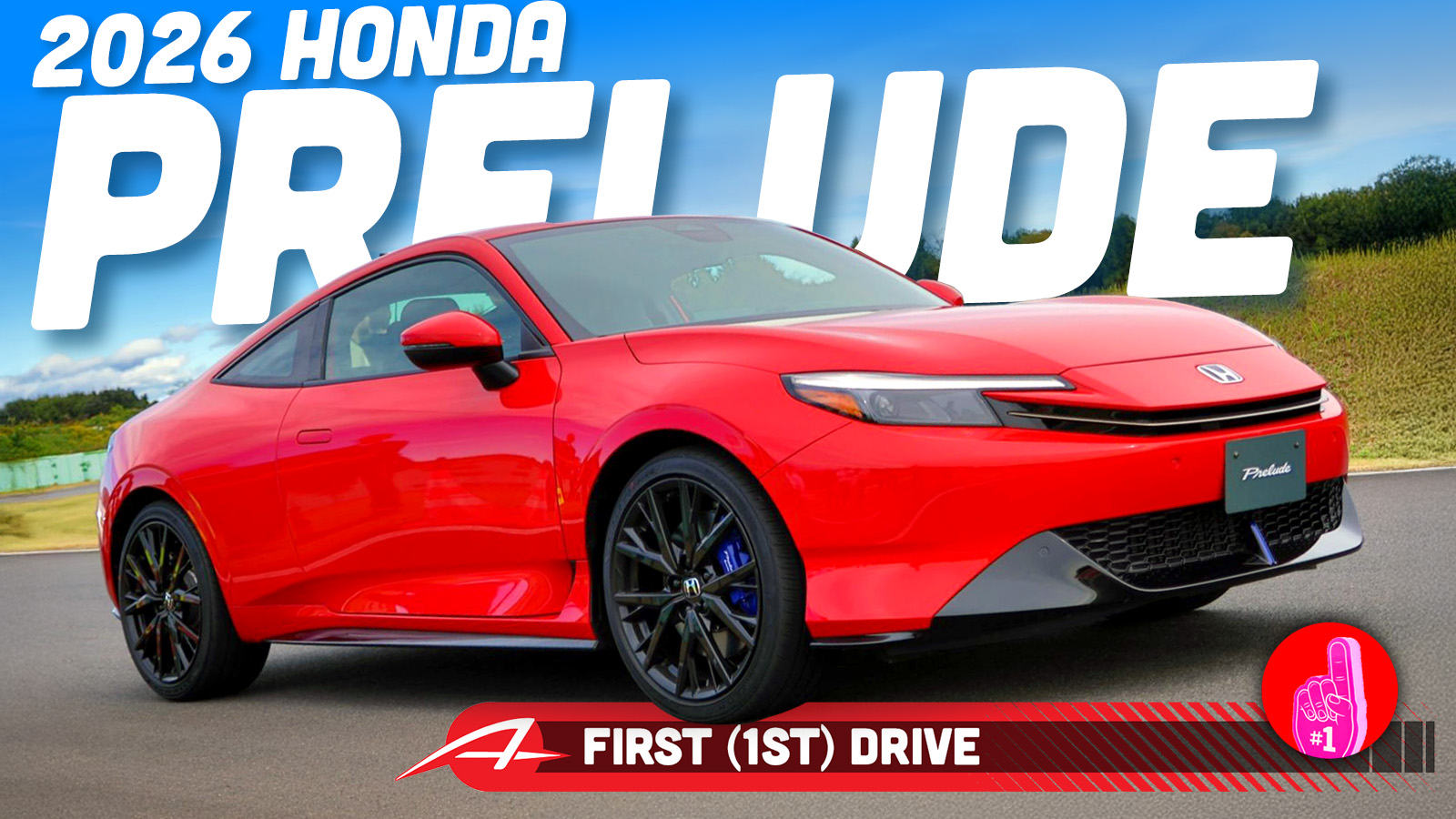
At the 2023 Japan Mobility Show (JMS), Honda dropped a major surprise on the world. Sitting there on the stand was a compact, white coupe, and it had a badge we hadn’t seen in more than two decades – Prelude! Details were scarce at first on what the automaker was calling a concept, but when it showed up at the LA Auto Show a few weeks later, Honda confirmed it was a hybrid.
Then, in 2024, Honda confirmed that yes indeed, it would be produced. Japanese customers started taking delivery in September 2025, and the first examples for American customers are due on November 18. In the days following the 2025 JMS, Honda took us to its Tochigi proving ground in Japan for a first taste.


It’s 2025, so of course that means some people were disgruntled when they heard the 2026, sixth-generation Prelude was going to be a hybrid. But let me just say – Get Over Yourself! Going back to the five previous generations of Prelude from 1978 to 2001, this was never a hardcore sports car.
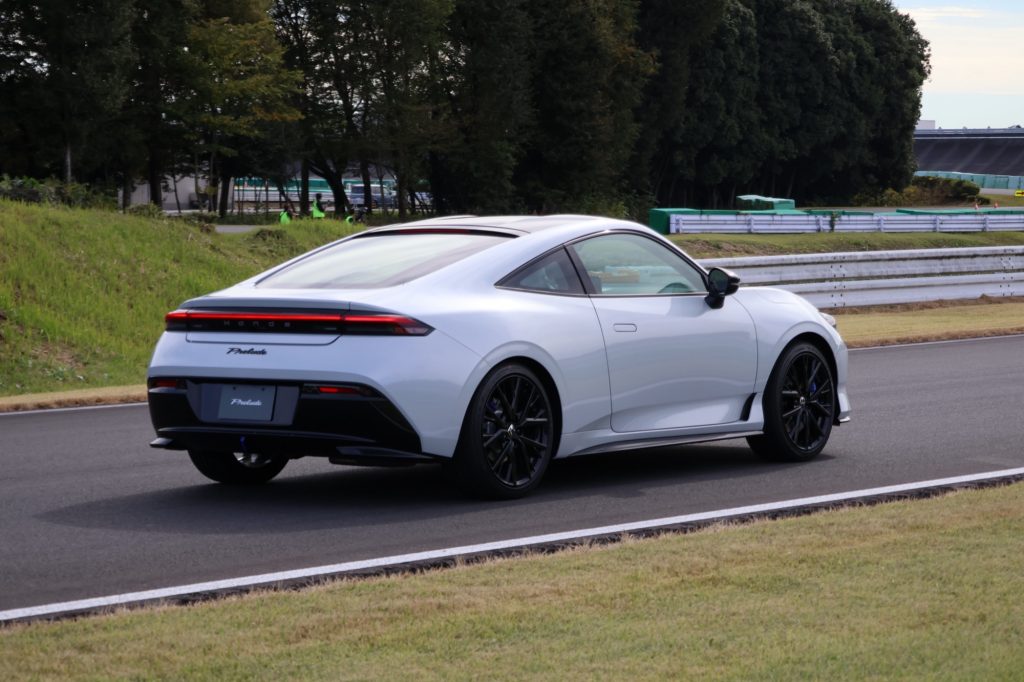
It was a sporty coupe that added a splash of two-door style and sometimes some interesting technology to underpinnings that were shared with more mainstream Honda products, generally variations of the contemporary Accord.
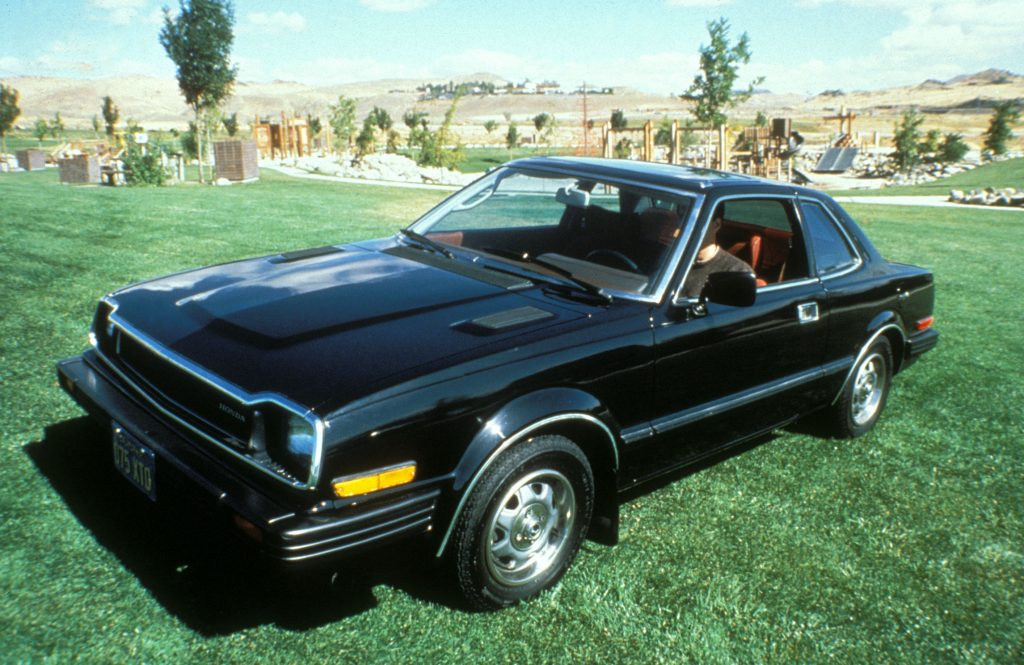
Speaking of technology, all Preludes have had four-cylinder engines, with the first generation model having a CVCC engine based on the Civic, while the fourth-generation in 1991 got one of the first VTEC engines. The third generation introduced a novel mechanical four-wheel steering system.

For those who whine about the lack of pop-up headlamps, the majority of vintage Preludes never had them either. Only the second and third generations hid their lamps when not in use, all of the others had fixed units so the new car is in good company.
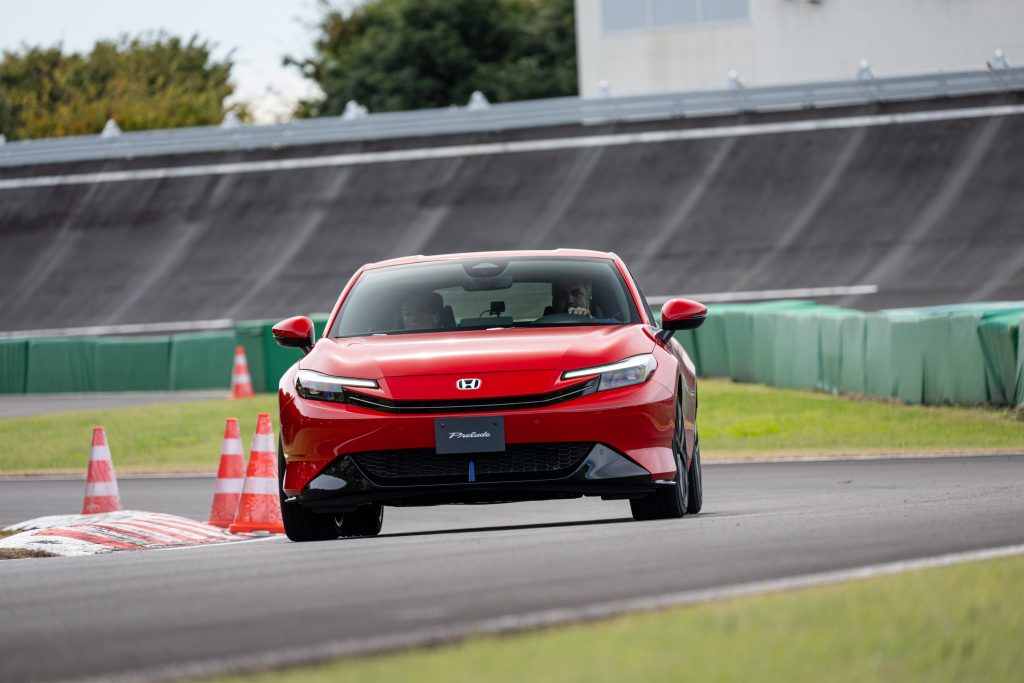
Given the steady growth of pretty much all cars from one generation to the next, it makes perfect sense that the Prelude would shift from the now large Accord underpinnings to the Civic. Even the Civic has grown substantially over the past several decades, with the current hatchback measuring 179 inches long over a 107.7-inch wheelbase. The Prelude loses about half an inch of length and 5.1 inches of wheelbase. The top of the roof is 2.3 inches lower than the Civic, while the Prelude is also 3.1 inches wider.
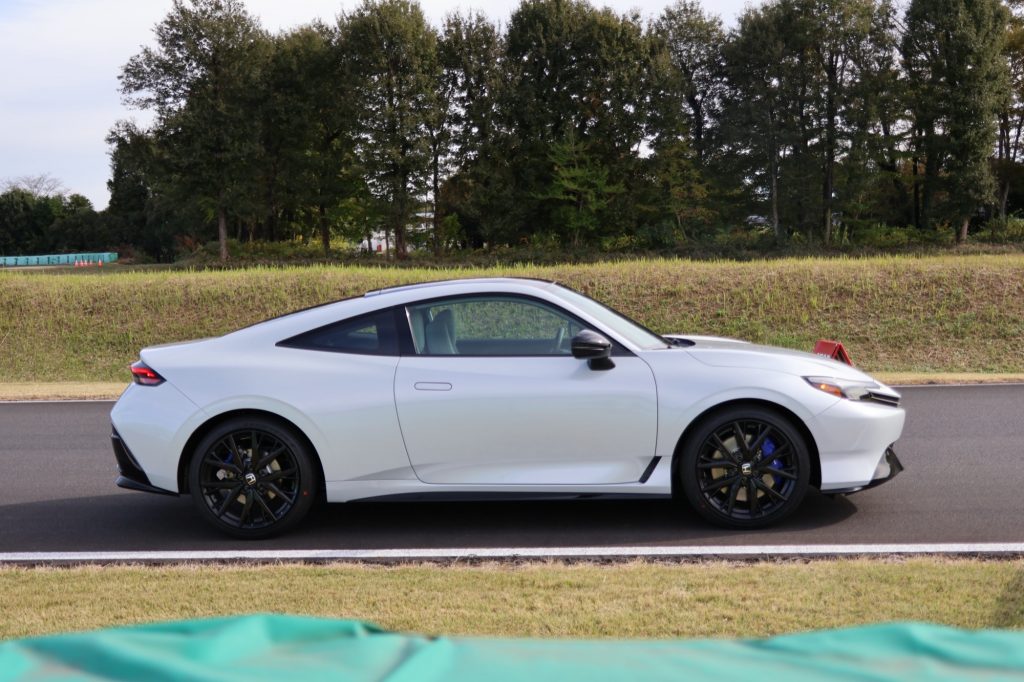
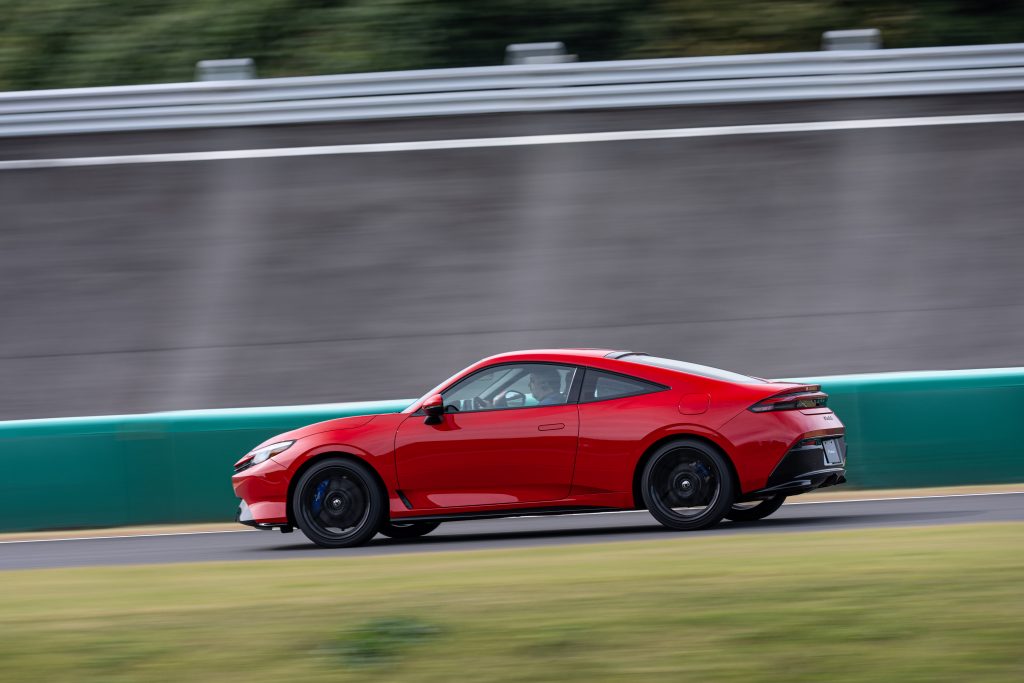
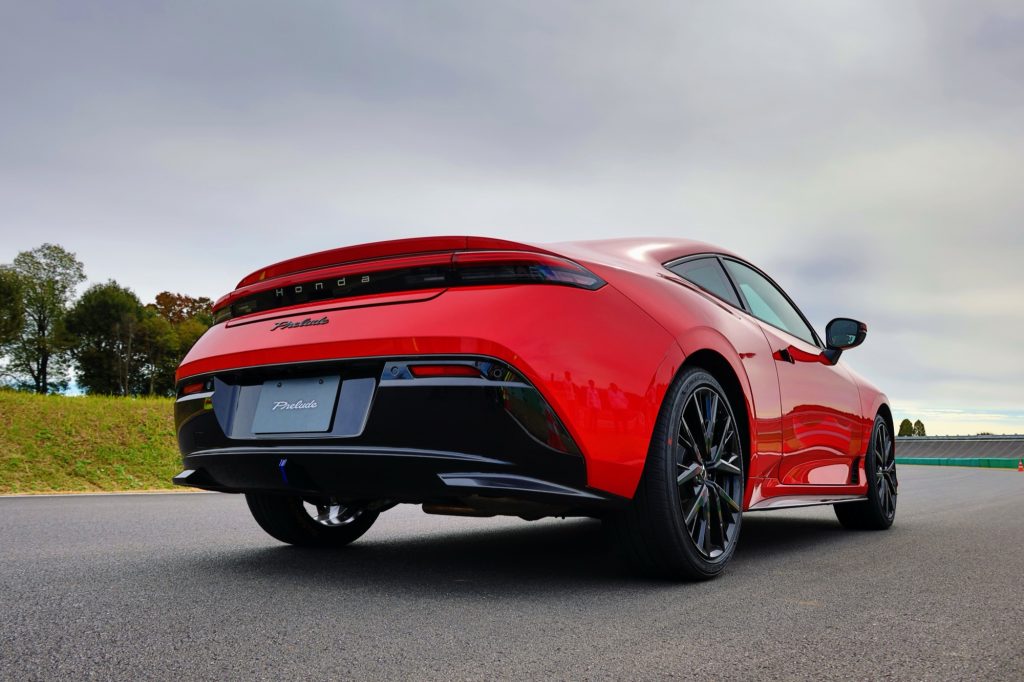
Altogether, this gives the Prelude a notably different stance than the now-discontinued coupe version of the last-generation Civic relative to its sedan and hatchback siblings. With its sharper nose and fastback roofline, the styling is also markedly different from a Civic.

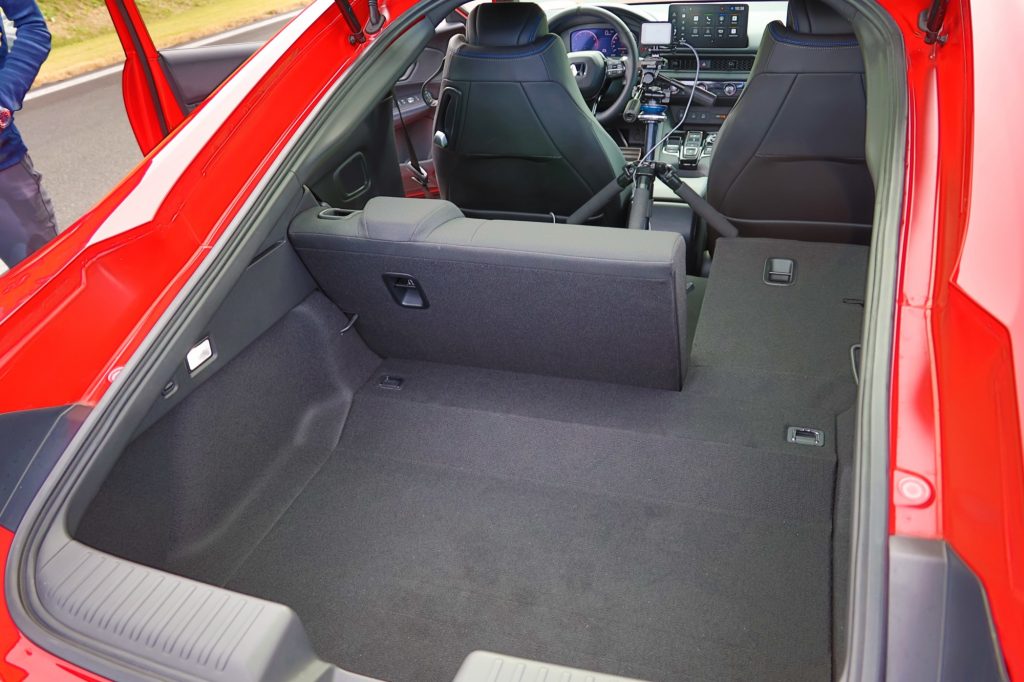
Another important differentiator from the last Civic coupe is cargo access, with the Prelude getting a hatchback instead of a trunk. This is helpful since the Prelude only has 15.1-cubic feet of cargo volume behind the rear seats. But that lost wheelbase, roof height, and the profile mean that the Prelude rear seat is really only of any value for children or those under about 5-foot-5-inches (if that!). This is very much a 2+2. But since most Prelude owners will probably just be using the front seats most of the time, leaving the rears folded down combines with the large hatch opening to provide some serious utility when trolling estate sales.
Anyone who has spent time in the current-generation Civic will feel right at home in the Prelude. Apart from the steering wheel and shifter buttons, almost every other visible surface of the cockpit is unique, and yet there is a familiarity that comes from sharing the identical mounting points and almost certainly the same wiring harness. The vents and buttons are all in the same place, and yes, the vents are fully manually controlled with a little joystick in the center of each one to direct the air flow.
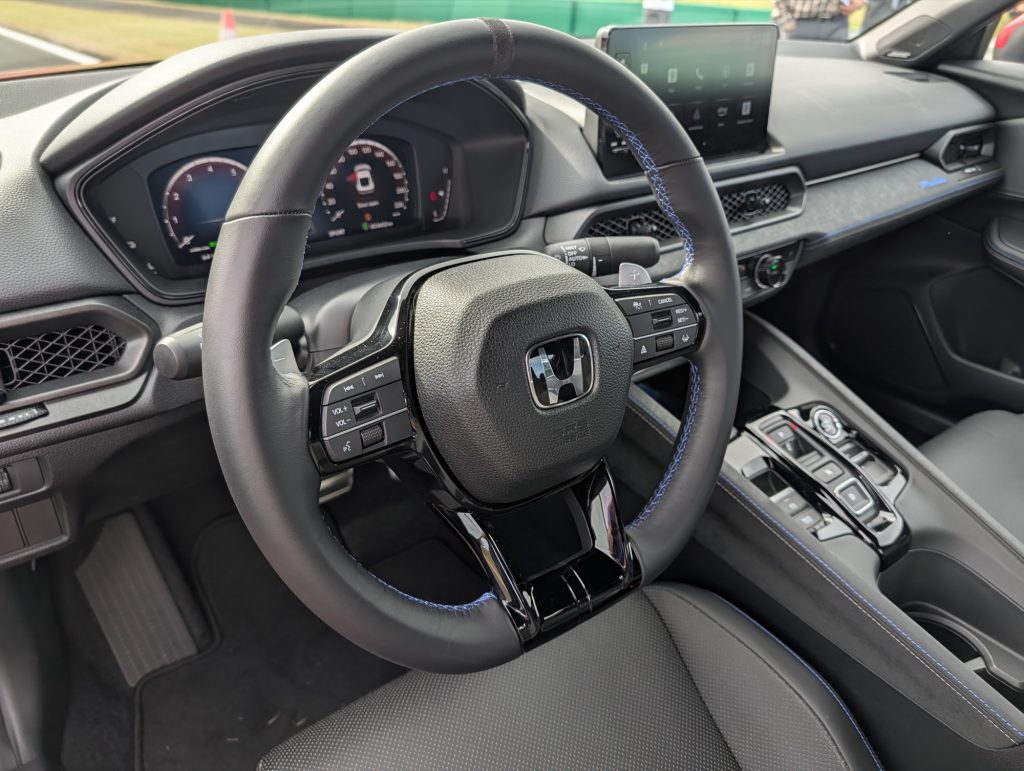
The 10.2-inch digital instrument cluster is the same, as is the 9-inch touchscreen infotainment display used in the Touring trims of the Civic. The infotainment software is the same Android Automotive setup with Google Built-in services that you’ll find in other current Honda models.
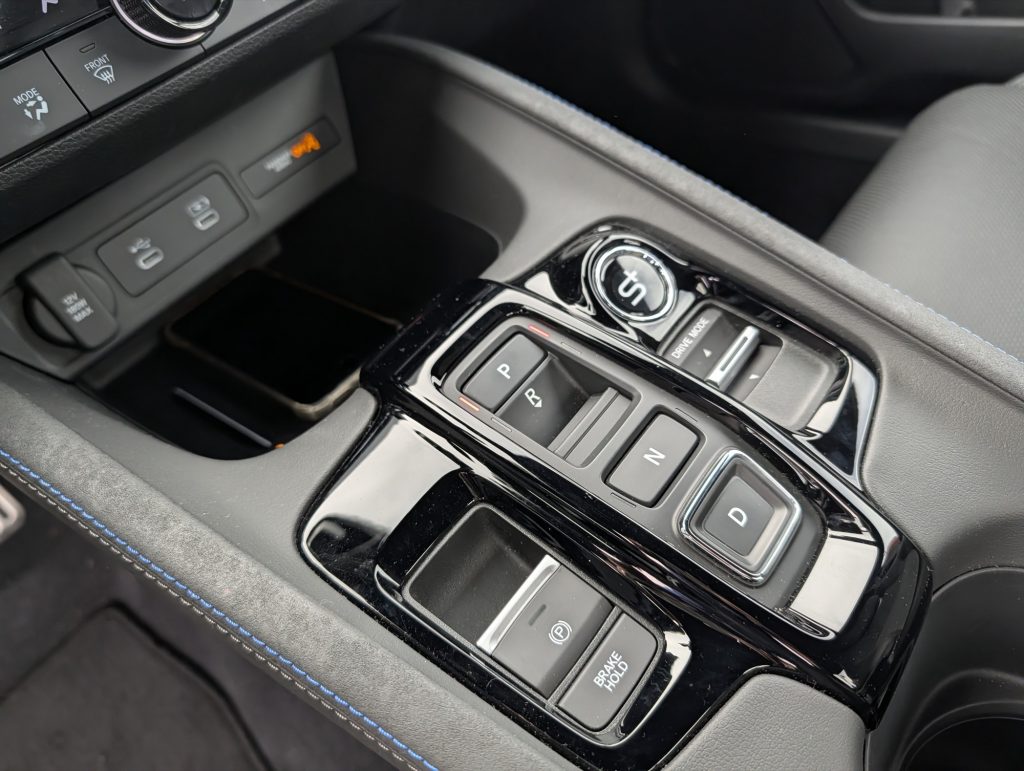
One element you won’t find in any current Civic is the S+ button to the right of the shifter on the console, but I’ll come back to that in a bit.
Same ingredients, different dish
Under the hood of the Prelude is the same two-motor hybrid drive unit paired with a 2.0-liter, naturally aspirated, Atkinson cycle four-cylinder that you’ll find in a Civic, Accord, or CR-V. On paper it doesn’t seem fundamentally different from what you’ll find powering any current transverse engine Toyota. The engine can produce 141-hp and 134 lb-ft of torque, which is similar to what you’ll get in most engines of this specification. The primary electric motor cranks out 181-hp and 232 lb-ft of torque.
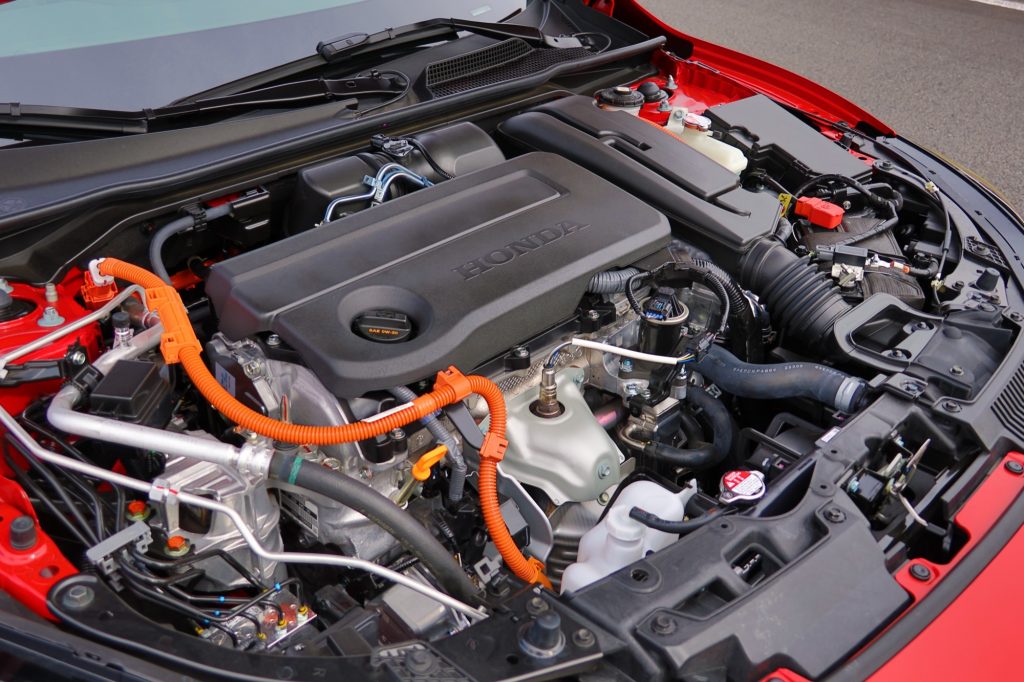
The combined system output is 200-hp. The 2.0-liter hybrid arrangement in a Prius has 194-hp but only gets 111-hp of electric propulsion. This different blend, along with a different control philosophy and the Honda engine, gives Honda’s hybrid system a fundamentally different character from a Toyota.
Toyota engines are objectively excellent – they are reliable and efficient, and with proper maintenance will generally run almost forever. But they are, to say the least, agricultural-sounding. Normally, this wouldn’t be the worst thing in the world. But step on the accelerator pedal of any front-wheel drive Toyota hybrid and the engine revs up to the 4,000 rpm torque peak and sits there while the e-CVT adjusts its ratio until the car catches up. It is to put it bluntly, not a very pleasant experience, efficient yes, but annoying.
Honda starts from a place of much more refined-sounding engines and then uses them very cleverly thanks to some thoughtful software control and differences in how the hybrid drive works. To begin with, the substantially higher power and torque of the Honda electric drive allow it to become the primary source of thrust most of the time.
How the Honda 2-Motor Hybrid Works
Both the Toyota and Honda hybrids are series/parallel drives, but the Honda seems to spend more of its time in series mode, where the engine is driving the secondary motor/generator unit to provide electricity to the primary and battery. Thus, it’s generally not working as hard.
This also enables Honda to control the engine largely independently of the tractive effort that the primary motor/generator is applying to the wheels. Thus, the system is operating effectively as a range-extended EV with all of the benefits that come from electric drive.
Let’s step back and take a more specific look at how the Honda hybrid drive works. The overall architecture is a bit different than other hybrids, although it contains elements of what we’ve seen before. At its core, there are two motor/generator units (MGU), the Atkinson cycle engine, battery, clutch, and the final drive gearing. Both MGUs are connected to the battery, with one acting just as a generator while the other serves as a traction motor to propel the vehicle.
The engine is connected to the generator and also to the clutch. The traction motor and the clutch are connected to the final drive. There are three main modes: EV, Hybrid, and Engine driving. In EV mode, the clutch is open and the engine is off with the traction motor driving the vehicle. During braking, the traction motor also acts as a generator for regenerative braking.

As the battery charge is depleted, the engine starts and drives the generator only with the clutch open. In this hybrid mode, the system basically works like Nissan’s e-Power system, a purely series hybrid where the engine runs to charge the battery, but the car is still just driven electrically with no engine torque being fed to the wheels. The Chevrolet Volt also worked in a similar fashion, although it had a much larger battery that provided 35 to 50 miles of electric range.
The downside of a series hybrid system is that there are conversion losses in going from mechanical torque to electrical energy for the battery and then back the other way through the traction motor. At lower speeds and variable loads, such as stopping and accelerating, the inherent inefficiencies of an internal combustion engine are still outweighed by these losses, so there is a net benefit. At higher speeds and load conditions, such as driving on the highway, it reverses, and it actually becomes more efficient for the engine to drive the wheels. This is when the clutch closes and sends power directly from the engine to the final drive and the traction motor mostly stops powering the vehicle, although it still recovers energy during deceleration.
To summarize, the engine is mostly decoupled from the wheels when driving one of these Honda hybrid systems, which means it can be controlled independently of the vehicle speed. During normal driving, that eliminates the droning of a Toyota hybrid. It is also a key enabler of S+ shifting.
In standard hybrid driving, the engine will rev up to a more modest speed than the 4,000 rpm typical of the Toyota hybrids, so it’s not so loud and then rev more gently as you accelerate, doing a couple of simulated “step shifts” to drop engine speed and bring it back up again. It does all of this without any sound augmentation, acceleration dips or “downshifts” and makes for quite a natural and pleasant driving experience.
When S+ is pressed, the engine revs accelerate more aggressively as the drive unit steps through eight virtual gears, and each time it “shifts” there’s the same momentary pause in acceleration you get when declutching and shifting a manual gearbox. Hit the brakes as you head toward a corner, and it “downshifts” and blips the throttle to rev match. This all takes place automatically or when using the shift paddles manually on the steering wheel. While all of this is happening, the sound of the engine is augmented in the cabin.
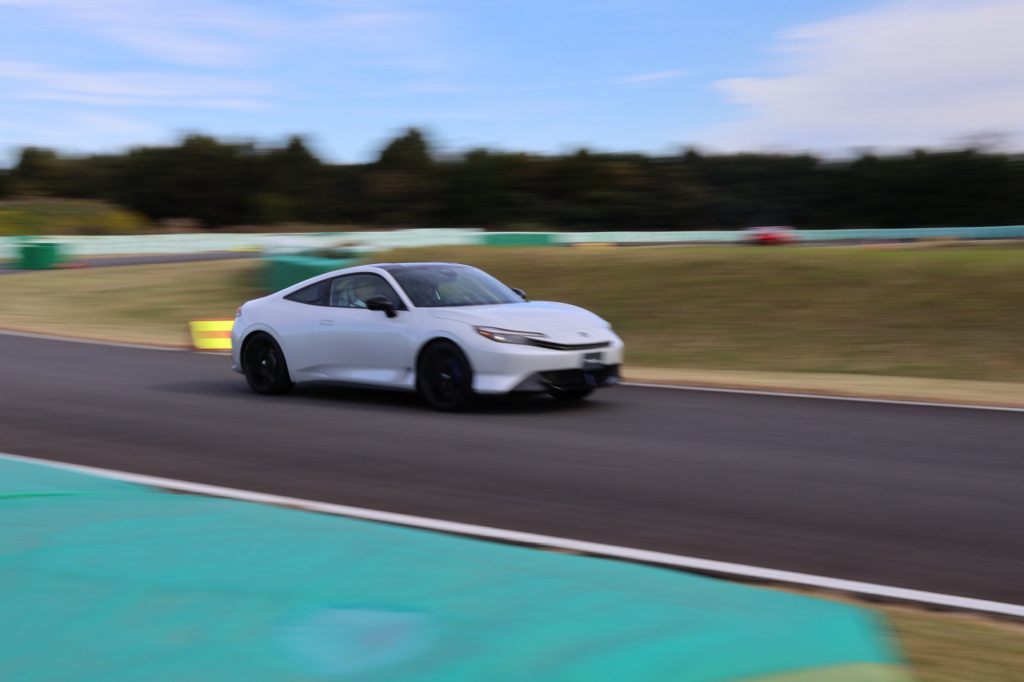
If all of this sounds familiar, it’s essentially the same sort of thing that Hyundai does on the Ioniq 5N when N-mode is engaged. Just describing it makes it sound like a silly gimmick. But driving is a visceral experience, and part of the reason some enthusiasts don’t like EVs is the lack of feedback they get about what the machinery is doing. I can personally attest that I thought it was a gimmick when Hyundai did it, and I had a s**t-eating grin on my face when I got out of the Ioniq 5N for the first time. Gen-Z and Alpha drivers that have never experienced a great manual gearbox, combustion car may not realize what they are missing in the future, but those of us old enough to know can really appreciate this.
So Is It Any Good?
In a word, yes! We didn’t get a lot of time with the Prelude at Tochigi; longer drives will have to wait until the new year. But the time we had was on a handling track built for motorcycles. The sun was shining and the weather was a pleasant 60 degrees, perfect for our task.
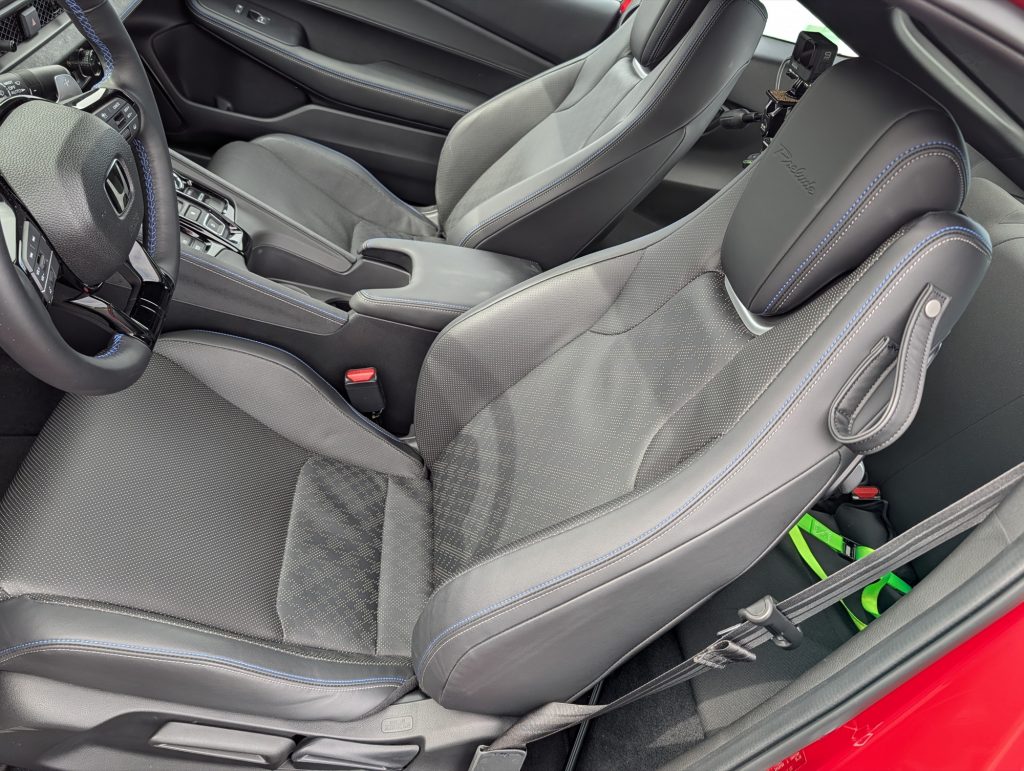
Remember, the Prelude was never a hardcore sports car, in fact, the first several generations weren’t even mild performance cars. This is not a successor to the S2000 or even a Civic Type-R (at least not yet!). It is a stylish, compact coupe that takes all of the best bits of the Type-R apart from the powertrain and merges it with arguably one of the best hybrid systems available.
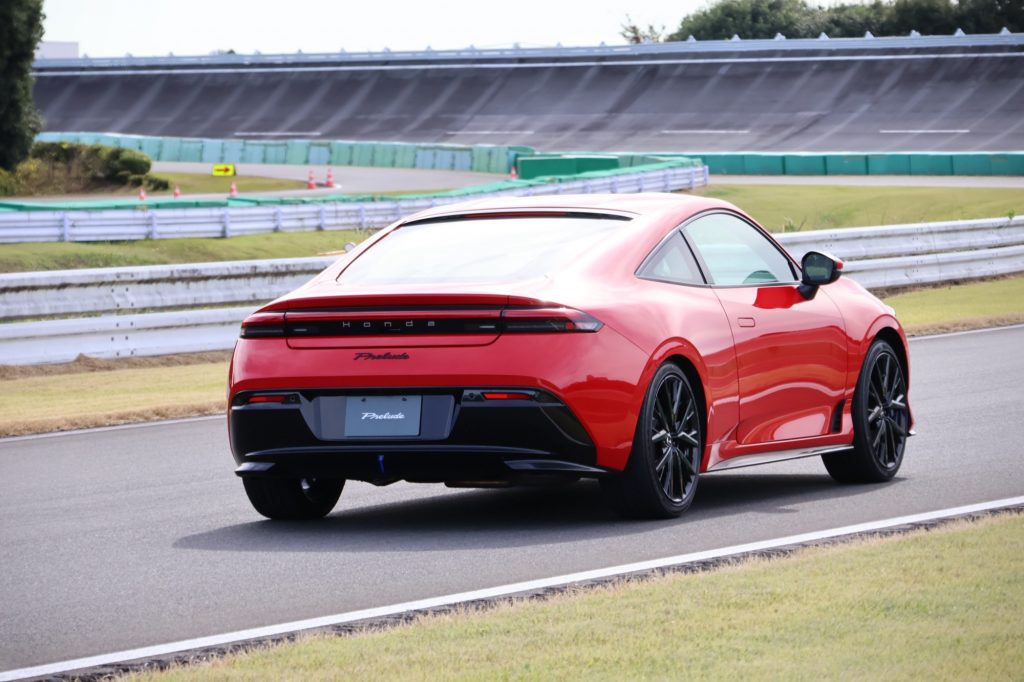
On our first recon lap of the track in normal drive mode brought back everything we’ve loved about the last two generations of Civic. As we approached the final corner on that first lap, we hit the S+ button and the car really came to life. Accelerating down the front straight, the sound became more engaging. It wasn’t the outrageously loud effect you get from the Dodge Charger’s Fratzonic exhaust, or the wail of approaching 9,000 rpm in an S2000, but enough to let you know what is going on under the hood. You can also feel multiple upshifts as the speed builds.
As you lay into the brakes for a corner, you’ll hear the throttle blip each time the system executes a perfect “downshift.” Sure, it’s a simulacrum of reality, but it all feels very authentic and totally in keeping with what you would expect if you put the turbocharged Civic Si engine under the hood with a conventional eight-speed automatic instead of a CVT. However, an Si-powered Prelude probably won’t come anywhere near the expected 45+ mpg that a hybrid Prelude would, and likely wouldn’t be much quicker.
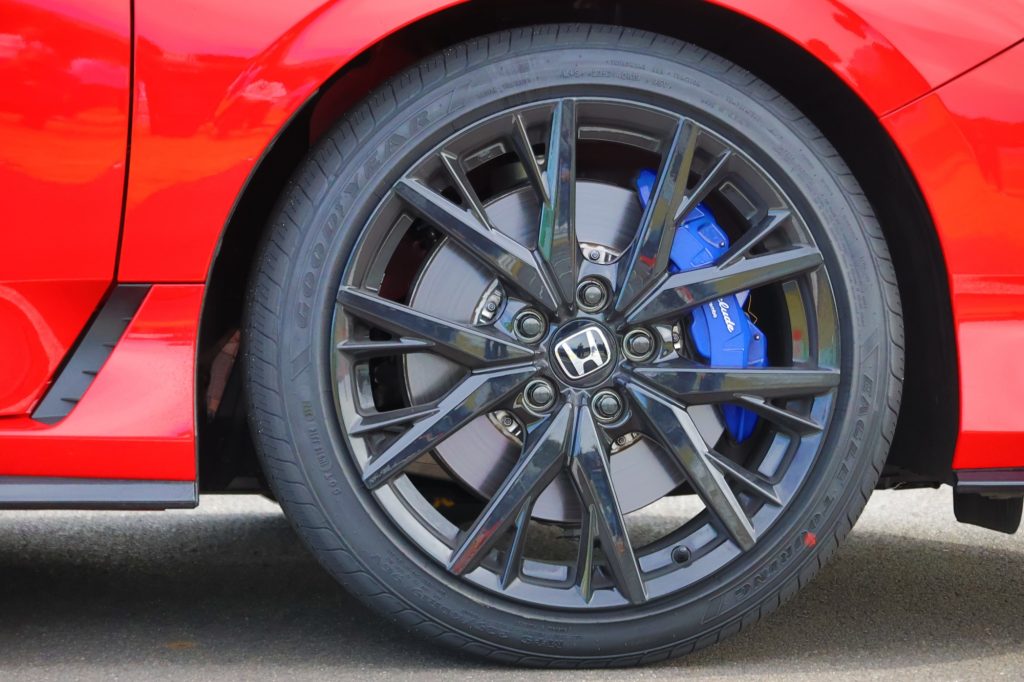
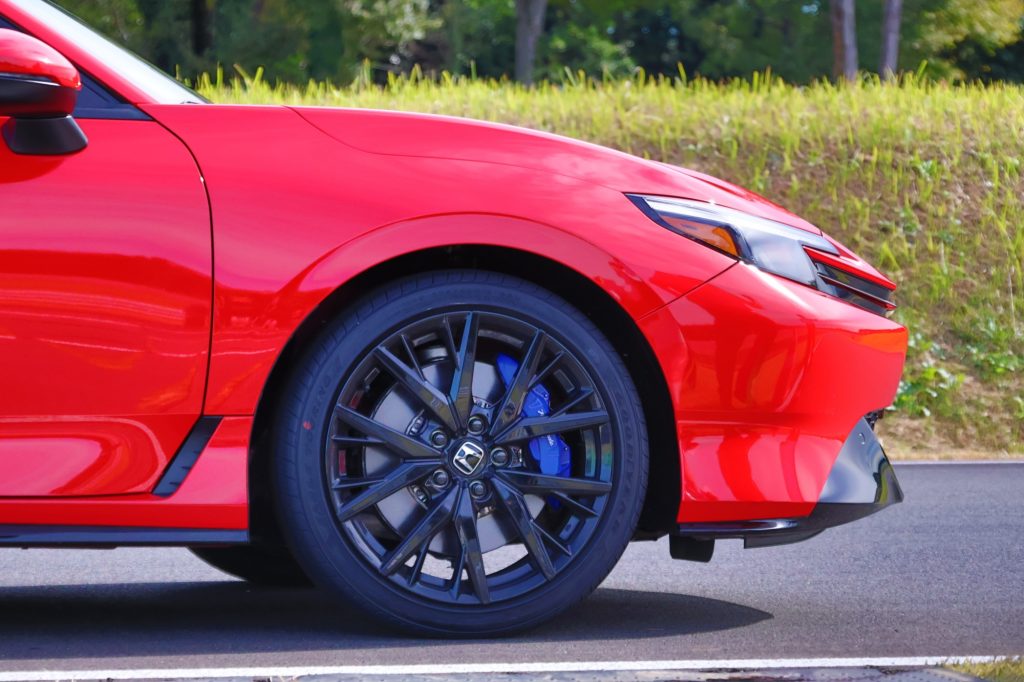
Besides the powertrain and how the software manages it, the other key mechanical aspect of the Prelude is the suspension and braking hardware that comes straight from the Civic Type-R. The only change is the spring and damping rates to compensate for the shorter wheelbase and different powertrain.
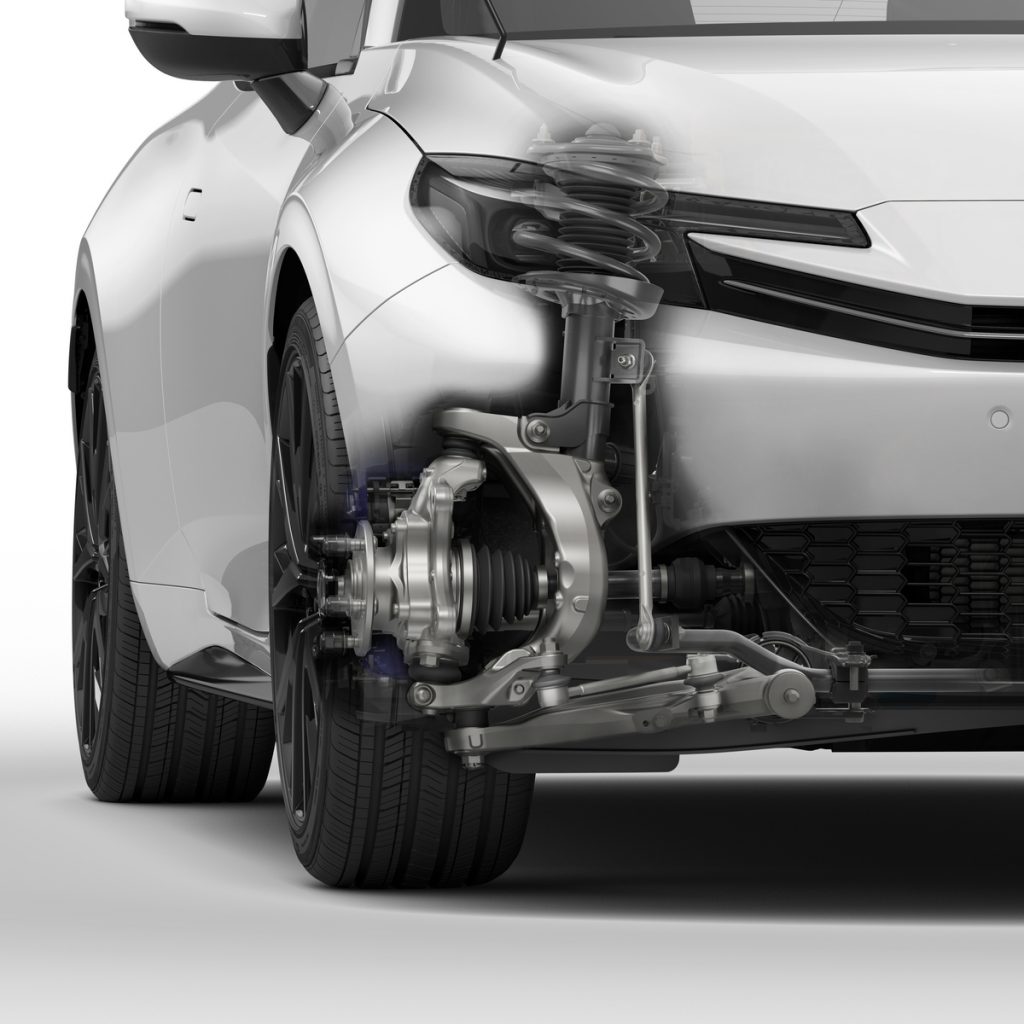
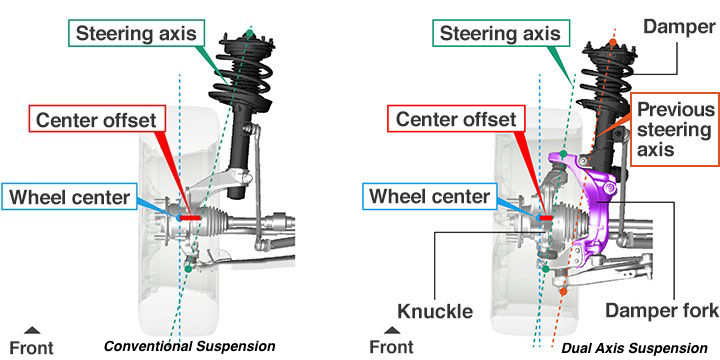
The front suspension is a dual-axis system that separates the steering axis from the damping/spring axis. A fork supporting the bottom of the strut, allows the steering pivot axis to be moved outward, closer to the center of the wheel. This helps to virtually eliminate torque steer. With most of the tractive effort for the Prelude coming from the MGU and its instant torque delivery, the suspension was clearly doing its job. The steering provided nice feedback about what was going on between the front wheels and pavement and felt perfectly weighted.
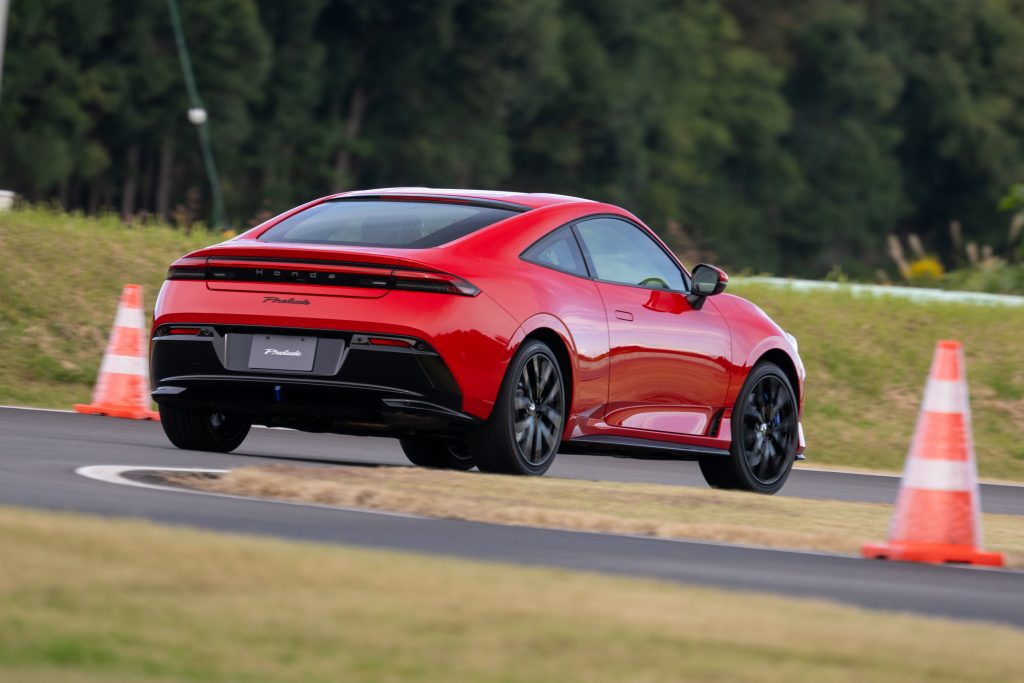
In addition, just like a Type-R, the Prelude responds nicely to trail braking. It is a Front Wheel Drive car, so physics would generally dictate that it’s going to have some understeer when you run into a corner with extra velocity. But if you keep a bit of brake pressure on as you turn in, it keeps the weight on the front tires and allows the rear end to slip enough to balance the car through the corner. It never steps out on you, it’s just a nice progressive adjustment to rotation that you can control with the brake pedal.
While the interior components of the Prelude are mostly unique, they are also utterly familiar to a Honda driver. That includes the comfortable and supportive front seats.
Sadly, I didn’t have nearly as much time with the new Prelude as I would have liked. But the time I had provided an excellent sampler, and I can’t wait to get back behind the wheel soon.
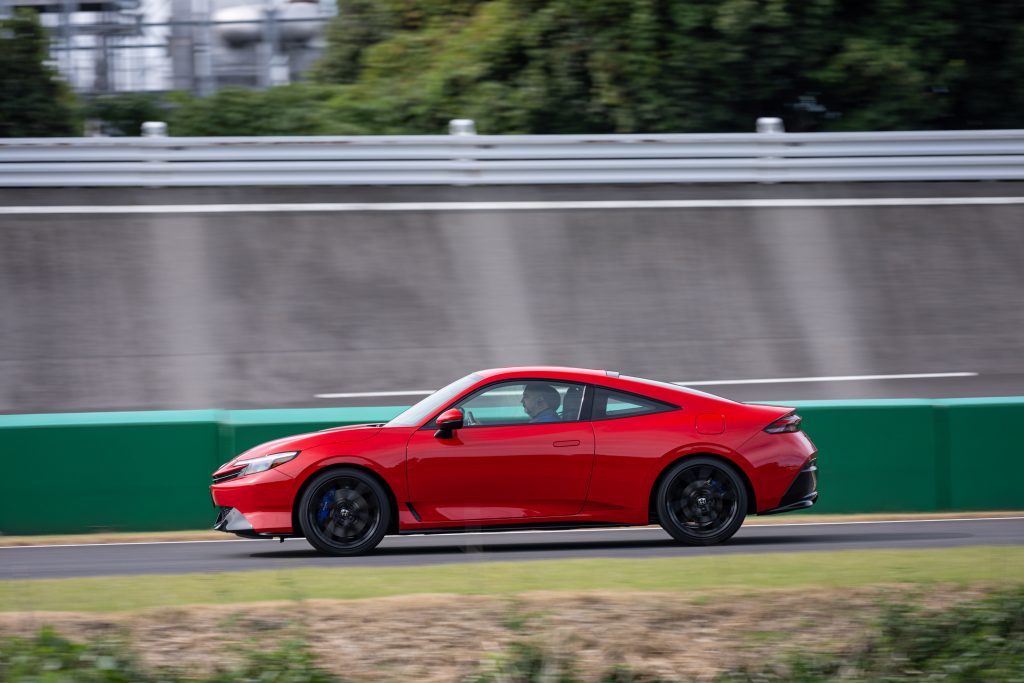
The first shipment of 2026 Preludes should be arriving on the West Coast in mid-November, with deliveries starting on the 18th. Honda hasn’t announced pricing yet for the single trim level of the Prelude, but at current exchange rates, the Japanese pricing works out to about $41,800 so right around $42,000 plus delivery should be about right. That price splits the difference between a Civic Sport Touring Hybrid and the Type-R.
All Photos Sam Abuelsamid unless otherwise noted


The success of this car is going to be entirely dependent on price. At $40k, no one is going to touch this thing when you could get a Civic, Mustang or GR86 for less
I love hatchbacks and this is a good looking car. But the 3rd Gen 1987-1991 is still the best looking Prelude.