


Social media can be a tight-rope walk because when you do something that seems like a screw-up, the world will notice. It’s all on camera, people have probably screen-captured copies if you have enough of a following, it is what it is. On that note, BMW Classic recently posted an Instagram reel featuring the 1 Series M Coupe, and it shouldn’t be too hard to spot what’s making people in the comments sound off about something being wrong.
The BMW 1 Series M Coupe, or 1M for short, is one of those lightning-in-a-bottle cars. Born as a skunkworks project, it took the suspension, steering, differential and brakes from the M3 and bolted them all into a widened, pumped-up 135i. The result is simply one of the best BMWs of all time, a true pocket rocket with sophisticated reflexes and seriously quick steering.


Given that the same philosophy behind the 1 Series M Coupe spawned the immensely successful M2, it’s the sort of car that, 13 years after the end of production, BMW ought to show off. Well, BMW Classic did, but whoever shot this reel was likely short on time.
View this post on Instagram
Ah yep, right there. The oil temperature gauge is an arc at the bottom of the tachometer, and judging by where it’s at on this 1 Series M Coupe, someone at BMW Classic was revving to the moon without warming the car up properly first. If you look closely, the hash mark between 70 degrees Celsius and 120 degrees Celsius on the oil temperature gauge is 95 degrees Celsius, and the needle isn’t especially close to it. Factoring in the depth difference between the needle and the face, let’s call it about 75 degrees Celsius, or 167 degrees Fahrenheit.
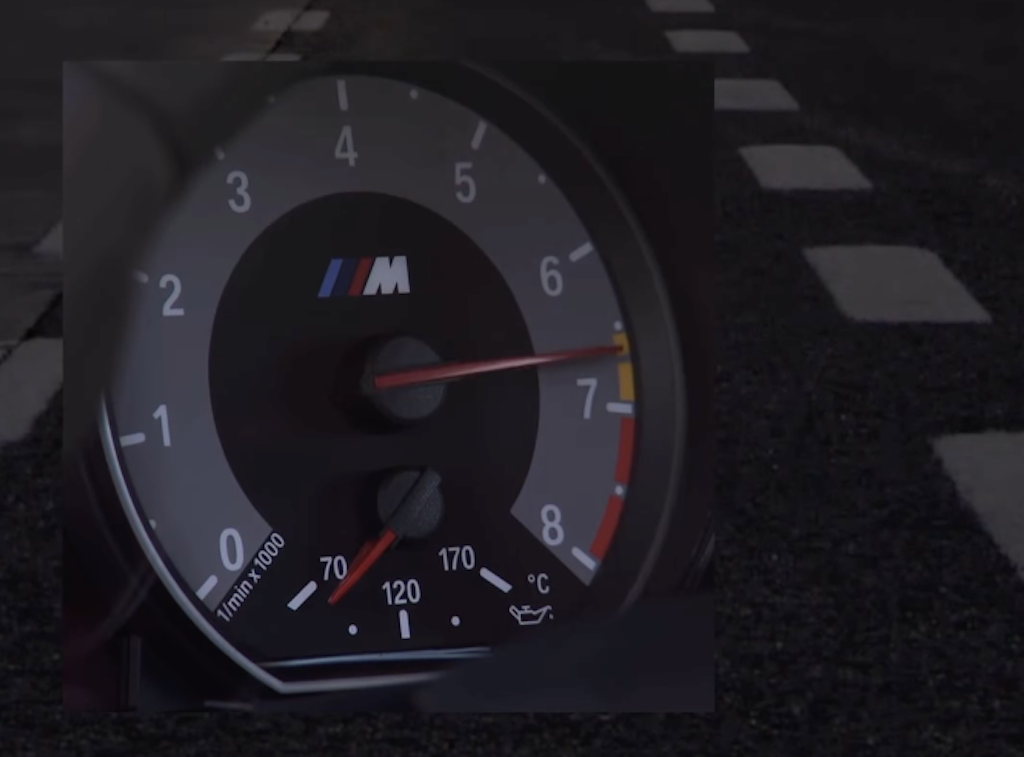
Considering that BMWs with the N54 engine, like the 1 Series M Coupe, prefer to sit north of 100 degrees Celsius with the oil all warmed up, I’d call the temperatures seen in this clip low. I’d wait to the needle to climb a bit higher in my own 335i before giving it the beans. While the risk of engine damage is small given that the oil isn’t stone-cold, it’s enough to get the comments section riled up.

Comments like “That’s a crazy ass rev considering the oil temp but I respect it,” and “Maybe warm it up first?” and the sarcastic “N54s love those ice cold revs,” the sort of legitimate concern you’d expect to hear from people with at least a shred of mechanical sympathy.


On the one hand, I feel pretty safe in saying that none of us would hit the rev limiter without properly warmed-up oil in a car we care about. On the other, if anyone has a supply of spare long blocks for this thing, it’s probably BMW. Worst-case, another one can be thrown in should something go catastrophically wrong.

Still, while it’s perfectly safe to explore the mid-range of the power band while oil temperature is still on the come-up, let this serve as a gentle reminder to let oil temperatures hit 180 degrees Fahrenheit, or about 83 degrees Celsius, before really letting things off the leash. If you don’t have an oil temperature gauge, it’s a bit of a guessing game, but give it a few minutes and miles after coolant temperatures stabilize, and you should be alright.
Top graphic image: BMW Classic/Instagram
Support our mission of championing car culture by becoming an Official Autopian Member.





This is an interesting topic that I’ve pondered quite a bit since I saw an off-hand comment from David years back about how it takes much longer for fluids to heat up than for the actual engine components. Which means by the time the fluids are up to temp, the engine probably has been for a while.
Also interesting because in my Corvette the coolant comes up to temp in a few minutes, but with 8 quarts of oil, it can take 5 or 10 minutes before that hits normal operating temps. Should I wait for the oil? It doesn’t seem like it. Unless the oil doesn’t lubricate properly at low temps (which would be a problem in and of itself), it shouldn’t matter.
That said, it’s a 25 year old engine at this point and I tend to avoid redlining it until the oil is up to temp too, out of an abundance of caution.
It takes 15 miles and 20 minutes of driving to reach temperature of 192°F of oil. That is already past a few highway ramps and past a few 4000 RPM shifts.
All my cars have been fine. I only wait for revs to drop after starting the engine before making a full throttle left turn across 5 lane highway to leave work.
But I didn’t have any BMWs
Are we actually assuming a 13+ year-old BMW oil temp sender is still functional?
That might be the real joke.
Still on my original oil temp sender – works dandy.
I just found out 0w-8 motor oil is a thing. I saw 0w-16 on the shelf and several of my cars run 0w-20. I fully understand the ultra-light oils on the hybrids due to use case, but 0w-8? That is tiger piss.
What the hell does it break down to? They might as well just go to straight 0.
I would need to research centistokes and such, just know it it light as f***.
WOW! The kinematic viscocity is 5. For reference, common light hydraulic oil comes in at 32. This stuff is tiger piss.
In comparison 0W-20 runs about 45 or so in kinematic vis.
Yeah, without affirming real world numbers matching my use case, my instinct is not to trust something like that for anything but a PHEV. At some point, the 0.2 mpg savings isn’t worth it. I run the Japanese market recommended weight in my car, not the 0W-x eek-out-another-hair-of-mileage-for-the-EPA USA crap because physics is the same globally where legislation is not. Funny enough, I handily beat the EPA numbers, anyway.
I understand ultra-light oils on hybrids, you want the oil there NOW on startup. The 0w-8 is just obscene.
Dad ran an old Ford 302 for 100k+ on 15W40 Shell Rotella. I pulled the heads when a gasket failed and the factory crosshatch was present in the cylinder bores.
Agree. They run cold a lot, frequent restarts, and often Atkinson cycle, so they don’t see a lot of heavy loads or high rpm.
I ran M1 5W-30 (IIRC) in my ’90 Legacy and burnt an exhaust valve at about 250k mi. Took it apart and the crosshatching was all intact, top end bearings and cam lobes looked practically new, and I couldn’t feel any wear on the bottom end bearings with my fingernail and I beat the hell out of that engine. Of course, that was only 130hp and 6.5k rpm redline with forged crank and rods with large sized bearings, so it was a bit overbuilt.
Zero weight oil is a plague upon us all, and as the automakers seek cheaper short term efficiencies we’re going to see more of the buboes it spawns. Especially with so many cars being turbocharged and having complex valvetrains nowadays.
Having spent decades putting 20W-50 into 70s engines I have trouble wrapping head around such thin oil.
The oil is one measure of the engine’s temperature. Engines are made of various materials, and not all of them react at the same rate to temperature changes. For example, in a given vehicle the piston might be aluminum and the cylinder wall might be iron. They’re not done expanding until the whole engine is fully up to operating temperature. Accelerate too hard before reaching optemp and what will happen? See, that’s the tricky bit: it varies. It depends on materials and clearances and a bunch of other small variable that can mean the difference between scuffed piston skirts and nothing at all, nothing at all, nothing at all…
tl;dr – there are reasons why “operating temperature” is a thing
It takes 15 miles and 20 minutes of driving to reach temperature of 192°F of oil. That is already past a few highway ramps and past a few 4000 RPM shifts.
All my cars have been fine. I only wait for revs to drop after starting the engine before making a full throttle left turn across 5 lane highway to leave work.
But I didn’t have any BMWs
Oil temperature isn’t a useful thing to know. Especially when it’s the temperature of the bulk oil in the oil pan and not the temperature of the oil in the actual bearings after being pumped through the potentially nice warm galleries in the block and head. It can takes ages to warm up all the oil in the pan, especially if you’re just idling the engine waiting to film an interior shot of the dash.
What you want to measure with oil is the viscosity, but that’s tricky. A pressure gauge gives you a idea that it’s in the right range, but it varies with pump speed and people don’t like gauges that move all the time.
Low coolant temperature on the other hand is an indicator that the block isn’t up to temperature, which means the piston clearances are larger than optimum, leading to piston or bore wear at high load (which isn’t necessarily the same thing as high speed).
Low coolant temperature = cold engine.
Low oil temperature /= cold engine.
My ideal oil temp in the race car is as close to 80c – 90c as possible. IMO that they waited for the oil to warm up i.e. get past the 70c stop on the gauge, but not get too thin is a GOOD thing, not a criticism. Somewhere around 110 I’ll get concerned, and past 120 I’ll back off. Granted this is due to a quirk / design flaw in Honda D and B series engines, but it still makes a huge difference in wear on the cams, lifters, etc. in the top end.
lol seriously? 170 F oil temp is perfectly fine to rev hard.
People acting like the oil temp is 35 F and hardly flowing…
Especially with modern synthetic oil as these cars specify. This is much ado about absolutely nothing at all. As is the case with EVERY oil-related discussion on the Internet.
Indeed.
Most drivers and “automotive enthusiasts” don’t realize that their oil temp is actually quite a bit cooler than coolant temp at initial warm up.
So, when coolant hits “operating temp”, oil is still 30+ F cooler. Eventually, the oil temp will actually exceed the coolant.
My point being on cars with only coolant temp, when you start flooring it because your coolant hit temp your oil is still 150 F or so. YMMV.
To be fair – there are no coolant temp gauges in these BMWs. For good reason – with an electric water pump and a “mapped” electronic thermostat that can vary coolant temp by a WIDE range depending on what the car is doing, a coolant gauge would basically be an idiot light anyway. So the computer just gives you a big fat warning on the dash when the coolant temp is higher than it should be for the conditions.
Most other M cars besides the 1M do have a variable redline on the tach based on whether the engine is up to temp though, which I think is a great idea.
As long as he changes the oil every 3000 miles (and twice when Mercury is in retrograde), I’m sure it’ll be fine!
And he makes sure to use the finest *virgin* synthetic motor oil. Made from the vaginal secretions of those virgins, not the tears.
That is why we don’t just run staight XXweight oil anymore, technology allows easy flow at lower temps with full (actually better) high temp, high speed protection. I run full synthetic in everything, the chemistry is so much better.
I’m no expert, but have some tribology training.
Years ago, I had a temporary assignment to a cold engine test cell, and the testing at hand was to measure the oil pressure throughout the engine on cold (-20F) startups. It was run on dino 15W40 (diesel) and then again with full synthetic, most likely 5W40. IIRC it took 30+sec for worthwhile oil pressure to reach the turbo on dino.
I’d already switched to synthetic on our DDs (mostly to extend OCI, I was tired of changing it all the damn time) but it was pretty eye-opening.
100%
Thanks for reminding me why I don’t ever want another German car.
Most other cars from other regions also use engine oil.
Yep, and they manage to operate seamlessly without me needing to know or care about my oil temperature.
It takes 15 miles and 20 minutes of driving to reach temperature of 192°F of oil. That is already past a few highway ramps and past a few 4000 RPM shifts.
All my cars have been fine. I only wait for revs to drop after starting the engine before making a full throttle left turn across 5 lane highway to leave work.
But I didn’t have any BMWs.
BMW owners seem to blame themselves and others for why their BMWs break down all the time for no reason