

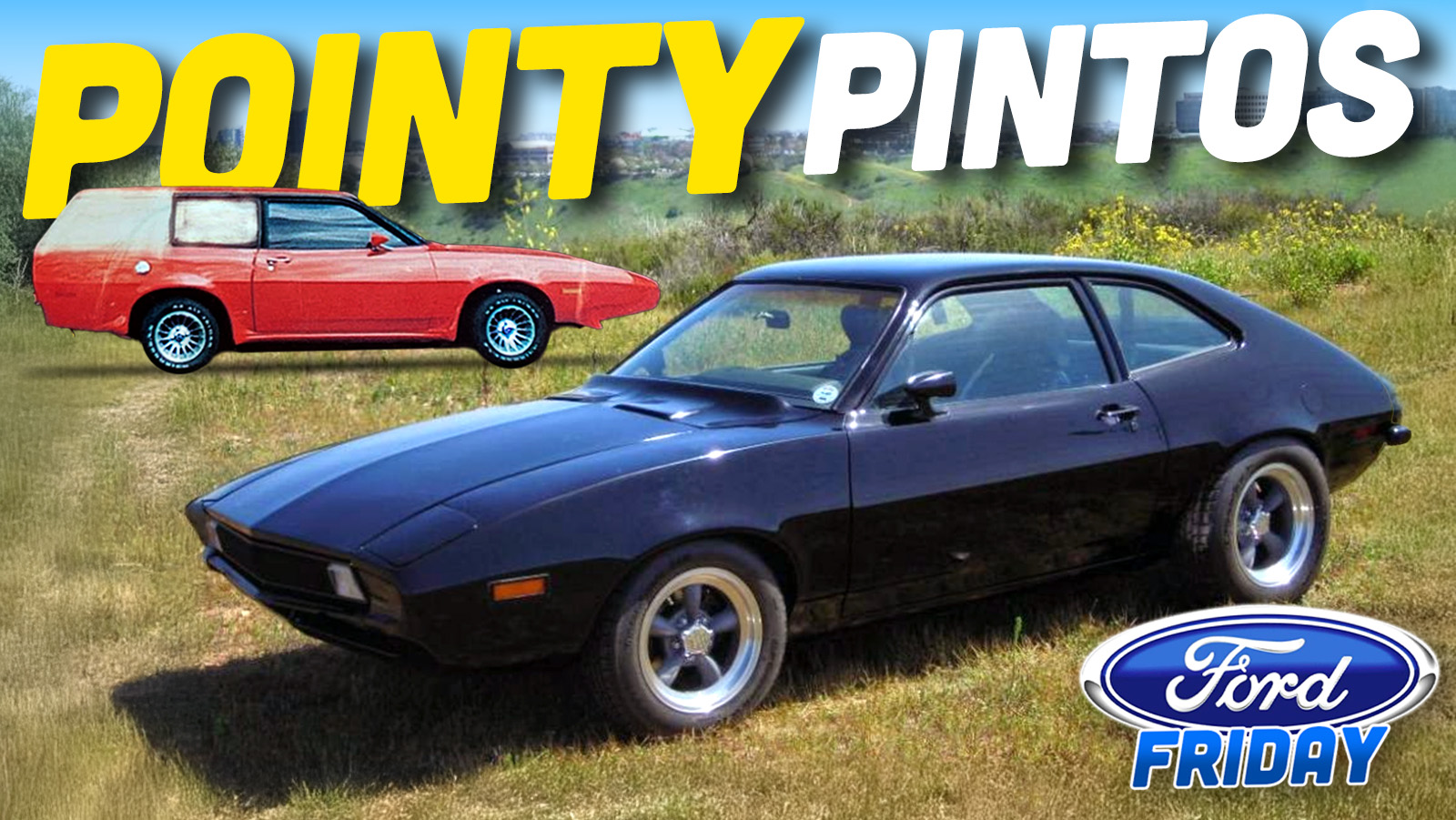
One of the casualties of the modern-car complexity is the ability to quickly and drastically change a car’s appearance. There were entire industries built around turning your car’s sow’s-ear styling into something silk-purse-adjacent. Simply bolt on some new fiberglass body panels, and your Volkswagen Beetle could be transformed into something that looked like a Porsche 917. Briefly, one could buy a phony Ferrari that was actually a Fiero enjoying a little Maranello cosplay. And, for a time, you could change up your Pinto into a wedge-shaped, wing-backed sports coupe. I’ll explain.
These Were Not The Bomb
Thanks to a taken-out-of-context memo and the largely disproven story about it being more prone than other subcompacts to exploding when hit from behind, the Pinto has remained a punchline to many jokes over four decades after it ceased production in 1980. If it was indeed an automotive failure, it certainly failed upwardly. Over 3.1 million Pintos were sold over the ten years it was in production, making it a common sight on American roads during the seventies and early eighties before the vast majority were literally used up and thrown away.



As with anything that is ubiquitous, there’s always an opportunity for people who want to make such a common product stand out in a crowded parking lot. Ford obviously did that themselves with various graphics, trim, and wheel packages over the years to add some color and individuality to their ultra-popular little car. The “Stallion” package paired a slick silver-and-black color theme with chromed five-slot mags that somehow made the lowly subcompact seem like something much sportier.

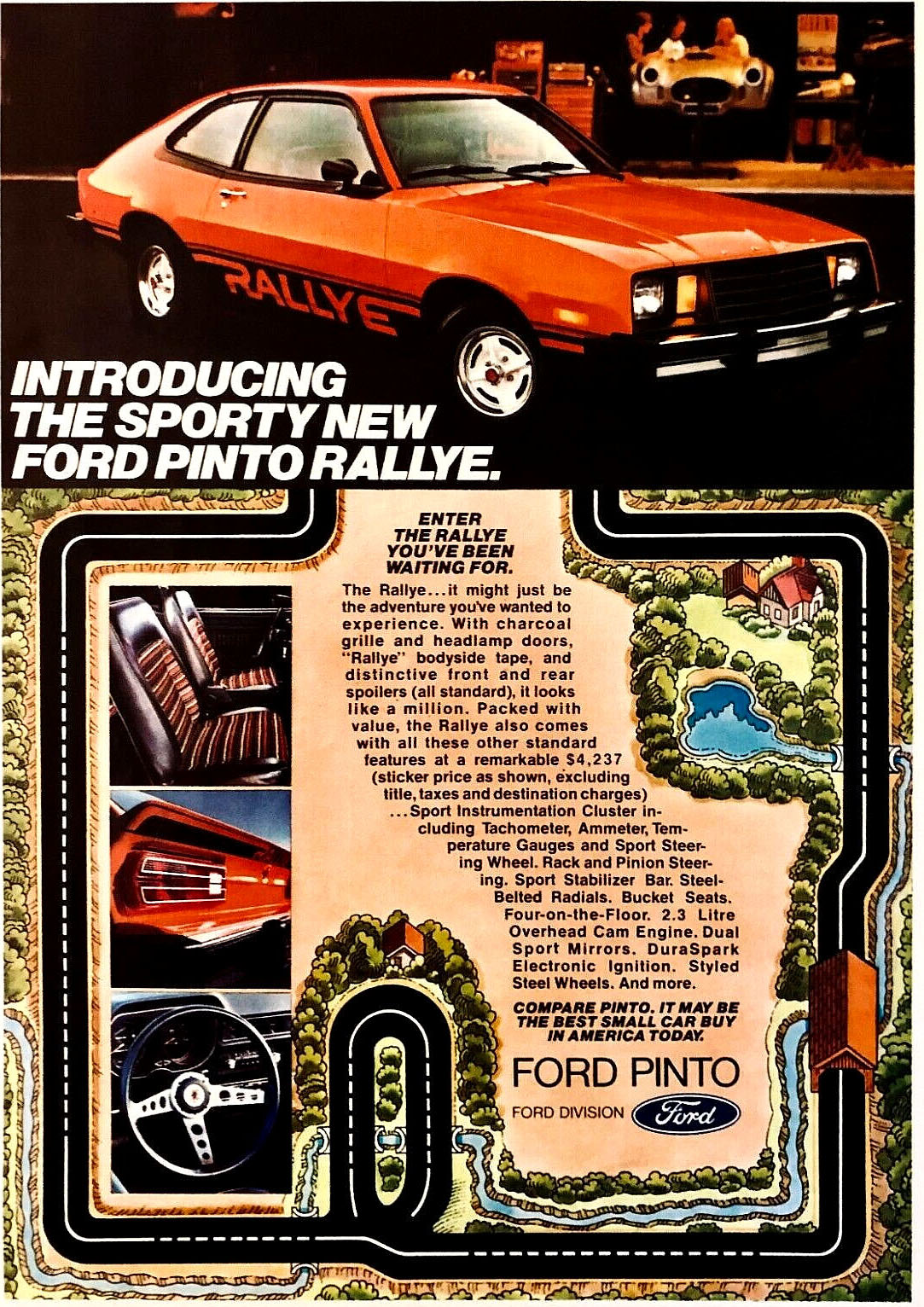
Here’s the Pinto “Rallye” that was likely not going to compete at Pike’s Peak, but the cute advertisement made kid-me want to play with my Matchbox cars on it:
The most famous of these factory Pinto specials might have been the “Cruising Wagon” that blocked off the rear windows of the Pinto wagon with steel panels and featured small bubble windows to capitalize on the custom vanning trends of the time.

If you wanted to take things further with your Pinto, there were aftermarket firms and even dealers that would help you. The conversions ranged from the sublime to the ridiculous to the are-you-kidding, and I’ll show you examples across the spectrum.
Galpin Pinto Pacer
In 1974, Galpin Ford (yes, the same Galpin associated with The Autopian) offered the “Pinto Pacer” that gave the car a new look via a bolt-on front end treatment that covered the original grille like a knight’s helmet, and even had translucent amber trim for the existing turn signals to shine through.

Whether you like the Pacer nose or not, there were almost certainly fans of this restyle in Dearborn. Three years later, the factory’s facelifted nose that arrived for 1977 bore a striking resemblance to the Galpin nose cone.

These were rather subtle changes, but if you wanted to take things a step further, there was another dealership that was happy to help you make it happen.
Pinto Pangra
Down the road from Galpin at Huntington Ford of Arcadia, the general sales manager had the idea for making a fast compact car to compete with the likes of a Datsun 240Z or a Porsche 914. It might sound insane today, but Huntington’s solution in 1972 was to use the Pinto coupe as a basis for this import fighter which they ended up offering as either completed cars sold through the dealership or as a multi-part kit.
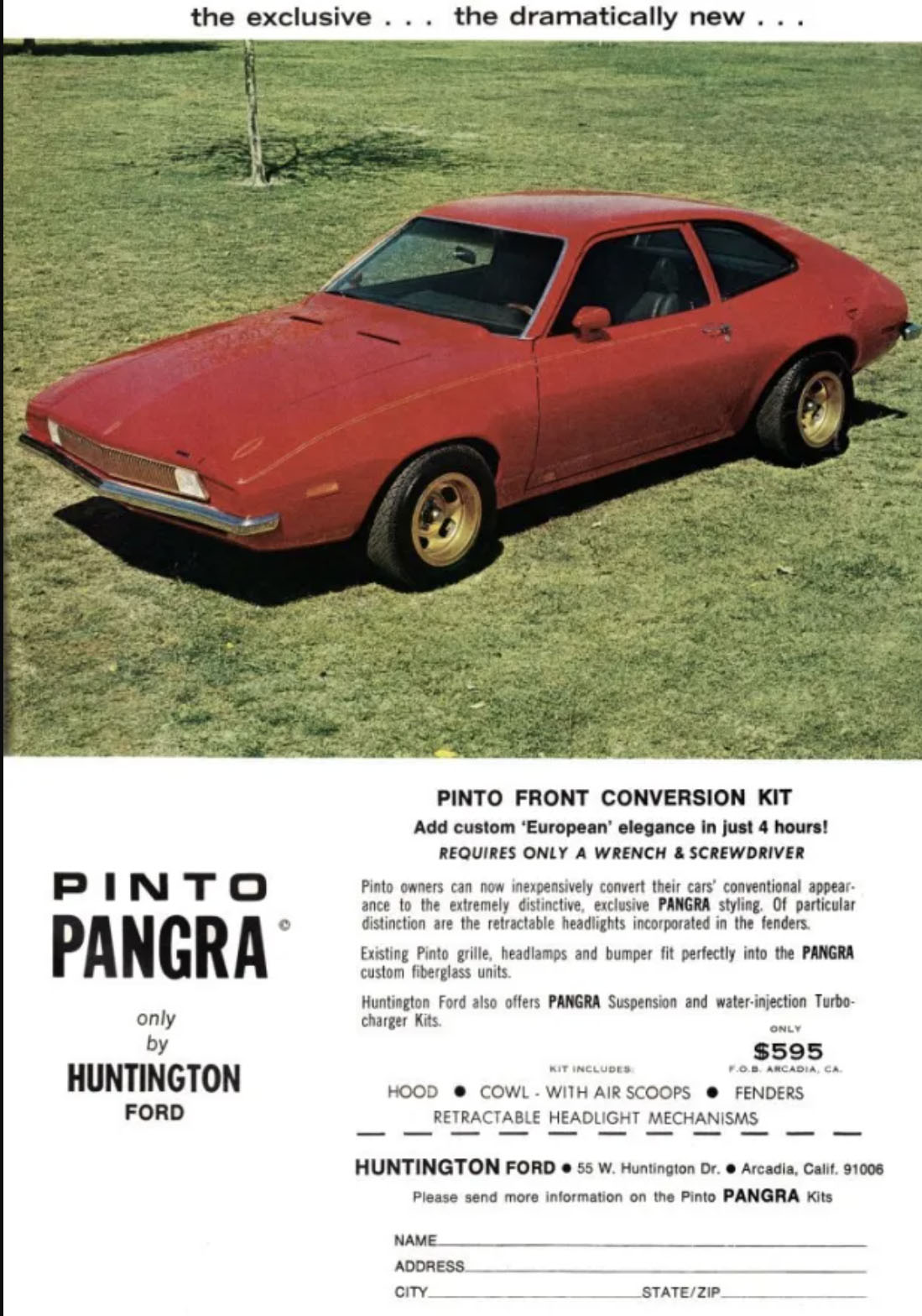
The “starter” kit gave you the Pangra look for $595 and included a fiberglass nose with modified fenders, and a hood that incorporated the stock grille and bumper. Mechanical pop-up headlights were operated via a lever inside the car, not unlike on an Opel GT. There were even cowl intake vents and a shroud that concealed the windshield wipers.
The second kit dealt with the handling and included a Spearco “Can Am” suspension kit with Koni shocks, sway bars and lowering the back by two inches. With the Pinto’s standard rack-and-pinion steering, it could be made to drive a lot better than you’d think (you laugh, but tuned Pintos ran relatively well in Showroom Stock racing back in the day).
Once your Pangra was going around corners better, you’d naturally want more power, and Kit Three had that covered. Putting in a heavy small V8 up front would have been an easy but clunky solution. Instead, Huntington did some pioneering work with turbocharging and water injection, and with a reported 175 horsepower, the zero to sixty time dropped to around 7.5 seconds. The extra power combined with the suspension tweaks it must have been a blast to drive. Also, as the brochure stated, this turbocharged engine still met Federal emissions standards.

A revised dashboard and console with extra gauges (including a digital tach) as well as wider rims and what qualified as “big” tires in 1972 (175HR13s in the front and 185HR13s at the rear) were also available. Even Recaro seats were on the options list, though those and some other tweaks were only available on the Pangras bought as finished cars from Huntington.
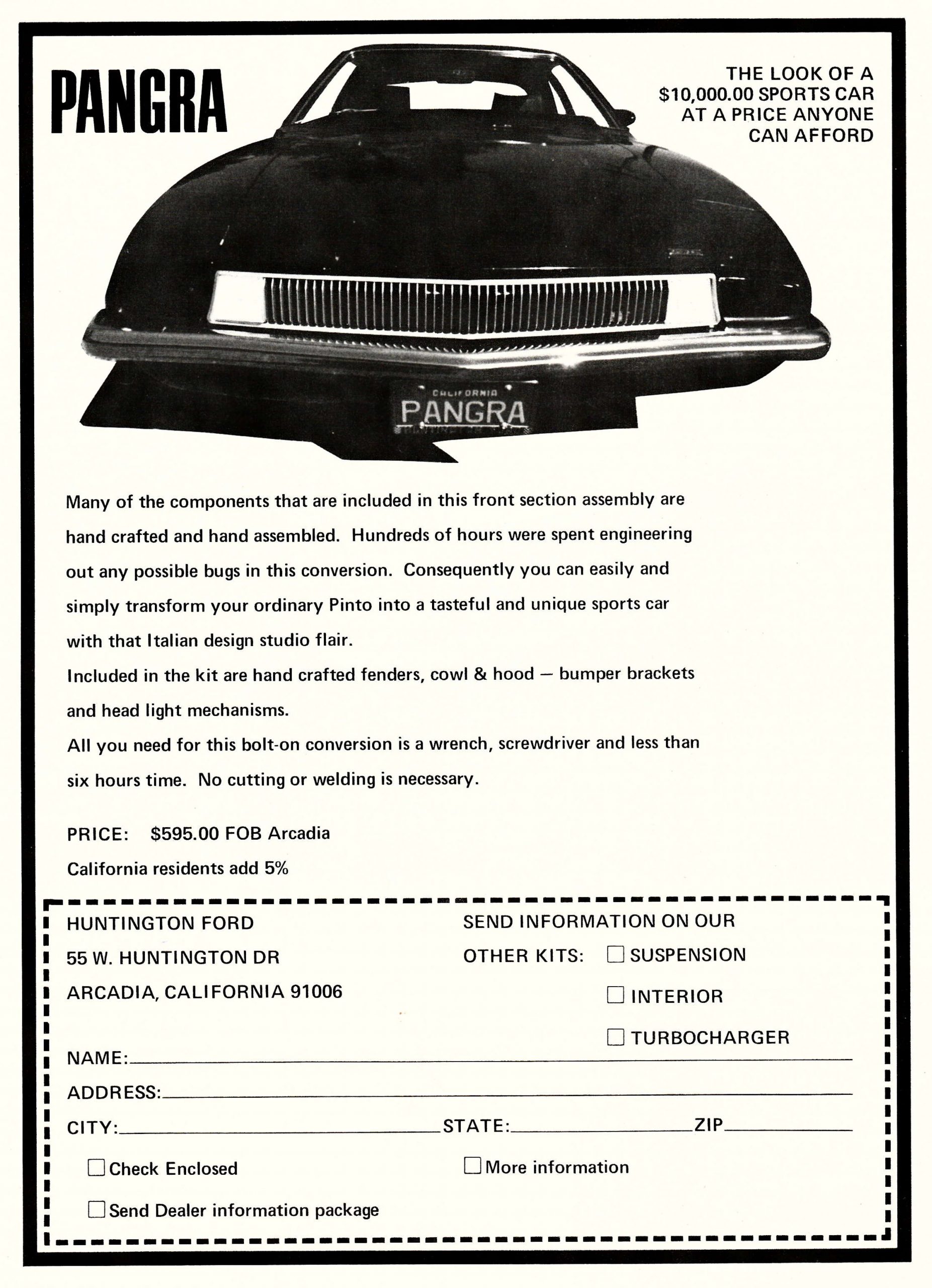
Here’s the total cost for the kits, which seem dirt cheap until you realize that a new Pinto cost like $1995 in 1972 money.

These Pangras come up for sale every now and then, like this modified one that appeared on a Pinto site some time back. Removing the factory front bumper turns this thing- dare I say it- into a rather attractive coupe:

Virtually no Pangras reportedly survive today with the original turbo setup, an installation so crude that it reportedly included a washer welded into the exhaust pipe to limit boost!
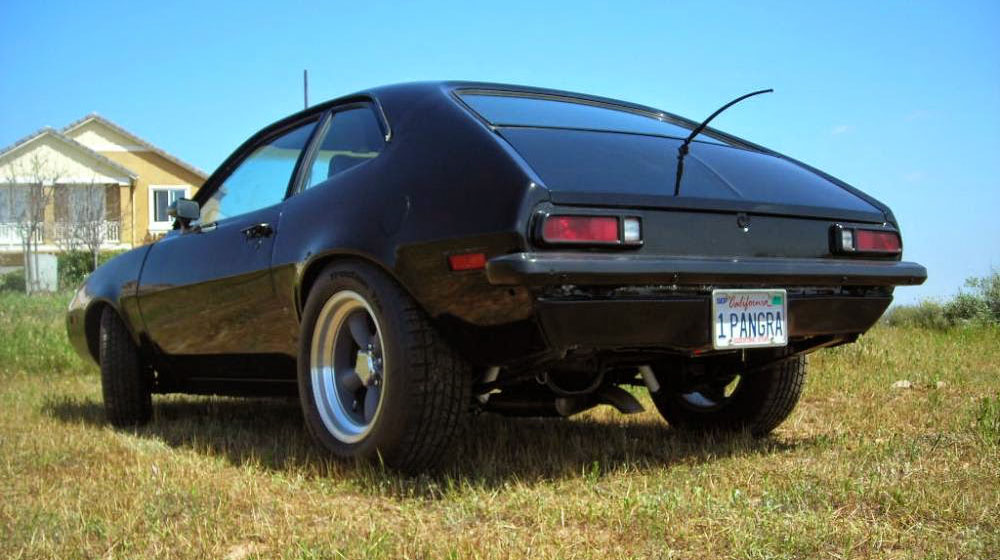
Numbers are hard to come by; while supposedly a few hundred fiberglass nose kits were sold, reportedly only around 20 to 50 of the more heavily modified cars were constructed before Huntington quit the whole experiment around 1973. Ford eventually made their own “sports Pinto” with the Mustang II the following year, but I think I’d rather have the Pangra.
Pinto Stiletto
Now we’re just getting silly. Information about this next one is a bit sketchy, but it seems like it came some time after the whole Pangra project had disappeared. A firm called “Autonique” (a division of Minnesota-based Unifoam Products) must have seen Huntington’s Pinto kits and just said, “Hold my beer.” I give you the Stiletto:

Unlike the Pangra and its rather gently sloped front end, Autonique went for a more aggressive wedge shape. This was not a great idea. A simple side view demonstrates how doing that created an anteater-like nose that extended into the next area code:

Despite being proportionally absurd, the finish level seems like it wasn’t bad. The Stiletto could be added to a sedan or wagon Pinto, though I do see in that one brochure picture of that yellow one above that there was an add-on rear “spoiler” that changed the whole roofline in back that made it look almost like a compacted Lamborghini Espada. If you have more images of this thing, please do not hesitate to share them; this thing is too spectacular to be lost in the sands of time.
In another ad found on the web, the “Super Stiletto” kit adds a Superbird-style wing to the look for Pinto owners with no sense of self-awareness and a high tolerance for whacking their heads, as it appears there’s no easy way to load luggage into rear hatch without banging your noggin on that ironing board.

Some Stilettos spotted online have pop-up lights while others have headlamps in the bumper. Options in the brochure appear to include electric or vacuum actuators for the pop-ups, as well as handling and interior kits plus a “discretionary supercharger.” With such limited details, it sounds like Autonique was not as involved with the mechanical changes as Huntington was with the Pangra. They were all about the look, but you’d want to find a way to make yours faster just to get away from the Taste Police.
Yes, some of these still exist, like this one on Craigslist a while back; for some reason, the heavier-looking back of the wagon works better with the silly nose, but it’s still comically long.

I also see the Trans Am-style wheel arch trims that aren’t particularly well resolved:
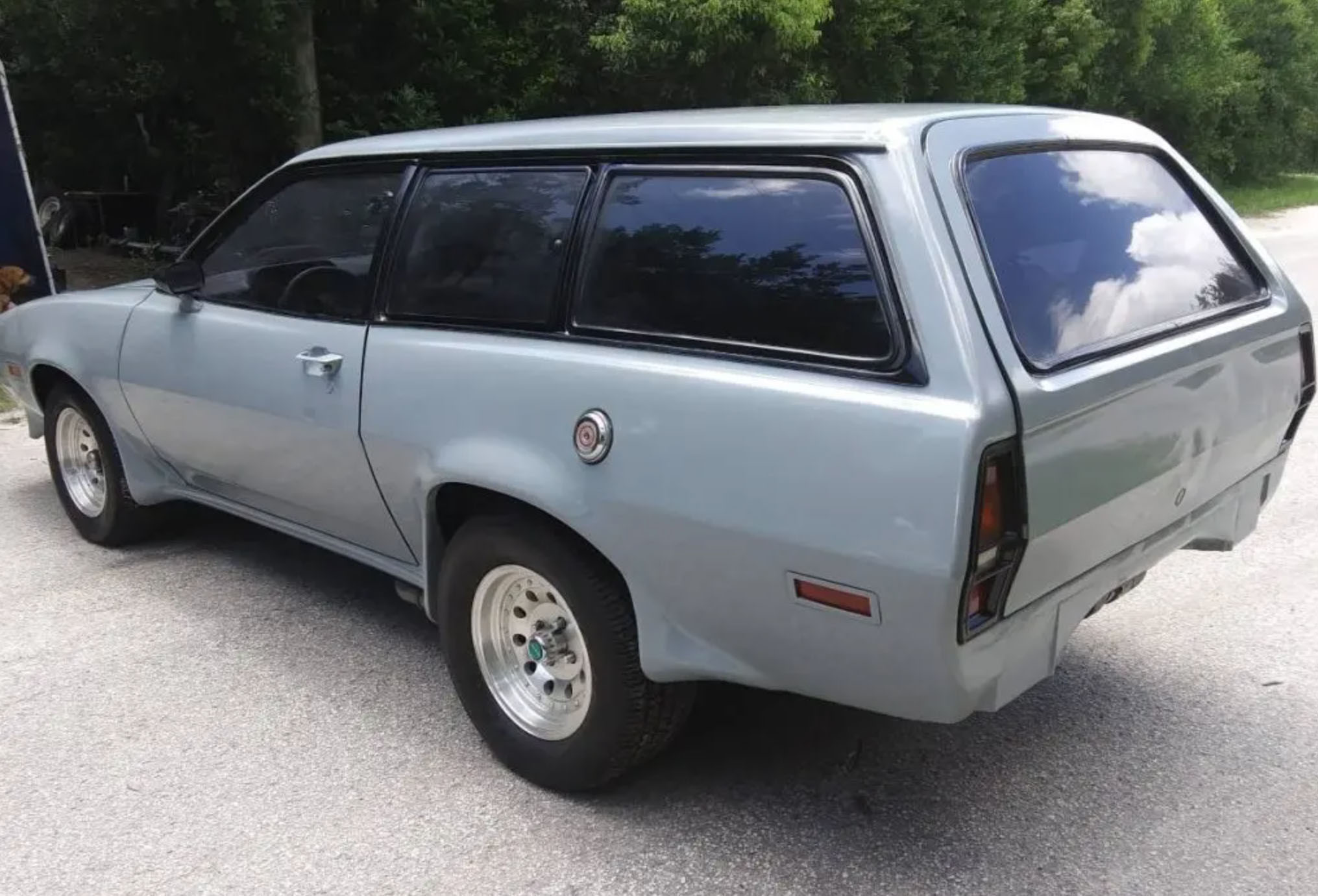
I didn’t find any information online on how many of these kits were sold, but they appear to have built more than one, so that’s another indication that with cars, there’s a butt for every seat.
I’d Prefer To Add More Fiberglass Around The Gas Tank Instead
Yes, I’m laughing at these things just like you are, but at the same time, I’m impressed that entrepreneurial souls decided to take a car that nobody loved but everyone bought (3 million of them!) and attempted to turn it into something a little different. Actually, in some cases, a lot different. Maybe better, probably worse, but different nonetheless.
Top graphic images: FordPinto.com Classifieds; Unifoam Products


A bunch of my friends had Pinto’s and I was intrigued by the cheap turbo kits advertised in the back of magazines…. But the Pinto’s were so junky, even when new. They screamed cheap.
Sure, you’re spending like double the cost of a Pinto to get one of these, but you’re spending double the cost of a Corolla hatch to get the GR, and that doesn’t have pop-up headlights, so if you think about it, this is actually a pretty good deal.
Maymar. He is the one.
I would have loved to have a Pangra nose and the dash/console bits back in the day.
I did see a couple of them in the wild back in 80’s. One was a Pangchero, ie a Wagon turned into a mini-pickup. The other was a Sedan. In both cases the final fit and finish of the nose job was pretty good.
I also saw a Pinchero that was sitting on an Early Bronco chassis.
I really like the Pangra. That’s a good look, and Pintos were tidy handlers, and had a one-make SCCA class back in the day. Infinitely better car than the Vega.
They shoulda stopped at the crusin’ wagon.
No, that should have been the starting point.
I dunno, To me Crusin’ Wagon is peak Pinto.
The coolest Pinto I ever saw was in a Junkyard outside of Eagle River, Wisconsin. It was a baby blue one, that was cut off behind the rear doors, but the front half was complete. They attached the drive shaft of the Pinto to an apparatus that shredded aluminum cans.
When someone came in with a load of aluminum cans for scrap, they weighed the cans so they could pay the person for them, then they fired up the Pinto, put it in 2nd gear, let out the clutch and let the shredder spin. They then dumped the cans in the hopper and they came out as shredded metal.
Coolest use I ever saw for a Pinto.
Did they use the spent engine oil to make cola and fill some of those cans?
I remember the Pangra body parts still being advertised in Kitcar magazine in the late 80s and early 90s.
Once again: Just because you can doesn’t mean you should.
I rather like the Pangra, but the front overhang of the Stiletto is odd in that it looks almost as long as the wheelbase of the car. The 1970s had all kinds of oddness.
The Autonique “Super Stiletto” has got to be about the worst-conceived idea I have ever seen. It looks like someone decided to add a handle to it.
The Pangra is frankly pretty handsome. It’s a surprisingly well-wrought ensemble that actually lives up to the promise, a genuine upgrade. And then, to really seal the deal, the power package gives it go to match the show: that’s the whole enchilada right there. At a time when a lot of kit cars were just slapping a couple hundred pounds of ill-conceived fiberglass onto an otherwise stock VW chassis, the Pangra gives you everything except a fifth gear.
And hey, good news – you could do that now, too, if you were so inclined.
These have low factory compression, and the turbo kit is water injected, but 20lbs of boost?? Seems a bit wild to me. And all that with 7.5sec to 60 does not really add up.
In ’79 Ford themselves gave the little Pinto engine just 5 pounds of boost and no intercooler and got 120hp out of it in a Falcon variant. That’s nearly a 40hp bump over stock and in a little rig like the Pinto, that would be a lot. Turn it up to about 7-8 psi and the Pinto, barely cracking 2100 lbs curb weight, would be downright lively especially compared to its contemporaries. It would give the Pangra some legitimate sporting chops.
The 20 pounds does sound far fetched though. FoMoCo gave the sturdy little Lima lower pistons and a different cam and it was about ready for heavy breathing, but even they didn’t push it past 9 psi in the Falcon Futura until it came time to put it in the Mustang SVO, when they would let it climb to 15psi on premium fuel.
That was my thought too. The fuel injected 2.3 that came later could handle the 15lbs but after engine modifications like you said.
20 lbs requires gapping the rings and more. Maybe the leaded gas was like 120 octane or something!
I suspect they just weren’t worried about warranty. Any motor will handle high boost, the question is for how long?
From what I remember reading of the Pangra, the washer was in the exhaust to keep up back pressure, back-dooring a redneck way into improving throttle response as a result of complaints in early testing. Apparently also led to a joke of a top-end capability.
The 70s were a weird and wacky time, kids..
Pangra? I guess Pintera was taken. As much of a joke as Pintos became, my buddy’s metallic green runabout with the big glass back hatch was the best beach trip car ever.
Apparently it’s Nepalese for “gizzard”??
Fits.
I don’t hate the Pangra, but I’m weird. That Super Stilleto looks like an inspiration for The Homer.
https://encrypted-tbn0.gstatic.com/images?q=tbn:ANd9GcRH77BMYgX25BzB-Eg0X7NWOZs5NhegoeNsSg&s
the rear wing makes the Stiletto look like a bad facsimile of a Surperbird to me.
I would take a Pangra though, even a barn find just to get body panels. I have thought it would be interesting to swap a modern Mustang 2.3 turbo into an SVO to fix some of those era turbo short comings, but in a Pangra it would be more appropriate.
You should let Galping try to explain the Mustang II “MAJOR”
Shelby Called and said WTF.
The Pangra without the bumper looks like a mash up of a Saab Sonnet and a Pinto.
This needs linking in any article about the Pinto: https://www.youtube.com/watch?v=4-Qj58o87sY
Isn’t that a Consumer Reports test? Came here to post the longer version, where they drive off in the burned out truck while saying, “Gotta hand it to the Germans!”
A fully kitted out Pinto was over $3200, on top of the base car’s purchase price, so a minimum of $5200 all-in, and you know anybody springing for all those mods would not have bought a total stripper base model to begin with, so there would have been some factory options boosting MSRP well above $2k.
In the meantime, a Fiat 124 Sport Spider or MG MGBGT listed for around $3500-$3600 at the time, which, granted, weren’t as fast and had their own quality control and reliability issues, but at least they were still real 2+2 sports cars instead of a Pinto pretending to be one on TV. A Karmann Ghia was under $2800
Or, you could also have a new Buick Riviera for the same $5200. Not really surprising why they didn’t sell many, sure, 7.5 seconds 0-60 was good for 1972, but the whole value proposition of a $5200 Pinto was pretty poor
The black and gold Pangra ad with prices of all three kits has to be keeping a running tally, Kit #2 can’t be a grand worth of suspension parts alone.
I’d want everything except the nose job.
For stage 3 they say it includes all of the items in #1 & #2 so I’m pretty sure the price of #2 includes the nose job. The turbo kit was from AK Miller who probably sold way more retail than they did wholesale.
For the suspension I bought those things from Racer Walsh back in the day and they are still selling the same/similar parts. https://racerwalsh.com/product-category/suspension/pinto-71-73/rear-lowering-kit-pinto-71-73/ (The ones back in the day were cast, not CNC billet, but otherwise the same) They were pretty much the name in Pintos and 2.0s back in the day so it wouldn’t surprise me if they were the source of the suspension components for the Pangra kits.
The 1970s were uglier than we remember and uglier than anyone born well after would imagine.
And with a lot more pollution.
Leaded gasoline was just starting to get phased out.
Emissions controls on cars and trucks was in its infancy.
And so many more people smoked.
I recall being at shopping malls during Christmas when I was young… you’d have the wifes in stores doing shopping while the men would be sitting in the common area smoking one cigarette after another.
The air was practically unbreathable.
Similar story with a lot of bars, restaurants and nightclubs.
Yep I went from having 6 asthma attacks/year to none once all that smoking stopped.
Born late ’76. I went through nicotine withdrawl my freshman year of college. I never smoked.
Neighbor kid down the street, both his parents smoked a lot. Couldn’t understand why he felt so terrible every afternoon when school let out, until he got home. My wife figured it out and told him he was getting nic fits.
Well into the 90s, with cigarettes still at $2/pack and almost every public restaurant or bar allowing smoking, it was virtually inescapable. Making your restaurant “non smoking only” was a death sentence. What is this, an airliner?! Don’t tell me what I can put in my body…and the bodies of the 20 people around me!
I gave into it for several years, but mostly as a social norm/habit. It’s damn near impossible to quit when 80% of your peers smoke, too…
The first attempts I remember to slow it down were things like Smoking Lounges in airports. Five minutes in those sad little penalty boxes with 50 other smokers was enough to make you feel pretty rotten — physically and emotionally.
My wife and I remember sitting on the floor of the Charlotte International Airport because the air was clearer near the floor. My kid does not know the routine of coming home from the club and leaving your coat outside and immediately washing the smoke out of your hair so you can sleep.
I think one big reason I have never been any sort of drinker is that I came of age while smoking was still allowed in bars, and I just refused to go. My friends would go out but I had no interest in being in that environment at all.
Ugh – the bad old days. And down South, smoking was still allowed in restaurants LONG after it was banned up north. Much to my chagrin in my early travelling years. With a lot of small town restaurants basically having “smoking” or “chain smoking” sections.
My parents and grandmother smoked like chimneys when I was a kid (my grandmother until she got too Alzheimer’d to drive herself to the store and nobody would buy them for her anymore). So disgusting, I have never had even the slightest desire to touch one of the nasty-ass things. Or inhale any other burning substance, legal or not.
Those nasty smoking lounges remained in the South a long time too. I think the last major airport I can remember having them was Dulles. So gross, like looking into a fog bank! And it really sucked if your seatmate had been hanging out in one. Gag.
We tend to think (as Ford intended) of the Pinto as an economical subcompact commuter car, but in a lot of respects, the Pinto was a Very Good Car.
Since its debut, the front suspension and steering setup has made its way into thousands of custom chassis. It is a good design, lightweight, small footprint, steers and handles well. Once the 2.3 Lima engine came into play, it had a large displacement for a subcompact of the era, and took well to modifying for increased power. It was super common in circle track racing in the 4-cylinder class, and plenty of other racing applications. It did well in the Mustang SVO, and it survived in modified form in 4 cylinder Rangers until something like 2011.
Hate on the Pinto is misplaced. Ford corporate made a few bad decisions, but the actual car was pretty darn good.
The 2.3 Lima seems a particularly solid piece, easily taking forced induction on the later SVO and TurboCoupes. Nowhere near the issues of the notorious Vega. My understanding is crash safety, fuel tank location were overall par for the era. I think these rusted less than Vega and Volare, I still saw some on the roads when I was learning to drive in the early ’90s.
Ford of Europe did brilliant things with that engine. Won a lot of races. And agreed, the Pinto was actually amazingly decent for a product of the Detroit 3 in that era. Shame about that fire nonsense (which wasn’t actually any worse then most subcompacts of the day).
The German 2.0 as found in the early cars was very responsive to modifications and there was significant aftermarket support for them, like the AK Miller turbo kit as part of the #3 Pangra.
My first car was a brown ’79 Pinto Runabout, which was hilariously also my grandmother’s first car. Once her husband died, she decided she’d better learn how to drive at the age of 65 and that’s what she ended up with. My cousins all learned how to drive on it, and when it was updated to a Tempo it was finally passed along to me in 1998, with all of 17,500 miles on the clock.
I loved that stupid thing. Other than the annoying habit of not wanting to restart if the engine wasn’t warm yet on very cold days, it was reliable as hell and pretty fun to drive – slow as shit (88 hp + 3spd auto) but it certainly felt fast, since everyone sat about 4″ off the ground.
We sold it for $250 in 2002 or so to some guy my dad knew, with 74k miles on it. My dad had kept driving it after I went off to college with its replacement, an ’85 Caprice we’d found with 18,200 miles.
I suspect a Pinto with an SVO Mustang or TurboCoupe setup would absolutely be a street terror.
https://www.autoweek.com/car-life/classic-cars/g1781211/restored-1978-ford-pinto-turbo-coupe-engine-swap/
The engine swap looks great, but I don’t think I could go more than twenty minutes sitting in that orange plaid interior before flinging myself out of the car.
I saw a Mercury Bobcat with those orange plaid seats once, it’s really something.
Years back there was a local Pinto owner that had one that looked bone stock. Dog dish hub caps, single exhaust. Plain Jane to say the least. I was beside him at a light one day – didn’t give him a second glance. Light turned green, I launched my car at about 90% (like I normally did) and didn’t see him. A second or two there was this whining sound, and the Pinto passed me like I was standing still. I couldn’t come close to keeping up with him. Caught up with him a couple of lights later. He admitted to having a turbo but refused to let me look under the hood. Fastest Pinto I ever ran across. So, yes, a Pinto with a properly built turbo engine could beat a lot of cars.
I’ve personally seen two Pangras and sure enough both were missing the turbo setup.
I wonder if the team at the Waterjet Channel know about this? Their test mule for crazy wheel ideas is a bright red Pinto.