

You know how there have been experiments over the years where various companies have tried alternatives to the traditional steering wheel/pedals model of driving a car? Sure you have. There’s been odd wheel variants and an awful lot of joystick-type controllers, and that got me thinking: what would driving with some of the common computer/video game controllers we use every day be like?
When I say “got me thinking” I should admit that’s all I did, really. I didn’t reconfigure one of my cars to actually use any of these controllers (which, for a number of modern cars, should be possible?), I just undertook what Albert Einstein termed Gedankenexperiments, meaning I just, you know, thought about it. Hard.


So, with that in mind, here are the results of my Gedankenexperiments about what it’d be like driving a car with mainstream computer/video game controllers, and not driving-type controllers, because why?
Joystick (analog)
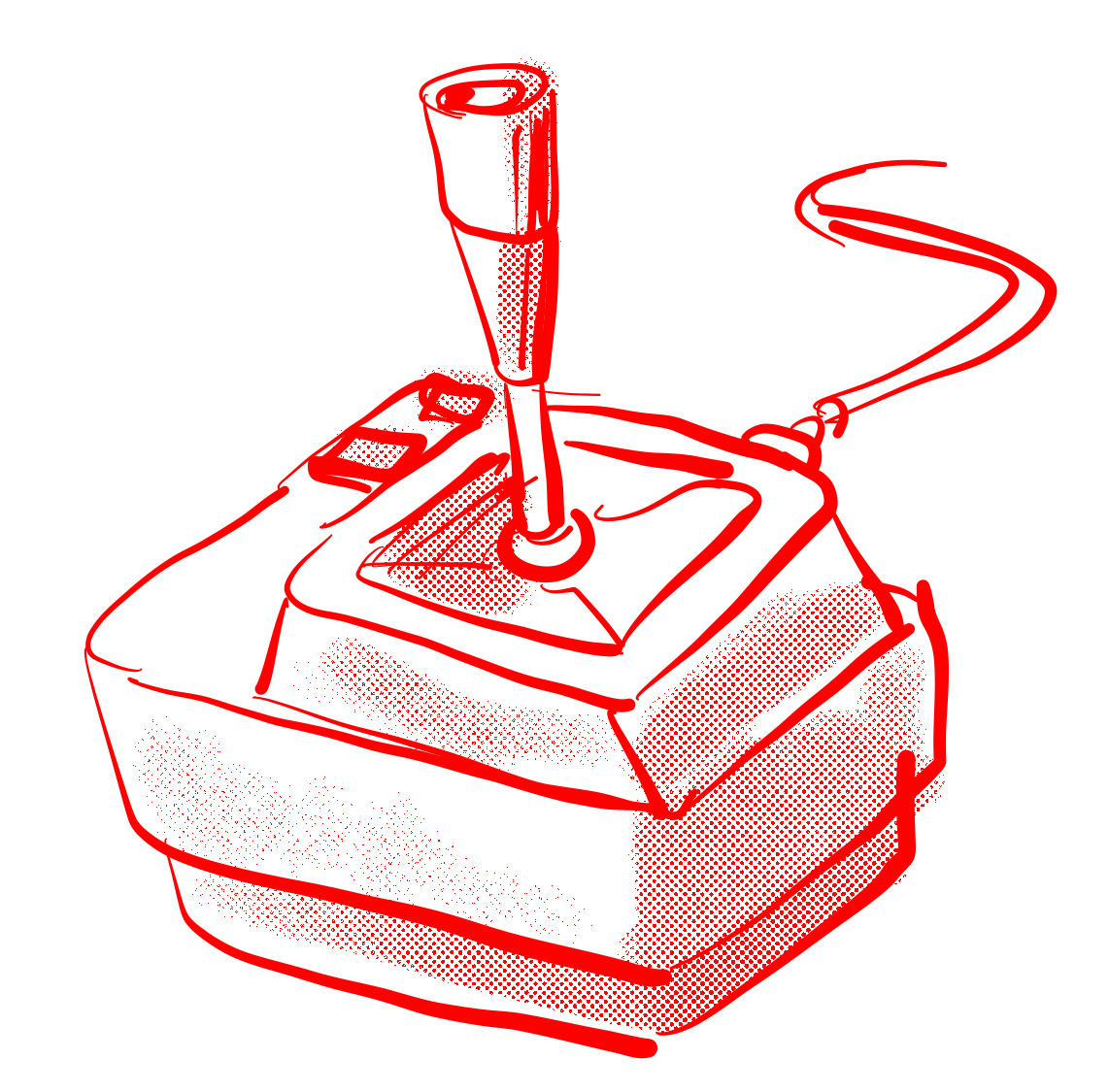
In some ways a joystick, especially the analog one I was imagining, is the most proven example of this sort of thing, having been experimented with for car control at least since the 1950s. I mean, just look at all these concepts/attempts various carmakers have made over the years to drive with a joystick:

That’s a lot. So how did the joystick fare in my thought experiment?
Usability: Not too bad, really! Allowed for one-hand control, with the X-axis handling steering, and the Y-axis acceleration and braking. The biggest issue is the inherent combination of all functions from the one stick, which isn’t always desired.
Feel: Minimal, no road feel or anything like that. Stick motions don’t equate to physicality of motion, really.
Results: Not terrible. Drove around imagined neighborhood, eventually ran up a curb and knocked over a vending machine when I knocked my elbow on the stick.
Paddles (pair)
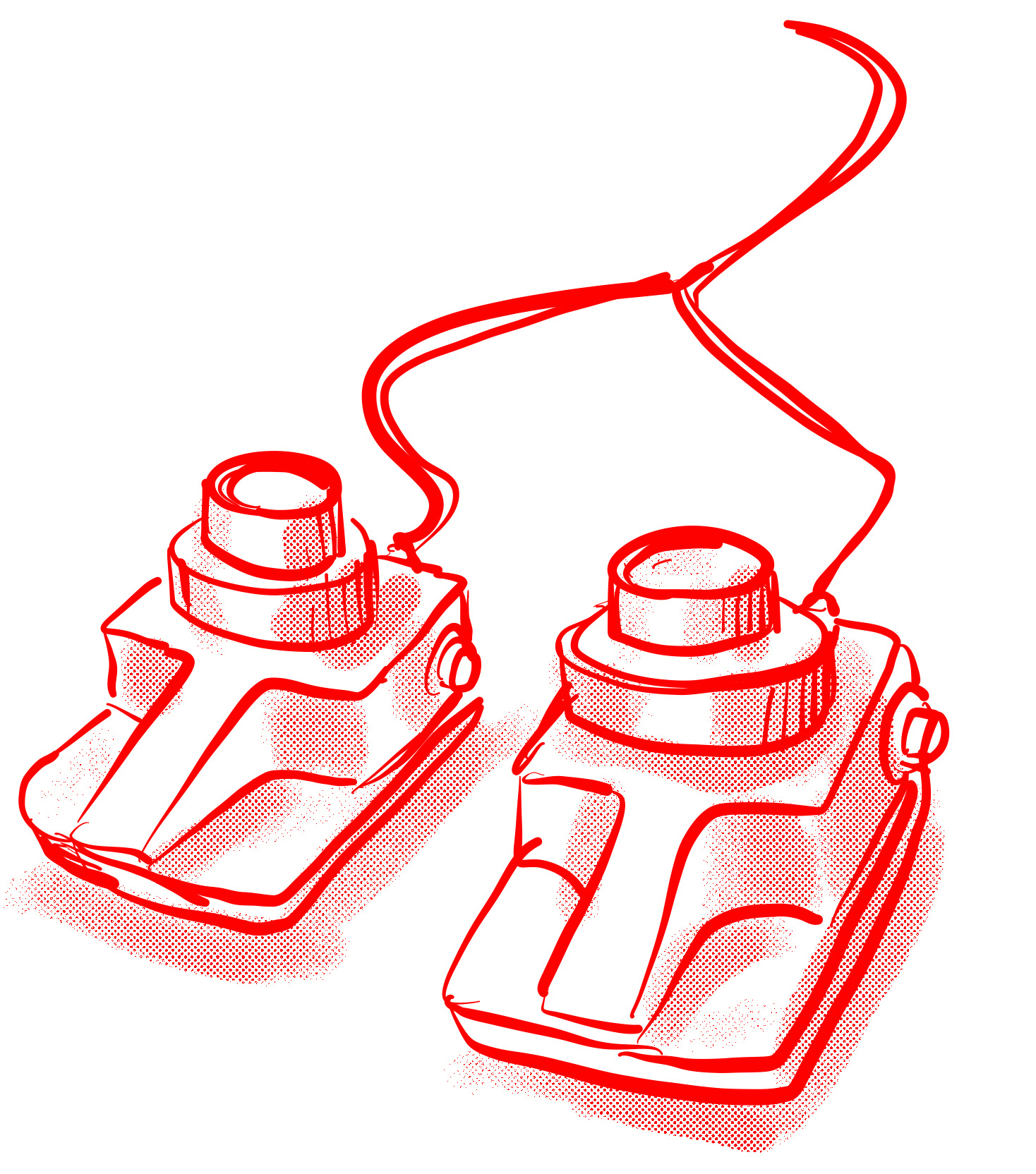
Paddles are some of the oldest, O-est G-est of controllers, and each one is a one-dimensional type of control, a rotating knob. So how could they work?
Usability: One paddle handles steering, one handles acceleration/brake. Dividing these crucial control certainly helps, but the acceleration/brake on one knob is not really ideal for rapid switching between braking and throttle.
Feel: None. I think this is going to be a trend.
Results: I was able to drive the car around somewhat successfully, though it tended to be sort of wandering and meandering, with pretty jerky applications of throttle and brake. I ended up overcorrecting a turn and then accidentally turned the throttle/brake paddle the wrong way and ended up driving the car through a wall-sized aquarium in a pedestrian mall, causing a massive spill of jellyfish and washing a pack of boy scouts into a ditch.
Track-Ball
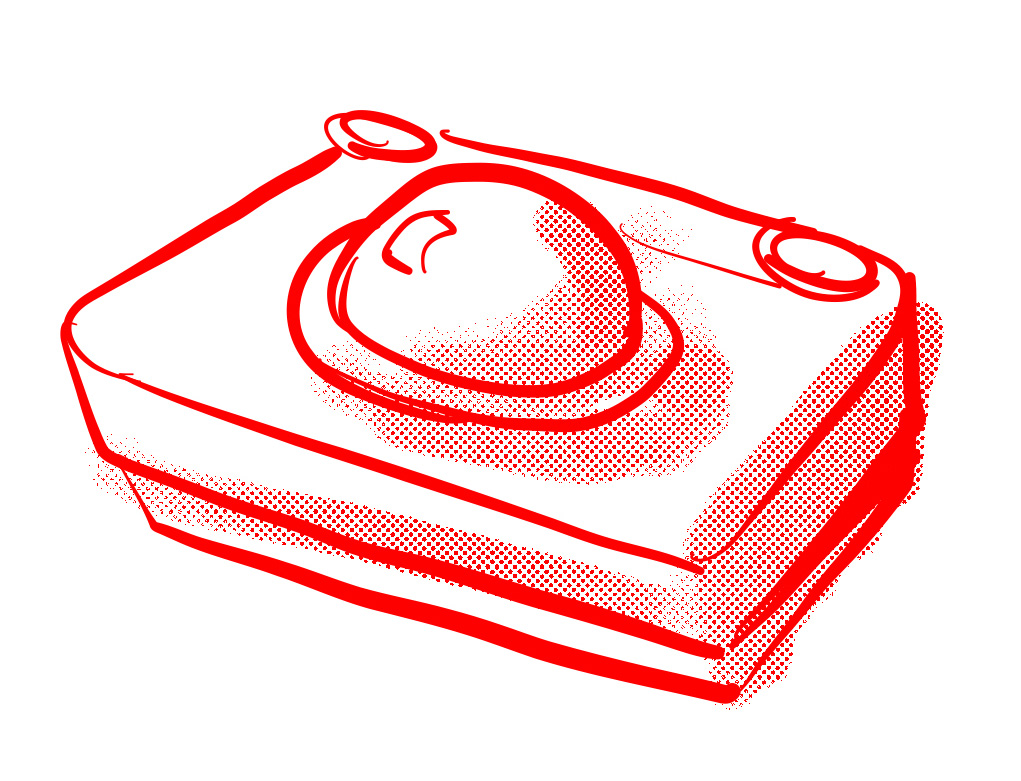
The first track-balls were introduced by Atari for some ’70s-era video games, and proved to be effective controllers, especially for high-speed action-type games. Later, they were used as pointing devices on late ’80s and ’90s-era laptops.
Usability: Like most X-Y-type controllers, the X-axis is used for steering, Y for throttle/brake. Speed of rolling controls throttle speed or brake intensity. It’s fun, but extremely difficult to have any sort of nuanced control.
Feel: No real road feel, but the act of rolling the ball is pretty fun.
Results: Disaster. I got the ball spinning too quickly, too fast, which sent the car smashing through a glass door, through the kitchen, and out the other side where it plummeted off an embankment and nosed into the middle of a chili cook-off, sending people scattering and massive, hot wads of chili flying everywhere.
Mouse

Everyone is extremely familiar with the mouse, the pointing device invented by Douglas Engelbart in the late 1960s and first publicly shown at the incredible “Mother of All Demos” in 1968. Apple made mice mainstream, and they’re still the standard for desktop computers today.
They’re no one’s choice to drive a car with, though.
Usability: Really terrible. Mice are great for two-dimensional work on a screen, but very ill-suited to driving, partially because they operate in a sort of restricted space? It’s hard to say. Here, general X-axis movements in a virtual square area translate to steering, and I tried handling throttle and brake by position of the pointer on the Y-axis (higher faster, lower slower, past midpoint is brake) but soon abandoned that and used the left button for throttle, the right for brake.
Feel: Just a mouse on a desk. No road feel. It wasn’t a haptic mouse.
Results: Awful. Car darted around wildly, smacking into multiple other cars, whipping around wildly side-to-side and eventually flipping over when it impacted a concrete fountain with the right front wheel, causing the car to flop into the fountain, knocking over a statue of Poseidon, whose trident punctured a nearby bouncy house, sending it skittering off into the air like a balloon with a hole in it, dropping children out william-nilliam. I was taken into custody by gendarmes.
Trackpoint (that little eraser thing IBM/Lenovo likes)
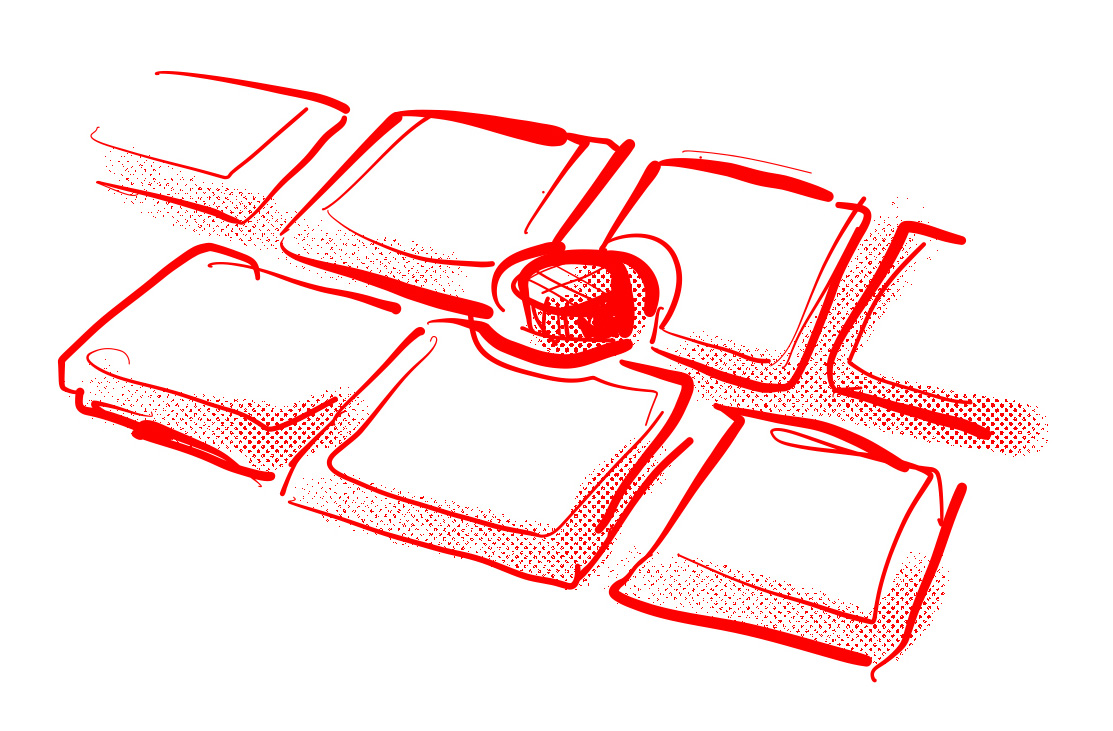 You know these, right? Tiny rubber fingertip pointing device that uses strain gauges to adjust speed and intensity. Highly space-efficient.
Usability: Pretty terrible. Sure, it’s basically a little joystick, but the tiny scale of it and fingertip-level control means it’s extremely difficult to control with any nuance in a driving situation. Uses the standard X-steer/Y-throttle/brake control scheme. Strain gauges adjust intensity based on finger pressire.
Feel: Zero. Like, zero zero.
Results: Nightmarish. A few jerky back-and-forth lurches before I used too much finger pressure and smacked full-speed into the side wall of a Schlotzsky’s Deli, which sent me flying through the windshield of the MGA I was driving in this thought-experiment, and I got tangled up in the canvas roof before I peed myself.
Trackpad
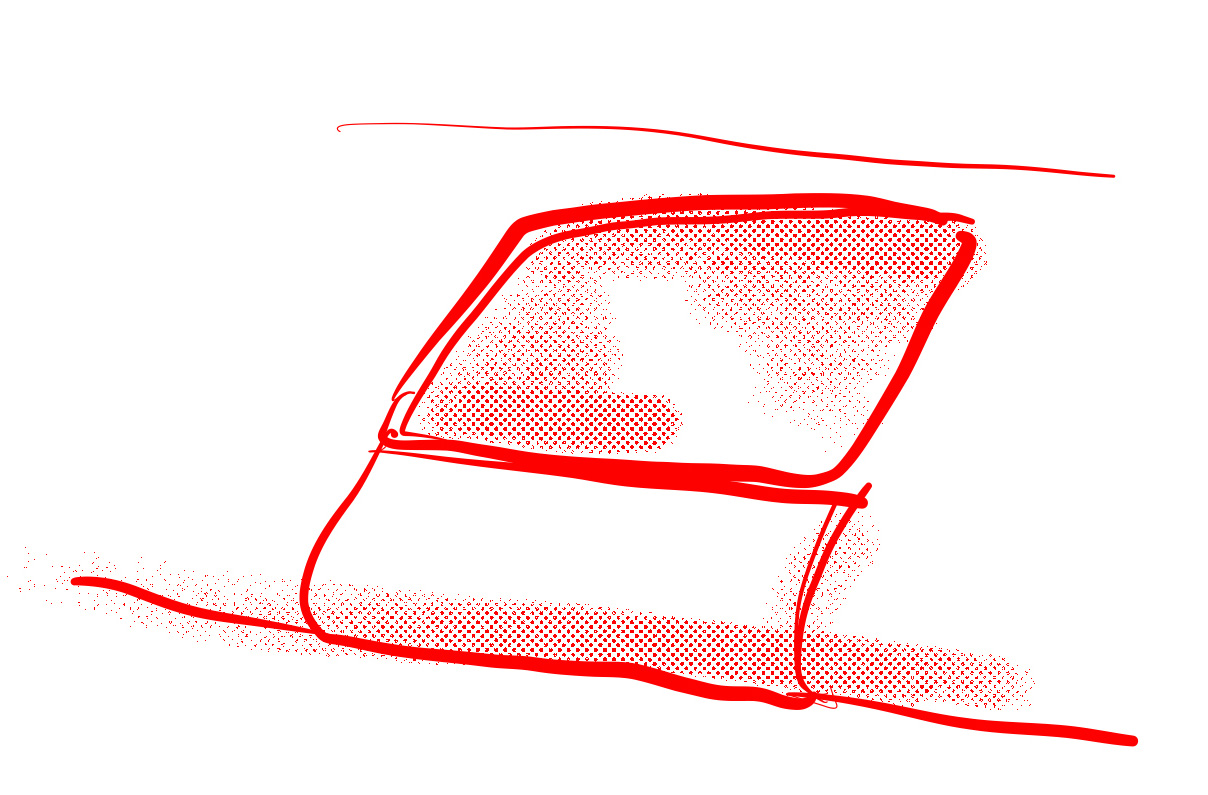
If you’re on a laptop, this is likely what you’re using as an input device. You drag your finger across the little pad, and things move on your screen. Like magic! But no one has ever wanted to drive a car this way.
Usability: Abysmal. Trackpads were never meant for driving. I even tried a control scheme where X-axis is steering, Y is only throttle, and the button/tapping is brake. A mess.
Feel: Just a finger on a pad.
Results: Catacalysmic. I really need to do these thought experiments in less populated spaces, because I completely lost control of the car and it spiraled through an entire outdoor concert where a J.Giles cover band was playing. Luckily, no one was hurt, but the car crashed into the stage and set a huge stack of Marshall amplifiers on fire, burning in a massive pyre.
OVERALL TAKEAWAY: Stick with steering wheels and pedals.




nobody mentions that the trackpoint is just a nipple for laptops?
Check the used bin at Gamestop for a MadCatz wheel.
“The biggest issue is the inherent combination of all functions from the one stick, which isn’t always desired”
So add a second joystick and you have a tank drive.
Many years ago, I had an analog joystick from MS for use with Flight Simulator and thought about its rotating “handle” could be used to control the anti-torque rotor on helicopters instead of foot pedals. The sliding control to the left of the stick could control the collective. And newer joysticks can generate force feedback. But in the end, I think sticking with what is working is the best.
My only takeaway from this is…Schlotzsky’s Deli is still in business? I used to eat at the location on Duraleigh Rd in Raleigh a couple times a week back in the late 90s.
I’m honestly surprised some car company hasn’t tried “gesture driving.” Imagine how silly people would look whilst pretending to grip a steering wheel that isn’t there.
What, no flight yoke? 😉
The thing nobody appreciates about steering wheels until they try to drive with a joystick is the way they spread the input over a large physical distance, allowing greater control by turning large physical motions into small changes in steering angle, and filtering out insignificant twitches.
Your standard joystick is going to give you, at most, maybe 90 degrees of motion lock to lock. Not even an F1 car has a steering ratio that twitchy. There’s no way you’re going to manage a gentle lane merge like that, not to mention the massive fatigue from locking your wrist into millimeter-perfect precision the whole time you’re driving.
A Wii controller wasn’t tested in this fictional test. It would be like playing MarioKart on the streets. Seems like it would be great fun to beta test this for a manufacturer.
It’s a shame there isn’t a manufacturer that likes to let customers test their half-baked ideas…
Hard agree that these are all variations of a capital-B, capital-I “Bad Idea.”
And yet…if you can get it to work, I’d happily drive something that looked like that photo of the 1979 Saab in the article. It just looks so much like a refugee from a Flight Simulator cockpit! I could go “vroom-vroom” on my commute to and from work with the happy smile of an eight-year-old.
Yeah. That Saab looked very cool. Their IPs looked so good back then.
I’m still thinking about the Fight Stick with its nice stick and whole mess of buttons.
One the other hand in the back corner of the middle shelf there is a whole mess of wires with a force feedback steering wheel, pedals and a shifter. Drive by wire? I’m starting to think yes”
XBox controllers have already been used for US military vehicles: https://taskandpurpose.com/tech-tactics/us-military-video-game-controllers-war/
I find I can drive well in video games with Xbox / Playstation thumbsticks. Just started in VR with BeamNg and City Car Driving and an old XB360 controller works well.
The biggest thing about driving video game cars with controllers is that newbies tend to oversteer and keep weaving back and forth. So the algorithm to translate stick input to car wheel turning would be crucial to the driving feel and safety.
That Rinspeed UC interior reminds me of PeeWee’s Playhouse, so I approve.
If you learned to drive a car from day 1 with any of these methods, or were subject to extensive retraining before being let loose on public roads, I think any would be just fine. No different from airplanes where there are some pretty wildly differing control schemes out there. From purely analog wires from stick or yoke to the control surfaces, to hydraulic with and without any feedback, to fully fly-by-wire with and without feedback of any kind. About the only thing I can’t really see working, unless as an adjunct to some sort of “self-driving” nonsense, is the trackpad. Just not precise enough to use one directly.
At least one street-legal vehicle made it into limited production. More than one if we count the various iterations of the Voiture Electronique separately:
http://microcarmuseum.com/tour/la-voiture.html
For an electric or automatic IC, why are there still a hand lever taking up space, and not a botton on the floor:
1 tap: Neutral/Park.
2 tap: Forward.
3 tap: Reverse.
My J Giles cover band was called Gay Jiles and we re-worked all the lyrics to be about a Fire Island butler.
Cub Scouts travel in packs, Boy Scouts (which I believe are defunct) traveled in Troops.
There are still scouts.
There are scouts that are boys, but I think the BSA has rebranded.
I don’t know how it works.
I just know some people involved, and they do some serious camping.
Could be freelance for all I know.
They call it scouting.
The trackball results led me to wonder, how much Goat Simulator went into this experiment?