

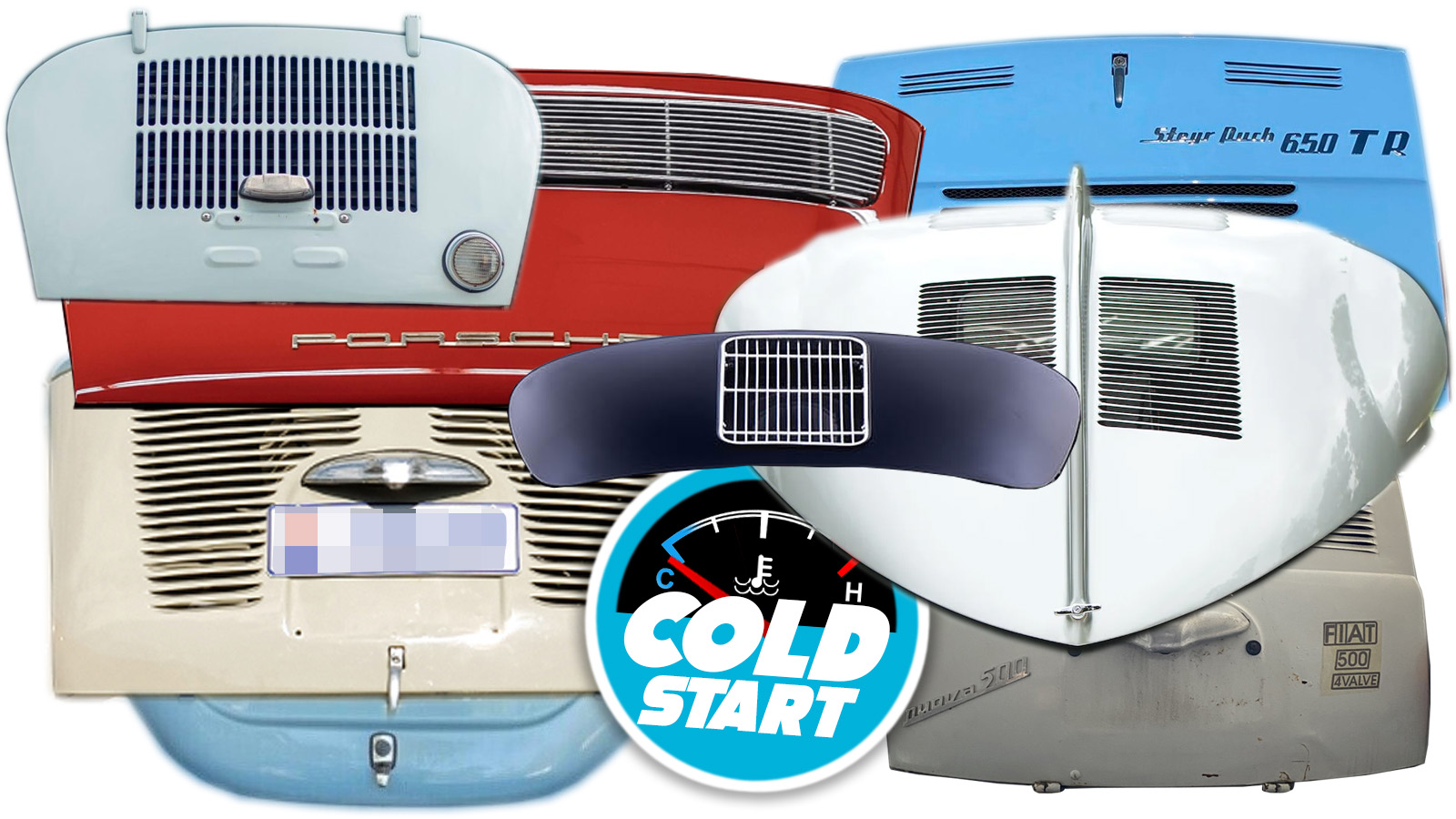
There’s a lot of things I don’t understand about myself, but I have grown to accept. My constant velleity for a hot dog, my deep respect for Gonzo the Great, my taillight obsession, the way I like to shove my hands into bins of things like dry beans or corn kernels or other similar small, uniform objects, and so on. On this list is my fascination with very specific automotive details, like engine lids on rear-engined cars.
Like any good near-fetish, it’s even more specific than you’d think. I’m talking about engine lids on rear-engined cars that tend to be of a sort of fastback shape – with usually a curved or sloped profile, not a traditional three-box-type (not that I have any issue with those, there’s some fantastic ones) but more of a two-curvy-box kind of thing.


You know, like the Volkswagen Beetle or Porsche 356 or Fiat 600, and so on. There’s many of these cars that have some wonderful engine lids with some wonderful vent arrangements, and I think it’d be a good idea to look at some of these now and appreciate them. How’s that sound? Too bad!
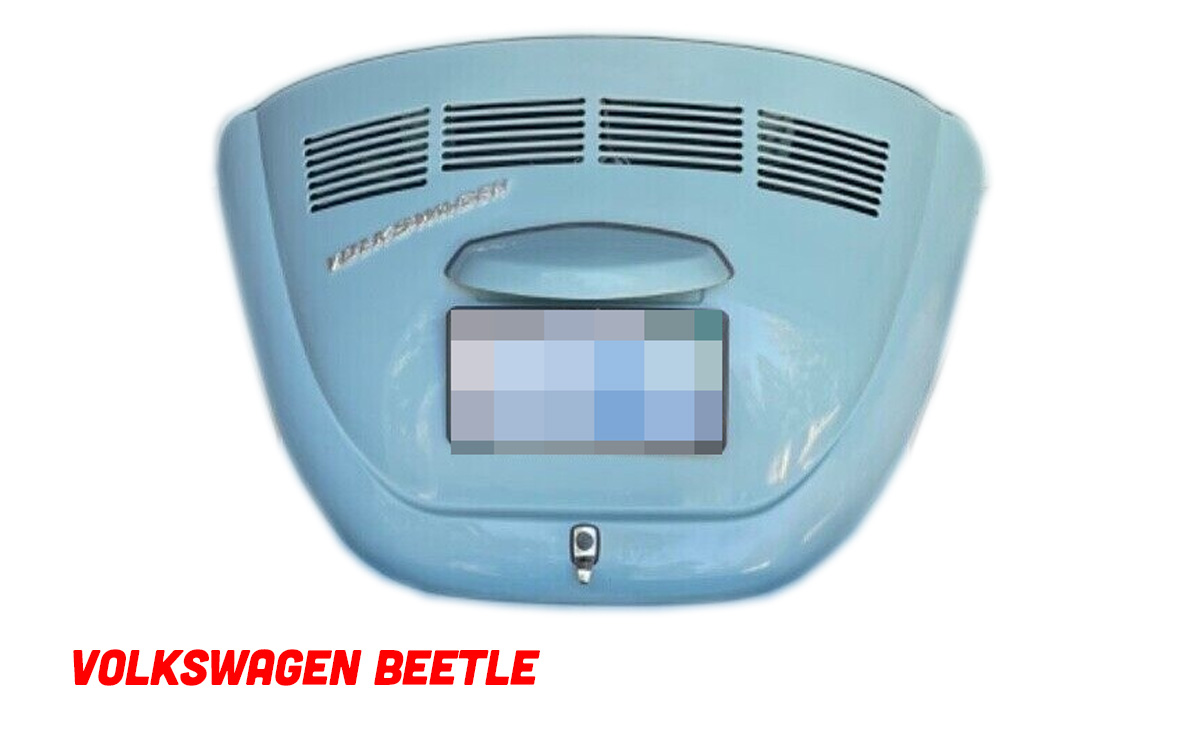
We may as well start with the best-known of these, the Volkswagen Beetle decklid. This is likely the rear engine lid most people are familiar with, and it’s also one that has gone through a lot of changes over the 65 years the Beetle was built. The one pictured above is from 1973 to the end of Beetle production (well, for German and Mexican Beetles, Brazil had something different) but if you’re curious, years ago I made a whole chart of Beetle decklids over the years:
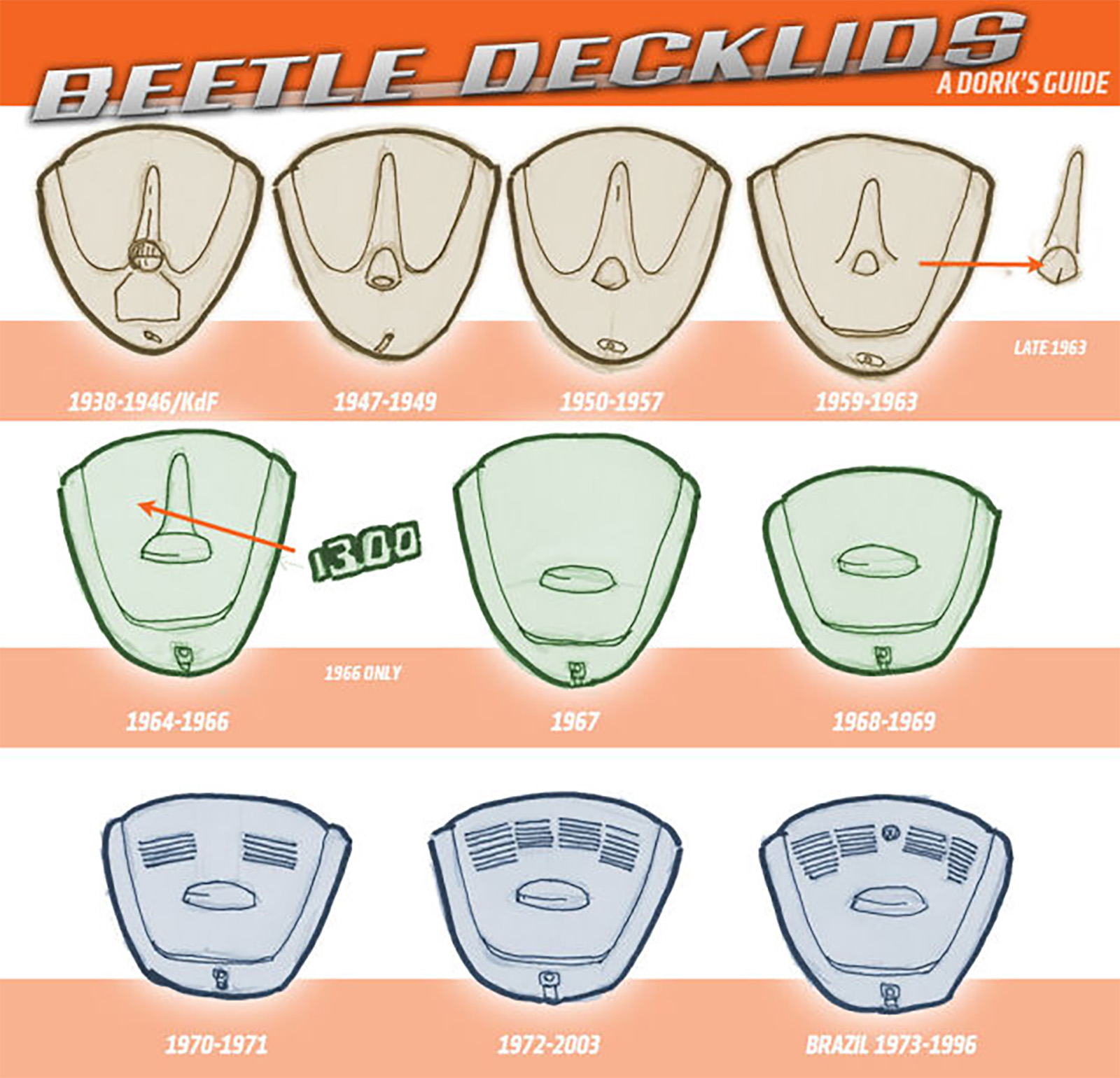
It’s a nice shield-like decklid, and I think the four-vent-cluster version works well, perhaps better than the earlier two-vent-cluster variants.
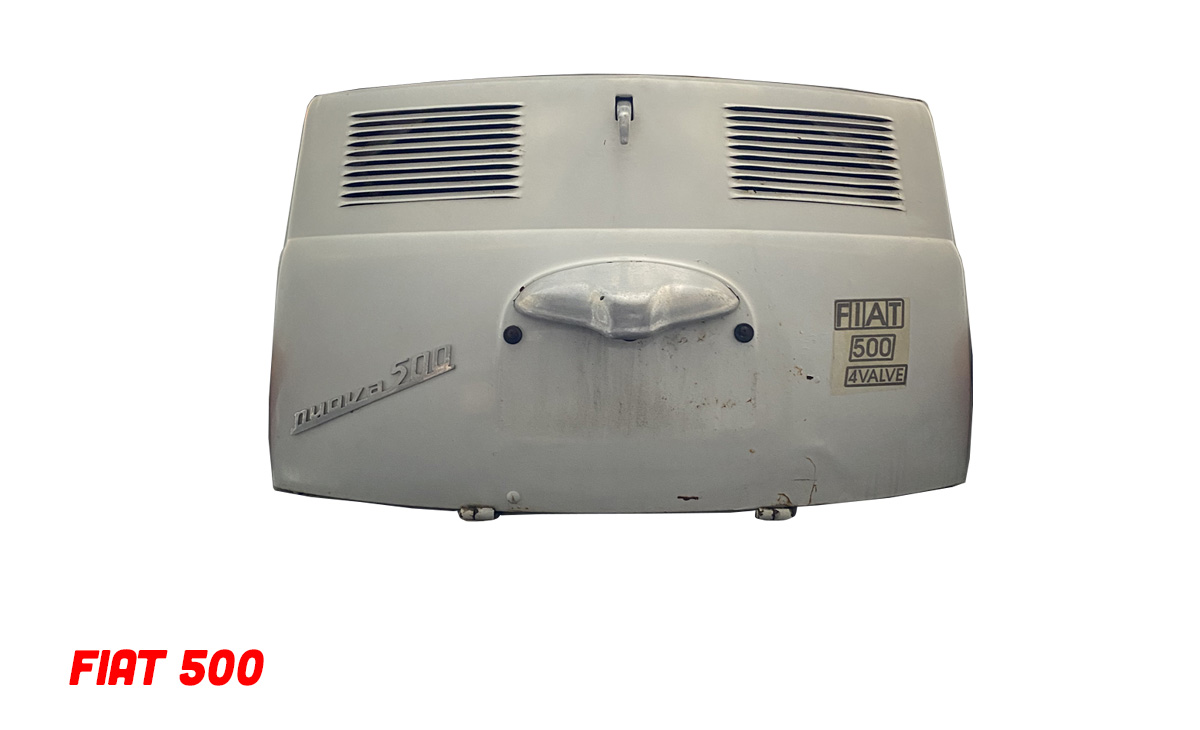
Fiat had a lot of rear-engined cars back in the day, and they had some interesting decklids. The 500 is maybe the best-known, and features a pair of large rectangular air vent clusters, on either side of the opening latch. These decklids were unusual in that they were hinged at the bottom, and opened downwards instead of up.
The license plate lamp housing is interestingly ornate on these, I always thought.
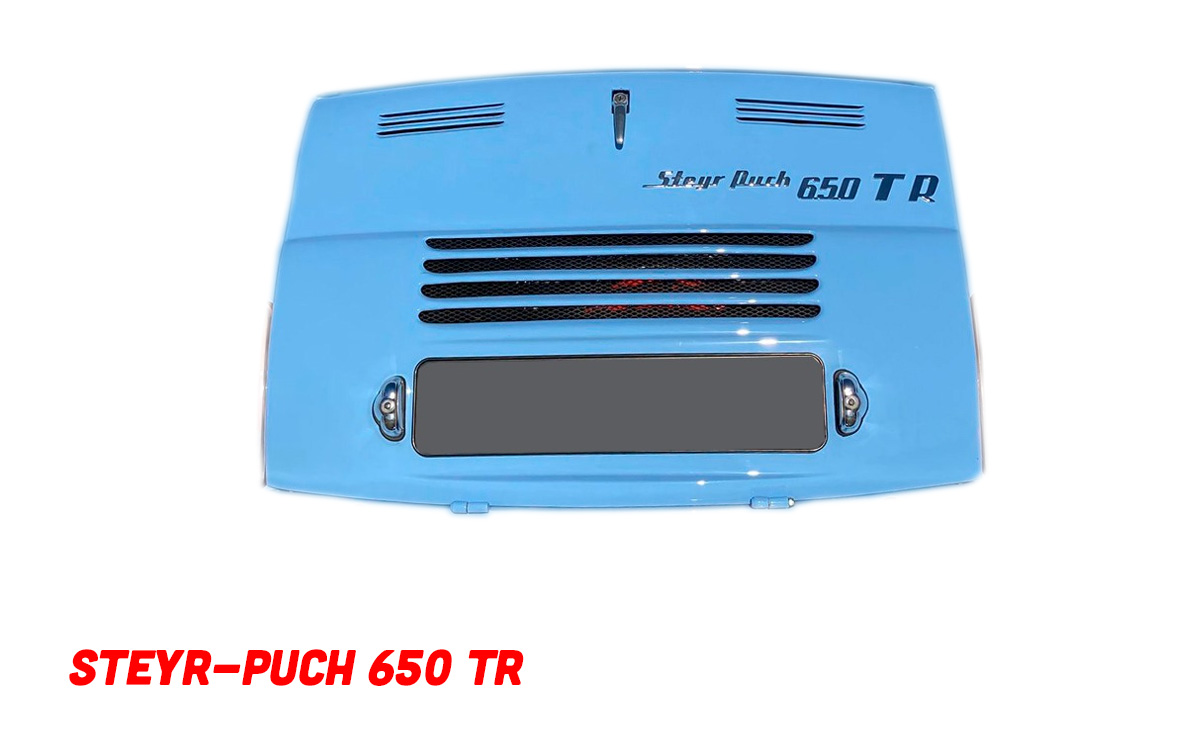
There was an interesting Fiat 500 variant built by Steyr-Puch, and it featured a different engine, a flat-twin that could have a larger displacement, like this 650cc one. The vent pattern is quite different, with two small upper vent clusters and a set of four wide and thick horizontal vents at the middle of the lid. They also sprang for a lavish two license plate lamps!
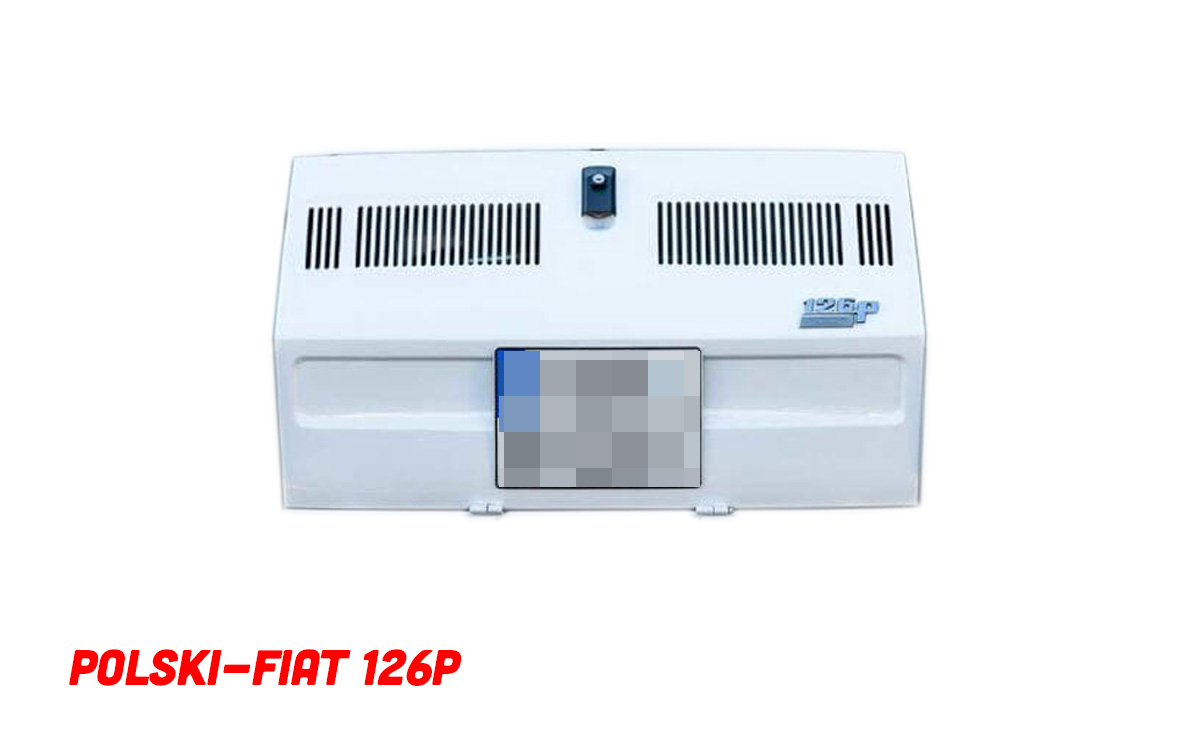
The Fiat 126 – or, as in this case, the Polish variant, the 126p, had a sort of modernized take on the 500’s engine lid, more squared off and angular, with crisp folds and a wide, recessed area below the upper vent groups, which are divided into two sub groups consisting of a small cluster of four vertical vents, then a much wider cluster of vertical vents.
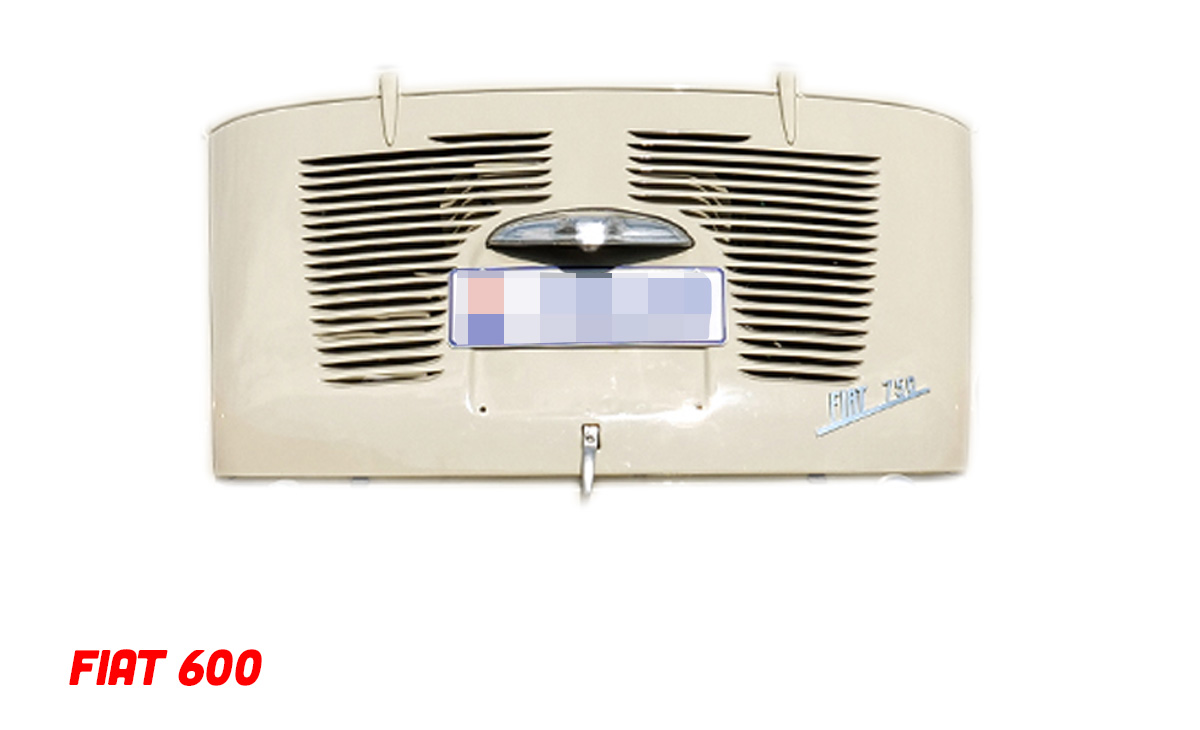
Of the rear-engined Fiats, my favorite is the 600’s engine lid (the Fiat 600 Multipla little van had a very similar decklid). There is extensive ventwork on this one, with two symmetrical and mirrored clusters of louvers, which have a straight but inward-angled outer edge and an inner edge that gracefully curves around the chromed license plate lamp housing.
The result is sort of like two wings of air vents, making these important cooling elements powerful graphic stylistic elements.
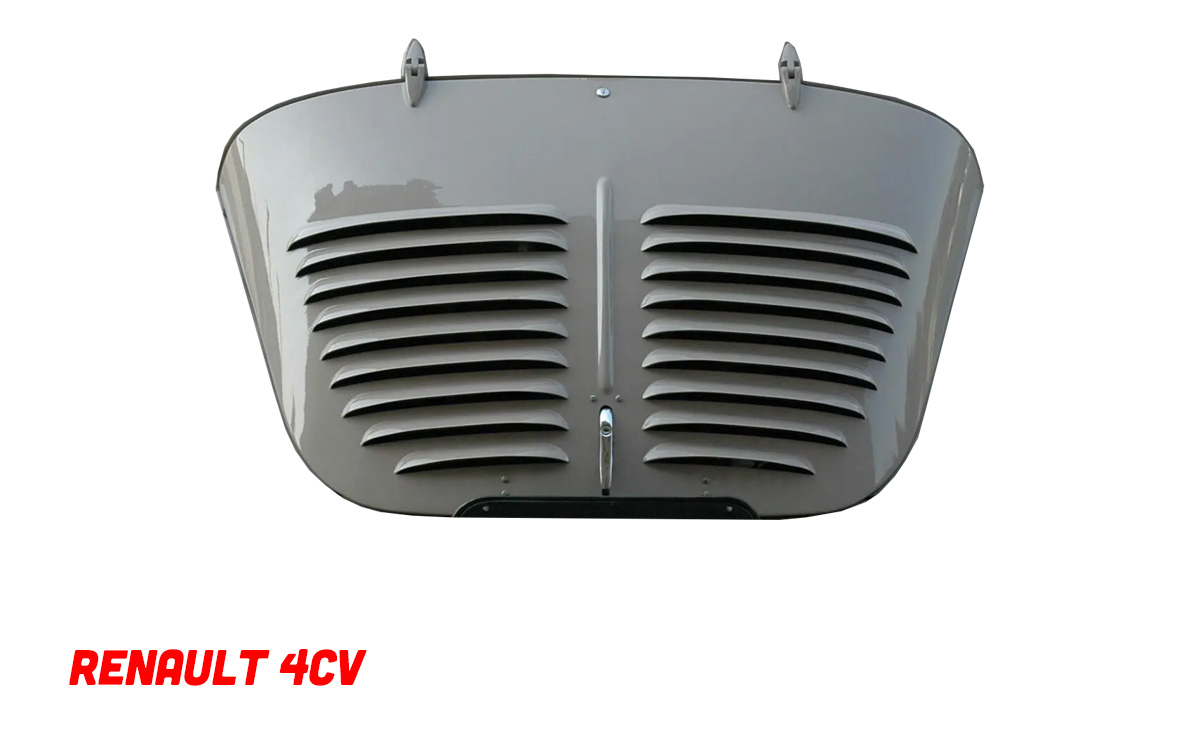
Somewhat similar to the Fiat 600 is the Renault 4CV’s engine lid, which also has most of its area covered with vents – well, more like louvers here, because of the flared shape of the bodywork just over the openings themselves, which aren’t just stamped openings.
The outer edge of the two louver groups follows the outer curve of the engine lid, and is straight at the center, again giving a sort of folded-wings look that adds a lot to the visual character of the car.
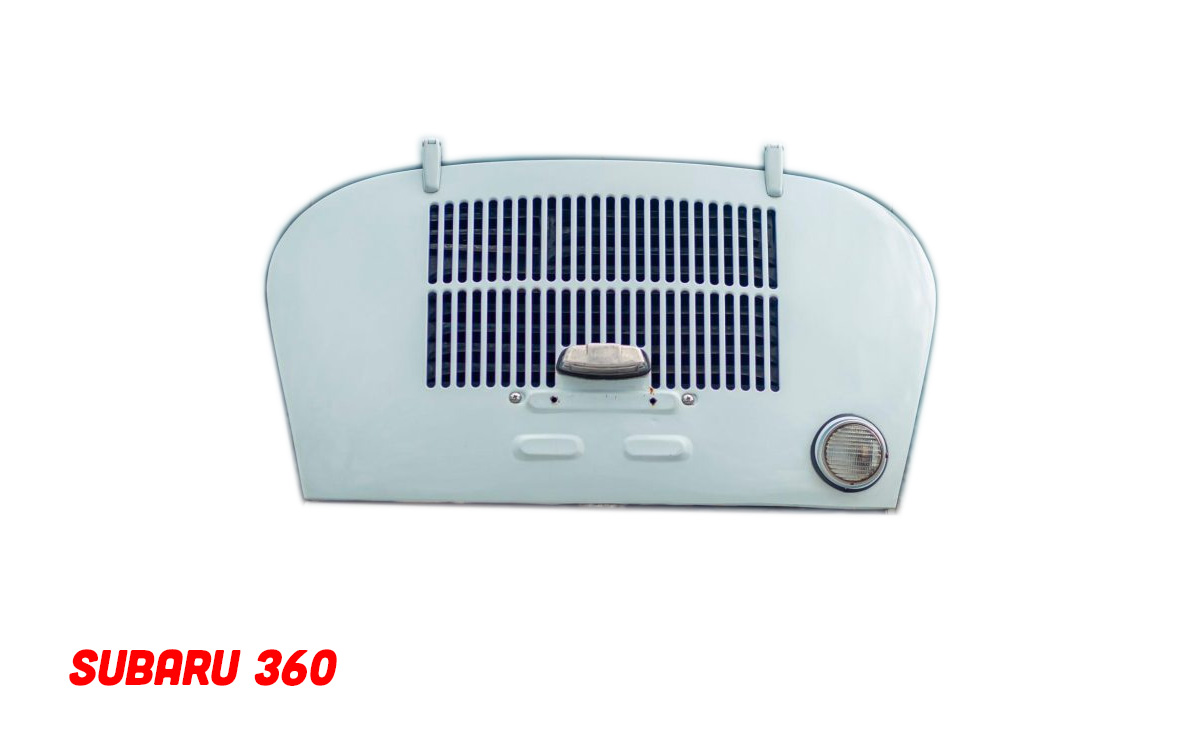
The little Subaru 360 was inspired by cars like the Beetle and Fiat 500, and has an engine lid in a similar general style. Here, there are two horizontal groups of vertical vents, one atop the other, separated by a thin dividing line and broken at the lower center by the small license plate lamp. The result is something that feels like a rectangular grille.
I especially like how some of these engine lids also incorporated a lone reverse lamp at a lower corner.
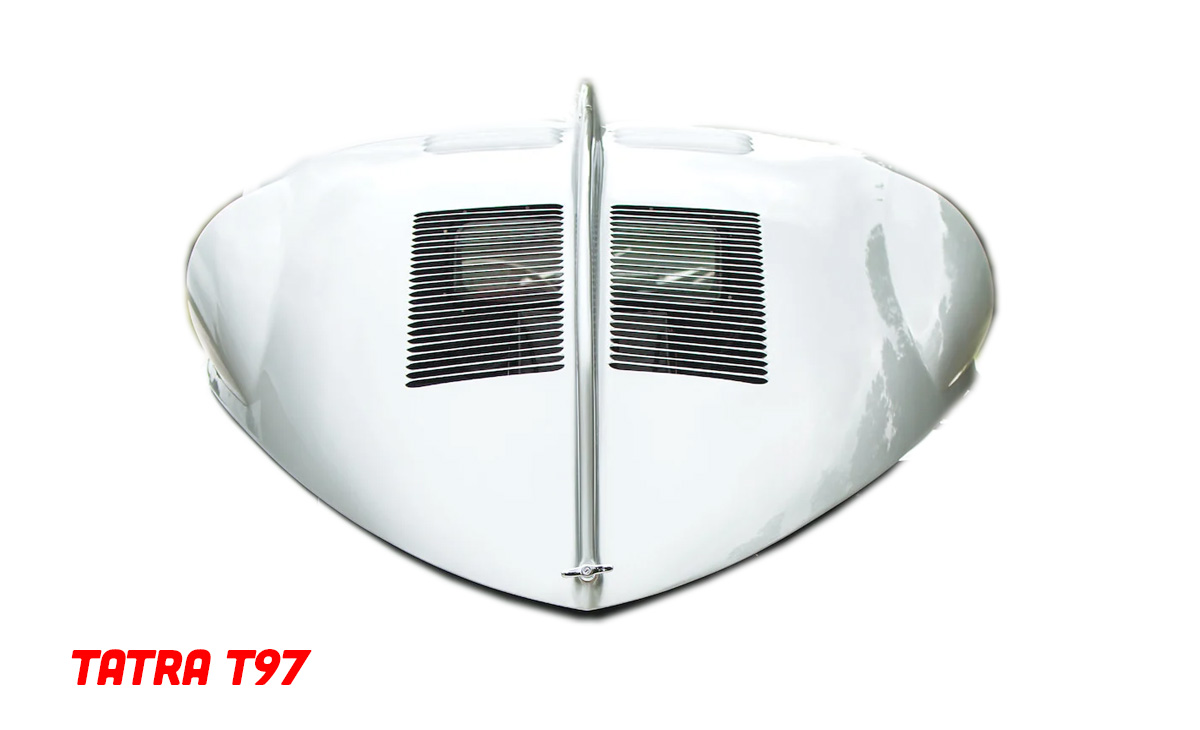
The Tatra T97 has one of the largest and most striking of these rear engine lids. It was one of the earliest, hailing from the mid 1930s, and the vents in this very curved engine lid serve more than just air intake purposes.
Being set in two vertical rectangular groups of horizontal vents, these louvers are positioned on either side of the Tatra’s large dorsal fin, and provide the means to see out of the back of the car as well as helping air escape the engine bay, where it is brought in by the two integrated side scoops.
The rear window glass is in the firewall just fore of the engine, so a driver looking backwards actually looks through two panes of glass (there’s another set of windows in front of the rear luggage compartment) then through these vents, finally sort of able to see what’s behind the car. Sort of.
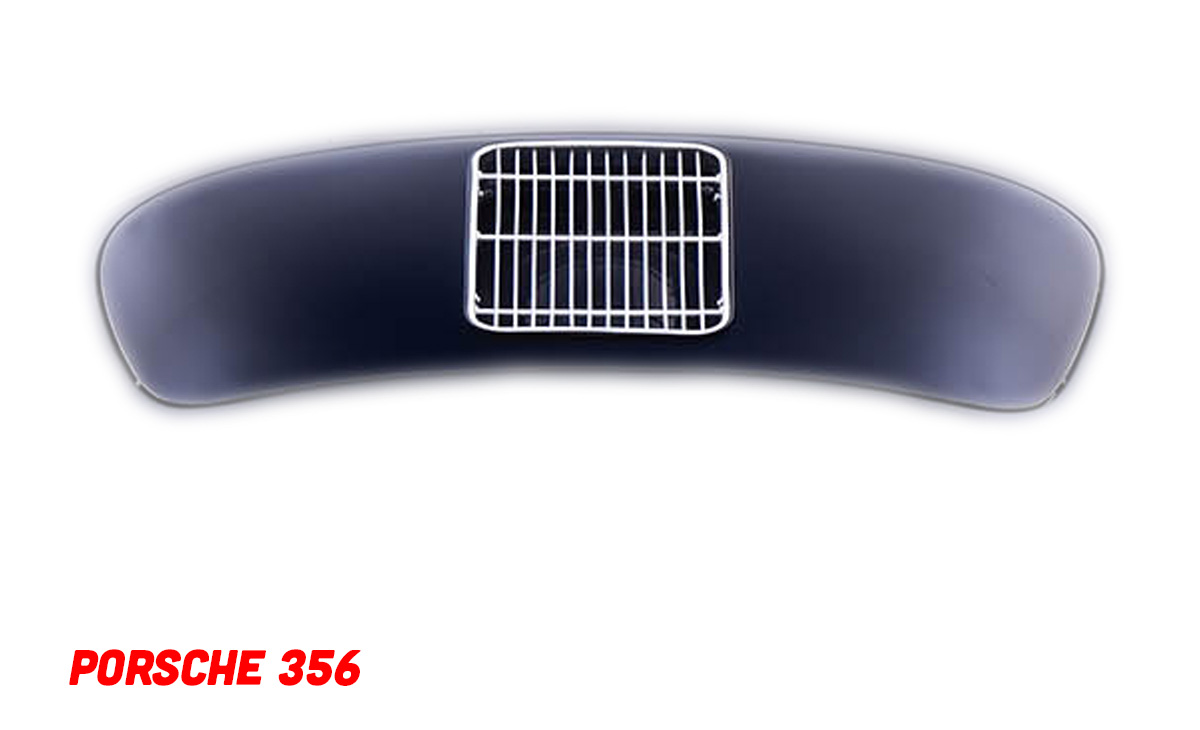
Porsche is unique in this set of engine lids in that their air-intake vents are actually covered by a chrome grille, dressing up the more simple stamped vents of the other examples here. The 356 started with one mostly vertically-oriented chromed grille, and later grew to two side-by side grilles.
These do feel a bit more upmarket than just stamped louvers.
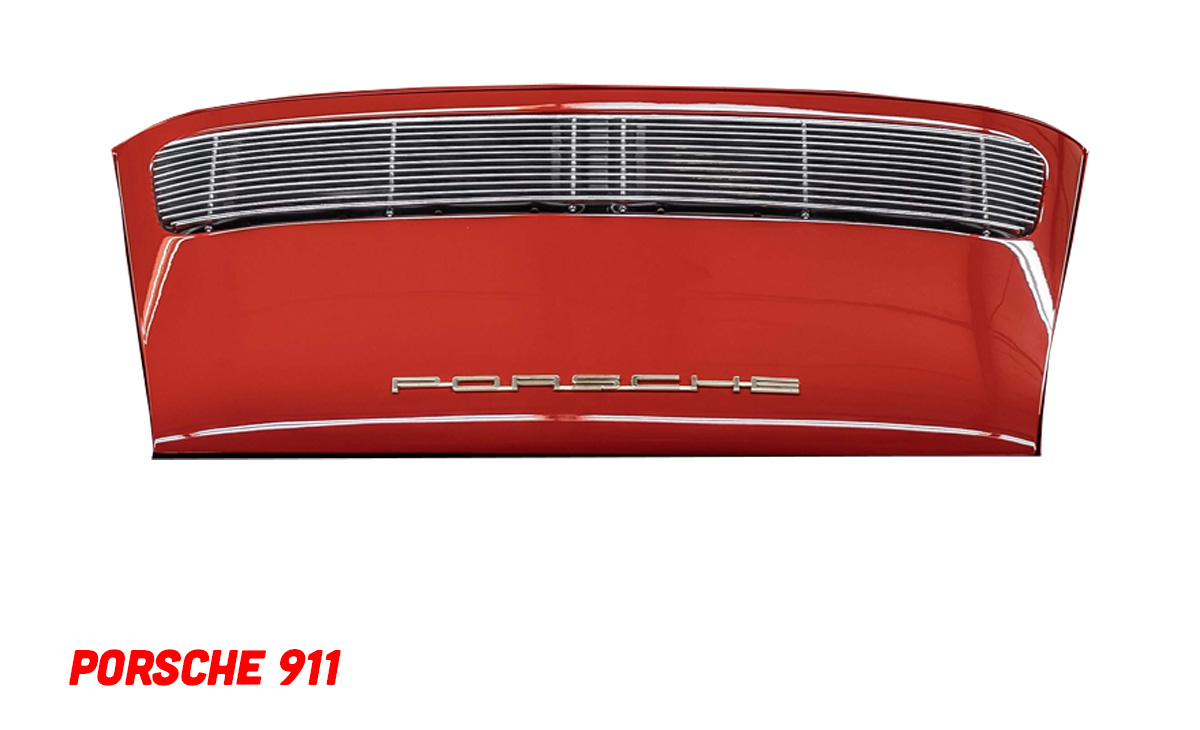
The Porsche 911 continues the 356’s use of a chrome or brushed stainless grille, but now we have a wide, effectively full-width horizontal grille, trapezoidal in shape with rounded corners.
Like the 356, this helps to make the air intake a genuine stylistic element of the car.
Man, we really just talked about engine lids and vents! Thanks for indulging me.


So unless I missed it you didn’t mention a rear engine car that had an engine upgrade that as a result the the bonnet could not be closed so they sold it as a car where it doesn’t close.
Me: Nice decklid, Honey. But the venting is too small.
Her: Get off my back.
It’s the most important meal of the day.
You’re welcome Torch. I wouldn’t do this for anyone else than you.
Not for nothing, for the FIAT 500, there were actually two different types used. The early ones started to disappear around the time the “second” 500F came out around the mid-60’s (some people called the original 500F the “8-bolt” as it used 8 bolts to hold the doors), as did the number plate lamp.
The differences are minor (only if you put them side-to-side its easy to see the differences), but its one of a few things we check to determine if an older 500, 1957 to about 1965ish, actually has the original panels.
Sounds like the 126p – older models had the engine lid that engine shows, but later ones had revamped vents and panel stamping 🙂
I see you are a lover of louvers. Perhaps would go nekkid for decklids?
I’m glad we could help you vent…
In a just universe, the people responsible for these fine but largely unnoticed and almost certainly unlauded design touches know that this piece exists, and are high-fiving each other and chanting JA-SON! JA-SON! JA-SON! TORCHINSKY!
Good god, thank you Jason for “velleity!” I read that in a Bill Bryson book years ago and identified deeply with the concept but didn’t remember the word. It feels so good to have that itch scratched.
If I were smart, I’d write it down somewhere…meh.
And for those who have not read the book “Mother Tongue” by Bill Bryson, it’s a great read! As are most all of his books.
No such discussion would be complete without the shark finned Nazi officer killing Tatra 77 and 87:
https://www.warhistoryonline.com/war-articles/czech-car-killed-nazi-officers-than-active-combat.html
In this parenthetical:
“well, for German and Mexican Beetles, Brazil had something different”
The second comma should be a semicolon. Using a comma implies that the German and Mexican Beetles came from Brazil.
And here:
“The Fiat 126 – or, as in this case, the Polish variant, the 126p, had a sort of modernized take…”
Either the comma after “126p” should be a dash, or the dash should be a comma. Either works, but they need to be parallel, since you’re setting off the “as in this case” phrase from the rest of the sentence. (My suggestion would be to use em-dashes without spaces.)
Something tells me your work will go unheeded, but rest assured: it is appreciated.
That’s some good grammatism there,
Next on “Airconditioner or Automotive Decklid”, we have the following contestants.
Does it say something about me that on seeing the header image my first thought was “Tatra T97” closely followed by “Polski Fiat!!”, thoughts that made me happy?
My fave of course is the twin grille T6/C Porsche (1962-65).
The rain guard on the inside is brilliant, leading the water down between the rear of the engine and the body on to a hot exhaust 🙂
https://www.instagram.com/p/DNi6J33IaBs/?igsh=b2dtcDYyMjg4bXpj
God is in the details eh Jason?
[Moved]
Now THIS is a great conversation topic for the Thanksgiving table!!
You really want to come to blows with aunt Cheryl over the nuances of air-cooling apertures? Everyone knows she’s one of those crazy water-cooling fanatics.
Don’t say I didn’t warn you.
I can take her…
Just a small correction concerning the engine of the Puch 500-650. In contrast to Fiat‘s inline-2 it was a true boxer engine, so no V-twin. That engine was designed by no other than Erich Ledwinka, son of Hans Ledwinka of Tatra fame.
sorry, yes, I meant flat-twin! These guys had their own Cold Start not too long ago! https://www.theautopian.com/the-best-fiat-500-variant-was-the-steyr-puch-500-if-you-were-curious-cold-start/
You‘re welcome 🙂
Since there are 180-degree-V-engines (looking at you, Ferrari Berlinetta „Boxer“), I just wanted to make clear that in the Puch engine every connection rod really has its own crankpin (so: „true boxer engine“).
Ferrari named it BB first and ret-conned “Berlinetta” and “Boxer” knowing it was neither.
Wikipedia says the reason isn’t certain, but Ferrari’s own site says the backronym was their idea.
Thanks for the (more or less likely) explanation. I had not yet heard that story 🙂
I hate to see them go, but I love to watch them leave.
The spacing of the vents on the Polski-Fiat really speaks to me. I like it.
It doesn’t matter in the summer you had to lift the flap abut 10 inches.
I had a Beetle engine lid on the living room wall of my first apartment. I had put a light behind it and it made for a very cozy illumination through the cooling openings. The best part was that the hinges and lock still worked. To change the bulb, you could swing it up.
I thought the Fiat 500 hinged at the top? So when they made the Abarth and needing cooling, they just propped it open and raced like that?
Yes indeed, the hot versions got lids propped open at the bottom. I’m not sure they were generally hinged at all, just pinned at the top and you just took the whole thing off for access. The regular ones were hinged at the bottom. They are so small that with the lid top hinged you’d pretty much have to lay on the ground to get in there.
I mean really, who doesn’t like to admire a nice curvy rear end first thing in the morning?
Can I even look at this much backside on my work computer? Am I going to get fired?
Definitely should have had a NSFW label. You’ll get an email from HR shortly.