

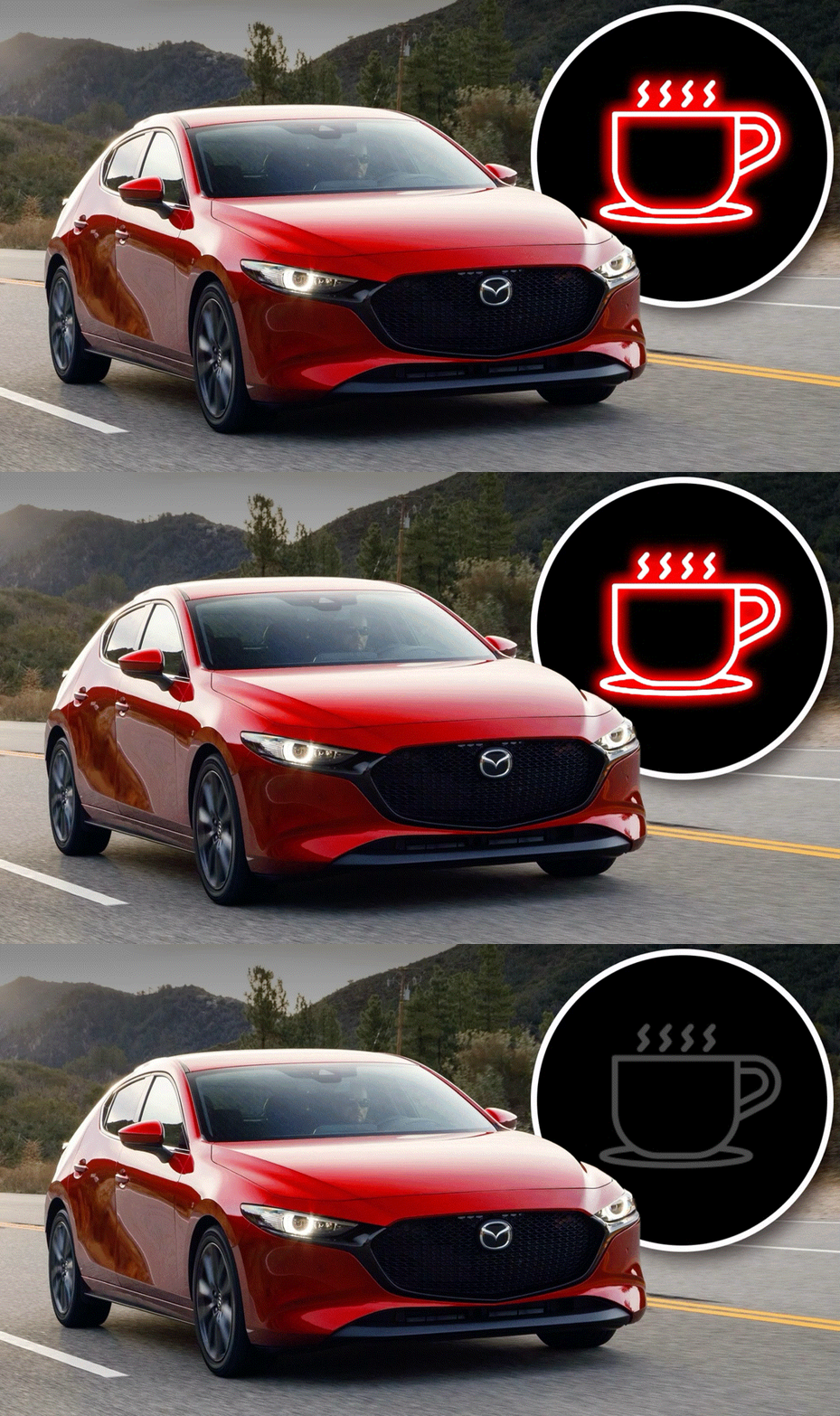
If you’ve rented or owned a modern car, you might’ve seen a warning message featuring a pictogram of a coffee cup appear on the dashboard, along with a message asking you to take a break. Often called a “driver attention alert” or “driver attention warning system,” it’s a bit of well-meaning tech aimed at changing driver behavior. But does it actually do anything? The Insurance Institute for Highway Safety crunched the numbers on that last point, and it turns out that coffee-cup warning light might sometimes just be an annoyance.
Late last year, IIHS researchers sifted through eight years of claims data from Mazdas with various advanced driver assistance system packages, separating feature sets into buckets. Unsurprisingly, features like automatic emergency braking and lane departure prevention make a sizeable difference in preventing or reducing the severity of rear-end, offset, and run-off-road collisions. However, the little attention alert function doesn’t seem to be doing much discernible good in this application. As per an IIHS release:


The bundle that added Driver Attention Alert was a notable exception, delivering no greater benefits with the addition of the new feature. It’s possible that the alert came into play too rarely to affect claim rates, as it only activates after about 20 minutes of driving between 41 mph and 86 mph and may not function on roads without clear lane markings.
Mazda’s Driver Attention Alert is one of the more basic driver attention systems, the sort that doesn’t point a camera at the driver. Instead, it uses the lane departure warning system along with driver inputs to estimate how tired a driver is, and if a certain level of input ping-ponging is reached or if a drive in the prescribed speed range lasts longer than two hours, a reminder appears on the gauge cluster to take a break. It sounds like a relatively cheap way of trying something, but now that IIHS has crunched the numbers, the inexpensive way doesn’t seem effective. As the organization wrote, “In fact, it showed reduced benefits across most coverages and an increase in BI [bodily injury] claim frequency, although only the results for collision and PDL [property damage liability] were statistically significant.”
The note of reduced benefits is particularly interesting. Since IIHS structured Advanced Driver-Assistance Systems (ADAS) packages by feature inclusion, other than the addition of Driver Attention Alert, there isn’t an equipment difference compared to the closest comparable package. It’s quite possible the reduced safety benefits of the assistance package with Driver Attention Alert are a matter of noise or sample size, but we are talking about a fairly minor swing here of three percentage points.
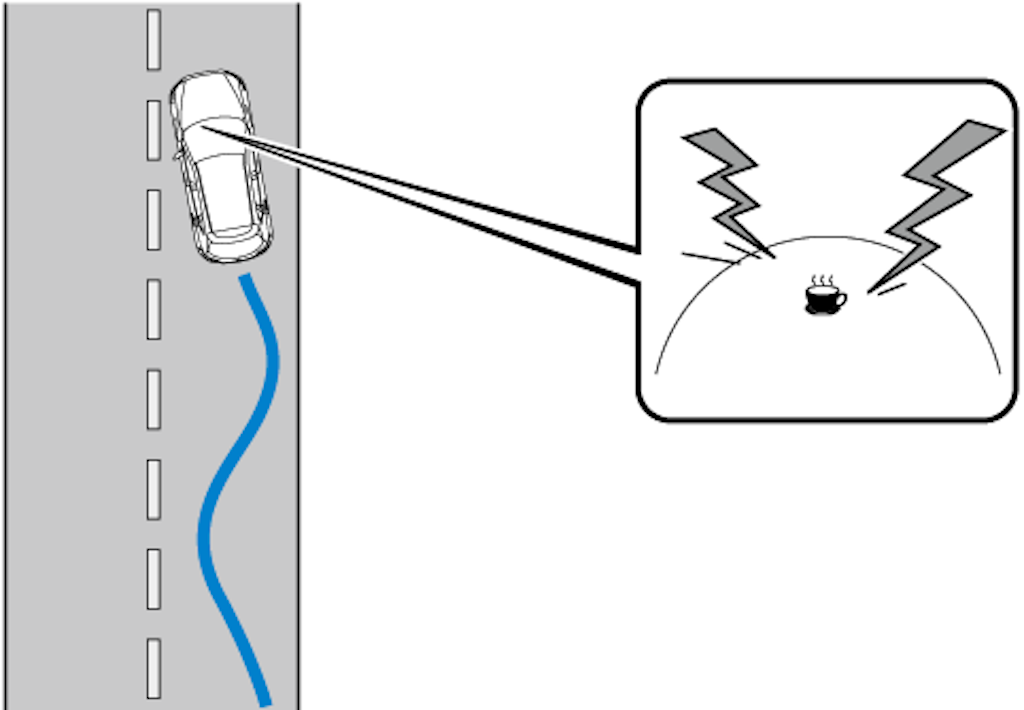
Beyond the functional limitations of these primitive driver-attention warning systems, questions still remain around the efficacy of simply asking drivers if they’re getting a bit tired. Humans don’t always take suggestions, especially from inanimate objects. Do you have a person in your life who’s perfectly content to cruise around with a check engine light or a tire pressure monitoring system light on their dashboard? This is much like that.

Of course, such primitive driver-attention warning systems shouldn’t be confused for a driver-monitoring system that points a camera at the driver to look for signs of fatigue, such as eye-closing, blinking, and yawning. These newer systems, often sourced from Seeing Machines, function at all speeds in all environments and should be more effective than simply guesstimating driver tiredness from lane position. Considering we’ve only seen the proliferation of modern driver-facing camera-based monitoring systems in the past seven or eight years or so, I’m looking forward to the analysts crunching the data on potential progress. For now though, that coffee cup warning light on your dashboard might be just as ineffective as you’ve suspected, so long as there isn’t a camera pointed at your face.
Top graphic images: Mazda; Nissan





The only time I’ve seen this come on was in a rental car, as I was fighting the lane keeping assist to dodge potholes the size of bathtubs along a west Texas farm road. I was very, very awake at the time, actually.
My 2017 doesn’t do this exactly, but it puts a message up on my dash when I’ve been driving for 2, 3, and 4 hours. My 2024 doesn’t do either thing that I know of.
I always thought this was pointless. Had a car that would activate this after sometime, 3 hours of driving if I am not mistaken. I could be already tired at the moment I started the car, and maybe more alert after some coffee cups.
And I don’t think those systems with cameras are any improvement, I mean, you can yawn because you are engaged in a a boring conversation with the passenger.
And much better than assessing fatigue, these system should analyze and determine when someone is angry, hungry or simply distracted looking at social networks in the phone. Probably these three things cause more accidents than tiredness.
Probably in a not so distant future, there will be a system that will determine someone is in a given condition, pull the car over, and make you solve captcha like challenge to determine you are alert.
Then there will be people complaining that it was better when it was only a light in the dashboard.
I stop when one tank is empty, or the other full…
This feature has “Clippy” energy. Which means it can only be perceived as an annoyance.
My wife and MIL thought this meant there was a coffee shop near by a few years ago when it was on the KIA we had. Oh boy did I get a laugh.
But if people don’t know what is for, and it clicks on seemingly at random from my experience, there’s not chance its meaningful or helpful.
These gimmicks just get people to buy more black electrical tape.
My Accord has this, I’ve had it pop up a few times on a road trip, and yeah, it just gets ignored
I’m guessing this comes standard on a Suzuki… Cappuccino? (I love that car name)
Or a Ford Mach-E(ato)
Now I want a macchiato…
The order of words here is quite an encapsulation of the site.
…but I don’t like coffee. In fact I swore off caffeine entirely a year ago, trying to keep blood pressure down. Why is car telling me to be unhealthy now?
Obey car!
Car is thirsty! Please make some coffee for you car.
“Uhggh, artificial cream. Going into limp mode.”
Boy are there ever two ways to read that comment.
PLEASE CHARGE YOUR COFFEE CUP.
A simple “Hey, YOU!” would suffice.
Our newest vehicle, a 2024 Trax does not do this, but our Garmin Drive 52 from 2020 has a pop-up message after two hours of driving.
My Amazon HUD alerts at 4 hours…
Well they couldn’t call it a break light because it sounds too similar to brake 😛
Plus half the country doesn’t know the difference between those two.
https://www.chevrolet.com/certified-service
Scroll down a couple of sections and see that both words are used to describe the same parts in the same offers!
My wife’s Accord will do this based on driver inputs. The problem is that the only time I have made it go off was while driving at night in the rain on a pretty beat up road with no shoulder. So basically the exact moment when throwing a needless distraction at the driver can only make things worse. It didn’t go off at all when I drove for 5 hours nonstop during a vacation, so at least it doesn’t assume that you don’t have enough of an attention span to pull off a longer drive.
I haven’t driven anything new enough to see this. But basically the idea is you should take a break after only 20 minutes of highway driving? What a load of crap, I’d ignore that too.
It doesn’t come on after 20 minutes. It starts monitoring after 20 minutes of highway driving and then comes on it you are weaving in your lane.
No, I think the idea is that it doesn’t start checking your attentiveness until at least the 20 minute mark.
Ha, that makes sense. But still, that time frame is small, as if people don’t sit through movies or longer already
It’s definitely a weird time frame. It feels like it should probably start monitoring immediately, rather than picking an arbitrary amount of time before it starts. I could be tired as hell before I get in the car.