


Midcentury Ford was a company with a pretty coherent taillight theme, and I salute them for that. That theme was round. It was really a sort of subset of the greater Round Taillight category, a light inspired by jet engine intakes and exhausts. These were real hallmarks of jet age automotive design, and Ford leaned into the look with a determined gusto unmatched by pretty much any other automaker. Part of Ford’s design vocabulary was a pair of big, round, jet-like taillights, forming a pair of glowing red exhaust-like orbs that were very distinctive when you followed them. In 1965, they started to transition away from the round taillight, but hedged their bets, sort of. It’s a little odd, and seeing how this news is only 61 years old, this seems like the right time to explore it.
Ford had adopted a round taillight design starting around 1952; their first postwar cars used more oblong-shaped rear lights, but once they got a taste of that sweet, sweet circularity, they wouldn’t let go. It wasn’t quite universal across their lineup, but it was certainly a running theme. They made a number of variations of these round lights, but they generally tended to be fairly simple, a round red main lamp with often a co-centric inset detail that housed a reverse lamp, reflector, another red lens, or some brightwork blanking area.


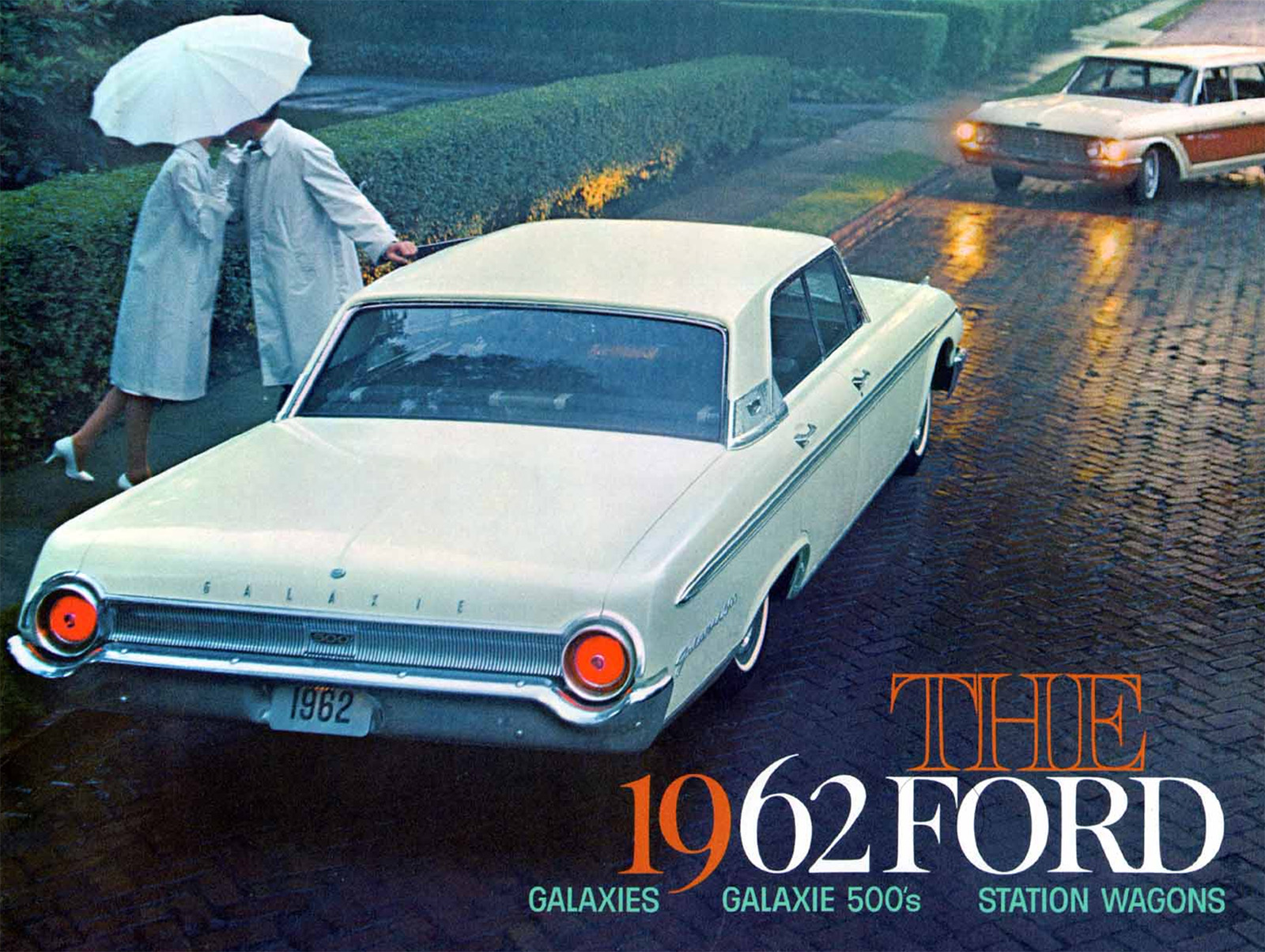
Here, since we’re talking so much about it, I may as well show you a prime example:
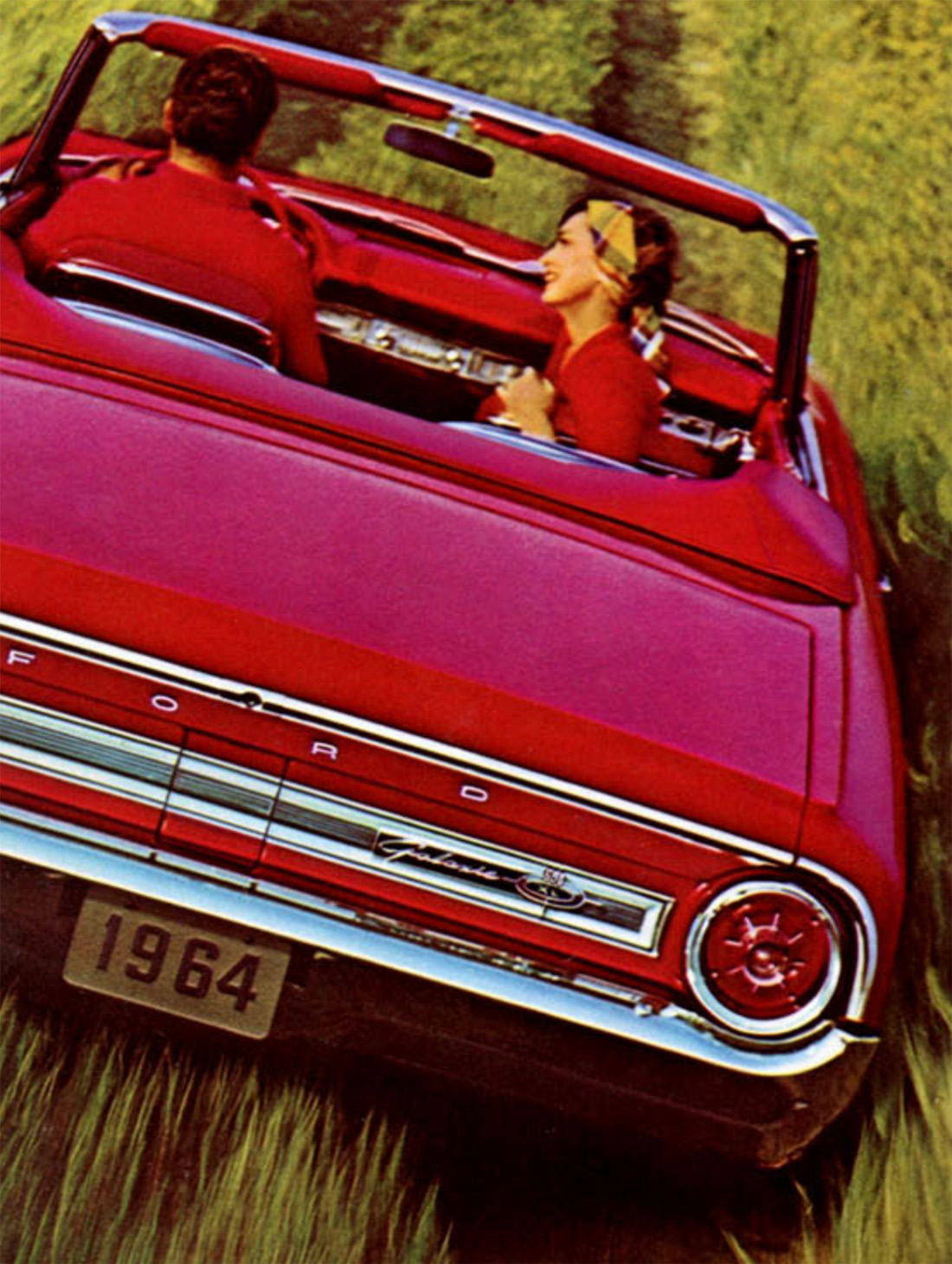
That one, from a ’64 Galaxie, also has eight little chrome-effect strakes radiating from the central cylinder there, for some extra visual interest. I picked this ’64 Galaxie as an example to show you how dramatic the change was one year later, when Ford did a major re-design of the Galaxie, inside and out:
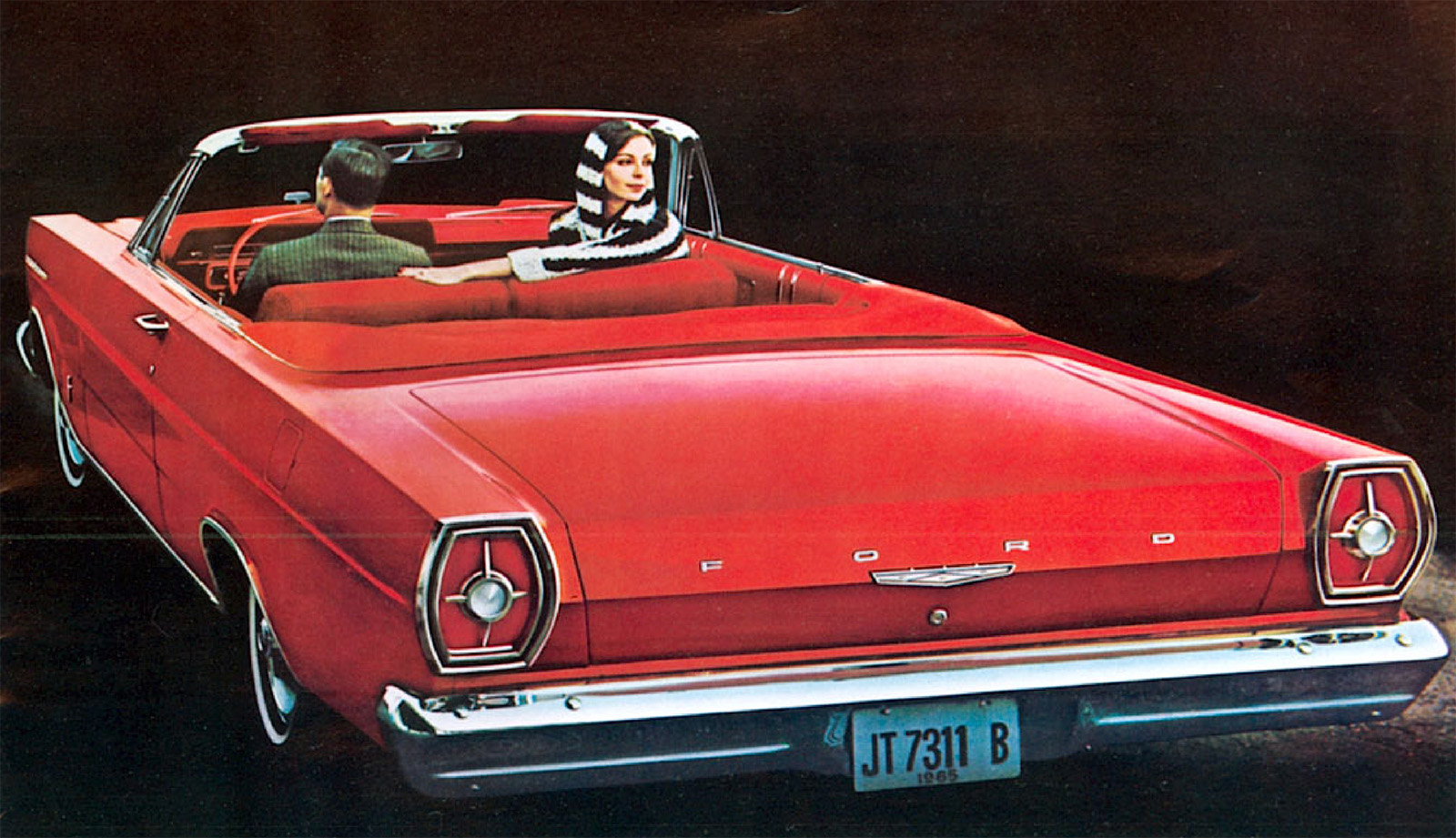
Look at that! The concept still feels a bit like a jet exhaust, but it’s now a more complex shape, flat on top and bottom, bowing out on the sides, perhaps a bit like a cathode ray tube television screen, rotated 90°. There’s still a round inset reverse lamp, and four of those chromy strakes.
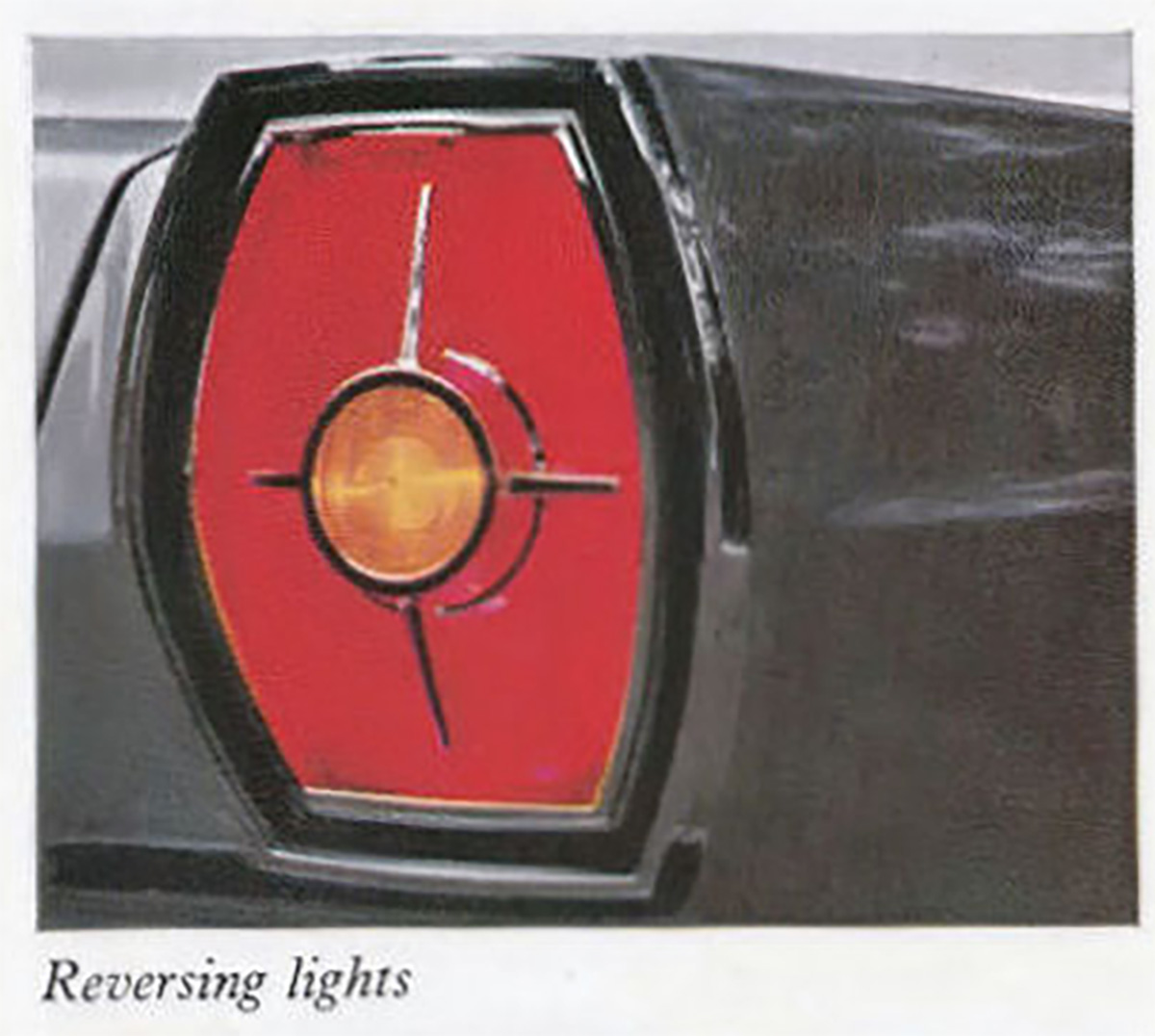
Just for fun, here’s the Australian market version, which required amber rear turn indicators, which did double-duty as reverse lamps, a unique Australian regulation.
Anyway, as you can see, these taillights are shaped to fit very specifically into the fender design of the new Galaxie; these are not generic lamps that Ford can just put on anything, they were clearly designed as a unified part of the new Galaxie.
That brings us to the part that sort of confounds me: for the lower-spec cars that shared the new Galaxie sheet metal, which Ford called the Custom and Custom 500, these taillights were replaced with round units like the earlier taillights, made to fit into the new body via aluminum filler panels:
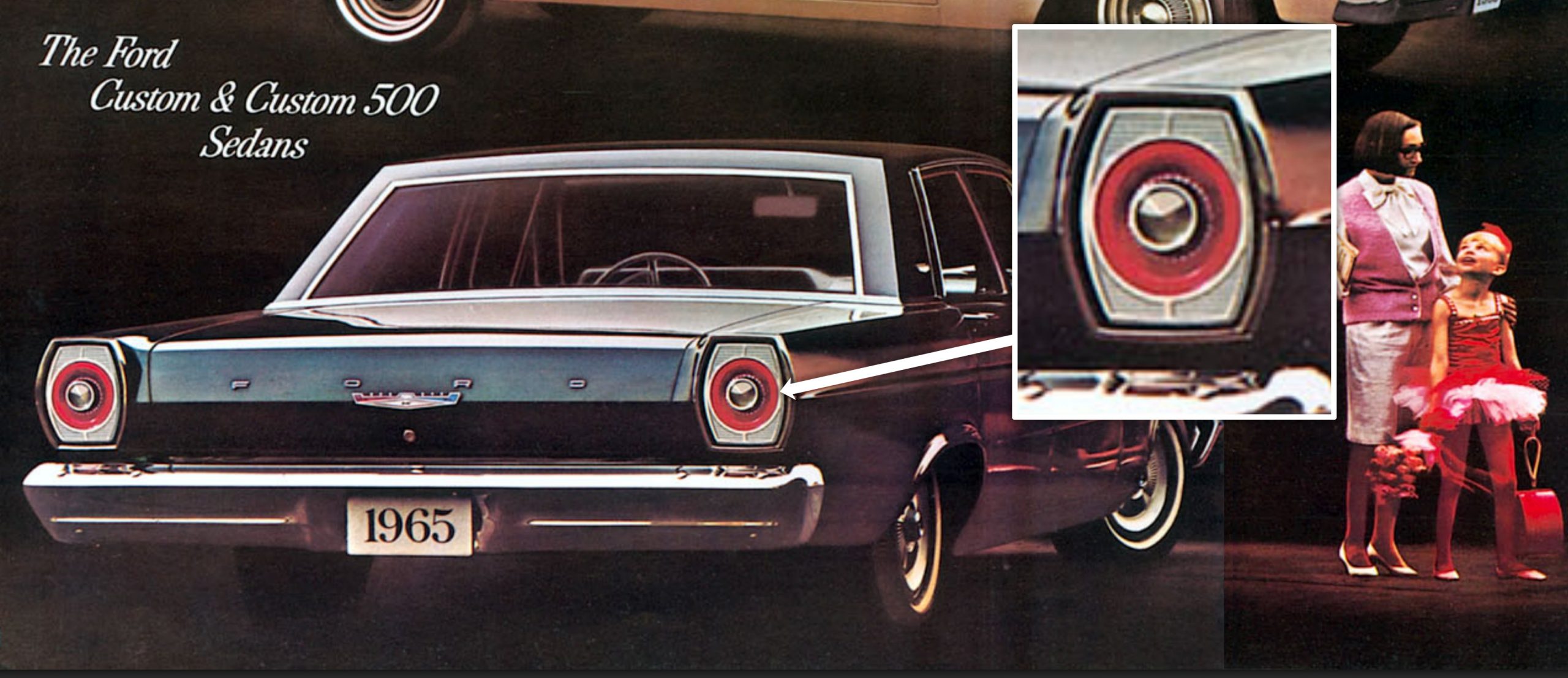
So, I have some questions here: since these were only fitted to the lower-spec cars, are they cheaper to produce? You would think that going from one part that is used across a car lineup to two separate ones would be more expensive, not less? Which makes me wonder if these round lights could have been leftover stock from earlier year cars? If so, then does that mean the width of the new lights were designed to accommodate these older round lights from the start?
And if they are leftover lights, what are they leftover from?
They’re not exactly like the ’64 Galaxie lights. They’re not exactly like the earlier Galaxie lights. They’re not exactly like the Thunderbird’s lights, they’re close but not exactly the Fairlaine’s lights, not quite the LTD – so, did Ford make new round lights just for the low-spec Galaxie/Custom?
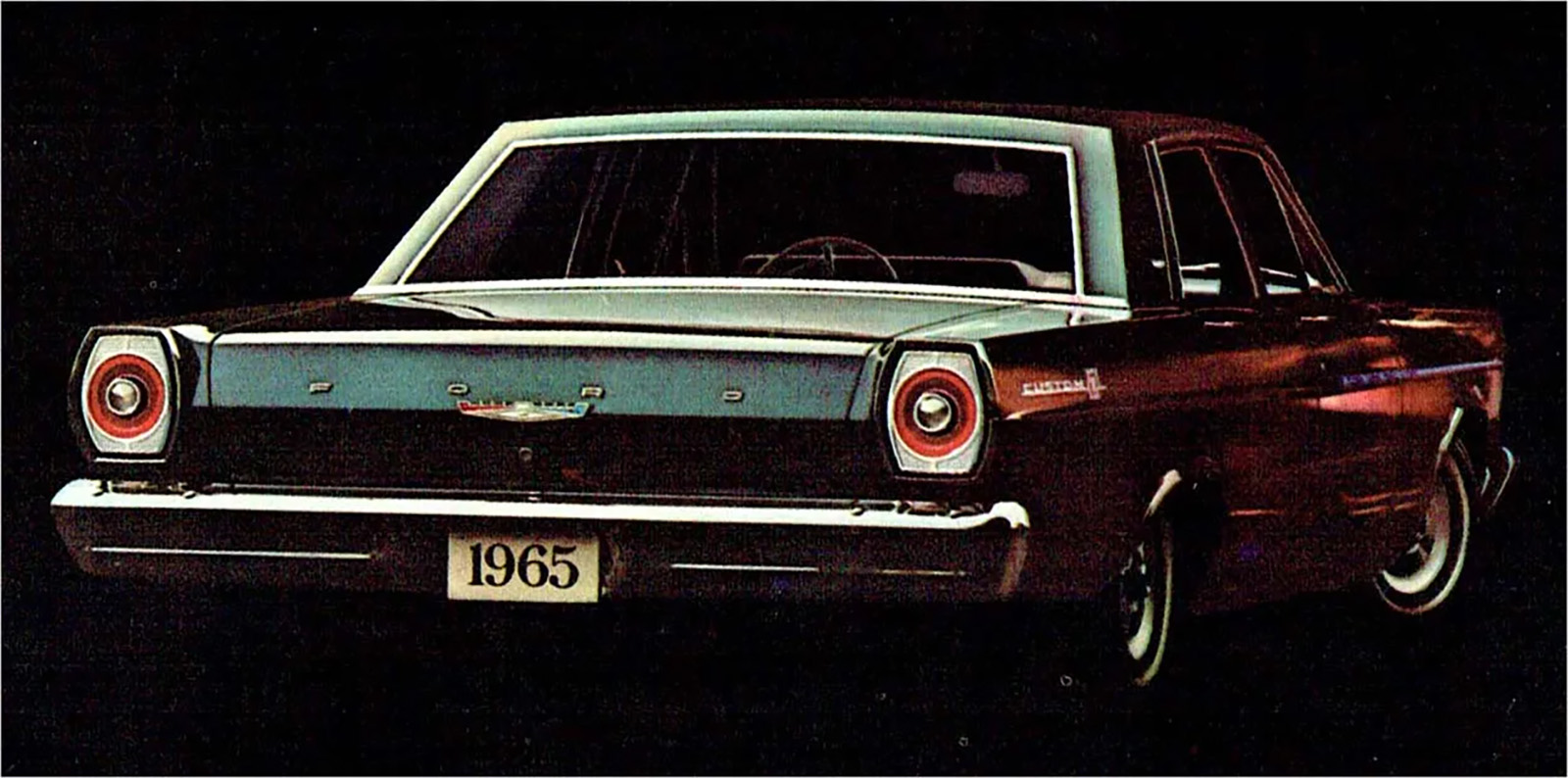
Is that what’s going on here? How does that make sense? If Ford made some filler panels to use a bunch of old stock round taillights, that would make sense. Waste not want not, right? But making new lights of a design you’re moving away from? I just don’t get it.

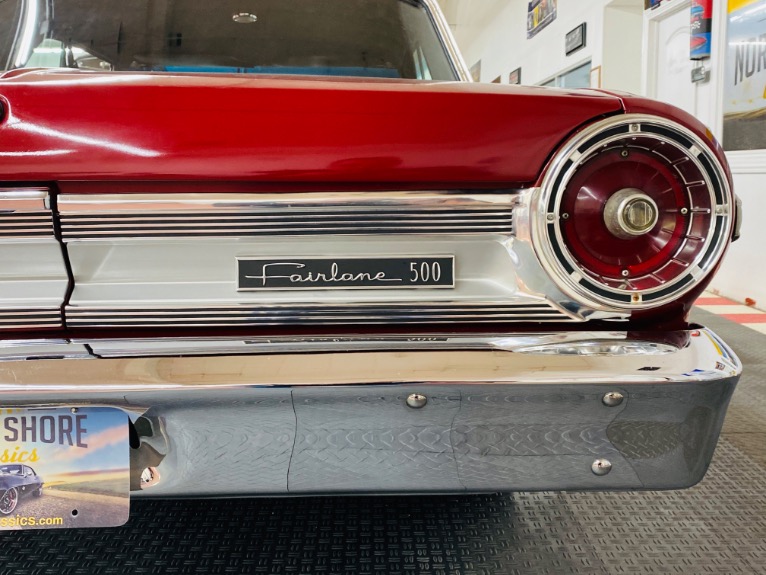
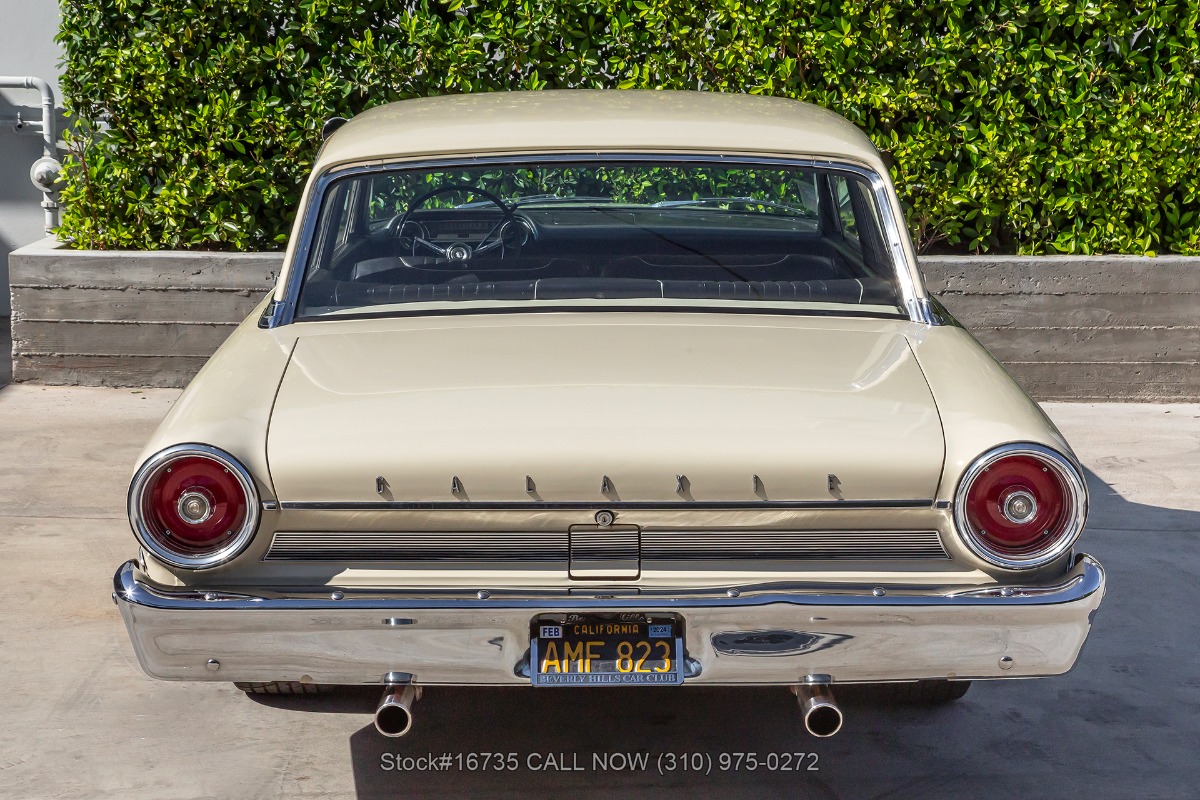
Now, some of these lights, like the ones used on these police-spec cars, do seem more like, say, the ’62 Galaxie lights; the inner cylinder/optional reverse light is smaller compared to the one seen in the brochure, which looks like an aluminum blanking disc. So maybe some of these used leftover taillights, but Ford also had new round lights to use as well?
I’m sure there must be some other examples of an old taillight getting adapted to a newer car; some of the lower-spec Volkswagen Beetles we never got in the US used ’62-’67-type lights even after the large “elephant’s foot” lights appeared in 1973, as you can see here, with the old taillights on the far left:

Off the top of my head, that’s the only example I can think of. In the taillight community, this is all considered quite fascinating, and knowledge of these strange Galaxie/Custom round lights is pretty much all you need to get laid in almost any taillight bar in America, so, you know, you’re welcome.
I’d love to know the full explanation behind this; I suspect that all of the people involved are likely dead or at least very retired by now, but I’ll reach out to Ford and see what they say; they have a pretty good archive department, maybe there’s some long-forgotten memo explaining the Full Galaxie Taillight Strategy somewhere.




…some of the lower-spec Volkswagen Beetles we never got in the US used ’62-’67-type lights even after the large “elephant’s foot” lights appeared in 1973, as you can see here, with the old taillights on the far RIGHT: