

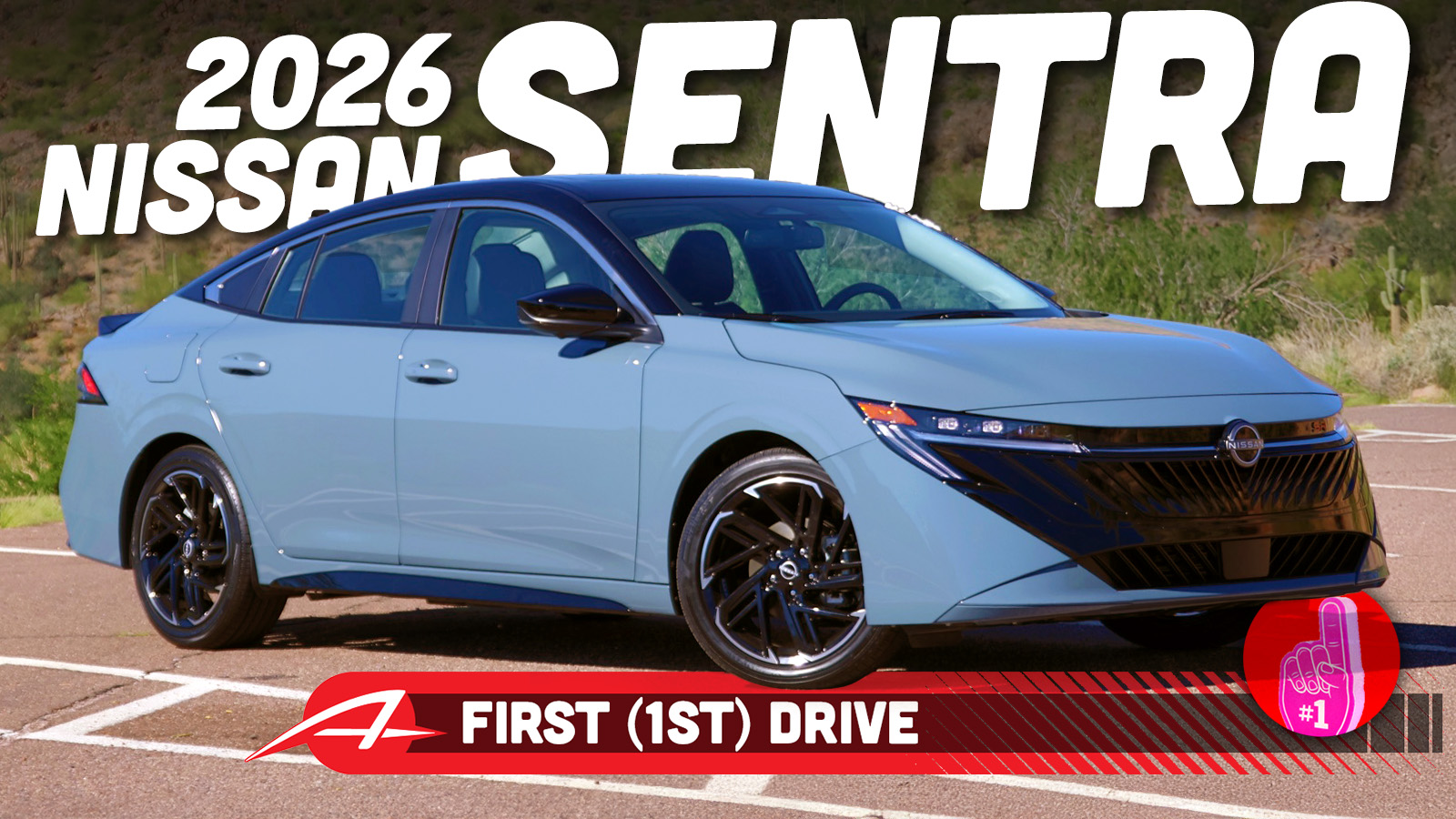
Perhaps the two biggest challenges in the auto industry today are how to sell electric vehicles profitably and how to offer customers affordable vehicles. With the average transaction price of new vehicles recently topping $50,000 for the first time ever, nearly a quarter of new car buyers have loans of seven years or longer, and nearly 20% had new car payments of at least $1,000 per month. In fact, even average prices for used cars have hit $30,000. Those numbers just aren’t sustainable, but there are still a few options out there for buyers who want a new car warranty but just need something more attainable. Two of the best are the Nissan Kicks and Sentra, and we recently tried the redesigned 2026 Sentra.
Let’s be clear right up front: the Sentra is not now and never has been a premium or luxury car. But that’s actually OK. Just because a car will almost certainly never appear on the concours lawn at Pebble Beach, that doesn’t mean it can’t still be a very good, very capable piece of basic transportation that you probably won’t be embarrassed to be seen in unless you let it degrade to a condition comparable to Jackson Lamb’s Honda Civic.


I get to drive a lot of very expensive cars, trucks, and SUVs. But most people can’t afford most of what comes through my driveway and just need basic, reliable, affordable transportation to get around. Enter the Sentra.
The 2026 Sentra is mostly new but not all-new. Pretty much every component you can see or touch has been reworked, while pretty much all of the mechanical bits underneath are carryovers, and frankly, that’s just fine. The previous-generation Sentra wasn’t a bad car. It wasn’t a great car either, but it was just fine. For those with an even tighter budget, the smaller Versa was a perfectly decent little ride that could be had for under $20,000, although it is apparently going away soon if production for the US hasn’t already ended.
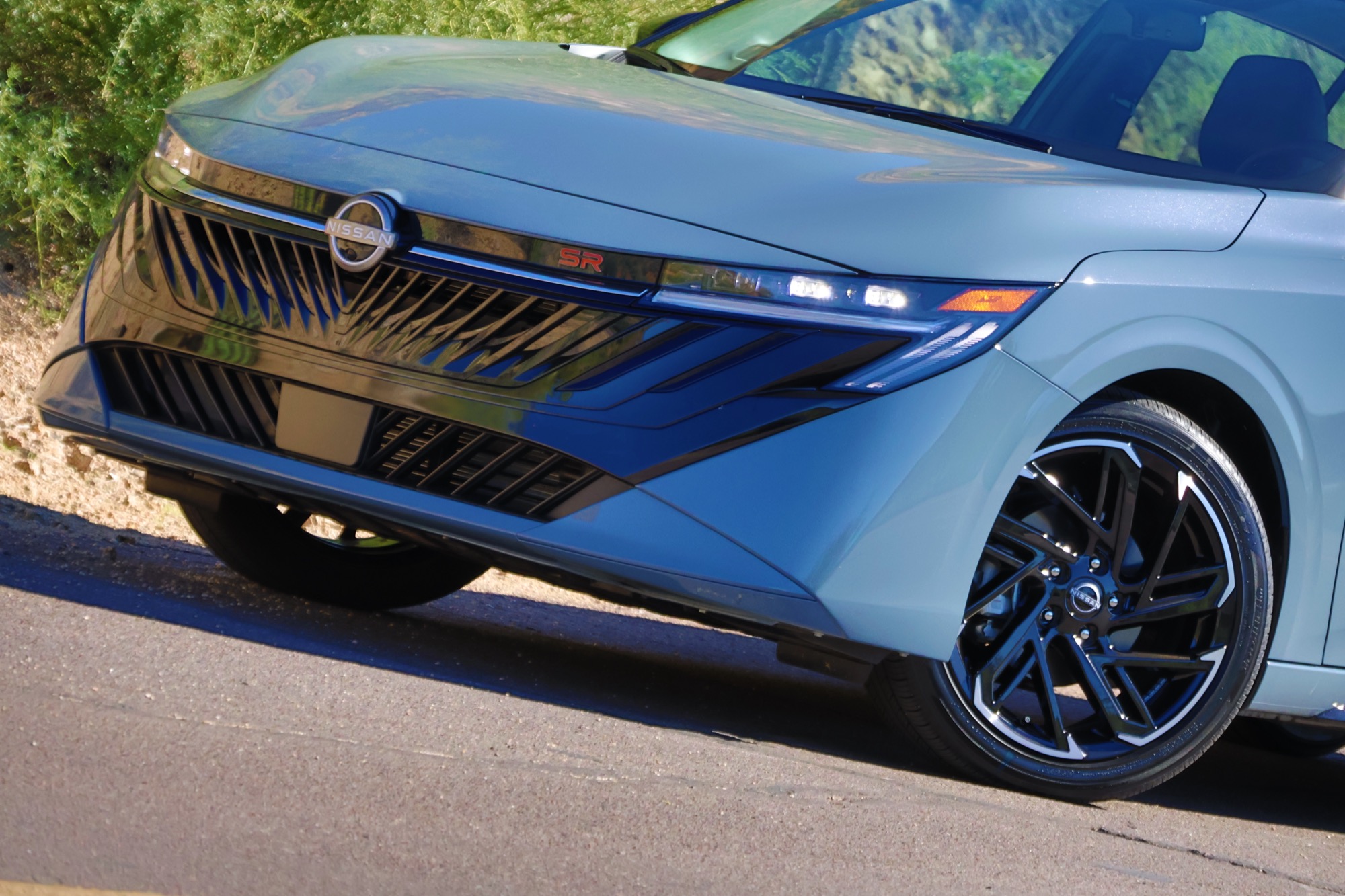
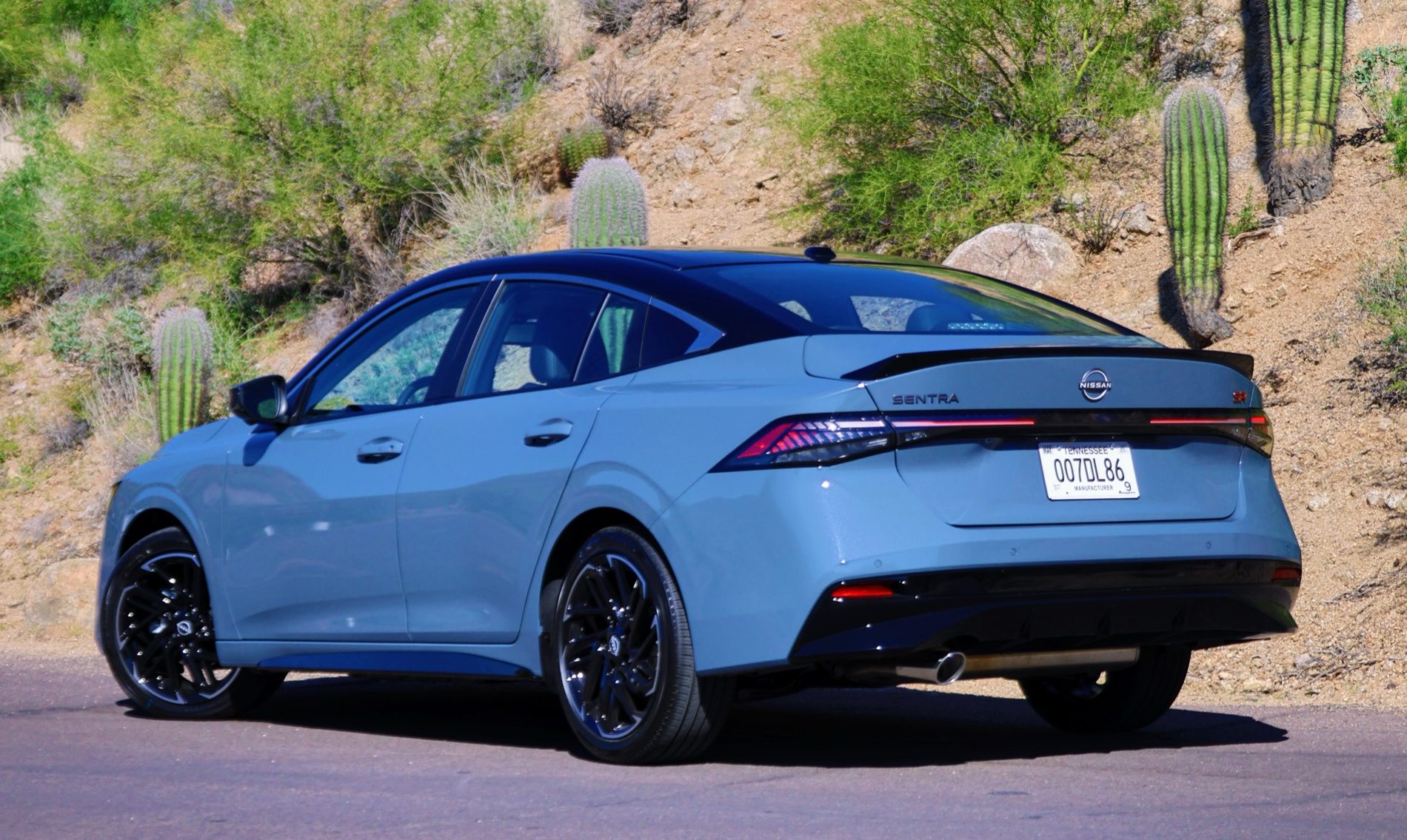
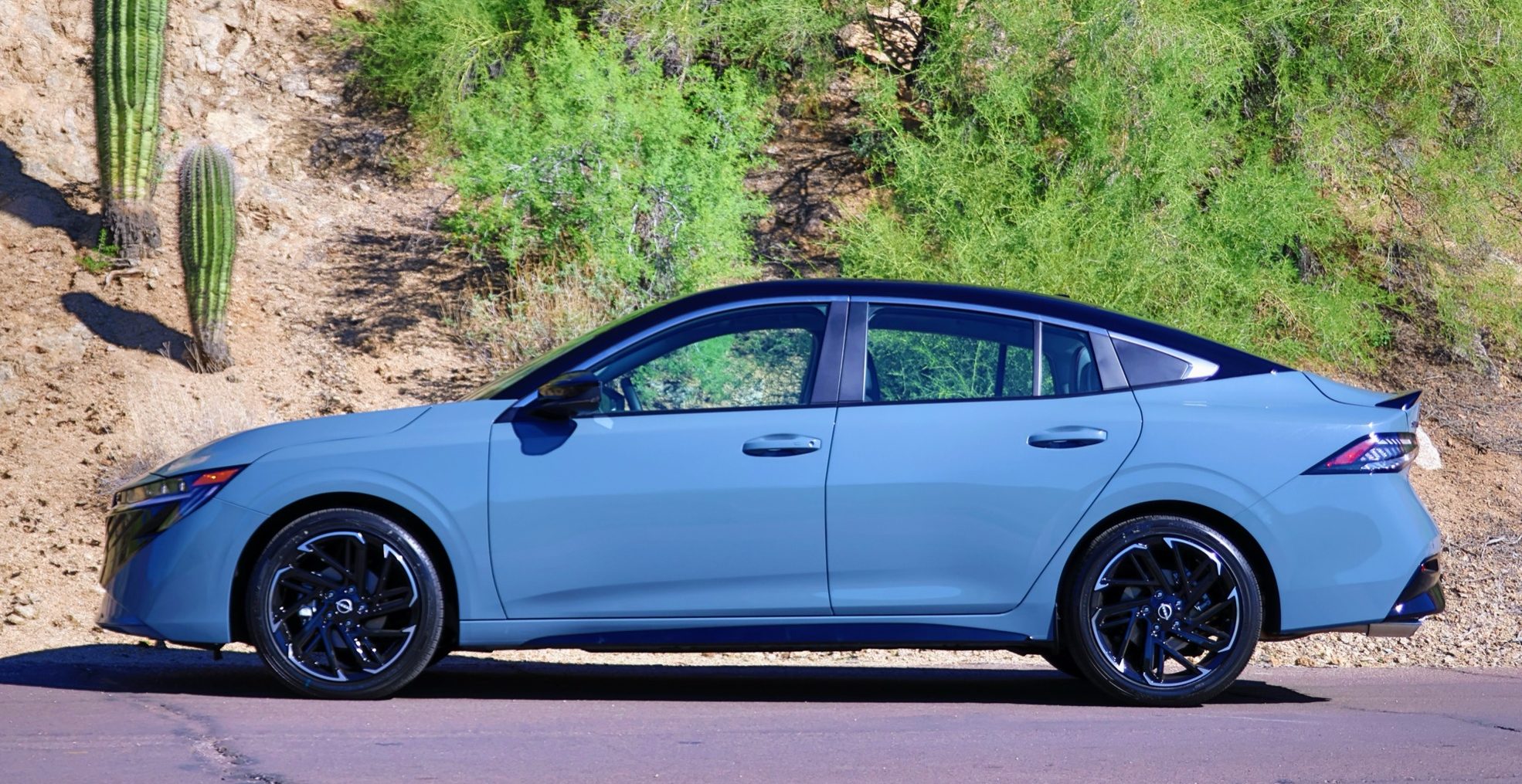
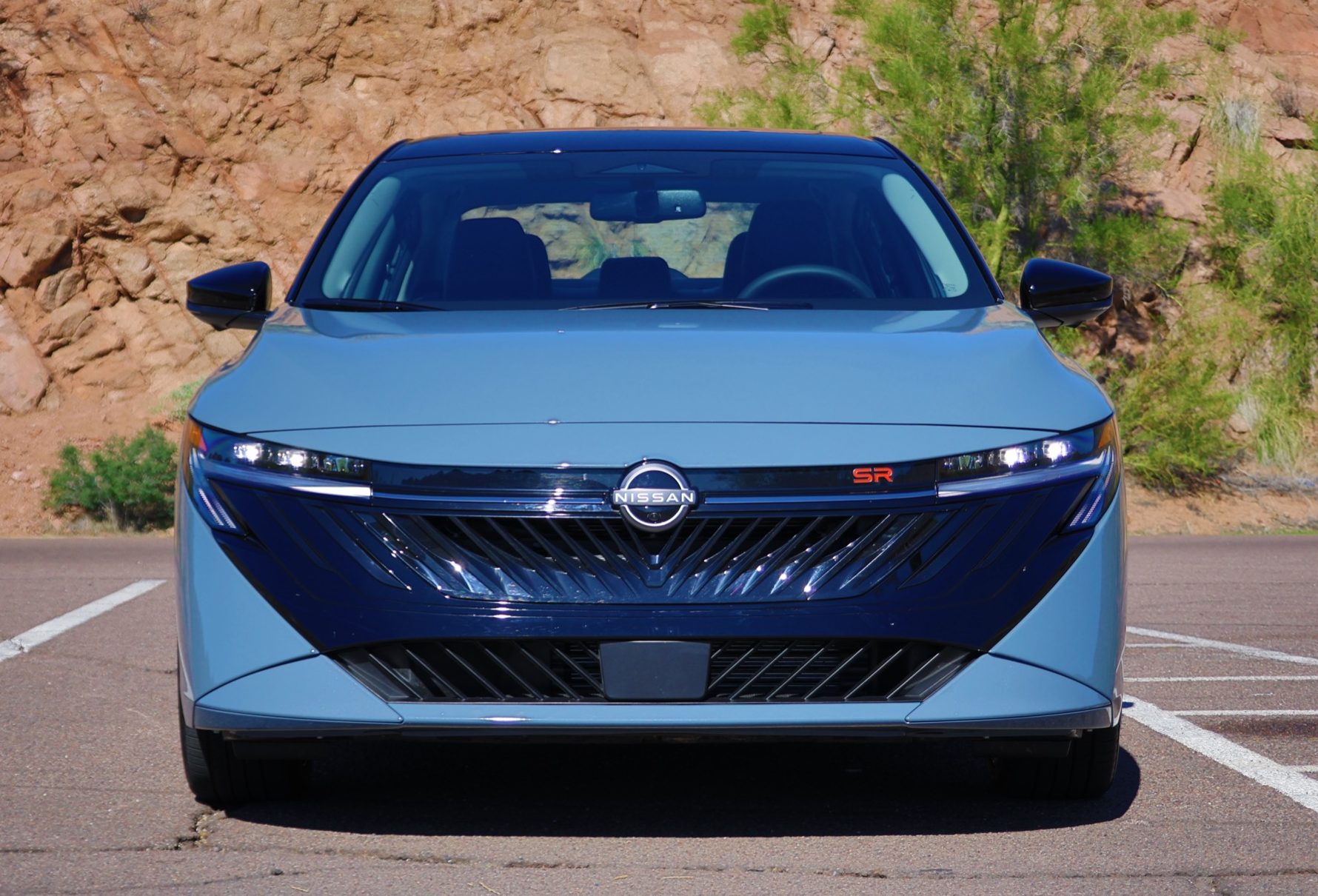
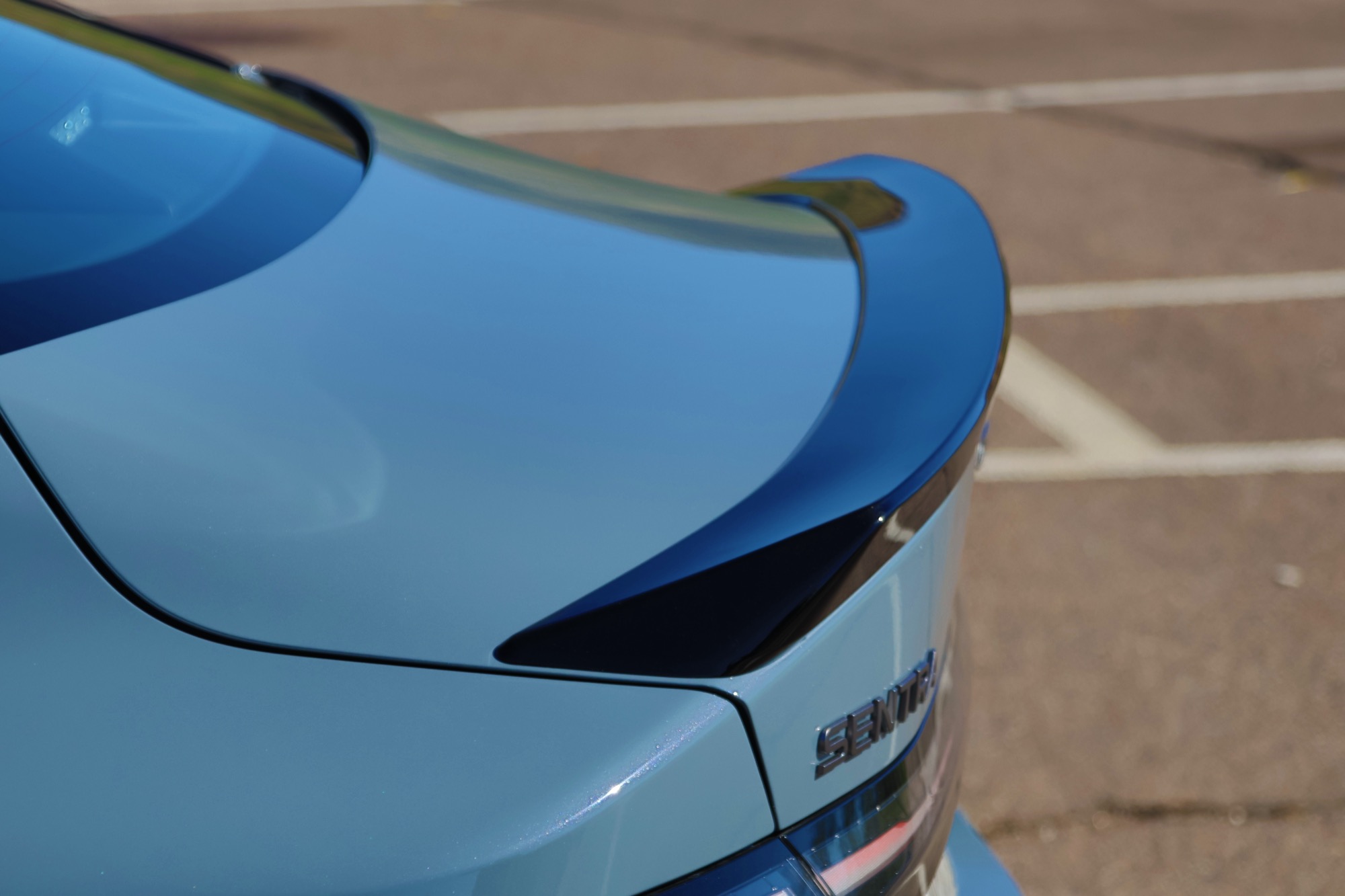
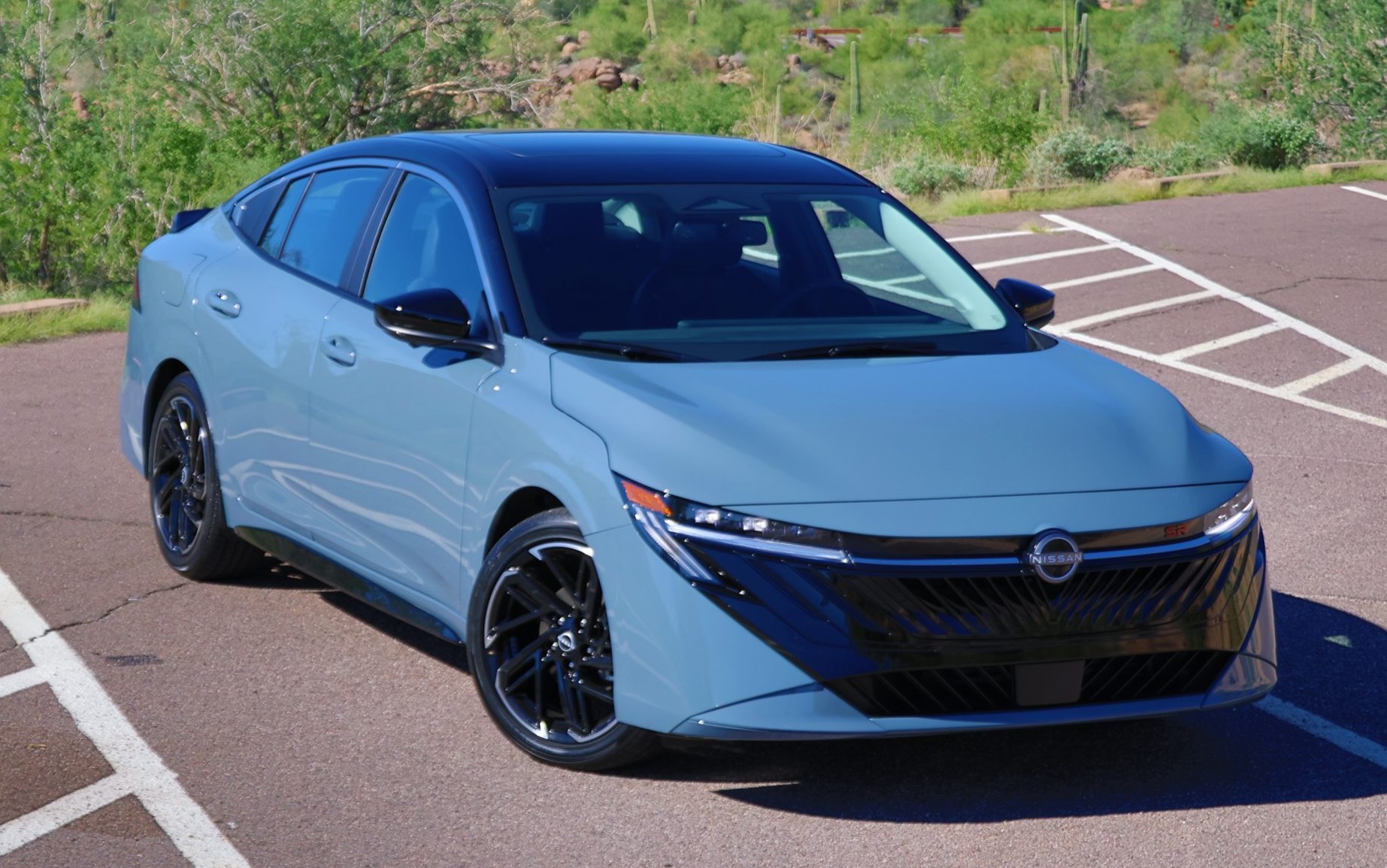
The new Sentra is a decent improvement in terms of style, handling, and interior relative to the 2025 model. As with the last edition, this one is only available as a four-door sedan with a fastback roofline. There’s a new interpretation of Nissan’s V-motion grille theme, but the chrome surround is gone. There are diagonal slashes that spread outward from the center. The top SR trim has this whole area done in black to contrast with the surrounding bodywork. Other trims get this area partially in body color.
There are slim headlamps and a slender chrome trim piece that sits just below and runs to the Nissan badge in the center. It’s a handsome look overall and doesn’t scream, “This is all I could afford!” Nissan even has a few fun colors in addition to the usual spectrum of monochromatic tones, most notably Scarlet Ember (a lovely red), Energetic Ember (which is decidedly more orange), and Bluestone Pearl. Those who opt for the SR can also get a two-tone with a black roof, which looks particularly sharp against the Scarlet Ember.
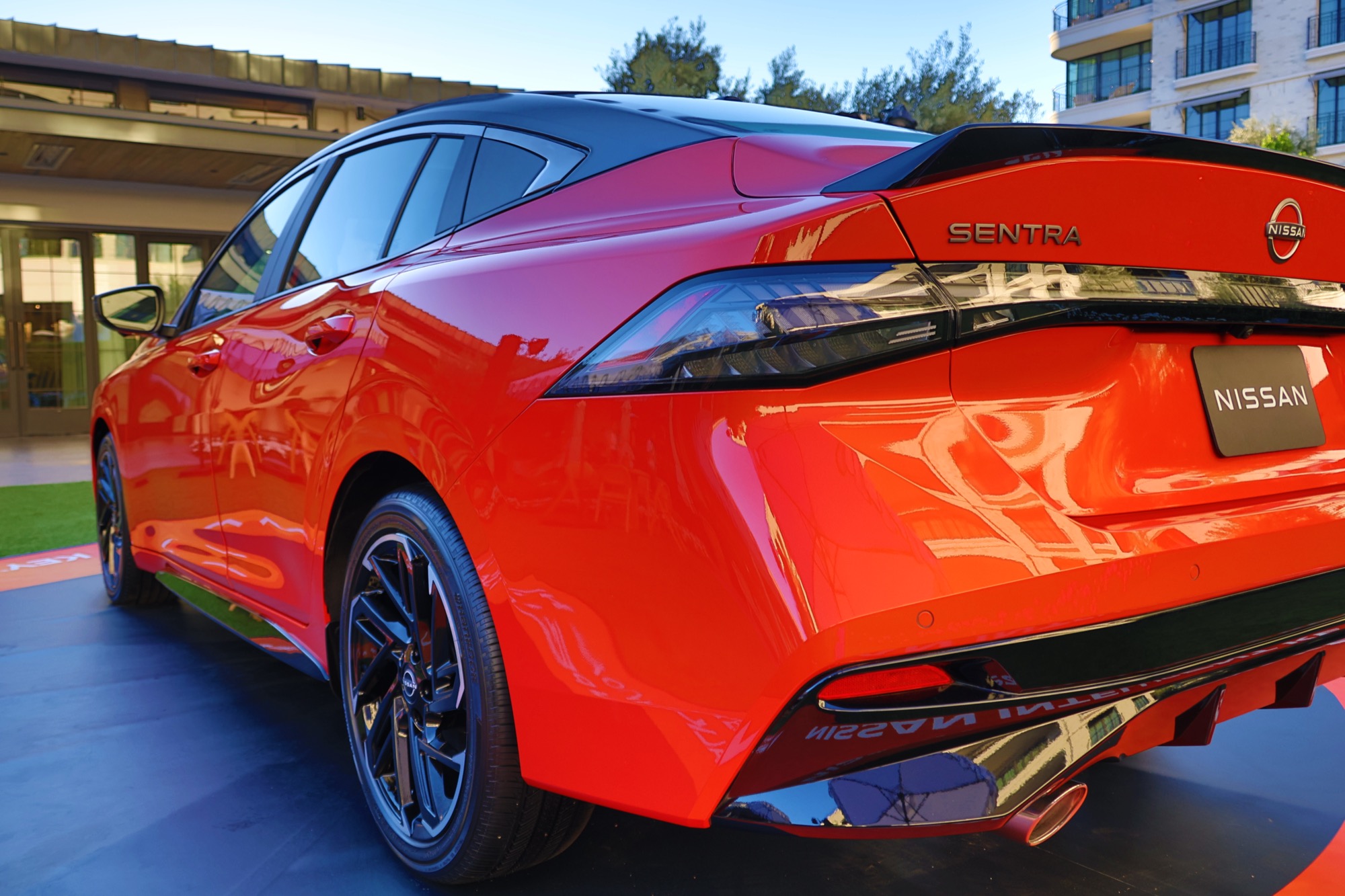
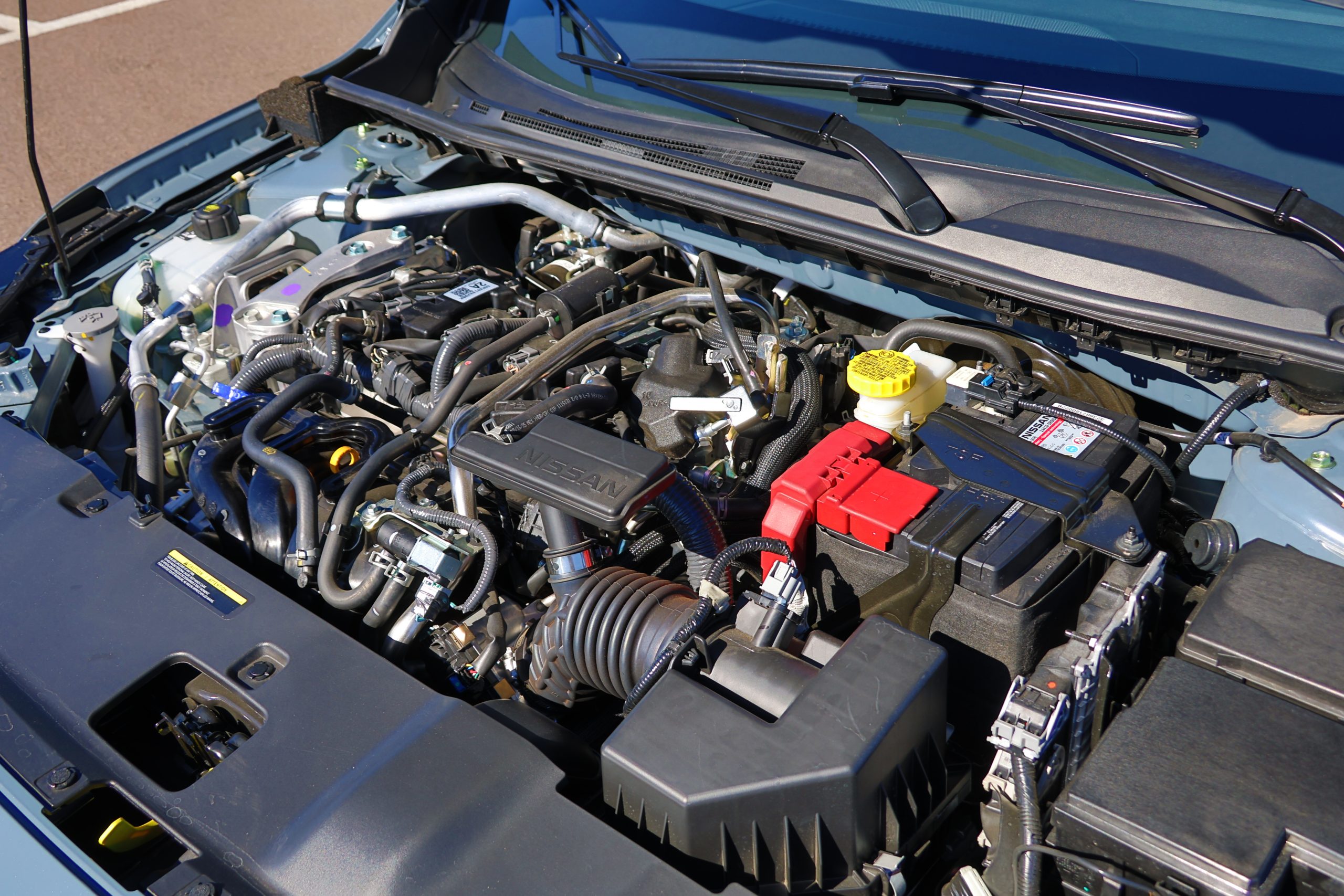
The mechanical aspects of the powertrain have been carried over for 2026, including the naturally-aspirated, 2.0-liter four-cylinder, which delivers 149-hp and 146 lb-ft of torque and continues to be mated with Nissan’s Xtronic CVT. Like other aspects of the Sentra, it’s not going to blow anyone away with its overall performance, especially if you’ve spent any amount of time with an EV. It doesn’t have that instant response of an electric motor, but it’s absolutely adequate and will meet the daily driving needs of pretty much everyone, including being able to merge into highway traffic.
While the hardware is carried over from before, the control strategy has been revised and now provides more of a simulated step-ratio feel with the engine revving up and dropping down as the CVT “up-shifts” during acceleration. The result is a much more pleasant feeling than the motorboating effect of a Toyota hybrid.
The experience is further enhanced thanks to some structural upgrades by Nissan to the chassis to eliminate some paths for both powertrain and road noise transmission through the structure. The Sentra continues with the strut front suspension and multi-link rear layout and disk brakes at all four corners.
The S and SV trims both roll on 16-inch wheel and tire packages, with the base model getting steelies with plastic wheel covers while the SV gets alloys with 205/60R16 all-season rubber. The top SL trim gets some attractive 17-inch alloys with wider 215/50R17 tires, and the SR gets the largest 18-inch wheels in the same 215-mm width.
The Driver’s Space
Besides the sheet-metal, the other notable change is in the cabin, which has adopted a lot of the design features of its contemporaries. That means a large panel atop the dashboard with dual displays embedded behind a single sheet of glass. All four trims get the same 12.3-inch center touchscreen for the infotainment, and SV, SR, and SL trims also get a 12.3-inch instrument cluster display. The base S trim, which I didn’t get to sample, gets a mix of analog gauges and a 7-inch driver information display.
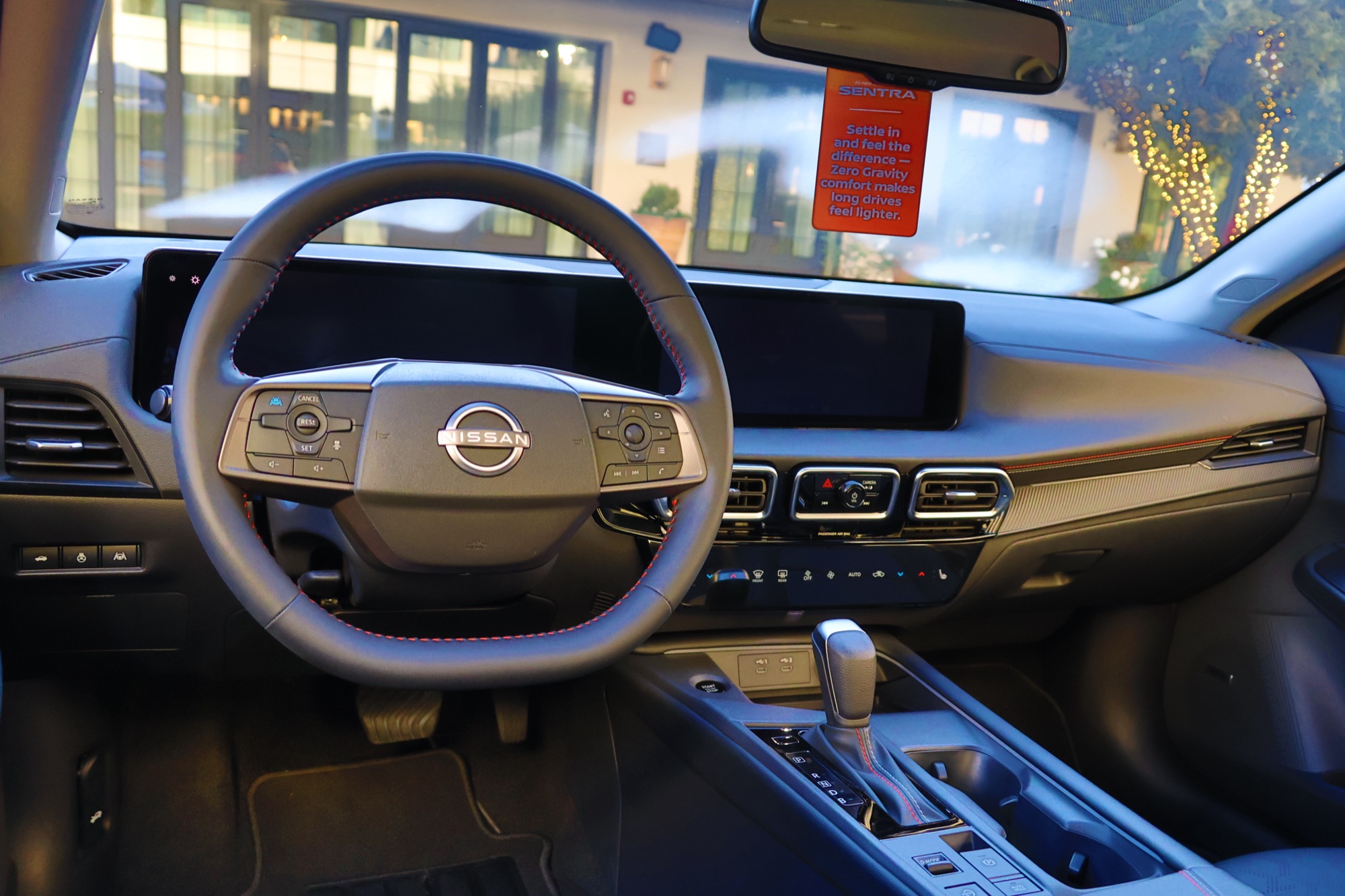
Unlike some other recent Nissan vehicles, including the new Kicks, the Sentra forgoes installation of the full Google Automotive Services package, including maps and the Play Store. It does, however, get Google Assistant for voice recognition as well as wireless Apple CarPlay and Android Auto phone projection on all trims. The base Nissan infotainment software, like the rest of the car, is adequate, but most drivers will probably just pair their phones and call it a day. A Qi wireless charging pad is standard on SR and SL trims and optional on SV, and is located at the front end of the console just below a pair of USB-C ports.
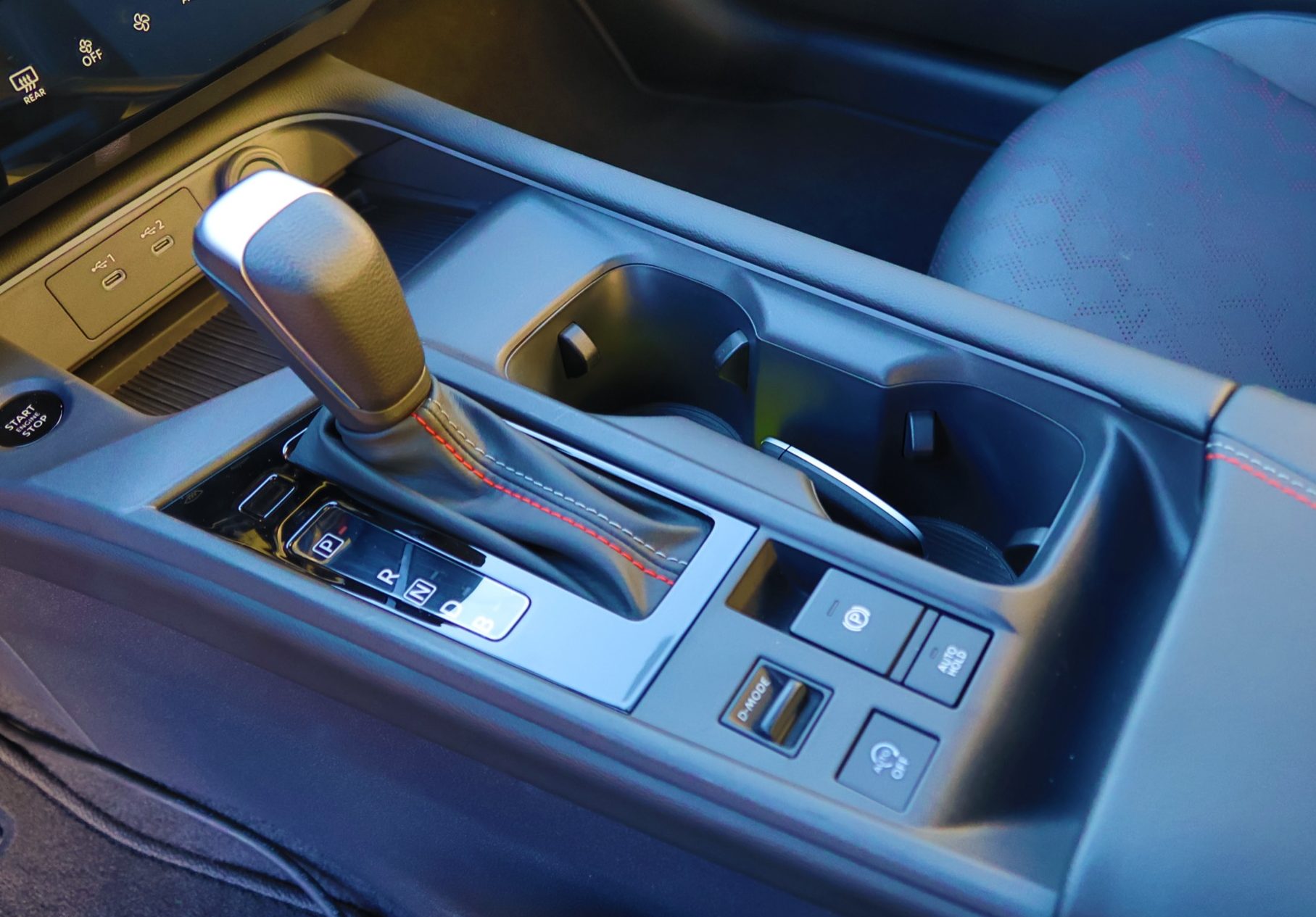
Unlike the new Leaf that got push buttons for the transmission selector, the Sentra retains the classic mechanical lever on the center console. The vents thankfully also remain fully mechanical, so the driver and passenger can control air flow without going anywhere near the touch screen.

As expected on a more entry-level vehicle, most of the interior surfaces are hard to the touch, but Nissan has done a nice job on textures and graining so that it doesn’t look exceptionally cheap. The designers behind the interior of the new Toyota Rav4 might want to bring in a Sentra to evaluate and take some lessons from. Thankfully, Nissan is continuing its recent trend of scaling back on the piano black with the Sentra being limited to the panel around the shifter and the buttons around the centrally located volume knob. The climate controls are unfortunately activated through a touch panel below the volume knob.
It’s 2025, so that means even the most basic S trim of the Sentra gets a comprehensive list of drive assist features, and that’s a great development to see. Every new Sentra has a long-range front radar and two short-range rear corner radars to enable adaptive cruise control, blindspot monitoring, and cross-traffic alert. Forward-facing cameras enable automatic emergency braking with pedestrian and cyclist detection, lane departure warning and prevention, and traffic sign detection. Ultrasonic sensors contribute to parking assist and rear auto braking if something is behind you. For the first time, the Sentra is also available with Nissan’s hands-on, ProPilot Assist that blends the adaptive cruise control and lane centering. ProPilot is standard on the SL and optional on the SR.
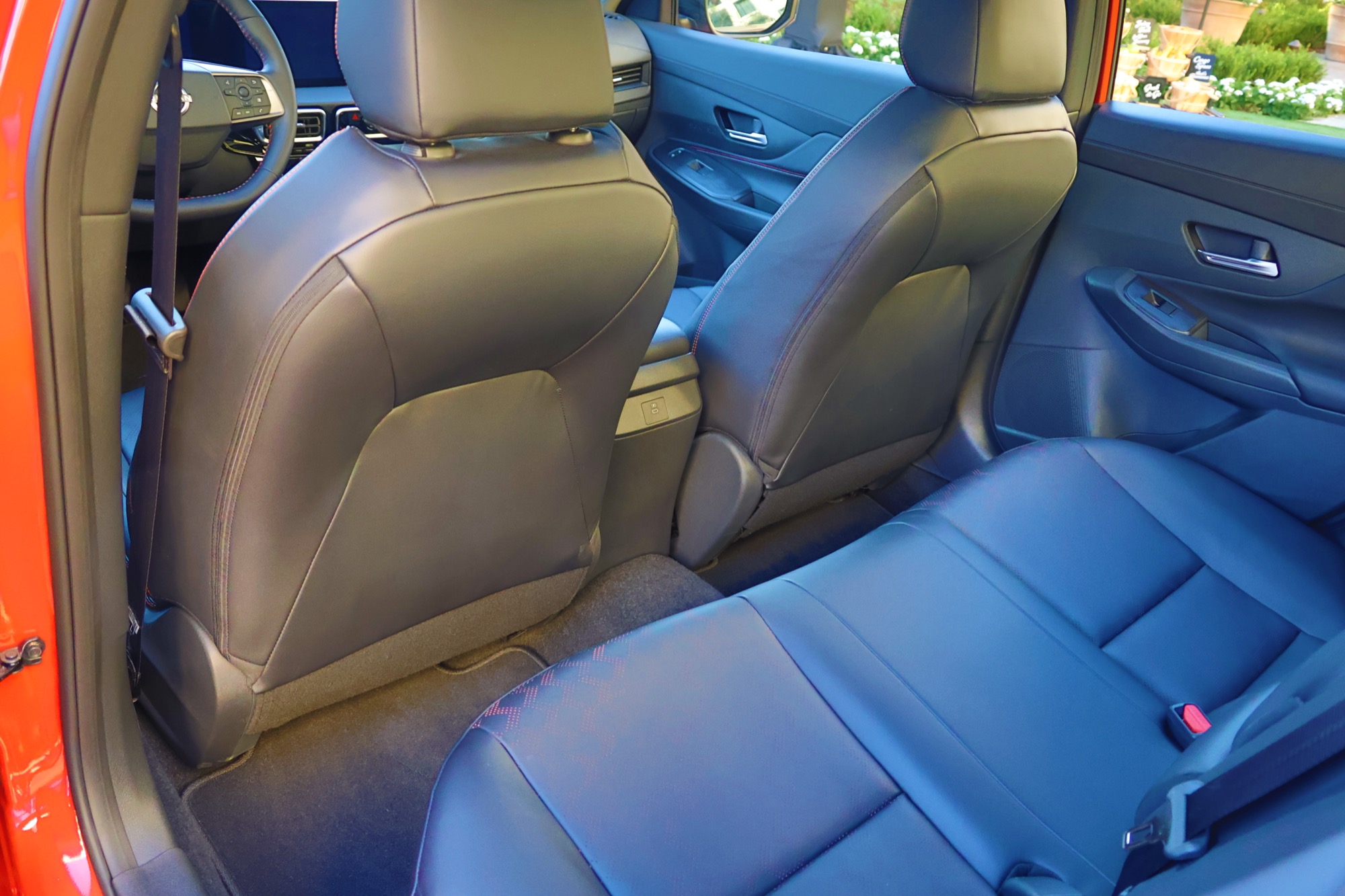
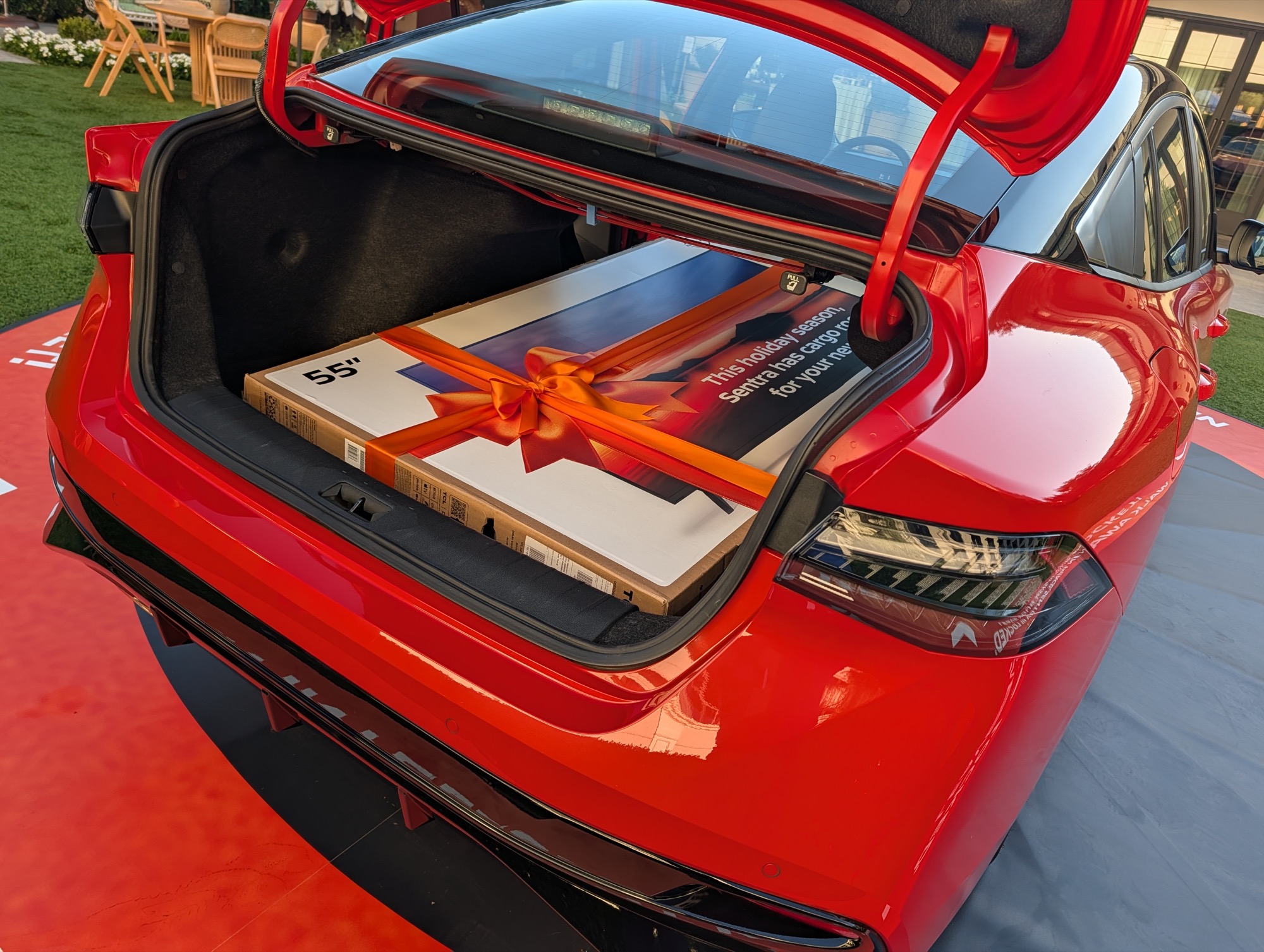
The Sentra continues with Nissan’s “zero-gravity” seats which, despite the name, still allowed me to feel the force of gravity, but were comfortable and supportive nonetheless. The rear seats are also roomy enough for a pair of full-size adults and offer plenty of head and leg room for my 5-foot-10-inch frame. The rear seat backs fold down flat in a 60/40 split. I generally prefer hatchbacks on smaller cars, especially modern versions with fastback profiles because the sedans tend to have tiny trunk openings even if they have a bunch of space inside. The 2026 Sentra’s trunk opening is two inches wider than before, and the Sentra can now easily accommodate a typical 55-inch TV without any fancy maneuvering.
On the Road
I headed out from the hotel in Scottsdale in a grey SR with the black roof and drove into the mountains that surround the Valley of the Sun. In the city, I was reminded again how much easier it is to drive a compact car like the Sentra in an urban environment than it is to maneuver a big SUV – plus, it’s a lot easier to see out of.

As we sat at a red light, I noticed a visually-impaired woman crossing from my left as she strayed out of the crosswalk and tapped the side of the Sentra with her white cane before realizing where she was and walking around the front of the car. The light had already turned green for us by this point, but I waited until she was all the way across the intersection before proceeding. Had this been a high-riding SUV or truck, she might have been much closer to the vehicle before realizing what it was and where she was, and the driver might not have noticed her presence.
Once out of the city and into the Tonto National Forest, it became clear that despite the Sentra having essentially the same core hardware it has had for the past six years, the engineers have been doing some fine-tuning on it. Like most modern cars, the Sentra has electric power-assisted steering (EPAS). When EPAS systems first hit the market in the mid-2000s, there were a lot of well-justified complaints that it felt numb and offered no feedback about what the wheels were doing. While fans of the legendary BMW 3 series models like the E36 (I’m looking at you, Car and Driver editors of the ’80s and ’90s) will likely still dismiss a car like the Sentra, the steering actually feels pretty good now. No, it’s not a sports car, but there is some feedback when you get into twisting mountain roads, and the steering is nicely weighted.
Around those corners, the Sentra will still understeer at the limit, but let’s be realistic, most Sentra drivers aren’t going to use this car that way. At up to 8/10ths, it’s pretty well balanced and delivers a good mix of body control, ride quality, and nimbleness. If you need to make an evasive maneuver to avoid a squirrel or a cat, the Sentra isn’t going to snap at you. If you’re using the Sentra as a commuter car or to make a few extra bucks picking up rides using one of those apps, neither you nor your passengers are likely to feel particularly punished.
The updated control software for the CVT also contributes to a much better on-road experience. With only 149-hp, this isn’t a speed demon, but 0-60 mph in under 8.5 seconds is perfectly adequate.
The 2026 Sentra is offered in four trims starting at $23,645, including the $1,245 destination charge for the base S trim. The pretty much loaded SL will cost $29,235 delivered, while the SR with all-weather, premium, and moonroof packages slips just under $30K at $29,845 delivered.
Fuel efficiency is projected to be 29 mpg city, 38 mpg highway, and 33 mpg combined, which is in the same range as the Honda Civic, Toyota Corolla, and Hyundai Elantra with a 2.0-liter and CVT. However, all three of those competitors are also available with hybrid powertrains that push combined fuel economy up to the 48-50 mpg range. The hybrids are a few thousand dollars more, but if you want maximum fuel efficiency in this size class and form factor, Nissan just has nothing to offer right now.
For those who want the sportiest feel in this class of car, the Civic and Mazda 3 are also a step beyond the Sentra, and the Mazda has by far the most impressive interior, along with options for turbocharged engines and all-wheel drive. But it’s good to have choices, and the 2026 Sentra is absolutely an option that gives car buyers a really decent car that they probably won’t regret and a fantastic value, especially in the context of where the car market is in 2025.


IMHO, the previous generation wS genuinely good looking, and could be had with a stick. That’s where I’d put my money. A Spec-V version would have been very welcome.
I’ll just pile on with other commentors and say that the ’24 Sentra I rented a month ago was not a penalty box in any way. I wish them (Nissan) well. Even the Jatco Xtronic CVT wasn’t particularly annoying. Maybe it’s the seemingly significant amount of sound-deadening material they used making it, but overall, it was a nice car I wouldn’t hate to own and drive or be embarrassed to be seen in.
Not a fan of the new front-end styling. And it looks like they made the engine compartment so tight just to be a flip off to mechanics.
I really like the looks of the current Sentra and enjoy having it as a rental car. Very pleasant to drive, good visibility, comfortable, nice handling and I like the engine/transmission combo. But this new model – what did they do to the front end? It’s giving my nightmares. Nissan keeps shooting itself in the foot and then just reloads.
With a 3rd pedal, I’d consider it. Otherwise, nope.
That’s a very attractive car.
How can we make the demise of the bumper even more discouraging?
Let’s make the
bumpervehicular friction interface piano black!I miss when Nissan made interesting sedans, but I guess I’m glad they are making them at all.
«The result is a much more pleasant feeling than the motorboating effect of a Toyota hybrid»,did anyone else read this as «masturbating effect» and not really understand anything?
Did anyone else notice that the steering wheel is shaped like the one from the old Datsun B210 from which this Sentra evolved? If it’s on purpose, it’s a cool throwback.
Scarlet Ember? She stole my wallet! I mean, she stole my friend’s wallet!
It’s a handsome car. Keep the CVT fluid changed and motor on.
This. Religiously change the fluid every 30K or so and the transmission will last. My daughters Kicks has been bulletproof and she puts about 1k mileage weekly on it. ( of note, the Nissan CVT proprietary fluid is expensive but expensive fluid is better than a burnt out CVT) .
This has been the issue all along. NS2 cvt fluid was woefully inadequate for the Jatco units coming out since 2011 coupled with lack of fluid changes every 30K. The manufacturers STILL don’t recommend changes at 30K, just an inspection.
Great review. And when it comes to sporty feeling small cars, when testing them back to back a few years ago, I actually found the Corolla hatchback to be the most sporty feeling.. with the (now discontinued) Elantra hatchback coming in 2nd.
I recall that the Civic and Mazda 3 feeling more like mini luxury cars than sporty cars.
This Sentra looks like a nice car. It’s a shame there is no manual or hybrid option… the two options I would go for. I’m not interested in any car with just a regular CVT.
If I’m getting a CVT, it’s a CVT in a hybrid I’d want. At least then I’d trade better real-world fuel efficiency in exchange for a less exciting driving experience.
No, there are not good cars and are poor choices for those with lower incomes. Those transmissions are what single-handedly ruined Nissan’s reputation. They WILL fail. If you do NOT change the fluid in that CVT every 50,000 miles it will grenade and probably eventually do it anyway. So there you have a car that needs another $5,000 transmission that will also eventually fail.
The lesson here is to change your tranny fluid every 50k. Most brands will not tolerate being run into the ground. Still, you can get these for about 5k less than a Civic if you play your cards right. Just set the cash aside.
Proof? Everyone I know who replaces their CVT fluid around 30-40k miles has zero issues. I know of 200k mile Crosstreks and 160k mile Quests (yes, the heavy V6 ones) on their original CVTs that drive without slipping or surging. The main issue was the CVT being sold as a ‘maintenance-free’ transmission which is a total lie. If well taken care of there’s almost zero chance of failure.
The owners manual very clearly says to change the transmission fluid every 40,000 to 50,000 miles. Yes, cars break when you don’t change the fluids.
My wife had an ‘08 Sentra. We got a letter a year after buying the car extending the transmission warranty for 10 years / 100,000 miles because they failed and cost a fortune. She didn’t drive it much but I began to notice the transmission slipping. I did a fluid change with appropriate Castrol NS-2 synthetic fluid and it was like a new transmission. Automatic transmission fluid has both lubricating and friction properties and changing it regularly is just cheap insurance. There’s nothing inherently wrong with a CVT and they’re only getting better. Nissans bad reputation is old news, newer transmissions are pretty good. Go ask a Ford F-150 owner how they feel about their 10-speed automatic and how much those cost to replace. Anything can fail but just about every automaker is selling cars with CVTs these days and they are generally reliable. 17 years and 150,000 miles later and I still drive that Sentra and the transmission works perfectly. It is not a very good car but the engine and transmission have been rock solid.
The blue-grey pearl is nice. I actually think the pre-update dash looks better, but I know how everyone wants as much screen real estate as possible apparently. I haven’t driven a Nissan CVT lately, and I’ll stipulate that they’re a bit better than they used to be, but this car could actually be semi-desirable if it had a traditional automatic, or the option of a manual (I know, I know, buyers don’t care). $30K seems a bit much for a Sentra, even a well-equipped one, but I assume there’ll be some discounts, Nissan dealers being Nissan dealers and all.
All in all, it’s OK for what you pay. And in this day and age, that’s nothing to sneeze at.
I think with all the other sedans out of the way Nissan is trying to give the Sentra the full price spectrum.
Canada gets a manual in the B18 (not sure about this one) and that one is used for Nismo sponsored racing in place of the Micra. They don’t change the car much from stock so it’s got potential.
Watched a brief video about Nissan’s and Mitsubishi’s new offerings at the Japan Mobility Show. Nothing that we don’t already know about re: the American market, but in Japan (and maybe some other markets) Nissan still does the Elgrand minivan (you’d think they’d sell that here) and of course there are kei cars like the Roox, which looks quite nice for everything but interstates of course. I didn’t know that what gets sold here as Infinitis are still sold as Nissans back in Japan.
Mitsubishi has Delicas of various kinds of course, but for the U.S. market, no small cars, no sedans, and no EVs.
I think the Ariya is the ugliest EV on the market, and putting that style grille on the Sentra is doing it even less favors. I dig the color choices though, especially that orangered.
“Let’s be clear right up front: the Sentra is not now and never has been a premium or luxury car. But”
“continues to be mated with Nissan’s Xtronic CVT”
Does one really need anything else?
Well Nissan did try and pitch the Maxima as premium on some level and that inexplicably had a CVT. So there is precedent.
I don’t know when the Maxima got the CVT; I have been out of the service tech game for 20 years.
I DO recall the switch to the 2003? or so powertrain with the old and slightly curvy body. One of the techs got the year with the old body and the new (at the time) VQ with a manual.
Dang.
Now I want to go on Cargurus….