

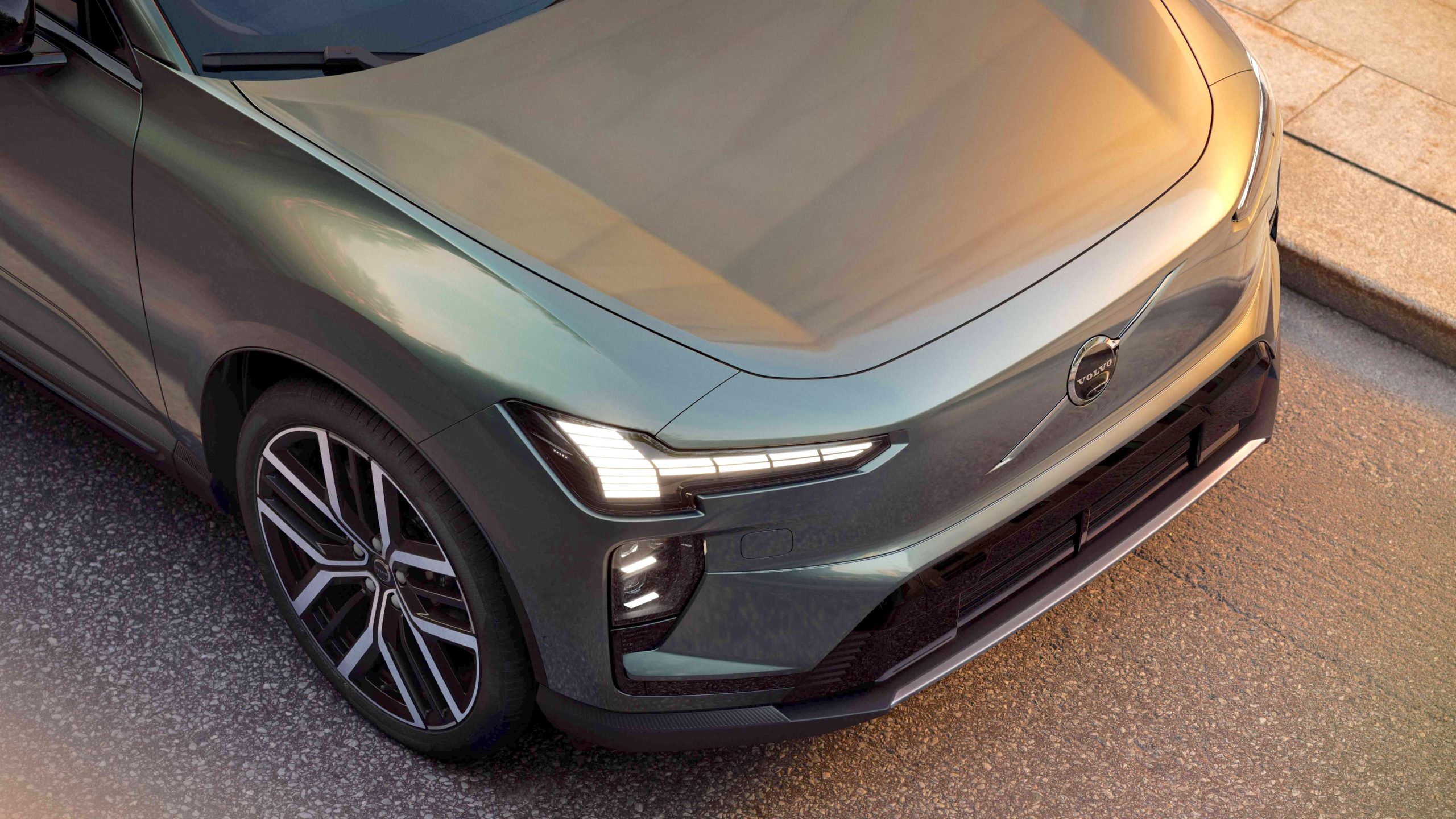
The decade of the hybrid may be upon us, but that doesn’t mean automakers are going to stop releasing new EVs. Volvo has been trickling out teasers and specs for its newest electric car, the EX60 crossover, for weeks. And now, it’s finally revealed the SUV in full.
Meant to stand alongside the gas-powered and hybrid XC60, the EX60 brings a similar design and proportions, albeit with a big of electric twang. There’s no grille, a minimalist interior with very few buttons,


Range and charging efficiency are Volvo’s biggest headline features here. There are three different powertrain configurations available, the most expensive of which can achieve up to 400 miles on a charge. The cheapest version is rear-wheel drive, which is pretty cool for a Volvo (up until the XC40’s rear-drive models were launched, there hadn’t been a RWD Volvo in over a quarter-century). Let’s get into it.
Some Parts Of This Car Are Looking Real Familiar
At first glance, the Volvo EX60 feels like it shares a lot of its design with the Polestar 3, a car built by its sister brand (both companies are owned by Chinese firm Geely). The nose has an eerily similar shape, as do the rear windows. But upon closer inspection, there are some distinctions, most notably the height of the roof toward the rear and the placement of the charging port.
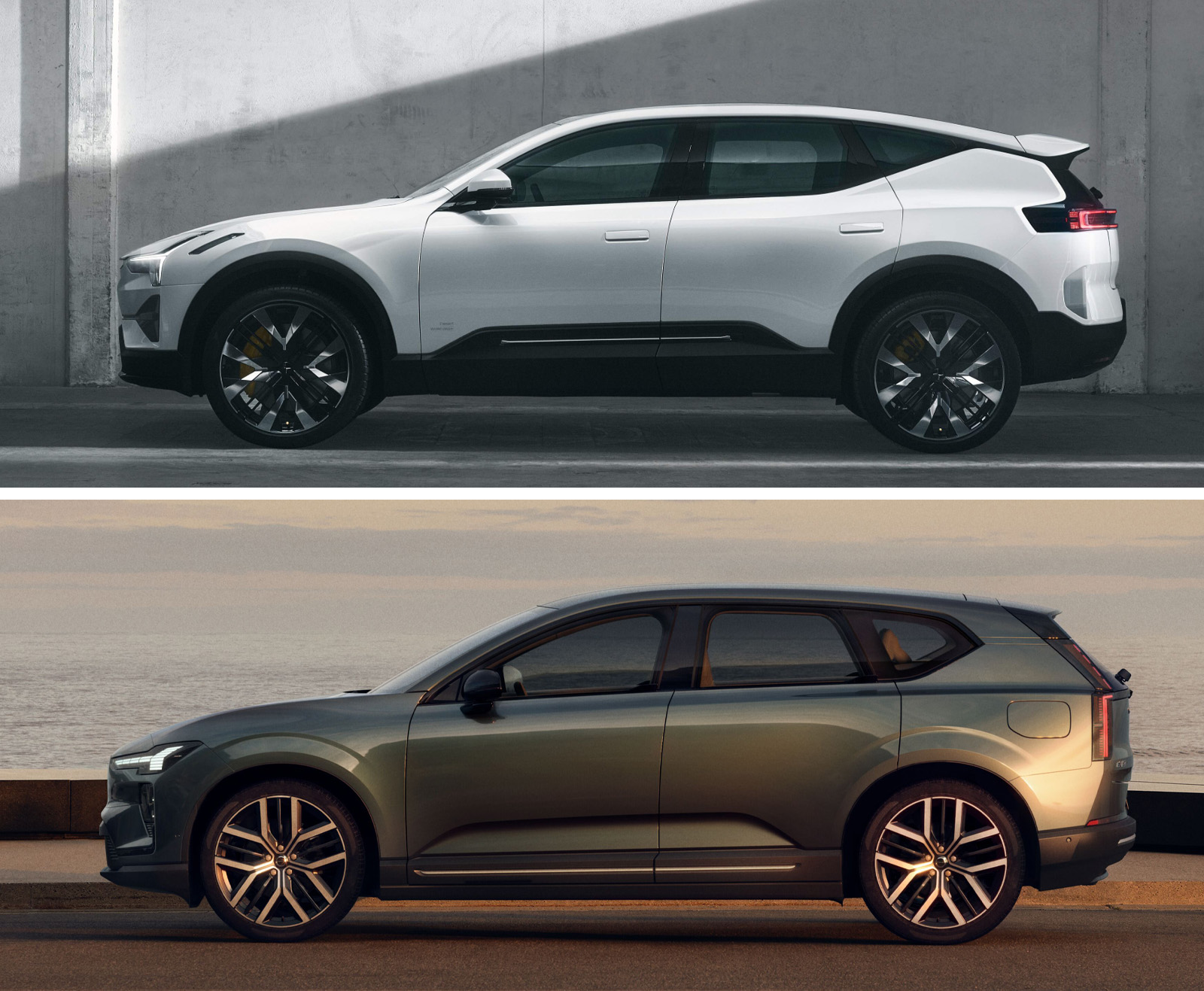
In truth, the EX60 and the Polestar 3 don’t even share a platform. While the Polestar 3 is based on the second generation of Volvo’s Scalable Product Architecture platform (SPA2), the EX60 is based on a newer version of that platform, SPA3.

Even if the EX60 was just a reskinned Polestar, I wouldn’t be complaining. Polestars look phenomenal, and I feel like a lot of the design has carried over here, even if the two cars aren’t carbon copies of one another. The Volvo is the slipperier of the two, with a drag coefficient of 0.26 (vs. 0.29 for the Polestar).
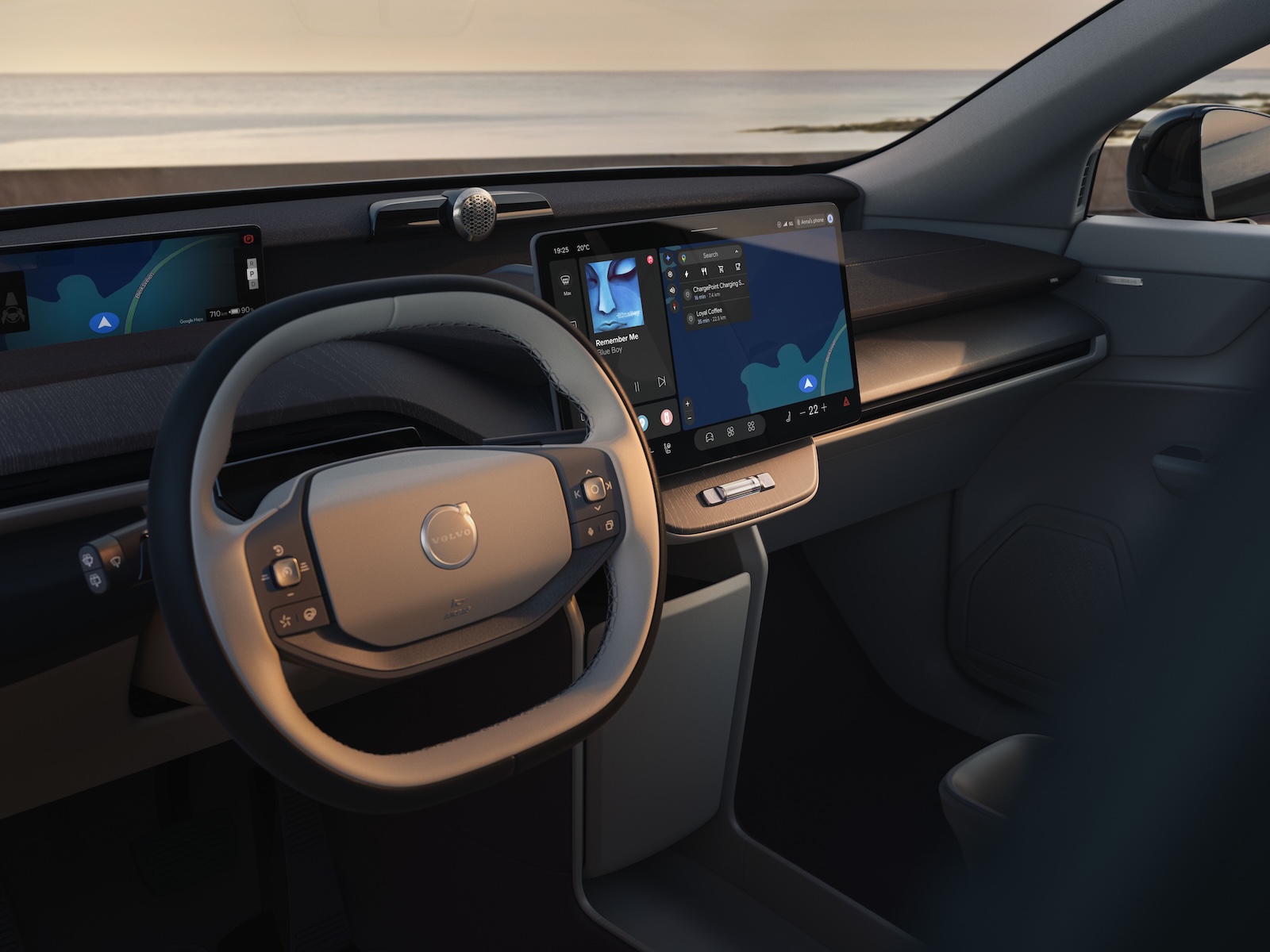
The interior follows Volvo’s recent ultra-minimalist approach, with few buttons and a couple of screens for accessing information and controls. Thankfully, there are still some physical buttons on the oval two-spoke steering wheel, and what looks to be a volume scroll wheel and skip track buttons under the main screen. So at least there’s that.
This Type Of Range Is Becoming The New Standard

Earlier this month, Volvo made a big deal about how the EX60 would be able to go up to 400 miles between charges. That’s pretty good, but as my colleague Matt pointed out, it feels like 400 miles is becoming the new standard for an acceptable EV range (that number used to be 300 miles, but most EVs these days can do that type of distance with ease).
Furthermore, that 400 miles of range is only available on the top “P12” variant, which comes with two motors and standard all-wheel drive. A middle-of-the-road P10 model, also all-wheel drive, gets just 320 miles of estimated range. The base P6 model, which is rear-drive only, gets 310 miles of range. If you want the most range, you’ll also have to wait the longest; the two lesser trims start deliveries in the summer, with the P12 coming “soon after that.”

No matter the trim, Volvo promises the EX60 can add 173 miles of range in 10 minutes when attached to a 400kW fast charger (which is a weird metric that can’t be compared to anything else, but Volvo seems proud of). There’s also a NACS charging port as standard, meaning access to Tesla’s network of 75,000 Superchargers.
There’s A Cross Country, But It’s Not Terribly Different
Not one to ignore America’s ever-growing lust for soft-roaders, Volvo is also launching a Cross Country version of the EX60 alongside the normal version. In Volvo-speak, “Cross Country” is code for a light brushing of off-road-minded upgrades, similar to what Subaru does with its Wilderness trims.

In this case, the EX60 Cross Country gets wider, black plastic wheel arches, stainless steel skidplates front and rear, different wheels, and an air suspension system that, in its normal operating position, is 20 millimeters (0.7 inches) higher than the standard EX60. In its highest setting, the air springs can add another 20 mm of height to clear especially tough obstacles.
Volvo’s a bit more vague about when the Cross Country will come to America, saying only that it’s available to pre-order in some European markets, with more availability “to follow later this year.” Available in just the upper P10 and P12 trim levels, it’s also a bit worse on range, with the P10 variant rated at 300 miles per charge. Volvo says the P12 will have a longer range, but stopped short of actually publishing a number.

There’s no word on pricing for the EX60 right now, so it’s hard to say whether the car will be competitive in what is an ever-shrinking EV market (in the U.S., anyway). Considering the handsome looks and comfortable range numbers, I don’t think it’ll be a flop. But whether it actually succeeds will be down to how it’s positioned in the market.
Top image: Volvo




I get the aerodynamics but a nose without a grill just looks so ugly and how does one open the doors? It looks fairly handsome from the side and rear.
I think 400 miles of range is the new 300 because 300 was never really 300.
I suspect the magic figure is still around 300-350 for most people, but that usually requires a stated range of 400-450 to achieve in most conditions.
I don’t think we’ve topped out on range quite yet, and I wonder at what point we’ll determine “this is enough” and use battery chemistry advancements to hold range steady but fit smaller, lighter batteries.
That could accelerate gains even more. Lighter car, more efficiency, more range, can fit an even smaller battery etc…