


The Volkswagen ID.Polo is out there on the street. It was officially unveiled in the spring, and the first cars are reaching dealers and customers in Europe as we speak. The Polo, oftentimes the cheapest available new Volkswagen and sometimes one of the least expensive models, is dropping the ICE powertrain completely and transitioning into an electric-only offering, which means the prices have taken a jump as well. How does it feel like in the metal?
I was able to take a launch edition ID.Polo for a short spin around my town, as Volkswagen is now opening orders for it and the nearest dealer set up a pop-up demo event on the town square.


As they were fixing up the tent, I got the first slot of the day and took the blue VW’s keys for a half hour.
A No-Nonsense VW EV Is A Good Thing

Volkswagen’s electrification is rolling along. In the cheaper end, beneath the ID.4 and the ID.Buzz, which are also sold in North America, there have been a couple of different ways for Volkswagen to develop its offerings: either the no-nonsense, ICE-based cars such as the tiny e-Up! and the 2014 e-Golf, or the 2020-on ID.3 based on the MEB EV platform, with no ICE derivative.
The rear-wheel-drive ID.3 tried to redefine the idea of the Volkswagen family hatchback into an electric monospace creation, but its design and UI have been toned down in the latest ID.3 Neo iteration. The capacitive touch controls, which became a point of discussion, are now replaced with regular buttons that everybody kept asking for.

The ID.3 seemingly took a few notes from the earlier, 1990s Futura concept car, as it was similarly bubble-shaped, just with no gullwing doors.
What Is A New Volkswagen Polo Worth?

One of the elephants in the room is cost. Even if you have to consider inflation, it wasn’t that long ago that a German customer could buy a new Polo and pay around half of the new ID.Polo’s entry price: a 2018 base spec car with a one-liter engine and a 5-speed gearbox cost 13,000 Euros, or less than $15k.
But those cars were different in the sense that they were just small, three- or four-cylinder hatchbacks with barely any power, designed to offer a Volkswagen experience with less money than a Golf, but offering more space than the triplet cars (the VW Up!, the Seat Mii and the Skoda Citigo).

Those three cars were also offered as cheap-ish electric versions. The e-Up! and its siblings were well loved, but VW did manufacture them for a long time, powertrain-wise, they weren’t anything special, and while they were about as well packaged as a tiny car can be, there simply wasn’t that much space inside.
It takes dedication to run one of those as your only car, if you have a family. A slightly bigger Polo-sized version with a usable trunk and rear seat has been a long time coming.
What Is A $30k European EV Like?
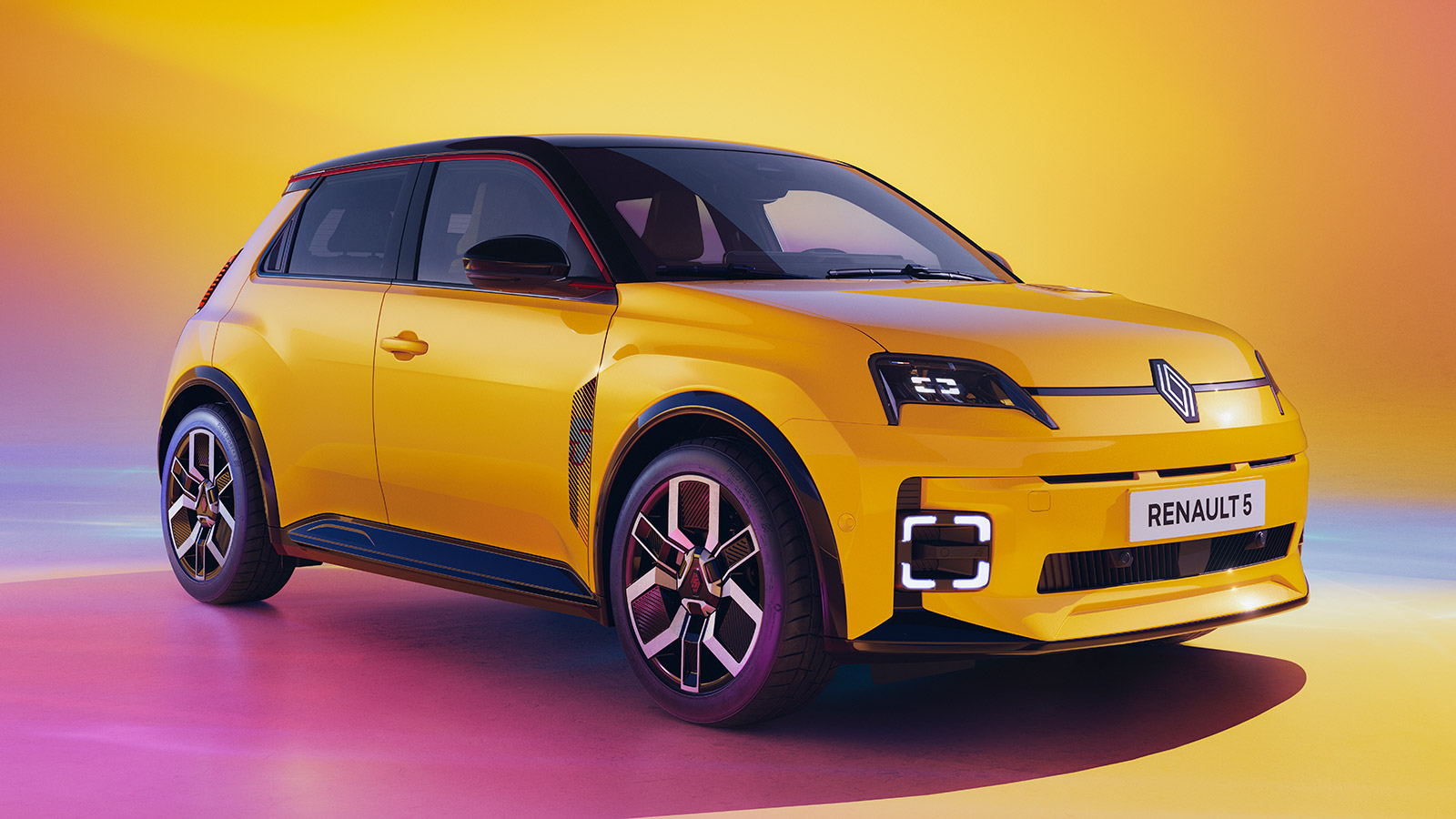
The new ID.Polo battles in the hotly contested 25,000 to 30,000 Euro EV segment, which has a lot of offerings from both European carmakers (Renault with its R4 and R5 E-Tech, Stellantis with the Citroën ë-C3 and Opel Frontera) and Asian (the Korean Hyundai Inster and Chinese cars such as the MG MG4). The base price for the ID.Polo is 26,390 Euros here, which is almost exactly $30,000.
Despite what’s often claimed on social media, you don’t have to spend 50 grand to drive around in a new EV. Half will do, and while it means a compromise in range and interior space, for a lot of use cases these cars will be completely fine. Most of the use will be in urban areas, on city streets, but these are still family hatchbacks that are perfectly usable outside town.

In Northern European countries, with the characteristic blend of cheap electricity and expensive gas, any 25,000 Euro EV stacks up well compared to spending money on fuel. With a sub-20k newish ICE Polo and ten-dollar gas, if you spend thousands per year just fueling it compared to charging costing hundreds, the math will eventually math towards an EV, even compared to a frugal car. If demand stays up, it will also bode well considering residuals, something that’s not always that clear-cut with EVs; also, the cheaper the car, the less it will get beat up by depreciation. The e-Up! and its SEAT and Skoda versions have kept their values well in the last ten years.
In Germany, with its expensive household electricity, the product needs to be especially good, as amortizing the extra cost will take longer. But the ID.Polo has such a long wait list (easily over a year in Germany, six months for the small Finnish allocation that’s being dealt now) that it seems to be working. Volkswagen has faced such an uphill battle in recent years that it’s clear people aren’t buying its cars just for the brand’s sake.
Driving The New VW ID.Polo

The ID.Polo Style Launch Edition is priced at 35 grand, a sizeable step up from the base price, but it also comes with a bigger battery, more power and a lot of kit like the glass roof. It has a 52kWh battery that gives it a 442km (275-mile) WLTP range, with an advertised 13,8kWh/100km energy consumption. The advertised 349 euro ($400) monthly price on the door actually refers to the leasing price of the base 37kWh Trend, as you’d pay a hundred Euros more per month for the launch edition car.
The 52kWh car has plenty of power, 210 hp, which is about the same as a Mk4 Golf 2.8 VR6. One of those weighed around 3,000lbs and the ID.Polo weighs more, easily over 3,400lbs, but the instant torque means a seven-second 0-to-60mph time that matches the Golf.
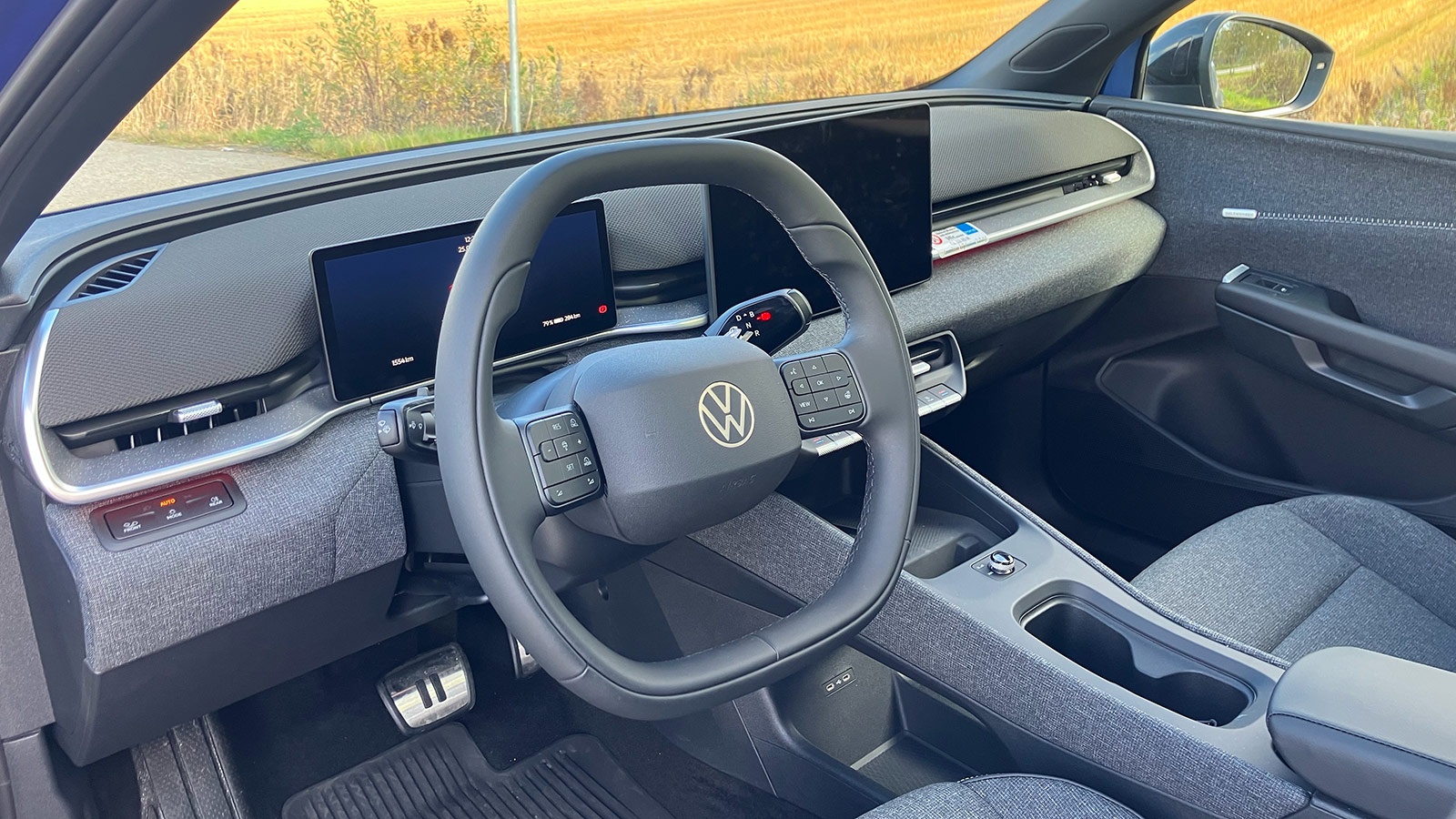
The first impression of the ID.Polo is the heaviness and heft VW has applied to it. The doors close with the sort of satisfying thunk you’d hope for, and behind the non-round steering wheel, you sit surrounded by cloth and a tall beltline. It seems round steering wheels are getting rarer these days.
The door cards, dash, and center console are all lined with the same slightly denim-like material as the seats, which helps to remove any apparent cheapness. Since the ID.Polo isn’t cheap-cheap even in stock form, it needs to feel expensive enough. The cabin does feel markedly better than the Volvo EX30, even if there is a splash of recycled plastic in use here, too. Piano black is nowhere to be seen.
Look At These Cool Retro Gauges And Real Buttons
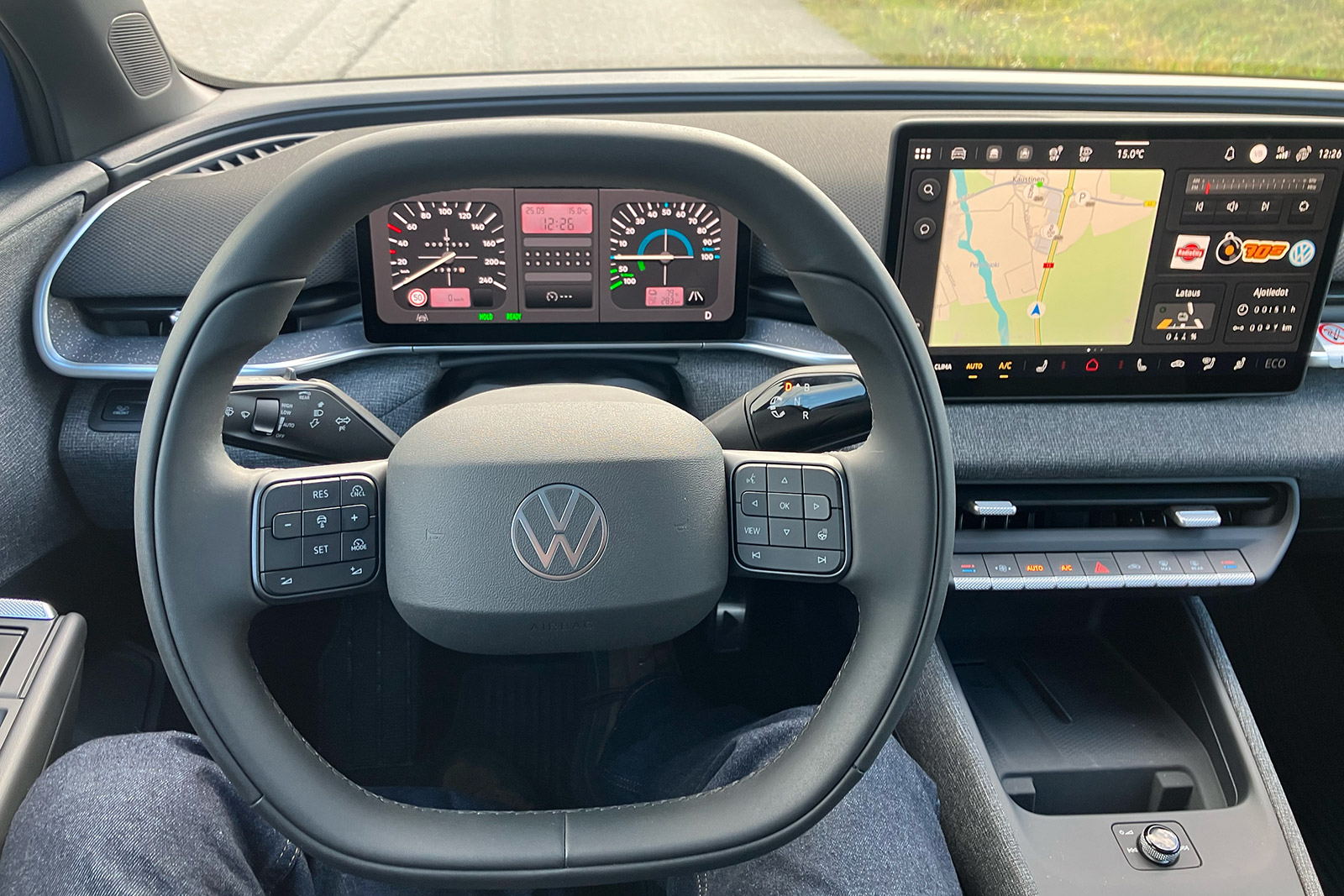
Ahead of the driver is a smaller display, with some of the functions relegated to the center touchscreen. The car runs an Android-based OS, and its actions are pleasantly free of lag, even if it takes a little while to get used to.
The same applies to the control stalks on the steering column: as with previous VW:s, on your right is the drive direction stalk that’s twisted for forward or backward progress, and the park position is selected from the button in the end. On your left is the multifunction stalk that seems initially impenetrable, with wipers toggled from tiny little switches on the stalk.
Again, it’s fine once you’re used to it, and it’s visible through the steering wheel, unlike the cruise control stalk on Peugeots. The cruise control, audio, and menu buttons on the steering wheel are real and not haptic.
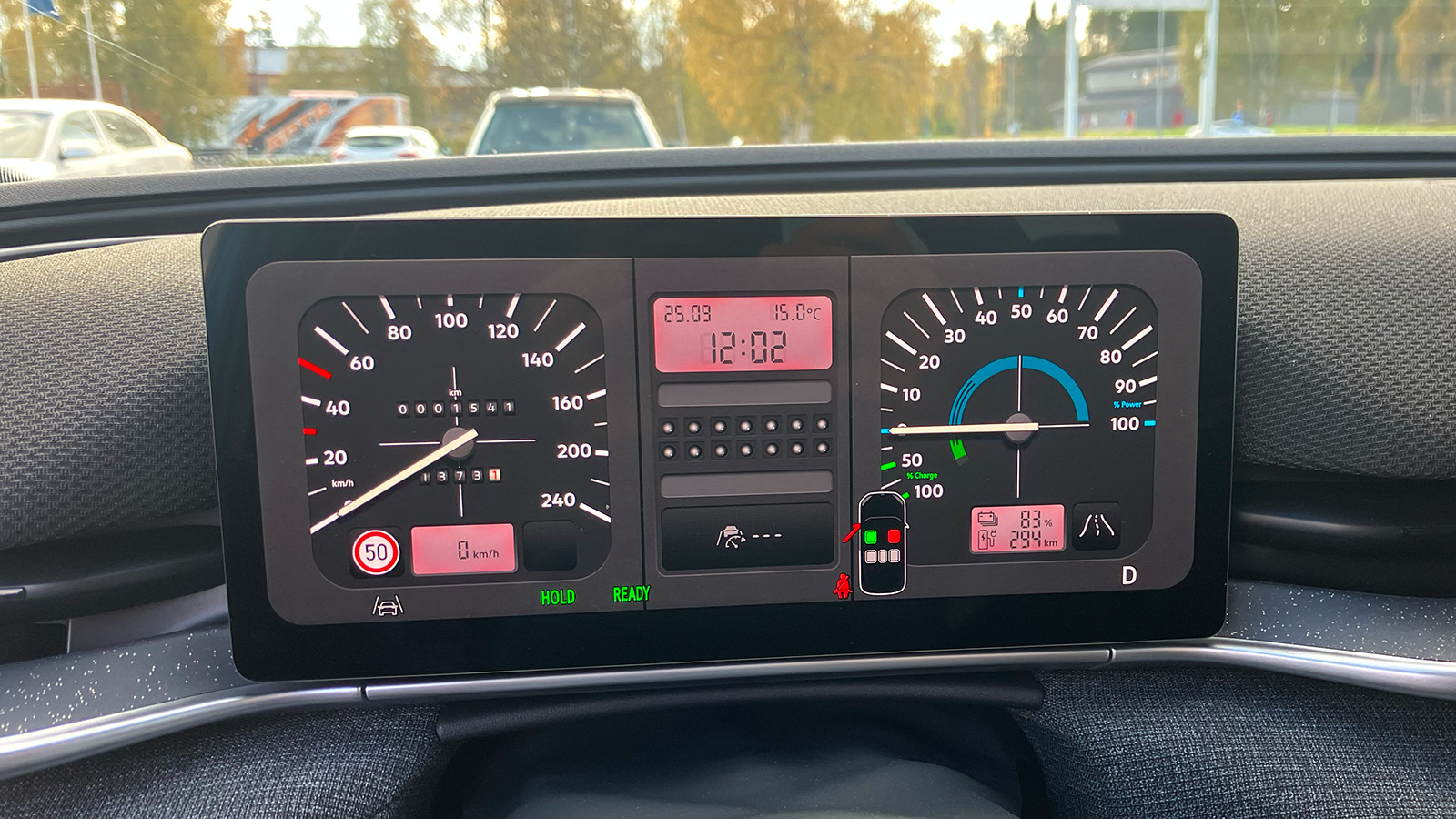
Like in the ID.3 Neo, the user interface can be switched over to a retro look that matches the 1980s Polo, Golf and Jetta. It’s neat, as clear as the original 40-year-old design, and I respect VW’s nod to the heritage models, but I wouldn’t want all of the usability to rest on a “hey, look at this retro stuff” sort of disguise. In the original cars, the row of LEDs in the middle housed warning lights and green indicator bulbs, but they do nothing here.
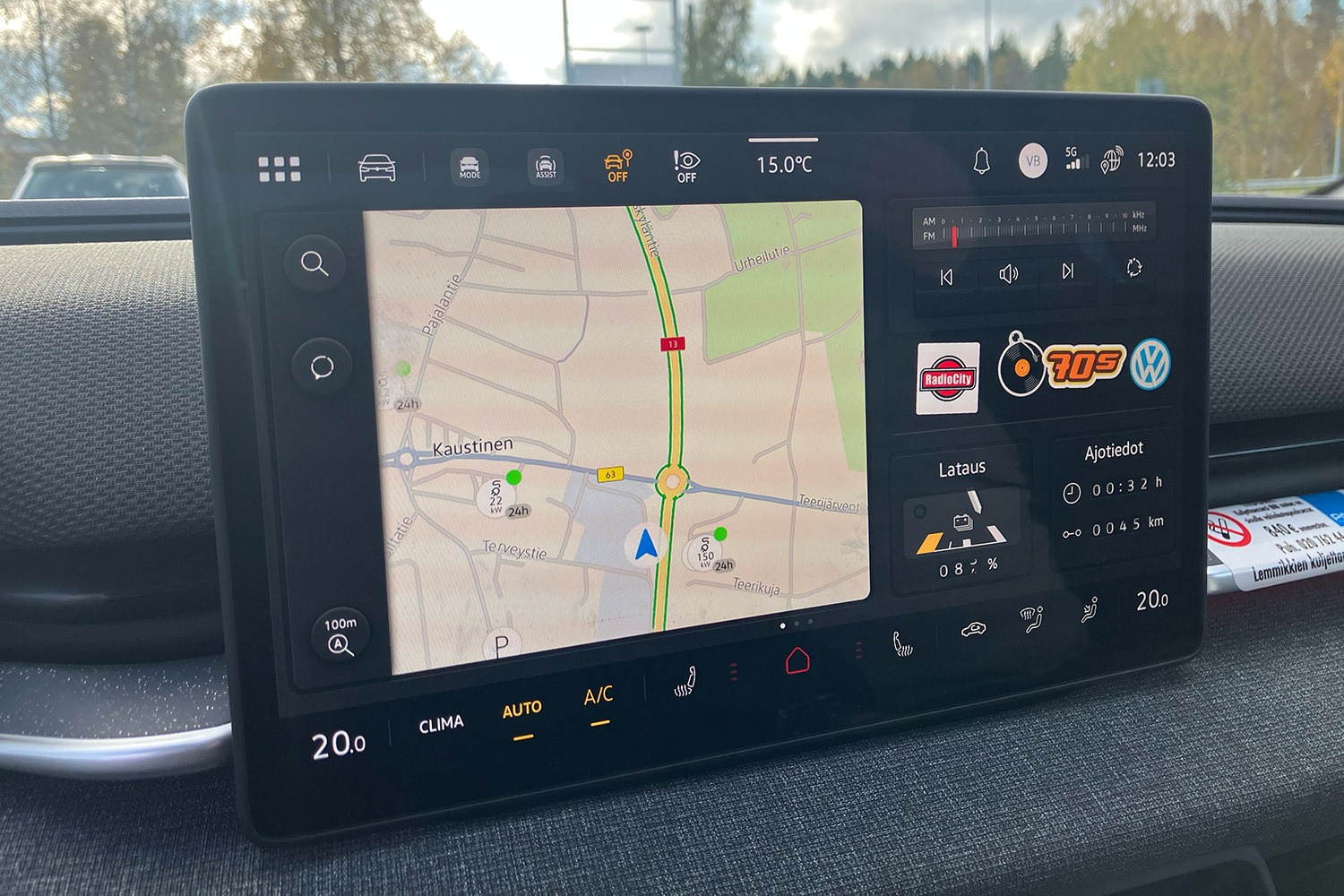
If you pay $30k for a car, you could have different gauges than the $3k Craigslist hatch you might have in the barn, and I feel like I would keep the regular 2020s gauges on. It has to be said the range display and “trip computer” done in ‘80s fashion are well done, as is the radio.
For anyone wanting to immediately disable the mandatory 2026-spec assist beeps and bongs, the settings for those can be set in a speed dial in the top menu. A dedicated physical button, Renault style, would be nice.
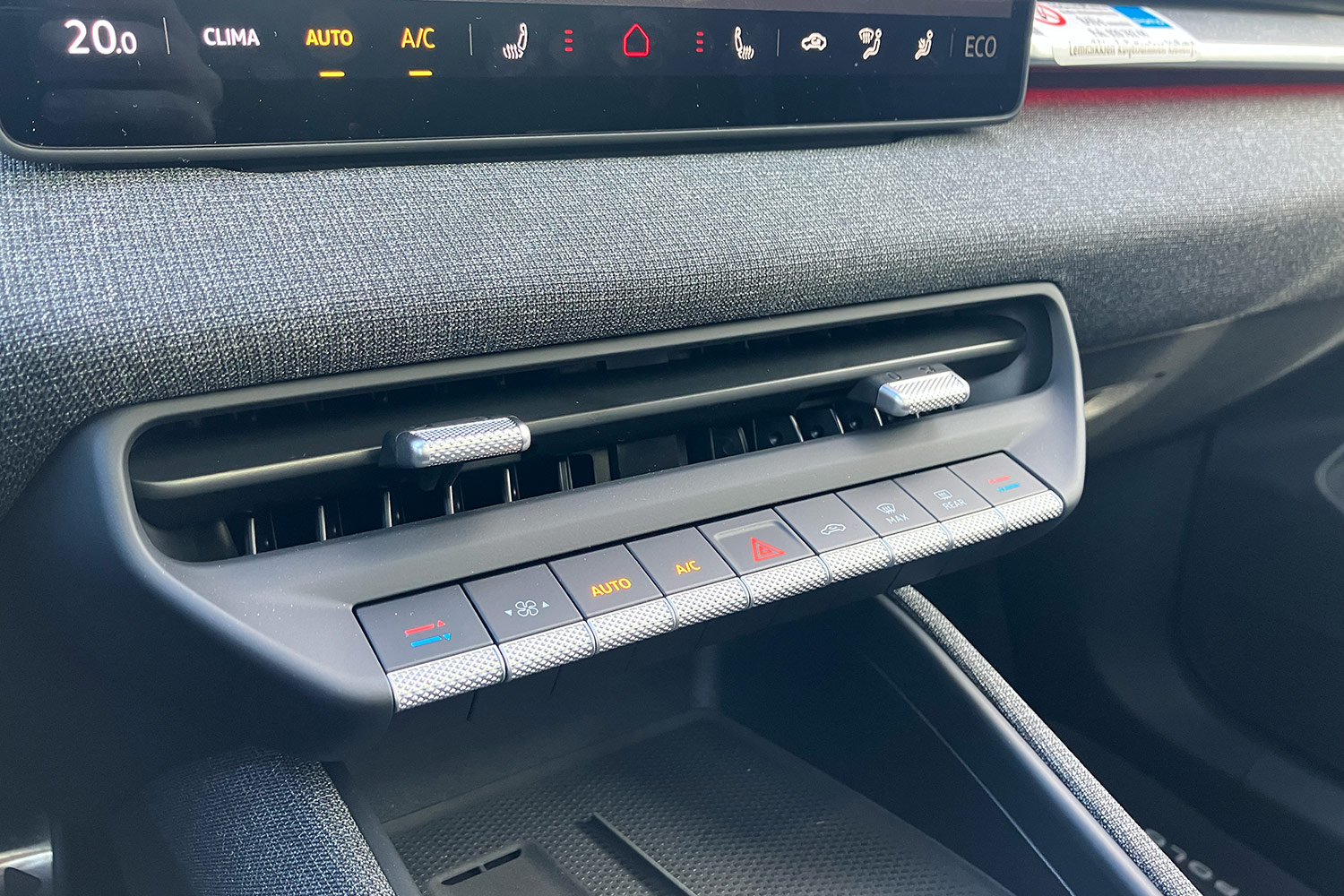
Speaking of real buttons, look! You can still adjust HVAC controls on the screen, but the physical buttons for it are very welcome. Underneath, the fully loaded cars have a wireless phone charging tray.
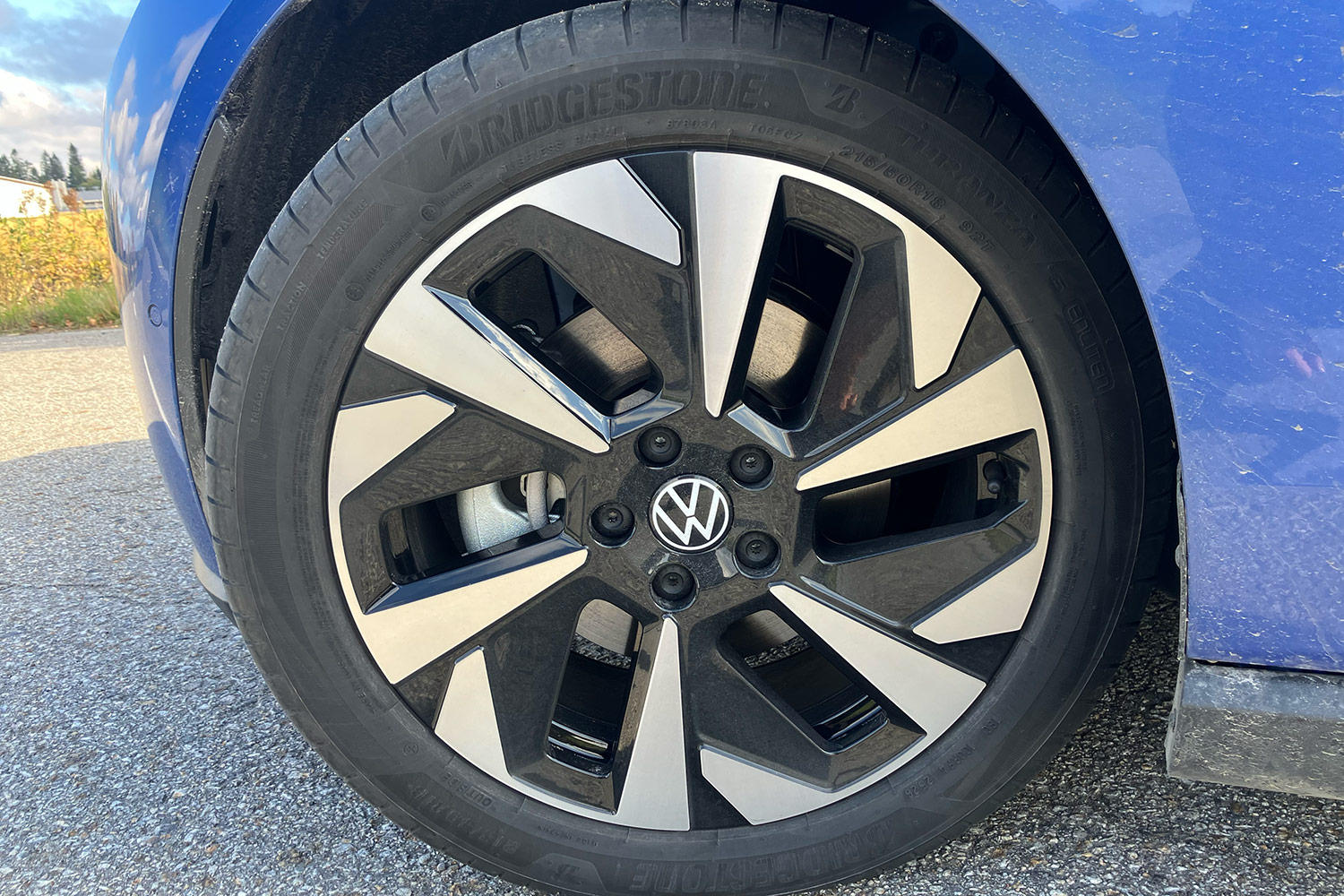
Our asphalt is coarse and patchy thanks to the elements and studded winter tires conspiring together to eat our roads, but road noise was minimal. The wheels are large 18-inch items with 215/50R18 Bridgestone summers, and a small hatch could probably do with smaller ones that offer more tire profile, but the launch-spec big wheels do look good. The ID.Polo rides well and takes speed bumps with grace.

The steering is well-weighted and realistic instead of being artificially light, even if the car feels heavy instead of a canyon-carving rocket, and this isn’t RWD anymore, either. No AWD will be available for the ID.Polo, nor the related ID.Cross crossover version.
Combined with the 210 horsepower that’s instantly available, the ID.Polo feels like you’d easily end up driving it very briskly, as a lighter car would feel more fun even when going slower. That said, the sensation of weight here is strongly associated with the car’s quality feel.
Later on, there will be an ID.Polo GTI with a slight power upgrade to 226 horsepower and a sportier look inside and out. Still, I’d love to try the base-spec 37kWh car that will have just 115 horsepower, and see how it feels out on the open road. There is no mentioned weight difference between the 37kWh and 52kWh cars.
Can You Fit In It?
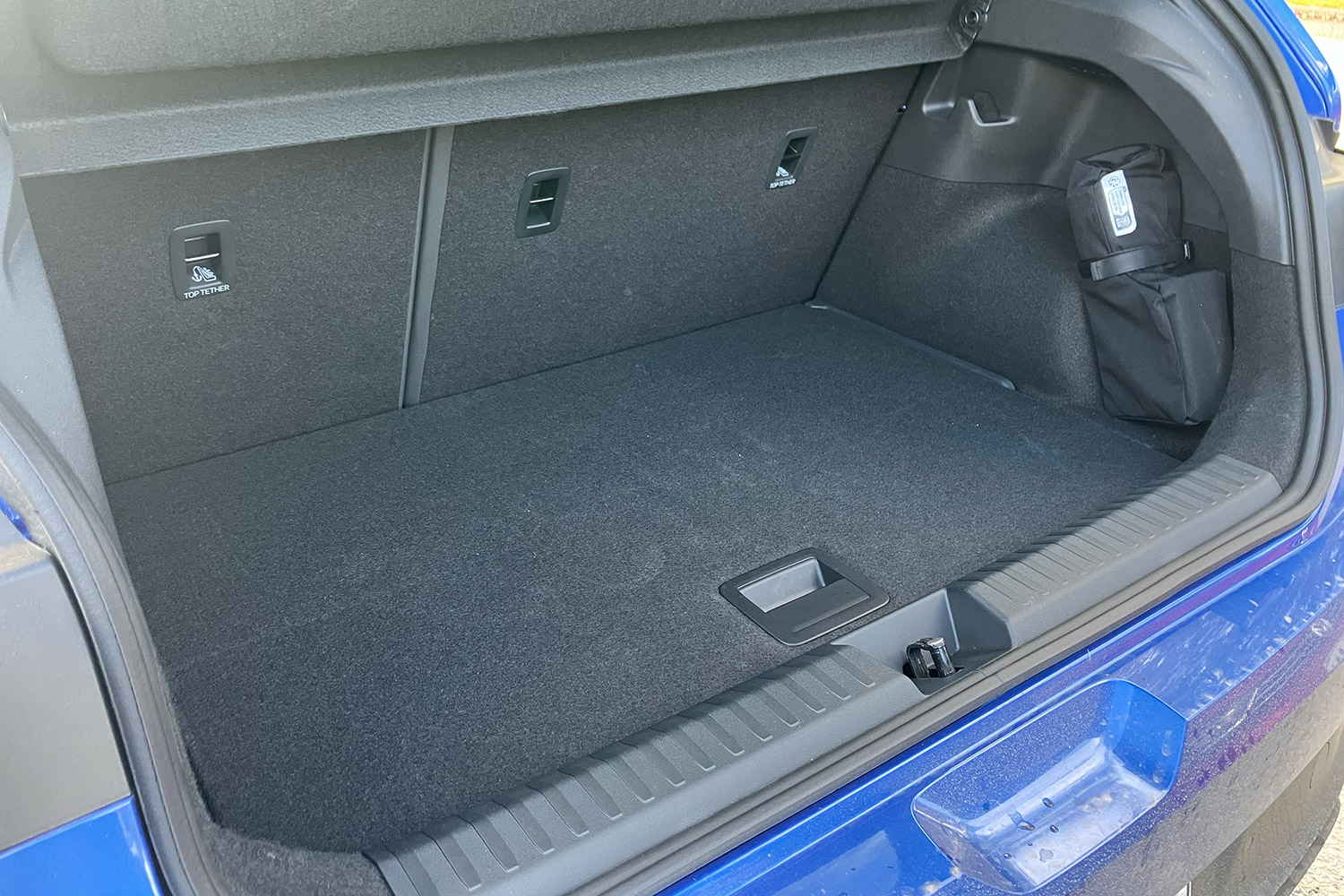
The cargo area in the ID.Polo has a false floor with three settings: high, low, and forgotten at home. Remove the false floor, and the space there takes big water canisters, for example, without issue.
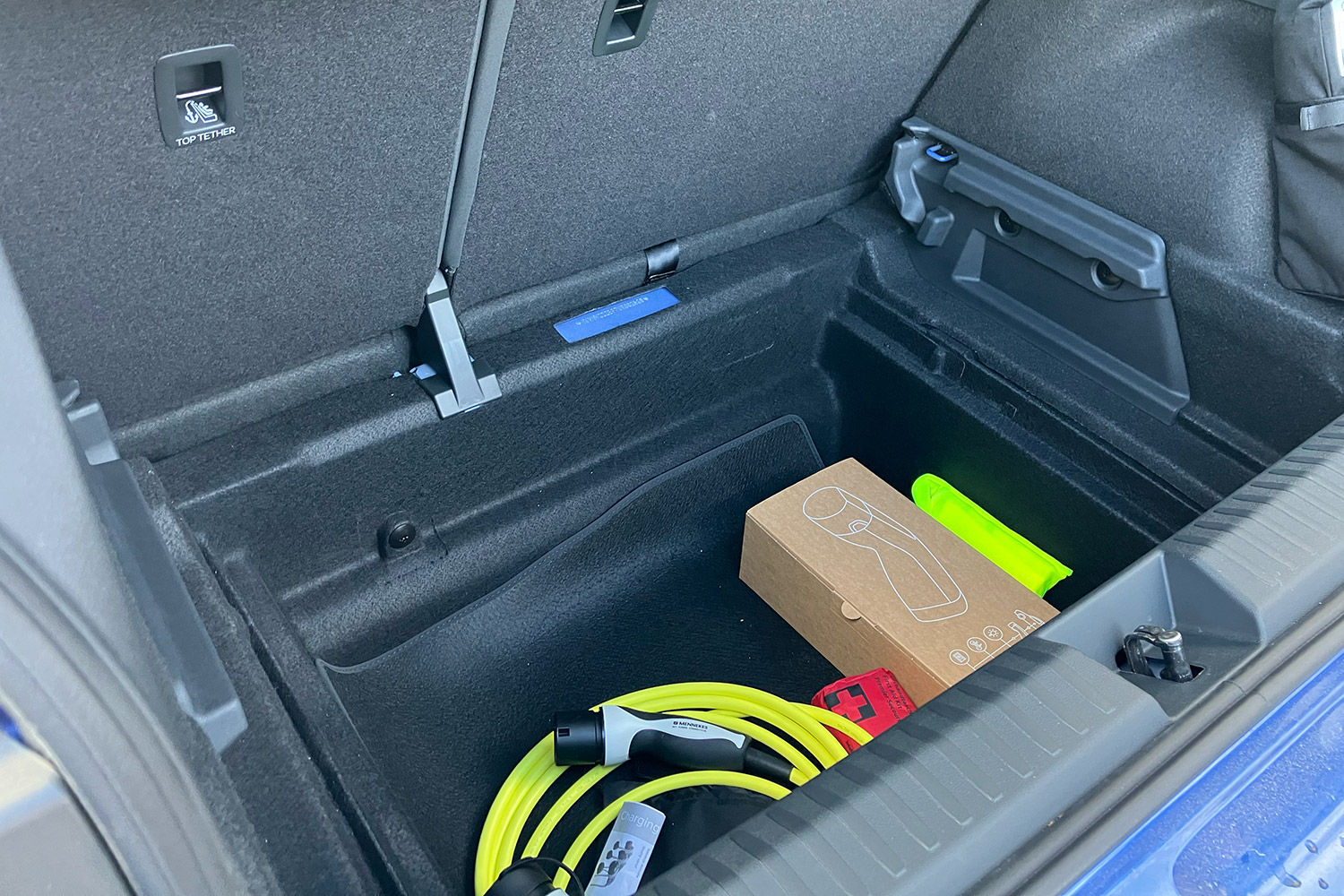
The trunk is large and really deep, as the driveline is FWD and the rear axle is an uncomplicated torsion beam setup, both freeing space in the rear. Conversely, there’s no frunk. Total trunk capacity is 441 liters, a handsome amount for a smallish hatchback that’s 4.05 meters (13.3 feet) long.

The rear seat isn’t immensely spacious. Sitting behind six feet of myself, I’d have my knees up against the front seat; for a family car or a second car, it’s fine if there are just kids in the back, and if the ISOFIX seat is front-facing, there’s no space problem. The seat back is lined with vinyl, which helps keep it clean in family car use. Still, it’s bigger in the back than the Renault 5 E-Tech, with a lot larger trunk.
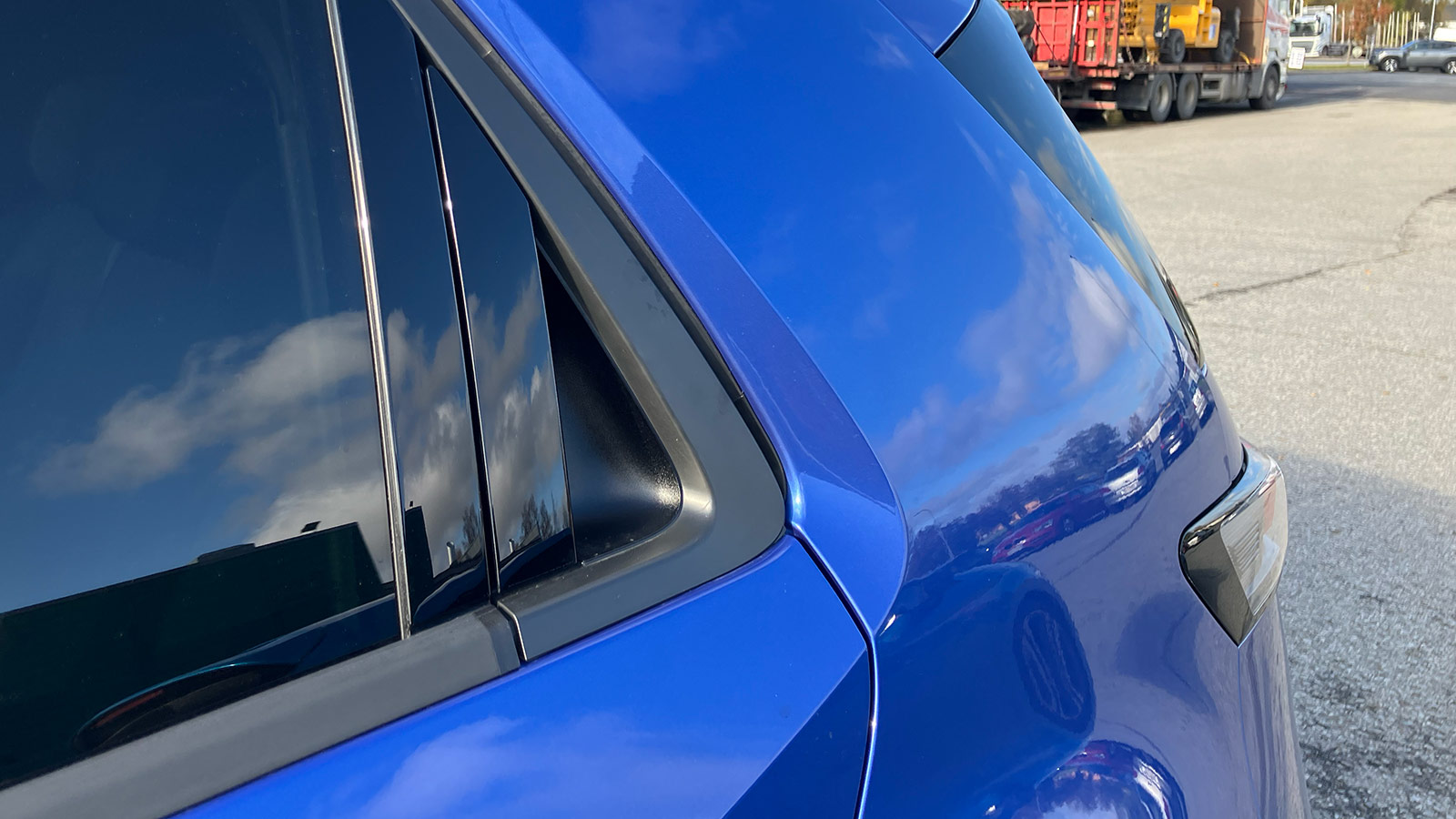
The rear door handles are hidden in the window corners for production reasons, as it saves on stamping costs and helps to make the window the right size for rolling down.
Under The Hood

Volkswagen claims a max charging speed of 105kW at a DC station, which isn’t super great, but the battery can be pre-conditioned in the winter to keep charging speeds up.
The 37kWh battery cars will charge at a max speed of 90kW, but at least the smaller battery will be topped up quickly. That speed is around double compared to what earlier-generation 38kWh Hyundai Konas could manage, so you’re out on the road in half the time – and charging those Hyundais in winter was a real slog. AC charging is done at 11kW max, which is the usual fare these days.

The ID.Polo is a combination of VW doing a perfectly ordinary-looking Volkswagen hatchback and paying attention to enough of the neat small details, without overloading on gimmickry. Spec it right, paying attention to your wallet and daily driver requirements, and it’s likely to be a very likeable car in day-to-day driving. The base color for it is an attractive yellow called Python Yellow, which really helps the car stand out: there are enough fleet-spec white Volkswagens out there. The blue is fine, too.
The lessons learned from the ID.3 are likely to be that people just want a regular Golf-looking car, with a regular Golf dashboard, without having to pay for fuel. In other words, like the e-Golf, just with the EV stuff honed further. This shows in the new ID.Polo, which is pleasingly gimmick-free inside out: it’s just a Polo that’s electric. When VW finally makes an ID.Golf, there’s a lot hanging on it. If it’s anything like the ID.Polo, it’s looking good so far.
(Photos by author unless otherwise noted)


I have wanted that damn retro gauge on my last three Golfs and it still pisses me off I can’t have it. I mean its a screen – if I want my golf R to look like a Mk1, I should be able to do it!
OBD eleven can’t do that? More screen options should definitely exist, either stock or downloadable..
Seems VW has taken steps, for our convenience, on post-24 cars to make it harder to do, unless you just stick a second screen on it and use that.
My 2001 A4 gen Jetta had the nicest instruments/lighting I’ve ever had. A soothing blue backlight on the dials and bright red needles. I have missed that ever since I sold it in 2017.
Always did like the purple gauges. But, my heart will always belong to the MK1 – clunky led indicators of … all things. Barely there lighting, the works.
Those steering wheel buttons remind me of the gaming PC mice with the massive number of programmable buttons on the side.
That appears far more intimidating that I feel it should be.
My VW rain sensing wipers do a pretty good job. Leave it in auto, they’ll kick on when it rains, stop when it’s not and speed up as necessary. Rarely ever have to adjust the settings.
Same, in fact when it’s dark, they know it’s raining before I do. My only complaint is the auto position should be more discrete, if I bump it or use the washer I’m always concerned it’s not back in auto
Auto wipers is a feature that can really go both ways. If it isn’t calibrated correctly, it’s just super frustrating.
Until I bought my Macan, I hated almost every implementation of the tech. These ones are perfect, I never touch them – to the point I forget they’re in auto.
I assume the software/calibration is the same in your VW, so that makes sense.
Agreed. The ones on our 2018 MDX were worse than just having variable intermittent functionality of my ’17 Accord.
That instrument cluster needs a DigiFiz replica.
https://jdmedmparts.com/storage/2025/03/1735075452172.jpg
Absolutely!
Putting on my designer hat for a moment I find it really sad that the only way we can get an attractive clean digital dash is to copy a 40 year old design.
That was my sentiment! The retro gauges are an easter egg, and there’s a separate 2020s mode that’s the default setting.
That door handle in the window is actually a brilliant piece of manufacturability that doesn’t compromise other components.
They are ergonomically pretty poor and they bother me, but I never considered the stamping cost angle, so I’ll give them that. Then again, I guess it’s another example of cost cutting. I’d rather they reduced cost by getting rid of more gadgets I don’t need and do the basics well.
I really wish VW would attempt to sell this to us. Oh well.
Or something like that. I’d buy one though
“I drive 800 miles one way to work while towing my boat and travel trailer every day! I could never use this!!!”
In all seriousness, it doesn’t have enough range to compete. The Bolt is cheaper and has more range.
Your wish shall NOT be granted.
Signed,
A Wish Stealer
Do they offer a spare tire as an option? I don’t see why they couldn’t use the space under the false floor for a spare tire.
I hate this trend of car makers selling cars without spare tires so that if/when you get a flat, you have to call a tow truck.
Unless they’re selling the car with solid rubber tires that can never go flat, a spare tire should be part of the package.
The spare wheel is in the back seat.
Tire sold separately.
Nice little commuter car. I really like that trunk area. My current daily has a sub-trunk that’s not quite as deep but still so very useful for hiding things or keeping bigger stuff from flying around.
I still don’t like the glued-on tablet look but I guess that’s just what we do now. At least there are some sensible buttons available.
Seems perfectly cromulent. Which is exactly the mission for a daily driven family hauler/commuter.
Thank you for the great review. Too bad they are still going with the punctuation.
VW is so proud of it. They never actually say it in their videos. Lose it!
The door cards, dash, and center console are all lined with the same slightly denim-like material as the seats, which helps to remove any apparent cheapness.
Would it kill them to use plaid?
Guessing the plaid is held for the more powerful upcoming GTI.
Probably saving that trim for the Scotch version.
Nice Review – Thank you.
Of course they’re all wait-listed in Europe – it’s that good.
How I wish we could get these in the US.
I’ll take the $3K used hatch and $27K to buy gas for it. With real gauges, no idiotic screen, a manual transmission and thus some actual entertainment value built into how it drives. The Europeans used to be good at that sort of thing.
This is peak “V6 Mustang” energy.
Er, ok?
three settings: high, low, and forgotten at home
LOL
Now if we could get more cheap EVs here but that would take convincing Americans that not every EV needs to tow a 10K Lb. camper 1000 miles up hill at 80mph on a single charge.
2027 Chevy Bolt. Get it while you can.
Or a Used Bolt EUV if you don’t need the faster DC fast charging of the new one. I paid $17,000 for a fully equipped 2022 in December. What a bargain for a great little EV commuter. And it has Android Auto and Carplay that you can’t get on the 2027.
I’m a big fan of my 2017 Bolt. Purchased used in 2021.
I’ve driven it 55K miles, used 12,103 kWh, and spend $1,468 for that electricity.
Your 2017 has much greater efficiency than my 2027. I wonder what GM screwed with to drop it that much. I envy the low price you pay for electrons.
The 2027 and 2017 Bolt have identical EPA combined efficiency ratings. Like with a gas car fuel efficiency is based on how you drive it. Mine is help by the fact that I use it mostly in the city and the highways within range around here max out at 65 mph. That said, I’m not light on the go pedal and switching from the stock LRR tires to Pilot Sports dropped my efficiency by 20%.
Temperature is a big factor too. Winter I can drop to 3.1 miles / kWh with winter tires. Spring and fall where no HVAC is used I get as high as 4.5 m/kWh with summer tires.
I currently pay $0.10 per kWh to charge. That is because I switched to a time of use plan where charging from 9pm to 7am and all weekends are half the price of the typical fixed rate.
Also my mileage number above is wrong. I’ve driven it 46K miles. 46,531 to be exact. That works out to an average of 3.8 miles / kWh
I got mine last March. The VW seems competitive, but I prefer the Bolt based on what I’ve read here. Either would work for me, since I’m retired. In fact, I’ve never charged other than at home. I suspect that the VW would have about the same number of software issues as I’ve had with the Bolt. They haven’t been significant, but are annoying. An example is that it will get hung up while determining the route on Google Maps. The route shows up, but the CPU will just spin its wheels forever or at least until I reach my destination. The real efficiency, as opposed to the federal number, is disappointingly low, but gas prices being what they are in CA, it is still cheaper.
Nobody except EV drivers will be towing anything recreationally for long distances next summer with petro-fuels the prices they are. Waiting at a charger for 30 minutes or working two hours of overtime? I’ll wait, I’m on vacation after all.
With so many people’s entire lives and recreation being gas/diesel powered, I am curious how this plays out. We could have been so much further ahead with renewables/rail/EV/public transport but for, you know, loaner cowboy boots straps stuff.
There are some pursuits like overlanding that will likely be gasoline powered for a while. Other things like most general purpose recreational boats could go electric fairly easily. Those are used for a few hours at a time and most of that is not at full speed. Offshore boats and boats used for long distances excluded since batteries aren’t quite that good yet.
I agree, If I was buying a ski or wakeboard boat, electric would be my choice but the hard core fishing dudes are not pro EV quite yet.
Boy, I’d hate to see what you think of as actual cheapness then, because that stuff looks awful to my eyes.
Leather is so overused at this point. I welcome the use of interesting fabrics and velour again. To me it makes everything look much more cosy and comfy. 80s and 90s european cars used to be so good at that.
I feel like nothing is actual leather any more at this price point (or even double it), and everything is
vinylvegan leatherplastic.I agree. The faux-luxury “leather” or “leatherette” in mass market cars these days is a poor alternative to a decent cloth interior.
It’s just a normal car man,it’s fine.
And that’s exactly the point. Unlike the $(#€!$$€ VW tried to sell (mainly unsuccessfully) in the recent past.
I had a 2010 Passat with the semi leather seats,think it was the highline spec,that held up fine. My was has a golf 3 with the horrible sticky-plastic,that doesn’t hold up anything as good. But yes,the quality has always been a bit hit and miss.
I’m sure it’s fine, I mostly took exception to the statement that it doesn’t look cheap.
I don’t think it looks cheap in a way,it not just hard plastic at least. I am happy to see different kinds of materials than just vinyl too.
It may hold up poorly though and look like shit in a few years,who knows.
Fabric on the center console and the top of the dashboard. That’s going to be fun to keep clean.
What are you getting on your dashboard that fabric would make it difficult to clean?
Sorry, I should have clarified! I detailed cars for 15 years and the center console was almost always the grossest part of people’s cars. Dashboard tops often required multiple cleanings even though they’re non-porous. A shocking amount of people drive around in filthy cars.
I keep my car immaculate.
You don’t own a vacuum cleaner?
That was more in regards to how other people treat their cars, I personally wouldn’t have any trouble keeping something like that clean.
My dog likes to perch from the back seat with her paws on the center console. It it was anything other than the leather/vinyl it is now in our GLI and GTI, it would be a stained dirty mess
Those screens look really bad. They could only look more tacked on if there was actual scotch tape holding them in place. And with 0 cowl over them, I’m sure they’re very effective when the sun is high in the sky.
Otherwise it looks like a very good package for the price.
VW Futura? The only Futura I was aware of was made by Lincoln and driven by Batman.
Ford Falcon Futura?
Ford Fairmont Futura?
And the Grancar Futura:
https://pt.wikipedia.org/wiki/Grancar_Futura
You weren’t aware of the Ford Fairmont Futura?
https://www.youtube.com/watch?v=EVINfhuEhAM
Seems like a neat little vehicle. For those pining for this in the US, just get a Chevy Bolt which has similar specs for a similar price.
Good article, thanks
But can you get a small electric pickup truck in Europe?
Why would you want a small electric pickup truck in Europe? Europeans rent (or own, if they have a house) a little utility trailer when they need to haul shit around.
They don’t feel the need to cosplay as the Marlboro Man all the time, as a rule.
From what I saw on my last visit to Sweden that is changing. I was shocked to see non zero giant, jacked up pickups there.
I certainly saw a handful in my last trip to Europe. Including a NICE squarebody Suburban belting down the Autobahn (the mind boggles at the cost of feeding that). But compared to here? They don’t exist.
The Swedes in particular have long had a subculture of V8 American barges, so not super surprised they in particular have some trucks.
I wouldn’t mind being a Maverick Man if they sold them here.
We have recently gotten both the Toyota Hilux and the Isuzu D-Max in electric versions,I haven’t driven them but I know they’re there at least.
Read that Ford is considering building the UEV platform and Fathom in the EU…
That’s… unFathomable…
Not sure how others can post an emoji…
Didn’t work for me. So, yeah, sure, why not… use “unfathomable“…
Meanwhile the cheapest electric VW we can get in the States starts at $46k.
Ah, yes, the People’s Car.
It is unfortunate that VW does not offer this vehicle in North America.
They’d sell dozens in the land of the Brodozer.
I bet there was similiar sentiment when selling the OG beetle was proposed. Sometimes people drive bigger cars than they want as there isn’t a suitable alternative.
It is a wildly different world today than in the 1950/60s. As I keep saying, if there was any market for small cheap cars in the US, the small cheap cars that have been sold in the US over the past 15 years or so would have been big sellers – they were not, at al, across the board. Most of the people here saying they would buy one of these really probably wouldn’t (or couldn’t).
The big issue, pardon the pun, is that small cars aren’t actually much cheaper to build than larger cars, but people won’t pay enough for them to sell them here at a reasonable profit. Now that there is nothing forcing automakers to make and sell them, they don’t anymore in the US. In Europe, where cars are notably more expensive to start with, and externalities FORCE people to choose smaller cars, they can be sold at a profit.
Not that long ago, yet a completely different era. Mind-boggling you could drive a new car off the lot for so few Euros.
Global pandemic + greed = profit!
Where is the line between acceptable profit margin and greed? Give me a number.
What’s the point of this question? You’re acting like there is no line just because it can’t be boiled down to a single number. While I’d wager most people couldn’t give an exact number, I’m sure most people would agree with the Potter Stewart answer of “I know it when I see it“.
Or are you saying that 100% profit margin on everything is acceptable… which I’m guessing you’ll say “No…” which means you also agree there’s acceptable profit margins and unacceptable ones. But just because you can’t boil it down to a single number, doesn’t change anything.
I’m asking where the line is. All I hear is that companies are greedy. OK, so define greed. I think most agree that companies need to make a profit so where is the limit?
Nobody in the auto business is making anywhere near 100% profit. Toyota is consistently at or near the top when it comes to profits. Their TTM net margin is 8.63%
Over the last decade VW has average 4% profit. Current TTM is 1.8%. Is making less than 2% on your money when my guaranteed bank account pays 3% and a 12 month treasure 4.5% “GREED”?
I found the talk of priced from a decade or more ago odd. What I care about is the price of the gas and EV versions today.
Gemini tells me that in Germany a gas Polo starts at €21,000 and the EV starts at €25,000. €4,000 more for the EV – which sound pretty reasonable to me.
Yeah, the base price of the old-shape Polo has hiked up a lot in the past decade. Now that they don’t make it in Spain anymore, but production has moved to South Africa, it’s costlier to ship them to the markets that continue to offer them. VW will sell the old Polos in Germany for the foreseeable future without a ICE successor, but they aren’t that much cheaper than the ID.Polo, and Finland won’t get them anymore.
It isn’t surprising that the price is up between inflation and emissions.
The 1.0L 80 PS Polo is rated at 119 g/km CO2. The current limit is 94 g/km. 25 g/km x 95 Euro = 2,395 euro fine for every Polo sold.