


When you think about American 1980s turbocharged giant slayers only offered in black, your mind probably jumps to the Buick GNX. The ultimate G-body has enjoyed serious cultural notoriety lately, what with being the title and cover subject of a generational album. However, it isn’t the only car that fits those qualifiers. We need to talk about the Shelby GLH-S.
Like the GNX, the GLH-S wasn’t act one, scene one. It was a doctoral thesis for its model, a culmination of every learning and over years of tweaking and experimenting. However, the GNX shared its basic bones with the Chevrolet Monte Carlo SS. The GLH-S was a freakin’ Dodge Omni.


Yet, that might make this limited-edition hatchback even more impressive. It’s effectively Adam to cars like the Hyundai Elantra N, the Chevrolet Cobalt SS Turbo, and the Dodge Neon SRT-4. The origin of the hairy-chested, boost-heavy sport compact. Or maybe it’s more like David with his sling. If you were driving one of these back in 1986, you could find your local Goliath and see what’s what. Impressive stuff, considering how the story of this thing starts.
Slow Start
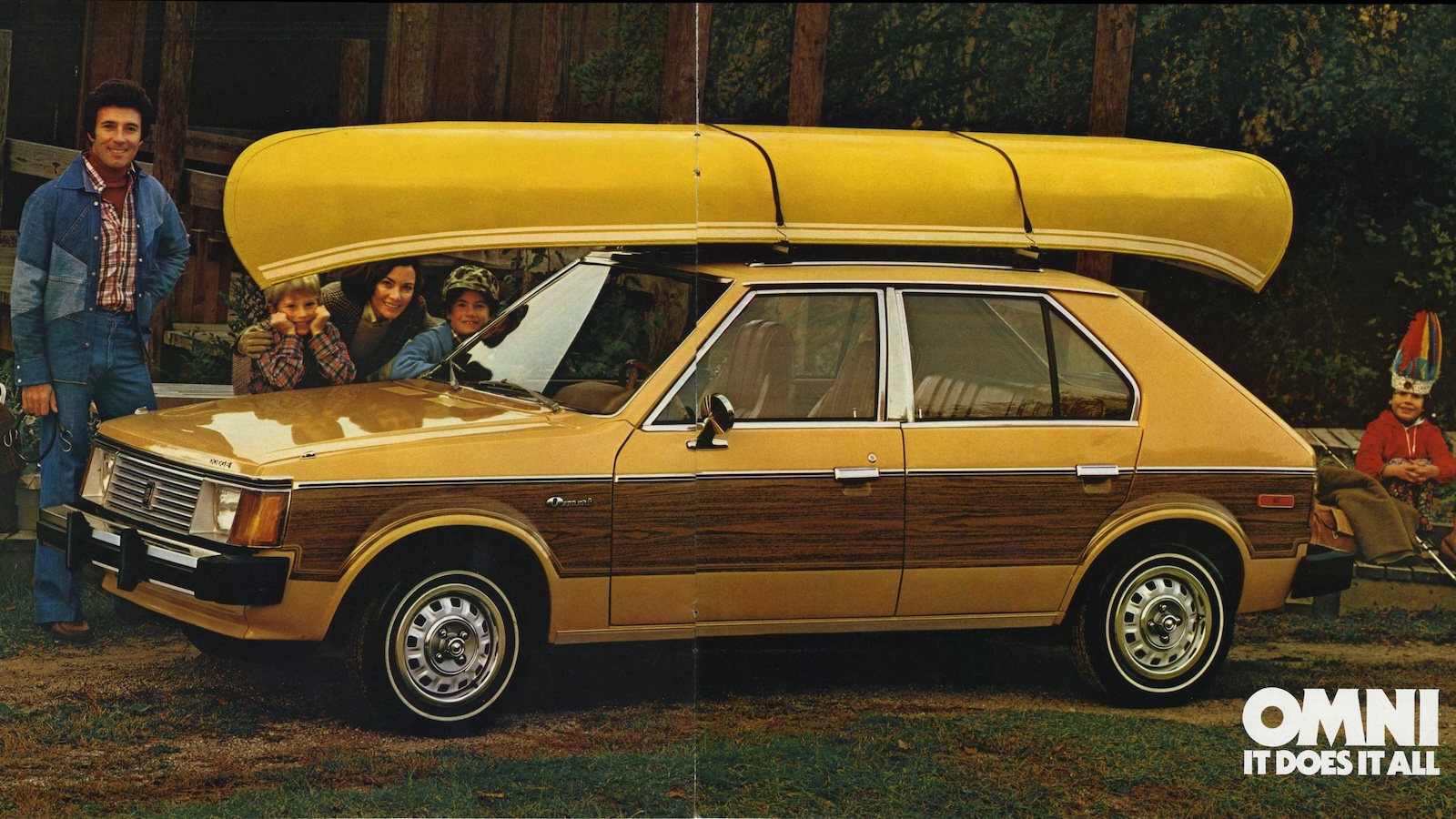
The Dodge Omni was supposed to be a world car, except that under the skin, it wasn’t. Sure, the European-market Chrysler Horizon and the North American Dodge Omni had huge commonalities, but they also featured some truly enormous differences. The Horizon had torsion bar front suspension, whereas the Omni featured MacPherson struts. The Horizon used trailing arm rear suspension while the Omni got a twist beam. Oh, and then there were the lineups of engines. While the Chrysler Horizon featured a lineup of Simca Poissy gasoline engines right out of the gate, things were more of a hodgepodge in North America.
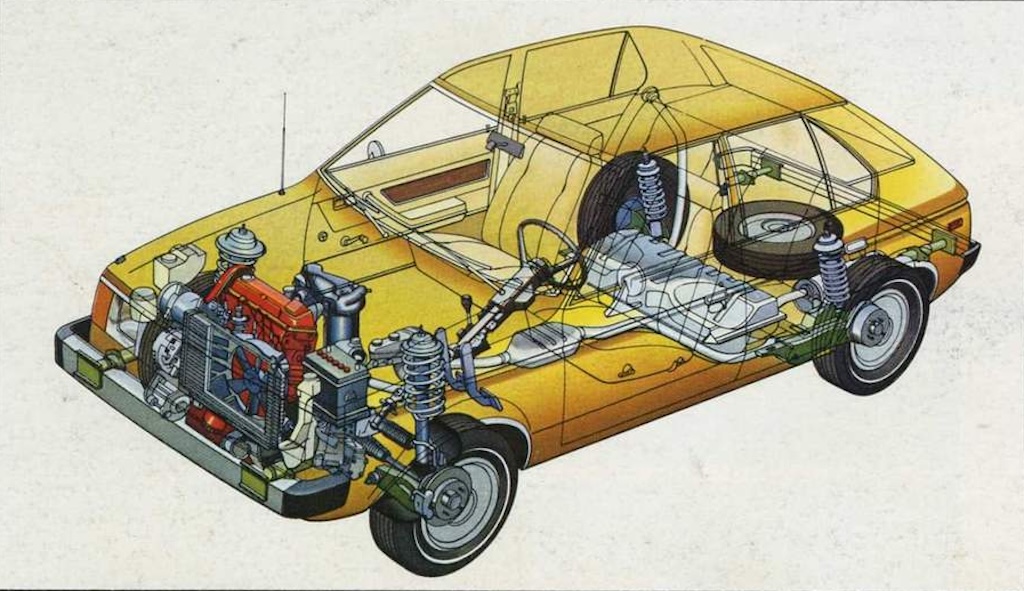
See, Chrysler Europe couldn’t initially supply North America with engines and Chrysler USA didn’t build transverse four-cylinder engines at the time. However, the Omni was set to be built in Belvedere, Ill. and Volkswagen was setting up shop about 600 miles away in Westmoreland, Penn. so a deal was made. The Dodge Omni would start life with the 1.7-liter inline-four from the Volkswagen Rabbit in order to be the first big-three front-wheel-drive subcompact to market for 1978.
Unfortunately, sales didn’t get off to a flying start, even with a series of recent oil crises weighing on Americans’ minds. It also didn’t help that by the late 1970s, Chrysler was ready to collapse. It was a combination of unfortunate events and questionable decisions stacked on top of each other, really. The automaker was bleeding cash as early as 1970, and that year’s bankruptcy of railroad giant Penn Central didn’t help. As the New York Times wrote:
Chrysler’s ups and downs —right now they are down but climbing up insist its executives — are chronicled regularly, but the company attributes the latest crisis to the Penn‐Central. When the railroad subsidiary moved into reorganization under the bankruptcy laws, it sent investors and creditors looking for potential trouble spots—and there was Chrysler. It was:
Losing money— $29‐million in the red in the first quarter.
In debt—$673‐million payable in one year for the parent company as of March 31 and $1.6‐billion in short term commercial paper outstanding for its subsidiary, the Chrysler Financial Corporation.
The result? A run on Chrysler Financial’s promissory notes that made the automaker scramble for $410 million in additional financial lifelines. That would’ve been bad enough on its own, but then things got worse. The 1973 OPEC embargo caught the firm flat-footed, its only fuel-sipping four-cylinder models being captive imports. The Plymouth Cricket was a rebadged Hillman with die-cast door handles that corroded so badly after a few rust belt winters, they could cut your fingers. The Dodge Colt was far better, but it was also a rebadged Mitsubishi. Then the disastrous Dodge Aspen and Plymouth Volare replaced the Dart and Valiant, only to be recalled multiple times in their first model year for stuff like seat belts that might not lock and brake boosters that might result in weak braking.
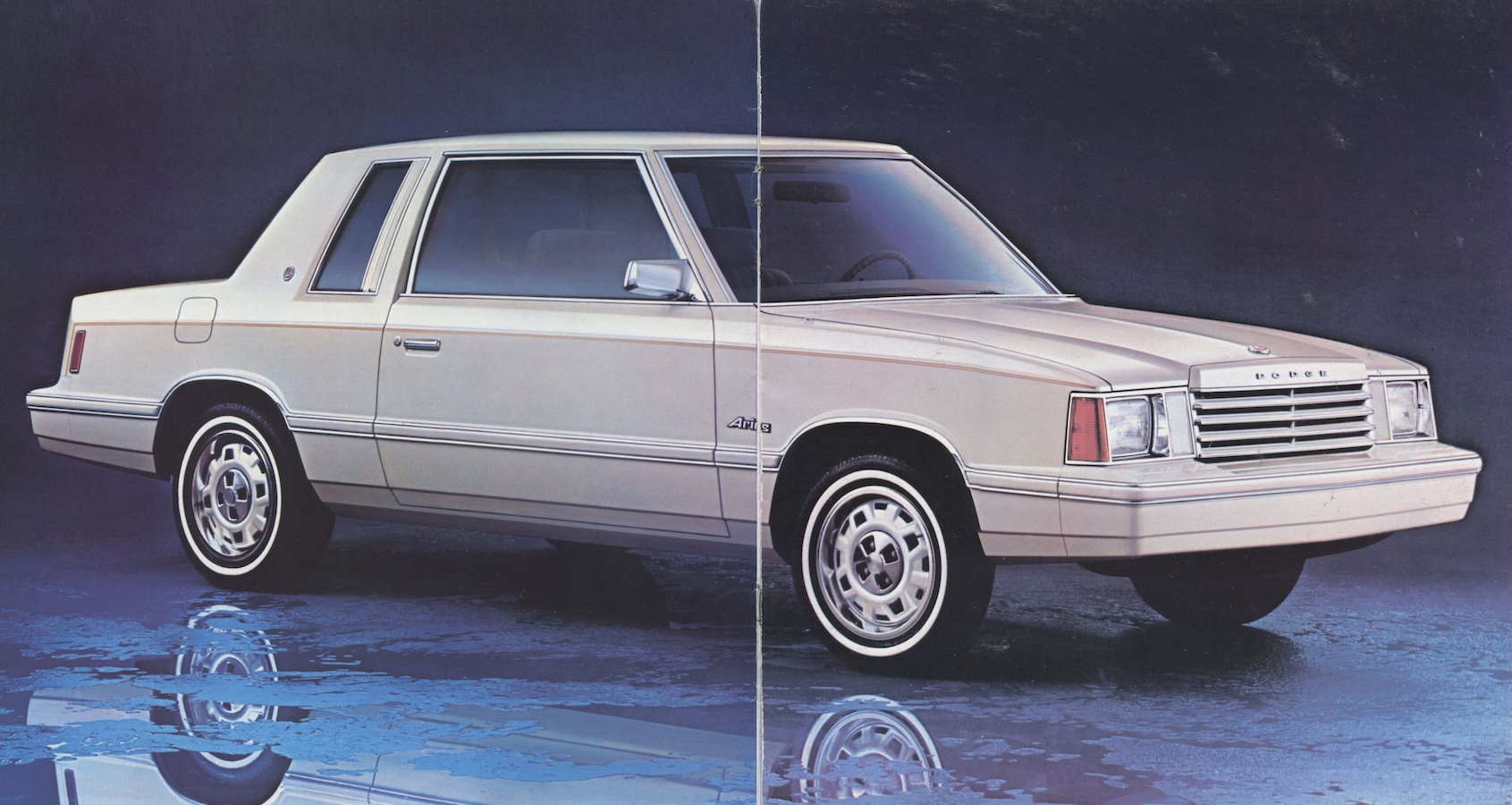
However, in the midst of all this misery, Chrysler was readying a Hail Mary. We’re talking about a transverse front-wheel-drive platform to underpin just about everything, starting with the Dodge Aries and Plymouth Reliant. However, the nice reliant automobiles known as the K cars didn’t just save Chrysler after Lee Iacocca negotiated that government bailout. They also spawned a new four-cylinder engine, the 2.2-liter version of which would make its way under the hood of the Omni in 1981.
Shelby, Carroll Shelby
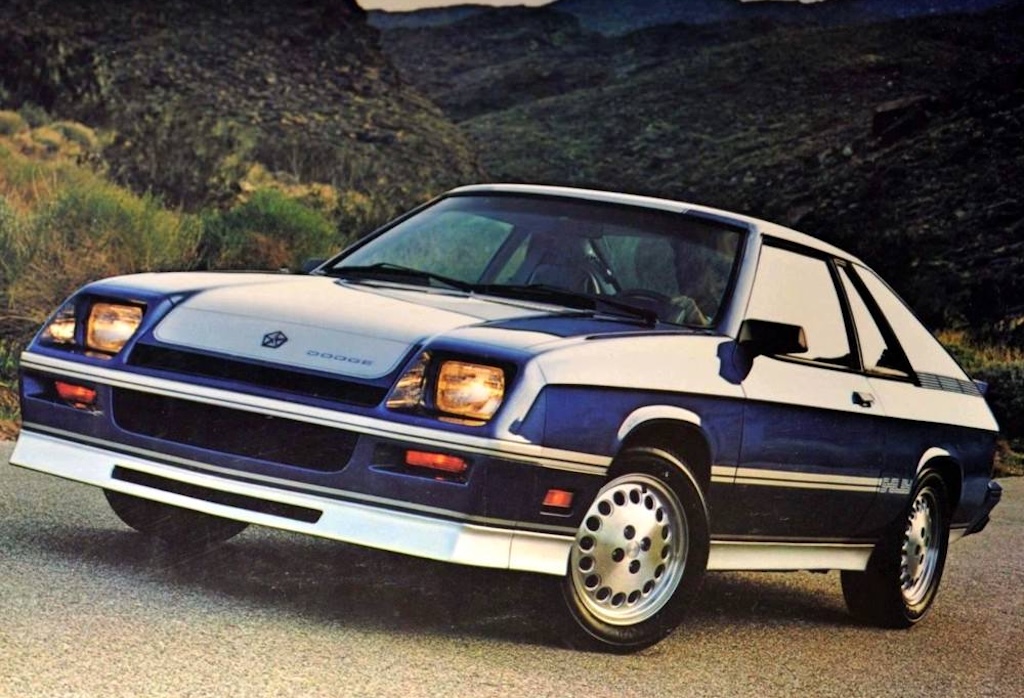
Mind you, a new optional engine wasn’t the only big move for the Omni in 1981. It also gained a coupe variant, called the Omni 024. It looked completely different from an Omni hatchback, but because it had the brand equity of a ghost kitchen, the Omni 024 name only stuck around for two model years. By 1983, all variants adopted the Dodge Charger nameplate, and Lee Iacocca called in all-American race car poster boy Carroll Shelby to give this coupe a kick in the trousers. Shelby’s treatment? Higher compression, a re-geared manual transmission, completely retuned suspension, big brakes, and quicker steering, along with some cosmetic sparkle. Old-school hot rodding that took output from 84 horsepower to 110 horsepower. Oh, and guess what? Those upgrades also bolted into the Omni hatchback, so Shelby did the sensible thing, then settled on a showy name: GLH, an initialism for “Goes Like Hell.”
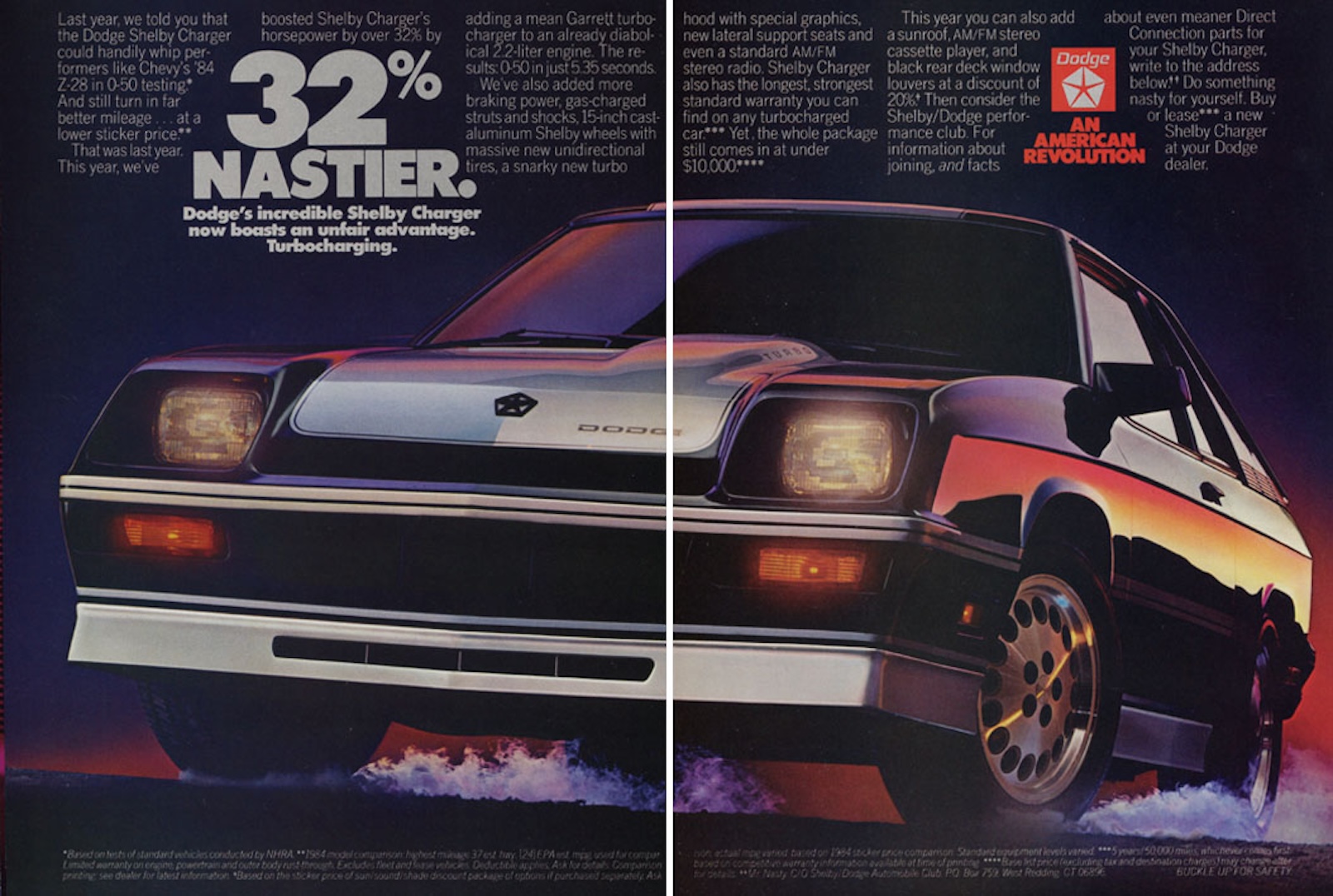
Meanwhile, across the Chrysler showroom, a new variant of the Trenton-built inline-four was on offer. Auburn Hills needed a weapon to surpass the 2.6-liter balance shaft-equipped Mitsubishi 4G54 inline-four used in, among other things, the K-car limousine Chrysler Executive. It was smooth, it made good power for the time, but there was room for so much more. The solution was a replacement for displacement. Chrysler lowered the compression ratio of the 2.2-liter Trenton engine with new pistons, reworked the valvetrain from the camshaft to the valves themselves and everything in between, then bolted on a Garrett T03 turbocharger with a wastegate set to 7.2 PSI. The result was 142 horsepower and 160 lb.-ft. of torque in a package that would essentially drop into an Omni.
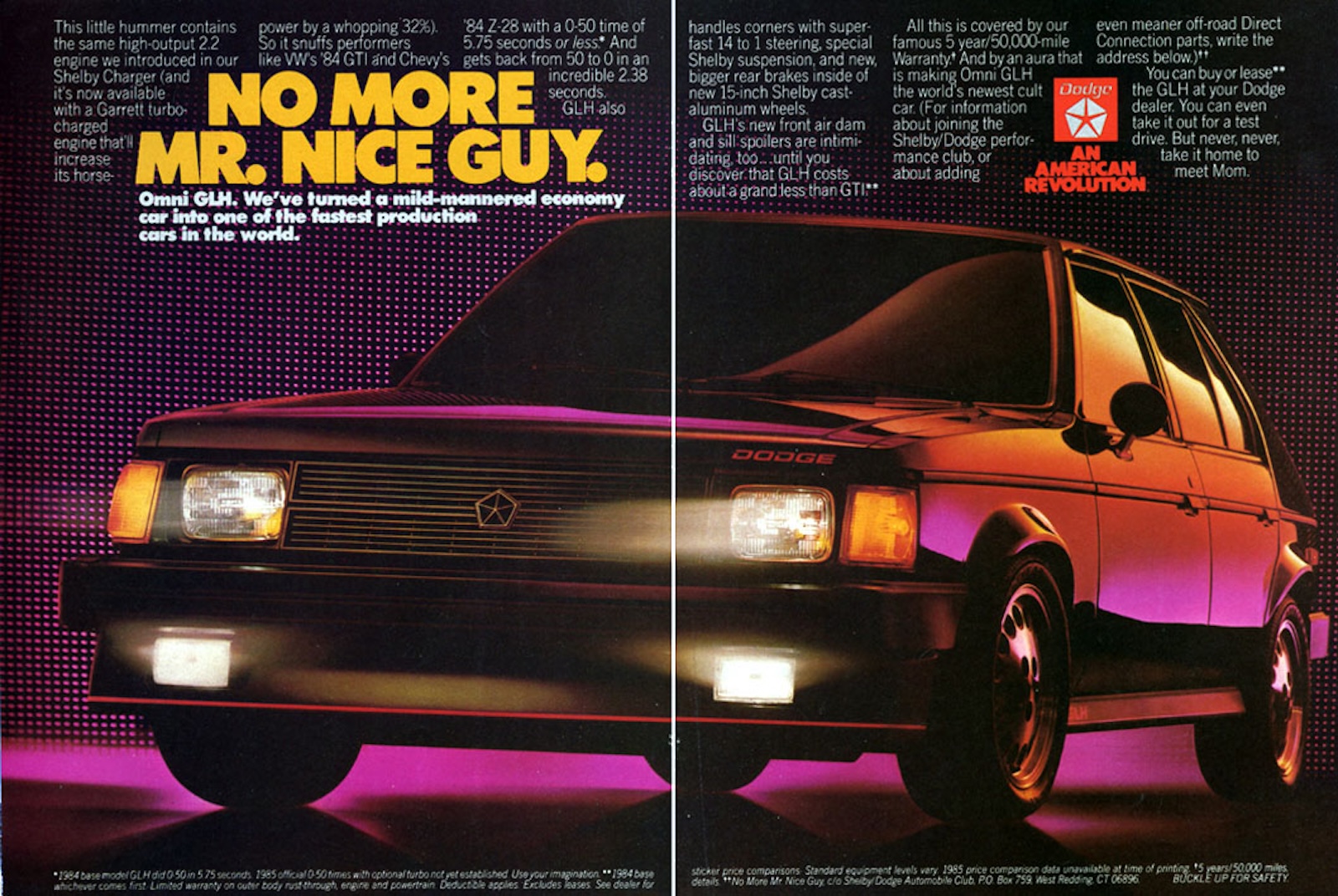
Unsurprisingly, Shelby noticed. The 1985 Omni GLH saw this engine appear on the options sheet, now with knock correction and a new wastegate to make 146 horsepower and 168 lb.-ft. of torque. The result was two fistfuls of torque-steer in a surprisingly potent package. We’re talking zero-to-60 mph in less than eight seconds, quick enough to outrun V8 Camaros and Firebirds. The Omni GLH Turbos of 1985 and 1986 were legends in their day, but that didn’t mean there wasn’t room for improvement. For 1986, Shelby took the last 500 of these cars and made them even quicker.
Attack In Black
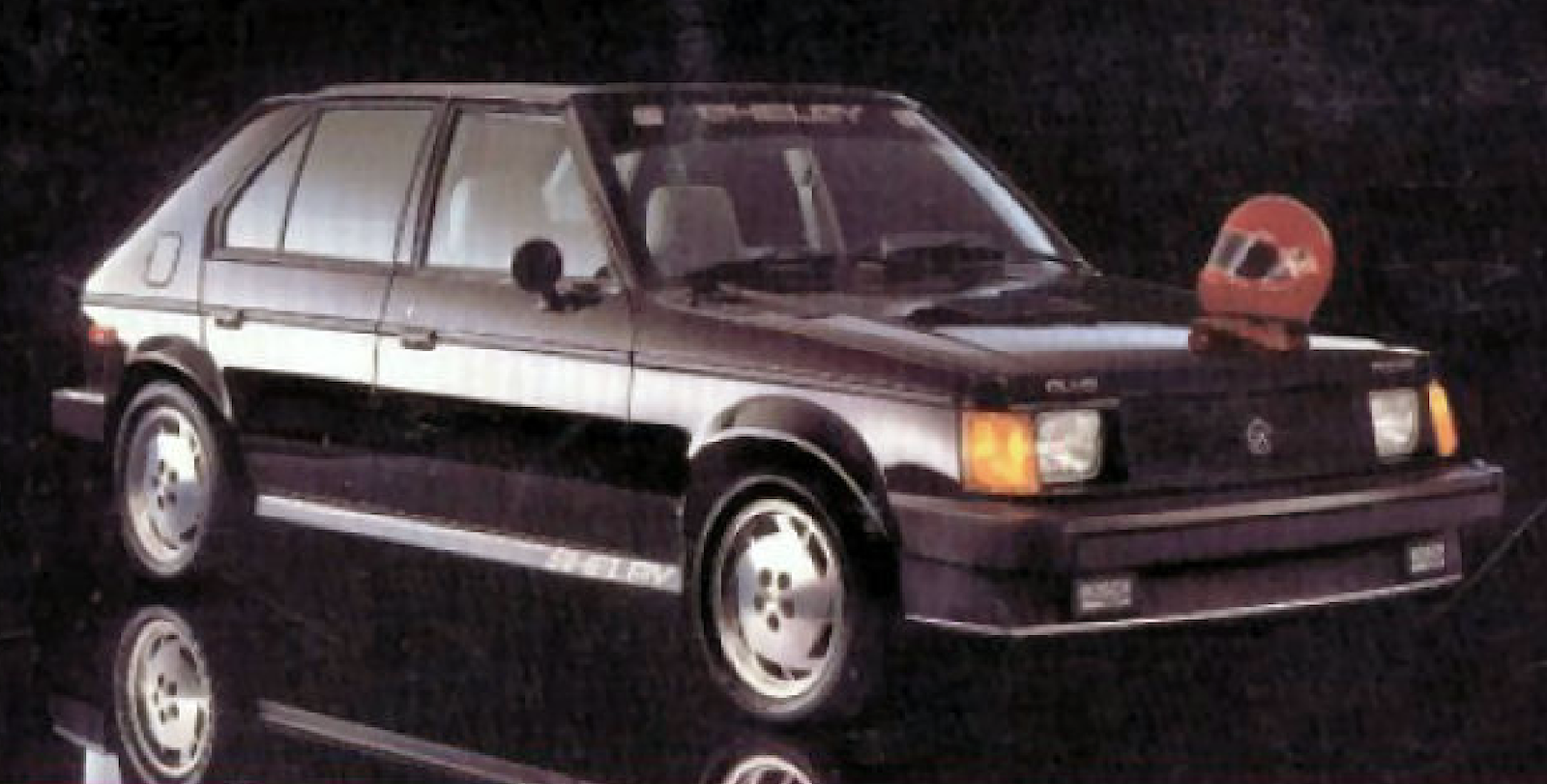
The first thing you need to know is that GLH-S stands for “Goes Like Hell S’more.” Consider that a bit of whimsy on a serious, stealthy speed machine. Each and every one of these cars rolled into showrooms bathed in black and garnished with silver striping, and they had enough firepower under their hoods to fly by like poltergeists in the night.
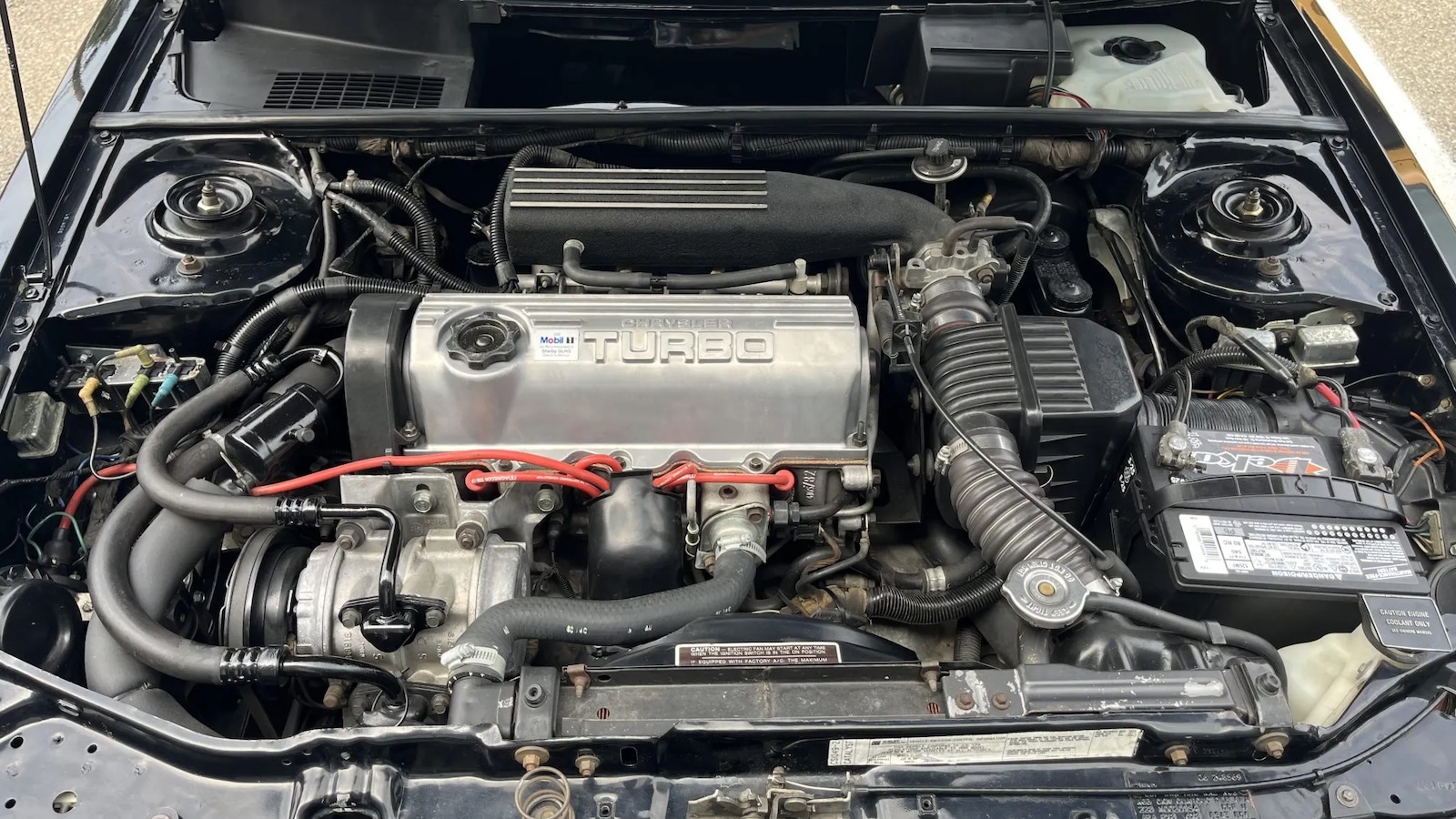
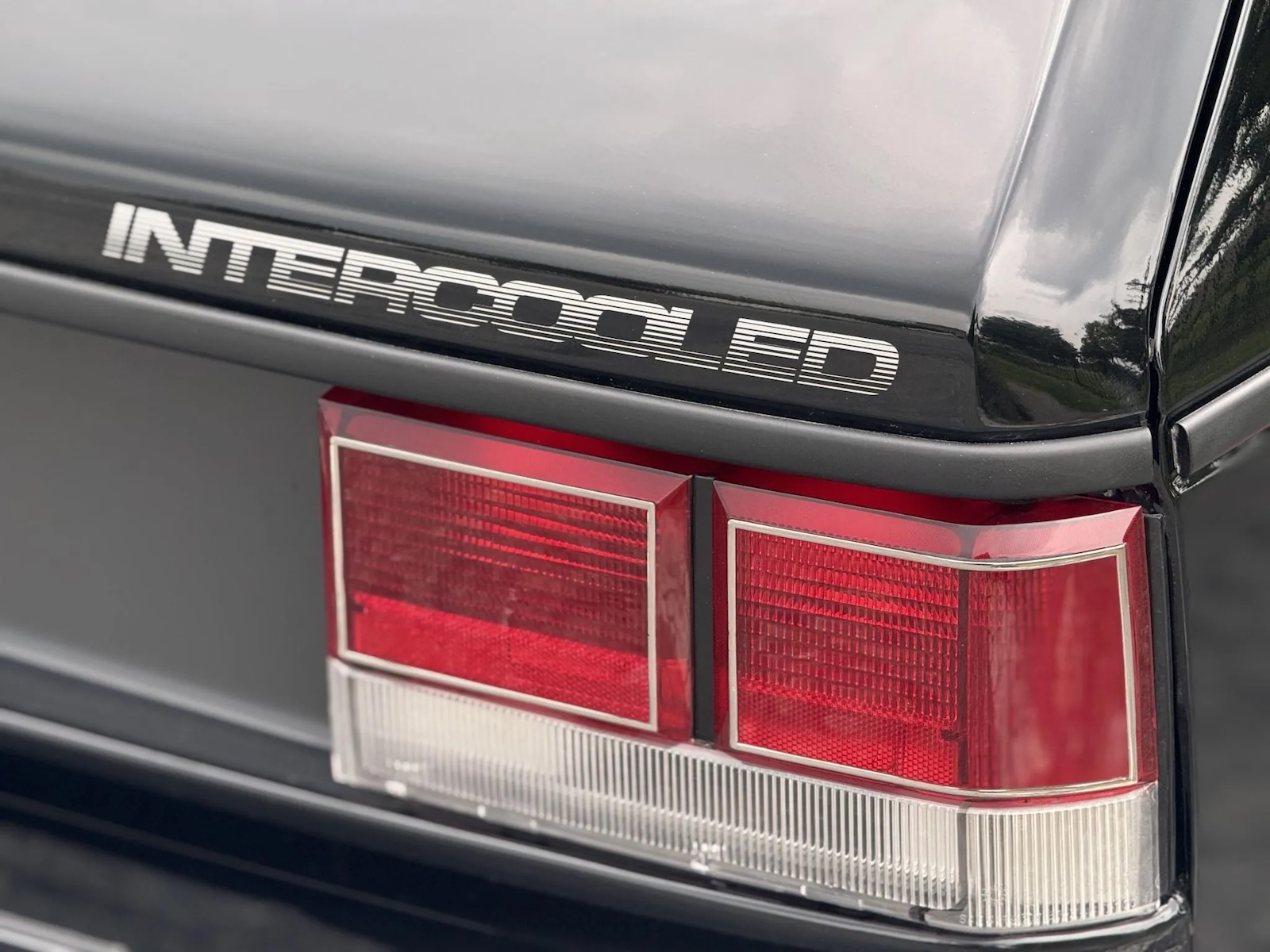
It turns out that if you put a heat exchanger between the compressor outlet on the turbocharger and the throttle body, the air cools down enough to run a lot more boost without an outsized risk of your internal combustion engine becoming an external combustion engine. Yeah, an intercooler was the big party piece, but there was more to the Shelby GLH-S’ engine than that. It got a larger turbocharger, a bigger throttle body, and high-flow injectors to handle the extra air, and yeah, 12 PSI of boost. The result was 175 horsepower, 2.82 times what the least-powerful 1986 Omni put out. If the Honda Civic followed that ratio, the current Type R would crank out 423 horsepower.
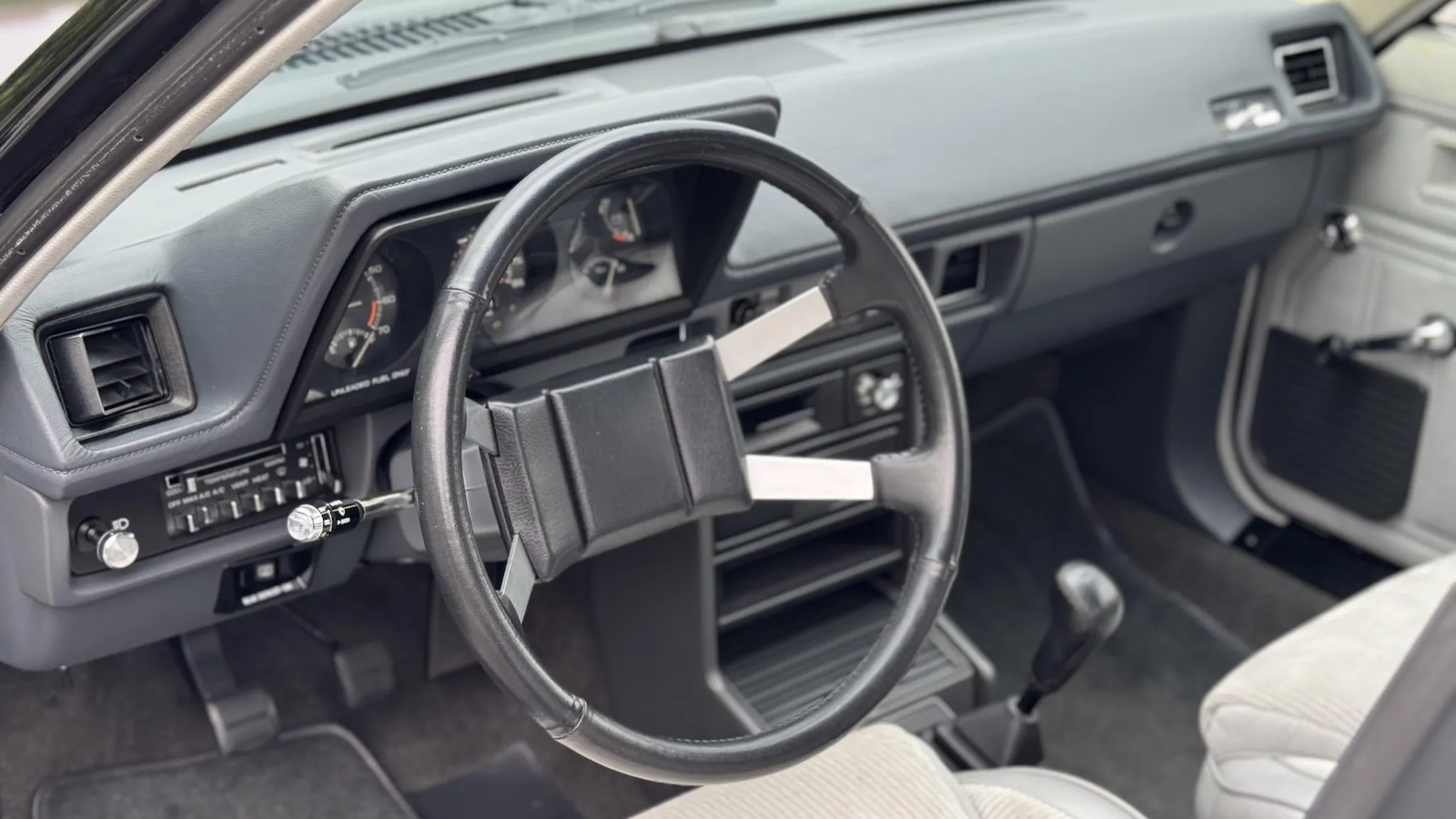
The effect, as expected, was profound. When Car And Driver got its hands on a Shelby GLH-S, it clicked off a zero-to-60 mph in 6.5 seconds. That was quick enough to bother a five-liter Mustang. Quick enough to be neck-and-neck with a third-generation Toyota Supra Turbo. Quick enough to show taillights to a Nissan 300ZX Turbo, or a 305-powered Camaro IROC-Z. Quick enough to take Thomas Magnum’s borrowed Ferrari 308 back to fifth grade and punch it in the face on picture day.
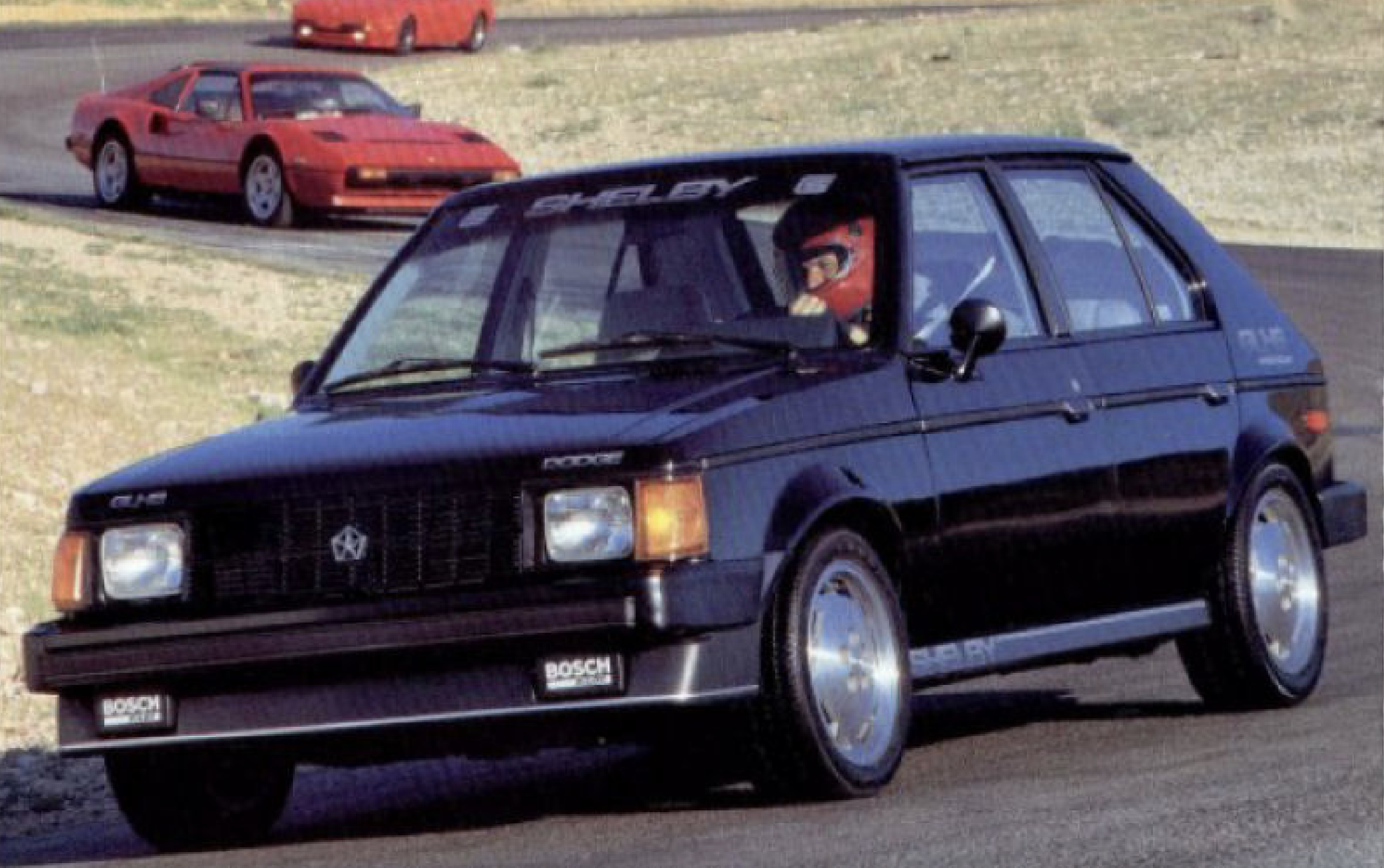
However, the GLH-S wasn’t just a straight-line brawler. Koni dampers, lower rear suspension, and 205-section Goodyear VR50 Gatorback tires combined to create an astonishing overall package. When Hot Rod magazine took a GLH-S and a 1965 Mustang GT350 to Willow Springs for its April 1986 issue, the ‘roided-up Omni was faster by two seconds. Keep in mind, the GT350 was essentially a road-legal race car in the ’60s. Now that’s 21 years of progress. More importantly, the Shelby GLH-S wasn’t a ragged-edge car. Although it was potent enough that one journalist managed to turn one over on the press launch, critics raved about its composure when pushed hard. As Car And Driver observed:
First, this car has lots of stick; a limit of 0.81 g should be enough to keep your lap belt tensioned. Second, the GLHS’s steering is rather light. Third, this car is blessed with great poise. The suspension, at least on the track, soaks up the rough stuff without losing directional stability or wrenching the wheel from your hands. Obviously, the Chrysler/Shelby troops know about bump steer. Except for the light steering effort, the car feels born to race.
The Shelby GLH-S was the complete package, a pioneer in showing just how brutally effective yet effervescent turbocharged hot hatchbacks could be. Keep in mind, this thing predates the Lancia Delta Integrale. With rarity assured at a mere 500 units made, it’s no surprise that immaculate examples now pull crazy money. A Shelby GLH-S with 8,000 miles on the clock sold for a whopping $41,000 on Bring A Trailer back in August.
Is that nuts for a hatchback that stickered under $11,000 back in 1986? Maybe, but the Shelby GLH-S is rarified air. It’s the ultimate version of America’s first modern pocket rocket, an 800-pound gorilla in dormouse clothing. Did Europe have turbocharged hot hatches like the Renault 5 GT Turbo and Ford Escort RS Turbo in 1986? Sure, but outside of wild rally homologation specials, they weren’t this powerful. Long live the Texan tuner’s torque-steering terror, a gloriously ludicrous machine.
Top graphic image: Shelby



These are awesome little cars. I was first introduced to boost and then modifications with these vehicles back in the 90s. It was easy enough to pick up another 30 to 40 hp back then.
But the folks that sprung for the Mopar super 60 turbo kit were able to have a 300 hp beast even back then in the late 80s spanking pretty much anything else on the street
I was today years old when I found out the fwd Charger was an Omni coupe not a k-car. Also always love a write up on this under appreciated little monsters.
I worked for a small TV station in the early 1980’s that had four Omnis for news cars. Two 024s and two hatches. It was a common practice back then for stations to accept hard-to-sell cars as payment for ads that had not been paid for, and their accounts were in arears. And none of them were GLH or GLH-S models. (I always thought the S was for Shelby.)
At subsequent stations I worked at there were fleets of ’84 Aries station wagons, 1990 Olds 88s and 1994 Ford Crown Vics.
I was a little puzzled when I popped the hood on one of the Omnis to check the oil level and saw a VW logo on the valve cover.
One night, I was driving one of the 024s that had a stick. I parked to shoot a story and when I got back to the car and packed all the gear in the back, the gear shift lever had somehow lost connection to the transmission. (My recollection is that mechanic told me that it was cable-operated. I took his word for it.)
I lucked out and had left it parked in second and had enough room to just slip the clutch a little bit and pull out of the parking spot. It was kind of a long drive 10 miles or so across town on surface streets. Second gear was too low to take the usual freeway route back to home base.
It was the bushing from shifter to trans. I only know this because of driving my brother’s 024 I stopped at red light and went to put in 1st and gear shift fell over. Unfortunately I was in 4th. I had to go under hood and shove trans to different position…. luckily was 2nd and was able to limp it home.
“gear shift fell over” is exactly what that felt like.
When I was in high school my 16 year old buddy inherited his older brothers Omni GLH. When ripped that thing all over the place. Eventually it ended up in his mother’s yard, rotting. Had I only known how special they were, I mightve tried to save it. But back then, in the mid 90s, Omnis were still thick on the street, and a GLH was just a used hot hatch.
I’ve owned two standard Omni GLHs, one of which had the full powertrain and suspension from an ‘87 Charger GLH-S. It was a lot of torque-steering fun and I regularly beat up on Mustangs at the drag strip. Sadly the engine developed a rod knock and I didn’t have the money or ability to fix it so I sold it.
About 20 years later I ran into the buyer at a car show and amazingly he still has it, and he built it up even more and now runs it in historic road rallies in California and Mexico. It’s always a nice feeling to see a car you sold off still living its best life.
Yeah I sold my Jensen Healey needing a head gasket job. But I had just bought a house and a business and didn’t have the time and I couldn’t find a mechanic willing to work on a Lotus motor so I sold it the used car dealer whose mechanic I trusted. A few years later I was selling some leftover parts I had and the guy who bought it bought some of those parts. He promised a ride when he finishes it.
yes, it is. I have had both, good and bad stories on the cars’ destiny once it was sold by me. one of the recent ones was good: the car sold in Canada and exported by the buyer to…Albania where it has undergone a full strip down, rust repair and full respray in its glorious Byzantium Gold. even it the car gets sold further, it has been looked after and looks mint now.
I had a buddy in college who had an Omni. It was bog standard but he made it a DLH – drives like hell. 80mph everywhere. He got t-boned at speed at a stoplight in Merrillville, IN and somehow lived to tell the tale. His next car was an enormous, slow mid-‘70s Lincoln.
That’s the tiniest canoe I’ve ever seen
I haven’t seen too many that size, either, but it looks to be about a 13-footer. That would have also been before kayaks were really common, so the smaller canoes might have been more popular then, IDK.
I just noticed the climate controls are to the left of the driver.
Why Chrysler? Were you going for the lucrative control freak market?
Does anyone else remember reading about the supercharged Omni FTH in Motor Trend magazine? Roughly 1986
Somewhere I have an issue of Car & Driver with this thing and a Ferrari on the cover. That might be the issue I bought because it had a write-up of the Trabant.
I bought one in 1998. By that time, most of the 500 built were flogged mules, with a couple of garage queens that barely ever saw the light of day. Mine was sort of in between; moderate mileage but it lived outside in Arizona before I got it, so the paint wasn’t great.
I was driving it home from work, and stopped at the gas station where I typically bought gas. I noticed that the car was looking a bit dirty, so I figured I would run it through the car wash onsite. The gas station was located on a parcel of land with westbound lanes along one edge of the property, eastbound lanes across the opposite edge, and north/south along a third edge (the other side was trees). The fuel islands were at the tree end, then there was a convenience store, and the car wash was on the street end of the parcel.
I drove to the wash, waited for the car ahead of me to finish, then took my turn. When I emerged, I had to circle in front of the store in order to exit the property in the eastbound direction for my destination. That’s when I saw ANOTHER GLHS buying gas at the same station. The owner wasn’t someone I knew, and I wasn’t already aware of him through any clubs or groups I was in. We chatted for about 20 minutes before heading home. Our respective car collections had a few other vehicles in common with each other, and even though neither GLHS was our only “daily” driver, it was the one we each decided coincidentally to take to work that day, and fill the tank on the drive home.
I remember when these came out: hot hatches were still super popular. I had a Mark 1 GTI, and though I was a foolish teen, I was never foolish enough to seek out one of these Shelbys and try to race it.
Love the trivia about the moniker. Absolutely fits with Shelby’s somewhat unexpected sense of humor, like how the vaunted GT 350 designation has nothing to do with the actual car whatsoever.
I knew a priest who bought one of these. He said it was because he liked the name. Then again I saw how he drove it, so there’s that.
We used to joke that he was trying too hard to be intercooled.
Looks like my priest has some “cool priest” competition.
Maybe GLHS stands for God Loves High Speed
My dad worked at the Belvidere Assembly plant where these were initially manufactured. There’s a good chance he actually worked on one of those 500.
If he were still alive, I’d ask him. I remember him talking about them back in the day.
FWIU the regular GLH and the Turbo were built on the line in Belvedere but the S was built as a regular GLH (turbo?) and sent to Shelby American for completion.
From what I read, all 500 of them were initially A GLH, assembled in Belvidere, then shipped to California for Shelby to modify into GLH-S models.
Per Google:
“The Dodge Omni GLH-S was assembled in two stages: the base car was built at the Belvidere Assembly Plant in Illinois, and then the 500 examples were shipped to the Shelby Automobiles factory in Whittier, California for their performance modifications. The Whittier plant was where the engines were upgraded, and the cars received their distinctive performance features.”
Anyway, it’s cool that they were built in Belvidere at the plant where my dad worked.
I forgot to mention, my mom had an ’86 Plymouth Horizon in that light metallic blue they all seemed to be. It was built at Belvedere and I learned to drive on it, and to the extent I ever could, to work on it so it’s possible I retightened a bolt your dad installed years before.
Yup, built on the regular line by Dodge, then shipped to Whittier CA where the fun Shelby stuff was installed. Fun fact: since the go fast parts involved fuel, ignition, and exhaust modifications, it was at that point they lost their Dodge manufactured identity as far as the Government was concerned, and they were then re-titled as Shelby makes and models. Owning an 85 Dodge GLH Turbo and an 87 Shelby Lancer, I stopped by the Whittier plant at the end of a business trip for a quick visit, probably around 1988 or so, on my way back to LAX to fly home. I was able to fanboy talk my way into getting a short walk thru of the facilities with one of the production engineers. Then I hopped back in my rented Thrifty Dodge Shelby CSX-T and hustled on to LAX and my flight home. Good times.
When I lived in CT there was a guy in town that was all about every Chrysler Shelby vehicle. He had one of these and a gutted Shadow CSX….and one of the turbo, manual Caravans tuned up for good measure. He was an odd guy too.
That wasn’t Gus Mahon, was it?
His turbo minivan antics were legendary in early internet days.
Crazy that this should come up today. I was parked next to “Mean Mini” at Cars & Coffee this morning. That’s the crazy-quick turbo Caravan formerly owned by Gus, now owned by a friend of mine here in Raleigh, NC. It was actually at the most recent Autopian Meetup in Chapel Hill.
He was a legend to 17-year-old me in the mid 90s, when I was driving an 87 Daytona Shelby Z and an 87 New Yorker turbo. I was part of a turbo Dodge internet mailing list (now I can’t remember what it was called, but I eventually migrated to the Mopar Mailing List when I graduated to rwd Mopars). Man, I forgot all about that!
He was part of my inspiration to buy an Omni GLH back in 2001.
The list was SDML.org. Shelby Dodge Mailing List.
Yes! Man, the old internets were good.
Amazingly, this was not Gus, it was another similar local Mopar nutter around the New London County area
I remember selling these things when they were new, had a Shelby Charger as a “demo”……..great examples for having fun driving a slow car fast !!!
my dream car during the late 1980s
Boy, did I always want one of these! My own first car was an 88 Plymouth Horizon (AT), and my family also had an 84 Omni (MT). Both had the 2.2; the manual was sprightly, but the auto turned the car into a dog- get out and run territory. So I made up for the lack of power by throwing it around every corner I could. Drive slow cars fast, they say…
Over here in Europe we only had it as a fast rusting brown (or yellow) Simca, my art class teacher had one.
But then we had very cool pre-Stallantis hotties like the Kadett GSi and the BX 16 Soupapes 😎
I still have that issue of Hot Rod. And I’m still convinced ol’ Carroll cranked up the boost on that particular GLH-S to about 16 pounds. Even with 21 years of tech improvements to tires and suspension, 13 lbs/hp should not have been able to keep up with 10 lbs/hp on the straights. Kinda like how Buick snookered Car and Driver with their 4.6 second 0-60 Grand National that not even a stock GNX can beat. Or how Jim Wangers dropped a 421 into a GTO and claimed it was a 389.
I’m not taking anything away from the GLH-S – it had impressive performance. But Shelby had something to sell, and it was not a 65 Mustang.
Or perhaps the other manufacturers were over selling the performance of their cars. Lord knows you can’t trust anyone on actual performance or safety on cars
My GLH Turbo showed me such a good time at Targa Newfoundland in 2010, I have no words for it. I kept the boost turned down, being on my 3rd engine in 3 months of ownership, yet I was catching the period IROC and Mustang GT in front of me, in large part due to the light weight, soft suspension, and handling so balanced it felt like I was goofing around riding an office swivel chair. Which I’m doing right now, fondly reminiscing: One-one-thousand, two-one-thousand, WHEEE!
Jeebus help me, I still like the look of those K-Car Chargers.
I’m with ya, man
They do look good (though personally I prefer the later 4-eyed Chargers), but they were L-bodies, not K-Cars. That would be the later Chrysler Laser/Dodge Daytona.
Came here to say this. They pre-dated the K cars
I would love to have one of these. My parents had a 1978 Omni that was the complete opposite of this, but also a good car.
I owned a mint ’87 Shelby Lancer for a few years that had the same engine and suspension as the GLH-S. It was a fun car that could handle remarkably well (outside of the aggressive torque-steer, which admittedly made it exciting), but all the Chrysler bits let the car down as a whole as the car got older.
Same here, although as the Shelby and I aged I came to regard the great handling to be too stiff for regular road conditions. I could tell if the damn dime in the road was face down or face up based on that flinty ride.