

There’s a sort of strange phenomenon in the world of automotive design, one that seems a bit like a paradox. It’s the realization that sometimes, the best designs aren’t designed at all, they just sort of happen, as a byproduct of a car’s engineering and the job it is intended to do. It’s sort of like the Bauhausian concept of form follows function, but perhaps even taken to a greater extreme than what those Bauhaus kids were doing. The paradox is that it often takes a good car designer to realize this, and to sort of be a guide to make sure no misguided attempts at “design” actually happen. It’s design by not designing, but that itself is a form of design.
I told you it was kind of a paradox.


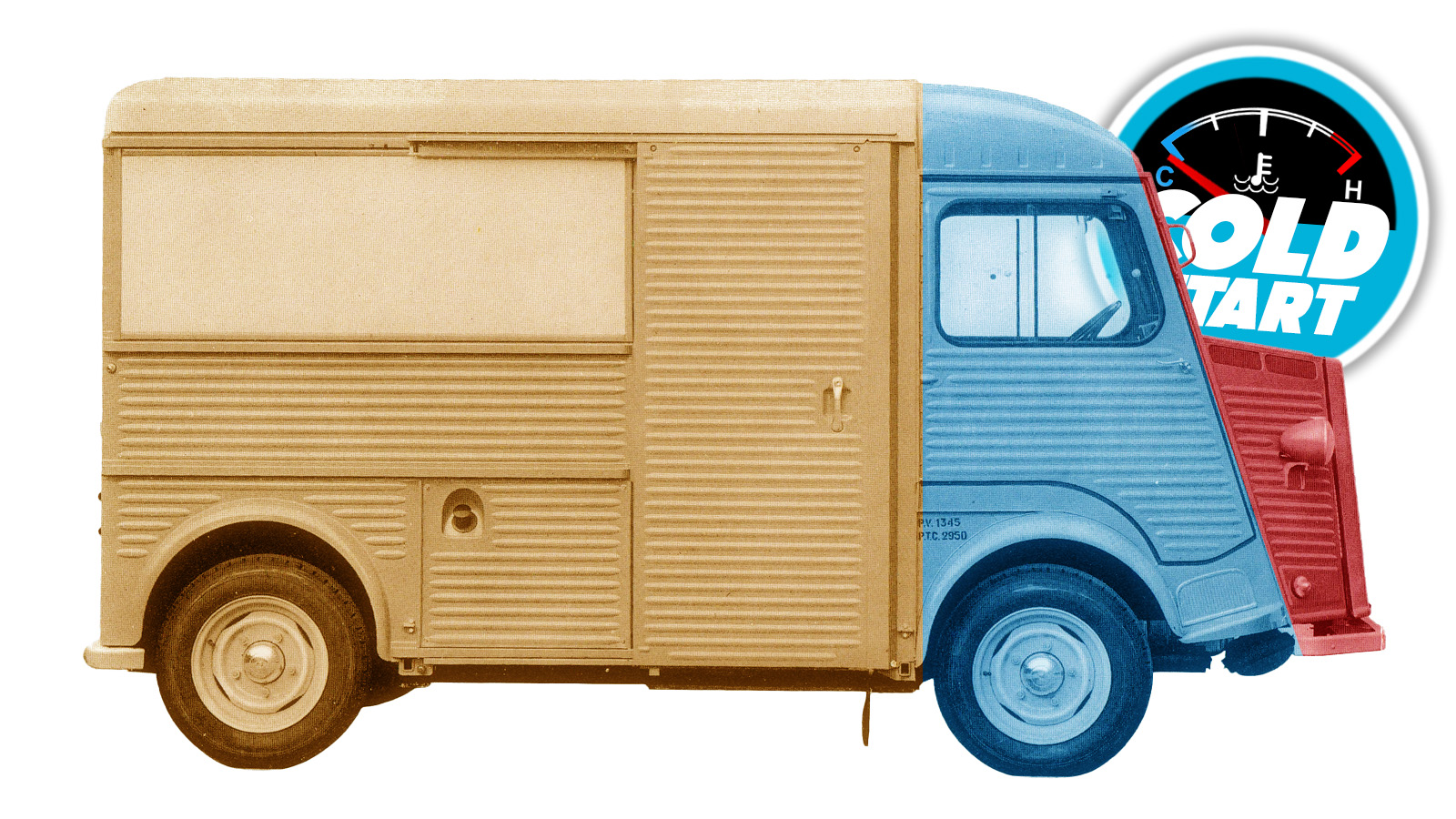
One of the best – though by no means only – examples of this is the Citroën H-Van. These vans were built between 1947 and 1981 and featured a construction philosophy inspired by aircraft like the Junkers and the Ford Tri-Motor, where flat panels were heavily corrugated to add strength without adding weight. They were extremely straightforward vehicles, with a unibody design and front-wheel drive layout that provided a huge amount of usable space. I mean, just look at the thing:

If you consider the overall length of the vehicle and how much is actually usable for people or cargo, it’s pretty damn impressive. This is clearly a machine made to accomplish a task, the task of moving crap around, and it achieves that incredibly well. And, yes, it appears that precisely zero effort has been devoted to “styling” the H-Van, to a degree that I find extremely impressive.
You know how some car brochures include detail shots of some of the interesting design elements of a car? This brochure does the same thing, but all of the details picked are just utilitarian parts bolted without ceremony to the van: handles, lights, that sort of thing. There’s no attempt to “design” here:
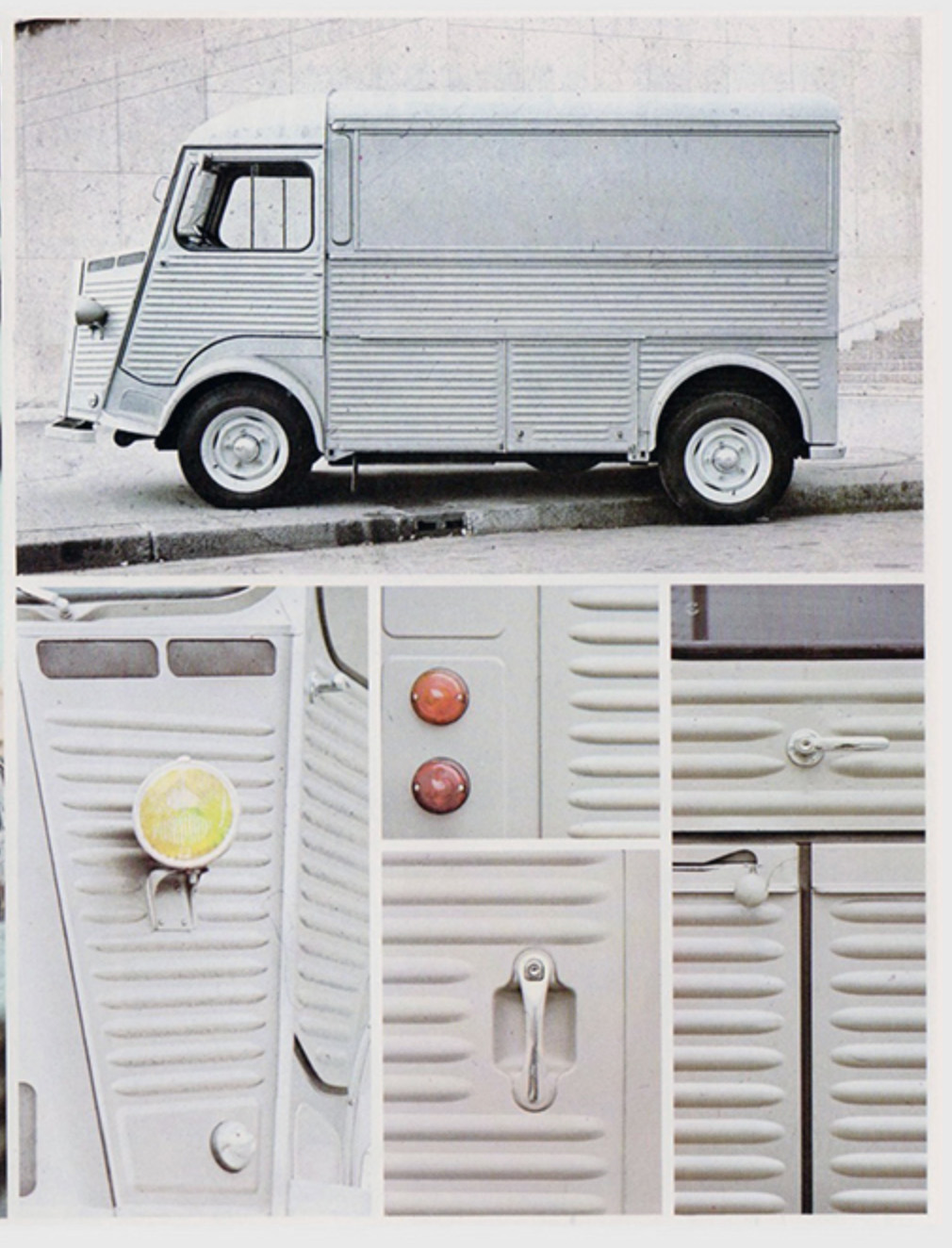
I love all of this so very much. Look at that headlight, for example. They just took the same units used on the 2CV, made the most straightforward bracket they could, and bolted it on. Done. The only styling that happened there was that someone made sure they were facing forward before knocking off for lunch.
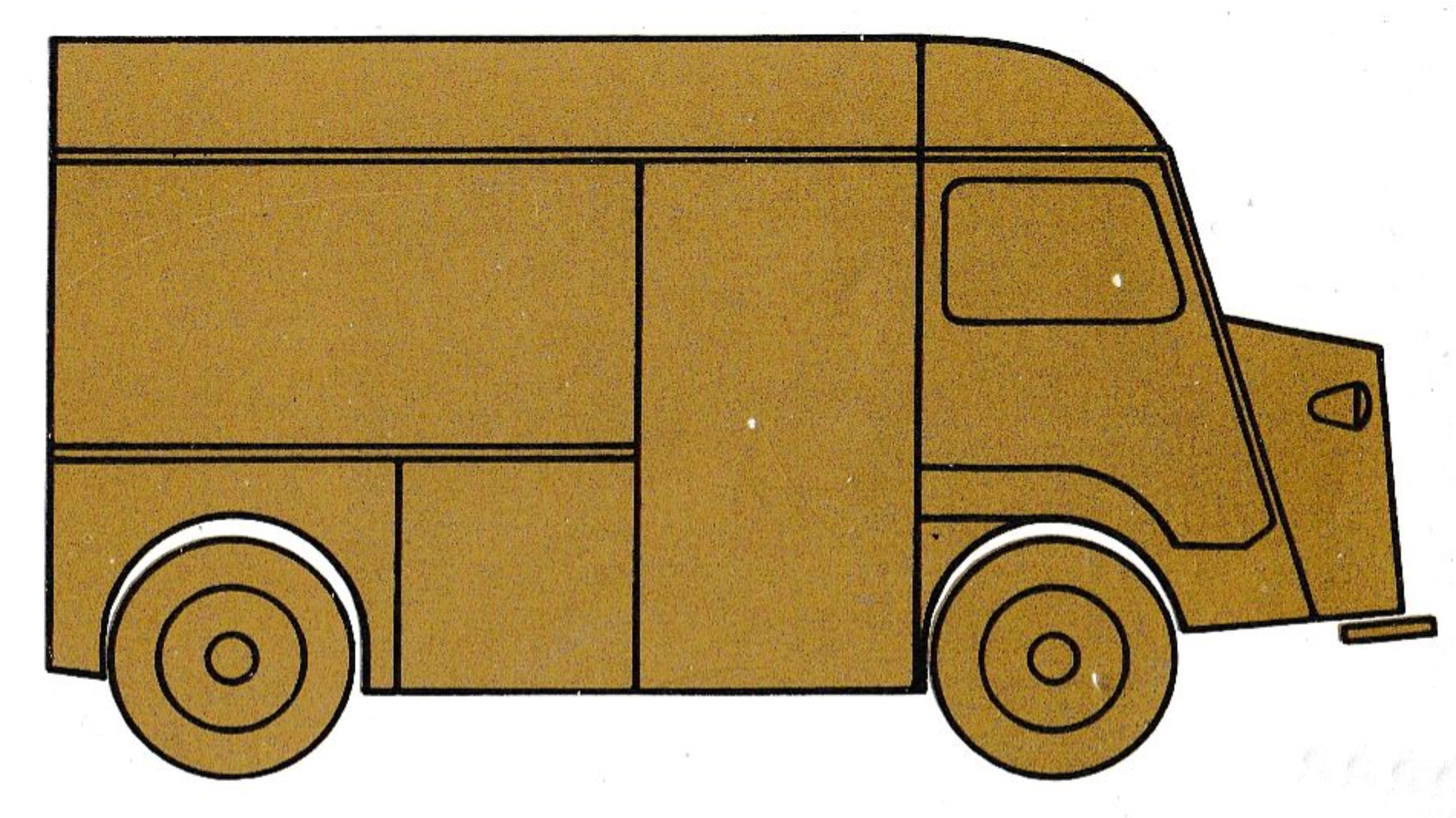
This crude diagram of the H-Van really isn’t that far from a full portrait of the van. This is pretty much it!
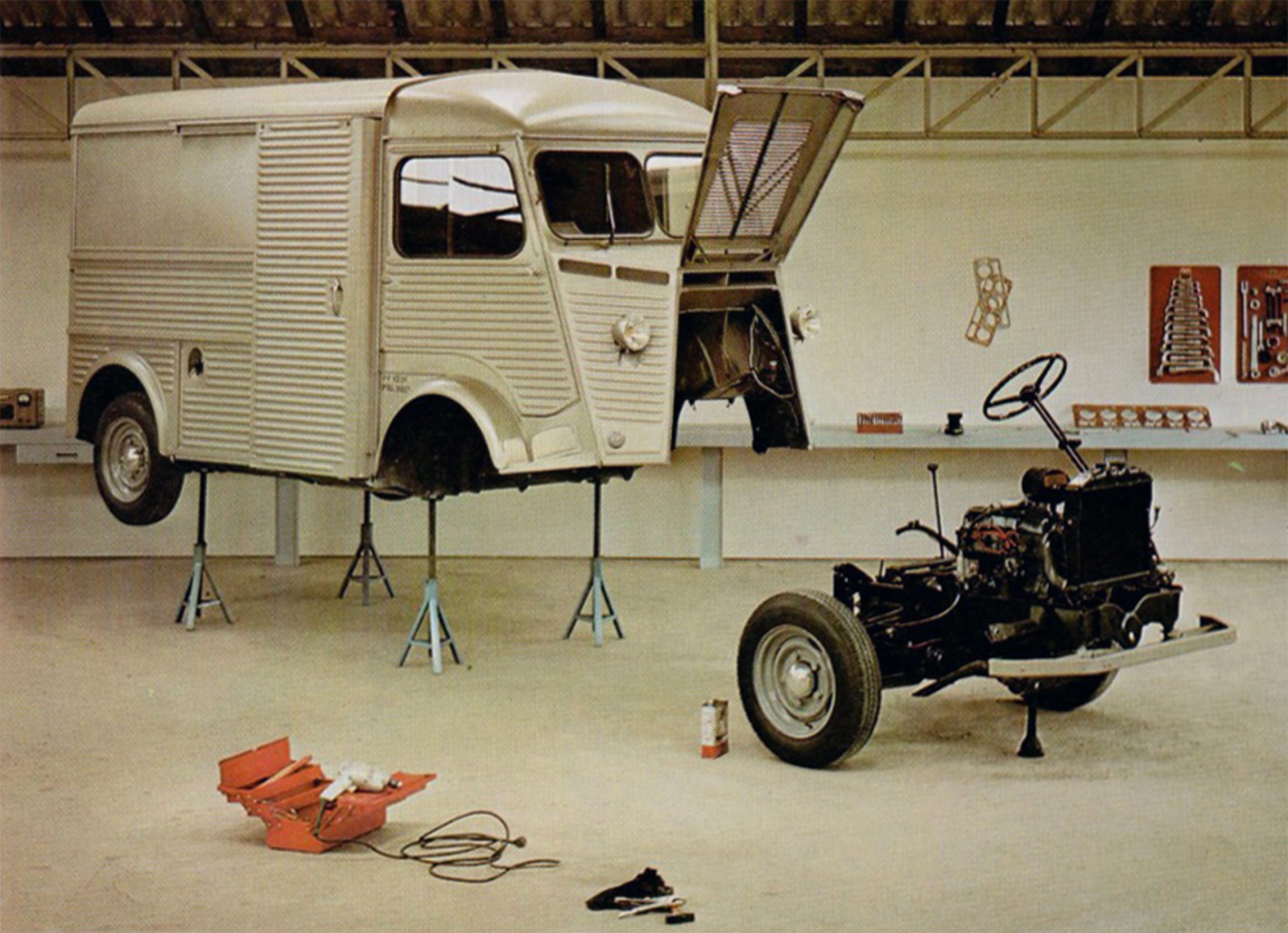
Look at this incredible serviceability! That whole drivetrain just rolls right out the front!
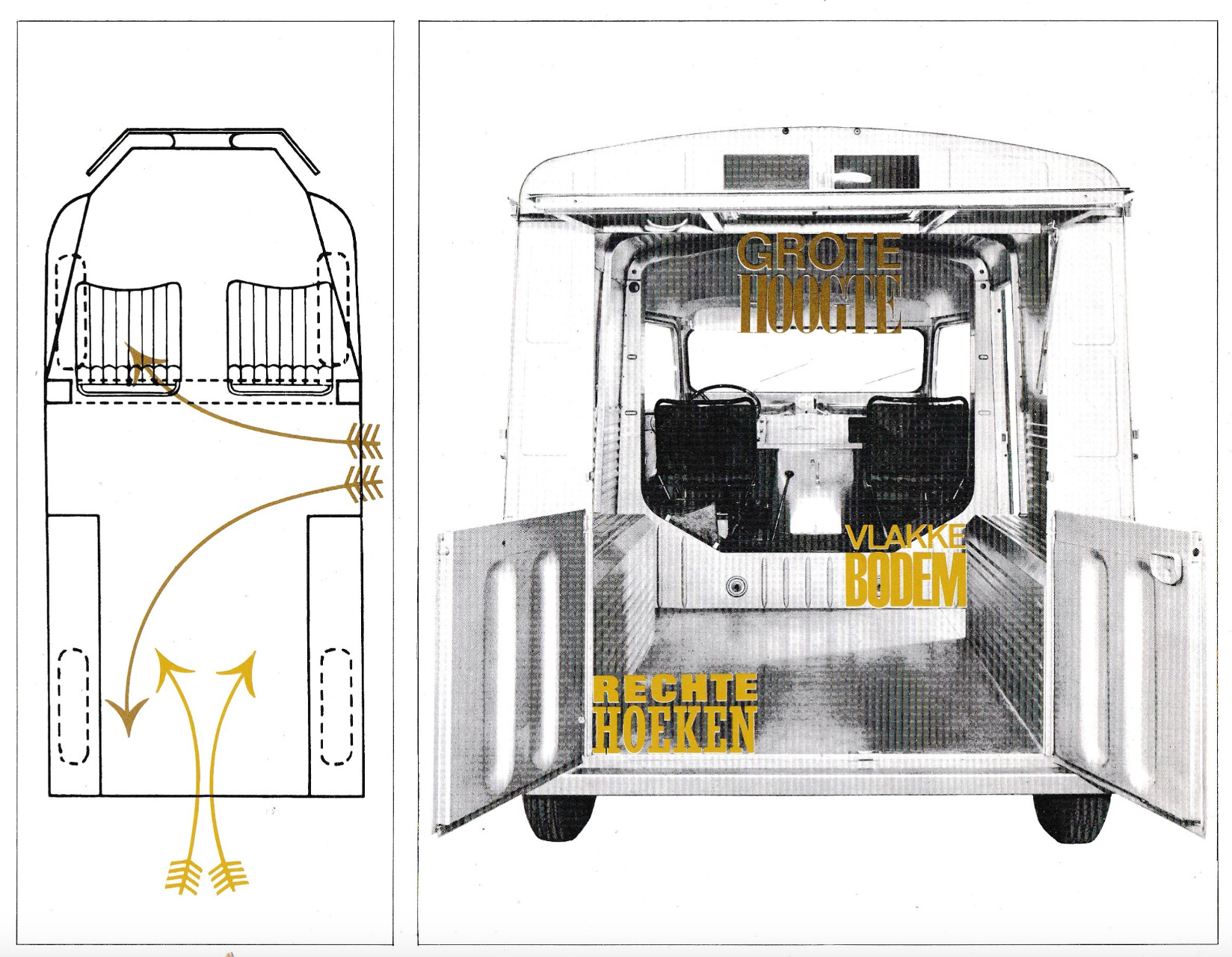
There’s zero pretention here, no attempt to make this into something it’s not. It’s just a tool, and however this particular tool ends up looking in order to do its job is just how it is. And then, somehow, the end result becomes something that actually is stylish, is a design icon, because that’s how things work, sometimes.
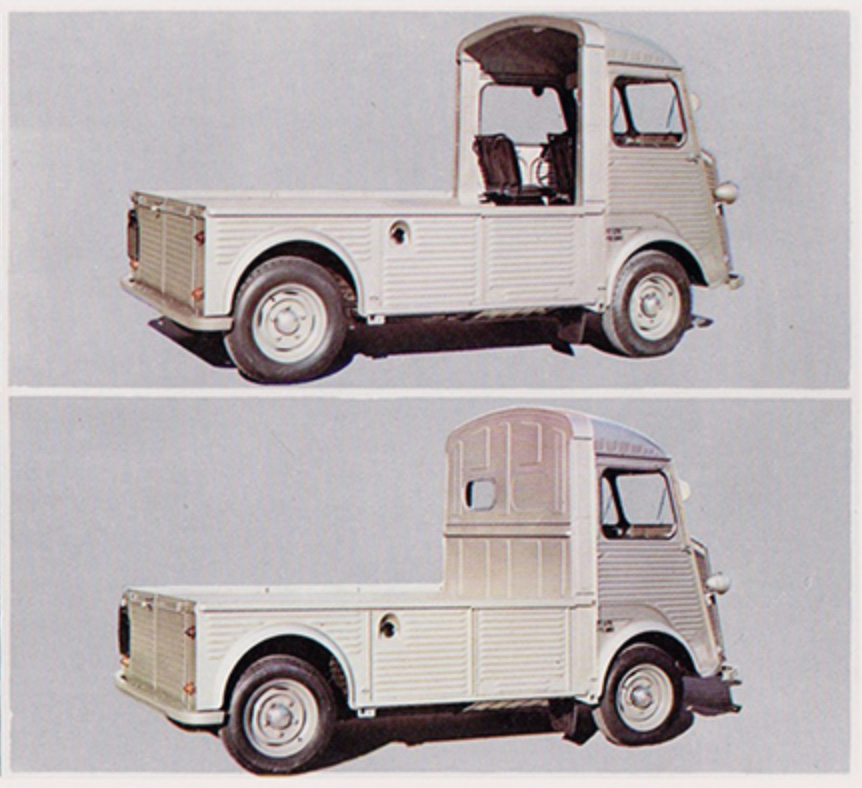
There were pickup and chassis-cab versions of the H-Vans, and they were variations that were created via subtraction: body panels were removed until you ended up with a pickup, and then one more was yanked off the back of the cab, and boom, you now have a chassis-cab version. Note that rear cab panel up there, and how there are two stampings for the rear window (I guess to accommodate LHD and RHD versions) but only one gets to actually have a glass window.
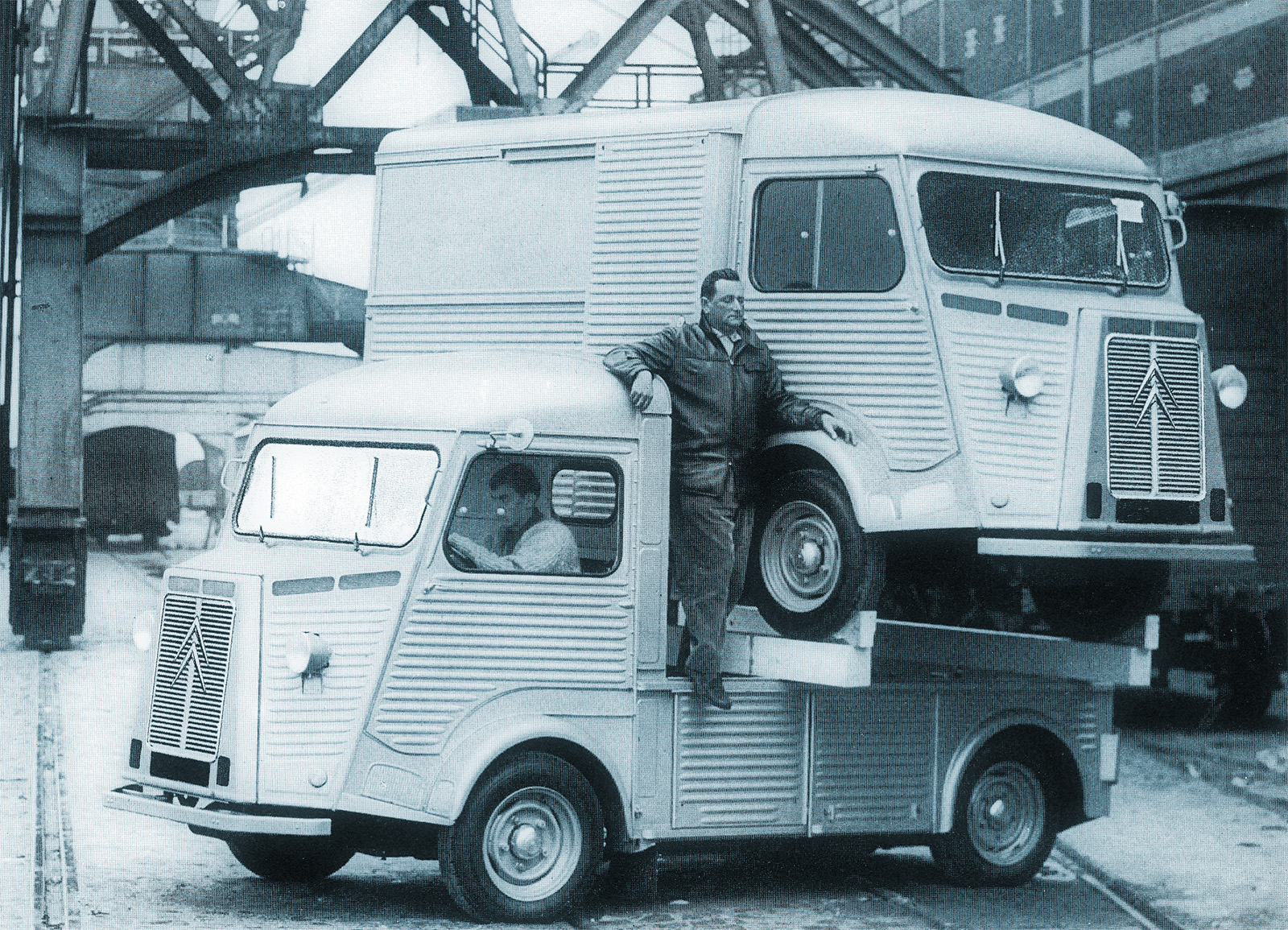
Aside from the Citroën chevrons, is anything on this thing just there for ornament? I did hear one of those rectangular air-intake slots on the hood is a dummy, to keep things symmetrical and balance the heater air-intake slot, but I think that’s it.
It’s perfect as it is. And, perversely, I think this lack of design is actually a testimony to good design, and the surprisingly hard part of design that is knowing when to not do a single thing.



Is the Nissan Murano Cross Cabriolet unstyled?
It’s anti-styled.
A reminder that design solves a problem, hopefully elegantly. Decoration is styling. Too often these get conflated.
After a night of sampling several different vintages of Chateau Petrus Jean Luc remembered he was supposed to park the H-van styling exercise in the courtyard, He jumped and and drove it there at speed. He vaguely remembered driving into a corrugated garden shed but shrugged that off. He left the van in the appointed space and returned the next afternoon to find management praising the utilitarian masterpiece he had built
Is that uncorrugated panel high on the sides designed for a sign? Are those vents up high in the back and is that an opening scoop on the left side? Great design!
It being a French van from 1947, how many ashtrays?
“It being a French van from 1947, how many ashtrays?”
Yes.
French car idea…mobile ashtray
“The paradox is that it often takes a good car designer to realize this, and to sort of be a guide to make sure no misguided attempts at “design” actually happen. It’s design by not designing, but that itself is a form of design.”
Yeah, indubitably so!! It’s most noteworthy that the chief designer of the H-van, Flaminio Bertoni, was actually originally a sculptor. Bertoni was also the chief designer for the Traction Avant, the 2CV, the DS, the Ami 6, and the 350-850 N and P series trucks (better known by the nickname Belphégor https://upload.wikimedia.org/wikipedia/commons/thumb/7/7f/Belf%C3%A9gor.JPG/620px-Belf%C3%A9gor.JPG) Some of those designs are seriously minimalist, like the 2CV and the H-van, and also seriously sculptural, like the Ami 6 & the Belphégor. Talk about range!!
Yeah, if one looks more closely at the H-van one can see where some good design decisions were made without being ostentatious, like the way the stamped ribs terminate in a dart-like ending rather than, say, a round ending or a squared off ending, the way the cutout for the fuel filler has that arch on top rather than just a square opening, and the way they provided flat areas between the stamped ribs for mounting the headlights and the door handles.
There’s design and then there’s good design. When I first moved into my house some 16-plus years ago there was a late 70s/early 80s Ford LN7000 single-axle dump truck just sitting seemingly abandoned in a vacant lot a couple of blocks down the street. I would frequently pass by it during my regular ambulations and I’d look it over on account of my interests in things automotive (after all, that’s why I’m here on this website, lol) and I found myself deeply, uh, unimpressed by just how…meh the design decisions were on that truck. Didn’t help that I’d been spoiled by up-and-close inspections of all the aforementioned Citroëns (much of which was actually at the Lane Motor Museum) as well as my own fleet, especially my baywindow VW bus, lol.
Lane is a wonderful. place!
Wow! This Bertoni guy was really an unsung designer to have come up with so many automotive icons!
Bravo. Autodidacting seems to work well for you.
I’m weirdly reminded here of the Ford Trimotor. Super utilitarian lines supplanted with corrugated metal for strength. The Trimotor is sleeker, but it’s an airplane; it has to be or it won’t fly very well.
Anyone notice how these have become a popular choice for food trucks? I do admire these things, and have just learned here that they are FWD. Love that the whole powertrain can come out like that.
Local Ice Cream shop has a food truck based out of an Austin Van. Absolutely eye catching.
Yeah, really wanted a H-van myself a couple of decades ago but even back then hipsters had already driven prices skyward because they were already becoming popular as food trucks, alas… not a recent phenomenon!!
As much as I hate to admit it, I feel like the modern analogue to this (among mass produced vehicles) is probably the Ram Promaster. Front engine, front wheel drive to maximize space and keep the deck lower, basic layout, big box in the back, f*** all for styling (at least in my opinion). Just a truck to get work done. Now on the servicabiliy fron this all kind of falls down (I hear the Promaster engine bay is a bitch to work on) but this is likely true for any moder vehicle.
Oh, you mean the Fiat Ducato? Over in the UK, the Ducato is practically the default shape and layout of all of our vans.
Mind you, since Stelantis became a thing, the Ducato IS the default van, as so many other vans are badge engineered versions of it. There’s the Peugeot Boxer, Citroen Relay/ Jumper, the Vauxhall Movano and the Toyota ProAce to choose from.
Ford make the Transit which is a worthy alternative… Or would be if the engines didn’t have so many catastrophic issues.
Mercedes make the Sprinter, which is badge engineered into the VW Crafter. These are pretty decent vans now that the terminal corrosion issues have been sorted, though I’m not familiar with the engines since adblue was adopted. The diesel Mercedes cars with the adblue system seem to have more problems than ever before. Plus, you will pay a hefty hefty price for the privilege of a German badge.
China have entered the Maxxis, though the jury is out on these vans. People who I know have used them don’t like them, but what do they know?
I thought that the Fiat Ducato/Citroen Jumper/Peugeot Boxer had been a collaboration from the start, just like the previous versions, at least since the 1990s. So Im not sure that you can say that these other vans are badge engineered versions of the Ducato, they are just as much French products as they are Italian.
Btw, they drive really well, they have a smooth ride and feel a lot like a much smaller sedan or station wagon. Mercedes and Volkswagen vans of comparable size drive like big rigs in comparison.
You’re not wrong, it was a collaboration, though lead by Fiat. To be honest, if you go into depth on one of these vans, it gets really difficult to find any of the French influence.
It’s more of a “me” thing, but I always think of them as Fiats because the majority of the parts are Fiat. Either way, they were in my opinion the best van option. Not sure if that still holds up though due to Stellantis’ recent engine quality. I’m not familiar with them post 2018.
The side profile is extremely unappealing to me, but it works once you put it in 3 dimensions.
Don’t know why but for some reason that jaunty but somehow jaded looking factory worker perched on the H-van truck carrying the H-van is slightly reminiscent of this photograph of Charles Clyde Ebbets (the photographer now generally thought to be the one who shot the iconic photograph Lunch Atop a Skyscraper): https://allthatsinteresting.com/wordpress/wp-content/uploads/2020/05/lunch-atop-a-skyscraper-photographer-charles-clyde-ebbets.jpeg
Is he really walking I-beams in dress wingtips? Good God
Out on the steel, in style.
Yeah, apparently Ebbets was quite fearless. For such a dapper fellow he had serious nerves of steel.
Quite likely that his wingtips had rubber crepe soles but even so it still took the aforementioned nerves of steel to be a photographer navigating those skyscrapers during their construction. For all the iconic photographs of those 1930s skyscrapers under construction there were actually very few photographers who would take on such assignments. Ebbets and Lewis Hine were among those few.
Yeah, like Ebbets Hine didn’t exactly look like the sort of person one might expect to see out walking on the I-beams: https://upload.wikimedia.org/wikipedia/commons/e/ed/Lewis_Hine_selfportrait.jpg
I recently watched a short documentary on the first generation of General Motors G-series vans, and I felt the same way. There is absolutely nothing in either the Citroen or the GM vans that doesn’t need to be there. There’s something I find satisfying about motor vehicles that are strictly built for purpose.
I have seen a number of these here in the UK, Usually food vans but sometimes coffee… They are very cool to look at because of how utilitarian they are, It’s all function and no faff, Brilliant.
Most of them are repro jobs, and have no functional parts beyond wheels that turn so they can be pushed into place. Actual H vans are pretty rare.
Had my Wednesday coffee from an H van today (Old News, Fleet Place, London. Highly recommended). It’s a real one. The owner used to drive it in but got fed up with the slow speed and the exhaust fumes so got permission to keep it parked in the square. It gets a cover at night with tailored sticky out bits for the (two) door mirrors so it looks just like a pig when covered up.
P.S. an H Van wrote off my father’s VW K70 while we were in France in about 1979.
Oh, gosh, that must’ve been quite a sight to behold, a collision between a H-van and a K70!! Ouch. Presumably no pics since this was long before everyone had a camera in their pockets?
No pics that I am aware of, sadly.
Reminds me a of a Cushman
There is a curve to the roof and door bottom so that is some style? Right? I wish we had something this basic made today. Also 47-81 wow long run.
I would love to see someone get a hold of one of these and use it as a food truck.
The arch of the roof (as seen best from the back) is structural— if the sides came up square to a flat roof, the roof would requare cross beam supports in order to not belly down from its own weight. it also adds rigidity to the overall structure.
As for the cab roof, doing that single big dome lump was probably the cheapest way to integrate from the rectangular tops of the cab sides and wndshield top to the curve of the roof.
The door bottom seems to be just whatever is necessary to clear the wheels while making step down as easy as possible.
The true definition of a panel van. I like it.
It occurs to me that the cyber wedge truckish thing might have actually been cool looking with parallel embossing like this. And it would it would have distracted from the ripples in the steel that are evident in the current flat panels. And it might have allowed use of lighter gauge steel, with all the accompanying benefits.
I love it. Not even the Express is this utilitarian.
…but also, this has amber rear turn signals.
Amber turn signals are the world’s standard. The abominable red turn signals in many domestic US vehicles are very much an exception.
One of these could carry an impressive number of SDDs (Salami Data Discs). Autopian is the Bent!
Veritable mobile data centres. Like smelly versions of the AWS snowmobile.
https://www.datacenterdynamics.com/en/news/aws-retires-snowmobile-truck-based-data-transfer-service/
A modernized one would make an excellent replacement to the Grumman mail truck.
I bet that the rear window panel in the pickup version is reversible, so there’s only 1 stamping.
This may seem unrelated, but I’m a relative newcomer to Delaware, which in its agricultural south can seem like the plainest of landscapes. I dabble in photography, and it took a while, but I’ve grown to appreciate the simple, weatherbeaten geometry of all the old farmsteads with their extremely utilitarian outbuildings. Time and the elements introduce subtle color and texture; add a dramatic sky, and it’s kind of beautiful.
That’s how I feel when I visit the small Kentucky town where my folks grew up, and where both of my grandmothers still live. It’s a depressing little town, but there’s so much beauty in the surrounding farmland. I’ve been there countless times and it still doesn’t get old. I even know my way around town.
I’m not sure why, but for some reason the front of those vans always creeped me out. Maybe it’s because I saw it in some weird art show at the MOMA.
Well it IS one the vehicles ever, that have looked most like Darth Vader, especially the old pre 1964 split window ones!
Classy little food truck.
Less is more.
https://www.truthinshredding.com/2012/09/yngwie-malmsteen-less-is-more-no-more.html
Simple, compact and perfectly suited for dealing with narrow European urban streets and alleyways.
It reminds me of why the typical boxy American step-van or bread van design has stuck around for decades. It just works.
The step van is another good example
That’s.. actually pretty cool. I usually expect unhinged Torch opinions that I appreciate but just can’t agree with. But not this time. This thing is badass.