

The Toyota Camry has been a groundbreaking car, but never by external design. The late ‘80s V20 was a very solid counterpart for the Honda Accord and Ford Taurus of the time, providing unproblematic progress and optional AWD; the early ‘90s Camry V30 was so good when it came to build quality and solidity it caught the Ford Taurus development team off guard. The story of the Camry’s impact is very well detailed in Mary Walton’s 1997 book on the DN101 Taurus, Car: The Drama of the American Workplace. They’ve always been beigemobiles, though, and no amount of baleen whale stretch in the front bumper has changed that, no matter what the most recent generations have looked like.
Showtime
But let’s rewind the tape all the way back to the 1977 Tokyo Motor Show. Toyota brought some very interesting concept cars to the show, as well as regular production cars it was selling at the time.


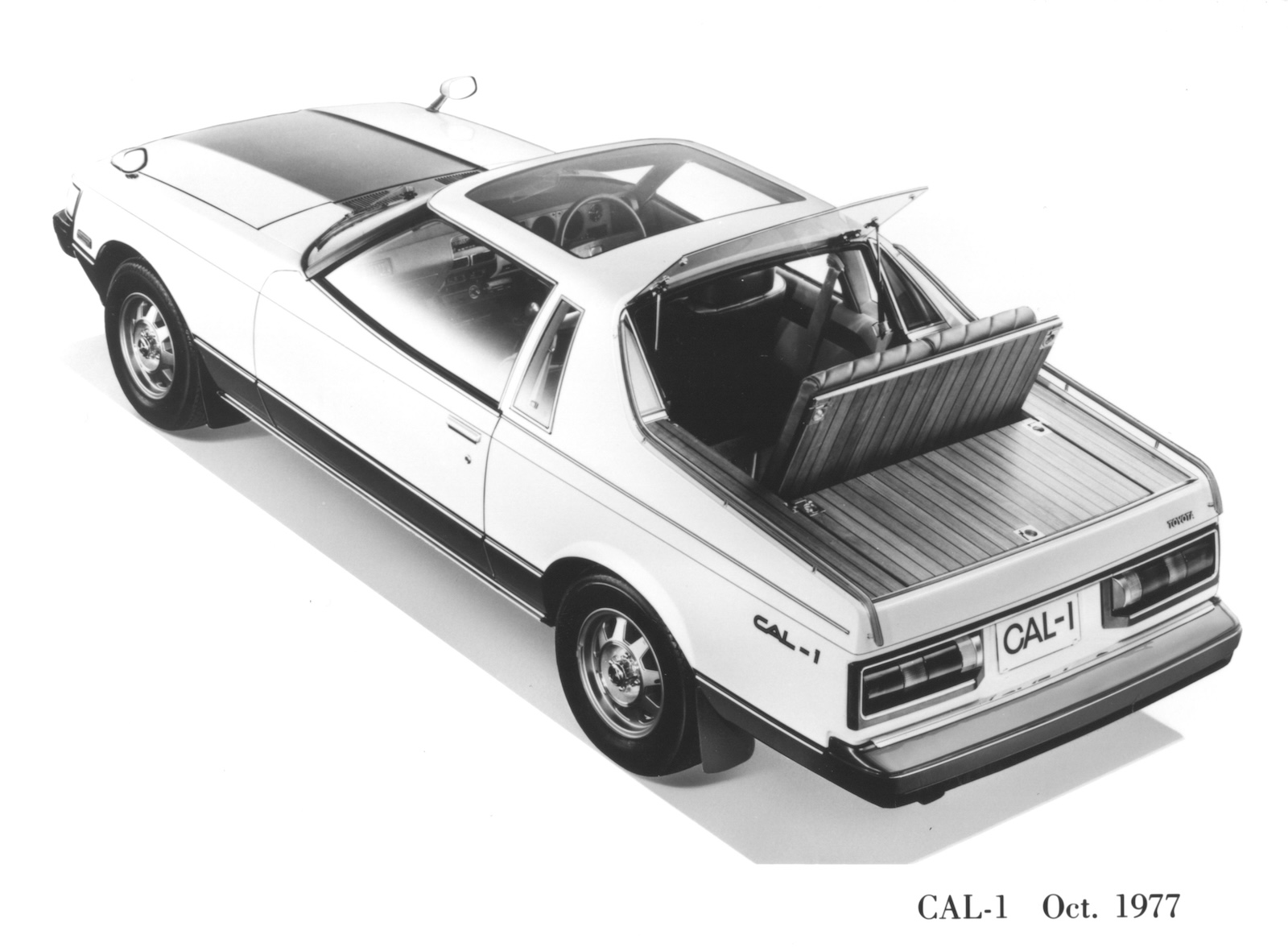
The CAL-1 was a Californicized Celica with an open deck area in the rear, finished with teak wood; the Airport Limousine was a Crown estate stretched in the same style as Checker Aerobuses and later Volvo airport shuttles, and the aluminum-bodied experimental vehicle that absolutely looked like a shoe.

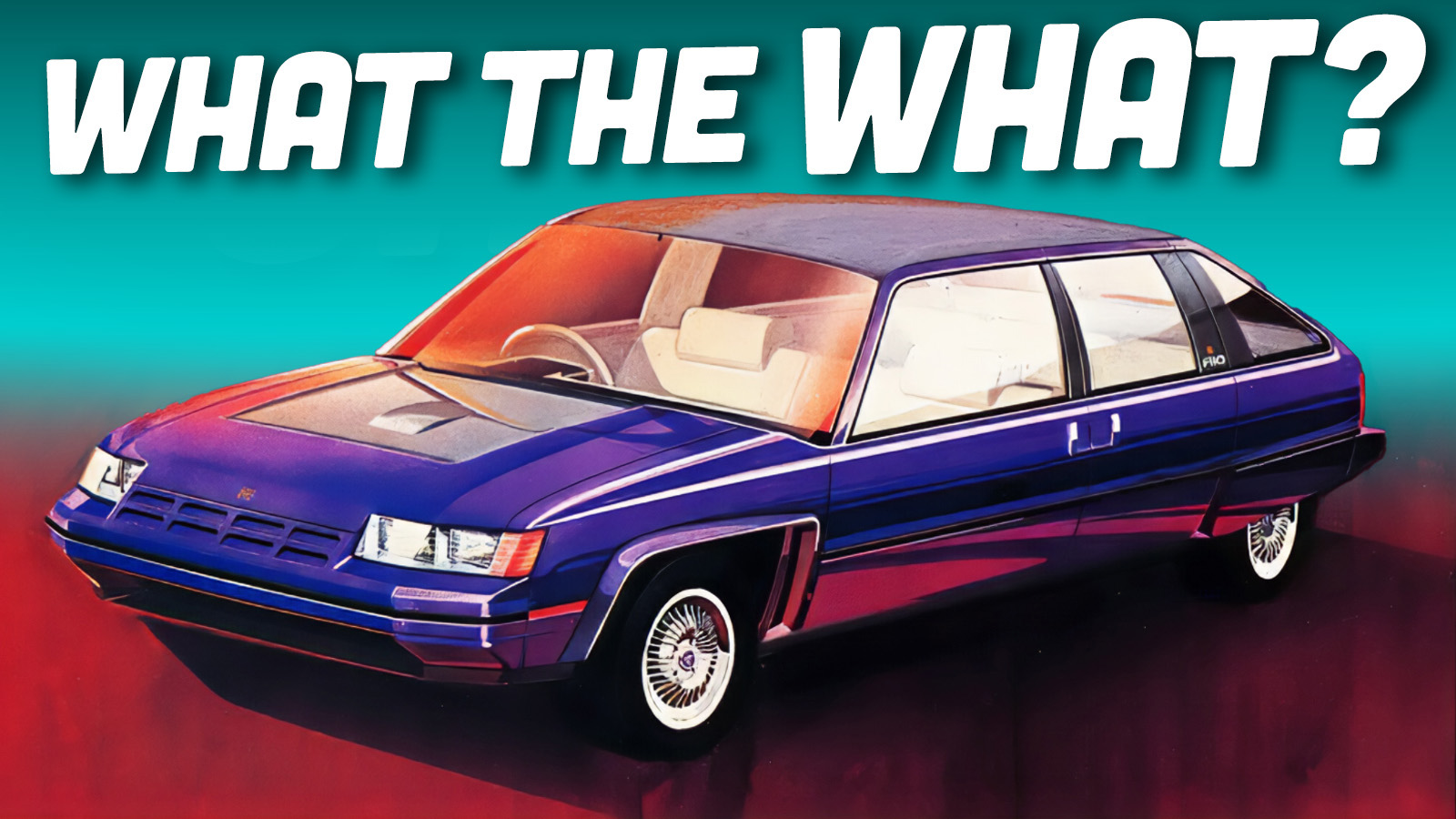
In addition to those, the F110 depicted Toyota’s idea of a luxury car for the 1980s: not an ostentatious two-box sedan, but an aerodynamic fastback car with a short nose and maximized cabin space.

Toyota was still aiming its luxury cars for the home market, especially the boss-level Century. The Soarer coupe, a car that played the same sort of warmly tinted visual fusion jazz as production Lexuses would, was still a few years out. Toyota’s luxury moon shot, Lexus, was launched in 1989 along with the LS400, but to call it the luxury car of the 1980s would do it a disservice, as it was far more advanced. For the ‘80s, Toyota’s luxury cars would need to play with Japanese dimensions and that meant optimizing the car to suit those rules, to fit Japanese streets.
The Luxury Car Of The 1980s

As Toyota put it in the motor show press release:
The F110 is an experimental vehicle developed in the process of exploring the direction in which luxury sedans are moving for the 1980s. Toyota engineers broke away from fixed concepts of the past in this vehicle’s development and aimed at efficient design and ease of use of driving compartment space. The F110 has an extra-short nose and an extra-long cabin giving what is basically a small-size car the interior space of a larger vehicle.
Despite this, the F110 was still rear-wheel-drive and based on a Crown platform. Front-wheel drive would have helped in packaging, but a large Toyota would not be front-driven for some time.
To sidestep that, Toyota made the F110 as easy as possible to enter – but only from one side. On the passenger side, the F110 had a normally opening front door and a sliding rear door, and the driver entered via a large sliding door. The end result was something comparable to the Nissan Stanza wagon mixed with the Hyundai Veloster, in a body shape that wasn’t too far off from the Merkur XR4ti and Scorpio. The rear seat was split-fold, in a 33/33/33 pattern based on the sketch.
An asymmetrical 3-door structure (one sliding door on driver’s side; combination of front conventional door and rear sliding door on passenger’s side), which removes the door pillars and gives a total open-door effect, reflects Toyota efforts at increasing safety and driver-passenger convenience when boarding and alighting. A rear hatch door is also provided for easy access to the trunk.
What Else Was Out There?
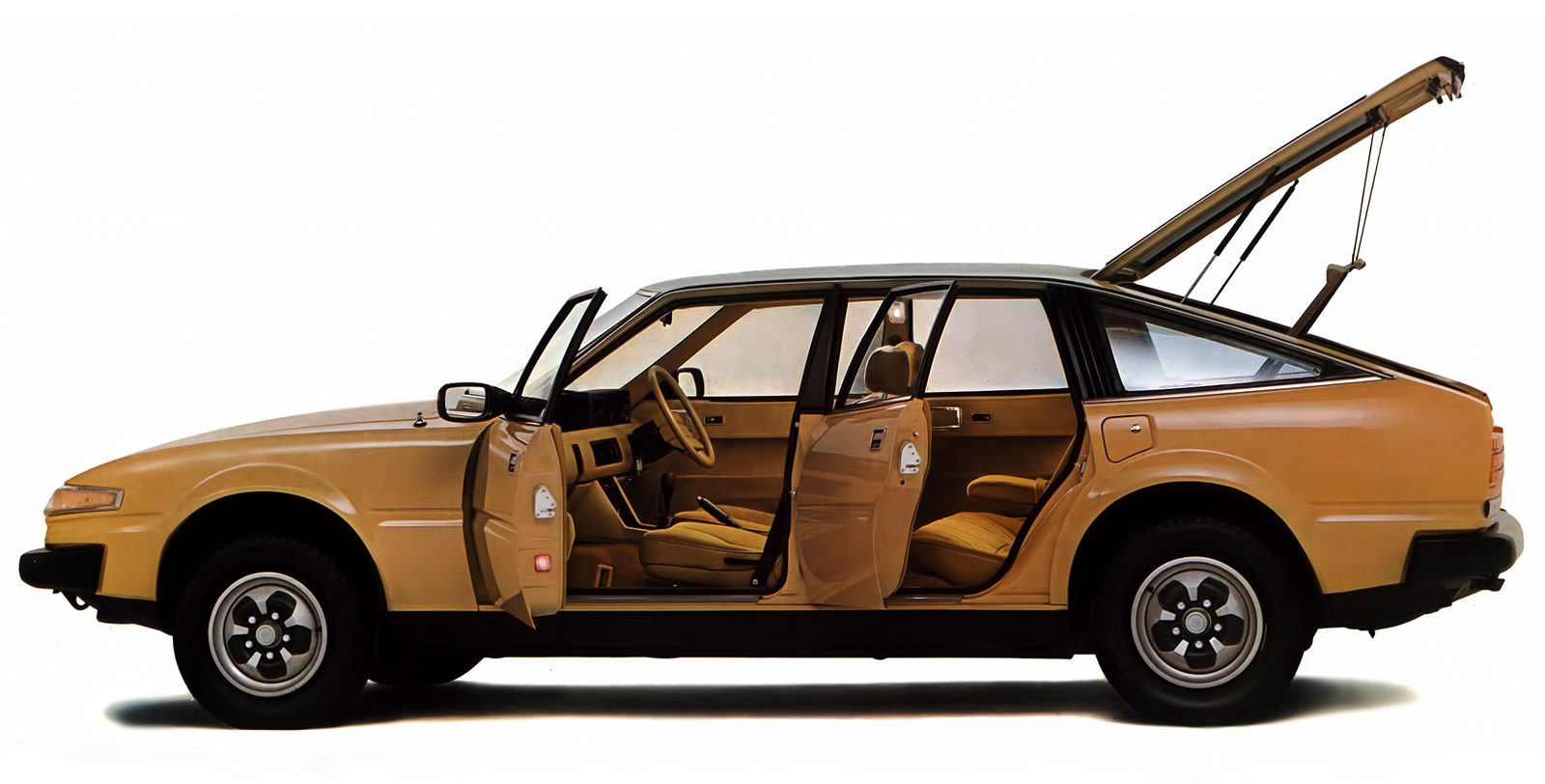
In the late ‘70s, there weren’t that many fastback or liftback luxury cars. The Rover SD1, another car that resembled the Toyota concept, had a large liftback tailgate, but the similarly shaped Citroen CX had a fixed rear window and a small trunklid.
Inside, the F110 had a touch of Citroen in its styling: the steering wheel had a fixed center, something Citroën would use in its production vehicles in the 2000s. Any instruments are tough to find in the concept car dash, and while the sketches show a completely flat floor, the actual car had a hump in the floor dating from the Crown.

The front seat was a bench seat with a conventional floor shift in front of it, but positioned slightly towards the driver, and looking like an afterthought.
Camry It Is
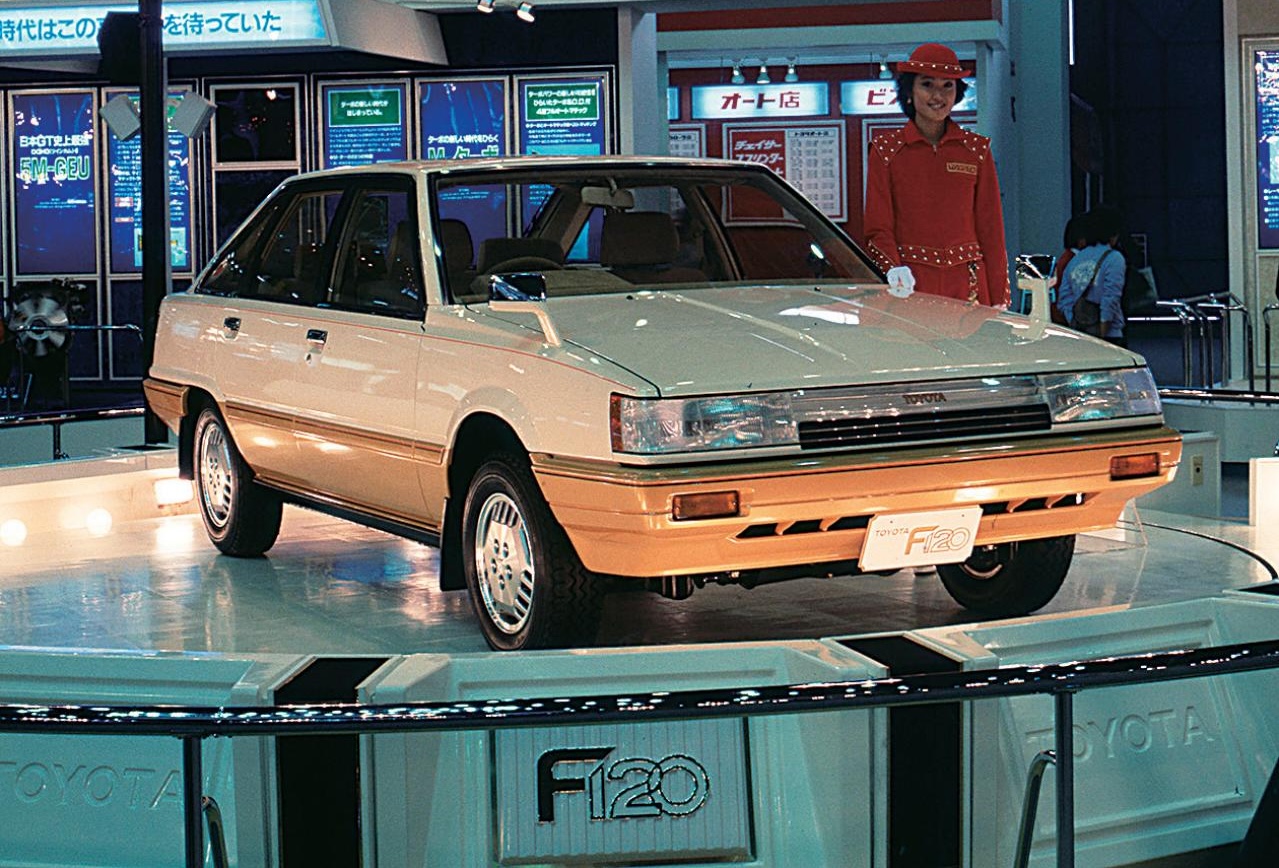
The F110 was followed, logically, by the F120 concept car. The F120 had a liftback design that was fairly similar, and it’s not a long stretch to consider it a real-world development from the F110. And looking at the F120, you can take it as what it is: a production Camry wearing some motor show décor and not a lot more.
The F120’s unveiling took place at the 1981 Tokyo Motor Show, in the same style as the first-generation Soarer had been shown as the “EX-8 Concept Car” a year earlier, despite looking identical to the eventual production car. But still, the production Camry was far from a luxury car, and with the liftback body style supplemented by the sedan, a completely regular-looking car. Shifting to front-wheel drive was the big deal, not ostentatious luxury.
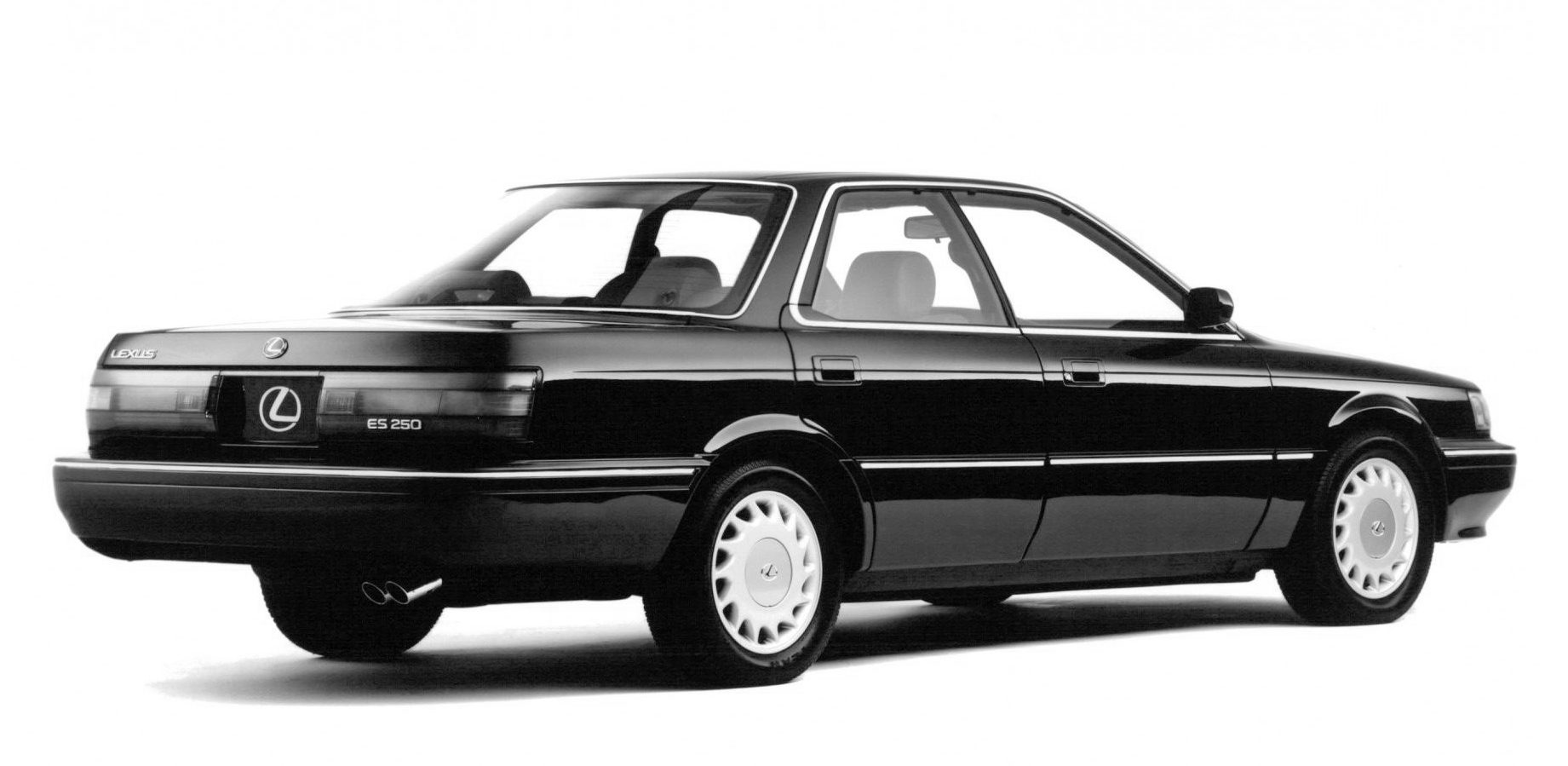
Yet, Toyota supplemented the Lexus brand with what was essentially a fancy Camry: the Lexus ES 250 was simply a left-hand drive version of the home-market, V20 generation Vista Hardtop or the Toyota Camry Prominent, a hardtop sedan with frameless windows and cushy leather, introduced in Japan a few years earlier than the export market ES 250. Toyota couldn’t launch the brand with just one model, the LS400, and the Camry needed to put on a nice suit to accompany its bigger sibling.
Photo credits: Toyota, except that one Rover shot





It also looks quite 1970s British Leyland, Triumph and Austin were knocking about with various lift back designs such as the Triumph SD2 (https://www.aronline.co.uk/concepts-and-prototypes/triumph-sd2/), but only the SD1 came to fruition.
I never knew the Lexus LS250 existed, but I guess we only got the LS400 in the UK when the brand launched.
PSA: do NOT look at aronline if you are still trying to get any work done today. Made that mistake before…
Yeah, maybe I tend to make this mistake with The Autopian too…….. and then dived down my own rabbit hole.
Oh, it’s too late for you, you posted the link. We still have time to save others though…
Much, much more interesting, but I’m not sure how well such a funky French-looking design would have gone over among the conquest sales Toyota needed in the US.
“Toyota supplemented the Lexus brand with what was essentially a fancy Camry: the Lexus ES 250”
Damn smart move. The “fancy Camry” moniker is generally used derisively to marginalize the ES’s success or justify GM’s badge-engineering, but what seems to be forgotten is that a near-luxury car built on a good mainstream platform is a whole different animal from one built on a pile (like the Cimarron).
While the ES250 was a fine car for sales – that wasn’t really the point.
The big deal was that, from the start, Lexus was able to advertise and offer free loaners to their service customers – which they were not about to do with the LS400s, much less Toyotas.
Hence the ES250.
I feel like we dodged a bullet with this one.
The F110, with some slight tweaks, could have been as streamlined as the Volvo LCP2000, which had a 0.25 Cd and with a small diesel engine got 88 mpg highway. If you’re going to build a boring appliance, screw styling: it should be as inexpensive as possible to operate first and foremost, but NONE of our appliance vehicles available do that.
The F110 has a lot of Citroen XM vibes, see here.
I love those wheels.
It’s almost like they designed a boxier Citroen and then de-Citroen-ed it for the actual liftback design that made it to production.