

The big debate of the moment in the EV space is no longer over how much demand there will be, because everyone agrees there will be less than initially hoped. What people want to debate is whether or not governments should require more EVs and how that requirement can be aided by incentives. In the United States, this means discussing the removal of the 2009 Greenhouse Gas Endangerment Finding (the GHG Finding, for short).
As someone who loves cars and cares about the environment, there’s always an inner conflict over how to talk about this, which often comes out in how I cover them in The Morning Dump news roundup. My general view is that the EV Tax Credit is good, that governments need to both incentivize change by simultaneously forcing people to pay for excess emissions, and giving them some sort of credit for selling more efficient cars. At the same time, it’s clear that the hype cycle created a belief that EVs were coming faster than consumer demand or infrastructure could handle, and that led regulators to set an extremely high bar that, I’ve long said, probably needs to be brought down a bit.


But what if the EV Tax Credit, as modified in the Inflation Reduction Act, was bad for the environmental movement?
That’s the thesis this morning, but it comes with the caveat that the move to undo the GHG Finding is still probably wrong. Automakers want it gone, as do aftermarket companies, but even if it’s good business, I wonder about the politics of it all.
Also, get ready for the market to dump a bunch of cheap off-lease EVs in the coming years.
‘If I Want To Shoot Myself In The Face, It’s My Right To Shoot Myself In The Face’

Perception matters more than intent. There’s this great bit on the web where a guy gets confronted by his girlfriend for saying she “looks big.” His defense is that they’re at the gym, she said she wanted to get swole, and so he was intending to compliment her on adding muscle mass.
I’ll say it again: Perception matters more than intent. In my view, the goal of the Inflation Reduction Act was the right one. The intent was the right one. Cars aren’t the only source of greenhouse gases (GHG), but they are a big one, and the slow work of higher-density urban development and better mass transit has, at some level, to be matched in the short term by getting people who can own an electric car into an electric car.
The carrot-and-stick approach from the left (and I’m mixing state and federal efforts here, just to make it easy to understand), was to penalize automakers for failing to meet emissions goals while also helping them transition to EV production through credits for building facilities and stoking demand through tax credits.
There was never a real EV mandate, but given how high the goals were, it’s fair to argue that it wasn’t far off from one, especially with the EPA waiver granted to California that allowed it to dictate something closer to one. In the latter days of the Biden Administration, as EV sales seemed to level off, there was a lot of talk about helping automakers out by slow-rolling the stick.
What we got, instead, was a Republican-controlled Washington that is wholesale reversing most of these policies (but keeping, notably, subsidies for plant-building). This is hard on companies that are trying to follow the whims of administrations with completely different views on all of this.
It’s also, to some degree, against the will of the American populace, which largely believes that climate change is real and that human beings are responsible for it. While there are people who are upset about the loss of the tax credit, it’s not the biggest issue for most. The lack of outrage, in fact, feels like further proof that maybe the politics of this were wrong.
It’s nice to hand out $7,500 to anyone who wants to buy an EV, and it’s good that the requirements were such that companies increasingly needed to source materials outside of China and develop domestic refining capacity. But policy is only as good as the politics behind it, and I’m coming to accept that the politics were bad.
There are a couple of quotes in an article from Automotive News that get a little into why, in a way that succinctly sums up a lot of my disconnected thoughts:
B.J. Birtwell, CEO of Electrify Expo, an EV festival, said he believes the auto industry made another miscalculation in emphasizing the environmental benefits of EVs over performance.
“The more the industry makes EVs about the climate and about sustainability, the more that we alienate half the population from actually adopting EVs or putting it into their consideration set,” he said.
The federal tax credit may have further estranged these buyers, he and others said. The credit, along with EV requirements from some states, fed the idea that the government was forcing consumers to buy EVs.
“The U.S. consumer is really different,” said Raul Arredondo, principal consultant at eMobility Strategy & Marketing and a former manager of international product planning at FCA. “The main thing is that you shall not tell me what to do. If I want to shoot myself in the face, it’s my right to shoot myself in the face. If I want to spend twice as much money [over the life cycle of] a vehicle, it’s my right.”
I think it was easy for many, myself included, to dismiss how good the messaging of an “EV Mandate” was. It wasn’t a real thing, specifically, and I don’t think any sensible Democratic president or Congress was going to do anything but give space to automakers to catch up with those regulations.
As a country, America subsidizes everything, from food to gasoline, so it was unfair in many ways to single out this one.
But the way the tax credit functioned meant that the perception that it was mostly a handout to the rich was maybe more hurtful than helpful. It’s easy to get people upset about smog and local pollutants, and talk about giving people more choice, as this did in some ways, but Republicans (primarily) cast it as limiting choice, and that argument seems to have prevailed.
The pre-existing EV tax credit, which was for any brand, but less complicated and phased out after 250,000 vehicles, was maybe better. The politics were better, and it would still help companies like Slate, which are just starting to come into the market.
Perception matters more than intent. Now, maybe, without the tax credit, people can just view an EV as an extremely sensible choice for many consumers. It’ll still be necessary to find ways to subsidize the cost while demand builds. One thing the IRA and Biden Administration did well was to stoke production in extremely Republican areas, which is why even a Republican-controlled government couldn’t completely kill those factory credits.
The Car Enthusiast’s Case For Keeping The GHG Finding

Here’s one where the politics get even more complex, especially for a car lover. In 2009, the Environmental Protection Agency issued an “endangerment finding” that said: greenhouse gases are bad for public health and threaten the environment.
While the finding had no enforcement provisions or created any requirements, it did allow the government to further regulate emissions under the Clean Air Act, which the Biden Administration did, requiring companies to dramatically cut tailpipe emissions by 50% by 2032, which meant the market should be somewhere between 35% and 56% of new cars would need to be EVs.
Here’s the finding, by the way:
Endangerment Finding: The Administrator finds that the current and projected concentrations of the six key well-mixed greenhouse gases—carbon dioxide (CO2), methane (CH4), nitrous oxide (N2O), hydrofluorocarbons (HFCs), perfluorocarbons (PFCs), and sulfur hexafluoride (SF6)—in the atmosphere threaten the public health and welfare of current and future generations.
Cause or Contribute Finding: The Administrator finds that the combined emissions of these well-mixed greenhouse gases from new motor vehicles and new motor vehicle engines contribute to the greenhouse gas pollution that threatens public health and welfare.
Not to get political, but it’s my belief that this is true. I also think it’s hard to argue against any of it on a basic level.
The current EPA is, somewhat unsurprisingly, trying to remove this finding.
On July 29, 2025, EPA proposed to rescind the 2009 Greenhouse Gas Endangerment Finding. The Endangerment Finding is a prerequisite for regulating emissions from new motor vehicles and new motor vehicle engines. Absent this finding, EPA lacks statutory authority under Section 202 of the Clean Air Act to prescribe standards for GHG emissions. Therefore, EPA also proposed to remove GHG regulations for light-, medium-, and heavy-duty on-highway vehicles.
As a result of these proposed changes, engine and vehicle manufacturers would no longer have any future obligations for the measurement, control, and reporting of GHG emissions for any highway engine and vehicle, including model years manufactured prior to this proposal. However, EPA intends to retain, without modification, regulations necessary for criteria pollutant and air toxic measurement and standards, Corporate Average Fuel Economy testing, and associated fuel economy labeling requirements.
That’s a short statement with a lot of information. The important part you might have missed is the “criteria pollutant” bit. Even this EPA doesn’t want smog to come back (honestly, maybe you could find someone who does, but it at least doesn’t see the politics as helpful), so things like NO2 and O3 are still being regulated.
This is being done, it seems to me, in the hopes of helping out automakers at the same time that the Trump Administration is making life harder with tariffs.
Is this bad? This seems bad. Here’s the International Council on Clean Transportation (ICCT), the same organization whose work brought the evidence of Dieselgate, on the proposed changes:
“There is indisputable evidence that human-caused greenhouse gas emissions from burning fossil fuels in the transportation sector has profound environmental, health, and economic impacts,” says Drew Kodjak, President and CEO of ICCT. “Rescinding these findings and gutting regulations that mitigate emissions will put American lives, infrastructure, and the economy at risk.”
EPA’s own analysis of the 2027-2032 motor vehicle GHG standards it adopted would deliver $62 billion annually in fuel and maintenance savings through 2055. These standards are feasible, achievable, and cost-effective—rolling them back would cost Americans over $2 trillion when accounting for increased fuel costs and climate damages.
“The EPA’s new ‘revealed preference approach’ is fundamentally flawed, lacking peer review and scientific validation,” says Kodjak. “Their analysis erroneously inflates compliance costs while ignoring massive fuel savings and climate benefits.”
The rollback would also devastate American competitiveness, threatening to strand billions in announced electrification investments and ship jobs overseas to markets with stronger climate policies.
This is a big deal! The Malaise Era didn’t happen because automakers stopped building better cars for purely regulatory reasons. There were legit reasons having to do both with the oil supply and the environment that were largely ignored, and American car companies found themselves to be suddenly unprepared for the moment. This opened the door to Japanese automakers that were suddenly more competitive.
There are many ways to make the transition to cleaner energy easier for companies, but some of those require the hard work of passing a law or trying to defend rolling back provisions while admitting there’s still a problem. This feels like the easy way out.
Whether it’s the development of EREVs or a shift to more hybrids, there are plenty of technological things automakers can do to meet the moment and limit greenhouse gases, and pretending like that isn’t important feels wrong to me.
Automakers And SEMA Support Revoking The Finding

The Specialty Equipment Market Association, which is made up of a lot of engine builders, wants to see the GHG Finding reversed. Here’s that group’s argument:
Using the dubious claims codified through the endangerment finding, the EPA under President Biden, along with the state of California, embarked on a brazen attempt to mandate the sale of EVs and ban the sale of ICE vehicles. They did so knowing that such policies would force automakers to cease production and sales of vehicles that the American people have relied upon for nearly a century, despite the high costs, lack of infrastructure, and questionable environmental impact that EVs have.
When the Biden Administration set GHG standards for 2027 to 2032 light- and mediumduty vehicles, which would have required 67% of new vehicles sold to be electric by 2032, it put at risk thousands of specialty automotive aftermarket businesses that develop products solely for ICE vehicles. The Biden Administration’s action served to further embolden California, which sought to enact EV mandates on 40% of the nation’s population through its policies, which were set to be followed lockstep by 11 other states.
There’s that “EV Mandate” again. I should clarify that, often, I agree with SEMA’s advocacy and that they do good work on a lot of issues facing enthusiasts. It’s not surprising that this is the group’s view, as it directly impacts a lot of its members. SEMA also never seems to deny that GHGs are a real issue, and it goes out of its way to say it supports EVs.
Automakers are taking a similar line, arguing that it’s too hard:
The Alliance for Automotive Innovation, which represents General Motors, Toyota Motor Corp., Volkswagen Group, Hyundai Motor Co. and other major automakers, said in a filing with the Environmental Protection Agency that legislation signed by President Donald Trump in June will increase the effective price of EVs and could lead to a near-term decline in EV market share.
They argue rules finalized last year under President Joe Biden are no longer feasible.
“The 2027 and later standards are simply not achievable in light of significant market, charging infrastructure, supply chain, affordability, and other challenges as well as recent policy changes enacted,” the group said.
The “recent policy changes” are, of course, the removal of EV tax credits.
Again, there are many ways to achieve the same result of aiding automakers and consumers in the adoption of electric cars. The politics of pretending like GHG emissions aren’t a real threat may be good, but it feels wrong to me.
What’s Going To Happen To All The Off-Lease EVs?
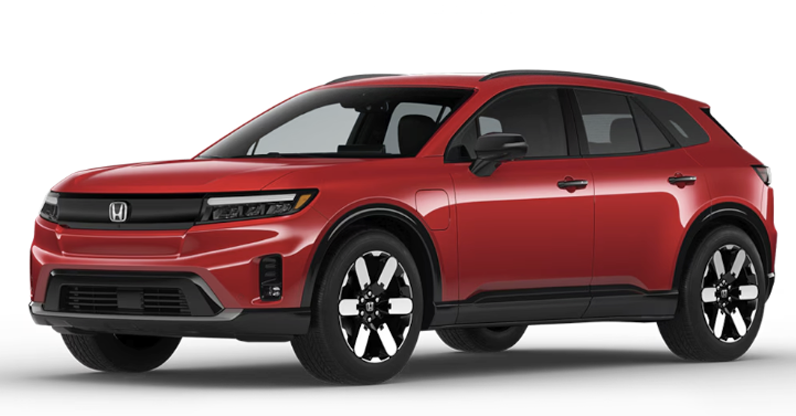
One of the weirder quirks of the IRA was that there was an exception in the tax credits for leased EVs, meaning that a large percentage of EVs that were “sold” were actually leased by people who got incredible deals.
As Cox Automotive points out, there were a lot of leases. Since 2023, around 1.1 million EVs have been leased in just the United States.
What happens next?
Lease returns and trade-ins are boosting the supply of used EVs, making them more affordable than ever. In August, the price difference between a used EV and a used internal combustion engine (ICE) vehicle fell to just $897 – the lowest on record – as used EV sales climbed to nearly 41,000 units, lifting market share to 2.4%.
For mainstream buyers, EV affordability in the used-vehicle space is finally within reach. At the same time, hybrids and plug-in hybrids continue to appeal to shoppers who value fuel economy and the convenience of familiar refueling. But the long-term trajectory favors full electrification: Falling cell costs, the rise of new battery technology and chemistry, and a domestic battery supply chain supported by the 45X credit (the Advanced Manufacturing Production Credit created under the Inflation Reduction Act of 2022) all point in that direction.
Affordability is coming, at least in the used space.
What I’m Listening To While Writing TMD
It’s “Rapture” by Blondie because, at least, that’s the only Rapture that I know happened yesterday.
The Big Question
Was the Tax Credit good or bad? why?
Top graphic images: Tesla; DepositPhotos.com



So the argument is that the American consumers somehow don’t like subsidies because they don’t like being told what to do? I don’t buy that at all. Everyone likes a subsidy when they get it. The bottom line is that you have an unhinged Administration hell bent on turning the clock back to some mythical 1955.
Plus, I don’t understand how that argument, is an “environmentalist’s” argument. Sure, it’s an argument, but the connection back to environmentalism simply isn’t there at all.
I have problems with why the EV tax credit was necessary at all. The vehicles were too expensive but I think a lot of the reason for that is that manufacturers kept making EVs huge luxury vehicles instead of small efficient vehicles.
Smaller cheaper EVs seem to be selling well in other parts of the world without consumer subsidies.
Sure, there are producer subsidies, what’s wrong with that? The government wants something to happen, they pay someone to do it.
In the scheme of things governments pay people to do, this seems pretty good.
Sigh. Another provincial analysis of the situation. Let me expand upon it on a global scale, that of a path a few billion humans vs approximately 70 million backward Americans are taking. The global automotive industry has already made up its mind. It’s going EV. You have two choices: Innovate in that direction or go extinct.
The USA has the largest GDP in the world and is larger than the next 3 (China, Germany, India) combined. So what happens (or doesn’t happen) in the US will matter on a global scale.
31 million cars were sold in China in 2024. 16 million cars sold in the US. So while it is true that the US has the larger GDP, when it comes to influencing the global car market, China is the big dog.
It’s not an entirely apples to apples comparison given the Chinese car market is a bit of a bloodbath for manufacturers with artificially low prices that allow the number of sales to be so high. That said, the sales volumes are impossible to ignore, even if they’re slightly flawed.
Exactly. Economies of scale matter in manufacturing when you have suppliers making parts for everyone. What supplier is going to make a few parts for ICE cars at reasonable costs? No one. Those costs ultimately will be the death blow.
How many miles are driven annually in each country?
China is a big country, but I don’t get the sense that many residents are road tripping from one end of China to the other very often. Also, I doubt there are many Chinese with 80 to 200 mile daily commutes to work
Both of the above are not uncommon in the US
I can’t deny and won’t argue that EVs are coming online across much of the world. But if the world has decided EVs are coming, why are so many non US based major manufacturers turning back to ICE for the foreseeable future? Isn’t that a waste of their resources, making them fall behind as well?
I don’t know that US automotive manufacturers have the best track record when it comes to things like progressive thoughts and willingness to change.
I can accept the arguments that the government is the reason US OEMs are acting how they are. I’m curious what the reasoning would be for the NON US makers to also be making that pivot.
Current economic conditions are looking bad. No one has money to continue funding any new products, thus they’re sticking with sunk costs and already paid for assembly lines and tooling.
What about the new development? BMW, Porsche, Lotus, all non American getting back in to ICE development. BYD going to be building PHEVs in their European plants, so even the Chinese companies are planning to use ICE tech in their futures. These are all NEW investments, costing those funds that are limited due to current economic conditions.
How much of the global automotive industry has to verbalize the opposite of what you assert their position is before you believe it? The Japanese, Americans, and Germans are all sticking with ICE for the long haul.
If the goal was ACTUALLY to help the environment instead of helping major corporations increase profit, the greenest solution is to keep older cars on the road as long as possible to reduce the need for producing new vehicles.
That flies in the face of the ‘ever increasing quarterly profits’ of publicly traded companies, so it’ll never happen, but imagine some sort of program to help people keep their cars operational; idk, maybe state operated garages where owners could do their own basic maintenance, or writeoffs on car parts, tools, etc. A society that celebrated basic mechanical skills instead of shiny/new/flashy things sure would be cooler society, imho.
I grew up around cars, but I’m largely a self taught mechanic. With today’s access to information on Youtube and forums*, most major problems on every single car are already documented in how to diagnose and repair them, and when you do so, it builds on your previous experience and knowledge. Wrenching is a cumulative process, and eventually your mind is expanded not just around mechanical design/systems, but also hydraulics, electronics, pnuematics, and material knowledge on metals, plastics, elastomers, etc. We already have the technology to share/distribute all this knowledge, yet it’s not ‘pushed’ by the government.
It pains me to see clean cars being scrapped, or rust free vehicles being parted out, knowing that the repair is likely only a few thousand dollars and the vehicle would continue to provide thousands more miles of faithful service, but this is just going to happen more and more as vehicles become more and more complex and challenging to repair. IMHO it seems like a lot of the new tech is just marketing fluff that doesn’t really matter; nobody really needs door to door displays when you can just connect your phone and have your music and the most up to date maps/nav info possible.
What really sucks is in my opinion not only are we not seeing a push to save older vehicles, we are actively being punished for driving older, efficient vehicles. Here in Wisconsin, we have a ‘hybrid fee’ on our annual registration, which means the state demands $300/year on older hybrids like my 2000 Honda Insight. My Insight has almost 300k miles, and is worth MAYBE $3000 if I found the right buyer who could look past its cosmetic flaws and grind on 2nd gear downshift, so they’re wanting 1/10th the value of my vehicle, every single year for… checks notes… driving something EXTREMELY EFFICIENT that not only helps reduce our strain on the environment, but also lessens our nations dependence on foreign oil.
It’d idiotic, and I will freely admit that if you have another vehicle, it makes much more sense to just register/plate that car, and just swap it onto your insight and hope you don’t get pulled over, because on principle it’s just such a dumb idea. And if you do get pulled over, just claim you just sold that other vehicle, and you’ll get it swapped over. That’s what’s working for me, so far anyway. I refuse to pay 1/10th the teh value of my car every year, while people who drive gas guzzling SUVs pay 1/3 the cost/year.
This comment is way too long, but REDUCE REUSE RECYCLE, we should be rewarding that shit.
I agree with much of what you’ve said, but for one point. That gas guzzler IS paying more than you if they daily drive it at all, via gas taxes. The fee being charged for hybrids is to make up for lost gas taxes. Its not a great system, but the reason it exists does have some sense to it. I’m sure there are better ways of doing that more appropriately charge each driver for the use stress they put on the infrastructure.
Depending on the additional fee, that gas guzzler is often subsidized by the hybrid/EV. In the example stated, it absolutely is. $300 of additional annual registration vs a $0.329/gallon gas tax means you would need to use almost 912 gallons of additional fuel each year to pay as much as a hybrid.
If the hybrid somehow uses zero fuel and you get 20 mpg in your gas guzzler, that’s 18,237 miles. Here in Idaho, it’s $75 for a PHEV or $140 for an EV, so a 20 mpg vehicle breaks even with an EV on taxes paid around 8500 miles. A fuel-efficient gasser can easily pay less in gas tax than the additional EV registration and a regular hybrid almost certainly will, if we assume people drive around 10,000 miles per year.
I’ve seen similar math from other states as well. I agree its badly applied and needs further work. My intent was to point out an additional point for consideration, but definitely, the point I made also needs to be revised, or changed to a whole other management scheme.
Sure, that’s their choice. Drive something big and heavy, pay more.
Do not punish those of us who drive small/efficient/lightweight vehicles.
Came here to say exactly this. If you want to be a true environmentalist/car enthusiast (enthusimentalist?) – keep your old car and keep it running with junkyard parts. If you absolutely need a “new” car, buy a used EV.
This argument always rubs me the wrong way. The cars that are being replaced by EVs in one household are being handed down the wealth chain to someone who needs a used car that will be an upgrade for them in terms of efficiency (and other important things like safety tech). The second household’s used ICE car then gets passed down to the next person in line and so forth until the car is no longer in a safe, drivable, or meaningfully repairable condition (or at least in the ideal). I’d need to see some data that some inordinate amount of safe, drivable vehicles are just being crushed before they’ve passed their limits (to be fair, I don’t have on-hand data to the contrary either). Parted out isn’t even a problem once the vehicle has gone through its lifespan. Yes, Reduce is the most important part of the three-Rs, but the overall car market isn’t just junking useful resources. The Reuse and Recycle components are definitely in place where it’s possible.
Of course, if we *really* want to focus on reduce, it’s about improving public transportation options and living in denser communities. That’s a whole other can of worms, particularly in a North American context.
Will those EVs still be on the road 25 years later, like my Insight?
The argument was even stronger around the Cash 4 Clunkers program, but it’s still valid today. A heightened focus on maintenance and fixing what breaks, as it breaks, rather than treating old/cheap cars as disposable beaters would reduce the rate at which cars become “no longer safe, drivable, or meaningfully repairable”
We’re already mostly past the era of no catalytic converters and leaded gas, so how many MPG improvement does the 2026 fleet need to offset not keeping every 90’s “beater” on the road three more years?
With the inclusion of ADAS systems and extensive airbag use in modern vehicles, very often a minor ‘fender bender’ accident will mechanically total a vehicle. The amount it costs to repair and calibrate all of the sensors, in addition to replacing the front seats, steering wheel, dashboard, window trim, and whatever body damage was incurred frequently exceeds the residual value of a vehicle in as little as 3 years of age.
Automakers love this facet, as they get to sell you a new car, which you’re likely able to do if you have GAP insurance.
I’m not saying the safety tech is inherently bad, but it does make cars that are otherwise repairable junkyard scrap.
If Reduce was the true goal, the push to maintain and improve zero commute remote work would be at the forefront. It’s significantly cheaper than any form of commuting in terms of money invested, energy used, and time spent.
Double clutch + rev match on the downshift brother. You don’t even need those worn out synchros.
lol yep, that’s exactly what i do.
“Granny shifting, not double-clutching like you should.”
In Michigan there is only an extra registration fee if it plugs in, so $300 is extra crazy for a regular hybrid. If you could get it on the ferry someone would buy it over here, but I do not think it is worth $3k unless it has had a recent battery swap.
That simply isn’t so black and white. Depending on the study you look at, the EV will be the “greener” choice after as little as 1.5 years, to as much as 6 years. So as long as you keep your EV for six years, it comes out ahead.
Vice, ArsTechnica, and numerous scientific studies exist out there backing this.
I kind of doubt any study takes into account the true impact; think of how many more factories we need because people can’t keep a car more than 5 years, think of just the energy required to BUILD a factory, not to mention all the human effort/hours spent designing more cars, and all of their impacts.
And when a factory cranks out 200,000 vehicles per year, those energy expenditures are mere rounding errors in the lifecycle analysis of a vehicle.
Rather than arguing from a point of ignorance, why not bother to look up anything I referenced?
I’m already aware of what you referenced, and I don’t believe it. Read Ricki’s post below, he captured what I am getting at in more detail.
This is just false. The energy/CO2 cost of making a new ICE car isn’t that high, but it puts out a huge amount of CO2 over its lifetime. A new EV takes more energy to make but makes that back fairly quickly because it uses so much less energy to run.
There’s a couple things in architecture that I think could be applied here:
To the former, a car that already exists will only ever need maintenance. Even if you end up turning it into an automotive Ship of Theseus (say, a late 70s-early 80s squarebody Chevy), that’s spread out over the now-extended useful life of the vehicle. In house terms, upgrading a new envelope will always be more efficient than building an entirely new one and incurring all the up-front costs, both monetary and environmental.
Which leads to the latter: everything has a procurement cost. As an example for the sheet metal of the body/unibody or a car, it’s not just cost of the sheet that arrives at the plant, and the cost to get it there in emissions, it’s the cost of smelting it and those emissions, of transporting the ore to the mill from the mine and those emissions, the mining the ore and emissions from that process, and so on. Just because something is cheap doesn’t mean it’s not costing a lot in some other way (usually emissions from transporting it from hundreds or thousands of miles away.) And then there the cost of stamping that steel and assembling the car as a unit, which itself has environmental costs in it, plus transporting that car to wherever it ends up and THOSE emissions.
Concrete, especially reinforced concrete, is extremely environmentally expensive, but it is very durable and theoretically can last forever, or at least several thousand years. Wood, especially locally-sourced renewable wood, is cheap, but much less durable, especially if you consider newer-growth wood tends to be much less dense than old-growth wood. In *both* cases, not having to build an entire new building means you don’t have to spend the capital and hydrocarbons to do so.
Fewer new cars means less mining, less smelting, less stamping, and many multiple times less transportation and its related emissions, and the end-user’s environmental impact of driving the car itself is much, much lower than the cost all that transportation anyway.
But since it all always comes down to dollars/euros/yen/what-have-you, all those emissions get erased from the consumers’ and producers’ minds. It’s literally the consumptive capitalist mode of production that puts us here by making everything a financial calculation and not a holistic one. No one thinks about how their car got here, it just is, and it’s expensive, and I don’t know if I can afford it but they’re telling me I’m getting a good deal and so I must be?
*sigh* America. Bigger equals more better, and bigger cheaper means betterer still.
Huge response, and eloquently put with more detail and effort than I put into mine. But yes. I don’t believe any of these studies capture the TRUE energy/time/effort put into new vehicles.
I’ve spent the past 2 decades of my life producing things, and the sheer amount of effort spent even designing things is huge; then all the refining and shipping of raw materials and those factories and those shipping costs and man I just don’t see how building anything new is remotely a green solution.
I agree with what you’re saying and agree that that Wisconsin hybrid fee is awful. However, there is an argument for getting rid of older vehicles, but it’s not focused on greenhouse gasses but rather other pollutants that are harmful to human health. These other emissions (PM, NOx, O3, HC, etc) are harmful when created at ground level where people can breathe them, sometimes as smog, and newer vehicles create far less of them than even your Insight. These emissions may not really be created during manufacturing, and if they are they might degrade before thay can travel to a place where it can harm humans.
It’s a nuanced topic because at what level should these other emissions be considered more important than CO2? It also depends on regional regulation history; the US had these anti-smog emissions for several decades longer than a country like China, which first implemented emissions regs in 2000. China’s trade in incentive program for vehicles with China3 and below (equivalent to Euro3 in around 2011) emissions seems justified given their smog levels.
I’m not saying we don’t need new vehicles, ever. I am saying there is no reason for a ‘new’ vehicle to only last 10-15 years before being junked. It’s ridiculous, and it happens because of all the incentives on newer vehicles; the rate at which we produce new vehicles is NOT sustainable!
If we make an incentive to get rid of older vehicles, we should start with the 6th gen Monte Carlo since it’s so offensive to look at and sucks by every metric
This is spot on. Everyone from exec boards at automakers to just about every politician is more concerned about ‘line go up’ economics than anything with the environment, conservation of resources, or efficient transportation.
My newest vehicle is a 2008 with 258k miles. I have not and will likely never finance a vehicle. By extension, this also means I will almost certainly never buy/lease a new vehicle.
Once you get past 2010 model year vehicles, the complexity and number of failure modes rises drastically, despite not being significantly more efficient. The jump made from 70s to 80s vehicles in terms of pollutants was enormous. 80s to 90s was significant. 90s to 2010s was significant, but well into the exponentially decreasing return on investment zone of the curve.
A true green push would be in part weight based, along with frontal cross section and Cd. There’s no actual reason 1 ton trucks need to be on par with a semi-tractor in ride height, or every other vehicle be a 2 row crossover (tall but stubby station wagon). The next ‘green’ push I see will be focused on non-combustion related pollutants, especially tire rubber from all of the 5000lb+ EVs.
My newest car is from 2004. My daily is from 2000, and has almost 300k miles. I don’t really even like most new cars.
Same here. 89 (drag car), 97, 98, 99, 08, is my fleet. 08 gets the best mileage so it gets the 600mi commute role. I wouldn’t trade any of my current vehicles for something new, even if it were free, unless I could immediately sell the new car.
The consumer-side tax credit was never a good idea.
Subsidies work best when there is a large, discrete cost that prevents companies from investing in an otherwise potentially profitable business that the government wants to promote for one reason or another. To be less abstract, an example of that is the fiber rollout in many rural areas of the country. That has been a smashing success. Why? Because once you pay for the digging and laying and all that upfront cost, it can be run profitably even in rural areas. You don’t need to convince people with subsidies to pay for fiber once it’s laid – it’s technologically superior to other options.
What can we learn from that as it relates to EVs? Well, if the government wishes to increase EV adoption, it must be a superior choice for the populace. People will never accept a lower quality of life if they don’t have to, so if they perceive that you’re forcing them to buy something that’s worse, you will suffer politically in democracies.
So the answer has always been to fund R&D and infrastructure until you can put an EV and ICE car side by side and have a person pick the EV because they want it, not because they got a great lease deal.
You can’t build EV chargers when there are no EVs to charge. This is a chicken and egg thing.
I’ve been thinking along the same lines recently.
I do think the way we fund research through grants needs an overhaul. I think these grants should be available to private industry as well as universities and other pure research labs. However, I also think that if the government is confiscating tax dollars to pay out for research, the results of the research should be available to all without need to pay licensing fees and there should not be inventions hidden behind patents.
Or there should be an equitable licensing model where the government has an equal ownership of the patent to pay back the research grants over time. I’d even be open to a system that allowed licensing of inventions at a reduced rate to allow for incentive for innovations.
For EVs specifically, we should have given the subsidies for infrastructure, allowing the vehicle development to roll out more slowly so the infrastructure could expand with it. Then provide research grants for improvements in vehicle and infrastructure development.
When cars were slowly replacing horse & carriage there wasn’t any infrastructure either. It happened over time but now that we have gotten used to having stations on every corner and clear roads as far as we can see, it’s not easy to accept those limitations. It’s not an easy one to tackle honestly.
What you described was the model for decades and still is in some cases. Government funded research could not be patented. Currently NASA has a similar policy (at least that’s what my contract manager tells me) but for most research that was abandoned. The problem was that technology was not getting commercialized. While the current system is far from perfect, the number of startups founded based on government-funded research and patents is probably a good thing for society
“As a result of these proposed changes, engine and vehicle manufacturers would no longer have any future obligations for the measurement, control, and reporting of GHG emissions for any highway engine and vehicle, including model years manufactured prior to this proposal.”
Is that even necessary? The vast majority of GHG produced will be CO2 which can only come from the fuel combusted. If you know a vehicle’s fuel type and consumption rate you’ll know it’s GHG production.
“When the Biden Administration set GHG standards for 2027 to 2032 light- and mediumduty vehicles, which would have required 67% of new vehicles sold to be electric by 2032, it put at risk thousands of specialty automotive aftermarket businesses that develop products solely for ICE vehicles. ”
So? You would have had at least 20 years till that business started drying up. That’s plenty of time to shift to making parts EVs need.
Did we mandate that cassettes stick around forever, simply because by allowing the CD to overtake it, companies that made cassette organizers, and cassette players… would go out of businesses? No, we expected them to evolve or die.
Did we use tax dollars to promote accelerated adoption of CD players?
We’ve been using tax dollars to promote O&G and generally cars for the last 100 years. I think it’s fine to start having things swing in a different direction.
a pattern of poor decisions doesn’t mean we have to keep making poor decisions
You’re probably to young to remember but the hyperstagflation of the 1970s was caused by the massive government subsidies of 8-Track technology in the 1960s…Or maybe it was the Vietnam war. It was probably one of those two things. Regardless between that and the economic fallout from the Betamax scandals there simply wasn’t anything left to throw at CDs.
I think that on the whole the EV Tax Credit was rational policy executed fairly well. The main criticisms I see are: 1) unfair market help for a lesser product, 2) was costly and ineffective compared to alternatives, and 3) as Matt pointed out, it opened EVs to politicized attacks that hampered EV adoption in the long term.
To me, 1) there is a cost to people associated with change, whether it is financial cost (more expensive product) or the risks they take to learn something new and deal with the hassles of adapting their lives. For products with an overall societal benefit such as EVs, compensating people via subsidies for assuming those risks feels reasonable and is something the government should pursue, and has in the past.
2) Costly, sure, but also passable by the 2020-2022 Congress. The policy should be compared to no policy at all and not to what the “perfect” policy may be, even though it couldn’t get through Congress. I’d also argue it wasn’t ineffective since it did stoke EV demand as intended.
3) If you spend all your time worrying about opening yourself up to criticism, you’ll never get anything worthwhile done. Building a policy around anticipating Republican attacks that, generously, have not been in good faith will result in a milquetoast nothingburger of a policy that still opens you up to bad-faith attacks. Criticizing a policy because it became a magnet for criticism feels nonsensical to me.
Agreed wholeheartedly. You cannot design a policy to be inoffensive to the other side. We should learn from Trump- design policy to be maximally offensive to the other side. Basically say ‘F*ck you … because I can!’. Roll out a policy that require all pickup truck buyers to submit to LGBT screening. And then at the last minute, magnanimously cancel that provision. That way you draw their heckles away on the most outlandish elements of your proposal, while preserving the actual policy goals.
I hate that you make a good point here. :-/
IMHO the biggest remaining issue for EV adoption is the relative scarcity of charge stations. Range anxiety wouldn’t be nearly as big of a thing if there were enough charge stations. EVs would be cheaper and lighter with less battery weight. Secondary to that is high voltage systems in cars to charge faster. What I’m really saying is I want an EV Miata competitor with enough range for most joyrides that I can charge easily if I get too far from home…
Same, I’m just sitting here waiting to buy an affordable EV around the same price and with the same “fun-to-drive” level as my BRZ. I don’t want a truck or a huge sedan and certainly don’t want to spend $60K. I think that Rivian R3X would check those boxes if the production version comes out anything like the concept car.
Not going to get any better after Trump administration cuts and interference, will it? So where are you placing the blame for the manufactured slow down?
The big mistake was not unifying the charging standards early on. We ended up with 3 incompatible fast charging standards. This was really a failure on the part of the Obama administration. The other glaring failure was that the non-Tesla charging stations were just horrible. They keep breaking down. Some require you to sign up for membership (and there is no phone signal at those locations). Others have broken credit card readers.
We actually have lots of charging stations. It’s just that most of them are unusable because of these two reasons.
Both routes are tough. If you try to regulate it immediately, you most likely end up with a very sub-standard charger that isn’t very future-proof. It’s been painful, but letting companies fight it out has finally let us settle on a standard, and by all accounts the NACS standard is good.
Every other country settled on one standard. The benefit of having one standard far outweighs the very small advantages of this or that standard.
In any event, the Chademo standard natively supports vehicle to home bi-directional charging. For this reason alone it should have been the standard.
The state of charging stations has improved a fair bit in the past year or two. Not sure how much of that is additional federal funds vs just the pendulum swinging back to having more demand than supply so it’s worth putting capital into them again.
I might even be willing to go with the number of EV stations we have today, if they were as reliable as a gas station. There are actually more EV charging spots in my city than I expected, but when there’s a 1 in 5 (a stat acquired ex recto, because it sounds better in faux-Latin) chance that the charger you go to either won’t work or won’t charge at the speed it’s supposed to, that’s a big problem. And not one that can be entirely solved by building out more stations.
Not just scarcity in general, but also the dice roll on if (1) the charger will even be working, and (2) there are spots by the time you get there. When I get gas, I never wonder if the pumps will be down or not.
Speaking of which, this past weekend I was driving back to NJ after visiting my parents in VA. My nav system had me stopping just before the Delaware Memorial Bridge at a Wawa in New Castle, DE. No problem, I thought, as I’ve stopped there many times in the past to charge.
Except when I arrived, the entire row of Electrify America chargers were under construction behind a fence, and the older row of Tesla chargers weren’t compatible with my Mach E.
It would’ve been nice to know before going there. I’m not sure where the disconnect was, but usually these locations won’t appear if they’re offline.
That being said, with the exception of that one instance, I had no problems finding charging stations both there and back.
The barrier to EV adoption is the battery technology (really cost). At some point in the not too distant future, battery prices are going to come way down, at which point EVs will be so much cheaper than an ice vehicle with comparable performance only a very small minority will choose ice vehicles. Essentially, except for Towing and other corner cases nearly all buyers will choose EVs.
I think this is inevitable. While I love my ICE cars, I expect 30 years from now fuel vs electricity costs (due to gasoline being a niche product by then and hence expensive) will compel me to switch my daily to an EV, but I’ll still drive my classics on the equivalent of $20/gal gas on the weekends. I think this will happen regardless of government incentives, but the incentives (for both vehicle types) will greatly affect how long it takes to reach this future.
From a solely individual standpoint, I was very grateful for the tax credit. I picked up my Volt “used” but not sold to a customer (it was a tech demo vehicle), and as such the tax credit was still available for that VIN. I think I was able to get a $6k-ish refund on a $24.5k car back in 2014 ($8.2k and $33.5k in 2025 dollars, good lord).
At a time when I really needed a good, solid, reliable car with a low TCO, my Volt was a godsend. A decade later she’s still humming merrily along.
I don’t have the energy to get into the marketing / partisan stuff at the moment but it’s exhausting and to me, a microcosm of the larger “culture war” idiocy we’ve been plagued with for decades but especially since 2015ish.
Being that there was such a real push behind EVs, it was easy to sell it politically as an “EV mandate” to people who horde ammunition thinking someone is actually coming for their guns besides the thieves who are drawn in by these peoples’ usual advertising of gun ownership.
I think the incentive was a good idea at first, but contributed to the negative perception of EVs as they got better, cheaper, and available from more manufacturers that no longer really needed the incentive. In theory, they might have been OK for longer on the very cheapest models, but a lot of the people buying those would probably not have a large enough tax liability to get the full amount, anyway. In the last few years, the swing in disinterest in EVs in my usual circle of people who are the target audience (highly educated, high earners, environmentally concerned) has been surprisingly large. Admittedly, more of that is down to concerns about longevity, distaste of huge touchscreens that everything needs to be operated from, electrical operation of fool-proof mechanical features, and charging availability/cost (high electric costs here) than anything to do with tax breaks and much of that garbage is infecting ICE as well, but I find the change to be interesting.
so, to revisit the previous TMD theme: good intention, but poor perception. Welcome to government “help”
People live under the illusion that they are freely making their own choices, when in reality those choices are heavily shaped by hidden cultural pressures and relentless advertising that we are all susceptible to. For decades, the government has propped up the oil industry and gasoline-powered vehicles as the default form of transportation, channeling vast sums of money to support that ecosystem. If the same level of investment had been directed toward electric vehicle infrastructure of all kinds, the landscape would look very different today. Instead, the Western world is now falling behind in EV production, and this short-sightedness threatens to collapse our auto industry altogether, as it will not be prepared for the demands of a global market rapidly shifting to electrification.
This time infinity. If marketing didn’t work, corporations wouldn’t spend money on it, and political groups wouldn’t care about getting donations. The people who claim that products are purchased primarily based on a utilitarian view are often the same individuals most easily manipulated by marketing.
Like so many things, the EV tax credit brought with it a whole pile of compromises and concessions that kept it from being the good thing it should have been. The goal of the bill was to reduce emissions, encourage American manufacturing, discourage sourcing things from China, help individual taxpayers, and help businesses. That’s too much for one bill and a lot of people involved had their own goals beyond those. So we end up with something that is too complex, poorly implemented, and not really that well liked by anyone.
If you want to encourage EV adoption, simpler is better. Either subsidize the manufacturing or give people a percentage or flat rate rebate/discount without restrictions based on materials sourcing or any of that. If you want to discourage use of Chinese-sourced materials, make penalties or subsidies that promote that into a separate bill. And the “non-refundable” rebate wasn’t clear for people. I knew people who qualified, but they didn’t understand that they did because they already received a tax refund for overpayment.
I also think that subsidizing charging infrastructure and requiring new construction to include ample EV charging does a lot more good than a tax credit on the vehicle.
Personally, I also think we could be doing a lot better on things like enforcing fleet average efficiency. No footprint rules, no light truck exemptions, no buying carbon credits; just a requirement for automakers to build fleets that meet efficiency thresholds. You’ll naturally see more hybridization and electrification if they want to keep making the large vehicles that Americans want to buy.
I think Fleet average efficiency regulations are a terrible idea. With your idea you’ve just killed off all the interesting sports cars. If I buy a sports car with some POS turbo four cylinder or a gigantic V12 and it sits in the garage 99.9% of the time the difference in fuel consumption is trivial. So let me have a decent engine in my weekend car. However, the efficiency of the car I actually put a lot of miles on is far more important. A much better approach is the one Europe has taken – High fuel prices.
No one should be daily driving an F-150 by themselves with an empty bed. Europe has a much better mix of interesting small cars. And no one’s quality of life is damaged in any appreciable way by having to drive around in a small five-door hatchback versus a huge crew cab pickup. And I’m convinced that between the more efficient cars and the shorter distances, Europeans probably spend a similar amount of money on fuel as we do, despite the higher fuel prices, but they use a whole lot less of it driving smaller, more efficient (and more fun to drive) cars
And the psychology of this approach makes people think they chose the small car versus the government forcing it on them, while the fleet average requirement does the opposite. Very few people in Europe are clamoring to daily Drive F-150 crew cab pickups
I’m going to fully read this article when I actually have time, because it seems well thought out and researched. One thing I want to say as a fellow auto enthusiast, environmentally-concerned person, and critical thinker who owns both an EV and a V8 Porsche SUV is that the way to sell EVs is not based on their environmental cred but on how fucking cheap they are to operate. There’s no comparison. I think I’d need to get like 200 MPGs to equal how cheap it is to drive my Ioniq5 on a daily basis. I charge a couple times a month based on my driving and it costs me between $15-25 a month to drive like 800-1000 miles. It costs me $75 just to fill up my Cayenne. Aside from cost, EVs are simply a better vehicle for city commuting – the AC and heat always works no matter whether you are idling, slowly rolling through congested streets, etc. I prefer to take the EV for any city drive that I can. No vibrations, the ride is superlative on potholed streets. This is how you get people to drive EVs. It’s a quality of life thing.
“the way to sell EVs is not based on their environmental cred but on how fucking cheap they are to operate. There’s no comparison”
That is very much a factor of your local energy costs. If you are stuck paying solely for electric chargers and/or have to charge during surge hours you might be better off with gas.
EV’s are for people who have a place to charge at home. If you don’t have a place to charge then EV’s are not for you period.
As an apartment rat with no home charger, it still costs me less than $30 a month to run my EV as a daily driver. It’s not a tiny econobox, but a 400+ hp touring car. The only caveat to this is that my local public charging network is limited, but expanding. Also to note I wasn’t able to get an incentive on my purchase, but got it anyway because I added the value up and found it would still be better than my older V8 dinosaur-burner.
The other great thing about EV’s is that it’s pretty much maintenance free. With an ICE car, every cold starts is ruining the engine a little. With an EV you can do as many short trips as you want with no guilt.
Every time you charge or discharge your battery you’re taking away from its finite life. Also, even if you don’t drive the car, the battery is degrading every minute of the day. An ice car stored indoors can sit for years with very little degradation (pretty much just rubber parts, which an EV also has)
You have a point about the battery degrading. But that’s just from general mileage, and not from short trips and cold starts. Whereas in an ICE car, short trips and cold starts will definitely wear out the engine.
“With an ICE car, every cold starts is ruining the engine a little”
If that’s your worry add a block heater and an electric oil pump and run the pump for a few seconds before very cold starts. But I’d be more concerned about rust, body damage, peeling paint and other non ICE issues before I’d worry about the drivetrain.
The tax credits were poorly considered and executed even more poorly.
The root issue is ultimately the one the Democrats struggle with regularly; namely the desire for sweeping change often conflicts with the desire for fairness and equity.
If the priority was maximizing emissions reductions as quickly as possible there wouldn’t be income limits, there wouldn’t be price thresholds, there wouldn’t be local manufacturing restrictions, and so on.
That isn’t to say the other considerations aren’t important to some degree, but it does undermine the rhetoric of an emergency, it does make the implementation more complex, and it does IMO ultimately lead to less outrage when faced with cancellation.
Good take. Side note is that the credits often allowed the OEMs to raise the price by…you guessed it… 7500 bucks. When they phased out, the cars generally got that much cheaper.
Exactly what happens with private schools and vouchers.
And (hot take)…universities. The second that the Government started giving loans/scholarships, schools got very, very disproportionately expensive.
When Governments started cutting back on providing budgetary supports colleges needed to raise tuition and when sports and luxury dorms became overly important and when people equated higher cost with quality did they get expensive.
This is not true though. We’ve had student loans for a very long time now. The availability of student loans did not cause tuition to go up. In fact, college tuition went up at the same time that Pell Grants eligibility went down.
https://educationdata.org/wp-content/uploads/12815/pell-grant-statistics-1024-1.webp
So it is not true that government subsidies caused tuition to go up.
I just realized that since the rebate was income tiered and not universally applied meant that lower income households purchasing an EV that was artificially inflated by $7500 ended up paying more, on average. Do I have that correct?
The price threshold is good. We want to encourage more cheap EVs. But I agree the income limits are counter-productive. A lot of upper-middle income wage-earning families make over $300k.
The other issue is the whole ‘contain China’ hysteria. China is bad in many ways. But when it comes to green energy and EV’s, China is the good guy. What is the point of depriving ourselves of the most affordable solar panels and batteries and EV’s? If we agree that a transition to EVs and renewable energy is a good thing, then we need to buy from the country that makes the most and the cheapest of those things.
I don’t disagree with you but I do believe that the USA should be investing in battery resource extraction and refinement, so as not to be overly reliant on one or few overseas battery sources.
But if you buy from them, you’re supporting what they believe and furthering their evil causes!
Am I talking about China or Elon Musk?
The big difference is that the Chinese car companies by and large are private businesses not run by the central government at all. In fact Xi JinPing hates these newly wealthy capitalists.
Whereas Tesla is obviously directly run by Elon Musk.
I don’t disagree with the overall premise here but I will point out that, at the time of this legislation, we were already seeing manufacturers focusing on the highest spec vehicles and trim levels to maximize their income/margins due to coming off chip shortages and pandemic product shortages etc.
There was also a stated secondary goal of creating the incentive to catch up in manufacturing with the Chinese and others in sourcing materials and developing technology, so it wasn’t solely reducing emissions.
To my way of thinking, if this second part were emphasized a lot more I think there may have been more bi-partisan support for the bill.
But for these reasons I think that putting price caps was a way to change what was already the normal behavior of building the most expensive cars, using technology sourced from those with questionable, global motives.
Agreed on the rhetoric though. And this has been the case ever since the environment became such a hot, political topic. All the rhetoric on both sides has been so antagonistic that we now find ourselves in a place where no meaningful discussion can really happen and because of this it is never really attempted so we find ourselves stuck.
Yes, I agree wholeheartedly, and I should probably clarify that “remove income caps, remove price thresholds” etc is not my advice, but simply the parts of the bill that aren’t maximizing emissions reduction.
The dumbest argument from SEMA right here. “We can’t let businesses that refuse to adapt to a changing market fail!”
That struck me as well. I get it, no one wants to see their business get wiped out, But I gotta think that the vendors who don’t start catering to/understanding EVs (or other electrified varieties) are just shooting themselves in the foot.
Exactly. It’s not like their market is drying up tomorrow. There is time to develop for the new while serving the current. This is like carb manufacturers kicking and screaming about fuel injection, instead of offering the drop-in fuel injection systems that are currently on the market.
The old market is there, and slowly shrinking away. The new market fills in what you lost.
I’m reminded of the famous movie quote about horse buggy whips.*
* I somehow remember that as coming from Michael Douglas’ Gordon Gekko character in one of the Wall Street movies, but it turns out that was delivered by Danny DeVito in Other People’s Money. I believe they call that the Mandela Effect.
In fact I see a huge opportunity for the aftermarket companies to come up with EV conversion kits to convert classic cars to EVs.
Just like lead paint and asbestos.
Agreed it’s a dumb argument for SEMA; it’s also a dumb argument for Unions protecting jobs which would otherwise be obsoleted by automation. SEMA may have a point in that the buggy whip industry wasn’t subject to government funding & policies supporting its ouster. Natural market progression is a different, and more straightforward force, to plan a business around.
I’m a fan of the tax credit for used cars.
It’s my opinion that EVs will struggle until their life cycle is complete.
First what I mean by life cycle. A new car becomes a quality used car which becomes a used car which becomes a cheap used car which becomes a beater which becomes scrap. It’s hard to imagine when you drive through a poor part of town and see the absolute beaters, but those vehicles were new cars that someone paid a lot of money to and showed off to friends back in the day.
The problem with EVs that I see is that you can’t do that progression right now. As they age and they start working their way down the economic ladder, you get to a point that a lot of the people that would shop for a car of that age and miles don’t have an easy charging situation.
If there were big incentives to get used EVs (which there are for another week or so), then someone with a complex charging situation might decide that the risk associated with trying to figure out how to charge the darn thing is worth having a car with 40k miles instead of 400k. Enough of the not-so-economically blessed buy EVs and someone will figure out that installing chargers in that area of town would make money and a charging network should grow up organically over time.
This used incentive is also a new incentive. For someone that buys or leases a new car, they consider the resale or residual value and the incentives on used EVs will increase this and make the price of a new car less for someone that isn’t planning on driving it to the junkyard in 30 years.
Finally, I have a problem with the new car incentive in principal. Someone making $150k a year (or a family making $300k/year) is given an incentive to get a vehicle. I don’t know if I feel comfortable about giving someone that makes that sort of money a helping hand to get a brand new fancy car is something I’m comfortable. While helping a struggling single mom to get a used Bolt in great condition instead of another beater Altima is something I’m ok with.
There’s also the general longevity problem with EVs. All those beater cars can generally be kept on the road with the ability to swap out cheap(ish) parts as needed (a sensor here or there).
What happens when these rolling computers have one single $0.03 capacitor on a $5k board go out?
EVs are generally going to be mechanically totaled far before ICE equivalents IMO. I know that ICE cars have also gotten more complex in the last decade but generally speaking they’re still more repairable and definitely more repairable by a shade tree mechanic.
I’ll answer a question with another question. How often are ECMs/BCMs and the like failing in modern cars? It’s a non-zero number, but drastically less than the other items that take cars off the road.
To boot, you think the parts industry is going to sit around and whither away? Or are they more likely to get into refurbing these units, charging a core like so many other rebuildable parts?
The problem with ECMs is already out there. My wife’s van is a 2007. The ABS light came on and the speedometer started acting flaky. $20 sensor should fix it the internet said. It didn’t. Took it to a specialist. The ABS ECM was borked. The manufacturer didn’t make boards for that van anymore. A junkyard ECM was installed, but since the junker van had VSC and my wife’s van doesn’t, it didn’t work. So, we waited a couple months (driving the van without ABS and a weird speedometer problem where it wouldn’t read below 20 mph) until a van like ours in options got totaled. Fortunately, the board from that wrecked van worked fine and we’ve had no problems since. But one day, that board will die again and that might lead to use having to finally sell it.
When it comes to computers lasting in EVs, I can’t make a case that they will last less than in an ICE. If anything I can justify them lasting longer because they aren’t exposed to the amount of heat that an ICE vehicle does because of the hot engine.
I had a similar problem with my TCM. I found there are vendors on Ebay that will rebuild borked control modules for considerably less than the cost of a used one. In my case the rebuild did not work. My money was refunded so like you I ended up with a used module that worked fine, better even since it was a newer, more reliable version. But if used modules were not available I’d have tried another rebuild.
I’ve had a couple of ABS modules repaired – I mail them off, it costs a couple of hundred bucks, and it comes back within a week.
There is also 100-ish years of shade tree mechanics evolving the craft on ICE vehicles while the DIY EV repair world was born like 5 minutes ago. Any EV popular enough will develop a community that will reverse engineer, jailbreak, and hack everything to keep it on the road if given time.
My neighbor is buying, fixing, and flipping Prius (what’s the plural?).
He rebuilds the battery packs, says it’s easy.
Except that is not really true. An EV with a degraded battery is still usable as a neighborhood car. So instead of being useful for 95% of your trips, now it’s only useful for 90% of your trips.
But you just said yourself that it is a pipeline of cars that start out as new cars and then trickle down to poor people as used cars. Without new EV buyers, you’re not going to get that trickle down of used EVs. Let’s face it, it’s mostly well-off people who buy new cars. If you are working at McD’s or Walmart you’re not buying a new car for sure.
Yeah, but EVs don’t trickle down because of the charging concerns. Used EVs don’t hold value nearly as well as used ICEs because the people that feel they could use one is smaller than for ICE.
If you put the incentive on the used market, this artificially improves the resale value of an EV that a new car buyer sells/trades/turns in to get another new car. So, it works much like a new car incentive.
But it has a bigger role to play on the used market. Right now, a lot of used car buyers won’t take a chance on an EV because of concerns about charging. But if they get a big wad of cash to try it, more of them will see if they can figure out how to live with an EV. As more people in the used market( that have more difficult to charge situations) try EVs, then companies will start finding a way to setup chargers that makes it easier for them.
If there isn’t a used car incentive, then the used market for EVs stays stagnate. Charging solutions for the less-economically blessed don’t get made as fast.
I don’t think a used car incentive works on a new car buyer. When you are buying a new car you are thinking about how much discounts and incentives you are getting off of the new car purchase price, you are not thinking about a potential used car incentive for when you sell the car 5-10 years down the line.
The tax credit wasn’t great because Americans don’t understand SHIT about taxes, credits, or how any of it works.
Also I love that EVs are, according to many voters, the only thing to ever be subsidized in the history of the US. LeT tHe FrEe MaRkEt decide as if 90% of what they consume isn’t in some way subsidized.
I don’t like tax credits in general. My objection is idealistic in that I don’t think the tax code should be used to advance political and moral agendas. Taxes should be levied to pay for the things the government does. I know this ship sailed long, long, ago, but my opinion is that if the people want a program to be funded, taxes should be levied to pay for it. If the people want the government to subsidize EVs, ICE, children, etc. the programs should be instituted independently of the tax code and funded through appropriations that are paid for. Obviously the devil is in the details and there’s no way to make everyone happy.
That said, I believe that excess CO2 emissions are harmful to environment and health, so I agree with emissions regulations. Transportation is only a part of the problem though and I think efforts should be focused where you get the most bang for the buck. Someone more knowledgeable than me will have to decide where that is, hopefully based on science and real facts.
I bought a used Volt, Bolt, and my ev truck, never got a credit on any of them. We’re leasing our Prologue and got the deal on that but if we hadn’t probably would have got a used hybrid.
I agree with others saying the out right payout shouldn’t have been the way to go, subsidizing the manufacturers or batteries would have been better. The way it was done helped depreciate evs the additional $7500, so the people who bought get underwater on them faster than normal, also perception was bad.
But hey we’ll see if our Honda is a good buyout in a few years for 50% the new price with the 25% we’ll have already paid into it, or if there’s better deals to be had.
The official USA national anthem is “The Star-Spangled Banner”.
The real USA national anthem is the “F—k you I won’t do what you tell me” refrain from “Killing in the Name”.
Misunderstanding the meaning/messaging behind political songs while chanting the chorus really is the great American pass time.
I was just listening to that song yesterday and thinking the same thing.
BORN IN THE USA!!!!
Or as we say up here: “Born in the US, eh?”
(Love me some Springsteen).
I can’t say that I want to listen to him all the time (a lot of his stuff is just so bleak that it takes me to a dark place if I overdo it) but he’s one of the greatest songwriters to ever do it. And it always cracks me up when conservatives completely miss the point of art and get pissed when they find out an artist is left wing.
I remember a couple years ago boomers were raging about finding out that Pink Floyd is left wing and I was just like….really? The best parts of their discography have been around for 40+ years and this is just dawning on you now? Did you think Money was an ode to capitalism? Did you think Have A Cigar was a love letter to corporations? Another Brick In The Wall isn’t an instruction manual…
But anyway…Born In The USA (which IMHO isn’t even that great of a Springsteen song) being used as a patriotic rallying cry has always cracked me up. Same with Rocking In The Free World, by one of my other all time favorite songwriters and dearly beloved Canadian export Neil Young. I’ve seen people unironically try to use it as a happy patriotic anthem.
Yeah, the third verse of The Star Spangled Banner Banner is really something.
“And where is that band who so vauntingly swore
That the havoc of war and the battle’s confusion,
A home and a country should leave us no more?
Their blood has washed out their foul footstep’s pollution.
No refuge could save the hireling and slave
From the terror of flight, or the gloom of the grave:
And the star-spangled banner in triumph doth wave,
O’er the land of the free and the home of the brave!”
Yikes!
I photographed a fashion show where they played “American Woman”. The other photographers my age were all WTF?
Similarly, when Microsoft licensed The Rolling Stones “Start Me Up”
Make a grown man cry?
Make a dead man cum?!?
It was bad until very recently when they changed it so dealers could get the tax credit and pass on the savings to the consumer, as before this you had to be fairly wealthy to make full use of the tax credit, which made it appear to be another tax credit for the rich.
Frankly I think it makes much more sense to have one charging standard (which seems like it will still be NACS in the US) and offer tax/tariff credits to automakers for that.
That’s what pushed me to get a newer PHEV instead of another older hybrid less than a year ago.
This question reminds me of the really good multipart series on the other site about the history of gasoline. The staunch anti-EV people I know seem to think EVs and the infrastructure need to be as good as ICE on day one even AFTER 100 years of government support for ICE and oil and gas infrastructure. As for the tax rebate it felt 1/2assed at best. I am just waiting for the effects of climate change to get really really bad and then the nay sayers will cry that the government should have done something sooner.
I cannot seem to find the whole series but here is the first story https://www.jalopnik.com/a-brief-history-of-gasoline-the-lie-of-leaded-gas-1846790331/
To be fair, EVs are still deeply flawed. Many Americans like or take a solid roadtrip from time to time. EV’s really suck for road trips as a general rule. The EV fans say to have 2 cars in the stable: one for daily driving and one for road trips. That’s an awful solution.
Most Americans want a single car that can kind of do everything. This is why half ton trucks sell so well. They can go relatively far on a tank of gas (due to 30+ gallon tanks), they get good enough* gas mileage (***for the size), can go into the wilderness, can tow a trailer, have huge amounts of passenger rooms, and can do the occasional Home Depot run.
Realistically, infrastructure and fill up time really matters. Charging an EV is a pain for anyone who drives big miles or street parks. That is a huge percentage of the population.
I haven’t even mentioned the fact that most EVs are more expensive than their ICE counterparts and have crippling depreciation. And God forbid your battery bricks.
I think a lot of Americans are also irritated when anyone threatens their freedoms in any capacity (freedom of travel, freedom of purchase, etc.). EV sales mandates are kind of crap, and it will negatively affect not only the population who needs to buy these things, but will also affect the OEMs who will certainly sell less cars (see Chrysler in CARB states vs non-CARB states).
Finally, you are going to be waiting a long while before car-created climate change is going to really do anything. Maybe we should focus on planes, trains, and boats (the real polluters).
“Most Americans want a single car that can kind of do everything. This is why half ton trucks sell so well. They can go relatively far on a tank of gas (due to 30+ gallon tanks), they get good enough* gas mileage (***for the size), can go into the wilderness, can tow a trailer, have huge amounts of passenger rooms, and can do the occasional Home Depot run”
All the while socializing their drawbacks: Poor pedestrian safety, large parking girth, truckbutt, protruding trailer balls, blinding headlights, uneven bumper heights,…
I think you mean ships, not boats.
I think you meant this for someone else.
A lot of it is aspirational. You might only really take a road trip once a year. But you like to entertain the thought that you could just ‘hop in the car and drive to Grand Canyon’. In reality you only do that once in a blue moon and it’s far cheaper to just rent a car for that occasion. Same with things like boats or vacation homes. Any way you crunch the numbers it’s cheaper to rent a boat or stay in a hotel room, than owning that yourself.
I would think that the numbers of owning vs renting is probably closer than you think.
If I own a gas car, I wouldn’t need to rent. The biggest cost is likely fuel and a couple of oil changes a year.
If I own an EV, I probably save a bit on fuel (though, my state is a pain with expensive power during “Peak Times”, but I lose a ton in depreciation versus an ICE car. Oh, and tires. EV’s eat tires at a rate higher than ICE cars. Plus, I’d need to spend a thousand bucks a year to take a vacation for the rental car.
The depreciation, rental car, and tire bills will likely eclipse my fuel bill with the ICE car.
With a boat though, 100% never own.
I have always thought that a more background shift of the fossil fuel subsidies to clean energy and efficiency subsidies would have had a more subtle but longer-lasting and broader impact than just having a few extra tax credits for things like electric cars, heat pumps and the laughably small home efficiency improvements.
The fuel tax not increasing since the 90s is a big contributor to America’s willingness and eagerness to embrace big power and poor fuel efficiency, as the price of gas stayed artificially low and the highway trust fund was progressively starved as vehicles got heavier and road traffic increased (for oh so many maddening urban planning and ‘MURICA reasons). Imagine what market forces would have done if that tax had scaled with inflation?
If America did subsidies to EVs like they do to oil & farming, people would not notice that it was there and wouldn’t make it a political football issue.
The visible credits were the mistake. Not that there were/weren’t credits.
Well said!! people do not realize how much welfare logging, mining, farming, drilling, ranching really goes on.
I am not a huge fan of the EV Tax credits. EVs should be able to compete against ICE on their own merits.
So then cut subsidizing of gasoline and oil as well
100% THIS! Thank you!
Is electrical generation subsidized at all? Because that seems like the actual equivalency. Subsidizing of fuel generation, as opposed to direct vehicles.
Oil itself would impact both. I am confident oil is used in the creation of most materials inside the cars, and in machinery used to make both as well.
So while a punchy retort, its very much not the clear cut direct comparison its being used as.
Do you think the utility industry could muster the means to collect enough funds to dismantle a nuclear reactor on its own when the day comes?
Nuclear plants in the US are required to create a trust fund that is untouchable except for the purpose of demolition, such that under any and every circumstance of a plant closure, money will exist to fully fund its safe and proper decommissioning. So yes, the funds can be mustered, because they exist before the plant is even brought online.
Thats interesting. I didn’t know about the trusts.
Has the system been stress tested and used? Its a great idea, so I’m honestly curious if enough has been set aside and if it has grown fast enough to truly cover the costs of a typical deconstruction with inflation and changing safety regulations.
That I do not fully know, but the US Nuclear Regulatory Commission requires in depth financial reporting by that fund every two years, annually for the 5 years prior to decommissioning, and annually after decommissioning, such that there is plenty of oversight to account for potential cost changes.
It’s a very robust system, as is truly every single system in place around nuclear power generation in the US, the NRC doesn’t play around which is why nuclear power generation is the single safest power generation method in the world per MWh, all renewables included.
And that safest period figure includes every single nuclear plant disaster such as Chernobyl, and accounts for expected lifespan shortening from that events fallout, etc, and plants in operation around the world are fundamentally safe and runaway proof, which makes that safety percentage continue to rise.
We pay PG&E fees for just that:
https://queencarebox.com/californias-last-nuclear-plant-examining-pg-and-es-fee-collection
Whether that money is properly managed is a different question.
This site needs to do a deep dive into what “oil subsidies” really entail, because while I’m not an expert on the subject, I’ve read that they are mostly depreciation and deduction credits available to a wide variety of businesses and not really oil-specific even if some of the verbiage is.
But because the industry is so large, prominent, and politically controversial, the amounts of money in question are both large and politically convenient to wave around.
Would like some more unbiased reporting around this as unfortunately every article I can find seems hopelessly slanted one way or another.
I’d really like to see this too. I’ve only really seen this topic discussed in broad strokes and like you said, often with a slant one way or another. Would love to see some actual numbers and hard facts presented objectively. I’m always willing to admit there’s topics I don’t have enough information to form a solid opinion on, and this is one of them.
Here in Canada, a LOT of subsidizing of fossil fuels is to “create jobs”. From massive tax breaks to government funded pipelines.
Yet people freak out when the same logic is applied to renewables. As Matt said, perception matters.
My hope/goal is to slowly transfer myself to energy independence through solar/battery backups/an EREV daily driver.
It’s a shame that so much propaganda is thrown against green movements cause it would make all of our lives better. Something as simple as solar requirements for new builds could drastically increase grid resiliency and lower power bills, WHILE finally getting fossil fuel power plants phased out or at least reduced.
In my opinion, if they’re backing off on the EV incentives, then the pressure needs to be put on infrastructure instead. Then the switch will only make more sense for consumers when the convenience is there.
You’re building an apartment building with 200 parking spots? Perfect. Spots should be wired with 20A circuits that can support at least level 1 trickle charging, etc.
The frustrating part about “creating jobs” is that green jobs are jobs too. If we’re going to be giving up public land for oil extraction, seizing private property through eminent domain for pipeline construction, providing tax breaks for exploration, and lowering sales tax on natural gas for home heating, it should be just as easy to do these things for wind and solar. At least they don’t have the massive negative externalities of increasing air pollution and global warming…
The subsidies received by the oil and gas industry are huge, anywhere from 1.5-7 trillion dollars annually depending on how broadly you define them. I’d like to see that money going to real energy independence efforts with a look towards the future, not the past.
https://en.m.wikipedia.org/wiki/Fossil_fuel_subsidies
As an example, Oklahoma’s messing with the gross production tax for oil and gas extraction definitely qualifies as a subsidy, and one that, when they dropped it to “keep drilling rigs in Oklahoma” (as if you could extract the oil from places it isn’t…), it blew a $300M hole in the state budget. Not to mention that it was ALREADY lower than the average GPT in the surrounding states. But dropping it by a couple percentage points made the share price of the extraction companies jump, and that’s what the executives wanted, and since they more or less own the state legislature…
I would also like to know what impact across all the economy is estimated to be of dropping those subsidies. EV subsidy basically only impacted EV pricing. We can easily see that connection.
However, Oil is in EVERYTHING. Not just gasoline or engine oil. Makeup, clothing production, plastic, all the random synthetics in car interiors, furniture, and on and on.
And oil is used to produce food, in tractors. Its used to move food, in trucking and running the diesel engine that keep reefer trucks cold. so the impacts of these two things are very different and very difficult to compare. It is not the simple black and white that is being argued repeatedly in these comments.
We are switching to EV’s, not because they are better cars than ICE, but because they are better for the environment. Most people choose their cars based on function and price. The environmental concerns are probably non-existent in most car shoppers’ minds.