

The big debate of the moment in the EV space is no longer over how much demand there will be, because everyone agrees there will be less than initially hoped. What people want to debate is whether or not governments should require more EVs and how that requirement can be aided by incentives. In the United States, this means discussing the removal of the 2009 Greenhouse Gas Endangerment Finding (the GHG Finding, for short).
As someone who loves cars and cares about the environment, there’s always an inner conflict over how to talk about this, which often comes out in how I cover them in The Morning Dump news roundup. My general view is that the EV Tax Credit is good, that governments need to both incentivize change by simultaneously forcing people to pay for excess emissions, and giving them some sort of credit for selling more efficient cars. At the same time, it’s clear that the hype cycle created a belief that EVs were coming faster than consumer demand or infrastructure could handle, and that led regulators to set an extremely high bar that, I’ve long said, probably needs to be brought down a bit.


But what if the EV Tax Credit, as modified in the Inflation Reduction Act, was bad for the environmental movement?
That’s the thesis this morning, but it comes with the caveat that the move to undo the GHG Finding is still probably wrong. Automakers want it gone, as do aftermarket companies, but even if it’s good business, I wonder about the politics of it all.
Also, get ready for the market to dump a bunch of cheap off-lease EVs in the coming years.
‘If I Want To Shoot Myself In The Face, It’s My Right To Shoot Myself In The Face’

Perception matters more than intent. There’s this great bit on the web where a guy gets confronted by his girlfriend for saying she “looks big.” His defense is that they’re at the gym, she said she wanted to get swole, and so he was intending to compliment her on adding muscle mass.
I’ll say it again: Perception matters more than intent. In my view, the goal of the Inflation Reduction Act was the right one. The intent was the right one. Cars aren’t the only source of greenhouse gases (GHG), but they are a big one, and the slow work of higher-density urban development and better mass transit has, at some level, to be matched in the short term by getting people who can own an electric car into an electric car.
The carrot-and-stick approach from the left (and I’m mixing state and federal efforts here, just to make it easy to understand), was to penalize automakers for failing to meet emissions goals while also helping them transition to EV production through credits for building facilities and stoking demand through tax credits.
There was never a real EV mandate, but given how high the goals were, it’s fair to argue that it wasn’t far off from one, especially with the EPA waiver granted to California that allowed it to dictate something closer to one. In the latter days of the Biden Administration, as EV sales seemed to level off, there was a lot of talk about helping automakers out by slow-rolling the stick.
What we got, instead, was a Republican-controlled Washington that is wholesale reversing most of these policies (but keeping, notably, subsidies for plant-building). This is hard on companies that are trying to follow the whims of administrations with completely different views on all of this.
It’s also, to some degree, against the will of the American populace, which largely believes that climate change is real and that human beings are responsible for it. While there are people who are upset about the loss of the tax credit, it’s not the biggest issue for most. The lack of outrage, in fact, feels like further proof that maybe the politics of this were wrong.
It’s nice to hand out $7,500 to anyone who wants to buy an EV, and it’s good that the requirements were such that companies increasingly needed to source materials outside of China and develop domestic refining capacity. But policy is only as good as the politics behind it, and I’m coming to accept that the politics were bad.
There are a couple of quotes in an article from Automotive News that get a little into why, in a way that succinctly sums up a lot of my disconnected thoughts:
B.J. Birtwell, CEO of Electrify Expo, an EV festival, said he believes the auto industry made another miscalculation in emphasizing the environmental benefits of EVs over performance.
“The more the industry makes EVs about the climate and about sustainability, the more that we alienate half the population from actually adopting EVs or putting it into their consideration set,” he said.
The federal tax credit may have further estranged these buyers, he and others said. The credit, along with EV requirements from some states, fed the idea that the government was forcing consumers to buy EVs.
“The U.S. consumer is really different,” said Raul Arredondo, principal consultant at eMobility Strategy & Marketing and a former manager of international product planning at FCA. “The main thing is that you shall not tell me what to do. If I want to shoot myself in the face, it’s my right to shoot myself in the face. If I want to spend twice as much money [over the life cycle of] a vehicle, it’s my right.”
I think it was easy for many, myself included, to dismiss how good the messaging of an “EV Mandate” was. It wasn’t a real thing, specifically, and I don’t think any sensible Democratic president or Congress was going to do anything but give space to automakers to catch up with those regulations.
As a country, America subsidizes everything, from food to gasoline, so it was unfair in many ways to single out this one.
But the way the tax credit functioned meant that the perception that it was mostly a handout to the rich was maybe more hurtful than helpful. It’s easy to get people upset about smog and local pollutants, and talk about giving people more choice, as this did in some ways, but Republicans (primarily) cast it as limiting choice, and that argument seems to have prevailed.
The pre-existing EV tax credit, which was for any brand, but less complicated and phased out after 250,000 vehicles, was maybe better. The politics were better, and it would still help companies like Slate, which are just starting to come into the market.
Perception matters more than intent. Now, maybe, without the tax credit, people can just view an EV as an extremely sensible choice for many consumers. It’ll still be necessary to find ways to subsidize the cost while demand builds. One thing the IRA and Biden Administration did well was to stoke production in extremely Republican areas, which is why even a Republican-controlled government couldn’t completely kill those factory credits.
The Car Enthusiast’s Case For Keeping The GHG Finding

Here’s one where the politics get even more complex, especially for a car lover. In 2009, the Environmental Protection Agency issued an “endangerment finding” that said: greenhouse gases are bad for public health and threaten the environment.
While the finding had no enforcement provisions or created any requirements, it did allow the government to further regulate emissions under the Clean Air Act, which the Biden Administration did, requiring companies to dramatically cut tailpipe emissions by 50% by 2032, which meant the market should be somewhere between 35% and 56% of new cars would need to be EVs.
Here’s the finding, by the way:
Endangerment Finding: The Administrator finds that the current and projected concentrations of the six key well-mixed greenhouse gases—carbon dioxide (CO2), methane (CH4), nitrous oxide (N2O), hydrofluorocarbons (HFCs), perfluorocarbons (PFCs), and sulfur hexafluoride (SF6)—in the atmosphere threaten the public health and welfare of current and future generations.
Cause or Contribute Finding: The Administrator finds that the combined emissions of these well-mixed greenhouse gases from new motor vehicles and new motor vehicle engines contribute to the greenhouse gas pollution that threatens public health and welfare.
Not to get political, but it’s my belief that this is true. I also think it’s hard to argue against any of it on a basic level.
The current EPA is, somewhat unsurprisingly, trying to remove this finding.
On July 29, 2025, EPA proposed to rescind the 2009 Greenhouse Gas Endangerment Finding. The Endangerment Finding is a prerequisite for regulating emissions from new motor vehicles and new motor vehicle engines. Absent this finding, EPA lacks statutory authority under Section 202 of the Clean Air Act to prescribe standards for GHG emissions. Therefore, EPA also proposed to remove GHG regulations for light-, medium-, and heavy-duty on-highway vehicles.
As a result of these proposed changes, engine and vehicle manufacturers would no longer have any future obligations for the measurement, control, and reporting of GHG emissions for any highway engine and vehicle, including model years manufactured prior to this proposal. However, EPA intends to retain, without modification, regulations necessary for criteria pollutant and air toxic measurement and standards, Corporate Average Fuel Economy testing, and associated fuel economy labeling requirements.
That’s a short statement with a lot of information. The important part you might have missed is the “criteria pollutant” bit. Even this EPA doesn’t want smog to come back (honestly, maybe you could find someone who does, but it at least doesn’t see the politics as helpful), so things like NO2 and O3 are still being regulated.
This is being done, it seems to me, in the hopes of helping out automakers at the same time that the Trump Administration is making life harder with tariffs.
Is this bad? This seems bad. Here’s the International Council on Clean Transportation (ICCT), the same organization whose work brought the evidence of Dieselgate, on the proposed changes:
“There is indisputable evidence that human-caused greenhouse gas emissions from burning fossil fuels in the transportation sector has profound environmental, health, and economic impacts,” says Drew Kodjak, President and CEO of ICCT. “Rescinding these findings and gutting regulations that mitigate emissions will put American lives, infrastructure, and the economy at risk.”
EPA’s own analysis of the 2027-2032 motor vehicle GHG standards it adopted would deliver $62 billion annually in fuel and maintenance savings through 2055. These standards are feasible, achievable, and cost-effective—rolling them back would cost Americans over $2 trillion when accounting for increased fuel costs and climate damages.
“The EPA’s new ‘revealed preference approach’ is fundamentally flawed, lacking peer review and scientific validation,” says Kodjak. “Their analysis erroneously inflates compliance costs while ignoring massive fuel savings and climate benefits.”
The rollback would also devastate American competitiveness, threatening to strand billions in announced electrification investments and ship jobs overseas to markets with stronger climate policies.
This is a big deal! The Malaise Era didn’t happen because automakers stopped building better cars for purely regulatory reasons. There were legit reasons having to do both with the oil supply and the environment that were largely ignored, and American car companies found themselves to be suddenly unprepared for the moment. This opened the door to Japanese automakers that were suddenly more competitive.
There are many ways to make the transition to cleaner energy easier for companies, but some of those require the hard work of passing a law or trying to defend rolling back provisions while admitting there’s still a problem. This feels like the easy way out.
Whether it’s the development of EREVs or a shift to more hybrids, there are plenty of technological things automakers can do to meet the moment and limit greenhouse gases, and pretending like that isn’t important feels wrong to me.
Automakers And SEMA Support Revoking The Finding

The Specialty Equipment Market Association, which is made up of a lot of engine builders, wants to see the GHG Finding reversed. Here’s that group’s argument:
Using the dubious claims codified through the endangerment finding, the EPA under President Biden, along with the state of California, embarked on a brazen attempt to mandate the sale of EVs and ban the sale of ICE vehicles. They did so knowing that such policies would force automakers to cease production and sales of vehicles that the American people have relied upon for nearly a century, despite the high costs, lack of infrastructure, and questionable environmental impact that EVs have.
When the Biden Administration set GHG standards for 2027 to 2032 light- and mediumduty vehicles, which would have required 67% of new vehicles sold to be electric by 2032, it put at risk thousands of specialty automotive aftermarket businesses that develop products solely for ICE vehicles. The Biden Administration’s action served to further embolden California, which sought to enact EV mandates on 40% of the nation’s population through its policies, which were set to be followed lockstep by 11 other states.
There’s that “EV Mandate” again. I should clarify that, often, I agree with SEMA’s advocacy and that they do good work on a lot of issues facing enthusiasts. It’s not surprising that this is the group’s view, as it directly impacts a lot of its members. SEMA also never seems to deny that GHGs are a real issue, and it goes out of its way to say it supports EVs.
Automakers are taking a similar line, arguing that it’s too hard:
The Alliance for Automotive Innovation, which represents General Motors, Toyota Motor Corp., Volkswagen Group, Hyundai Motor Co. and other major automakers, said in a filing with the Environmental Protection Agency that legislation signed by President Donald Trump in June will increase the effective price of EVs and could lead to a near-term decline in EV market share.
They argue rules finalized last year under President Joe Biden are no longer feasible.
“The 2027 and later standards are simply not achievable in light of significant market, charging infrastructure, supply chain, affordability, and other challenges as well as recent policy changes enacted,” the group said.
The “recent policy changes” are, of course, the removal of EV tax credits.
Again, there are many ways to achieve the same result of aiding automakers and consumers in the adoption of electric cars. The politics of pretending like GHG emissions aren’t a real threat may be good, but it feels wrong to me.
What’s Going To Happen To All The Off-Lease EVs?
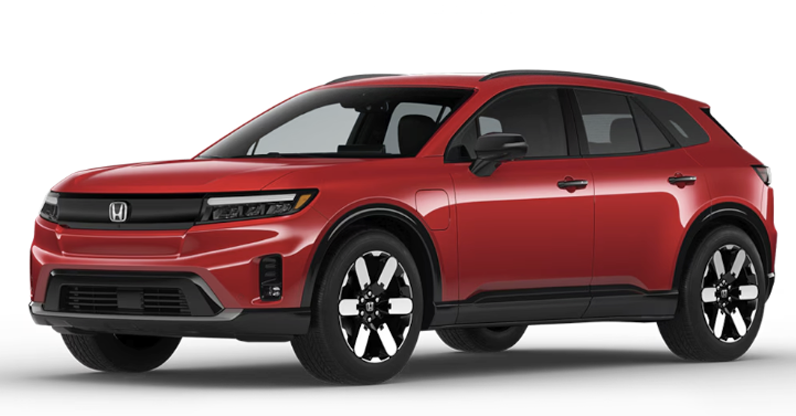
One of the weirder quirks of the IRA was that there was an exception in the tax credits for leased EVs, meaning that a large percentage of EVs that were “sold” were actually leased by people who got incredible deals.
As Cox Automotive points out, there were a lot of leases. Since 2023, around 1.1 million EVs have been leased in just the United States.
What happens next?
Lease returns and trade-ins are boosting the supply of used EVs, making them more affordable than ever. In August, the price difference between a used EV and a used internal combustion engine (ICE) vehicle fell to just $897 – the lowest on record – as used EV sales climbed to nearly 41,000 units, lifting market share to 2.4%.
For mainstream buyers, EV affordability in the used-vehicle space is finally within reach. At the same time, hybrids and plug-in hybrids continue to appeal to shoppers who value fuel economy and the convenience of familiar refueling. But the long-term trajectory favors full electrification: Falling cell costs, the rise of new battery technology and chemistry, and a domestic battery supply chain supported by the 45X credit (the Advanced Manufacturing Production Credit created under the Inflation Reduction Act of 2022) all point in that direction.
Affordability is coming, at least in the used space.
What I’m Listening To While Writing TMD
It’s “Rapture” by Blondie because, at least, that’s the only Rapture that I know happened yesterday.
The Big Question
Was the Tax Credit good or bad? why?
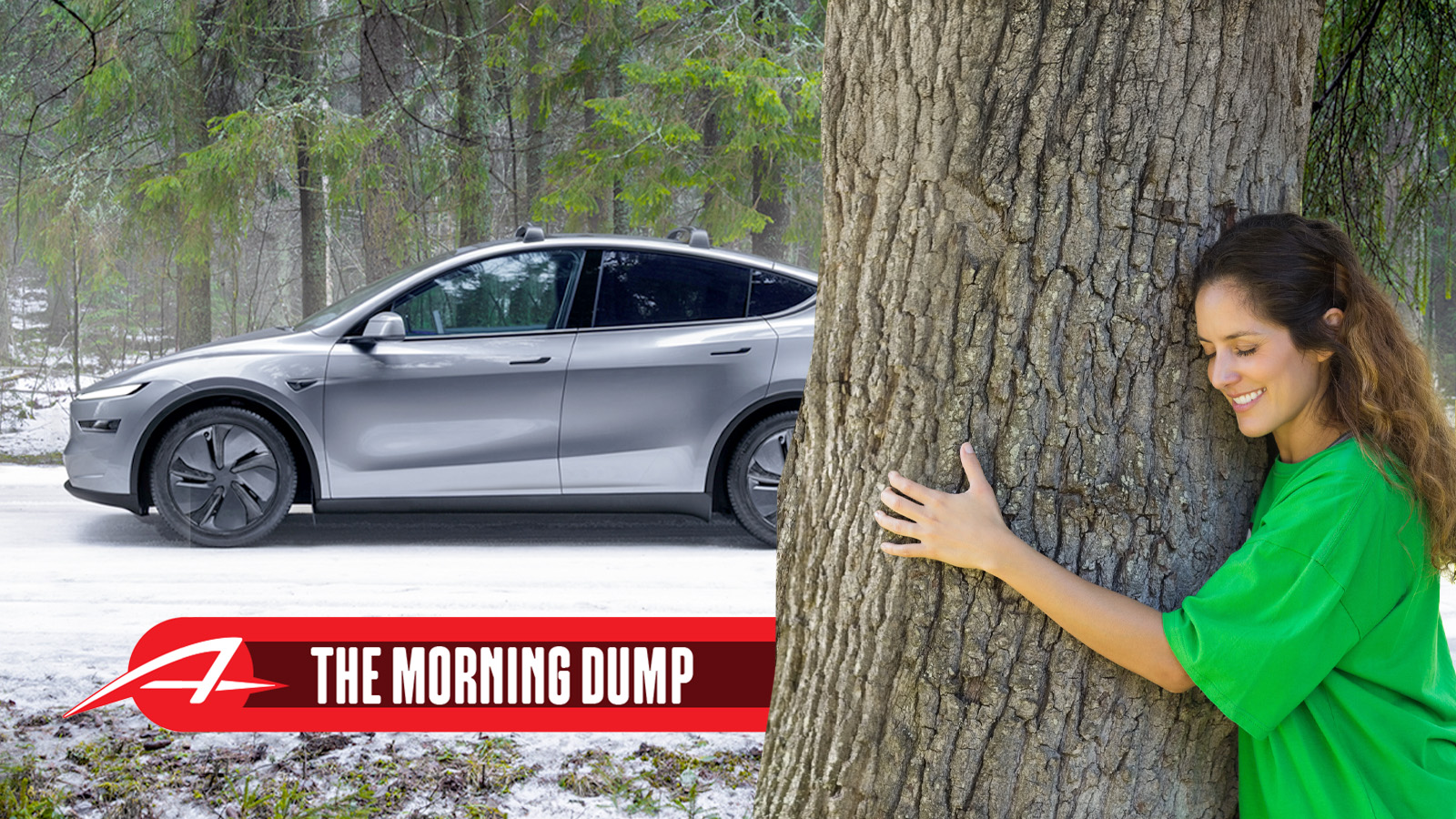
Top graphic images: Tesla; DepositPhotos.com




> Not to get political, but it’s my belief that this is true. I also think it’s hard to argue against any of it on a basic level.
The voting public: hold my beer
I just love the SEMA argument because it’s the exact same argument my mom used when I was a kid when I wanted a CD player. “But you don’t have any CDs!” Because I don’t have a CD player. Why would I have the thing that you need the infrastructure to use if I don’t have the infrastructure to use it?
When the ICE started out it’s not like there was already an Amoco every two blocks. The industry won’t take off until there’s a critical mass of infrastructure, and that needs to happen first. Almost every status quo/conservative talking point boils down to “But it’s haaaaaaaaarrrrd!” Awful lot of survival of the fittest types not realizing that eventually they’re not going to be able to keep their fitness and thus no longer survive because they spent so much effort trying to keep their position instead of evolving. Not that they understand the actual Darwin definition of the phrase “survival of the fittest.”
Anyway. There needs to be some sort of transition between early-adopters and mass acceptance, and that’s going to be less about cost, I think, and more about convenience. I’ve mentioned before that Tesla’s Supercharger network is probably their most ingenious idea simply by decoupling the need to have a charging infrastructure in place in the home and putting it at common destinations. If that network gets built out enough to have capacity for mass adoption of EVs, that’s going to be the adoption point. But as long as that friction point of having to hunt down the one charging station within 50 miles and hoping it’s not being used is still there, they can incentivize the cars all they want and it won’t make much difference. Incentivize the infrastructure.
It’s not like the Army Corps of Engineers wasn’t hugely involved in the creation of the US rail network or anything. Or the Pacific Railway Act didn’t happen. Or that the railroads weren’t simply given land to build on. Or that Eisenhower didn’t effectively gin up the national highway system out of thin air and government money and thus give birth to modern US car culture (and the reliance on it.)
But sure, let’s not encourage EVs because the infrastructure isn’t there.
Just a ridiculous argument.
See, here’s the problem: depending on precisely what sort of EV you’re talking about, and what sort of encouragement you’re talking about, the infrastructure simply CAN’T be there. At least, not until we discover the new miracle fuel source that modern-day alchemists have been seeking for years, whatever that may be – not only for powering the vehicles themselves, but supplying the vehicles with that power in the first place.
Here’s an example of how the EV math may simply not be mathin’:
https://youtu.be/rnoRavhrwPQ?si=Xe5ncbwQ__EEtiWH
And yet, your government is happy to have hundreds of datacentres sucking up Gigawatts of electricity so they can have YapGTP?
“the EV math my simply not be mathin'”.
This is wrong.
It is not because you can find an application where an EV does not work, that EV’s don’t work for anybody.
EV works for a really big part of society. Including local distribution of freight.
Which is why I included the words “depending on precisely what sort of EV you’re talking about.”
Hearing qualified statements and turning them into blanket statements has literally gotten people shot to death in very recent days.
Words mean things. I used the words that meant the things I wanted to say. Please respond to them as such.
This lone short out has 3 million views on a channel that stopped posting at least a year ago that consists of almost nothing but GOP legislators regurgitating talking points and looking like gotchas, where most posts have less than 1k views. It’s almost like it’s a cherry-picked data point.
I think this, coupled with the “it’s too hard” argument, is what kills me the most. Sure, it’s very difficult to do big projects like this, and sometimes in some cases it will be impossible. But we have to remember that we (humanity) sent people to the moon with less powerful computers than we currently use to type these messages. If one individual can’t figure it out, then someone (or more likely, a group of someones) will. All of these arguments stink of protectionist propoganda to me, because people don’t want to see their work become obsolete by someone else’s hands.
“Not to get political”
I’m really getting tired of discussions about facts getting branded as political. The only reason it’s “political” is because someone can’t argue on the merits and makes it political.
Who expected Tylenol to be on this weeks political bingo card?
Women love Tylenol. I dare any man to tell them they can’t have acetimimitine, ambitampipen, actimipihen, Tylenol.
You mean paracetemol? JK.
Par for the course. They’re just lobbing smokescreens at this point. Notice the more we talk about nonsense like this Tylenol idiocy all the talk about Epstein files, inflation, tariffs and the economy kind of fade away. But yea lets talk about Tylenol!
I have concluded, with only observances and not “facts,” that humans are not actually fact-based creatures. Actually, there are plenty of facts to back it up as well.
I am so sick of it. And I have no way to escape it. My 89-year-old dementia-addled mother insists, every time I visit, that what she hears on her Amazon Echo (which I made a cheat sheet for her to refer to) is not the same stuff she can hear from the same station on a staticky AM transistor radio. At about 100 db. And of course, it’s a radio station that propagates right-wing conspiracy theories. (Are there left-wing conspiracy theories? I should probably ask elsewhere. I don’t want to contribute to the politization of this site that I enjoy so much. So, sorry.)
There’s about a 10-second latency between what the Echo provides and what can be received over the air. So, I try to explain how all that works, but the delay convinces her it’s not the same programming and she carries the transistor radio around and goes through batteries. Forget about rechargeable batteries. I feel bad for her, but it also breaks my brain.
I thought for a second you were going to suggest dementia as a means of escaping people being stupid. It has a certain appeal…
It does. My mom is at the stage where she knows she’s kind of losing it, but her body is healthy as a horse. It’s pretty sad. My brother and I just got her off the ranch and into assisted living after she wrecked her car. It wasn’t easy, but now she loves it.
Most of what I think of as the left-wing conspiracy theories of the 70s and 80s have become right-wing conspiracy theories.
Somehow, the international financial system and the old money families are now fomenting communism.
Also, i remember when the Birchers were foaming at the mouth about the impending commie takeover, “show me your papers” was going to be one of the things to resist. Also, something about a secretive and anonymous national police force.
Just a side note. Whether ICE or EV, both contribute alarming levels of tire pollution. The problem is also getting worse with heavier vehicles and higher launch torque. The problem isn’t with rubber particles per say, but with the additives that are used to preserve the rubber and keep it supple. These are very toxic and especially harmful to marine wildlife exposed to run off. They are also very bad for us when airborne and that kind of exposure is elevated in certain places like near busy freeways and in urban areas. If you live in a dense city and regularly notice black dust on your window sills – bingo.
I’m not sure what incentive or even research is going into replacing these additives, but I would hope it would be taken as seriously as getting lead out of gas was.
Oh, and don’t be an a-hole and do burnouts and drift.
I have some natural rubber tires that were made in the 1940s and they still are supple and useable at farm speeds. They have carbon black in them which I believe new tires also have — that’s why tires are black.
My understanding was that the chemistry of tires doesn’t make longevity a priority except maybe in ag tires.
It would make a good Autopian article, or at least one I would read.
I’m pretty sure you are right, carbon black is still involved and I’m pretty sure it’s not all that noxious. The additives in question are also associated with inhibiting UV degradation. I’m not sure they even understood this in the 40’s, but maybe they did and and had a solution, just not one cheep/profitable enough for the industry.
I’d be delighted with any Autopian quality deep dive on a subject like this!
Rubber made from latex sap from the rubber tree — real rubber in other words — is pretty neat stuff. The synthetic stuff made from petroleum only has what the designers think is important. Some balance of performance, wear, and profitability being the most important. Hardly anyone besides people with old cars they don’t drive much, and farmers care about long tires last.
Tires that are more environmentally benign won’t sell without regulation because the cost and the benefits accrue to two separate groups of people.
What economic system that is a feature of is left as an exercise for the reader.
My family moved out to a 20-acre farm when I was 15 and my dad bought an IH crawler tractor with metal tracks that my younger brother and I were instructed how to operate. I have since seen some with rubber tracks and I can’t imagine how much (maybe bad) stuff they shred into the environment.
Easier on the roads and maybe land. Tougher on the ecosphere.
There are so many balancing acts in almost any industry. And I am just getting too old to contain them in my head. Not that I could. There are so many.
But I have a son, his wife, and possibly grandchildren to try to preserve a safe place/planet for them to live.
I thought I was being virtuous with my very efficient 2001 Jetta TDI. I probably wasn’t.
Probably the best I’m doing is that I hang on to cars for a long time. The Jetta, 16 years. I’m eight years into a Honda Accord. I don’t ask companies to manufacture a new car for me every two, three or four years.
Yes also brake dust which is just terrible stuff that has somehow escaped widespread notice.
https://e360.yale.edu/digest/brake-pads-lung-damage-study
Great example. In this case the evil is asbestos, which has being phased out. The addition of copper was an imperfect alternative, but they have kept at the science. It shows that industry can find alternatives if pushed.
I take all your points and especially love your last sentence.
I don’t currently drive a hybrid, but drive very conservatively for safety and fuel consumption reasons. So, I’m doing my best on tires.
I have an eight-year-old Honda Accord V6 that gets 40 mpg on the freeway. It’s a V6 because I used to live in Texas. And passing maneuvers on 75 mph country roads there sometimes needed that sort of power. But I dislike how thirsty it is in urban driving.
And living in Washington, now, I wrestle with should I sell it used to someone else and have another car built for me? Maybe I could buy a used hybrid, but that’s not guaranteed. A pure BEV is not practical at the moment because I currently have to make 1,500+ mile round trips to visit my elderly mom in northern California monthly. It was every other week for a couple of months. And personally, I’d probably take a financial bath choosing to sell a <70 K mile Honda to buy one.
I have no idea what I’d buy to replace it.
The problem is also getting worse with heavier vehicles and higher launch torque.
Toecutter for supreme overlord?
“It’s nice to hand out $7,500”
As a journalist, you have to stop doing this. It was never a hand out. It was a reduction in your tax bill, if you qualified. They didn’t hand out money, they took away less money. Misstating it this way fuels a lot of ignorance.
And as someone else pointed out, this entire topic ignores the massive subsidies the gov’t has given the oil industry for decades, and the hidden shared costs we all pay to ignore the environmental impacts and keep fossil fuel costs artificially low.
There’s a difference between subsidizing an industry and subsidizing an individual consumer’s choice.
A reduction in tax has the same net effect – the taxpayers paying more, or a deficit in the budget.
The budget has run a deficit every year since 2001. It hasn’t been tied to reality in a long time.
The separation between subsidizing an industry vs. an individual is all but evaporated by the flexible MSRP manipulation that has been tied to the credit, particularly through the lease clause. Automakers benefit in both cases. The oil industry benefits more directly in the ICE case, to a lesser extent in the BEV case (there are still plenty of fossil fuel fed power plants).
The gov’t is always picking winners and losers (as much as they use to pretend they weren’t). At least they could pick less destructive winners.
The links in the text in the start of TMD are a very dark red (I think) for some reason, and not the bright red in the later part of the article. Not a big deal, just letting you know.
I’m not sure if this would be easy or even possible, but could we get a deep dive article into what subsidies exist for gasoline all the way from surveying for a new field to the point of sale to the consumer? (It would also be interesting to know how much raw materials such as steel, aluminum, plastic involved in making a car are subsidized / tariffed / taxed) I keep hearing that gas is also heavily subsidized by the time you add up all the links in the chain from well extraction to pumping it into your car but can’t find any good trustworthy unbiased information.
The original Model S was priced precisely to appeal to taxpayers at/above the income threshold for the original $7,500 credit. Federal subsidies shaped the EV market in the US as we know it, and whether or not anyone thinks they’re right or wrong, it’s indisputable that a differently executed subsidy could kickstart a more affordable class of smaller EV.
Can we check to see if Greenhouse Emissions have dropped dramatically since the introduction of this? I mean, that was the goal. I’m guessing they haven’t. Probably would have to determine an average emission per vehicle per year or something.
This is not specifically due to the tax credit, and it is local to the Bay Area, and not really drastic, but it is measurable.
https://news.berkeley.edu/2024/04/04/evs-are-lowering-bay-area-s-carbon-footprint/
Another good song choice. And I don’t particularly care for Disco or Rap, which this song essentially is.
The more frequently-aired Blondie songs (Tide is High, One Way or Another, Heart of Glass, Call Me, etc.) need to step back and let this one shine for a change.
I know everyone streams music these days, but SoCal Sound (88.5 FM in LA, aka KCSN) has a pretty good mix of Blondie in their broadcast. I even heard Atomic once or twice. 🙂 Their site streams of course, and they’ve got an app, etc…
https://www.thesocalsound.org/
PS: for whatever reason, I still only use FM radio, depsite using the internet to get all my video (95% of which comes from Youtube). I think maybe it’s because we’ve got a nice bunch of radio stations in SoCal all together on the left side of the dial, and because I like the look and feel of old stereo receivers and such (I’ve got a bunch of Tivoli radios scattered about the house too).
If you’re ever up in Ventura or Santa Barbara County, KTYD is the one I listen to. It’s on the internet as well:
https://mp24.pointbroadcasting.com/ktyd-player/
In The Valley and over the hill in the rest of LA County, I prefer KROQ 2, their second digital station. Wife’s car gets it (mine doesn’t). Good mix of popular and deep cuts that I don’t hear often enough.
I used to drive up there all the time (plus ‘dog beach’ is in Ventura) but not so much lately. I’ll keep that in mind though. Thanks! 🙂
Or this
https://youtu.be/PjvpLiS2gKA
I like it!
If the government truly wanted to effect change, rather than line their and their friends pockets, the incentive would have (and IMO should have) looked very, very different. The first 10+ years of it we were all subsidizing rich people’s 3rd+ vehicles. That’s 1) not very fair, and 2) not a very big impact. They should have gone much more socialist with it instead of making trying to make EVs glamorous. It’s not the governments job to be a marketing arm of capitalist ventures. It’s to positively impact as many citizens as it can. I’m firmly middle class in a firmly middle class county of an extremely liberal city. There are a decent amount of EVs, but none of my middle class, liberal, friends, have even looked at them Too expensive for the utility they provide. One can suffer utility at the right price, but, $70K Teslas and $50K 100 mile range EV hatchbacks ain’t going to cut it for normal everyday people. $20K 100 mile EV hatchbacks or $20K 60 MPG hybrids? That would have moved the needle and HELPED more people than it did. Ironically my middle class conservative parents have had a 2010 Prius since Summer 2009 because it was affordable and provided good utility. Funny how that works…
The target should have been to push the engineering to make affordable cars that can proliferate much more than EVs have. I think some of the EV bashing comes from the fact that the first EVs were entirely impractical the every day person. Do EVs pollute more? No, but what is bad for the environment is gross overconsumption in the form of buying EVs for your 3rd, 4th, 5th, car. So the government doesn’t get to preach about the environment when they’ve been promoting over consumption.
While policy and $ do matter, I think that this will let each OEM decide how it will design, build, and market the various flavors of EVs. Some will decide not to at all. Agree with the statement about about the market division caused by pushing the pro-environmental advantages first.
Also, Germany yanked its federal incentive (~$6K IRRC) at the end of 2023. Sales in 2024 tanked compared to 2023. No surprise. But H1 2025 EV sales in Germany are way way up compared to H1 2024. Why? A variety of OEMs launched a variety of affordable and desirable EVs in various mass market segments. That is… checks notes… on the supply side.
TL/DR: It’s a supply (i.e. awesome affordable EVs have to exist) problem, not demand.
There’s a caveat to your Germany example. The EU has a 100% EV mandate by 2035 with progressively increasing EV market share requirements (and penalties if missed) on the way there. Germany got rid of the consumer side carrot, but still has a strong business side stick in place (albeit, it looks like they’re gonna repeal the EV mandate soon)
The tax credit was needed at the time to reduce cost to make Bev competitive trying to get to cost parity. I’m not sure it was completely done but it definitely did a good job. Other perks helped sell Bev too like hov access. Ultimately when you get wider adoption the economics change and you start getting things like higher road use tax for Bev because you aren’t paying a gas tax. In some states with high insensitives several bevs were cheaper then similar ice models. You can’t have subsidies forever industries get addicted then you have a bigger problem. I think they might have been pulled a little too soon but maybe it’s a wakeup call to automakers to make something more affordable.
The initial cost is just one aspect many especially older people worry about the battery they hear things that aren’t always so true. They also aren’t exactly sure about their electricity bill or charging and hear dcfc is expensive. The solar scammers haven’t helped the situation. People hear about them and their antics and put them with Bev. If they had a roadmap to this is exactly how much it will cost and this is what you will save.
Back in the 50s, Northcote Parkinson coined the term “bike shedding” as a metaphor to describe how groups spend a disproportionate amount of time on trivial issues simply because they are accessible. He used the example of a committee responsible for permitting a nuclear power plant, and how they spend very little time on the reactor designs because they are complicated and hard to understand, while instead spending hours and hours debating the color of the bike shed to be built next to it, because engineering plans are complicated and only a handful of experts even understand them, while *everyone* understands and feels qualified to comment on the color of the bike shed.
This is all to say, it’s mind-boggling but perhaps predictable how much the important discussion about greenhouse gas emissions, regulatory credits, carbon trading markets etc., is being ignored while we all instead engage in somewhat meaningless bike shedding over a simple and relatively tiny direct consumer tax credit that’s fairly irrelevant in the grand scheme of things, in both cost and impact. It’s kind of amazing and depressing at the same time.
I think the EV credits are a bad use of money. It would go way further subsidizing things like e-bikes and safe infrastructure for them. Instead, we’re just continuing to subsidize the most environmentally destructive and dangerous form of ground transportation.
Please explain how it would go “way further”.
Sure. E-bikes cost a lot less than cars. They do a lot more to reduce environmental impact than buying a new car. The infrastructure for bikes is a lot cheaper to maintain versus car infrastructure. Cars result in a lot more property damage and injury and death. Rebates for EVs largely go to people who are wealthy.
How is that further? The range of cars are like 3 times if not more, no? And how are you supposed to text?
No, I mean with numbers.
Please explain how $7500 per EV buyer in 2024 would have gone “way further” by subsidizing e-bikes. How many cars would this have gotten off the road and where? Considering this tax credit required zero infrastructure spending, the infrastructure component of the tax credit was zero.
If every one of the 1.3 million EVs sold in the US got the tax credit (which is probably not true, but let’s assume) and we took that money instead and installed protected bike lanes (at $300,000 per mile https://www.norteyouthcycling.org/news/bike-lanes-cost-less-than-you-think )
1,300,000 * $7500/$300000=32,500 miles of protected bike lanes.
Which is a lot! But would that really have gone “way further” than EVs that use existing infrastructure?
Wouldn’t it have made more sense for the government to work directly with automakers to either reduce the MSRP by $7500 or give the incentive to buyers at time of delivery as a factory rebate?
It feels like automakers made their cars $7500 higher than necessary just to be cute. The existing rebate was so murky, you might get screwed out it of and not know until April.
So needlessly complicated and vulnerable to abuse. That’s American legislation for you.
Basically what you describe is what is happening I think. The $7500 tax credit is currently being applied at the time of purchase at the dealer.
https://www.greencars.com/news/dealers-can-now-apply-the-federal-tax-incentive-at-purchase
Always thought the 7600 was hamfisted. What, you say? It was 7500 only? Well why not 8200.
So the inherent perceived bias of an actual defined number is just clumsy. Then, it did create various perverse incentives that made it look like the government favoring liberals and tree huggers – political mistake- and it likely made some manufacturers less efficient or possibly less honest with themselves.
For adoption, the biggest service you could do to a brand is to help them be competitive total bottom line wise. This means including investment and capital expenditure so they get to decide if the losses incurred selling their wares (like Rivian) are sustainable long term financially. If neither pans out, then the product is not ready.
Tesla begs to differ here as well as an entire EV Chinese industry but their current struggles show that being addicted to subsidies is risky long term.
Whilst I am far from a tree-hugger, I will admit that I took advantage of the federal tax credit twice when it was available on the Mach E. It was nice to get money from the government for once! I thought the IRA was mostly well-intentioned, but naturally it was corrupted by car companies artificially raising the prices of their vehicles (as evidenced by the wild price swings of Tesla and Ford especially). On the other hand, I also don’t think the act gave those same car companies enough time to be able to bring their operations onshore before the battery-sourcing provision killed the credit for a large amount of the BEVs available for sale.
Between onerous tariffs and the termination of the IRA in six days, I’d say the EV market – at least in the short term – is well and truly fucked starting next Wednesday.
I’d say I fall into the same category as you, “far from a tree-hugger”, but I do recycle. I might be older than you (60) my assumption as a yut was that EVs would have dominated long ago. I see one in my future for a couple reasons; a new car is likely as not before I retire, and if new why not an EV? (tax credit or not) Further my wife barely drives, which is really bad for an ICE car, especially the one she owns (Turbo Baja), I have it on a battery tender because she doesn’t even drive enough to recharge from starting it. So an EV and an economical ICE is the perfect garage (the GTI can break 40 MPG on long trips). All that said;
While a small government conservative, the government can and when appropriate should, drive innovation. Space race? WW2? I also believe in Kant’s philosophies. If people don’t want pollution, they should do things that don’t create pollution. None of live under the illusion however, that corporations or their heads, have any moral imperatives whatsoever. So a nudge (carrot or stick) is appropriate. There are countless examples of the auto industry being so close to getting the plot, only to be bailed out by market forces or gas prices falling.
As an engineer, I also look for efficiency in all things, again, the auto industry had the choice to listen to Edwards Deming, they chose not to, Japan chose to, we know how that went. They had the choice do make cars smaller and more fuel efficient, again and again they chose not to. And yes, car buyers are to blame as well.
But given the numerous choices and opportunities, it seems that the US manufacturers have always chosen the wrong (philosophically speaking) or slowest path..
No as far as this administration’s changes, it’s not just a direct effect to EVs, but a broader technological leap backward. It basically ensure all new development takes place anywhere but here. regardless of how much tree hugging a technology appears to be, and regardless of how much you like or dislike said hugging, technological development should be here, in the US.
“A what??”
Obviously, there was another one with him.
I think the IRA tax credits were an unusually brilliant bit of political manipulation by the Biden admin, which of course they can’t take credit for because it’s exactly the sort of underhanded maneuvering people (claim to) hate (unless it’s in favor of an issue they care about).
Not only did they manage to get it passed, despite not actually having a majority in Congress (no, Manchin doesn’t count), they used the lease loophole to basically make it available to everyone (which is the rather underhanded part, IMHO). And, it actually drove manufacturer investment in the US, despite the fact that the loophole blunted the teeth of that requirement.
It took some shady politics, but it worked. If history is any indication, the current policy will more likely be described as “it took some shady politics, and it didn’t accomplish anything positive”, but I guess we’ll have to let the historians decide that (assuming historians haven’t been banned from this country by then).
I fail to see why what is great for cities should be forced upon much of the population that would negatively effect them. Let the cities enact pollution control as that is where the worst pollution is. Let the people in the country and small towns be free of the financing and taxes while getting a more expensive and worse for them vehicle.
Nothing was forced. Anyone could happily skip the credit and keep buying ICE.
Like a small town person who wonders why they have to invest in helping to reduce pollution that might appear to be localized in a city, a city dweller might wonder why they would subsidize a farmer that sells all their soy beans overseas. We’re all in it together, that’s why.
Look at a photographic map of the earth from space. See any political boundaries such as state lines or city limits? Me neither.
Now apply that knowledge to air pollution.
Yes cities should be sued for creating pollution that encroach on clean areas
Re: the topshot: I knew Tesla was advertising FSD, but I didn’t know those cars could play Hide and Seek!
Jason Camissa had an incredible point on the Government mandates and Tax credits on a Carmudgeon Show episode months back. There is a large amount of people who “will never drive an EV because the Government can’t tell them what to do” which is blatantly not true. The Government has been dictating what people can drive FOR A CENTURY. Government regulations (FMVSS, NHTSA, etc) Are constantly evolving, and that change in regulations decides what manufacturers can build. You don’t get the maliase era without Smog equipment, the boom of Compacts in the 70’s and 80’s without the gas crises of the era, etc.
The people that drive F-250’s with a diesel daily “because I do what I want” only can do it because of persistent government loopholes, and intentional legislation choices that make those vehicles cheaper to purchase and run than they should be (CAFE rules by GVWR, size). So to be in an uproar that the government is subsidizing EVs to encourage adoption is truly absurd and willfully ignorant of the entire history of the automobile.
Yup. Again, perception vs reality.
The same people that buy the giant diesel trucks daily while never towing are the ones that don’t realize they would still be driving Model T trucks (but faster and less safe) had the government not pushed for regulation. I argued with one of these “free market decides” types at my workplace for a long time before I gave up. They truly believe that these 100% for profit, short term gain corporations would have just built super safe, efficient, reliable cars on day 1 if not for all that pesky govt’ meddling and forcing them to be slightly less awful. I pointed out how these same companies actively murdered their own employees during unionizing because it was getting in the way of profits, but they still would not concede an inch.
Just received notice in the mail from Central Maine Power that they are applying for a 20% price increase for the DISTRIBUTION of electricity through their grid, over the next 5 years with 12% to hit next year. The electricity is extra. As of now, just over 50% of our current bills are for the distribution. Oh the humanity. Part of the ev calculation I suppose.
Have you by any chance had an AI datacenter built in your area recently? That’s another big driver of electricity cost increases.
Not big driver…always the biggest drivers. Datacenters have absolutely massive energy requirements.
When natural gas prices spike, they can automatically pass along fuel price increases for generating electricity without even asking regulators for permission. Wind and solar require new lines that get poor utilization rates, so even if the total cost is lower it shows up in a different part on the bill.
Data centers. Look them up. EVs are positively trivial compared to the data centers.
I have mixed opinions on the EV tax credit. I like EV incentives, but I thought the tax credit had serious flaws that made it counterproductive.
On one hand, I will concede tax credits were a clever way to indirectly subsize EVs. The credit was never about reducing prices for consumers. Markets set prices – consumers were willing to buy EVs for a certain price irrespective of MSRP or credits. With the tax credit, manufacturers knew they could price vehicles $7,500 above a fair price and still sell these vehicles. The credit was a way to hand $7,500 checks to manufacturers in a way that was politically palatable. Again, clever.
On the other hand, the incentives had serious flaws.
I strongly disliked the income limitations. The limits meant wealthy buyers had to pay $7,500 more than the car was reasonably worth. I never considered a new EV for this reason, and I knew others in a similar position. Had the government wanted income limits, they should have made them high enough that $7,500 would have been trivial to those that didn’t qualify.
My other objection is that incentives were premature. Current battery technology and charging infrastructure make EVs far less convenient than ICE vehicles. I am concerned tax credits got people to buy relatively primitive EVs and use them in places without necessary infrastructure. Plus, the incentives made some manufactures release rushed, mediocre products to the market (ID.4, Nissan Leaf 2.0, Mazda Mx-30, etc.). I worry this cemented the reputation of EVs as inferior products. Without the incentives, EVs would have remained niche products for the wealthy and/or environmentalists/tech nerds. There are enough wealthy environmentalists and tech nerds that EVs could have developed without incentives. It would have been better to wait until EVs were ready for the masses before offering incentives to said masses.
Overall, I liked that the government incentivized EVs, but I think it was done in a way that might delay adoption of EVs in the US. For this reason I think the tax credits were a bad thing. However, now that consumers have come to expect tax credits, I think eliminating them will probably reduce EV adoption even further. So now we kind of have the worst of both worlds.
Well done, government.
I’m not sure there’s a huge number of married couples making >$300k / year combined who opted not to buy an EV because of $7500, though I’ll take your word for it that they exist. For a single individual I can see $7500/$150k being more impactful though. And IIRC you have the flexibility to determine income eligibility based on your previous or purchase year’s AGI.
But anyone can still get the majority of the credit (for another week): with just about any vehicle you can lease it and then buy out the lease. A bit of extra work (really not much though, having just done it), and probably eats into your tax credit by $1k after factoring in extra taxes and fees, but it still gets you virtually the same outcome on any EV without the manufacturing location or income restrictions. Financing might end up being more of a PITA though.
My household makes above that with our income levels.
This would not be the deciding factor but I promise you it would be a factor.
That is one data point.
I agree income limits are less of a problem with married couples, although I knew a few that specifically cited the limits as a reason for not purchasing an EV. $300k is a lot of money, but if you have student loans, current/future education costs for kids, and a house payment, $7,500 is probably not an amount of money you should give away for nothing in return.
The ability to buy out the lease is a valid point, though.
As far as tax credits go, I thought the original form of the credit, which expired once an automaker hit 200k EV sales made sense: help kickstart company investments and get them going to volume manufacturing, then stop once they hit volume sales.
I got the full $7500 credit 3 times, so I absolutely took full advantage of it. Not getting it probably would have affected 2 of the 3 purchasing decisions, though in those cases, it probably would have meant stepping down in price to a hybrid. For my Mach-E, I would have bought that regardless of the tax credit as I happen to like the car very much.
I think a better way would have been heavily invest in our National Laboratories and let them pioneer the chemistries and manufacturing, then share the research with OEMs and let them run with it. Military applications could also have helped.
It’s worth mentioning that most of the microchip technology used globally today had its roots in defense research: copper interconnects, which are used by nearly every chip on the planet today, were born out of the requirement to miniaturize complex ballistics computers and radar amplifiers for the Patriot Missile System to the point that the compute system could fit on a truck and be powered from a generator.
I mean, we did this. Then we decided it wasn’t profitable enough and sold it to China. I mean, uh… hold on, let me run this through the Correct Political Narrative AI:
“Evil socalists gave hard-earned taxpayer dollars to antisemetic ivory tower MIT woke professors to develop greenwashed polluting lithium-ion batteries. They stole taxpayer money to form a123 systems with diversity hires, and couldn’t force sensible pure Chrisian Americans to buy overpriced, dangerous electric car batteries. The infallible invisible hand of the free market (like the invisible hand of God!) forced them to sell the company, which was bought by the Communist Chinese, who used slave labor to make the batteries.”
Needs more Randomly capitalized Words.