

The big debate of the moment in the EV space is no longer over how much demand there will be, because everyone agrees there will be less than initially hoped. What people want to debate is whether or not governments should require more EVs and how that requirement can be aided by incentives. In the United States, this means discussing the removal of the 2009 Greenhouse Gas Endangerment Finding (the GHG Finding, for short).
As someone who loves cars and cares about the environment, there’s always an inner conflict over how to talk about this, which often comes out in how I cover them in The Morning Dump news roundup. My general view is that the EV Tax Credit is good, that governments need to both incentivize change by simultaneously forcing people to pay for excess emissions, and giving them some sort of credit for selling more efficient cars. At the same time, it’s clear that the hype cycle created a belief that EVs were coming faster than consumer demand or infrastructure could handle, and that led regulators to set an extremely high bar that, I’ve long said, probably needs to be brought down a bit.


But what if the EV Tax Credit, as modified in the Inflation Reduction Act, was bad for the environmental movement?
That’s the thesis this morning, but it comes with the caveat that the move to undo the GHG Finding is still probably wrong. Automakers want it gone, as do aftermarket companies, but even if it’s good business, I wonder about the politics of it all.
Also, get ready for the market to dump a bunch of cheap off-lease EVs in the coming years.
‘If I Want To Shoot Myself In The Face, It’s My Right To Shoot Myself In The Face’

Perception matters more than intent. There’s this great bit on the web where a guy gets confronted by his girlfriend for saying she “looks big.” His defense is that they’re at the gym, she said she wanted to get swole, and so he was intending to compliment her on adding muscle mass.
I’ll say it again: Perception matters more than intent. In my view, the goal of the Inflation Reduction Act was the right one. The intent was the right one. Cars aren’t the only source of greenhouse gases (GHG), but they are a big one, and the slow work of higher-density urban development and better mass transit has, at some level, to be matched in the short term by getting people who can own an electric car into an electric car.
The carrot-and-stick approach from the left (and I’m mixing state and federal efforts here, just to make it easy to understand), was to penalize automakers for failing to meet emissions goals while also helping them transition to EV production through credits for building facilities and stoking demand through tax credits.
There was never a real EV mandate, but given how high the goals were, it’s fair to argue that it wasn’t far off from one, especially with the EPA waiver granted to California that allowed it to dictate something closer to one. In the latter days of the Biden Administration, as EV sales seemed to level off, there was a lot of talk about helping automakers out by slow-rolling the stick.
What we got, instead, was a Republican-controlled Washington that is wholesale reversing most of these policies (but keeping, notably, subsidies for plant-building). This is hard on companies that are trying to follow the whims of administrations with completely different views on all of this.
It’s also, to some degree, against the will of the American populace, which largely believes that climate change is real and that human beings are responsible for it. While there are people who are upset about the loss of the tax credit, it’s not the biggest issue for most. The lack of outrage, in fact, feels like further proof that maybe the politics of this were wrong.
It’s nice to hand out $7,500 to anyone who wants to buy an EV, and it’s good that the requirements were such that companies increasingly needed to source materials outside of China and develop domestic refining capacity. But policy is only as good as the politics behind it, and I’m coming to accept that the politics were bad.
There are a couple of quotes in an article from Automotive News that get a little into why, in a way that succinctly sums up a lot of my disconnected thoughts:
B.J. Birtwell, CEO of Electrify Expo, an EV festival, said he believes the auto industry made another miscalculation in emphasizing the environmental benefits of EVs over performance.
“The more the industry makes EVs about the climate and about sustainability, the more that we alienate half the population from actually adopting EVs or putting it into their consideration set,” he said.
The federal tax credit may have further estranged these buyers, he and others said. The credit, along with EV requirements from some states, fed the idea that the government was forcing consumers to buy EVs.
“The U.S. consumer is really different,” said Raul Arredondo, principal consultant at eMobility Strategy & Marketing and a former manager of international product planning at FCA. “The main thing is that you shall not tell me what to do. If I want to shoot myself in the face, it’s my right to shoot myself in the face. If I want to spend twice as much money [over the life cycle of] a vehicle, it’s my right.”
I think it was easy for many, myself included, to dismiss how good the messaging of an “EV Mandate” was. It wasn’t a real thing, specifically, and I don’t think any sensible Democratic president or Congress was going to do anything but give space to automakers to catch up with those regulations.
As a country, America subsidizes everything, from food to gasoline, so it was unfair in many ways to single out this one.
But the way the tax credit functioned meant that the perception that it was mostly a handout to the rich was maybe more hurtful than helpful. It’s easy to get people upset about smog and local pollutants, and talk about giving people more choice, as this did in some ways, but Republicans (primarily) cast it as limiting choice, and that argument seems to have prevailed.
The pre-existing EV tax credit, which was for any brand, but less complicated and phased out after 250,000 vehicles, was maybe better. The politics were better, and it would still help companies like Slate, which are just starting to come into the market.
Perception matters more than intent. Now, maybe, without the tax credit, people can just view an EV as an extremely sensible choice for many consumers. It’ll still be necessary to find ways to subsidize the cost while demand builds. One thing the IRA and Biden Administration did well was to stoke production in extremely Republican areas, which is why even a Republican-controlled government couldn’t completely kill those factory credits.
The Car Enthusiast’s Case For Keeping The GHG Finding

Here’s one where the politics get even more complex, especially for a car lover. In 2009, the Environmental Protection Agency issued an “endangerment finding” that said: greenhouse gases are bad for public health and threaten the environment.
While the finding had no enforcement provisions or created any requirements, it did allow the government to further regulate emissions under the Clean Air Act, which the Biden Administration did, requiring companies to dramatically cut tailpipe emissions by 50% by 2032, which meant the market should be somewhere between 35% and 56% of new cars would need to be EVs.
Here’s the finding, by the way:
Endangerment Finding: The Administrator finds that the current and projected concentrations of the six key well-mixed greenhouse gases—carbon dioxide (CO2), methane (CH4), nitrous oxide (N2O), hydrofluorocarbons (HFCs), perfluorocarbons (PFCs), and sulfur hexafluoride (SF6)—in the atmosphere threaten the public health and welfare of current and future generations.
Cause or Contribute Finding: The Administrator finds that the combined emissions of these well-mixed greenhouse gases from new motor vehicles and new motor vehicle engines contribute to the greenhouse gas pollution that threatens public health and welfare.
Not to get political, but it’s my belief that this is true. I also think it’s hard to argue against any of it on a basic level.
The current EPA is, somewhat unsurprisingly, trying to remove this finding.
On July 29, 2025, EPA proposed to rescind the 2009 Greenhouse Gas Endangerment Finding. The Endangerment Finding is a prerequisite for regulating emissions from new motor vehicles and new motor vehicle engines. Absent this finding, EPA lacks statutory authority under Section 202 of the Clean Air Act to prescribe standards for GHG emissions. Therefore, EPA also proposed to remove GHG regulations for light-, medium-, and heavy-duty on-highway vehicles.
As a result of these proposed changes, engine and vehicle manufacturers would no longer have any future obligations for the measurement, control, and reporting of GHG emissions for any highway engine and vehicle, including model years manufactured prior to this proposal. However, EPA intends to retain, without modification, regulations necessary for criteria pollutant and air toxic measurement and standards, Corporate Average Fuel Economy testing, and associated fuel economy labeling requirements.
That’s a short statement with a lot of information. The important part you might have missed is the “criteria pollutant” bit. Even this EPA doesn’t want smog to come back (honestly, maybe you could find someone who does, but it at least doesn’t see the politics as helpful), so things like NO2 and O3 are still being regulated.
This is being done, it seems to me, in the hopes of helping out automakers at the same time that the Trump Administration is making life harder with tariffs.
Is this bad? This seems bad. Here’s the International Council on Clean Transportation (ICCT), the same organization whose work brought the evidence of Dieselgate, on the proposed changes:
“There is indisputable evidence that human-caused greenhouse gas emissions from burning fossil fuels in the transportation sector has profound environmental, health, and economic impacts,” says Drew Kodjak, President and CEO of ICCT. “Rescinding these findings and gutting regulations that mitigate emissions will put American lives, infrastructure, and the economy at risk.”
EPA’s own analysis of the 2027-2032 motor vehicle GHG standards it adopted would deliver $62 billion annually in fuel and maintenance savings through 2055. These standards are feasible, achievable, and cost-effective—rolling them back would cost Americans over $2 trillion when accounting for increased fuel costs and climate damages.
“The EPA’s new ‘revealed preference approach’ is fundamentally flawed, lacking peer review and scientific validation,” says Kodjak. “Their analysis erroneously inflates compliance costs while ignoring massive fuel savings and climate benefits.”
The rollback would also devastate American competitiveness, threatening to strand billions in announced electrification investments and ship jobs overseas to markets with stronger climate policies.
This is a big deal! The Malaise Era didn’t happen because automakers stopped building better cars for purely regulatory reasons. There were legit reasons having to do both with the oil supply and the environment that were largely ignored, and American car companies found themselves to be suddenly unprepared for the moment. This opened the door to Japanese automakers that were suddenly more competitive.
There are many ways to make the transition to cleaner energy easier for companies, but some of those require the hard work of passing a law or trying to defend rolling back provisions while admitting there’s still a problem. This feels like the easy way out.
Whether it’s the development of EREVs or a shift to more hybrids, there are plenty of technological things automakers can do to meet the moment and limit greenhouse gases, and pretending like that isn’t important feels wrong to me.
Automakers And SEMA Support Revoking The Finding

The Specialty Equipment Market Association, which is made up of a lot of engine builders, wants to see the GHG Finding reversed. Here’s that group’s argument:
Using the dubious claims codified through the endangerment finding, the EPA under President Biden, along with the state of California, embarked on a brazen attempt to mandate the sale of EVs and ban the sale of ICE vehicles. They did so knowing that such policies would force automakers to cease production and sales of vehicles that the American people have relied upon for nearly a century, despite the high costs, lack of infrastructure, and questionable environmental impact that EVs have.
When the Biden Administration set GHG standards for 2027 to 2032 light- and mediumduty vehicles, which would have required 67% of new vehicles sold to be electric by 2032, it put at risk thousands of specialty automotive aftermarket businesses that develop products solely for ICE vehicles. The Biden Administration’s action served to further embolden California, which sought to enact EV mandates on 40% of the nation’s population through its policies, which were set to be followed lockstep by 11 other states.
There’s that “EV Mandate” again. I should clarify that, often, I agree with SEMA’s advocacy and that they do good work on a lot of issues facing enthusiasts. It’s not surprising that this is the group’s view, as it directly impacts a lot of its members. SEMA also never seems to deny that GHGs are a real issue, and it goes out of its way to say it supports EVs.
Automakers are taking a similar line, arguing that it’s too hard:
The Alliance for Automotive Innovation, which represents General Motors, Toyota Motor Corp., Volkswagen Group, Hyundai Motor Co. and other major automakers, said in a filing with the Environmental Protection Agency that legislation signed by President Donald Trump in June will increase the effective price of EVs and could lead to a near-term decline in EV market share.
They argue rules finalized last year under President Joe Biden are no longer feasible.
“The 2027 and later standards are simply not achievable in light of significant market, charging infrastructure, supply chain, affordability, and other challenges as well as recent policy changes enacted,” the group said.
The “recent policy changes” are, of course, the removal of EV tax credits.
Again, there are many ways to achieve the same result of aiding automakers and consumers in the adoption of electric cars. The politics of pretending like GHG emissions aren’t a real threat may be good, but it feels wrong to me.
What’s Going To Happen To All The Off-Lease EVs?
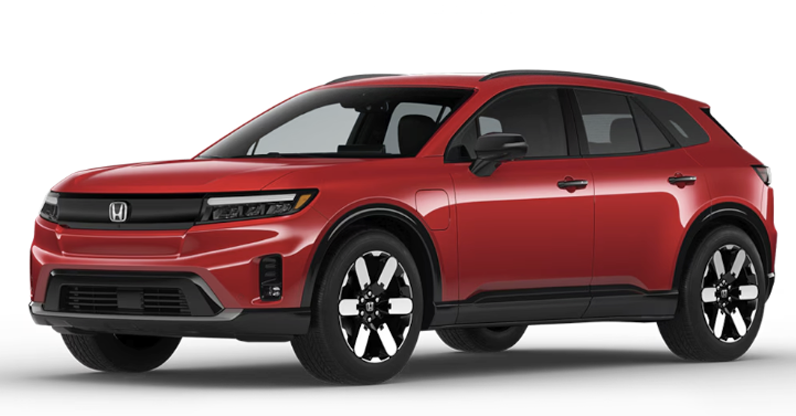
One of the weirder quirks of the IRA was that there was an exception in the tax credits for leased EVs, meaning that a large percentage of EVs that were “sold” were actually leased by people who got incredible deals.
As Cox Automotive points out, there were a lot of leases. Since 2023, around 1.1 million EVs have been leased in just the United States.
What happens next?
Lease returns and trade-ins are boosting the supply of used EVs, making them more affordable than ever. In August, the price difference between a used EV and a used internal combustion engine (ICE) vehicle fell to just $897 – the lowest on record – as used EV sales climbed to nearly 41,000 units, lifting market share to 2.4%.
For mainstream buyers, EV affordability in the used-vehicle space is finally within reach. At the same time, hybrids and plug-in hybrids continue to appeal to shoppers who value fuel economy and the convenience of familiar refueling. But the long-term trajectory favors full electrification: Falling cell costs, the rise of new battery technology and chemistry, and a domestic battery supply chain supported by the 45X credit (the Advanced Manufacturing Production Credit created under the Inflation Reduction Act of 2022) all point in that direction.
Affordability is coming, at least in the used space.
What I’m Listening To While Writing TMD
It’s “Rapture” by Blondie because, at least, that’s the only Rapture that I know happened yesterday.
The Big Question
Was the Tax Credit good or bad? why?
Top graphic images: Tesla; DepositPhotos.com


I love Blondie and that song is great…it’s also significant
“the first rap song to reach number one on the US Billboard charts and the first rap music video to appear on MTV, introducing rap to a much wider audience. ”
“The cultural impact of Rapture cannot be overstated. The song bridged the gap between rock and hip hop, influencing a generation of artists who would go on to reshape the hip hop landscape. It played a pivotal role in breaking racial and genre barriers.”
“The first song to include a rap section, a signifier of dismantled racial tension, a convergence of pop and hip-hop worlds, and words that make little sense outside of their context—all of this seems far too dense a criteria for one single song to hit, but somehow Blondie struck them all with their hit ‘Rapture’. Although Debbie Harry wasn’t a rap expert, and the band didn’t set out to make history, these unexpected record-breakers are often the best.”
https://faroutmagazine.co.uk/strange-rap-blondie-rapture/
“She seems to say, “The Rapture is a myth, no one is really going to come down and destroy you, but your things are going to be taken away from you — by you and the way you live — and you will be left with, what? Each other.” Thus, the song provides a tidy message: don’t relate with your things, relate with each other. The song is more relevant today than ever.”
https://franklycurious.com/wp/2013/07/02/meaning-of-blondies-rapture/#:~:text=She%20seems%20to%20say%2C%20%E2%80%9CThe,more%20relevant%20today%20than%20ever.
The two core things about economics:
Incentives workThere’s no free lunchJust like the EPA’s ‘footprint rule’ had the perverse effect of incentivizing the design & marketing of larger vehicles, the EV Tax Credit has had unintended consequences. Like most things government does, it was probably an inefficient use of taxpayer money. Whether it was an improper use of taxpayer money depends on your perspective about the proper functions of a government.
Lot of sunk cost fallacy in these comments, though: just because many things are subsidized by the government now (most examples are presented saying subsidies are a negative thing) doesn’t mean that MORE subsidy is good. Want to make EVs look more attractive? Reduce gov’t support that flows to ICE vehicles. But making consumers have to face the real cost of our choices with our own dollars isn’t what gets you re-elected: that’s the key incentive for the politicians.
Only tangentially related, but politicians shouldn’t seek re-election. A politician’s motivation ideally should be to change something. The reason why there are election cycles for everything except the judiciary is precisely that, giving a timeframe for them to set up and execute their goals. Otherwise it would just be “I’ll quit when I feel like it,” which is exactly what it has turned into. Many in the legislative and executive branches aren’t working to change something to benefit society, they’re idling around to protect something that benefits them specifically. The fact that we have the EV tax credit despite it having served it’s purpose by 2022 is an example. Some politicians hold stock of Tesla, GM, Ford, and Nissan, or the companies that feed into them like Samsung, Texas Instruments, or various power companies like ConEdison or Cinergy, so it benefits them to sell more EVs and buoy the stock price.
Cars ideally should be give subsidies and taxes based not only on the drivetrain, but by size classification based on external width, height, length, and weight. The smaller outside, lighter weight, and bigger inside the more of a subsidy you’d get to offset the lower margins of the smaller car. The bigger, heavier, and less efficient the more tax you’d get to punish improper use of resources and infrastructure.
The problem is there are too many vanguards on the ramparts protecting the castles they built for themselves, and so anyone who wants to use those stones for anything else gets a rain of arrows before they even reach the gate. Even though the stones said vanguards lean upon and the arrows they fire belong to us and not them.
While “there was never a mandate” might be technically true, we all remember when California said they’d ban the sale of ICE cars by 2032, as well as the Autopian articles about the zero emissions truck laws that were going to effectively ban class A motor homes. The former was empty politicking and a promise I’m convinced they never intended to keep, but that’s about as close to a mandate as you can get.