

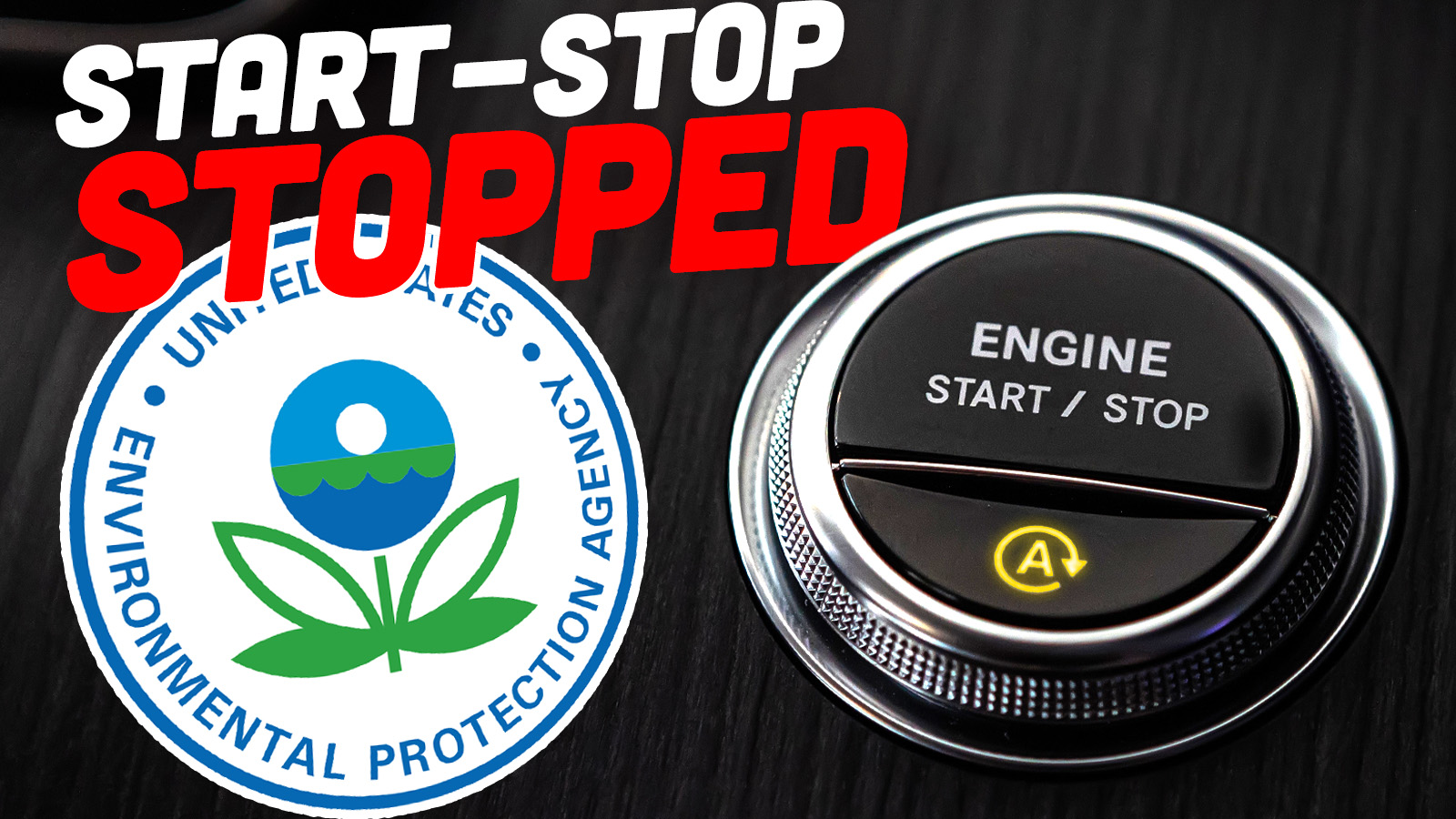
If you’ve driven a car built in the past decade, it’s likely you’ve dealt with auto stop-start technology before. This piece of software shuts off the car’s engine when a vehicle comes to a stop, at places like stop signs and traffic lights, to reduce idling emissions while the car isn’t moving. The second you lift your foot off the brake, the car starts back up, and you’re on your way.
Auto stop-start has gotten a bad rap, mainly due to early iterations of the system, which made stopping and starting a clunky, annoying affair. Modern versions of stop-start are far smoother to the point where, in some cars, you don’t even notice it happening.


That didn’t matter to Environmental Protection Agency (EPA) boss Lee Zeldin, who in May declared his agency would be “fixing” the rules behind stop-start tech. Now, nearly a year later, those changes have finally been ushered into law.
The “Single Largest Deregulatory Action In U.S. History”
The EPA announced today plans to finalize its goal of repealing its 2009 Greenhouse Gas Endangerment findings, which formed the scientific basis that climate change endangers human health and the environment. The move, which the EPA says will save Americans a combined $1.3 trillion in cost savings, eliminates the bedrock policies used to form greenhouse-gas emissions standards for vehicles, which, according to the EPA, have now been eliminated for vehicles built for the model year 2012 and beyond.
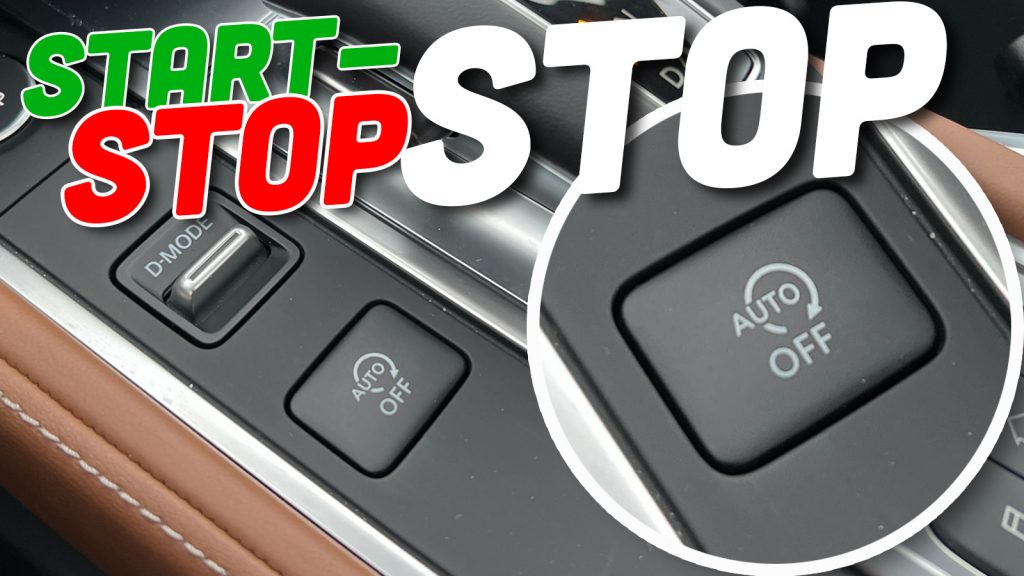
This move also eliminates the need for off-cycle credits, a program in which automakers were rewarded by the EPA for including efficiency-boosting tech that wasn’t measured in standard EPA testing, like solar panel roofs, energy-efficient lighting, and auto stop-start technology. The agency believes this tech wasn’t actually providing any benefit to the consumer and was driving up costs. From the announcement:
The Obama and Biden Administrations also used the Endangerment Finding to support off-cycle credits to forcibly incentivize automakers into adopting unpopular systems, undermining consumer choice. An off-cycle credit is a government-created concept that let auto manufacturers meet federal GHG standards on paper, by adding features like the almost universally hated start-stop feature, resulting in questionable emission reductions. Automakers should not be forced to adopt or rewarded for technologies that are merely a climate participation trophy with no material benefit. The Trump EPA chooses consumer choice over posturing to climate change zealots every time. Today’s announcement ends all off-cycle credits, eliminates EPA incentives for the start-stop button, and restores consumer choice. Americans will be able to buy the car they want, including newer, more affordable cars with the most up to date safety standards and that emit fewer criteria and hazardous air pollutants.
So while stop-start hasn’t been explicitly outlawed, the incentive that automakers received for including it in their vehicles is now gone.
What Does This Mean For My Next Car?
Probably not much, honestly. As more vehicles move to mild-hybrid or full-on plug-in hybrid powertrain technologies, stop-start software will continue to be a prominent feature in new cars. Even if the tech doesn’t award manufacturers government credits, it can still win them a (very) slight edge in real-world mpg over the life of the car, which buyers might care about.

Plus, as my colleague Matt pointed out when Zeldin first made this announcement, most vehicles are designed to be sold in multiple markets, with some rules stricter than others. It probably wouldn’t be worth an automaker’s time to rip out a start-stop system specifically for the American market, especially when it can still deliver actual benefits.
If anything, stop-start will continue to appear on new cars, but it might not be enabled by default after every start-up, as it is on some current cars. But don’t expect the feature to disappear for the 2027 model year.
For What It’s Worth, Start-Stop Does Make A Difference
I totally understand if you have strong feelings about stop-start systems. If they’re not well-designed, they can be absolutely infuriating to use. I’ll be the first to admit I turn off a stop-start system as soon as I get into a car that doesn’t have a good one. But in the system’s defense, there have been multiple studies and tests that have proven its efficacy.
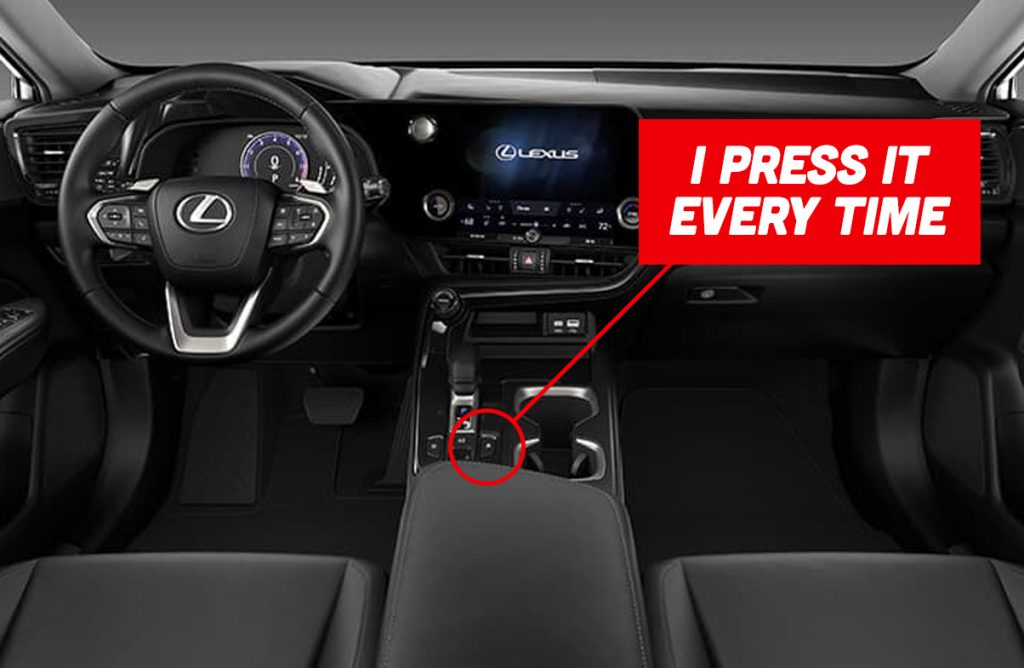
Back in 2014, AAA tested three vehicles equipped with stop-start on the EPA’s urban driving cycle, and found it improved fuel economy by up to seven percent. AAA estimated that the system would save around $179 in fuel costs over 15,000 miles in a car that got 20 mpg. That’s not nothing.
In another test performed by Edmunds around the same time, the publication used a three-cylinder Mini Cooper, a four-cylinder BMW 328i GT, and a 5.0-liter supercharged V8-powered Jaguar F-Type R to see whether stop-start made a difference on an 80.4-mile test loop with multiple stops. All three cars saw fuel savings of 9.5% or above when start-stop was engaged.
In 2023, the Society of Automotive Engineers (SAE) published a study that concluded start-stop systems saved fuel compared to running the same routes without start-stop. In one case, fuel economy was improved by a gargantuan 26.4%. From the study:
Four vehicles were tested both with and without the feature enabled under three test cycles: the Federal Test Procedure (FTP) city fuel economy test, the US06 high acceleration aggressive driving schedule that is often identified as the “Supplemental FTP” driving schedule, and the EPA New York City Cycle (NYCC). The results were compared to measure the fuel economy and consumption effects of using the auto stop-start feature. It was found that the fuel economy improvement varied significantly between drive cycles depending on the amount and percentage of idle time during the test. The largest fuel economy improvements were 7.27% and 26.4% for the FTP and NYCC, respectively.
By now, I think most people are used to the idea of stop-start in their cars, and the tech will continue to be included in most new vehicles, evolving to be even more seamless than it is now. But for the few people who truly hate the idea of their engine turning off every time they come to a stop, it’s a win.
Top graphic image: DepositPhotos.com; EPA


I’ve only driven one vehicle with stop/start; a manual, diesel, van, and I loved it.
I suspect it works better on manual cars, because it ‘s tied to the clutch pedal, which means the engine will have time to start up as you put it into gear.
If I’m sat still for more than ~20s I’d rather not be burning fuel.
My Ram 1500 3.0 is the first vehicle I’ve owned with S/S, and I don’t mind it at all, it’s actually quite smooth. I think in a Hemi truck it would be much more evident, but the Hurricane is just so smooth and quiet, it’s hard to tell it’s even running in a foot on the brake in gear situation. I notice it more when it turns back on than when it starts, there’s an ever so slight delay when taking off. I usually lift my foot off the brake, wait till I feel it start, then hit the gas.
I turn it off on super cold mornings, but I think that’s probably redundant because it seems to be good at figuring that out for itself.
I’ll probably use it much less comer summer, because I want that AC always pumping.
Maybe I’ve only experienced better implementations, but I’ve never understood why people get so worked up about stop-start.
Rental F-type V8S: it was disconcerting the first time it happened, then fine.
2025 F-150 3.5EB: works fine. Compared to the older V8 Silverado it replaced, it’s nice to not watch the mpg tick downwards as it burns gas for no good reason at every stoplight. I haven’t done any formal testing, but it definitely seems to have a nontrivial impact around town.
I really only have two minor quibbles:
They also got rid of all the off-cycle credits (as well as all GHG regulations)
That includes things that changed incentives for LED lights, tinted/smaller windows, high efficiency alternators etc
https://www.law.cornell.edu/cfr/text/40/86.1869-12
I have two cars with auto start-stop – a 2016 BMW 335i GT and a 2020 Lincoln Navigator L. Both have been fine – the BMW has around 105,000 miles and the Lincoln 141,000. I replaced the battery in the BMW proactively at 5 years and this year will do it again (ten years). Neither car has had any issues with starter or electrical system. The Lincoln is smoother in operation than the BMW. I find that I actually like the quiet at a long stop. I figure that in close to 250,000 miles of driving we have saved some decent amount of fuel.
I freaked out the first time I drove my girlfriend’s car and the engine cut out when I stopped at a light. She told me she turns it off as soon as she turns the car on. I had driven enough shitboxes with vacuum leaks back in the day that would stall at idle. My instinct was to put in neutral and give the gas petal a tap!
Most start/stop systems I’ve encountered are okay, but still a little unsettling when the car doesn’t jump off the line as quickly as I’d like. That issue seems to be mitigated by hybrids, I drove a hybrid E-Class and I never noticed the start/stop system, since the electric motor engages as soon as you touch the pedal.
Anecdotally, I’ve heard lots of good things about start/stop systems from non-enthusiasts. They thought it was a clever way to save fuel and spoke of it highly, so there’s that.
My start/stop system works seamlessly in a plug-in hybrid car. I can configure it to be on in drive/sport or only in drive. It’s off by default in sport-mode (S gear) and the big benefit of that is that my car will charge a bit when waiting for traffic lights. I usually load my battery while driving, as I can’t charge at home. I’m from the Netherlands where plug-in hybrids are *way* cheaper than ICE or mild-hybrid ones. So I don’t really care for fuel-economy as my car was 20k cheaper than a similar ICE only one.
I have a CX-50 Turbo and there is a module you can buy that does a virtual button press and shuts it off when you start the car (it installs behind the panel where the button is, totally seamless, and you can turn it back on if you like). One of my concerns was the turbo itself, I drive the snot out of the car, and don’t like the idea of the turbo losing its fluid circulation. I do not believe the car has a way to circulate coolant or oil after the car is shut off. I will say, Mazda does a great job with their start stop, it doesn’t use the starter motor, it fires fuel and spark to restart the engine!
I hate idling at stop lights, burning gas to go exactly nowhere. I also think this is yet another shitty thing done by this administration.
But…I also think it’s a relatively minor issue in the grand scheme of things. With the adoption of hybrid tech in more and more new vehicles stop-start becomes effectively seamless and such a no-brainer way to save gas that I think it will stick around anyway.
Basically what I’m saying is that this problem will solve itself over the next decade or so and there are a lot bigger things we should be worried about, like the destruction of our Constitutional rights and the fact that so many members of this administration were best buds with Epstein.
25% mpg improvement ? I call F ing bull sheet. If route time is less than 25% stopped at red lights, it cannot save 25% Policies built on lies. Next – beefier starter, battery, crankshaft position sensor, switches et al……add up to $300-500/car? Costs will take 5 years of gas savings payback- if that. And you ve just created 50 new failure modes. Non engineers ramming thru bs. Dont get me going on ethanol.
You have obviously not driven in NYC traffic. In a test representing NYC traffic, a 25% mpg improvement sounds fairly modest. You can easily spend half or more time standing still in NYC traffic. I can walk faster than I could drive in midtown traffic pre congestion pricing. I haven’t tried recently, traffic seems to be noticeably better now.
100% with you on ethanol for normal cars. That stuff is evil. If Trump actually cared about fixing things that needed fixing, he would get run of the ethanol mandates.