

If you’ve driven a car built in the past decade, it’s likely you’ve dealt with auto stop-start technology before. This piece of software shuts off the car’s engine when a vehicle comes to a stop, at places like stop signs and traffic lights, to reduce idling emissions while the car isn’t moving. The second you lift your foot off the brake, the car starts back up, and you’re on your way.
Auto stop-start has gotten a bad rap, mainly due to early iterations of the system, which made stopping and starting a clunky, annoying affair. Modern versions of stop-start are far smoother to the point where, in some cars, you don’t even notice it happening.


That didn’t matter to Environmental Protection Agency (EPA) boss Lee Zeldin, who in May declared his agency would be “fixing” the rules behind stop-start tech. Now, nearly a year later, those changes have finally been ushered into law.
The “Single Largest Deregulatory Action In U.S. History”
The EPA announced today plans to finalize its goal of repealing its 2009 Greenhouse Gas Endangerment findings, which formed the scientific basis that climate change endangers human health and the environment. The move, which the EPA says will save Americans a combined $1.3 trillion in cost savings, eliminates the bedrock policies used to form greenhouse-gas emissions standards for vehicles, which, according to the EPA, have now been eliminated for vehicles built for the model year 2012 and beyond.
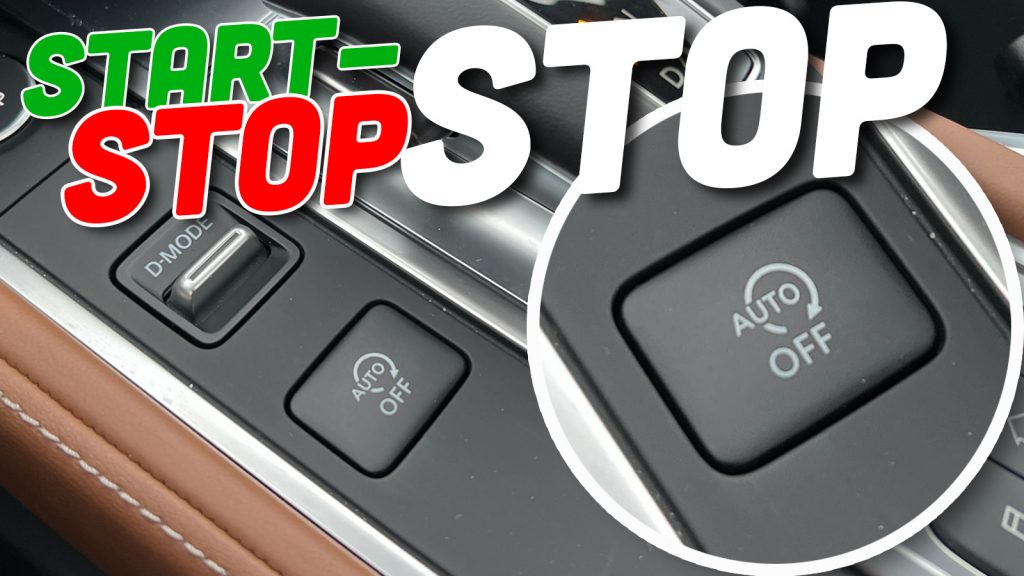
This move also eliminates the need for off-cycle credits, a program in which automakers were rewarded by the EPA for including efficiency-boosting tech that wasn’t measured in standard EPA testing, like solar panel roofs, energy-efficient lighting, and auto stop-start technology. The agency believes this tech wasn’t actually providing any benefit to the consumer and was driving up costs. From the announcement:
The Obama and Biden Administrations also used the Endangerment Finding to support off-cycle credits to forcibly incentivize automakers into adopting unpopular systems, undermining consumer choice. An off-cycle credit is a government-created concept that let auto manufacturers meet federal GHG standards on paper, by adding features like the almost universally hated start-stop feature, resulting in questionable emission reductions. Automakers should not be forced to adopt or rewarded for technologies that are merely a climate participation trophy with no material benefit. The Trump EPA chooses consumer choice over posturing to climate change zealots every time. Today’s announcement ends all off-cycle credits, eliminates EPA incentives for the start-stop button, and restores consumer choice. Americans will be able to buy the car they want, including newer, more affordable cars with the most up to date safety standards and that emit fewer criteria and hazardous air pollutants.
So while stop-start hasn’t been explicitly outlawed, the incentive that automakers received for including it in their vehicles is now gone.
What Does This Mean For My Next Car?
Probably not much, honestly. As more vehicles move to mild-hybrid or full-on plug-in hybrid powertrain technologies, stop-start software will continue to be a prominent feature in new cars. Even if the tech doesn’t award manufacturers government credits, it can still win them a (very) slight edge in real-world mpg over the life of the car, which buyers might care about.

Plus, as my colleague Matt pointed out when Zeldin first made this announcement, most vehicles are designed to be sold in multiple markets, with some rules stricter than others. It probably wouldn’t be worth an automaker’s time to rip out a start-stop system specifically for the American market, especially when it can still deliver actual benefits.
If anything, stop-start will continue to appear on new cars, but it might not be enabled by default after every start-up, as it is on some current cars. But don’t expect the feature to disappear for the 2027 model year.
For What It’s Worth, Start-Stop Does Make A Difference
I totally understand if you have strong feelings about stop-start systems. If they’re not well-designed, they can be absolutely infuriating to use. I’ll be the first to admit I turn off a stop-start system as soon as I get into a car that doesn’t have a good one. But in the system’s defense, there have been multiple studies and tests that have proven its efficacy.
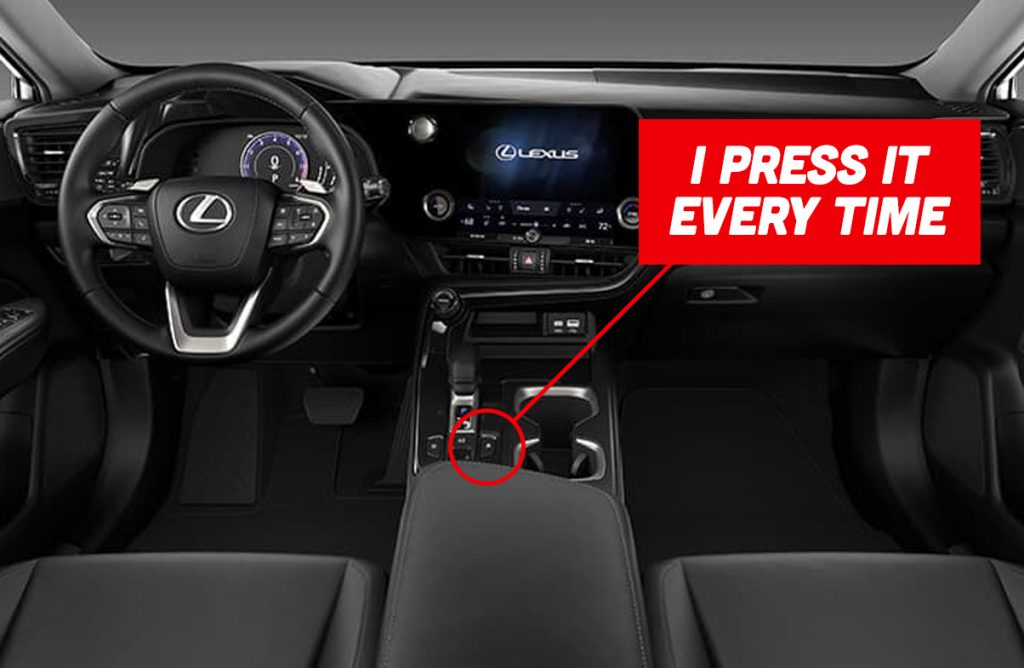
Back in 2014, AAA tested three vehicles equipped with stop-start on the EPA’s urban driving cycle, and found it improved fuel economy by up to seven percent. AAA estimated that the system would save around $179 in fuel costs over 15,000 miles in a car that got 20 mpg. That’s not nothing.
In another test performed by Edmunds around the same time, the publication used a three-cylinder Mini Cooper, a four-cylinder BMW 328i GT, and a 5.0-liter supercharged V8-powered Jaguar F-Type R to see whether stop-start made a difference on an 80.4-mile test loop with multiple stops. All three cars saw fuel savings of 9.5% or above when start-stop was engaged.
In 2023, the Society of Automotive Engineers (SAE) published a study that concluded start-stop systems saved fuel compared to running the same routes without start-stop. In one case, fuel economy was improved by a gargantuan 26.4%. From the study:
Four vehicles were tested both with and without the feature enabled under three test cycles: the Federal Test Procedure (FTP) city fuel economy test, the US06 high acceleration aggressive driving schedule that is often identified as the “Supplemental FTP” driving schedule, and the EPA New York City Cycle (NYCC). The results were compared to measure the fuel economy and consumption effects of using the auto stop-start feature. It was found that the fuel economy improvement varied significantly between drive cycles depending on the amount and percentage of idle time during the test. The largest fuel economy improvements were 7.27% and 26.4% for the FTP and NYCC, respectively.
By now, I think most people are used to the idea of stop-start in their cars, and the tech will continue to be included in most new vehicles, evolving to be even more seamless than it is now. But for the few people who truly hate the idea of their engine turning off every time they come to a stop, it’s a win.
Top graphic image: DepositPhotos.com; EPA


I like the feature in specific situations, so I’m on board with the idea of it defaulting to off, but still being available. Even when I use it, I toggle it on and off during a drive, like if I’m rolling up to a red light but I think it’s going to be a short one. I can either turn off the feature as I roll to a stop, or hold down the clutch to keep the engine going (which is what I do at stop signs). But using the feature increases my mileage enough that I definitely turn it on sometimes.
The annoying thing in my very specific case is that the light which is consistently longest for me is the one right after I turn out of the parking lot as I leave work. It’s always so soon after starting the car that the ASS doesn’t stop the engine, because it’s still charging and cooling down my cabin, etc..
Why default to off? Just save the last setting, and tie it to driver profiles if equipped.
You’re right, that’s better. That’s how my Integra is, actually. In Individual mode, you can turn the feature off permanently. I usually leave it off in the summer, but it makes more difference in the winter, so I often have it set to on (and then toggle it on and off with the button on the console based on circumstances).
But I discovered that you can’t go the other way. If it’s turned off in Individual, you can’t then turn it on with the button on the center console. I wish you could, so it would default to off, but still let me toggle it on and off based on the situation.
Unless there’s not a kill switch for the stop-start it’s not that big of a deal. I always turn mine off, but I appreciate the AGM battery and better starter.
I would hope auto makers are not that stupid to believe that a change in government wont shift everything back exactly how it was before. It got screwed up by the Trump administration, it’s going to get fixed.
That’s the usual way of things historically, but I could see why they might be less confident in it this time around.
<$200/year seems barely worth thinking about for anyone who can afford the gas in the first place…
Over the 10 year life of two cars for a 2 car family – that’s $3580 before compound interest.
Still nothing to think about?
What’s the cost for having this on your car and how long would a person have to own the car until it paid for itself?
It’s a couple switches and a bit of programming – all of which has already been done and amortized years ago.
So it pays for itself inside of a month.
A bit more than that – at least $50 for a beefier battery, a few bucks for thicker wires to the starter, and maybe some amount for a beefier starter (though I think some of them are smarter about it and don’t actually need the beefier starter now). But that’s still probably <$200 in the worst case, so pretty short payback period.
And it’s been a long time since I owned a car that only got 20 mpg. So for like $100 a year, yeah I can do without it, especially since I don’t think shutting off at my four stoplights in this town amounts to a hill of beans.
That’s not to say this administration isn’t fucking things up royally. Their move today to say climate change is bullshit is, well, some serious bullshit.
My old V6 Mercedes gets @17-18 mpg city.
The newer V6 loaners i’ve gotten over the years get better city mileage – some of which is due to Auto Start/Stop.
If technology can be used to save us money while getting same or better performance – to me that’s a no-brainer.
I wouldn’t notice $500 a year. Maybe I’m bad with money, but the average reported spending on streaming services exceeds the potential savings implied here. I still don’t see where people will notice any benefits to this tech.
Most people would notice $20,000 + compounded interest after 40 years of working and commuting when it comes to retire.
Unless they’re trust-fund babies or CEOs.
It should be geofenced to only work in urban areas, and connected to the internet/traffic information, so it ONLY starts doing that stuff during rush hour when you have lots of LONG stoplights. Then it would actually make sense.
Right now, with it being a ‘dumb’ feature, it does that stop/start BS even when you stop at a stop sign for a few seconds. That is stupid.
And when I pull into my garage. That drives me nuts.
God bless Reddit, just try to argue with the blowhards who think that even a split second of engine-off time is worth it and is saving the planet. Holy shit. I do wish there was more data to establish an average baseline for whether shutting an engine off is actually saving anything, vs injecting additional fuel at startup and reducing the life of components. Is it five seconds, ten? I’d wager those 1-2 second shutoffs do far more bad than good.
Like most things, if well-implemented and people are given adequate options, it would be a total win. But forcing everyone to use half-baked systems kind of sucks.
FWIW I don’t use it when I drive my wife’s car to work because I have so few stops and they’re short. But I use it on rentals, use it other times when driving her car, and she uses it all the time.
I’m good with it being an option but I don’t like it being a default on Honda products.
My wife’s 22 MDX defaults to it on after every restart.
She drives it in a way where she presses the brake before she depresses the Park button. Therefore, the car shuts off. She releases the parking brake slightly after it stops and the engine restarts. A very unnecessary cycle on the engine/battery for really nothing.
I imagine my wife is not in the minority and other people have the same issue and are oblivious to it.
It would be interesting to parse out the data from potential fuel saved/ emissions vs reduced battery life and engine wear/tear from constant restarting.
I don’t think the extra wear and tear on the engine and battery is very significant. Of course I only have my anecdotal experience to cite. A warmed up engine isn’t going to suffer from starting and stopping because everything is coated in oil. Most of these systems don’t work until the vehicle is at full operting temp. As far as the battery goes, they don’t usually work if the battery isn’t fully charged. I recently replaced the battery in my car after almost 7 years and I have always used the start-stop function. I’ve replaced batteries in other cars without stop start after 3 to 5 years in many cases. I’m not saying that it prolonged the battery life, just that it didn’t appear to shorten it.
But like I said below, I’m fine with it being optional. If you don’t like it, I’m not in favor of forcing you to use it.
Appreciate the thoughtful reply, Spiker.
I don’t care about start/stop, but I’d love to eliminate all the phony, useless safety software. Of course Herr Trump won’t do that. The insurance lobby puts too much in his pocket.
A. Attempting to remove the finding that GHG’s are pollution that effect human health is stupid.
B. It also doesn’t make sense for both EPA and NHTSA to both regulate fuel economy – sometimes in different ways. (Personally it I think makes sense for EPA to do it.)
C. Even if EPA did remove the credit for stop / start – they are still there for CAFE.
D. It takes more that a year to legally write a regulation. In the first Trump administration EPA seemed to have a lot of “malicious compliance” where appointed officials that knew nothing about the regulatory process told career employees to skip required regulatory steps – so they did – and then the new rule was challenged and thrown out in federal court.
Gotta make sure those Big Oil Billionaires can afford another yacht….
They need your extra $179 a year. Don’t deny them!
Based on 16 Million new cars/year sold in the US – and assuming 70% of those are ICE vehicles…
….that’s over $2 Billion dollars a year gross income on additional fuel sales – which translates to roughly $300-400 Million in profits for Big Oil – just for eliminating Stop/Start.
That’s 10-20 more new yachts for CEOs and Major Shareholders every year!
A pretty good return on investment in those “donations” to Congress and Ballroom building funds.
I really despise the start/stop feature on gas-only cars. I feel the same way about the current administration. Going to chalk this up to a blind squirrel finding two broken clocks, or something like that.
As someone who lives in a real city, next to a stop light. This tech is actually nice. Everyone comes to a stop and now I’d say 80-90% of cars are silent. You can hear things other than the traffic for a brief moment.
For everyone outside the car the shift towards start stop, hybrid, and full EVs is great. It’s measurably improving our air quality in areas where most folks are driving newer cars.
A little optimistic but ok.
@gene – so basically, you’re saying “I don’t believe you. I have no evidence to doubt you, or to contradict you, I just don’t feel like believing you. And, in today’s political climate, that constitutes facts.”
Nah. It was more of a “I had a bad day at work and lashed out but I changed my reply to make it less confrontational.”
The only evidence I have is circumstantial. Personal experience from living in a real city called Detroit, right off of Woodward and the only time it was quiet was between three and five in the morning and even then there was the occasional yelling, or engine noise.
Ah man I’m sorry. That sucks. My observation is from a leafier area of east Portland OR. (Roughly between 39th and 65th). So it’s wealthier and more liberal than average. The most common car is a recent (less than 5 year old) Subaru or a Toyota Hybrid. Everything else is a mix of luxury cars, EVs, and about 20% normal city cars (10+ years old).
Thank you for the kind words. Your area is definitely more serene. Enjoy it. 🙂
Here’s the study/news blurb from USC I should have linked to back up my assertion!
https://keck.usc.edu/news/adoption-of-electric-vehicles-tied-to-real-world-reductions-in-air-pollution-study-finds/
Nice!
Wait, start-stop is optional? OEMs weren’t required to add it, they *chose* to?
Preening about deregulating a ‘regulation’ (authoritative rule or requirement issued by a government agency) that isn’t actually a regulation feels a bit like, well, a self-awarded deregulation-participation trophy.
They chose to add it because they got EPA mileage credits for offering it.
I despise how the vindictive morons currently governing us politicize even simple things like regulatory changes.
I think this is a dumb change that is undoing progress on fuel efficiency and emissions, but whatever – they’re allowed to make the change while they are in charge. However, what rankles is the way they add “Biden bad, Trump good” language.
Or remember last year, when the TSA was subjecting folks waiting in airport lines for security checks to videos blaming the democrats?
Or Trump 1.0, when the Covid relief checks authorized by a bi-partisan Congress prominently featured DJT signatures claiming credit?
I don’t care how spicy the politics are. I want my bureaucracy to be boring.
“make government boring again” I can get behind that statement for sure! I would sleep better.
Man, it was such a breath of fresh air to have Biden. He wasn’t my favorite president, but not having a crisis du jour is incredibly nice.
If anything, he was maybe a little too quiet.
EPA = Environmental Pollution Agency
Trump is going to usher in the Dark Ages II: Coal Powered Boogaloo
He’s doing it for his voters who live in economically depressed areas merely because their families have lived there forever. They don’t mind dying of black lung (if they survive the mines themselves) if that work in the only field with opportunity is the cost of a relatively decent salary and they get to stay there. Sure beats moving somewhere that has opportunity and culture!
And the “manly men dig up stuff and burn it and solar and wind is girly dirty hippy stuff” mind set of so many of those supporters.
As disgusted as I am in a general sense, I’m not sure how much this coal BS is going to really matter. Nobody is going to convert back to coal. It might delay shutdowns of coal power plants, but I wouldn’t think any plans in the works are going to be stopped on the whims of a notorious pathological liar, particularly with money already spent. If the solar industry bribes him enough, he’ll be touting that next. (Are you listening, solar companies?)
In my old home town, there was a big coal plant (now CNG on a smaller, footprint with nicer architecture and a public garden).
YearsDecades ago, I looked at renting a fantastic apartment in that neighborhood with reasonable rent until the realtor mentioned that the power company gave everyone vouchers for car washes and washed the houses every 6 months (or something like that) like it was a perk, but she didn’t say anything about lung cleaning vouchers, so I passed.There is a mining war in Northern Minnesota over sulfate waste copper nickel mining in the watershed for the Boundary Waters Canoe area. The “manly men” want the few mining jobs some temp and very few permeant versus the thousands of tourism jobs and keeping a clean watershed and it comes down to gendered ideas of “real man” jobs. And the people up there are scared to death of the “culture” of Minneapolis.
Yeah, I wasn’t thinking about local destruction. And for what? It’s a market in terminal decline. That real men (or alpha) nonsense is such a blatant display of weakness and insecurity and obvious means of manipulation, but they’re too dumb to notice or too weak to face it. I think that’s the crap that’s labeled toxic masculinity, but there’s nothing related to traditional masculine values about it.
YES!
The brainwashing runs deep. A buddy of mine works for a company that builds solar farms, many of which are on land leased from farmers. So he goes to the town hall meetings to “answer questions”, but there are no questions. It’s a bunch of insane people talking about how windfarms kill birds (not sure how that’s prevalent, or even pro-solar), solar panels give you autism, etc. But the most frustrating thing, and the most common, is people that are PISSED they are taking away farm land from this farmer. Like Hillary Clinton herself is coming in and seizing the land in the name of The Liberals. They just can’t comprehend that the farmer isn’t using that land (for a lot of possible reasons, but essentially because it doesn’t make them money) and the only way they can keep the lights on is to lease it. But that can’t be, because farming is a noble #Man’s job and the libs are trying to destroy it.
If you spend enough time out there, I do in rural mn, wi, nd and it all seems to boil down to protecting their fragile masculinity.
I read a little while back that there are people who are farming in fields with the panels and are more productive with them. I think it involved livestock, not crops, but I read too much crap to remember the specifics. Some people see problems, others see opportunities. Either way, farmers have been selling off for quite a while—why work your ass off to work the land when you don’t have to?
Not a farm, but I worked on a cell site on a decent plot of land behind some trees behind a house on a hill in a busy area (high lease price) that the owner leased out to 5 different carriers. He bought another house and rented the one near the towers. With the lease money alone, he does very well and it requires no input from him.
They’ve more an more started using sheep to maintain the fields around the solar panels. I guess I never thought about them raising the sheep for profit, but it’s a novel way to avoid mowing in tight quarters and fun to see from the road.
But again, we’re talking about farmers who have at times been paid NOT to plant these fields, and at others can’t afford to (because soybean exports plummeted for some reason) who in many cases are just trying to make ends meet. But their neighbors are like “no, fuck you, farm that land. And do it without help from migrant workers”
I agree its like this sewing circle echo chamber
And boy, those mining jobs are few, indeed. Extraction industries really don’t hire a lot of laborers, anywhere in the US anymore.
I doubt that there will be any physical changes.
For now they’ll push an update that makes the auto-start-stop function stay off after you turn it off, then if the next administration is left leaning they’ll push a new update to make it always turn back on every time you restart the car.
In my experience every time you turn off an engine there’s no guarantee you can get it running again, so for the sake of moral I’d prefer my engine stay on.
Also studies during WWII showed that when we ran the factories 24/7 we had less machine breakages relative to the hours on the machines compared to pre war where they shut the factories down at night.
yeah this is the change I would make. Push a software change that allows the “turn it off” to be permanent until manual changed back to “on”. Otherwise, change nothing.
I like my start-stop function, but I would be fine with them pushing an update to leave it in the condition you last put it in. As far as extra wear and tear on the engine, yeah, there probably is some if it isn’t smart enough to wait until you reach full temperature. After the engine is warmed up, I would think it’s minimal because it’s not cooling down while I sit at a stoplight.
My car’s ASS system won’t stop the engine until the engine temp is normal and the cabin has been heated or cooled. It knows what it’s doing.
If you shut down machines for eight hours or more, lubrication degrades and, yes, the next start cycle will be a little more destructive. But Auto Start-Stop at a red light lasts only a minute or three. The engine stays warm and lubricated and is easily started again.
Shh, we can’t have rational information regarding ASS.
“Americans will be able to buy the car they want, including newer, more affordable cars with the most up to date safety standards and that emit fewer criteria and hazardous air pollutants.” Bolding was by me.
I don’t really understand the use of the word “criteria” here. I didn’t realize my cars emitted “criteria”.
Also, removing pollutants from the list of pollutants doesn’t make them less polluting.
Use of “criteria:” considering their actions, why would you expect them to consider their language?
True.
The EPA defines things like NOX, CO, and NMOG as “criteria emissions” in their regulations. So in this case, “criteria and hazardous” is a descriptor of the air pollutants.
Still a dumb sentence, but not technically incorrect in their wording…
Thanks for the explanation. I had no idea what it meant.
I have trained myself to just lift my foot a little off the brake peddle and the engine kicks on and does not shut off again when I am at a stop light. No need to hit a switch just a little foot twitch.
As a scientist and an educator, I am just at a loss for words. Next week will will be putting lead back in gasoline and paint.
Can’t wait. It gives it a nice sweet flavor.
I think that’s why it’s also an ingredient in baby food too.
And in chocolate (along with cadmium). Yum! Thank you Trader Joe’s and others.
NO ONE GOT COVID WHEN WE HAD LEAD IN BABY FOOD!
In my experience, it saves nothing, but I’m not in a a seriusly urban area, so I try to turn it off, average stop has to be less than 10 seconds, usually around here just a 4-way, so it pumps more gas in to restart than it saves. If I were driving El Camino Real from San Jose to S.F. another story, but heres my truth according to data provided by my car (’21 Outback XT)
Last trip reset – 5228 miles ago
Average mileage – 23.5 mpg
Time auto-stopped -1hr 24 minutes
Fuel saved – .638 gallons
Fuel used to drive those miles – 222.47 gallons
% of fuel saved with auto stop -.003%
Estimated (conservatively) stop/start cycles -160+
Whats the environmental cost to add all this “feature” to save .003%?
The “problem” is not the autostart/stop it’s that I get the fun of having a car that only gets 23.5mpg.
But if I don’t burn it, somebody else will.
“% of fuel saved with auto stop -.003%”
I think you meant 0.3%, but point taken, it’s not helping you. On the other hand, it’s a software feature. Not having it doesn’t save anything either.
Duh need to convert %, need more coffee. Sadly cant fix my post after a reply. There is a hardware cost to it.
Not having it saves your starter motor.
My understanding is that many/most cars these days use specialized, more heavy-duty starters, for this reason exactly.
Yes, vehicles with stop/start have a more durable starter. For example: The starter in a Subaru with stop/start has a life of 180,000 to 280,000 start cycles. If you drove the car in such a way as to have 25 starts per day, every day, it would take 19.73 YEARS to get to 180,000 start counts.
Multiply that small individual percentage by hundreds of thousands or millions to account for the total fleet of vehicles. A small percent of a lot is still a lot.
Agreed, aggrieved. Seems it’s a lot of not much compared to trucks, trains, planes, brodozers. Nothing we can do could offset Space-X, Amazon, United, Chrysler, Miltary. Use it or they will.
I struggle with this sentiment myself. The worst I could do is nothing compared with the things you mention and it always feels like it’s the wealthy telling the norms how to behave while they fly around on their private jets, etc. I still try to keep my impact small though. Sometimes I am just glad I didn’t have kids.
I have 3 smallish children and I am convinced that they are a huge reason for deforestation. The amount of paper that we go through is crazy and yes most of it gets recycled but I’m also pretty sure that the recycle trucks are just for show and everything is just going to the dump.
As a scientist and educator, I suspect you know that the next administration will just reverse this “deregulation” of trumps.
If only it could be “reverse.” A lot harder to clean spaghetti out of the shower drain compared to not letting spaghetti get there in the first place.
Funny all those stories I must be missing about US citizens getting “shafted” waiting for a coal mining job, while ICE is 1000ft underground making deportation stings…
I agree but 56 years has taught me that humanity is an ugly hydra that devours its children as well as itself. As a society we relive “Lord of the Flies over and over again.
Which is why I suspect that the next set of regulations will make those that were just repealed look lenient to “make up” for the damage that was done during the repeal.
I am concerned that we may never have another administration.
The future is in our hands.
Is the world is going to explode or what do you mean?
On the off chance that this comment is in good faith, he’s referring to the fact that the Trump administration is trying to very hard to manipulate the next election by throwing out votes from Democratic districts. That’s why they raided an election office in Georgia and why they tried to extort voter information from Minnesota by sending armed ICE thugs to terrorize the population. He’s also making a lot of noise about federalizing elections, which would give him more direct control over the elections.
It’s yet another example of how every accusation Trump makes is an admission he’s doing exactly what he’s accusing others of. And he’s made a lot of unsubstantiated accusations about how the 2020 election was stolen…
It was good faith but the 22nd amendment prevents from over 2 terms. And gerrymandering has been going on forever, both parties are guilty. They’re all nuts
And the 1st protects freedom of speech and the 4th prevents unreasonable search and seizure. Both of which are blatantly being violated by this administration. Why would they care about the 22nd?
Your comments sound like you spend too much time in a political echo chamber. I respect your take on it, but it seems very much like standard issue TDS.
As someone who spent most of his life driving crappy cars that could break at any moment, I have always hated stop/start. Every. single. time. I have the fleeting thought that my car just broke down. I would love it if I could turn it off and it would stay off. That said, this EPA is evil and does not have our best interests in mind.
Yeah when we got our first hybrid it was very unsettling to have the engine shut off while driving down the road or coming to a stop. I did eventually get used to it, note I’ve only had it on hybrids that use the hybrid’s starter/generator and the motor/generator is there to get the car moving immediately.
As someone who has spent most of his life breathing air, I have always hated breathing stupidly created useless pollution that exists just to keep shitbox owners from getting up in their feelz.
“That said, this EPA is evil and does not have our best interests in mind.”
That *was* demonstrably untrue… but these days maybe not so much.
I would be okay with it if it would remember that you turned it off and remain off next time you drive. That it doesn’t is intentional.
My main concern is engine wear. Unless it has an electric pump to maintain oil pressure, you’re starting the engine without oil pressure, again and again and again.
Like 0w20 oil. It provides some benefit to the manufacturer on paper, but the real world consequences are negative for the consumer.
Came to say this. Even if the starter is engineered stronger, the fuel saved is peanuts compared to the additional wear on your core engine components with every start. Warm restart is not as bad as a cold start, but still not good to do over and over and over. Because you’re still starting from zero oil pressure. I’ve said it before, carmakers may have better engineering now but they find ways to build in planned obsolescence.
I’ll shut my car off if waiting for the drawbridge, only after there is already stopped traffic behind me and I don’t need to worry about a split second escape if they’re clearly not stopping. And for ages it’s been considered unsafe to shut the engine off at stoplights for the same reason, you may need to react quickly. There were good reasons for a lot of things, like dash illumination that only came on when your taillights were on, limits on headlight output, no video screens in view of the driver, controls that could be operated while not taking your eyes off the road, vehicle height restrictions and proper outside visibility…all things I was taught in drivers ed in the 90s. Modern cars are like the Wild West. Between removing auto engine stop and bringing tactile controls back, maybe there’s a hint of common sense coming back to car design.
Oil circulation/wear is at its worst while idling, IME. Shutting the engine off instead might actually be improving things.
Yep. Idling is one of the worst things you can do to a modern engine. Reducing idle time may actually improve engine (and emissions system) longevity.
I’ve never met an otto cycle auto stop start I’ve liked. You want auto stop then atkinson cycle with a hybrid. The defeat devices are maybe $5 to $40. The automakers should have to have some way to turn the thing off or offer the defeat device free of change as I’m sure many people that dont know how to install one or that they exist. But have conditioned themselves to press the button when they start their cars.
I installed one in my son-in-law’s F150. Just a little harness that plugs in behind the glove box. I think it took me about 10 minutes and all it does is keep the autostart/stop OFF by default. That seems like it should be an option without having to “hack” your vehicle.
There really should be. I’ve installed a few. Kia and Subaru have to get behind the trim with a module not a huge deal but I know a lot of people would be scared or not know how to do it. Setting in the menu would be fine they have the ability to do it. Hopefully they do. The GM ones are dirt cheap too just a harness that is near the firewall under the hood alot of times.
A snipped piece of zip tie wedged into the space around the off button keeps it permanently engaged on our Kia.
I tried that but I didn’t work for me I think because it has the 3 modes. So have to hit it twice normally. Was like $30 for the module. I almost coded it out on the Subaru but it has so many strange issues I thought the module was the lessor of the evils.
I’m still amazed my 2022 Accord doesn’t have it (the 1.5 CVT and Hybrid do, but not the 2.0T), and somewhat amazed my 2018 Miata doesn’t (since my stick shift 2013 320i did have it). I’m glad I don’t have it, but yes, the newer ones are less intrusive than they were on that 2013.
23′ Miata doesn’t have it either.
It didn’t occur to me it could work with a stick. What was it like? Do you have to wait an extra sec before releasing the clutch or is the system fast enough?
I’m guessing the engine starts when you take your foot off the brake and by the time you are pressing the gas and releasing the clutch it’s running.
Assuming you’re sitting at a stoplight and driving a manual correctly (right foot on brake, left off clutch), it restarts when you press in the clutch. I don’t recall any of our rentals shutting off at shorter stops with the clutch in and braking.
I hated it, and generally turned it off. Keep in mind this was 2013 so it was an earlier version of start/stop and wasn’t as refined as modern ones. The second you pushed the clutch in the engine would come back on. The biggest issue was if you ever were coasting to a stop in neutral, it would shut off early. So I had a few instances where I’m coasting to a stop, light turns green, and I’d push the clutch right after it shut the engine off. Car would kick like a mule coming back on in that situation.
Dang. It’s been a while since I’ve had my manual but I’m pretty sure I’d just stay in first gear and keep the clutch in at most stops. Sounds like that wouldn’t be great
In my Integra, the engine fires up when I press the clutch, even if I don’t put it into gear. That’s also how I can keep the engine from stopping, by holding the clutch down (that’s what I do for stop signs).
“forcibly incentivize”
…that’s an oxymoron, right?
The EPA itself is the oxymoron
We’ve ended the war on coal. We’ve cut CO2 emissions regulations. We’ve cut diesel emissions regulations. All just in time, too. It’s been a cold winter here in NY and I look forward to the better weather to come.
The only “war on coal” is from natural gas companies. Coal is disappearing in the USA for power generation because NG is cheaper.
Don’t try to tell that to the couple dozen people in Appalachia who want their kids to go work in the mines!
We also shouldn’t tell them that a single mine in the Wyoming produces more coal than the entire state of West Virginia with only 1,125 employees.
I’m glad they’ve offered ZERO evidence on how gutting the EPA will save people money.
It’s simple. Automakers won’t have to spend so much to reduce emissions or hit fuel economy targets, and they’ll pass the savings on to you….probably? Yeah, for sure. It’ll trickle down. Definately.
In my experience, only one thing trickles down, and it sure does have an ammonia smell.
It’ll be a 1000, 1500, 900, even 600% savings!
Hell, I’m not greedy, I’d settle for 100% savings.
That goes without saying. Or maybe not.
if they offered ‘evidence’ would you believe it, or just denounce the ‘evidence’?
pay-to-play science says you can prove anything you’re willing to pay for.
Stop / Start works. I don’t have to read the 3 tests listed in this article – I’ve tested it myself.
His people, not you people.