

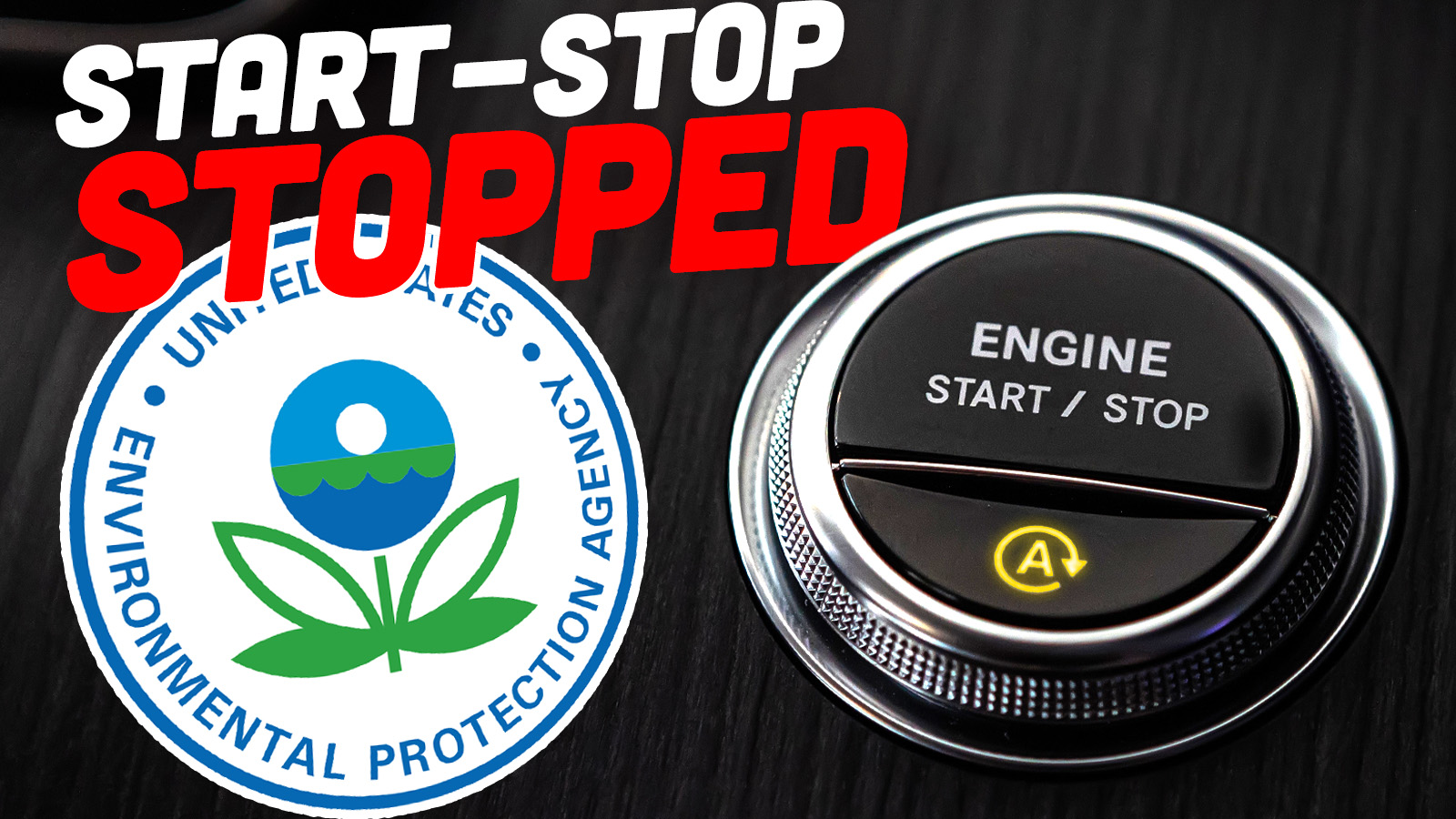
If you’ve driven a car built in the past decade, it’s likely you’ve dealt with auto stop-start technology before. This piece of software shuts off the car’s engine when a vehicle comes to a stop, at places like stop signs and traffic lights, to reduce idling emissions while the car isn’t moving. The second you lift your foot off the brake, the car starts back up, and you’re on your way.
Auto stop-start has gotten a bad rap, mainly due to early iterations of the system, which made stopping and starting a clunky, annoying affair. Modern versions of stop-start are far smoother to the point where, in some cars, you don’t even notice it happening.


That didn’t matter to Environmental Protection Agency (EPA) boss Lee Zeldin, who in May declared his agency would be “fixing” the rules behind stop-start tech. Now, nearly a year later, those changes have finally been ushered into law.
The “Single Largest Deregulatory Action In U.S. History”
The EPA announced today plans to finalize its goal of repealing its 2009 Greenhouse Gas Endangerment findings, which formed the scientific basis that climate change endangers human health and the environment. The move, which the EPA says will save Americans a combined $1.3 trillion in cost savings, eliminates the bedrock policies used to form greenhouse-gas emissions standards for vehicles, which, according to the EPA, have now been eliminated for vehicles built for the model year 2012 and beyond.
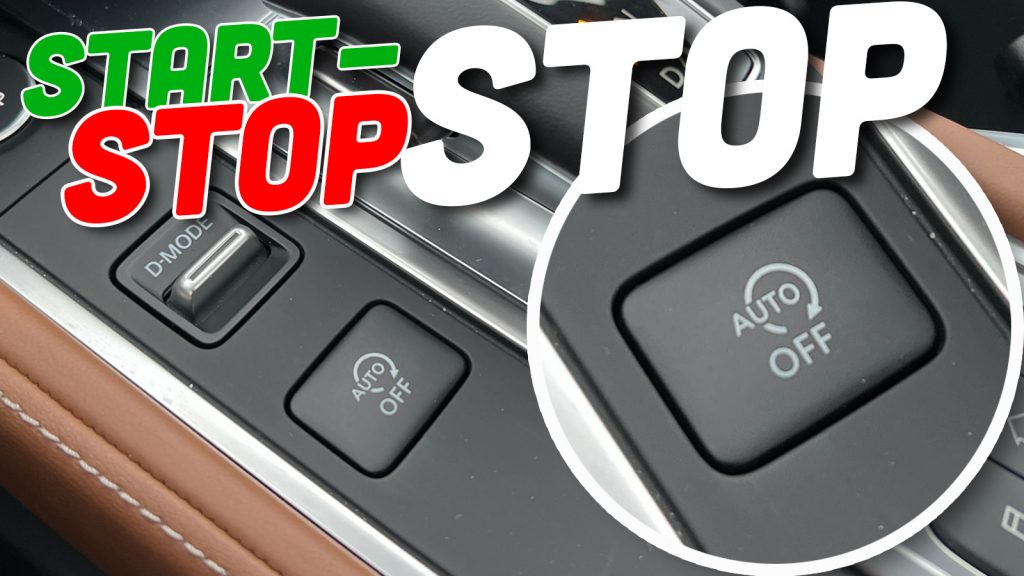
This move also eliminates the need for off-cycle credits, a program in which automakers were rewarded by the EPA for including efficiency-boosting tech that wasn’t measured in standard EPA testing, like solar panel roofs, energy-efficient lighting, and auto stop-start technology. The agency believes this tech wasn’t actually providing any benefit to the consumer and was driving up costs. From the announcement:
The Obama and Biden Administrations also used the Endangerment Finding to support off-cycle credits to forcibly incentivize automakers into adopting unpopular systems, undermining consumer choice. An off-cycle credit is a government-created concept that let auto manufacturers meet federal GHG standards on paper, by adding features like the almost universally hated start-stop feature, resulting in questionable emission reductions. Automakers should not be forced to adopt or rewarded for technologies that are merely a climate participation trophy with no material benefit. The Trump EPA chooses consumer choice over posturing to climate change zealots every time. Today’s announcement ends all off-cycle credits, eliminates EPA incentives for the start-stop button, and restores consumer choice. Americans will be able to buy the car they want, including newer, more affordable cars with the most up to date safety standards and that emit fewer criteria and hazardous air pollutants.
So while stop-start hasn’t been explicitly outlawed, the incentive that automakers received for including it in their vehicles is now gone.
What Does This Mean For My Next Car?
Probably not much, honestly. As more vehicles move to mild-hybrid or full-on plug-in hybrid powertrain technologies, stop-start software will continue to be a prominent feature in new cars. Even if the tech doesn’t award manufacturers government credits, it can still win them a (very) slight edge in real-world mpg over the life of the car, which buyers might care about.

Plus, as my colleague Matt pointed out when Zeldin first made this announcement, most vehicles are designed to be sold in multiple markets, with some rules stricter than others. It probably wouldn’t be worth an automaker’s time to rip out a start-stop system specifically for the American market, especially when it can still deliver actual benefits.
If anything, stop-start will continue to appear on new cars, but it might not be enabled by default after every start-up, as it is on some current cars. But don’t expect the feature to disappear for the 2027 model year.
For What It’s Worth, Start-Stop Does Make A Difference
I totally understand if you have strong feelings about stop-start systems. If they’re not well-designed, they can be absolutely infuriating to use. I’ll be the first to admit I turn off a stop-start system as soon as I get into a car that doesn’t have a good one. But in the system’s defense, there have been multiple studies and tests that have proven its efficacy.
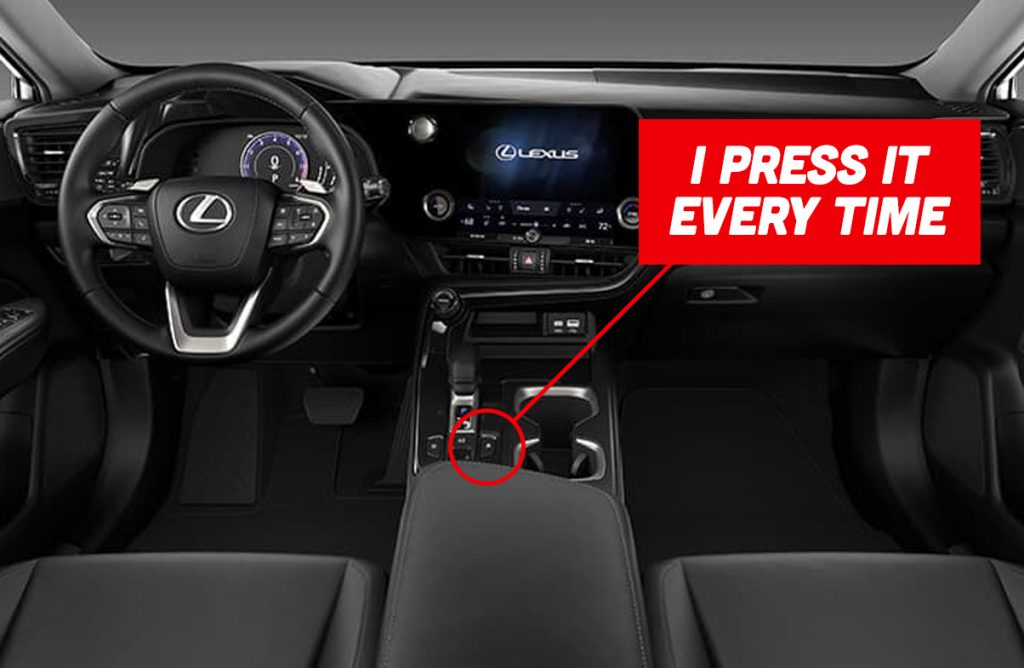
Back in 2014, AAA tested three vehicles equipped with stop-start on the EPA’s urban driving cycle, and found it improved fuel economy by up to seven percent. AAA estimated that the system would save around $179 in fuel costs over 15,000 miles in a car that got 20 mpg. That’s not nothing.
In another test performed by Edmunds around the same time, the publication used a three-cylinder Mini Cooper, a four-cylinder BMW 328i GT, and a 5.0-liter supercharged V8-powered Jaguar F-Type R to see whether stop-start made a difference on an 80.4-mile test loop with multiple stops. All three cars saw fuel savings of 9.5% or above when start-stop was engaged.
In 2023, the Society of Automotive Engineers (SAE) published a study that concluded start-stop systems saved fuel compared to running the same routes without start-stop. In one case, fuel economy was improved by a gargantuan 26.4%. From the study:
Four vehicles were tested both with and without the feature enabled under three test cycles: the Federal Test Procedure (FTP) city fuel economy test, the US06 high acceleration aggressive driving schedule that is often identified as the “Supplemental FTP” driving schedule, and the EPA New York City Cycle (NYCC). The results were compared to measure the fuel economy and consumption effects of using the auto stop-start feature. It was found that the fuel economy improvement varied significantly between drive cycles depending on the amount and percentage of idle time during the test. The largest fuel economy improvements were 7.27% and 26.4% for the FTP and NYCC, respectively.
By now, I think most people are used to the idea of stop-start in their cars, and the tech will continue to be included in most new vehicles, evolving to be even more seamless than it is now. But for the few people who truly hate the idea of their engine turning off every time they come to a stop, it’s a win.
Top graphic image: DepositPhotos.com; EPA


Bought a HRV as a teen mobile and it doesn’t have the auto/stop start. Did I spend 25 minutes trying to figure out how to disable it before I searched the internet? No comment.
Based on the merits of it I personally agree with this move.
Can I just say, though, that I am super disappointed in this press release? Prior administrations clearly did what they thought was best, and I would like to think the current administration is also simply doing what it believes is best. But the language in this press release about “climate participation trophies,” “universally hated,” “posturing to climate change zealots” …it’s just aggressively unnecessary. Since when does a simple EPA memo need to sound like a late night Fox news opinion program?
I get that it’s hard in an environment when POTUS uses playground putdowns in his everyday communications, but it doesn’t seem like asking too much that the EPA of all people put on their grown-up communication hats and just say the current administration doesn’t believe this rule is beneficial, and they want to prioritize consumer choice over questionable environmental benefits and leave it at that.
EPA totally screwed the drivers.
The emergence of cheap plastic parts that fail at any possible moment, downsized engines with turbos that are overly complicated, thin engine oil that cannot protect internals, start-stop burning your starters etc – these all came at the cost of simple and durable car that would be available otherwise.
All EPA employees and the policymakers must use public transportation only and should be prohibited from owning any personal transportation so they can save the planet
“The move, which the EPA says will save Americans a combined $1.3 trillion in cost savings”
As always, blanket statements like this annoy the piss out of me. That’s a massive number. What kind of time context are we talking? I can’t imagine even within a 10 year timeline.
Besides the BS numbers they’re using to justify it, I’m meh on this issue. Like others mentioned, this really seems like a function that is already mostly moot and getting credit for poorly implimented systems wasn’t a great idea.
This new, unruling, though is miniscule compared to the other things they are trying to do or really eliminate with the repealing of the overall 2009 policy.
Its nice to have choices, glad to see this. I disable mine every time I drive, hopefully its as simple as the dealer flashing the code into the computer.
presumably, this would be for yet-to-be produced vehicles, not existing ones.
it isn’t going to change a thing with any car that’s already out or going to come out any time in the near future.
Looks like I’ll have to go the OBD port for my RAM.
The system has a glitch here and there where the auto start fails and the truck puts itself in park at a stop light. Typically right around the time I’m about to take off from the light.
And of course the dealer says there’s nothing they can do about it cause they can’t duplicate it… It’s only three years old with 33,000 miles.
on a lot of cars you can buy a little OBDII module that disables it. Just remember to remove it if you bring your car into the dealer.
Meh. Some ado over nothing. I pretty much always disable the stop-start on my BMW as I prefer driving it that way. Last weekend, I rented a Hyundai Sonata hybrid, though, and the stop-start was unobtrusive enough that I didn’t care to take the time to see if I could disable it. From the environmental standpoint, this decision will have less impact then pretty much everything else this administration is doing.
Hybrids reap the true benefits of stop-start. You don’t have to start your engine before the car gets moving since you have the electric motor, so there’s no lag when you press the pedal when the light goes green. Often I don’t even notice when the gas motor kicks on in my Prius. Also, most hybrids can run their AC off of the 48v, so you don’t even have to sacrifice cold air at red lights.
When done well, it’s brilliant. When done badly it’s abominable. But then, that’s true of anything. I strongly suspect that most small vehicles will keep it anyway for the obvious economy benefits.
I just wishing people would stop banging on about “wear and tear” and such. The technology is decades old at this point and there’s no epidemic of failed starter motors etc., it’s clearly not an issue.
GOD FORBID the government reward a simple, low-cost technology which saved citizens money if they chose to use it and may or may not have an environmental benefit. And to those “increased maintenance cost / worn-out starter” people, you simply need to admit you drank the koolaid you were handed. Just look at hybrids. Their engines turn on and off up to HUNDREDS of times per driving cycle, and they don’t typically have starter issues. Look at the Toyota Prius, especially the first 3 generations, their engines are known to easily go 400k. True, there may be some models that are less reliable. And frankly, even if I did have to replace a starter (and I couldn’t do it myself) I would GLADLY take that 7-9% fuel savings to pay my local mechanic or even dealer (who pays a community-member technician) rather than fuel costs paid to Big Oil.
Toyota and Ford hybrids don’t have starter motors per se, they use the same electric motor used for propulsion to start the engine and charge the batteries. So not really an apples to apples comparison.
but when press pedal motor no go vroom right away
I just want manufacturers to allow the start-stop function to remain off after a restart if the owner chooses to have the system off – I had to code my BMW to respect that, which is annoying. That being said, I tested a new model with the 48v start-stop and it was seamless enough that I would consider leaving it on.
As hybrids have gotten better and plug-in hybrids with at least some full electric range become more common I would expect start-stop to fall by the wayside or function differently than the earliest systems.
The really funny the about the accusations of posturing by this administration, that’s exactly what this amounts to, nothing but posturing.
At least the give and take here is good. The takes on this subject over at the drive are almost violent.
Just replaced BOTH batteries in a Jeep Cherokee because the owner had no clue there was a battery under the seat to power the stop-start and it killed the main battery as well.Tell that person what a great idea it is.
Good riddance.
Another green-washing technology that created more angst than real benefits.
Just like forcing a limp-home mode onto a Diesel that has nothing wrong with it other than being low on DEF, these bullshit requirements over the years have done more harm than good.
Our 2024 Trax LS Auto-Stop-Start (ASS) has been delightfully unobtrusive in the two years we’ve had it. GM (Korea) actually thought out the system well. I bought the Trax expecting to dislike this feature, and disable it every time, but unless you look down at the tachometer and watch the needle drop down into the ‘Auto Stop’ zone, it’s difficult to even notice that the engine has shut off.
It only activates when you come to a stop in a mostly straight line, like if you stop for a stop sign or a red light. If you turn sharply into a parking spot – it does not auto-stop. If you back into a parking spot – it does not auto-stop. If it’s cold outside and you have the heat or defroster set to a medium-high or high setting – it does not auto-stop. If it’s hot and/or humid outside and you have the A/C set to a medium-high or high setting – it does not auto-stop. It has temperature and humidity sensors inside the vehicle and will re-start the engine if the temperature/humidity deviates from what the HVAC controls are calling for – even if you manually adjust the dials while at a stop.
Once you start to release the brake, the engine restarts. I have never experienced any lag or hesitation upon trying to accelerate. The vehicle will not do another auto-stop cycle until you speed back up and then stop again. So if you want it to stay running and burn more fuel, all you have to do is lightly release the brake and then re-apply stopping pressure again.
Also, the engineers seemed to have thought out the issue of engine wear due to restarting. According to GM:
“The GM 1.2L 3-cylinder engine (LIH/LBP) uses precise engine timing and Variable Valve Timing (VVT) to manage lubrication and reduce mechanical stress during auto-stop restarts:
Of course, 80% of the 5,730 miles we’ve put on it so far have been highway miles, but we’ve driven it through the Chicago area, as well as in downtown Cleveland, OH, Milwaukee and Madison, WI, and through a lot of smaller cities where there are stoplights and it really hasn’t been an issue for us. The wife doesn’t even notice that the engine shuts off at stoplights. And unless we have the windows down, it’s very hard to even hear the starter engage for the restart.
We’ve been averaging 33 – 34 mpg with our Trax. Which isn’t bad for a non-hybrid small wagon.
This.
Modern systems are a long way off from the early ones from back in 2012 or so.
I’ve had 2 cars with stop/start before moving on to EVs, and they were both pretty unobtrusive. Both small VW group cars, one 1.2 TSI Skoda Fabia and one 1.0 TSI Seat Ibiza.
It makes a big difference being a manual transmission too – because you ‘restart’ the engine using the clutch pedal, there’s no delay or anything.
Most oil pumps are driven from the rotation of the engine, and build pressure as soon as the engine starts rotating, not waiting for the engine to fire.
That sounds like a good ASS car!
I rented a Trax on a business trip last week and had it for a week. I did a fair bit of city driving in heavy traffic areas and found the feature to be very well integrated and completely in the background during operation. I never felt the need or desire to disable it.
I don’t care if A-S-S is in the cars. But I hate it in my daily 99% of the time. Well I hate it’s operating process. Just give me the choice of whether it’s on or off and don’t default to on with every key cycle.
I’m thinking that’ll be the biggest change – it’ll still be there, but it’ll save the setting you prefer rather than forcing it to enable every time you start the car. I think that’s a good compromise.
My wife doesn’t mind it and uses it on her daily. She’d probably keep it given the choice.
So big bad Obama pernonally put the regulations in place to screw the consumer and benefit… whom exactly? What was his crooked logic in doing that? Which evil friends did he made richer with those regulations?
Seriously, even if you take their narrative at face value, you realize that the motivations for their villains made no sense. No wonder the Liberal Left Space Jews run Hollywood, rightwingers suck at storytelling.
And somehow Obama got the Europeans to adopt it also? smh
I had some time to think about their lore for them. The answer is…
ALIENS!
They’ve infiltrated our society and are engineering this lie about fossil fuels so we will become weaker AND leave oil and coal for them. Because they have diesel spaceships. Coal is their dilithium!
/s, in case it wasn’t clear. Also, I should copyright this before some idiot get elected over this claim, and I’m kind of afraid this might actually happen 🙂
BMW did that on purpose to make you suffer.
Hybrids are different, as they have electric motors to provide initial propulsion so you don’t even notice when the engine kicks in, which can be a mile or more after you starts moving. Also, the AC is electrically operated, so it;s independent of the engine. It’s one of my favorite features on my delivery car- when I’m at a customer’s house I leave the car on, the engine is off and the AC is still cranking the cold.
Despite the unfortunate acronym, I like Auto Start-Stop in my car. I never enjoyed the eel of an idling engine trying to pull me forward, and I got sick of maintaining constant brake pressure to avoid bumping the car in front of me. Mercedes had this figured out in 2014, when it made my GLK. Before I can move my foot from the brake to the accelerator, the engine restart with no vibration and little noise. I can forgive Sunbelt residents disabling ASS to maintain A/C output, though. The best solution to this issue is to buy a hybrid with an electrical A/C compressor that can run off the battery.
In my car on hot days, the A/C stays on for a couple minutes after the engine turns off, but when that charge runs out, the engine turns back on early, rather than the A/C turning warm. Made me jump the first time that happened, sitting at a red light.
Or buy any car old enough not to have it in the first place.
The best solution is really not having it at all.
No, it’s having a choice. There are plenty of people who don’t mind it.
When I bought my 2018 BMW I was pretty annoyed by start-stop, because BMWs do it with a big shudder. I just left it default to off. But then later I was driving in Europe, and I rented a Citroen C3 with stick shift and start-stop, and surprisingly I did not hate it. Somehow It seemed to work seemlessly with stick shift. In fact it worked seemlessly with the automatic hill hold, so starting out on a hill was no problem at all. Nowadays when I get in a rental car, I don’t even bother turning off SS. I got used to it and I barely even remember it’s there.
I don’t mind the feature in theory, in my wife’s car it’s not noticeable at all.
My 2022 BMW, however, cuts the engine before the car is fully stopped, making stopping gracefully nearly impossible. Drives me nuts.
I don’t have it in my 2020 manual Honda Fit but have been using the hell out of it in the Kia Soul I have this week. Slight marginal gain in total fuel consumption for increased wear and tear on the starter is absolutely worthwhile in the context of a rental car.
At least on the vehicles I’ve touched, the started is a completely different design, and is driven off of the accessory drive instead of the flywheel, and driven by a backup battery. My point is that it’s a different system than a traditional starter, and give the length of time these have been in place and the lack of news of massive numbers of premature starter failures this is a non-issue.
The real problem wasn’t start-stop the concept. The real problem is the implementation, especially by unscrupulous manufacturers like BMW, which uses the regular starter and ring gear to do this. The BMW owners’ manual even warns you that using ASS (auto-start-stop) would shorten the lifespans of some unnamed engine components. Do you really want to have to replace that dual mass flywheel?
It’s so easy to run a car with auto-stop/start smoothly when you use both feet to drive.
When the light goes green, just start pressing the accelerator with your right foot as you let off the brake with your left.
It becomes second nature quickly, and it doesn’t even hurt.
I’m not sure what “EPA” stands for since Two Scoops took office. It sure as hell isn’t about protecting the environment.
Maybe it’s about phucking it, now?
Extra Polluting Administration
Enormous Phallic Asshole
Egregious Personal Affront
Everyone’s Phenomenally Angry
Extra Poopy Anus
I love my hybrid, but loathe most other stop/start systems.
It’s great for drive-thrus.