


Adolescence is an awkward time for anyone. Cars aren’t people, but the Ford Thunderbird has struggled with this challenge that usually affects human teenagers. One T-Bird that had such a difficult time was the all-new 1967 fifth-generation model.
However, while other troublesome transitional Thunderbirds have been rather easy to explain, the 1967 “Glamour Bird” to this day remains a confusing product; one that’s hard to pin down and define. Maybe it was the hearse-like landau bars or the scary machine-like faceless front, but there was always an element of sinister mystery surrounding it. You can dismiss it as a bit of a failure but that’s too easy, and it deserves our closer inspection.


Flipping The ‘Bird
Over its half-century of life, the mission of the T-Bird went through more major changes than virtually any other car you can think of. There were some great cars, and even some that were not-so-great by an enthusiast’s standpoint that nonetheless sold well, but it seems like with each significant shift there was a transition period car that didn’t always click.

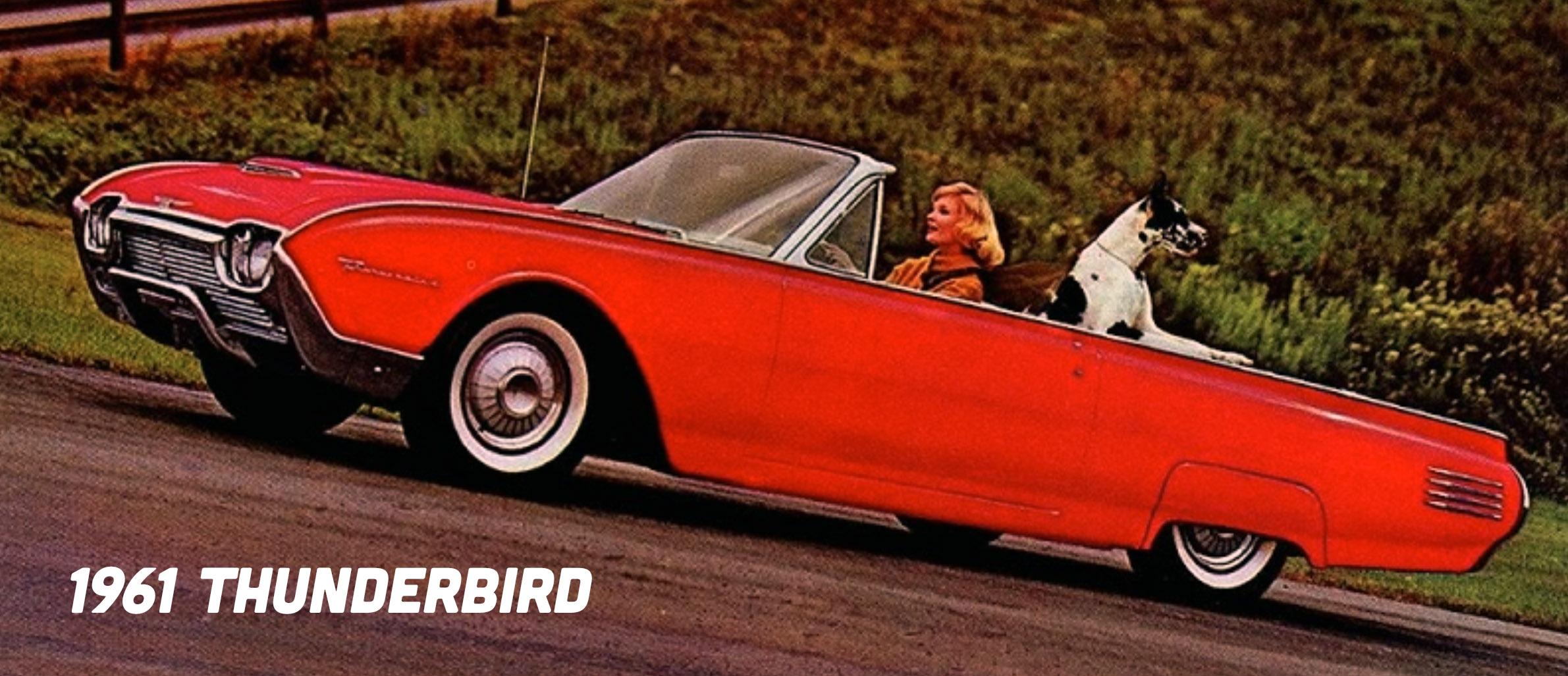
The 1955-57 two-seat models were iconic but just couldn’t gain the kind of sales that Ford needed to sustain. While the four-seat model “Box Bird” that replaced it for 1958 sold far better, there was an adolescent awkwardness to the styling that seemed stuck somewhere between the previous car and larger Ford coupes.

It wasn’t until the third-generation 1961-63 “rocket bird” that the new direction was truly resolved.
Another adolescent period occurred later. Whatever you think about the Torino-based 1977-79 T-Birds, they sold extremely well and were some of the most popular examples of the nameplate ever.

Of course, with CAFÉ fuel economy requirements this size of Thunderbird couldn’t last. Ford’s decision was to put the name onto the smaller 1980-82 Fox-body-based ‘Bird. This move drastically dropped the size and was more maneuverable, but Ford also chose to try and mimic the styling of the previous, much larger car.
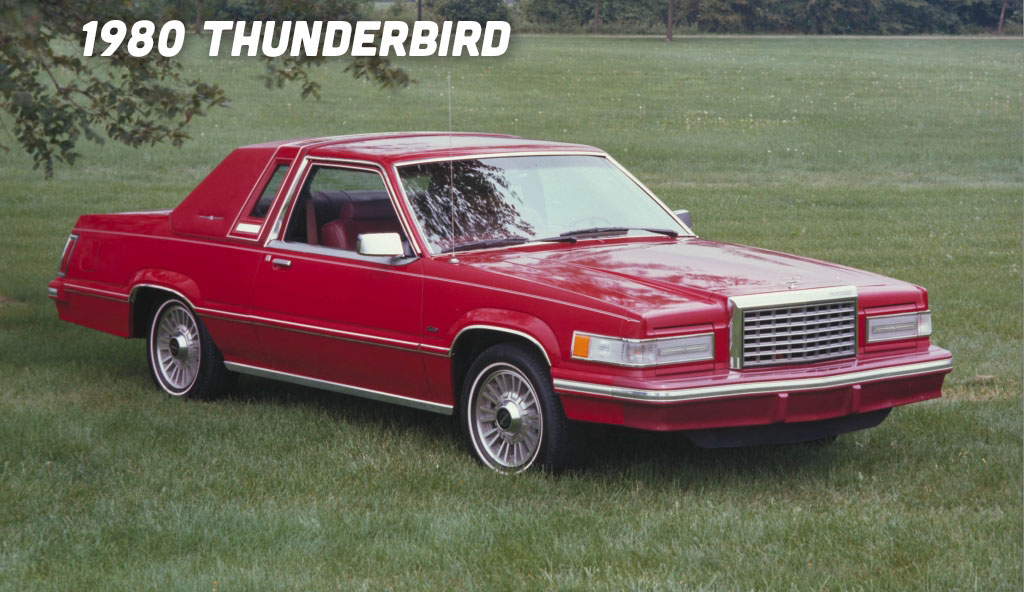
This didn’t work. The scaled-down-brougham looks were so universally disliked that it led to a revolution at Ford which resulted the awesome critically acclaimed and publicly welcomed 1983 “aero bird.”

Still, possibly the most controversial big change for the T-Bird occurred when it came time to replace the 1964-66 “Flair Bird,” better known to many as the “Thelma and Louise” car that meets a tragic end in the film of that name. Times had changed, cars had changed, and the Thunderbird was desperately looking for a new identity.
This Bird Had Bones (Dr. McCoy That Is)
The mid-sixties was an odd time for the Thunderbird, with the 1965 Mustang taking on the role of Ford’s youthful, fun, and affordable coupe. The Mustang-based Cougar would soon arrive to take on a slightly more luxurious role for the pony car and further erode sales of the fourth-generation T-Bird.

At the same time, General Motors was getting on the Thunderbird bandwagon in a big way with such personal luxury car masterpieces as the Buick Riviera and the new-for-’66 Oldsmobile Toronado. For this next generation, the Thunderbird would need to emphasize the “luxury” part if it’s “sport/luxury” mix to stay competitive. Ford began by changing the T-Bird from a unit body platform to a unique new body-on-frame structure (shared with no other Ford at the time) for more isolation and quiet. Next, the slow-selling convertible was dropped since few if any competitors offered a drop-top personal luxury entry.
Styling of this new fifth-gen T-Bird followed the path of the GM players: clean, simple and imposing. The Thunderbird’s front end was simply a large rectangular grille with hidden headlamps; a dramatic departure from the earlier T-Birds. The ’67 Olds Toronado and Buick Riviera also had concealed lamps and blunt fascias, but the object on the cover of the 1967 Thunderbird brochure below looked more like an industrial threshing machine or a killer cyborg than it did a car. As a young kid I was terrified of the old one in our ‘hood and always crossed to the other side of the street rather than walk on the sidewalk beside it. It’s pure evil.

In back, the rectangular shape of the front was echoed with a rectangular “loop” taillight; connecting both ends of the car was a very simple fuselage-style body with a subtle “Coke bottle” shape, bumped-out front fenders and thick rear pillars with, on upper models, those hearse-style “S” bars. I was going to crop these images below but decided that I just have to show the entire set of illustrations from the ’67 brochure since they’re just so magnificent and add the mystique that must have helped give it the name “glamour bird.”

Actually, getting the “base” coupe model got you a vinyl-and-landau-bar-free C-pillar and looked pretty damn good:

Overall, it was like something right out of a period sci-fi like a Syd Mead rendering or a Star Trek set (ironically, “Bones” McCoy actor DeForrest Kelley owned such a ‘Bird to park near Spock’s Riviera).
The most radical change for the ’67 fifth generation was the introduction of a new four-door Thunderbird, the first (and would turn out to be only) T-Bird sedan ever offered. An early if not pioneering adaptor of making a sedan that tried to look like a coupe, the center-opening “suicide doors” with adjacent door handles helped to disguise the rear portal.

The thick coupe C-pillars remained and the door cut in the sheet metal was blended in with the bottom of the silly chrome Landau bar. The sheet metal “fin” on the back of the rear door opened with it:

Are you checking out that interior in the image above? You really should.
Yo Dawg, I Heard You Like Landau Bars
Inside is where the battle of personal luxury cars is won and lost, and this T-Bird really went all-out with the Mad Men-style. You have bucket seats separated by a slick console up front, though a front bench was available to seat six. This looks like it was absolutely the thing to pull up at a Playboy Club with.

Do you like landau bars? Well, if you do, Ford put interior landau bars on the other side of the outside landau bars just for you, dawg. They even incorporated the rear courtesy light into these funeral coach-like details that seem to add to the Glamour Bird’s creepiness and mystery. This thing’s Landau bar game is strong, and I especially like the inlaid “woodgrain.”

source: Orlando Classic Cars
Admittedly, they did a surprisingly good job of the hidden back portal ruse; far better than many “four door coupes” of today that this T-Bird seems to have presaged decades before.

The extra doors certainly helped with rear seat ingress and egress, and selecting the four-door version of the T-Bird avoided the two-door’s cool-looking “wraparound” rear seatback you can see below that looked like a comfy lounge booth from Goodfellas but actually pushed you uncomfortably into Joe Pesci in the center. Interestingly, the rear quarter windows on the two-door slide back to open instead of down

The dashboard seemed to project an image of a GT car instead of a luxo cruiser with round gauges, power window switches all lined up in a row, sliding HVAC levers that look like airplane controls, and even an available overhead console with warning lights.
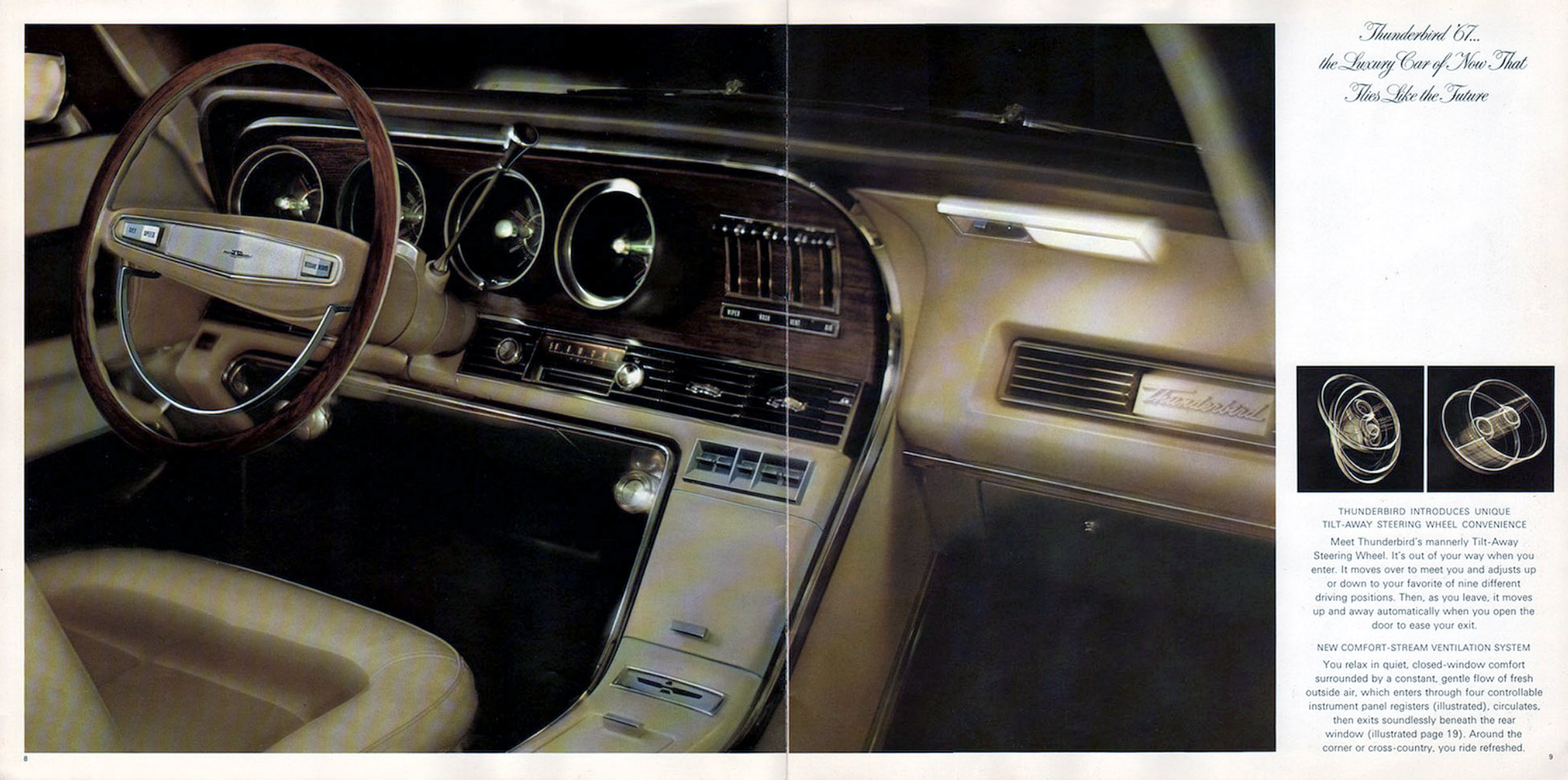
If there’s one thing that this T-Bird didn’t lack it was features, and those features seemed to operate on some of the strangest steampunk technologies. The windshield wipers ran off of the power steering pump. Headlight covers on that “Norelco razor” front end lifted via engine vacuum, which also controlled the locking mechanism of the steering wheel that tilted inward to allow easier access when the car was off. Fiber optic lines monitored the functionality of lighting. The sequential rear turn signals- one of the first to incorporate them- operated by an actual mechanical distributor that ran whenever you turned the indicators on. Signaling a turn ran a motor in the distributor that sent power to the appropriate bulb.
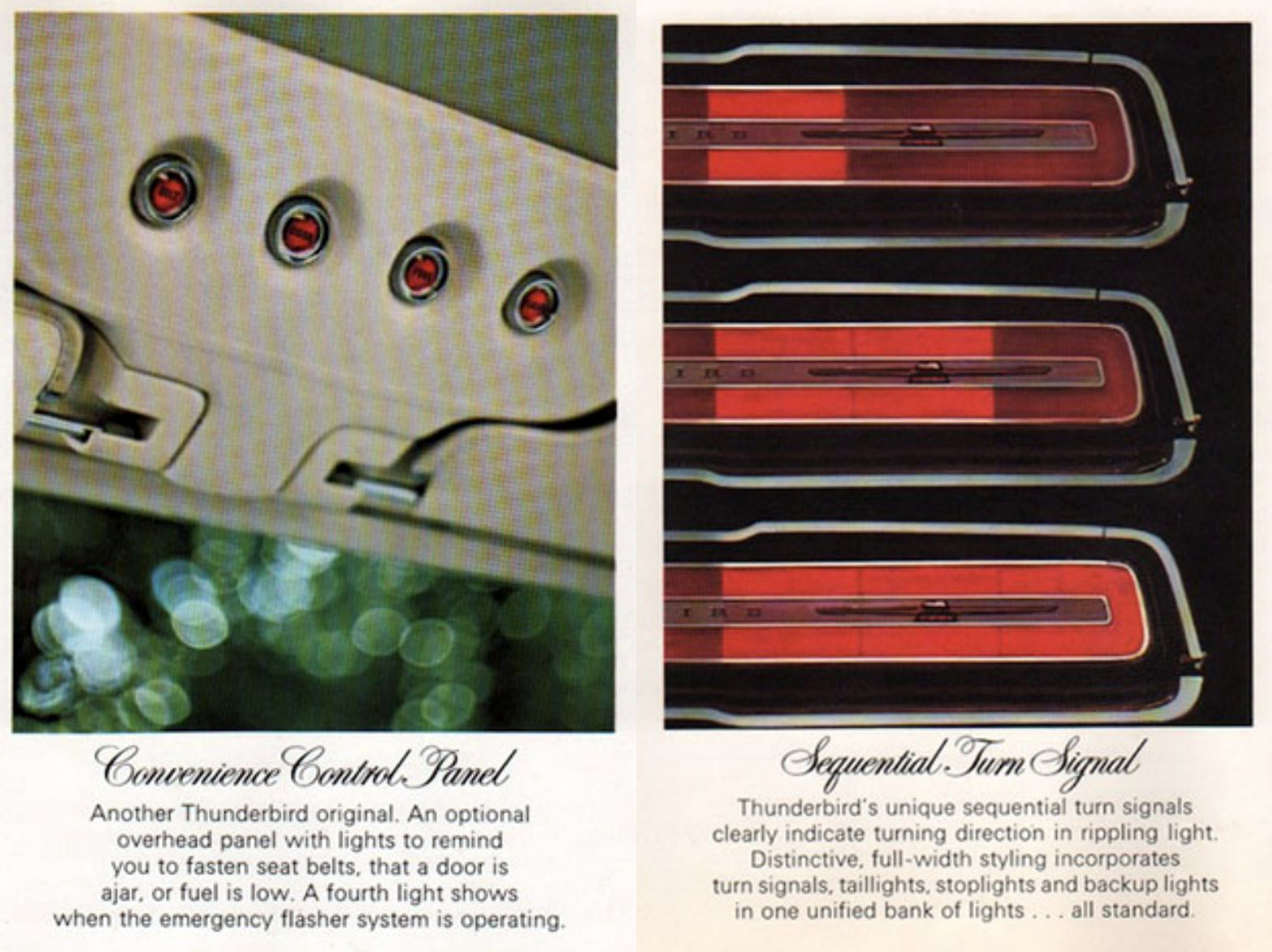
There are likely many reasons you never see this generation of T-Bird on the road anymore, but that BMW 7-Series-like complexity likely worked against it and resulted in many examples becoming fodder for CHiPs car wrecks when they weren’t even ten years old
One of the lesser-known innovations that Ford offered in 1968 was what might have been the first appearance of supplemental high-mounted stop lights, long before they became mandatory in America for 1986. This was apparently a rarely selected option, and only available on four doors.
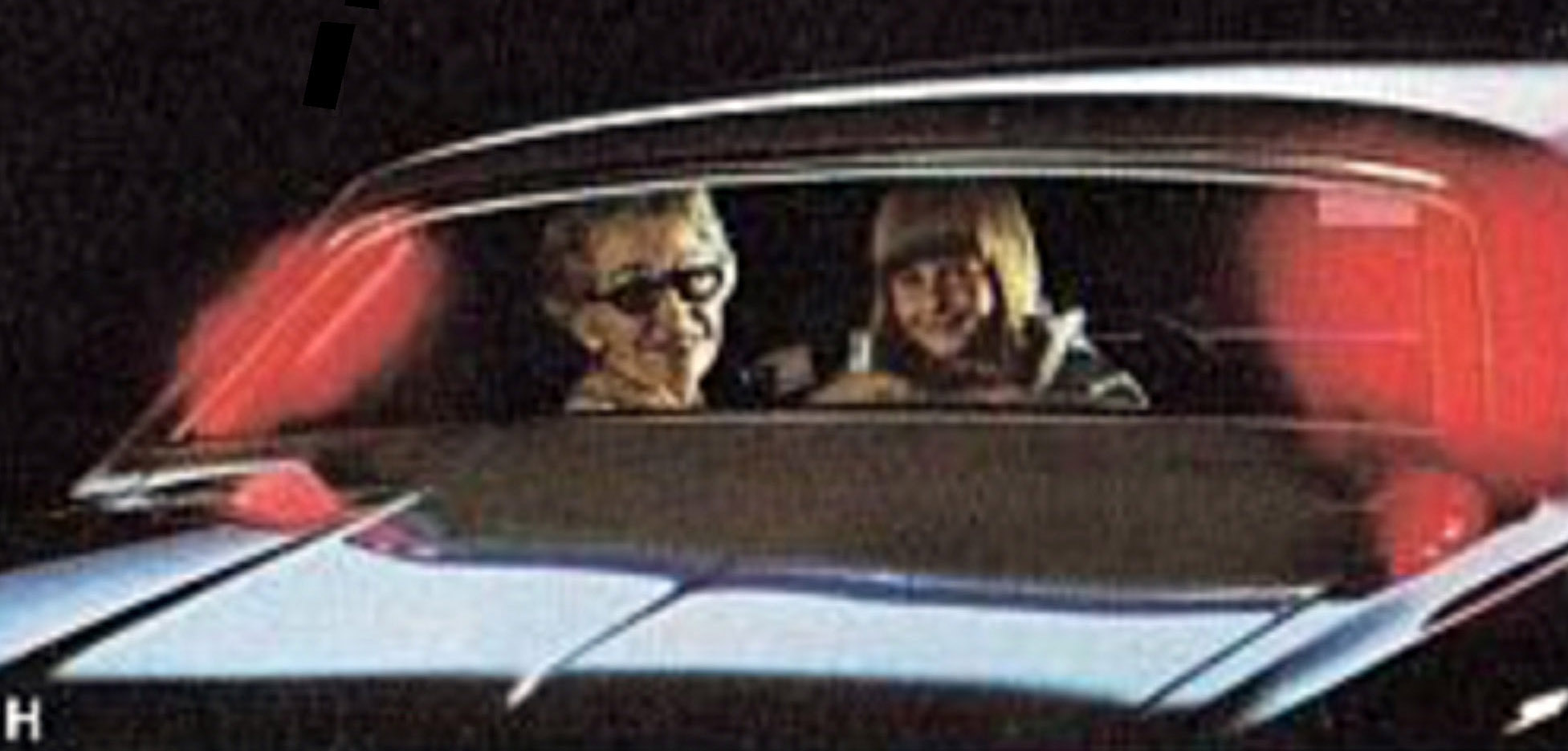
None of that seems totally unexpected for this mysterious T-Bird. However, the oddly strong straight-line performance adds another layer to the enigma.
The Boss Bird
What would you imagine to be the fastest Thunderbirds made? Maybe you’re thinking some early two-seater like the supercharged 1957, or more likely one of the later supercharged stick shift 1990 Super Coupes. You’d be right, but this strange fifth-generation car will surprise you again since some of them can vie for the title of fastest factory T-Birds ever
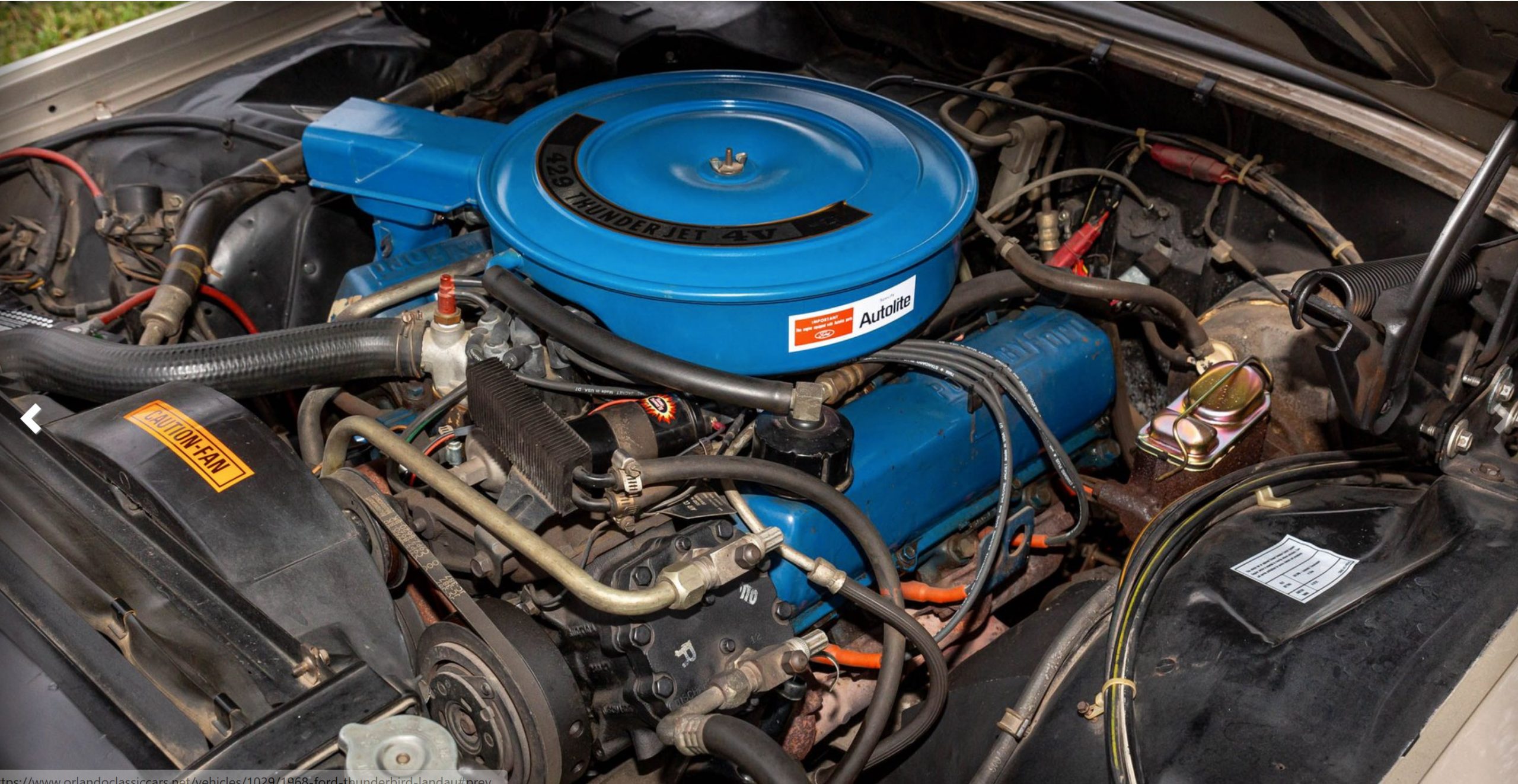
For 1967, power came from a standard 390 cubic inch 4-barrel V8 with twin exhausts rated at 315 horsepower; a 428 with 345 horsepower on tap was optional. However, next year the new 385 series big block “Thunder Jet” 429 V8 became an option; the first appearance of the motor that would become much more famous in the late sixties “hot” Mustangs. Quoted conservatively by Ford as producing 360 horsepower, many reports claim that the motor produced at least 40 more than that. Despite the 4300 pound curb weight, this redundantly named Thunder Jet Thunderbird was quick, with sources giving zero to sixty times anywhere from low-nines to as low as mid-sevens, making it one of the quickest cars in T-Bird history, landau bars and all.
The ’67 T-Bird handily outsold the Riviera and Toronado, but despite an all-new design and the addition of the four-door model, sales of the fifth-generation never achieved the boost that was expected. The 77,976 cars sold for the 1967 model year barely beat that 69,176 of the previous year’s final “Flair Bird”, but they dropped to below 65,000 for 1968 and never went over 50,000 after that. It didn’t help that Ford chose to add a pronounced and absurd “beak” to the thing near the end. Look at the nose on that thing! I also really hate T-Birds (or almost any car) where they block off the entire C pillar.

Expanding into four-door territory also proved to be a failed experiment, and that variation of T-Bird ended with the last fifth generation cars in 1971. Only 24,967 sedans sold in 1967, a number that steadily dropped to a mere 6,600 moving in 1971. After that, the four door Thunderbird was done for good.
The T-Bird Made A Mark
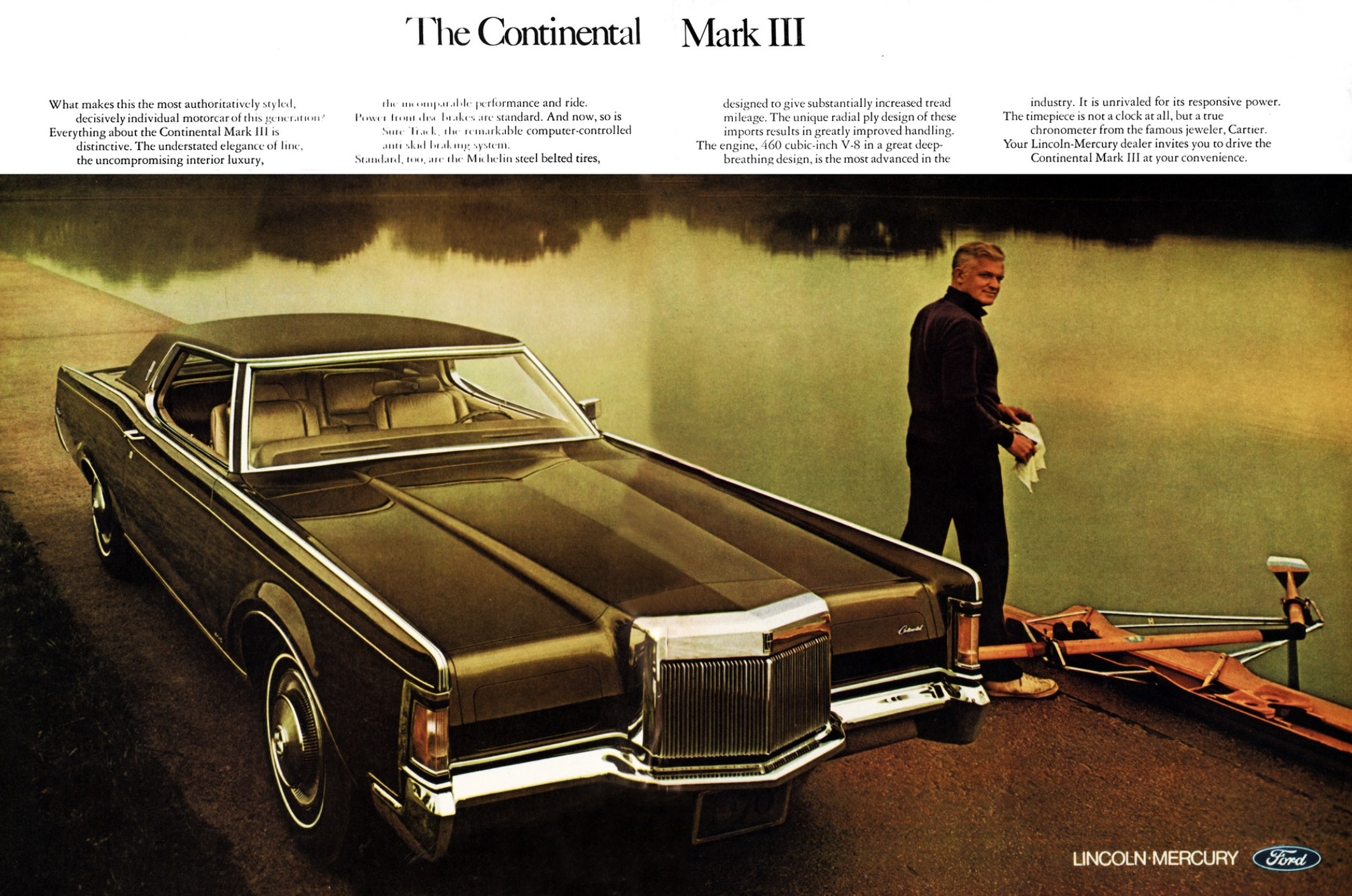
Honestly, the ’67 Thunderbird seems like it would have made more sense as a smaller Lincoln; like an LS or MKZ for an earlier generation, or a Versailles that actually worked. Of course, in the late sixties before the fuel crunch and years before compact luxury foreign cars were in vogue, such a market wouldn’t have existed; bigger was still better for the top brand of Ford. However, in 1969 Lincoln did introduce a version of this Thunderbird, the also-evil-looking Mark III as seen in the The French Connection and The Car. This was a smash success and proved extremely profitable for Ford and helped to save face for Lee Iacocca and his product planning collaborator Hal Sperlich after this generation of T-Bird proved to be a bit of a sales loser. Why is that when I see a Mark III owner wiping his hands, I assume that he just did a hit?
In many ways, though, I’m surprised that this generation of Thunderbird did as well as it ended up doing and wasn’t an abject failure. It’s a car that’s almost impossible to define as a very expensive Ford-branded luxury coupe that still wanted to be seen as a bit of an enthusiast’s car; it wasn’t, though in a straight line it was fast enough to inspire performance car people. Even the new sedan version really wasn’t a traditional sedan but instead an odd sort of coupe with an extra set of doors. What the hell was this thing?
Such hard-to-define cars often struggle in terms of appreciation, and that’s absolutely the case for the 1967-71 Thunderbird. Decent examples typically trade hands for the $9,000 to $18,000 range; that grey ’68 429 four-door shown below with 40,000 on the clock only fetched $35,000. Considering the mileage and beautiful condition, that’s pretty much all the money in the world for one of these things, and estimators at places like Hagerty don’t see it going up anytime soon.

To me, the sinister ambiguity of this unlikely hidden muscle car makes it oddly appealing. The most complex riddles are often easy to solve years later, but over half a century on the fifth-generation Thunderbird remains a mysterious thing that we might never fully understand.
source: Ford




I had a ’71 triple green T Bird .A 200 dollar car in 1984 . 365 HP 429 Thunder Jet and the best back seat EVER . Super clean except for the crunchy rusty east coast rear quarters.8 speed wipers and 8 to the gallon. Life was good for 22 year old me .
I had a boss that had a Super Coupe. It actually seemed to be a decent car. You know for a domestic car of that era. Then he got promoted and bought a Lincoln Continental.
A guy I went to high school had a fleet of them, cool cars. His engine builder wasnt that great.
I dont know what your talking about a 6th gen aero bird went 212mph.
To an extent the Thunderbird was a nameplate with no core identity, used by the marketing department for whatever trend was hot at the moment. Not quite the affront of what Mercury did to the Cougar (a wagon? come on!), but still pretty bad.
https://www.theautopian.com/we-should-probably-stop-using-the-term-suicide-doors/
Fire it up!
I was working for Ford when the aero tbird came out. In 83 it was the lease car deal of the year and a lot of the engineering staff leased one.
It was discovered that there was a lot of variance in the performance. Traced it to the boost limit on the turbo.
Never officially recognized, but some were much faster than the majority. Seems that while quality was job 1, setting the boost limit was not on the list and a few came out with the limit way too high.
Yes, pretty soon all the engineering cars were at the high end on the boost. Do something like that today and you would be marched to the door with all your stuff in a box.
By the way, the fastest were not even close to a match for my Norton.
I absolutely adore this era of Thunderbird. I had an 85 Elan with the 5.0 and digital gauges and overdrive. It was a great cruiser.
One of my favorite possessions is my 1967 custom T-bird coupe redline made by hot wheels in 1968. That red one in the pictures is so sexy. Probably the best Tbird of them all.
What timing. I was just reading about this generation of t-birds a few days ago when I stumbled across a picture of a 4-door. I had never known that they were offered in a 4-door, and suicide doors at that. There’s elements of the styling that I’m not a big fan of, but I do really like the way the car sits on its wheels. The wheel openings are cut much higher into the body than most cars of that era, and I imagine that these look very good lowered.
I always liked this series of T-Bird’s long, menacing look. The formal greenhouse atop the sleek body styling just worked somehow. I prefer the coupe without the landau bars, but the four-door design has its own appeal — and the suicide doors with the disguised c-pillar panel that opened with the door, plus the sweeping curve of the rear seatback gives it a coach-built appearance that still looks good.
As for the vaguely “evil” look of these T-Birds, as well as various contemporary Lincolns and other Fords — there was a time in the 70s and early 80s when it seemed like they were cast as “bad guy” cars so frequently that it was almost stereotypical for bad guys to drive big Fords (or Lincolns) while “good guys” had some sort of GM car. I swear sometimes the directors used it as foreshadowing — before the Big Bad actually did or said anything “bad” on-screen, he arrived driving up in, or getting out of, a big Ford or Lincoln. The car looked vaguely mean, and you just knew this guy wasn’t on the level somehow. At a certain point it started to seem like a Snidely Whiplash, moustache-twirling trope. Big Ford=Bad Guy — Called it!
I feel like Thunderbirds look their best when the styling tries to stand somewhat apart from what all the rest of auto design is doing — and if you look at all of them together, it’s usually when the formula is either formal roof over streamlined body, or some sort of fully futuristic shape with enough conventional chrome or styling bits to ground it in the current style so it’s not too shocking or off-putting in context with what else is on the road.
The ’77 styling is another of my favorites. Yes, it’s definitely a Malaise era product, and if you call out its various styling elements, it ought to be a hopeless mess. The front is pure 70’s Brougham plus those neoclassic side louvers. which gives way to a wide, curved large-barge windshield that forms a peak for the whole shape of the car. But from the A-pillar back, the curves change into much more angular shapes. The windows are all trapezoids with sharp corners. The “basket handle” and inset Brougham-derived opera windows rake forward almost as sharply as the windshield rakes back, and then there’s the disconnected rear greenhouse that tapers the whole car into a much more angular and forward-slanted profile. It’s a complete hodge-podge, and yet it pulls it off — as long as the owner didn’t go too nuts on the “deluxe appearance” options. It can be very sleek or horribly Baroque depending on how much tacked-on trim there is. Through ’78 and ’79 too much extra chrome started showing up and wrecked what was in interesting design. Left alone and not over-ornamented, it kept some of that earlier Thunderbird menace. Even the tacked-on side vents worked; the narrow design looked like little shark gills.
The ’80 design was just way too much Brougham on too small of a car; the Fairmont Futura with its obvious 20% Xerox-reduction of the ’77 T-Bird’s shape was a much prettier car; with a different front cap and hidden headlights it could have served as a far more attractive ‘Bird.
Then the ’83 aero ‘Bird was both a cutting-edge look but also a return to the all-over “rocket” styling of older T-Birds, and got the mojo back. In fact, the side window profile of the ’83 tended to echo the formal roofline of multiple Thunderbird shapes, but it was rounded and blended into the ultramodern aero form quite well. (The companion Mercury Cougar tried a true “formal” roof with the cut-off backlite and it looked awkward; the T-Bird got the juxtaposition of styles mich better). The chrome grille was clearly tacked-on and got some criticism, but it did a good job of mixing in some “traditional” styling which was a well-established Thunderbird trait by then. And with it, it pulled off a bit of the same trick as the ’77 — something “traditional” up front, which then gave way to a much sleeker, ultramodern car through the rest of the body. The ’77’s contrasting forward rake to the tail was even there, now topped off with a subtle flattened spoiler lip across the top.
The subsequent facelift and then derivative later generation, to me, were attractive but not particularly exciting. The aero-‘Bird shape had become established; they didn’t break any new ground or play with the style in any way to make them especially interesting. And then the “retro” Bird came along and was nice in its own way, but to me was always just kind of another face among the trendy retro-revival in car styling. It aped its predecessor just fine but it never really brough anything of its own to the table. But that’s just me.
Great write-up, and I agree pretty much across the board. Thanks for giving some flowers to the 1977-79 “malaise ‘Bird,” which I have always thought was a rather handsome car. That’s probably because my dad ordered a brand new one in 1977, black over red velour, with the groovy polycast wheels. He said it’s still his favorite car he’s ever owned, even more than the ’61 he dated my mom in.
I took a hard look at some photos of the 1977-79 Thunderbird a few years ago, and I decided that it would make an awesome looking bagged boulevard cruiser, especially with some things shaved and tucked and smoothed out, and some degree of de-Brougham-ing, particularly those dopey fake luggage straps over the trunk (if so equipped).
The fake luggage straps were an abomination! So were the “special” packages that put a thick brushed stainless overlay on the “basket handle” and the one that blanked out the rear side windows with vinyl roof, leaving only the opera windows. The styling was really meant to be left to stand by itself with no extra chrome or geegaws than it left the factory with in 1977 base trim. Even the common optional wide bodyside molding was too much, really.
The polycast wheels and the turbine-style aluminum ones were definitely the best-looking ones.
My family had a 1977, metallic blue over blue velour interior with a 351 Windsor under the (very long…) hood, had the polycast wheels. Ordered specifically with no large add-on body moldings — Just the thin factory full wheel-arch stainless trim and pinstripes (Which were two sets on the T-bird — one from the front of the fenders to the door handles, and the second wrapping over the basket handle to the rear fender ends.) The order included a set of dealer-installed thin black rubber rub strips midway on the doors and just past to the back of the front fenders (behind the “gills” to just ahead of the rear wheel. Always a sharp-looking car, and super-comfortable on long trips.
It was eventually succeeded by a ’83, dark blue metallic over light blue velour interior, with the 302 V-8. Wheels on that one were just steel with the flat stainless full-coverage disc hubcaps for maximum aero. Another fantastic highway cruiser.
I kinda want to know how a sedan would look without the awful vinyl, that sounds intriguing. And yeah the guy the Mark lll ad just left someone at the bottom of that lake for sure…
Just a note to say I love these articles, The Bishop! Keep em coming
Thank you!
Along with the Bullet and Flair Birds, I find the styling just a bit disjointed, all sleek and Jet Age below the waist, but formal and upright above (the Bullet and Flair Birds at least got around this with convertibles, especially the Sports Roadster).
That was the Thunderbird style ever since the 1958 four seater…
…a balance of flair and formality.
Until Bunkie Knudsen had the designers create a “sports-roof” hardtop for 1970/71 – which made the beaked Thunderbird look more like a Pontiac Catalina or a Toronado
That just reversed the formula! Big personal luxury barge below the waist, sleek above! It at least got cohesive for ’77 on even if that was a fairly cynical car otherwise.
I don’t know how cynical it was to rebody a Torino/Montego as a Thunderbird/Cougar…resulting in a better car and better sales than the preceeding giant Thunderbird and Ford Elite.
…when Mustang, Cougar, Maverick, Comet, Granada, Monarch and Versailles was a rebodied Falcon.
Mark III was a rebodied Thunderbird.
1970 Lincoln Continental was a stretched and rebodied 1969 Ford Galaxie/Mercury Monterey.
When ’71-77 Eldorado was built on the same platform as Impala and Catalina.
When 1975 Cordoba and 1979 New Yorker was built on the same platform as a Dodge Coronet – and ’79 LeBaron was a rebodied Plymouth Volare.
Karman Ghia was a rebodied Beetle
Etc, etc.
Meanwhile – Is anyone else sick of the AI-generated Deal Dash ad of a guy running his old pickup off a cliff and explaining to his wife that he go a new truck for just $6000 – and guess, what, “Little Timmy” wasn’t in the the old truck when he destroyed it, isn’t that great?
Because he could have sold that old truck to Carvana…