

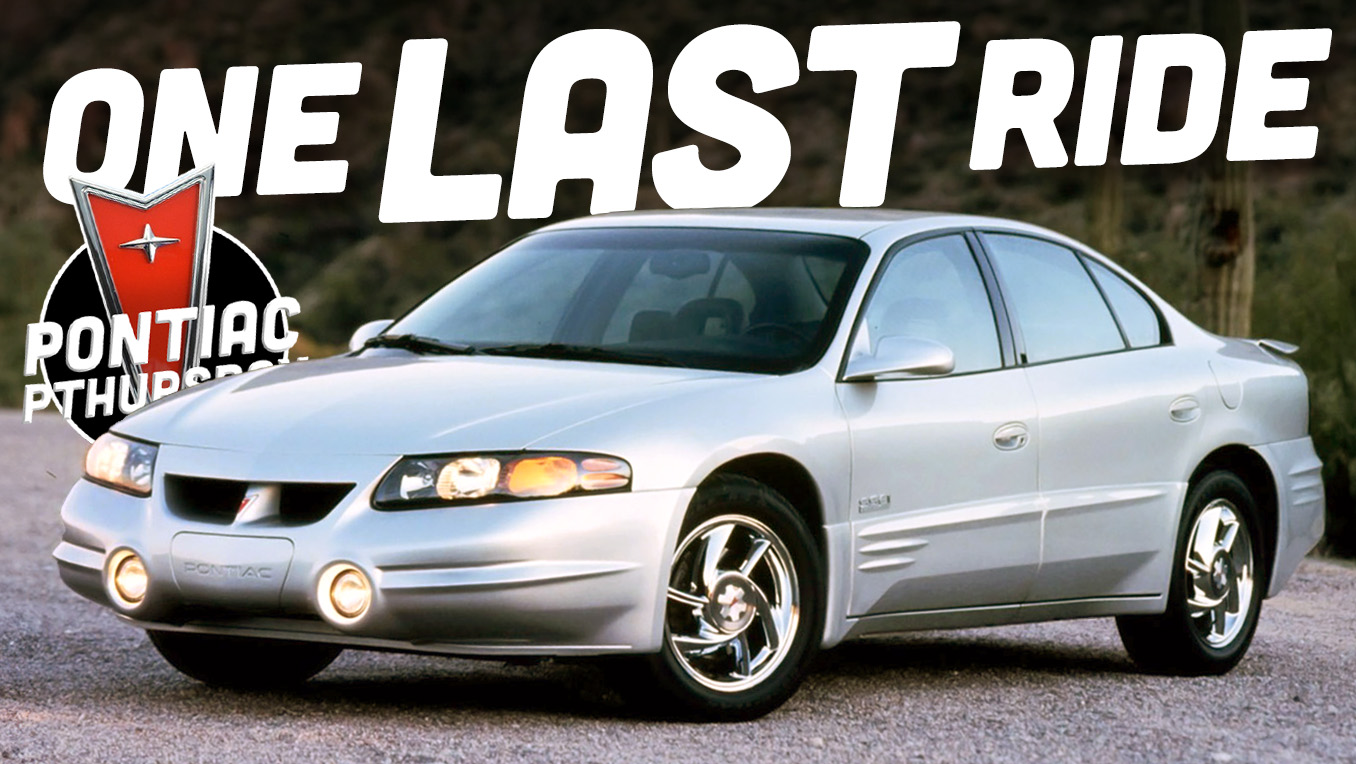
Ask any insufferable full-sized Ford fan (like me) what the most reliable and durable American car in the last 25 years was; they’ll tell you that it has to be the Panther-platform Ford Crown Victoria. However, General Motors’ full-sized sedans powered by the 3800 V6 certainly give them a very good run for their money. Like their rear-drive Ford counterparts, this bulletproof engine typically resides in cars owned by those in their twilight years of driving, such as Buicks and Oldsmobiles.
However, you don’t have to go all geriatric to get a ride with GM’s most dependable powerplant. In fact, there’s a car with a modified version of this motor that was the first front-drive sedan to break the 200MPH mark. The stock street version of this last outing of the Pontiac named after the salt flats was a supercharged sleeper that was as underappreciated then as it is now. Let’s revisit the Bonneville SSEi.


From Excrement To Excitement
In the eighties, Pontiac was desperately trying to get back to their performance car roots after a journey through the Brougham Wasteland. General Motors’ new front-drive platforms were a blank canvas to which The Excitement Division could make mock-European sports sedans to lure a market that cried out for “Wal-Mart BMWs.”
Pontiac began with the mid-sized A-body and built the 6000STE, a six-headlamped shot at the Audi 5000 Turbo, which showed the world that GM was at least trying to get with the times.

A little while back, I looked at Pontiac’s follow-up where they applied this kind of thinking to their version of GM’s new generation of large drive sedan. The result was the Bonneville SSE, a rather over-the-top pastiche of surface-deep Miami Vice style eighties European tuner car excess that lacked nothing but AMG badges. Oh, it also lacked actual performance.

With the introduction of the brand-new 1992 Bonneville, Pontiac fixed that issue by adding a supercharged version of the 3800 that packed 205 horsepower, a lift of 30 over the stock motor. This was enough to push the Pontiac’s new big sedan to sixty in 7.5 seconds according to Car and Driver (though Pontiac’s official figure was 8.5). Finally, the Bonne had some power to back up its extroverted looks.

Unlike the earlier 1987-91 model that had the appearance of a smoothed-out nose and tail stuck onto a blocky Buick main body, this Bonneville had a much more cohesive style. The rounded styling improved aerodynamics without looking like a me-too Taurus, though Pontiac couldn’t resist adding their typical fussy body cladding to the top-level models.

Compared to the 1988 model, the 1992 interior still featured the ultra-tufty seats and buttons-o-plenty but was somewhat more rationalized.

The fake wood and less-than-spectacular materials remained. At first, I wanted to laugh at the massive GAIN control for the stereo; is turning the bass level up and down really that important in a car? Actually, going from Wu Tang to Yacht Rock, no fumbling to find the tone controls? Never mind, that’s a dope feature.

Oh no! The mess of seat buttons from the ’88 car remains, and if anything, it looks more complex. At least they appear to have incorporated all of the switches into one location instead of three as on the old car.

In darker colors, this generation of Bonneville came off as far better looking and hiding a lot of the streaks and strakes that many of us found objectionable in nineties Pontiacs.

Actually, one great hack you could do with later editions of this generation of Bonneville was to order the supercharged engine with a lower-level SLE model to give you the performance without the boy-racer add-ons. And to my eye, a much nicer-looking car.

This ninth generation of Bonneville was well received, and the supercharged 3800 engine eventually bumped up to 225 horsepower and then to 240. By 1999, however, it was getting quite long in the tooth. The 1992 model finished mid-pack in a Car and Driver comparison test with an international mix of sport sedans, but by the end of the decade, it came in dead last in a similar comparison. Clearly, the time had come for an upgrade.
Saving The Best Bonne For Last
Pontiac certainly still took the Bonneville seriously enough to put the effort into making the tenth-generation 2000 version better than ever. The big move was transferring the name to GM’s G-Platform that consolidated all of their large products, including such cars as the Oldsmobile Aurora.
Starting with the basics, the G-platform reportedly had one of the strongest production unibody car frames. According to GM, in the “test to fail” procedures, they needed to use the “frame crusher” designed for heavy-duty truck frames – an impressive claim.

This Bonneville followed the tradition of Pontiacs from years past by offering the widest overall track of any car in its class, “reverse staggered” as it were, at 62.6 in (1,590 mm) up front and 62.1 in (1,580 mm) in the rear. Styling now eschewed the “jellybean” aspects of the predecessor for a crisper appearance with a wedge profile that followed the Pontiac brand language of the time. Basically, it looked like an upsized Grand Am or Grand Prix, though if anything, the longer shape seemed to suit the aesthetic better. As with those cars, the slight “Coke bottle” shape sort of implied a rear-drive car that it wasn’t. I really want to get virtual sandpaper and smooth out those funky Pontiac bumps on the sides.

The interior was toned down a bit from the earlier SSEi models, with car seats that actually started to look like car seats and not odd massage chairs, which I kind of miss.

Love or hate the dashboards of the earlier Bonnevilles, this 2000 model wouldn’t change your mind much. Grey buttons abound, round vents seem to be multiplying, and materials were still where the term “rental car cheap” originated. At least the three-dozen seat rocker switches finally went away.

Ah, but the reliable 3800 remained, and the supercharged version still pumped out 240 horsepower. For a big American sedan, a zero-to-sixty time of around 7.5 seconds was reasonable.
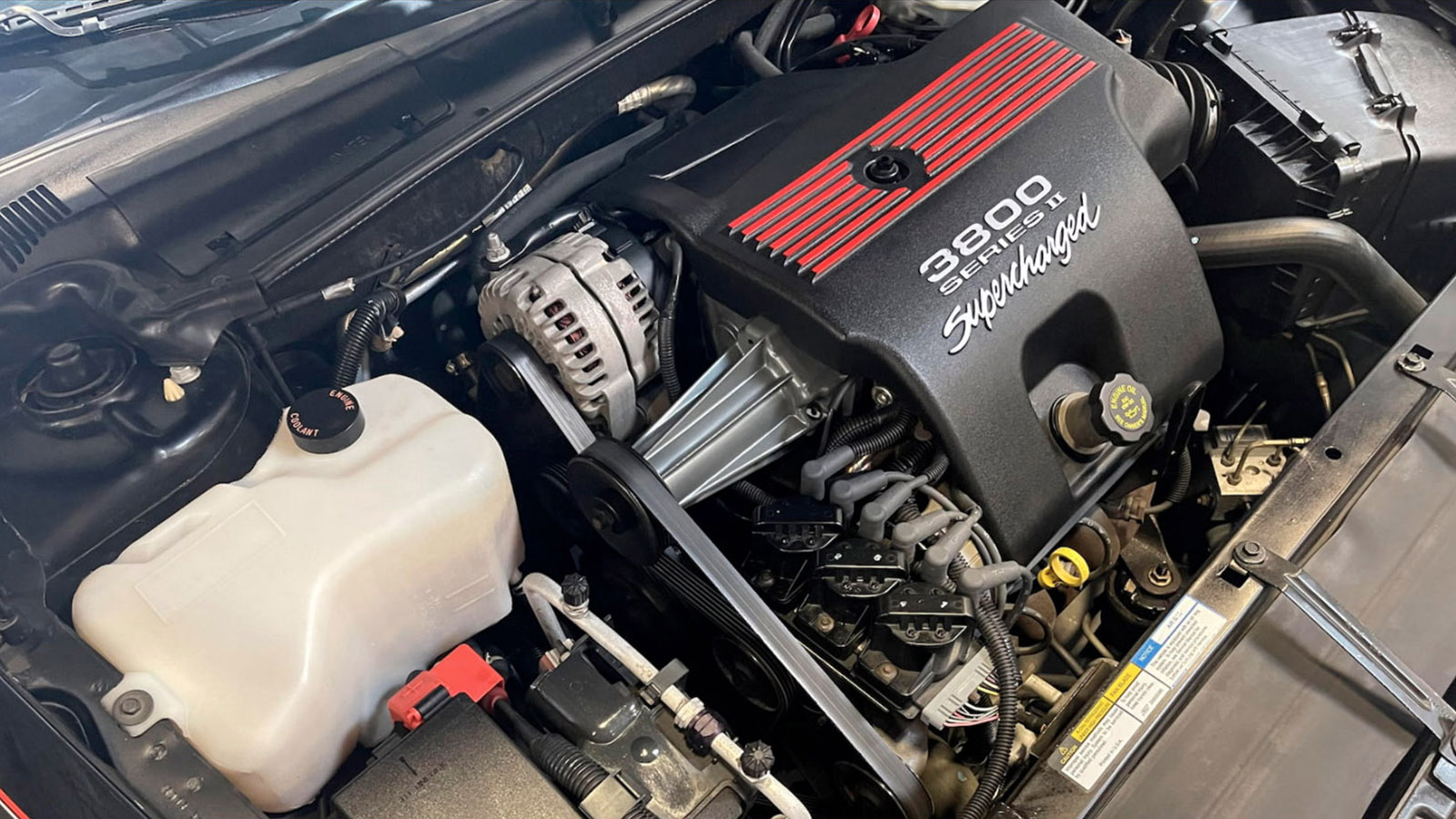
The Integrated Chassis Control System (ICCS) fed information to the traction control from yaw sensors, wheel sensors, a lateral accelerometer, and a steering-angle sensor to help corral the car when in a skid, but the Bonneville was really all about long-distance cruising. Still, this ain’t no Buick: the new Bonneville was the most sporting of GM’s G-body family.
Do You Like Catastrophic Head Gasket Failures?
Was the SSEi the last word in performance Bonnevilles? No, that title goes to the rare GXP model introduced that featured an extra two cylinders. With the discontinuation of the Oldsmobile Aurora, there was no non-Cadillac GM premium sedan with a V8, so the Bonneville gained a 275-horsepower version of this motor for 2004.

In appearance as well as performance, this big sedan was able to hold its own amongst the other formidable Pontiacs in the 2004 lineup, including the Aussie Goat.
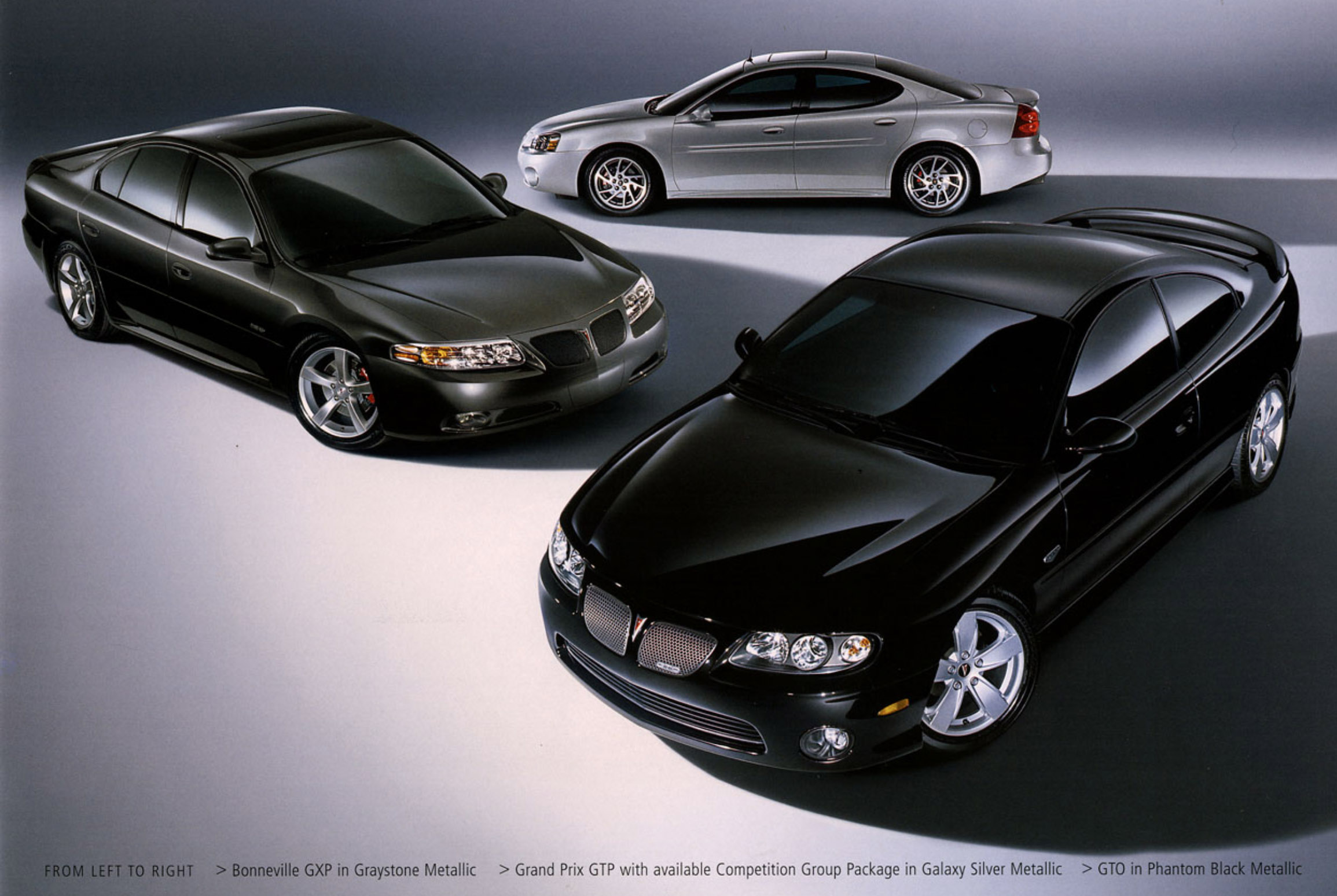
The GXP could accelerate from zero to sixty in around 6.5 seconds, or a good second and a half faster than the V6 SSEi and quicker than a BMW 530i or Lexus ES. Well, that is, when it was running; you see, the V8 in the GXP was the notorious Cadillac Northstar engine. If the 3800 V6 built a new legacy of GM reliability, the Northstar blasted it apart in the same way that it did its own head bolts (among other issues). Sure, at 275 horsepower, you got 35 more than the last supercharged SSEi built in 2003, but buy one and you’re now trading one of the most reliable GM powerplants for one that never got fully sorted.
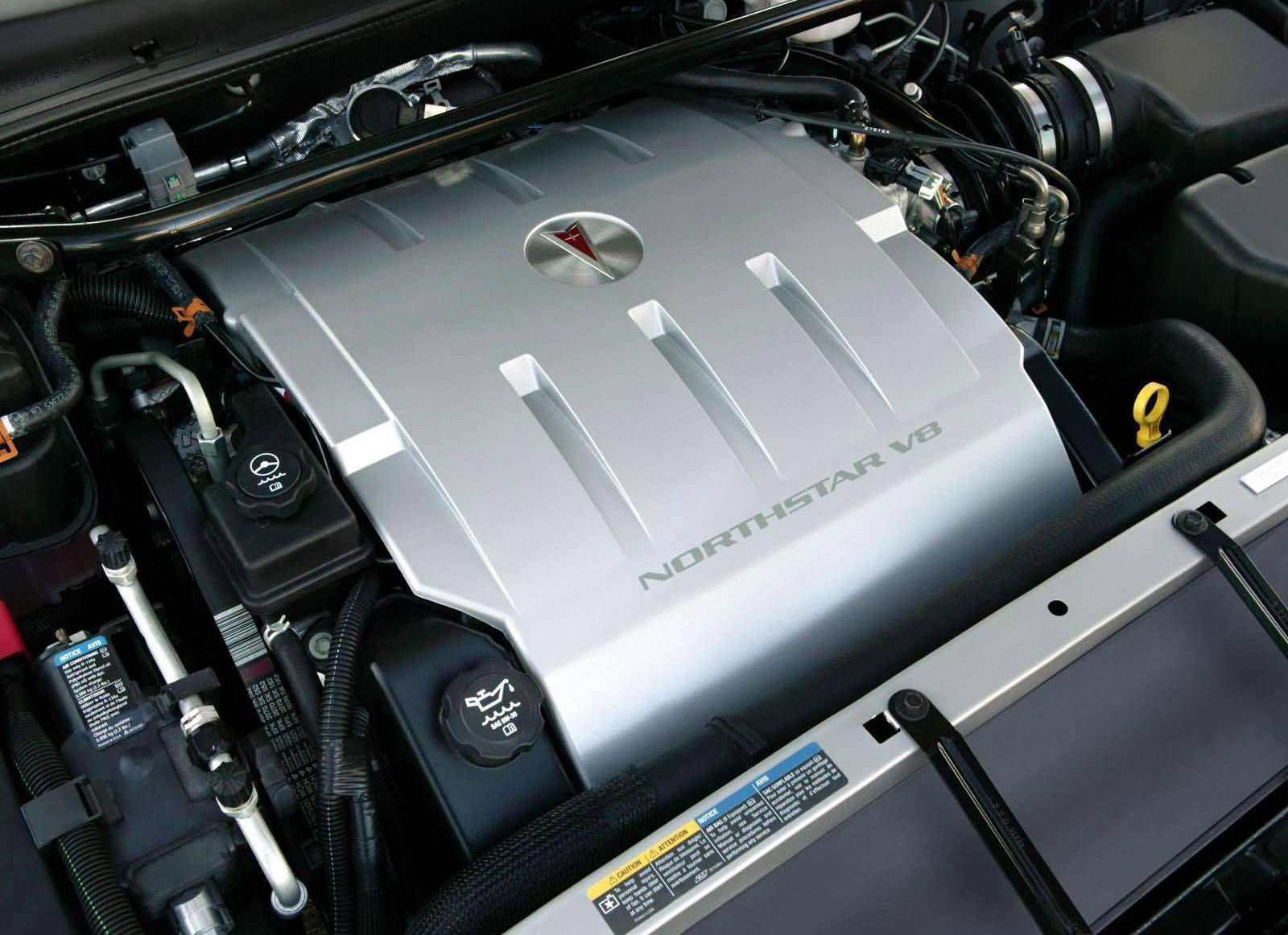
You want cheap, dependable speed? Believe me, the extra performance ain’t worth the headache or expense. I’ve driven by a dead-on-flat-tires Caddy STS every day for the last ten years, which serves as a warning. Stick with the supercharged Bonneville SSEi, or get a normally aspirated 205-horsepower, 3800-powered 2004 or 2005 model, which had the same simple and rather pleasing strake-free rocker panel flanks as the GXP.

How about a 2006 model? Sadly, that didn’t exist. Pontiac went on to import the admittedly excellent Holden-made G8 and dropped the Bonneville for good; GM then went and dropped the Pontiac brand as a whole not much later. Keeping the big 3800-powered sedan around likely wouldn’t have saved the brand, but the costly rear-drive neo-BMW Aussies certainly didn’t either. Besides, did any of those V8-powered cars break world records? No, but the 3800 sure did.
You’ll Never See A Pontiac LeMans at LeMans
There’s a lot of Pontiacs over the years that didn’t exactly earn their racing track names. Hard to believe as it might be, that’s not the case with the big Bonneville. Back in 1956, a Pontiac 860 coupe set out on the famous salt flats to break the Class C stock car 24-hour world speed record, a feat that it accomplished at 118.375 mph. That “Bonneville” name, which was placed on the car thereafter, was earned, not slapped on.
To commemorate this achievement nearly 50 years later, a 2000 Bonneville received a host of tweaks to the stock-blocked 3800 to produce in excess of 450 horsepower. This modified Bonneville recorded a trap speed of 204.31, setting the world top speed record for a front-wheel-drive (and supposedly still street legal) sedan.

After years of the name being applied to button-tufted-velour upholstered cars with wire wheel covers, it was a triumphant but bittersweet accomplishment to see one of the last Bonnevilles- and last Pontiacs in general- go out with a performance that lived up to the name. Ride, Pontiac, Ride indeed.
Pocket Change Pontiac Performance
The Bob Lutz-backed Australian G8 and GTO models get all the attention today, and they tend to demand decent money as “new classics.” The last Bonnevilles receive none of this respect, but as more spacious front-drive sedans, they’re likely more useful as everyday cars. You could also likely pick up several examples for the asking price of one clean rebadged Holden Pontiac.
Finding such a nice condition big Pontiac today is a task easier said than done, but they’re out there. Here’s a super clean 40,000-mile one that sold on Bring A Trailer.

Two decades on, the sort of hokey styling details seems sort of charming, and for better or worse, it’s distinctive.

The same is true on the inside, recalling the time when GM tried funky organic shapes that looked like internal organs on everything; how many circular air vents can you possibly put on a dashboard?

It’s a real five-passenger road trip ride. Honestly, this doesn’t look like a bad place to be driven around in.

This particular Bonneville went for $10,450, a surprising figure considering that’s really all the money for one of these comfy daily drivers. If you (or the son/daughter that you’re buying it for) dread the idea of getting an old Camry, Avalon, or Park Avenue as a dependable ride for your limited budget, the last of the blower Bonnevilles with the modern-day equivalent of the small block Chevy could be a good, solid bargain choice.
Pontiac Points: 77/ 100
Verdict: In the end, the Bonneville never beat the Germans but gave us something better: a real American road car that ended where it began, out on the salt flats.


I thought these got the 5.3 FWD like the Impala, but I guess that was the later Grand Prix
I somehow missed the GXP Bonneville had the Northstar in it. I knew it was a V8 though. I used to bag groceries as a teen at my local grocery store and this tiny old lady who could barely walk around had one. I always shook my head as she got in it. She only lived about a quarter mile away too. That was a common thing in my town with old ladies driving big ass V8 sedans for some reason. I wanted that car so bad then but knowing what I know now that would have been bad idea to own it. It looked exactly like the picture above too.
You made note of the bonneville being the first fwd car to exceed 200hp, but isn’t that honor owed to the 1989 Taurus sho with 220hp?
The last gen Bonne is a real looker. Too bad the interiors are cheap cheap cheap, and the handling was very much comfort oriented (which is fine in a car like this!). I’ve always kind of wanted one, but when actually in the market always go to the Germans. an E500 or 540i are going to run rings around this, and still feel reasonably lux.
Pontiac: why use a simple switch when 4 buttons could do the same job?
Was this a competitor for the BMWs of the era? I seem to remember that handling is one thing that made BMWs stand out. I tried to look up the roadholding/handling on the Bonneville SSEI. The blank on the Motor Trend specs form says “N/A”. Yep, I remember GM cars of the area not having any handling available. They could be spec’d to go fast, but body roll comes as the standard cornering maneuver.
In GM’s mind yes.
And some of their sporty cars handled well enough in an absolute sense, I had a ’88 trans am GTA WS6 and whatever its other faults were it didn’t roll much and the later ’96 Gran Prix GTP i considered buying had a stiff (if uncomfortable) suspension that didn’t similarly didn’t roll much but it had none of the suppleness or feel that old BMWs are legendary for.
I inherited one of those mid nineties supercharged SLE models and it’s still one of my fav cars. It had the comfy leather seats, but with only the six way drivers/manual passenger adjusters. Thankfully no fake wood trim. Man that car was comfy and could haul a ton of stuff and was surprisingly quick when you floored it. That year the SLE was badged as a lowly SE model so no one knew what it was.
mom had a ’98 with the blue/green color shift paint. majestic teal, maybe? anyhow, yes we love the 3800 for reasons, but dad still had to replace an intake manifold because GM, so it was kind of a wash.
I always loved the red dash lights in a Pontiac.
Not to dismiss your preferences, I didn’t like the red dash lights in Bonnevilles or BMWs. My loved IP lights were the deep blue lights and red needles in my 2001 Jetta.
I’ll forever remember the last Bonneville I ever got to drive.
September, 2001. I was working in Tacoma, WA. I was supposed to fly home on the 11th, but my job got delayed so I rescheduled my flight home to the 13th.
Well, we all know what happened on September 11th. My flight on the 13th was cancelled. I called Avis rent-a-car and asked them if I could take the rental car I already had (A brand new loaded Bonneville SSE) from the Seattle area all the way back to northern Wisconsin and return it at the airport location close to where I lived.
Surprisingly, they had no problem with this. They told me there would be no drop fee, and no mileage fee, and they wished me safe travels. So I packed up the car on the 13th and headed out to begin my almost 1900 mile trek back home.
I stopped at Yellowstone National Park on the way home. It was almost devoid of tourists. I got to see a few cool geysers. I spent nights in hotels in Bozeman, MT and Pierre, SD on my way home.
A trip I’ll never forget.
A trip with impossibly contrasting emotions, I guess.
obviously sept11 is a horrible. but that is such a cool story! i’d take a cross country drive over waiting in a hotel for airports to open up any day!
I lived in the Seattle area back then and travelled frequently for onsite work.
Work and travel immediately ceased. I didn’t do any project work until February 2002. I got assigned to a project in South Bend, IN and the air fare there was absurd, so I flew into Chicago Midway and rented a car. The Avis agent proudly told me I was being upgraded to a Cadillac Seville. Cool! I walk up to the car and noticed the Florida license plate and figured it got there like you got back home.
It was a sub-freezing night and the freeway was almost empty. A few miles down the road, an 18-wheeler passed me and kicked up some spray. I hit the washer switch and… nothing.
I stopped at the next oasis, saw the washer fluid reservoir was frozen solid and bought a jug of blue windshield juice. I popped the cap and splashed some on the windshield. I had to that periodically for almost 100 miles.
I finally got to the hotel and was happy to see it had somewhat heated underground parking. By the next morning, the Florida grade washer fluid (water, I think) had thawed, and I ran the washer until it ran dry. I poured in the remaining blue stuff. No further problems.
Did you at least get to check out the Studebaker Museum while you were in South Bend?
Sadly, no. But I did get to have lunch in the faculty dining room at UND.
So many online reviewers waste so much time demonstrating each and every button. This Bonneville would have killed me.
The final generation has to be one of the cheapest used cars with a heads up display.
My first car was an ’83 Grand Prix, straight from the Brougham Wasteland!
I think the front end of the 2000 model still looks great. The whole car is branching out from the bitchin’ fog lights.