

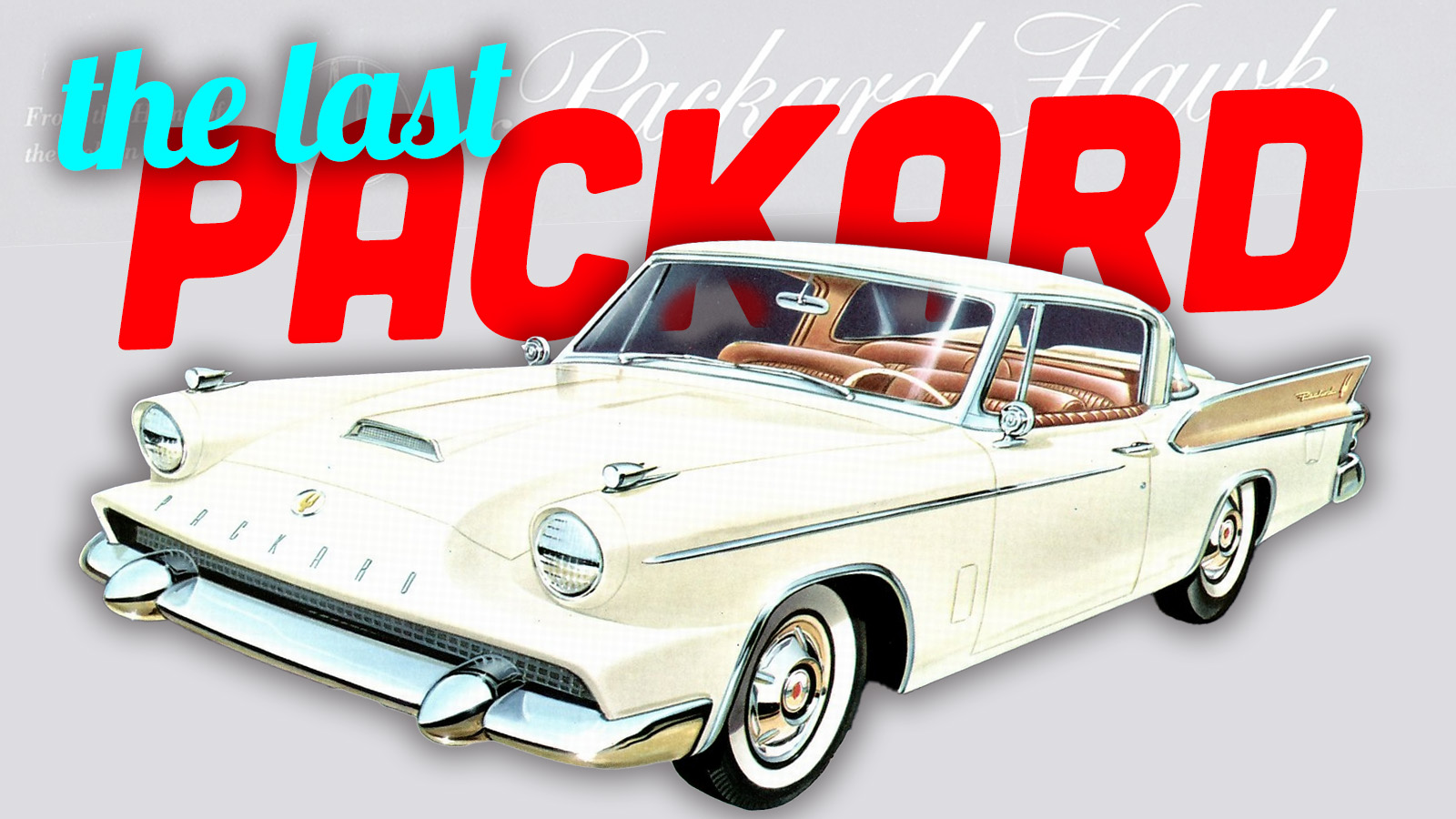
You know the saying about how a wounded animal is still dangerous? I’m sure you do, especially those of you with wounded hyenas in your kitchens that you’ve been avoiding for days. I was thinking about this in the context of dying carmakers, specifically Packard. In its death throes, during its final year of existence, Packard’s last punch thrown was kind of a fascinating car, and the fastest Packard ever built.
Of course, it was also a badge-engineered Studebaker, but you can’t really blame Packard for that. They were dying!


The car is the Packard Hawk, and it’s not a car I’ve thought about very often. Only 588 of these were made, so it’s unlikely to be something you’d encounter by chance, which is a shame, because these are really striking machines with so much presence and gravity they feel like a neutron star, just with more chrome.
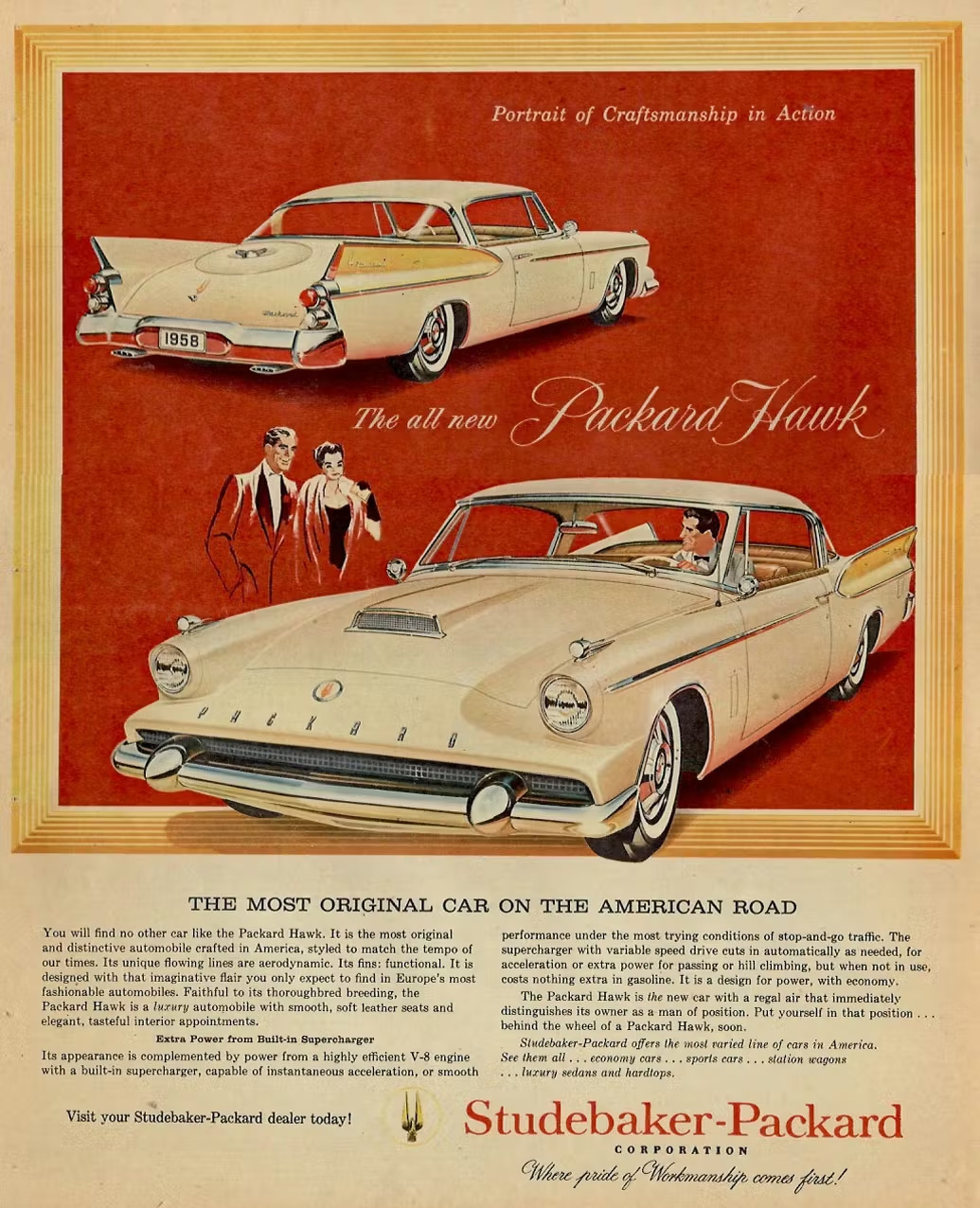
“The Most Original Car On The American Road” is a little ironic considering this was a badge-engineered car, and, inherently not-so-original.
Let’s just take a moment to recap Packard’s situation as of 1958. Boned, I think was what the Pope (at that time, Pope John XXIII) had to say about it. The once-great company (remember, Packard was the top-selling luxury carmaker between 1924 and 1930) bought out Studebaker in 1954, creating the Studebaker-Packard Corporation, which proved to be something of a disaster, because Studebaker was in about as good financial shape as a chronic gambler with two suspended credit cards, and had massive overhead and needed to sell an absurd number of cars – often said to be 250,000 – just to break even.
That said, Studebaker did have some interesting and reasonably up-to-date platforms to work with, including their sporty car – maybe “personal luxury car” – the Hawk.

The Hawk evolved from the Raymond Lowey Studios-designed Starliner/Starlight coupés and hardtop coupés, a design led by Bob Bourke. These were some of the sleekest, most elegant cars of the 1950s, at least according to sources like, um, myself. As the 50s went on, the prevailing jet-age-baroque styling of the era soon dripped onto these cars, and they sprouted upright grilles and tailfins and became the Studebaker Hawk, which led to Silver Hawks and Golden Hawks, fancier, more ongepotchket versions.

Okay, but let’s get back to Packard. In 1958, they really didn’t have any platforms of their own anymore, and everything they made was an up-market, re-badged Studebaker. They decided they wanted something sporty to compete with the Ford Thunderbird, and they had that, in the form of the Studebaker Hawk.
They took the Golden Hawk and added all of the luxury stuff that had been previously dropped, including lots and lots of leather, including special leather-upholstered armrests on the outside of the windows, making a comfortable place to rest your arm on the upper part of the door.
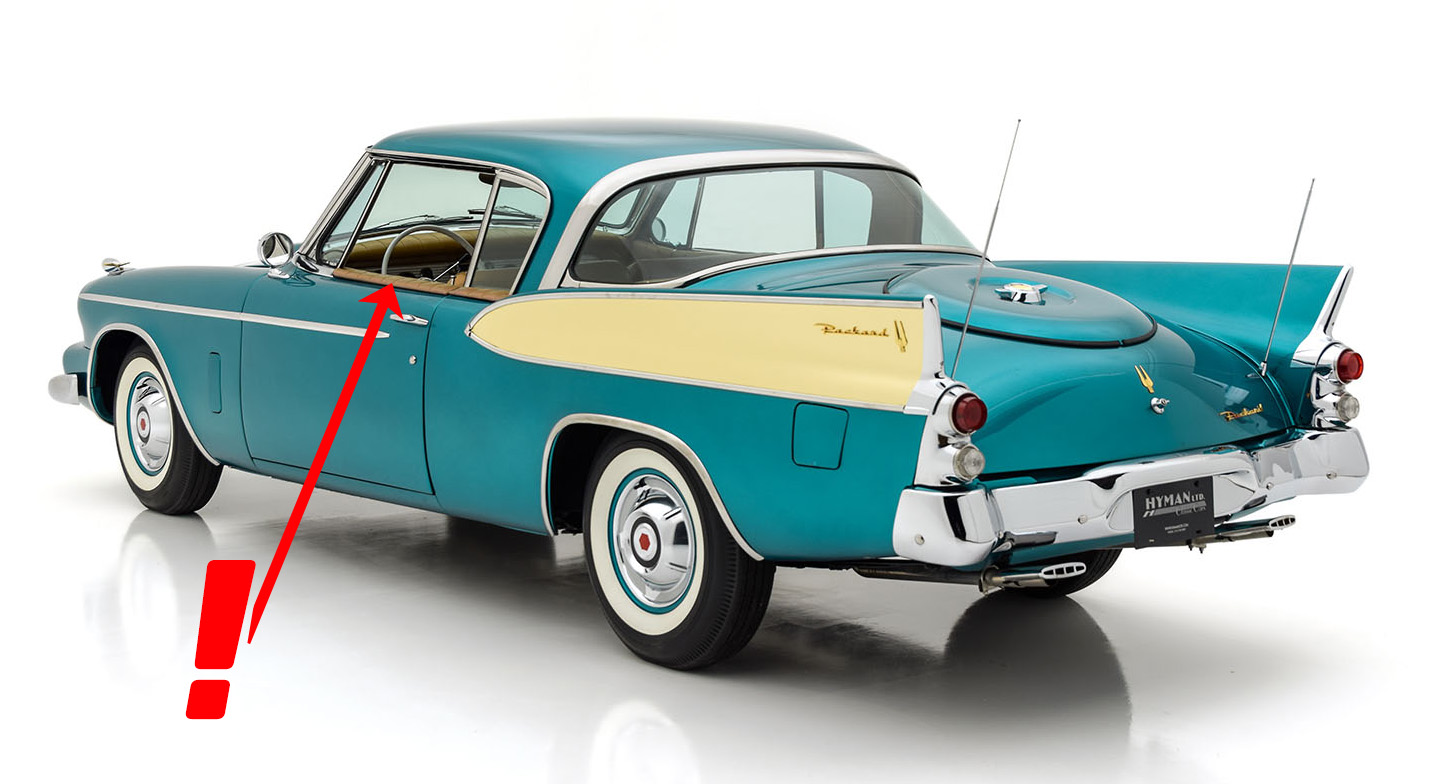
I mean, if you have to get a trucker’s tan, that’s the way to do it.
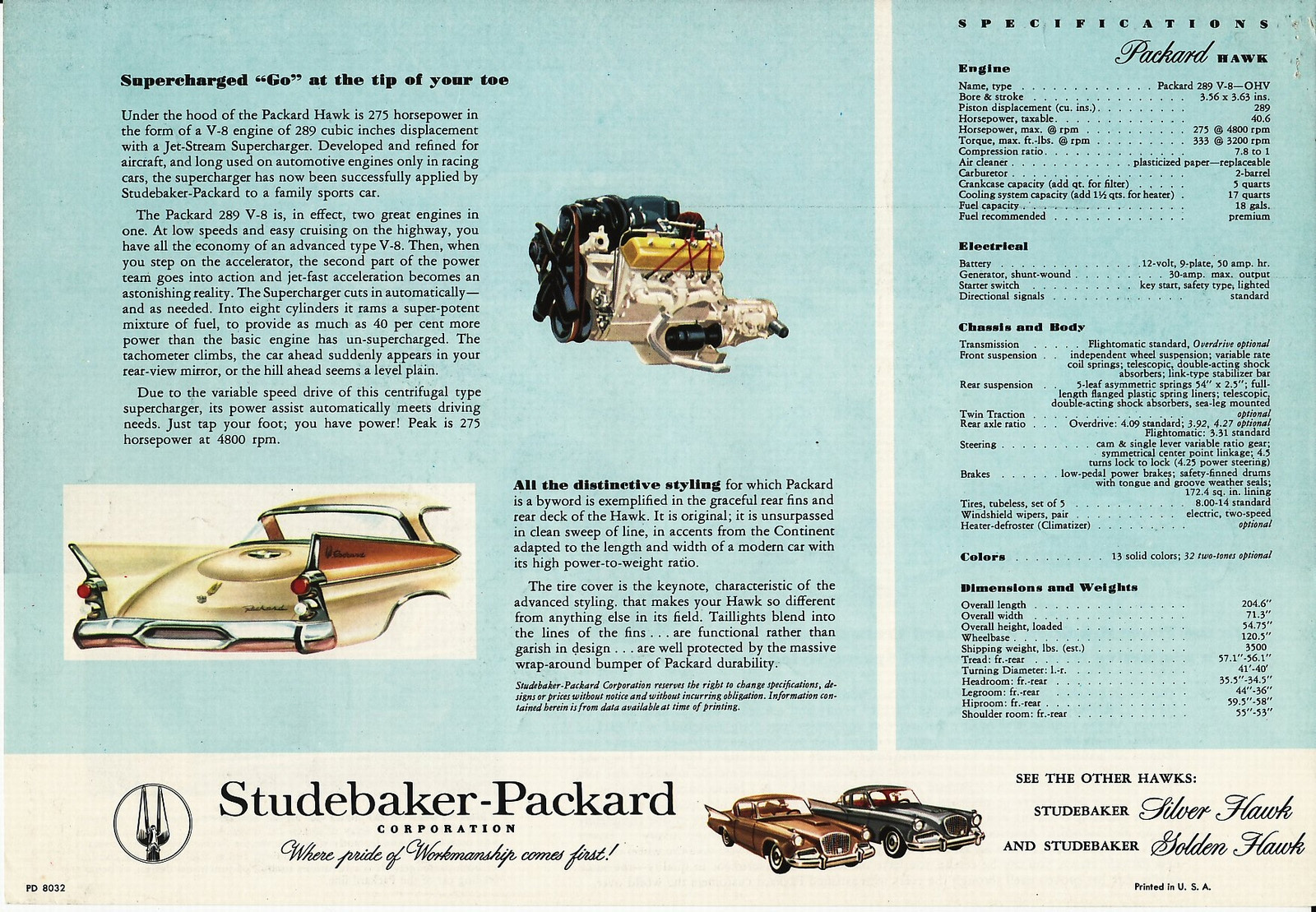
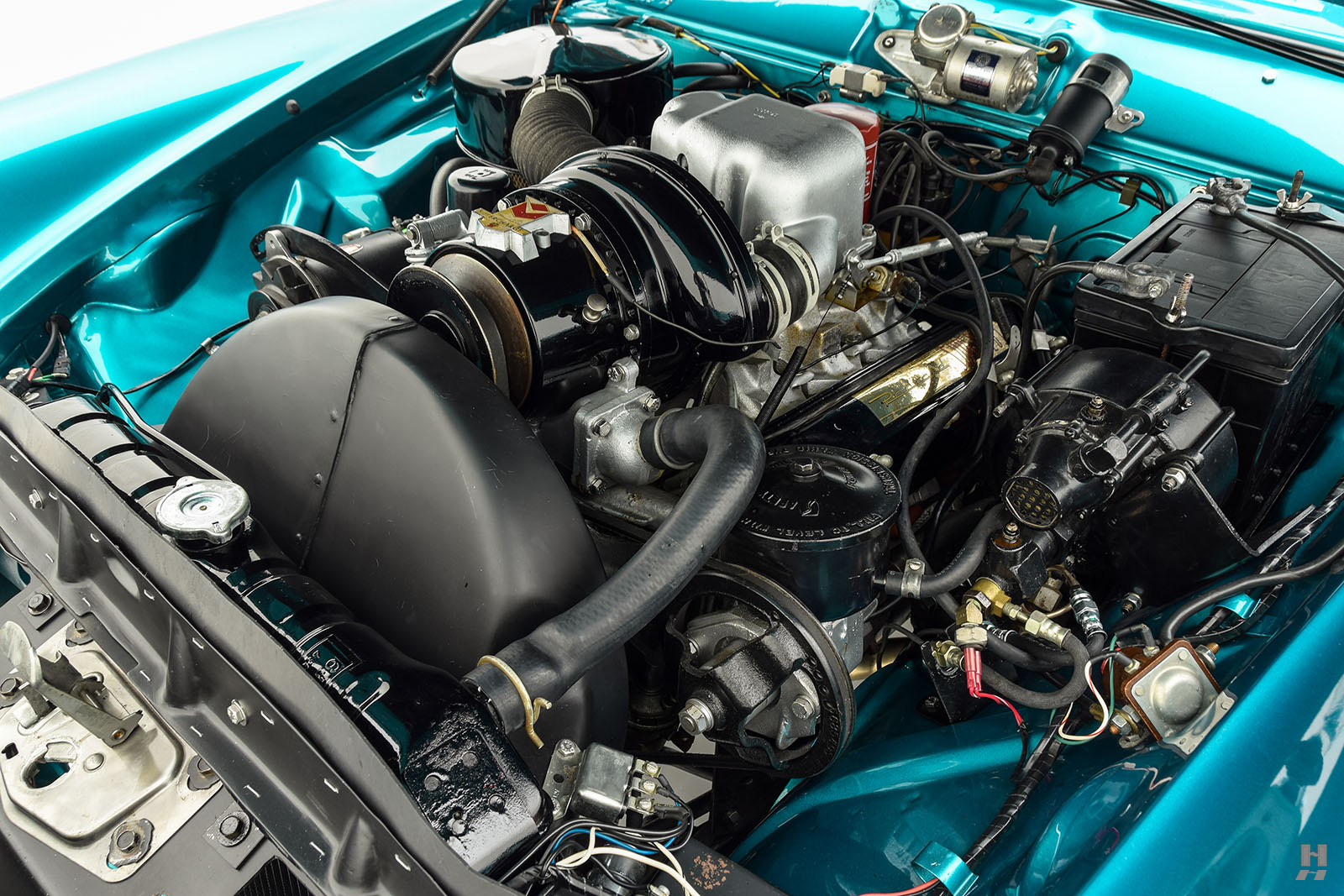
The bigger news was under the hood, as the Packard Hawk had Sudebaker’s 289 cubic-inch V8 with a McCulluch (later Paxton) supercharger, making a very impressive 275 horsepower. This made the Packard Hawk the fastest four-seat car you could buy in America at that time, keeping up with Thunderbirds and even Corvettes of the era.
Speaking of Corvettes, the Packard Hawk also featured some fiberglass bodywork like the ‘Vette, specifically the low, tapered nose with its wide, full-width grille:
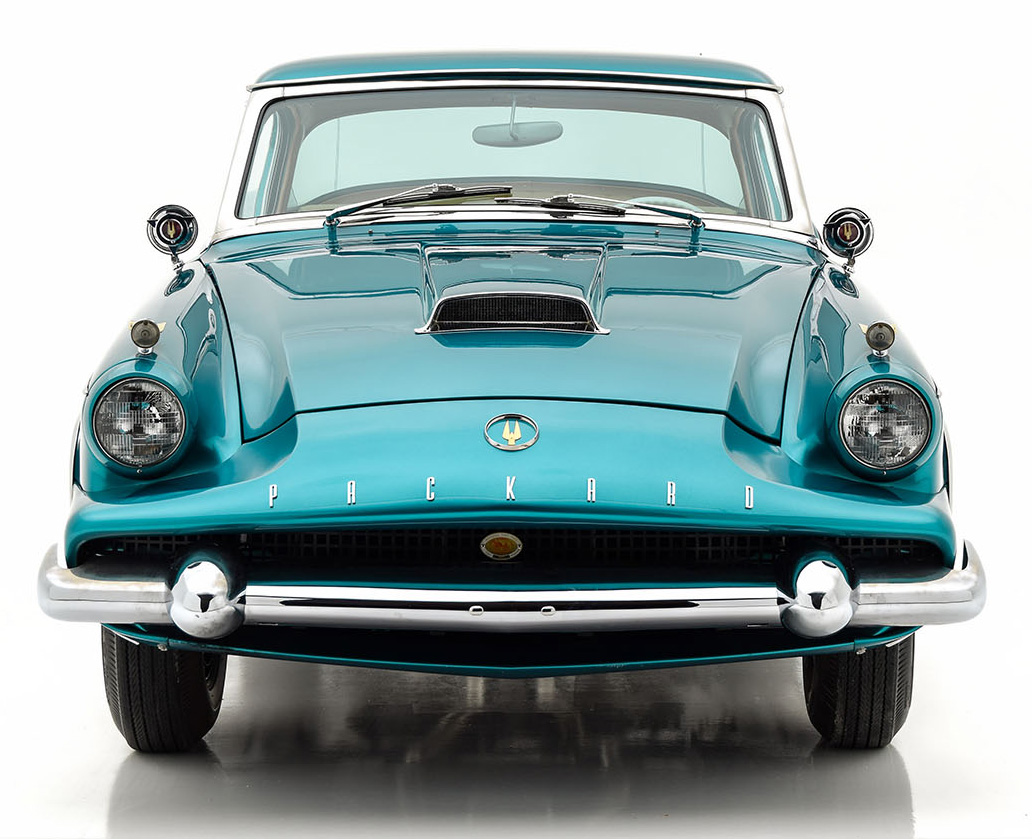
This was the focus of a lot of derision back in the day, with people comparing it, unfavorably, to a fish. I actually think its fishmouth feels like Ferraris and other Italian sports cars of the era. I like it.
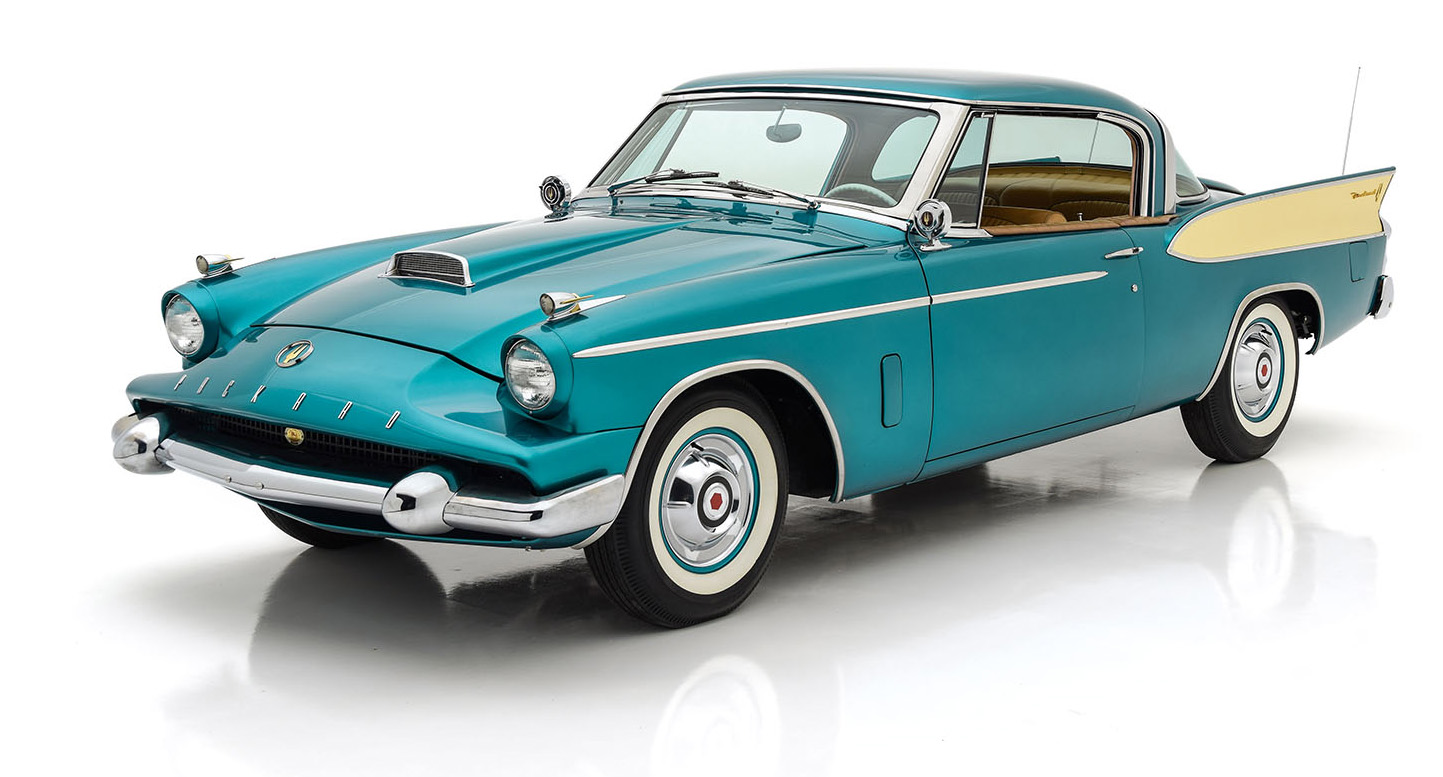
Overall, the look of the Packard Hawk is all late-’50s excess, but in a way that I actually like. The textured gold inlay panel on the rear fin, the hood scoop, the front indicators in their own silly little pods, the pointed chrome warhead/Dagmar bumper guards, the exterior upholstery, it’s all so good. Plus, it has what looks like crotch-cooler vents on the front quarter panel there.
There are a lot worse ways Packard could have gone out, and, sure, this one is definitely a product of badge engineering, but when it comes to reworking another car, you can’t get much better than this.
Top graphic image: Studebaker-Packard





The Studebaker V8 Engine Line was the worst of the 1950s.
Heaviest with the smallest displacement.
International did better with thier Pickup trucks
Fight Me
“Please build me a car that looks like a catfish” – Someone high up on the org chart at Packard, apparently….
Better name might have been the Packard Catfish.
You beat me to it!
ask the man who owns one! my great aunt and uncle gave us their packard to restore back in the 90’s. 1955 packard clipper constellation in emerald poly over moonstone. quite handsome looking car and a good color combo. it seemed so ahead of its time with power windows and the self leveling torsion ride system. even seemed pretty quick for what it was with the 352 v8. the only issue they had out of it was the automatic transmission in it kept screwing up. my aunt and uncle knew the guy in atlanta that ran the packard dealership personally. they sent a crew up from atlanta and did a manual transmission swap in their driveway to finally fix the problem. now thats customer service. they shelved the packard after about 10 years and my aunt bought a 1964 buick wildcat with the 465 super wildcat and 4 speed. i wish they had kept that one instead of the packard. it was a beast. and a rare one at that! we still have the intake and 2 factory 4bbl carbs and breather they swapped out for better mpg’s in the 60’s!
When I lived in South Florida in the 1990s there was a pale purple (lavender?) 1958 Packard parked in front of the Colony Hotel on Miami Beach. Lots of pictures on the internet.
Thank you for introducing me to a new Yiddish word. I agree that the low nose looks better than the tacked on upright grille of the Studebaker Hawk. This would be an awesome classic to have, since you can enjoy the supercharged V8 while making Packard purists clutch their pearls.
“..while making Packard purists clutch their pearls”
Both of them?
Purists or pearls? Could go either way…
I love the Ashkenazis! I even worked with a very smart and cool guy whose last name was Ashkenazi.
For a techno fact The Daily Forward in Manhattan had Yiddish Linotype machines running until 1991, and one machine was preserved
Adventures of a Bad Researcher: The Mystery of the Last Yiddish Linotype | Yiddish Book Center https://www.yiddishbookcenter.org/language-literature-culture/vault/adventures-bad-researcher-mystery-last-yiddish-linotype
Since Hollywood is so fond of “alternate timelines”-
Packard gets Studebaker’s debt under control, so Jorge Romney takes them into the AMC family. AMC competes in every segment with Nash Ramblers, Hudsons that match Olds, Merc, and Dodge, Studebaker trucks, and Packards that outshine Cadillac, Lincoln, and Imperial. Jeep is the cherry on top.
So in 1987, AMC buys Chrysler from Renault instead of the other way around.
That is how Nance essentially saw it when he begged ALL the independents to merge.
Someone in our neighborhood, a few blocks away, had a ’57 Golden Hawk in a beautiful scarab green metallic. He parked it on the street pretty much every day for a year or so, and I walked by it often. Man, did I lust after that thing. I considered it proof that when a designer really nails it, a car will look good forever.
Stude made a really solid V8, too. A very slept-on mill in the grand scheme of US V8s.
The amount of crotch-cooling you get with those side vents typically depends on how well you can orient your foot so that the air coming through the outlet on the kick panel blows up your pants leg. No dedicated crotch-aligned small vents like later GM cars, sorry.
Speaking of things on the interior, Studebaker-Packard used individual Stewart-Warner gauges on the instrument panel, instead of the styled instruments in a combined cluster as was, and still is common on most cars. It gives off a very serious, performance vibe.
This one’s going in the Glovebox — since I grew up near South Bend, anything Studebaker catches my interest!
That’s actually one of the better versions of the later Hawk designs, I like it! The fact they couldn’t be bothered to name it something other than Hawk though…come on guys, it’s supposed to be the bigger fancier brand, at least call it the Eagle!
The only cool car from the 50’s is the Citroen DS. The rest were prehistoric designs. (Although the Studie isn’t 1/2 bad)
One my fathers friends, a retired doctor had a 62 or 63 studebaker gt-hawk in black. The styling was much more subdued than these. Gorgeous car in the opinion of a 12 year old kid. Got a few rides in the thing. My recollection was it always smelled musty. I have no idea if it was a supercharged version.
His wife’s car was a 64 or 65 289 mustang automatic that I never saw outside of the garage. It had clear plastic seat protectors and it looked brand new in spite of being 6 or 7 years old.
They were both in their 70’s at the time so I am assuming that the cats didn’t get driven much.
Friends of ours had one, they were “Packard” folks. As kids we thought it was the coolest thing we’d ever seen. There was an incredible variety of cars in my hometown of Ossining, NY in the 50’s.
I remember-Borgward, NSU (yes a Ro80), MG, Triumph, Jag, Saab, Volvo, VW, Alfa, Fiat, Renault, Peugeot, Messerschmitt, Isetta/BMW, Mercedes, Bentley RR, along with every American brand you can name. We were down by the river one day and here comes the Light Blue Amphicar, it drove right down the launch ramp and into the Hudson. 8 year old minds blown! For car kids it was a fantastic time we’d chase the car carriers down the street to look at the new cars on their way to the showroom.
while we’re on the subject, the studebaker museum in south bend, IN is worth your time…
…Just don’t go on certain Autumn Saturdays when there won’t be a hotel room available anywhere within 50 miles.
And worth a twofer going to the Auburn Cord Duesenberg museum nearby in Auburn.
And the RV Museum in Elkhart.
Was just there last month, phenomenal!
Had to drive most of the way to Toledo for a hotel that night though…
Shoebox Chevys look dowdy next to the Starliner, and the Chevys came out a year later! Wildly underappreciated design from Studebaker.
I just here to say how glad I am that cars like this exist… and content like this exists!
I would like to take this opportunity to request much more Studebaker and Packard content, please. Even though I’m considered old now, I’m still not old enough to have grown up with these roaming the streets regularly, and everything I know about Studes or Packards, I’ve picked up in bits and pieces as a grownup – and a lot of it is fascinating, especially when you consider their “second banana” status to The Big Three, as well as some pretty serious performance statements that get lost in the mix when discussing the muscle car era.
Tell us more about R1s/R2s/R3s, and Paxton superchargers as factory options, and the Granatelli brothers scorching the earth. I only know enough to ask you to tell me more! So tell us more!
Much like AMC, Studebaker always deserves some special treatment now and then. The independent automakers had to make cars different enough from the mainstream to capture buyers, and it’s always interesting how they combined older tried-and-true designs with taking risks on newer technology to build some uniquely weird and wonderful cars.
For one thing, I do know that the Twin Traction differential was one of the first factory-installed limited slip differentials, if not THE first.
I demand a 10,000 word article about the Packard straight 8 engine, the best sounding engine in the history of internal combustion engines.