

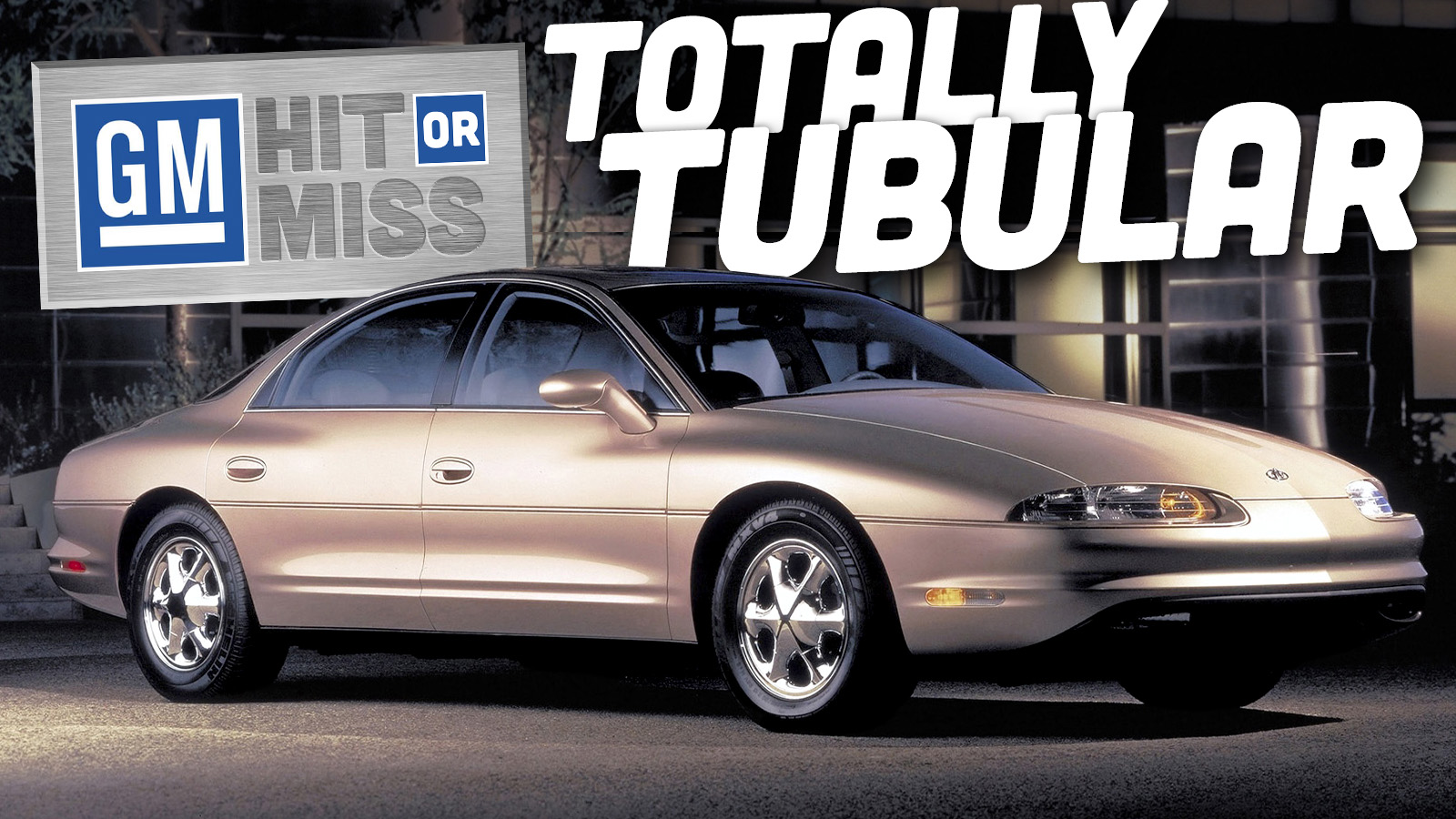
Think of the dowdiest car brand that’s still selling cars. Got a name in your head? Now imagine it just came out with an immensely aerodynamic sedan powered by a unique quad-cam V8 and featuring climate controls in the doors, an incredibly robust structure, and styling that looked like the future. It’d be shocking, right? Well, about 30 years ago, that would’ve described the Oldsmobile Aurora to a T.
Flash back to the early 1990s, and Oldsmobile looked to be in a death spiral. In 1985, the brand became America’s best-selling car and moved more than a million units off of lots from coast to coast. By 1993, it couldn’t even crack half a million annual sales. Between the death of the old rear-wheel-drive Cutlass Supreme, the failure of the “Not your father’s Oldsmobile” ads, and increased competition in the near-premium space, the brand needed a Hail Mary.


As project design lead Dennis Burke said, “‘At first sight, the Aurora may unsettle people just a bit. That means we’ve done our job.” Indeed, the Aurora looked nothing like any mass-produced Oldsmobile before. The fuselage styling of the stunning Aerotech streamliners translated to a 1989 concept called—I’m not joking—the Tube Car. Marketing might’ve taken a day off there, but the design team didn’t when shaping this extreme jellybean. From its incredibly low nose to its Coke bottle fenders to its full-width taillight, Oldsmobile had something radical and decided to change it as little as possible. Actually, in some ways, the Aurora looked even better than the concept, especially when it came to the shape of the rear window. Oh, and it also boasted a drag coefficient of 0.32. Not bad.

Mind you, that curvaceous bodyshell devoid of Oldsmobile branding wasn’t just for looks. According to GM, the Aurora’s roof maxed out the scale of GM’s passenger car roof crush test rig at 8,000 pounds. The required minimum strength at the time was 1.5 times the vehicle’s weight, and with the Aurora tipping the scales at just under 4,000 pounds, this would mean that the Aurora met today’s two-times-the-curb-weight roof crush standards a whopping 30 years ago.
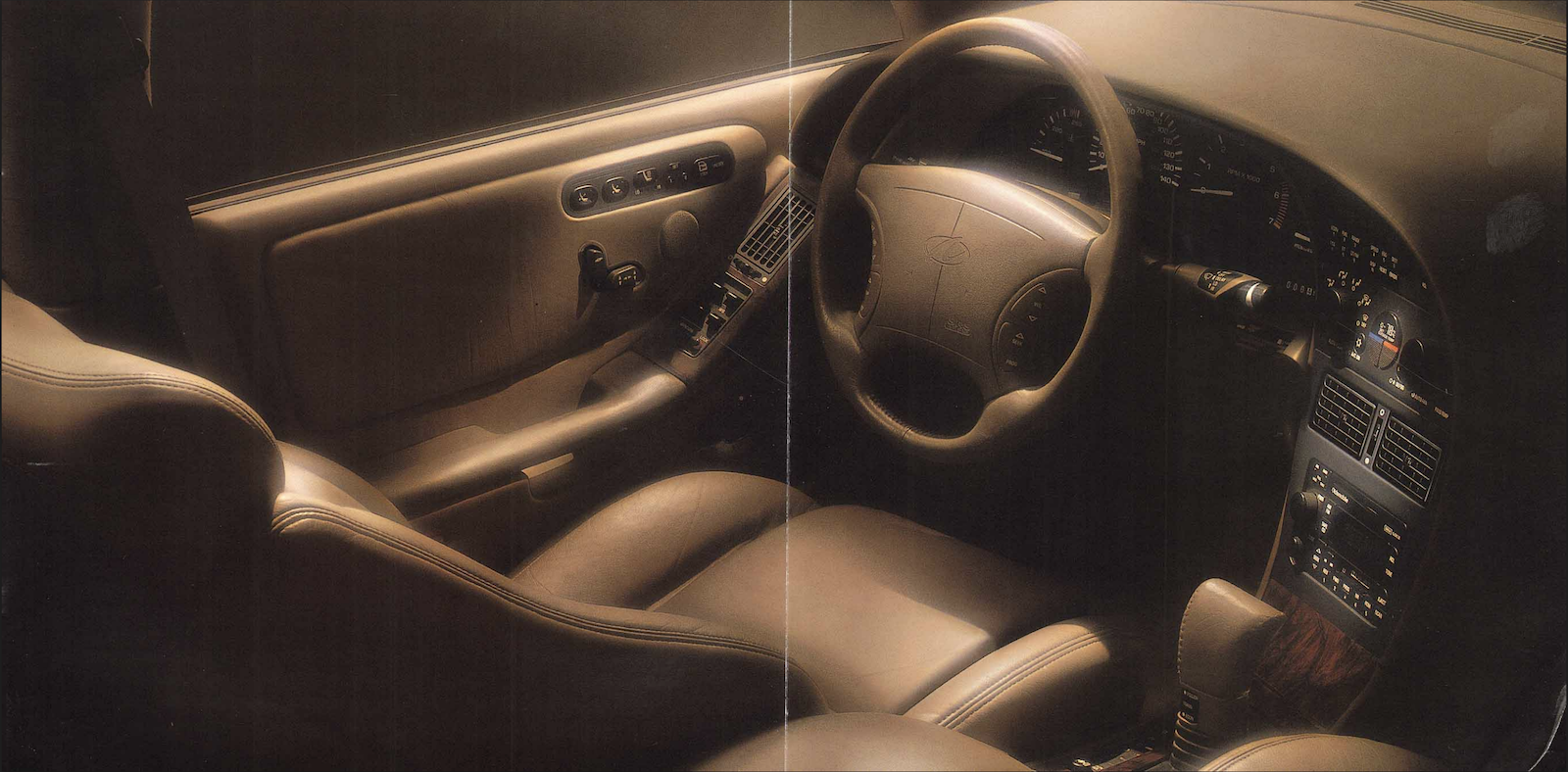
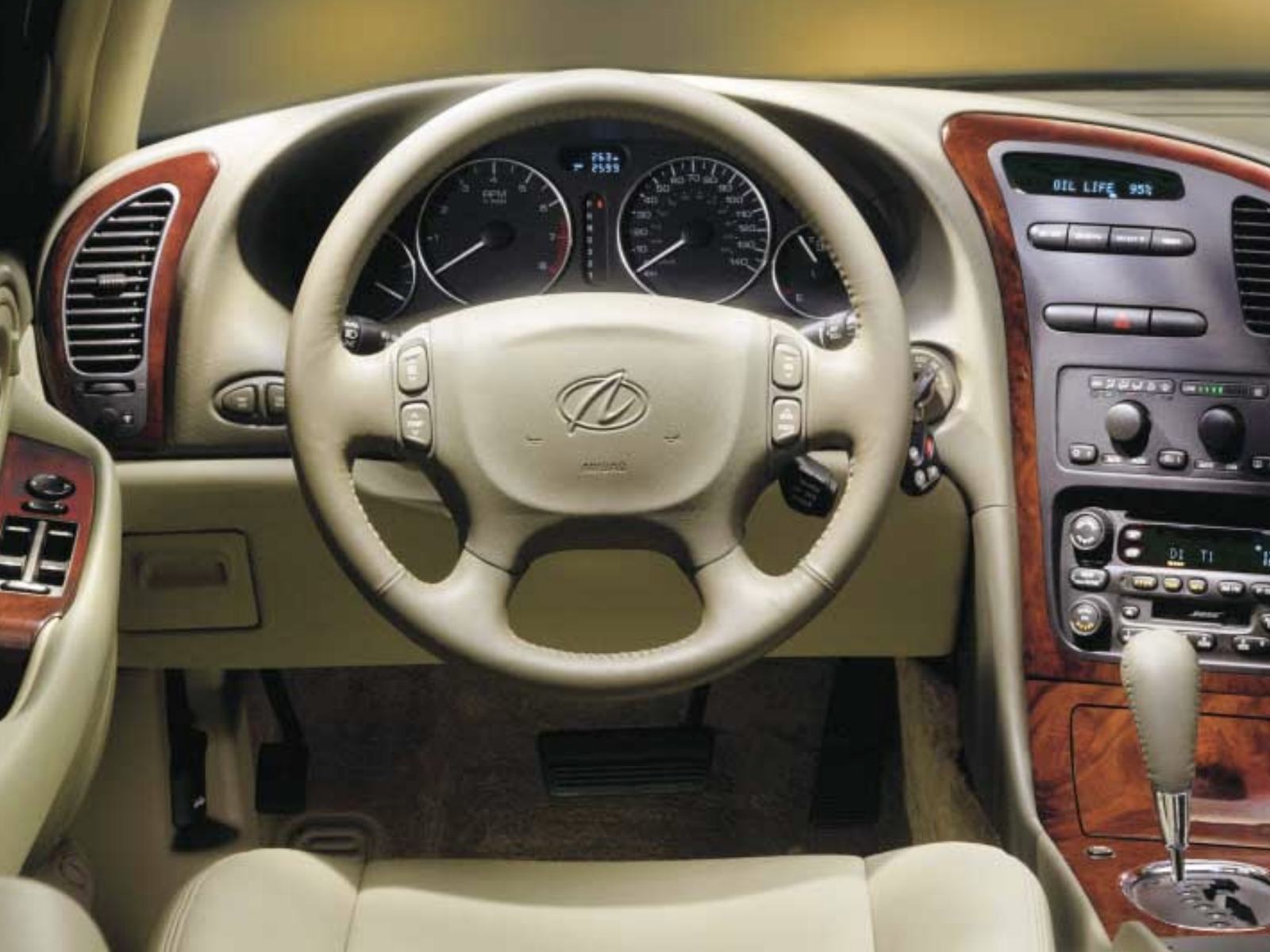
On the inside, the Aurora went full cockpit, canting the center stack so heavily towards the driver that a passenger air vent sprouted up out of the side of it. The goal was to have everything from the climate control to the radio to the trip computer within easy reach, but what about passenger access? Well, that’s where Oldsmobile got clever. It put the passenger climate controls on the passenger door panel, along with the seat controls and even some air vents. Obviously, equipment levels were high. More than just leather and wood, we’re talking memory seats and mirrors, automatic headlamps, six-way front seats, and an auto-dimming rearview mirror all as standard. Tick a few boxes, and you’d also get heated seats, a Bose Acoustimass audio system, and V-rated Michelin tires paired with a shorter final drive.
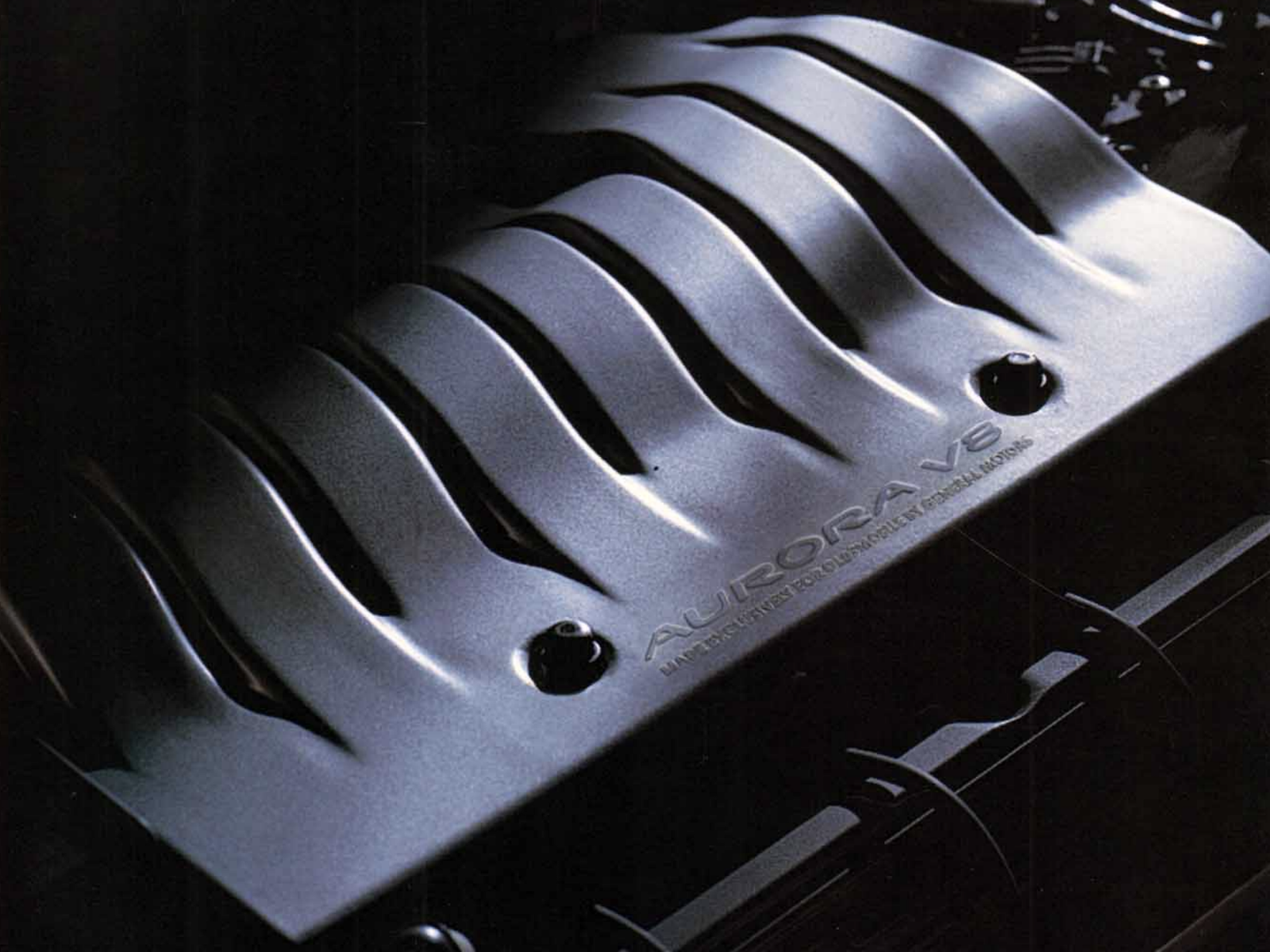
Speaking of oily bits, under the hood of the Aurora sat a debored four-liter variant of Cadillac’s Northstar quad-cam V8 pumping out a respectable 250 horsepower and 260 lb.-ft. of torque, the first ever non-Cadillac application of that engine architecture. Hitched to a 4T80-E four-speed automatic transmission driving the front wheels, the Aurora was smooth but not massively quick. Figure a zero-to-60 mph time in a shade over eight seconds, quicker than the BMW 530i of the time. Still, it didn’t really matter how quick the original Aurora was. What mattered was how it felt like Oldsmobile had leapt a decade ahead.
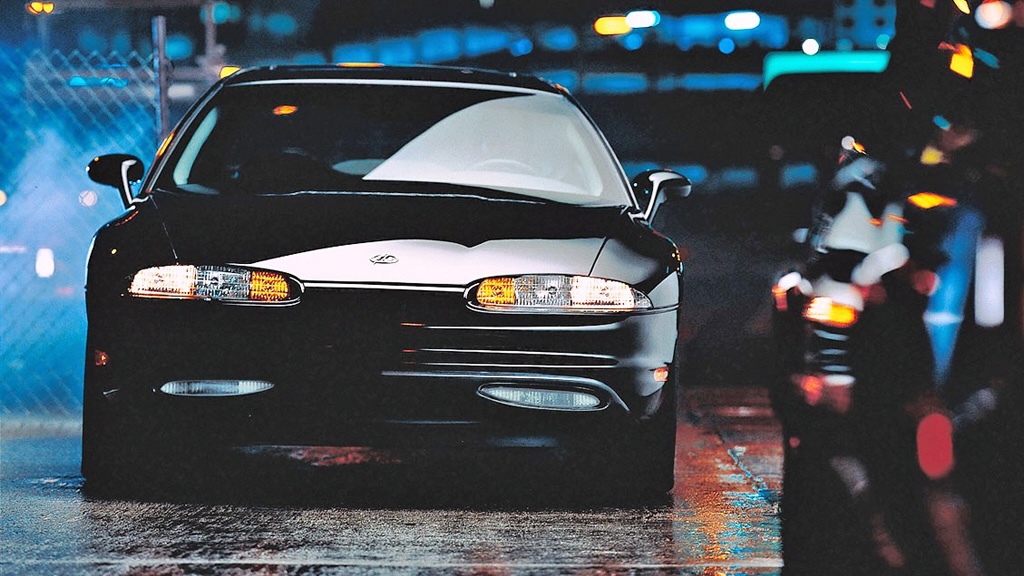
In 1994, Motor Trend pitted the Aurora against the Mercedes-Benz C280 and the Lexus GS 300, and it beat both. In another comparison test just a few months later, it beat the BMW 530i and came a close second to the Mazda Millenia. As the magazine summed the Olds up: “The Aurora leaves us consistently impressed with its performance, styling, room, and quality.” Unsurprisingly, many consumers came to a similar verdict on the Aurora, with enough demand for Oldsmobile to build 145,247 examples over a five-model-year production run, ending in 1999.

So what happened next? Well, we never really got a true second-generation Aurora. No, I’m not trying to gaslight you. While the 2001 model year saw the launch of an all-new car called the Aurora, it wasn’t initially meant to be an Aurora. As the Chicago Tribune put it:
Maybe it will be called the Antares. Maybe it will be called the Aurora 6.
Oldsmobile General Manager John Rock finds himself in a quandary about what to do with the replacement for the Olds 88 sedan coming out in the 1999 model year.
See, the second-generation Aurora was rumored to be this big, opulent thing sharing an architecture with the next-generation Buick Riviera, but then the Riviera project just didn’t happen. Somewhere along the line, the projects got rationalized into one car, and it just wasn’t spectacular like the original Aurora. It was also a bit late, a clear sign that something didn’t go according to plan.
Because this new car had to be more attainable, you could tell where costs were cut. From the standard V6 to the slightly truncated look to the lack of door-pass-through air vents, the second-generation Aurora just didn’t commit as hard as the original, and that especially showed in reports of early build quality. As Patrick Bedard wrote in Car And Driver:
A few weeks before the Oldsmobilectomy, I drove two Auroras, each for a week: a V-8 followed by a V-6. I got into the first one after dark. In the middle of the dash was a display, like a microwave oven’s, the same cold blue digits. It read “173.”
What could that be? I turned on the dome light and fiddled. It was “temperature.” Using the blue and red buttons, I downed the digits to “168,” and upped them to “181,” but the reading was always 100 too high.
Bedard goes on to describe other issues. A poor headlight beam pattern, torque-steer on the V6 model, “sticky steering” on the V8 model, and one hood where “the curve on one side didn’t match the curve of the fender edge. Not even close.” Considering the sort of money the second-generation Aurora commanded would’ve bought another D-segment luxury sedan like an Audi A6 or a Saab 9-5, customers’ money would’ve been spent better elsewhere. Mercifully, GM pulled the plug on the second-generation Aurora, and indeed the entire Oldsmobile brand, in 2003.

The original Oldsmobile Aurora was a hit because it tried extremely hard. Oldsmobile put its entire back into that car, and it showed. Sure, it might not have been reliable in the long run, but it’s iconic. The perfect flagship has to be both an image-maker and a sales success, and the original Aurora pulled that off brilliantly. The second-generation Aurora wasn’t a hit because it was a victim of GM’s own bureaucracy. Too many brands, too many projects, too many rash decisions, too much cost-cutting. I guess we’ll just have to remember the original fondly, won’t we?
Top graphic image: Oldsmobile




personally, I thought the second gen was wrong entirely, as the first one is smooth, sleek, and a generally pleasing design, and then the second one is just… bulbous and it looks like a driving peanut shell.
Always thought it’d be fun to pick one of these cheap and use it as a cushy GT, just never had the need.
Something that always befuddled me about the 2nd Aurora… why did it have dual rear fog lights in the bumper?! Rear fogs were not, and are still not a thing in North America and certainly not something a US domestic OEM would ever bother to add. Was that platform meant to be a world car?
I had a new metallic white Aurora, amusingly named the Autobahn edition by GM. It was a 140 mph car. Looked like nothing else bin the GM lineup. It was a company car and gave me zero trouble . The garbage model that replaced
it was junk.
> we’ll just have to remember the original fondly, won’t we?
We sure will. I’ve always loved the OG Aurora. Fantastic looks, decent drive train, beautiful interior. It was a badassmobile, and sometimes I wonder if it should have been a Pontiac instead of an Olds.
Badassmobile would have been a great brand name. You should register that trademark. Stat!
Props to GM for achieving this, but doesn’t that mean modern 2025 cars don’t need the thick A, B, and C pillars as so often claimed? Bring back stellar outward visibility.
I don’t find the alphabetical pillars of my ’17 Accord particularly thick. I also don’t look forward to testing their strength.
I don’t see many/any? Auroras around here (Seattle-ish). My dad was an Olds guy, but that was back in the 60s.
They did seem like good cars, but I wasn’t in need of a new one at that point in time.
First one was a sexy beast, good to see that it’s finally getting its due in some places. I had an Intrigue and then the later-version Aurora – which never really lived up to the name. It was very comfortable, though.
Great-looking car! I still like it.
I am shocked that Oldsmobile was GM’s best selling name plate back in 1985. I can think of no memorable Olds product from that period. It was all generic 2 dr coupes and vestigial wagons.
I remember Cutlass Cieras were everywhere.
Cutlasses were EVERYWHERE and you still see quite a few of them 35+ years later. Absolutely everywhere.
That was the period when badge engineering made GM’s bread and butter cars look nearly the same. If you were going to buy an A body car, you might as well get the Oldsmobile version which had the best options.
This worked out so well that there wasn’t much planning done for their future products, leaving them behind when the rebadging got toned down and division styling differences became more accentuated.
They didn’t have much choice in the matter since Oldsmobile only had control of sales and marketing within the Buick-Oldsmobile-Cadillac reorganization by 1984.
I’ve never been a GM supporter, but the 1st gen Aurora was definitely a car that always got my attention! It is nice to hear that it also performed well and had a nice interior. I still wouldn’t have traded in my ’93 SHO for one.
A friends dad had one of these back in Junior High and my aunt had one for a bit so I’ve got a soft spot for these barges. Still looks the part!
This was a hot sedan for my 16 year old self in 1997! My dad had it as a company car and i’d take the keys whenever I could (my 85 K car wagon was not cool). As others have mentioned, head gasket failure struck at 75k miles. This was the last car from a big 3 my parents ever bought as all before them had huge issues before 100k.
What engine. Cheap quality- killer.
I have a long history with the 1995 Aurora (first model year) as when I was 7 years old, my grandparents went with that in the signature champagne over the Lexus ES 300 my father recommended.
The Aurora was and is still super impressive. We inherited it after my grandparents both passed and it continued to be fairly reliable. We never had any issues on the way to 100,000 miles and 20+ years.
Weird facts about Auroras: it’s one of the only cars to ever have the OBD v1.5. Nothing has that, so you will struggle to get codes read on it because it doesn’t work with OBD 1 or OBD 2. Also, for some reason the brake pads could last extremely long on these. My grandfather didn’t replace the front brakes until over 90,000 miles, which is insane.
Driving an Aurora is a bit like driving the first generation Acura RL, but much heavier and with way more torsional rigidity. The car didn’t flex very much, but it was also a giant front-wheel drive vehicle put together in a 1990s General Motors factory. The engine was buttery smooth and the car felt super stout and tight, though decidedly not like a Lexus LS as you weren’t completely isolated from the road.
As a kid, I found the passenger climate control on the door to be intriguing. It also had not one but two different kinds of power lumbar support on driver and passenger side.
My grandmother was very proud of it and said when they first got it that kids on the street gave them thumbs up a lot. I’m not sure how much ‘a lot’ was, but they enjoyed the car. Their neighbor bought one that was dark teal and it was a lemon and he would remind them when we went on walks past his house.
Actually, a ton of GM cars between MY1994 and MY1995 had OBD 1.5. Yes, it’s irritating, because it looks like an OBD 2 port, but interfaces differently. The ones I’ve seen on the forums over the years include:
N-bodies (Buick Regal, Pontiac Grand Am, Oldsmobile Achieva)H-bodies (Buick LeSabre, Pontiac Bonneville, Oldsmobile Eighty-Eight)W-Bodies (Chevrolet Lumina and Monte Carlo, Oldsmobile Cutlass Supreme, Pontiac Grand Prix)G-Bodies (Buick Riviera and Oldsmobile Aurora)L-Bodies (Chevrolet Corsica and Beretta)F-Bodies (Chevrolet Camaro, Pontiac Firebird/Trans Am)J-Bodies (Chevrolet Cavalier, Pontiac Sunfire)Chevrolet CorvetteGMT330/S10 cars (Chevrolet Blazer and S10, GMC Jimmy and Sonoma, Oldsmobile Bravada)M-Bodies (Chevrolet Astro and GMC Safari)
And it wasn’t just GM; some Mitsubishi, Ford Europe and Volkswagen cars used the OBD 1.5 standard, too.
Here’s one: my 1996 Jaguar XJ12 isn’t technically OBD 2 compliant, despite needing to be as a 1996+ car. That’s because its NipponDenso engine management system cannot do continuous misfire reporting. Jaguar applied for, and received, an exemption from the United States governing bodies, since I believe they only imported 19 XJ12s here that year. 1997 was the last year for the Jaguar V12 (and for the X300-series XJ in general), but with the exemption expired, no V12 cars were sold in the US for that model year.
Yeah, my Corvette had it. At least on that you could pull codes on the dash.
The Aurora and Alero were genuinely interesting designs that looked better than many competitors in their respective segments. GM didn’t know what to do with Pontiac or Oldsmobile. Either from a product or marketing perspective. Know wonder they are in the trash bin of auto history.
Don’t forget about the Intrigue.
I think that was more interesting than the Alero, which was just a fancy shell on a corporate GM car. The Intrigue was an attempt at a smaller Aurora that was very unique, if unsuccessful.
The Intrigue was straightforwardly an attempt to compete against the Accord and Camry, because GM knew none of the other W-bodies was remotely capable of it.
Actually owned a 99 Intrigue for a while. It was still a W body. A replacement for the Cutlass Supreme with a new name and Aurora lite sheet metal. That said, it was actually a nice car in its time, a genuinely nicer interior than the 2000 Grand Prix GTP I also had for a bit even if the Grand Prix was better equipped top of the line to my Intrigues base model. Intrigue was still classier inside if nothing truly remarkable