

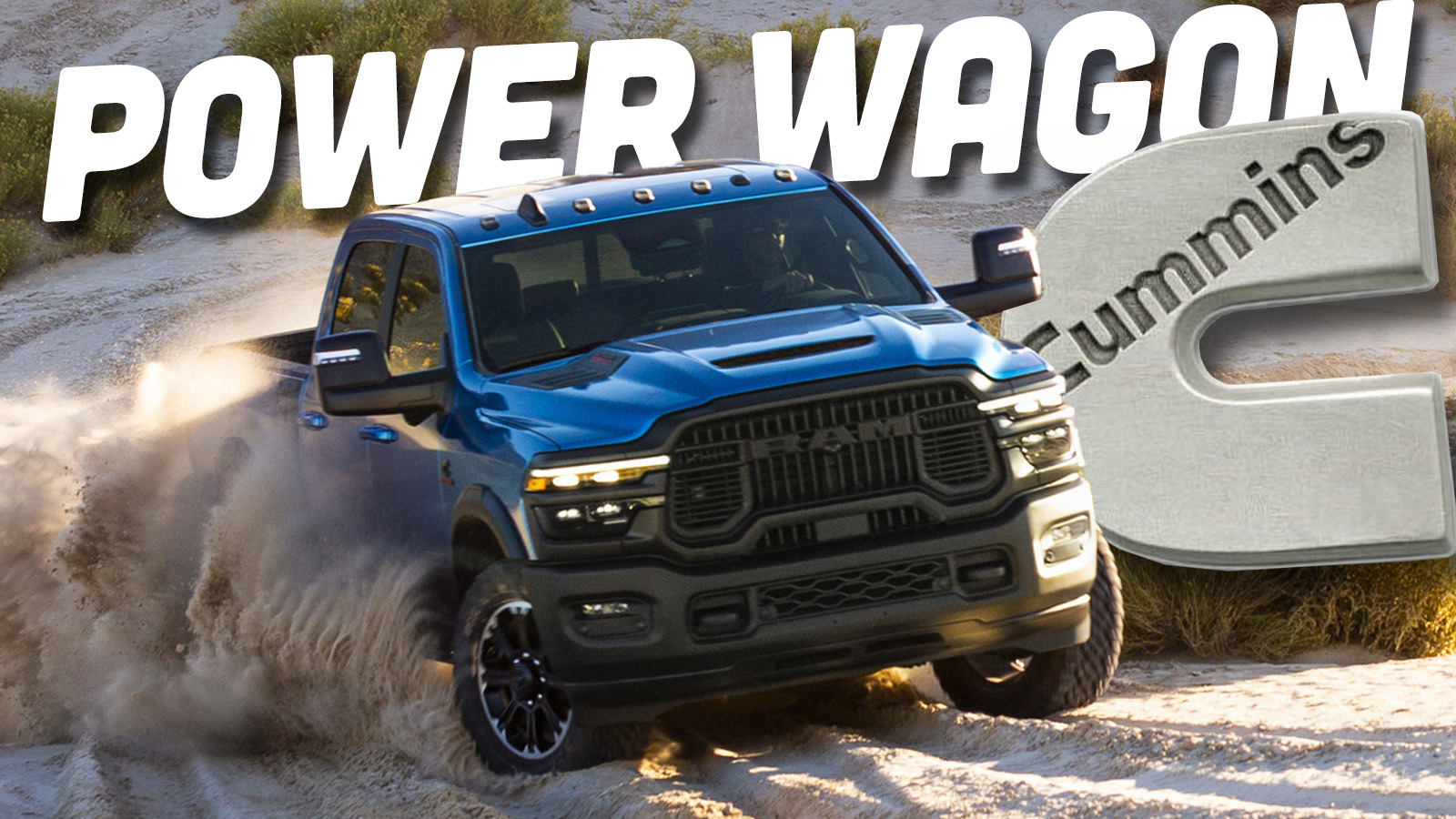
Since 2005, the Power Wagon has existed as an extreme off-road version of the heavy duty Ram 2500. With locking differentials, skid plates, disconnecting sway bars, all-terrain tires, softer springs and a front winch, the Ram Power Wagon has been the biggest, toughest off-roader in Chrysler’s lineup for two decades now. Still, one thing has always seemed a bit off: Why doesn’t the Power Wagon offer the Ram 2500’s optional Cummins turbodiesel? After all, it’s a ridiculously torquey motor that you’d think would be perfect for low-speed rock crawling. Well, for 2027, after all these years, the Power Wagon finally gets the Cummins, but to pull this off Ram had to make some changes to what the Power Wagon is.
First things first: What took Ram so long? You’d think there’s no better engine for rock-crawling than a diesel, which offers tons of low-end torque for slowly navigating technical obstacles without having to spin up tires. The answer, and the reason why Stellantis executive Tim Kuniskis had to tell his team to just “to make it happen,” has to do with the sheer size of the motor.


A Cummins 6.7 (juggles hands) is massive, and not just the long inline-six block and exhaust aftertreatment systems, but especially the cooling module, which interferes with the space at the front of the vehicle that would normally be “package-protected” for a factory winch that has been a big part of the Power Wagon’s identity since the beginning.
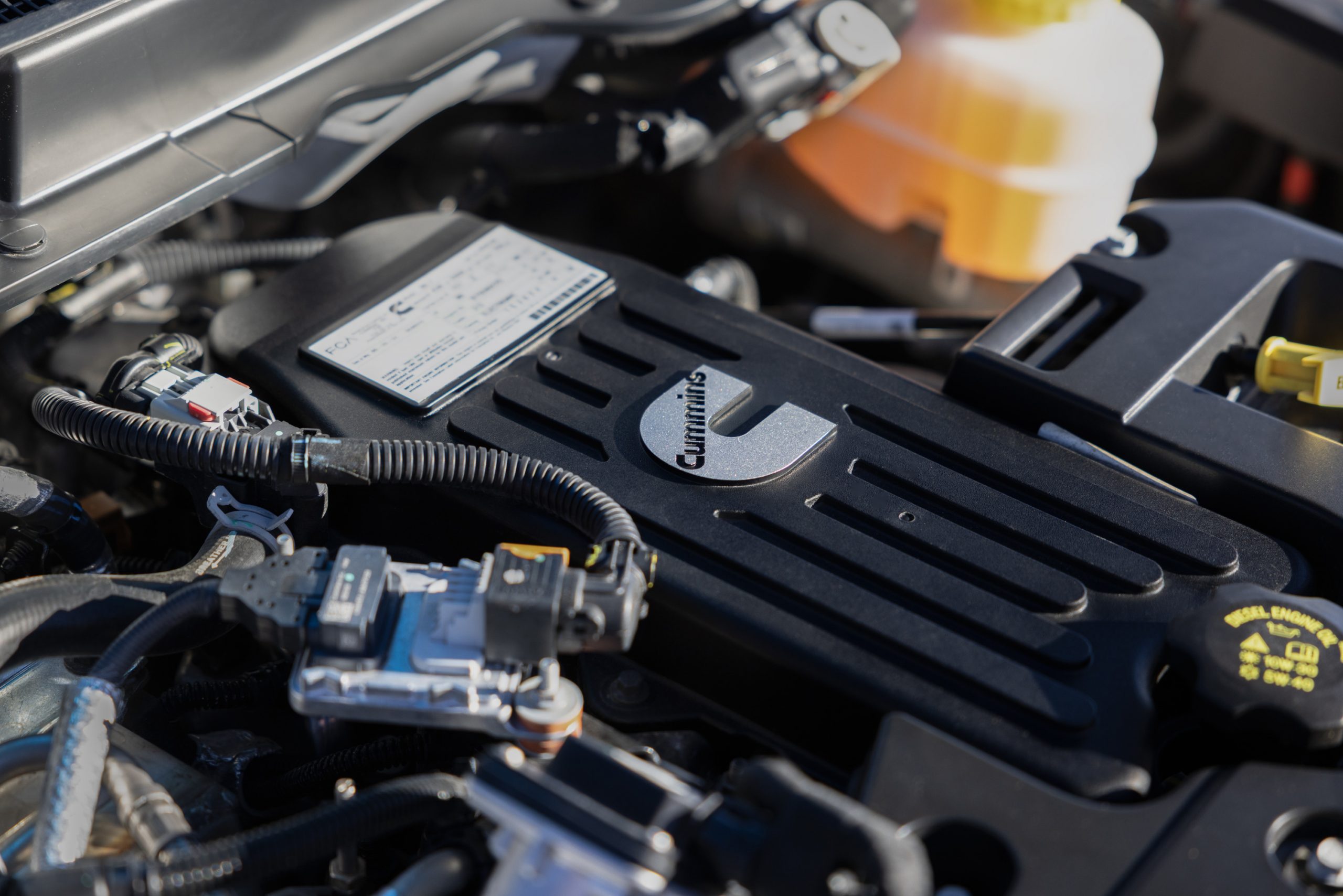
“There’s been a shift in the way people are thinking at Stellantis,” Ram product development chief Doug Killian told me in our interview. “‘Let’s just go do this’ [Kuniskis said]. We got the encouragement to go make a Power Wagon with a diesel…Of course we’ve been hearing it for decades. We were holding the winch maybe more sacred than it should have been. Can the power wagon evolve? Of course.”
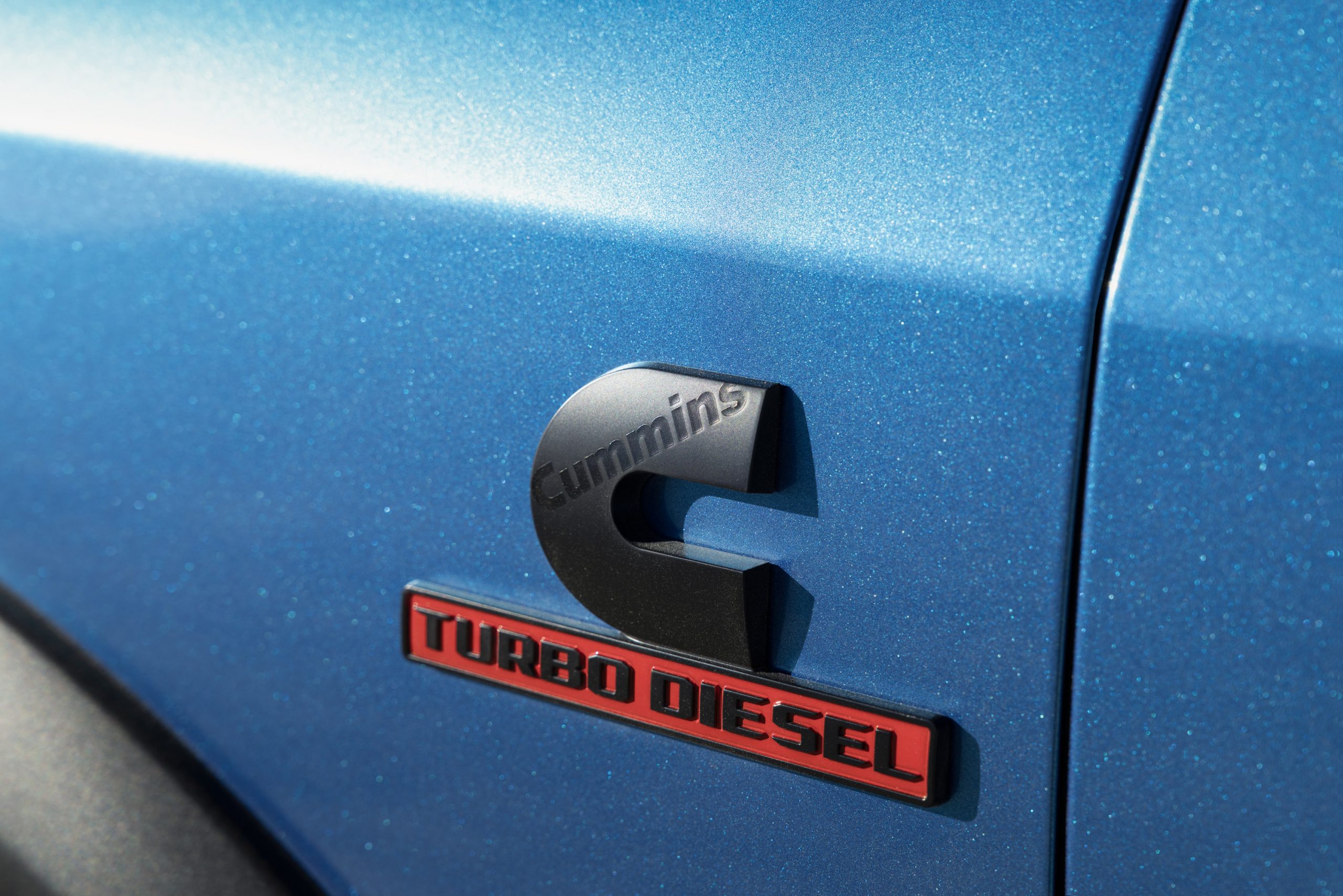
And so the Power Wagon now has the coveted big C on its fenders, but in order to fit the legendary mill, the Power Wagon has had to evolve from what folks are used to. Let’s get into that.
The Diesel Power Wagon Is A Different Power Wagon Than The Gas Truck
After I chatted with Killian, it became clear to me that, actually, the Cummins turbodiesel is probably not the ideal off-road engine. Sure, the thing produces a crazy 1,075 lb-ft of torque, and torque is generally good for rock crawling, but let’s all be honest: The much lighter and smaller 6.4-liter HEMI gas motor makes plenty of grunt at 429 lb-ft. Combined with short transmission (4.71:1 first gear) and axle gearing (4.10:1), plus a low-range transfer case (2.64:1), the gas truck’s 51:1 crawl ratio means it offers plenty of low-speed precision to help it traverse most technical obstacles.
So why bother putting a Cummins diesel into the Power Wagon if it’s going to just weigh the truck down, take up a bunch of packaging space, and cause potential stability concerns that need to be fixed by reducing ground clearance (more on that later)? I think part of it is just the fact that people love the Cummins diesel engine to the point where many refer to their Ram HD truck as, simply “The Cummins.” Those C badges on the truck offer a cool-factor that, in many folks’ eyes, is unmatched in the industry.
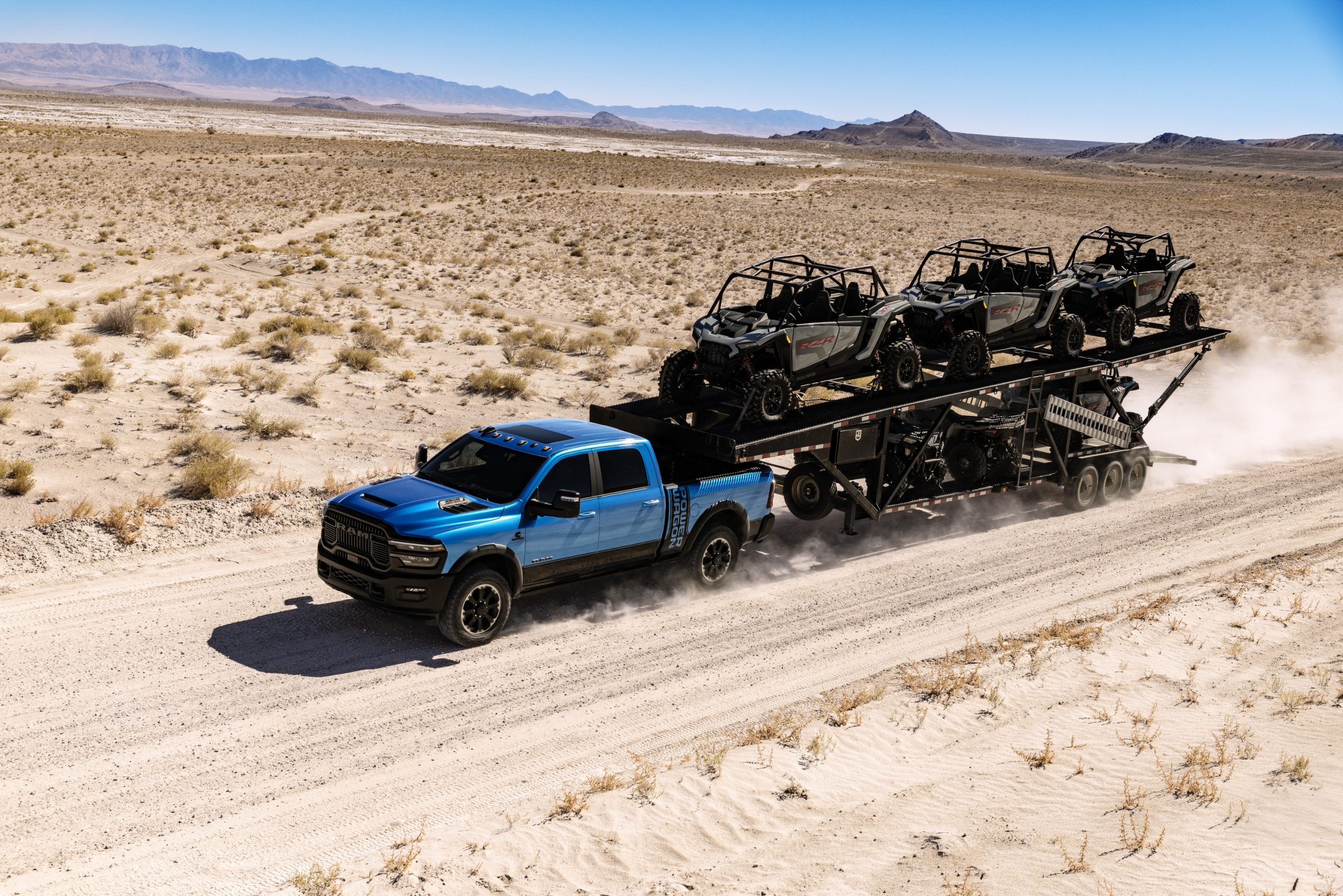
So Ram found itself with a tough question. Should it try to maximize absolute off-road capability knowing that, if we’re being honest, the truck would cost far more than the gas alternative without being a whole lot better off-road? Or should the pricier diesel truck offer something the gas truck does not: specifically, much, much more towing and payload?
Ram chose the latter option.
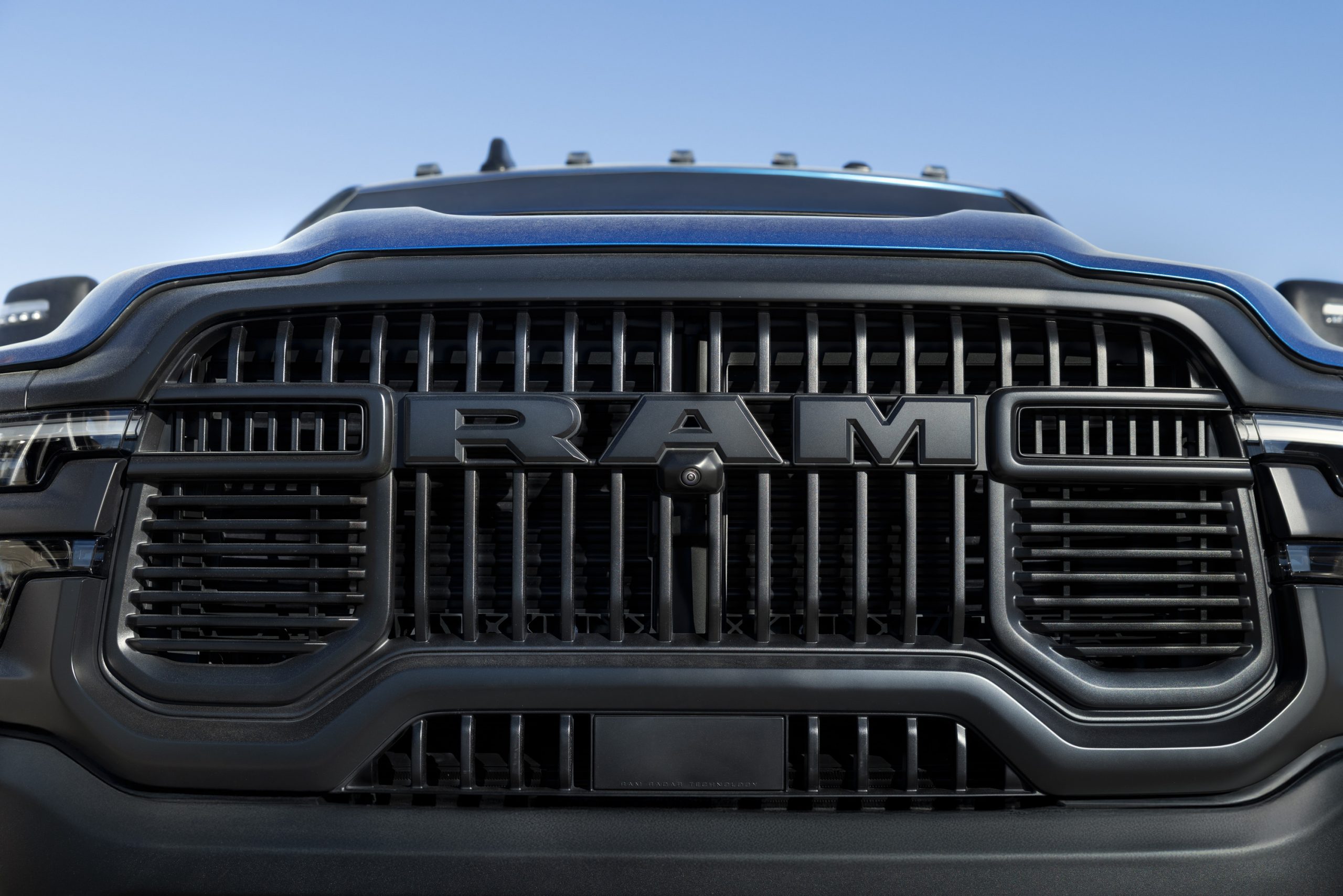
Image: Ram”A Cummins isn’t a Cummins without over 1000 ft-lbs of torque in this application,” Doug Killian told me during our Microsoft Teams interview. “We’re not going to take [the Cummins engine’s] DNA out of it in order to make it a Power Wagon…so what really is sacred is, the intercooler and the radiator are absolutely critical to making the Cummins make that amount of power and torque…to put the power down for long periods of time and [handle] the heat [while] towing.”
To maximize towing, the truck needs a humongous cooling module, which is heavy and takes up space at the front of the vehicle. This means the factory winch option had to go. “The winch isn’t really what makes the Power Wagon the Power Wagon because, frankly, it’s optional,” said Killian. “And a winch is something you can easily do in the aftermarket.”
Though packaging the front sway bar disconnect system wasn’t trivial, Ram managed to keep that feature. “What really makes Power Wagon Power Wagon…it’s about getting that torque to the ground,” the Ram development engineer continued.
“We didn’t have a locking front axle with a Cummins…that was engineering challenge #1… to get that 3.42 ratio 9.25 axle with a locker…We had to engineer that essentially from the ground up, and that’s what took a fair amount of time,” Killian told me.
Ram already had a locking rear axle and a transfer case that it could use, but that front axle had to be beefed up with a larger axle housing with more tube section, plus upgraded axle shafts. This is required not just because of the added torque but because of the added weight; the Cummins weighs 1,000 pounds more than the 6.4-liter gas motor.
1000 pounds!

“Getting that amount of mass over the front axle really changed the character of how the truck behaved off-road,” Killian told me, saying his team had expected more on-road understeer as a result of the heavy motor up front, but the change in off-road demeanor was a surprise. “Now you get that much more torque to work with, and now you’ve got that much normal force on each tire, and then you take the [front] stabilizer bar disconnect…you can imagine that we can spread that normal force between the two tires, and we can lock each axle,” Killian said.
He went on: “We got out to Moab [and found] the gas Power Wagon is like a billy-goat…it’s got enough torque. It’s got enough articulation. When the diesel started to hit some of these same [obstacles], it was almost like it was clawing its way up. It just had a different behavior climbing up these obstacles than the gas power wagon…the extra thousand pounds grabbing the ground made a difference.”
As impressive as its traction capability may be, with its three-link locked solid front axle, five-link locked solid rear axle, and front sway bar disconnect, the reality is that the diesel Power Wagon isn’t meant to be as much of a rock-climbing billygoat as the gas truck, and that has a lot to do with Ram’s desire to offer good payload and towing.


Take a look at the gas Power Wagon’s figures above, and you’ll see: They’re far from impressive. The payload figure of 1,570 is half that of any other Ram 2500, and the 10,530 pound towing figure is about 2/3 that of non-Power Wagon 2500s. “Kind of a dealbreaker for some people,” Killian admitted. He’s not wrong; check out a few threads I found on this topic:


The Cummins Power Wagon went a different route. Instead of compromising payload and towing, it chose to make some off-road compromises, including to that front winch, to articulation and to ground clearance.
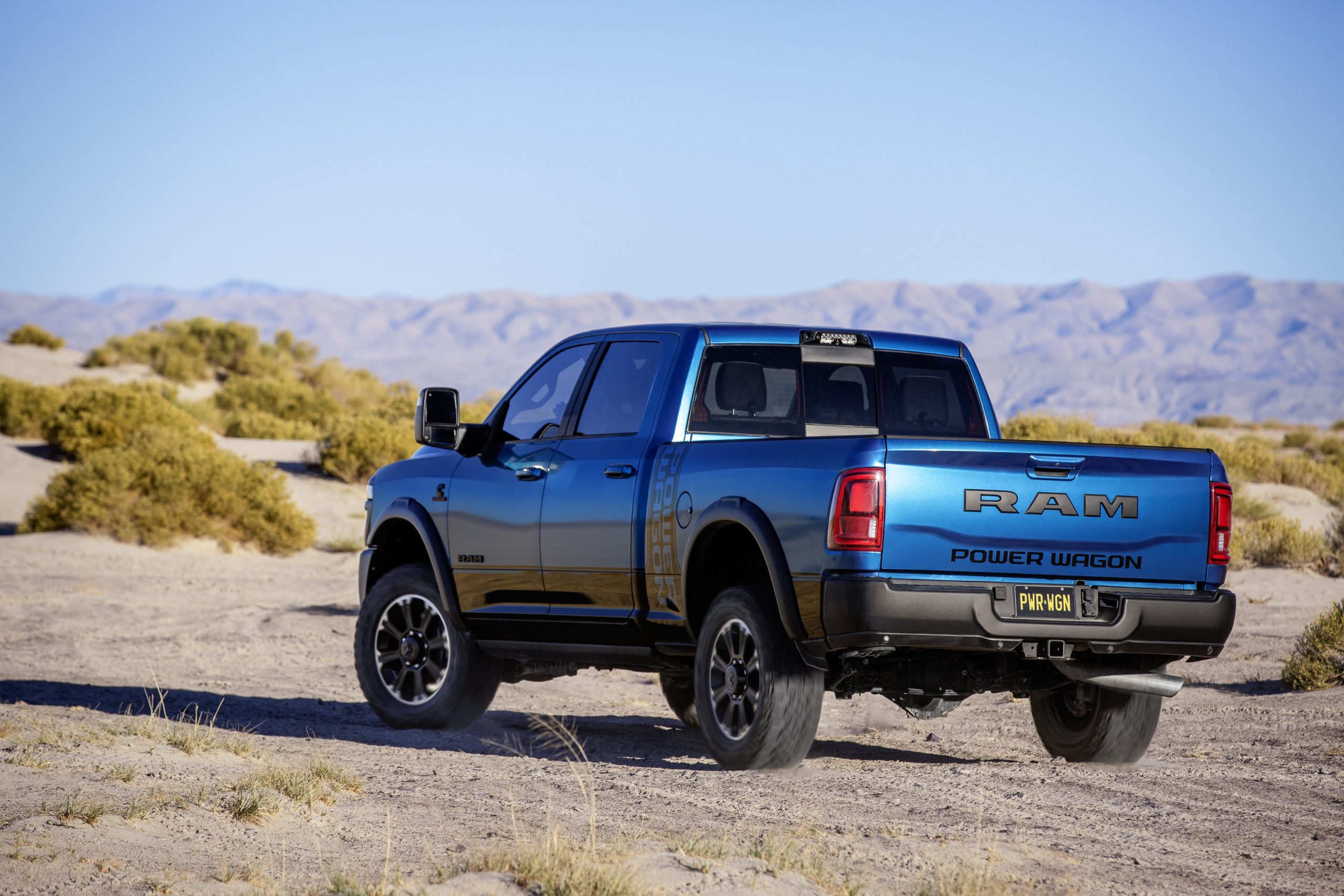
“The ride height of the diesel is about an inch and a half lower than the gas Power Wagon,” Killian told me (per official specs from Ram, the diesel offers 13.2-inches of clearance to the gas truck’s 14.2 — so about an inch, but the diesel has 1″ taller tires, so suspension height is indeed about 1.5″ lower). That lower ride height helps the truck maintain impressive towing and payload specs. “It’s the dynamic stability that was really the limiting factor on the gas Power Wagon,” Killian said.
“Keeping that center of gravity low [is important] with the diesel powertrain,” he told me. “We looked at [raising the ride height],” he continued, though the team had some driveshaft angle issues and they’d need a different tire. Those were solvable problems, but Killian’s team wasn’t sure they were worth tackling. “We kinda got to this philosophical discussion of, if we’re doing a new Power Wagon, why not have it do something different than the gas Power Wagon is doing…almost creating a Power Wagon portfolio.”
“We took it in a different direction [than the gas Power Wagon] intentionally. Because if we raised the ride height, we put load D-rating tires on it, and we made it more top heavy, less stable, it was almost like ‘what’s the point?’ So we’re opening it up to a different type of potential by having that [higher] payload.”
Killian told me that the lower ride height allowed Ram to maintain dynamic stability for SAE J2807, the towing and payload standard that all Ram trucks are designed to meet. The Cummins Power Wagon is rated to tow “nearly 20,000 pounds [with] a payload capacity of almost 3,000 pounds.”
In addition to giving up an inch of ground clearance (and 3 degrees of approach angle — 26, down from 29) over the gas truck, the Cummins also loses some articulation despite also having the same suspension geometry and a disconnecting front sway bar.
“Spring rates are higher on a diesel than a gas because of the weight of the engine. Due to the spring rates, the gas Power Wagon will have better articulation…the gas Power Wagon is going to have a better RTI, but it won’t have the payload and towing.”
Are The Off-Road Compromises Worth It?
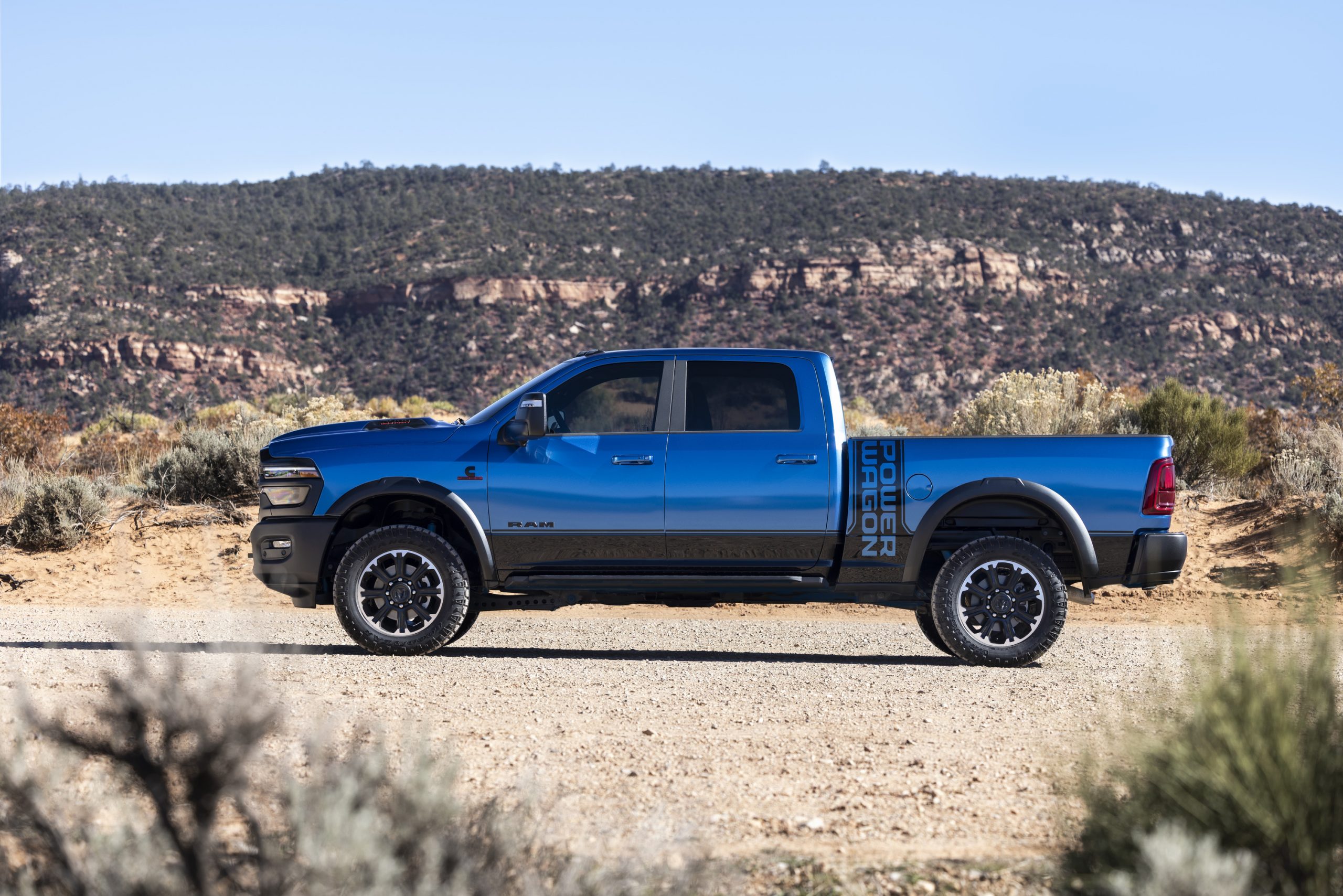
Less ground clearance, less articulation, worse approach angle, more weight — it’s clear that the Cummins Power Wagon is actually going to be less capable off-road than the gas truck, which costs about $13,000 less than the $88,570 Cummins Power Wagon. But that gas truck comes with huge payload and towing compromises, so maybe the Cummins Power Wagon offers a happy medium.
Of course, there’s already the Cummins Ram Rebel. “The Rebel does good things, but we were still truck with the ability to get that torque down over the front axle…the difference between the Rebel and the Power Wagon diesel [off-road] was the ability to just claw its way up over obstacles and hills and ditches and that sort of things,” Killian told me in our discussion. I myself am skeptical that a disconnecting sway bar and a front locker are going to yield significantly more off-road capability in a truck that is likely limited by its geometry, but I’ll have to drive them both to find out.
When the original Ram 2500 Power Wagon came out in 2005, I was 13 years old. I distinctly remember being disappointed that there was no Cummins. “What the heck; that would be perfect!” I remember thinking. “It would be the ultimate truck!”
The diehard off-roader in me doesn’t feel that way anymore, as the compromises are glaring. The heavy engine requiring stiff springs that reduce articulation and requiring a lower ride height to maintain dynamic stability to get the most out of the engine’s towing/payload capabilities…it’s a hard pill to swallow. And part of me thinks it would have been cool to make the towing/payload compromises to keep the Power Wagon a pure rock-crawler so it can stand out more from, say, the F-250 Tremor. The Ram 2500 Rebel could then be the truck for those wanting a bit more off-road capability from their Cummins, without giving up so much towing/hauling capability.
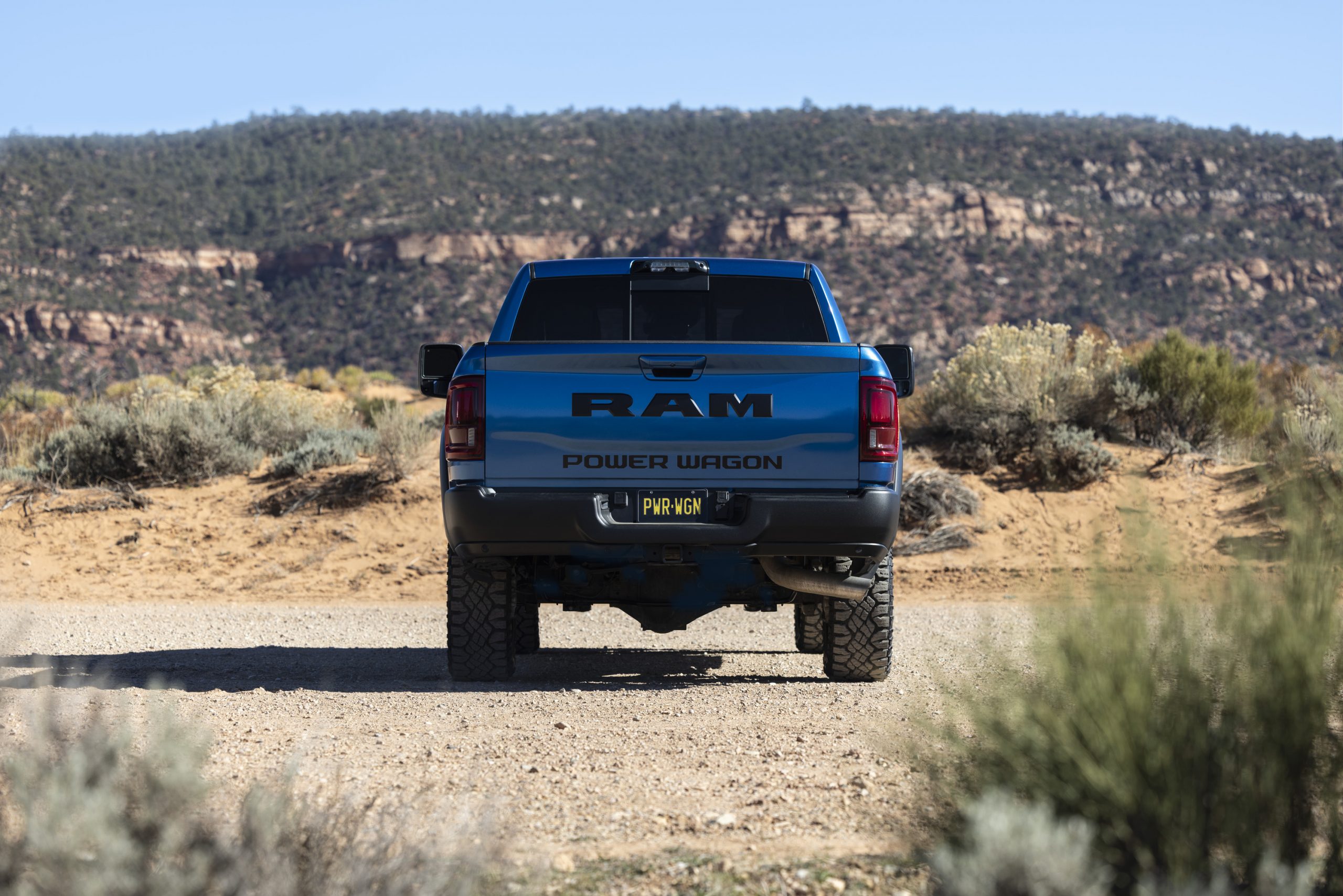
But overall, I’m still pumped that we finally have a Cummins Power Wagon, even if it’s now less of a rock crawler and more of an overlander.



This truck may have some compromises, but it doesn’t matter. It is a toy first and a truck second. It doesn’t have to be as good at towing, hauling, or off roading as other trucks. People buy this truck because it cool, even if other trucks are objectively better (also, it is worth noting this truck has way more utility than most people actually need – those that genuinely need to haul 3,000 lbs. in the bed or do serious rock crawling should buy a different truck).
I personally love this thing and would consider buying one. My only objection is the price tag. You can get an F250 Tremor XLT diesel for $75k. That presumably is a lower-spec truck than the Power Wagon, but I doubt the extra $13k buys enough useful options to warrant the higher price tag.
It’s about damn time. No make a winch option that fits the front of the bumper and make it a “Direct Connection”.
I really like the Powerwagon. In my overlanding group there is one going around from person to person because people discover it is just too enormous for trails.
The size and price is just too much for me. I am glad the diesel is there and they worked on the front axle to support the extra 1/2 ton.
I do not think I will ever be rich enough to rock crawl something that costs $90K and is that wide and heavy.
Be an influencer.
Honestly the Ram I want is the Laramie 2500 6 Seat Mega Cab with a 6.7L Cummins GAS ENGINE aka the B6.7 Octane and DRW setup.
Frankly I think Ram offers the least compromised heavy duty trucks in terms of ride quality and such with the rear air suspension and such, the mega cab is nice, and DRW is nice for towing.
Give it the Cummins 6.7 Gas engine and a DRW option and I’ll buy one tomorrow.
Yet another example of more equalling less.
This version of the Power Wagon is fine. Not everyone needs or wants a rock crawler.
Really, the original Power Wagon was meant to haul stuff in the bed or a trailer off-road, in muddy conditions, on farms or construction sites which is more or less what this version is going to be set up for. A little more in keeping with the military WC truck that the original was based on — brute force for getting through all kinds of rough conditions. It will do fine for construction, oilfield work, farming, etc. Of course, many will be driven for commuting and to go to the mall, so there’s that…
Now, can we talk about just what the hell is going on with that grille? The design makes absolutely no sense. Can we just go back to some sort of egg-crate look or the old Dodge “crosshair” grilles?
Thanks Murica! The world wouldn’t have done it without ya.
This is the perfect truck for overlanding. Just throw in a camper and off you go.