


As far as car brands go, Smart is definitely one of the more interesting automakers out there. The company is best known in America for its stubby Fortwo city cars that haven’t been sold here since 2019, but still carry a cult following. Our own Mercedes Streeter owned five of them when she started writing for The Autopian a few years back.
Since 2019, when parent company Mercedes-Benz sold half of Smart to Chinese carmaker Geely and moved all production to China, there’s been a big shift in the brand’s offerings. It now sells three crossovers, the #1, the #3, and the #5, none of which are as small or outwardly quirky as the Fortwo. But I’d argue they were still charming and interesting in their own ways.


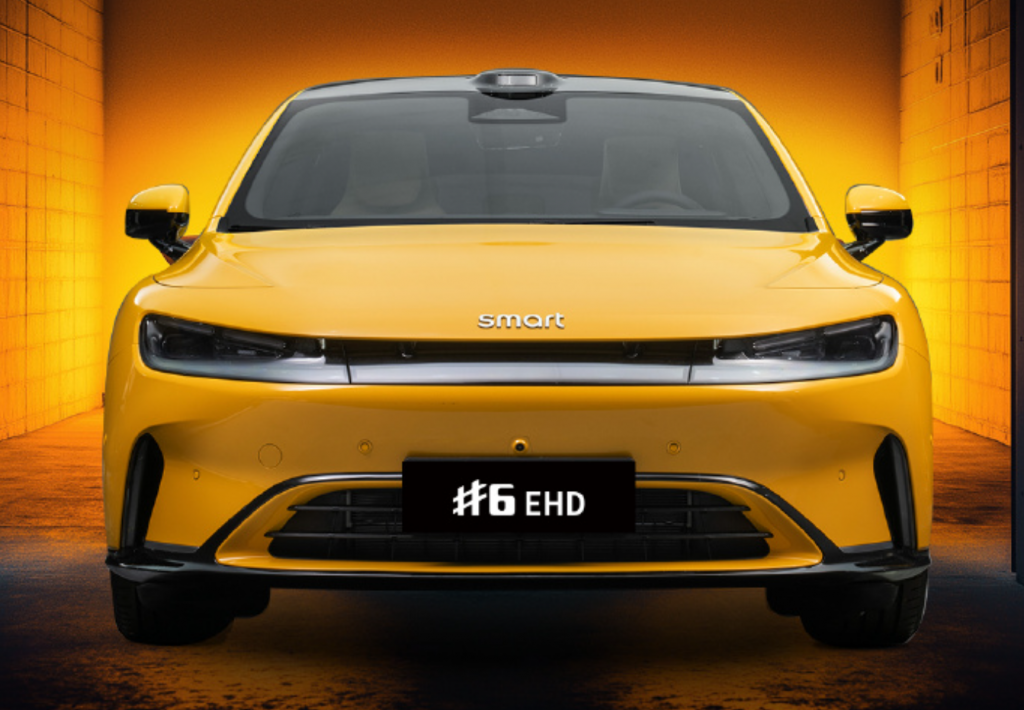
Now, Smart has another new car: The #6. It’s the company’s first sedan, and like its other Geely-manufactured siblings, it’s not nearly as small as the iconic Fortwo. To me, it’s even less compelling than the other new Smart vehicles, because it looks like virtually every other modern Chinese-built sedan on the market right now.
The Wonderfully Small History Of Smart’s Small Cars
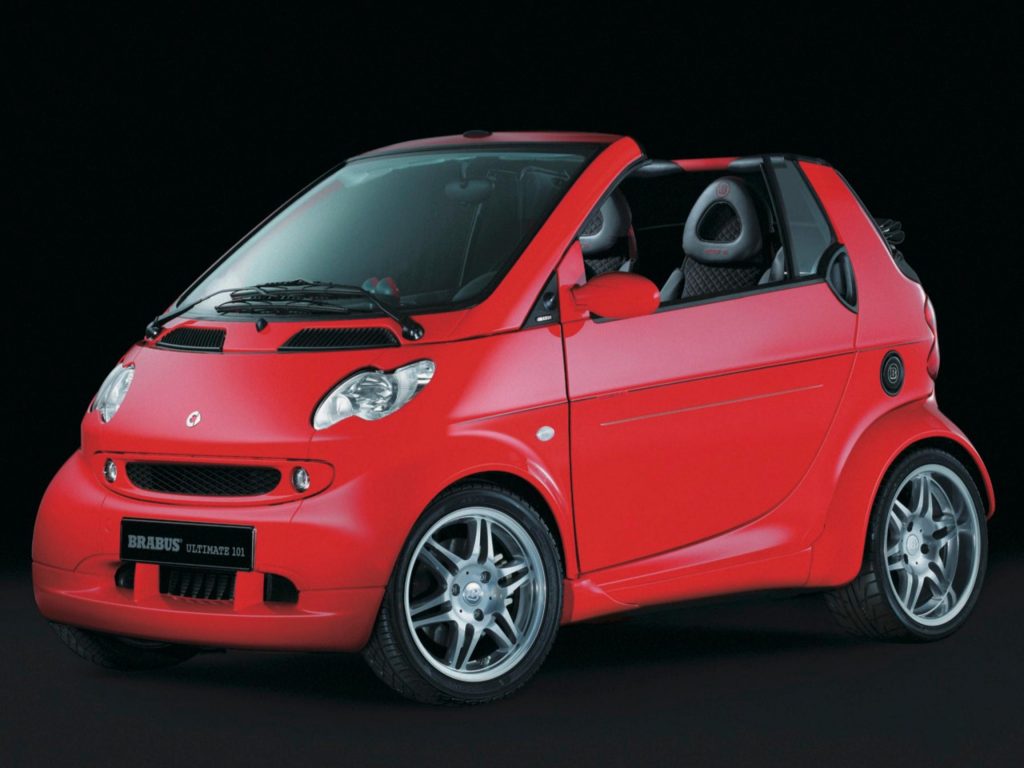
Smart has been around for 27 years, and for most of those years, it has sold two vehicle lines: the Fortwo and the ForFour. The Fortwo microcar was a mainstay of the company’s lineup from the beginning, originally known as the City Coupé and Cabrio. Its incredibly short length (106.1 inches) made it incredibly useful for tight city streets and parking, at the same time immortalizing the car as the butt of jokes for years.
The Forfour, meanwhile, was a four-door with an extra set of seats out back. Though it shared a lot of the Fortwo’s design cues, the first-generation Forfour was actually a Mitsubishi Colt hatchback underneath, using that car’s front-engine front-wheel drive layout instead of the Fortwo’s rear-engine, rear-drive design. Despite not having the Fortwo’s famous Trition safety cell, its body panels reflected a shell with contrasting paint, which made for a weird (and fascinating) design.

Things changed for the second-generation ForFour in 2014, when it used the third-gen Renault Twingo as a base. This car actually had a steel safety cell and looked essentially like a stretched version of the Fortwo. Even looking at it now, I’m not sure which version makes sense, design-wise. That’s what made Smart fun!
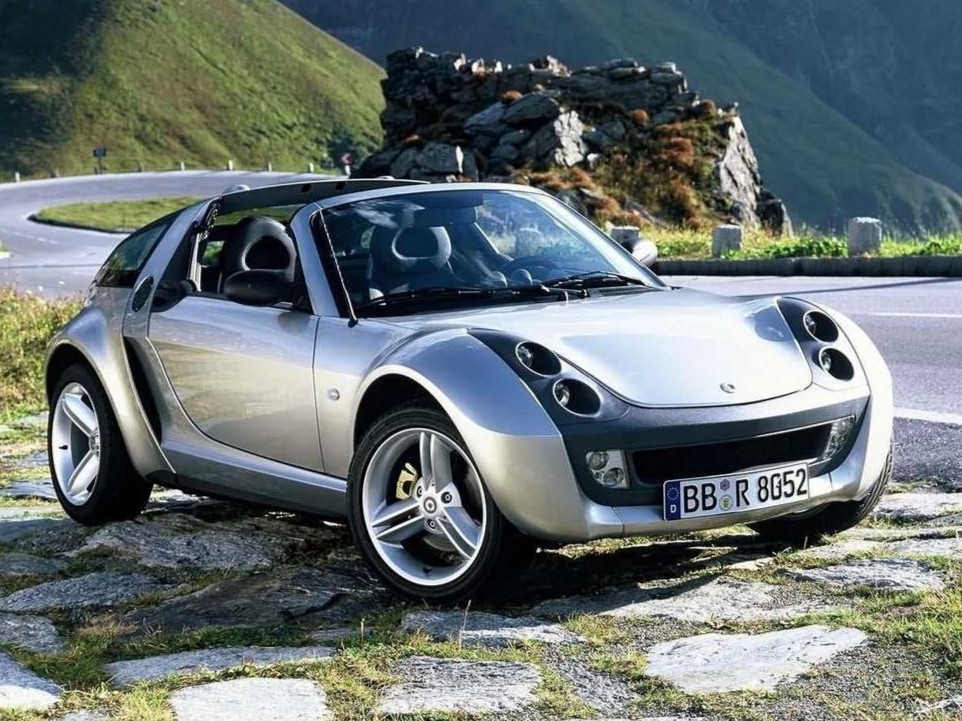
For a few years in the mid-2000s, Smart even made a sports car called the Roadster. While it was less “quirky” and more just downright good-looking, its three-cylinder engine and rear-engine layout made it a funky entry into the small sports car segment. The Roadster’s one downfall? Smart never sold it with a manual gearbox, instead pairing that inline-three to the same automated manual found in the ForTwo. But you could argue that made it even more interesting.
My point is, all of these cars were weird in their own way. Smart could’ve made them less conspicuous, but it didn’t. And because of that, there’s a certain vibe I expect when I hear about a new Smart car. And the #6 ain’t it.
What’s Your Definition Of Small?
Smart has long been associated with selling small vehicles, but that hasn’t really been the case since the Fortwo finally went out of production last year. That doesn’t change with the #6, which comes in at 193.1 inches in length, or the same length as a Kia K5 sedan.
The company’s other cars are similarly sized, but they maintain a level of quirkiness I’d quicker associate with the Smart brand. The #1 and the #3 have interesting profiles and a headlight setup that appears to connect the two lights into one continuous beam, with two bulges on either end. The #5, meanwhile, looks like a mash-up of a Kia Soul and a Jeep Renegade, resulting in a car that feels way cooler than either of those cars ever were.
The #6, though? I’m just not feeling it. This car is missing the fun design cues that defined Smart for the past two-plus decades. There’s nothing here that I couldn’t also associate with a half-dozen other Chinese-designed electric or hybrid sedans currently on the market. If it didn’t have a Smart badge on the nose, there’s no way you’d be able to tell this is a vehicle sold by Smart.
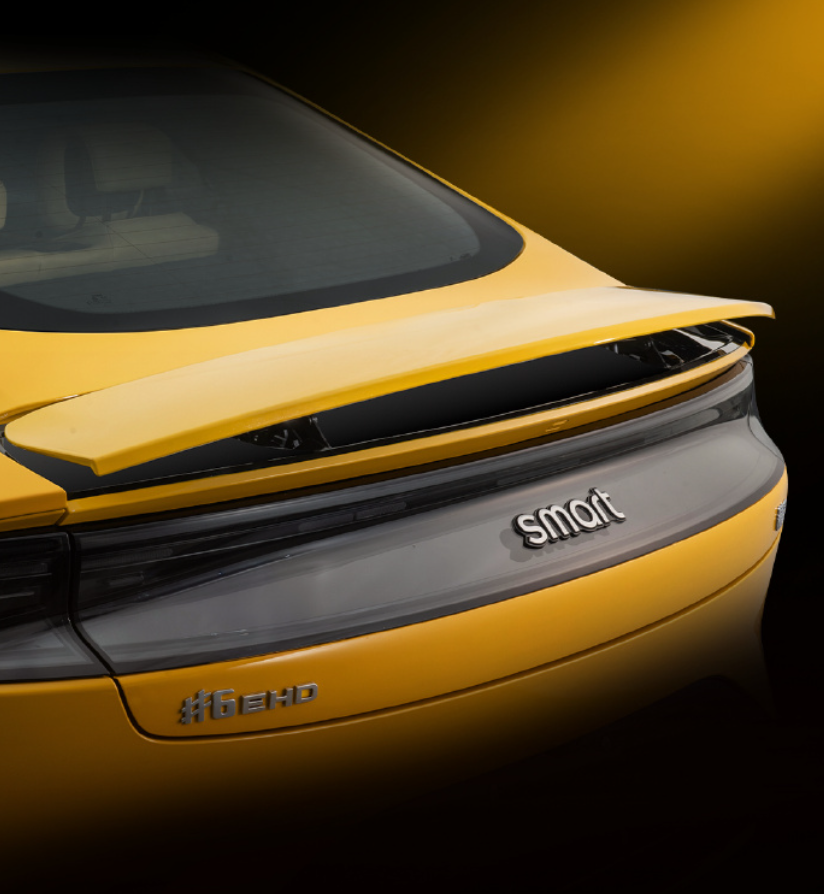
At least it’ll be efficient, according to Smart, anyway. Underneath the skin is a plug-in hybrid setup that pairs a battery and an electric motor to a 1.5-liter gas engine for a combined output of 429 horsepower. With a full tank of gas and a full battery, Smart claims a total range of 1,124 miles, which seems pretty impressive.
The Smart #6 is the latest victim in the blandification of car design, and I’m not really surprised to see it look like this and not something more tuned to Smart’s past philosophy. But it’s still sad. I missed when brands could just get weird with it. That kind of stuff feels rarer and rarer these days.
Top graphic image: Smart China on Weibo





Since we’re talking about Smart cars, did you know that in France it’s possible to buy an Alpine A110 Smart kit based on the roadster?
I feel some manufacturers need a core car to justify their existence. Porsche needs a 911, JEEP needs a wrangler, Land Rover needs a defender etc. they may not be the money spinners but they’re central to the brand and their very existence allows the rest of the range to safely diverge.
Smart needs that promised (?) #2.
As an aside, mini needs a proper mini.
This is truly sad. purdy sure Mercedes is crying right now.
I watch a lot of overseas YT car reviews for their forbidden fruits. The Smart Hashtag 3 and Hashtag 5 (they want to be called that way) are pretty cool crossovers and are generally well received.
I’d gladly consider them if they were available and cheap enough.
I agree that a Smart should be quirky, but this doesn’t look bad, by any means.
So kinda like the Mini kept the name, but became “maxi” with the Countryman, the Smart kept the name, but became… 😉
MINI is a relative term and ethos…????????
It’s the front of a Leapmotor with the back of a Xiaomi SU7. I’m sure it will be cheap to run, quick to charge, decent to drive and come with an unfortunate button-less interior, while being slightly dull like most Chinese EVs.
Apart from Xiaomi or Nio, I don’t really think the Chinese brands have much in terms of desirability. What’s the difference between a Deepal or an AITO?
Smart #5 is pretty big actually.
I’m curious what the drag coefficient is.
Throw it at a target, because it’s a Dart.
That looks just like an Afeela
I see a design which has subjugated form to function and simplicity.
I like it.
Really? They could only muster up 429 ponies out of that massive 1.5L engine and the electric motors?
That’s gonna have some glacial acceleration issues. They needed at least 600hp to make it safe enough for gramma to go get her groceries.
Needs MOAR rockets.
One wonders what things could have been like for Smart under Penske. The proposed Versa-based four door might not have been great but it could have opened the door to something cool.
It really just is an car, isn’t it? I think the most offensive thing about it isn’t the design, but that it’s indistinguishable from anything else coming out of China. No grille just like a Tesla, basic car shape (anyone else getting 15-year-old Elantra vibes from the greenhouse?) stripe across the front and back for lighting. Like all of Geely’s “sleek” lineup.
It’s got the same energy as no-brand stuff on Amazon with a random badge stuck on. You can probably get the same car from another brand Geely owns, with nearly the same styling, but a brand name you can’t pronounce, for less. That might not bother some, and to each their own, but…
Does anyone sort of wonder what Geely really got out of the deal? Smart’s unique rear engine platform is long gone, the French factory waa closed and sold to Ineos, does the Smart name really carry much prestige in China? Its not like its a storied old European name with a lot of heritage behind it. With the way Chinese automakers seem to haphazardly launch new brands, seemingly without much thought, you’d think they could have just done that and the cars would sell just as well. Maybe call it P@RIS & CO. or something to make it feel European
If I remember correctly, Mercedes remains in charge of overall design for Smart. So while most of the engineering and production is Geely’s (shared across their brands like Zeekr and Volvo), they get to have Mercedes-esque designs, which probably appeals to the younger aspirational set.
The interiors of the Smart crossovers are remarkably similar to Mercedes’s smaller models like the GLA/GLB etc.
For Europe, it is a familiar brand, half(?) owned by Mercedes, so the image is not as Chinese, compared to e.g. BYD. Same story with Volvo and Polestar. MG? Feels Chinese all the way. For some reason.
Smart in China? Maybe the other way round? But first and foremost it is a ladder to the Euro market, I think. There must also be some Euro input in the design, they don’t feel quite as Chinese as some other brands. Small things, hard to describe.
We’ve been complaining about cars being all aggro, with vents, creases, and angles for a while now. Perhaps especially on crossovers where the front and rear are your main styling elements since the 2 box layout is largely already defined. I rather appreciate the understated styling.
#IDon’tHateIt
#ButIDon’tLoveItEither
It’s handsome, in a Chrysler 200/Dart sort of way. It feels like they have it the wrong way around though. Make the small sedan the quirky one and the midsize crossovers the safe styling choice, no?
Chrysler 200 is the first thing that came to mind when I saw the lede image.
200 had a baby with a lucid.
Someone I know has a late-model Chrysler 200, and I’m amazed at how well the design has held up. It still looks quite modern a decade after it was introduced.
It was a good looking car. Also, if you crunch the numbers, it was actually the best selling midsize sedan ever offered under the Chrysler nameplate, but, it was a market failure as it was also the only midsize sedan they offered under any nameplate, previous examples had had higher volume Dodge or Plymouth platform mates to spread costs around
I don’t see the issue.
Do we want awkward-looking for awkward’s-sake, now?
That’s what they used to ask me on school picture day.
That’s gotta be the wrong units, no? 1,124 *miles*? I’d maybe buy kilometers, for a very fuel efficient plug-in hybrid with a big gas tank but not miles….
Yeah. I know that CLTC miles are usually higher than EPA, but that is a really high number. Their ad says 1800km, but that is crazy.
429 Horsepower combined with a 1,124 mile range sounds pretty crazy too.
From what I’ve read, the CLTC cycle is a realistic simulation of a Shanghai rush hour traffic jam (~30mph with gentle stop and go). The 1,124mi (1810km) number includes the 177mi (285km) electric range, and it’s rated for 3.9L/km (60mpg). When you divide the 1525km (948mi) non-electric range by 3.9L/100km we get a 60L (15.9gal) fuel tank, which is fairly large for a PHEV sedan but not unreasonable.
With the engine being optimized for PHEV use, I think 40mpg should be easily achievable, so that’d be 117mi electric range + 633mi non-electric for 750mi total. If it can match a Camry’s 50mpg, it’d be ~900mi total.
I don’t hate it. It actually looks like a decent reasonable shape of a car, vs spaceship blobs or other weirdness. Maybe they want to make a car that might sell decently?