

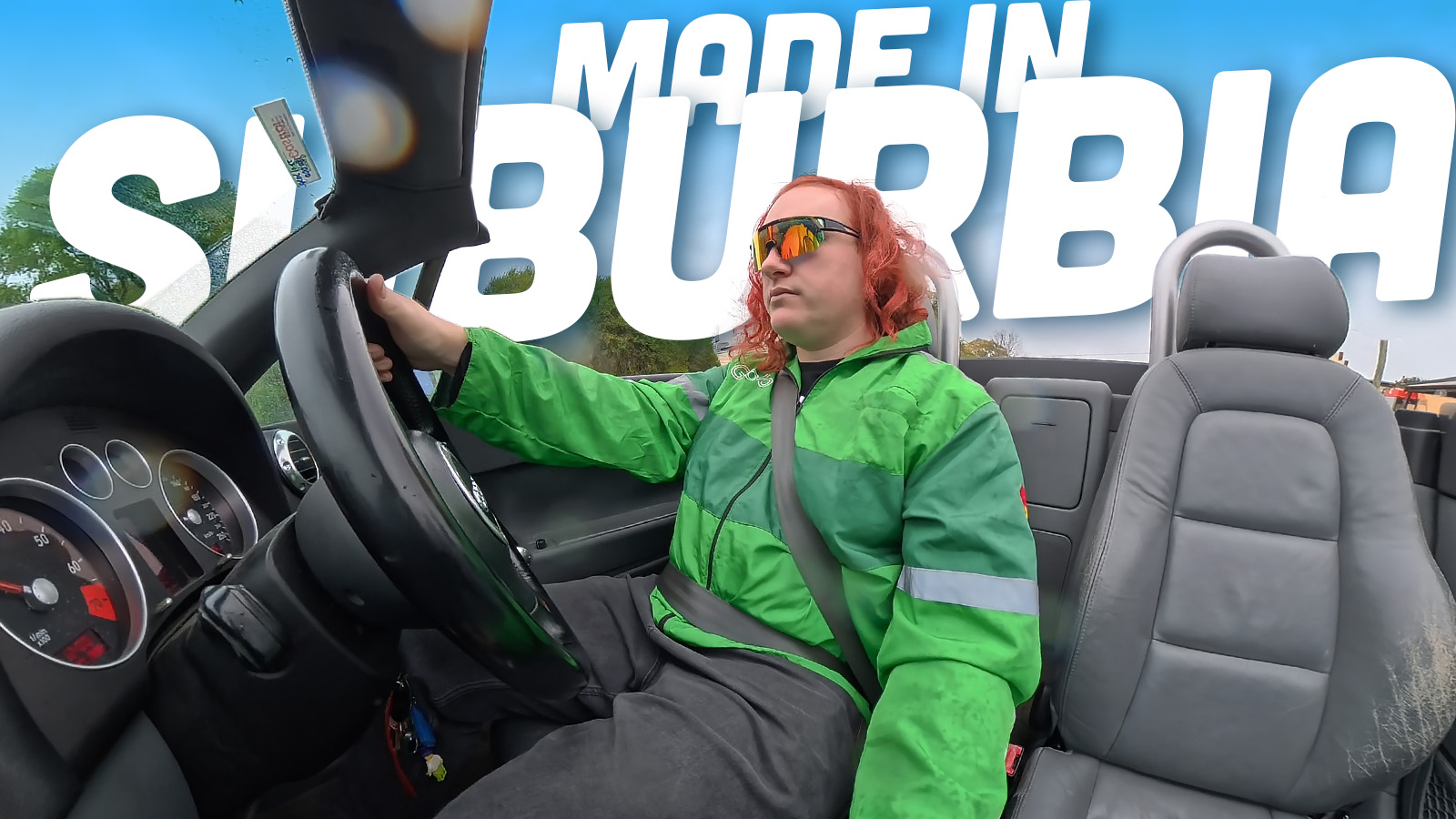
About a year ago, I moved to the city. The proper city, with the tall buildings and everything. I learned pretty quickly that this was where I was always supposed to be. Ever since, though, I’ve reckoned with my past, and wondered how where I lived had shaped me as a driver.
I grew up in the duller suburbs of South Australia. The roads were roomy, traffic was relatively low, and most driveways had a couple of cars in them by the early 2000s. Living in the shadow of the Holden factory meant that the sound of squealing tires was never far away; the local hoon culture was strong. Burnouts were a way of life for many a teen driver, who would start out behind the wheel of a hand-me-down Falcon or Commodore.


It was against this backdrop that I learned to drive. I racked up hours behind the wheel, passed the tests, and eventually got my license. Only, once I was free to drive on my own … I realized that I’d barely learned to control a car at all. I’ve been musing of late: Was this all because of where I came from?
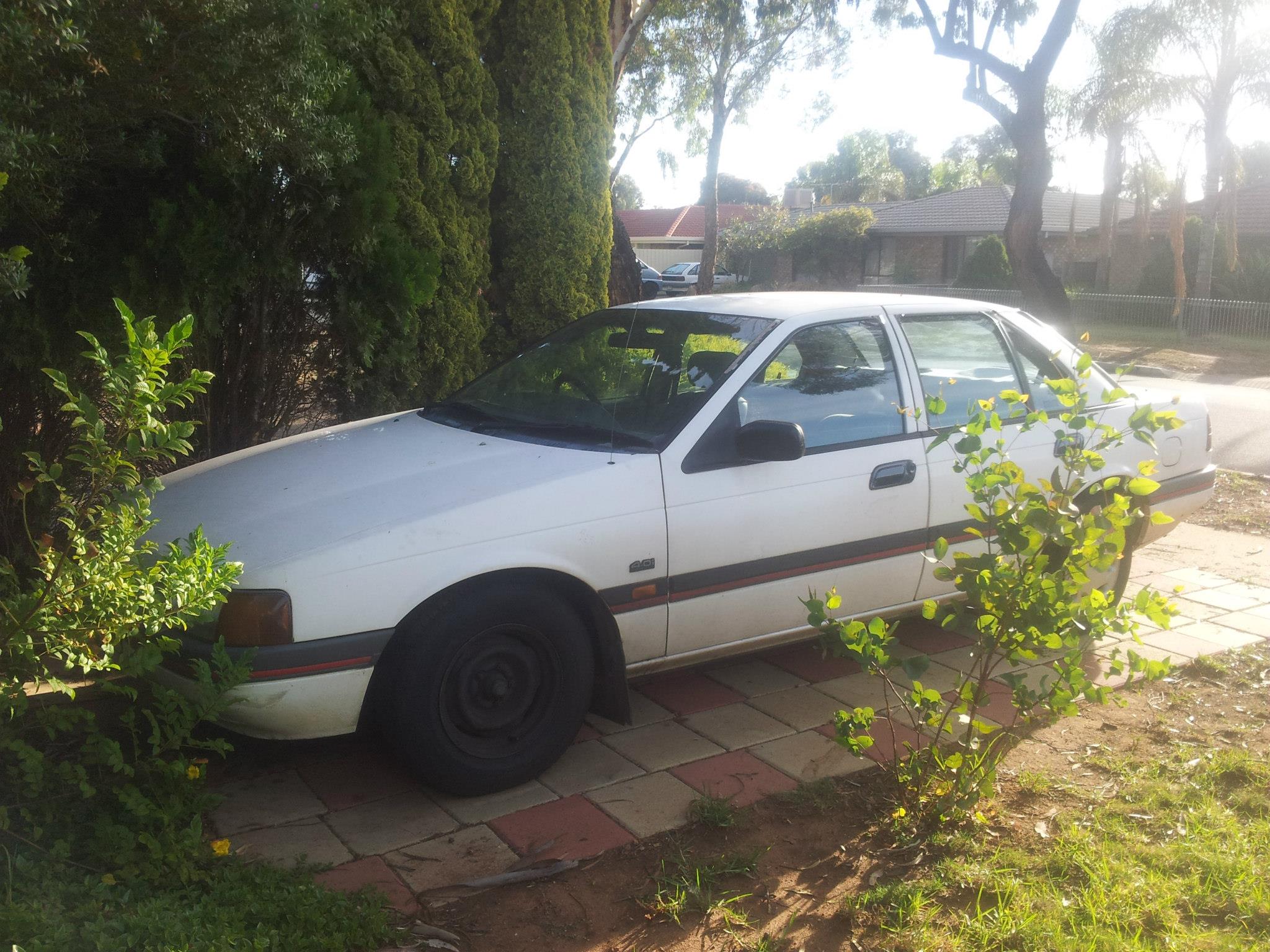
I went through the usual training of a young Australian driver. Family members taught me the basic skills required to drive around the neighborhood. We only had automatics, so that’s what I learned on. I dearly wanted to try a manual, but that would have to wait until I got one of my own years later. As the weeks and months went by after my 16th birthday, I picked up the basic skills—how to accelerate, steer, and brake, and eventually how to park without hitting things.
Armed with 50 hours of experience driving with family members, I enlisted a driving instructor to train me the final skills I needed to get a license. Over four weeks, I picked up the fundamentals required to pass South Australia’s Vehicle On Road Test (VORT). You basically had to complete a bunch of standard maneuvers—three point turns, U-turns, and parallel parking—while sticking to a strict mirror-signal-maneuver doctrine. I got dinged marks for doing a U-turn at a bus stop, but overall scored a passing mark on my first try. That was it—I had my provisional license, and I was a real driver!
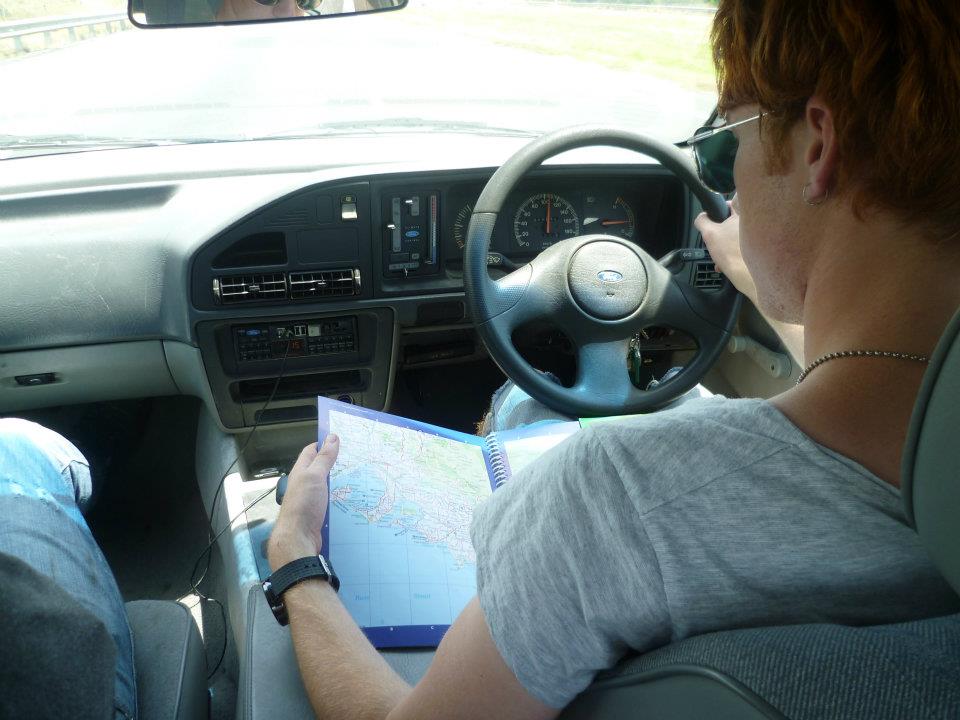
Suddenly, I was free to drive myself anywhere a road could take me. I could drive through the CBD at rush hour, or I could cross expensive suburbs in the mid-afternoon. I did both of these things within a week of getting my license. I drove the wrong way down a one-way street, and narrowly avoided disaster on the infamously horrifying Britannia roundabout, but overall survived. As time went on and I regularly drove to work and, later, university, I became competent enough at regular driving to get around safely. I knew my place in traffic, and knew how to behave in order to avoid hitting others and them hitting me.
It was only when I began to explore the … funner side of driving … that things started to go wrong. Within six months of getting my P plates, I binned my Falcon on a dark mountain road, spearing straight off into a tree. I’d gotten completely mixed up over a girl, and decided to clear my head with a canyon run while blaring The Offspring at full volume. This seemed like a great idea until I was slamming the brakes at 80 km/h and headed straight towards a sheer drop. Pleasantly, my Falcon would wind up stuck on top of that lovely little tree, and I was saved a nasty drop into the beyond – the main embarrassment being that I had to wait for a passing local to tow me off the stump that my rear diff was now stuck on.

This taught me a lesson: I wasn’t as good at driving as I thought I was. I thought I was nailing the corners right up until I ran out of road and locked up the brakes in a straight line. Really, though, it was my first time in such a situation. None of my driving experience thus far had included late-night canyon runs, threshold braking, or The Offspring.
It wasn’t long before such a situation would occur again. Still 17, still young, dumb, and full of … fluids. Meanwhile, my car was old, dumb, and full of fluids. Emphasis on dumb; I had no ABS, no traction control, no stability control – just me, 200 horsepower, and a steering wheel. Thus, when my friends said I should slow down around a Melbourne roundabout in the wet, I proclaimed I was in control. After all, I was doing the posted speed limit of 50 km/h, right up until the back end stepped out sideways. I overcorrected, slammed into a curb, and smashed up the rear end something awful.
Once again, my skills had been proven wanting. And once again, it was my first time facing such a situation. I’d driven in the rain before, to be sure. But none of my family, and none of my instructors, had ever taught me how to respond to a slide. They’d never even mentioned it, let alone put me in a situation where I could practice the skills and learn the muscle memory required. I’d had two crashes by this point, and as much as they were down to my own stupidity, they were also down to my total lack of driving skills.
Locking up in the braking zones is a great way to get your race car in the local paper. pic.twitter.com/JE0acm7CD9
— Lewin S. Day (@rainbowdefault) July 15, 2024
Track days ended up teaching me a lot more about car control, because you could actually push a car to the limit and learn how to deal with what happens there.
As I grew up, I met many drivers from all walks of life. Many of them were far better than I. There was the French farm boy who could sling a Land Cruiser down a dirt road at 130 km/h like he was taking his grandmother to church. The Elizabethan hoon who could swing a Commodore through a perfect 180-degree arc with all the finesse and smoke of a major naval engagement. The strange girl whom I only met once, but she flung a Chrysler PT Cruiser into a backwards J-turn off a curb so deftly that I figured she’d surely had some kind of professional Hollywood stunt training.
All of these drivers had found a way to learn the skills that the system simply didn’t teach. The French kid grew up driving the backroads of his family farm from a young age, where he could learn how to handle a car in low-grip situations. The hoon wasn’t afraid of South Australia’s overbearing police, and simply picked up better car control through brazenly ignoring the law. As for the mystery girl, I never learned how she did what she did, but I’m sure it was a great story besides.
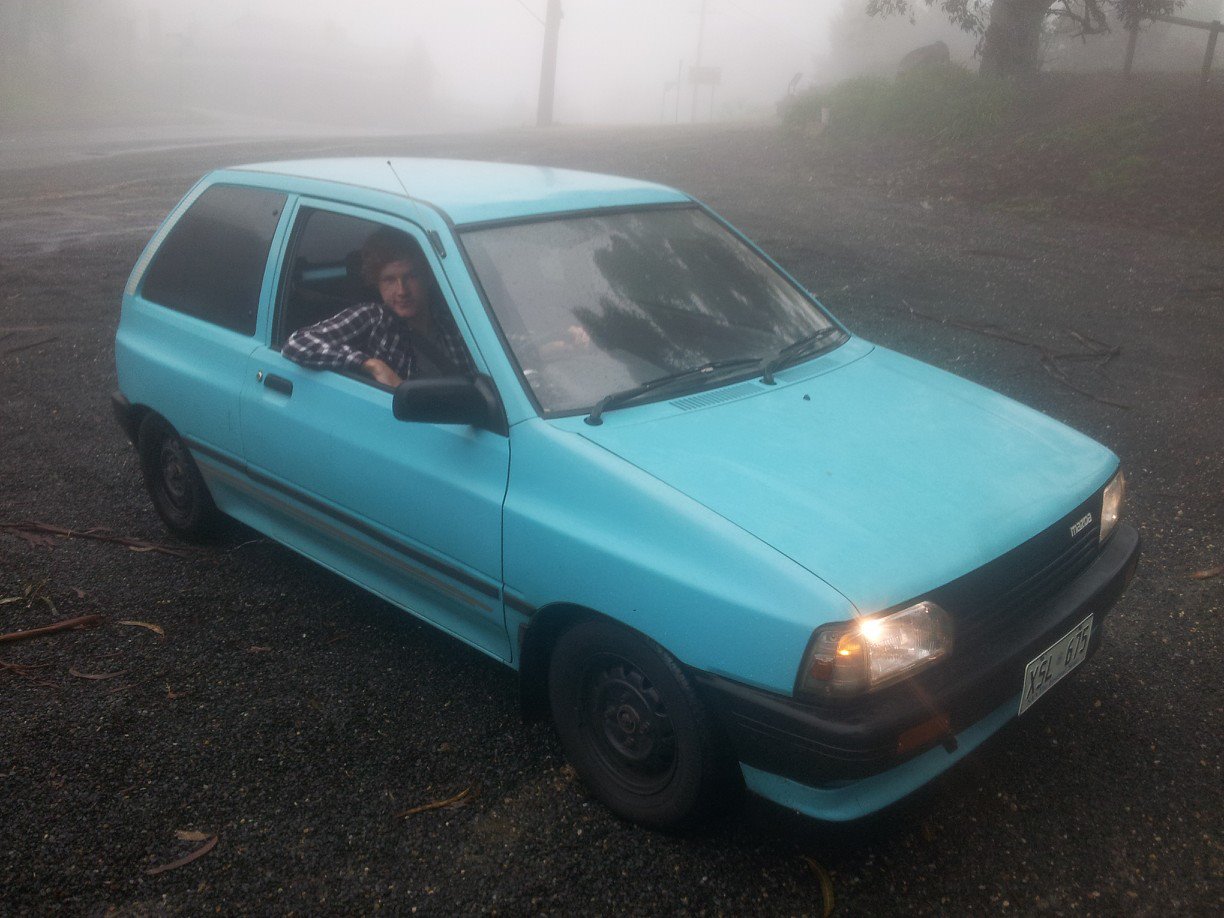
Unfortunately for me, I was merely an unexceptional suburban boy. I wasn’t brave enough to go hooning through the streets, and got in plenty of trouble the handful of times I even approximated dangerous driving. I didn’t have farm back roads on which to learn how to handle loose surfaces and slides and the like, either. I was expected to drive around below the speed limit and just hope that I never got in a situation I couldn’t handle.
In the years since, I’ve added to my driving skills only slightly. I’ve had some limited experience on the track, which taught me how to handle driving at higher speeds. I also spent some time doing loops on the skidpan, and I picked up a lot more there than I ever did in any driving lesson. I got a little bit of action on a dirt road here, and a little bit of time on the beach there. I got better, always a little better, but I’ve never quite gotten good.
My clutch kicks still leave a LOT to be desired.
Overall, though, I’ve lacked the time and money to ever become the kind of driver I admire. I certainly wouldn’t hire me to do a decent burnout, let alone an artful drift or a nifty Scandi flick.
I’ve always wondered how good I’d be if I’d grown up on a farm or by some kind of grassroots racing circuit. Alas, I grew up in the suburbs, and they’ve left me a poorer driver than I might have been. Perhaps one day, I’ll fall into a giant pile of money, and I’ll copy Ken Block’s fine example. I’ll go out and spend day after day behind the wheel, sliding around until I learn how to drive like a master. That’s the dream.
This will be my last post as a regular writer at The Autopian. I’d like to thank everyone I worked with for being a legend, and give a special thank you to the readers who make all this possible. It’s been one heck of a ride. Here’s to the future.
Image credits: Lewin Day




Sorry to see you go Lewin! Looking forward to irregular posts from you, like the Maloo greatness you just posted.
I feel you on this article, suburban kid thinking I was able to handle a car, but I could not. I did have some large empty parking lots and a lot of snow to get a feel for slippery stuff, but that only helped so much. It wasn’t until my job many years later offered up more advanced driving work that I realized how little I really knew. I had some other coworkers give instruction and pointers and I got to be competent enough to teacher others, but that’s more that I know how to give perspective and teach, and less about my raw driving skills. The track is where I plan to finally learn, once I get the car back together in another year or two…
Also, I think driver’s education should have this type of limit driving as mandatory training, as everyone eventually comes to a corner too hot or brakes too hard and has no idea what to do. Alas, that will never happen.
Growing up in the suburbs is fine, but since we were close to the mountains of California, we frequently went there for both dirt roads, some approaching really challenging off-roading conditions, and snow. Proximity was great. I did the same for my kids providing them those opportunities as well, resulting in well-rounded drivers.
I’m glad you took a few steps to improve your emergency handling skills, however those aren’t the same as proper driving skills. At least not by my definition.
“Proper driving” to me means doing everything possible to prevent needing those emergency skills, e.g. be boring. Don’t speed, leave an adequate safety margin, use your signals, look over your shoulder, anticipate the road ahead, pay attention, don’t drift, wear your seat belts. It’s everything a young hooner loathes to do.
Proper driving also includes making sure the car is as safe and reliable as its design allows. Good tires, good brakes, fresh fluids, working lights, good bushings, good shocks, good alignment, etc.
The goals of proper driving is to be as safe as possible, to keep one’s driving record pristine and insurance rates low. That means keeping as far away as possible from the danger zone.
Good luck on your future endeavors.
If you don’t learn emergency techniques, you will have no recourse the first time someone inevitably does something incredibly stupid, and they will.
So learn them. Just do so in the safest possible manner without putting others at risk.
I always knew I needed to edge my way up to limits, and I knew racing theory before I had a license.
I used empty parking lots for practice and still do.
Traffic was almost non-existent by today’s standards though.
The pandemic reminded me why I used to enjoy driving just to be driving.
I may have had a forgiving handling car for my first one.
Sports cars after that.
I offered to teach emergency avoidance to my relatives kids.
They approved but none of the kids ever did.
The hardest thing to teach is to never panic, never freeze up.
You can always panic at home in bed later.
I have said for 40 years that growing up in the suburbs is the worst of the three options. city kids learn public transit from a young age and how to navigate the congestion and strangeness of a city. Rural kids learn to drive at 10, how to handle farm animals and self sufficiency. Suburban kids learn malls and parking lots and winding mc-mansion lined manicured lawn streets.
I grew up near a small city in the Appalachians. I learned how to handle 60-70 cars on rural twisty roads with focus care and humility.
I have also been teaching teenage boys for 25+ years and every damn one of them thinks they are fantastic drivers and they all brag about speeding on residential city streets in my Midwestern city. The youthful male overconfidence will not believe that I am a better driver after 40 years and probably a million miles behind the wheel.
Also sorry to see you leave. thanks for the great stories.
Rural drivers suddenly in a city have the lifespan of a hummingbird.
They have the chance to learn to drive if motivated, but those not interested rely on open roads and drivers avoiding them, until it doesn’t work.
My rural friends and relatives try to never drive in the city except for baseball games and concerts. They are terrified they will be attacked by BLM/Antifa at any moment and do not drive well with one hand on their concealed weapon.
Your handgun should be in a retention holster preferably on you, or mounted to the vehicle.
But the Bureau of Land Management isn’t very active in cities at all!
I’m on a narrow rural road now, and people go 60 mph over blind hills and curves.
People have been killed on this road for no reason.
I sometimes see the Bureau of Land Management vehicles when I’m traveling through Vegas not sure why.
I don’t know if they do anything in Vegas specifically, but there are huge areas of government land in nevada, recreational and otherwise.
They manage millions of acres, especially out west. The book, Blank Spots on the Map, tried to cover some of the flight research use in nevada.
I like to go to the high desert in northern Nevada to escape the heat and humidity.
That’s usually on BLM lands.
Some areas still have wagon tracks from pioneer days.
Sorry to see you go, Lewin–and hopefully it’s on to something bigger and better!
“This will be my last post as a regular writer at The Autopian.”
Say it isn’t so, mate. Best of luck in your future adventures, hope to see you around the internet.
Concerning driver’s ed, back in my day it was an elective class in HS done during the regular school day. I had the just after lunch class. We got to see even then ancient “blood on the highway” films. While we never got to practice it in class we did get a couple of days of what to do in a skid ect.
Fast forward several decades and my kid’s school is one of the last ones in the area that offered driver’s ed as a class but it was a 0 hour elective and had a significant fee, though cheaper than the private options. One of my daughter’s friends couldn’t do the before school thing, along with after school drivers so they went the private route. She shared the horror story of the first time she got behind the wheel of the instruction car. The “instructor” told her to drive to a place that required driving on everything from 30 mph side streets to the freeway. He then proceeded to take a nap. Somehow she did manage to make it there w/o and directions and w/o getting into an accident.
Sorry to see you go Lewin. I wish you all the best in your future endeavors
Your article made me laugh; your departure makes me sad. Thank you and best of luck with whatever comes next.
We’ll miss you Lewin! We’ve thoroughly enjoyed your contributions here.
Going karting with friends who had properly raced as kids really kicked my ass and helped me improve fast. It was almost a light switch for me — the realization what a kart (and cars in general) are actually capable of, and learning what to feel for. And at the end of the day, finding the enjoyment and confidence.
Sorry you’re moving on, Lewin, and I hope you’re moving UP!
Even before I took Driver’s Ed in high school, my father put me in his Austin-Healey and pointed toward the mountains, which had some pretty jazzy roads in our area. I picked up heel-and-toe, trail braking and choosing the right apex during those blissful Saturdays. I should note Dad was a helluva good driver….
All of which made my Driver’s Ed behind-the-wheel time shorter than it might have been. Mr Fuller, our instructor, was not enamored of my slow-in-fast-out style, or my occasional dropping of the car’s Powerglide into “L” on tight turns. At the end of the first day, he said “The other kids need practice, you don’t” and sent me on my way.
I’m afraid I expected rather too much of my Hillman Minx after all that. But I have gotten both faster and smoother.
Our course had a gimmicky video simulator.
After I got booted out for crashing the video car, a coach had me drive him around on public roads each class.
I think it was a break for him to get away, since we did it awhile.
He did teach me some legal risks of waving on other cars.
My parents signed me up for a few hours with a driving instructor when I had my permit. The instructor just took me to where the driving tests were administered and just had me drive the course over and over. “They’ll tell you do to a 3 point turn here.” “Stop AT this stop sign, then you can inch forward to see the intersection.”
Really taught me nothing about driving, just how to past the drivers test.
This is exactly how it works where I live. The fact that the testers never change the route is what really baffles me. The result is clear though – most of the drivers in my town really suck.
Some people struggle to get through an exam.
Instructors see some real problem students.
Autocross and Track days are good for pushing the limits, but winter driving and TSD Road Rally might be the best teachers of car control I’ve had. Push the limits down a dirt road in a WK2 trying to keep 39 mph on a sandy, wet, tree-lined single track with a series of switchbacks and you figure out how to hustle that SUV pretty quickly
I learned to ride a motorcycle off-road for a couple years before getting a license, and I am 100% convinced that it made me a better street rider. The skills aren’t identical, of course, but intentionally losing traction (for example) shows you what to do in case you inadvertently lose traction.
Cheers, Lewin – go learn to droive, myte. 🙂
Sad! How will we ever learn how the music video shook out?
Happy travels in your future! And fewer dumb driving mistakes! (Not none, because that’s where articles come from, but fewer.)
I also had a suburban driving upbringing much as you described, but I had the benefit of central New York winters 9when such a thing more reliably showed up). My dad brought me to parking lots and had me intentionally lose control, break traction, and so forth, and he found a steep driveway (to the Mansion House, not a residential one) to get intentionally stuck in to teach me how to rock a car out of steep snow. Those are the lessons that were most important.
I still did dumb things, but through training and yes, luck, I managed to avoid going off the road. Thanks, Dad.
Oh No, Lewin you’re leaving us? Bummer!
Good luck with your future adventures!
Good luck in what you do next 🙂
Best of luck for whatever the future holds. I’ve enjoyed your work here.
My drivers ed instructor was a racist ex-cop who told us threshold braking was stomping on the brakes until they lock (pre ABS days), letting off, and repeating the procedure until you’re stopped (or crashed). Moron.
I’ve enjoyed your articles, Lewin. You’ll be missed.
I must have had the same guy. My instructions was to drive to the Dunkin’ Donuts so he could get breakfast.
That cop was right:
“Threshold braking or limit braking is a driving technique most commonly used in motor racing, and in road vehicles to slow a vehicle at the maximum rate using the brakes. The technique involves the driver controlling the brake pedal (or lever) pressure to maximize the braking force developed by the tires. The optimal amount of braking force is applied at the point when the wheel just begins to slip.”
https://en.m.wikipedia.org/wiki/Threshold_braking
That’s not what he was teaching. Stomp the brakes until they lock. Release. Stomp the brakes until the lock. Release. It’s like read about the concept of threshold braking and didn’t understand it.
I’m no expert on the method. I’ve heard its quite difficult to do well and I’m pretty sure the folks who master it only are able to in a limited number of situations. Thankfully I have good ABS on my cars so regardless of conditions I can just stomp as needed and let the car do the rest. But I do my best to make sure things don’t come to that.
Even in an abs car I can feel the threshold better than the car can.
The maximum traction limit accelerating is just past the point of slipping.
With enough torque I got a feel for that sensation, a sort of tearing as the rubber barely slips, and great urgency to the grip.
Made it easier to brake accurately too.
A friend had a Mercedes system with traction control and on ice, the system was better at getting moving than his considerable skills, so there’s that.
You might be able to feel the threshold for at least the first tire to lock up but you can’t manipulate the threshold for each tire individually as ABS can. Especially in an unfamiliar car (like a rental) on an unfamiliar road (business trip) while in a panic. Even professional race car drivers struggle to beat ABS.
https://www.carscoops.com/2022/07/can-a-professional-race-car-driver-slow-down-faster-than-abs/
True, but most abs systems are simple and a perfectly tuned brake system can be better.
Most cars are not engineered to that level.
The best brake system I’ve had has been copied by BMW and others, so even without abs, limits are high.
Traction control added is a different layer, especially advantageous on erratic surfaces.
Riding in an Audi S6 in the city, g forces flung everything out of my pockets.
That was impressive!
Well the test car in the video was a $ Miata, not a $$$ BMW. If little Mazda can put in an ABS system in an entry level car that beats even a professional racing driver on a closed course I will put my trust in the machine over a human.
I’m not familiar with the Mazda design.
The design upgrade was using a smaller secondary piston to the front brakes for a vernier style fine adjustment in the valve responding to weight shift.
Other than, careful engineering.
Brembo was involved, but other than superb pass, there were no other tricks.
It was no high dollar system.
It beat everything in braking for many years until rally tech trickled down.
I suspect many systems use abs to fix their engineering, instead of starting with better limits.
The brakes were so good I learned to brake in a pattern to warn those behind me.
From 60 mph, braking was half a normal distance on A008s.
I have rudimentary abs on some of my cars now.
Can’t say how good it is
To clarify, I’m not talking about breaking loose.
It’s that margin when grip increases before it loses grip.
Probably much easier to feel under throttle than braking.
Most cars tune that out that have abs, with some exceptions.
My driver’s ed instructor was the high school’s anthropology teacher. He seemed to spend most of the time telling us to be sure the car had started moving before turning the steering wheel (so we wouldn’t wear out the tires) and to constantly remind us that a stop sign required “a complete cessetation of motion”.
Best of luck to you Lewin, we’ll miss you!
LD, while i am disappointed to read you won’t be a regular here anymore, i want you to know that i have enjoyed your articles and wish for you to enjoy a happy life. let us know what you’re gonna do next…
🙁
I thoroughly enjoyed your writing. Hope you pop into the discord every once in a while to say hi, and let all 2 of us in there that like Audi’s know how the TT is doing!
I’ve always felt that being from the Burbs means you can deal with the city or the country equally as well. This applies not just to driving, but to social situations.
I don’t know, maybe it’s because of the Tex Avery wolf cartoon, which taught me to not be either a snobby city-slicker or a country bumpkin.
That’s my take as well…some basic experience with city/rural, unless one never left the Burbs at all, which would be sad.
At a former job in a small town area, I had a couple of co-workers who claimed they almost never ventured to the nearby chill small city/college town where I lived because traffic was ‘too crazy’?? Boy, if they went to ATL/DC, their head would explode.
I think space gives you the option to learn if motivated.
I do wish someone had taught me how to handle gridlock traffic strategies though.
Best wishes on your new adventure, don’t become a stranger!
Smartest thing I did was taking a three day Skip Barber class in my early 20’s. I’ve never raced, but do use the car control skills I learned there. I also grew up in an area with 4 seasons, snowfall, and hills without the crutch of 4 wheel drive.
Best of luck on whatever comes next! Hopefully it’s all great things!