

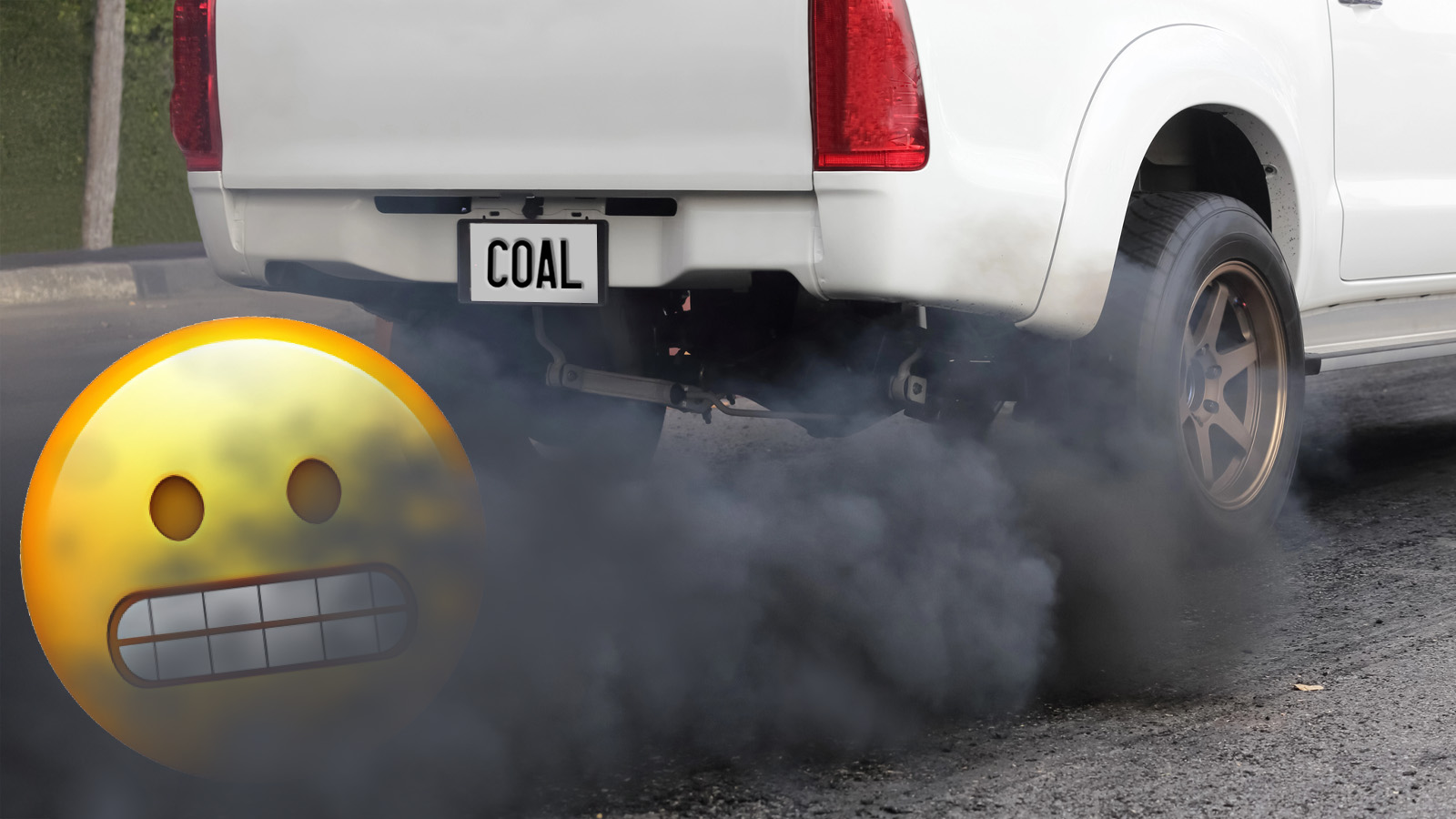
If you’ve followed the world of diesel trucks for the past decade, you’re no doubt aware of the drama surrounding aftermarket tuners and defeat devices used to skirt emissions requirements. For years, the Environmental Protection Agency and the Department of Justice have gone after manufacturers, distributors, and importers of these devices, as well as individuals who use them on their trucks, for violating the Clean Air Act.
Historically, the DoJ has gone after perpetrators by pursuing civil penalties in the form of fines. But in some cases, the agency has also pursued criminal penalties that include higher fines, probation, or actual jail time. The past few years have seen a handful of high-profile cases in which diesel tuners have been sent to prison for designing, installing, or selling defeat devices, in addition to having to pay civil penalties.


That policy is apparently coming to an end. The Department of Justice announced today it plans to stop pursuing criminal charges for these crimes. Here’s what that means.
Civil Charges Over Criminal Charges
The DoJ announced yesterday afternoon on X that it will no longer pursue criminal charges related to the Clean Air Act when the allegations involve tampering with onboard vehicle devices.
Today, @TheJusticeDept is exercising its enforcement discretion to no longer pursue criminal charges under the Clean Air Act based on allegations of tampering with onboard diagnostic devices in motor vehicles.
— DOJ Environment and Natural Resources Division (@DOJEnvironment) January 21, 2026
In a follow-up post, the DoJ said it was “committed to sound enforcement principles, efficient use of government resources, and avoiding overcriminalization of federal environmental law.” The DoJ also clarified that it would still pursue civil penalties “when appropriate.”
A DoJ memo obtained by CBS News ordered federal prosecutors to stop pursuing criminal cases against those selling, distributing, or manufacturing defeat devices.
The edict, issued by Deputy Attorney General Todd Blanche, marks the first time that the Justice Department has formally taken steps to scale back environmental criminal enforcement since President Trump took office in January 2025.
In the memo, Blanche wrote that he was taking this step “to ensure consistent and fair prosecution under the law, as well as to ensure the best use of Department resources,” according to a copy reviewed by CBS News.
The decision means that violators can no longer be subject to jail time, but it doesn’t mean they’re totally off the hook. The Clean Air Act is still enforceable by the EPA, and civil penalties are still applicable. That means theoretically, Cummins would’ve still had to pay for its near-$1.7-billion civil fine for installing emissions-cheating devices on engines found in Ram 2500 and 3500 pickups.

As for why the DoJ made this change, CBS claims the push was made by a guy named Adam Gustafson, an assistant attorney general appointed in February.
The push to kill all of the pending defeat device cases was championed by Adam Gustafson, the principal deputy assistant attorney general for the Justice Department’s Environment and Natural Resources Division who previously worked for Boeing and at the EPA, according to two of those sources and government records seen by CBS News.
He has not specialized in the practice of criminal environmental law.
Although Gustafson has previously signed off on at least some of the pending indictments involving after-market defeat devices, a new and novel defense bar argument that surfaced over the summer later changed his mind, the sources said.
That argument, according to CBS, came from the owners of Racing Performance Maintenance Northwest, a shop in Washington state. The two owners were convicted last year of conspiring to violate the Clean Air Act after pleading guilty to tampering with a monitoring device, and each was fined $10,000 and sentenced to three years of probation. They later appealed the conviction using a theory that Gustafson posited as worthwhile.
Her attorneys put forth a legal theory alleging that she cannot be held criminally liable because the software associated with emission controls, known as “onboard diagnostic systems,” is not “required to be maintained” under the Clean Air Act.
For this reason, they claimed that such an offense can only be charged as a civil violation, not a criminal one.
Whether you agree with that argument will depend on a lot of things, but for what it’s worth, it sounds like the folks at the EPA have a different opinion. From CBS:
An internal EPA memo reviewed by CBS News shows that career attorneys disagree with the arguments made by defense lawyers in the 9th Circuit case. The memo argues that there are “multiple respects” in which diesel truck emissions software systems are “required to be maintained” under the law, and therefore tampering with them can be a crime.
“When Congress enacted the Clean Air Act, legislators sought to ensure that regulated motor vehicles/engines would meet applicable emission standards not only at the time of manufacture and initial sale, but thereafter in everyday use,” the memo says.
Although the 9th Circuit has not yet ruled on the matter, the legal theory resonated with Gustafson, who started raising questions about the pending cases, one of the sources said.
How The Clean Air Act Has Been Enforced Up Until Now
The Clean Air Act is a wide-ranging law, but in the case of vehicle emissions cheating, it outlaws the manufacturing, selling, or installing of a defeat device, which is “a part for a motor vehicle that bypasses, defeats, or renders inoperative any emission control device,” according to the EPA. The Act also prohibits anyone “from tampering with an emission control device on a motor vehicle by removing it or making it inoperable prior to or after the sale or delivery to the buyer.” Violators are subject to civil penalties “up to $45,268 per noncompliant vehicle or engine, $4,527 per tampering event or sale of defeat device, and $45,268 per day for reporting and record keeping violations,” according to the EPA.
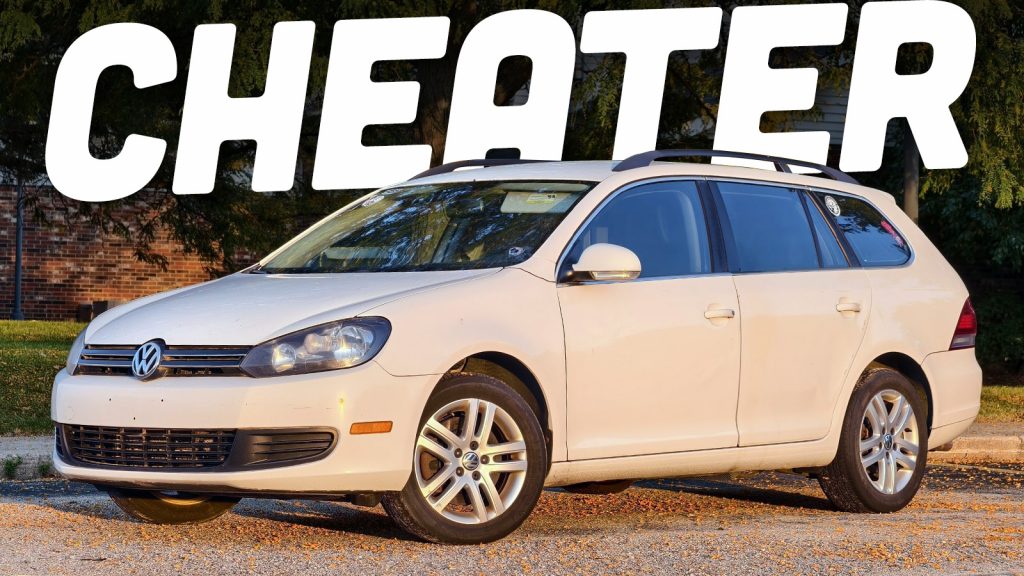
There have been numerous criminal cases brought by the Justice Department based on the Clean Air Act. The most high-profile case is, of course, Volkswagen’s “Dieselgate” scandal, in which researchers discovered the company had installed defeat devices to bypass emissions regulations in secret on around 11 million cars worldwide. More recently, Hino Motors, a subsidiary of Toyota, pleaded guilty in March 2025 to a multi-year emissions fraud scheme involving its diesel engines. No one went to jail, but a judge sentenced Hino to serve five years of probation, where it won’t be able to import diesel engines into the U.S., according to Reuters.
It’s not just OEMs that were subject to criminal prosecution. The DoJ routinely pursued cases of aftermarket defeat device manufacturers, distributors, and installers. In February 2025, an Indiana man was sentenced to four months in prison and given a $25,000 fine after pleading guilty to conspiring to violate the Clean Air Act by tampering with monitoring devices on “hundreds” of vehicles, grossing him $4.3 million in earnings from 2019 and 2021, according to the DoJ.

Back in December 2024, Troy Lake Sr., the owner of the Colorado-based Elite Diesel Service Inc., pleaded guilty to disabling onboard diagnostic systems on at least 344 heavy-duty commercial trucks. He was ordered to pay fines totaling $52,200 and sentenced to one year and one day in federal prison. Lake Sr. served seven months in jail before being released to house arrest to serve out the remainder of his sentence, but was pardoned by President Trump in November 2025.
Trump’s pardon of Lake Sr. came at the behest of Republican Senator Cynthia Lummis of Wyoming, who said in a statement that the case was “yet another example of how federal agencies have been weaponized by Democrat administrations against hardworking Americans.”
This move also follows a year of the administration rolling back environmental protection policies aimed at reducing emissions, most notably starting the process to ease fuel economy requirements for new cars and eliminating fuel economy penalties handed out to automakers over the past three years — with the administration’s stated goal being to reduce vehicle costs to the consumer and to help the auto industry. It’s entirely plausible that this move to end criminal prosecutions for defeat device installers and manufacturers is another step in that direction, rather than purely due to different interpretations of the law.
Why You Should Care
There are two sides to this dispute, both with fairly reasonable arguments. On the one hand, people who own their trucks should be able to modify them how they’d like—it’s their property after all, that they paid for with their own money. What they do with their property shouldn’t be anyone’s business but their own. If they want to add things like wider tires, aftermarket intakes, shorter gearing, or different software after the truck has left the factory, they should be able to. This is, in a nutshell, the thought process the DoJ is using to pivot away from criminal prosecutions with regard to emissions tampering.

On the other hand, diesel trucks with defeat devices can be terrible for the air we breathe. A study released by the EPA in 2020 found that more than 550,000 trucks in the decade leading up to the study had their emissions controls tampered with or removed; the results were not good. From the study:
As a result of this tampering, more than 570,000 tons of excess oxides of nitrogen(NOx) and 5,000 tons of particulate matter (PM) will be emitted by these tampered trucks over the lifetime of the vehicles. These tampered trucks constitute approximately 15 percent of the national population of diesel trucks that were originally certified with emissions controls. But, due to their severe excess NOx emissions, these trucks have an air quality impact equivalent to adding more than 9 million additional (compliant, non- tampered) diesel pickup trucks to our roads.
This is also far worse than anything seen from Volkswagen’s folly, according to the guy in charge of the firm that uncovered the Dieselgate scandal. From The New York Times:
In terms of the pollution impact in the United States, “This is far more alarming and widespread than the Volkswagen scandal,” said Drew Kodjak, executive director of the International Council on Clean Transportation, the research group that first alerted the E.P.A. of the illegal Volkswagen technology. “Because these are trucks, the amount of pollution is far, far higher,” he said.
These emissions have real consequences. Nitrogen dioxide and the 5,000 extra tons of industrial soot emitted by these cheating trucks are linked to lung damage and aggravate existing respiratory diseases such as asthma, according to the EPA. Data released by the agency in October suggests that particulate matter causes 15,000 premature deaths every year.
No matter the underlying reason, going forward, the consequences for tuning your diesel truck to roll coal (as an example — there’s other tuning done for drivability/durability reasons) will be a little less dire. Not that I recommend doing it.
Top graphic image: DepositPhotos.com, Apple


Not to pile on, but I’m very disappointed in the writer for trying to both-side this issue and making statements like this:
“There are two sides to this dispute, both with fairly reasonable arguments. On the one hand, people who own their trucks should be able to modify them how they’d like—it’s their property after all, that they paid for with their own money. What they do with their property shouldn’t be anyone’s business but their own.”
Statements like this ignore a fundamental truth of living in a society: freedom ≠ “I get to do whatever I want”. Every law restricts freedom in some way. You can modify your personal property, within a set of laws. You can lift or lower your car (or lift the front while lowering the back to enrage a certain demographic). But you don’t get to remove the headlights, or install strobe lights instead of headlights. You can build a shed or a deck by your house (yes, I know, HOAs). You can’t dump toxic waste or host a weekly Burning Man in your suburban back yard.
We don’t live in a society of absolute freedom. That doesn’t, and shouldn’t, exist. Just because you pay for a thing, a car, a piece of land, a gun, doesn’t mean you get to do whatever you want with it. You can reasonably argue over where/how behavior ought to be restricted, but to argue that someone should be able to do whatever they want with their property, and that it is no one else’s (their neighbors, other drivers on the road, other breathers of the air) business is naive, antisocial, and a very disappointing statement from a good writer.
Not sure if this lets the coal rolling jerks off the hook or not .
I’m a Diesel Head I have vintage Mercedes W123 Diesels and they don’t smoke one bit .
As a Municipal Fleet Mechanic I remember every time the CHP would come after our heavy duty Diesel trucks, mostly they’d park at the entrance to the dump and do exhaust opacity checks and pretty much cite every single truck, this is a serious PIA as they’re not allowed to operate until repaired and no one wants full smelly trash packers dripping packer juice for two weeks as they wait for rebuilt injectors and injection pumps .
I have never seen a modern Diesel car smoke, not once so I wonder how bad these “cheaters” are .
Yes, I am aware of how bad health wise Diesel particulates are but no visible smoke -is- possible if one maintains the engine properly and uses some sort of Bio-Cide in the fuel system to kill the fungus that’s normally the root cause of excessive black Diesel smoke .
Anyone who blindly says “this country sucks” clearly is a young person who never had to deal with the awful eye burning & lung choking SMOG most U.S. cities used to have before the 1970’s began cleaning things up . this is a serious thing that has long turn health issues for your children as well as you gasping for breath when you’re 65 years old .
-Nate
Perhaps people are saying this country sucks because the article is saying good laws are no longer going to be enforced. And the country does suck.
This country sucks.
You’re welcome to leave at any time, I guarantee you won’t like Diesel clogged air .
-Nate
The only people able to leave this country are able to avoid most of it’s problems.The wealthy.
Fines “when appropriate” Let me guess:
Rolling coal at ICE is punishable by extra-judicial execution; rolling coal on right wing marchers is punishable by fine; rolling coal on libtards is heroic.
Did I guess right? Do I want the prize?
I’ve been a long time reader and never felt the need leave a comment on a article before but this time I was so unbelievably disappointed with the comments in this article that I felt I had to say something even though nobody will probably read this.
I think part of the problem is nobody here really understood the real consequences of the Clean Air Act enforcement by the EPA. Yes we can look at the deleted trucks rolling coal and as collective say “this should stop.” However, because of the way the Clean Air Act was written, and how the EPA ended up interpreting and enforcing it. Innocent people and small business owners got punished as an end result. The Act was a double edged sword; you delete emissions components on diesel trucks, possible fines and jail time, you take a polluting vehicle from the mid 70’s and installed modern fuel injection and catalytic converters, possible fines and jail time, you bypass a part of the emissions system because the parts no longer exist and all you need is a running car, possible fines and jail time. You build a race car for the track and only the track and never take it on the road, possible fines and jail time, because the EPA states that if the vehicle has a vin with federal emission standards, you are not allowed to touch anything emissions related, for better or worse.
Now we could go down the rabbit hole of CARB certified components and all that but I’m just going say that in my opinion that CARB certifications are more about extorting small business owners out of money than actually being about environmental protection.
We didn’t just get clean cars from government regulation, we have clean cars today because we allowed past generations to modify, tinker, and work on their own vehicles. We learned more about engines and the sicance behind them from people modifying their engines in their garages than any engineer behind a desk being tasked with a seemingly impossible task from the government.
I want to sum all this up by saying that our young hot rodders who are in their garages “illegally” modify their engines for more power are our future engineers who will be the most qualified in creating safer cleaner vehicles for us all.
Enforcement the Clean Air Act the way the EPA did was more regressive than progressive in my opinion.
I was hoping that with all the unjust enforcement of the law that we are currently seeing people on the left side of the fence would be able to take more nuance stance on this and realize that the government is not always working in our best interests. But unfortunately that is not what I see. All I see is a bunch of emotional manipulation which is not going to make the States any better of a country.
Emissions improvements didn’t happen from amateur tuners or small shops. It happened because of millions and millions poured into engineering at carmakers. I do agree that amateurs often turn into gifted engineers later.
You’re sugar-coating what’s happening here. They’re saying they won’t criminally enforce laws on people that are benefiting at the corporate level for selling defeat devices en-masse. That’s messed up.
I’m not sugar coating anything here, I’m simply explaining what was really going on. EPA enforcement went mostly after all the low hanging fruit, innocent people and businesses that could not afford to dispute. The EPA deemed almost all parts without a CARB certification as an “defeat device” never mind if it was for an unregistered race car that saw maybe 10 miles a year or a solution for a part that doesn’t exist anymore. All those big corpos you want to be held accountable? Yeah they didn’t get much more slap on the wrist because the EPA knew they would put up a fight. The law also had it benefits for large corporations as it works against Right to Repair, as a result manufactures could hold parts and repairs hostage under the guise of “EPA compliance” It’s been a while since I’ve done any proper research on this specific topic so none of this information is fresh but I do recall the way the EPA enforced the law based on a loose interpretation of the law which would not hold up well in court if challenged correctly by a big corporation. (There have been a few recent developments that have touched on this like the change to Chevron U.S.A., Inc. v. Natural Resources Defense Council, Inc. as an example…blaa…blaaa I’m no lawyer, I’m just here for a discussion.)
Like everything else, the corporation slips by, you get screwed.
Also I must disagree with your first point. You be surprised how many solutions that you see in modern efficient engines are derived from race technology, both amateur and professional, there is nobody that does R&D more on engine technology than those people. Unless you think you’re Elon Musk, you can’t just throw money at engineers who have no field experience and expect a solution to magically appear.
Emissions reductions are not coming from amateur tuners or race shops. That’s not their primary interest.
As to the defeat devices, they’re going to stop going after people who defeat pickup truck emissions at a corporate scale. That’s not right.
The reason most people delete the emission system on desiels is it fails on many of the trucks and is expensive to repair and reduces fuel efficiency as well. You get better mpg if it is deleted and no issues like def system failing. So the trucks engine will more likely have a longer life if the Def system is deleted
So, what, all of the people doing it on their basically-new vehicles are just preemptively addressing the fact that the emissions control system will fail later in the truck’s life? And if they’re doing it to save money, it’s not working, because apparently it’s expensive as hell to defeat, too — that one guy made $4.3 million installing cheaters on “hundreds” of vehicles! That’s at least $4300 per vehicle (if “hundreds” means 1000)! C’mon, man…
If the emissions system is defeated, then all that nitrogen and pollutants and all goes into the air? So how’s that supposed to work for everyone else?
I don’t get describing “What they do with their property shouldn’t be anyone’s business but their own.” as a “reasonable argument”. No, it isn’t. Personal autonomy ends where your choices affect everyone around you. It shouldn’t be OK to turn your unvaccinated kids into disease factories, and it shouldn’t be OK to turn your truck into a pollution machine.
They can use corn oil as diesel fuel. Instead of making corn into gasahol which is fermented and uses more energy to make than it supplies, do this.
As a life-long sufferer of asthma and a victim of an ass-hat rolling coal, I believe this may be the stupidest thing to come out of the Trump admin and that includes RFK Jr.
American culture unfortunately holds property rights above the basic rights of people (which I would argue is the key value that got us into this mess). It’s time for some praxis: https://en.wikipedia.org/wiki/Tyre_Extinguishers?wprov=sfla1
Fortunately, those who want to be able to roll coal are a small minority. But every once in a while, I get stuck in traffic behind a late 60s muscle car, and the unburned hydrocarbons are nauseating. And then I think that pretty much every car was like that back then. The difference in the air quality in the LA basin between the mid-70s and now is remarkable.
Filth brought to you by filth.
Our country is in such rapid decline, you’ll be able to smell it.
This comes under the “your right to swing your fist ends at my nose” sort of deal for me. I don’t see a reasonable argument for mods for the purpose of rolling coal. There are not always two reasonable sides to every disagreement.
I personally think it should be left up to the states. I mean, these trucks still have to pass emissions in the state they live in, if the state has emissions testing. Mine doesn’t. I don’t see why it should be illegal for someone to make mods to their car. Having said that, rolling coal is idiotic and one of the biggest douche moves you can do.
People can make mods to their cars. There is an ever growing aftermarket for emission legal tuning. That market saw a boom when the feds and CARB started cracking down on illegal mods.
1. Air doesn’t care about state borders
2. Constitutional protections for interstate travel would likely mean keeping these vehicles completely out of states that have banned them impossible.
This is bigger than states and most mods should be perfectly legal. SOME should not. If your mod poisons people, it should be banned.
The reason Federal standards were created is precisely that some states, like yours, don’t have any emissions standards of their own. And that’s just as counter to the public’s interests as allowing individuals the freedom to choose to assault the environment with their vehicular smog. Why should some states have an “anything goes” policy when it comes to air pollution? It’s not like the smog knows to stay only in THAT state…
Well, I’d be willing to bet that the air in my city is cleaner than the air in somewhere like LA. Which has some of the harshest restrictions in the country. I know it’s due to the number of vehicles that are there but still…
I’ll take “Offensively American Sentences” for $1,000, Alex
Indeed, this sentence is downright sociopathic. Intentionally modifying a vehicle to pollute to the point that it can easily send someone to the hospital with an asthma attack or worse (“They came up and they put so much coal and they had to rush this baby to …[the] hospital because of all the soot in its lungs and nose … they just inundated him with black smoke,”) should be grounds for removal from society, or at a minimum immediate destruction of the vehicle and a 6 figure fine.
This seriously is a depressing place to live, sometimes.
For those of us with old bowels, this is a godsend.
This is a very disappointing take. It’s not like installing a necker knob on your steering wheel. We exist in a society and have obligations to each other.
Since it now just a civil infraction, then maybe ICE can apply their skills and kidnap and detain wayward tuners? Maybe grab them from their homes and walk them outside in the freezing cold?
Dude. The people who work for ICE are also the people who roll coal.
EDIT: they’re actually lamer: they’re the people watching tiktoks of coal rollers blasting cyclists.
Agreed! I saw a little video the other day of some cosplaying LEO pulling over somebody and he asked her, “Do you know why I pulled you over”? She answered, “because you got all C’s in school”? (Now it likely wasn’t real, but it sure was funny”.
That was a bit from the Sarah Silverman show. I don’t feel like finding the clip…
Ahhh… I knew that it looked familiar! It captures the essence of these ICEcels
I feel like this isn’t going to change much, people who want to delete their diesel trucks are going to do so anyway. And there’s always another shop who will do this for you as long as you claim it’s for “off-road use only”.
I’m an avid cyclist, riding a few thousand miles per year out in the country amongst the good ol’ boys that love to do this stuff. I don’t have data to present or anything, but I honestly can’t remember the last time I’ve had coal rolled on me. This is vs. 2008-2018 timeframe, when it seemed like I got hit every other ride. It really did seem like things changed for the better. Whether that was due to the EPA or just coal rolling as a fad falling out of favor with those guys I don’t know. But knowing full well how the EPA tamped things down in the Subaru tuning scene over the last 5-6 years, I suspect it’s the former. So this is not welcome news for me.
Fair enough, I didn’t really have any data other than my observations and knowing that a lot of people don’t really care about legality when it comes to car/truck mods.
Driving from N CA to N WA on I-5 this past Saturday and Sunday, I saw several pickups roll coal so dense I thought someone had blown something. I was thankful for the activated charcoal cabin filter and never smelled anything and I imagine the filter also caught most of the PM2.5 crap. At least I hope it did.
I had a 2001 Jetta TDI, and I did get it chipped, but it would never “roll coal.” I will say before and after chipping, its exhaust smelled more acrid than my dad’s IH and Kenworth trucks and his IH farm tractor and fishing boats’ exhausts.
I drive a Honda now and don’t worry about that anymore.
Slowly killing your neighbors on purpose still makes you a dick though, we’ve just legalized it.
Making dick moves somehow legal seems to be the point.
Oh, lovely. Encourage the coal-rolling assholes.
Wanna roll coal? Don’t worry, Trump’s DOJ has got your back.
In all seriousness, though, sending people to jail for things like this seems like a waste of taxpayer resources (and a gift to for profit prisons). I’d much prefer to see an increase in civil fines and impounding of vehicles.
I’d wager most penalties were financial along with vehicle impounds. It’s rare that anyone saw jail time for this, outside of the major players in the game.
Fines and impound might be OK for negligence but actively defying the EPA needs harsher penalties. And we LOVE to lock people up for *REASONS!!* so we might as well make it a good *REASONS!*.
At this point the EPA is defying the EPA, amirite?
An estimated 25 million people have asthma in the United States. Jail seems like a fair response to denying others the right to breathe.
Agree. But prison for people who run businesses based on breaking the law seems appropriate.
My understanding is that the people who risked going to jail were the ones making money by illlegaly modding other people’s cars, or manufacturing parts meant to infringe on EPA rules. I agree that for the most part, impound and a hefty fine are sufficient penalty for coal-rollers; the people profiting off of this? Those may need a more serious deterrent than fines.
I’d rather just put thermite on their engine block while they’re buying a case of Busch Light.
LOL. Had to look it up, but yeah, that would do the trick.
Pedofile President making sure his redneck Base continues to support him as he makes ‘Murica great while he wastes time and resources on Venezuela and Greenland.
Don’t you mean Iceland? /s
As a truck driver with a peterbilt 389… rolling coal is stupid. I’ve drove a pre emissions 379, and it didn’t even roll coal when driven properly. No reason for rolling coal. Yup, im judgemental
My father drove a Kenworth W900A with a Cummins 350 and a 13-speed RoadRanger until he retired in the early 80s. I drove it bobtail a couple of times and it was a bit terrifying. I can’t imagine what it was like pulling a pair of bottom dump trailers.
I never cut a truck off, let them move over into the fast lane when they are obviously passing a slower truck and generally cut them some slack. There are sections of interstate freeways that I wish were three lanes wide, especially uphill, but where they aren’t, I still try to be courteous.
In my car, I can get back up to speed in a few seconds, and I just don’t sweat it.
Indeed, I drive an older diesel mostly without emissions controls, but pride myself in NOT pushing any smoke
Well of course it’s yet another Gigantic Step Backwards from the Gigantic Step Backwards Administration.
So the Trump administration is a bunch of Social Justice Warriors.
Only for pedos, grafters and gross polluters.
Don’t forget all those white south african racism victims.