

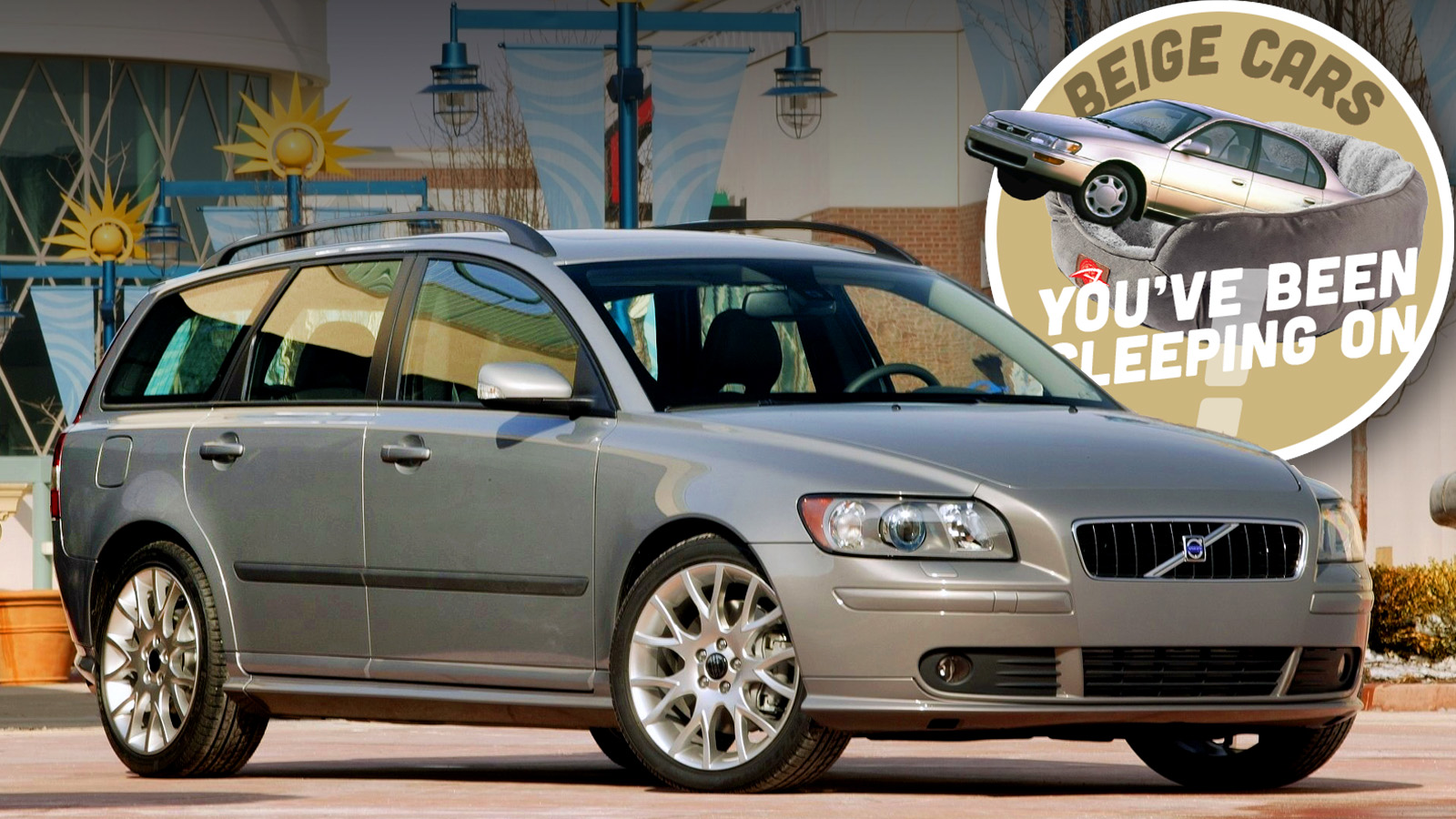
Doesn’t it almost feel like every great enthusiast car’s been discovered already? We’re living in an age of five-figure Volkswagen Cabriolets, six-figure Fox-body Mustangs, and rebuilt-title Honda S2000s that cost as much as new Civics. If everyone knows how good a car is, and it’s no longer in production, its value is going to go up. Simple supply and demand. So what about a car that flies under the radar? Something like the Volvo V50 T5 AWD.
In the pantheon of internet car-person cars, wagons hold a hallowed place, at least in North American minds. The combination of sedan-like handling with enough cargo space to swallow an antique chest makes for left-brained daily drivers that elicit fierce loyalty. To some wagon drivers, seppuku is preferable to driving a crossover. Dramatic, sure, but I get it.


The Volvo V50 T5 AWD is more than just a simple wagon. Sure, it might not be big, and it might not be the most practical wagon out there, but it represents a truly rare combination, the sort of thing that’ll probably never happen again. If you really search, and really look hard, you can find one with the holy grail: A manual transmission. Tempted?
One Big Family
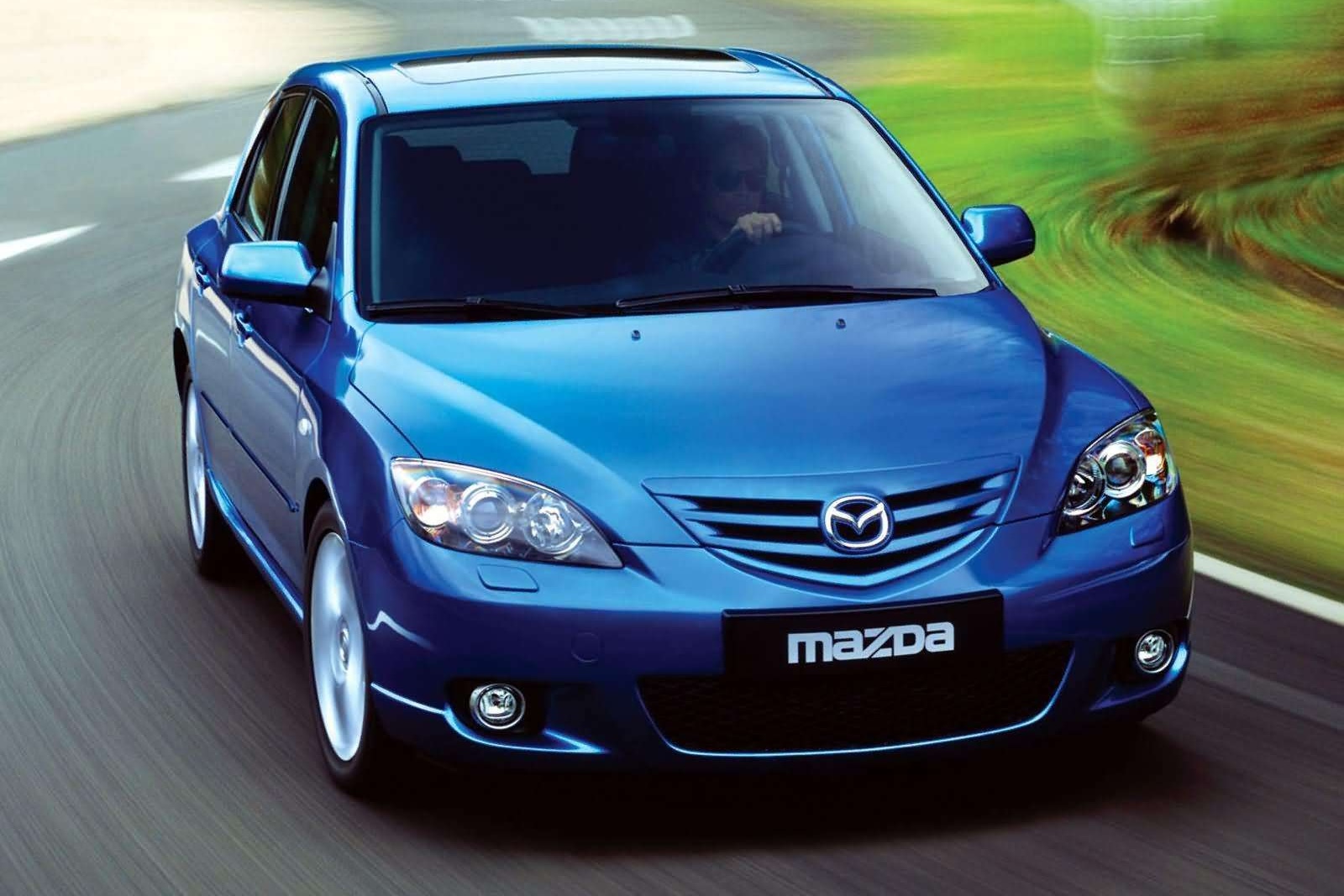
Back in the early 2000s, Ford owned a lot of stuff, including huge stakes in Mazda, Volvo, Jaguar, Land Rover, and Aston Martin. An umbrella so big, multiple brands had models roughly the same size in similar markets. How do you make that more cost-effective? By engineering one platform for every compact car, for instance. Different floors, sure, but the same subframes, running gear, and certain hard points would be identical across the second-generation global Ford Focus, the Mazda 3, and Volvo’s myriad small cars. This brought costs down, but also allowed enough freedom for every brand to sort of do its own thing.
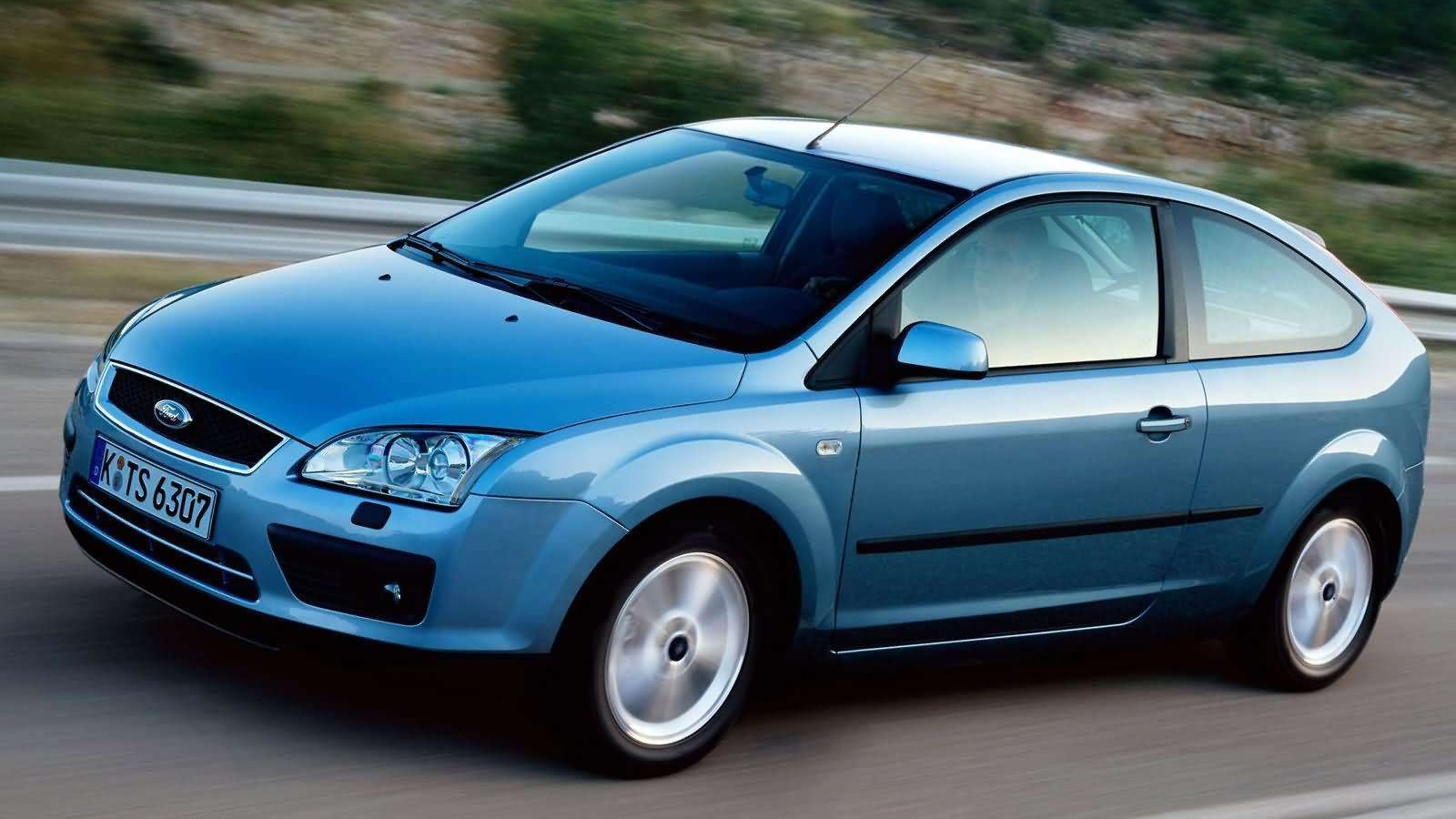
Mazda kicked things off, and while the original Mazda 3 didn’t prove to be the most corrosion-resistant machine on the planet, it was handsome and drove well. A mix of Z-series and L-series engines proved adequate for every market, and pricing was remarkably reasonable. Likewise, Ford initially took a sensible approach, building a sharp and modern front-wheel-drive compact car that, sadly, would never make it to America. Why? Well, the American small car market has historically been tighter of wallet, and Ford was reportedly concerned about ramping production smoothly. As Automotive News reported, “Suppliers say Ford is worried about quality glitches after the botched launch of the current North American Focus.” As for Volvo? Well, that’s where things get interesting.
Big Dreams
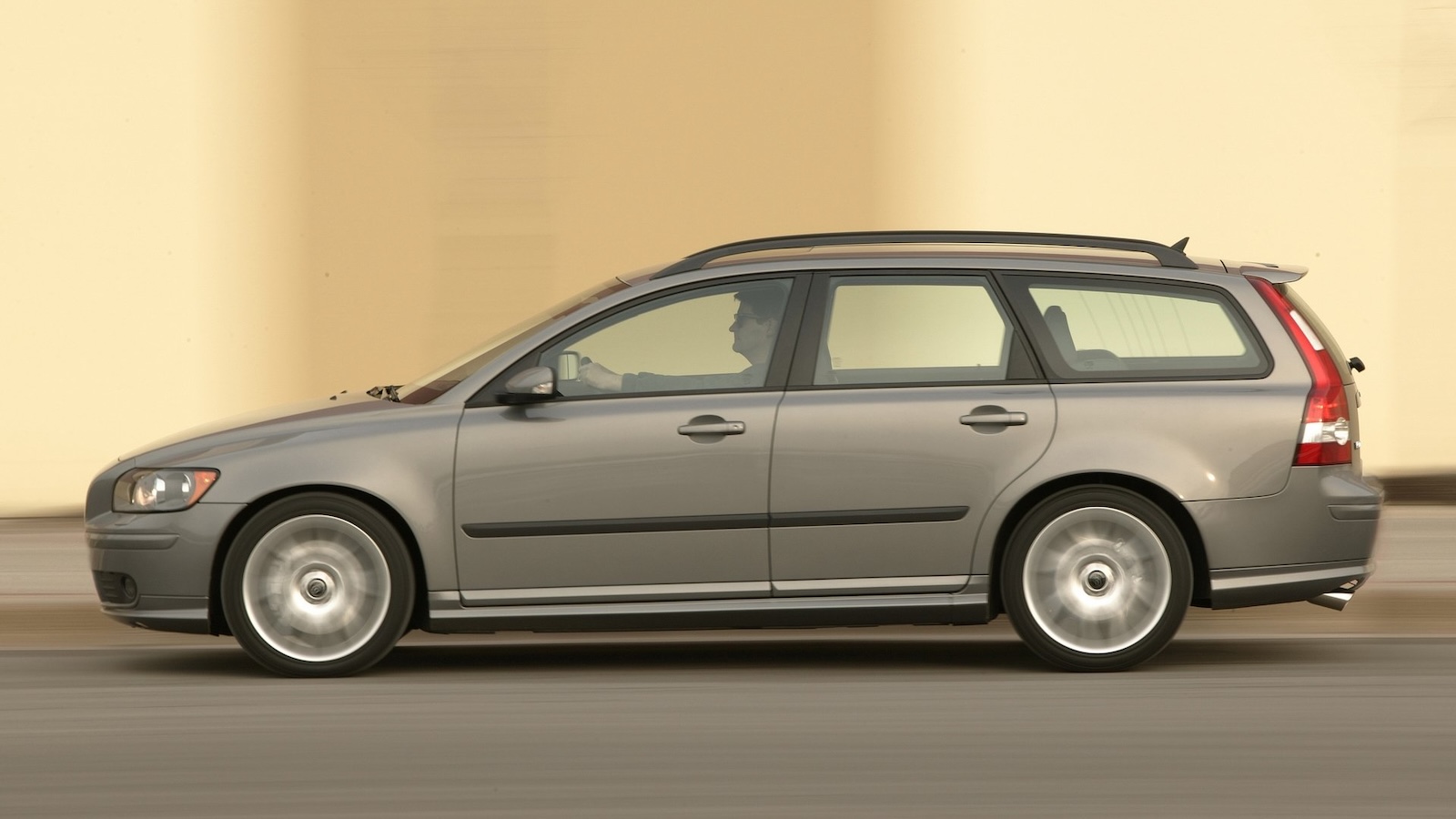
Just as the European Mk2 Focus covered all bases on body styles, Volvo decided it wanted a little bit of everything. A sedan, a three-door hatchback, a hardtop convertible, and a wagon. However, because the respective S40, C30, C70, and V50 would appeal to a more well-heeled clientele than the hoi polloi Focus, the Swedish brand had a few tricks up its sleeve. No, I’m not just talking about the flying VCR remote center console.

While an inline-four is perfectly adequate for everyday transportation, it’s not the smoothest engine configuration out there. A V6 is silky, but hard to package in a small car. Thankfully, Volvo already had a lineup of inline-five-cylinder engines, and it was keen to chuck a couple under the hoods of its most affordable models. While 2.4-liter naturally aspirated variants dutifully turned out up to 168 horsepower, the fun really started with the 2.5-liter turbocharged straight-five. Initially making 217 horsepower and 236 lb.-ft. of torque, it was enough to outpower the turbocharged two-liter four-banger in the then-incoming Mk5 Volkswagen Golf GTI, and it could be hitched to a manual gearbox. Ford would go on to put it under the hood of the Focus ST, mighty good stuff. However, Volvo wasn’t done there.

As strange as it might sound to North American ears, all-wheel drive was becoming a thing in European C-segment cars. Volkswagen offered continental consumers several variants of Mk4 Golf equipped with Haldex all-wheel drive, and Audi had the A3. At the same time, the S40 and V50 would be competing for attention with the BMW 3 Series and Mercedes-Benz C-Class in America, both of which offered all-wheel-drive models. The solution was a similar sort of Haldex all-wheel-drive as Volkswagen used, which, put together with the top-shelf T5 engine, meant that Volvo once sold a genuinely compact turbocharged five-cylinder manual all-wheel-drive wagon. Fantasy stuff, the sort of car that could never make it to America, right? Guess again.
Coming To America

Yep, Volvo decided to not just homologate, but sell the stick-shift V50 T5 AWD in North America. A brave move, and one that made some sense at the time considering Volvo had real competition in the form of the row-your-own BMW 325xi Touring. So how did the V50 translate across the Atlantic?
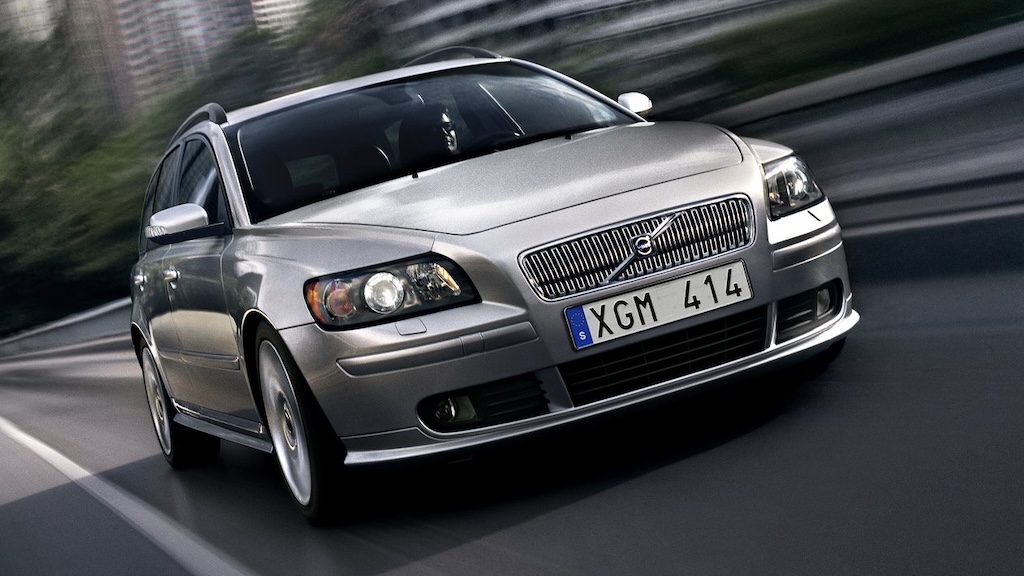
Well, when Car And Driver tested an early automatic model, it turned out to be surprisingly quick. While zero-to-60 mph in 6.9 seconds isn’t groundbreaking today, it was enough to outrun the E46 BMW 325xi wagon and the Audi A4 3.0 Quattro. Perhaps the most surprising thing about the V50 T5 AWD, however, wasn’t the straight-line speed, but the handling. Not only was 0.85 g on the skidpad enough to beat the Audi and BMW, but the optional stability control seemed made to play.
Toss this V50 into a four-wheel drift on your favorite off-ramp, and the stability control doesn’t activate while you’re at play. However, if you do something rash, like suddenly get off the throttle in mid-drift, the rear end will start to come around, at which point the stability control steps in and brings you back to reality. This is the kind of strategy we appreciate in stability control. It’s well executed in the new V50, well worth the $695 option price, and very fitting with Volvo’s safety image.
Read between the lines, and yeah, you can drive a V50 T5 AWD like you stole it, all while experiencing great ride quality and a thoughtful interior. That floating center console really felt like the future in the mid-2000s, and that’s before you consider the lovely materials and sheer quantity of goodies on offer. A 12-speaker Dolby surround sound audio system? DVD navigation? Rear seat integrated booster cushions? Laminated side glass? If you went crazy with the options list, absolutely.
Hunting High And Low
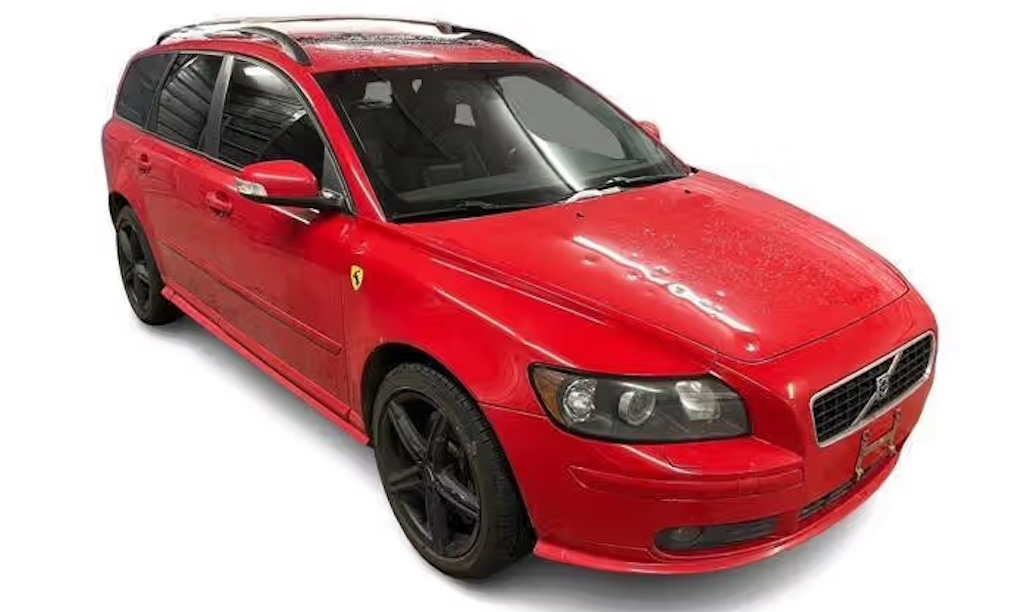
Unsurprisingly, stick-shift examples of the Volvo V50 T5 AWD are rare in North America. The market for turbocharged wagon crazies was small even in the mid-2000s, but the cult of Volvo means that a wide enough net will pull up a handful. Want to go absolutely bargain-basement? This seemingly hail-damaged red 2007 example with 148,613 miles on the clock is up for sale in Minnesota for $1,100. That’s a ludicrously cool car for $1,100.

On a less-sticked-up note, this manual 2007 V50 T5 AWD is up for sale in Connecticut, and it looks positively standard. The seats and bodywork look to be in great shape, and it’s a high-option car, but it will require a little wrenching. The selling dealer states “The one drawback is it seems the AWD is not currently engaging, not sure it’s a Haldex or a collar sleeve issue.” That’s a gamble for an asking price of $5,700, but if a deal gets struck by someone with some real wrenching knowledge, this wagon could be spinning all four tires again.

If the logistics of a fly-and-drive are a bit of a pain, these all-wheel-drive wagons do occasionally pop up on enthusiast auction sites. Here’s a 2010 model that sold on Cars & Bids last year for $9,200. That might sound steep for a slightly dented example with 162,200 miles on the clock, but it has some noteworthy points. Not only is it a facelifted example with a slight bump in power, but it’s rocking some seriously expensive KW coilovers and Tarox brakes.

We’ll probably never see a small, upscale, turbocharged, all-wheel-drive, stick-shift wagon again on our shores, which makes the Volvo V50 T5 AWD a very if-you-know-you-know thing. Pricing is all over the map, but the one thing these have in common is that they’re within a sort-of enthusiast budget that makes them attainable.
Top graphic image: Volvo




I loved this era of Volvos… really wanted a C30, but budget only allowed for a new 2007 Mazda3 hatch to replace our already rusting 2004 Mazda3 hatch lease. At least I could pretend is was a poor mans C30 since they shared a basic platform 😀
My wife has a V50 T5 AWD 230 HP and despite the automatic transmission, it’s a joy to drive, especially on snowy roads where it has a rear-wheel-drive feel with front-wheel drive for added safety.
I have one of these. A V50, I mean. Mine’s the polar opposite of this one, let’s be clear: the base-est of base models in 2006: 1.6D PSA engine, blank plates on steering wheel controls, no parking sensors, no roof bars, basic sound system, cloth seats, etc. While I was more inclined to get a decent condition 940 wagon, we ended up going with the V50 because my wife believed a newer car would be more comfortable, and working AC was non-negotiable.
The V50 turned out to be a lemon, the engine grenaded itself within 100km with my name on the title. I sunken-cost-fallacied it for almost a year, waiting for a decently priced engine to swap in. On the upside, the timing belt was serviced, so I know its mileage. My mechanic loves this car. I grew to like it after the initial buyer’s remorse, and it’s been very much issue-free since the engine was swapped.
A while back I got a warning for a dead brake light, and was immediately hit with some existential dread about it. How hard will it be? Can I do it myself? Will this be some overly-engineered aspect of this car? Will this cost me money? My baseline for comparison re: changing light bulbs is the Renault 4, which normally requires either unscrewing 1-2 screws, or having to pop the hood (if I’m replacing a headlight bulb).
I was very positively surprised to learn that this is a job you can do in minutes by popping out a plastic cover to access the brake/indicator module from inside; while the service area is small – just enough for a human hand to fit, – the module comes out by pinching the large, easily identifiable plastic tabs that hold it in place, and pulling outwards. After replacing the bulb, it goes back in just as easily as it came out, and the tabs satisfyingly click into place, so you know it’s mounted properly even without seeing it. But the best part was realising this car uses the exact same 382/P21W bulbs as the Renault 4, so I already had a few lying around (from the seemingly-endless supply of extra parts that came with the Renault 4 when I got it). I have no idea if these bulbs were still the standard 20 years ago for brake/indicator lights (maybe they still are?), but the whole thing really felt way less complicated than I thought it would be, and this just felt surprising to me.
Always liked these, even though on the rare occasion that I see one in person it looks oddly short, my eyes being more accustomed to the somewhat-more-common V70 and XC70. I’m a firm fan of Volvos (I’ve owned three, and still have two of them) but in all absolute honesty, I’ve got to admit that their products in the ’00-’10s weren’t/aren’t quite as reliable/durable as I’d like them to be.
I’ve got an ’04 XC90 with the 2.7 liter turbo 5 cylinder and lord, it ain’t simple underhood. Also, whatever rubber was used in all those myriad hoses tends to have a 20-year lifespan, so cars of that vintage seem to be ripe for vacuum leaks, etc… unless maybe the whole car lived in a climate-controlled garage or something. I’m not saying that I wouldn’t buy another P2 Volvo https://en.wikipedia.org/wiki/Volvo_P2_platform because I would… a late first-gen XC90 to replace my early one is definitely on my ‘maybe’ list. But I’d buy it (or a perfect, heavily-optioned manual AWD V50, as if such a thing would ever cross my path) knowing full well that the ownership experience will not be that of a comparable vintage Toyota.
My daughter hast just gone through two V50s in a row. Wrecked the first one, and the second needs a lot more TLC than I can spare at the moment. Both 1.6 Diesel, so not exactly rare. But the interior still looks and feels really nice.
The Volvo dealer in Ann Arbor has a mint no-miles example of one of these–yes, with a stick shift–in its dealership for some reason.
These are good cars with a couple of caveats. First, the early Haldex systems were fine when they worked–not true AWD yet useful–but neglect meant they can fail in a variety of ways. Given how used up most of these are by now, that used AWD V50 you buy might simply be a FWD Volvo.
Second, the waterfall console and Volvo’s period electronics are stubbornly resistant to any form of infotainment upgrade, period.
Re: hifi upgrade, we almost installed a Blp-990 in my wife’s C30 before she ultimately decided to move onto something else. Not at all cheap but does integrate pretty well into that gorgeous waterfall console.
Yeah, that is literally the only option I think. I can’t believe Bluepower is still asking over 500 euros for one of these but maybe they’ve improved it.
My V50 sports a <$50 CarPlay screen that plugs into the aux jack. Every so often I have to pull it from its velcro mounts to look at the HVAC controls, but it does the job. And once I tracked down the actual wood veneer Nordic Oak trim, it looks as cool inside as out.
This is why I continue to renew my membership. 6 Swedish cars and counting- Does anyone else remember Volvo’s old print ads: Groceries, Kids……………Racing Trophy?
I have a good friend who was a Volvo tech when these were new. He loves Volvos, and still drives old Volvos to this day.
I was shopping for a car when these were newer, and I asked him about these. He said, without hesitation, to avoid them. Lots of mechanical issues, even when new.
They are attractive and enticing though.
I had a C30 variant and it was the most reliable car I have ever owned and working on it was dead simple. Every common problem was easily addressed and the aftermarket support was great. Mine was tuned and had a big intercooler and suspension mods that made it absurdly fun to drive, and an exhaust made it sound like something exotic. The engine was bulletproof and able to handle about 400hp in stock form. I disagree with your pal!
My wife had a C30 and it was reliable enough. General maintenance was pretty pricey but that’s also the nature of performance oriented cars. As far as enthusiast cars go it was pretty manageable.
I never asked him about the C30 and he never told me anything about it.
Your C30 sounds cool though.
It’s the same insides, just different outsides, so the maintenance should be awfully similar.
That logic tracks, but testimonials seem to tell a different story. My buddy said they were worse than other Volvos of the era, based on the frequency of repairs at the dealership.
Ive always liked the C30 though, so I’m glad to hear many have had a positive experience with it.
I was in the market for a wagon when these were starting to come off lease (2009/10) and wound up selecting a Legacy GT wagon instead because of the Volvo’s reliability reputation. Turns out the LGT’s reliability was wildly overhyped, with friends calling it my Japanese Jaguar (goes well, when it’s going into the shop). Should have grabbed the V50.
Yeah LGTs were pretty bad. The thing is, you don’t just have to choose between the most unreliable cars, you’re welcome to purchase a reliable one as well.
Thomas, please stop alerting the wagon enthusiasts to these gems! it makes buying a good one tougher! Beige cars you may be sleeping on are made metallic beige in these great articles, allowing them to shine just a little bit brighter!
The “fast Volvo” models of the last 40 years have always had very respectable acceleration and adequate handling. But Volvo clutches and shifters are usually numb and not at all satisfying. I feel like an automatic suits the character of a Volvo anyway.
my ’01 v70 T5 5 speed has a great clutch (still the orig clutch at 300k!), perfect engagement point and great feel. Shifter is quick and precise, not numb at all. My ’17 jetta manual clutch and shifter feel like utter trash in comparison, and it has only 75k. Ive had about 6 manual transmission P2’s and they all felt great. YMMV i suppose?
That being said, the autos are pretty nice, and despite a bad reliability rap (my 275k 5-cyl xc90 tranmission just quit, but hey, 275k on ANY auto is good), with occasional fluid flushes they can be pretty great!
This is the one that I wanted when we bought our 2007 V50 through the Overseas Delivery Program. Unfortunately, when I used their online builder it was just too much for me at the time. Instead we got a standard V50 with the ODP program discount and all options for free since we took one that was already built at the end of model year. Great 2 week European vacation in our new car!
I later had a C30 6-speed turbo but of course no AWD. Fun car!
I wanted to do the ODP with BMW, but sadly they stopped it, though I wondered if they’d fire it back up since I thought importing a “used” car would skirt the tariff nonsense. I’ve looked at the Volvo program repeatedly and came close to doing it when we got an XC-60, taking an already built one that they were offering instead of ordering custom, but unfortunately, we needed a vehicle too soon to make it work.
This is what I really appreciate about the Autopian commentariat. I was interested in these until reading all the real life experiences. Guess it’s back to wanting an 850R wagon which have long disappeared from around here.
I personally think these focus based Volvos are the worst Volvos made in ’00s. Even the mitsubishi based S/V40 was better. Dunno how Volvo lost all the good driving dynamics of Focus and just kept the small car feeling in the all worst ways.
Wut?
A V6 is not an inherently balanced engine, and neither is an I5. I’m sure they have perfectly cromulent reasons for using them, but balance is not one of them.
Literally just finished swapping the manual, AWD drivetrain from a P1 S40 into a C30. The whole platform is super modular and parts cars are dirt cheap. Love it to death, for me it’s simple in all the right ways and the low price of entry means you have headroom to mod it into something really special. As others mentioned, I think new these cars were just not set up to be competitive. That said, they’re coming up on 20 years old now and all those competitors are mostly flogged to death.
In terms of ease of maintenance, I also have an E46 manual wagon, and they’re frankly both a pain in the butt. I’ve had far fewer headaches (and oil leaks to chase) with the Volvo though.
As long as the PCV valve assy is in good shape, oil leaks will likely be minimal! I miss my C30; I bet an AWD one would be a hoot.
Definitely! Took the opportunity to replace it while I had the car blown apart. And the AWD is definitely a blast! Also put in a LSD, car grips up really well.
That is fantastic! LSD would be quite nice for sure even with just fwd. Was the install difficult? speaking for a friend who has a spare M56 kicking around…
Really not bad at all, don’t even have to remove the gearstacks if the synchros and bearings seem fine. If you search sweedspeed for a quaife 14j install guide there’s a very good writeup, should all apply to a m56 too.
Great news, thanks! been wanting to do this but slightly apprehensive. i am more confident rebuilding engines than transmissions. always a little afraid of something going missing, a clip or gear or whatever flipped around, unobtainium fiddly transmission parts, etc.
Love this! awd manual c30’s are a dream!