

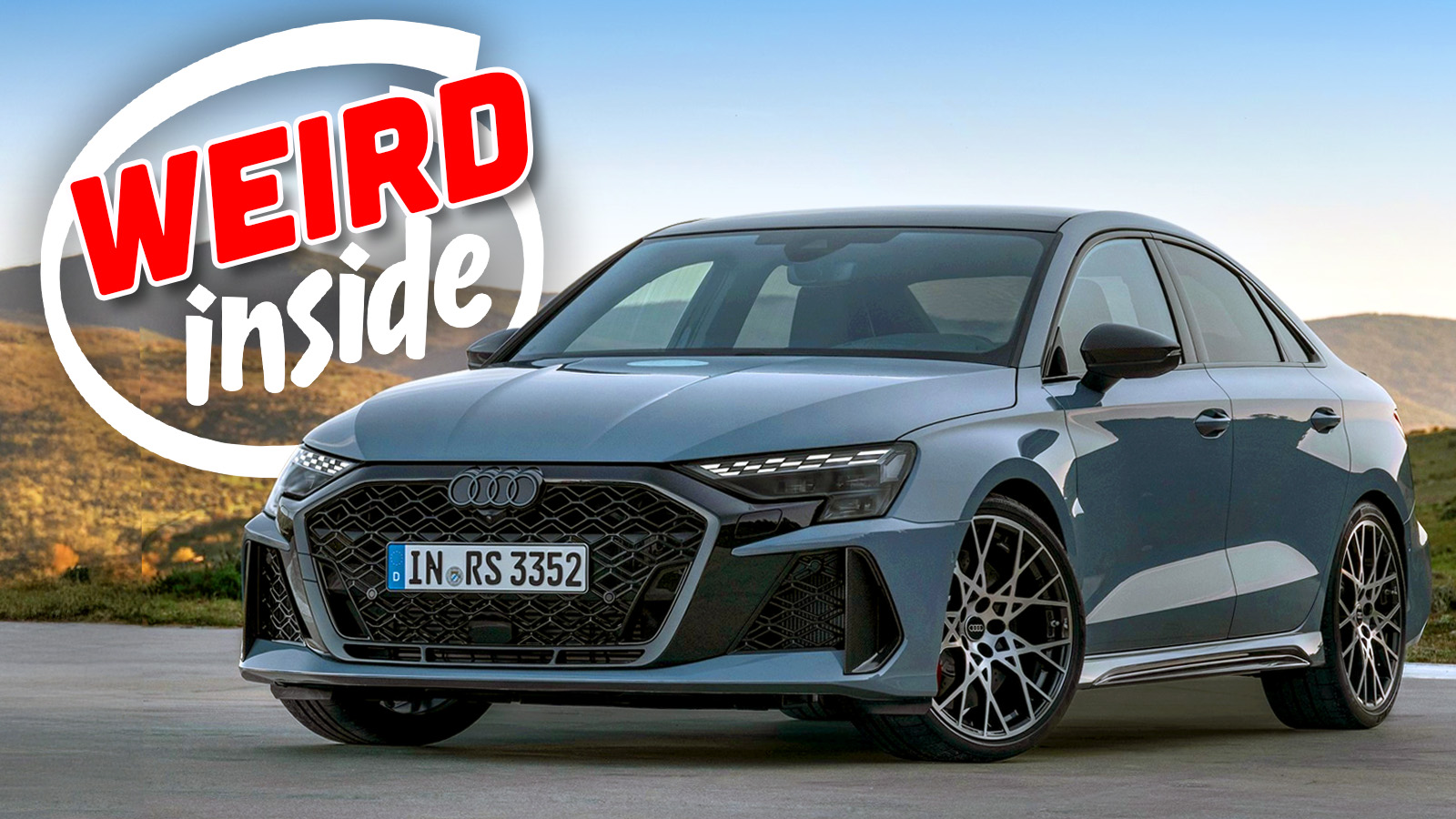
Have you ever noticed how it feels like engine choices are more homogeneous than ever? Just about every automaker under the sun builds a two-liter turbocharged four-cylinder engine, three-liter boosted sixes are common across the board, and thanks to cars like the Corvette Z06 and Mercedes-AMG GT Black Series, flat-plane crank V8s are no longer the domain of Ferrari. At the same time, we’ve lost the V10 entirely, the number of new cars available with V12s is dwindling, and now the five-cylinder engine in the Audi RS 3 is facing potential extinction.
As Australian outlet Drive reports, there’s now a likely end date for the last car to feature a five-cylinder engine, and not only does it fall in line with European emissions regulation changes, it’s been delivered by Audi’s CEO.


“No, right now the five-cylinder will probably end with Euro 7,” Audi global CEO Gernot Dollner told Australian media at the Munich motor show.
Well, that’s a whole lot more decisive than the industry standard of not commenting on future product plans, and it came straight from the guy in charge of the brand. Given that Euro 7 emissions standards for cars already on sale before November 2026 are expected to kick in for November 2027, that may only give us about two years to enjoy the last mass-produced five-cylinder engine on sale. Thankfully, it’s a good one.
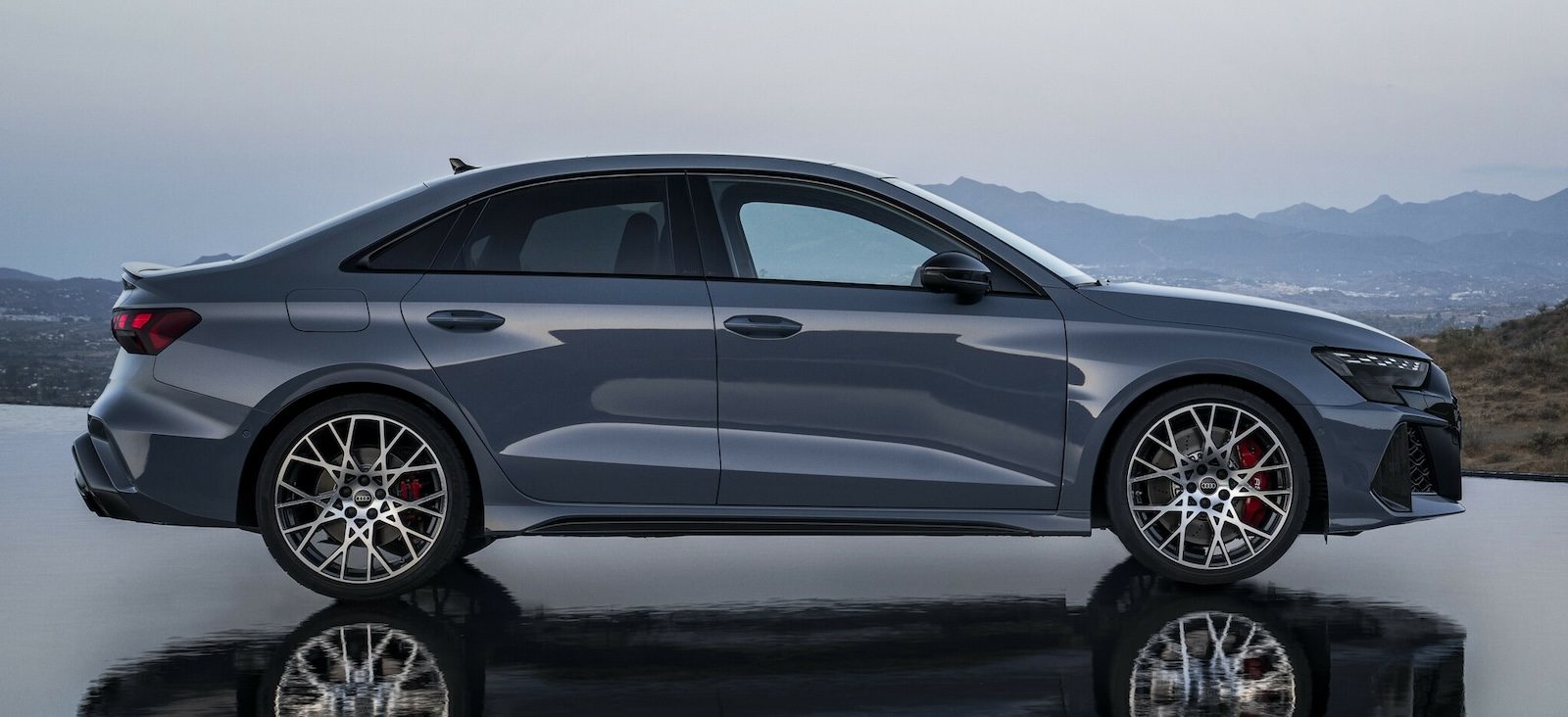
As five-cylinder engines are theoretically a happy medium between the packaging of an inline-four and the power of an inline-six, it shouldn’t be surprising to learn that the RS3 is potent. Thanks to forced induction, it draws 394 horsepower out of 2.5 liters of displacement—lower specific output than the four-cylinder Mercedes-AMG CLA 45 S, but with a far broader torque curve. Peak twist of 369 lb.-ft. happens at just 2,250 RPM, and in a truly compact body, the result is a car that flies. We’re talking zero-to-60 MPH in the neighborhood of 3.5 seconds, a top speed as high as 180 MPH with the box for the Dynamic Plus package ticked, and available carbon ceramic brakes to haul everything back down again.
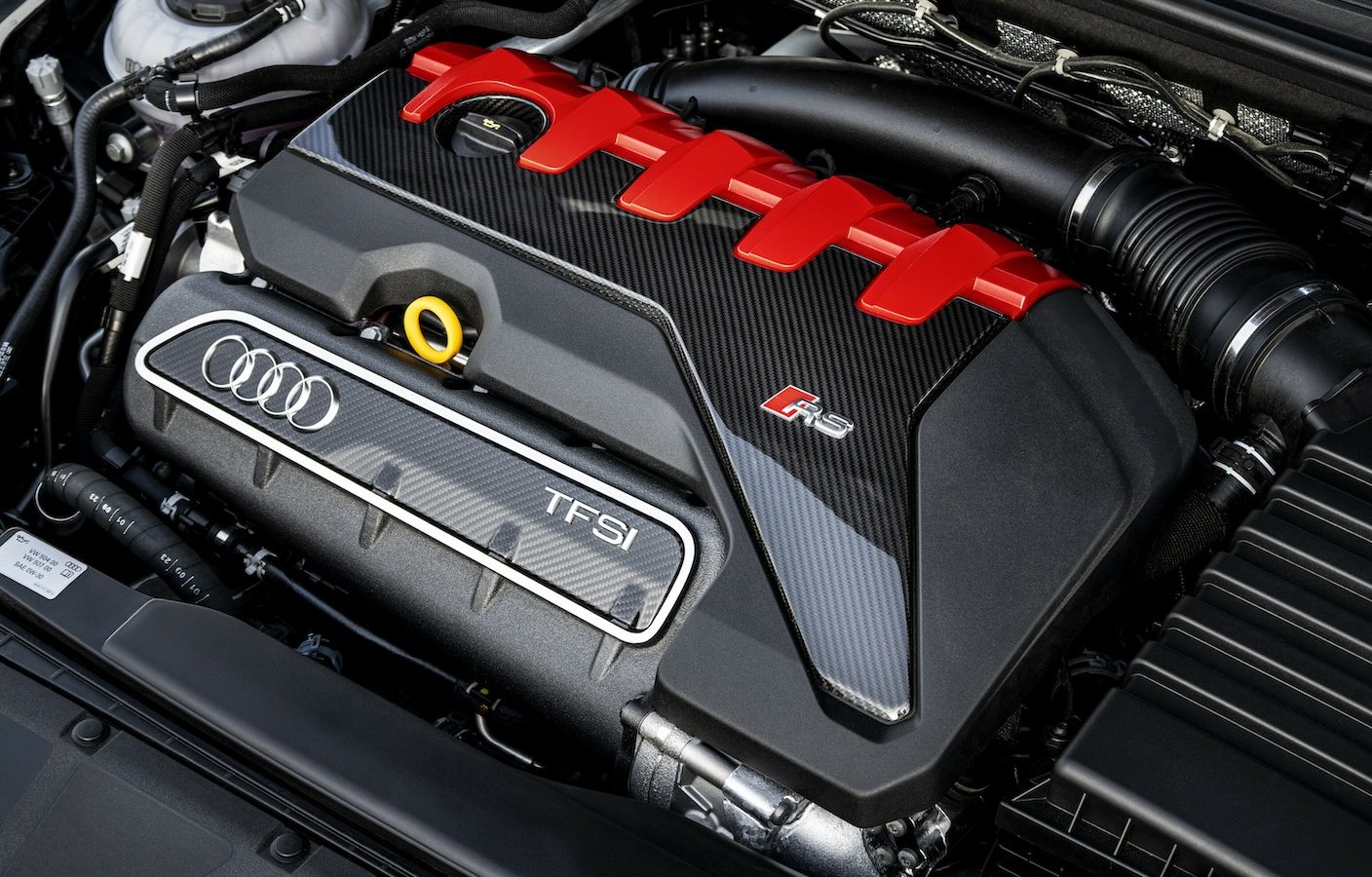
Of course, it helps that Audi’s current five-cylinder engine draws inspiration from the V10 used in the R8 supercar. The cylinder heads between the two engines are substantially similar, and the 92.8 mm stroke is identical. Plus, five-cylinder engines just sound magnificent uncorked. They’re characteristically harmonious owing to the sound interval they produce, closer to a V10 in that aspect than any other engine configuration.
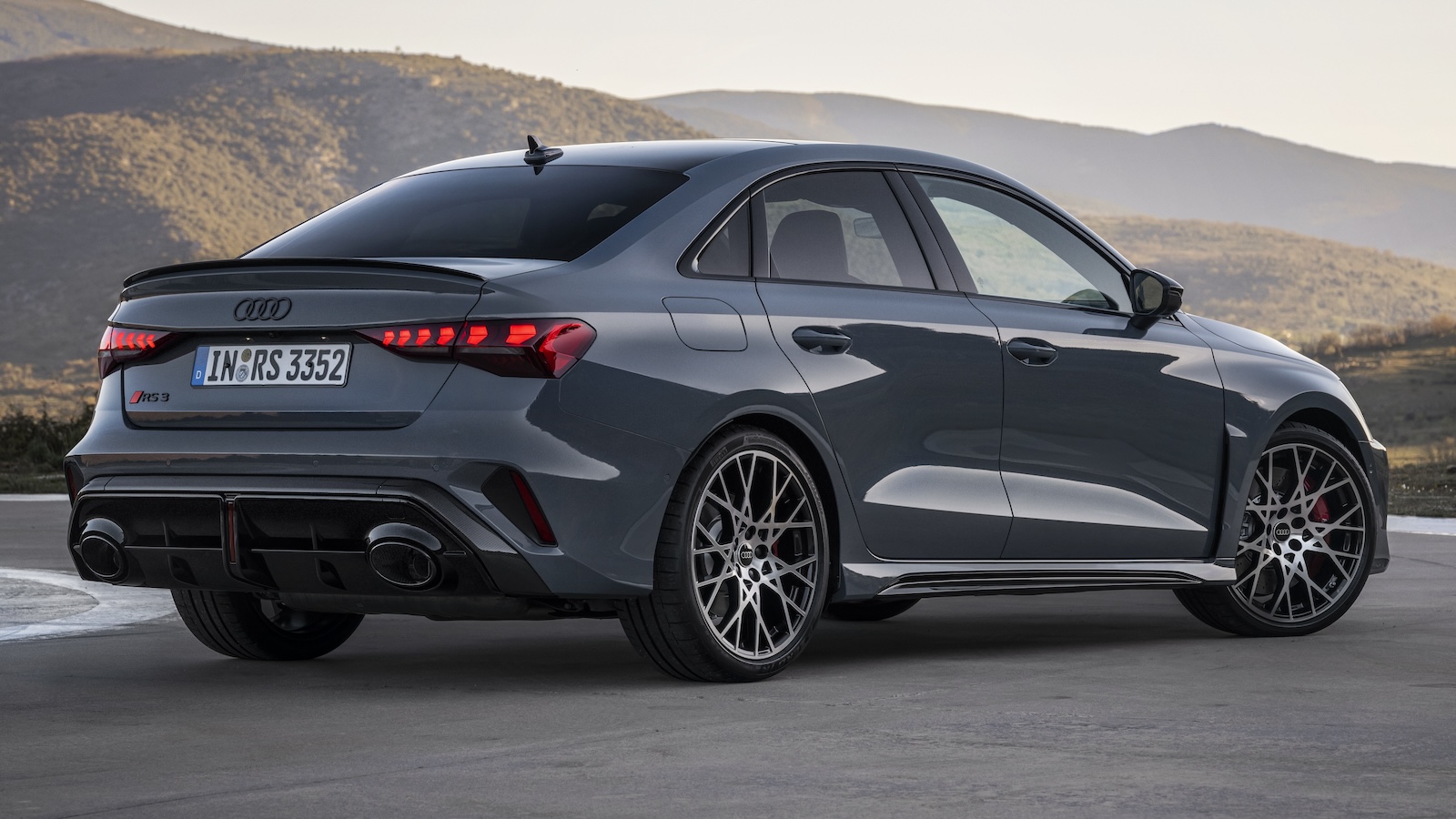
However, if the straight-five in the RS 3 does rev off into heaven come 2027, it’s reportedly not going quietly. Drive reports that a final, special-edition RS 3 is in the works, just to send things over the edge. What about that rumor that a special Volkswagen Golf R will also get the straight-five? I guess we’ll just have to see, won’t we?
Top graphic image: Audi
Support our mission of championing car culture by becoming an Official Autopian Member.


I will say it’s a handsome car. But from VWAG? Hard nope.
I thought the current rumor was that the next Golf R was going to get the turbo 5 from the RS3. I wonder if it’s just no longer going to be an “Audi” engine
I loved my last 5-cyl car, the power of a 4 with the efficiency of a 6.
Honestly, as BEV takes up more market share, having multiple engines per model will become unheard of, and sharing one engine across multiple models will become more common. It surprises me that some vehicles even have multiple engine choices, like the escape. It is simple economics. One engine for 3 models means only one engine being developed, saving money. Even pickup trucks are going that way. The tundra only offers a v6, non hybrid or hybrid. I suspect other truck manufacturers will soon follow.
Well, I guess I officially do not give a single F about Audi anymore.
Yep the RS3 was the last cool offering for the common man from Audi. Sporty manuals:gone, High revving v8’s:gone, V10’s:gone, Turbo 5’s:going
I’ve owned 1 5-cylinder, the AAN 2.2t in the UrS4. It was a lovely unit with a lot of character. Even after the car itself had rotted out from under it, the motor still pulled strong, and when it was time to part ways, a guy was beating down my door to take it off my hands.
They will be missed.
Is it that emissions standards are killing it or is it that VAG simply doesn’t want to spend money on updating an engine that’s used on a handful of cars that don’t sell very well? Weirdly enough engines are one of the easiest things to develop in this day and age of vehicle development. It also requires the least amount of money as well compared to other vehicle systems.
I always thought it was the cost of retrofitting for the emission regime vs. just fixing up a more common mill.
An average vehicle program costs around $2 billion USD to get up and running once you include all the costs. Engine development from concept to production costs somewhere around the region of $100 million and since VAG clearly has a manufacturing site for the inline 5, they only have to worry about retooling which is not going to cost that much compared to a new OEM starting from a blank slate. VAG most likely took a look at how much its costing them to build the engines, how many they’re selling, and decided that it’s not worth it anymore because they simply don’t make money anymore.
I wonder what this means for KTM with the XBow.
They can possibly get an exemption from EU7 for a few years based on the small number of vehicles sold (I believe Pagani plans on the same with the Mercedes V12). If they buy up a batch of engines from Audi it could last them a few years.
true, though I was more thinking what if Audi stops producing them.
KTM is a coupe of months out of bankruptcy / has new ownership. Eliminating non-profitable side businesses is a high priority. X-bow and the bicycle line are getting the axe. Lots of production is moving from Austria to India
IIRC the X-bow is made by a separate entity from the motorcycle business.
The XBow team is pretty consistently saying the rumors of their demise are highly exaggerated.
My buddy has an RS3, damn that’s a fun car. Especially with the carbon ceramic brakes, good lord they BITE. Told him he better put another Lojack on it if they’re gonna be even more rare soon.
“Especially with the carbon ceramic brakes, good lord they BITE.”
Sure do. But get them wet, that bite turns into an unenthusiastic gumming.
Well that’s gonna suck for him in Florida haha. I only drove it once on a visit, and it was a beautiful day. But it’s his fun car so he can avoid the rain if desired.
Don’t blame the emissions standards, blame lazy corporate bosses.
BMW has stated they put in the work to make their I6 engines compliant. So it isn’t a matter of not being able to, rather VW simply doesn’t want to put in the work to save their I5. I guess they need to cut back on engineering hours to help pay for VW CEO’s $10M/yr salary.
I can not stand when certain groups blame either safety or emissions or the big bad gob’ment as the reason why their favorite product was discontinued. Most of the time, those standards are put in place for all the right reasons. It is corporate laziness and greed that usually is the reason a standard can’t be met. But to be fair, sometimes these regulations do go overboard, but I think having air to breathe is a good reason.
If MB can make V12’s compliant for a handful of billionaires then VWAG could make a 5 cylinder compliant.
Did BMW make the engines compliant or find a way to cheat the system? It happens.
Seems to happen quite often from the German brands!
I assume they looked at how much it would cost to get it to comply with Euro 7 (while still making at least as much power), and then compared that to how many they currently sell, and the numbers didn’t add up.
They may or may not have taken into account the PR from still offering an I5.
I don’t disagree at all, but usually companies, and then enthusiasts too, spin this as the big bad gob’ment stepping on their toes and taking away their toys, when really it comes down to a dollars-and-cents decision.
Same thing with the 2L turbo and manual in Golfs. VW said there is no way to meet emissions with the same engine and manual.
Which means they do not want to since their 7 speed automatic is cheaper and passes emissions
I hope it’s true because then I get to say I was right, but that seems like a significant investment for something that might be on sale a year or two, max.
This reminds me of a VW New Beetle I drove that had the 2.5L inline 5… the updated one with around 170hp. It was a very nice engine. Got the same fuel economy as the 2L Ford Focus Wagon I had (low 7L/100km range)… but had 35hp more and sounded way nicer.
But these days, I’m fully expecting the amount of ICE engine variety to get less and less as the variety of BEVs increases.
My friend has a Beetle with that engine and loves it. Except he gave it to his kiddo when she left for college a couple years ago, she loves. Now he misses it.