

I feel like chance, fortune, randomness, happenstance, whatever you want to call it, has been feeding me some pretty good stuff lately. Maybe that’s why the Dadists were so into it. Today, chance has fed me a few interesting things, including the sight of an interesting Chinese people-mover called the Li Mega. It’s an impressive battery-electric three-row people mover – I’m hesitant to say “minivan” because it’s not really all that mini – and it has styling that is definitely striking. It feels sort of like a bullet train or some kind of small shuttle that would be launched from some large spaceship in a sci-fi movie. Or maybe a TV show, I’m not sure we’re talking movie budgets here, but still. It’s striking and interesting and overall a little bit weird, which is what got me thinking.
I think the Li Mega is really just one of the latest entries into one of my absolute favorite categories of cars, one that I never really thought to categorize and give a name to until today. It’s a strange category of car, and one that I hope never goes away. It’s a category for taking risks, but always risks with, like, some sort of very specific idea behind it. All of the vehicles in this category seem to start with some sort of fundamental idea that they’re going to tackle a specific transportation problem in a new way.


Oh, and they’re all kind of shaped like loaves, sort of. And – and I think this is important for this category – they’re always, at least to some degree, sort of failures. Noble failures, maybe, but they don’t tend to have the sort of success that the people behind them were hoping for. 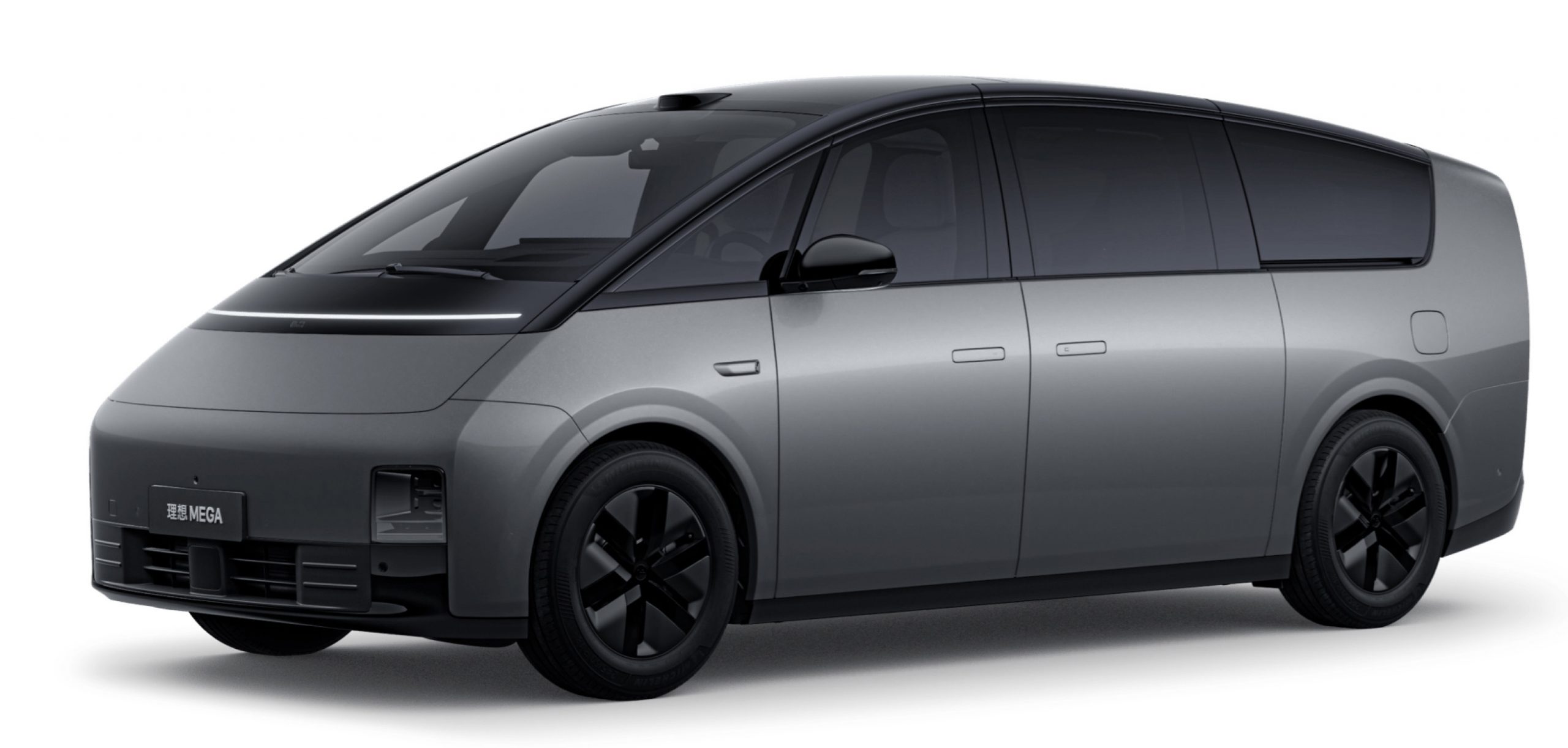
But before I get into the category as a whole, we should talk about this Li Mega a little bit. It’s a luxury MPV, the kind that would compete with something like a Toyota Alphard or Vellfire, and it’s also a long-range (about 442 miles of range, according to China’s CLTC cycle) EV that can charge faster than almost anything else out there, with claims of adding 300 miles in about 10 minutes from a charger that can deliver a peak of 520 kW at 700 amps.
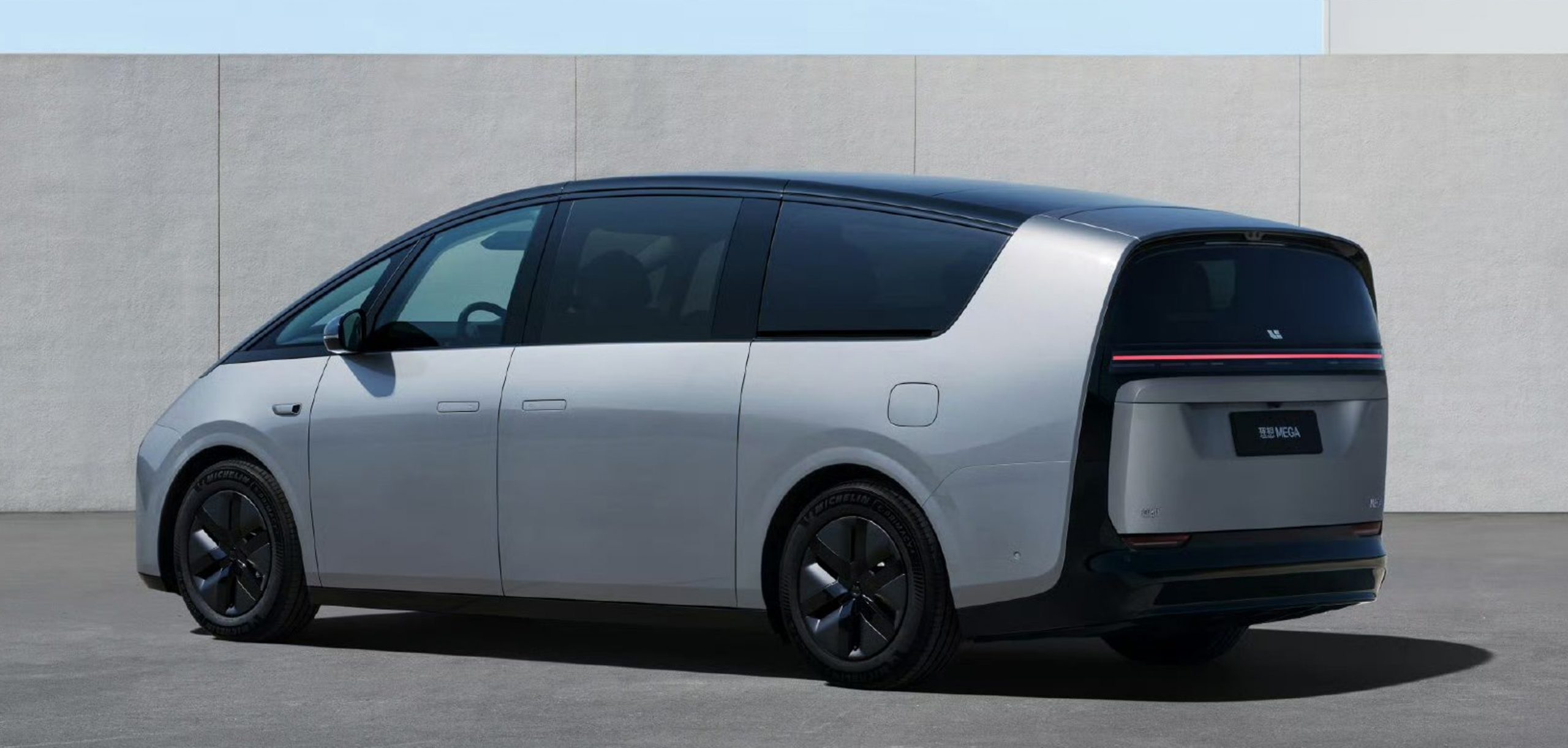
It also has a remarkably low drag coefficient, especially for such a large vehicle: 0.215, which puts it in the same ballpark as a Tesla Model S.
It’s pretty huge inside, too, with a usable people/stuff length of about 12 and a half feet! That’s a lot of space!

As you can see from those pictures, you get three rows, each with a ton of legroom, and the middle seats are captain’s chairs kind of things, that can swivel around so you can do stuff like this:
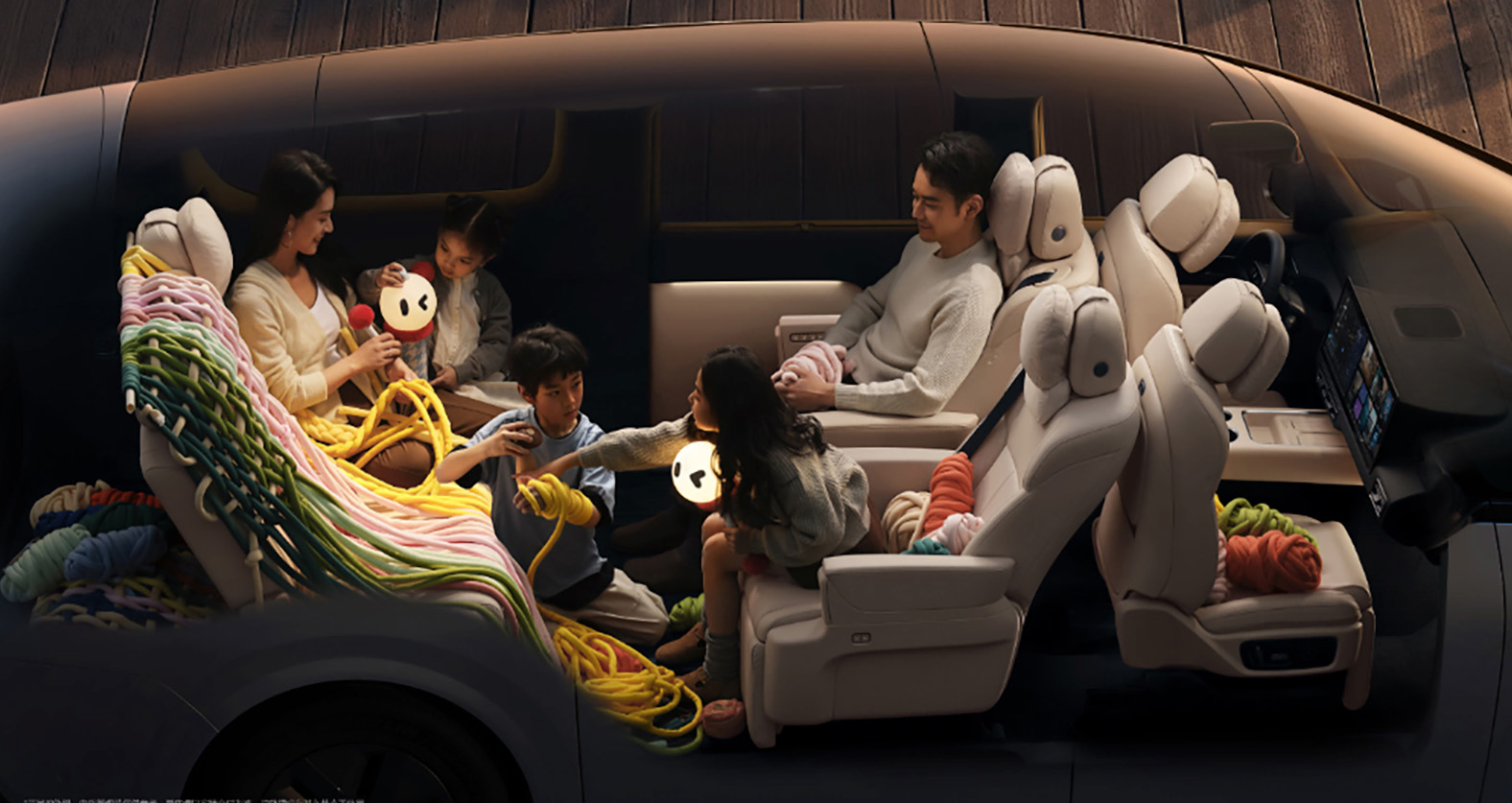
Wait, what’s going on in there, exactly? Are they weaving a hammock in the car? Is that a thing families do? Weave hammocks? Don’t get me wrong, I think it’s pretty cool, it’s just not something I’ve encountered before.
Here’s a good walkthrough/test video of the Mega, which shows all of its bonkers features, like how the second-row flip-down entertainment screen works on gestural hand controls!
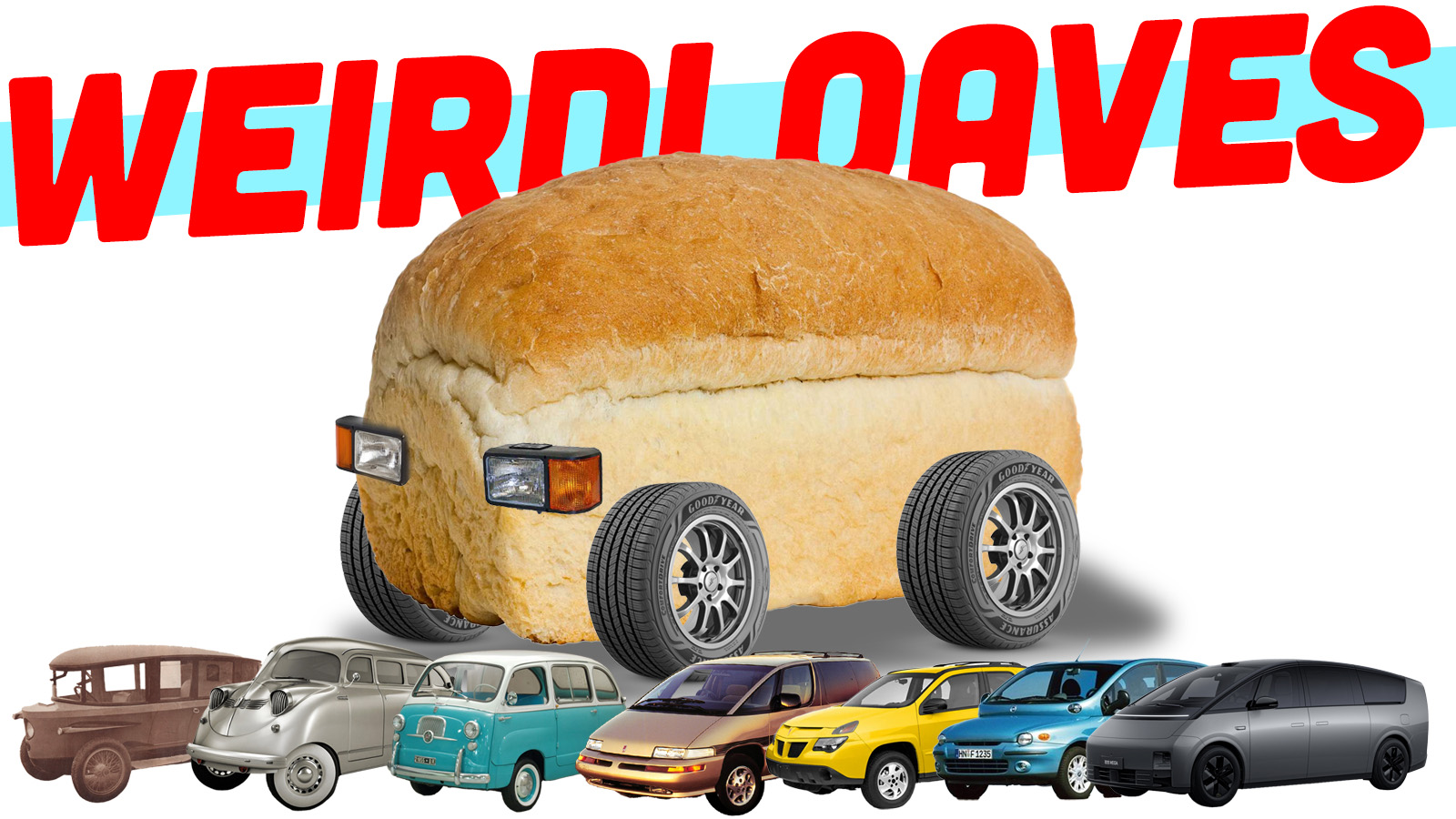
I’m getting a little off track here, though. My bigger point is that this car, the Li Mega, which is wildly innovative and bold and unexpected and more than a little weird and not really selling all that well, is part of this larger group of cars I mentioned before, a category I think I’d like to call Weirdloaves:
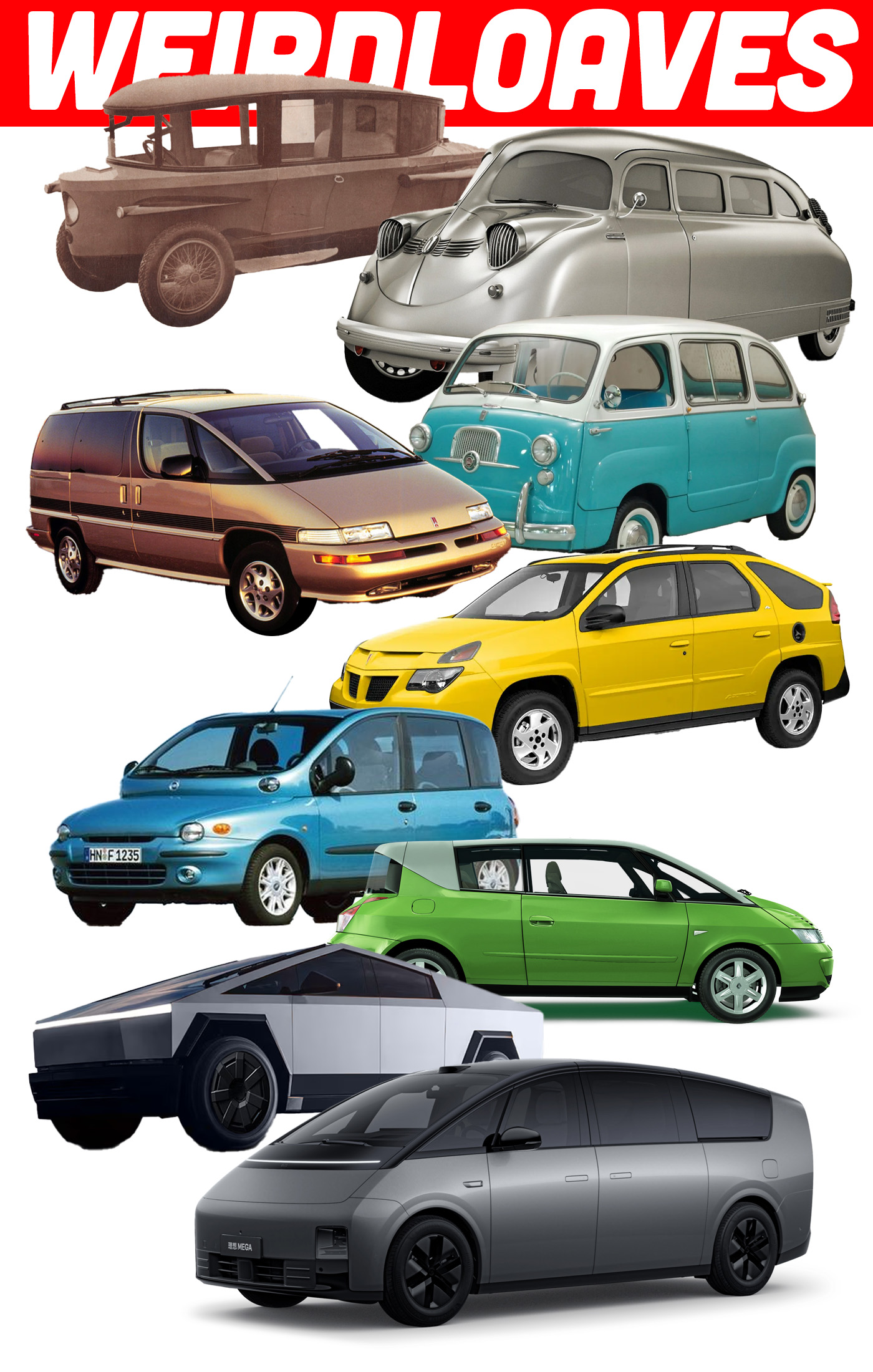
That image above isn’t exactly an exhaustive list, but I think it covers most of the famous ones and is a sort of visual history, from top to bottom. I tend to peg the earliest example of a Weirdloaf as the Rumpler Tropfen-Auto, that early pioneer of aerodynamics, rear engines, and swing axles.

The Rumpler was a car that was focused on trying out new ideas about aerodynamics and packaging, and it didn’t look like anything else on the road. Only about 100 were built, and, sure, it was kind of a failure, but a fascinating one that influenced many cars to follow, like Tatras and, Volkswagens, and Porsches.
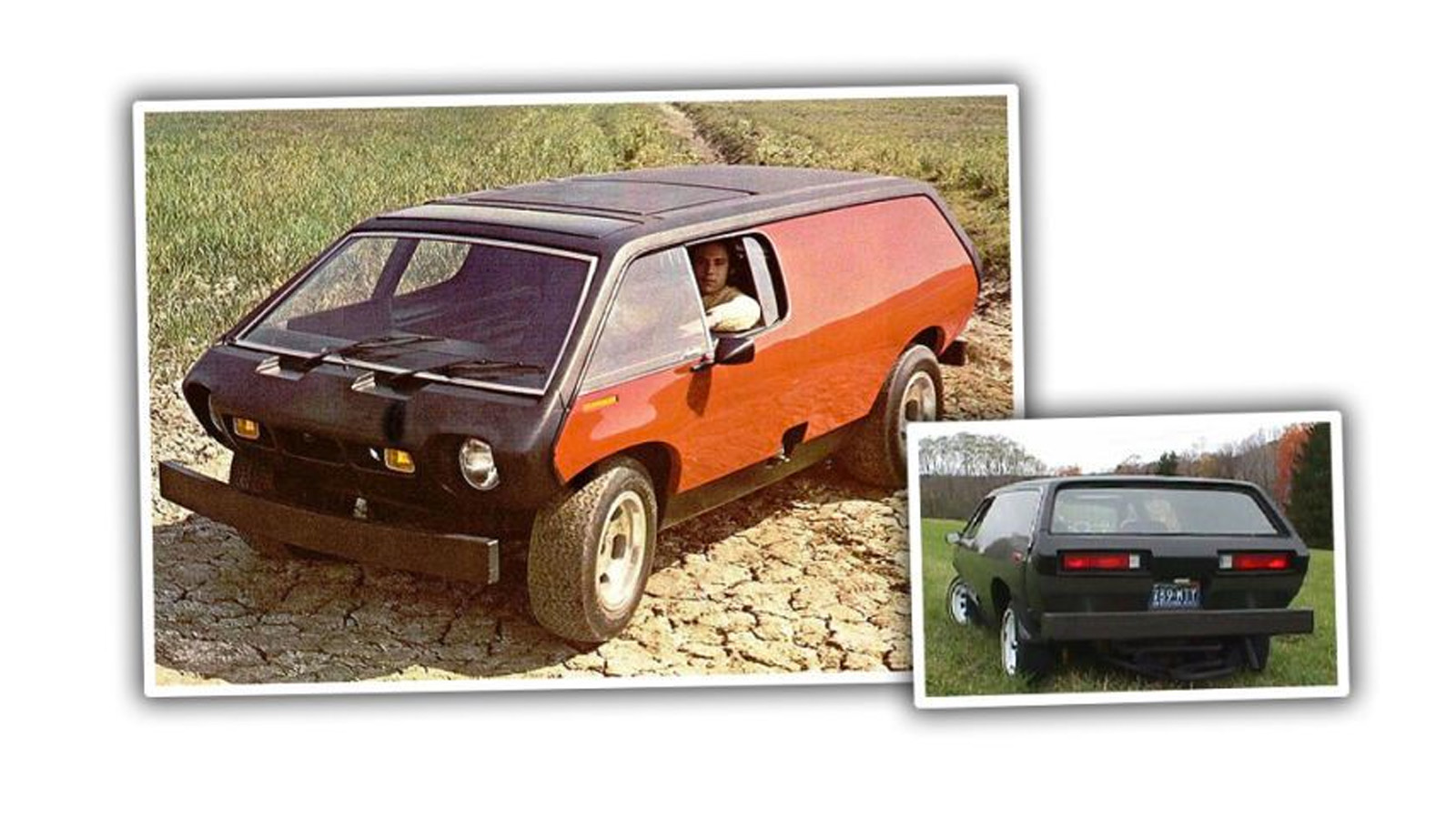
Oh, I thought of another one! The Brubaker Box! It’s a low-volume one, but still, it counts!
Going down the chart, we see the Stout Scarab, an early minivan-like car with a rear engine and a definite loaf shape. We also have the Fiat Multipla, another rear-engine one-box little loaf that was all about cramming as many people and things in as small a car as possible.
We have the famous GM “dustbuster”-style minivans, we have the Pontiac Aztek, both of which made bold styling statements that were really about novel ways to use space, and both were somewhat sales disappointments. We have the bonkers re-born Fiat Multipla, a modern take on the same maximize-volume problem, and equally absurd and loaf-like. We have the Renault Aventime, answering a question no one asked about combining a minivan and an executive coupé.
And then we have the Cybertruck, maybe the most controversial member here, but I think one that qualifies. It’s weird, it has lots of novel technical ideas and details, it had a specific – if maybe amorphous and misguided – primary concept, and it’s both loaf-shaped (well, low-polygonal loaf) and proving to be a sales failure, too.
If there’s perhaps one obvious absence of a shamelessly weird loaf-shaped car on that list, I think it’s this one:
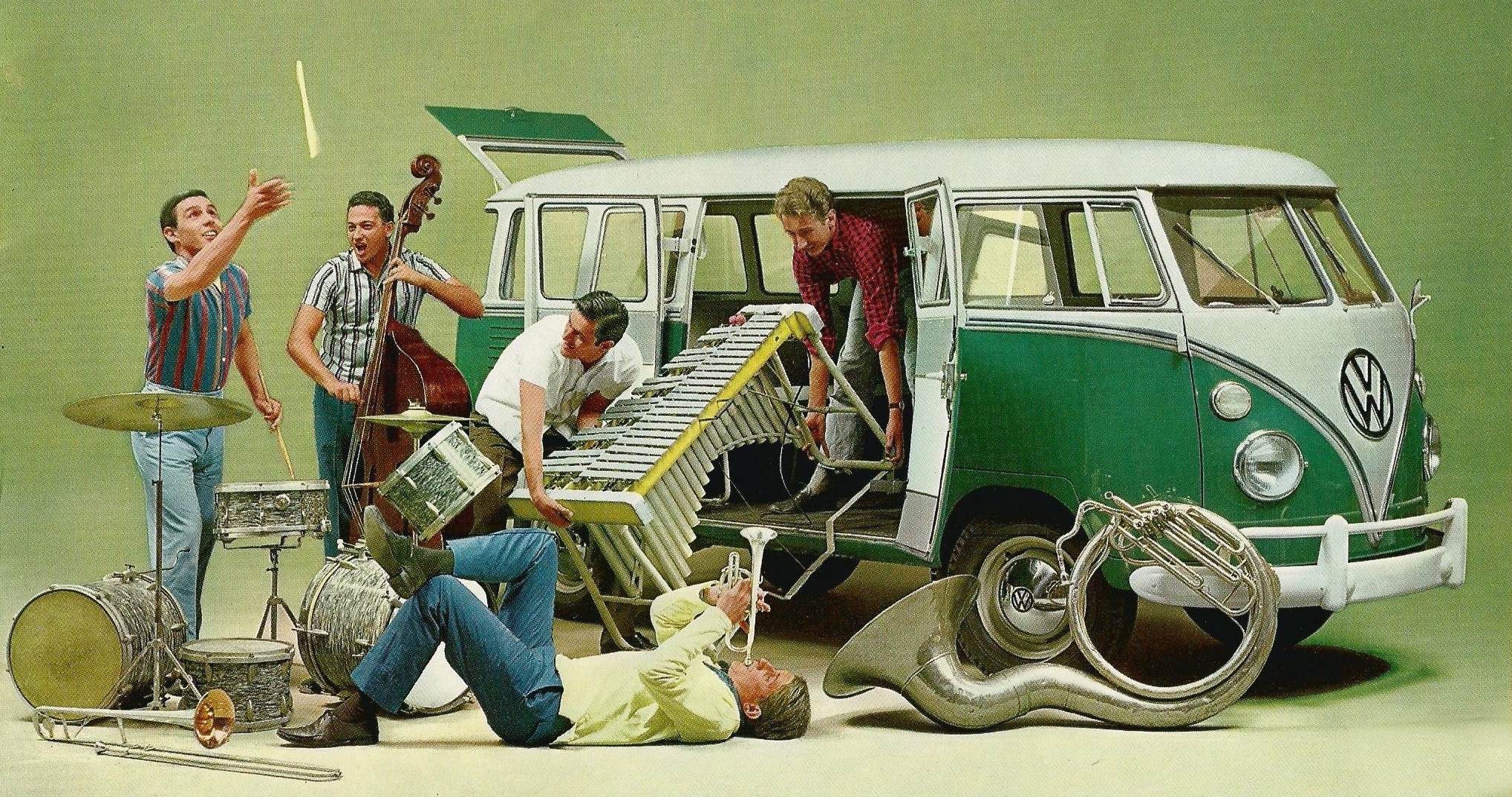
The Volkswagen Type 2 bus. It’s unquestionably loaf-shaped; it owes a lot of its technical and design DNA to the Rumpler and the Scarab, it answered a very specific question about holding as much as possible in a small vehicle, but I can’t put it in the Weirdloaf category. For two reasons:
- It was very much not a sales failure and
- It started life as a commercial vehicle, which I’ve decided is not part of the Weirdloaf category.
Weirdloaves are designed to be mass-market passenger cars, fundamentally, even if they’re great at hauling stuff. The VW Type 2 was designed from the start to be a commercial vehicle. All the other Weirdloaves came into the world as passenger-haulers primarily. There’s a difference in concept and tone in these two origins, and I think that’s a defining trait of the category.
I don’t fully understand the sort of taxonomic pleasures I get from making up categories and putting vehicles into them, but I can’t deny it. And I think the Weirdloaves category is an important one, and one that we should appreciate.
Are there ones I’ve not mentioned? Let’s see if we can come up with a more comprehensive list in the comments here! I mean, what else are you doing?
Top graphic image: Spruce Eats, Advance Auto



Scarab makes the list but not the even weirder Daimaxion ‘Car’!?!
The comments correctly included the Daimaxion Car as well.as the other two that immediately came to mind… i.e. the wonderful Toyota (Egg car) Previously. And the Russian Loaf Van.
Another that should be mentioned as a loaf car / van that is missing is the German (assumed to be) uber aero Schlörwagen, though I can see it argued as a bread shapped car maybe than a van, I dont know, a wonderful attempt at an efficient aero vehicle all the same!
https://www.autoevolution.com/news/schlorwagen-the-ultra-aerodynamic-wing-on-wheels-that-dreamed-big-175624.html
Jason, I would like to draw your attention to another one; probably my favorite:
Autonova Fam; designed by Pio Manzù (he did the Fiat 127) and set atop the chassis of the Glas 1004.
3rd gen Dodge Grand Caravan
How does the Mega look way better than the Cybertruck? And why does the presenter of that video look like the kit from “The Goldbergs”?
“ We have the Renault Aventime, answering a question no one asked about combining a minivan and an executive coupé”
*Avantime
The BMW i3
I don’t see loaf when I see the Cybertruck. A loaf is more or less shaped like a brick that may have rounded surfaces. The Cybertruck with its point on the top – more pyramid shaped puts it out for me. Lets see wide at its base coming to a point at the top – ahh insert poop emoji here.
Reading this while pinching a loaf……
I am in the same boat as you, Torch, and I would love for you to get into a taxonomic exercise in defining this pleasure that we get. Mine arrives in the form of a comparison. Mindless, day long comparisons of things. Maybe that’s why I’m good at comparative analyses in my academic life!
Typical. Half the band members get their instruments out of the van and start screwing around with all their crap (and in the case of the oblivious trumpeter, body) in the way while the last stuff is still getting loaded out.
Also, what a weird mix of instruments for a band to be playing.
I bet that xylophone takes a beating being moved around without any sort of case.
I reckon that’s a vibraphone. Xylophones have wooden slat thingies (“xylo” means wood).
Yep it’s a vibraphone, but that’s because of the resonator tubes that each have a rotating butterfly valve thing to give it vibrato
Without the tubes it would be a glockenspiel or metallophone.
Unfortunately if you use the correct terminology, most people will miss-understand you.
It’s like people calling unassisted automobile brakes manual brakes.
So that’s the difference between a glockenspiel and vibraphone! Thank you!
Torch, this is your next book! An automotive Heavenly Emporium of Benevolent Knowledge!
“In its distant pages it is written that animals are divided into (a) those that belong to the emperor; (b) embalmed ones; (c) those that are trained; (d) suckling pigs; (e) mermaids; (f) fabulous ones; (g) stray dogs; (h) those that are included in this classification; (i) those that tremble as if they were mad; (j) innumerable ones; (k) those drawn with a very fine camel’s-hair brush; (l) etcetera; (m) those that have just broken the flower vase; (n) those that at a distance resemble flies.”
-Borges
I think you could definitely put the Dymaxion in that list.
Came here to say just this.