

I feel like chance, fortune, randomness, happenstance, whatever you want to call it, has been feeding me some pretty good stuff lately. Maybe that’s why the Dadists were so into it. Today, chance has fed me a few interesting things, including the sight of an interesting Chinese people-mover called the Li Mega. It’s an impressive battery-electric three-row people mover – I’m hesitant to say “minivan” because it’s not really all that mini – and it has styling that is definitely striking. It feels sort of like a bullet train or some kind of small shuttle that would be launched from some large spaceship in a sci-fi movie. Or maybe a TV show, I’m not sure we’re talking movie budgets here, but still. It’s striking and interesting and overall a little bit weird, which is what got me thinking.
I think the Li Mega is really just one of the latest entries into one of my absolute favorite categories of cars, one that I never really thought to categorize and give a name to until today. It’s a strange category of car, and one that I hope never goes away. It’s a category for taking risks, but always risks with, like, some sort of very specific idea behind it. All of the vehicles in this category seem to start with some sort of fundamental idea that they’re going to tackle a specific transportation problem in a new way.


Oh, and they’re all kind of shaped like loaves, sort of. And – and I think this is important for this category – they’re always, at least to some degree, sort of failures. Noble failures, maybe, but they don’t tend to have the sort of success that the people behind them were hoping for. 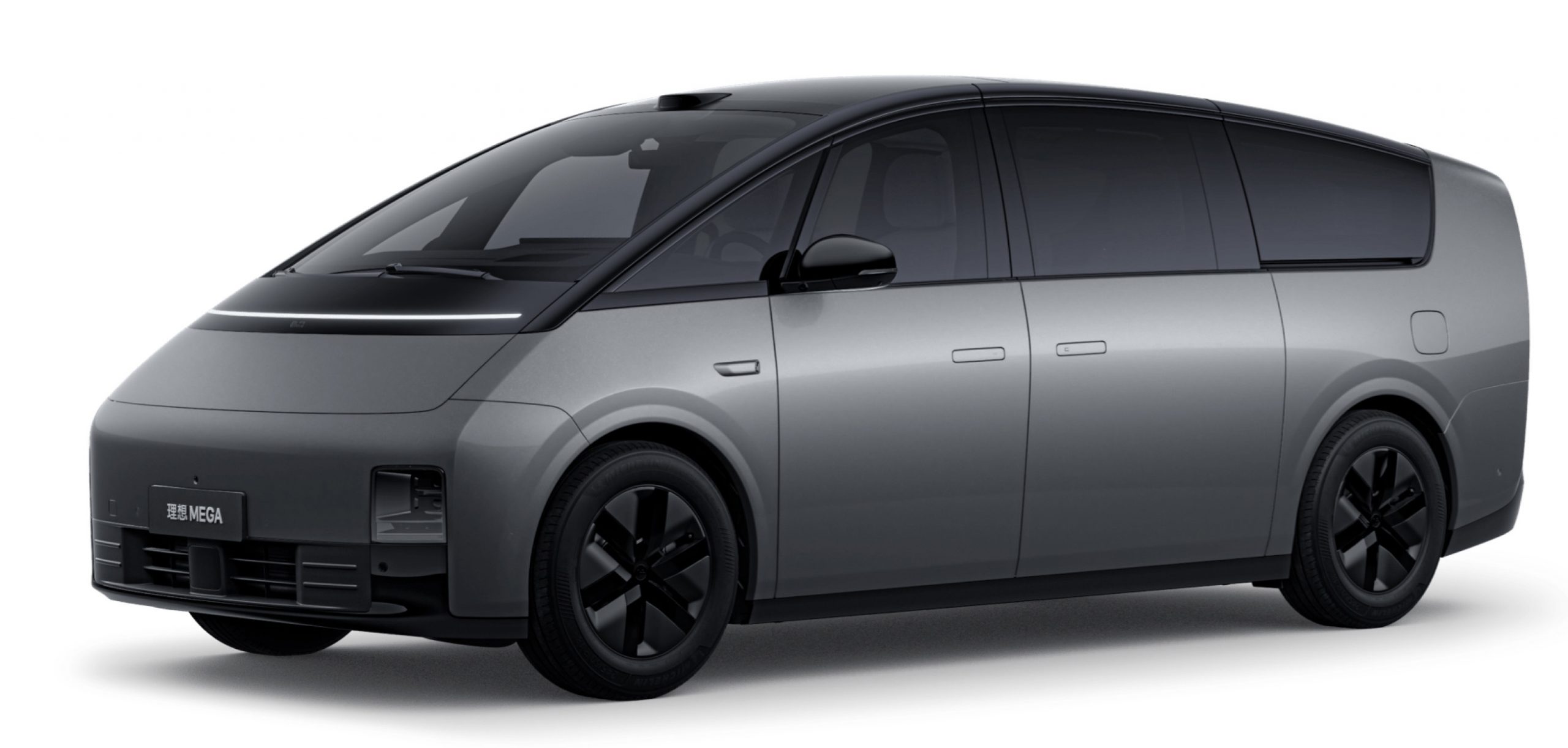
But before I get into the category as a whole, we should talk about this Li Mega a little bit. It’s a luxury MPV, the kind that would compete with something like a Toyota Alphard or Vellfire, and it’s also a long-range (about 442 miles of range, according to China’s CLTC cycle) EV that can charge faster than almost anything else out there, with claims of adding 300 miles in about 10 minutes from a charger that can deliver a peak of 520 kW at 700 amps.
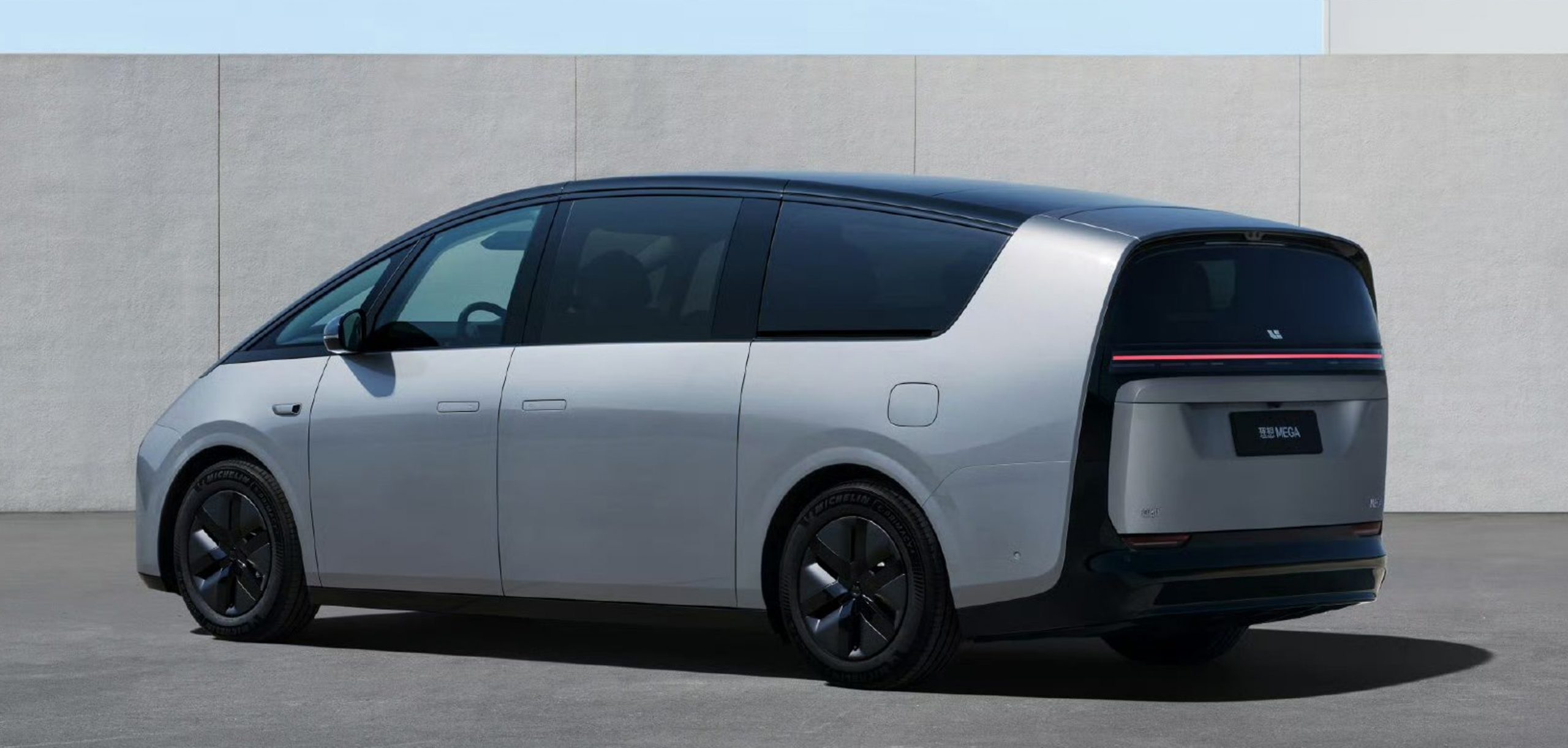
It also has a remarkably low drag coefficient, especially for such a large vehicle: 0.215, which puts it in the same ballpark as a Tesla Model S.
It’s pretty huge inside, too, with a usable people/stuff length of about 12 and a half feet! That’s a lot of space!

As you can see from those pictures, you get three rows, each with a ton of legroom, and the middle seats are captain’s chairs kind of things, that can swivel around so you can do stuff like this:

Wait, what’s going on in there, exactly? Are they weaving a hammock in the car? Is that a thing families do? Weave hammocks? Don’t get me wrong, I think it’s pretty cool, it’s just not something I’ve encountered before.
Here’s a good walkthrough/test video of the Mega, which shows all of its bonkers features, like how the second-row flip-down entertainment screen works on gestural hand controls!
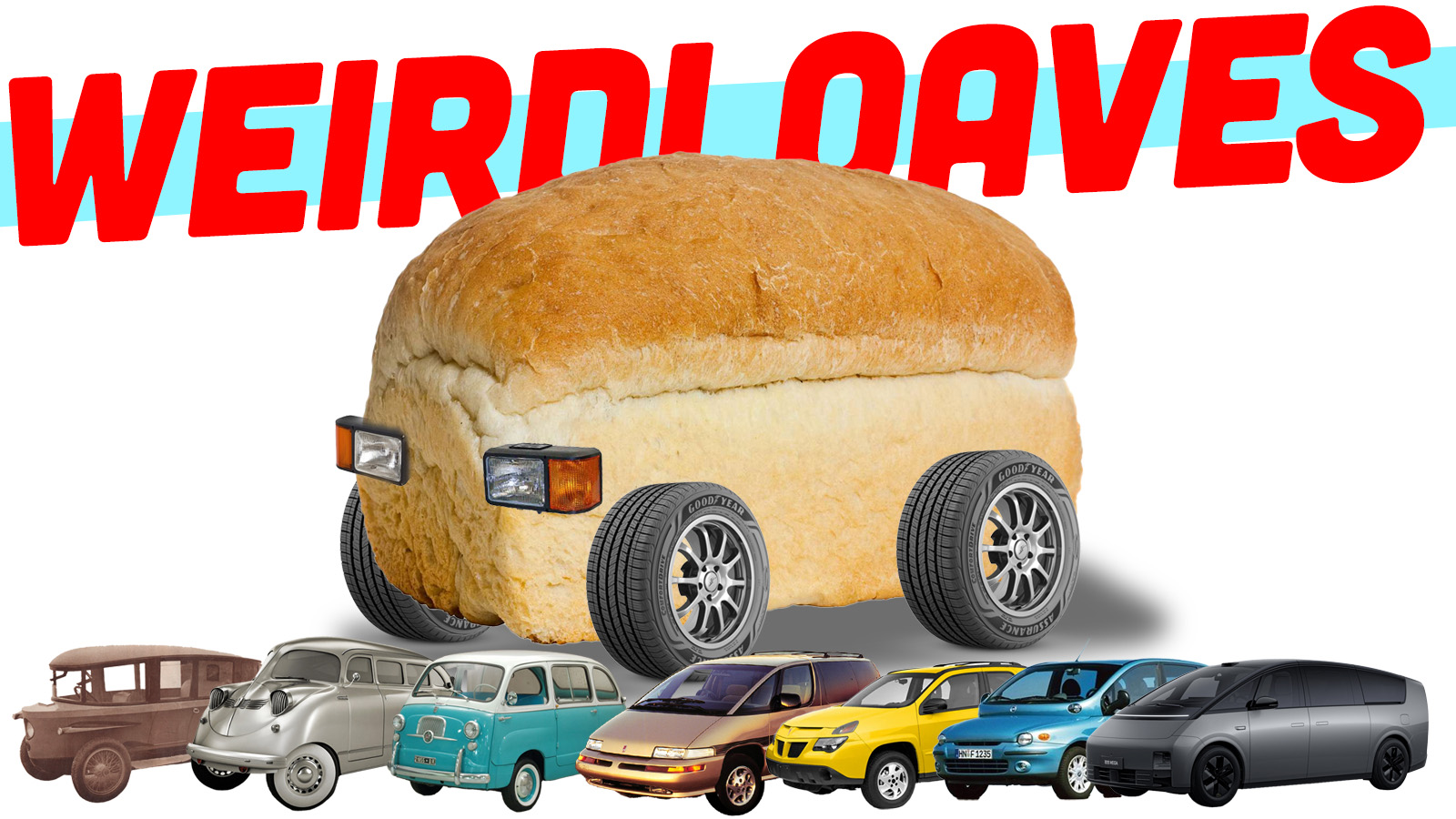
I’m getting a little off track here, though. My bigger point is that this car, the Li Mega, which is wildly innovative and bold and unexpected and more than a little weird and not really selling all that well, is part of this larger group of cars I mentioned before, a category I think I’d like to call Weirdloaves:

That image above isn’t exactly an exhaustive list, but I think it covers most of the famous ones and is a sort of visual history, from top to bottom. I tend to peg the earliest example of a Weirdloaf as the Rumpler Tropfen-Auto, that early pioneer of aerodynamics, rear engines, and swing axles.

The Rumpler was a car that was focused on trying out new ideas about aerodynamics and packaging, and it didn’t look like anything else on the road. Only about 100 were built, and, sure, it was kind of a failure, but a fascinating one that influenced many cars to follow, like Tatras and, Volkswagens, and Porsches.
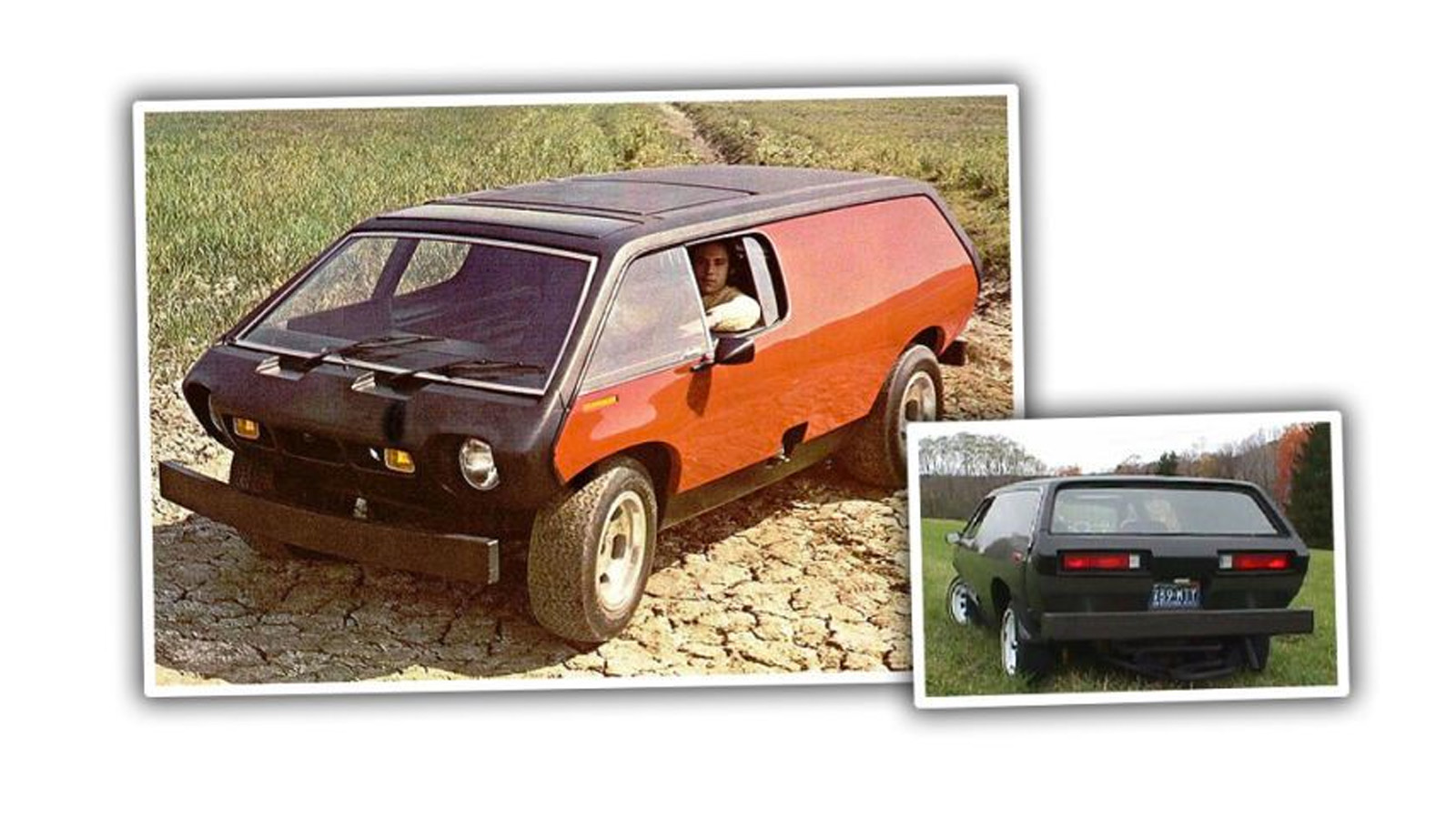
Oh, I thought of another one! The Brubaker Box! It’s a low-volume one, but still, it counts!
Going down the chart, we see the Stout Scarab, an early minivan-like car with a rear engine and a definite loaf shape. We also have the Fiat Multipla, another rear-engine one-box little loaf that was all about cramming as many people and things in as small a car as possible.
We have the famous GM “dustbuster”-style minivans, we have the Pontiac Aztek, both of which made bold styling statements that were really about novel ways to use space, and both were somewhat sales disappointments. We have the bonkers re-born Fiat Multipla, a modern take on the same maximize-volume problem, and equally absurd and loaf-like. We have the Renault Aventime, answering a question no one asked about combining a minivan and an executive coupé.
And then we have the Cybertruck, maybe the most controversial member here, but I think one that qualifies. It’s weird, it has lots of novel technical ideas and details, it had a specific – if maybe amorphous and misguided – primary concept, and it’s both loaf-shaped (well, low-polygonal loaf) and proving to be a sales failure, too.
If there’s perhaps one obvious absence of a shamelessly weird loaf-shaped car on that list, I think it’s this one:
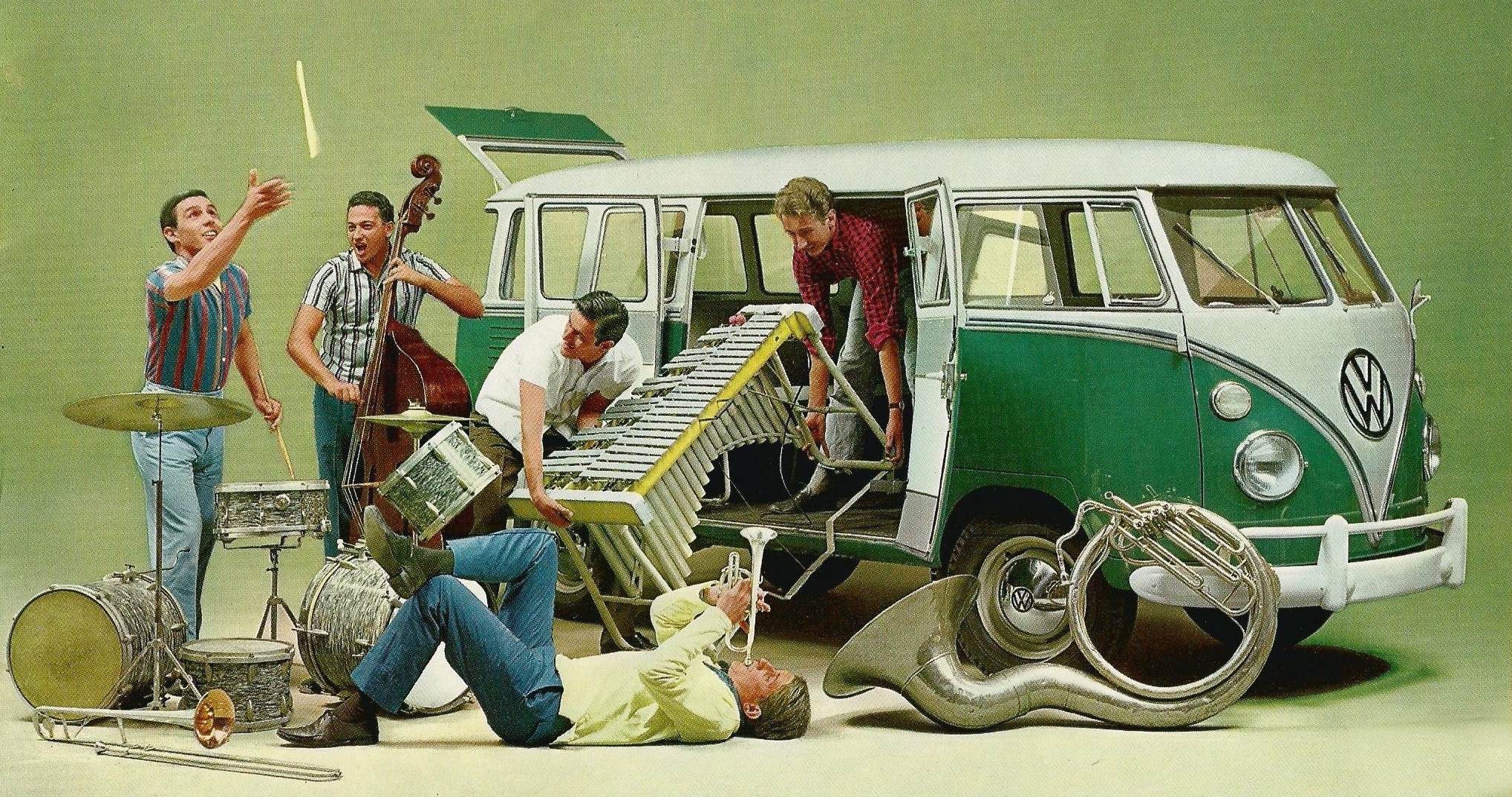
The Volkswagen Type 2 bus. It’s unquestionably loaf-shaped; it owes a lot of its technical and design DNA to the Rumpler and the Scarab, it answered a very specific question about holding as much as possible in a small vehicle, but I can’t put it in the Weirdloaf category. For two reasons:
- It was very much not a sales failure and
- It started life as a commercial vehicle, which I’ve decided is not part of the Weirdloaf category.
Weirdloaves are designed to be mass-market passenger cars, fundamentally, even if they’re great at hauling stuff. The VW Type 2 was designed from the start to be a commercial vehicle. All the other Weirdloaves came into the world as passenger-haulers primarily. There’s a difference in concept and tone in these two origins, and I think that’s a defining trait of the category.
I don’t fully understand the sort of taxonomic pleasures I get from making up categories and putting vehicles into them, but I can’t deny it. And I think the Weirdloaves category is an important one, and one that we should appreciate.
Are there ones I’ve not mentioned? Let’s see if we can come up with a more comprehensive list in the comments here! I mean, what else are you doing?
Top graphic image: Spruce Eats, Advance Auto



In Brazil, we had the Gurgel X-15, a vehicle with VW (Kombi) mechanics, that kinda had a similar minivan look. I like it so much!
https://educacaoautomotiva.com/wp-content/uploads/2018/11/gurgel_x-15_1980.jpg?w=667
That’s something I would unironically daily.
Amazing! Also, wtf, and kkkkk
Awesome. Immediately I thought that looks like something you would find in the former Soviet Union or an Eastern European country and probably with some sort of Military origins
While it’s not a real vehicle, the Catbus from My Neighbor Totoro definitely fits into the “weirdloaves” category.
The Japanese have built several Catbus styled vehicles, usually on a Toyota HiAce which is both loaf shaped and very successful
This should be called the Lou Bega instead.
Space for all the ladies in your life.
How about the Hyundai Staria? Or the XPeng X9 (which is a great car by the way)?
I have been thinking of getting either a re-born Fiat Multipla or Renault Aventime under the 25 year rule.
That Mega looks great.
Those Toyotas sook like something you put behind the refrigerator to kill cockroaches.
What a nice contrasting combination of cars you are after. The Multipla is a very practical car, the logical result if you want to have 6 people and their luggage in a car that is less than 4 metres. The Avantime on the other hand is a 2 door coupé for max. 4 people with the shape of a 7 people MPV. With the Avantime, parts are already a problem here in the EU, good luck if something breaks with an Avantime in the US. It’s a great car though, very spacious to sit in.
Of the longish list of cars I’d consider, those two are mentioned in the article, and for some reason there seem to be on the Japanese car export websites priced fairly reasonably.
Considering that the list also has a Citroën Acadiane or Dyane , Unimog , Tatra, and lotus seven on it these are fairly close in concept.
Not my car, no affiliation:
https://carsandbids.com/auctions/rxyOaBNV/1999-fiat-multipla
It ‘s a gold manual diesel wagon, so you’d certainly be keeping things weird.
Personally I’d hold out for an Avantime, practical concerns be damned. We choose to import these other things after 2.5 decades not because they are easy, but because they are hard.
Every time I read the name, I read Lil Mega. It seems to fit, and just rolls off of the tongue so much easier.
Lil Mega ain’t so Lil.
My friend has a Mega. When his daughter was in my KG class I asked her which one of his cars she liked the best and she said the Mega- because it had a TV in it. Now it has a Porsche race car full window sticker on the front windshield.
He owns a GT3, so it makes sense. He also has an Audi wagon and a M5… and now I know that being a kindergarten teacher will never allow me to afford cool cars. He also just bought a Miata a few weeks ago. I’m in the wrong profession.
For some reason the Chinese elites really love their Li Autos, Yangwangs and Aitos. Knew a guy who was the only son of some wealthy entrepreneurs in Ningbo (China’s ball bearing capital and home of the world’s third busiest container port). He turned 18, got his license and instead of some euro sports car, his parents got him a Li Auto L9, their flagship $70K EREV SUV! Of course, he nicked a wall and broke off the side mirror in less than a month, which he promptly “repaired” with duct tape and a spray can…….
If you are not nicking walls or losing mirrors, you are not driving a new car correctly. The amount of scratched bumpers I see on the fancy new cars here in China is mind blowing.
Also BYD sedans have toppled my most hated car list. Here in Beijing BYD stands for bad young driver
We used to call them Buy Your Death in HK lol. I forsee many more names when BYD makes their inevitable push into North America, Bring Your Doom, Buy Your Demise, Baby Young Daddy, Beat your d…….
When I drive in China I keep a wide berth with all the BYD sedans, both EV and hybrid, most of them are doing rideshare work. Same with any other white sedan with new energy green license plates……. They drive with a recklessness and vigor I simply can’t match
I couldn’t agree with you more! the ride share drivers are the worst by far. I haven’t been to HK in a few years now, I used to love all the JDM goodness on the streets there.
So I guess I live entirely for Weirdloaves.
The Cybertruck definitely belongs; it’s what results when you pinch a loaf.
^Winner
So the MEGA stopped being a sales failure last year after model year update in March which added that seat swivel functionality, made entry/exit from the 3rd row easier, and fixed details like upgrading the rear entertainment screen to 21-inch from *only* 17-inch (which was embarrassing because the MEGA is priced very high, but a far cheaper XPeng X9 from a fellow startup had a 21-inch from the start).
This caused sales to reach a sustained 2.5-3k/month, up from the 800/month flop numbers in 2024. However, a prominent battery fire in late October prompted a recall for inadequate anti-corrosion additives in the coolant, which could cause a coolant leak in the battery pack or motor controller leading to a fire from overheating. This caused sales to plummet back to flop levels under 1k/month ever since.
The Li Auto i8 was originally supposed to closely follow the launch of the MEGA in 2024 with similar styling, but the MEGA’s look was so controversial that they had to do an emergency restyle and the launch was delayed till August 2025, and by that time 5C charging was no longer that special and it happened to be right next to the launch of the Onvo L90 from a fellow startup, which the i8 compared quite unfavorably with due to its far higher price despite having less standard features, along with a couple other slightly dumb marketing controversies (like a poorly set up truck crash ad). The pre-order numbers were so bad that they had to redo the trims and consolidate to a single trim level with an effective price cut, but sales numbers were still not great.
The Li Auto i6, a 2-row variant of the i8 launched a couple months later seems to be doing far better but it’s too early to tell if it’ll sustain for very long.
I remember the October fire, a Li Mega hit a pothole in Shanghai and burst into flames in less than thirty seconds. From what I’ve seen on Chinese social media that seemed like the final nail in the coffin for the Mega (and to a lesser extent Li Auto’s BEVs), still see their EREV SUVs everywhere but haven’t seen any of their new BEVs on the road yet.
Personally I like the look of the Mega, though unfortunately the rear does resemble a coffin…….. maybe going EREV and using LFP packs could boost sales
How does an EV go from vehicle to car-b-que in under 30 seconds from hitting a pothole? That’s a world record right there. Not a record anyone wants but a record nonetheless.
I’m speculating, but it seems like the coolant corroded a hole in the coolant lines and would’ve already been slowly leaking for a while, letting temps rise to higher than normal but still safe levels. Then, hitting the particularly bad pothole may have caused the hole in the coolant line to open up further and dump a huge amount more coolant quickly, leading to battery temps to quickly reach the self combust threshold.
More details and an official statement from Li Auto:
https://carnewschina.com/2025/10/31/li-auto-recalls-over-11000-mega-2024-models-due-to-potential-battery-thermal-runaway-risk/
It gets even worse, in their statement Li Auto claimed that all sliding doors remained operational (or at least unlocked) when the fire started, and immediately after that statement got published the owner sent out his own statement, saying that the sliding doors were jammed shut and the rear passengers had to escape through the front. Not a very good look…….
“Final nail in the coffin” would’ve been the perfect news headline if it was a common phrase in Chinese ????
I don’t think they can fit an engine under that tiny hood to EREVify it, but fitting an LFP pack with reduced capacity should be easily possible. It’s just that at this price point, Li Auto feels that LFP is cheap/not luxurious and they previously had a goal of competing without cutting prices.
They’re probably better off getting the vehicle certified with the no fire, no explosion rules that are coming into effect in July with a new NMC battery pack to attract the few customers that are willing to trust the vehicle and then focusing on the burgeoning flagship SUV market.
Looks like somebody overinflated a Cybertruck. It’s an improvement.
The Cybertruck looks like the empty box that the Mega came in
And yes, it’s an improvement
The Toyota Previa should be on the list. Strange? Sure. Loaf-y? You bet.
Yes! The Toyota Egg minivan.
It was so unique when it 1st came out and still is today. Super reliable and quirky fun people & stuff movers
Strangeloaves
Strange highs and strange lows
Strangeloaves
That’s how my love goes
(Apologies to Dave Gahan and friends)
Dang. Now that song will be stuck in my head for the rest of the day. Dammit A. Barth. You win this time!
The bread loaf maximizes volumetric efficiency. The cheese wedge maximizes aerodynamic efficiency. Somewhere in between is the compromise that maximizes both.
Gee, now I’m hungry.
Mmmm – Grilled Cheese!
Mmmm – Eggsalad!
Coefficient of drag is a function of shape, unrelated to size.
Though overall design is complicated, the first related thing that comes to mind is that if you increased the size of a every part of a car except the mirrors (since they wouldn’t need to be bigger) by 10%, the Cd would actually go down.
I was just coming here to say this! We use drag coefficient to compare objects of different shape, not different size. So the quoting of drag coefficient without giving the associated reference area means we’re only getting half the story…
AeroDragForce = (0.5*rho*v^2)*S*CD
where rho is density of the fluid, v is speed relative to the fluid, CD is drag coefficient and S is the reference area (for a car this is usually the frontal area, for an airplane it’s normally the wing area). But if you really care about internal volume you could use (Volume)^(2/3) as a reference area (if you’re designing an external fuel tank for an aircraft this is handy!)
And the power needed to overcome the aerodynamic drag is
Paero = AeroDragForce * v
So as Twobox implies… I can take that CD=0.215 and immediately make it smaller by using a different reference area (say, the ground footprint).
Yes, and just to clarify the pronoun in that last sentence,
I actually meant it the other way… if the drag force is constant then the coefficient changes based on the chosen reference area. But as you point out it works both ways.
It shouldn’t be that hard to get a pretty good estimate of frontal area by taking a picture of the front of the car and have your friend stand next to it holding something of known size so you can scale it.
You are of course correct, *and* I believe the statement in the article is also correct. While the drag coefficient is completely independent of size, larger vehicles tend to have less aerodynamic shapes and therefore higher drag coefficients. There are not many spacious, 3-row, 7 or more person capacity vehicles out there with a drag coefficient near 0.21.
I do wonder about that. I wonder how many aspect like my mirrors example would improve with larger size and how many would get worse. I imagine a part of it would include whether you have to include engines that produce higher power-to-weight ratios, in order to satisfy consumers.
I hate that car journalists still quote Cd for vehicles, which is basically meaningless without also talking about frontal area.
Of course, the CdA of this van probably wouldn’t be all that impressive, so I get why PR flacks don’t like to provide it.
True, though to be fair, as far as know that is all the journalists are given. Could they ask for the frontal area number when they are given the Cd? I suppose so. My expectation of getting it wouldn’t be high.
The li mega has become quite executive transport in China. Then it works well as family vehicle especially for mili generation that are common in China. So many wild features and strange look. That xpeng 6x6x6 van that launches the 6 rotor personal air craft might be weirder looking. The regular xpeng van that is being used in the US now by waymo is also very loaf like. The Russian loaf van might be the most loaf vehicle and are still loved and on the road in many countries. Some have been converted to some interesting drive trains like Toyota diesels.
There is a saying a journey of a thousand miles begins with the first step. Now of course this is basic reasoning. However I think it also describes auto design. If you are in 1970 and someone with a time machine from 2020 came back with a car from the 2020 it would be better in every way. But I bet even if you could build it back in 1970 the sales would suck because it is too weird.
It’s likely outside the category because it was designed as a utility vehicle, but the UAZ-452 has to be mentioned, if only because it’s nicknamed “Bukhanka” — Literally “loaf” in Russian.
Mazda 5?
Johnny 5?
Chrysler Airflow
Peugeot 402
It’s a bit smaller than the others on the list but the Hanomag 2/10 PS has the nickname Kommissbrot for its resemblance to an army bread loaf.
That loaf looks like it wasn’t proved long enough.
A bit claggy inside too – see how dense it is on the bottom?
This is what happens when you make grey bread.
It’s just unappetizing.
No handshake from Paul.
I hope you aren’t eliminated from the tent.
The new VW bus. (ID-Buzz?). Definitely Weirdloaf
Qualifies as a sales flop (so far), bc VW being VW has priced it too damn high and is Also uncompetative on range. 230 miles might be realistically practically meet the needs of the the vast majority of all trips however 300 miles minimum is what the competition offers and in general what the public seems to demand
Bucky Fuller’s Dymaxion car is a quintessential tippy WeirdLoaf – an ambitious reset button to automotive construction that barely saw three ever made.
https://media.cnn.com/api/v1/images/stellar/prod/191022103319-dymaxion-1.jpg?q=w_2000,c_fill/f_webp
I was expecting to see that one, too.
Thank you for not keeping this information on a knead-to-dough basis!
Sharing this kind of thing is Torch’s bread and butter
Tis true… he’s never been worried about any repercussions for croissant the line. And as far as I’m aware, there’s never been an indication of a naan disclosure clause.
I crust we can continue this line of buns, at yeast for a while.
I’m sure Autopians will rise to the occasion and share their half baked puns.
We’re definitely on a roll.
No matter how you slice it!
You know what they say, the proof is in the basket.
I read that with a head cold.
That’s the sort of leavening that improves the discourse here, glad you could rise to the occasion.