

Who doesn’t love an Alfa Romeo? Miserable people without pulses, that’s who. For the rest of us, I think we can all appreciate the charms and joys of an Alfa, in all its myriad of forms, ranging from captivating little sports cars to some very appealing vans. I just learned about an Alfa Romeo I never knew about, and in many ways it’s one of the weirdest Alfa Romeos ever. It’s also one of the slower ones.
Oh, and I think it’s the only true rear-engined Alfa; not mid-engined, of which Alfa Romeo has several, I mean an actually behind-the-rear-axle rear-engined Alfa Romeo. It is quite pretty, though, so that part at least fits it well within the greater Alfa Romeo Cinematic Universe. But it’s still pretty different.


The difference is that really, it’s a Renault.
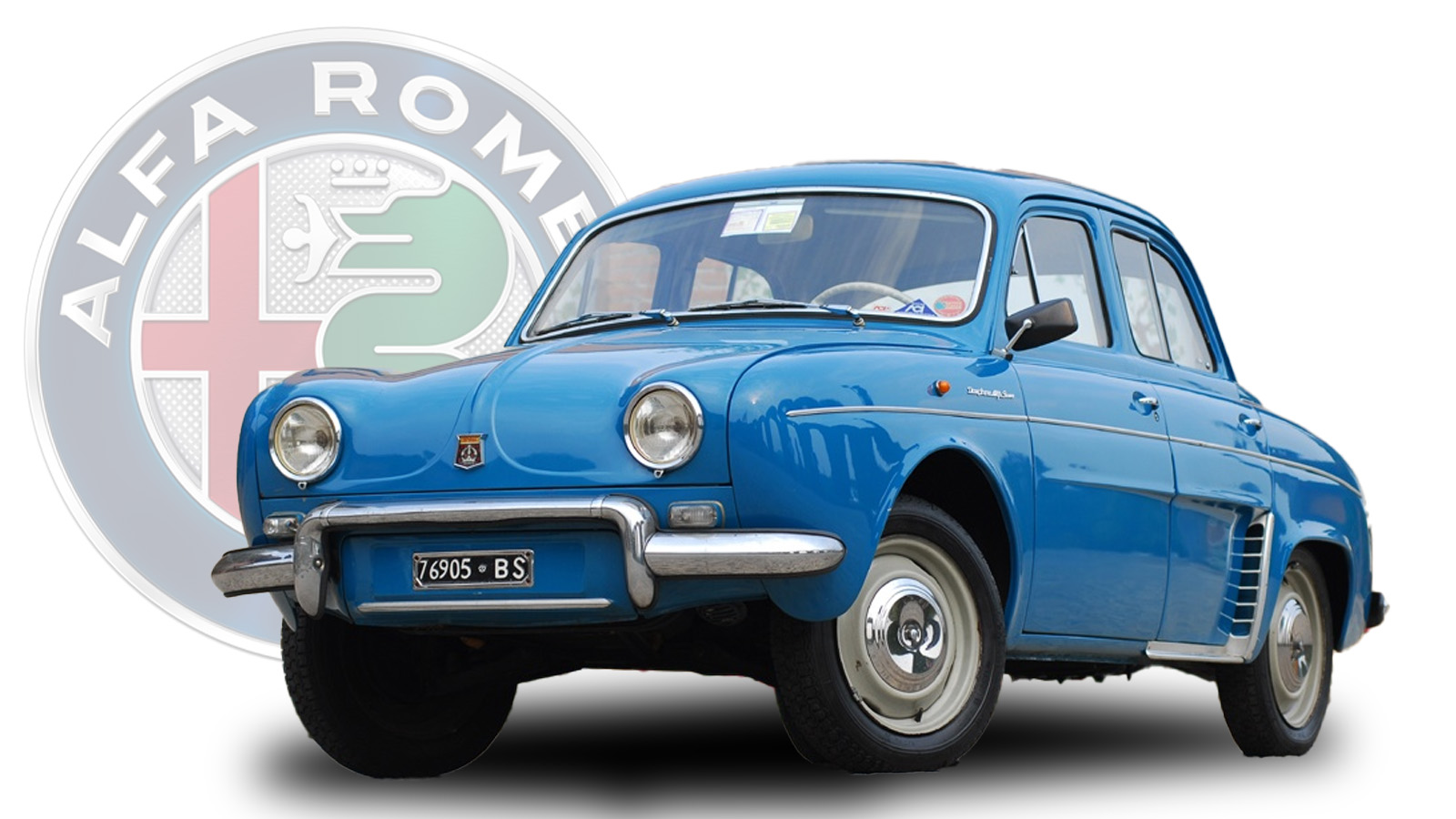
Specifically, a Renault Dauphine, which was built under license as the Alfa Romeo Dauphine (and later, the slightly uprated Ondine) from 1959 to 1964. Alfa and Renault made this deal because after WWII, Alfa Romeo found itself having to rebuild factories and was nationalized, a set of circumstances that left it far smaller than Fiat, and not particularly well-suited to compete in the lucrative mass-market car market, being mostly relegated to sports and luxury cars.
But they did want to at least try to compete with Fiat, and they got an opportunity after the signing of the Treaty of Rome in 1957, which started the European Common Market, and made cross-European partnerships more viable. Renault wanted to expand to more countries, but there were still duties that made local production of cars much more lucrative.
So, they partnered with Alfa to built a mass-market car – the Dauphine – in Italy, and in return Renault would sell Alfas in France. It seemed like a good deal for everyone.
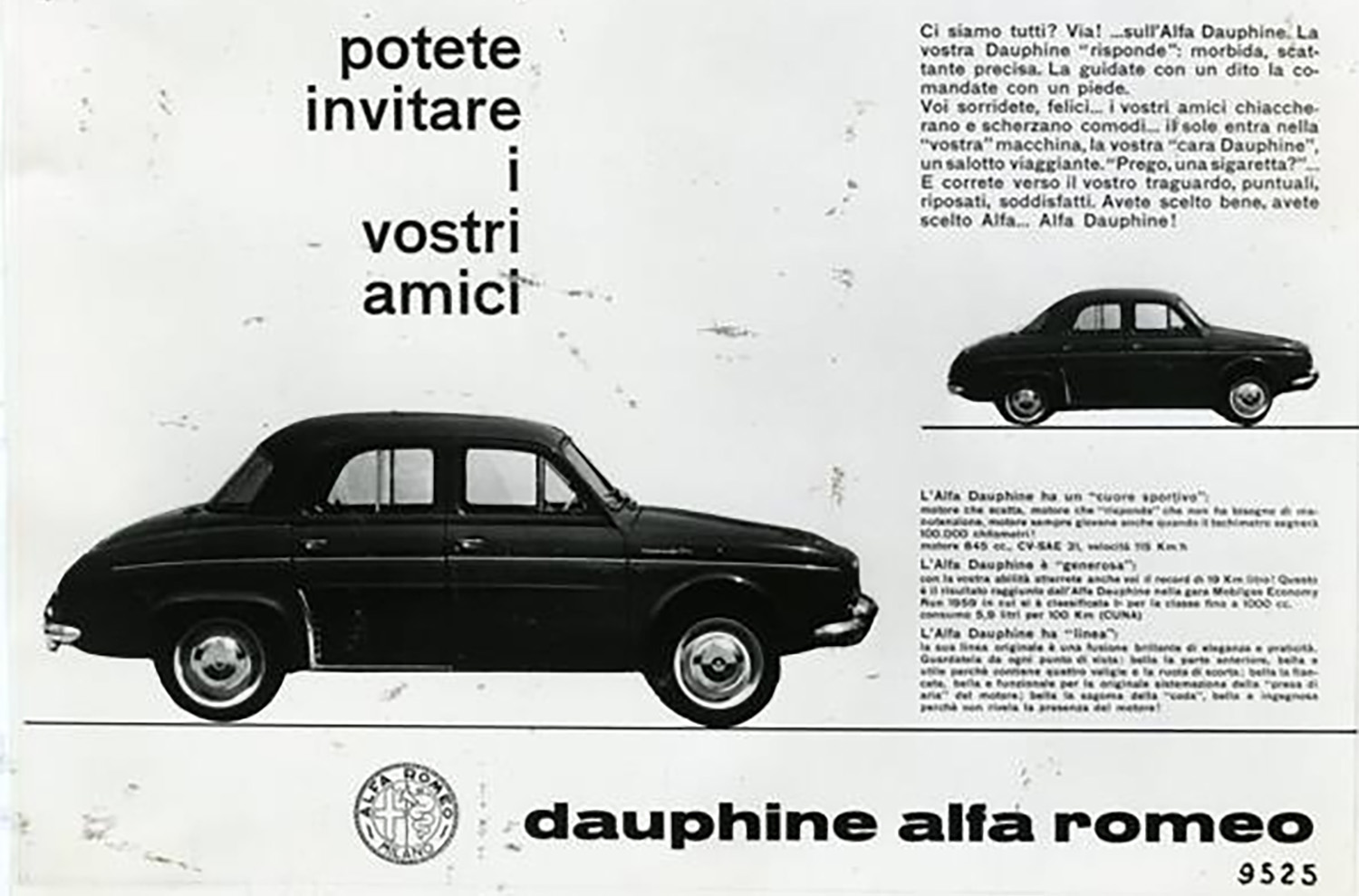
The car was pretty much just a Renault Dauphine as we all know and love them, but was badged as an Alfa Romeo.
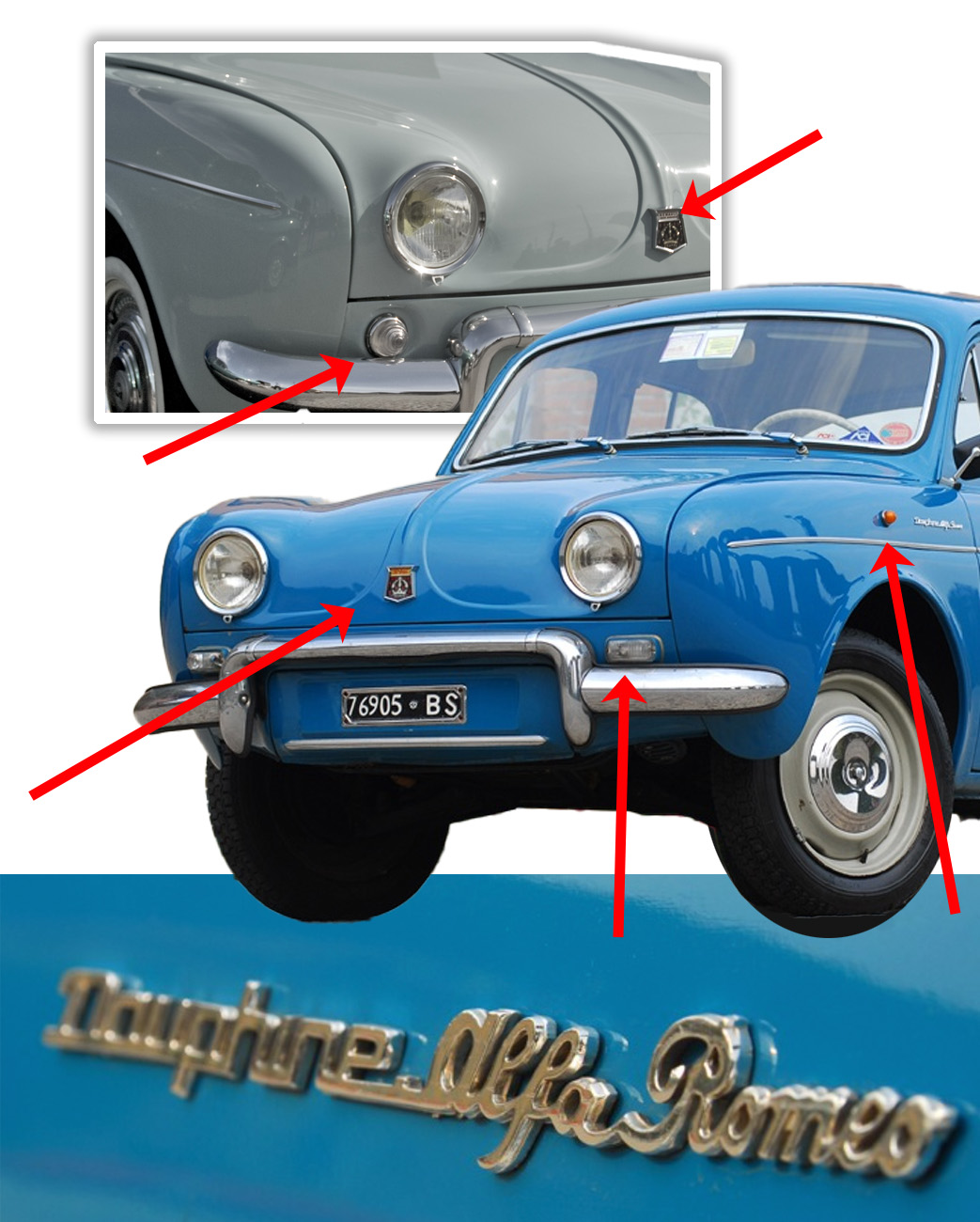
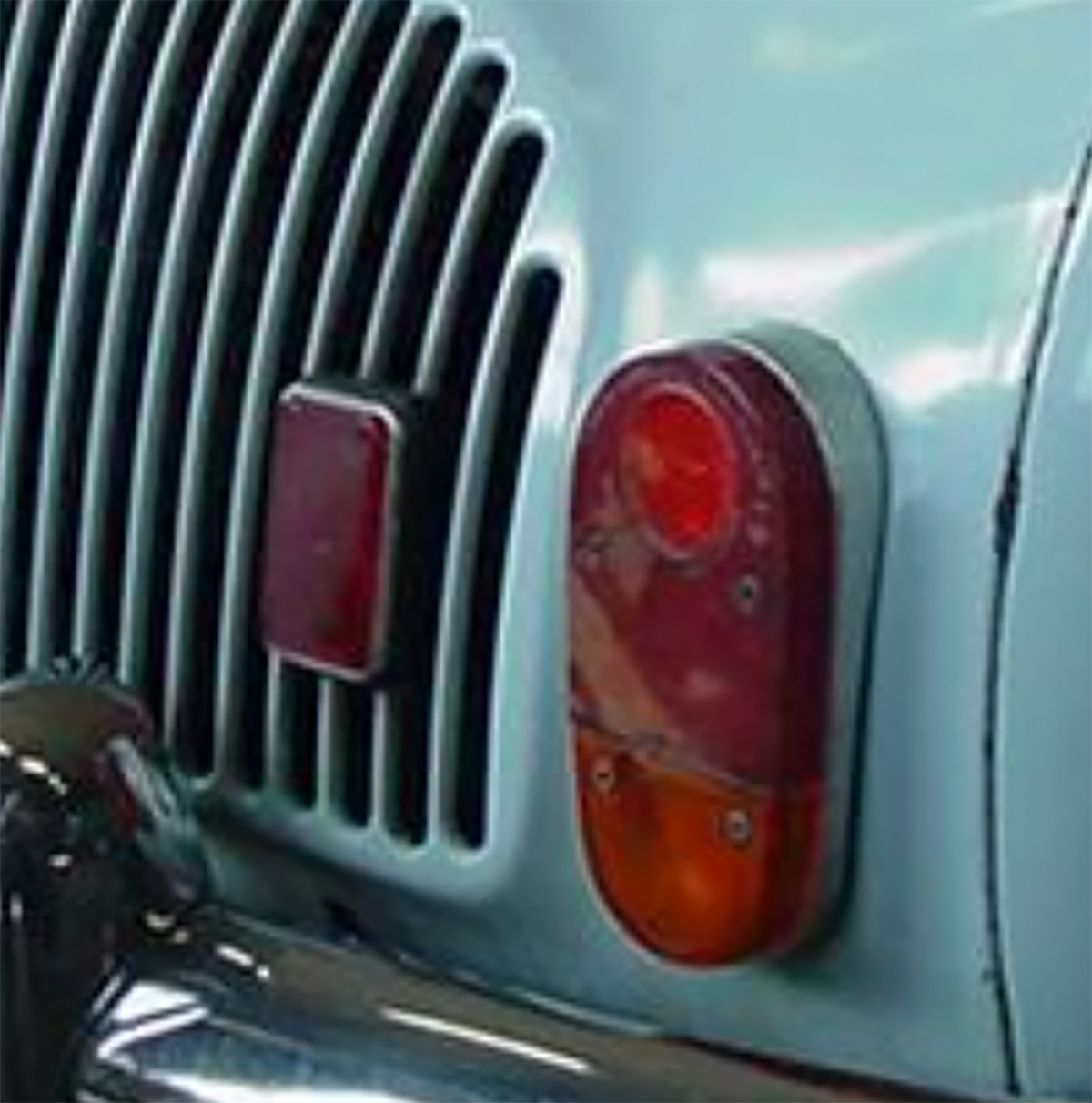
That’s not to say there weren’t any differences; they switched from six to 12-volt electrics, the Alfa version had rectangular indicators instead of round ones, and had indicator repeaters on the front fenders. Oh, and the hood badge said Alfa Romeo instead of Renault, of course, as did the fender badge.
Oh, and on a lot of these Alfa Dauphines, it looks like they had some extra reflectors at the rear:
Alfa was never really satisfied with the performance of the Dauphine, which was never exactly electrifying to begin with. Alfa attempted to make changes as early as they could, starting with taking the four-speed gearbox from the hotter Gordini version of the car and making that standard on all Alfa Romeo Dauphines in 1960, because Italians weren’t going to waste time with some three-speed transmission.
Alfa and Renault butted heads about the Dauphine’s power which, at 26 hp, wasn’t great (a carb change near the end of the production run bumped that to 32 hp, but still) and while Alfa had ideas about how to get more power out of the car, Renault wasn’t interested.
Renault also didn’t seem too interested in being a good partner, as they continued to sell Renault-branded Dauphines and Ondines in Italy via their own dealership network, against the spirit (and maybe letter) of their arrangement with Alfa Romeo, which is a pretty jerky thing to do.
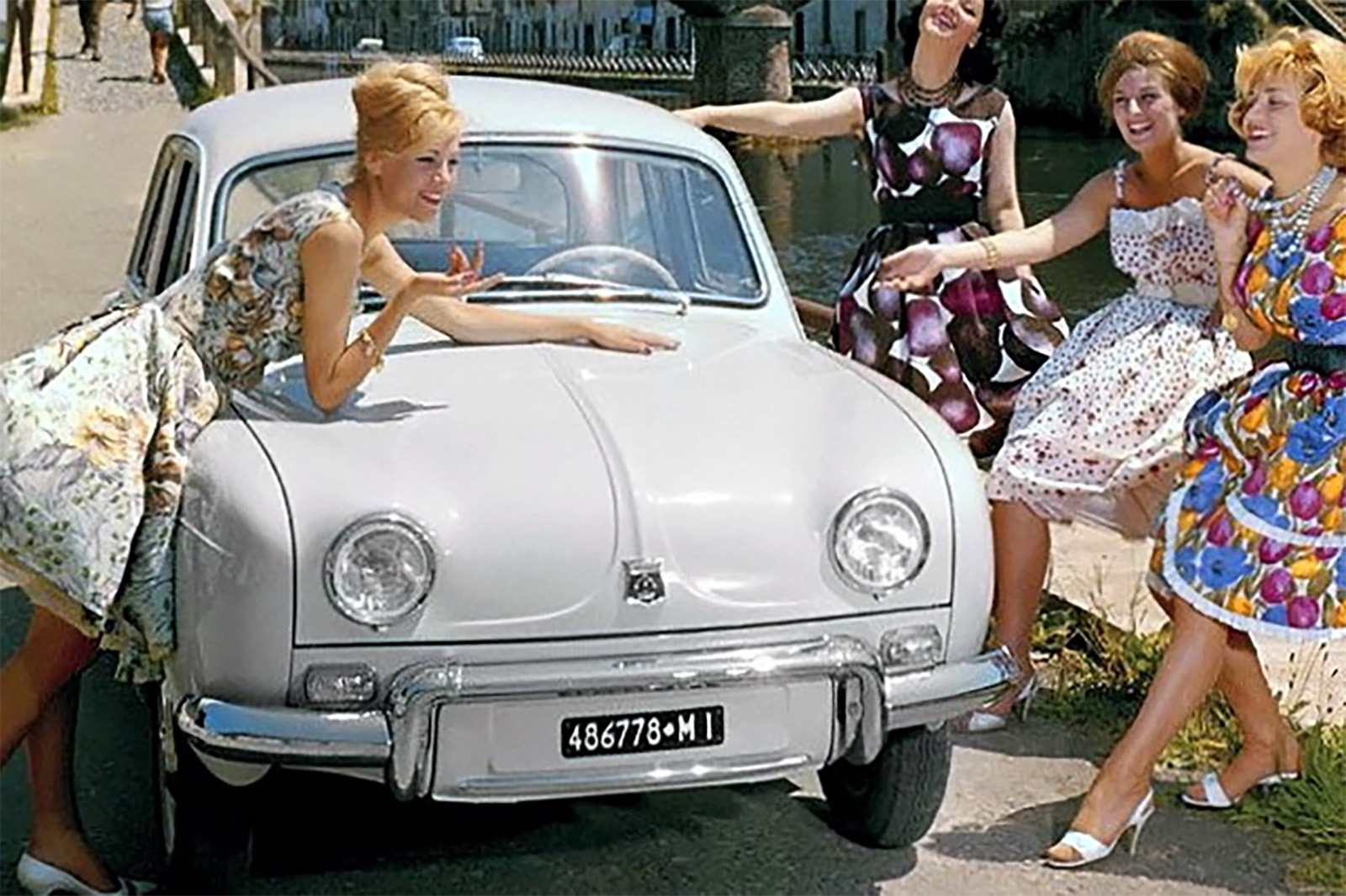
A reasonable number of these Alfa-Renaults were sold over the five years they built them, around 64,000 (that’s both Dauphines and Ondines) but the mutual distrust between both companies and made the venture pretty doomed from the start.
Still, thanks to the deal, we have one of the oddest and slowest Alfa Romeos ever! And for that I’m thankful.




Another oddity: the SEVEL utility vehicle sold under the Peugeot, Citroën, Fiat, Talbot and Alfa Romeo brands
If Renault had established a factory in South Florida back then, would these cars have been called Miami Dauphines?
Julia Louis-Dreyfus’s grandfather when he was running Renault did sort of the same the same thing. He had the Dauphine given a sportier body and named it the Renault Florida.
Close enough?
Check, check.
Quite far.
Pierre Dreyfus (Renault) and Julia’s grandfather Pierre Louis-Dreyfus (Louis Dreyfus Group) are different people.
As for the Floride and the Dauphine – same platform, different cars, but still – within the same brand. Nothing to do with slapping a logo on someone else’s assembly kit.
My mistake.
Julia’s grandfather Pierre Louis-Dreyfus , war hero, financier and eleven-time driver at LeMans under the pseudonym ‘Heldé’, derived from L-D (Louis-Dreyfus)
Running Renault was not one of his accomplishments.
Ah, we had the Bergantin, a 1900 with Jeep inline-4s and Continental inline-6s.
Brazil had a rebodied 1900 well into the ’80s.
Alfa Romeo is full of weird cars.
The weirdest Alfa Romeo was hands down the Arna.
“Let’s combine the best of 80’s Alfa and 80’s Nissan!!!”
“Excellent idea, here’s a Nissan Cherry for the body and cool looks, with an Alfa engine, transmission and electrics for the reliability.
Ah, and la suspenzione, too. And the brakes. But here’s the rear suspension from the Cherry. Enjoy!”
They got it completely backwards. A nicely styled Italian car with Japanese mechanicals? Sign me up.
Well, in this one you had:
– Alfa assembly quality, rustproofing, electrics and carburation. All built in a new factory in South Italy, not in the usual Alfa factory, which was already, errr, Italian…
– 80s Nissan styling and handling.
What could go wrong?
Subaru SVX!
I love that Alfa Romeo has such a strong brand identity, that everyone knows what cars are “real” Alfa Romeos, and which ones don’t quite fit the bill, without having to discuss it.
That said, they also made jeeps and trucks back in the previous and more interesting century. Would be nice to see some Autopian pieces on those 🙂
My father in law owned “some weird little French car” back in the late 60’s. I was intrigued. When I asked what might have happened to it, he said he and his friends crashed it in the woods and left it there 50 years ago. Thanks to my sons intense fascination with this, 3 hours and one fun adventure later there was a new lawn ornament in my in-laws front yard. A headlight, a coil spring and the steering wheel from a Renault Dauphine.
A quartet of pretty ladies wearing cotton dresses makes any car seem more desirable.
Pretty amazing to find out that Alfa sold the Dauphine on porpoise.
Whale, whale, whale…aren’t you clever
My grandma had one of these in the early 60s! The Alfa version was apparently cheaper on the used market than the Renault (which appealed to my grandfather since he could say he owned an Alfa without really paying for it). My dad loves telling the story of a trip from Germany to France and the Dauphine creeping up the Swiss Alp passes. I guess it was sketchy in a few parts, and my dad and his brothers were really worried about the car dying and then rolling backwards off a cliff.
I miss the days where cars were not all boring crossover shaped.
Huh, TIL. I did get the blurred image correct, but I had no idea Alfa sold the Dauphine.
The last photo with the ladies in hoop skirts: Why are two of the women jumping backwards, and smiling whilst doing so?
Because *waves hands Italianly*
We can never know, but it surely is drama in action. Oh, to live in the Car Brochure Universe!
Looks like they are leaning against a rail.
Yep, you can see the railing above the car as it meets the bridge at the top of the photo.
When I saw the low-poly lead image, I thought that Alfa had made their own Cybertruck.
I thought maybe Alfa had gone a little too Edsel grille.
Weird that the Italians didn’t at least translate the name to “Delfino”
My thought exactly!
Weird, but does it really beat the Arna?
I thought the same thing .-)
I came here to say the exact same thing…