

There’s certain kinds of art-related crap that I’ve always really loved. And I use the word “crap” very fondly here; I just mean artistic works that don’t really fall into the admittedly arbitrary and frankly bullstool category of “highbrow” art or whatever we want to call it. Pulpy stuff, you know the kind I mean. And in this category for visual art, you really can’t beat 1950s to 1980s paperback sci-fi book covers.
I encountered two things over the weekend that can be considered the deadbeat parents of today’s Cold Start: one of these old pulpy sci-fi paperbacks from 1972, and this Mercury brochure from 1974. A pair of contemporaries, with two very different goals: one to sell you the book in your hand, the other to sell you the car in the showroom you just stumbled out of.


Here’s the book cover:
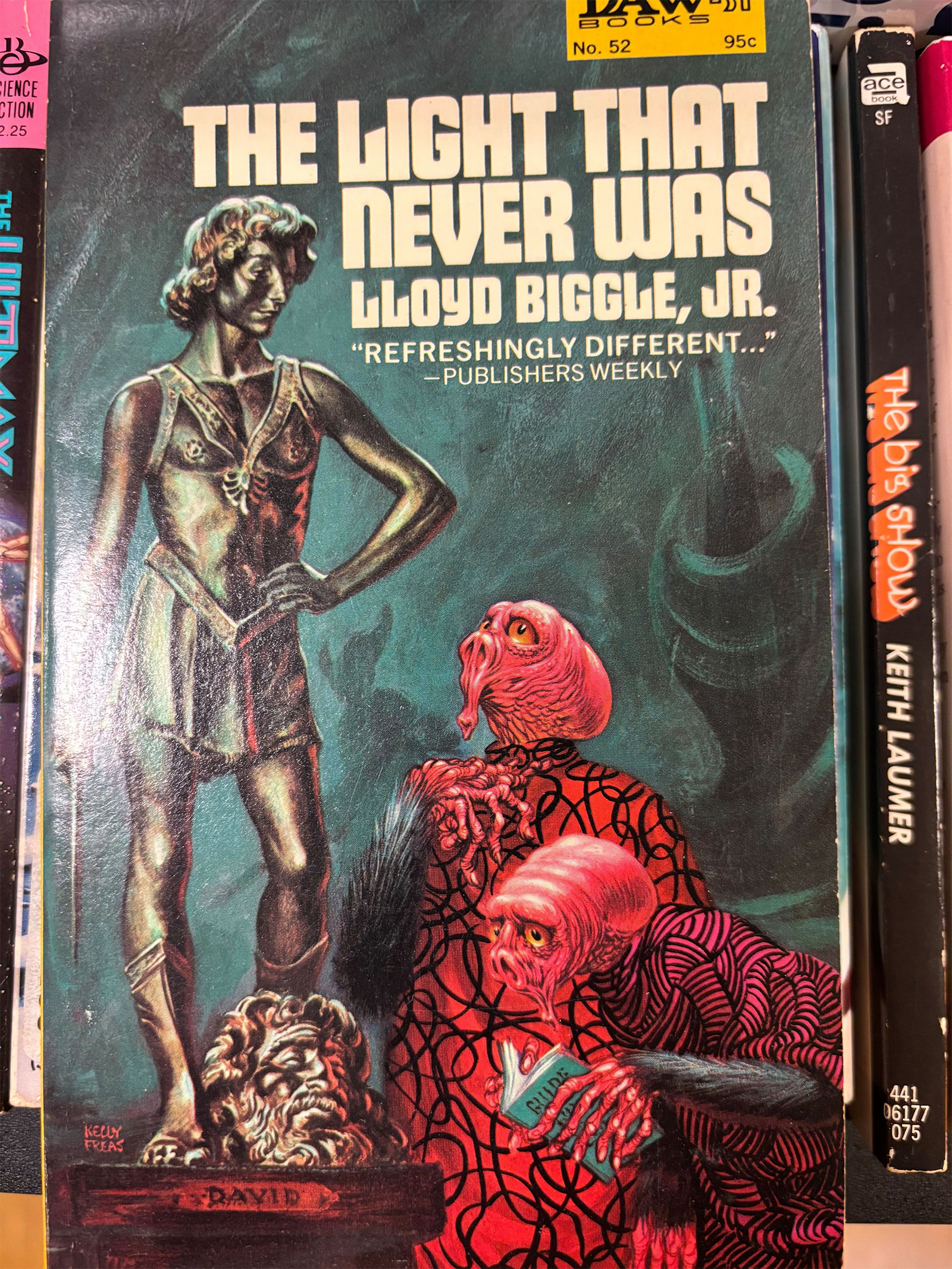
We’ve got some squishy-headed aliens looking at a statue of David (not the Michelangelo one, a cheap knockoff), and they’re dressed in some mumus that rival the peak of Cosby Show-era sweaters. I looked up a review of the book, which wasn’t too flattering:
“The Light That Never Was is structurally a disjointed mess of a novel with no real characters (they are interchangeable names), no tension, and a complete refusal to develop the animaloid Mesz species into anything else than pseudo-human looking gentle folk.”
Yikes. Thankfully, none of the reviews on my book have accused me of a refusal to develop any animaloid species.
Anyway, while I had that whipping sh*tties in my head, I happened to encounter this 1974 Mercury brochure, complete with a painting of one of those Mercury-favored cougars on the hood of a Mercury Cougar:
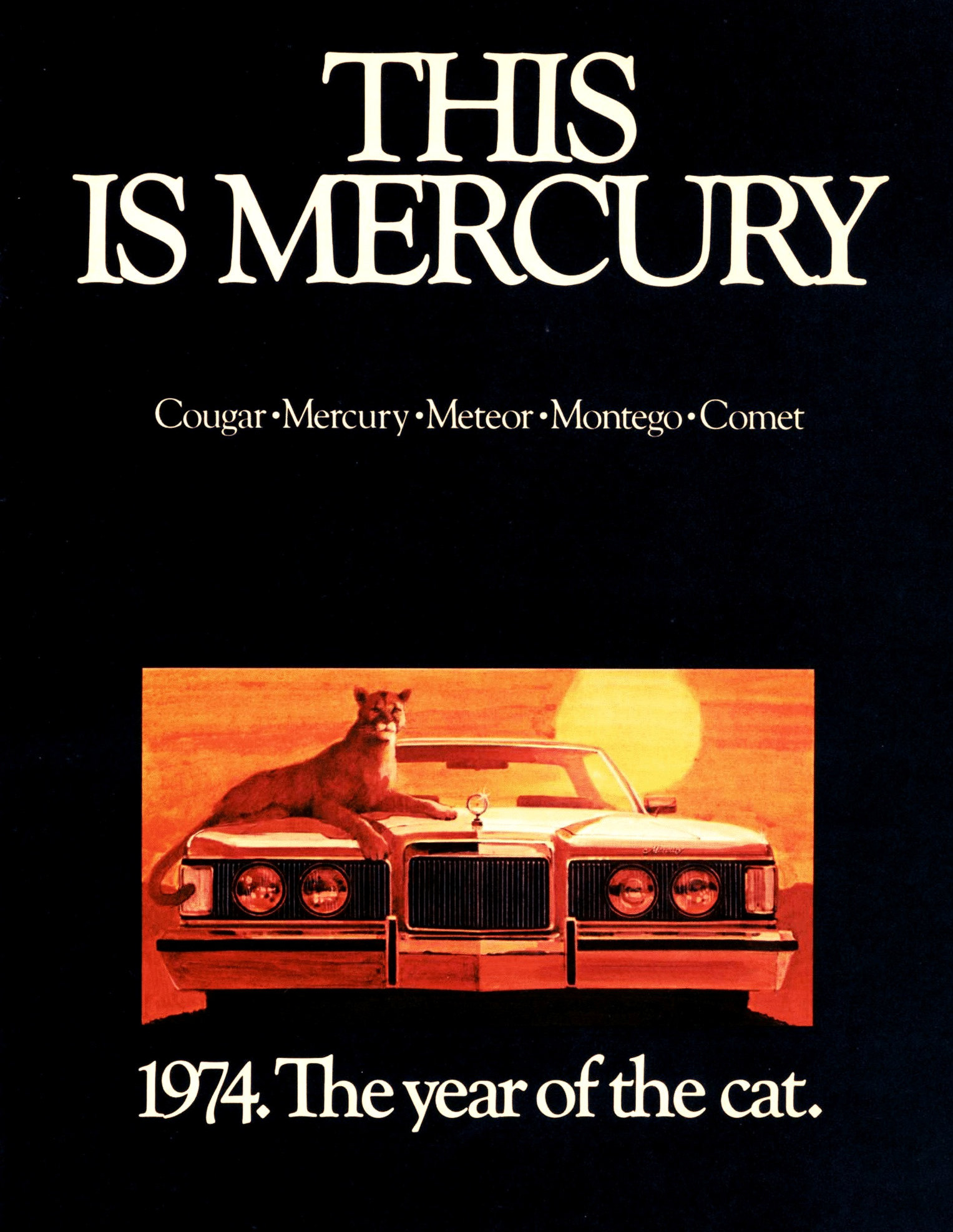
Ah, the year of the cat! Actually, according to my extensive research, 1974 was actually year of the cat, or at least a tiger, which is close enough. But it was the particular art style of the painting – the color palette, the brushwork, that moody Tatooine sky – that put me in the mind of old pulp sci-fi book covers.
So, with that in mind, I re-imagined this Mercury brochure painting as some possible ’70s pulp sci-fi book covers, and now I’m demanding you to look at them:
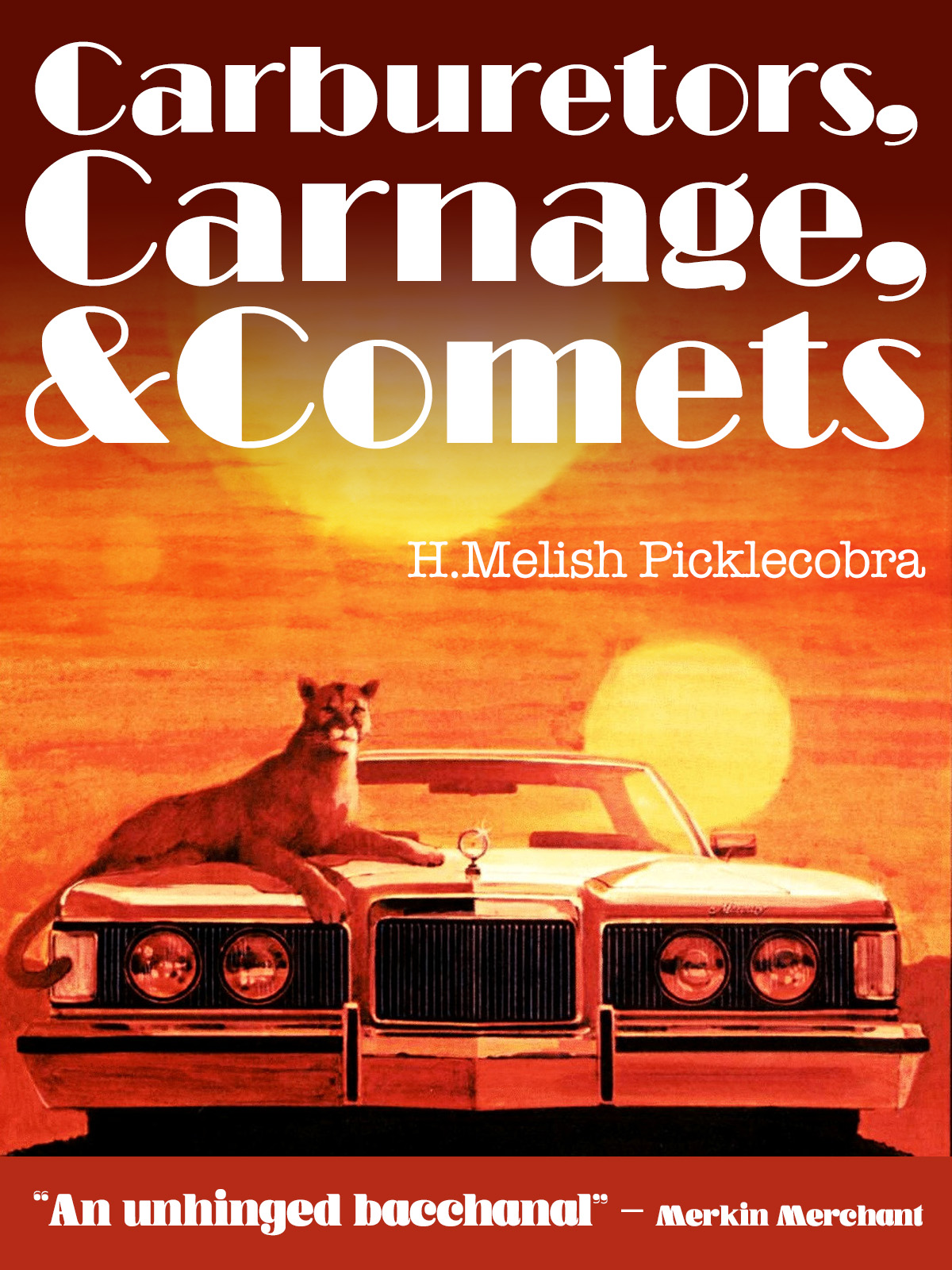
Picklecobra’s 1975 space opera did actually feature Mercurys in it by name, as they were the vehicle of choice the Felinianors of Slankton 5 used to convert into their spacecraft with which they patrolled the galaxy, seeking out stagnant civilizations and then invading them, whereupon they would sit on surfaces and knock things over until the population surrendered.
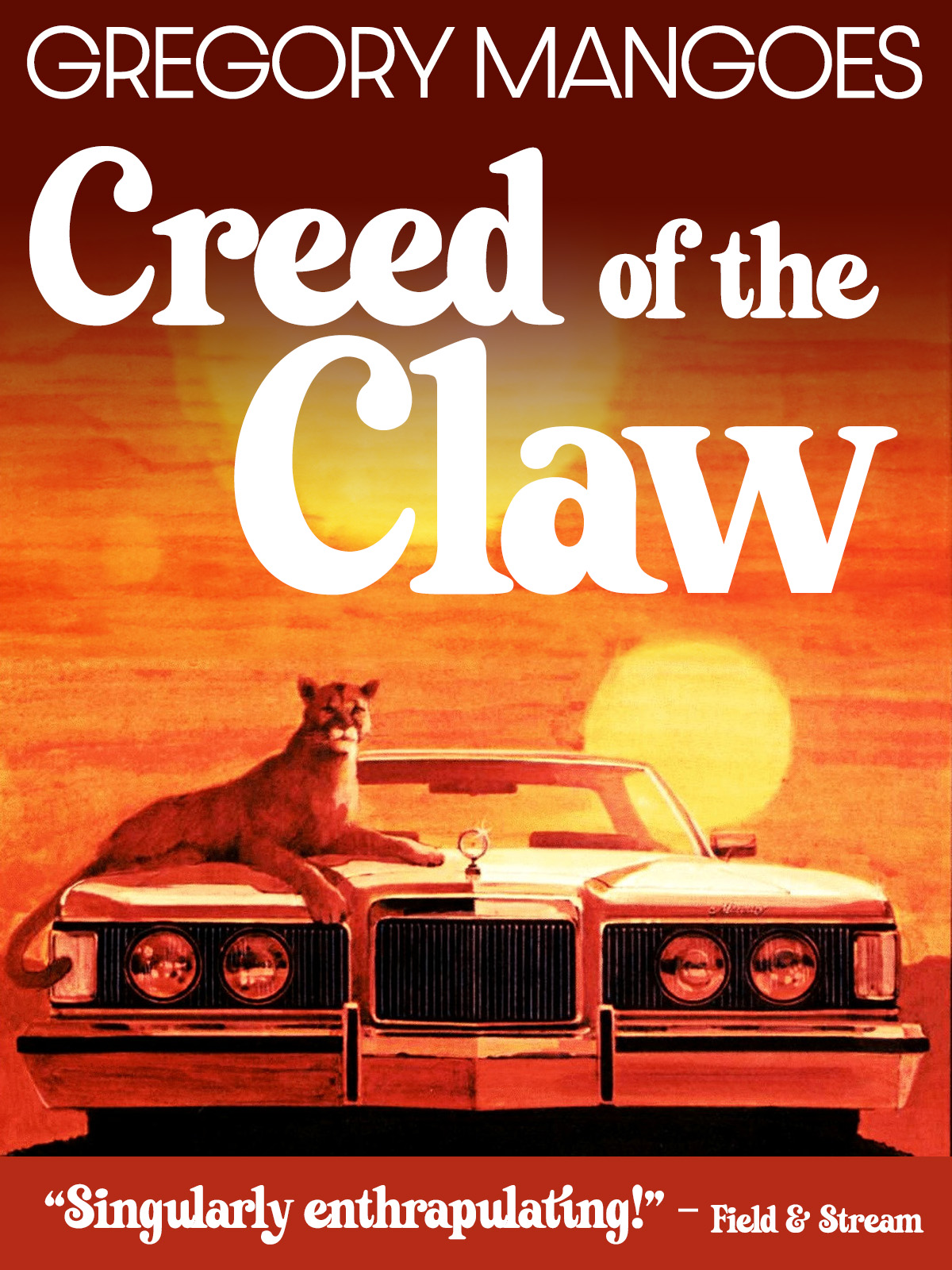
Creed of the Claw was quite an influential book in Reform Wicca communities in the San Fernando valley, and came close – but not quite – to becoming the basis of a small but potentially enthusiastic cult. That’s probably why Field & Stream found it so enthrapulating.
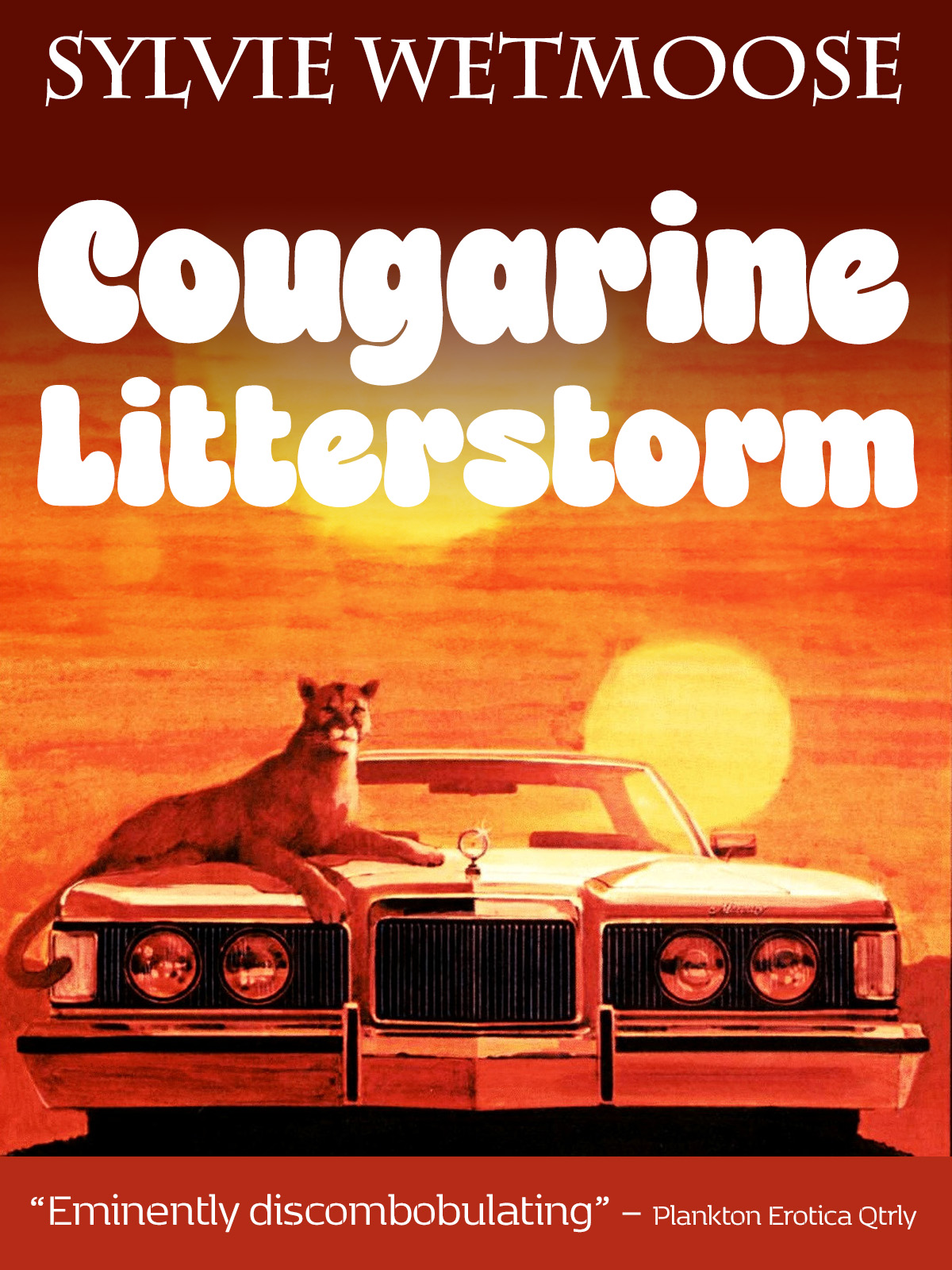
Wetmoose’s strength has always been about worldbuilding, and this exploration of life on the Cougarine homeworld and the Great Catlitter deserts, with their intense litterstorms, is a surprisingly nuanced literary experience.
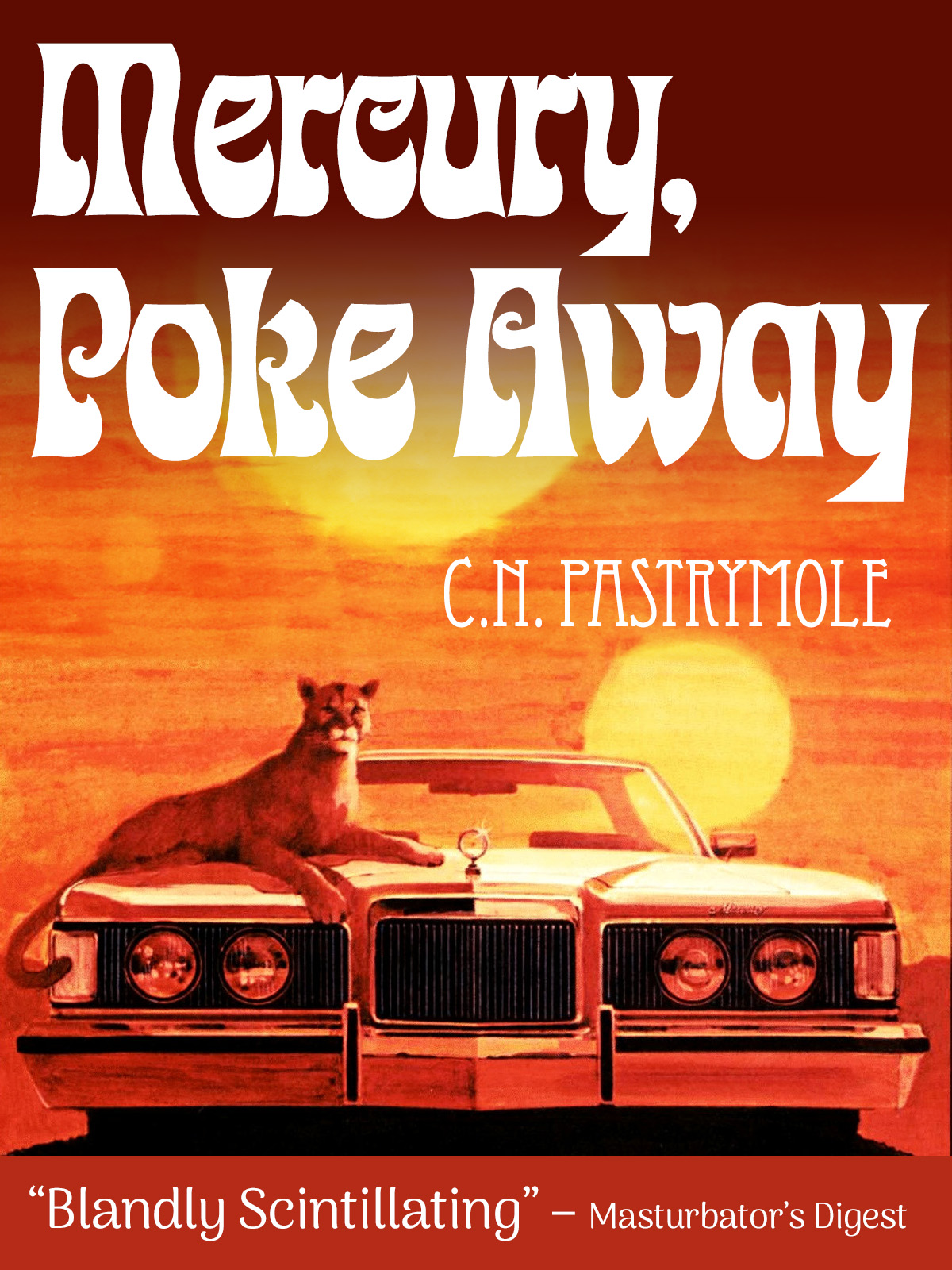
This one is an interesting and somewhat experimental exploration about a society of beings whose only mode of communication is annoying one another. Some read it as a warning to contemporary society, others just took it as an elaborate, irritating thought-experiment.
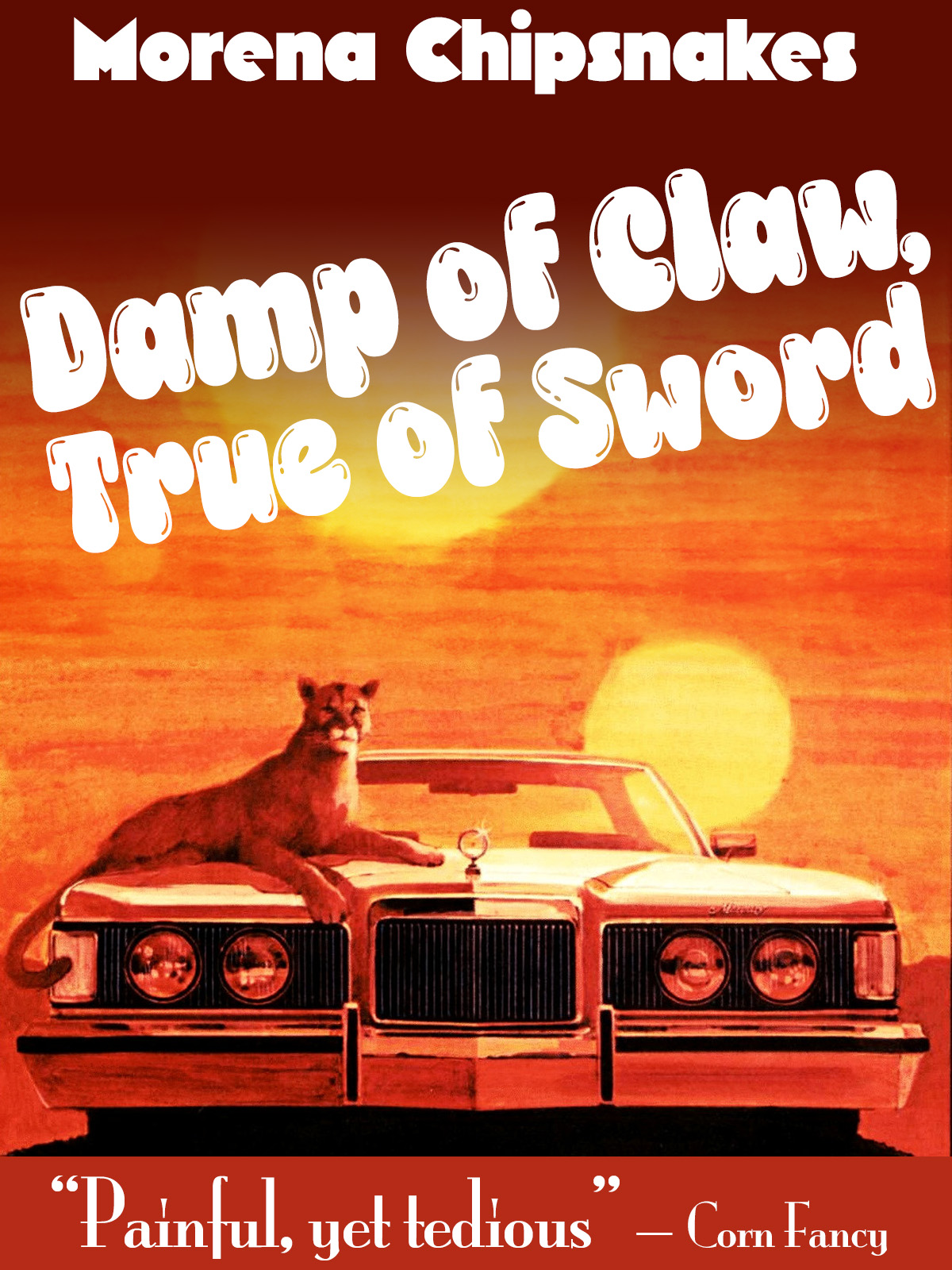
Even among this group, there’s some genuine crap: Damp of Claw, True of Sword was a nearly pornographic, unhinged romp through a world that attempted to merge fantasy with far too many scenes of feline-human hybrids masturbating.
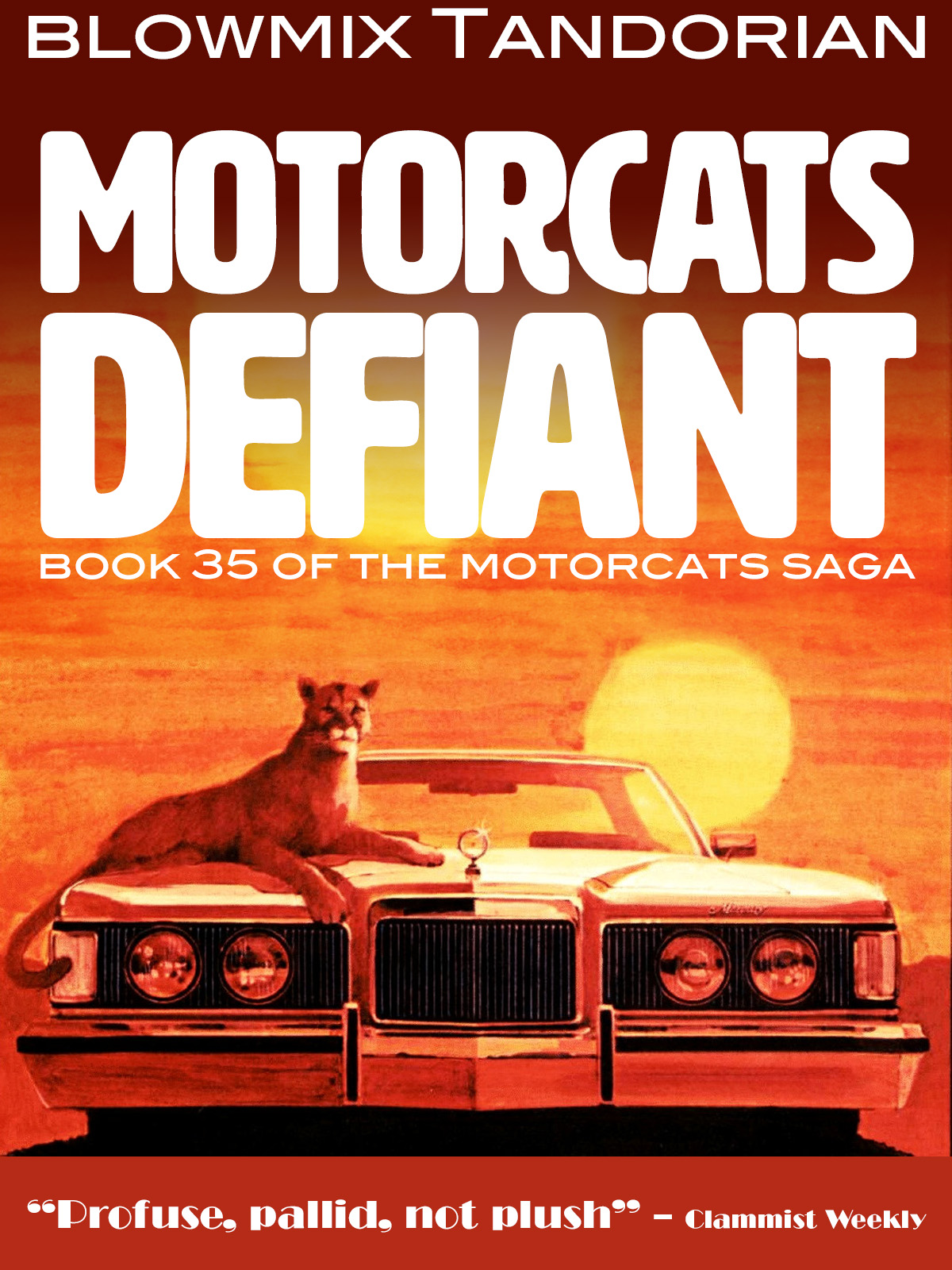
Who isn’t familiar with the Motorcats series? This was book 35 way back in 1974 and today most estimates put the number of books in the series at well over 212 books. Sure, many passages are copied wholesale from Chilton’s repair guides and random newspaper articles, but somehow it all works.
The 1983 Motorcats movie Motorcat, Motorcat, Purr Your Engine was based largely on this book, along with parts of Motorcats 32, 27, and 38.
If you see any of these at your local used bookstore, you should absolutely pick them up! They’re worth it, sort of!


Now see, That’s a car. Side note, the fonts used for Creed of the Claw and Mercury, Poke Away are peak 1970’s sci-fi fonts. All we need now is a font akin to the Lucifer’s Hammer book by the amazing Larry Niven.
A subsitute teacher in my 10th grade English class spied a book I was reading: Alas, Babylon. He recommended Lucifier’s Hammer if I wanted to read something similar next. Boy, that book got me addicted to Larry Niven’s novels, namely Ringworld series and Footfall.
That Mercury ad could easily have been done by a science fiction artist.
I found a satirical car ad credited to Kelly Freas.
flashbak.com/wp-content/uploads/2017/05/Cadillac-Mad-magazine.jpg
So, as a career fantasy/scifi author
AND
a lifetime gearhead
AND
a scifi cover artist
AND
an urban fantasy writer
AND
accomplished creature designer
AND
child of the late ’60s
AND
a pulp editor
this article made me realize I CAN be summed up and skewered quite tidily.
Just another one of those civilisations the Tri-Solarians don’t talk about, the one that made craptastic vehicles that looked like bricks and put GLORIOUS CATS on them.
Once Jason mentioned a pulp fiction connection, I started seeing the Mercury not as a vehicle, but as a dwelling. A shelter from the giant cougars, one of which, with no fucks to give, rests on a settlement home, waiting to eat the tender morsels as they exit.
I can’t help but think that Ford killed Mercury too soon.
The cougar could have been a perfect match for the cat internet craze!
TIL they had AI slop back in 1974. 😉
The year of the cat indeed. I could never get past book 3 of the Motorcat series. As Al Stewart said, “If it doesn’t come naturally, leave it.”
Torch, don’t ever stop writing this wonderfully weird shit.. it’s your superpower.
Agreed! Great hearty laughs were had!
TBH I never paid any mind to Cougars until they snagged Farrah to sell them…
I’ve got more than a few old Heinlein, Asimov, and Bradbury paperbacks that have cover art very comparable to this. It was a thing for a while.
If Kelly Freas was still around, he would have loved getting involved in this art project!
Kelly was a good pal. He’d have loved it, you’re right.
Oh yes…
Cat related science fiction is a genre.
See Cordwainer Smith and his cats piloting space ships, while in telepathic contact with humans.
en.wikipedia.org/wiki/The_Game_of_Rat_and_Dragon
Notable also is Gary Seven and his feline familiar in the Star Trek episode Assignment: Earth, with Teri Garr.
Intended as a spinoff series, there are continuation stories of Gary Seven.
The Mercury Cougar wasn’t just an ad campaign. They had multiple cougars they used for public appearances and shows.
Cougars not being one of the big cats that easily adopts human activity, rather tends to be solitary and cranky, this must have been problematic sometimes, as Mercury had their own sanctuary for public relations cougars in California. This was primarily open space without humans separated.
Friend’s mother used to cat sit there, along with him as a small bite size kid. Of course, she also raised him around the Hell’s Angels.
He had no incidents with the cats though.
This wasn’t that unconventional at the time. I know a woman that raised her children with a leopard in the house locally. Only problem they had with the kids was that he cat tended to hog the bed. Her leopard identified with the family and their German shepherd, and became convinced it was also a dog. It trained their dog to stalk like a cat.
I’ve been in the pen with a full grown pet cougar myself, in more recent times.
Big cat ownership doesn’t always work out too well. Ask Tippi Hedren’s daughter Melanie Griffith about that.
Yes, that movie production violated every rule for interacting with even housecats, but especially wild species.
I can’t begin to grasp how they ended up going so off the rails.
Sorry, but you HAVE TO mention Starter Villain by John Scalzi in 2023.
That looks interesting!
Dedication is to cats, so that’s promising.
I once met the girl in the science fiction world that has published research into cat’s intelligence measured against humans.
She has particularly worked with polydactyls and attempted to see how agile they can get with those paws.
I have an adopted feral that learned how to turn the lights on and off.
He will look right at me and turn them off!
blink
I’m disappointed that the Cat Head profile in the Cougar hood ornament was not detailed on this illustration. That cat head profile at the end of a long, long hood was part of the fun of driving a Cougar back in the day!
The real “Year of the Cat” didn’t happen till 1976 – but this would have been a much better album cover for Al Stewart than what he used:
https://www.youtube.com/watch?v=2i46s52JAUE
“Hello! I’m Ron Burgundy and THIS is Mercury!”
*raaawwrr*
“60% of the time, it works every time.”
Don’t forget the hiding in empty boxes!