

“We attempt what others achieve.”
Unkind critics would say that this was General Motors’ mantra in the malaise era. I think that’s a bit of an overstatement, but it’s true that in those dark days the world’s largest car manufacturer seemingly went from being a technological tour de force in the sixties to an also-ran struggling to keep pace with imports invading our shores.


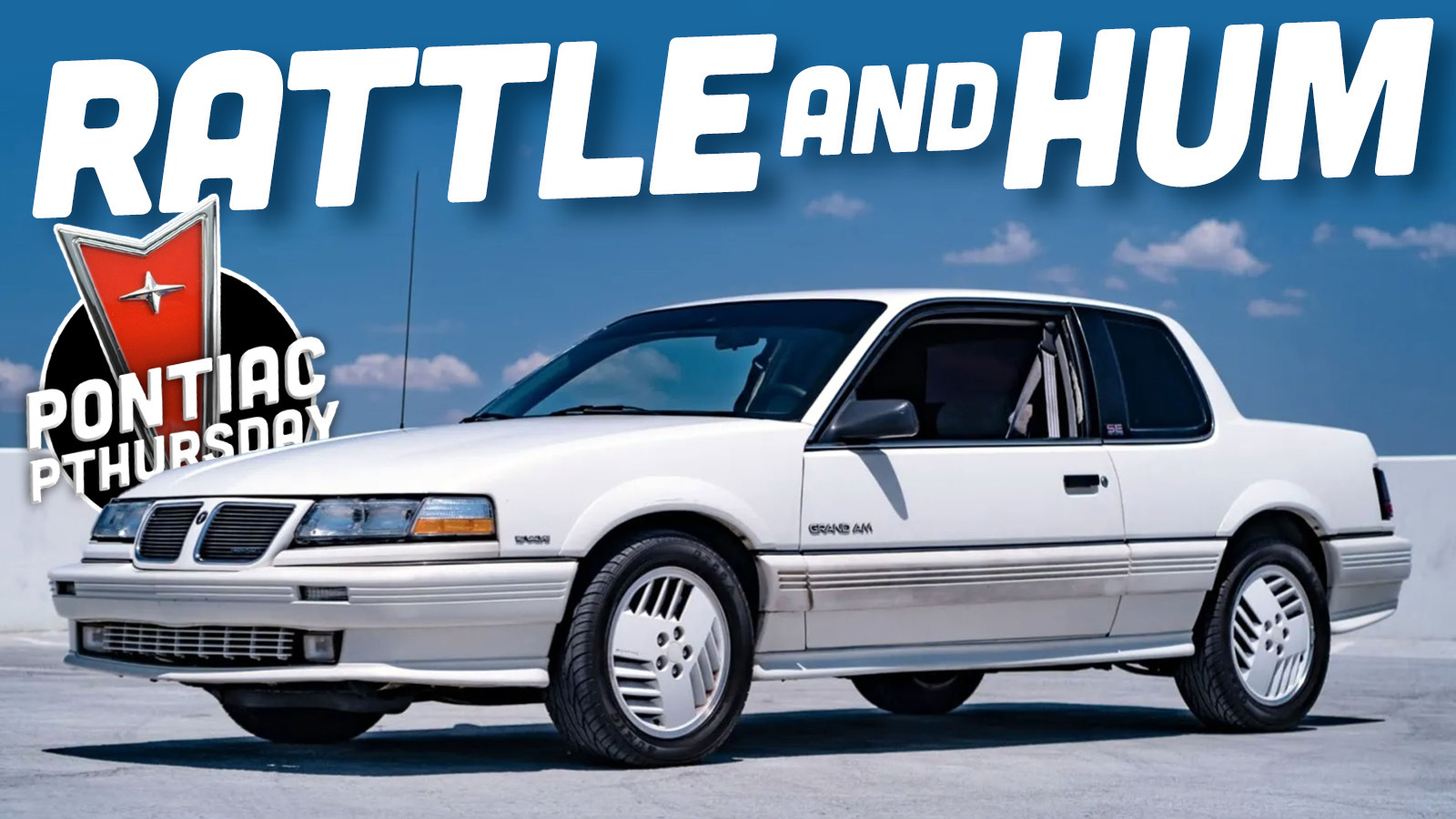
GM certainly made some valiant efforts to rise above the ennui of the era, and since it’s Pontiac Pthursday, you know we’ll be looking at one such effort from The Excitement Division. In the late eighties, Pontiac took their popular front-drive compact/mid-sized sedan entry and put a motor under the hood with a power-to-displacement ratio to rival the best of the European and Japanese competitors. You want quick? The five-speed-equipped Grand Am SE was indeed that. You want balance-glasses-on-the-hood refinement and a mechanical symphony soundtrack? Well, uh, did I say it was quick?
The Phoenix That Fell Into The Ashes
We forget how drastically things changed at General Motors at the end of the seventies. They took their meat-and-potatoes X-cars like the venerable Chevy Nova with a chassis that essentially dated back to the early sixties “Chevy II” and finally discontinued it. The new-for-1980 replacement was a product that had more in common with a Saab 900 or Lancia Beta (an example of which GM apparently studied) than anything else in their lineup. Give credit where credit is due: it took a lot of guts for GM to drop a front-wheel-drive transverse engine three- or five-door hatchback onto an unsuspecting buying public. This could easily have been a recipe for a massive flop.
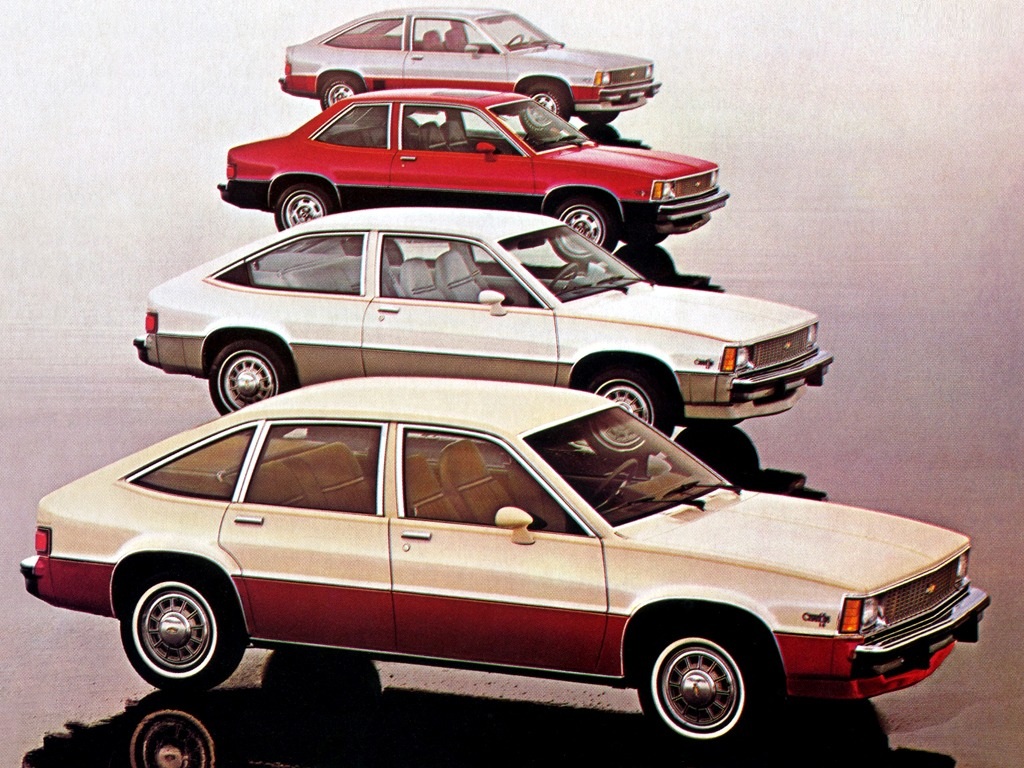
The new X-bodies were not a flop. In fact, General Motors struggled to keep up with demand, selling over a million examples in the extended 1980 model year. This was a problem for several reasons. First, the pace at which production was going didn’t really allow for the best quality products to be put into buyers’ hands. Second, the car these stressed-out laborers were building was not really ready for customers at launch time. The X-bodies were subject to a number of recalls, the worst of which revolved around the car literally revolving around when the rear brakes prematurely locked up. Fixes to the proportioning valve didn’t fully solve the issue, which some reports said that GM knew about all along.

While Chevy’s Citation version of the new X-Body sold over 800,000 examples in the first year, Pontiac sold only 266,000 of the Phoenix. Still, that isn’t a bad number, and another 263,000 units moved in the much-shorter 1981 model year (the X-car was launched in mid-1979).
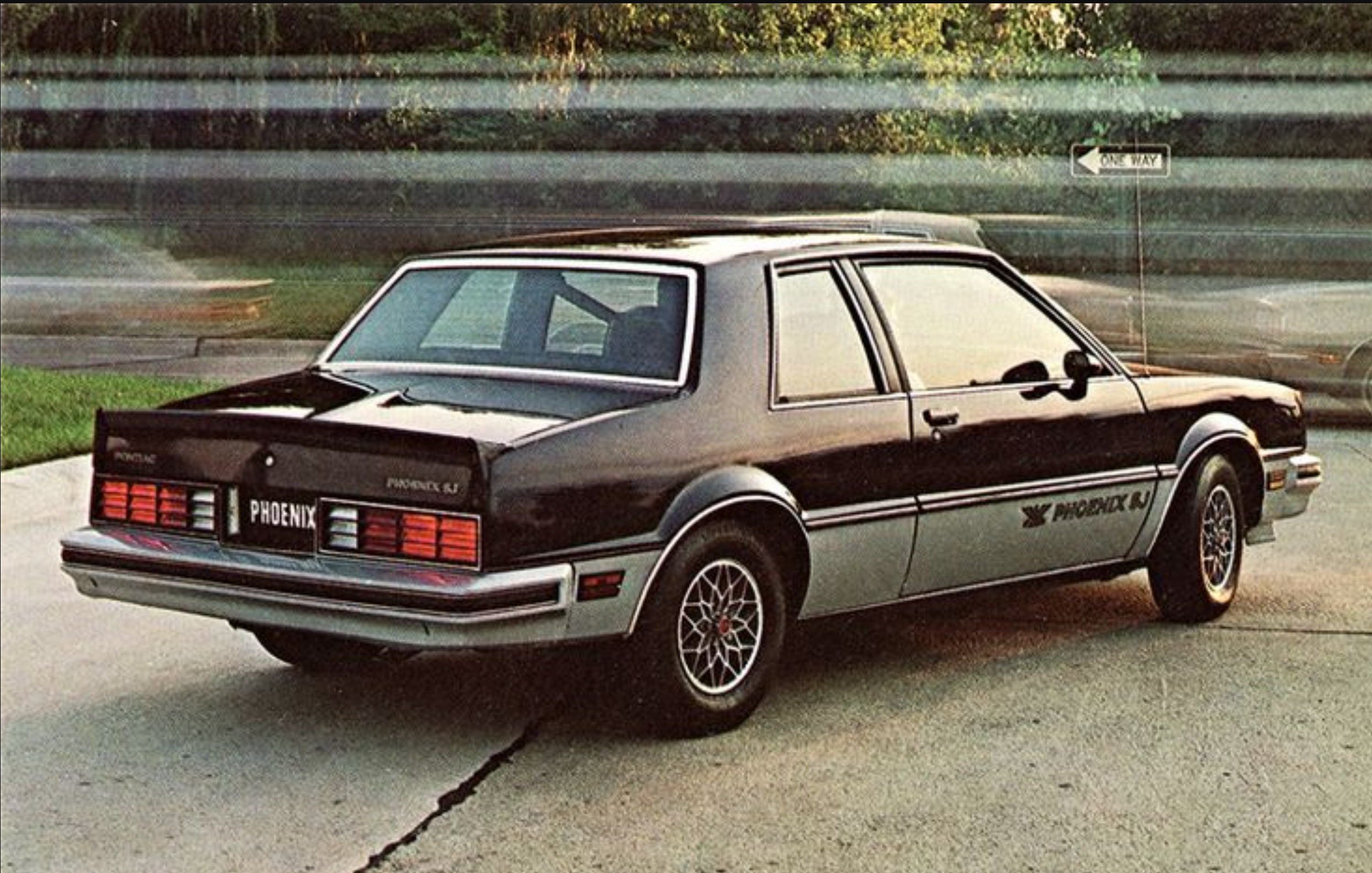
However, the reputation of this new front driver caught up with it fast, and the Pontiac version suffered for it. Worse than that, GM did not make any significant changes over the following years and seemed to just let the mid-sized Pontiac die on the vine, as if knowing it was a lost cause. By the time the last Phoenix was sold in 1984, sales had dropped to a mere 23,000 cars a year. Clearly, it was time for a change.
Pontiac Motor Werks
Let’s give the Phoenix and the X-cars in general their due; these were products that revolutionized what a “normal” American car was. There was no turning back from the template that they set for front-drive, small-engined compact machines, and General Motors’ replacement for these groundbreakers would be extremely similar to the cursed X-bodies.
In fact, many of the mechanical components were simply refined design concepts introduced on the X-cars and their later, improved J- and A-body siblings. Dubbed the N-body, this new-for-1985 platform included the Buick Somerset, Olds Calais, and Pontiac Grand Am.

Assuming Pontiac was trying to distance itself from the stank of the Phoenix, might it be bad luck to name an all-new car after one that Pontiac had already produced in two previous generations (1973-1975 and 1978-1980 Grand Ams), which both failed in the marketplace? Maybe, but after these two earlier attempts to sell a “fake Euro” car, Pontiac had figured by 1985 that the public was finally ready for such a product.
Indeed, they were. Launched initially as just a two-door coupe, the first FWD Grand Am had a sort of Americanized BMW E30 look to it that buyers ate up. Sales for 1985 more than tripled from the Phoenix’s pathetic numbers from the year before, at over 80,000 units.

Inside, all remnants of mini-Catalina interior design were gone, replaced but a dashboard of many weird switches in rather cheap-looking grey plastic that would come to define Pontiac in the later eighties. The optional “rally” gauge package had a digital tachometer with a strange hockey-stick-shaped window that allowed you to see the revs rise as illuminated segments climbing a hill. The standard gauge package put the end of the speedometer needle in that little window.

Powertrains were nothing special, including the venerable Iron Duke 2.5-liter four carried over from the Phoenix and an optional Buick 3.0-liter V6. The four came standard with an actual 5-speed manual transmission, but unlike the Phoenix, you had to get a three-speed slushbox if you popped for the six. Also, it might not have been an X-car, but if you liked how your Citation or Phoenix headed for the weeds or into oncoming traffic, depending on how you mashed or let up on the gas, you were in luck. The Grand Am kept the torque steer alive! Yes, even with the 90 horsepower from the Duke or the mere 120 from the V6, the Grand Am wrenched the wheel in concert with the gas pedal.
Obviously, the new Grand Am was not going to wow any real BMW fans or even enthusiasts in general with such powertrains, but Pontiac quickly stepped up their game. For its second year, the Grand Am added a four-door model to the lineup. Unfortunately, this was also the beginning of Pontiac’s “monochromatic” faux AMG-style treatment of the snazziest versions of their cars, complete with rather overwrought rocker panel treatments. Today, it’s sort of cheesy/charming to see, but at the time, many of us baulked at the love-it-or-hate-it “Ride Pontiac Ride” aesthetic.

Thankfully, GM at least started to add some power to match the extroverted looks. For 1987, instead of pumping up the V6’s output, Pontiac stole the powerful 165-horsepower turbocharged LT3 two-liter four from the Sunbird as the performance engine. Being a bigger car than the Sunbird, it couldn’t match that little hot rod’s acceleration, but it still offered reasonable grunt. With the stick, this was good for a 15.7 second quarter mile if you could hold the wheel strongly enough in a straight line when the turbo boost abruptly kicked in and really got that textbook torque steer rocking.
Still, they weren’t done with making the Grand Am faster. However, it’s more accurate to say that Pontiac’s sibling over in Lansing wasn’t done yet.
Double The Valves, Double The Cams, Double The Noise
By the mid-eighties, GM was all-in with the front drive layout of foreign cars, but they had yet to make the plunge into higher-tech powerplants. That would change for the 1988 model year when they launched the “Quad 4” engine, the last powerplant ever to be developed by the Oldsmobile division. Finally, General Motors had a motor that could match the specifications of import-style mills. Well, sort of import-style. The 2.3-liter four was equipped with four valves per cylinder actuated by dual overhead cams, but GM drove the shafts with a timing chain instead of the nearly-ubiquitous belt on most European and Japanese competitors. Maybe they were still spooked by the Vega disaster, since the Quad 4 had an aluminum cylinder head but a cast iron block.
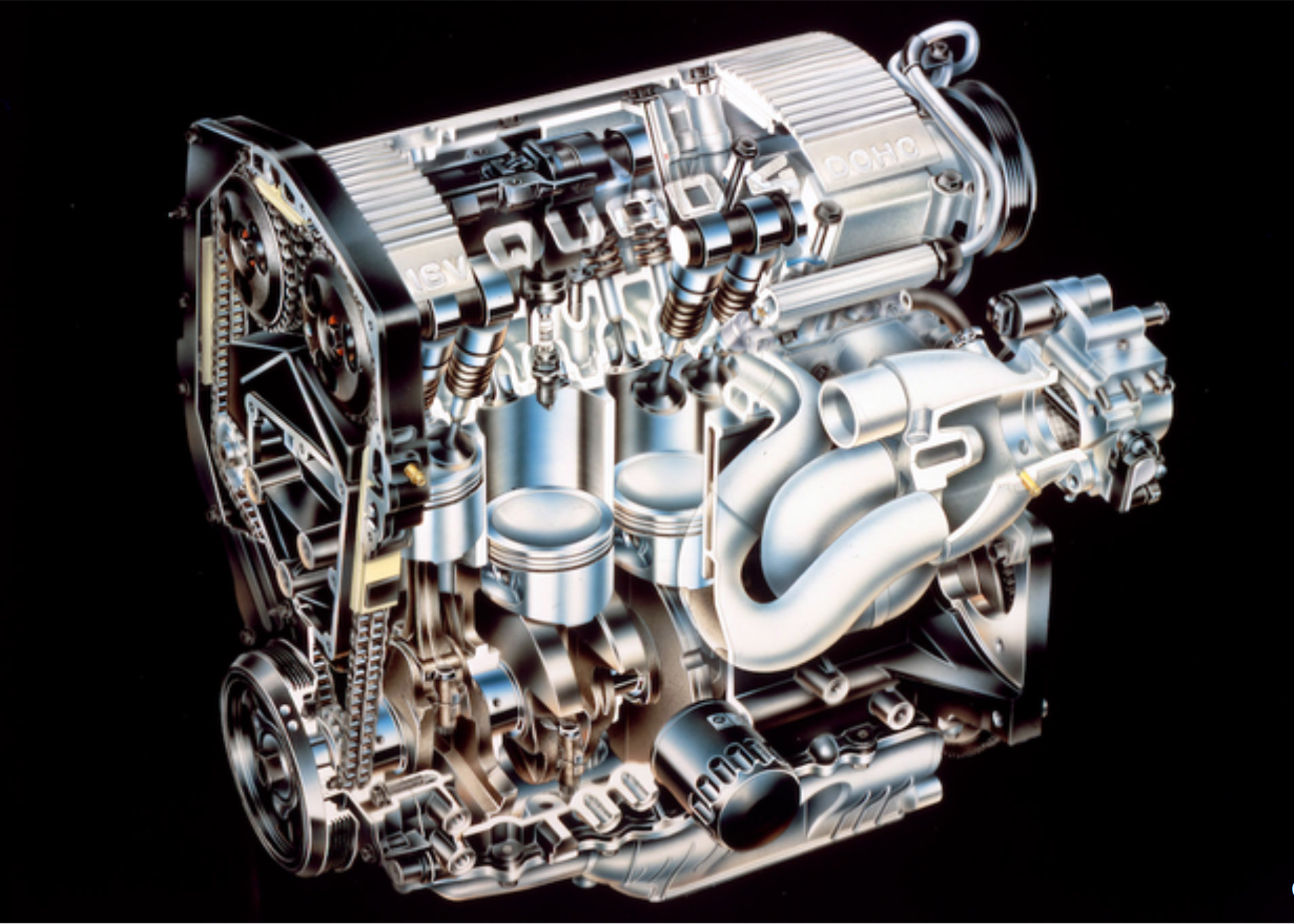
The new Quad 4 was installed in Oldsmobile’s Calais coupe, but truth be told, the sporting Grand Am was the N-body GM car that was ideal for this new high-revving powerplant. Replacing the V6 as the upgrade option for the Grand Am in 1988, the first Quad 4 pushed out 150 horsepower; not spectacular for a modern engine, but right up there with the most-power-per-liter contenders of the time. How about the quality of the power delivery? I was afraid you’d ask that.

Testers reported idling and revving left a lot to be desired, with sufficient vibration to rattle the steering wheel. But at least it sounded good? No, it did not. Reviewers were quick to report that an engine of similar specification and displacement built overseas would likely be much more refined, and the lack of balance shafts was something that I’m sure the bean counters mistakenly thought they could get away with. That timing chain wasn’t doing it any favors in terms of racket, either.

A dual-cam Italian engine is typically operatic at full song, while a similar spec Honda engine rises to a smooth, turbine-style crescendo. Tach up a Quad 4, and it sounds like some kind of mechanical violence is imminent. There are reports that violent things did happen in some cases, with the dreaded head bolt issue that plagued Oldsmobile’s much-maligned diesel and caused head gasket issues.

General Motors was not unaware of these problems, nor the fact that other manufacturers could get even more power out of four cylinders of the Quad 4’s size. Cue the “H.O.” edition of the Quad 4, which pushed out a whopping 180 horsepower. The engine offered more than just a power boost though, though, as David explained some years ago:
… when Oldsmobile introduced the High Output Quad 4 in September of 1988, it put much focus on refinement, saying all Quad 4s have received or will receive “a number of minor refinements aimed at improving customer satisfaction.” Those mentioned include a new gear tooth profile for the oil pump for “quieter cold-start operation,” new engine mounts to transmission of “engine-generated noise and vibration into the body structure,” a cam chain sproket redesign to reduce whine, and more ribs on the transaxle of manual models to “further reduce final-drive whine.” That’s a lot of noise-reduction stuff to mention in a press release, so it’s clear GM knew the engine had issues.
After a quick initial run of 200 Grand Ams with the High Output motor in 1989, Pontiac made it standard in the SE for 1990 and only available with the beefed-up five-speed manual gearbox. With a zero-to-sixty time in the low seven-second range, the SE H.O. at least removed the turbo lag element from the turbo-lag-and-torque-steer equation. Oh, and they quieted it down a bit, too, but that wouldn’t really be fully addressed until GM relented and added balance shafts in 1995.

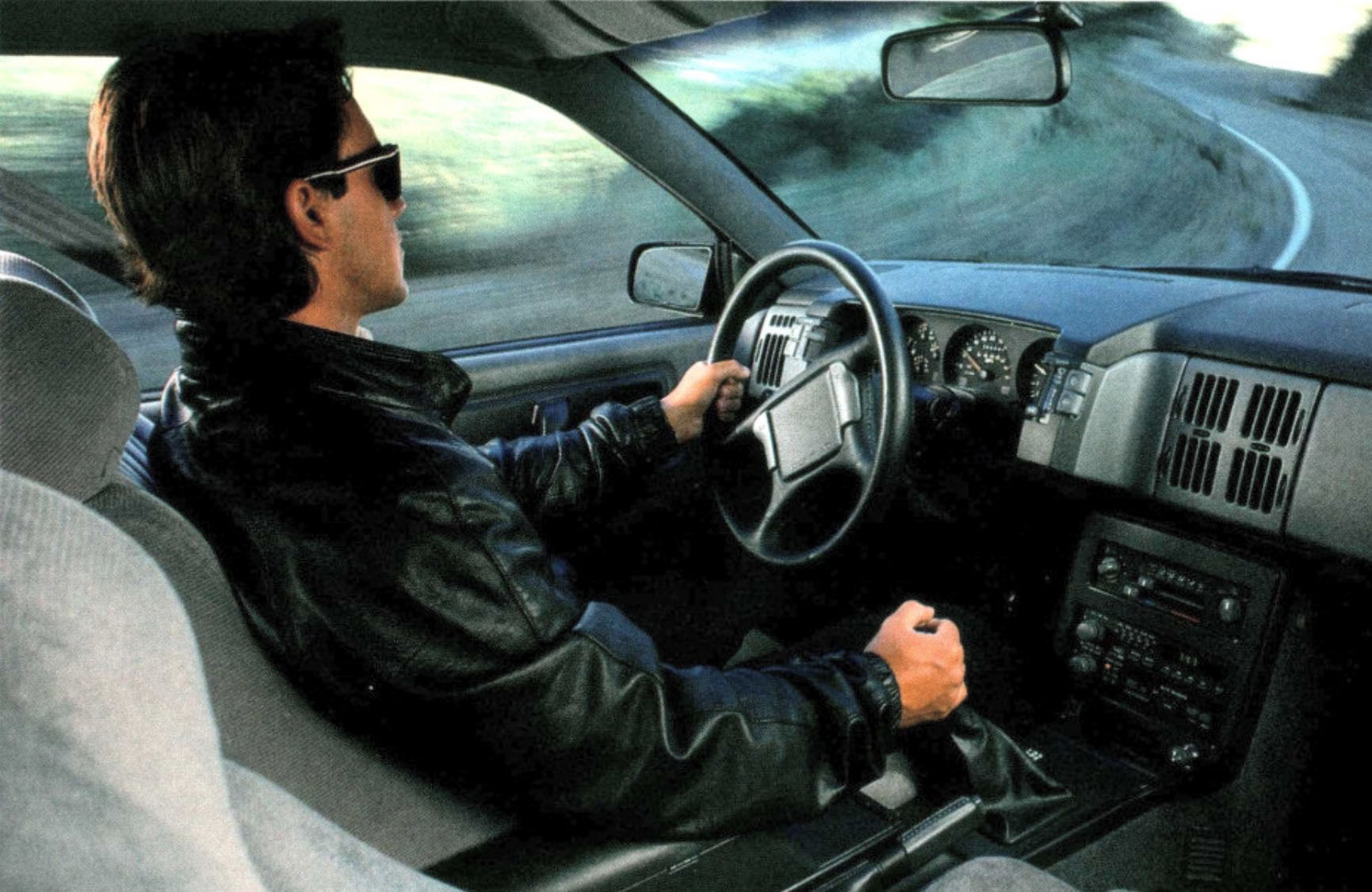
Inside, Mr. Leather Jacket Dude no longer had to decipher that stupid hockey stick tach and got a proper set of round gauges. No boost gauge needed either; GM apparently considered a turbo Quad 4 at one point with 250 plus horsepower but thought better of the idea.
The SE came with anti-lock brakes standard for 1991, the last year for this body style before the much more rounded 1992 debuted. It was arguably a better-looking car, but it did add a few hundred pounds of weight that the boxy 85-91 cars didn’t have.
It might have been spawned by a disastrous predecessor, but throughout the late eighties, the third-generation Grand Am consistently sold around a quarter million examples a year; unquestionably a smash hit. As a manual-only proposition, the Quad 4 SEs were never a large chunk of that production number, and they’re hard to find since most owners got on them to ride, Pontiac ride into the ground. The question is: if it really is something that we would want in the first place, and the answer is why not?
Get A Hypercolor Shirt And Wraparound Shades
For all of the criticism we heaped on the Grand Am and the poor Quad 4, it might be an amusing thing to daily drive or have as a “classic” car. Lord, it pains me to see cars from my youth as nearly-forty-year-old things that can wear “antique” car plates. Occasionally, examples like this one pop up. It’s in perfect-for-the-era Cocaine White with three spoke “Cuisinart” rims that have me immediately rapping things like “turn off the lights, and I GLOW.”

It’s actually a rather tidy-looking car, and I’d forgotten how it wasn’t until a few years later that the Grand Am and Pontiacs in general went all-out with the crazy ground effect stuff.

This one unfortunately is an automatic, which means the powerplant is the 160-horsepower Quad-4 and not the more desirable 180-horsepower H.O. that’s only available mated to the most desirable stick.

Whatever you say about the quality of GM interior plastics, this one has held up quite well.

The final sell price? Would you believe $3700? That price includes the UNION 76 ball on the antenna! You couldn’t fly a family of four to a Florida vacation for that money. Even just as pure transportation, that’s a deal; to get vintage excitement for that figure is quite surprising. In some ways, for us GenXers it’s like what a Tri-Five Chevy or early GTO is to a boomer. Yes, the eighties styling cliches are a bit laughable now, but just looking at it takes you back to what was likely a simpler time and puts a smile on your face. Don’t like the noise? Do what owners of these Grand Ams likely did back in 1990 and simply pump up the jam.
Honda-like precision is not on the table, but you can still have big fun for small money with the Quad 4 Grand Am. Word to your mother.
Pontiac Points: 76 / 100
Verdict: Rather unrefined, a bit tacky, and rather quick. It’s like a sixties GTO for the late eighties. Come on, feel the noize!
Top graphic image: Bring a Trailer


Had a 87 Sommerset with the Iron Duke and the seats and interior were really comfortable. The back seats were usable as well. It is amazing how many of these were sold and they have just disappeared from the roads. That and the 90’s Escorts are the two cars I really miss.
Just checked CarGurus and nationwide Pontiacs from 85-97 there are 104 Firebirds and 6 Grand Prix. That’s it.
Gotta give a shoutout to the Youtube channel which featured the Grand Am in the lede image (and later sold it on BaT)
https://www.helloroad.tv/
https://youtu.be/HH_Q7j-LCu0?si=q_fV2ATH7aCI3PxV
It wasn’t that bad. I had a Calais sedan with a Quad 4 and a five-speed (total unicorn these days, I’m sure) and it wasn’t any rougher than any other domestic four-cylinder at the time. But it sure was more powerful.
I had a Calais with the Quad 4 and an automatic. It was a good motor and, I agree, it was far better than any American 4 cylinders of the time.
I had an ’89 coupe, blue, and it had raised white letter tires which gave it an extra 5HP. I also had a red ’93 GT with the 5 speed and H.O. quad 4. I had put white racing stripes on it and it looked quite handsome for the time. I still think about that car and wonder what happened to it. I’m sure it’s junked by now but at the time it was pretty rare and kinda fast.
NVH – isn’t that what pre-05’s cars were all about?
It wasn’t really until the wake of VW’s Mk5 that everyone really stepped up their game.
A buddy of mine told me he was looking at a mid-90s Grand Am as a used purchase back in 2003, and I advised him to consider walking away if it had the Quad 4 due to the head gasket issues plaguing them. He bought it and proudly brought it over to show me, and we popped to hood to find… a Quad 4 sitting there. I told him “Well, I hope that it treats you well!” Within two weeks he called me at work and said “Hey, so, what’s wrong with the car if it starts blowing white smoke and has no power?” I told him, “Call for a ride home and a tow, because your head gasket isn’t doing its job anymore.”
He had bought it from a local Toyota dealer without a warranty, and apparently his mom raised enough of a stink with him that they convinced the dealer to buy the car back. He got pretty lucky that day!
I had a ’93 GA GT with the HO/5speed, blast to drive, but that motor was LOUD and COURSE, and ate 1.5 head gaskets before I got rid of it, I miss that car, was so good looking!
Did you live in the Detroit area at the time you owned it? Was it red? Just curious as I had the same car.
Syracuse Area, Black with the red stripe on it, sick!
My mom had a 1988 coupe maroon/grey 2.5 bought new.That car lasted about 10 years,2 teenage boys,Pa.winters,with just basic maintenance and it NEVER had an issue.My parents finally sold it and bought a new 1999 Grand Am SE which was a complete turd.That car had fuel injection issues,the alignment never seemed right,and was rusty within a few years.They traded it in on a Toyota when it was 4 years old and haven’t bought a General Motors product since.
Not trying to be a GM small engine apologist, but I feel I have to take exception to this line: “General Motors was not unaware of these problems, nor the fact that other manufacturers could get even more power out of four cylinders of the Quad 4’s size.” Really? Who? Looking at naturally aspirated 4 cylinder North American market cars in 1990, The 2.2 in the Accord put out 130 horsepower, the 2.0 in the Camry was right around the same (128 hp), the Nissan Sentra SE-R had a little hotrod 2.0 with 140 hp. Mazda’s 3 valve 2.2 in the 626 made 110 hp. Mitsubishi’s DOHC 2.0 made 135 hp in the Eclipse and Galant. Where are these contemporary 2.3 liter 4 cylinders with thundering outputs eclipsing the DOHC Quad 4 HO’s 180-190 hp figures?
EDIT: Originally said the Quad 4 was 2.4, but that was only after the balance shafts were added. It was originally a 2.3. Also will note for completeness that the non-HO quad 4’s put out 160 hp. They also made a SOHC version for reasons that escape me that put out 150 hp, but that wasn’t the common version of this engine.
The Dodge Spirit R/T had with 220 hp out of 2.2L. Yes it was boosted, and yes GM could have boosted the Quad4 to beat it (as was mentioned) but they didn’t so Dodge wins.
Boosting is cheating. 😉
So is gasoline. Lets see that Quad4 make that power on E100.
With only 1,399 buyers TOTAL for the R/T I’m not sure Chrysler’s bean counters felt the win on that one.
The mystery is why didn’t they find a better (or more) home for what had become a very good engine/trans combo.
Probably because they took a page out of the book of GM.
Imagine if they had solved the torque steer problem by avoiding it altogether by putting the engine in the middle to drive the rear wheels of a MR2/Fiero of their own..
US market 1990 Integra GS-R made 160 hp from 1.7L
Integra GS-R wasn’t offered in the US until 1992. Of course that could be splitting hairs… 😉
Google Gemini totally let me down!! Said it was available in 1990.
That’s the whole problem with AI – they’re really handy for giving you answers quickly and easily as long as a) it doesn’t really matter if the answer is correct or not, or b) you know the answer already so you can catch it when it is wrong. If b), then you didn’t need to ask in the first place. If a), you could just as easily make it up yourself. Note that in either case, you don’t actually *need* AI. You can make stuff up yourself for free, no giant datacenters or multibillion dollar economic bubbles required. 😉
Japan had vtec b series engines a few years before they reached North America, so that might explain it
Yeah, I was wondering how I could miss the GSR
It’s maybe for the best to not compare the torque curve.
Wish I could post a dyno plot. I have a 1.8L GSR. The torque plot is a completely flat tabletop. It’s within a 10 ft-lb range (+/-5) from 2000 to 7500 rpm. The Honda engineers did too good a job. I’d rather it ripped my arms off at the VTEC switch over at 6000 rpm like my AP1 S2000. I think it needs a cam and intake swap to make it more 2-stroke like. It would be a worse car, but a better Honda.
It actually pulls perfectly from 1500 rpm in any gear. I had a stock supercharged CT5 BW that put 600 ft lbs and 600hp to the wheels. The damn thing luged and bucked if you were in too low a gear. The 1.8L Honda – it’s impossible to lug. The Honda engineers got the fueling and timing absolutely perfect (and it’s still perfect with 150k on the clock). I don’t understand how a 6.2L supercharged engine can lug at 2000 rpm but a 1.8L Honda is fine at 1500. I sold the BW, but am keeping my 90s Hondas forever
The NSX is the only one that really beats the HO quad 4 for specific output at 90hp/liter.
The Suzuki Swift GTi made 100hp from 1.3 liters for 77hp/liter, which was very close to the quad 4 but not better.
The ’89 Integra comes in at 78hp/liter, so pretty much same.
So I would definitely agree that the Quad 4 HO had very impressive specific output for its time.
The version I am most familiar with is the mid 90’s 2.4 twin cam 150hp version. By then, the competition had long surpassed GM.
If you are Gen-X then you either had one or knew someone who had one. This is the law.
And an aunt, grandma, or cousin had a Somerset/Skylark or Olds Calais. Then of course the practically identical “L” platform Beretta/Corsica. For the time, all of them were good looking. The Pontiac had its cladding issues, but it looked great, and if you liked a bit of old-school brougham in a compact & comfy package, the Buick had it.
IIRC GM stuff wasn’t quite as ubiquitous in my area as it probably was east of the Sierras.
Class of ’95. Classmates either had leftover 70s or 80s big 3 or new imports. No one was buying new big 3 cars in the 90s in my area west of the Sierras. 1st gen Taurus was huge here, and Fox body Mustang was aspirational (at least for me) but somehow Ford lost their way with the later Tauruses and GM and Chrysler had nothing worth buying. Can’t say I ever remember seeing one of these Pontiacs (although a classmate had a sunbird).
EG Civic was everywhere. Preludes, Accords, Inegras, Legend, even Vigor was common. Full size 80s RWD domestic wagons were still around. Lots of Volvos (sedan and wagon). VW cabriolet for teenage girls. Front wheel drive GM crap boxes (single sunbird previously noted excepted) were MIA.
Edit: I worked at jiffy lube in high school – so I saw a huge cross section of what people were driving in my area. Tons of FWD imports. I remember changing the oil on at least 1 quad 4, but if I saw more than a half dozen quad 4s in thousands and thousands of oil changes I’d be surprised.
About the same in the mid to late 80s south SFBA, lots of imports, not as many domestics except IROC Camaros and Mustangs.
Yep, these and their cousins were everywhere!
Class of ’94 checking in — can confirm. Had one!
Yup. A friend from high school had a blue 2-door auto Quad 4 Grand Am a year or two after we graduated, around the same time my aunt and uncle had a blue 4 door Iron Duke Grand Am, and my first exposure to this platform was elementary school friend’s mom had a two door Olds version.
That all-gray one in the photos above is making me feel things… It’s hot!
Yeah I was not prepared for that this morning.
Ditto…I actually caught myself saying, “That looks -effin’ nice!”
Agree! I like the maroon one as well.
All the N bodies were quite good looking at the time.
If you were into vertical backlights.
Why that was ever a thing I will never understand.
Short answer: Irv Rybicki, head of GM design at the time, liked them.
From a practical/packaging point of view, they make sense, allowing both decent rear head room and a large trunk opening, one or both of which would have to be sacrificed to some extent for a “faster” roofline. But, boy, they sure looked dowdy.
Hence the Beretta/Corsica for ’88. Still modified N bodies.
I was always pleasantly surprised by how decently large my Beretta’s trunk opening was, for a sport coupe. Much better than the Mustang with which I replaced her.
That GM look all started with the Seville. Plus that roofline gave an illusion of bulk and size to a buying public that was still suspicious of “small” cars.
I think it was more successful on the late 70s/early 80s stuff that also had the sheer look styling and was decently large. And especially on the coupes.
An early-80s E-body (Eldorado, Riviera, Toronado) or G-body (Regal, Cutlass, Monte Carlo) has undeniable presence.
A late-80s downsized GM car? Not as much. They mostly just look like apologetic, shrunken-head versions of their forebears.
I had a 1987 Olds Calais with the V6 and later a 1991 Grand Am with the 2.5/5MT.
The Olds had a little squirrelliness on an enthusiastic launch but I don’t remember the Grand Am having noticeable torque steer, possibly because of the reduced enthusiasm of the Duke.
Both had baller CLOTH interior, AC, and alloys. Awww, yeah!
I feel all the torque steer this and that is blown out of proportion. If you have a solid grip of the wheel, you’re going to be OK. Sure, you can feel the wheel pulling but unless you’re holding the wheel with the strength of a toddler, then you’re going to be OK. Its like the Viper is trying to kill you garbage
Well, they were all coming from old Rwd American iron that could be steered with a pinkie. Overboosted recirculating ball boxes.
Yeah polar opposites I’d say. I’ve had old over-assisted boats like my LTD, Cutlass Supreme, and Grand Marquis, but also Turbo FWD Daytona, Turbo Neon, Maxima – and driven many other good powered FWD cars. The torque steer thing is so over blown.
More difficult to handle is powerful RWD cars that can snap oversteer, easy to screw things up if your being wild with it. I know, I destroyed my 1st CTS-V after having it only a few months 🙂
This generation Grand Am sits alongside the Dodge Shadow ES on my list of cars I’m surprised MPC/AMT didn’t do a 1/25 scale plastic model kit of back in the day but would be astonished to see one now.
Of course, the Dodge Lancer/Chrysler LeBaron GTS more directly competed with it in the “sport sedan” fray. Gotta say I like it’s 6-window style with hidden hatchback better than the Poncho’s Rybicki roof.
That’s a good point, actually. There were models of the Beretta and the Cavalier hatchback, and I have a Revell W-body Grand Prix kit, but I never saw a Grand Am. As popular as they were, I would have thought it would be a natural.
Yeah, it was basically down to what divisions ordered what models as promotional items.
Ah, the memories… First job and I had a red 87 Shelby Lancer 5sp and of course a co-worker had the monochrome cocaine white Grand Am. We thought we were lookers, and seeing these photos, I don’t think we were wrong.
A 1987 Pontiac Grand Am SE quad 4/manual was my first solo purchased car in college in late 94. It was a decent enough car until a woman in an 88 Grand Am ran a stop sign right in front of me and I hit her broadside totaling both cars, barely a year later. The Q4 was loud, raucous, but peppy enough for college me to have a little fun.
The Nova X-body chassis essentially did not go back to the early 60’s. The 62-67 used basically a copy of the Ford Falcon/Mustang suspension. In 68 they got a complete front more modern front suspension sub-frame that carried on to 1980 with a change in steering box location in 75. Two completely different setups.
Yep. Same setup from ’68-74 as a first gen Camaro.
My friend’s divorced, members only-wearing dad had an 86 Grand Am coupe, b/c the perfect car at the perfect time. I now suspect he might have also been looking to cut an album.
Begged my broke parents for a hypercolor shirt when I was in junior high. Wore it twice and learned that it was very good at highlighting my peri-pubescent armpit heat…
I had an ’88 Fiero with a Quad 4 HO swap and it was the perfect engine for that car.
That had to be hilariously fun.
It was, wish I still had it.
That should have been the standard motivation for Fieros. GM was just too damned stupid back then to do it. In a sports car, the thrash wouldn’t have been so annoying.
Quad 4 HO in the coupes and 3.4 TDC in the GT would have been perfect.
That was an actual GM inside project. A mule Fiero was built with the Q4 engine. It was deemed to be a potential scavenger, stealing sales away from the Corvette. One of the reasons it never went forward and was eventually dropped out of production. Yes, I know of the various reasons given. It’s all history.
IIRC it was a prototype V6 turbo Fiero that really scared the Vette group.
I really wonder how many times GM has shot themselves in the foot to protect the Corvette. I love the Corvette but they really could have had a lot of success with other performance models.
I’m about 99% sure this was Ethan Tufts’ Grand Am: https://www.youtube.com/watch?v=HH_Q7j-LCu0
Edit: oh I see the video is linked right in the BaT ad, oops
$3700?!!!! Son of a.. I really need to pay BaT more attention.
I always liked the look of the 91 Grand Am right before the bucktooth redesign. This white one is Peak Pontiac.
hey now I had one of the redesigned one, “bucktooth” dems fighting words!
Man, these things were EVERYWHERE! They sold so many Grand Ams. I couldn’t tell you the last time I saw one now.
And I have always liked the way they looked.
I was going to say the exact same thing! I’ll add that you could hear that growl coming down the street and it was usually this or a Cavalier Z24, LOL! Monochrome cars from this era will forever be cool (though not a fan of the current “black edition” trend that refuses to die).
Yes, agreed.
Ok we have completed the trifecta of the HO Quad 4 cars: Achieva, Olds 442, Grand AM… hold up. Bishop- need to do one on the Beretta GTZ now.
It’s really a stretch to call anything American from that era a sport sedan. Most everything made was just a conglomeration of various cheaply engineered bin parts on hand, and I’m sure no combination of those parts would have netted a ‘sport sedan’ of any variety.
The Pontiac 6000STE was a pretty good effort, and better than the sum of it’s parts should have allowed it to be. But overall, I very much agree with you.
The Taurus SHO was legit. But the Taurus was a huge cut above it’s other American competitors to start with.
With the Taurus SHO, they went out of the way to equip it with an engine that wasn’t available in every other thing you could buy off the lot. It was truly unique, special and exotic.
Exactly! And it helped that what they put it in was a cut above to start with. I don’t think most people today realize just what a breath of fresh air the Taurus was compared to the dreck from GM and Chrysler at the time. Not perfect because of course Ford squeezed every penny they could, but for the price it was pretty damned impressive.
Although my Taurus trim pieces did rattle and squeak enough to make up for the quiet Yamaha engine. I missed the flatter cornering of my ’89 SHO, but was ultimately happier with my quieter ’93 SHO.
At Ford, build quality was Job, er, well, uh… 🙂
…..a job they considered doing at some point.
I’m not entirely sure that they remember the actual definition of the word at this point.
And smooth and quiet. People are making apologies for the noise of 80’s auto engines. My ’89 SHO was a revelation for me. I took it up to 120mph and didn’t need to raise my voice to tell my brother that, “I’ll be slowing down to save my license, now.”