


The last decade or so of Saab Automobile was a resoundingly strange one. We’re talking three owners on three continents, a sedan that technically lasted from 2003 all the way until 2016 (even though it should’ve definitely been replaced by then), a wagon so rare it’s almost an apparition, a supercar brand almost going down with the ship, and two of the strangest exercises in rebranding possibly ever. We’ve already taken a look at the 9-2X, so now it’s time to address the elephant in the room: the Saab 9-7X.
You know how you can sometimes sense something’s doomed before it even happens? Like when you were in high school and heard the words “I’ve had an idea” from that one friend who just watched Jackass for the first time over the weekend, or when you were introduced to the logistics behind Edward 40 Hands, or when you watch someone torque a set of head bolts while you’re holding the head gasket? Watching one of the most Swedish brands on this pale blue dot attempt to hock a gently massaged Chevrolet Trailblazer as a competitor to the BMW X5 and Acura MDX was a bit like that. You might’ve laughed. You might’ve cried. You might’ve hurled.


Regardless, you’d likely still have wanted to be a fly on the boardroom wall listening to C-suiters hype each other up over a resoundingly psyche-damaging plan that—at least from the outside—doesn’t seem like it would work out. You can probably guess how life went for the Saab 9-7X, but how it came to be in the first place is almost more interesting than its suboptimal marketplace performance.
Down In The Basement
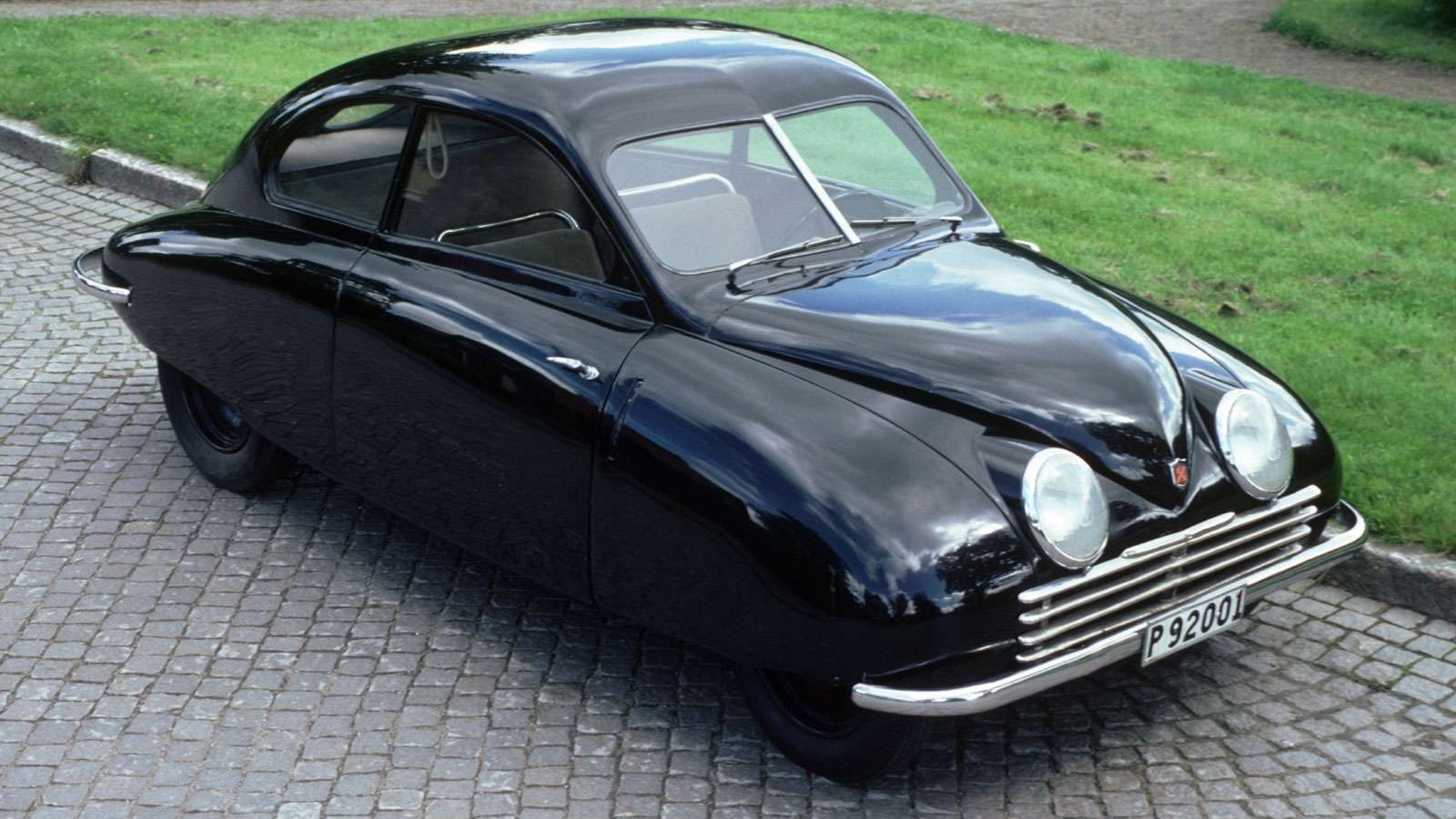
Back in 1945, the aviation engineers at Svenska Aeroplan Aktiebolaget decided that with the war effort winding down, it was time to build a car. The result was gloriously strange, a small streamliner engineered by a team of 16 members, only two of whom had driver’s licences. The prototype itself had an 18-horsepower two-cylinder two-stroke engine, lacked a trunk lid, featured enclosed front wheels, was front-wheel-drive, and had a body built 98 feet underground. After more than half a million kilometers and a few more prototypes, the first production Saab was born. It was called the 92 because it was the next product after the 91 trainer aircraft, and it kicked off an incredible lineage.
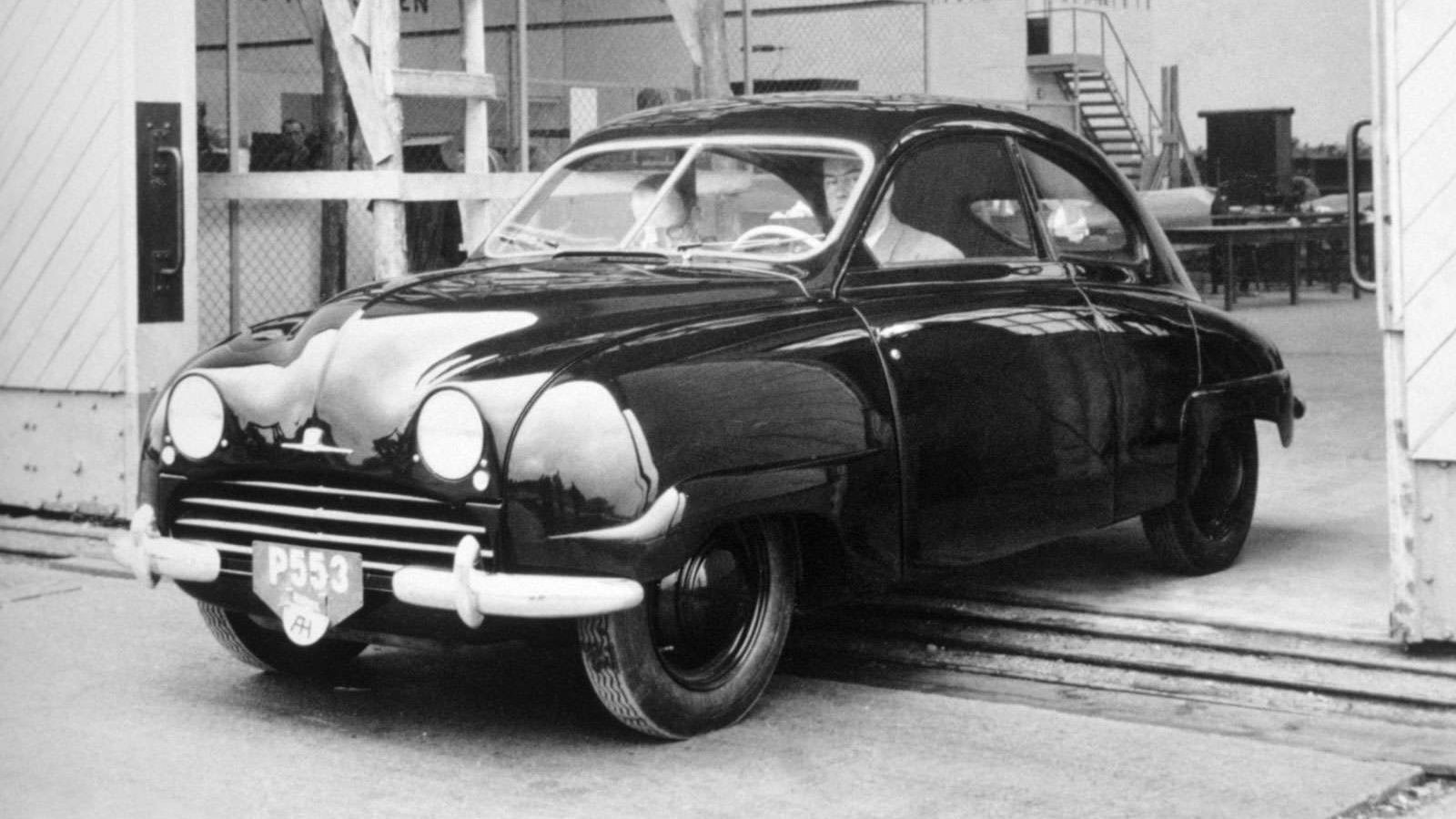
In addition to aerodynamics, Saab was absolutely obsessed with rallying. Two weeks after 92 production kicked off, it had already scored a class podium in the Swedish Rally. Its 93 successor would go on to achieve outright or class wins in 11 major rally events, including the Great American Mountain Rallye and the Mille Miglia. However, rallying success isn’t necessarily why highly educated Americans fell in love with Saab.
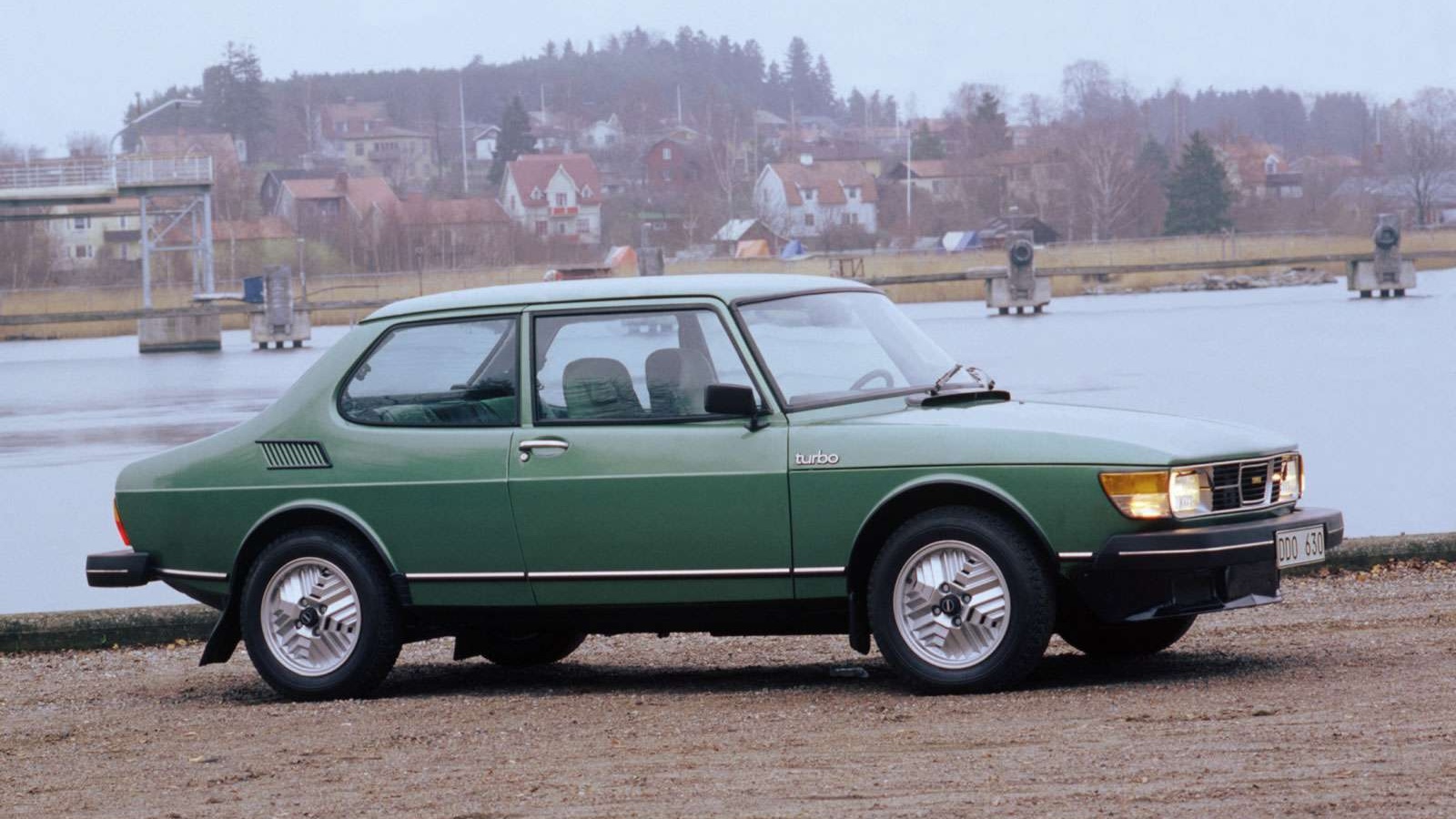
If there was one thing Saab loved more than rallying, it was safety, with a list of firsts that stretches on for miles. The first mass-produced car with split-diagonal braking circuits, the first car with headlight wipers and washers, the first car with standard heated seats. By the time the whiz-bang force-fed Saab 99 Turbo came around, this range of left-brained left-field Swedish curiosities captured the hearts and minds of college professors and particular enthusiasts by being like nothing else on the road. It was a level of devotion compared to Macintosh computers in a paper by DePaul University marketing professor Albert Muniz. So how did the Saab badge end up on what was essentially a Chevrolet Trailblazer?
Money, Money, Money
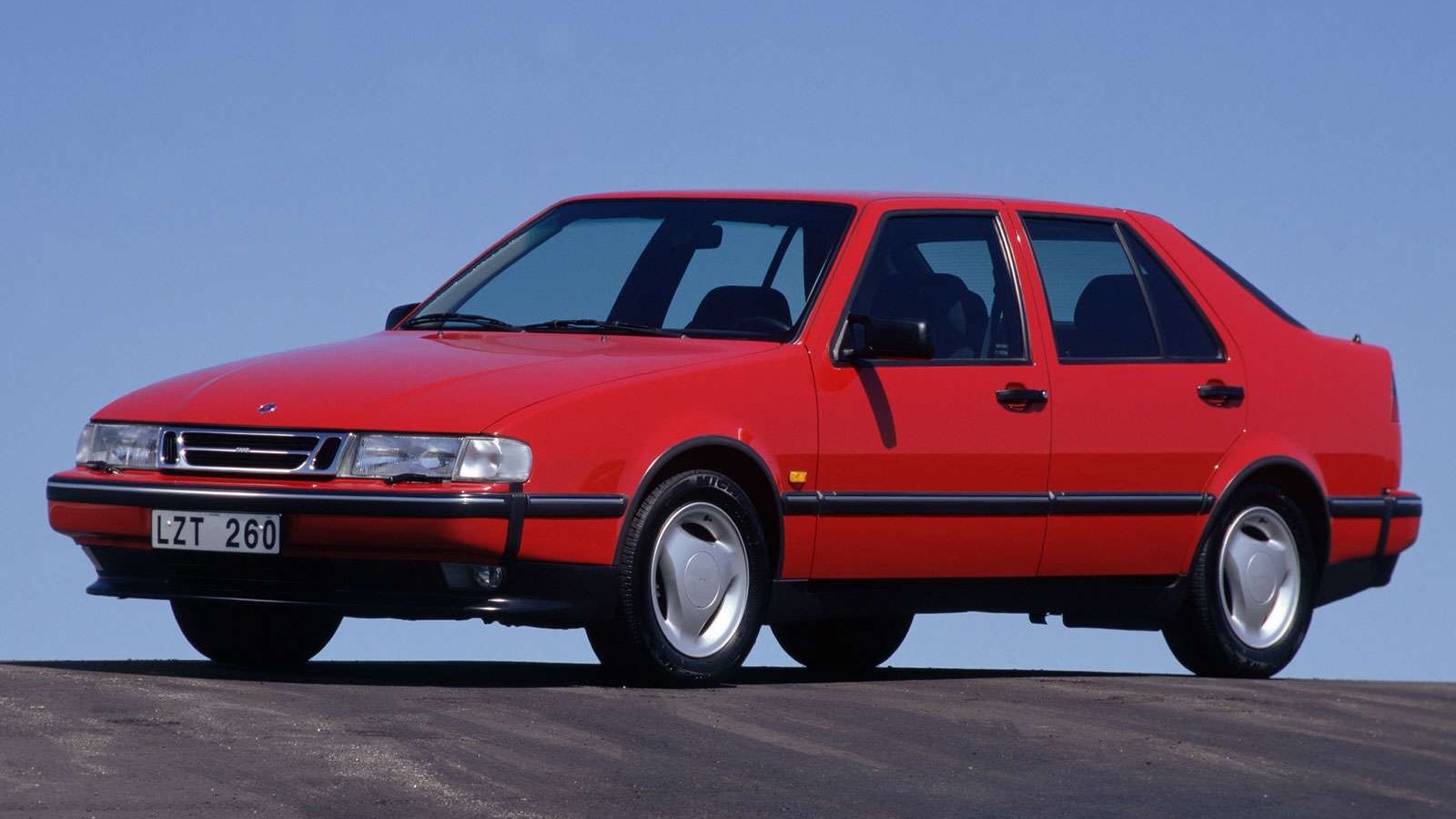
While Saab’s particular way of doing things resulted in some great cars, the company’s high standards weren’t always great for business. Take the 9000, for example. A joint project with Fiat Group, it was supposed to be closely related to the Alfa Romeo 164, Fiat Croma, and Lancia Thema. However, Saab quickly diverged from the generally agreed-upon pathway. For instance, Saab and Fiat Group had very different standards for crash safety at the time. As Saab safety guru Uno Dahl told Automobil magazine, “after the crash the Italians exclaimed ‘it went perfectly’, while I said ‘it didn’t go well at all.'” Add in reportedly untoward vibrations in the front end, and something had to be done. As the magazine wrote (translated from Swedish to English):
The vibrations created noise in the passenger compartment and we wanted to increase the sheet metal thickness from 1.0 mm to 1.2 mm, but Lancia would not agree to this for cost reasons. It ended with me, Stenn Wenlo and Saab’s CEO Georg Karnsund travelling to Turin and stressing the seriousness of the situation. I sat as a hostage, Karnsund spoke and we got our 1.2mm. — But they kept the thinner sheet metal in their car, interjects Dick Ohlsson, who was responsible for the body construction.
It was not only the front structure that ultimately differed between the cars, for example the doors, which are apparently identical on the Croma, Thema and 9000, received different inserts because Saab had higher requirements for crash safety. According to Dick Ohlsson, there were ultimately seven items in the entire body that were common, but he was nevertheless happy to receive support from a large car group in the development work.
Seven common body items. Seven. On cars that were initially supposed to share identical platforms. That level of change is an unbelievably expensive endeavour, and with so much time and money lavished on the 9000 with disappointing sales as a result, Saab was in a spot of trouble by the late 1980s. In 1988, Saab posted a loss. In 1989, the brand was restructured, with General Motors acquiring a 50 percent ownership stake. As the New York Times reported:
G.M. attributes Saab’s trouble primarily to its small size and figures it can bring economies of scale to the Swedish company, benefiting both partners. G.M. will pay $500 million for 50 percent of a new company, Saab Automobile A.B., that comprises Saab’s auto making assets.
Just like that, Saab had a lifeline, but fans had some concerns. Prior to the 9000, every Saab had been all-Saab. Would GM part-ownership mean that Saabs would become rebadged Opels, especially if General Motors were to exercise its option to buy out the other half of Saab? Well, sort of. The second-generation Saab 900 was technically based on the Opel Vectra, but it got its own body shell, four-cylinder engines, interior, and wheelbase. It did help Saab post its first profit in seven years, but in 2000, GM did what fans feared. It bought the rest of Saab. Then things started to really get weird.
Hate To Say I Told You So

By the early 2000s, the SUV craze was in full swing, and with Volvo and most major German luxury brands fielding SUVs of their own, Saab needed something, so it got to work. Then work stopped. In 2002, Automotive News reported that plans for a Saab SUV had been canned, writing “Saab had intended to use a four-wheel-drive variant of the Cadillac CTS platform for the SUV. But the project did not proceed beyond a few design models.” An essentially Cadillac SRX-based Saab would eventually happen, but not until the Caddy moved off the CTS’ Sigma platform. A year later, Automotive News reported that SUV plans were back on in the most GM way possible: Saab’s first SUV would be a reworked Chevrolet Trailblazer, a hasty and relatively cheap attempt at stopping a sales bleed.
The mid-sized truck will fill a huge hole in Saab’s buyer-retention numbers – 25 percent of buyers who leave the brand each year do so to buy an SUV, according to Debra Kelly-Ennis, CEO of the U.S. sales arm.
“These numbers are compelling,” Kelly-Ennis said last week in a roundtable with Automotive News editors and reporters.
“Our dealers sit there year after year watching other makes get SUVs.”
It was certainly a gamble, attaching the “Born from Jets” tagline to something born from the Avis rental counter. While Cadillac shoppers bought reworked Tahoes and Suburbans by the truckload, Saab buyers were cut from an entirely different cloth. More discerning, more passionate, more used to a European way of doing things. Would they bite in 2005 when the 9-7X arrived?
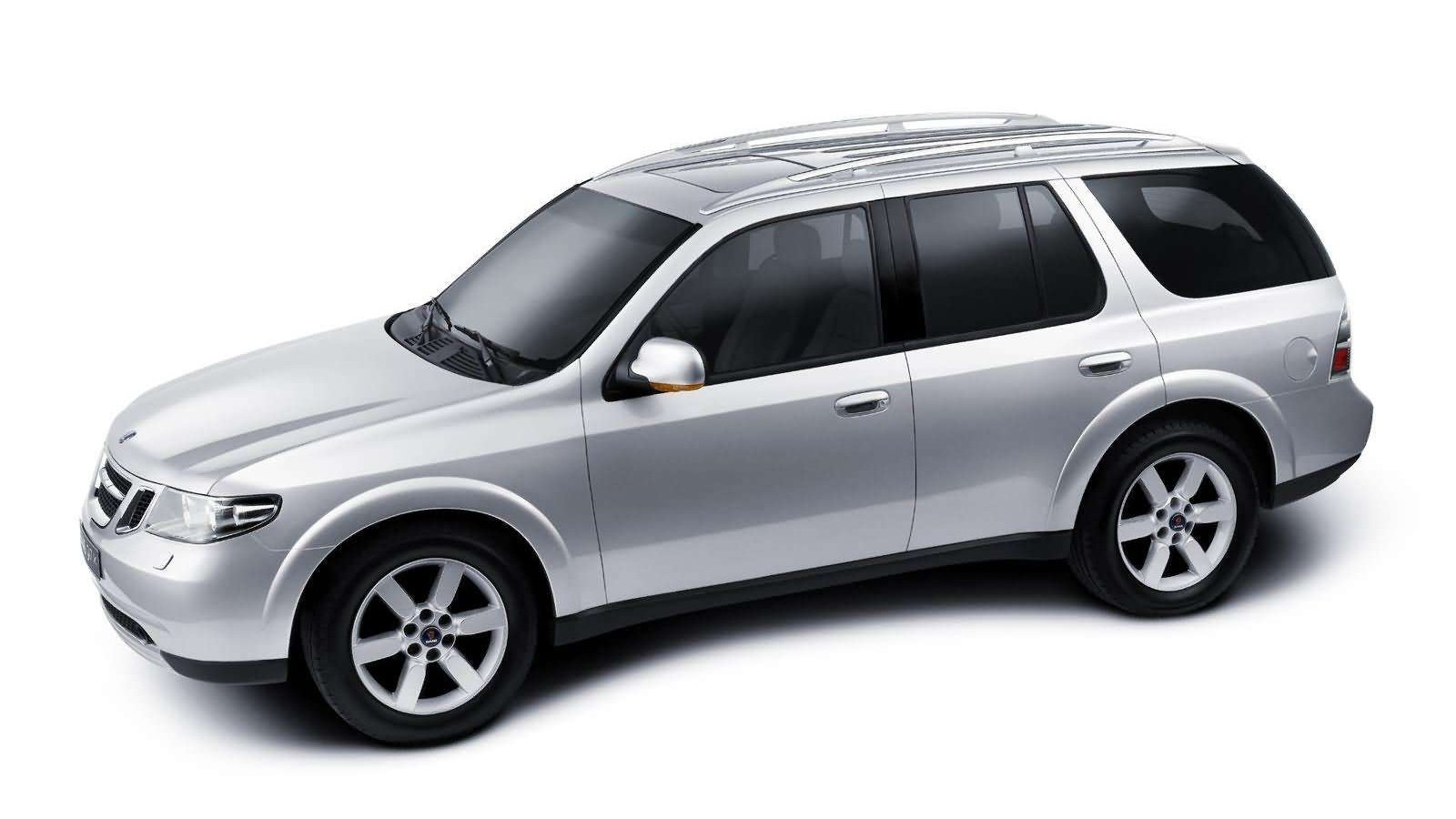
It didn’t take long to find out. On first glance, if you’re just looking at the 9-7X from the front, it seems suitably Saabish. That changes as soon as you move your feet. As it turned out, the 9-7X swiped the greenhouse and roofline from the short-lived third-generation Oldsmobile Bravada, bolted on new fenders, bumpers, lights, and wheels, and ditched the plastic cladding. That’s about it, little we hadn’t seen before, and little to link it to the 9-3 and 9-5.
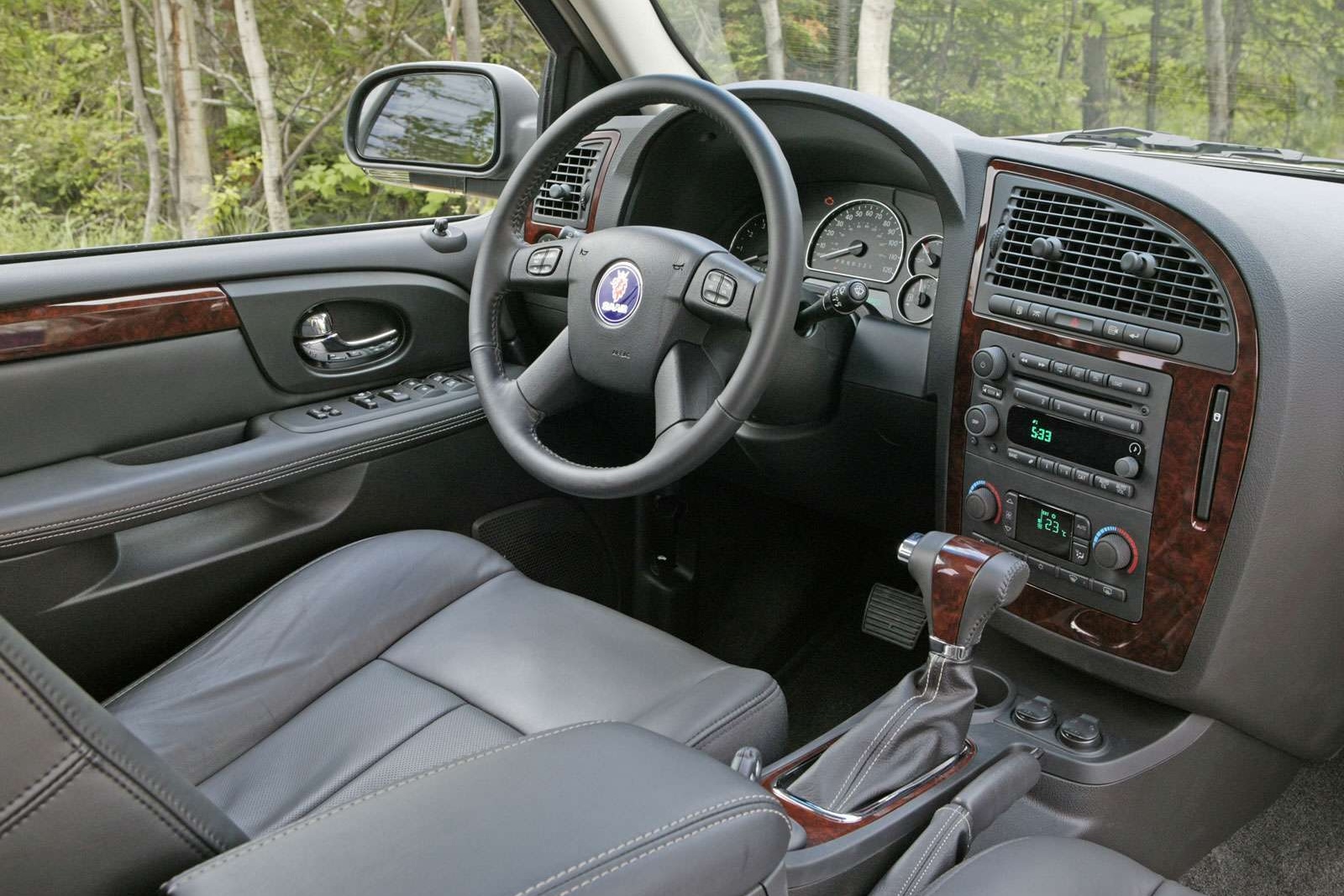
Inside, things got worse. The 9-7X featured door cards, a steering wheel, and switchgear seemingly plucked nearly straight out of the GMC Envoy, and a shift knob to match. Indeed, the main concessions to Saabishness were strange air vents, a dashboard-mounted flip-out cup holder, and the ignition barrel being on the console. That’s it.
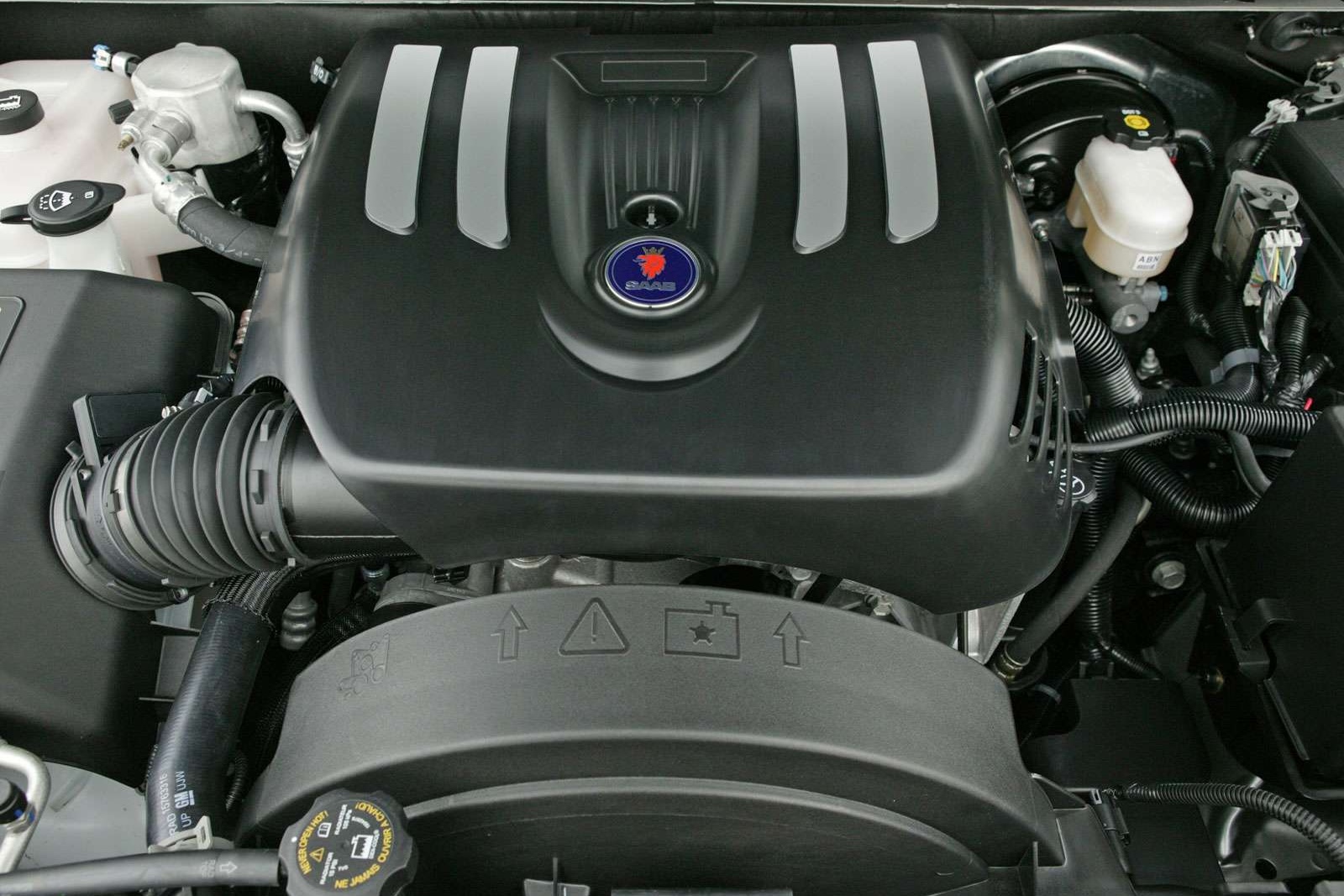
Power for most models came from either a 4.2-liter straight-six or a 5.3-liter pushrod V8, either one hitched to a four-speed automatic transmission. Nothing particularly Swedish here, although Saab did try to do its best with the chassis hardware by stiffening up the dampers, springs, and bushings, tightening the steering ratio from a nautical 20.3:1 to a more adequate 18.5:1, beefing up the front anti-roll bar, and reworking the brakes. Did the changes work? In a period road test, Car And Driver found that the 9-7X was the best-driving variant of the GMT360 platform, but that wasn’t enough to make it a compelling option. As the magazine wrote:
But there’s still noticeable chassis flex over bumps. And compared with the sharp responses of unibody class leaders (the market is shifting away from body-on-frame) such as the Acura MDX or Cadillac SRX, the 9-7X feels clumsy, falling short in every dynamic category.
Perhaps unsurprisingly, sales were glacial by the standards of the midsize luxury SUV segment. GM built 19,286 examples of the 9-7X over five model years on sale. Considering it wasn’t just sold in North America, that’s a deeply unfortunate number. For context, Lexus sold 108,775 RX crossovers just in America, just in 2005. Porsche sold 14,524 Cayennes in 2005 in America alone, and that was a far more expensive SUV than the 9-7X. Still, it’s not like the 9-7X came and went without leaving an interesting footnote.
Af1s
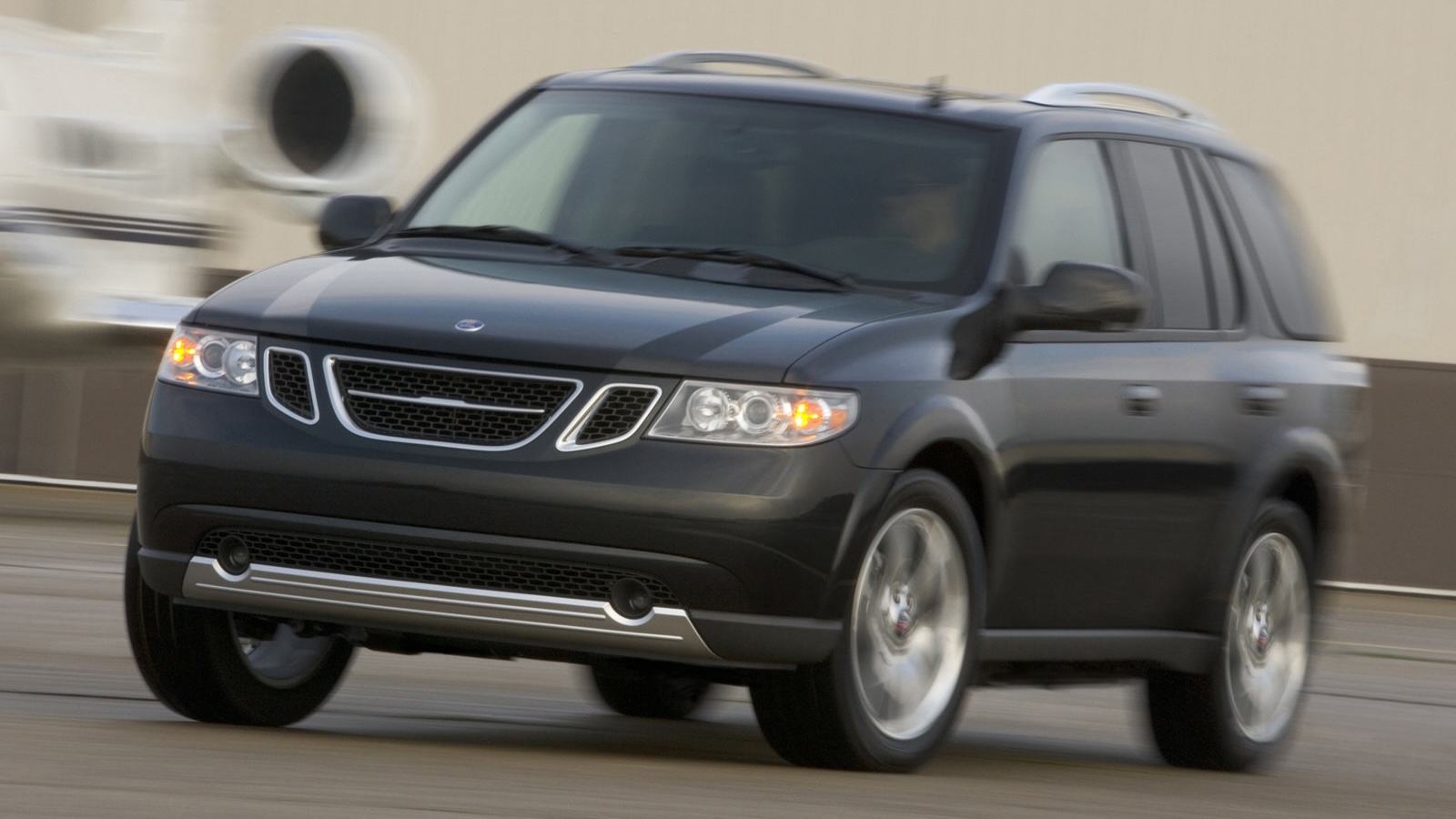
See, Saab didn’t just have a reputation for making safe cars; it also had a reputation for making quick ones. The 9000 Aero was a bit of a rocketship, the 9-5 Aero was quicker in-gear than a 911 Turbo of the period, and the 9-7X wasn’t about to be all mouth and no trousers. See, Chevrolet had a high-performance version of its GMT360 SUV, and Saab saw fit to appropriate the power of the Trailblazer SS for its own use.
The Saab 9-7X Aero gained a chest-thumping six-liter LS2 V8 pumping out 390 horsepower, then made things even more interesting with a full-time all-wheel-drive system featuring a Torsen center differential. Larger anti-roll bars and a limited-slip rear differential rounded out the performance package, and with a claimed zero-to-60 mph time on the spicy side of six seconds, the 2008 9-7X Aero was an unusual proposition. Sadly, it didn’t last long. Production only spanned two model years, meaning it’s a rare sight on the roads.
A Tooth For An Eye
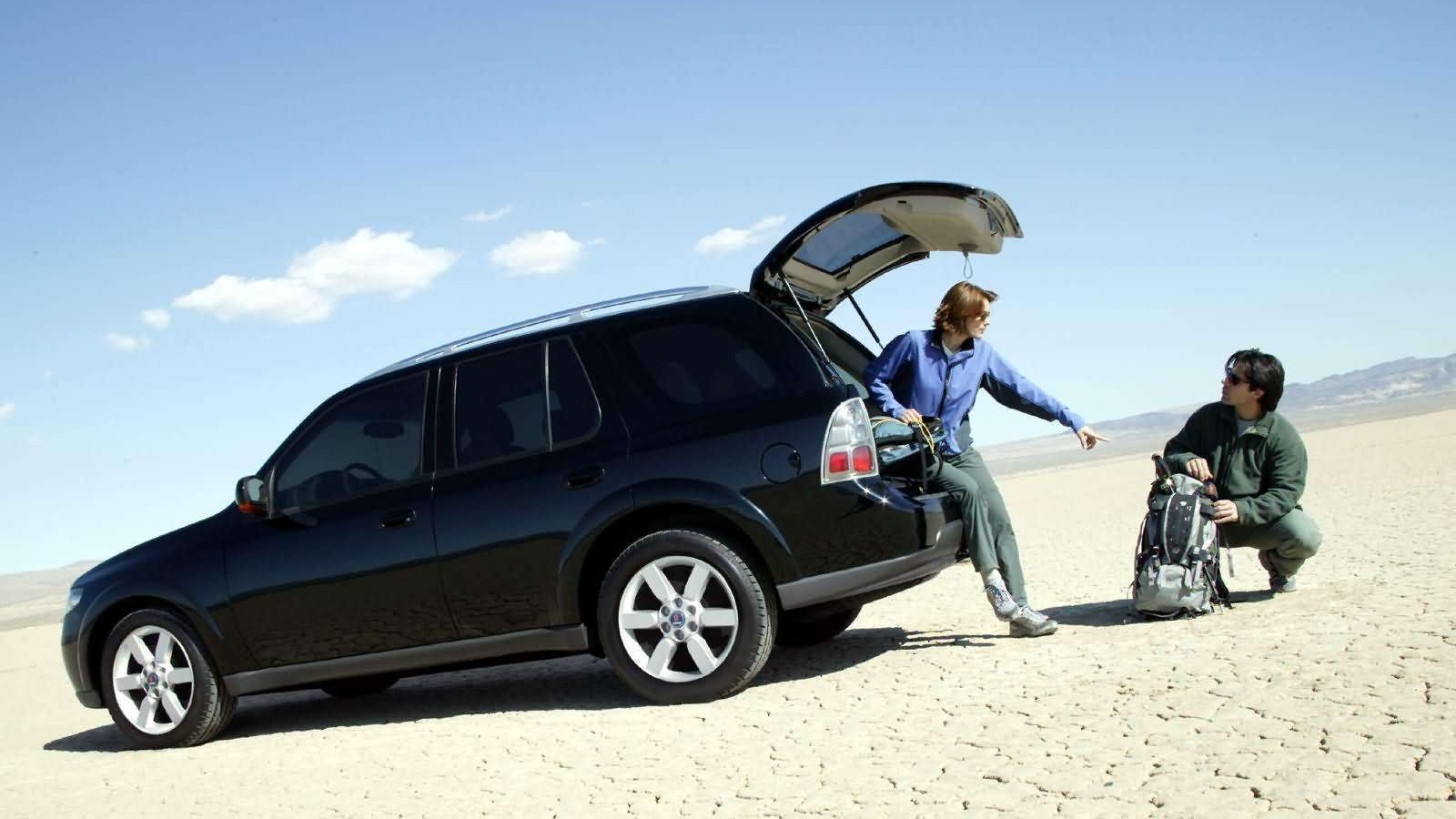
In hindsight, the Saab 9-7X was never really going to work. Not in huge numbers, not to many Saab loyalists, not in the face of serious offerings like the BMW X5 and Mercedes-Benz M-Class. It’s easy to write it off as typical General Motors mismanagement, and that’s mostly what Saab suffered from in its later years. Growing a luxury brand requires serious investment, and while the first-generation 9-5 and second-generation 9-3 were contenders, they were left to wither on the vine as GM explored weirder, seemingly doomed strategies like the Saabaru 9-2X and the Trollblazer 9-7X.
Then again, Saab and General Motors were never going to work well together for long. Saab was fiercely independent in spirit, a corporate accountant’s worst nightmare that often wouldn’t bow down to ideas and standards it wouldn’t agree with. GM, on the other hand, was a personification of corporate bloat.
Prior to filing for bankruptcy protection, it had 13 marques under its belt, many of which served similar markets. Yeah, the 9-7X was a miss, but without GM’s intervention, we likely never would’ve had the Turbo X, or the devilishly handsome second-generation 9-5, or the torque-steering lunatic known as the 9-3 Viggen. Two sides to every coin, right?
Top graphic image: Saab


Sad yes. I am rocking a 2011 Saab 9-3x and I love it. Bargain on the used car market. The 9-7x we wanted to love it and ended up just being friends (Aero). Love a Saab Story
I still remember rolling into Waitsfield, VT as a kid in the late 80s, tagging along with my Dad as he had a business meeting up there. It seemed like everyone drove a Saab 900 in that little town. I guess they were good in the snow. That is definitely a much more iconic model than the warmed-over shit of the 9-7x.
I’ll admit the 9-2x didn’t bother me, though.
I actually knew someone who had one of these back then. It was the V8. I remember thinking it was an odd choice and why did they pick “that”? They had money so they really could’ve bought anything.
That really goes for all SAAB customers I think. They could buy anything,but SAAB was the only thing that would do. I wish there were more of them,then SAAB wouldn’t have died a slow horrible death by GM.
As bad as these GM rebadges were for Saab, they’re evidence that the Saab design language was very good.
Despite the exterior changes being modest, the Saab-ified versions of GM cars always looked much, much better (and still do).
The 9-2x was better looking than the Impreza, the 9-4x better than the SRX, and I’d pick the 9-7x over a TrailBlazer any day.
I do not think GM was able to top the 9-7x as far as appearance until the recent EV models. I get why people think of it as a crappy Saab, but I view it more as a great GM product. The only GM product I have ever owned, actually.
Not sure which was greenlit first, but if the 9-7x aero was the catalyst for Volvo putting the excellent B8444S Yamaha V8 in the XC90 (and S80) then I appreciate its existence.
If it was the other way around, then, well, props to gm for using a RWD-based platform, even though it was BOF and truck-based.
One of my coworkers has a 9-7x aero. Other than making a nice noise (modified exhaust) and nice-looking wheels, it doesn’t have any appeal, and seems to have a lot of problems.
Revisiting my first paragraph: I wonder if gm would have bought Saab (2000) had Ford not bought Volvo (1999)?
Definitely the Volvo V8 came first. The XC90 V8’s debut was MY2005, which was also the first year the Saab 9-7X was available at all. The 9-7X was a stopgap effort to give Saab and its dealer network some kind of SUV, and wasn’t meant to last as long as it did. Nominally, the 9-7X would have been around for a couple of years and then replaced in 2007 with something more deserving of the nameplate (like the stillborn B9-Tribeca-based 9-6X that got canceled). When that didn’t happen, the 9-7X got a stay of execution, including a facelift in 2008 and the inclusion of the TrailBlazer SS hardware in the form of the Aero.
As far as the XC90, with a proper AWD system and excellent tuning, especially in V8 form, it wasn’t missing anything by being transverse-engined. And the V8, a 60-degree unit, was an interesting engineering challenge in and of itself. Ford did something similar on its own Taurus SHO in the 90s (also a Yamaha V8 and not related to the Volvo one in any way).
Would GM have bought Volvo if Ford hadn’t? Probably not.
GM was one of the interested buyers when Volvo did go up for sale–and generally, you’ll find that Ford and GM were at least intended competitors in every brand acquisition either company had–but never made a former offer. Volvo leadership was concerned–rightly–that GM wouldn’t let it operate reasonably independently, and also GM’s presence in Europe was already sort of messy, with Opel and Vauxhall, plus a stake in Saab. Besides, GM itself had issues. Saturn was hemorrhaging cash and so were Opel and Vauxhall, so it was too much of a risk. GM certainly wouldn’t have been able to pay the $6.5B that Ford did for Volvo, so it likely would have lost if it had bid.
Thanks for that. Didn’t have time to research the timeline of the aero trim, but that tracks.
I have a 2007 XC90 V8 and it’s the best overall vehicle I’ve yet owned.
Then you know you’re not missing out. The 9-7X Aero and TrailBlazer SS are reasonable and comprehensive performance versions of that platform and can out-accelerate and out-tow an XC90 V8, but the XC90 V8 is the more cohesive, refined car, and is plenty performant.
I know which one I’d rather have. In fact, I once helped a fellow commenter here vet a project XC90 that he flew here and bought.
Wow, time flies. I had a 9-2x, bought new. I knew what it was going in, but I only kept it 8 months before trading for a Mazda3. I always thought the 9-7x at least showed some effort towards Saabishness, whereas the 9-2x had very little effort to disguise its Subaru roots.
that 5.3 was an aluminum block. its a diamond in the rough if you can find one at a pick and pull
I appreciated some of the thoughtful design and engineering in my OG 9-5 wagon, and found it to be a very useful and satisfying vehicle, though it was later dogged by various fluid leaks. I felt Saab took a reasonably modern GM platform and did something good with it. I imagine that apparently cancelled, original unibody (Caddy-based) Saab SUV, attractively and cleverly designed, would probably have sold well. Maybe Saab is still alive in some parallel universe.
They eventually did make a Caddy based unibody crossover. Pretty uncommon, like way less common than 97x or 92x, called the 94x. Ugliest of the three half siblings I think.
I’ve only ever seen one of those on the road. A bit ungainly, yes.
I’ve also only seen one–on the road trip home from buying my 9-3 convertible last year.
I have seen that car IRL but the only color I’ve ever seen is what I call “70s prosthetic limb beige”.
You kind of hint at this, but the truth was that Saab would have died a quiet death had GM not purchased it. Fiat and VW briefly considered it, but no one other than GM was both seriously interested and equipped with the financial might to make it happen.
As it was, GM severely Saab through neglect, and then later on more directly. After Saab was sold off to Dutch automaker Spyker, it proved to be more than Spyker could handle, so Spyker decided to sell Saab off. By this time, the newest generation of Saabs was out: the latest 9-5, riding on the same global LWB Epsilon II platform as the new Buick LaCrosse and eventual Chevrolet Impala and Cadillac XTS…and built at Saab’s own Trollhättan factory. And there was also the 9-4X, a very close sibling to the gen. 2 Cadillac SRX and built under contract at GM’s own Ramos Arizpe plant in Mexico alongside said SRX.
The point is that Saab wasn’t a freestanding company at this time. It was a licensed ecosystem, with GM the owner of lots of its IP and relationships. Platforms, powertrains, supplier contracts and outright vehicle designs belonged to GM. And so when Saab went up for sale and the only serious suitors were Chinese, GM balked. GM had deep roots already in China, with SAIC-GM, Buick and parts of Chevrolet. Letting Saab tech walk out the door outside those partnerships would’ve undercut GM’s entire China strategy. And GM might have ended up having its own IP used against it in its strongest market.
So, when Chinese BAIC emerged as the most favorable buyer, GM said it would allow pre-Epsilon tech, legacy platforms and some limited-life engine IP, but not any of the latest stuff. It meant that Saab would immediately have to discontinue its new 9-5 and 9-4X, and wouldn’t even be allowed access to much of the prior 9-3 and 9-5 tech. This was a nonstarter for BAIC, which wanted a running, viable company. The Saab name was not in and of itself strong enough to warrant purchasing only it.
And that was when Saab basically died. With no one else interested, Saab defaulted on its agreements and ran out of cash.
But had Saab been allowed to be sold to a Chinese company even with GM continuing to extend IP and manufacturing might, Saab probably would have died anyway. It likely wouldn’t have been long before BAIC began introducing new Saabs that were wholly Chinese-engineered, not unlike what British brand MG is today.
One other thing: there was an intermediate step between the shameless 9-7X and the worthy 9-4X. Back in the early/mid 2000s when GM owned a 20% stake in Subaru, it began work on the 9-6X. The 9-6X was ultimately a thinly reskinned clone of Subaru’s upcoming B9 Tribeca. Compared to the Subaru, the 9-6X had a completely different (and much better looking) fascia, including front fenders and a different rear-quarter shape. Even with its vestigial third row, it would have been an interesting alternative to the also-Swedish Volvo XC90.
The 9-6X died for a few reasons. Firstly, GM wanted more platform consolidation and using what was essentially an off-the-shelf Subaru (replete with boxer engines, Subaru AWD and a Subaru platform) didn’t scale within the company. Couple that with the fact that GM was busy unwinding its stake in Subaru (which went to Toyota) and it made even less sense. So the 9-6X was canceled. That was probably when or shortly before GM began working on the internally developed 9-4X.
It also extended the 9-7X’s production. The 9-7X was meant to be a stopgap for Saab dealers to have an SUV-shaped vehicle, and was really only meant to last through 2006 at the latest. It definitely wasn’t supposed to continue through 2009, with a facelift in 2008. And the 9-7X Aero, which was a last-minute thing, wouldn’t have happened at all. But when the 9-6X was canceled, that left Saab without a viable SUV…and so the 9-7X stuck around longer than it should have. And believe me, both Saab and GM knew it was an embarrassment.
Meanwhile, Subaru, after a very poor reaction to the controversial looking B9 Tribeca, quickly facelifted it. It lost its B9 prefix and was restyled to look much more conventional, including the use of tooling from the stillborn 9-6X, specifically the front fender stampings.
But it’s interesting to ponder at what would have happened if GM had continued with the 9-6X. Saab customers tended to be—as you said—more engaged with the engineering origins of its cars than customers of other brands, so I’m sure it would have been no secret that it was a Subaru, like the WRX-based 9-2X that came before it. Still, *maybe* it would have brought enough customers into the Saab fold to be worthwhile and a net positive for the brand.
Prior to the Outback, Subaru and Saab had a lot of overlap with more educated and engineering-minded people. I even had people ask me if Subaru was also Swedish multiple times before they became the much more mainstream brand they are now, so when GM put the two brands together, I thought the combination would work out better than it did. I still wonder if the timing and execution just weren’t done right. If it had started in the early-to-mid ’90s (though GM didn’t have a stake in Subaru at that point), maybe it would have worked out different with Saab being a sort of higher end Subaru (I think Saab would have needed to use different engines) and Subaru could have also used the help at that time.
True. And if GM’s long-term plan had been to stick with Subaru, that might have been viable. It’s just that GM already knew it was going to pull the plug on that relationship, so GM would have ended up basically purchasing an (admittedly nice) vehicle built under contract by another automaker…an arrangement that was unlikely to yield long-term benefits.
Yeah, by that point, it was simply too late. Unfortunately. At least Saab went out with a banger instead of a whimper. It’s like the showbiz saying: always leave them wanting more. After the impressive final 9-5, what would the new 9-3 that was in development have been like? We’ll never know, but indicators were positive. Too many other brands are being dragging along well after what had made them special has been fully adopted by the industry, their niche has long collapsed, or they’ve abandoned their values and they’ve not done anything noteworthy since. About half of Stallantis’ brands could die tomorrow and no truly memorable models would be lost.
True. It’s worth noting that Saab fought tooth-and-nail to preserve its core values, especially as they related to safety, right until the end. I wouldn’t be surprised if there were major safety alterations between the NG 9-5 and the 2010-era LaCrosse, even though they were on the same platform and had the same critical dimensions (like wheelbase).
I agree with you that there probably was’t a place for Saab in the future. Turbo 4-cylinder engines are, of course, the rule and not the exception, general safety standards have improved, and luxury features have been democratized. I don’t think Saab would have been given the budget or vision to move as smoothly upmarket as Volvo did a decade ago, and would’ve been stuck in that awkward, middling premium space…regarded as increasingly pointless by everyone but its loyal fanbase.
GM gets a lot of grief for the demise of Saab, but not only did they keep them around longer, they gave them more autonomy with the platforms than was characteristic of GM. While not a great fit, unlike with some of their other brands, I think they really tried with Saab.
Another issue with timing, now that I think of it, is that when they bought Saab (and created Saturn), having platforms with greater differentiation was less of a financial liability than it would be in a relatively short time later and I also partly blame that for the failure of Saturn (also change of management that inherited the concept they had no love for) and Saab as neither brand worked as obvious badge engineered cars and, further, became wholly redundant as such.
Saturn is a whole other story, and its failure is the fact that it existed in the first place. GM spent, conservatively, $5B just to launch the brand. That’s a huge sum on what were low-margin, low-transaction-price cars, and still they were losing $2K-$3K per unit into the late 90s. And for what? A line of compact cars that were interesting and had some groundbreaking tech, but ultimately added up to a mediocre experience that failed to threaten the Japanese competition?
So of course when Saturn needed more money to justify a larger line of cars–because Honda didn’t just make Civics; they also made Accords and Odysseys and CR-Vs–GM’s board couldn’t reasonably justify it, and that was the start of Saturn being folded into the rest of GM in order to rationalize costs, ultimately culminating in the dissolution of Saturn’s unique UAW contract and the Saturn plant simply becoming GM Spring Hill.
Saturn was never going to earn back its expenditure, much less turn a profit. It’s a bit of a catch-22. The only way GM was going to make a reasonable credible small car probably was to escape its own toxicity and spin up a separate corporation that had little to do with the main one; however, in doing so, GM spent so much that it sealed Saturn’s fate before it ever made a single car. Ultimately, Saturn could not viably go on creating its unique line of cars, and once that ended, Saturn had no reason for existing and was just as much of a burden as many of the legacy brands.
I think GM should have farmed all of its compact-car development out to Isuzu and Suzuki and Toyota–its foreign Japanese partners–and spent that $5B on a larger-margin premium car line. That especially could have worked if GM had been able to admit that Cadillac no longer meant what it had before, and allow a new brand to be senior to it.
What did work well with Saturn? The marketing and the dealer experience. Even into its last days, Saturn dealer had some of the highest customer satisfaction ratings in the industry.
Well, that leads to another GM weirdo—Geo, rebadged cheap foreign brand cars from companies they had interests in (and Toyota through the NUMMI plant). OK, it eventually was folded into Chevy (IIRC, it was technically considered a Chevy division), but I agree that’s what they should have done for all the brands that would have a presence at the bottom of the market. It was clear for decades that not only did they have no interest in building small cars, but they weren’t very good at it. Of course, they made some bad picks with stuff like the Daewoo LeMans, but they didn’t have to pick crap. I don’t think I agree that they should have set up a new marque above Cadillac instead of spending it to revive Cadillac. I think they had too many brands already.
Regardless, I think the most consistent problem is lack of commitment. GM loves to dump a ton of money into an idea (probably way too much) only to release it in beta then either kill it off just as they finally get it good or lack the necessary patience for a long term idea to mature, ending it before it had any hope of doing well (or mismanaging it whether purposefully or out of misunderstanding, which I think is a part of the issue—changes in management result in changes of vision, old guard ideas are unappealing to the new people who want to make their mark and who don’t have it in them to argue patience to shareholders for a money-losing project they had no stake in, particularly when the basic cars are left to wither). In a way, they remind me of German aircraft development in WW2—too many irons in the fire to give any one of them the attention they need (that isn’t a lament, of course) and bread-and-butter gets neglected, stumbling along while too many optimistic miracle projects suck up more and more money to little effect.
My recollection is that this wasn’t a realistic option anyway in that Saab AB (the aerospace etc. company) legally retained veto power over the transfer of the name and had made it quite clear that the name was not going to be included in the sale of the assets of Saab Automobile. Hence, NEVS was born from, I suppose in a sense, jets.
That makes sense! It’s weird how those aerospace companies can have interesting effects on their namesake automotive companies. A similar kind of thing happened with Rolls-Royce plc (the aerospace company) and Rolls-Royce Motors.
Rolls-Royce plc owned the rights to the Rolls-Royce name, which was licensed to Rolls-Royce Motors. And so when Volkswagen Group paid £430M for Rolls-Royce Motors–thinking it was getting everything–it won the factory in Crewe, all the product IP, all of the vehicle nameplates, and the Bentley brand. Volkswagen Group did not win what was arguably the most valuable part of the acquisition, the Rolls-Royce name. BMW Group, which already had a relationship with Rolls-Royce plc, swooped in and licensed the Rolls-Royce name for automotive use, and for just £30M.
And so BMW started a whole new company called Rolls-Royce Motor Cars, which had nothing to do with the former company making Rolls-Royce products. Its first product was the breathtaking 2003 Phantom, which relied heavily upon BMW powertrain and electrical engineering, much of its shared with the E65 7 Series. Meanwhile, Rolls-Royce Motors was renamed Bentley Motors in 2003 and continued under Volkswagen. Bentley Motors also supports all of the pre-BMW Rolls-Royces under its “Crewe Genuine Parts” banner.
The only difference between the Rolls-Royce and Saab stories is that while with Saab, the aerospace company came along first and then began producing automobiles (hence, “born from jets”), with Rolls-Royce, it was the other way around. The automobile company was founded in 1906 and began producing aero engines during the First World War in 1914 and became its primary interest by 1920. Both the automotive and aerospace operations existed under the same name and corporate entity until the aerospace company was nationalized in 1971, and the car company was split, and then sold off in 1981. The aerospace company retained the rights to the brand and logo during that split.
I went for a lightly used 5.3 after my 9-5 aged out. I (mostly) knew what I was getting into – a simple GM drivetrain that any local shop could work on combined with slightly improved styling over its stablemates.
What I didn’t fully grasp was that the “AWD” system utilized a transfer case that shifted into 50/50 4WD mode with no center diff whenever slippage was detected. The car I bought had different ‘model’ tires from the same manufacturer in nominally the same size; between wear and manufacturer variations, they had sufficiently different diameters that the AWD spent most of the 1500 mile drive back home from the selling dealership engaged, grenading the transfer case.
A year or two later, we had some sort of sensor issue (knock sensor?) that required the entire intake manifold to be removed.
Finally, a fitting on the fuel pump gasket while I was 300 miles away from home. It took nearly a week to source the replacement part, forcing me to stay in a series of hotels until it could be repaired.
We sold it soon afterwards, with less than 3 years of ownership.
I burned out the center diff clutch in a Ford Escape by driving it 50 miles with the factory spare tire on.
Those old ford/mazda PTO units were terrible from the jump – probably would have died no matter what. They had “lifetime lubricant” with no provision for draining/refilling, and set next to the exhaust system. My daughter blew one in her CX-9; when it was removed, the mechanic said the lubricant had turned into black tar.
I had the new one drained/refilled through the fill hole every 10,000 miles; lasted her a few years without issue, and the fluid came out a little dark but otherwise still nice and liquidy every time.
I’m guessing that’s the same unit that was in my ’12 MKZ. Ford used that in a lot of the small-medium platforms. It really was a bad implementation. Very low fluid volume (10-12oz IIRC), no cooler, surrounded by every “hot thing” in the engine bay, and no change interval. Dumb.
I did the first drain/refill on mine at 60k and the fluid was very thin and black – it was cooked. Replaced it with a quality synthetic and was planning on 30k intervals but I got rid of the car before the next change. If it had been in a bigger/heavier vehicle I’d go even more often.
Ford did Volvo better than GM did Saab.
Saab and Subaru were both born from planes, so they didn’t think anything of high repair costs because the bills were similar to what it costs to maintain a plane, but they didn’t understand those costs are high by car standards LOL
FoMoCo overpaid massively for Volvo, something like $6B in 2000. It was part of the Premier Automotive Group, which—along with Jaguar, Land Rover, Lincoln and Aston Martin—was supposed to give FoMoCo a presence in every part of the market and realize synergies between brands…which didn’t happen.
That’s not to say that Ford didn’t get plenty of use out of Volvo.
In addition to allowing Volvo to do what it did best and engineer holistically safe, sensible and cohesively Swedish cars…Ford raided Volvo’s P2-platform engineering and bastardized it to create the high-riding D platform for Ford’s North America’s full-size cars. That debuted in 2005 on the Five-Hundred, Montego and Freestyle and ultimately lasted through 2019 on the Taurus, Explorer, Flex and MKT (the MKS died after 2016).
On the other end, Ford Europe, Mazda and Volvo all teamed up to create the global C1 platform. That was used on Volvo’s smallest cars (C30, S40, V50, C70), but also on several Mazdas (3, 5, CX-7) and some European Fords (Gen. 2 Focus, Kuga). This platform was then enlarged to create EUCD, which Volvo called P3. I believe Jaguar Land Rover is still using some remnants of it.
Finally, there were electrical architectures and parts sharing. VH platform Aston Martins, beginning with the DB9, used Volvo electronics. If you step into one of those cars, you’ll see a Volvo-esque instrument cluster, Volvo window switches and Volvo stalks, and you’ll hear Volvo warning chimes. Early VH cars even had a Volvo switchblade key fob separated and wrapped in Aston Martin leather. (Later ones had the Crystal Key, which was a fancied-up version of the Volvo brick key, but far less shameful). And Volvo electronics and powertrains were also shared with some Jaguar and Land Rover vehicles. The Freelander 2 (aka LR2) very much was a Volvo with Land Rover tuning, styling and off-road programming, and the Volvo 5-cylinder went into the Focus RS. And some late JLR vehicles were still using Volvo window switches, like my 2015 LR4.
Thanks mate for sharing your knowledge. Great deep dive research!
Saab letting GM acquire a stake in the company sounded their death nell. It always meant that Saab vehicles were eventually going to get GM-ified, and they were worse off for it.
I have to imagine back then that there may have been better suitors/backers than GM.
The alternative would have been Saab dying right then and there. No one else wanted to get involved, so they were sort of stuck with GM as an abusive partner/parent like a prostitute to a pimp, for sheer lack of options elsewhere.
As the former owner of a Zap! Xebra I question this assertion. Then again, as the former owner of a Zap! Xebra I now question a lot of things.
Wow that’s awesome 😀
I like the Xebra more than I should. It probably is better than many cars out there 😛
I remember going into the Saab dealership and looking at it. After my 900 I took a few looks and knew it wasn’t going to work. Sales guy was trying his best, but after I told him I had a 900 before he ecstatically showed me the ignition location. When I wasn’t interested I asked him if they’d do another 900, with the big back hatch. “Oh no, can’t, safety reasons.” I knew then I was not dealing with someone who had a brain, kinda like those that greenlit the 9-7x.
Had a 9-5 wagon and when it ran it was awesome. Operative word being ‘when’ in the last sentence. Pretty sure I got a bad one, been lusting after another wagon with night panel ever since.
Former neighbor has a Saabaru. Combination of Saab, but mostly Subaru parts, has made it a fun ride. I know the GM Saabs take some heat, but the one shop I took my 88 900 to recently said they won’t work on the GM Saabs because of electrics. Kinda sad, honestly. I’m all for more Saabs on the road.
Except the 9-7x. It has always been a bad decision.
The 9-2X was nicer than the WRX, and because all the GM brands enjoyed big discounts post-911, could often be had for cheaper than a WRX.
As far as my own personal Saab story (ha!), I recall my goofy-ass uncle having a 900 when my cousins and I were little (mid-late 90s). We were meant to go to the movie theater, but ended up in a parking lot at an AutoZone, while my uncle and a store employee tried in vain to fix the ailing Saab that had broken down.
My uncle’s usual cars were Chrysler products (several Jeep Grand Cherokees and Wranglers, several Sebring Convertibles, a Pacifica crossover, etc..), so I always wondered why he had the Saab. I need to ask him. Then again, he told me last Christmas that he let a beautiful Karmann Ghia get repoed and deeply regretted it, so maybe quirky Euro cars weren’t outside his tastes.
I had a shite wagon decades ago and I still lust after wagons.
Wagons have a je ne sais quoi that’s hard to let go of.
I once went to a Swedish car meet in my Volvo C30. I figured that the Volvo guys were going to be fun to talk with and the Saab guys would be weird… it was by far the opposite. I wish Saab had fared better.
Not gonna lie: I freak out a bit when I see a 9-7X Aero in the wild. Rare sight indeed.
Say what you will about them, I love the 97x. I’ve owned two of them, both with 5.3. If the right 97x Aero came up around me, I would likely buy it. I used it to tow cars and horses. Even moved using that to tow the big fat cargo trailer full of our lives. That center diff from the Aero is awesome, fully mechanical.
I also daily a Saabaru, and its also my second one. The Saab versions are the best versions of both of those chassis.
I loved my Buick Rainier with the 5.3L, but always wished I had a 9-7x Aero. The GMT360 gets treated pretty harshly because of the copious badge sharing, but it was still a pretty decent chassis and was far more capable than anyone gives it credit. Mine was a tow pig for years, hauling trailers all over the country with no complaints, and it is still doing good service to this day with a relative. I’d own another GMT360, especially a 9-7x Aero.
I swapped Rainier Taillights on to both my 97x. The one thing I hated was the Saab tail lights. But with those solid red rainier lights, *chefs kiss*
Olds Bravada had the best taillights of the GMT360s. Decent design, amber turn signals, and reverse lights in the same housing (unlike the envoy).
Brilliant!
Compliments to the chef on the Swedish music references!
And with the author being Toronto based he should definitely see The Hives in March.
Watching that drummer chain smoke while for the entire show during the The Black and White Album was a life changing event. At one point he was jamming *hard*, smoking, and tossed a stick up in the air that seemed to hang forever, caught it and kept playing like nothing happened. Amazing skill.
Those guys are such incredible live performers. @thomas definitely needs to see them.
I saw them at TURF maybe a decade ago and watched the drummer get progressively more sunburnt during the set. And yes, they are probably the best live band I’ve seen.
Oooh, don’t threaten me with a good time. I did get lawn tickets to Broken Social Scene and Metric though
Swedish chef, you say?
Bork, bork, bork!
SAAB didn’t have any real choices when they sold to GM. It was that or go out of business. By that time, the only people buying SAAB were the faithful. Who didn’t want GM cars anyhow. It was a lose-lose situation. the only “winners” were their employees who go to keep their jobs for 10 more years.
It was pretty common knowledge in GM that the Saab deal resulted from a very high level Detroit exec who enjoyed frequent trips to the Euro office because of an executive assistant aka secretary who worked there.
Double wishbone front suspension
Almost everybody badge got a GMT360. Can I count them all, including the 5 and 7 passenger versions?
Buick Rainier
Chevy Trailblazer
Chevy Trailblazer EXT
GMC Envoy
GMC Envoy XL
GMC Envoy XUV
Isuzu Ascender
Isuzu Ascender EXT
Oldsmobile Bravada
Saab 9-7x
I think that’s all 10, unless you want to count the Chevy SSR or stuff like the 9-7X Aero and Trailblazer SS.
Hilarious that someone at GM thought all of them could happily overlap in the same market.
It’s cereal-box marketing at its peak.
I mean, they didn’t even move the ignition on the Saabaru (though I’d much rather have a Saabaru).
The Saabaru 9-2wrx was something that I kinda really liked coming out of this relationship, though. The 9-7? Ehhhhhhh…
The Top Gear Tribute to SAAB is rather good and really highlighted the anti-GM SAAB mindset.
If I’m remembering correctly it also (like most people) ignores that GM was a lifeline for Saab. If GM hadn’t come along, Saab would have died even earlier. So sure, GM era Saabs were a bit “diluted” but they also existed. Without GM, I expect we wouldn’t have had any Saabs after the mid-to-late ’90s.
I say this as a Saab fan and former Saab owner (’73 96, ’96 900t).
I think I’d rather Saab went down with fully Saab models, or at least before GM sourced engines. My best car ever was a 900 Turbo.
NG900/OG9-3 were great, and so was the 9-5. Heck, the NG9-5 was super freakin’ cool, and the rare times I still see one, I’m stunned how they still look so modern.
I’d also still love a 9-3 Turbo-X.
I’m glad I’m not the only one tired of the anti-GM era Saab mentality. There absolutely were duds, and the 9-7 was one of them, but we got some very compelling cars out of the deal; the 9-5 especially.
I’m not even sure I’d call the 9-7X a dud. I think it was actually a fantastic car. It just wasn’t very Saab-ish. It just didn’t “fit” with the brand, but it also made sense why GM was trying to give Saab a SUV.
Even putting aside it’s Saabish-ness, I just have never been a fan of that platform in any of its iterations. The 9-4x worked so much better as a Saab SUV IMO.
9-7X platform and engine options absolutely trounced the Theta based 9-4X. I think the 9-4X wins in looks (especially interior) and that’s about it.
The Theta was interesting when it was a cheap Saturn Vue in 2003. The 9-4X suffered from the same downsides as it’s Cadillac sibling. It was heavy and simply not that competitive.
Part of me has a feeling that if the 9-7X was badged as a Pontiac, it would’ve been an absolute success.
It was already plenty successful as a TrailBlazer and Envoy, and did ok as a Rainier, and less so as the Bravada.
I had a 9-7x and loved it. I wish I had held on to it. Its probably the last GM SUV I really liked visually until the recent EV designs.
Maybe.
Somewhere in the multiverse, Saab restructured into something smaller/different or acquired by someone else with better alignment.
Unless that universe is quite different, it would have to be the latter. Saab had high production costs, but its oddness confined sales numbers and potential premium appeal that would allow higher prices to a threshold too low to sustain. The only way out was for a bigger company to take over or to make them no longer “Saabs”. As it turned out, both of those things kind of happened. I think Saab was a poor fit for GM, but I also think the intent at the time (judging not exclusively by the earlier purchase of Lotus, the development of Saturn, and reaction to the deserved criticism for poor badge engineering and falling market share) was to become more engineering led. Unfortunately, change in management assured that none of those things worked out. Saab had to move to platform sharing (which they did themselves with the 9000), there was really no other way and I don’t see anyone else at the time who had sort of appropriate platforms with profitability to keep Saab afloat as long (maybe Ford, but the other Euros would have been worse fits and it would have made no sense and the Japanese seemed to have no interest, choosing to develop their own premium brands within their own corporate cultures).
The 9-7X was the best looking of the GMT360 platform.