

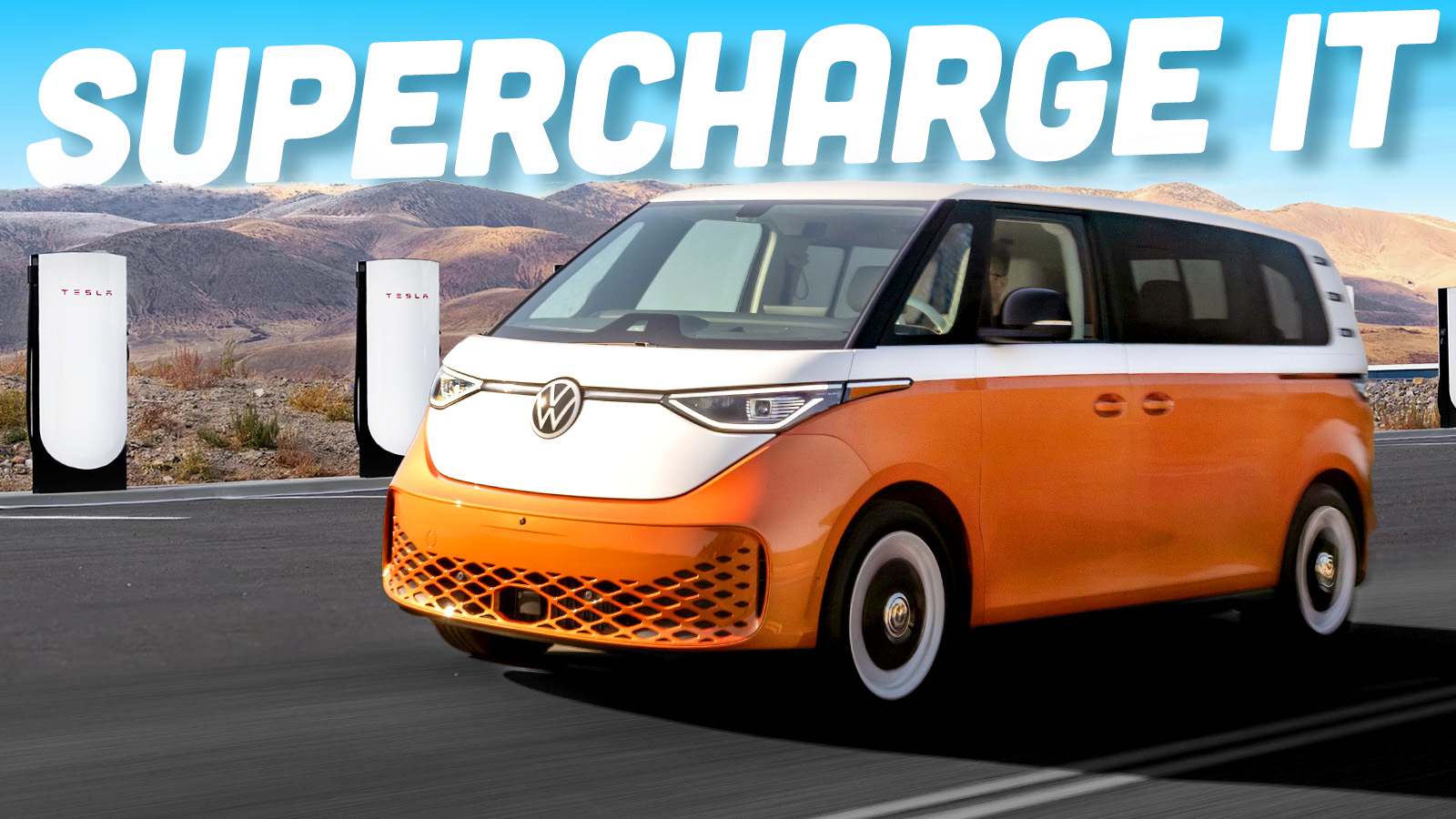
At this point, Tesla has firmly won the charging war in North America. Automakers far and wide are adopting native NACS ports and rolling out Tesla Supercharger compatibility, and the great format switch isn’t over yet. Volkswagen is finally joining the Tesla Supercharger network, and while that’s great news for owners, it paints a less flattering picture of Electrify America.
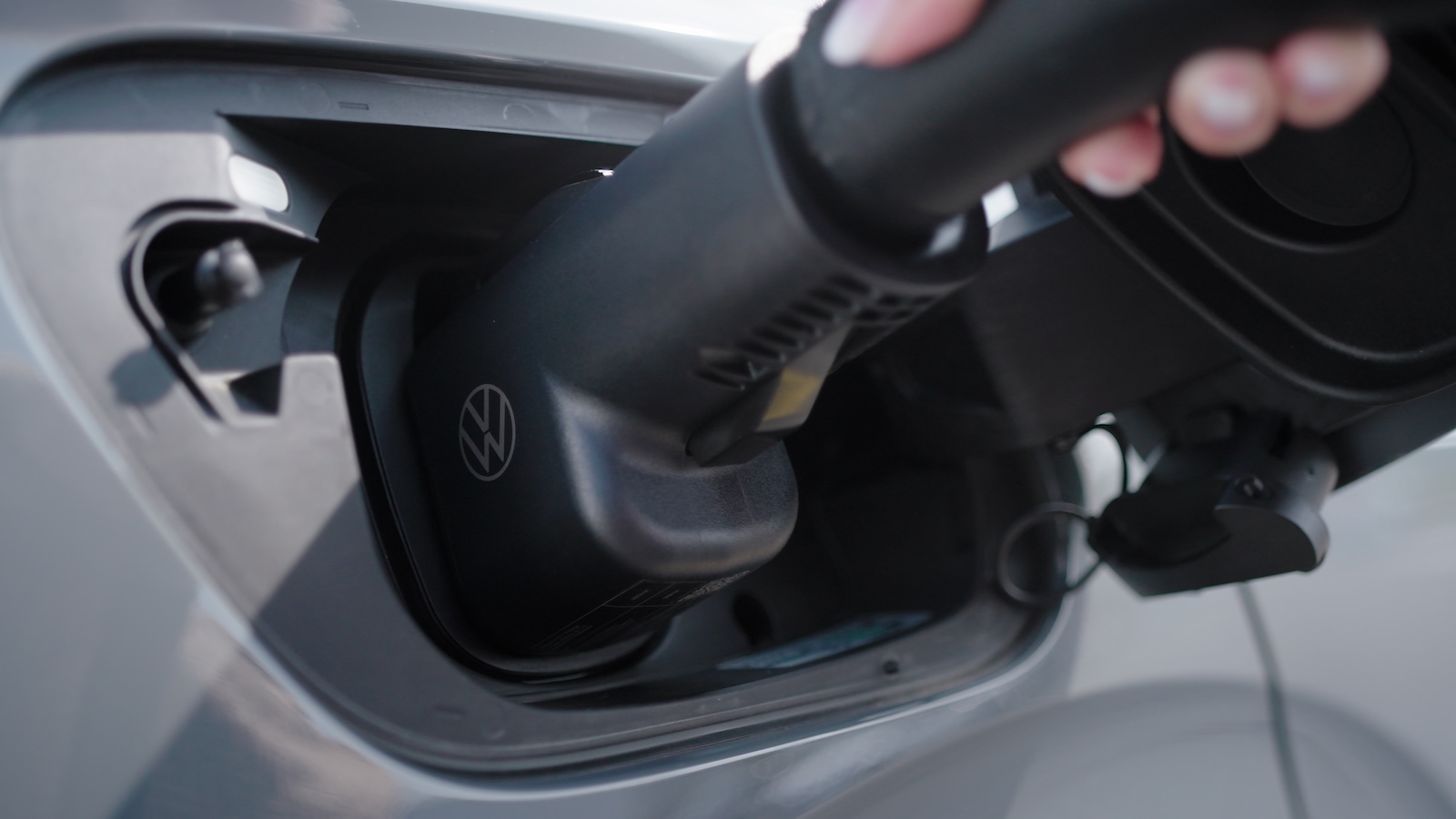
Come Nov. 18, owners of Volkswagen ID.4s and ID.Buzzes will be able to charge on V3 and V4 Tesla Superchargers, with a catch. All Tesla DC fast chargers feature NACS connectors, while all Volkswagen EVs feature CCS charging ports. This means that if you already own an electric Volkswagen, you will have to buy a $200 adapter. Granted, original owners of 2025 model year ID.4 crossovers and ID.Buzz vans get a $100 rebate on the adapter, but it won’t be free unless you’re buying a 2026 model year Volkswagen EV. Oh, and if you own an e-Golf, sorry. Still, more charging options should make road trips easier for ID.4 and ID.Buzz drivers, but this whole development seems to throw some shade at Electrify America.


Electrify America was a penance of sorts. In the wake of Dieselgate, Volkswagen of America and the United States government reached a consent decree that involved establishing a public EV charging network. A couple of months later, Electrify America was born with a promise to deliver sea-to-sea DC fast charging. The first station opened in 2018, and pretty much from the get-go, there were problems.
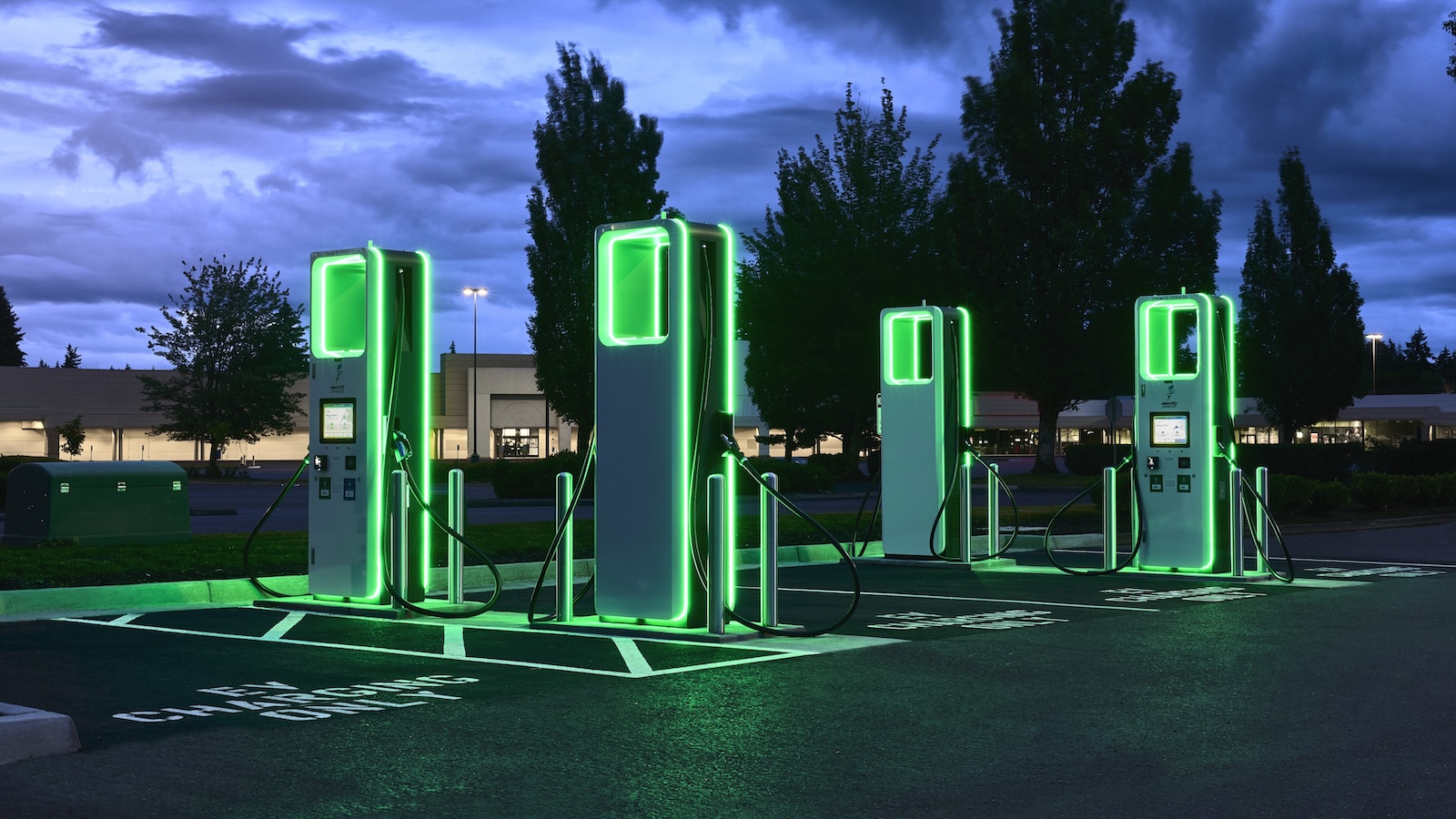
While there are a few things Electrify America and its Electrify Canada partnership do well, such as including credit card readers on DC fast chargers and implementing a vast number of 350 kW chargers, the brands have been hampered by a reputation for poor reliability of service, from broken chargers to electric vehicle service equipment not putting out the advertised kilowatts, to simply being on the expensive side.
According to a 2025 Consumer Reports study, 35 percent of Electrify America sessions have seen users face at least one problem. That’s at the bottom half of the pack, and well off the four percent of Supercharger sessions with reported problems. I’ve experienced many of these troubles firsthand, and while the equipment is great when it works as promised, I find myself leaning towards other networks whenever I’m testing an EV.
Although the Tesla Supercharger network can be more expensive than Electrify America, and it doesn’t offer simple point-of-sale card readers, it’s known for reliability, low downtime, consistent charging speeds, and digital billing that just works. Plus, the network of compatible Tesla DC fast chargers is five times the size of Electrify America’s network, and sometimes bigger really is better.
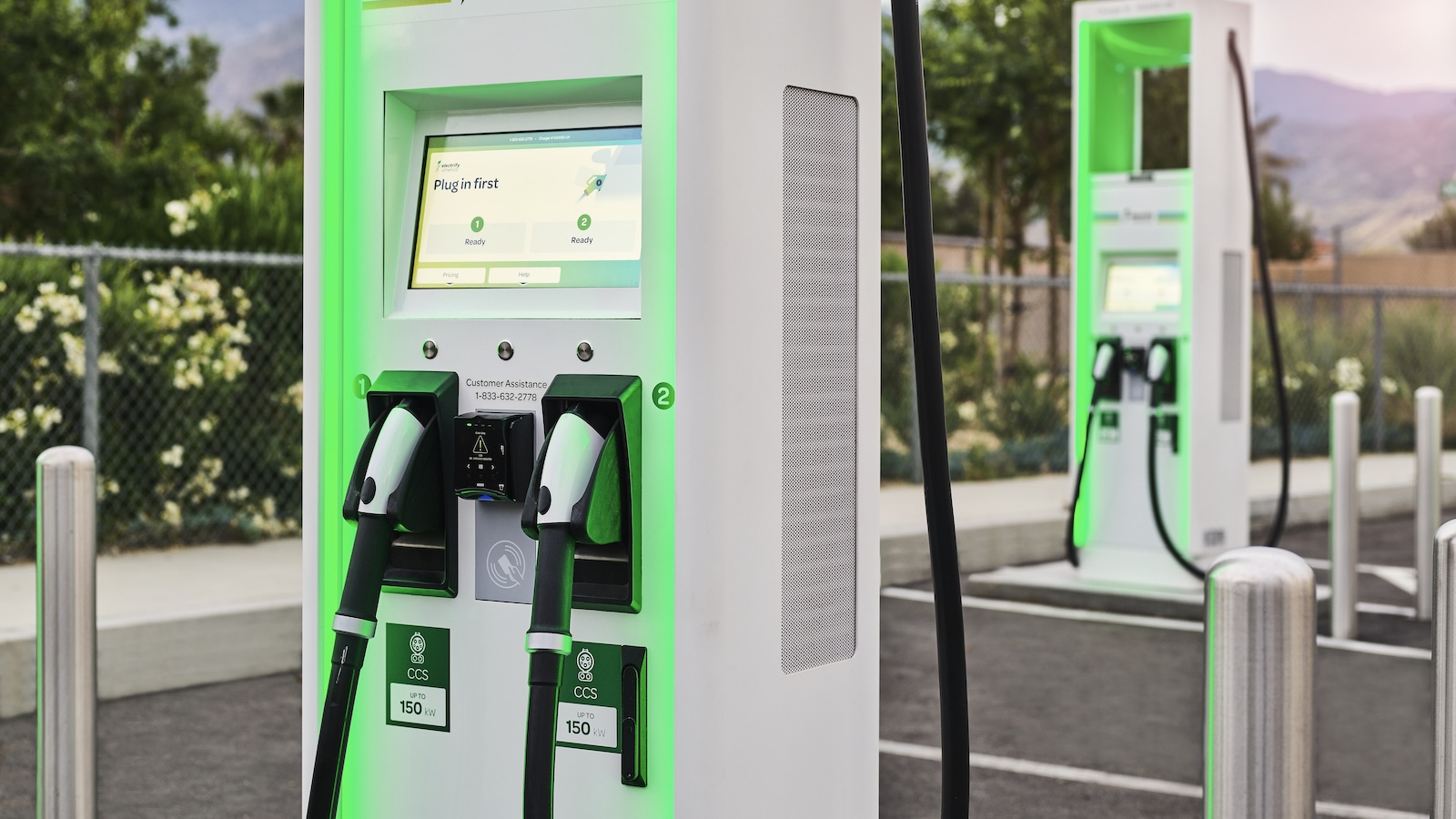
Electrify America should’ve been America’s premier charging network for non-Tesla EVs, a true rival in size, capability, and reliability to the Supercharger network. Great CCS networks do exist – just look at Quebec’s Circuit Electrique. Here’s a public charging network with CCS and CHAdeMO connectors that offers up to 500 kW charging and has a track record of nearly 99 percent uptime. It’s publicly-owned, has been going since 2012, and in my experience, just works as promised with more than 1,200 DC fast chargers across Quebec alone.
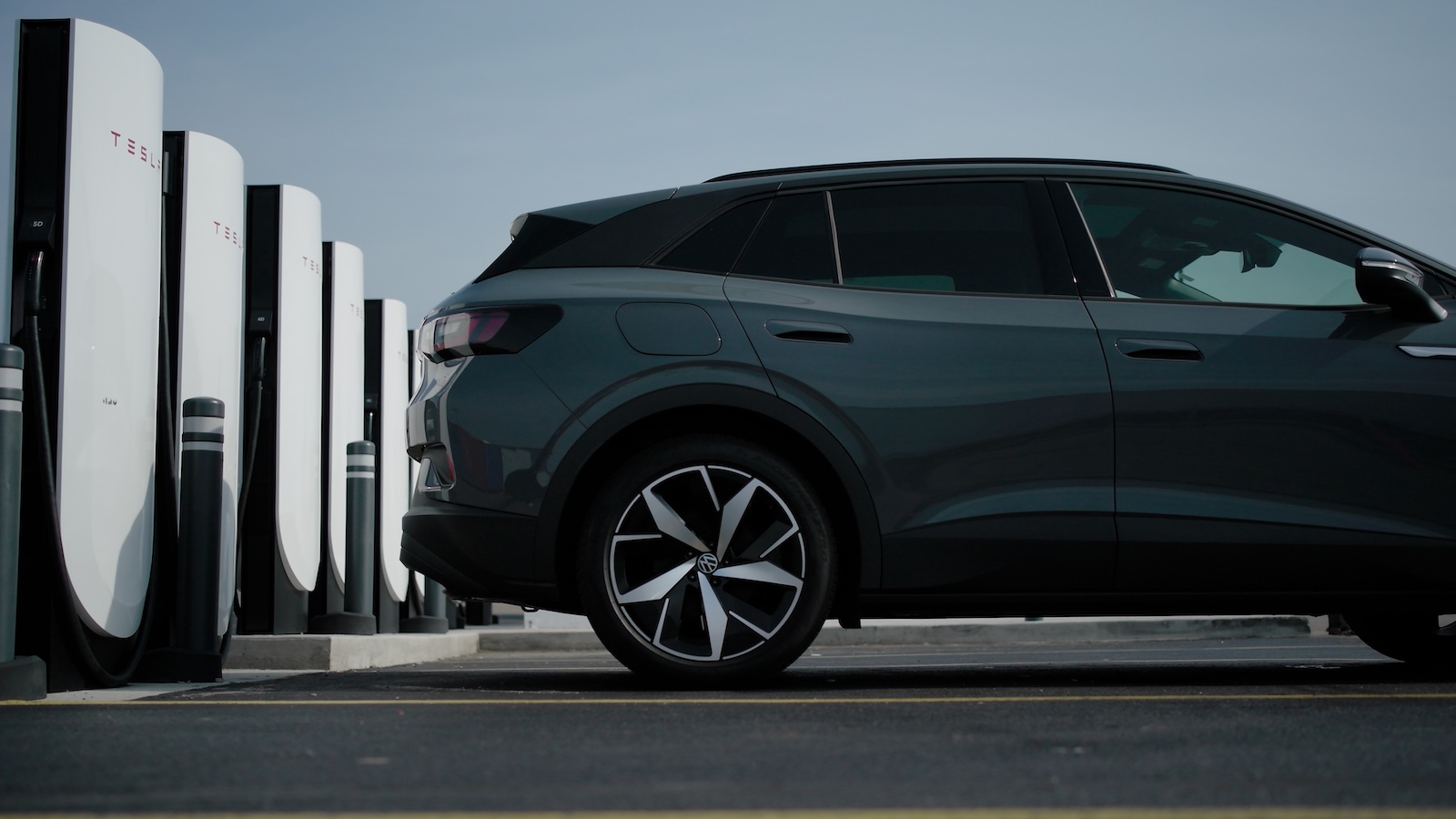
So, is Volkswagen throwing in the towel? While Electrify America will continue, adding Supercharger support to the ID.4 and ID.Buzz seems to be an admission of what EV drivers have been experiencing all along. A better DC fast charging experience is needed, and Tesla can provide what Electrify America so far hasn’t quite got a handle on. Then again, maybe fewer ID.4 owners at Electrify America stations will be a good thing. After all, Electrify America plans to offer NACS chargers in the near future.
Top graphic images: Volkswagen; Tesla



Used EA to make multiple thousand-plus-mile road trips while I still had my 2 years of free charging from my Ioniq 5 lease. For the most part, everything worked pretty well and at most stations I got at least 150kw, which was more than enough to “fill the tank” during the 30-minute window. I found the price a bit eye-watering the one time I actually had to pay for it, though.
Why no love for our poor e-Golfs?
Is the right Consumer Reports weblink used here? I clicked it and it didn’t mention Electrify America in the article or the 35% problem. I’d like to see the full list of companies.
Yeah, would be interesting to get the full results. Here’s another article with the same 35% claim for Electrify America, but it links the same Consumer Reports article. Autopian and techcrunch must have gotten more details than the article itself shows.
https://techcrunch.com/2025/03/18/tesla-and-rivian-charging-networks-have-fewest-problems-by-far-according-to-consumer-reports/#:~:text=Transportation-,Tesla%20and%20Rivian%20charging%20networks%20have%20fewest%20problems%20by%20far,overall%20volume%20is%20still%20growing.
Haven’t had reason to use DCFC in a while, but on my last road trip, ABRP sent me to Tesla chargers often. We used a few local-type brands also, but I don’t recall that EA came up. I wish EVgo was more widespread because they are the only network I’ve seen that has true plug and pay. Or maybe plug and play just needs to be implemented in more networks?
Many of the Superchargers on routes we travel still offer Magic Dock CCS adapters built in. But the new V4 Superchargers seem to have dropped Magic Dock now that CCS is dead in North America.
I rented an i4 a few weeks ago in Portland and charged 3 times at 3 different EA stations without issue. Plugged in, it read my CC and the charging started. Only complaint was at the 3rd station it was very busy and my charge rate seemed way throttled down. When the polestar next to me unplugged my kw shot way up.
Those CCS cables are a pain though. I can’t imagine being an elderly person and dealing with those beast.
My experience with EA is that the stations are generally pretty decent these days, and the main issue is all the people who still have free charging plans causing congestion. Nothing like rolling up to a station where the two 350kw chargers of the four total available are taken by Chevy Bolts charging to 100%.
For my Hyundai, Mercedes (at all the Buc-Ee’s) and Ionna are where its at, they have Alpitronic chargers that can do 400kw and NACS plugs.
This past weekend I did 650 miles round trip and never charged longer than it took me to use the restroom and get a snack, even at the one EA charger I used.
I own a 2023 ID.4 Pro that at the time came with 3 years of free charging via EA stations, so I can speak to the experience that is charging at one of their stations. My incentive runs out in Feb. 2026, and my wife and I have made the most of it by charging with EA I would say about 75% of the time (a Juicebox 40 in the garage handles the other 25% of our charging needs). This is in northern NJ where we have a number of charging stations at our disposal.
It’s been ok. This is one of those situations where I wish I had a detailed small notebook with all of my charging experiences in order to get a true account of what has really happened over the past 2 years and 9 months. Generally speaking charging with EA has been average, if uneventful, but when glitches pop up or chargers are down, it can be a royal pain in the a$s that I think paints all the collective experiences with a negative brush. At times we’ve had issues with the car charging port not releasing the cable without a fuss, or with a downed charger that had to be reset by someone in a far off land, or with charging speeds around 50 kwH even though the car was below 20% state of charge (which should enable faster charging).
The app has generally been accurate with the number of chargers available, and it hasn’t played any games with our stored credit card by charging us when we’ve charged for 30 minutes or less (minute 31 equals paying up the going rate per minute). Plug and charge was not readily available when we bought it, and it’s implementation was fine. I did read from some users that EA cut users off for good if they tried to charge in consecutive sessions, but that was never an issue for us.
We’ve put 24,000 miles on the car so far, and it’s never left us stranded anywhere. Apart from manufacturer recalls (stupid door handles and just as stupid software updates), it has not visited the dealer for repairs. It will almost be a relief to not have the charging incentive anymore, strange as that sounds, because we can then just charge at home all the time and then use any charging system if and when we’re more than an hour or two from home.
Not having to wait for idiots to charge their cars up to 100% (when they’re in slippers and sweats, for example, so likely not on some epic road trip) will be another side benefit of not using public chargers as much, so there’s that!
I’ve been compulsively following my dad’s example with the “detailed, small notebook” every time I stop to add gasoline.
I did that with gas too, to track my MPG, but when I went EV I couldn’t really keep it up because I charge mostly on L1 and L2 and there is no convenient way to see how much juice I picked up. Then I realized that since I was really just doing opportunity charging (that’s a shift in how you think about gas refueling) it would be more of a pain in the neck and besides, the car tells me my average economy/efficiency if I really want to know.
EA did things so poorly that I feel it actually hindered EV adoption in the US, and now with other makes getting to use the Supercharger network it’s bittersweet because of the wackadoo that’s running the show.
Meanwhile people in China and Europe are just buying EVs and running EV charging networks without all the drama.
“Which Tells You How Well Electrify America Has Worked Out”
About as well as one might expect of any FU project born of court ordered community service works out.
Weird. My Mach-E with CCS works on both Electrify America and Tesla Superchargers (with an adaptor, which Ford sent me for free).
I’ve never had an issue with Electrify America. Plug and Charge has always worked for me (so just plug it in and the car sorts out all the account details with the charger by itself), and the stations have been fine. Sure, there’s the odd dispenser out of service, but I’ve been able to see that on the app or on the Mach-E display ahead of time, and I’ve just gone to one in the same lot that was working.
Tesla Supercharging has been ok-ish. The first time it took a really long time to connect, but eventually did. I chalked that up to Ford and Tesla newly partnering. I also noticed at least in my area it was quite a bit more expensive than Electrify America. I also run into the issue quite often where Teslas have filled up the Tesla chargers, and well, I can’t really get mad about that. I’ve also gotten the stick eye from Tesla drivers seeing my Ford charging there, despite the fact I can park properly in the spot and the cord will reach, so I’m not double-parking or blocking anyone unlike some other cars/trucks.
I’m convinced that the absolute shittyness of Electrify America was Volkswagen being childishly petulant and deliberately making the chargers as awful as they could get away with.
And I’m not really sure what would change my mind
“And I’m not really sure what would change my mind”
No, you pretty much nailed it.
Calvin shoveling snow. “If you do the job badly enough, sometimes you don’t get asked to do it again.”
Its funny because the emissions scandal, while incredibly dumb, is fundamentally understandable. But VW has tremendously torched their goodwill in my mind by the way they handled EA. It was an opportunity to create something at a perfect time to become a real Tela charging competitor but instead its just sorta meh. World’s a funny place!
Either they did a bad job on purpose, OR they thought their market position was basically untouchable because manufacturers and government were pretty much locked into CCS, and they phoned it in.
Unfortunately (for them, not for consumers), Ford broke the stalemate because Electrify America did SUCH a bad job, and then the floodgates were open because no one could afford to NOT have Supercharger access when their competitors did.
If they give it native NACS I’ll seriously consider getting one.
It’s coming for the ID.4 next year. However with the current tariffs, it’s anyone’s guess if the ID.Buzz will survive in the US market long enough to get the NACS port.
Here’s to hoping it does get one!
Didn’t Tesla lay off most of the Supercharger department’s staff earlier this year?
And yet it is still working better than EA? Damn…
They deployed a record number of Superchargers last quarter.
The team was indeed laid off, but then replaced. Media covered the first event, inaccurately as usual, then ignored the second almost entirely.
Someone has to roll out a charging network using the sane connector across the US. Since Tesla seems to have lost interest, just convert to the CCS2 connector now. The few poor sods still driving Swasticars will need adaptors. Or cut them off completely. If you are still driving a Swasticar, you don’t drive better.
Every automaker just switched from CCS to NACS after Tesla handed control to SAE. The plug battle is over.
It’s not. The rest of the world still uses the sane connector. It’s just the US being the US again.
Europe is STILL not “the rest of the world”, Martin.
China – where more than half of the world’s EVs are sold – uses GB/T. Japan uses CHAdeMO. Both are moving to ChaoJi, not the unnecessarily bulky CCS Type 2.
But I understand, it’s just Europe being Europe again.
I was speaking to the US market.
As Riceqf mentioned – only Europe uses CCS2 and they are less than 20% of global EV sales.
Is that so? I don’t think so. Basically everyone uses CCS2 but North America, China, and Japan. There may still be some ChaDeMo around (it appears to be dying except for Japan), but apart from that?
Oceania is AFAIK predominantly CCS2. Asia outside of Japan is switching to CCS2. Where charge networks exist in South America or Africa, they are (being built as) CCS2.
I’m talking percentage of EVs in the world not land mass.
The 3 largest markets use 3 different plug standard. China is a bigger market than Europe and North America combined.
Africa and South America are irrelevant to the discussion they have no EV sales to speak of.
But they will. And the question is which way they will go. Chances are it is not going to be NACS.
The real contest is between CCS2 and GP/T. If China manages to “get there first” and supply cheap EVs together with the infrastructure, GP/T may be able to break out of its confinement to China and unseat CCS2 as the “global default standard” that it is today.
NACS will live on in North America of course (the market is big enough to support a niche solution indefinitely), but it has never been relevant on a global scale, and likely never will be.
China buys the majority of the world’s EVs. (60% in H12025) GP-T is the global standard for EVs even if it is only in China. However, GP-T will very likely take over the rest of the world outside of the EU and USA as it is Chinese companies selling EVs to the world. The EU and USA will stubbornly keep their own standard because – pride.
NACS is not relevant on a global scale – that is true but the plug battle is over here. No automaker is the USA is going to switch to CCS2 as you suggest they should in your OP.
And Japan and China. I missed those, my bad. Certainly very important markets, but also not NACS markets. But pretty much everyone else uses CCS2 or is transitioning to it.
To say that NCAS has “won” is ludicrous. That is like saying US customary units have “won”.
Yes, NACS has won in North America. But only there, and it will very likely not win anywhere else anytime soon.
Everyone is switching to NACS in the US, and the Supercharger network is a substantial benefit to many non-Tesla owners.
We can see you’re lashing out and poorly informed, but the battle is over. Tesla and NACS won, and this is the best thing that could have happened for existing and future consumers considering the state of the market (the vast majority of EVs already having Tesla ports and the CCS networks being garbage).
Practically anywhere in the world (except for US and China, which are admittedly important markets, but even together they aren’t nearly the whole market) is going CCS2. ChaDeMo is dying. Tesla cars and superchargers are CCS2 in Europe and I think GBT in China.
NACS is a niche solution for North America.
North America is a plenty-big market to have their own plug (that still uses CCS protocol), but is smaller than the gigantic CCS1 plug. The CCS2 plug is good. I’ve used it in Europe. But it would be silly to change to that, now when the vast majority of EVs have Tesla plugs already.
Regardless, this is moving the goalposts from your original claims that “Tesla seems to have lost interest” even though they put in a record number of fast-charging stations in Q3.
Plus the irrelevant insults to people who own Teslas.
Well, I was more referring to the “The battle is over” comment. It is very much not. Or to put it more friendly, NACS has won a battle but probably lost the war, as it is very unlikely at this point that more markets will convert to NACS, at least not in the foreseeable future. It would not make sense to change to NACS when practically everyone, including Tesla, uses CCS2 or GP/T outside the sizeable, but certainly not world-dominating, North American market.
I am not even sure that the majority of Teslas that roam the streets of the Earth today have NACS connectors. Actually, I doubt it.
It was just North America being North America, or the US being the US, again, I guess. Do something different (and not really demonstratingly better) than anyone else and acting as if they were the global standard.
As for “Tesla seems to have lost interest” … they did. About one and a half years ago, the news went around that Tesla had fired practically the whole supercharger team. If that does not count as “seeming to lose interest”, I don’t know what does.
The comment that the battle was over was obviously referring to North America since they said every manufacturer changed to NACS. Obviously BYD didn’t, Skoda didn’t, etc. It was US specific, and in the US, the battle and war is over.
Again, obviously the topic is the US. The vast majority of EVs in the US have Tesla ports, so switching to CCS2 would have been a completely nonsense idea.
No one is acting like NACS is the global standard.
The follow up to the “bad news” that everyone loves to hear is that they hired many of those people back, but more directly important to this topic, Tesla just installed the 3rd most Superchargers for a quarter, ever (only Q4 2022 and Q4 2020 were higher). In Q3 in the US, they installed more chargers than the next 9 fastest-growing networks combined. They installed 48% of ALL chargers installed in Q3 in the US.
So, by actual meaningful metrics, they’re blowing everyone else out of the water, still, and even installing at a very high rate compared to their historic rates.
I missed Japan. Japan still loves ChaDeMo. No-one else does though.
“While there are a few things Electrify America and its Electrify Canada partnership do well, such as including credit card readers on DC fast chargers and implementing a vast number of 350 kW chargers,”
I prefer EA and other branded 350kW chargers for my Silverado EV and have used them without any problems (except one time)…I think whatever their issues were, they are largely resolved. I remember having a single unexpected disconnect. I just used the neighboring charger. And the 350kW is a matter of priority for my large battery truck. I’ve had more problems connecting to Superchargers. If you have a Tesla, they are ideal, otherwise, mixed experience.
I think the bigger problem is VW making a great EV minivan with with a crappy range and charging a price like it’s got 400 miles of range.
It’s a 2025 survey that showed that EA still had a huge number of problems. They’re doing better than before, but it’s still not great, and nowhere near Tesla for reliability.
It definitely makes sense to shoot for EA for the Silverado because it’s 800V and you’ll get much higher charge rates on 1000V chargers, but with my Lightning (and most 400V EVs), the Superchargers can max it out and so I basically don’t bother going to EA anymore. Cheaper to pick one network and have a membership for that one and mostly stick to it. Plus, I’ve never had to wait at a Supercharger and never had an issue except once on a brand new V4 that took a couple attempts to get the cable to disconnect.
“I’ve killed it. Oh, everything I touch gets ruined!”
Reference Noted! (or “RN” for short)
I’ve only used an EA station once to make sure my CCS adapter worked before a long road trip and I can’t say I was impressed. Between the app and the charger things were just not smooth to work with. It took a couple tries to get the app and charger to figure themselves out and turn on the juice. It eventually worked so I have my backup but I’m not going to use them if there are other options.
Tesla SC with a Tesla car is a simple plug-n-play as one should expect for everything being under the same company so I can see giving EA and the rest a bit of slack there. But for everyone else, gas stations figured this out years (decades?) ago with pay at the pump. Swipe/tap card, plug in, unplug when done. Why is that not the default process? I shouldn’t need an app or an account to simply fill up with angry pixies.
I’ve used EA twice, using tap to pay at the charger. It worked well and I didn’t need to mess with their app. However, I probably did pay a premium for those electrons.
I agree that Tesla Superchargers really set the benchmark for what competing networks need to achieve.
This is why the Biden administration required chargers to have a screen and credit card readers to get federal tax credits.
(They also required the charger to be open to the public and use a standard controlled plug. This lead to Tesla opening up their network to other brands and handing over control of their plug to SAE)
My car is not native NACS so my experience is the same as yours, but with the services reversed. Tesla’s app is not quick to locate my position so I can select a charger and then is slow to activate, but EA’s app (which I haven’t used in a while) was generally quicker. I suppose it’s a symptom of the network/connector your car was designed for.
One thing I like about Tesla is that they don’t require me to load a digital wallet. EA and others are sitting on about $5-$10 each of my money which I deeply resent.
Who would have thought that putting the company most similar to modern day Lucas electrics to lead charging would go anything but positively.
This is a well grounded comment, but it feels a little negative. 😉
Please try to conduct yourself positively.
EA is not good. I’ve tried charging a few times just to see if my Model Y will. It’ll happily charge at a peak 275 kW on a Flo CCS charger through the OEM Tesla adapter (didn’t even get warm, BTW). But no juice from EA! I’m 0/3 there. Meanwhile I’m something like 28/30 on Superchargers. Even when one plug didn’t work another one did. Not so for EA. The entire station didn’t work.
more vehicles at the chargers for Tesla drivers to look at like: https://share.google/images/5driMgV0dNeOg7Y7V
While it makes the ID Buzz slightly more convenient to road trip, it is still not the right tool for that job.
ID Buzz, the vehicle that does nothing well.
I’m not saying it’s right for everyone, but it’s great on road trips with kids (I’ve done a couple >600 miles). Crazy amounts of passenger space (puts our old Pacifica to shame) and just enough highway range to complement 3 kids’ tiny bladders. And a good enough charging curve to not be the limiting factor during the bathroom/snack/charging stops.
And at around $50k it’s priced right in this market. At $70k though, yeah, not attractive (but I also think the gravity, ex90, model X, R1T, etc. are all way too much money for what they offer).