

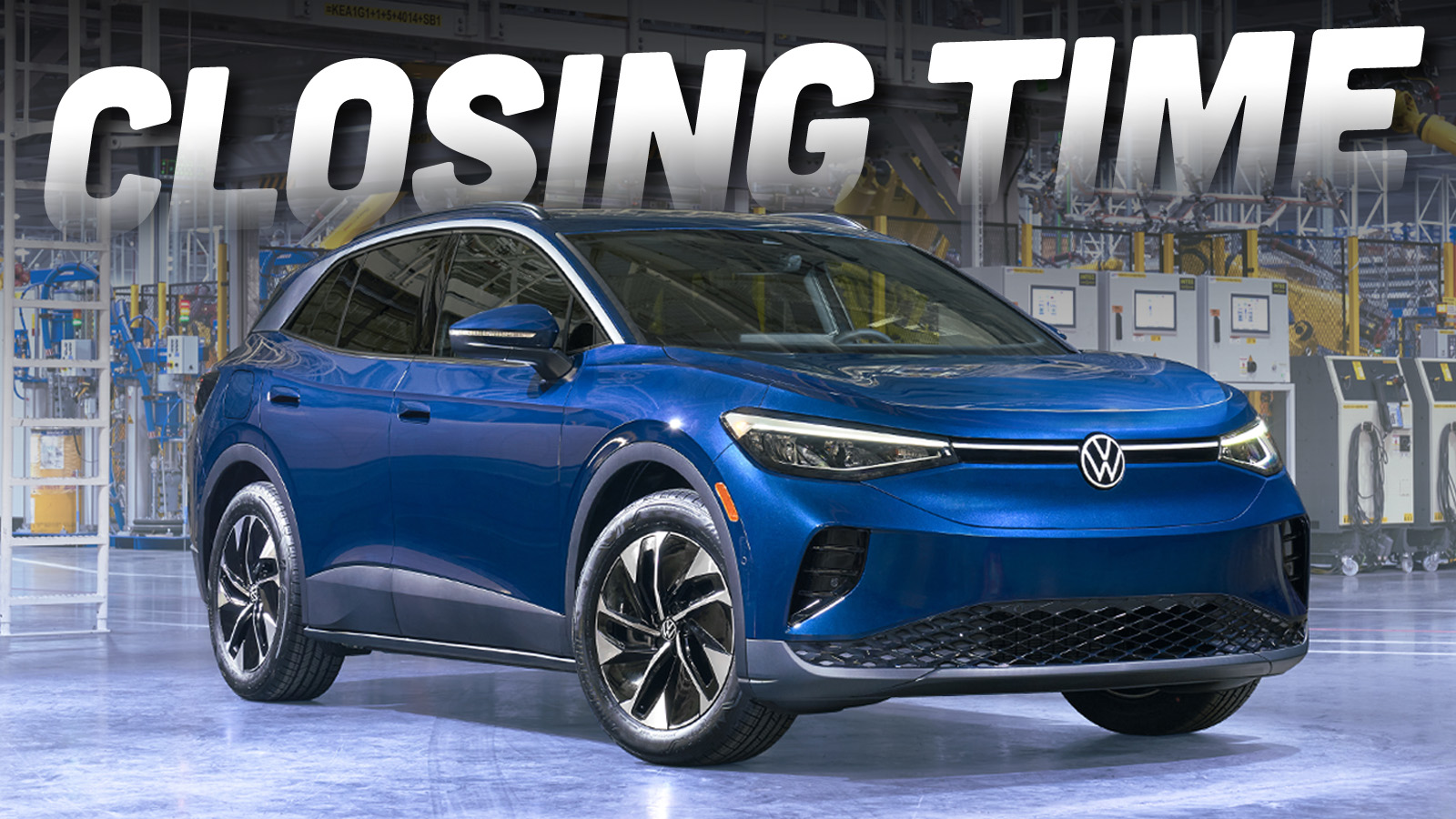
As the winds of American regulation shift away from promoting electric cars, we’re seeing a huge number of models disappear. Honda has ended its entire Ohio-built EV program before production even kicked off, Chevrolet axed its excellent BrightDrop delivery van, Volvo has ditched the EX30, and only the hot version of the updated Hyundai Ioniq 6 is making it across the Pacific. That list is about to get longer, as Volkswagen has announced that production of the ID.4 electric crossover in Chattanooga, TN is coming to an end over the next few weeks.
The EV market continues to challenge the industry, requiring measured decisions throughout the last few years to navigate this unpredictability. As part of the focus toward higher‑volume products that meet market demand, Volkswagen will no longer assemble the ID.4 in Chattanooga starting mid-April 2026. Model Year 2026 ID.4 will remain available to customers in the U.S. through current inventory which we expect will support customer demand into 2027. A future version of ID.4 is currently planned for the North American market; details will be shared at a later date.
When I first got behind the wheel of an ID.4 nearly six years ago, I was mostly pleasantly surprised by first-generation ground-up EV standards. The ride quality was genuinely fantastic, the handling felt both more nimble and more secure than most combustion-powered C-segment crossovers, and the space efficiency was superb. The only real hang-ups were a befuddling user interface with mildly annoying touch-sensitive slide controls and moderately aggravating window switches, along with some early software bugs. While Volkswagen never added physical buttons back to the center stack or window switches that didn’t kinda suck, measures of improvement and expansion came fairly quickly.


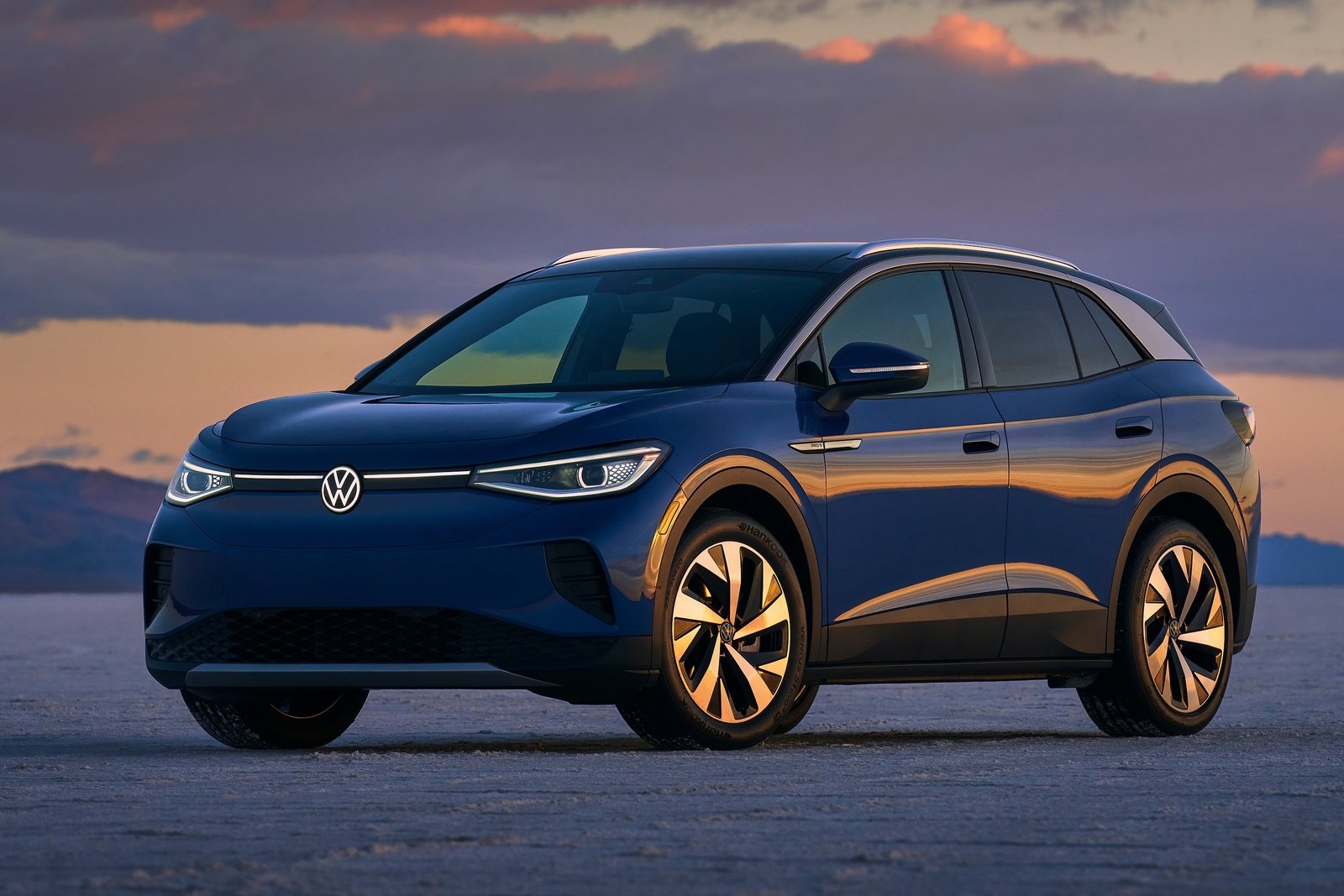
Improved DC fast charging speed and dual-motor all-wheel-drive with 295 horsepower joined the party for the 2022 model year, right before a major shift. In July of that year, Volkswagen stopped shipping ID.4s over from Germany and started building them in America. The first U.S.-made ID.4 rolled off the Chattanooga line on July 26 of that year, and sales quickly ballooned. In 2023, the ID.4 went from the ninth-best-selling EV in America to the sixth with a solid 37,789 units finding homes across the country. A new entry-level model with a smaller battery pack certainly helped, but Volkswagen wasn’t done.
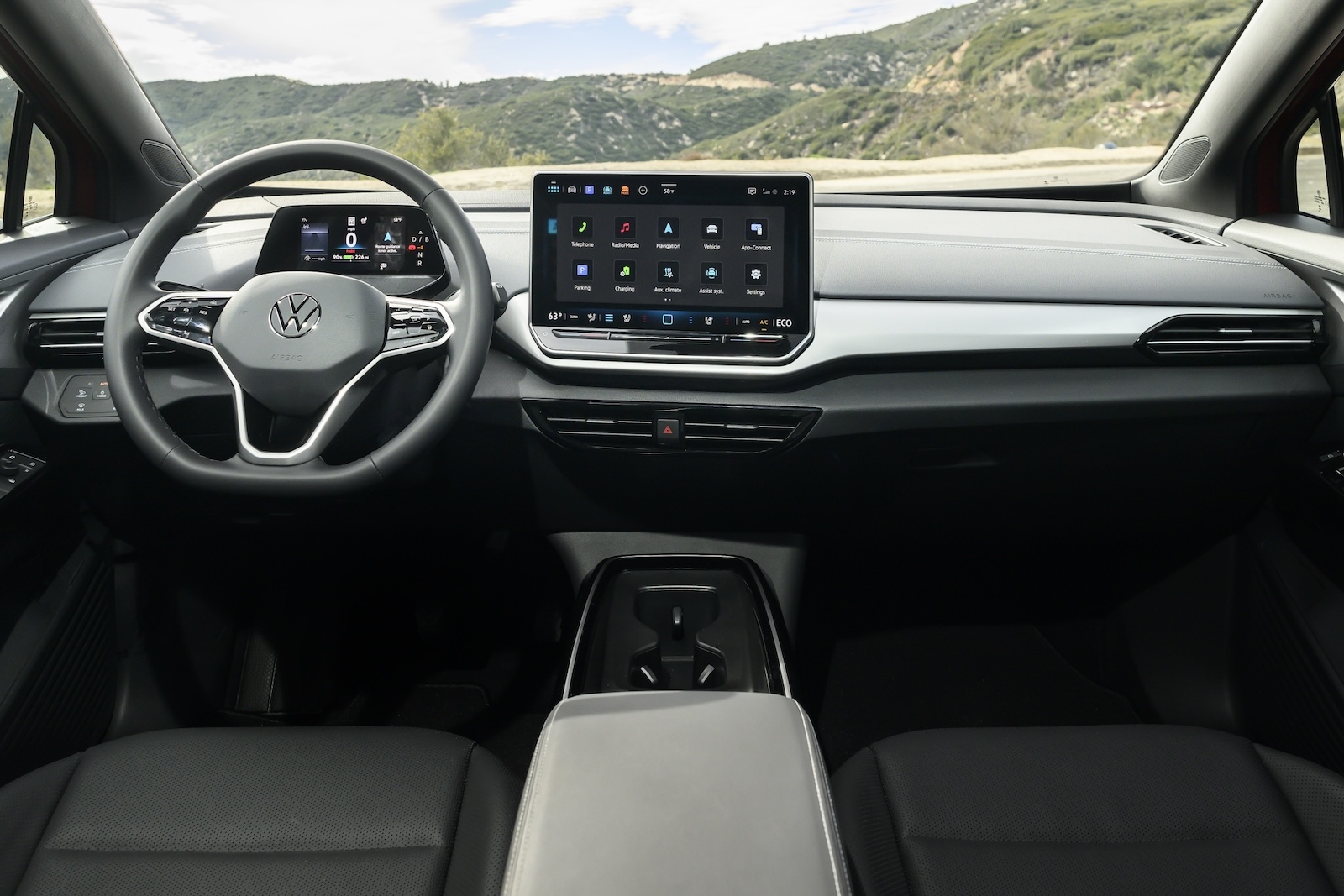
The 2024 ID.4 finally got something owners were really asking for: Illumination for the touch-sensitive volume and temperature sliders, at least on models with the then-new 12.9-inch infotainment screen. The big screen also got a revised user interface that was more user-friendly, the electronic shifter moved closer to the driver, and there were also tweaks you couldn’t see. A larger rear drive unit on models with the 82 kWh battery pack bumped output on rear-wheel-drive Pro models to 282 horsepower and output on all-wheel-drive Pro models to 335 horsepower. However, four model years on sale was long enough to uncover a door handle issue that forced a recall, stopping sales.
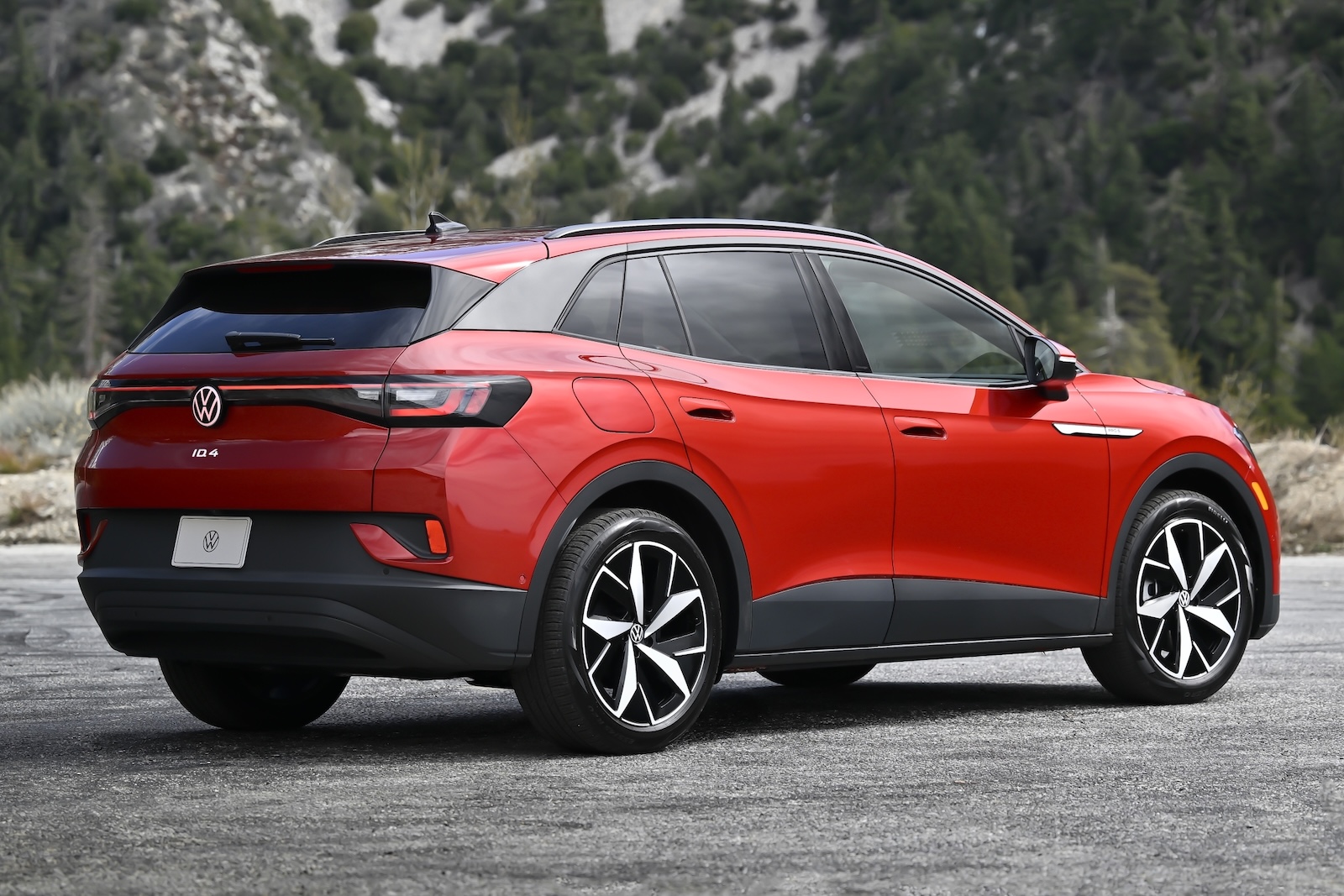
Maybe that was the turning point. Even though sales improved in 2025 after sales restarted early in the year, 2025 was also the year EV incentives were pulled. The ID.4 never hit its 2023 sales peak again, although it was still America’s ninth-best-selling EV of 2025. Now that EV sales are generally down across the board and America’s regulatory environment no longer supports them to the same degree it did a few years ago, it shouldn’t be surprising that Volkswagen is replacing the ID.4 line with one for a traditional combustion-powered crossover.

Yep, it’s the new Atlas. A traditional three-row crossover powered by a two-liter turbocharged four-cylinder engine. Not only was the outgoing three-row Atlas Volkswagen’s second-best-selling car in America last year, it also outsold the ID.4 more than three to one. A new generation of a popular model usually increases sales, so expect that gap to only widen. While there should be ID.4s on dealer lots into next year and a subsequent model planned, the end of production in Chattanooga raises a few questions. What’s going to happen to Volkswagen’s North American battery investments? How many workers are going to take the early retirement option Volkswagen plans to offer? What will the “future version of the ID.4” look like? What does this mean for Scout? While these questions will likely be answered over the coming months, one thing’s for sure: Volkswagen’s mainstream U.S. electric car production adventure seems to be over.
Top graphic image: Volkswagen



Cancelling the ID 4? Sure whatever I guess…
…for more Atlas’? Ugh, why.
Line up and right. Screw the planet, line must go up and right this quarter!
Neighbor of ours can’t wait to turn theirs back in after the lease is up. Its been like a lot of VW products in that its been pretty shitty. I fail to understand why anyone buys VW’s anymore. There is nothing they make that stands out. Its all pretty mediocre and for what? For the sake that its German? You can buy any number of other similar but better cars and crossovers from literally any other brand. The latest data shows yet again, VW is at or near the bottom of the reliability charts. Just buy a Honda, Toyota or hell- some GM product and call it a day.
Automakers sprinting away from EVs is as dumb as the sprint towards them a few years ago. Short term thinking.
Good riddance.
I’ve worked on a few ID.4s and I absolutely believe that the chief engineer of those cars was some bizarre combination of the brain of Rube Goldberg inside the body of a rabid baboon.
On battery/software stuff or otherwise? When I took mine in, they couldn’t work on it until they could get an engineer to come out from VW corporate to walk them through it. They are still months out from being able to diagnose and fix the open recall for bad cells. Dealer service folks seem to not know much about working on EVs, maybe aside from wheels and brakes.
I work in collision repair, and the whole structural design of the car is goofy as all hell. Most cars are built along the same lines for the sake of industry standardization, manufacturing, storage and transport of parts, and service considerations.
All of those standards are out the window on the ID.4. The headlamps form the core of the front structure behind the bumper, no ribbing or brackets, or escutcheons. They lock into the apron and rad support using connecting pieces that are part of different subgroups that nobody ever looks for when writing an estimate and every insurer on the planet doesn’t understand why we’re using “hood brackets” for a bumper-fender repair. There’s four different flavors of bumper, two different flavors of headlamp, six different flavors of undershield, two different kinds of impact bar. Most VW dealers don’t pay their parts people enough for them to give a shit about what parts they send you, so we’ve painted bumpers before findoing out that it was for a non-US vehicle with camera and adaptive headlamps. VW doesn’t want to share proprietary information with third parties, so figuring out the HV cable routing is like playing MineSweeper, and HV components like inverters and charge controllers are located behind the rear axle, underneath the vehicle.
Every time one comes into the shop these things find a new way to baffle me, and I’ve been working on them for years.
Sorry for the info dump.
Never apologize for an info dump. This place is basically one big info dump.
What you describe to me simply sounds like German engineering being German engineering. I work on a lot of vintage electronics. Radios, TVs, Stereos, equipment, record players and so on. Most of the vintage stuff is American or Japanese but I have worked on a lot of German gear too. American radios are sort of like older American cars: Not as sophisticated but not only as functional but more user and service-friendly. Parts and areas where they are installed are easy to access, parts are rather standard and things like speakers, turntables, reel to reel machines and whatnot are all connected via easy to unplug plugs.
The German stuff? I am one of the few who works on them because if there is a way to make something more complicated, the Germans did it. As in… I had a huge German stereo and it had a snapped tuning string. On an American set would have been in and out in an hour. Not this one. No- I had to practically disassemble half the stereo because they had installed everything in layers.
My MIL had a VW Jetta. I absolutely hated working on it for similar reasons. Including the use of plastics in inappropriate places.
That’s ridiculous. And, why would parts for a non-American vehicle show up?
now for more reports showing EV owners are moving back to ICE – the options keep dwindling.
I have a 2025 ID.4 and it’s a fine appliance. nothing great, but not bad either.
Another poorly timed move by an OEM with regards to EVs. VW could build these in Chattanooga and export them to Asia where EVs are getting sold as soon as they hit dealerships. I don’t expect that situation to continue indefinitely, but they could squeeze out a few more months of production.
I tried to buy an ID.4 in 2022. Thanks to dealer allocations, people that reserved theirs after me took delivery long before I cancelled my order. I was hopeful that when Chattanooga started building them, my estimated delivery date would creep closer. It only kept getting farther out… Thanks to being in the Midwest, I would have had to travel to either the west or east coast to buy one off a dealership lot. My local dealer had no interest in accelerating the timeline.
I reserved in July 2022 with an expected delivery date in early December. By February 2023, my expected date had crept to July/August 2023. By then, Tesla’s became eligible for the tax credits again and Tesla actually had inventory! The ID.4 forums were flooded with people talking about how they purchased a Model 3 or Y and took delivery within days or a couple of weeks instead of waiting. I may still be a little sore over the whole thing.
A few problems building the ID.4 in the USA and selling to Asia
Like Jason said, selling ID.4s in Asia is problematic: they’re extremely uncompetitive against the rampant Chinese competition, and the model’s design itself isn’t very suitable for Southeast Asia. Instead, they’ll sell out all the BYDs and whatever remaining Chinese 0km used vehicles they can get across the border.
Sorry but I don’t buy the excuse. VW’s Chattanooga plant isn’t anywhere maxed out on Atlas capacity.
The ID.4 isn’t competitive so it got the axe.
The ID.4 is old and uncompetitive, yes, but its successor the new ID.Tiguan is due for next year. But instead of building that, it’s going to be making gas CUVs for tariff reasons, since VAG is super desperate for US tariff relief. If they make the decision to bring the ID.Tiguan, it’ll likely be imported from EU or Mexico as an administration who resumes EV subsidies (or at least CAFE) is also likely to provide some level of tariff relief.
For Scout? death rattles.
For VW, I could see them turning into Chrysler over here. Just 1, maybe 2 cars all said and done.
Luckily they’re all still building things for more sensible parts of the world. It won’t be a problem coming back once this regime gets kicked to the curb. The domestics? If they really killed all development, they’re going to be asking for another handout. No way this time, you did it to yourselves by kissing the ring.
Not sure what GM is up to, but their current EV lineup seems alright for the next couple of years. Ford doesn’t look great at the moment canceling the F150 Lightning and the Mach E not getting a much needed mid-cycle refresh, but if they proceed with their low cost compact pickup EV and the compact crossover follow-up on the same platform without delaying, they’ll be OKish. Stellantis is screwed lol. Maybe they’ll get Leapmotor, who they’re commissioning to make an Opel in Europe, to make them a Dodge or Chrysler EV. If the size is right, they really should just rebadge/restyle that Opel EV as a Chrysler and start domestic production.